

How to Start a Catering Business from Scratch: Proven Tips
Starting a catering business isn't just about cooking great food. It breaks down into a few core phases: crafting a rock-solid business plan, navigating the legal and financial maze, setting up your kitchen and supply chain, and then, finally, marketing to land those first crucial clients.
Success really hinges on having a clear strategy before you ever fire up the stove. The initial planning, especially locking down a specific niche to stand out from the crowd, is easily the most critical step toward building a profitable business.
Building Your Foundation for a Profitable Business

Jumping into the catering world without a plan is like trying to cook a five-course meal without a recipe. You might have the passion and the culinary chops, but without a clear direction, you’re setting yourself up to waste time, money, and a whole lot of energy.
The first and most crucial phase is building that strategic foundation. This isn't just about paperwork; it's about making deliberate choices that will define your brand and set you on a path for long-term success. This initial blueprint forces you to answer the tough questions early on. Who are you serving? What makes your food special? And how will you actually operate profitably? Answering these now prevents costly headaches later.
Finding Your Profitable Niche
The catering market can feel incredibly crowded, which is why specialization is your secret weapon. Trying to be a jack-of-all-trades often means you end up being a master of none. Instead, I always advise new caterers to focus on a specific niche where you can become the go-to expert.
This allows you to tailor everything—your menu, your marketing, your entire operation—to a specific audience, which makes your business far more effective and easier to market.
Consider these proven catering niches to get you started:
- Corporate Catering: This is a highly reliable niche with fantastic opportunities for recurring business. Think daily office lunches, weekly team meetings, or annual company holiday parties.
- Wedding Catering: Often high-budget and high-stakes, this niche allows for immense creativity. Success here relies on impeccable service and building solid relationships with venues and wedding planners.
- Social Event Catering: This broad category covers everything from birthdays and anniversaries to family reunions. It offers a ton of variety but requires flexible menu options to suit different tastes and budgets.
- Dietary Specialization: With a growing focus on health and wellness, caterers specializing in vegan, gluten-free, or keto menus can command premium prices and attract an incredibly loyal clientele.
Crafting a Winning Business Plan
Your business plan is the operational roadmap for your entire catering venture. It’s the document you'll use to guide your decisions, measure your success, and, if needed, secure funding. It forces you to think through every single aspect of your business, from your grand vision right down to the day-to-day logistics.
A strong business plan doesn't need to be hundreds of pages long, but it absolutely must be thorough. It should clearly articulate your mission, define your target market, and outline your financial goals. This is your chance to prove that your culinary passion is also a viable, well-thought-out business concept.
The global catering market is a massive field, estimated at USD 118.3 billion in 2025 and projected to grow to USD 180.3 billion by 2035. Corporate clients are expected to make up a significant 36.9% of this market, highlighting the steady demand in that particular niche. You can learn more by exploring the market growth projections on Future Market Insights.
A well-researched business plan does more than just outline your goals—it gives you the confidence to execute them. It transforms your idea from a dream into an actionable strategy.
To make sure your plan is comprehensive, you'll want to focus on several key components. Each section should build on the last, creating a cohesive and compelling story about your future business. This structured approach is what potential investors or lenders need to see to understand your vision and, more importantly, your ability to make it happen.
Your business plan is the single most important document you'll create in the early stages. Here’s a breakdown of what you absolutely need to include.
Key Components of Your Catering Business Plan
A breakdown of the essential sections your catering business plan must include to build a comprehensive strategy and attract potential investors.
| Section | Key Focus | Example Question to Answer |
|---|---|---|
| Executive Summary | A concise overview of your entire business. | What is your mission, who is your target market, and what are your key financial projections? |
| Company Description | Details about your business structure and niche. | Are you an LLC? What specific type of catering (e.g., corporate, weddings) will you specialize in? |
| Market Analysis | Research on your industry, target market, and competitors. | Who are your main local competitors, and what are their strengths and weaknesses? |
| Organization & Management | Your business and management structure. | Who is on your team, what are their roles, and what experience do they bring? |
| Service or Product Line | A detailed description of your menu and services. | What specific menu packages will you offer, and what are your price points? |
| Marketing & Sales Strategy | How you will attract and retain customers. | What social media platforms will you use, and will you partner with local venues? |
| Financial Projections | Your sales forecasts, expenses, and profitability analysis. | What are your startup costs, and when do you project to break even? |
| Funding Request | If seeking capital, the specifics of your request. | How much funding do you need, and exactly how will it be used to grow the business? |
Taking the time to flesh out each of these sections will give you a clear, strategic advantage before you serve your first plate. It’s the foundation upon which everything else is built.
Navigating Licenses, Permits, and Finances
Okay, you've got your brilliant idea and a solid plan. Now comes the part that turns your catering dream into a real, legitimate business. This next phase is all about tackling the legal paperwork and getting your finances in order.
Honestly, this isn't the most glamorous part of the job, but getting these details right from the very beginning is what separates the pros from the amateurs. It protects you legally and sets you up for long-term financial health.
Choosing a Business Structure
First up, you need to decide how your business will be structured legally. This choice has a huge impact on your personal liability and how you'll handle taxes. For most new caterers, it usually boils down to two main options: a sole proprietorship or an LLC.
A sole proprietorship is the simplest way to go. You and the business are legally the same entity, which is easy to set up but also means you're personally on the hook for any business debts.
An LLC, or Limited Liability Company, creates a separate legal entity for your business. This is a game-changer because it shields your personal assets—like your house or car—from business liabilities. It takes a bit more paperwork and a small filing fee, but that protection is priceless for most entrepreneurs.
Securing Essential Licenses and Permits
With your business structure sorted, it's time to get the right permits to operate legally. The specific requirements can vary a lot by city and state, so your first move should be to check with your local health department and business licensing office. This is a non-negotiable step that ensures you're meeting all the required health and safety standards.
The whole process can feel a bit daunting, but it's really just a sequence of steps.
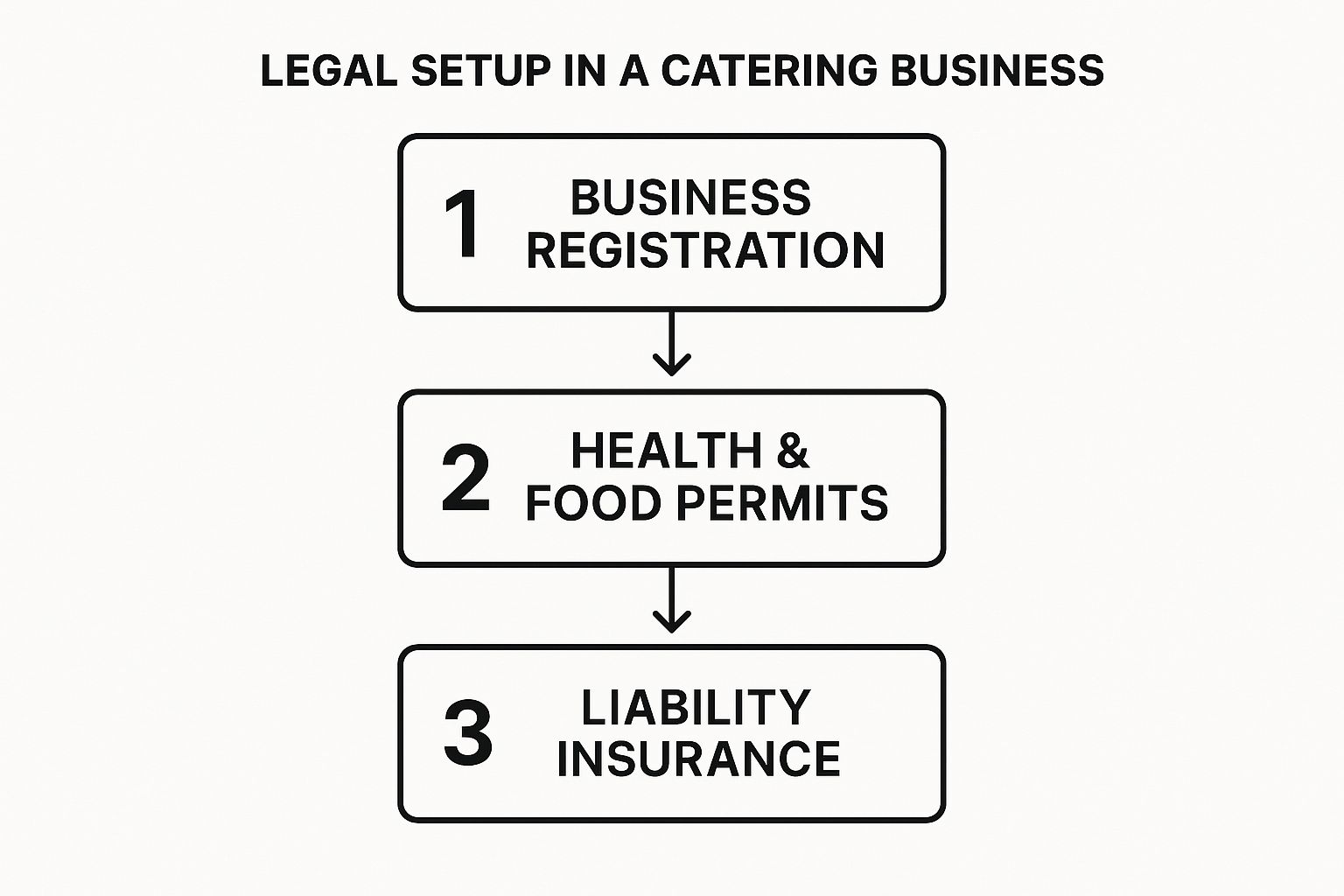
Think of it as building a foundation. You can't skip a step and expect the house to stand.
Your checklist of essential permits will almost certainly include these:
- Business License: This is the general license your city or county requires to operate any kind of business.
- Food Handler's Permit: You, and anyone on your team who touches food, will need this certification. It usually just involves a quick course on safe food handling.
- Health Department Permit: This one is critical. A health inspector has to come out and approve your commercial kitchen space to make sure it's up to code.
- Liability Insurance: While not technically a "permit," it's absolutely mandatory. This insurance protects you if a guest gets sick from your food or if your operation causes property damage at an event.
Tackling the legal and financial setup isn't the most exciting part of starting a catering business, but it's the bedrock of a professional and sustainable company. Don't cut corners here; your future self will thank you.
Calculating Startup Costs and Securing Funding
Now that the legal framework is taking shape, let's talk about money. Getting a realistic handle on your startup costs is essential for building a budget and figuring out if you need funding. For a new catering business, startup expenses can range anywhere from $10,000 to over $80,000, depending on your scale and whether you rent or buy your gear.
Your main costs will typically fall into a few buckets:
- Legal & Administrative Fees: This covers your business registration, permit fees, and insurance premiums.
- Kitchen & Equipment: This is often the biggest ticket item. It includes rent for a commercial kitchen space, plus ovens, refrigerators, prep tables, and hot boxes for transport. For many new caterers, figuring out how to finance your catering equipment without breaking the bank is the key to getting off the ground.
- Initial Inventory: Your first big grocery run to stock up on food and supplies for your first few events.
- Marketing & Branding: This includes costs for a website, business cards, and any initial advertising you plan to do.
Once you have a clear budget, you can look at your funding options. A lot of caterers start out by self-funding with personal savings. Others might go for a small business loan from a bank or credit union, which will definitely require that detailed business plan you've already put together.
Managing this money effectively from day one is so important. This is where understanding the importance of diligent bookkeeping comes in—you need to track every single dollar to make sure you're building a profitable business for the long haul.
Setting Up Your Kitchen and Supply Chain
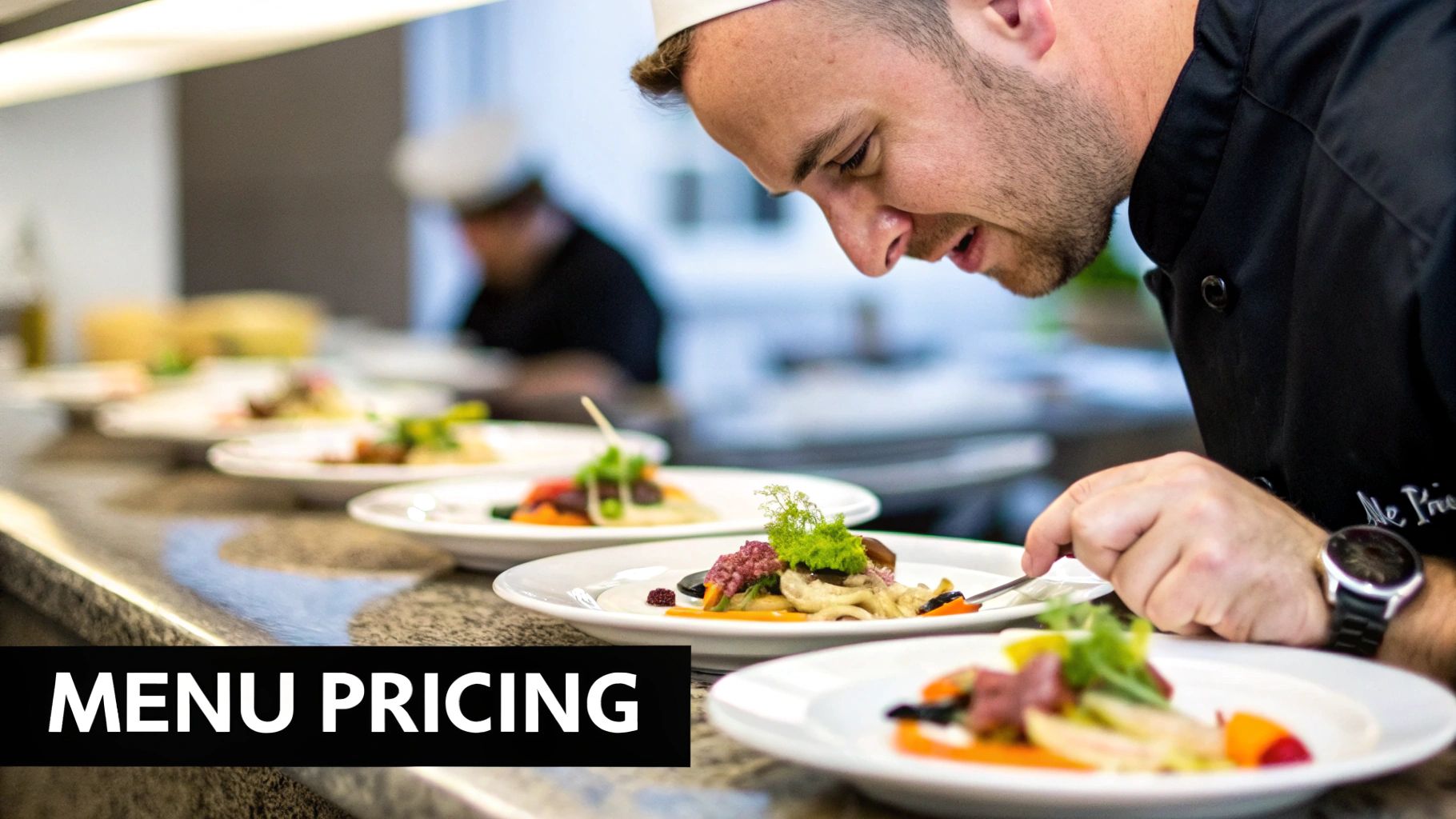
Your kitchen is the heart of your entire catering operation. It’s where your menu comes to life, and frankly, it's where your efficiency is either won or lost. The choices you make here will ripple through everything, affecting your food quality, your stress levels, and your bottom line.
A common mistake is thinking you need a massive, custom-built kitchen right out of the gate. The reality? Most successful caterers start smart, not big. The real key is to find a legal, licensed space that fits your current budget and needs, but still gives you room to grow.
Choosing Your Culinary Home Base
One of the first major hurdles is figuring out where you'll actually cook. Let's be clear: running a full-scale catering business from your home kitchen is illegal in most places due to strict health codes. This means you’re going to need a licensed commercial kitchen space.
Here’s a breakdown of the three most common paths you can take:
- Renting a Commercial Kitchen: This is a fantastic starting point. You can find dedicated kitchen space for rent by the hour, day, or month. This keeps your upfront costs low and gives you predictable monthly expenses, which is a lifesaver for managing cash flow when you’re just getting started.
- Joining a Commissary or Shared Kitchen: These are shared spaces used by multiple food businesses—think food trucks, bakers, and other caterers. They come fully equipped and licensed, taking a huge burden off your shoulders. For new entrepreneurs, this is often the most cost-effective and flexible option.
- Building or Leasing Your Own Kitchen: This is the long-term dream for many, giving you complete control over your space and schedule. However, it requires a serious capital investment—often $50,000 or more—and is a move best made once you have a steady, proven stream of business.
For most people just starting out, a shared commissary kitchen strikes the perfect balance of affordability, flexibility, and legal compliance.
Equipping Your Kitchen for Success
Once you've secured your space, you need the tools of the trade. Kitchen equipment is a major expense, but you don't need every shiny new gadget on day one. The goal is to prioritize the essentials and be strategic about buying new versus used.
Start by focusing on the core equipment that directly impacts your menu and how much food you can produce. A reliable convection oven, plenty of refrigeration, and stainless-steel prep tables are non-negotiable. These are the true workhorses of your kitchen.
From there, you can build out your arsenal with smaller, but equally critical, items. A detailed inventory list can save you from those last-minute emergencies. To help you get organized, check out a comprehensive catering supplies checklist that covers everything from cooking gear to transport and serving essentials.
Pro Tip: Buy new when reliability is everything (like refrigeration), but you can save thousands by getting high-quality used equipment for things like prep tables, shelving, and sometimes even ovens.
Forging Strong Supplier Relationships
Your suppliers are so much more than just vendors; they are your partners in quality. The freshness of your ingredients directly translates to the quality of your final dishes. Building strong, reliable relationships with food suppliers is a critical step that many new caterers unfortunately overlook.
Don't just default to the biggest name in town. Take the time to meet with local farmers, butchers, and specialty food purveyors. These smaller suppliers can often provide superior quality and far more personalized service.
When you're vetting potential suppliers, keep these factors in mind:
- Consistency and Reliability: Can they deliver what you need, when you need it, without fail? One late delivery can throw an entire event into chaos.
- Quality of Product: Always ask for samples. Does their product meet your brand’s standards for freshness and flavor?
- Pricing and Payment Terms: Are their prices competitive? Are they willing to offer reasonable payment terms as your business grows with them?
A great supplier relationship is built on clear communication and mutual respect. Pay your invoices on time, give them as much notice as you can for large orders, and treat them like the valuable partners they are. That foundation will ensure your kitchen always has the incredible ingredients it needs to shine.
Designing a Profitable Menu and Pricing Strategy
Your menu is more than just a list of dishes; it’s your number one sales tool. A well-designed menu will get clients in the door, but a strategically priced one is what keeps your business thriving long-term. This is a balancing act, and mastering it is a huge part of learning how to start a catering business that actually lasts.
The real challenge is creating food that's not just delicious, but also practical. Remember, catering food has to survive the journey, hold up beautifully in chafing dishes, and be plated efficiently miles from your home base. That gorgeous, delicate dish that collapses after a 30-minute car ride? That’s a recipe for a bad review.
Crafting a Logistically Smart Menu
Before you even think about putting a price on anything, your menu has to be built for the realities of catering. The secret to managing costs and delivering rock-solid quality is focusing on dishes that you can scale up, that travel well, and that can be mostly prepped in your kitchen before the event even starts.
Think in terms of what can be assembled or finished on-site, not cooked from scratch. For instance, braised short ribs are a caterer's dream. You can slow-cook them to tender perfection a day ahead and simply reheat them at the venue. This approach seriously cuts down on-site stress and minimizes the chance of things going wrong when the pressure is on.
Run every potential menu item through this checklist:
- Ingredient Stability: Will this hold its texture and flavor for a few hours? Root vegetables, hearty grains, and braised meats are your friends. Delicate greens and pan-seared fish? Not so much.
- Transportability: Can you pack this securely in hotel pans or insulated carriers without it turning into a mess? Soups, stews, and casseroles are generally much easier to transport than intricately plated creations.
- Reheating and Holding: How does the food stand up to a heat lamp or chafing dish? Anything that dries out or gets soggy after 20 minutes is a no-go for buffet service.
The Foundation of Profitability: Food Costing
Guessing your prices is the quickest way to run your business into the ground. You have to know—down to the penny—what each dish costs you to make. This process is called food costing, and it involves adding up the price of every single ingredient in a recipe. It’s a little tedious, sure, but it's the only way to guarantee you're actually making money on every plate that leaves your kitchen.
Start by creating a standardized recipe for every item, listing the exact amount of each ingredient. Then, you cost out each component. If a 50-pound bag of onions costs $25, your cost per pound is $0.50. You need to break it down to the ounce or gram level to be truly accurate.
Here's a critical piece of advice: Never, ever forget to factor in overhead and labor. A solid rule of thumb in this industry is to aim for a food cost percentage between 28% and 35%. So, if a dish costs you $3.50 in raw ingredients, you should be charging at least $10 to $12.50 for it.
Choosing the Right Pricing Model
Once your costs are dialed in, you can build a pricing strategy that works for different kinds of events. There’s no single solution here; the best model often comes down to the client and the style of the event.
The demand for great catering is booming. The global market was valued at around USD 154.71 billion in 2024 and is only expected to grow. This tells us one thing: clients are absolutely willing to pay for quality and convenience, so you need to price your services with confidence. You can dig into the numbers yourself by checking out the full catering services market report on imarcgroup.com.
Here are the most common pricing structures you’ll see out in the wild:
| Pricing Model | Best For | Example Scenario |
|---|---|---|
| Per-Person Pricing | Weddings, corporate galas, and any large, formal event. | A wedding package at $95 per head that includes three passed appetizers, a salad, two main course options, and dessert. |
| Tiered Packages | Clients who have different budgets to work with. | Offering Bronze, Silver, and Gold lunch packages for a corporate client, where each tier adds more variety or premium ingredients. |
| À La Carte Pricing | Cocktail parties, open houses, or events where a full meal isn’t the focus. | A client hand-picks five appetizers from your list, and you price each one out based on a per-dozen or per-person rate. |
At the end of the day, your pricing should reflect more than just your costs. It's about the value of your service, your culinary skill, and the entire experience you deliver. When you combine a logistically sound menu with a data-driven pricing strategy, you’re not just building a delicious business—you’re building a financially sustainable one.
Marketing Your Catering Business and Finding Clients

You can have the most incredible menu in town, but if nobody knows you exist, your kitchen is going to stay quiet. Let's be real: amazing food is only half the battle. You need a smart, consistent marketing strategy to build your brand, get your name out there, and start booking those events.
This isn’t about blowing a huge budget, either. It’s about being strategic. Your best bet is a mix of solid digital tactics to reach a wider audience and good old-fashioned, on-the-ground networking to build those crucial local connections. The goal is to create a marketing engine that keeps new opportunities coming your way.
Building Your Digital Storefront
In this day and age, your website is everything. It's your digital business card, your menu, and your photo album all rolled into one. It’s the very first impression most potential clients will have of your business, so it absolutely has to be professional, visually stunning, and dead simple to navigate.
High-quality food photography is non-negotiable here. Seriously. Scrimping on photos is one of the biggest mistakes you can make. Hire a professional for a dedicated shoot—gorgeous, mouth-watering images of your best dishes will sell your services better than any words ever could. If you want to make sure your site actually converts visitors into clients, check out these top restaurant website design tips.
Once your site looks amazing, you need to make sure people can actually find it. This is where getting familiar with the basics of search engines comes in. You can learn the ropes by checking out a comprehensive guide on SEO for restaurants; you'll find that many of the same principles apply directly to the catering world.
Leveraging the Power of Social Media
For a caterer, visual social media platforms are your best friend. I’m talking about Instagram and Pinterest. They are powerful, free tools for showing off your work and building a real community around your brand.
- Instagram: This is your highlight reel. Post drool-worthy photos of your food and behind-the-scenes videos of your team in action. Use relevant local hashtags (like #AustinCatering or #NYCEvents) to get in front of clients in your area.
- Pinterest: Event planners and couples live on Pinterest for inspiration. Create boards for different themes, like "Wedding Menu Ideas" or "Corporate Lunch Inspiration," to capture their attention while they're in the planning phase.
- Facebook: Use it to share glowing client testimonials, promote seasonal packages, and get involved in local community groups.
The secret sauce here is consistency. A few posts here and there won't cut it. You need to post regularly to keep your audience engaged and show that your business is active and in-demand.
Forging Powerful Offline Connections
While a strong online game is crucial, never, ever underestimate the power of old-fashioned networking. The catering industry is built on relationships and referrals. Getting out and meeting people is one of the best investments you can make with your time.
Building a network isn't just about handing out business cards. It's about establishing genuine, mutually beneficial relationships with other professionals in the event industry.
Start by figuring out who the key players are in your local event scene. These folks can become your most valuable source of referrals, sending business your way without you spending a dime on ads.
- Event Planners: They are constantly on the lookout for reliable, high-quality caterers to recommend. Reach out to a few top planners and invite them for a private tasting. Let your food do the talking.
- Venues: Getting on the "preferred vendor" list at local wedding venues, corporate event spaces, and community halls is like gold. It puts you directly in front of clients who have a date, have a location, and now need a caterer.
- Corporate Connections: Don't be shy. Reach out to office managers and HR departments at local companies. A great way to get your foot in the door is to offer a complimentary sample lunch for their team. It's a small investment for a potentially huge return on corporate gigs.
The potential is massive. The global market shows that the Asia Pacific region alone is projected to grow from USD 50.23 billion to USD 63.10 billion between 2021 and 2025. This proves there's a worldwide appetite for great catering, which all starts with building a rock-solid local reputation. A sharp digital strategy combined with robust local networking is the recipe for long-term success.
Got Questions? We’ve Got Answers.
Jumping into the catering world means you’re going to have questions. It’s only natural. From figuring out startup costs to untangling legal requirements, every aspiring caterer wonders about the same things. Let's tackle some of the most common questions head-on to give you the clarity you need to move forward.
How Much Does It Really Cost to Start a Catering Business?
This is the big one, and the honest answer is: it depends. Your startup costs can swing wildly, from a lean $10,000 if you’re renting a shared kitchen by the hour, all the way up to $100,000 or more if you’re building out your own fully-equipped space and buying a dedicated catering van.
The biggest chunks of your budget will almost always go to these key areas:
- Legal & Insurance Fees: Getting your business registered, securing the right permits, and locking in that essential liability coverage.
- Kitchen & Equipment: This covers rent for a commercial kitchen space and buying your core gear like ovens, refrigerators, and food warmers for transport.
- First Big Inventory Run: Stocking up on all the food and disposable supplies you'll need for your first few events.
- Marketing Kick-Off: A professional website, some sharp-looking business cards, and any initial ads to get your name out there are non-negotiable.
Here’s a pro tip: map out a detailed budget, listing every single potential expense you can think of. Many successful caterers start small by renting everything they can, then smartly reinvest their profits to buy their own equipment and scale up as their reputation grows.
Can I Run a Catering Business from My Home?
It’s a tempting thought, isn't it? The convenience and cost savings seem obvious. But in nearly all cases, running a commercial catering operation from your personal home kitchen is a no-go with local health departments.
The food safety regulations for commercial businesses are incredibly strict, and a home kitchen just isn't built to meet those standards.
You might hear about "cottage food laws" that let people sell certain homemade goods. Be aware that these almost never apply to full-service catering, which involves preparing and handling high-risk foods like meat, poultry, and dairy.
Your home can absolutely be your command center for everything else—taking client calls, planning menus, and handling your marketing. But all the actual cooking for paying clients must be done in a licensed commercial kitchen. For anyone just starting out, renting space in a shared commissary kitchen is the smartest and most common way to stay compliant without the massive expense of building your own facility.
What's the Most Profitable Catering Niche?
Profitability often boils down to the niche you choose. While you can find success in any specialty if you're good at what you do, a few areas consistently stand out because of high demand and bigger client budgets.
Corporate catering is often a top performer. The big win here is the potential for repeat business. Companies have meetings and events all the time, their budgets are often generous, and the work is typically on weekdays. This can be a perfect complement to a weekend-focused schedule of social events.
Wedding catering is also famously lucrative, mainly because clients are prepared to spend a significant amount per guest for their big day. It's a field where people are willing to invest in quality and service. Just be prepared for the flip side: it’s an intensely competitive and demanding niche that requires flawless execution and a keen eye for detail.
Don't ignore other profitable pockets that might be less crowded. Big private parties for milestones like 50th anniversaries or graduations can be very lucrative. And specialized dietary catering—think fully plant-based or gluten-free menus—can command premium prices because of the specific expertise it requires.
What Insurance Do I Need for a Catering Business?
Getting the right insurance is not optional. It’s the essential safety net that protects your business, your clients, and your personal finances from a single accident that could otherwise be devastating.
Your insurance coverage needs to be solid. The best first step is to talk with an insurance agent who specializes in the food service industry, but here are the absolute must-have policies you'll need at a minimum:
- General Liability Insurance: This is your foundation. It covers you if a guest claims they got sick from your food, if someone slips and falls near your setup, or if you accidentally cause property damage at a venue.
- Commercial Auto Insurance: If you use any vehicle for your business—even if it's just your personal car to haul supplies—you need this. A personal auto policy will not cover you for accidents that happen while you're working.
- Workers' Compensation Insurance: In most states, this becomes a legal requirement the second you hire your first employee. It covers medical bills and lost wages if a team member gets injured on the job.
- Liquor Liability Insurance: Planning to serve alcohol? This is an absolute must-have. It protects you from the significant liabilities that can arise from incidents involving intoxicated guests.
Ready to equip your new kitchen and bring your culinary vision to life? At The Restaurant Warehouse, we provide high-quality commercial equipment and flexible financing options to help you get started without breaking the bank. Explore our extensive catalog and find the gear you need to build a successful catering business at https://therestaurantwarehouse.com.
About The Author

Sean Kearney
Sean Kearney used to work at Amazon.com and started The Restaurant Warehouse. He has more than 10 years of experience in restaurant equipment and supplies. He graduated from the University of Washington in 1993. He earned a BA in business and marketing. He also played linebacker for the Huskies football team. He helps restaurants find equipment at a fair price and offers financing options. You can connect with Sean on LinkedIn or Facebook.
Leave a comment