

Ice Machine Maintenance Your Guide to Optimal Cleaning Schedules
Why Your Ice Machine's Cleanliness is Non-Negotiable
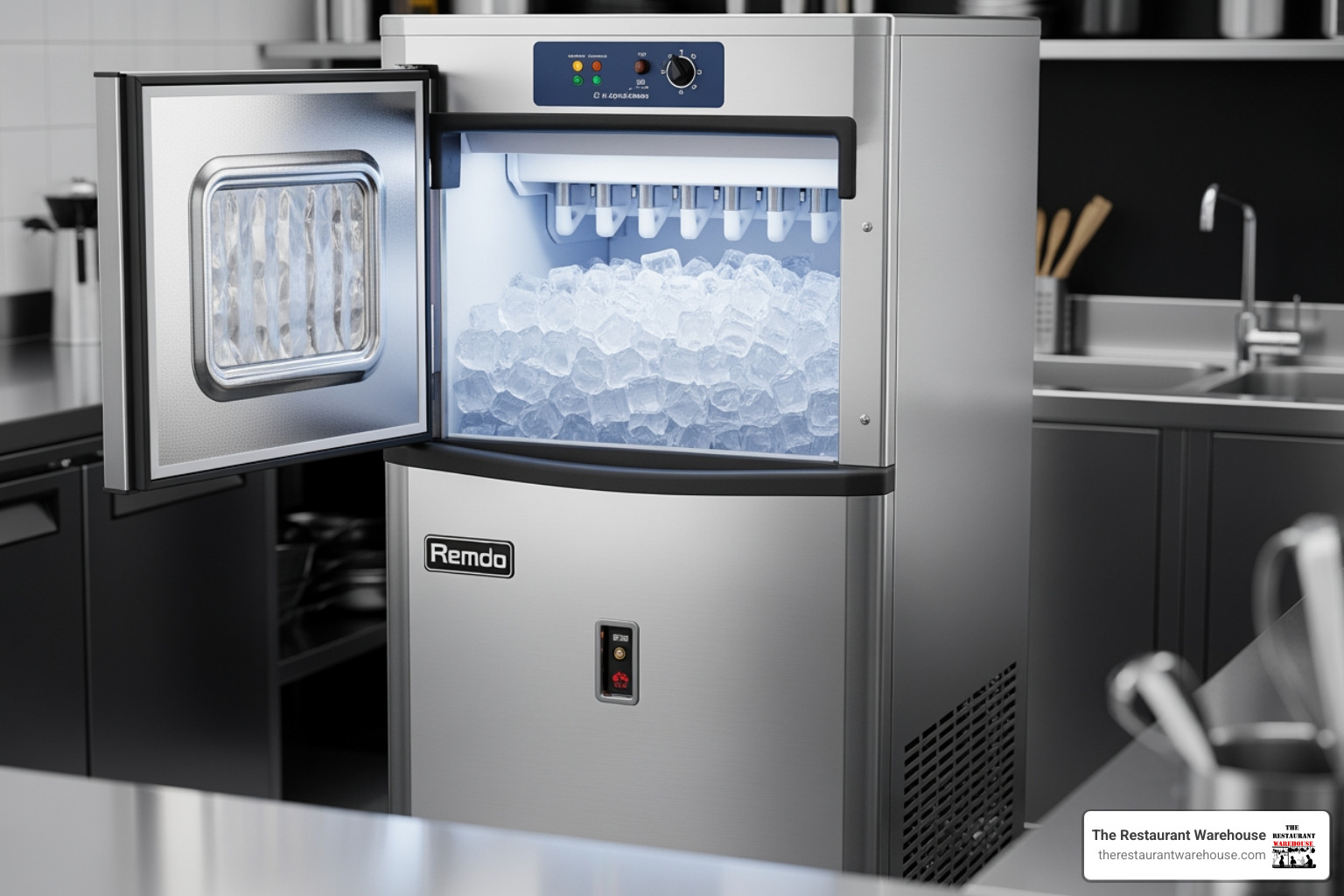
The question of how often to clean a commercial ice machine is critical for any foodservice operation. A startling 40% of operators are reportedly unaware of proper cleaning frequencies, a knowledge gap that can lead to serious health risks and expensive equipment failures. The stakes are high because ice is legally classified as food under the Federal Food Code, subjecting it to the same safety standards as the meals you serve.
Neglecting your ice machine can have severe consequences. Bacteria like salmonella, E. coli, and norovirus can thrive in ice, posing a direct threat to customer health. Beyond the health risks, a dirty machine operates inefficiently, leading to higher energy bills and mechanical breakdowns that can halt service. Regular cleaning is not just about passing health inspections—it's about protecting your customers, your reputation, and your bottom line.
A consistent cleaning schedule is essential. This includes daily tasks like wiping the exterior and cleaning the ice scoop, weekly sanitization of the ice bin, and monthly checks of removable parts. The most critical step is a professional deep cleaning and descaling every 3 to 6 months, as recommended by FDA and NSF guidelines. For establishments with high usage or poor water quality, monthly professional cleanings may be necessary.
If you’re setting up a new program from scratch, start with a conservative schedule, then shorten intervals based on what you observe: early signs of scale, any discoloration in the bin, or declining ice clarity. Pair your plan with staff training, a written SOP, and a cleaning log that managers review weekly.
Practical tip: assign ownership. Name one manager as the primary owner of the ice program and a backup owner to keep tasks on track during vacations or staffing changes. That simple step often doubles compliance.
Need help building a tailored plan for your location? Contact our team for guidance and a checklist you can implement today. Contact us: https://therestaurantwarehouse.com/pages/contact-us. Or browse machines designed for easy maintenance and service access: https://therestaurantwarehouse.com/collections/ice-machines.
The Critical Importance of Regular Cleaning: Risks vs. Rewards
We all know the saying, "out of sight, out of mind," and unfortunately, this often applies to commercial ice machines. Tucked away in a corner, it's easy to forget that these machines are food production units that require meticulous care. Neglecting this vital piece of equipment introduces a cascade of risks, while consistent cleaning offers rewards that benefit your entire operation.
Risks of Neglect
The most alarming risk is the potential for serious health hazards. Pathogens like Salmonella, E. coli, and Norovirus can survive and thrive in ice, originating from airborne particles, unclean water lines, or improper handling. According to the CDC's guidelines on foodborne illness prevention, these pathogens are responsible for millions of illnesses annually. A single case of a customer falling ill from your ice can be devastating. Visible mold and slime can also flourish, tainting ice with unpleasant odors and tastes, which is a major red flag for health inspectors and can lead to fines, closures, and a damaged reputation.
Operationally, a dirty ice machine is inefficient. Mineral buildup (scale) and microbial growth (slime) impede water flow and force the machine to work harder, increasing energy costs and reducing ice production. This strain often leads to unexpected breakdowns, costly repairs, and the need to buy emergency ice, which erodes profits. For more details on what to expect, you can read about potential repair costs.
Benefits of Regular Cleaning
The rewards of a well-maintained ice machine are significant. First and foremost is improved ice quality—clear, odorless, and perfectly formed ice improves the customer experience. Regular cleaning also extends the machine's lifespan by preventing the buildup of scale and slime, which reduces wear on internal components. This leads to lower utility bills, as a clean machine operates at peak efficiency. Consistent cleaning provides peace of mind, knowing your ice is safe, your machine is reliable, and you are compliant with health regulations.
How Often to Clean Commercial Ice Machine: A Definitive Schedule
Determining precisely how often to clean commercial ice machine equipment isn't a one-size-fits-all answer, but there are clear guidelines to establish a robust schedule. The goal is to balance hygiene with machine longevity and operational efficiency.
Manufacturer Recommendations and General Guidelines
Always start with the manufacturer's recommendations, which provide the minimum cleaning frequency for your specific model. Generally, leading brands and industry standards like the FDA Food Code and NSF guidelines recommend cleaning and sanitizing commercial ice machines at least every six months. Some modern machines even have a "Time to Clean" indicator that illuminates to signal a cleaning is due. However, this six-month interval is a baseline. Depending on your specific conditions, more frequent cleanings may be necessary. It's wise to create a detailed cleaning log to ensure accountability.
Pro tip: do not rely solely on the machine’s indicator. Treat it as a reminder, not a substitute for your scheduled cleanings. Production decline, off-odors, or visible scale all justify moving to a more frequent cadence even if the indicator hasn’t triggered.
Factors That Influence Cleaning Frequency
Several key elements play a significant role in how frequently your ice machine needs attention:
- Water Quality: Hard water, rich in minerals, causes rapid scale buildup. This white, flaky residue impairs performance and creates a surface for microbial growth. If you have hard water, more frequent descaling is required. A water filtration system can help, but filters must be changed regularly.
- Machine Usage & Ice Production Volume: A busy restaurant or bar producing hundreds of pounds of ice daily will accumulate contaminants faster than a small office machine. High volume means more frequent cleaning.
- Environment & Air Quality: The machine's location is crucial. Airborne particles like yeast, flour, or grease from a kitchen can contaminate the machine's interior, necessitating more frequent cleaning, potentially monthly.
- Manufacturer Recommendations: Your machine's manual is the primary guide for cleaning solutions, processes, and frequency. For more insights, see a guide to different ice machine types: https://therestaurantwarehouse.com/blogs/ice-machine-restaurant-guide.
Additional context by operation type:
- Bars and nightclubs: High sugar and citrus exposure from drink prep tends to increase biofilm if handling is lax. Aim for weekly bin sanitizing and quarterly deep cleans, moving to bi-monthly in peak season.
- Bakeries and pizza shops: Yeast in the air can accelerate microbial growth. Expect to sanitize bins weekly and perform full descaling/sanitizing every 1–2 months unless outstanding filtration and air management are in place.
- Hotels and healthcare: Heavy use and 24/7 access points require strict SOPs. Many operators standardize to quarterly deep cleans to avoid variability across shifts and locations.
- Seasonal venues: If a machine sits idle for weeks, perform a full clean and sanitize before shutdown and again before restart, discarding the initial ice batches.
Recommended Schedule: How Often to Clean Your Commercial Ice Machine
To keep your ice safe and your machine humming, we suggest a tiered cleaning schedule:
-
Daily Tasks (Staff):
- Wipe the exterior to prevent grime buildup.
- Wash and sanitize the ice scoop and store it outside the bin.
- Visually inspect ice for clarity and any foreign particles.
- Check that bin door gaskets are clean and seal properly.
-
Weekly Tasks (Staff/Manager):
- Empty the ice bin and sanitize the interior walls with a food-safe sanitizer.
- Inspect and clean the air filter on air-cooled models to ensure proper airflow.
- Wipe door handles, control panels, and splash areas with approved sanitizer.
-
Monthly Tasks (Manager):
- Deep clean removable parts like the water trough and distribution tubes.
- Inspect condenser coils on air-cooled units for dust and clean if necessary.
- Review the cleaning log with the team; address gaps and retrain as needed.
-
Every 3–6 Months (Professional Deep Clean):
- This is the essential deep clean, best performed by a technician. It includes full descaling to remove mineral buildup, a comprehensive sanitizing cycle, a mechanical inspection for wear and tear, and replacing water filters. Filters should be replaced every six months regardless of appearance, as their effectiveness diminishes over time.
Sample log fields you can use today:
- Date, task (daily wipe, weekly bin sanitize, deep clean, filter change), person responsible, verification initials, notes (e.g., “scale visible on trough,” “bin gasket replaced”). Keep these records for at least one year to demonstrate due diligence.
If you’re upgrading or standardizing across locations, choose equipment and accessories that simplify maintenance. Shop machines and compatible filters designed for quick access and cleaning: https://therestaurantwarehouse.com/collections/ice-machines.
Your Step-by-Step Guide to a Spotless Ice Machine
Cleaning a commercial ice machine is a precise process that requires attention to detail. Following these steps ensures your machine is not just clean, but truly spotless and safe.
Safety and Supplies
Before you begin, prioritize safety. Wear liquid-proof gloves and eye protection, as cleaning chemicals can be harsh. Always unplug the machine from its power source to prevent electrical hazards. If your workplace requires lockout/tagout, apply it before starting. Place wet floor signage and ensure a clear workspace.
Gather your supplies beforehand: cleaning cloths, brushes, a spray bottle, and the correct descaler and sanitizer. Keep separate brushes for the bin and for food-contact components to avoid cross-contamination.
It is critical to use manufacturer-approved, nickel-safe chemicals. Using the wrong solutions can damage your machine and void its warranty.
- Descaler (Cleaner): Use a nickel-safe cleaner designed to dissolve mineral deposits (scale). These typically contain acids like phosphoric and citric acid that are effective yet safe for internal components.
- Sanitizer: Use an approved sanitizer to disinfect the machine and remove microbial growth like mold and slime.
Never use harsh acids like nitric or hydrochloric acid, and avoid chlorine-based solutions like bleach, as they can corrode metal parts. For more on this topic, review our guide on choosing the right cleaning solutions: https://therestaurantwarehouse.com/blogs/crystal-clear-ice-awaits-best-ice-machine-cleaning-solutions-reviewed.
The Deep Cleaning and Descaling Process
This process removes mineral buildup and grime.
- Emptying the Machine: Turn off the machine, remove all ice from the bin, and discard it.
- Removing Components: Following your manual, carefully remove detachable parts like the water trough, baffles, and distribution tubes. Photograph their placement if you’re unfamiliar with reassembly.
- Mixing and Circulating Cleaner: Mix the descaler with warm water according to the product's instructions. If your machine has a "Clean" cycle, initiate it to circulate the solution through the water system for 20–45 minutes. For units without an automated cycle, manually flush the solution per the manufacturer’s steps.
- Scrubbing Components: While the cycle runs, scrub all removed parts and accessible interior surfaces with the descaler solution and a soft brush. Soak parts if needed to remove stubborn buildup. Pay special attention to the evaporator, water distributors, float assemblies, and the underside of the bin lid.
- Rinsing Thoroughly: After cleaning, rinse all components and the machine's interior with fresh water to remove all traces of the descaler. Refill the reservoir with fresh water and run a rinse cycle if available.
The Sanitizing Process
Sanitizing kills bacteria and mold and must be done after cleaning.
- Preparing and Applying Sanitizer: Mix the sanitizer solution as directed. Using a spray bottle, apply it liberally to all food-contact surfaces, including the bin and all removed components. Don’t forget door gaskets, ice chutes, and sensors.
- Air Drying: Allow the sanitizer to sit for the recommended time, then let all parts air dry completely. Do not rinse the sanitizer off.
- Reassembly and Restart: Once dry, reassemble the machine. Plug it in, turn it on, and discard the first one or two batches of ice to ensure no chemical residue remains.
SOP tip you can post by the machine:
- After hours only
- PPE on; power off; lockout if required
- Remove/soak parts; run clean cycle; scrub; rinse
- Sanitize; air-dry; reassemble; discard first ice
- Log completion and note any parts needed
Time planning: a routine deep clean for a mid-size cuber typically takes 60–120 minutes for experienced staff and longer if scale is heavy. Schedule around slow periods to avoid service disruption. If you prefer a turnkey service, our team can coordinate professional cleanings that align with your hours. Request service here: https://therestaurantwarehouse.com/pages/contact-us.
For more detailed instructions, see our complete guide to ice machine cleaning: https://therestaurantwarehouse.com/blogs/ice-machine-cleaning.
Troubleshooting, Maintenance, and When to Call a Professional
Even with a diligent cleaning schedule, issues can arise. Knowing how to spot common problems and when to call an expert can save you time and money.
Common Problems and Solutions
Many minor issues are signs that a cleaning is overdue. Look out for:
- Low Ice Production or Small Cubes: Often caused by scale buildup on the evaporator plate. A thorough descaling can restore performance.
- Cloudy or Bad-Tasting Ice: A direct indicator of a dirty system or an exhausted water filter.
- Unusual Noises: Grinding or clanking can signal mechanical issues or scale buildup.
- Water Leaks: May indicate clogged drains or loose connections.
- Machine Not Cycling Correctly: Dirty sensors can trick the machine into thinking the bin is full. Gently clean them with a cotton swab and descaler.
Regularly replacing water filters (every six months) is a key preventative step. For more diagnostic help, see our tips for troubleshooting common issues: https://therestaurantwarehouse.com/blogs/ice-machine-troubleshooting.
When to Call for Professional Service
While routine maintenance can solve many problems, some issues require a trained technician. Call a professional if you encounter:
- Persistent Problems: If cleaning doesn't resolve low production, poor ice quality, or strange noises.
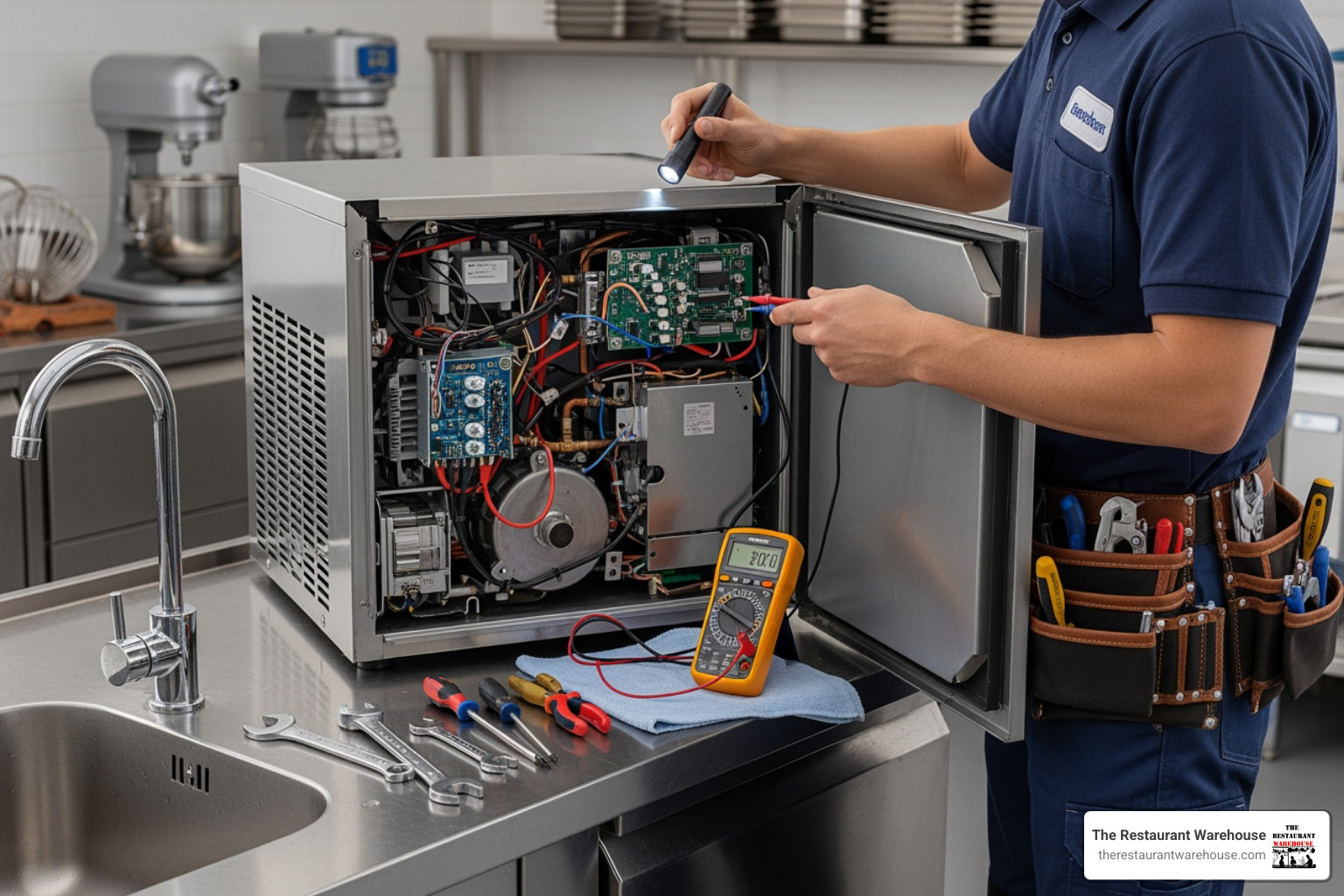
- Complex Mechanical or Electrical Issues: Problems with the compressor, refrigerant, motor, or control boards should only be handled by a professional.
- Suspected Refrigerant Leaks: This is a hazardous situation requiring immediate expert attention.
A preventative maintenance plan with a certified technician is a smart investment. They can identify problems before they become critical, perform intricate cleaning, and ensure your machine runs at peak efficiency, saving you money on emergency repairs. For professional service or to explore new equipment, Contact Us: https://therestaurantwarehouse.com/pages/contact-us.
Navigating Health Codes and Food Safety Regulations
In the foodservice industry, ice is legally considered a food product. This means it is subject to the same stringent health codes as any other ingredient you serve. Understanding and adhering to these rules is a legal imperative.
Legal and Safety Requirements
The Federal Food Code provides the foundation for most state and local food regulations regarding the sanitary production and handling of ice. While the FDA sets the guidelines, it is local health authorities who conduct inspections. You can find official guidance at the FDA Food Code guidelines: https://www.fda.gov/food/buy-store-serve-safe-food/fda-regulates-safety-packaged-ice.
Compliance involves a comprehensive approach:
- Regular Cleaning: As discussed, cleaning and sanitizing at least every six months is the minimum standard. Local codes may be stricter.
- Avoiding Violations: Non-compliance can lead to significant fines, business closure, and reputational damage. Food safety violations are taken very seriously by authorities.
- Documentation: Maintain a detailed log of all cleaning and maintenance activities. This record serves as proof of due diligence during health inspections.
- NSF Certification: Using equipment and cleaning products certified by NSF International demonstrates a commitment to public health standards and can simplify compliance.
What inspectors often verify:
- Your written SOP and staff knowledge of it
- Most recent cleaning dates and the name/role of the person who performed them
- Condition of bin interiors, scoops, scoop storage, gaskets, drains, and surrounding splash zones
- Water filter replacement dates and proof of purchase/install
- Evidence that first ice batches were discarded after sanitation
Proactively managing your ice machine's cleanliness protects public health and shields your business from legal and financial repercussions. The official guidance is clear: take all necessary measures to avoid contamination: https://www.accessdata.fda.gov/scripts/cdrh/cfdocs/cfcfr/CFRSearch.cfm?fr=1250.28#:~:text=Sec.,manner%20as%20to%20avoid%20contamination.
Training and recordkeeping best practices:
- Train all relevant staff on daily/weekly tasks and have at least two people trained for deep-clean support.
- Keep laminated quick-reference steps at the machine and store SDS sheets nearby.
- Retain logs for at least a year; digital copies (photos/scans) are acceptable if clearly legible and date-stamped.
- Conduct quarterly internal audits: spot-check bin interiors, sensor cleanliness, and the accuracy of logs.
If you need a ready-to-use SOP, we can share a printable version and help you adapt it to your location’s layout and staffing. Request it here: https://therestaurantwarehouse.com/pages/contact-us.
Frequently Asked Questions about Commercial Ice Machine Cleaning
Here are straightforward answers to some of the most common questions about ice machine cleaning.
Can I use vinegar or bleach to clean my commercial ice machine?
The answer is no. While common household cleaners, vinegar and bleach are unsuitable and potentially damaging to commercial ice machines.
- Vinegar: Standard household vinegar is not strong enough to remove heavy mineral scale, and more concentrated acetic acid can be corrosive.
- Bleach: Chlorine-based solutions like bleach are highly corrosive to the stainless steel and nickel-plated components in ice machines, causing pitting and long-term damage.
- Warranty Issues: Most manufacturers explicitly state that using unapproved chemicals, including bleach and vinegar, will void the machine's warranty.
Always use manufacturer-recommended, "nickel-safe" descalers and sanitizers formulated for your equipment.
What are the signs my ice machine needs an immediate deep clean?
Don't wait for your scheduled cleaning if you notice these warning signs:
- Visible Mold or Slime: Any black, pink, or greenish growth inside the machine.
- Foul Odors: A musty or moldy smell from the ice or bin.
- Poor Ice Quality: Ice that is cloudy, soft, or has an off-taste.
- Reduced Performance: A noticeable drop in ice production or smaller-than-usual cubes.
- "Time to Clean" Light: If your machine has this indicator, don't ignore it.
How much does professional ice machine cleaning cost?
The cost varies based on machine size, the severity of the buildup, and your location. While professional cleaning is an expense, it should be weighed against the much higher costs of emergency repairs, lost business during downtime, and potential health code fines. A preventative approach is almost always more cost-effective. To better understand these potential expenses, you can review our insights on understanding repair costs: https://therestaurantwarehouse.com/blogs/ice-machine-repair-cost.
Do health inspectors test ice samples?
They can. Inspectors may collect ice to assess sanitary conditions, especially if there are consumer complaints or visible sanitation issues. Keeping logs, replacing filters on schedule, and documenting sanitation steps provide strong support during inspections.
How long should I plan for a full clean and sanitize?
Plan 60–120 minutes for a typical mid-size cube machine if the unit has been maintained regularly. Heavier scale or first-time deep cleans can take longer. Schedule after peak hours and post a temporary sign directing staff to use backup ice or to limit certain beverages during the process.
What should I do if the machine has been idle for weeks?
Perform a full clean and sanitize before restarting. Discard any remaining ice, run a cleaning cycle, thoroughly rinse, sanitize, air dry, and discard the first 1–2 harvests after restart. Update your log with the restart cleaning date.
How often should I change my water filter?
Generally, every six months or sooner if production declines, ice appears cloudy, or you notice taste changes. High-sediment or hard-water areas may need more frequent changes. When replacing, write the install date on the filter body and update your maintenance log.
Where should the ice scoop be stored?
Store the scoop outside the bin in a clean, protected holder. Never leave it buried in the ice. Clean and sanitize the scoop and holder daily.
Can I schedule professional cleaning after hours?
Yes. Many operations choose overnight or early-morning service to avoid downtime. If you need help coordinating after-hours service, use our Contact page: https://therestaurantwarehouse.com/pages/contact-us.
Is there a quick daily routine my staff can follow?
Yes: wash/sanitize the scoop, wipe exterior touchpoints with food-safe sanitizer, confirm bin door closes and seals well, and visually inspect the ice. Initials and a quick note in the cleaning log take less than a minute and build accountability.
Conclusion: A Clean Machine is a Profitable Machine
In foodservice, the question of how often to clean commercial ice machine equipment is not a minor detail—it's a fundamental pillar of a successful operation. Regular, diligent cleaning supports your hygiene standards, operational efficiency, and profitability.
We've seen that the FDA considers ice a food product, and neglecting your machine risks customer health, costly violations, and damage to your reputation. A well-maintained machine, on the other hand, operates efficiently, consumes less energy, lasts longer, and produces the high-quality ice your customers deserve.
By implementing a structured schedule—from daily tasks to professional deep cleans every 3–6 months—you transform a potential liability into a reliable asset. This proactive approach prevents breakdowns and saves money in the long run. The value of a clean, efficient ice machine far outweighs the effort of its upkeep.
Take the next step:
- Shop reliable, easy-to-service ice machines: https://therestaurantwarehouse.com/collections/ice-machines
- Book service or request a custom cleaning checklist: https://therestaurantwarehouse.com/pages/contact-us
A cleaner machine today means safer ice, fewer surprises, and better margins tomorrow.
About The Author

Sean Kearney
Sean Kearney is the Founder of The Restaurant Warehouse, with 15 years of experience in the restaurant equipment industry and more than 30 years in ecommerce, beginning with Amazon.com. As an equipment distributor and supplier, Sean helps restaurant owners make confident purchasing decisions through clear pricing, practical guidance, and a more transparent online buying experience.
Connect with Sean on LinkedIn, Instagram, YouTube, or Facebook.
Leave a comment