

Stainless Steel Strength: Your Guide to Choosing a Commercial Prep Table
Why Heavy Duty Stainless Steel Tables Are Essential for Your Professional Workspace
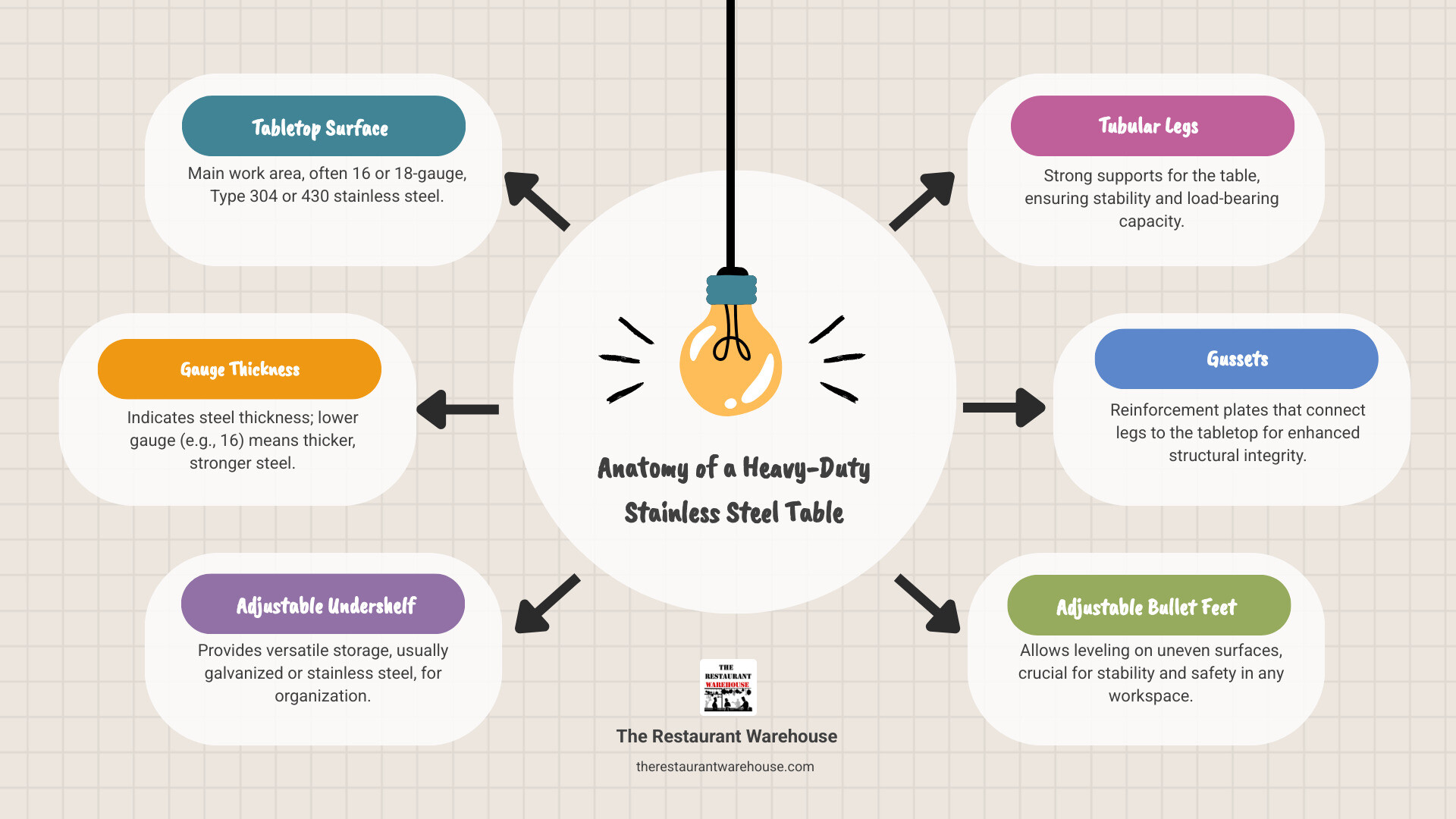
Heavy duty stainless steel tables are the foundational workhorses of any professional kitchen, food preparation area, laboratory, or demanding work environment. Their reputation for strength, hygiene, and longevity is well-earned, making them a critical investment for any serious operation. If you're in the process of comparing options to purchase the right table for your business, understanding the key specifications is paramount to making a choice that delivers both performance and value.
Quick Comparison Guide:
- Type 304 Stainless Steel: Offers superior corrosion resistance due to its nickel content, making it the ideal choice for wet, humid, or high-moisture environments. It is the premium standard for food-safe surfaces.
- Type 430 Stainless Steel: A more budget-friendly, nickel-free option that provides good corrosion resistance in dry settings. It's an excellent choice for general-purpose tasks where exposure to moisture is minimal.
- 16-Gauge Steel: A thicker, more robust option for heavy-duty applications. These tables typically support higher weight capacities and are more resistant to dents and warping.
- 18-Gauge Steel: A slightly thinner and more affordable option suitable for light to medium-duty tasks. These tables still offer excellent durability.
- NSF Certification: An essential requirement for any table used in commercial food service. This certification helps ensure the table meets strict standards for public health, safety, cleanability, and durability.
Whether you are outfitting a new restaurant, upgrading a busy cafe, or establishing a sterile laboratory, selecting the right stainless steel work table is a decision that goes far beyond simple dimensions. It involves a careful consideration of steel gauge thickness, the specific type of stainless steel alloy, the required weight capacity, and essential features like undershelves for storage and backsplashes for cleanliness. The ideal table will resist corrosion, withstand the rigors of intense daily use, and help you maintain high standards of hygiene, supporting your business, your staff, and your customers.
These tables are not merely pieces of furniture; they are indispensable assets engineered to handle a wide range of demanding tasks, from vigorous food prep to supporting heavy appliances. With prices for quality tables starting around $235 for basic models and exceeding $1,500 for specialized, deluxe configurations, a clear understanding of what you are paying for is crucial. This knowledge helps you make a long-term investment that will serve your operation reliably for years.
The primary difference between standard and deluxe models often lies in their construction materials. Standard tables typically combine a Type 430 stainless steel top with galvanized steel legs and undershelves. Deluxe models, in contrast, are usually constructed entirely from stainless steel, often the superior Type 304 grade, which provides improved corrosion resistance and a higher weight capacity. This makes them the stronger choice for humid environments or the most demanding heavy-duty applications.
I'm Sean Kearney from The Restaurant Warehouse, and I have dedicated my career to helping restaurant owners and food service operators find the right solutions for their operations. This includes matching businesses with the perfect heavy duty stainless steel tables for their unique applications. My background has taught me that a clear understanding of what you're buying—from the nuances of gauge thickness to the specifics of steel composition—is the key to saving money, avoiding future problems, and building a more efficient workspace.
Ready to find your perfect work table? Contact us today for personalized guidance, or browse our current selection of stainless work tables at https://therestaurantwarehouse.com/collections/work-tables.
The Best Benefits of Stainless Steel in Professional Environments
When you are outfitting a professional space—whether it's a high-volume culinary operation, a medical laboratory, or a rugged industrial setting—the choice of materials for work surfaces is critical. This is where heavy duty stainless steel tables provide exceptional value, offering durability, hygiene, and long-term performance that few other materials can match.
Superior Strength and Durability
Heavy duty stainless steel tables are engineered to endure the relentless daily grind of a busy professional environment: the constant sliding of containers, the impact from heavy items, and the ceaseless movement of staff. Stainless steel has an inherent resistance to dents, scratches, and general wear that would quickly degrade materials like wood or laminate.
This structural integrity means these tables maintain their form, function, and professional appearance over many years of intensive use. Reinforced tops and well-braced leg designs allow quality tables to comfortably support substantial weight capacities, with many commercial models easily handling several hundred pounds of evenly distributed load.
Unbeatable Hygiene and Safety
In any professional environment—especially those that handle food, medical supplies, or sensitive materials—hygiene is a non-negotiable priority. Stainless steel tables excel in this area. Their non-porous surface does not absorb liquids, retain food particles, or trap odors, and provides no hiding place for bacteria.
This makes stainless steel very easy to clean and sanitize, a key factor in passing health inspections and maintaining a safe workspace. A simple wipe-down with appropriate cleaners can remove spills and grime quickly, making daily sanitation protocols more efficient. Many heavy duty stainless steel tables also include rounded edges and stable, braced legs, which help protect staff from bumps and reduce the risk of tipping or wobbling.
Long-Term Value and Return on Investment
While the initial purchase price of a high-quality stainless steel table may exceed that of some alternatives, it generally represents a stronger long-term investment. The extended lifespan reduces the need for repairs or frequent replacement, lowering the total cost of ownership.
Stainless surfaces also do not require refinishing, resealing, or special coatings, saving both time and maintenance costs. Their ease of cleaning can translate into labor savings and less downtime, while helping you stay compliant with food safety regulations. According to the FDA Food Code guidelines, proper sanitation of food contact surfaces is essential for preventing foodborne illness. You can review these comprehensive guidelines directly at https://www.fda.gov/food/retail-food-protection/fda-food-code.
By providing a reliable, easy-to-sanitize, and professional-looking workspace, a well-chosen stainless steel table supports productivity and reinforces your commitment to quality.
Book a strategy call with our equipment specialists at https://therestaurantwarehouse.com/pages/contact-us to discuss the best stainless steel table options for your specific operation and budget.
Decoding the Steel: A Guide to Materials and Construction
Choosing the right heavy duty stainless steel table is not merely about selecting a size that fits your space; it is about understanding the material and construction details that drive performance, lifespan, and cost. A quick look at steel type, gauge, and frame design can help you make a far more informed decision.
Stainless Steel Type: 430 vs. 304
Not all stainless steel is the same. For work tables, the two most common grades are Type 430 and Type 304. These designations refer to the specific alloy composition, which in turn affects corrosion resistance, cost, and ideal use environments.
| Feature | Type 430 Stainless Steel | Type 304 Stainless Steel |
|---|---|---|
| Corrosion Resistance | Good, but less resistant to acids and chlorides | Excellent, highly resistant to rust, corrosion, and pitting |
| Cost | More budget-friendly | Higher cost due to nickel content |
| Magnetic Properties | Magnetic | Non-magnetic (or very weakly magnetic) |
| Best Use Environment | Dry settings, general purpose, less demanding environments | Wet, humid, high-salinity, acidic environments (e.g., dish rooms) |
| Nickel Content | Nickel-free | Contains nickel (typically 8-10.5%) |
Type 430 stainless steel is a ferritic alloy composed primarily of chromium and iron. It offers solid corrosion resistance in dry, indoor environments without aggressive chemicals. Because it is nickel-free, it is more economical, making it a strong value choice for general prep, packaging, or assembly areas with limited moisture exposure.
Type 304 stainless steel is an austenitic alloy that includes both chromium and nickel. The added nickel greatly improves resistance to rust and pitting, especially in wet, humid, or high-salinity environments. If your table will see frequent contact with water, acidic foods, or sanitizing solutions, Type 304 is usually the best long-term choice, even at a higher initial cost.
Understanding Steel Gauge and Its Impact on Durability
Steel "gauge" refers to thickness. The key point is that a lower gauge number means thicker steel.
- 14-Gauge: One of the thickest options commonly used for tabletops. It is designed for extremely heavy-duty use and high impact, such as constant loading and unloading of very heavy items.
- 16-Gauge: A widely used commercial standard for heavy duty stainless steel tables. It offers an excellent balance of strength, weight capacity, and price, handling demanding daily prep work in most professional operations.
- 18-Gauge: Thinner and more economical, suitable for light to medium-duty applications. It is often a smart choice for auxiliary tables, storage areas, or workstations that do not see constant impact.
Thicker, lower-gauge steel resists denting and flexing better but costs more due to the extra material and manufacturing requirements. Matching the gauge to your actual tasks is one of the simplest ways to avoid overpaying for capacity you do not need—or underbuying and dealing with a surface that feels too light for the job.
Standard vs. Deluxe: What's the Difference?
"Standard" and "Deluxe" labels on heavy duty stainless steel tables usually describe how much stainless steel is used and of what type.
Standard stainless steel tables most often feature:
- A stainless steel top (frequently Type 430, in 16- or 18-gauge)
- Galvanized steel legs and undershelf to keep costs down
These models are well-suited to dry or moderate-use environments where constant water exposure is not a factor. They offer a sturdy work surface at a budget-conscious price point.
Deluxe stainless steel tables typically include:
- A stainless steel top (often Type 304)
- Stainless steel legs and undershelf for better overall corrosion resistance
Because every major component is stainless, deluxe tables resist rust and pitting much better in wet or humid spaces, such as dish areas or raw protein prep stations. They usually provide a more rigid feel and can support higher weight capacities.
If you are unsure which construction level is right for your workspace, reach out to our team directly through our https://therestaurantwarehouse.com/pages/contact-us for personalized guidance.
Selecting the Perfect Heavy Duty Stainless Steel Tables for Your Workspace
Choosing the right heavy duty stainless steel table for your business is a strategic decision that affects workflow, safety, and cleanliness. A bit of planning around space, capacity, and features will help you get the best return on your investment.
Sizing Up Your Needs: Dimensions and Weight Capacity
Start by measuring your available space carefully. Consider:
- Overall footprint of the table
- Clearance for staff movement and door swings
- Proximity to sinks, storage, or service areas
Common table lengths range from compact 24 inch models to long 96 inch runs or more. Standard working height is typically around 34 to 35 inches, which is comfortable for most staff. Some tables offer limited height adjustment to fine-tune ergonomics.
Weight capacity is just as important as size. Most manufacturers provide a rated top capacity and, if included, a separate rating for the undershelf. These ratings assume an evenly distributed load across the surface. A lighter-duty 18-gauge table might be ideal for utensils, small appliances, and prep containers, while heavier-gauge models better support bulk ingredients or larger pieces of equipment.
Matching the table's rated capacity to your actual use helps prevent warping or instability over time and supports a safer work environment.
Essential Features for Improved Functionality
Beyond size and material, specific design features can make a table far more efficient in day-to-day use:
- Adjustable Undershelves: Most work tables include a lower shelf for storage. Adjustable undershelves let you set the shelf height to fit items such as ingredient bins or pans. Galvanized undershelves are more economical; stainless undershelves are easier to clean and more corrosion-resistant.
- Backsplashes: A low backsplash (often 2 to 4 inches high) along the rear edge of the table helps keep liquids, food particles, and tools from falling behind the unit. This supports better sanitation and easier cleaning.
- Caster Wheels: Adding locking casters transforms a stationary table into a mobile workstation. This is useful for flexible layouts and deep cleaning under and around tables. That casters will usually add to the overall table height.
- Leg Styles: Most heavy duty stainless steel tables use tubular legs for a sturdy, easy-to-clean structure. Some designs add cross-bracing or H-frames for even more stability.
- Adjustable Bullet Feet: Floors are rarely perfectly level. Bullet feet that screw in and out allow each leg to be individually adjusted so that the table sits level and does not wobble.
Thoughtfully combining these features can significantly improve workflow and staff comfort.
If you would like help choosing a configuration custom to your layout and menu, you can contact The Restaurant Warehouse to discuss dimensions, capacity, and accessory options with a product specialist.
Certification, Assembly, and Long-Term Care
Investing in heavy duty stainless steel tables is only the first step. Understanding certification, assembly, and maintenance will help you get the longest, safest service life from your purchase.
The Importance of NSF Certification
For any business in the foodservice industry, NSF certification is an important indicator that a table is designed with sanitation in mind. NSF International is an independent organization that develops standards and certifies food equipment for public health and safety.
For heavy duty stainless steel tables, NSF/ANSI 2 certification generally focuses on:
- Materials: Contact surfaces must be non-toxic, corrosion-resistant, and non-absorbent.
- Design: Surfaces and joints should be smooth and easy to clean, with minimal crevices where food debris and bacteria can collect.
- Durability: The table should withstand repeated cleaning and normal use without degrading in a way that affects sanitation.
While not every application requires NSF certification, it is strongly recommended—and often required—for commercial food preparation areas. The USDA also provides comprehensive guidelines on food safety and equipment standards at https://www.usda.gov/topics/food-and-nutrition.
Assembly and Installation Tips
Most heavy duty stainless steel tables arrive "K.D." (knocked down) to reduce shipping volume. Assembly is typically straightforward, but a few best practices make the process easier and help ensure long-term stability:
- Review Instructions: Read through the manufacturer's guide before starting so you understand the order of assembly.
- Protect the Top: Assemble the table upside down on cardboard or a blanket to avoid scratching the stainless surface.
- Use Basic Tools: A wrench and any included Allen keys are usually sufficient. A rubber mallet can help seat legs and collars without damage.
- Tighten Hardware Evenly: When attaching the undershelf, tighten fasteners gradually and evenly on all legs to keep the frame square.
- Check Gussets and Collars: Many tables rely on gussets or heavy-duty collars at leg connections to provide rigidity. Ensure they are fully seated and firmly tightened.
- Level the Table: After flipping the unit upright, use a level and adjust the bullet feet until the table is stable and does not rock.
Correct assembly reduces wobble, protects welds and fasteners, and helps the table maintain its rated weight capacity.
Maintenance Tips for Heavy Duty Stainless Steel Tables
Stainless steel is relatively low-maintenance, but a consistent routine keeps it looking professional and performing at its best:
- Daily Cleaning: Wipe down the surface with warm water and a mild detergent using a soft cloth or sponge.
- Rinse and Dry: Rinse with clean water to remove any cleaner residue, then dry thoroughly to reduce mineral spots and help protect against corrosion.
- Avoid Chlorine-Based Cleaners: Steer clear of products containing chlorine or chlorides, including bleach, which can damage stainless steel over time.
- Non-Abrasive Only: Do not use steel wool, abrasive powders, or metal scrapers. These can scratch the surface and compromise the protective oxide layer.
- Follow the Grain: When wiping or polishing, move in the direction of the visible grain to minimize fine scratching.
- Periodic Polishing: A stainless steel polish can help restore shine and reduce the appearance of fingerprints on exposed front edges.
With basic daily care, a well-built stainless steel table can serve reliably for many years, even in demanding commercial environments.
Contact our equipment specialists today at https://therestaurantwarehouse.com/pages/contact-us to discuss your specific needs and compare NSF-certified models that match your requirements.
Applications and Customization
The remarkable versatility of heavy duty stainless steel tables allows them to extend their utility far beyond the confines of traditional kitchens. Their inherent durability, superior hygiene, and impressive adaptability make them invaluable assets across a multitude of diverse industries and for an ever-expanding variety of tasks. Furthermore, the ability to customize and accessorize these tables allows us to help you tailor them precisely to your unique workflow, dramatically enhancing both their functionality and your overall efficiency.
Common Industries and Applications
When we consider the diverse needs of modern businesses, we see heavy duty stainless steel tables serving as foundational assets in a wide range of sectors, demonstrating their incredible flexibility:
- Foodservice Industry: This is their natural habitat. From the bustling kitchens of fine dining restaurants, delis, and bakeries to the compact spaces of food trucks, pop-up kitchens, and large-scale catering operations, these tables are essential for every stage of the process: food preparation, plating, assembly, and holding. Their resistance to corrosion and ease of sanitation are paramount in this setting.
- Medical Labs and Healthcare Facilities: In environments where sterility and absolute cleanliness are critical, such as hospitals, clinics, and veterinary offices, stainless steel tables provide a non-porous, easy-to-sanitize surface for laboratory work, preparing sterile instruments, and supporting patient care procedures.
- Cleanrooms and Manufacturing: Industries that require ultra-clean environments, such as electronics manufacturing, aerospace, and pharmaceutical production, rely on stainless steel tables for their minimal particle shedding and ease of decontamination, ensuring product integrity.
- Workshops and Garages: For any task requiring a robust, non-reactive, and easy-to-clean work surface, these tables are a perfect fit. They can withstand heavy tools, oils, solvents, and general wear, offering a durable and long-lasting workbench for mechanics, artisans, and dedicated DIY enthusiasts.
- Laundromats and Dry Cleaners: Stainless steel's inherent resistance to moisture, heat, and cleaning chemicals makes it an excellent choice for folding tables and utility surfaces in commercial laundry facilities.
- Educational Institutions: From culinary schools teaching the next generation of chefs to K-12 and university cafeterias serving thousands of meals daily, stainless steel tables provide the durable and hygienic surfaces needed to support these high-volume operations.
Popular Accessories and Add-Ons
To further elevate the utility of your heavy duty stainless steel tables, a broad range of accessories and add-ons can be integrated, transforming a basic work surface into a highly specialized and efficient workstation:
- Overshelves: Adding a single or double overshelf is one of the most effective ways to create vertical storage space above the main work surface. This keeps frequently used items like spices, small appliances, or order tickets within easy reach without cluttering your primary workspace.
- Drawers: Integrated drawers provide secure, enclosed storage for utensils, small tools, testing instruments, or valuable items, keeping them organized, clean, and protected from dust, splashes, or misplacement.
- Pot Racks: Overhead pot racks or hooks attached to the table's structure can be used to store pots, pans, and large utensils, freeing up valuable shelf and cabinet space while improving accessibility.
- Marine Edges: This feature consists of a raised edge around the perimeter of the tabletop. It is designed to contain spills and prevent liquids from running onto the floor, which is invaluable when working with liquids or in wet prep areas.
- Speed Rails: Commonly used in bars but useful in many settings, speed rails attach to the front or side of the table, providing quick, organized access to bottles, sauces, or condiments.
- Cutting Board Attachments: Some tables offer integrated holders or can be fitted with brackets for removable cutting boards, ensuring a stable and hygienic cutting surface that can be easily taken off for thorough cleaning.
- Caster Kits: As mentioned previously, adding a set of durable, locking casters can make your table mobile, allowing for flexible layout changes, easy transport, or simplified cleaning routines.
By thoughtfully selecting these accessories, we can help you configure your heavy duty stainless steel tables to perfectly match the demands of your specific tasks and maximize your operational efficiency. Book a strategy call with our team to explore customization options tailored to your unique needs.
Conclusion
Choosing the right heavy duty stainless steel table is a truly foundational decision for any professional operation, with a direct impact on everything from hygiene and workflow efficiency to long-term operational cost. Throughout this guide, we have explored the critical factors that should inform this important choice. We've detailed the superior strength and unbeatable hygiene benefits of stainless steel and delved into the important nuances of material composition. Understanding the key differences between the corrosion resistance of Type 304 and the economy of Type 430 stainless steel, and knowing how gauge thickness (e.g., robust 16-gauge versus versatile 18-gauge) dictates durability and cost, empowers you to make a well-informed investment tailored to your specific needs.
We have also highlighted the essential features that transform a simple table into a high-performance workstation, such as adjustable undershelves for optimized storage, backsplashes for enhanced cleanliness, and casters for valuable mobility. We've emphasized the non-negotiable importance of NSF certification as your guarantee of public health and safety compliance. With proper assembly and a simple, consistent maintenance routine, your stainless steel table will stand as a reliable workhorse in your operation for many years to come.
A heavy duty stainless steel table is far more than just a surface to work on; it is a core asset that supports your daily operations, ensures a safe and hygienic environment, and delivers unwavering performance across a vast array of industries. At The Restaurant Warehouse, we are deeply committed to providing our customers with exceptional quality and value. We are here to help you find the perfect table that not only meets your current needs but also exceeds your expectations for years of service.
Contact us today at https://therestaurantwarehouse.com/pages/contact-us for expert assistance in finding the perfect table for your needs and let our team help you build a workspace that truly performs. Browse our complete selection at https://therestaurantwarehouse.com/collections/work-tables to compare models and find the ideal solution for your operation.
About The Author

Sean Kearney
Sean Kearney is the Founder of The Restaurant Warehouse, with 15 years of experience in the restaurant equipment industry and more than 30 years in ecommerce, beginning with Amazon.com. As an equipment distributor and supplier, Sean helps restaurant owners make confident purchasing decisions through clear pricing, practical guidance, and a more transparent online buying experience.
Connect with Sean on LinkedIn, Instagram, YouTube, or Facebook.