

What Are Fry Dump Stations? Your Guide to Commercial Fry Holding
The Secret to Crispy, Hot Fries Every Time
In foodservice, the difference between a memorable meal and a forgettable one often comes down to texture and temperature. Have you ever wondered why restaurant fries arrive impossibly hot and perfectly crispy, while homemade versions lose their magic within moments? The answer is not a secret recipe, but a brilliantly designed piece of holding equipment: the fry dump station.
These specialized units hold freshly fried foods at peak serving temperature while allowing excess oil to drain away. A typical station features infrared lamps or ceramic heaters, perforated holding pans, and integrated grease collection systems working together to preserve food quality between the fryer and the customer's plate.
What a Fry Dump Station Does:
- Preserves Temperature: Holds fried foods between 140°F and 160°F for optimal serving
- Eliminates Oil: Perforated design drains residual cooking oil into a dedicated collector
- Maintains Crispiness: Overhead heat prevents steam buildup that causes sogginess
- Optimizes Workflow: Strategic placement next to fryers creates seamless transitions
- Reduces Waste: Extends freshly cooked product life, allowing smarter batch cooking
The fundamental challenge every restaurant faces is managing the gap between perfectly cooked food and service. Pull golden fries from hot oil, but let them sit on a standard tray for minutes, and disaster strikes. They lose heat, the exterior softens from steam, and the surface reabsorbs oil, turning the batch limp and unappetizing. This affects both quality and finances—every soggy fry thrown away represents lost revenue.
A fry dump station solves this problem. The perforated pan provides immediate oil drainage while overhead heating maintains consistent, dry radiant heat without continuing the cooking process. Strategic placement minimizes staff movement, reduces spills, and maximizes service speed during rushes.
At The Restaurant Warehouse, we help foodservice operators build efficient operations without overpaying. Understanding how a fry dump station functions is critical for budget-conscious operators—it's a strategic investment that pays for itself through reduced waste, improved satisfaction, and faster service.
Explore food holding and warming options at https://therestaurantwarehouse.com/collections/food-warmers.
What is a Fry Dump Station and Why is it Essential?
A fry dump station is a temperature-controlled holding zone engineered for freshly fried foods. Picture a busy service: golden fries emerge from the fryer at peak perfection—hot, crispy, flavorful. However, orders rarely go directly from fryer to customer in seconds. There's always a critical waiting period for order assembly, packaging, or managing rush flow. This is where the fry dump station proves essential.
Beyond holding items at optimal serving temperature, the design facilitates oil drainage—the core mechanism for maintaining crispiness. Without proper drainage, fried items become victims of residual heat and oil, leading to soggy textures that disappoint customers.
A well-placed station streamlines workflow by creating a designated staging area adjacent to the fryer, simplifying the cooking-to-serving process. Staff quickly transfer cooked items from basket to holding station, creating a buffer that manages order flow and reduces bottlenecks during intense periods.
The advantages create a positive feedback loop: increased efficiency as staff spend less time juggling hot baskets, more consistent product quality ensuring every customer receives hot, crisp fries, and reduced waste through efficient batch cooking without quality compromise.
Stations are typically located immediately next to fryers for seamless transition from cooking to holding, minimizing steps and maximizing service speed.
The Core Purpose: Preserving Food Quality
Operators rely on fry dump stations primarily for quality preservation—maintaining complete sensory profiles of temperature, texture, and taste.
Maintaining proper holding temperature is essential for food safety. Health codes mandate hot-held foods stay above specific minimums to inhibit bacterial growth. Fry dump stations keep items safely above 140°F (60°C). For safe hot-holding practices, reference the USDA Food Safety and Inspection Service.
Preventing sogginess is equally important. Well-fried food features crispy exteriors contrasting soft interiors. Once removed from fryers, residual heat causes steam release. Without ventilation, trapped steam softens crusts while surface oil re-absorbs, creating greasy, limp products. The dual-action design—overhead radiant heat maintaining temperature while perforated pans allow moisture and oil escape—combats both degrading processes.
This supports customer satisfaction. Consistently serving piping hot, perfectly crispy items delivers on quality promises. Customers receiving soggy, lukewarm fries are less likely to return. A reliable station ensures every serving meets standards.
Strategic Placement for a Seamless Workflow
A fry dump station's effectiveness depends equally on features and physical positioning within the layout.
Position stations immediately adjacent to fryers. Close proximity minimizes distance staff travel when transferring hot items from basket to holding area. Reduced movement saves valuable seconds per batch, adding up to meaningful time savings per shift. It integrates the station directly into frying and plating processes, creating smooth, logical flow.
Thoughtful placement improves safety by reducing movement in potentially slick areas, decreasing accident risks. When staff can simply turn and dump cooked product directly into the station, it creates ergonomic, less demanding processes, allowing quicker turnaround and substantial service speed boosts.
Ready to evaluate options? Compare affordable hot-holding solutions at https://therestaurantwarehouse.com/collections/food-warmers and speak with specialists about matching capacity to your menu.
The Anatomy of a Fry Dump Station: Key Components and Features
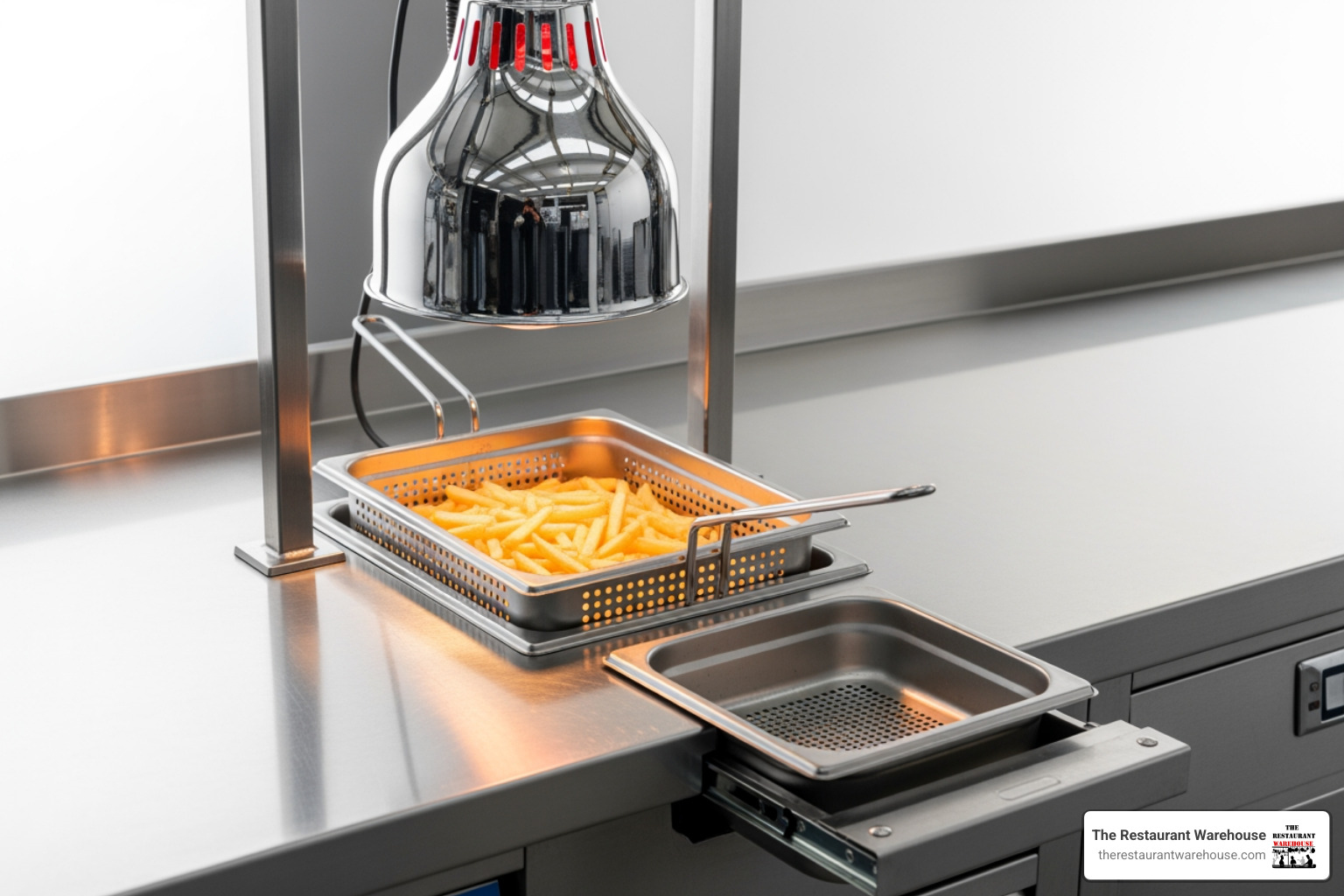
To understand how a fry dump station preserves the quality of fried foods, it helps to look at its core components. Each element is designed around three goals: maintaining safe temperature, protecting texture, and simplifying cleanup.
At first glance, a typical fry dump station consists of a sturdy frame, one or more heating elements, and a system of holding pans. The materials used in its construction are a primary indicator of its potential longevity and its ability to meet hygiene standards. Stainless steel is the go-to for most operators because it offers durability, resistance to rust and corrosion, and a non-porous surface that is easier to clean and sanitize.
Heating elements are responsible for maintaining the food at a safe and appetizing temperature. The overall size and capacity of the station will dictate the type and power of the heating system required. This depends on the kitchen's output volume—a small cafe might be well served by a compact countertop model for intermittent batches, whereas a high-volume quick-service concept will need a larger model to handle a continuous flow of product. Finally, ease of cleaning is a major consideration; features like removable pans and collectors are essential so the unit can be quickly broken down, washed, and sanitized.
Heating Elements: The Heart of the Warmer
The heating elements truly are the heart of any fry dump station. They dictate how effectively the unit can maintain food quality without compromising texture.
Common technologies include:
- Infrared Heat Lamps: One of the most common types, appearing as long, glowing overhead bulbs or strips. They work by emitting infrared radiation that is absorbed by the food, heating it directly. This is efficient at keeping food warm without significantly heating the surrounding air.
- Ceramic Heaters: Similar in principle to infrared lamps, ceramic elements emit powerful radiant heat and are known for producing very even heat distribution, which can benefit more delicate fried items.
- Radiant Heat Technology: More generally, radiant systems transfer energy directly to the food's surface, as opposed to convection heating, which relies on warming the air around the food. Direct energy transfer is key to maintaining crispiness because it helps avoid the humid environment that leads to sogginess.
When evaluating these heating elements, operators should note their wattage and power specifications. Higher wattage generally translates to more powerful heating capabilities, which is useful for larger capacity units or for maintaining stable holding temperatures in cooler ambient environments. Models on the market can range roughly from 550W for small countertop units to higher wattage for larger stations. It is also important that the heat distribution pattern covers the entire holding surface evenly to avoid cold spots.
Some models offer adjustable temperature or intensity controls. While the safe hot-holding range is relatively narrow, having some control allows staff to fine-tune the environment for different products, such as shoestring fries versus heavier breaded chicken.
Construction and Design Features
The specific construction and design features of a fry dump station are what make it durable and practical in a busy kitchen.
High-quality stainless steel is widely used because it is robust and stands up well to dents, scratches, and frequent cleaning. Its non-porous surface supports proper sanitizing, which is essential for safe food service. Different grades, such as 304 or 430 stainless steel, offer varying levels of corrosion resistance and durability, and the best choice depends on application and budget.
Perforated holding bins are integral to the station's function. They are designed with a pattern of holes that allows excess oil to drain away from the hot food efficiently, preventing fries and other items from sitting in grease. Beneath these bins, you typically find sloped drain tops and removable grease collectors. Gravity pulls drained oil into the collector tray, which can then be removed for safe disposal and cleaning.
Many stations also incorporate pan holders or dividers, which secure the perforated bins and can help with organization and first-in, first-out (FIFO) practices. Small details like the angle of the drain slope and the ease with which bins and trays are removed for washing can have a big impact on daily operation and labor.
Types of Fry Dump Stations: Finding the Right Fit
Fry dump stations come in various configurations, and choosing correctly depends on layout, fried food volume, and available space. Units group into compact countertop models, larger freestanding floor models, and built-in units. Some operations benefit from portable or modular designs.
The decision balances holding capacity against unit footprint. A small coffee shop offering fries might thrive with a compact countertop unit in narrow spaces. High-volume quick-service chains may require multiple large floor models to meet demand.
When advising customers, we recommend considering:
- Peak 15-30 minute fried item orders
- Available line space next to fryers
- Need for future reconfiguration flexibility
Countertop and Portable Fry Dump Stations
For operators with limited space or variable demand, countertop and portable fry dump stations offer practical solutions.
Countertop models are compact, self-contained units for work surfaces. They suit smaller operations like food trucks, concession stands, and cafes where space matters. Their footprint allows integration into tight layouts without major changes.
Countertop stations typically operate on standard 110V/120V circuits, making them plug-and-play in most environments. Despite size, they provide steady holding for surprising volumes during rushes.
Portable stations add flexibility with casters, allowing repositioning for events, seasonal outlets, or time-based reconfigurations. Many also run on 110V/120V power, avoiding special electrical work.
These smaller units offer budget-friendly entry points, popular with new concepts controlling startup costs while delivering consistent fried items.
Floor Model and Built-In Fry Dump Stations
For high-volume operations—fast-food franchises, university dining, hospital cafeterias, sports venues—floor model and built-in fry dump stations fit best.
Floor models are robust standalone units with expanded capacity versus countertop versions. They feature larger bins accommodating several baskets' worth of product, equipped with powerful heating systems maintaining consistent temperatures across wider surfaces. Many include integrated cabinet storage for scoops, seasonings, or packaging.
Built-in units drop into custom counters, creating flush, cohesive looks. This optimizes workflow by making the station continuous with cooking and service lines. Built-in stations pair with multiple fryers, positioned for minimal transfer movement.
As permanent fixtures, plan for current volume plus potential growth. Working with value-focused suppliers, you can often step up capacity without major cost jumps, providing headroom for busy periods.
Contact The Restaurant Warehouse at https://therestaurantwarehouse.com/pages/contact to discuss your menu, space, and budget for custom recommendations.
Maximizing Quality and Efficiency: How to Use and Maintain Your Station
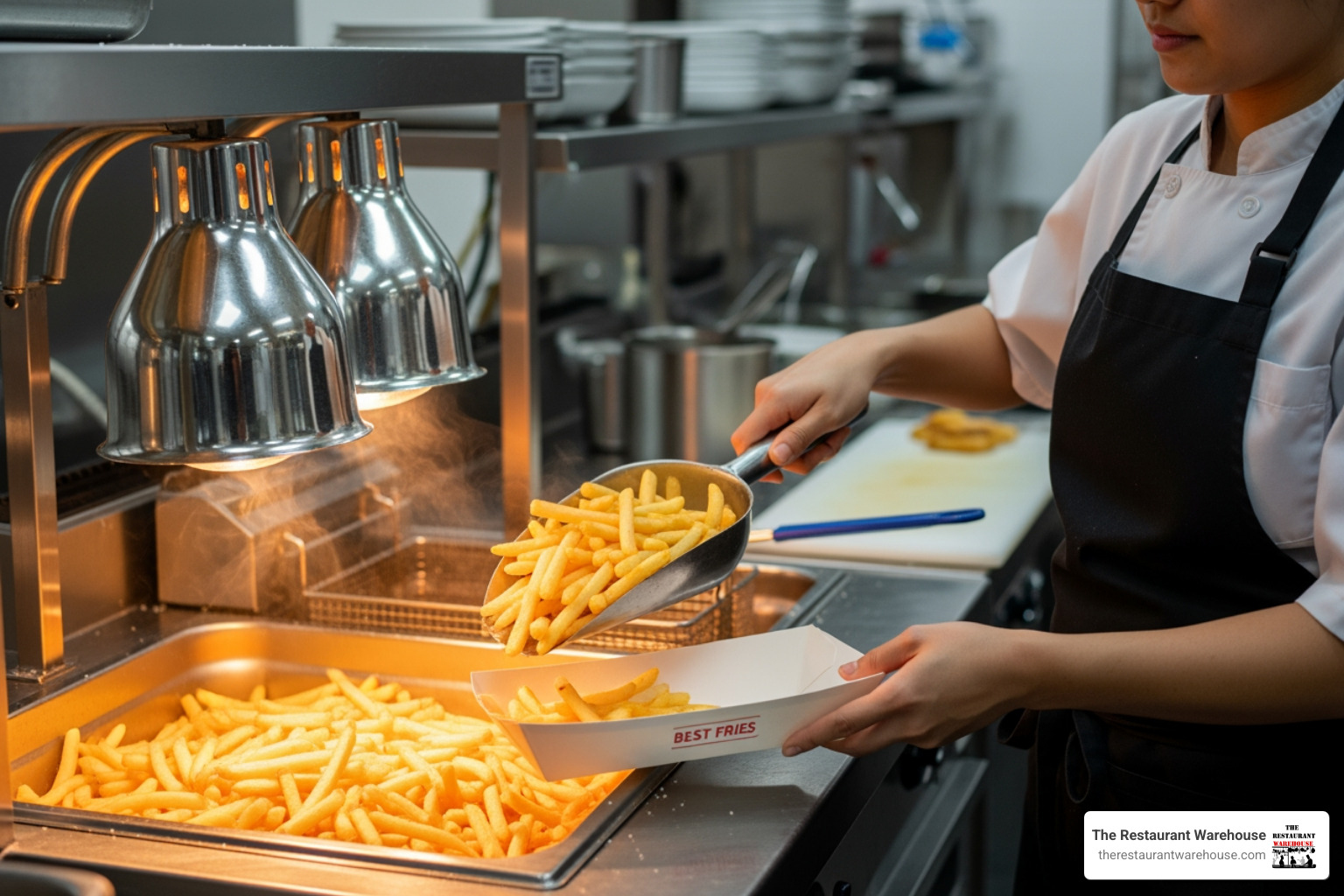
Simply purchasing and installing a fry dump station is only the first step. To get full value from your investment, it is important to train staff on proper use and commit to regular maintenance. Done well, this keeps fried foods hot and crisp, supports food safety, and extends the lifespan of the equipment.
Proper usage involves more than tossing food into the pan. It includes careful loading, respect for ideal holding times, and integrating the station into your broader workflow. Maintenance is not just a quick wipe-down at the end of the night; it involves routine cleaning, simple inspections, and addressing small issues before they affect service.
Best Practices for Operation
Operating a fry dump station with consistent habits helps ensure every order of fries, tenders, or onion rings reaches the customer at its best.
- Use First-In, First-Out (FIFO): Always serve the oldest product in the holding bin first. This prevents a single batch from sitting too long. Many fry dump stations have dividers or sections that make it easier to organize food in order.
- Distribute Food Evenly: When you transfer a basket of fries or other items, avoid piling everything in a tall mound. Spread the food evenly across the perforated surface so heat and air can circulate.
- Avoid Overcrowding: Overcrowding traps steam and blocks perforations, which quickly softens the exterior and leads to grease buildup. It is better to load smaller batches more often, especially during busy times.
- Respect Holding Times: For most common fried foods, especially french fries, the ideal holding time for optimal crispiness and temperature is typically between 5 and 7 minutes. Beyond that window, quality usually declines even with good equipment. Build your prep schedule and batch sizes around this limit.
- Integrate Seasoning: If you season fries or other items after frying, consider setting up a small seasoning station near the dump station. Staff can scoop a portion, season immediately while the product is hot, and then package for service. This keeps the process efficient and consistent.
Clear, simple procedures posted near the station can help new staff adopt these habits quickly and keep quality consistent across shifts.
Maintenance and Cleaning for Longevity
Properly maintaining and cleaning your fry dump station is essential for performance, safety, and lifespan. A structured routine also reduces the risk of sudden issues during service.
Key tasks include:
- Daily Cleaning: At closing, turn the unit off, unplug it, and allow it to cool. Remove food debris from the perforated bins, then wash, rinse, and sanitize the bins and dividers. Carefully remove and empty the grease collector into an approved grease disposal container, never into a sink drain. Wash and sanitize the tray before replacing it. Finally, wipe all stainless surfaces with a food-safe cleaner and sanitizer.
- Cleaning Stainless Steel: Use a non-abrasive cleaner formulated for stainless steel. Avoid harsh scouring pads that can scratch surfaces and make them harder to sanitize. Wipe in the direction of the grain.
- Cleaning Heat Lamps and Elements: Always unplug the unit and confirm elements are cool before cleaning. Use a soft, dry or slightly damp cloth to wipe bulbs and elements to remove dust or light grease. Do not spray liquid directly onto electrical components. Replace user-serviceable bulbs as needed following the manufacturer's guidance.
- Emptying Grease Collectors: Make this a daily, and if necessary, mid-shift task. Full grease trays can overflow, creating slip hazards and sanitation issues.
- Weekly and Monthly Checks: Once a week, inspect cords and plugs for signs of wear. Monthly, check that all screws and fittings are tight and that the heating elements are providing even coverage. If you notice uneven heating, dim bulbs, or unusual noises, schedule repairs before peak periods.
For additional background on safe cleaning and hot-holding practices, you can reference resources from organizations such as the USDA Food Safety and Inspection Service.
If you are concerned your current station is underperforming or costing you labor in extra cleanup, you can contact The Restaurant Warehouse for guidance or to compare replacement options at https://therestaurantwarehouse.com/pages/contact.
Frequently Asked Questions
As foodservice specialists, we receive many questions about fry dump stations from restaurant owners and kitchen managers. Here are the most common inquiries with detailed answers.
How long can you hold french fries in a dump station?
This critical question addresses quality control fundamentals. While high-quality stations preserve fried food integrity, there's a finite peak window. For optimal crispiness and temperature, hold french fries no longer than 5 to 7 minutes. Beyond 7 minutes, quality noticeably declines—fries become progressively drier or lose crunch as they soften. The goal: balance holding time long enough for workflow management but short enough to ensure fresh-tasting products.
What is the ideal temperature for a fry dump station?
Ideal temperature exists in a sweet spot—hot enough for safety and appeal, not so hot it continues cooking. The primary goal: keep food safely above the danger zone (40°F-140°F) where bacteria multiply. Target temperature should always exceed 140°F (60°C). Most commercial stations maintain food between 140°F to 160°F, ensuring hot, satisfying food while radiant heat prevents sogginess without further browning. Refer to your model's manual for recommended temperatures and use calibrated thermometers for spot-checks.
Can you use a fry dump station for other foods?
Absolutely! While nicknamed for french fries, these versatile units suit various deep-fried items. The principles making them effective for fries—consistent dry heat above, oil drainage below—apply to many fried foods:
- Onion Rings: Keeping crispy batter from becoming soggy
- Chicken Wings/Tenders: Ensuring hot, crispy, juicy results
- Mozzarella Sticks: Maintaining crispy exteriors with gooey interiors
- Tater Tots, Jalapeño Poppers, Fried Pickles: Any breaded appetizer benefiting from oil drainage
- Fried Fish: Perfect for fish and chips or sandwiches
Essentially, if deep-fried and requiring hot, crispy holding before serving, a fry dump station excels.
How does a fry dump station differ from a standard heat lamp setup?
While standard heat lamps provide radiant heat, they're only half the solution. Simple lamp setups place food in solid pans under bulbs. This keeps food warm but traps oil and steam, creating humid, greasy environments causing sogginess. A fry dump station is a complete system combining overhead heat with perforated pans and grease collectors. This integrated design warms from above while draining oil and releasing steam below—the dual-action preserving just-fried texture customers expect.
Lift Your Fried Food Program
In competitive foodservice, details matter. Side quality can be as important as main items in shaping customer experiences. The fry dump station, often overlooked, plays a central role in any operation serving fried foods.
Throughout this guide, we've examined how these units keep fries, onion rings, and tenders hot and crisp from fryer to customer. When properly used and maintained, a well-chosen station supports both quality and efficiency.
Key benefits of integrating the right holding solution:
- Consistent Quality: Actively combating sogginess and temperature loss sets clear standards for every fry order
- Faster Service: Well-placed stations streamline workflow, prevent fryer bottlenecks, allow teams to move quickly and safely
- Better Resource Use: Controlled holding enables smart batch cooking, reduces waste, optimizes staff time
The right supporting equipment directly invests in brand reputation and profitability. You don't need expensive options for strong results—you need options matching your menu, layout, and volume.
If you're upgrading from improvised methods or standardizing quality across locations, The Restaurant Warehouse helps compare models and price points fitting your budget. Start exploring options: https://therestaurantwarehouse.com/collections/food-warmers.
Want custom guidance based on your concept and peak volume? Contact us today to speak with a specialist and find the right food warming solution for your business.
About The Author

Sean Kearney
Sean Kearney is the Founder of The Restaurant Warehouse, with 15 years of experience in the restaurant equipment industry and more than 30 years in ecommerce, beginning with Amazon.com. As an equipment distributor and supplier, Sean helps restaurant owners make confident purchasing decisions through clear pricing, practical guidance, and a more transparent online buying experience.
Connect with Sean on LinkedIn, Instagram, YouTube, or Facebook.