

From Sysco to Spatulas: Finding Your Perfect Local Supply Partner
Why Finding the Right Local Food Supply Partner Makes or Breaks Your Restaurant
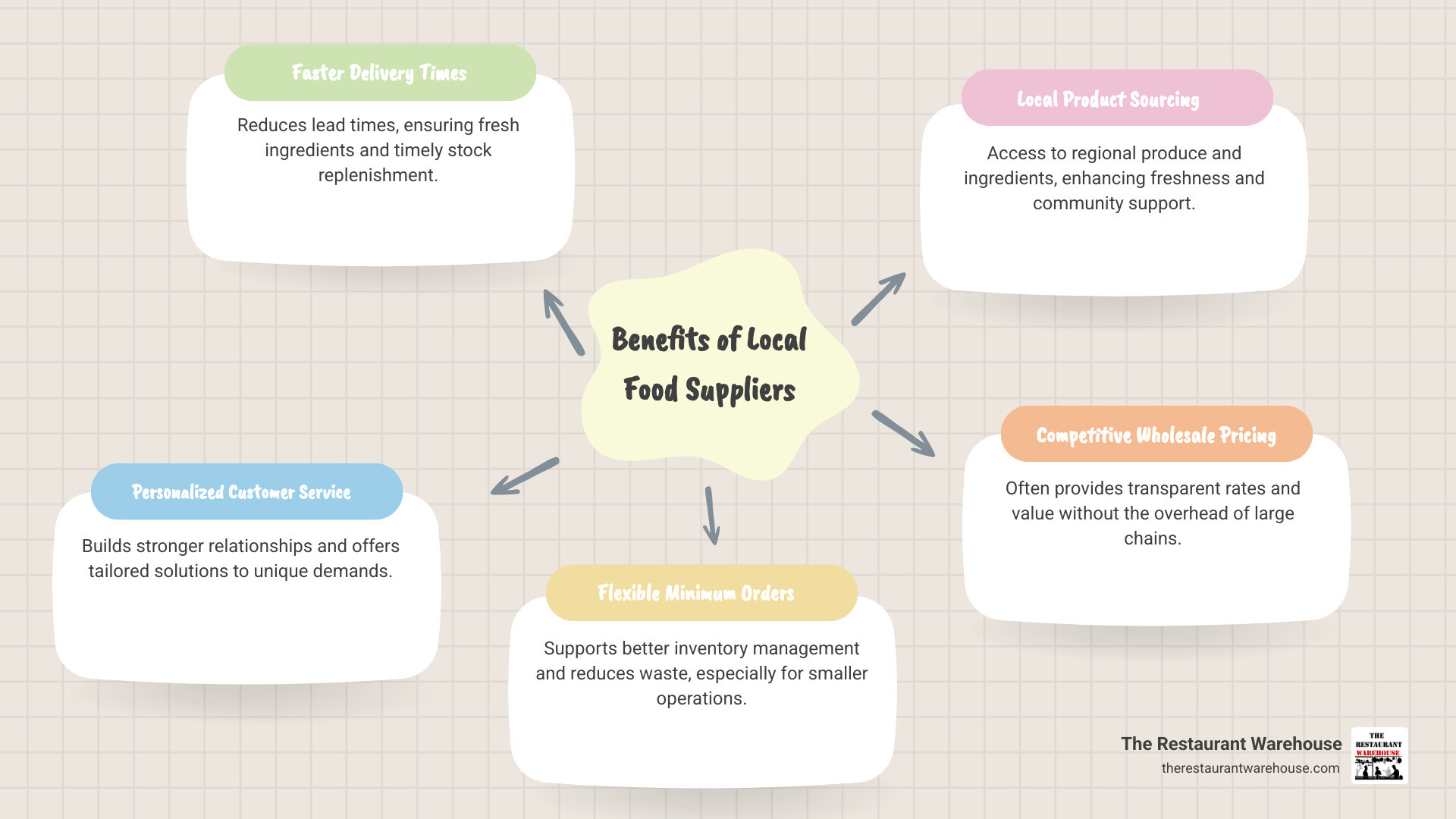
When searching for a food supply company near me, savvy restaurant owners and managers understand they aren't just buying ingredients; they are forging a strategic partnership. The choice of a supplier is one of the most critical decisions a foodservice business can make, with profound and far-reaching consequences. The right local partner can be a catalyst for growth, dramatically impacting your bottom line through competitive pricing, consistent quality, and dependable delivery schedules. Conversely, the wrong supplier can become a constant source of friction, creating operational bottlenecks, compromising food quality, and eroding profits. This relationship affects everything from the flavor and safety of the dishes you serve to your daily cash flow management and overall brand reputation.
Imagine a kitchen where chefs are confident in the freshness of every delivery, where stockouts are a rarity, and where managing inventory doesn't consume hours of valuable time. This operational harmony is the direct result of a strong supplier relationship. It frees up your team to focus on culinary innovation and guest satisfaction, which are the true drivers of success. The challenge for many lies in navigating the complex landscape of national chains, regional distributors, and niche local providers to find that perfect balance of service, selection, and value.
Quick Guide to Finding Local Food Supply Companies:
- Broadline Distributors: These are the comprehensive one-stop shops for the foodservice industry. They offer an extensive catalog that includes fresh produce, meat, dairy, a wide array of frozen foods, dry goods, and essential operational supplies like cleaning products and disposables.
- Specialty Suppliers: These focused partners are experts in a specific category. They are your go-to source for high-quality, unique items like organic produce from local farms, artisanal cheeses, gourmet imported goods, or cutting-edge plant-based ingredients.
- Cash-and-Carry Stores: Functioning like wholesale warehouses, these stores offer a self-service model. They are ideal for immediate needs, supplemental purchasing, or for smaller operations that prefer to manage their own pickup and transport, often providing significant cost savings.
- Key Services to Look For: Beyond products, a great partner offers services that simplify your operations. This includes flexible delivery options, low minimum order requirements to help manage cash flow, transparent wholesale pricing, and even business consulting services to help you thrive.
I'm Sean Kearney TRW, and my extensive background in sales has ingrained in me the critical importance of deeply understanding customer needs and goals. This experience is invaluable in guiding restaurant owners toward suppliers who operate with integrity and transparency. A true partner offers clear pricing without hidden fees or surprise markups, ensuring that when you search for a food supply company near me, you find a collaborator genuinely invested in supporting your business's long-term success.
What to Look for in a Food Supply Company Near Me
Finding the right food supply company near me is a foundational task that extends far beyond the simple logistics of getting boxes delivered to your door. It's about identifying and securing a partner you can implicitly trust to uphold your standards and support your vision. The best suppliers evolve into a seamless extension of your own team; they learn your ordering patterns, understand your quality benchmarks, anticipate your seasonal needs, and proactively communicate to prevent problems before they arise. This symbiotic relationship is built on a foundation of mutual respect and shared goals.
When you begin the crucial process of evaluating a potential supply partner, it's essential to adopt a holistic and meticulous approach. Your assessment must cover several key pillars of their operation: the breadth and quality of their product catalog, the reliability and flexibility of their delivery services, the transparency and fairness of their pricing models, the responsiveness of their customer service, and any value-added services they offer that can contribute to your business's growth and efficiency. For a comprehensive overview of managing your restaurant's diverse supply needs, our detailed A guide to restaurant supply management provides the complete picture.
Product Range and Quality
The heart of any great food supplier is their inventory. Your primary need is a partner with a broadline inventory that can reliably cover the vast majority of your operational requirements. This includes everything from vibrant fresh produce and high-quality meat and seafood to essential dairy products and a comprehensive range of frozen foods. A dependable supplier also maintains deep stock levels of pantry staples like canned and dry goods, alongside the non-food items that are just as critical, such as packaging, disposables, and cleaning products that keep your entire operation running smoothly and hygienically. In response to modern dining trends, robust access to a variety of high-quality plant-based options, from meat analogs to dairy-free alternatives, is no longer a niche request but an essential component of a competitive menu.
However, a vast catalog is meaningless without an unwavering commitment to quality. This is what separates the true professionals from the rest. Look for suppliers who take food safety certifications with the utmost seriousness. They should be able to provide documentation of their compliance with programs like SQF (Safe Quality Food) or BRC (British Retail Consortium) and demonstrate a deep, practical understanding of HACCP principles. The FDA offers excellent resources for Understanding HACCP Principles, which can help you formulate pointed questions to evaluate a supplier's commitment to safety. Furthermore, product sourcing transparency should be non-negotiable. You have a right to know where your ingredients are coming from, how they were raised or grown, and how they are handled throughout the supply chain. This transparency is the only way to guarantee the consistency and quality your customers deserve.
Service Areas and Delivery Reliability
An amazing product selection and unimpeachable quality standards are rendered useless if the products don't arrive at your kitchen when you need them. This is where the logistical prowess of a supplier comes into sharp focus. Key factors like the location of their distribution centers and the scope of their delivery zones are crucial. A strategically located distributor can offer more reliable and timely service. The best suppliers provide flexible delivery schedules, allowing you to choose delivery days and times that align with your staffing and storage capacity. The availability of next-day delivery for regular stock items and, critically, emergency deliveries for those inevitable, unexpected shortages can be a business-saver.
For independent restaurants and smaller businesses, low minimum orders are a game-changer for managing cash flow. This flexibility allows you to order what you need, when you need it, preventing you from tying up precious capital in excess inventory that strains your storage space and increases the risk of spoilage. In today's digital age, modern suppliers must provide sophisticated online ordering platforms and real-time order tracking technology as standard features. These tools empower you and your team, freeing you from time-consuming phone calls and providing 24/7 access to order history, product information, and account management. These efficiencies allow you to focus your energy on running your restaurant, not chasing down deliveries.
Pricing, Value, and Business Solutions
While competitive wholesale pricing is undeniably a major factor in your decision, the most successful restaurant owners learn to look beyond the per-unit price tag to evaluate the overall value proposition. True value is a combination of price, quality, service, and support. Look for suppliers who offer transparent quantity discounts and structured membership benefits that can provide significant ongoing savings. At The Restaurant Warehouse, our entire business model is built around maximizing value for our customers. By avoiding the high costs of retail overhead and eliminating sales commissions, we are able to pass substantial, tangible savings directly to you. Our philosophy is simple: cut the unnecessary costs that don't add any real value to your operation.
The most forward-thinking suppliers also position themselves as partners by offering business consulting services. This can be a massive differentiator. Such services might include menu development support, where their experts provide insights on food trends and help you engineer a more profitable menu. They may offer recipe management tools to help you maintain consistency and control costs. Many provide deep insights into inventory cost management, using your purchasing data to identify opportunities for savings and waste reduction. Some even provide sophisticated labor cost analysis tools to help you optimize scheduling and improve overall operational efficiency. When your supplier actively invests in your success by providing these powerful tools and insights, they cease to be a vendor and become a true, indispensable partner.
Ready to explore how the right partnership can transform your business? Contact Us to learn more about our transparent wholesale pricing and discover what real value looks like.
Types of Food Suppliers and the Industries They Serve
To effectively find the right food supply company near me, it's essential to first understand the different categories of suppliers that constitute the foodservice supply industry. This landscape is diverse, with each type of supplier structured to cater to the specific needs of different business models. Whether you're running a small independent cafe, a multi-unit restaurant group, a large-scale healthcare facility, a school district, a hotel, or a high-volume catering company, there is a supplier type—or a combination of types—that is right for you.
The supplier ecosystem generally breaks down into three primary categories: broadline distributors, who aim to be a one-stop solution with a vast range of products; specialty suppliers, who concentrate their expertise on specific, often high-quality, niche product lines; and cash-and-carry stores, which provide a no-frills, self-service wholesale experience. Many of the most successful and resilient foodservice businesses don't rely on a single source; instead, they strategically build a hybrid supply chain, using a mix of these supplier types to achieve the perfect blend of cost, quality, and convenience.
Broadline Distributors: The One-Stop Shop
Broadline distributors are the titans of the food supply world, engineered to function as a comprehensive, one-stop shop for busy foodservice operators. Their primary appeal lies in the powerful combination of a comprehensive product selection and the significant economies of scale they can offer. By purchasing in massive volumes, they can negotiate lower prices from manufacturers and pass a portion of those savings on to their customers. These large regional distributors operate highly sophisticated logistics networks, with massive distribution centers and fleets of temperature-controlled trucks, all designed to ensure consistent and reliable delivery across a wide geographic area.
The versatility of a broadline distributor is one of their key strengths. A single distribution center can simultaneously serve an incredibly diverse range of industries. On any given day, they might be delivering artisanal cheese and charcuterie to a fine-dining bistro, bulk canned goods and frozen vegetables to a school cafeteria, and specialized dietary products and nutritional supplements to a hospital. Their inventory is vast and typically includes everything a foodservice operation could need: fresh produce, custom-cut meats and seafood, a full range of dairy products, thousands of frozen foods, shelf-stable canned and dry goods, a wide variety of beverages, all necessary disposables for service and takeout, and a complete line of janitorial supplies.
Specialty and Niche Suppliers
While broadline distributors are excellent at covering the fundamentals, specialty suppliers are the partners who provide the unique, high-impact ingredients that can define a menu and set a restaurant apart from its competition. These suppliers intentionally focus on specific product categories, allowing them to cultivate a level of expertise, sourcing relationships, and quality control that is difficult for a larger, more generalized distributor to match. Common examples include suppliers who specialize in sourcing from organic farms, those who focus exclusively on the rapidly growing market for plant-based alternatives, or importers who provide authentic ingredients for a specific global cuisine.
Local farm-to-table sourcing is a domain where specialty suppliers truly excel. They invest time and resources into building personal relationships with regional growers, ranchers, and artisans. This enables them to offer exceptional gourmet ingredients that reflect the local terroir and seasonality, a key selling point for many modern diners. Other specialty suppliers might focus on providing custom-cut meats aged to precise specifications, or sourcing rare artisanal cheeses from small, family-owned producers. The distinct advantage of partnering with these suppliers is their deep product knowledge, their passion for their craft, and their ability to source precisely the right item to make your menu truly shine.
Finding a "food supply company near me" for Smallwares and Disposables
Beyond the edible ingredients, every single foodservice operation depends on a constant, reliable stream of smallwares and disposables. These are the unsung heroes of the kitchen and dining room. This category includes essential back-of-house tools like spatulas, tongs, cutting boards, food storage containers, and whisks, which are the crucial implements of daily culinary operations. When searching for a food supply company near me for these items, you are looking for a supplier who understands that these seemingly minor details have a major impact on efficiency, safety, and profitability.
This category also extends to the front of the house. Tabletop items like plates, bowls, and glassware, along with flatware and serving ware, directly shape the customer's dining experience and perception of your brand. The quality and style of your disposables for takeout and delivery are equally important, serving as a physical representation of your brand long after the customer has left. Furthermore, reliable access to effective janitorial supplies and basic small kitchen tools forms the foundation of an efficient, safe, and impeccably clean kitchen. The Restaurant Warehouse model is specifically designed to focus on providing these essential supplies at highly competitive prices. By stripping away high sales commissions and the costs associated with a traditional retail footprint, we ensure you can procure high-quality supplies that keep your operation running profitably. The key is to find a partner who helps you strike the perfect balance between quality and value without ever having to compromise.
How to Find and Vet Your Ideal Supply Partner
Embarking on the journey to find the perfect food supply company near me is much like choosing a long-term business partner. This is not a transactional relationship; it's a strategic alliance. You are not merely looking for a delivery service; you are actively seeking a collaborative relationship that will bolster your business, help you navigate inevitable challenges, and actively contribute to your growth and success. A great supply partner acts as a supportive force, helping your culinary vision shine, while the wrong one can become a daily source of frustration, creating constant headaches that divert your attention from your customers and your craft. Investing the time and effort to meticulously define your needs, thoroughly research your options, and ask the right, probing questions is one of the most valuable investments you can make in your restaurant's future. For additional insights, our Guide on how to buy restaurant supplies covers the fundamentals of building strong supplier relationships.
Step 1: Define Your Business's Unique Needs
Before you even type a single search query, the most critical step is to look inward and get crystal clear about what your specific business actually needs to operate and thrive. Creating a detailed requirements checklist is the most effective way to begin this process. Start with your food product requirements. What are your non-negotiables? Are you looking for exclusively organic produce, locally sourced proteins, or are you focused on value-driven basic ingredients? Do your recipes require custom-cut meats and fish, or are standard portions sufficient? Next, create realistic supply volume estimates. Don't guess; dive into your sales data and track your usage of key ingredients over several weeks to develop accurate projections. This data will be invaluable when negotiating pricing.
Be brutally honest about your budget constraints. Knowing your numbers will help you immediately focus on suppliers who operate within your financial reality. Your delivery frequency needs must align directly with your physical storage capacity; ordering daily might be necessary if you have limited walk-in space, while weekly deliveries might suffice for those with ample storage. Finally, articulate your sustainability goals. If you are committed to reducing your carbon footprint through local sourcing or using eco-friendly packaging, you need to find a supplier whose values and product offerings align with that mission. Clarifying these operational, financial, and philosophical details will create a precise blueprint for the ideal partner who truly understands and can support your vision.
Step 2: Researching Local Options for a "food supply company near me"
With your detailed needs assessment in hand, it's time to begin the research phase. Finding the right food supply company near me starts with casting a wide but strategic net. Broad online searches are a logical starting point and will yield a mix of large national distributors, regional players, and smaller local suppliers. However, the real gold is often found through industry referrals. Talk to your network. Ask other restaurant owners, chefs, and managers in your area about their experiences—both good and bad—with their suppliers. These firsthand accounts are incredibly valuable.
Don't overlook local resources. Local business directories, your city's chamber of commerce, and restaurant associations can provide curated lists of area suppliers. Attending industry trade shows and local food expos can also be a highly efficient way to meet a multitude of suppliers in person in a single day. When you have a shortlist, dig into customer reviews and testimonials on various platforms. Read them critically, looking for recurring patterns and themes (e.g., consistent complaints about late deliveries or praise for a specific sales rep) rather than being swayed by isolated, emotional reviews. Finally, spend time comparing online catalogs. This will help you gauge product availability, see which suppliers carry the specialty items you need, and get a general sense of their market position, though you will always need to contact them directly for accurate, business-specific price quotes. For more guidance on this process, review our tips on finding trusted supply partners.
Step 3: The Vetting Process: Asking the Right Questions
Now it's time to move from research to direct engagement. This is the crucial vetting stage where you interview potential suppliers to determine if they are a genuine fit. This is where you separate the companies that just want to make a sale from those that are truly interested in building a long-term partnership. Start by inquiring about their company history and experience. A long-standing presence in the market often indicates stability and expertise. Try to understand their core values and mission to see if they resonate with your own business philosophy.
Pay extremely close attention to their quality assurance process. Ask them to walk you through how they ensure food safety from receiving to delivery. What specific certifications do they hold? How do they handle product recalls? The ordering process itself should be simple, intuitive, and efficient, preferably with a robust online platform that saves you time. Discuss their delivery schedules and order cut-off times in detail to ensure they align with your kitchen's workflow. Ask pointed questions about customer support availability. Who do you call when an order is wrong or missing at 7 AM on a Saturday? Is there a dedicated representative for your account? Finally, get a clear understanding of their credit application process and standard payment terms to ensure they work for your cash flow. Don't forget to explore any valuable services they offer beyond product delivery, such as menu analysis, staff training, or inventory management support. These extras are often the hallmark of a true partner.
Ready to find a supplier who understands your unique needs and offers transparent, honest wholesale pricing? Get a custom quote for your business needs today! We're here to help you build the supplier relationships that will support your long-term success.
Frequently Asked Questions about Food Supply Companies
When you're deep in the process of searching for the perfect food supply company near me, a multitude of questions can arise. The terminology can be confusing, the processes can seem opaque, and the sheer number of options can feel overwhelming. We understand that making the right choice is critical, so let's tackle some of the most common questions that restaurant owners and managers have during their search.
What is the difference between a food distributor and a wholesaler?
While these two terms are often used interchangeably in casual conversation, they traditionally represent different service models, and understanding the distinction can help you clarify your needs. A food distributor typically functions as a more comprehensive, service-oriented partner. They do more than just sell products; they offer a suite of services that often includes scheduled deliveries on a dedicated route, the extension of credit terms, and various value-added services like marketing assistance, menu planning support, or data analysis. A key feature of the distributor model is often a dedicated sales representative who is assigned to your account to learn your business's specific needs and act as your primary point of contact.
In contrast, a wholesaler traditionally focuses more on a high-volume, lower-price business model. They sell products in bulk, often from a large warehouse or cash-and-carry location where customers might be expected to pick up their own orders. The service model is more straightforward and less hands-on, with the primary value proposition being competitive pricing achieved through economies of scale and lower overhead. However, it's important to note that the lines have blurred significantly in recent years. Many modern companies, like The Restaurant Warehouse, blend these approaches, offering the aggressive wholesale pricing you'd expect from a wholesaler but with the convenient delivery and support services of a distributor. The key is to determine the right balance of price, convenience, and service for your specific operation.
How do I set up an account with a food supply company?
Setting up a new account with a food supplier is generally a standardized and straightforward process. The first step is to make contact, either by calling them or filling out an inquiry form on their website. From there, you will almost certainly be asked to complete a credit application. This is a standard industry practice that allows the supplier to assess your business's financial health and determine appropriate payment terms (e.g., Net 15, Net 30) and a credit limit. To complete this, you will need to provide essential business documentation, including your official business license, your federal tax ID number (EIN), and any relevant state resale or tax-exempt certificates. A sales representative will typically guide you through this paperwork and use the opportunity to walk you through their product catalog, explain their delivery schedules and minimum order requirements, and detail their pricing structure. Once your application is reviewed and approved, your business will be set up in their ordering system, and you'll be given access to their online portal or provided with the contact information for placing orders. The entire process, from initial contact to placing your first order, usually takes a few business days to a week.
Can I get samples before committing to a large order?
Yes, absolutely—and you should always ask. Any reputable food supply company near me understands that quality, consistency, and taste are paramount to your business. They know that you can't put an ingredient on your menu without first testing it in your kitchen. Most suppliers are more than happy to provide product samples, particularly when you are a prospective new customer or are considering switching to a new product line from another provider. Sampling is a critical part of the vetting process. It allows you to test the quality firsthand—to see, smell, and taste the product. It also lets you see how the product performs in your actual recipes. Does that new cheese melt correctly on your pizza? Does that frozen appetizer hold up well under a heat lamp? Sampling also helps you verify consistency, ensuring that the product you receive in your regular deliveries will match the quality of the sample you approved. Don't ever hesitate to ask about a potential supplier's sampling policy during your initial conversations. It's a smart business practice that demonstrates your commitment to quality.
What are common red flags to watch for in a supplier?
During the vetting process, be vigilant for red flags that might signal future problems. A major warning sign is a lack of transparency, especially around pricing. If a sales representative is evasive about how their pricing is structured or is unwilling to provide a clear, itemized price list, proceed with caution. Another red flag is poor communication; if they are slow to respond to your initial inquiries or seem disorganized, imagine how they'll respond when you have an urgent problem. Consistently negative online reviews that mention the same issues, such as frequent late deliveries, damaged goods, or incorrect orders, should be taken very seriously. Finally, be wary of any supplier who is unwilling to provide references from other local restaurants. A confident, reliable partner will be proud of their client relationships and happy to let you speak with them.
Conclusion: Forging a Partnership for Success
When you first set out to find the perfect food supply company near me, it's easy to view the task as a simple procurement exercise. However, as we've explored, you're not just shopping for ingredients or supplies—you are making a strategic decision and choosing a vital business partner. This relationship is not merely transactional; it is foundational to your restaurant's daily operations and long-term success. The right partner directly influences your food quality, your financial stability and cash flow, and your agility in adapting to market trends and unforeseen challenges.
The best suppliers deliver far more than just products in a box; they deliver reliability, consistency, and value. They operate with transparent communication and become a dependable extension of your own team. They distinguish themselves by going beyond the basics, providing value-added services like menu analysis, inventory management tools, and trend insights that can help you optimize your operations and boost your profitability. The key selection criteria we've covered—a comprehensive and high-quality product range, dependable and flexible service, and competitive pricing paired with holistic business solutions—are the essential pillars that support long-term business growth.
By taking a methodical approach—carefully defining your unique needs, thoroughly researching all of your local options, and asking pointed, intelligent questions during the vetting process—you can move beyond a simple vendor relationship. You can find a true ally who understands your vision, respects your standards, and is genuinely invested in your success. At The Restaurant Warehouse, we have built our entire business model around being that kind of partner. By focusing on transparent wholesale pricing for essential foodservice supplies and systematically eliminating the unnecessary overhead that inflates costs, we help you keep more of your hard-earned money in your pocket while maintaining the high standards of quality your customers expect and deserve.
Ultimately, finding the right food supply company near me is about creating operational peace of mind. It frees you and your team to focus on what you do best: creating incredible food, fostering a welcoming atmosphere, and delivering unforgettable dining experiences. When your supply chain is a source of strength rather than stress, you can pour all your creative and managerial energy into innovation, service, and building the restaurant of your dreams.
Ready to experience the tangible difference that a true partnership can make for your business? Explore our full range of restaurant supply solutions and discover how our unwavering commitment to your success can help your business reach new heights.
About The Author

Sean Kearney
Sean Kearney is the Founder of The Restaurant Warehouse, with 15 years of experience in the restaurant equipment industry and more than 30 years in ecommerce, beginning with Amazon.com. As an equipment distributor and supplier, Sean helps restaurant owners make confident purchasing decisions through clear pricing, practical guidance, and a more transparent online buying experience.
Connect with Sean on LinkedIn, Instagram, YouTube, or Facebook.