

From Prep to Plate: Essential Restaurant Supplies You Need
Why Restaurant Supplies Are the Foundation of Your Success
Restaurant supplies are the backbone of every successful foodservice operation, encompassing everything from dinnerware and glassware to cleaning chemicals and storage containers. The global market for these items is growing, highlighting the critical role they play in the industry's expansion.
Whether you're launching a new restaurant or upgrading an existing operation, having the right supplies directly impacts your efficiency, food safety compliance, and customer satisfaction. From the prep kitchen to the dining room, each category serves a specific purpose in your daily operations. The essential categories include:
- Tabletop Items: Dinnerware, flatware, glassware, and serving pieces.
- Smallwares: Kitchen utensils, cookware, cutting boards, and prep tools.
- Disposables: Takeout containers, cups, napkins, and food packaging.
- Janitorial & Storage: Cleaning chemicals, sanitizers, and organizational systems.
The difference between restaurant success and failure often comes down to having quality supplies that can handle high-volume use. Smart sourcing decisions help you control costs without sacrificing the durability and functionality your business demands.
I'm Sean Kearney TRW, and my background in sales has taught me how the right restaurant supplies can transform a struggling operation into a profitable one. Strategic supply choices are a direct investment in your efficiency and bottom-line results.
Ready to optimize your supply list and cost structure? Contact Us to book a free sourcing consult and get wholesale pricing without the markup.
The Essential Categories of Restaurant Supplies
When you step into any thriving restaurant, you're witnessing a carefully orchestrated symphony of restaurant supplies working in perfect harmony. From the moment a customer sits down to when they leave, every item plays a crucial role. The world of restaurant supplies is divided into two interconnected fields: Front-of-House (FOH), which is everything your customers see and touch, and Back-of-House (BOH), your operational powerhouse where the magic happens.

A stunning tabletop presentation means little without an efficient kitchen workflow, and the most organized kitchen can't succeed if the dining room supplies don't match your concept. Supporting both areas is a commitment to proper sanitation standards, which requires the right janitorial supplies to keep your establishment spotless and compliant with health regulations.
Front-of-House (FOH) Supplies
Your dining room is where first impressions are made. Dinnerware forms the foundation of your table setting. Whether you choose classic white porcelain for versatility, colorful ceramic pieces to match your brand, or durable melamine for casual dining, your plates and bowls need to handle constant use. The weight and feel of your dinnerware send a message—heavier pieces often signal quality.
Flatware is a small detail that customers notice. Flimsy forks or dull knives detract from the experience. Stainless steel remains the gold standard for its durability and professional look. Glassware requires special attention as it's both functional and fragile. Commercial-grade water glasses, wine glasses, and cocktail glasses are designed to resist chipping and clouding better than residential versions, which is crucial when washing hundreds of glasses daily.
If you serve alcohol, bar supplies like shakers and jiggers are essential for consistency and speed, while condiment holders keep garnishes fresh. Don't overlook smaller touches like menu covers and check presenters that reinforce your brand. Explore our tabletop collections to find pieces that reflect your restaurant's personality while standing up to commercial use.
Back-of-House (BOH) Supplies
Behind every great meal is a well-equipped kitchen. BOH supplies must prioritize durability, functionality, and safety. Cookware is the heart of your kitchen. Quality pots and pans made from stainless steel or aluminum conduct heat evenly and withstand heavy use. Stock pots, sauté pans, and sheet pans all serve specific purposes that home-grade alternatives cannot handle.
Kitchen utensils like spatulas, whisks, and tongs keep your kitchen moving efficiently. Commercial-grade utensils resist melting and breaking. Color-coding can also help prevent cross-contamination. Cutting boards deserve special attention for food safety; using separate boards for different food types is critical.
Food storage containers and food pans keep ingredients organized and fresh. Standard sizes that stack neatly and seal properly reduce waste and simplify inventory. Shelving units multiply your storage capacity, while a heavy-duty arsenal of janitorial supplies—including commercial cleaning chemicals, sturdy mops, and properly sized trash cans—is non-negotiable for maintaining health code compliance. Shop Bar Supplies if your operation includes beverage service, as the right tools ensure consistent quality.
Smart Purchasing: How to Choose and Source Your Supplies
Making smart choices when buying restaurant supplies can make or break your business. It's not about buying the cheapest items or the fanciest ones. It's about finding that sweet spot where quality meets cost-effectiveness while perfectly matching your restaurant's unique needs. The right supplies boost your team's efficiency, keep your customers happy, and protect your bottom line. At The Restaurant Warehouse, we've seen countless owners transform their operations simply by making smarter purchasing decisions.
Key Factors for Choosing Your Restaurant Supplies
How do you choose from hundreds of options? The secret is knowing what to look for beyond the price tag.
Quality versus cost is the biggest puzzle. A bargain spatula might look tempting, but will it last through a busy Saturday night? Commercial-grade supplies cost more upfront but are built to handle the constant heat, endless washing, and daily wear that would destroy household items in weeks. A cheap dinner plate that chips after a month costs you more than a durable one that lasts two years.
Material selection plays a huge role in performance. Stainless steel is the gold standard for most kitchen items because it doesn't react with foods and cleans easily. Polycarbonate containers are fantastic for food storage because they're nearly unbreakable and clear. Melamine dinnerware offers the perfect solution for casual dining spots that want durability without the breakage risk of ceramic.
Your supplies should also match your restaurant's personality. The aesthetic alignment between your supplies and your concept helps create a cohesive experience. Finally, don't overlook functionality and ease of cleaning. Beautiful but hard-to-clean plates can become a food safety nightmare. Ergonomic tools reduce staff fatigue, and stackable containers maximize storage. These practical details make a big difference.
Sourcing Safe and Compliant Food Service Ware
Food safety starts with the supplies you choose. Every item that touches food in your restaurant must meet strict safety standards. Food safety regulations exist to protect both your customers and your business. Every plate, container, and utensil must be made from approved materials that won't contaminate what you're serving.
Look for non-toxic materials and food-grade certification on everything you buy. When you see "FDA-approved" or "food-grade" on a label, it means the manufacturer has proven their materials won't leach harmful chemicals into food. The FDA provides detailed guidance on food contact substances that can help you understand what to look for. Color-coded systems are also a great tool for preventing cross-contamination, using different colored cutting boards for raw meat, vegetables, and seafood. The most important step is sourcing from reputable suppliers who understand these requirements and can provide all necessary certifications.
Online Retailers vs. Wholesale Distributors
The way restaurants buy supplies has changed. Online retailers offer incredible convenience and selection, allowing you to compare prices instantly. They are great for small orders or unique items. However, shipping costs can quickly eat into savings, and you may wait days for delivery.
Wholesale distributors shine when it comes to bulk purchasing and building relationships. They typically offer better per-unit pricing on large orders and may provide dedicated account managers and flexible payment terms. A strong relationship with a wholesale supplier can lead to special deals and better planning. Most successful restaurants use a hybrid approach, leveraging online convenience for some purchases while maintaining wholesale relationships for core supplies.
At The Restaurant Warehouse, we've designed our model to give you the best of both worlds: wholesale pricing without traditional minimums, plus the convenience of online ordering. If you need help planning a large order, Contact Us for wholesale pricing inquiries.
Mastering Your Supply Budget: Cost-Saving Strategies
Managing costs in the restaurant business can feel like a tightrope walk. Your restaurant supplies budget can make or break your monthly numbers, but with smart strategies, you can keep those costs under control without sacrificing quality.
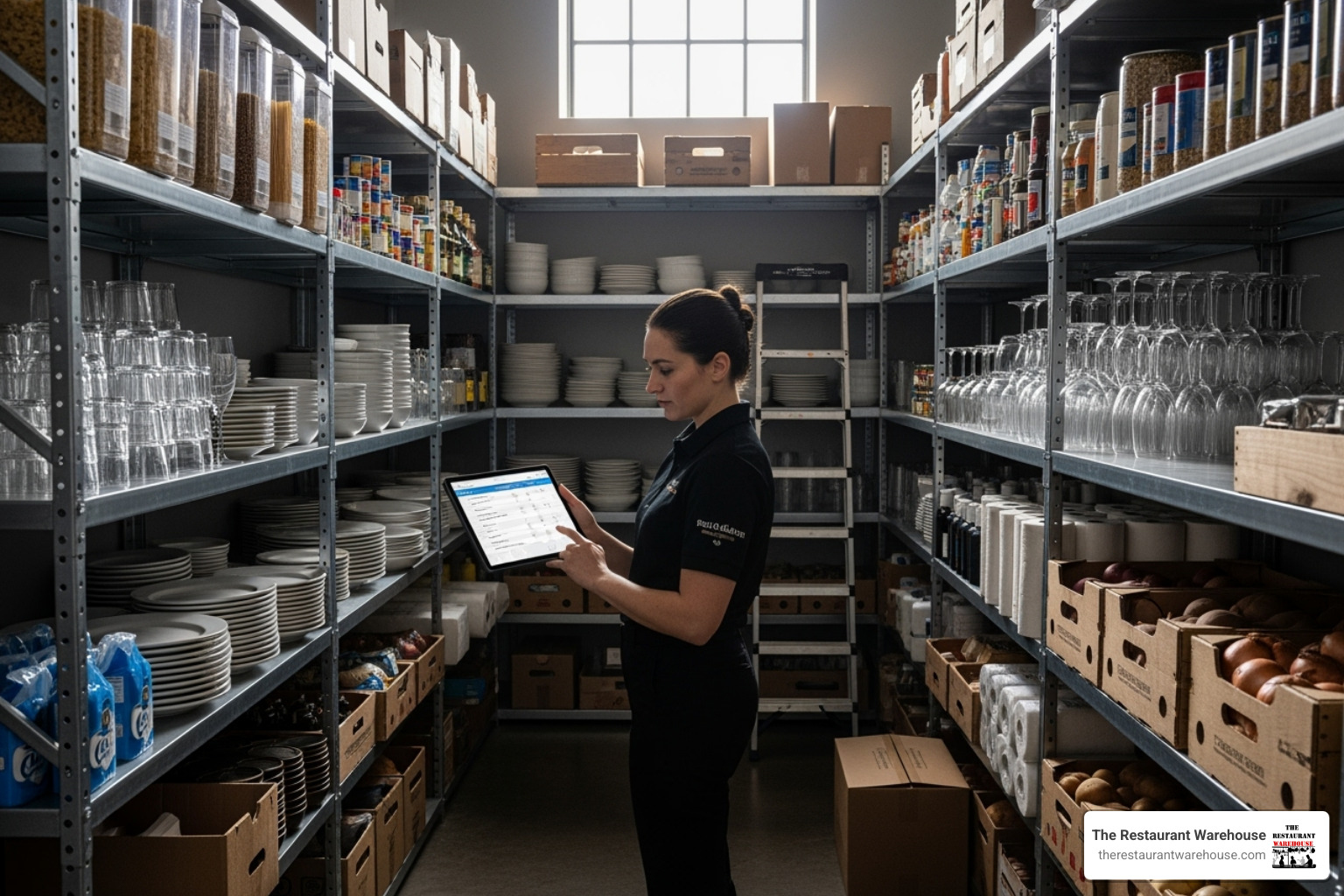
The key is finding the sweet spot where you have everything you need without overstocking. This is where inventory management becomes your best friend. Setting par levels—the minimum amount of each item you should always have on hand—prevents panic moments when you run low on a critical supply during a rush. Smart inventory tracking also helps you spot usage patterns, so you can predict future needs instead of guessing. Good inventory management naturally leads to reducing waste and avoiding expensive emergency orders.
The Power of Bulk Purchasing
Bulk buying is a secret weapon for cost control. When you buy larger quantities of your most-used restaurant supplies, the math works in your favor. The most obvious benefit is the cost per unit reduction, as suppliers offer better pricing on large orders. You also cut down on shipping fees by placing fewer orders.
Inventory consistency is another huge advantage, giving you a buffer to maintain service standards without interruption. Of course, bulk buying requires a smart approach. Consider your storage space analysis carefully—there's no point in getting a great deal if you have nowhere to store the items. Also, think about the shelf life of supplies. While plates can sit on shelves indefinitely, some cleaning chemicals and disposables have expiration dates. Start with your highest-usage items and work from there.
Optimizing Your Purchasing Process for Restaurant Supplies
Turn your purchasing process into a well-oiled machine with good inventory tracking software. These systems take the guesswork out of ordering by showing you exactly what you're using and when. With solid data, setting par levels becomes much easier.
The First-In, First-Out (FIFO) principle isn't just for food; it applies to all supplies. Using older stock first prevents waste. Don't underestimate the power of negotiating with suppliers. Building strong relationships can open doors to better pricing and extended payment terms. Keep an eye out for seasonal promotions and special deals to achieve significant savings. The goal is to transform supply purchasing from a reactive expense into a proactive strategy. Read our guide on inventory management for more detailed strategies.
Want help dialing in pars, order cycles, and vendor terms? Book a Strategy Call with our team, and we'll help you build a cost-saving purchasing plan custom to your menu and volume.
The Future of the Industry: Trends and Innovations
The restaurant industry never stands still, and neither does restaurant supplies. We're witnessing exciting changes that go far beyond just new designs. Today's innovations are reshaping how restaurants operate, from the materials they use to the technology that helps them run more efficiently.
Consumer demand is driving much of this change. Diners today care about sustainability and expect restaurants to share their values. At the same time, technology is making its way into even the smallest kitchen tools, helping operators work smarter. These aren't just passing trends—they represent fundamental shifts in how the foodservice industry approaches efficiency and responsibility.
The Rise of Eco-Friendly and Sustainable Options
Sustainability has moved from a nice-to-have feature to an absolute necessity. Customers increasingly choose where to dine based on a restaurant's environmental practices, and the restaurant supplies you select play a huge role.
Compostable disposables have revolutionized takeout. Materials like bagasse (made from sugarcane fiber) and PLA plastics (derived from plant starches) break down naturally, unlike traditional plastics that linger in landfills. These alternatives perform just as well as their plastic counterparts but disappear harmlessly when composted properly. Many restaurants are also embracing reusable containers for dine-in and takeout to reduce single-use plastic consumption.
Even janitorial supplies are getting greener. Water-saving cleaning products use concentrated formulas that require less packaging and transportation. What makes this trend so compelling is how it attracts environmentally conscious customers. When diners see your commitment to sustainable practices, they're more likely to become loyal patrons.
Technologically Advanced Smallwares
While major kitchen tools often get the spotlight, some of the most exciting innovations are happening in everyday smallwares. Smart thermometers have transformed food safety and cooking precision, offering instant readings and connecting to smartphone apps. For reference on proper thermometer use in commercial kitchens, see this guidance from the USDA FSIS on kitchen thermometers.
Digital scales now offer incredible accuracy and often include features like nutritional calculations and recipe scaling, which is vital for portion control and cost management.
Advanced portion control tools go beyond simple scoops, with preset dispensers that maintain uniform portions automatically. Automated cleaning dispensers ensure correct dilution ratios for chemicals, preventing waste and maintaining consistent sanitation. The integration of inventory management technology with smallwares, such as QR codes on storage containers, helps restaurants maintain better control over their supplies. These advances create more efficient operations that deliver better results with less effort.
Frequently Asked Questions about Restaurant Supplies
Over the years, we've helped countless restaurant owners steer the sometimes confusing world of restaurant supplies. The same questions come up again and again. Here are the questions we hear most often, along with the insights we've gained from working with restaurants of all sizes.
What is the main difference between commercial-grade and residential supplies?
This is probably the most important question new restaurant owners ask. The difference between commercial-grade and residential supplies isn't just about price—it's about survival in a demanding environment.
Commercial-grade supplies are built like workhorses. They're designed to handle the intense daily grind of a professional kitchen where a single plate might be washed dozens of times and pots get banged around by busy cooks. These items use thicker materials, reinforced construction, and specialized designs that prioritize durability.
Residential items, on the other hand, are designed for gentle home use. We've seen owners try to save money with residential supplies, only to watch them break, warp, or wear out within weeks. That "bargain" quickly becomes expensive when you're constantly replacing items. Commercial-grade restaurant supplies also meet strict health department standards that residential products don't, making them easier to clean and sanitize—all crucial for passing health inspections.
How can I ensure I'm not over-ordering disposable supplies?
This is a common mistake. Nobody wants to run out of takeout containers on a busy Friday night, so the instinct is to order extra. But over-ordering ties up your cash and clutters your storage space. The secret weapon here is a par inventory system.
Start by tracking your actual usage for a few weeks. How many cups do you really go through on a Tuesday? What about during your busiest weekend service? Once you know your patterns, set your par levels—the minimum amount you want to keep on hand. For most items, this should be enough to last about a week, plus a small safety buffer. Here's the key: only order what you need to get back to your par level. If you have 200 containers left and your par is 600, order 400—not 1,000 "just to be safe." This approach keeps your inventory lean while ensuring you never run out.
Are there financing options for large orders of smallwares or disposables?
This question comes up often, especially from new owners managing cash flow. While traditional equipment financing is more common for big-ticket items, there are ways to make large orders of restaurant supplies more manageable.
Volume discounts are your best friend here. When you buy in larger quantities, the cost per item drops significantly. Many suppliers, including us, also offer flexible payment terms for established customers, such as net-30 terms that give you time to pay after receiving your supplies. Building a good relationship with your supplier opens doors to these arrangements. Some restaurants also use business credit lines or working capital loans to finance inventory. We believe in making quality supplies accessible, which is why we offer wholesale pricing directly to you to make large orders more affordable from the start.
Conclusion
Your restaurant's journey from prep to plate depends entirely on having the right restaurant supplies at every step. Whether it's the sparkling glassware that catches a customer's eye, the reliable cookware that helps your chef create magic, or the effective cleaning products that keep everything spotless, each item plays a crucial part in your success.
We've walked through the essential categories, from front-of-house tabletop items to the back-of-house workhorses that power your kitchen. The key takeaway? Strategic sourcing isn't just about finding the cheapest option. It's about finding that sweet spot where quality meets affordability and durability meets functionality.
Smart purchasing decisions, proper inventory management, and embracing trends like sustainability and technology are investments in your restaurant's future. Cost management means being strategic about where you spend your money to ensure every dollar works harder for your business.
At The Restaurant Warehouse, we understand the challenges you face. That's why we've built our business around providing affordable, wholesale-priced food service supplies without the markup you'd find elsewhere. We skip the high commissions and retail overhead, passing those savings directly to you. Your success is our success.
Ready to see the difference quality supplies at wholesale prices can make for your operation? Shop our full catalog of restaurant supplies today!
About The Author

Sean Kearney
Sean Kearney is the Founder of The Restaurant Warehouse, with 15 years of experience in the restaurant equipment industry and more than 30 years in ecommerce, beginning with Amazon.com. As an equipment distributor and supplier, Sean helps restaurant owners make confident purchasing decisions through clear pricing, practical guidance, and a more transparent online buying experience.
Connect with Sean on LinkedIn, Instagram, YouTube, or Facebook.