

Freeze the Day! Ice Makers Perfect for Ice Baths
Why Ice Makers Are Game-Changers for Ice Bath Enthusiasts
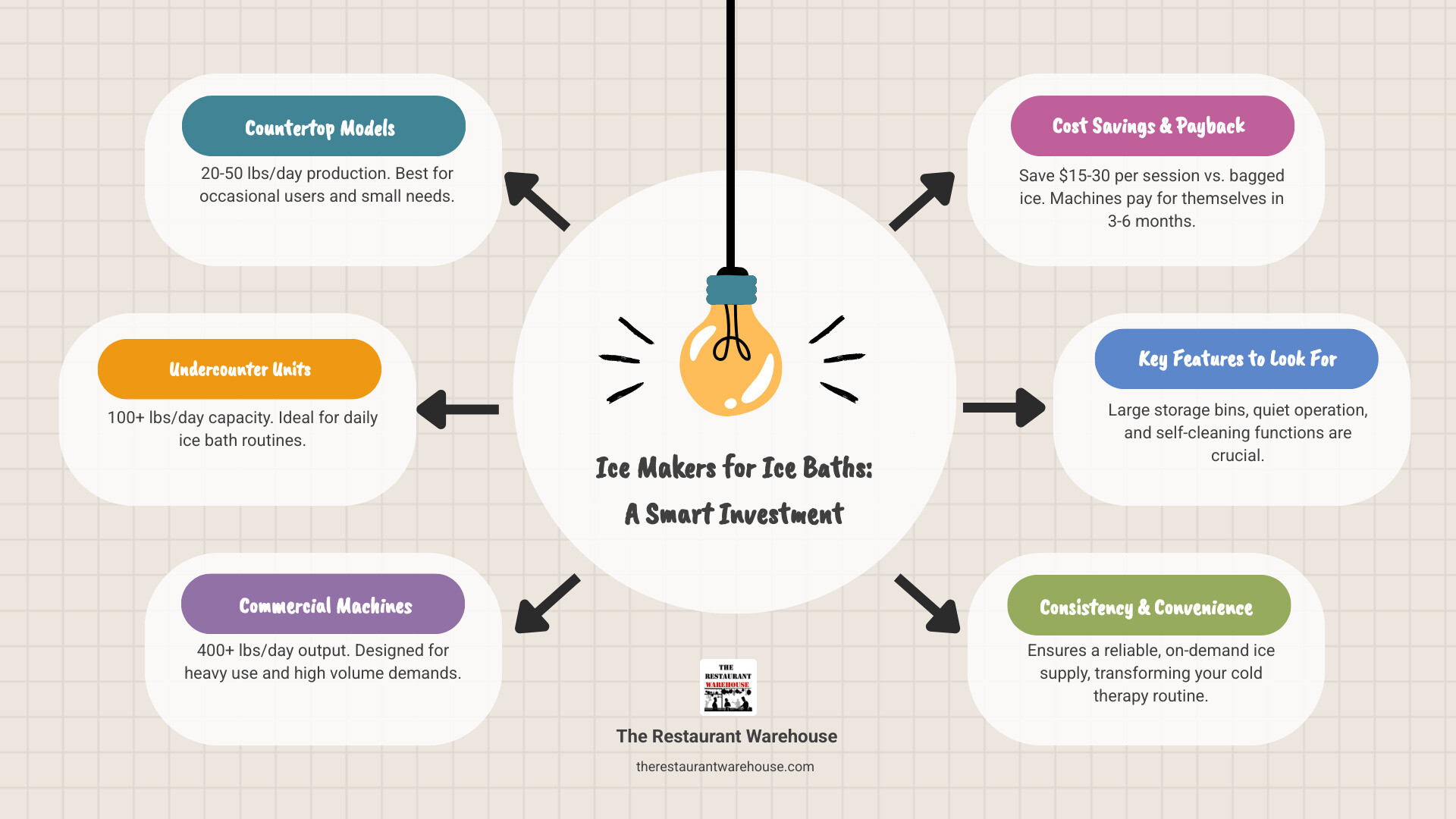
An ice maker for ice bath use eliminates the endless cycle of buying bags of ice, changing your cold therapy routine into a convenient, cost-effective practice. A reliable ice supply is crucial for consistent results on your wellness journey.
Best Ice Makers for Ice Baths:
- Countertop models: 20-50 lbs/day production, perfect for occasional use
- Undercounter units: 100+ lbs/day capacity, ideal for daily routines
- Commercial machines: 400+ lbs/day output, built for heavy use
- Key features: Large storage bins, quiet operation, self-cleaning functions
The cold therapy trend has exploded as people from professional athletes to wellness enthusiasts find the mental and physical benefits of regular cold exposure.
But here's the challenge: a typical ice bath needs 50-100 pounds of ice, and buying bags every time gets expensive fast. At $3 per 10-pound bag, you're looking at $15-30 per session. That's where a dedicated ice maker becomes a smart investment.
Commercial ice makers designed for ice baths—those producing 100 pounds daily with 55+ pounds of storage—typically cost between $500-$1,500. For regular users, these machines pay for themselves in just 3-6 months compared to buying bagged ice.
The beauty of having your own ice maker? Consistency. No more rushed trips to the store or settling for lukewarm "ice baths" because you ran out of ice. Just fresh, clean ice whenever you need it.
Basic ice maker for ice bath vocab:
- commercial ice makers for sale
- ice machine cleaning
- commercial ice machine not making ice
How Much Ice Do You Really Need for an Ice Bath?
For most cold therapy newcomers, the first question is, how much ice do I actually need? The answer isn't as straightforward as you might think.
To get the real benefits of cold therapy, you're aiming for a water temperature of 50-60°F. Reaching this target depends on several factors that can make or break your ice bath experience.
Tub volume is the biggest game-changer. A small personal tub might only need 20-30 pounds of ice, while a 100-gallon tank could easily demand 80-100 pounds to hit your target temperature. More water simply requires more ice.
The starting water temperature makes a huge difference. Filling up with lukewarm tap water on a hot day will require much more ice than if you started with cold water. Some users pre-chill their water overnight to reduce ice consumption.
Ambient temperature is another key factor. An ice bath set up outside on a 90°F summer day will melt ice much faster than one in a cool garage or during winter.
Your desired temperature matters too. Beginners might be happy with 60°F water, while seasoned enthusiasts pushing for a bone-chilling 50°F will need significantly more ice.
Don't forget about tub insulation. A well-insulated tub keeps your ice from melting too quickly, whereas a basic bathtub will have you constantly adding more ice to maintain the temperature.
Finally, think about your session duration. A quick 2-minute dip won't need as much ice as a 10-minute session. The longer you're in, the more ice you'll need.
This is where having a reliable ice maker for ice bath use becomes a total game-changer. Instead of guessing how many bags to buy, you can experiment and adjust until you find your perfect setup with a ready supply of fresh ice.
For those thinking about storing large quantities of ice, proper storage is crucial. More info about our Deep Freezer Guide can help you understand how to keep your ice in perfect condition.
The bottom line? Getting the right amount of ice is part science, part art. But with a good ice maker, you'll have the freedom to dial in your perfect cold therapy experience without worrying about running out of ice.
Choosing the Best Ice Maker for Ice Bath Routines
Investing in an ice maker for ice bath use is a smart move for any cold therapy enthusiast. To find the right machine, you need to understand the key features that separate a workhorse capable of serious daily volume from a standard appliance.
Key Features to Look for in an Ice Maker for Ice Bath Use
When shopping for an ice maker for ice bath sessions, production capacity is your first consideration. While countertop models produce 20-50 pounds daily, a single ice bath can require 50-100 pounds. Commercial-grade machines are where things get serious, with units producing 400-450 pounds daily. For most dedicated users, a machine producing at least 100 pounds daily is a good balance of capacity and practicality.
Storage bin capacity is equally crucial. A machine's production is useless without adequate storage. Countertop units hold only 1-2 pounds, requiring constant emptying. Commercial models, however, can store massive amounts—some holding over 330 pounds of ice.
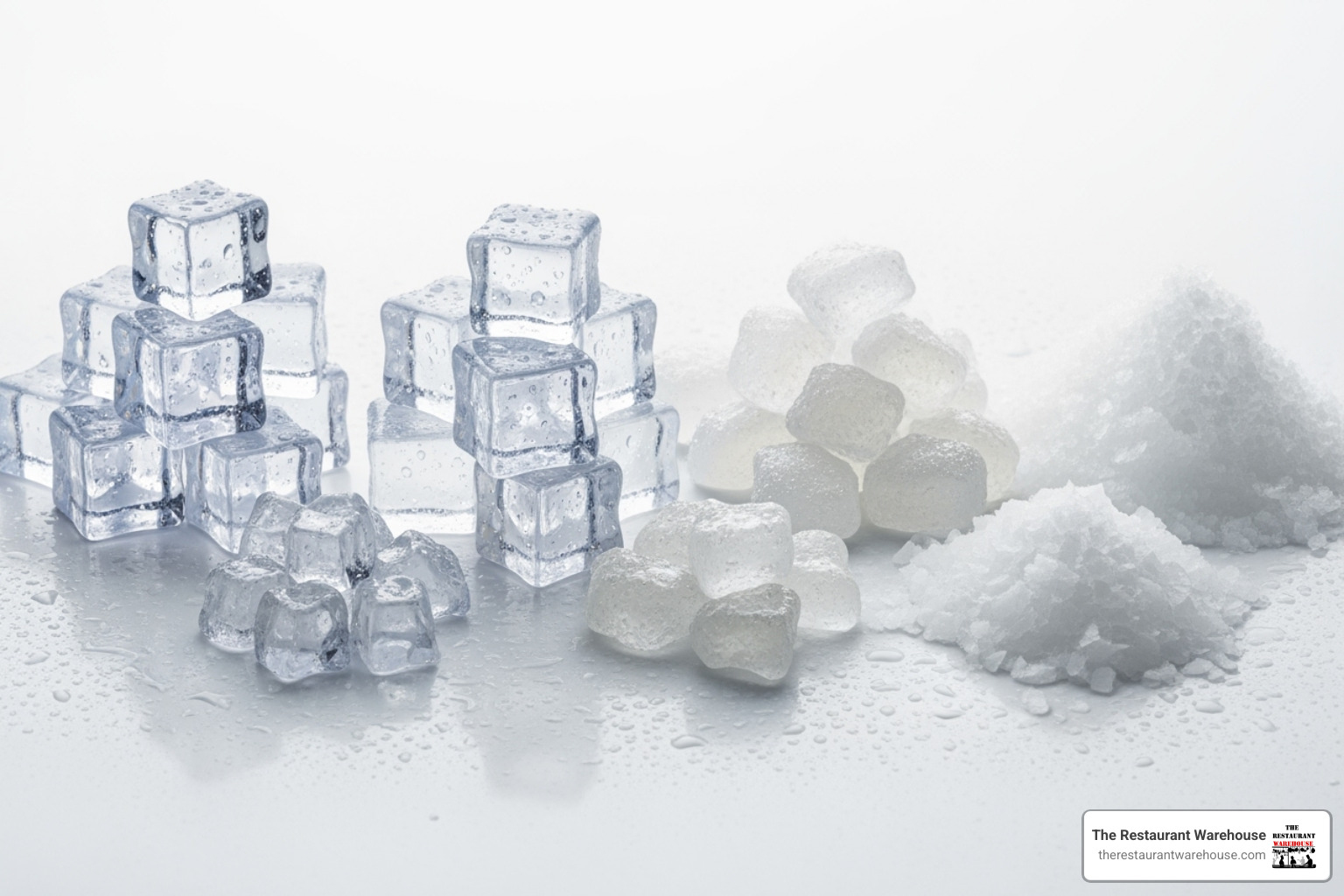
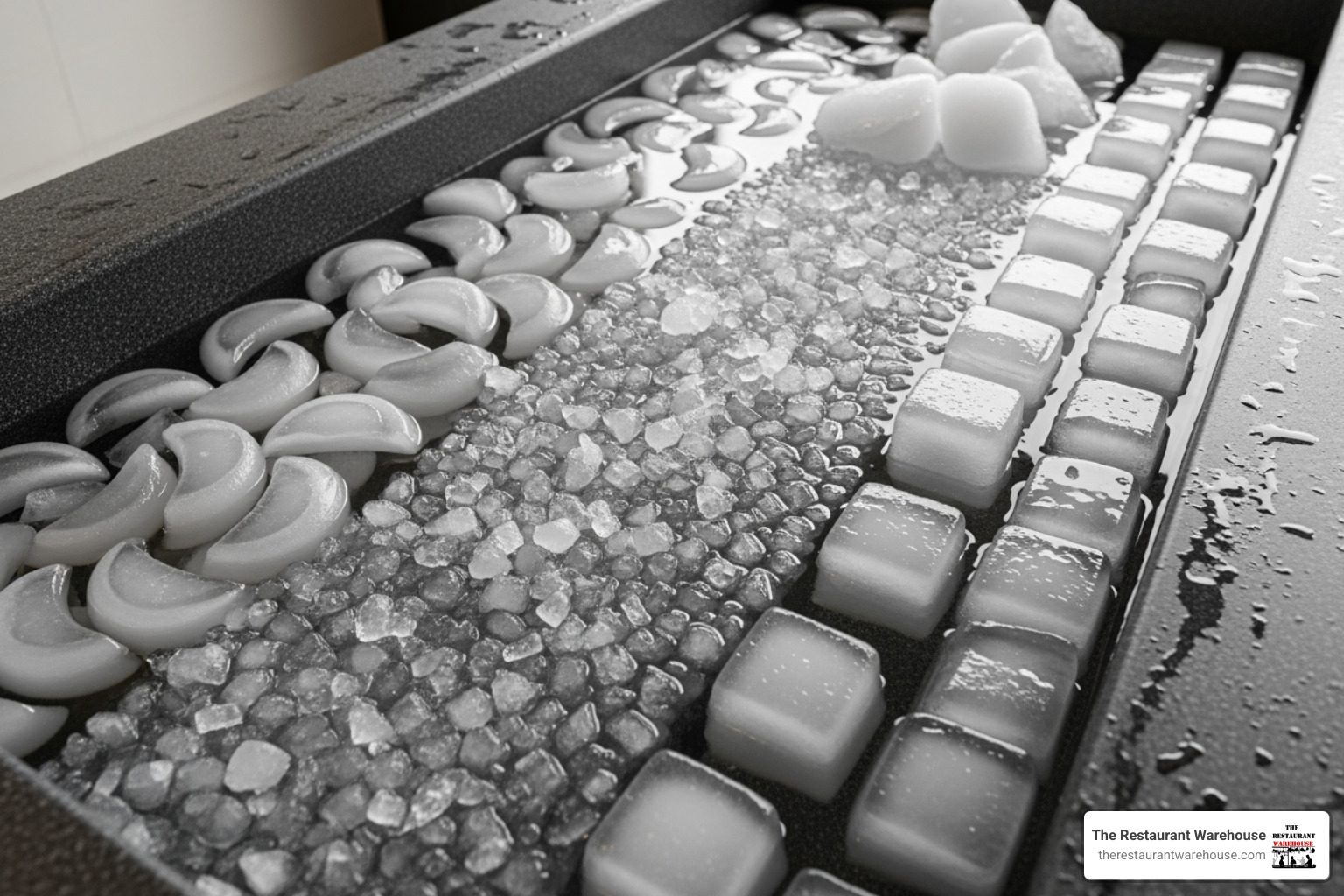
The type of ice affects both cooling efficiency and comfort. Full cube and half cube ice are dense, slow-melting, and perfect for maintaining temperature. Gourmet ice (crystal-clear "top hat" cubes) melts even slower.
Nugget ice is a favorite among enthusiasts. Its soft texture and irregular shape allow for faster cooling and are more comfortable to sit on than sharp, hard cubes.
Noise level matters for home use. Look for models operating around 65 decibels or quieter, which is about as loud as a normal conversation.
Self-cleaning functions are a game-changer, keeping your machine hygienic with minimal effort.
Durability is non-negotiable. Look for stainless steel construction and food-grade components to ensure your investment lasts for years.
Types of Ice Makers: From Countertop to Commercial
Portable countertop ice makers are the entry point for many. These compact units are portable but have small collection bins, making them impractical for full, regular ice baths. They are best for occasional use or topping off your ice supply.
Undercounter ice makers are a significant step up. These units fit neatly under counters while delivering 100+ pounds of daily production and much larger storage bins. They are the sweet spot for dedicated home users who want a consistent ice supply with good noise control and auto-cleaning features. For a detailed look, check out our guide on 2025's Best Commercial Undercounter Ice Makers to Keep Things Chill.
Freestanding commercial ice machines are the heavy hitters, producing 400-450 pounds daily and storing over 330 pounds of ice. They require plumbing and more floor space, but for serious enthusiasts or multiple users, they are the ultimate solution.
Why a Commercial Ice Maker Might Be Your Best Bet
For daily users or those with large tubs, a commercial ice maker for ice bath use is often the smartest investment:
High volume needs: Daily ice baths demand consistent 50-100+ pound ice production that countertop machines can't match.
Durability and longevity: Built for demanding restaurant environments, these machines feature robust components for a longer service life.
Faster production and larger storage: Commercial machines produce ice rapidly and store enough for multiple plunges, ensuring a ready supply.
Cost-effectiveness over time: A commercial unit costing $500-$1,500 can pay for itself in 3-6 months compared to buying bagged ice at $15-30 per session.
Consistency and convenience: Never worry about running out of ice, which keeps your cold plunge routine consistent and hassle-free.
When you're ready to invest in consistent cold therapy, it's time to Buy Commercial Ice Machine and transform your wellness routine.
Ice Makers: The Ultimate Solution for Your Ice Bath
While water chillers are an option for cold therapy, an ice maker for ice bath use offers a more traditional and often preferred experience. There's something uniquely satisfying about the sight, sound, and immediate cold shock that only real ice can provide.
Here's how the different ice maker types stack up when you're ready to make the investment:
| Feature | Portable Countertop Ice Maker | Undercounter Ice Maker | Freestanding Commercial Ice Maker |
|---|---|---|---|
| Production Rate | 20-50 lbs/day | 100-200 lbs/day | 300-500+ lbs/day |
| Storage Capacity | 1-2 lbs | 20-100+ lbs | 100-330+ lbs |
| Upfront Cost | $100-$300 | $500-$1,500 | $1,500-$5,000+ |
| Operating Cost | Low (small volume) | Moderate | Moderate to High (high volume) |
| Convenience | High (portability), Low (manual emptying) | High (dedicated, larger bin) | Very High (large volume, automated) |
| Maintenance | Manual cleaning | Auto-cleaning options | Auto-cleaning, professional service recommended |
The Case for Ice Makers
Here are the compelling reasons that make an ice maker for ice bath use such a smart choice.
Lower initial cost is a major advantage. High-end chiller systems can cost $1,000 to $4,200, while a quality commercial ice maker is more affordable at $500-$1,500, allowing you to start your cold plunge journey sooner.
The traditional ice bath experience is something many users prefer. The visual and tactile sensation of real ice creates a more engaging and authentic cold therapy session that technology can't replicate.
Rapid initial cooling is where ice makers excel. Adding 50-100 pounds of fresh ice to your tub drops the temperature almost instantly, providing the immediate cold shock that many plungers seek.
Portability of smaller models offers flexibility. A countertop ice maker can travel with you or supplement a larger setup, so you're not locked into one location.
No complex plumbing is required for many ice maker types. Countertop models only need a power outlet, and most undercounter units have simpler installation than commercial chillers.
The cost savings over time are significant compared to buying bagged ice. At $15-30 per session, an ice maker quickly pays for itself.
Sensory feedback from real ice provides valuable information. You can see how much ice remains and gauge your session's intensity in a way a digital display can't match.
Ready to explore your options? Check out our complete selection at Ice Maker to find the perfect fit for your cold plunge setup.
Maintenance and Hygiene: Keeping Your Ice Bath Clean and Safe
When investing in an ice maker for ice bath use, cleanliness is paramount for both machine longevity and your health. The ice will be in direct contact with your body, so ensuring it's free from contaminants is essential. Fortunately, a proper maintenance routine makes this easy.
Dirty ice makers can harbor mold, bacteria, and mineral buildup that can affect the taste and clarity of your ice and pose health risks. A regular cleaning schedule is your best defense. We recommend a routine of weekly filter maintenance, monthly deep cleaning, and quarterly descaling. Food-grade materials in your ice maker help, but they still need proper care.
Ice Maker Cleaning 101
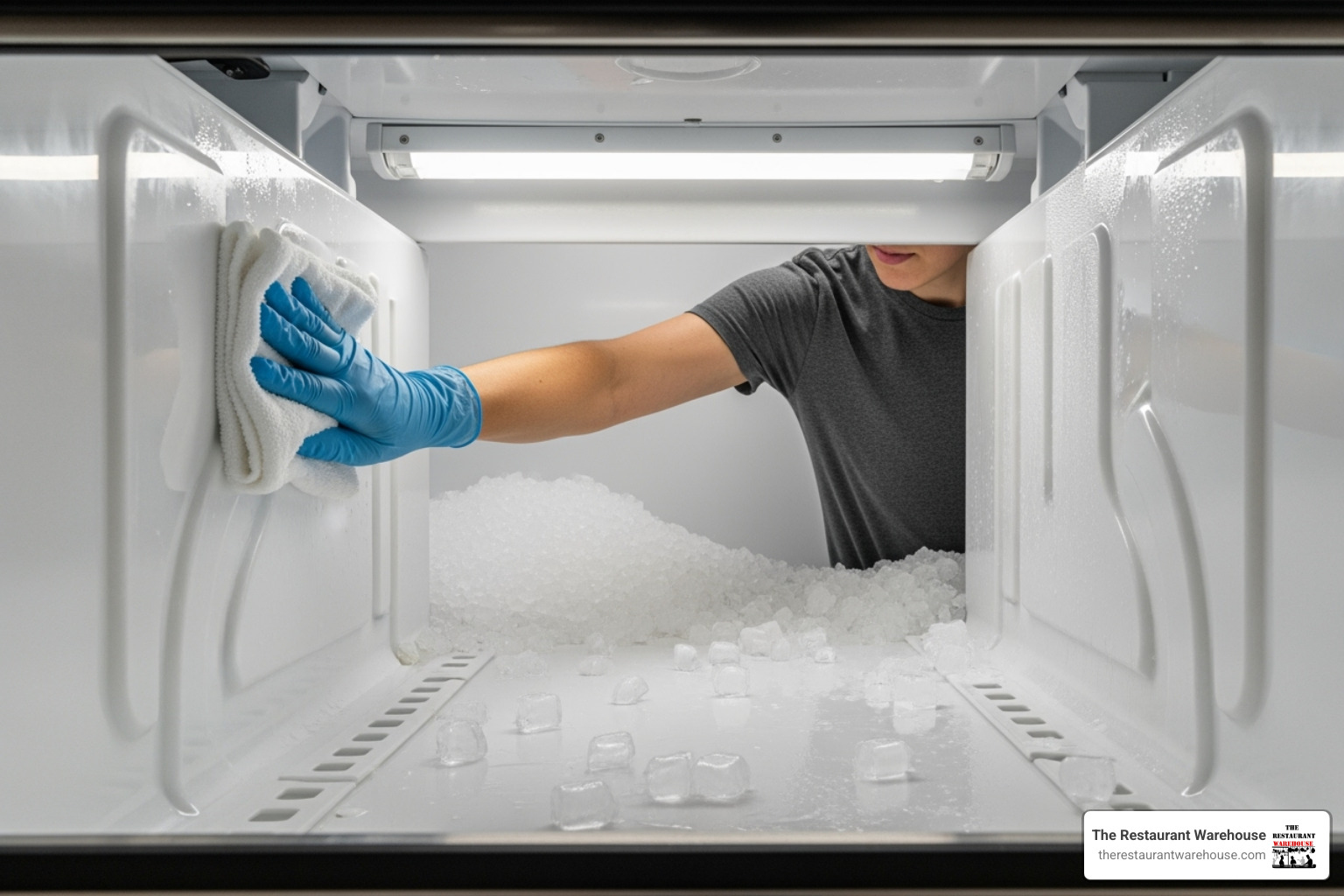
Many modern ice makers come with self-cleaning cycles that do most of the heavy lifting. Even with these features, occasional manual cleaning is necessary. To clean manually, unplug your machine, remove all ice and water, and take out removable parts like the scoop and bin for individual cleaning.
For cleaning solutions, stick with approved cleaning products designed for ice makers. A simple vinegar and water solution can work, but specialized cleaners are best for commercial units. Avoid harsh chemicals that can leave residues.
The recommended cleaning frequency depends on usage. A good rule of thumb is to clean water filters every 1-2 weeks and perform a thorough machine cleaning monthly. Don't forget about water line flushing for plumbed-in commercial units.
For specific models, our guide on Atosa Ice Machine Maintenance: A Step-by-Step Guide for Models YR140-AP-161 and YR280-AP-161 walks you through the process.
Troubleshooting Common Issues
Even reliable ice makers can have issues. Knowing how to troubleshoot common problems can save you time and frustration.
Machine not making ice: Before panicking, check the power connection, water supply, and ambient temperature. The cause is often a clogged water filter or a tripped breaker.
Slow ice production: This often signals dirty condenser coils. Dust buildup reduces efficiency, and a quick cleaning can restore your machine to full speed.
Strange noises: These are often easy fixes like loose panels or dirty fans. However, if the noise comes from the compressor, you may need professional help.
Poor ice quality: Cloudy, small, or oddly shaped cubes typically point to water quality issues. Your water filter may need replacement, or mineral buildup could be affecting the freezing process. Regular descaling prevents most of these problems.
When basic troubleshooting fails, our guide on Troubleshooting Tips for a Commercial Ice Machine Not Making Ice provides deeper diagnostic steps.
A well-maintained ice maker ensures every ice bath delivers the clean, refreshing experience you deserve.
Frequently Asked Questions about Ice Makers for Ice Baths
Let's tackle some of the most common questions about choosing an ice maker for ice bath setups.
What type of ice is best for an ice bath?
The "best" ice depends on your personal preference and goals. Each type has its strengths.
Ice cubes have more surface area, which drops water temperature fast for an immediate cold shock. Ice blocks melt much slower, keeping the bath consistently cold for longer sessions. Many users combine cubes for initial cooling and blocks for maintenance.
Nugget ice is a favorite because its soft, chewable texture is more comfortable against the skin than sharp, hard cubes, and its shape promotes good water circulation.
Clear, hard ice—like full cubes or gourmet ice—melts slower than cloudy or bullet ice, helping your bath stay colder for longer. Experiment to find what works best for your routine.
Can I use a regular countertop ice maker for my ice bath?
Yes, but with significant limitations. Their small production capacity (20-50 lbs/day) is a major hurdle, as a single ice bath can require 50-100 pounds of ice. It could take 1-2 days to produce enough ice for one session.
Their small storage bins (1-2 lbs) require constant emptying, which is impractical. The bullet-shaped ice they produce also melts quickly, making it harder to maintain a consistent temperature.
A countertop ice maker for ice bath use is best for topping off an already cold bath or for very small, occasional dips. For regular, full ice baths, a higher-capacity undercounter or commercial model is a much better fit.
How much does it cost to run an ice maker for an ice bath?
Operating costs depend on several factors: energy efficiency (newer, Energy Star models use less power), model size, usage frequency, and your local electricity rates.
However, when you compare the electricity cost to buying bagged ice, an ice maker is incredibly cost-effective. Regular users often find their commercial ice maker pays for itself in just 3-6 months. If you're spending $15-30 per session on bagged ice, the energy consumption is a minor consideration.
Most commercial models use standard 110v power. For dedicated cold plungers, the operational cost of an ice maker for ice bath use is minimal compared to the ongoing expense and hassle of buying bagged ice.
Conclusion
We've covered what you need to know about choosing an ice maker to perfect your cold plunge routine, from ice volume and machine features to maintenance.
Choosing the right ice maker for ice bath use is an investment in your wellness, turning cold therapy from a chore into a seamless daily habit. No more last-minute trips to the store for bags of ice at $3 per 10-pound bag or settling for lukewarm baths. Just pure, consistent cold whenever you want it.
Consistency is key to open uping the full benefits of cold therapy. A reliable ice supply makes you more likely to stick with your routine. Research supports this, with this study finding that regular ice baths helped massively reduce anxiety and improve the mood of participants.
Whether you choose a countertop, undercounter, or commercial machine, the right ice maker pays for itself quickly while upgrading your entire wellness experience.
At The Restaurant Warehouse, we supply commercial restaurant equipment and food service supplies at lower prices by avoiding high commissions and retail overhead. This allows us to offer affordable, wholesale pricing on the durable, high-capacity ice makers perfect for your dedicated cold plunge setup.
We believe everyone should have access to tools that improve their well-being. A reliable ice maker for ice bath use is one of them, and we're here to help you find the perfect match for your needs and budget.
Ready to upgrade your wellness routine and "freeze the day" with confidence? Explore our full range of Ice Makers to find the perfect fit for your cold plunge needs. Your consistent, invigorating cold plunges await!
About The Author

Sean Kearney
Sean Kearney is the Founder of The Restaurant Warehouse, with 15 years of experience in the restaurant equipment industry and more than 30 years in ecommerce, beginning with Amazon.com. As an equipment distributor and supplier, Sean helps restaurant owners make confident purchasing decisions through clear pricing, practical guidance, and a more transparent online buying experience.
Connect with Sean on LinkedIn, Instagram, YouTube, or Facebook.
Leave a comment