

Deep Frying Excellence: How Consistent Temps in Commercial Deep Fryers Save You Money
The Hidden Cost of the "Good Enough" Fryer
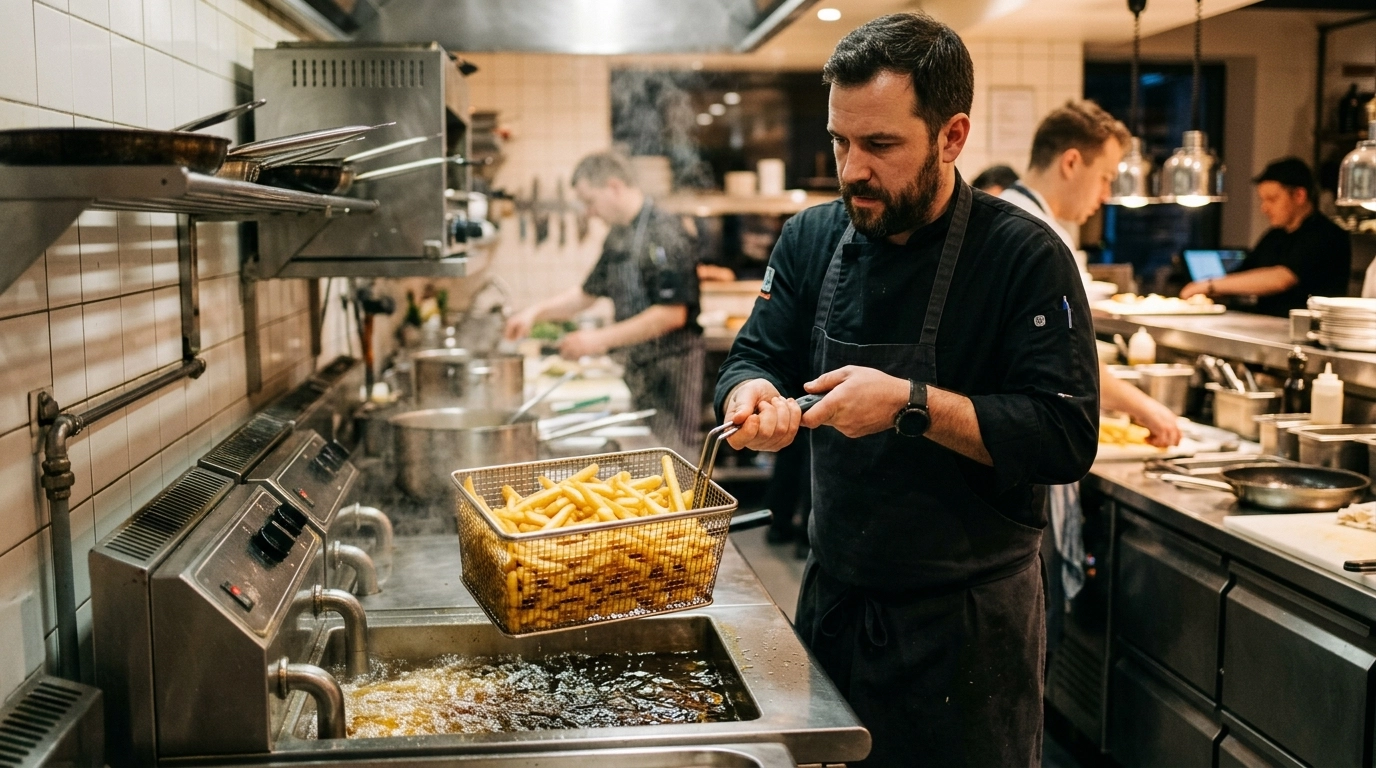
If you walk into any high-volume kitchen during a Friday night rush, the sound of the fry station is unmistakable. It’s the heartbeat of the line. But for many restaurant owners, that sound can also be the sound of money dripping away, not just in oil, but in wasted energy, inconsistent food quality, and premature equipment failure.
When we talk about commercial deep fryers, most people focus on capacity or BTU output. Those are important, sure. But if you really want to protect your bottom line, you need to look at temperature consistency. A fryer that can’t hold a steady temp is essentially a tax on your profits. In this guide, we’re going to break down why consistent heat is the difference between a thriving kitchen and one that’s bleeding cash.
Why Temperature Consistency is Your Profit's Best Friend
Think of your fryer like a marathon runner. If the runner has to sprint, then stop, then sprint again, they’re going to burn out way faster than someone maintaining a steady pace. Your fryer is the same. When the temperature fluctuates wildly, several bad things happen simultaneously.
First, your oil degrades. Second, your food quality takes a hit. Third, your energy bills skyrocket as the burners work overtime to compensate for the drops. By investing in a unit designed for stability, like the CookRite models we carry, you aren't just buying a piece of stainless steel; you're buying a predictable operating cost.
The Science of Recovery Time: Why Faster is Cheaper
In the world of professional frying, "recovery time" is the only metric that truly matters during a rush. When you drop a basket of frozen fries or breaded chicken into 350°F oil, that oil temperature is going to plumet. Recovery time is how long it takes for the fryer to get back up to that target 350°F.
Why does this matter for your wallet?
- Greasy Food: If the oil stays cool for too long, the food absorbs the oil instead of searing. This leads to soggy, greasy appetizers that customers send back.
- Throughput: If you have to wait three minutes between batches for the "Ready" light to kick back on, you’re losing table turns.
- Oil Absorption: When food absorbs more oil due to low temps, you’re literally frying away your expensive oil inventory into the trash.
Oil Life: The Hidden Variable in Your P&L
Oil is one of the most significant recurring expenses in any kitchen. If you’re changing your oil every two days because it’s turned dark and bitter, you have a temperature problem.
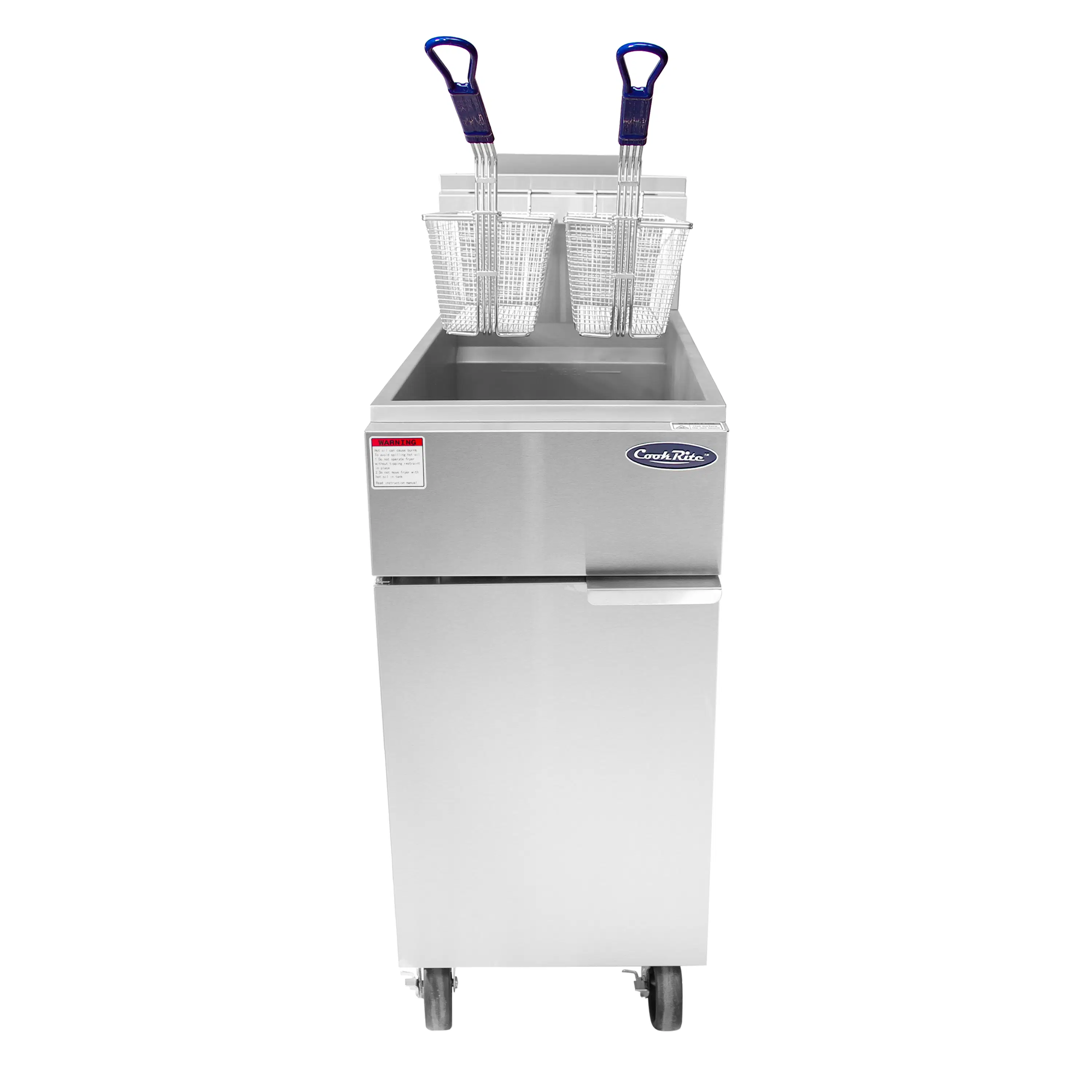
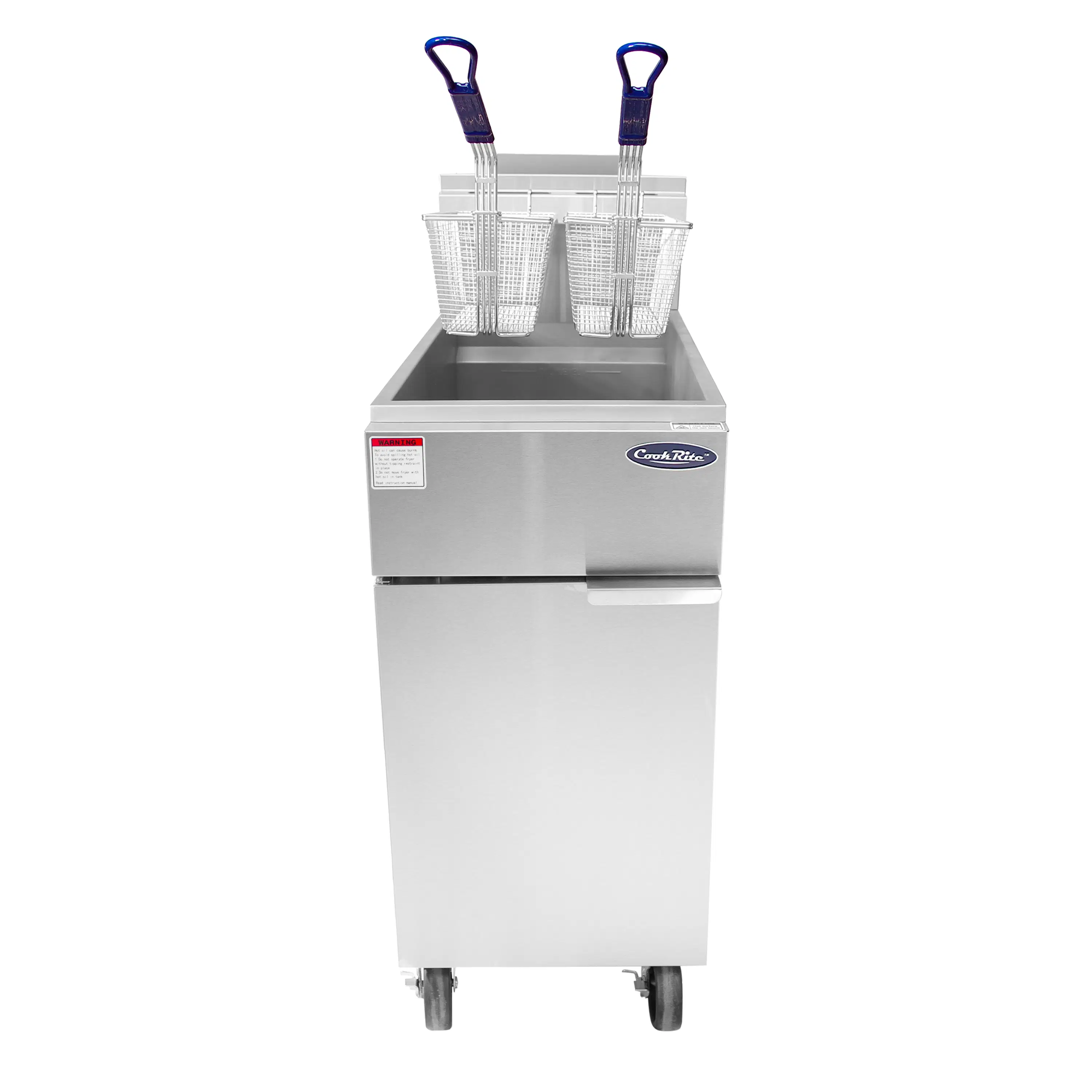
Consistent heat management prevents the oil from reaching the "smoke point" where it begins to break down chemically. Once oil breaks down, it develops surfactants that make the bubbles larger and the heat transfer less efficient. A high-quality commercial deep fryer with a dedicated "cold zone" (like the one found in the CookRite ATFS-50-NG) ensures that sediment falls to the bottom where it won't scorch and ruin the rest of the batch.
Control Systems: Millivolt vs. Electronic
When shopping for fryers, you’ll likely see two main types of thermostats: Millivolt and Electronic. At The Restaurant Warehouse, we often lean toward the Millivolt systems for a very simple reason: reliability in the face of chaos.
Millivolt Controls (The Industry Standard)
A Millivolt system uses a pilot light to generate a tiny amount of electricity to power the gas valve.
- The Pro: It doesn't require an external electrical hookup. If your power goes out but the gas is on, you can still fry.
- The Maintenance: They are incredibly durable and easier for a technician to fix on the fly.
- The Consistency: While electronic controls are technically more "precise" (within 1-2 degrees), a well-calibrated Millivolt system provides the heavy-duty stability needed for constant drop-and-fry environments.
Electronic Controls
These are great for kitchens that need highly specific programming for different menu items. However, they are more sensitive to the heat and grease of a busy kitchen line. For most of our customers, the simplicity of a Millivolt system in a CookRite fryer is the smarter long-term investment.
Built to Last: The CookRite ATFS-50-NG Advantage
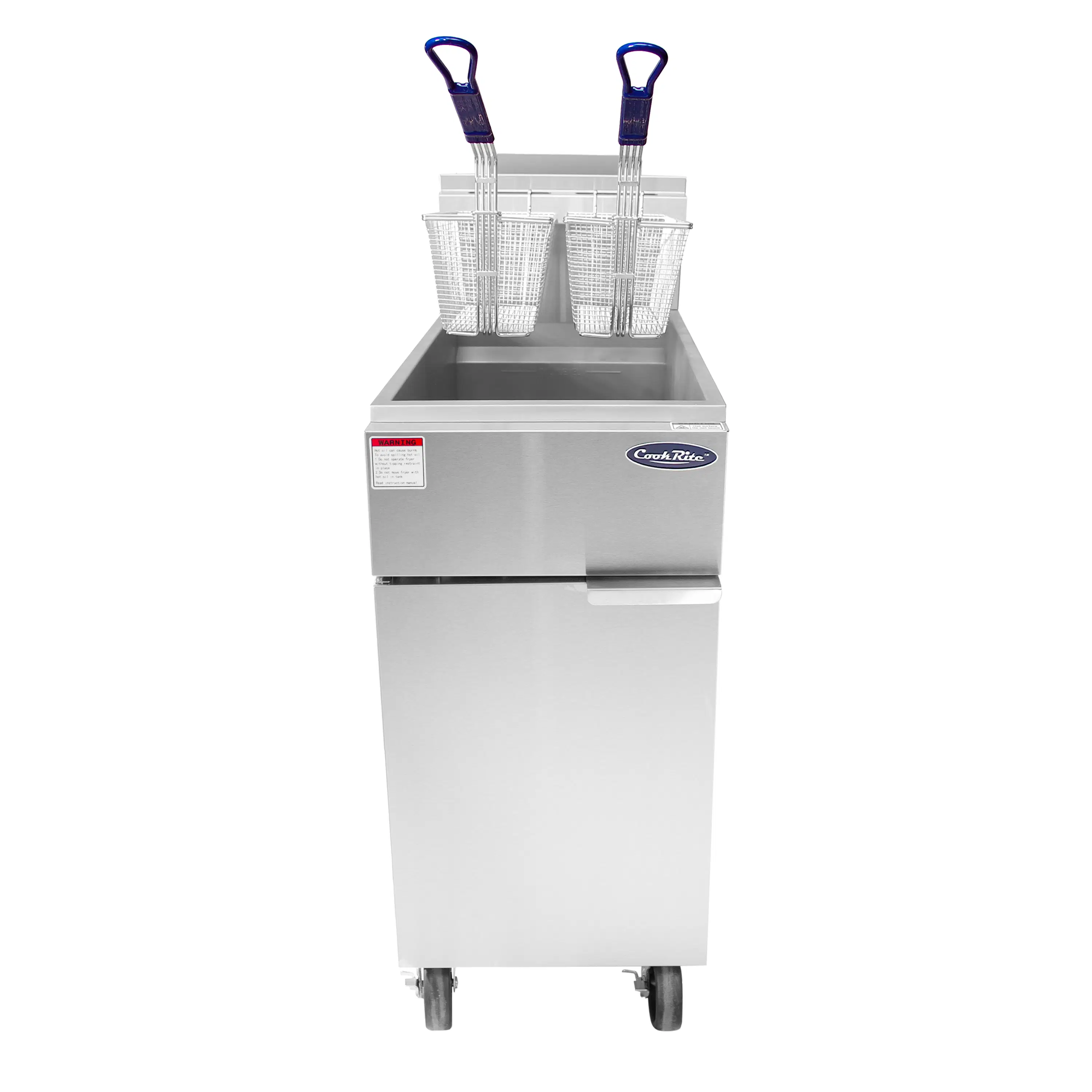
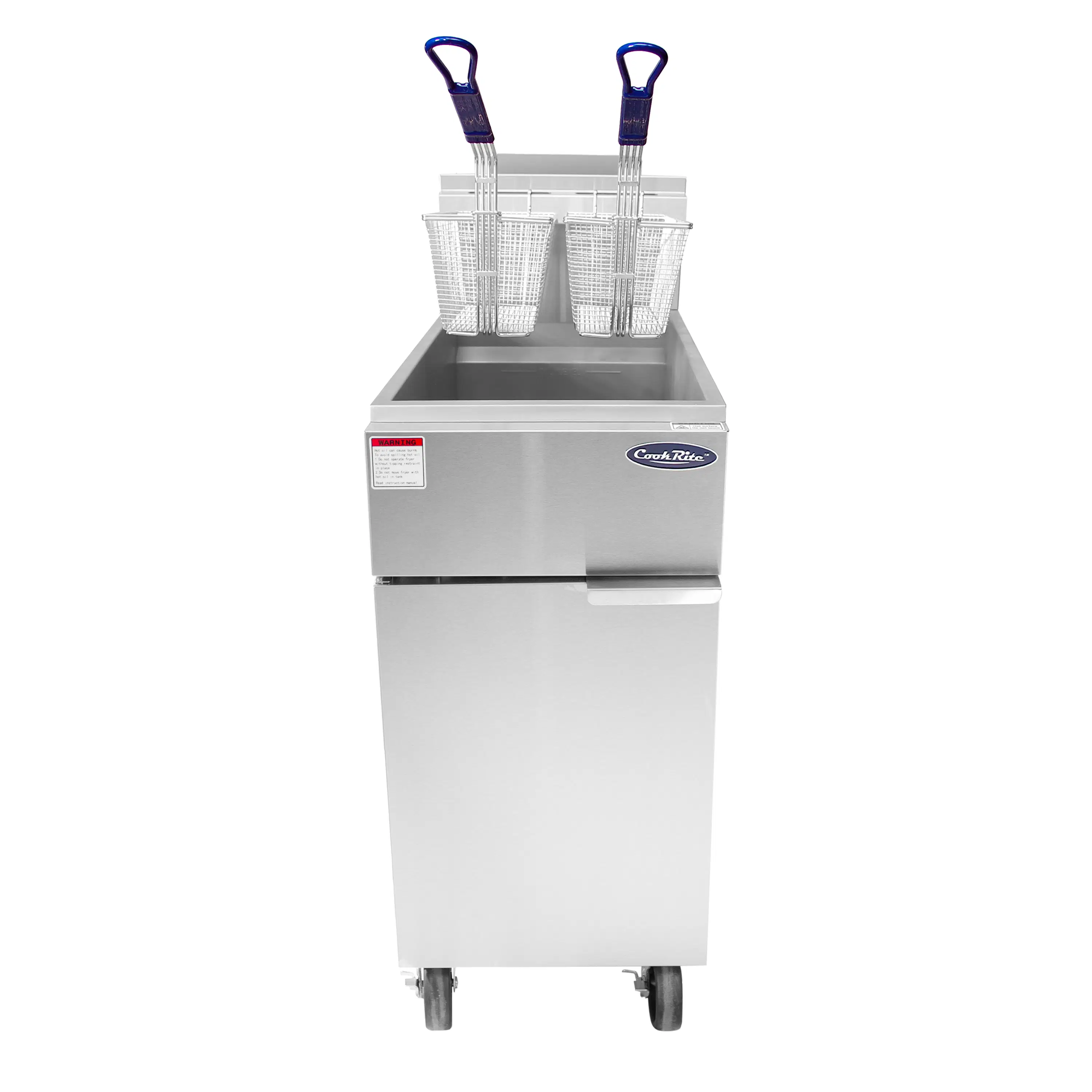
We see a lot of equipment come through our 12 distribution centers, and the CookRite series consistently stands out for its "bang for the buck." Let’s look at the ATFS-50-NG as the perfect example of ROI-focused engineering.
This unit features a 50 lb. capacity and four powerful burners. But the real magic is in the stainless steel structure and the nickel-plated baskets. It’s built to handle the literal heat of a commercial kitchen without warping or losing its calibration.
Key Benefits of the CookRite Series:
- 1-Year Parts and Labor Warranty: This is huge. Most "budget" fryers give you a few months or parts-only. CookRite stands behind their labor, which tells you everything you need to know about the build quality.
- Safety First: Integrated temperature limit switches ensure the unit shuts down if it ever starts to overheat, protecting your staff and your building.
- Efficiency: The baffle design in the heat tubes ensures that the maximum amount of heat stays in the oil rather than going up the flue.
Maintenance & Cleaning: Saving Your Fryer from Itself
You wouldn't drive a car for 50,000 miles without an oil change, yet many kitchens treat their fryers like they're indestructible. If you want that consistent temperature to last for years, you have to prioritize cleaning.
- Daily Filtration: Filtering your oil daily (or twice daily in high-volume spots) removes the crumbs that carbonize and act as tiny heat-leeches.
- Weekly Boil-Out: Use a professional fryer cleaner to strip the carbon deposits off the heating tubes. Carbon buildup acts as insulation, meaning your burners have to work twice as hard to heat the oil.
- Check the Flue: Ensure nothing is obstructing the exhaust. A blocked flue causes uneven heating and can lead to dangerous CO buildup.
The Financial Move: Financing Your Next Unit
We know that for many independent operators, coming up with $1,000 to $2,000 for a new fryer in the middle of a month can be a stretch. But running a broken, inefficient fryer is costing you more in the long run.
That’s why we offer restaurant equipment financing and a 12-month rental program. By spreading the cost out, the savings you see in oil and energy often cover a significant portion of the monthly payment. It turns a "cost" into a "cash-flow positive" upgrade. Plus, with our fast 1-3 day delivery, you don't have to limp along with a broken unit for weeks.
Key Takeaways for the Savvy Operator
- Consistency = Profit: Stable temperatures extend oil life and reduce energy waste.
- Recovery is King: Fast recovery prevents greasy food and keeps the line moving.
- Cold Zones Matter: A fryer without a cold zone will ruin your oil quality in hours, not days.
- Simplicity Wins: Millivolt controls offer the best balance of reliability and performance for most kitchens.
- Warranty Protection: Never buy a fryer without a solid labor warranty. The CookRite 1-year parts and labor is your safety net.
Frequently Asked Questions
Does the BTU rating really matter?
Yes, but it's not the only factor. High BTUs usually mean faster recovery times, but if the heat exchanger isn't efficient, you're just throwing heat out the back of the machine. Look for a balance of BTUs and a well-designed tank.
How often should I calibrate my fryer thermostat?
We recommend checking it once a month with a high-quality external thermometer. If your oil is at 375°F but the dial says 350°F, you're burning through oil and cash.
Can I switch from Natural Gas to Propane later?
Most CookRite units are specific to the gas type (NG or LP). It's much cheaper and safer to buy the correct unit for your utility setup from the start rather than trying to use a conversion kit later.
Why is my fried food suddenly coming out soggy?
Nine times out of ten, it's either because you're overloading the basket (dropping the temp too much) or your fryer's recovery time has slowed down due to carbon buildup on the heating tubes. Time for a boil-out!
Is it better to rent or buy?
If you're a new concept trying to preserve capital, our rental program is a lifesaver. If you're an established spot with steady cash flow, financing to own is usually the best path to long-term ROI.
Ready to stop wasting money on inconsistent frying? Check out our full selection of Atosa and CookRite commercial deep fryers and get back to serving the crispy, golden food your customers love.
About The Author

Sean Kearney
Sean Kearney is the Founder of The Restaurant Warehouse, with 15 years of experience in the restaurant equipment industry and more than 30 years in ecommerce, beginning with Amazon.com. As an equipment distributor and supplier, Sean helps restaurant owners make confident purchasing decisions through clear pricing, practical guidance, and a more transparent online buying experience.
Connect with Sean on LinkedIn, Instagram, YouTube, or Facebook.