
Commercial Deep Fryers
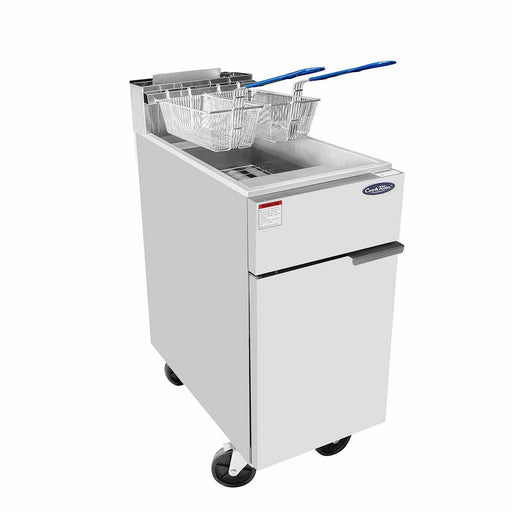
Atosa ATFS-40 40 lb Natural Gas Deep Fryer
Atosa
Original price
$1,481.00
Original price
$1,481.00
-
Original price
$1,481.00
Original price
$1,481.00
Current price
$1,068.00
$1,068.00
-
$1,068.00
Current price
$1,068.00
Atosa ATFS-40 40 lb Commercial Natural Gas Deep Fryer Powerful. Efficient. Built for peak performance. The Atosa ATFS-40 Natural Gas Deep Fryer ...
View full details
Original price
$1,481.00
Original price
$1,481.00
-
Original price
$1,481.00
Original price
$1,481.00
Current price
$1,068.00
$1,068.00
-
$1,068.00
Current price
$1,068.00
Save 28%
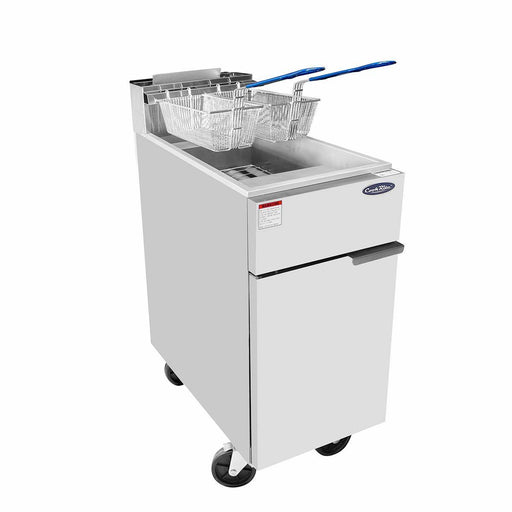
Atosa ATFS-50 Heavy Duty 50 LB Stainless Steel Deep Fryer - Natural Gas
Atosa
Original price
$1,861.00
Original price
$1,861.00
-
Original price
$1,861.00
Original price
$1,861.00
Current price
$1,341.00
$1,341.00
-
$1,341.00
Current price
$1,341.00
Atosa ATFS-50 50 lb Commercial Natural Gas Deep Fryer Serious frying capacity for restaurants, sports bars, and high-demand kitchens. The Atosa ...
View full details
Original price
$1,861.00
Original price
$1,861.00
-
Original price
$1,861.00
Original price
$1,861.00
Current price
$1,341.00
$1,341.00
-
$1,341.00
Current price
$1,341.00
Save 28%
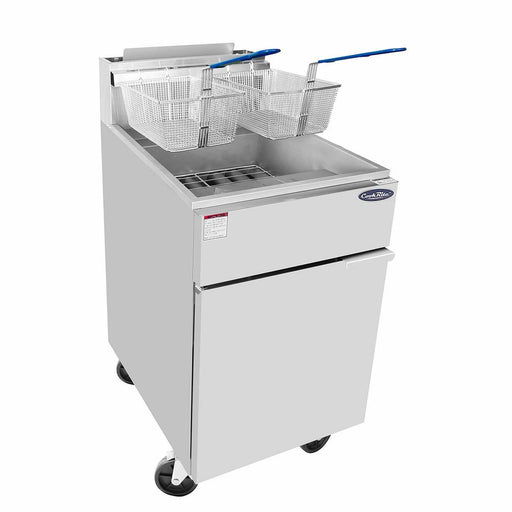
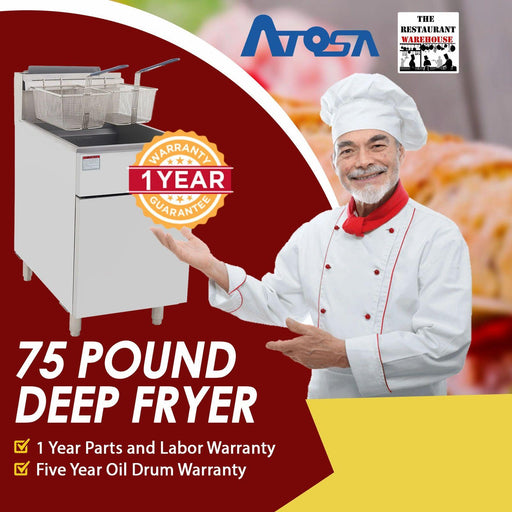
Atosa ATFS-75 Heavy Duty 75 LB Stainless Steel Deep Fryer - Natural Gas
Atosa
Original price
$2,182.00
Original price
$2,182.00
-
Original price
$2,182.00
Original price
$2,182.00
Current price
$1,573.00
$1,573.00
-
$1,573.00
Current price
$1,573.00
Atosa ATFS-75 75 lb Commercial Natural Gas Deep Fryer High-capacity frying power for serious commercial kitchens. The Atosa ATFS-75 Natural Gas ...
View full details
Original price
$2,182.00
Original price
$2,182.00
-
Original price
$2,182.00
Original price
$2,182.00
Current price
$1,573.00
$1,573.00
-
$1,573.00
Current price
$1,573.00
Save 28%
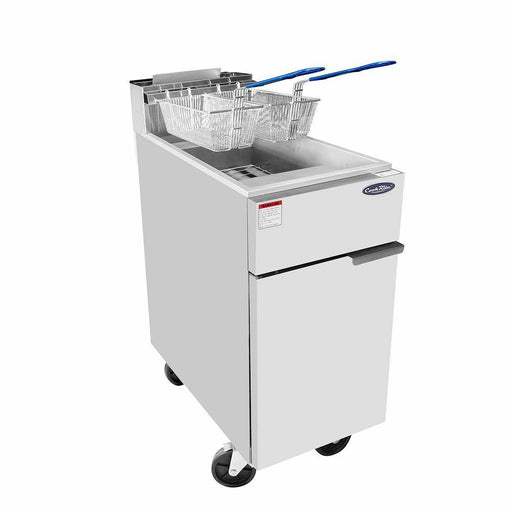
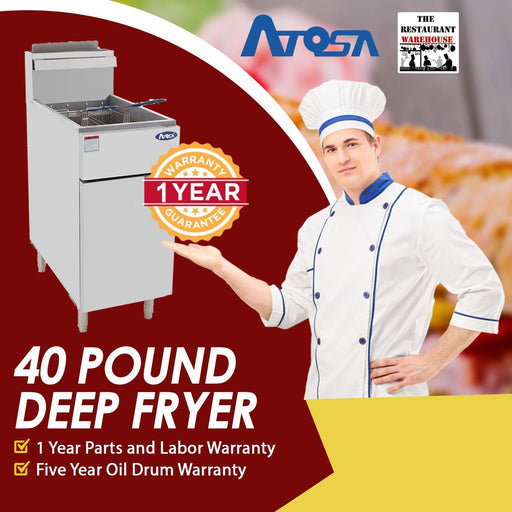
Atosa ATFS-40 Heavy Duty 40 LB Stainless Steel Deep Fryer - Propane
Atosa
Original price
$1,481.00
Original price
$1,481.00
-
Original price
$1,481.00
Original price
$1,481.00
Current price
$1,068.00
$1,068.00
-
$1,068.00
Current price
$1,068.00
Atosa ATFS-40 40 lb Commercial Propane Deep Fryer Reliable frying power for busy kitchens and food trucks. The Atosa ATFS-40 Propane Deep Fryer ...
View full details
Original price
$1,481.00
Original price
$1,481.00
-
Original price
$1,481.00
Original price
$1,481.00
Current price
$1,068.00
$1,068.00
-
$1,068.00
Current price
$1,068.00
Save 28%
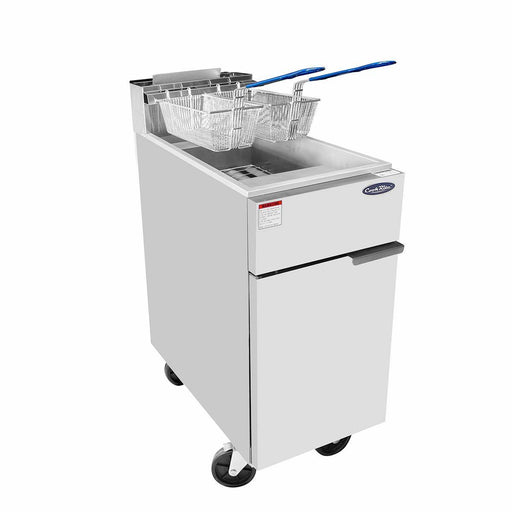
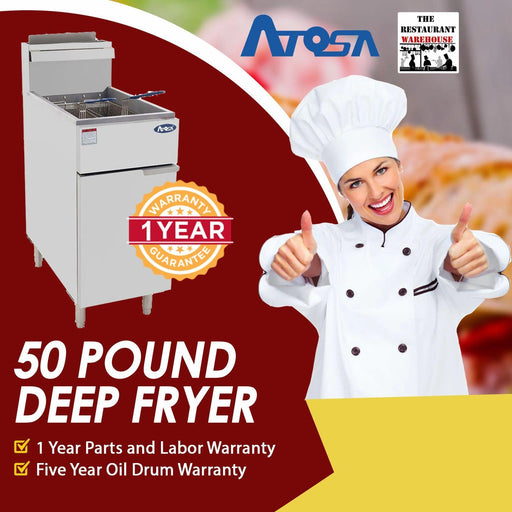
Atosa ATFS-50 Heavy Duty 50 LB Stainless Steel Deep Fryer - Propane
Atosa
Original price
$1,861.00
Original price
$1,861.00
-
Original price
$1,861.00
Original price
$1,861.00
Current price
$1,341.00
$1,341.00
-
$1,341.00
Current price
$1,341.00
Atosa ATFS-50 50 lb Commercial Propane Deep Fryer Built for serious frying power in food trucks and commercial kitchens. The Atosa ATFS-50 Propa...
View full details
Original price
$1,861.00
Original price
$1,861.00
-
Original price
$1,861.00
Original price
$1,861.00
Current price
$1,341.00
$1,341.00
-
$1,341.00
Current price
$1,341.00
Save 28%
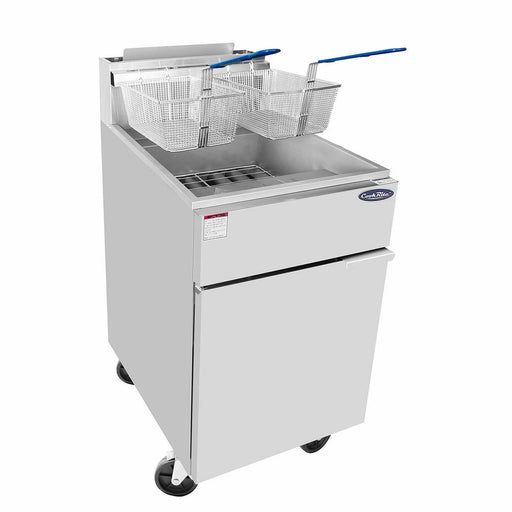
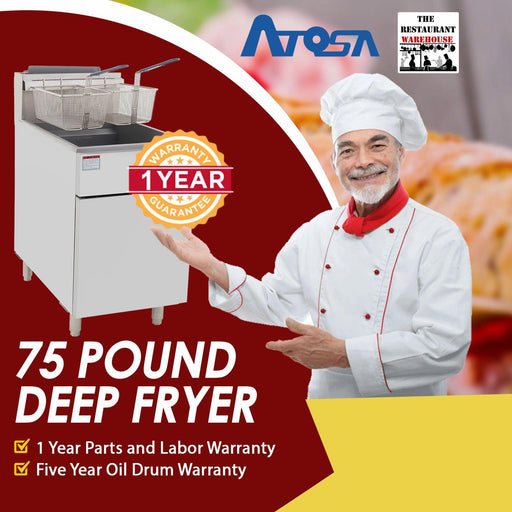
Atosa ATFS-75 Heavy Duty 75 LB Stainless Steel Deep Fryer - Propane
Atosa
Original price
$2,182.00
Original price
$2,182.00
-
Original price
$2,182.00
Original price
$2,182.00
Current price
$1,573.00
$1,573.00
-
$1,573.00
Current price
$1,573.00
Atosa ATFS-75 75 lb Commercial Propane Deep Fryer Maximum output for high-volume kitchens. The Atosa ATFS-75 Propane Gas Deep Fryer is built for...
View full details
Original price
$2,182.00
Original price
$2,182.00
-
Original price
$2,182.00
Original price
$2,182.00
Current price
$1,573.00
$1,573.00
-
$1,573.00
Current price
$1,573.00
Save 28%

Atosa WA300001 Hose Kit for Propane and Natural Gas Units - 48 inch
Atosa
Original price
$415.00
Original price
$415.00
-
Original price
$415.00
Original price
$415.00
Current price
$300.00
$300.00
-
$300.00
Current price
$300.00
Gas hoses are very important. They safely and efficiently deliver propane and natural gas to appliances in restaurants and food trucks. The Atosa ...
View full details
Original price
$415.00
Original price
$415.00
-
Original price
$415.00
Original price
$415.00
Current price
$300.00
$300.00
-
$300.00
Current price
$300.00
Save 28%
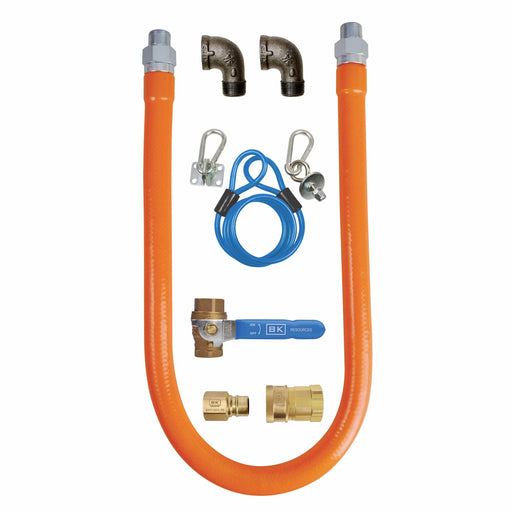
BK Resources Fryer Hose Kit for Natural Gas and Propane Deep Fryers
BK Resources
Original price
$386.00
-
Original price
$386.00
Original price
$386.00
$386.00
-
$386.00
Current price
$386.00
BK Resources Fryer Hose Kit for Natural Gas and Propane Deep Fryers (BKG-GHC-7548-SCK3, 3/4-Inch x 48-Inch, cCSAus Certified) This BK Resources ga...
View full details
Original price
$386.00
-
Original price
$386.00
Original price
$386.00
$386.00
-
$386.00
Current price
$386.00
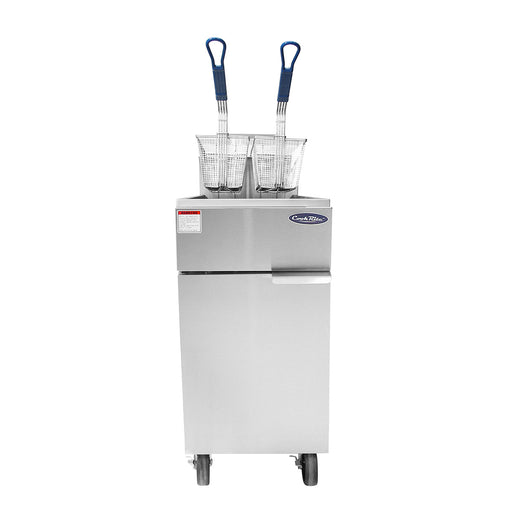
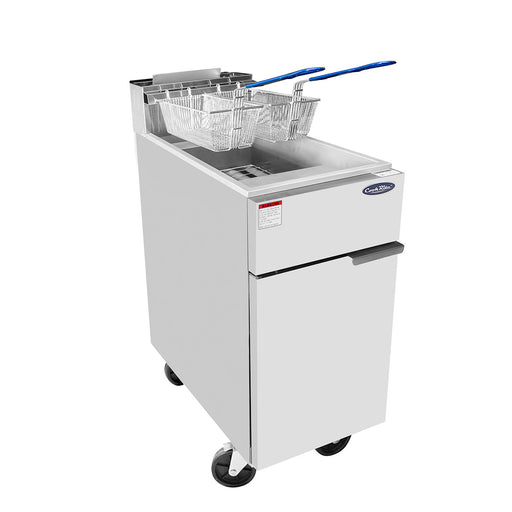
Atosa ATFS-35ES Energy Star Rated Natural Gas Deep Fryer $500 TO $750 Rebate Available
AtosaAtosa ATFS-35E 35 lb ENERGY STAR® Natural Gas Deep Fryer Lower utility bills. Faster recovery. Consistent golden results. The Atosa ATFS-35E Energ...
View full details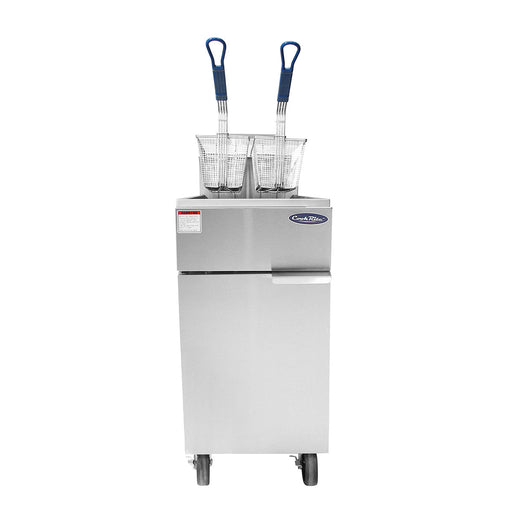
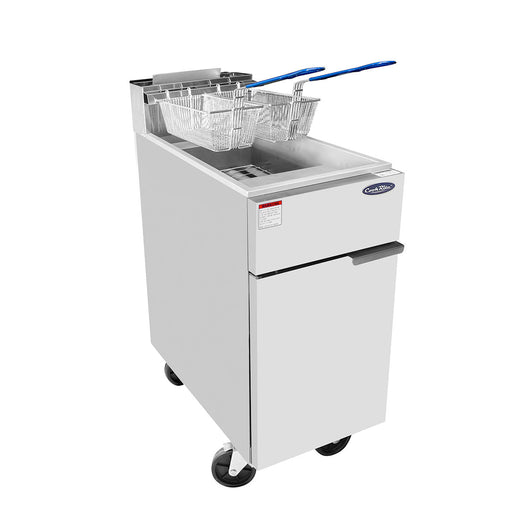
Atosa ATFS-35ES Energy Star Rated Propane Gas Deep Fryer
Atosa
Original price
$1,859.00
Original price
$1,859.00
-
Original price
$1,859.00
Original price
$1,859.00
Current price
$1,068.00
$1,068.00
-
$1,068.00
Current price
$1,068.00
Atosa ATFS-35E 35 lb ENERGY STAR® Propane Gas Deep Fryer Cut energy costs. Maximize output. Deliver consistent crispy results. The Atosa ATFS-35E ...
View full details
Original price
$1,859.00
Original price
$1,859.00
-
Original price
$1,859.00
Original price
$1,859.00
Current price
$1,068.00
$1,068.00
-
$1,068.00
Current price
$1,068.00
Save 43%


Atosa ACEF-10 10lb Electric Countertop Fryer
Atosa
Original price
$800.00
Original price
$800.00
-
Original price
$800.00
Original price
$800.00
Current price
$577.00
$577.00
-
$577.00
Current price
$577.00
Atosa ACEF-10 10 lb Electric Countertop Fryer The Atosa ACEF-10 Electric Countertop Fryer delivers professional frying performance in a compact fo...
View full details
Original price
$800.00
Original price
$800.00
-
Original price
$800.00
Original price
$800.00
Current price
$577.00
$577.00
-
$577.00
Current price
$577.00
Save 28%


Atosa ACEF-16 16lb Electric Countertop Fryer
Atosa
Original price
$1,000.00
Original price
$1,000.00
-
Original price
$1,000.00
Original price
$1,000.00
Current price
$721.00
$721.00
-
$721.00
Current price
$721.00
Atosa ACEF-16 16 lb Electric Countertop Fryer Fast, consistent frying in a compact footprint. The Atosa ACEF-16 is a commercial electric counterto...
View full details
Original price
$1,000.00
Original price
$1,000.00
-
Original price
$1,000.00
Original price
$1,000.00
Current price
$721.00
$721.00
-
$721.00
Current price
$721.00
Save 28%


Atosa ACEF-32 32lb Electric Countertop Fryer Dual Tank
Atosa
Original price
$1,750.00
Original price
$1,750.00
-
Original price
$1,750.00
Original price
$1,750.00
Current price
$1,261.00
$1,261.00
-
$1,261.00
Current price
$1,261.00
Atosa ACEF-32 32 lb Electric Countertop Fryer – Dual Tank Double your output without doubling your footprint. The Atosa ACEF-32 electric counterto...
View full details
Original price
$1,750.00
Original price
$1,750.00
-
Original price
$1,750.00
Original price
$1,750.00
Current price
$1,261.00
$1,261.00
-
$1,261.00
Current price
$1,261.00
Save 28%

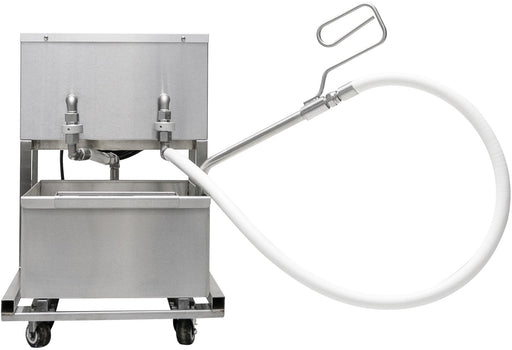
Atosa FPOF-50 50 lb. Fryer Oil Disposal Unit Portable Fryer Filter
Atosa
Original price
$3,000.00
Original price
$3,000.00
-
Original price
$3,000.00
Original price
$3,000.00
Current price
$2,162.00
$2,162.00
-
$2,162.00
Current price
$2,162.00
Atosa FPOF-50 50 lb Portable Fryer Oil Disposal Unit & Fryer Filter End the greasy mess. Improve safety. Extend your oil life. The Atosa FPOF-...
View full details
Original price
$3,000.00
Original price
$3,000.00
-
Original price
$3,000.00
Original price
$3,000.00
Current price
$2,162.00
$2,162.00
-
$2,162.00
Current price
$2,162.00
Save 28%


Atosa FPOF-80 80 lb. Fryer Oil Disposal Unit Portable Fryer Filter
Atosa
Original price
$4,800.00
Original price
$4,800.00
-
Original price
$4,800.00
Original price
$4,800.00
Current price
$3,459.00
$3,459.00
-
$3,459.00
Current price
$3,459.00
Atosa FPOF-80 80 lb Portable Fryer Oil Disposal Unit & Fryer Filter Stop wasting fryer oil. Eliminate messy cleanups. Protect your kitchen sta...
View full details
Original price
$4,800.00
Original price
$4,800.00
-
Original price
$4,800.00
Original price
$4,800.00
Current price
$3,459.00
$3,459.00
-
$3,459.00
Current price
$3,459.00
Save 28%

Atosa 21201001019 Fryer Cover for ATFS-40/50 with Stainless Steel Handle
Atosa Parts
Original price
$93.00
-
Original price
$93.00
Original price
$93.00
$93.00
-
$93.00
Current price
$93.00
Atosa 21201001019 Fryer Cover for ATFS-40 / ATFS-50 The Atosa 21201001019 Fryer Cover is designed to protect the oil in your ATFS-40 and ATFS-50 c...
View full details
Original price
$93.00
-
Original price
$93.00
Original price
$93.00
$93.00
-
$93.00
Current price
$93.00
Atosa 21201003015 Fryer Cover for ATFS-75 with Stainless Steel Handle
Atosa Parts
Original price
$119.00
-
Original price
$119.00
Original price
$119.00
$119.00
-
$119.00
Current price
$119.00
Atosa 21201003015 Fryer Cover for ATFS-75 with Stainless Steel Handle The Atosa 21201003015 Fryer Cover is designed specifically for the ATFS-75 c...
View full details
Original price
$119.00
-
Original price
$119.00
Original price
$119.00
$119.00
-
$119.00
Current price
$119.00

Atosa 21101001047 Fryer Splash Guard for ATFS Series
Atosa Parts
Original price
$88.00
-
Original price
$88.00
Original price
$88.00
$88.00
-
$88.00
Current price
$88.00
Atosa 21101001047 Fryer Splash Guard for ATFS Series The Atosa 21101001047 Fryer Splash Guard is designed to enhance safety and cleanliness in com...
View full details
Original price
$88.00
-
Original price
$88.00
Original price
$88.00
$88.00
-
$88.00
Current price
$88.00

Atosa FP-1324-5 Filter Paper for FPOF-50, 13-1/2"x24" (100 Sheets/Box)
Atosa Parts
Original price
$125.00
-
Original price
$125.00
Original price
$125.00
$125.00
-
$125.00
Current price
$125.00
Atosa FP-1324-5 Fryer Filter Paper for FPOF-50 (13-1/2" x 24") – 100 Sheets per Box The Atosa FP-1324-5 Filter Paper is designed for efficient oil...
View full details
Original price
$125.00
-
Original price
$125.00
Original price
$125.00
$125.00
-
$125.00
Current price
$125.00
Atosa FP-1728-5 Filter Paper for FPOF-50, 17-1/2"x28" (100 Sheets/Box)
Atosa Parts
Original price
$150.00
-
Original price
$150.00
Original price
$150.00
$150.00
-
$150.00
Current price
$150.00
Atosa FP-1728-5 Fryer Filter Paper for FPOF-50 (17-1/2" x 28") – 100 Sheets per Box Keep your fryer oil cleaner, longer with Atosa FP-1728-5 Filte...
View full details
Original price
$150.00
-
Original price
$150.00
Original price
$150.00
$150.00
-
$150.00
Current price
$150.00

Atosa ATTAB1 Fryer Boil Out Tabs (50/Pail)
Atosa Parts
Original price
$350.00
-
Original price
$350.00
Original price
$350.00
$350.00
-
$350.00
Current price
$350.00
Atosa ATTAB1 Fryer Boil Out Tabs (50 Tablets per Pail) Atosa ATTAB1 Fryer Boil Out Tabs are specially formulated cleaning tablets designed to deep...
View full details
Original price
$350.00
-
Original price
$350.00
Original price
$350.00
$350.00
-
$350.00
Current price
$350.00

Atosa 21101001046 Fryer Connector Strip for ATFS Series
Atosa
Original price
$61.00
-
Original price
$61.00
Original price
$61.00
$61.00
-
$61.00
Current price
$61.00
Atosa 21101001046 Fryer Connector Strip for ATFS Series The Atosa 21101001046 Fryer Connector Strip is designed to securely connect two Atosa ATFS...
View full details
Original price
$61.00
-
Original price
$61.00
Original price
$61.00
$61.00
-
$61.00
Current price
$61.00

Omcan CE-CN-0125 Fryer For Funnel Cake and Donut - Natural Gas
OmcanOmcan’s CE-CN-0125 Natural Gas Fryer is engineered for high-volume frying, ideal for commercial kitchens, carnivals, and food festivals. Its powerf...
View full detailsOmcan CE-CN-0170 Fryer For Funnel Cake and Donut - Natural Gas
OmcanOmcan’s CE-CN-0125 Natural Gas Fryer is engineered for high-volume frying, ideal for commercial kitchens, carnivals, and food festivals. Its powerf...
View full details
Omcan CE-CN-0040 40 lb. Fryer Electric Floor Model - 240v/60/3-ph, 34 amps
OmcanThe Omcan CE-CN-0040 is a robust 40 lb. electric floor fryer designed for high-volume commercial kitchens. Operating at 240 volts, 60 Hz, and 3-pha...
View full detailsOmcan CE-CN-0040-208-3 40 lb. Fryer Electric Floor Model - 208v/60/3-ph, 34 amps
OmcanThe Omcan CE-CN-0040-208-3 is a robust 40 lb. electric floor fryer designed for high-volume commercial kitchens. Operating at 208 volts, 60 Hz, and...
View full detailsOmcan CE-CN-0040-240-1 40 lb. Fryer Electric Floor Model - 240v/60/1-ph, 59 amps
OmcanThe Omcan CCE-CN-0040-240-1 is a robust 40 lb. electric floor fryer designed for high-volume commercial kitchens. Operating at 240 volts, 60 Hz, an...
View full detailsOmcan CE-CN-0040-208-1 40 lb. Fryer Electric Floor Model - 208v/60/1-ph, 59 amps
OmcanThe Omcan CCE-CN-0040-240-1 is a robust 40 lb. electric floor fryer designed for high-volume commercial kitchens. Operating at 208 volts, 60 Hz, an...
View full details
Bakemax BMDGF5 Greaseless Air Fryer
BakemaxThe Bakemax BMDGF5 is a double-stacked greaseless air fryer engineered for high-volume operations that need fryer-style output without a hood syste...
View full details
Bakemax BMSGF202 Greaseless Air Fryer
BakemaxNot In Stock Yet — Available for Pre-Order. This item is currently not on-hand at our warehouse. Use the quote request form on this page to confir...
View full details
Bakemax BMSGF203 Greaseless Air Fryer
BakemaxThe Bakemax BMSGF203 is a compact countertop greaseless air fryer engineered for quick-service operations that have access to 208V power and need r...
View full details
Bakemax BMSGF5 Greaseless Air Fryer
BakemaxThe Bakemax BMSGF5 is a high-capacity countertop greaseless air fryer engineered for sustained batch cooking in mid-volume commercial operations. T...
View full details
Bakemax BMSRAF02 Rapid Air Fryer
BakemaxNot In Stock Yet — Available for Pre-Order. This item is currently not on-hand at our warehouse. Use the quote request form on this page to confir...
View full details
Comstock-Castle 2923SF 23" Flat-Bottom Doughnut Fryer, Countertop Gas, 50,000 BTU
Comstock-CastleComstock-Castle 2923SF 23-Inch Flat-Bottom Doughnut Fryer (Countertop Gas, 20-24 lb Oil Capacity, 50,000 BTU) The Comstock-Castle 2923SF is a 23-i...
View full details
Comstock-Castle 2932SF 32-Inch Flat-Bottom Doughnut Fryer, Countertop Gas, 75,000 BTU
Comstock-CastleComstock-Castle 2932SF 32-Inch Flat-Bottom Doughnut Fryer (Countertop Gas, 27-36 lb Oil Capacity, 75,000 BTU) The Comstock-Castle 2932SF is a 32-i...
View full details
Comstock-Castle 2941SF 41-Inch Flat-Bottom Doughnut Fryer, Countertop Gas, 100,000 BTU
Comstock-CastleComstock-Castle 2941SF 41-Inch Flat-Bottom Doughnut Fryer (Countertop Gas, 38-48 lb Oil Capacity, 100,000 BTU) The Comstock-Castle 2941SF is a 41-...
View full details
Comstock-Castle CC-GDF24 Floor Model Doughnut Fryer, Natural Gas, 90,000 BTU
Comstock-CastleComstock-Castle CC-GDF24 Floor Model Doughnut Fryer (Natural Gas, 125 lb Fat Capacity, 90,000 BTU) The Comstock-Castle CC-GDF24 is a floor-model g...
View full details
Comstock-Castle CC-GDF30 Floor Model Doughnut Fryer, Natural Gas, 120,000 BTU
Comstock-CastleComstock-Castle CC-GDF30 Floor Model Doughnut Fryer (Natural Gas, 170 lb Fat Capacity, 120,000 BTU) The Comstock-Castle CC-GDF30 is a floor-model ...
View full details
Comstock-Castle CC-GDF38 Floor Model Doughnut Fryer, Natural Gas, 150,000 BTU
Comstock-CastleComstock-Castle CC-GDF38 Floor Model Doughnut Fryer (Natural Gas, 220 lb Fat Capacity, 150,000 BTU) The Comstock-Castle CC-GDF38 is a floor-model ...
View full details

Atosa CookRite AEFF-50-1 Single Vat 50 lb Electric Fryer with Built-In Filtration - 17 kW, 208V 3-Phase
AtosaAtosa CookRite AEFF-50-1 Single Vat 50 lb Electric Fryer with Built-In Filtration The Atosa CookRite AEFF-50-1 is a single-vat, 50 lb electric flo...
View full details

Atosa CookRite AEFF-50-3TB Triple Vat Electric Fryer with Auto Lift and Built-In Filtration - Split Right Vat, 208V 3-Phase
AtosaAtosa CookRite AEFF-50-3TB Triple Vat Electric Fryer with Auto Lift and Built-In Filtration The Atosa CookRite AEFF-50-3TB is a three-vat electric...
View full details

Atosa CookRite AEFF-50-3T Triple Vat Electric Fryer with Built-In Filtration - Split Right Vat, 208V 3-Phase
AtosaAtosa CookRite AEFF-50-3T Triple Vat Electric Fryer with Split Vat and Built-In Filtration The Atosa CookRite AEFF-50-3T is a three-vat electric f...
View full details

Atosa CookRite AEFF-50-3 Triple Vat 150 lb Electric Fryer with Built-In Filtration - (3) 17 kW, 208V 3-Phase
AtosaAtosa CookRite AEFF-50-3 Triple Vat Electric Fryer with Built-In Filtration The Atosa CookRite AEFF-50-3 is a three-vat electric fryer battery wit...
View full details

Atosa CookRite AEFF-50-2T Double Vat Electric Fryer with Built-In Filtration - Split Right Vat, 208V 3-Phase
AtosaAtosa CookRite AEFF-50-2T Double Vat Electric Fryer with Split Vat and Built-In Filtration The Atosa CookRite AEFF-50-2T is a two-vat electric fry...
View full details

Atosa CookRite AEFF-50-1T Single Split-Vat Electric Fryer with Built-In Filtration - 2 x 25 lb, 208V 3-Phase
AtosaAtosa CookRite AEFF-50-1T Single Split-Vat Electric Fryer with Built-In Filtration The Atosa CookRite AEFF-50-1T is a single electric floor fryer ...
View full details

Atosa CookRite AEFF-50-3B Triple Vat 150 lb Electric Fryer with Auto Lift and Built-In Filtration - 208V 3-Phase
AtosaAtosa CookRite AEFF-50-3B Triple Vat Electric Fryer with Auto Lift and Built-In Filtration The Atosa CookRite AEFF-50-3B is a three-vat electric f...
View full details

Atosa CookRite AEFF-50-2TB Double Vat Electric Fryer with Auto Lift and Built-In Filtration - Split Right Vat, 208V 3-Phase
AtosaAtosa CookRite AEFF-50-2TB Double Vat Electric Fryer with Auto Lift, Split Vat, and Built-In Filtration The Atosa CookRite AEFF-50-2TB is a two-va...
View full details

Atosa CookRite AEFF-50-2 Double Vat 100 lb Electric Fryer with Built-In Filtration - (2) 17 kW, 208V 3-Phase
AtosaAtosa CookRite AEFF-50-2 Double Vat Electric Fryer with Built-In Filtration The Atosa CookRite AEFF-50-2 is a two-vat electric fryer battery with ...
View full details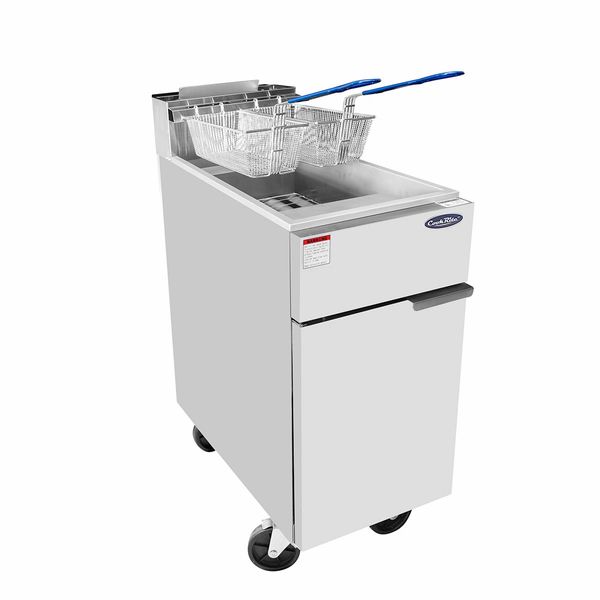
Commercial Deep Fryers: The Complete Buyer's Guide
Commercial deep fryers are the engine room of any kitchen pushing fries, wings, chicken, donuts, fish, tempura, onion rings, or funnel cakes. The right deep fryer holds temperature through a 50-order rush, recovers fast after a frozen-product drop, keeps oil clean shift after shift, and never becomes the bottleneck on your line. The wrong fryer drags ticket times, burns through cooking oil, sends utility bills up, and turns into a safety liability.
This page consolidates our complete commercial deep fryer buying guidance: gas vs electric, capacity by oil weight, BTU and wattage sizing, the four fryer types, ventless setups, cost tiers, energy efficiency, oil management, safety, daily and weekly cleaning, common buying mistakes, and the residential-vs-commercial line every operator needs to understand.
Browse the full commercial deep fryer lineup to compare capacities, fuel types, and configurations.
Three Questions That Drive Every Fryer Spec
Every commercial fryer decision starts with three questions:
- How much fried food do you sell during your busiest hour
- What does your menu look like (lightly breaded vs heavily battered vs wet-batter vs pressure-cooked chicken)
- What utility hookups exist in your space (natural gas, propane, dedicated 208V/240V circuits, hood ventilation)
Answer those three and the rest of the spec sheet falls into place. Get any one of them wrong and the fryer either overspends on capacity you never use or chokes during peak service.
Commercial Grade vs Residential: What Actually Separates Them
Choose equipment designed and listed for commercial foodservice, with construction, controls, cleaning access, and support suited to repeated service. Check the selected model's sanitation and safety listings against local requirements. Household appliances should not be assumed acceptable because they can cook the same food.
Confirm the proposed equipment with your installer, health department, fire authority, and insurer before purchase. A fryer should match both the menu and the approved installation, not merely fit the counter or floor opening.
Gas vs Electric Commercial Deep Fryers
Both gas and electric commercial fryers can serve demanding kitchens. Compare rated input, tested production capacity, recovery, utility availability, and operating cost for the exact models. Fuel alone does not determine which fryer recovers faster.
- Gas: choose the factory-configured natural gas or propane version and confirm adequate fuel delivery.
- Electric: confirm voltage, amperage, phase, and circuit capacity; no combustion does not mean no ventilation requirement.
- Countertop: useful for limited space or a separate menu station when its output matches the job. Check the model's utilities instead of assuming a standard outlet is sufficient.
The Four Types of Commercial Deep Fryers
Open-Pot Fryers
An open-pot design keeps heating components outside the main cooking well, making access for cleaning a key buying consideration. Compare the shape and depth of the sediment zone and the manufacturer's intended menu applications. Atosa ATFS gas fryers use a tube-style design rather than an open-pot design.
Tube-Style Fryers
Heat-exchange tubes run through the oil. The design can provide a cooler sediment zone below the tubes, useful for menus that shed breading and crumbs. Allow time and tool access to clean around the tubes, and do not treat the sediment zone as a substitute for filtering.
Flat-Bottom Fryers
A broad flat-bottom tank can suit floating dough and certain battered products. Tank surface area, turning space, and residue management matter. Match the specific fryer's approved applications to the menu; not every fryer marketed for doughnuts uses the same tank design.
Pressure Fryers
Sealed lid raises boiling point, delivers a distinctive bone-in chicken texture, cooks faster than atmospheric fryers. Used almost exclusively for fried chicken concepts. Higher cost, more maintenance, tighter safety envelope.
Fryer Type by Menu
| Menu | Fryer Type | Capacity | Why |
|---|---|---|---|
| French fries, wings, lightly breaded | Open-pot | 35-50 lb | Cool zone catches crumbs, easy to clean |
| Fried chicken high-volume | Tube-style | 50-75 lb | Heavy breading, fast recovery, deep cool zone |
| Donuts, funnel cakes, churros | Flat-bottom | 30-50 lb | Wet batter floats freely, even surface heat |
| QSR chicken concept | Pressure | 30-50 lb | Sealed chamber, faster cook, juicier product |
| Tempura and light Asian batters | Flat-bottom | 30-40 lb | No tubes to snag, no crumb burn |
| Mixed menu (general purpose) | Open-pot, multi-tank | 2 x 40 lb | Separate vats prevent flavor crossover |
Sizing a Commercial Deep Fryer: BTU, Watts, Capacity, Recovery
BTU and Wattage Sizing
Compare the manufacturer's rated input with cooking efficiency and production data for the selected unit. There is no single BTU-per-pound or watt-per-gallon rule that reliably sizes every fryer. The Atosa comparison below distinguishes NG and LP input, and electrical models must be matched to the site's actual supply.
Capacity by Oil Weight (Deep Fryer Size Chart)
- 40 lb deep fryers: consider for compact floor stations and mixed menus.
- 50 lb deep fryers: compare when a compact station needs additional oil capacity.
- 75 lb deep fryers: consider for fryer-heavy menus and sustained demand, with room for the wider cabinet and larger oil volume.
Use peak basket demand, food type, batch weight, and recovery to choose capacity. Daily covers alone are not enough to size a fryer, and oil weight is not an hourly food-production rating.
Recovery Time and Why It Matters
Recovery is the time needed to return toward the cooking setpoint after loading food. Product temperature, moisture, batch weight, and fryer design all affect it. Compare manufacturer production tests or a representative menu trial rather than expecting one recovery time for every frozen-food drop.
Compare Fryer Options by Fuel and Configuration
- Atosa Deep Fryers - full ATFS line, 35/40/50/75 lb, natural gas and propane
- Electric Deep Fryers
- Countertop Fryers
- Propane Deep Fryers
- Natural Gas Deep Fryers
- ENERGY STAR Deep Fryers - check current utility rebate eligibility
- Commercial Greaseless Air Fryers
- Donut Fryers
- Fryer Oil Filtration Systems
- Fryer Filter Paper
Commercial Electric Deep Fryers: Countertop and Floor Models
Electric deep fryers use heating elements to heat the cooking oil, providing another option when a kitchen does not have a suitable gas connection. Compare countertop and floor-standing configurations by production needs, usable basket space, cleaning access, and available electrical service. Electric power does not automatically make installation simple: the chosen model must match the voltage, phase, circuit capacity, and ventilation plan.
Countertop units can suit a smaller menu or a supplemental station, while an electric floor fryer offers a different footprint and capacity. The Atosa ACEF models in the countertop section are useful comparisons for a compact station. For a 40 lb floor-model setup, the Omcan CE-CN-0040 family offers the following electrical configurations.
| Product | Voltage | Phase | Listed amperage |
|---|---|---|---|
| Omcan 44591 / CE-CN-0040 | 240V | Three-phase | 34 amps |
| Omcan 47331 / CE-CN-0040-208-3 | 208V | Three-phase | 34 amps |
| Omcan 47739 / CE-CN-0040-240-1 | 240V | Single-phase | 59 amps |
| Omcan 47740 / CE-CN-0040-208-1 | 208V | Single-phase | 59 amps |
Match the exact product and nameplate to the building's supply before ordering. Have an electrician confirm circuit protection, wiring, disconnects, and connection requirements; listed appliance amperage is not a complete circuit-design instruction. Single-phase and three-phase versions are not interchangeable simply because they have the same oil capacity.
Compare temperature controls, tank access, removable components, and safe oil draining alongside rated cooking performance. For a food truck or concession trailer, evaluate the fryer's electrical load together with refrigeration, ventilation, and other equipment running during service. Gas and electric both deserve a model-specific comparison rather than a blanket assumption that one always cooks faster.
ENERGY STAR Rated Deep Fryers
Energy use matters over the full working day, not just while a basket is cooking. When comparing a qualified fryer with a conventional model, consider idle time, the amount of food fried, local utility rates, and the production capacity needed during the rush. An efficiency designation does not remove the need to size the fryer correctly.
Start with the Atosa ATFS-35ES natural gas fryer and ATFS-35ES propane fryer, then compare them with the other Atosa ATFS models above. Check current ENERGY STAR qualification for the exact model and fuel configuration before purchase. The 35ES has a 35 lb oil capacity; do not assume that it is the same capacity as an ATFS-40 because the cabinet width is similar.
If a utility incentive is available, confirm the approved model, installation address, application deadline, documentation, and any preapproval requirement. Rebates are not automatic or identical nationwide. Compare the installed purchase cost and expected operating cost without treating an unconfirmed rebate or a promised savings percentage as guaranteed.
Replacement screens, orifices, and other ATFS-35ES parts may also appear among the products in this combined collection. Their inclusion supports equipment maintenance; it does not mean that a replacement part is itself an ENERGY STAR-certified fryer. Match any service part to the exact equipment model and fuel, and use qualified service personnel where required.
Fryer Filter Paper and Replacement Consumables
Fryer filter paper works with compatible filtration equipment to capture food particles and sediment as oil passes through it. Clean, correctly fitted media supports the filtration process, but it does not reverse chemical degradation of the oil or replace routine oil-quality checks. The paper and the filtration machine need to be selected together.
Check the filtration unit's specified paper size, shape, material, and installation procedure. This collection includes Atosa FP-1324-5 filter paper and Atosa FP-1728-5 filter paper. Confirm the exact replacement part against your unit's manual or existing media rather than assuming every sheet fits every portable filter.
Replace media at the interval specified for the equipment and workload, and inspect it when flow or filtration performance changes. Keep spare consumables accessible, maintain the filter unit, and follow the approved oil-temperature and handling procedure. See the Fryer Filters and Oil Filtration Equipment section for selecting the receiving capacity, drain access, and portable filtration arrangement.
Atosa Deep Fryers: CookRite ATFS Models
Atosa's CookRite ATFS family gives operators a practical way to compare commercial gas fryers by oil capacity, burner count, cabinet width, and fuel. The core buying question is not simply which model is biggest. It is which model handles your busiest basket sequence while fitting the hood, gas supply, cleaning routine, and available floor space.
The ATFS lineup shares a welded stainless steel tank, stainless steel exterior and interior, standing pilots, millivolt thermostat, oil cooling zone, high-temperature limiting device, two nickel-plated baskets with coated handles, and a basket hanger. Atosa's current specification sheet lists a 200°F to 400°F temperature range, a rear 3/4-inch NPT gas connection and regulator, and four standard casters. Confirm the exact model and supplied accessories when ordering.
| Model | Oil capacity | Burners | Natural gas BTU/h | Propane BTU/h | Cabinet width |
|---|---|---|---|---|---|
| ATFS-35ES | 35 lb | 3 | 60,000 | 60,000 | 15 3/5 inches |
| ATFS-40 | 40 lb | 3 | 102,000 | 90,000 | 15 3/5 inches |
| ATFS-50 | 50 lb | 4 | 136,000 | 120,000 | 15 3/5 inches |
| ATFS-75 | 75 lb | 5 | 170,000 | 150,000 | 21 1/10 inches |
The models above share a published depth of 30 1/10 inches and height of 44 2/5 inches. The 35ES, 40, and 50 share the same cabinet width; the 75 needs more room. Matching cabinet dimensions does not guarantee a drop-in replacement: a larger burner load still needs a gas-supply and ventilation check. BTU ratings and dimensions follow Atosa's manufacturer specification sheet; verify the supplied unit's nameplate before installation.
Cold Zone and Millivolt Controls
The cooler oil zone below the heating tubes lets crumbs settle away from the most intense heat. It supports oil management but does not replace skimming, filtration, or oil changes. It also does not remove allergens or prevent flavor transfer between foods sharing a vat. Separate oil and dedicated equipment may be needed for separate menu programs.
The standing-pilot millivolt system avoids the need for an external electrical connection for the ATFS gas controls. That can help with installation planning in a food truck, but it does not eliminate the electrical needs of the hood, suppression controls, lighting, or other equipment. Leave gas-pressure adjustment and safety-control servicing to qualified technicians.
ATFS-35ES and Energy-Conscious Buying
Compare the ATFS-35ES natural gas fryer and propane version when energy use is a priority. The 35ES is a 35 lb model, not a 40 lb fryer with a different label. Evaluate its capacity against your actual rush, and confirm current ENERGY STAR qualification and local utility incentives before including a rebate in the purchase budget.
40 Pound Deep Fryers: Compact Floor-Model Frying
A 40 lb fryer is worth considering when fries, wings, fish, or appetizers are part of a mixed menu and floor space is limited. Oil capacity describes the weight of oil in the tank, not the weight of food you can load at once or the number of pounds it cooks per hour. Frozen food, breading, batch size, and recovery all affect output.
The Atosa ATFS-40 combines a narrow cabinet with three burners. Compare the 40 lb natural gas model with the 40 lb propane model using the separate input ratings in the table above. Do not assume the two fuel versions have the same BTU rating.
Two smaller vats can be more useful than one larger vat when a kitchen needs separate fish and fries stations, different cooking temperatures, or a backup cooking station. That choice also means checking the combined hood width, gas load, oil inventory, and filtration workload. Allergen controls require more than simply assigning a separate basket.
50 Pound Deep Fryers: A Step Up for Busy Service
The 50 lb format adds oil capacity while remaining practical for restaurants, sports bars, and dedicated wing or appetizer stations. The Atosa ATFS-50 adds a fourth burner while retaining the same published cabinet width as the ATFS-40. It is a useful comparison when an existing compact station needs more capacity but cannot accommodate a wider fryer.
Compare the 50 lb natural gas fryer and 50 lb propane fryer against your busiest repeated basket drops, not only the day's total orders. More oil can help buffer temperature changes, but overloading a basket still compromises cooking consistency. Ask whether your bottleneck is tank capacity, recovery, available basket space, or the number of foods competing for the same oil.
Before replacing a 40 lb unit with a 50 lb unit, have the installer confirm fuel delivery at the required load. Keeping the same floor footprint does not mean that the existing connector, branch line, and other appliances can automatically support the additional demand.
75 Pound Deep Fryers: More Capacity for Fryer-Heavy Menus
A 75 lb commercial fryer deserves consideration for sustained frying, larger batch requirements, or kitchens where chicken, fish, and fries dominate the menu. The Atosa ATFS-75 uses five burners and a wider cabinet than the 40 and 50 lb models. Check the equipment opening, hood capture, basket handling space, service access, and route into the building before ordering.
Compare the 75 lb natural gas fryer and 75 lb propane fryer. A larger tank increases the oil needed for each fill and the capacity your filtration equipment must handle. For mixed menus, compare one 75 lb unit with a two-fryer arrangement rather than assuming the largest tank is automatically the better setup.
Propane Deep Fryers for Food Trucks and LP Kitchens
Choose a factory-configured propane fryer when your approved installation uses LP rather than metered natural gas. Food trucks, concession trailers, catering operations, and buildings without natural gas are common reasons to evaluate propane. The fuel label does not make an indoor commercial fryer suitable for exposed outdoor use.
For an enclosed mobile kitchen, plan the fryer together with the hood, fire protection, make-up air, equipment restraints, and propane system. Have the propane professional size storage, regulators, connectors, and supply capacity for every appliance running at once. Tank performance depends on temperature, draw rate, and remaining fuel, so a generic promise of a set number of hours from a small cylinder is not a reliable design basis.
The collection also includes the Omcan 47354 single-tank outdoor portable fryer and Omcan 47355 double-tank outdoor portable fryer. These are a different equipment choice from an indoor Atosa floor fryer. Confirm the intended location, model instructions, and local approval rather than treating all LP fryers as interchangeable.
Order the correct fuel version from the start. Never connect an NG fryer to propane simply by changing the hose. Any conversion must be expressly supported by the manufacturer and carried out by a qualified technician with the correct components and commissioning checks.
Plan the Whole Propane Frying Station
When several fryers share a line, assign the menu before specifying equipment: fries, breaded chicken, and fish may need separate vats and different batch schedules. Include a safe landing or dump area for draining, seasoning, and packing so cooked food does not wait over the oil while the next order is loaded. The combined gas demand and hood coverage must account for the complete bank, not just one fryer.
For seasonal catering or mobile service, include shutdown, transport, storage, and recommissioning in the equipment plan. Follow the manufacturer's safe oil-handling and securing instructions before moving a unit. After storage, have the gas connections and controls checked before returning to service. A cover protects the tank from contamination; it is not a substitute for a safe transport procedure.
If the pilot, thermostat, or high-limit device repeatedly fails, stop using the fryer and arrange qualified service. Do not bypass a safety device or assume every shutdown has the same cause. For ordering, supply the desired capacity, exact fuel, installation location, delivery ZIP code, and access constraints so the unit and delivery arrangements can be checked together.
Natural Gas Deep Fryers for Permanent Kitchens
Natural gas is a practical option for a restaurant with suitable existing service. Compare the 40, 50, and 75 lb ATFS models by peak production needs, available space, and total gas demand. Local utility rates and operating hours determine running costs; gas is not automatically cheaper or faster than every electric alternative.
The appliance inlet size is only one part of a gas installation. Pipe length, pressure, fittings, other connected equipment, and simultaneous demand affect supply sizing. Have a qualified installer evaluate the complete system, then confirm the required clearances, ventilation, shutoff access, and restraint arrangements against the model's installation instructions.
Countertop Fryers for Smaller or Supplemental Stations
A commercial countertop fryer can add a dedicated appetizer station without the footprint of a floor model. It suits smaller menus, concessions, cafés, and secondary frying stations when its production capacity matches the workload. Measure the usable work surface and leave safe room for loading baskets, draining food, cleaning, and accessing controls.
Atosa choices include the ACEF-10, ACEF-16, and ACEF-32 dual-tank fryer. Compare tank layout, cleaning access, basket size, and controls rather than judging only the total oil capacity. A divided setup can support different foods or temperatures, but check which controls and electrical connections apply to the exact model.
Countertop does not mean ordinary-outlet compatible or exempt from ventilation requirements. Confirm voltage, amperage, phase, plug configuration, circuit capacity, and the proposed location before buying. Commercial electric frying still produces heat and cooking emissions even though there is no gas burner.
Compare the Working Details, Not Just the Footprint
Check usable basket dimensions against the actual food portions, and compare a larger single tank with a divided-tank arrangement. Two baskets in one tank still share the same oil; they do not provide the separation of independent vats. Look at insulated handles, basket-rest positions, stability, high-temperature protection, and safe access for removing or draining the tank.
Consider daily cleaning and service support before placing a countertop fryer in a tightly packed station. Staff need room to lift components safely and clean surrounding surfaces without reaching across hot oil. Confirm included baskets, replacement parts, warranty coverage, and accessory compatibility. If spreading the equipment purchase over payments would help, review our restaurant equipment financing options alongside the complete installed cost.
Commercial Greaseless Air Fryers
Greaseless equipment offers a different cooking method from immersing food in a vat of oil. Evaluate it for a menu built around compatible fries, appetizers, wings, tenders, or prepared snack items. Test the actual food, batch size, cooking cycle, and holding quality rather than assuming a greaseless model will match an oil fryer's output or texture.
Bakemax options in this combined collection include the BMSRAF02 rapid air fryer, BMSGF5, BMSGF203, BMSGF202, and BMDGF5. Compare each unit's cooking capacity, utilities, cleaning routine, and installation requirements.
Greaseless, air fryer, and ventless are not interchangeable approvals. Before selecting equipment for a location without a conventional hood, verify the exact model's listing and installation instructions with the local authority. Reduced oil handling can simplify one part of the operation, but food residue, filters, and cooking chambers still need maintenance.
Menu Fit, Batch Scheduling, and Programmable Recipes
Start the comparison with the busiest short service window. Chamber count, usable basket area, cycle time, loading and unloading, and the number of different foods ordered together determine whether a unit can keep up. A multi-chamber layout may let staff run different foods at the same time; confirm the independent controls and utility requirements for the selected configuration.
Test oven-ready or par-fried products separately from raw breaded or wet-battered foods. Results from one product do not prove that another recipe will produce the same texture, center doneness, or throughput. Keep basket loading and product preparation consistent during the trial, and include the time needed for recovery and cleaning between recipes.
Where programmable controls are offered, compare the recipe capacity, operator interface, and ability to standardize settings across shifts. Multi-location kitchens should check whether recipe transfer is supported. Verify these features on the exact model rather than assuming every unit in the brand has the same controller.
Maintain airflow by following the cleaning instructions for baskets, trays, chamber surfaces, and any fitted filtration system. Greaseless cooking removes the vat-oil workflow, not the need to remove residue or replace specified consumables. Include staff cleaning time, filter costs, and service access in the ownership-cost comparison.
Commercial Donut and Doughnut Fryers
Donut production needs room for dough to float, expand, turn, and drain. That makes usable oil surface area and the operator's workflow as important as tank capacity. A fryer suited to baskets of fries is not automatically the most efficient choice for a dedicated donut shop, bakery, or funnel-cake concession.
Comstock-Castle Countertop and Floor Models
The Comstock-Castle SF countertop choices include the 23-inch 2923SF, 32-inch 2932SF, and 41-inch 2941SF. Their flat-bottom format gives a dedicated dough-frying station a different layout from a conventional deep basket vat. Select width around the number of pieces that fit without crowding and the space needed to turn and lift them.
For a floor-standing doughnut station, compare the CC-GDF24, CC-GDF30, and CC-GDF38. These should be evaluated as a separate model family, not assumed to have the same tank geometry or supported menu as the countertop SF units. Verify the exact oil capacity, drain arrangement, fuel, included screens, and manufacturer-approved applications before choosing.
Also compare the Omcan CE-CN-0125 and CE-CN-0170 natural gas funnel cake and donut fryers. If the menu includes both donuts and funnel cakes, confirm suitability for both on the selected model instead of relying on the broad collection name.
Build the Doughnut Station Around Production Flow
- Peak demand: count the dough pieces and batches needed during the busiest sales window, including recovery between drops.
- Countertop versus floor: account for a suitable stand or counter, working height, full operating weight, and cleaning access.
- Adjacent work: leave room for proofed dough, screens, turning tools, draining, cooling, and glazing without crossing the hot-oil path.
- Oil care: plan filtration around crumbs and dough residue, using equipment that can safely handle the fryer volume and operating procedure.
- Mobile kitchens: check vehicle weight, securing arrangements, utilities, ventilation, and approved transport procedures as part of the full build.
Fryer Filters and Oil Filtration Equipment
Filtration is part of the fryer purchase, not an afterthought. Removing crumbs and sediment helps maintain food quality, but a filter cannot make degraded oil new or remove every source of flavor and allergen carryover. Match filtration frequency and replacement decisions to the menu, oil condition, equipment instructions, and your food-safety procedures.
Compare the Atosa FPOF-50 and FPOF-80 with the oil volume of the fryer or fryers they will serve. Check the receiving capacity, drain height, clearance beneath the drain, hose reach, power needs, and handling procedure. A portable unit can serve several stations in sequence, but it must be compatible with each one.
Use the filter paper, screens, and accessories specified for the filtration model. Keep replacement consumables on hand, train staff in safe oil handling, and make sure the route to the filter is clear. Choose equipment around a repeatable cleaning routine rather than an unverified promise of a particular number of extra days of oil life.
Featured Deep Fryer Models
- Atosa ATFS-40 Natural Gas 40 lb Fryer - everyday restaurant workhorse, 102,000 BTU, single tank
- Atosa ATFS-50 Natural Gas 50 lb Fryer - mid-volume standard, 136,000 BTU
- Atosa ATFS-75 Natural Gas 75 lb Fryer - high-volume chicken and heavy breading, 170,000 BTU
- Atosa ATFS-40 Propane 40 lb Fryer - food trucks and mobile units
- Atosa ATFS-50 Propane 50 lb Fryer
- Atosa ATFS-75 Propane 75 lb Fryer
- Atosa ATFS-35ES ENERGY STAR Natural Gas Fryer - check current utility rebate eligibility
- Atosa ATFS-35ES ENERGY STAR Propane Fryer
- Atosa ACEF-10 10 lb Electric Countertop Fryer
- Atosa ACEF-16 16 lb Electric Countertop Fryer
- Atosa ACEF-32 32 lb Electric Countertop Dual-Tank Fryer
Oil Management: Filtration, Smoke Points, and TPM
Oil care affects both food quality and operating cost. Combine skimming, filtration, appropriate cleaning, and timely oil replacement. The benefit depends on the menu and operating routine; filtration does not guarantee a fixed extension of oil life.
Built-In Oil Filtration: Worth Every Dollar
Compare built-in and portable filtration by capacity, access, staff handling, cleaning time, and consumables. Portable options such as the Atosa FPOF-50 and FPOF-80 can serve compatible stations in sequence. Calculate savings using your own oil use and labor instead of assuming a fixed payback period.
Cooking Oil: Smoke Points, Allergens, Cross-Contamination
Choose frying oil with the supplier's guidance for the intended temperatures and menu. Compare flavor, stability, cost, and handling requirements. Review the actual ingredient and allergen information rather than assuming an oil is universally allergen-safe. Shared vats, baskets, filters, and utensils can transfer food residues between menu items.
Cleaning Schedule
- During service: monitor oil level and condition, remove floating debris safely, and avoid overloading baskets.
- At the required service interval: filter using the equipment's specified temperature and handling procedure, then clean accessible surfaces.
- When residue requires it: clean or boil out the tank only as directed by the fryer and chemical manufacturers. Rinse and dry thoroughly before adding oil.
- Scheduled service: have qualified personnel inspect controls, gas or electrical connections, and safety devices.
Oil-quality meters can support replacement decisions. Follow the applicable local limits and your operating procedures; do not use a universal number of days as a guarantee that oil is still suitable.
Fuel, Ventilation, and the Air Fryer Question
Natural Gas vs Liquid Propane (LP)
Select the factory fuel configuration for the approved site. NG and LP versions can have different input ratings, pressures, and components. Compare local fuel costs and confirm supply with a qualified installer. A conversion is an option only if supported by the manufacturer for that exact unit.
Ventless Commercial Deep Fryers
Some commercial equipment incorporates listed recirculating ventilation or emissions-control systems. Whether it can operate without a conventional hood depends on the exact listing, installation instructions, menu, and local approval. Include filter replacement, cleaning, and service access in the comparison.
Why Residential Air Fryers Don't Belong in Commercial Kitchens
For a foodservice operation, evaluate a purpose-built commercial unit rather than assuming a household air fryer meets local approval, production, and warranty requirements. Compare the commercial greaseless air fryer options below. Air frying does not by itself establish a hood exemption.
Cost, ENERGY STAR, and Total Cost of Ownership
Cost Tiers for Commercial Deep Fryers
Compare the current product prices above, then budget the complete installation: utility work, ventilation and fire protection, delivery access, startup oil, filtration, accessories, and service. A low equipment price does not necessarily produce the lowest installed cost. For specialty or higher-capacity units, confirm the exact configuration before comparing quotes.
Energy Efficiency and ENERGY STAR
Compare qualified models using current ENERGY STAR information and the exact model's performance data. Energy cost depends on operating hours, idle time, production, and local rates. Utility rebates vary by model, location, and program; confirm eligibility and any preapproval requirement before counting an incentive toward the purchase.
Common Buying Mistakes
- Matching only tank size: consider basket dimensions, menu, recovery, and peak demand together.
- Omitting filtration: plan oil handling, filter capacity, consumables, and staff time.
- Ignoring utilities: confirm actual gas or electrical supply before ordering.
- Assuming countertop or greaseless means hoodless: verify the model and local approval.
- Skipping warranty details: confirm coverage, service access, exclusions, and suitability for the proposed installation.
- Overlooking the delivery route: measure doors, turns, floor space, and the final working area.
Installation, Ventilation, and Compliance
Have qualified gas or electrical professionals plan and commission the installation. Commercial oil frying generally requires grease-capture ventilation and fire protection, unless a specifically approved alternative applies. Confirm the exact model's listing, clearances, shutoff arrangements, restraints, and operating instructions with the local authorities. Never bypass a high-limit device or improvise a gas conversion.
Fryer Accessories and Consumables
- BK Resources Fryer Hose Kit - natural gas and propane
- Atosa WA300001 48 inch Hose Kit
- BK Resources CP-7548-SCK3 Gas Hose Connector Kit
- Atosa Fryer Cover for ATFS-40/50
- Atosa Fryer Cover for ATFS-75
- Atosa Splash Guard for ATFS Series
- Atosa Fryer Connector Strip for ATFS Series
- Atosa Filter Paper 13-1/2 x 24 (100 sheets)
- Atosa Filter Paper 17-1/2 x 28 (100 sheets)
- Atosa ATTAB1 Fryer Boil-Out Tabs (50/pail)
Fryer Buying Resources
- Atosa Fryer Troubleshooting Guide
- How to Boil Out a Fryer
- Food Truck Fryer Guide
- Outdoor Deep Fryer Guide
- Donut Fryer Guide
- 40 lb Gas Fryer Review
- 50 lb Fryer Review
- Commercial Air Fryer Guide
- Food Truck Fryer Setup Guide
Frequently Asked Questions About Commercial Fryers
What size commercial fryer do I need?
Size around your busiest basket sequence, food type, batch weight, and recovery requirements. Compare 40, 50, and 75 lb options with your available space, utilities, oil-handling capacity, and need for separate vats.
Gas vs electric fryer: which is better?
Either can work in a commercial kitchen. Compare the exact models' rated production, recovery, energy use, installation requirements, and the utilities available at your site.
How much is a commercial deep fryer?
Use the current product price and requested configuration, then add delivery, utilities, ventilation, filtration, accessories, and startup oil to compare the total installed cost.
How often should fryer oil be filtered?
Set the schedule according to food volume, residue, oil condition, and the manufacturer's procedure. Many kitchens filter daily or more often during heavy use. Filtering does not replace degraded oil.
What foods are cooked in a commercial fryer?
Common menus include fries, chicken, wings, seafood, appetizers, tempura, and doughnuts. Match tank geometry, baskets or screens, recovery, and the manufacturer's approved applications to the actual food.
Are commercial fryers energy efficient?
Efficiency varies by model and operating conditions. Compare current ENERGY STAR qualification, tested performance, idle energy use, and local utility rates. Confirm rebate eligibility before budgeting an incentive.
What is the difference between a countertop fryer and a floor fryer?
Countertop models occupy a suitable counter or stand; floor models have their own floor-standing configuration. Capacity, controls, and utilities vary. Neither countertop placement nor electric power automatically removes ventilation requirements.
How long does a commercial deep fryer last?
Service life depends on workload, water and chemical exposure during cleaning, oil care, installation, and maintenance. Follow the manual and arrange qualified service rather than relying on a guaranteed number of years.
Do I need a hood over a commercial deep fryer?
Commercial oil frying generally needs appropriate grease-capture ventilation and fire protection. Only rely on an alternative when the exact equipment listing, installation instructions, and local authority permit it.
Can I use a residential fryer in my restaurant?
Do not assume a household fryer is approved for commercial service. Check sanitation and safety requirements, the insurer's conditions, duty cycle, and warranty; choose equipment suited to the approved foodservice installation.