

Cool Picks: Ice Machines and Ice Makers for Sale
Why Finding the Right Ice Machine for Sale Matters for Your Business
A Guide to Ice Types: More Than Just Frozen Water
When you're shopping for an ice machine for sale, understanding ice types goes far beyond just "frozen water." The FDA classifies ice as a food product, which means the type and quality of ice you serve directly affects your business reputation, customer satisfaction, and regulatory compliance.
Each ice type serves specific purposes, and picking the wrong one can impact everything from drink taste to operational efficiency. A bartender serving warm whiskey because the ice melted too quickly? That's a customer you might not see again. A seafood display that doesn't stay properly chilled? That's a food safety issue waiting to happen.
The good news is that once you understand the four main ice types, choosing the right one becomes straightforward. Quality ice production starts with proper equipment maintenance, so be sure to check out our guide to ice machine cleaning solutions to keep your ice crystal clear and safe.
Cube Ice (Full & Half Cube)
Cube ice earned its reputation as the classic choice for good reason. Its uniform structure and slow-melting properties make it the go-to option for beverages, especially cocktails where rapid dilution ruins the drink experience.
Full cubes typically measure about 1.25 inches, while half cubes clock in at roughly 0.625 inches. Both maintain their shape beautifully and provide excellent cooling without overwhelming your drink. This makes them perfect for soda fountains, mixed drinks, and any application where ice longevity matters more than quick cooling.
The uniform structure of cube ice also makes it incredibly easy to handle and store. Your staff won't waste time dealing with clumped ice, and you'll see less waste overall. For busy commercial environments, this operational efficiency can make a real difference in your bottom line.
Nugget Ice (Sonic Ice, Pellet Ice)
Nugget ice has exploded in popularity thanks to its unique chewable texture and flavor-absorbing properties. This soft, porous ice soaks up flavors beautifully, making it absolutely perfect for sodas, smoothies, and blended drinks where you want the ice to become part of the beverage experience.
Healthcare facilities often choose nugget ice because it's easier for patients to chew and swallow safely. The soft texture eliminates the risk of dental damage while still providing effective cooling and hydration.
Some nugget ice makers can crank out up to 34 pounds per day, making them suitable for medium-volume applications. Yes, the porous nature means it melts faster than cube ice, but this rapid cooling can actually be advantageous for certain beverages and medical applications. For businesses planning to serve nugget ice efficiently, our guide to commercial ice dispensers can help optimize your service workflow.
Flake Ice
Flake ice offers the softest and most moldable option available. Its rapid cooling properties make it ideal for seafood displays, produce displays, and salad bars where gentle, consistent cooling is absolutely essential.
The ice conforms to irregular shapes, providing maximum surface contact for efficient temperature control. This means your shrimp stays perfectly chilled without getting damaged, and your produce maintains that fresh appearance customers expect.
In medical settings, flake ice works excellently for therapeutic compresses and patient care applications. The soft texture won't cause injury, and it provides gentle, effective cooling that's comfortable for patients to use.
Crescent & Bullet Ice
Crescent ice features a unique curved shape that prevents clumping while displacing liquid efficiently. This clever design maximizes cooling while minimizing dilution, making it popular in upscale restaurants and bars where presentation matters.
Bullet ice dominates the portable ice maker market because of its incredibly fast production time. Many portable units can produce 9 cubes in just 6 minutes, making bullet ice perfect for immediate needs when you can't wait around.
While bullet ice might not win any beauty contests compared to other types, it provides reliable cooling for home use, RVs, and small office applications. Sometimes functionality trumps aesthetics, and bullet ice delivers exactly what you need when you need it fast.
Finding Your Perfect Match: Types of Ice Machines for Sale

Finding the right ice machine for sale is like finding the perfect pair of shoes - it needs to fit your space, match your style, and handle your daily demands without breaking down. The good news? Ice machines come in configurations designed for every situation, from tiny apartments to massive hotels.
The key is matching your machine type to your specific application. A portable unit that's perfect for your home bar would be laughably inadequate for a busy restaurant, while a massive commercial unit would be overkill (and expensive) for weekend entertaining.
Space and installation requirements play a huge role in your decision. Some machines need professional installation with dedicated water lines and drainage, while others just need a power outlet and you're making ice in minutes.
For comprehensive guidance on commercial applications, explore our Commercial Ice Machine Guide.
Portable & Countertop Ice Makers
Portable ice makers are the Swiss Army knives of the ice world - compact, versatile, and ready to work anywhere you need them. These little workhorses require no drain line installation, making them perfect for homes, RVs, small offices, and any situation where permanent installation isn't practical.
Most portable units churn out around 26 pounds of ice per 24 hours, with some higher-capacity models reaching 34 pounds daily. That's enough ice for most families and small businesses without taking up valuable counter space permanently.
What makes these machines so popular? They can start producing ice within 6 minutes of startup, and some models have earned thousands of positive customer reviews. In fact, certain units are purchased by over 10,000 customers monthly, proving their reliability and value.
The trade-off is storage capacity - these machines don't hold large quantities of ice at once. But for immediate needs and situations where flexibility matters more than volume, they're hard to beat.
Undercounter Ice Machines
Undercounter ice machines offer the perfect compromise between capacity and space efficiency. These units fit under standard 34-inch counters, giving you a built-in appearance while producing significantly more ice than portable units.
You'll find these machines in bars, cafes, and office breakrooms where space is at a premium but ice demand exceeds what portable units can handle. Production capacities typically range from 100 to 400 pounds per day, making them ideal for medium-volume applications.
The built-in look is a major advantage - these machines integrate seamlessly into your existing setup without dominating the space. They're also more convenient than constantly refilling portable units during busy periods.
For detailed recommendations on undercounter units, check our guide to 2025's Best Commercial Undercounter Ice Makers to Keep Things Chill. We also offer specialized guidance in our Bar Ice Machines Guide.
The Best Commercial Ice Machine for Sale for Your Business
Commercial ice machines are where things get serious. These powerhouses come in two main configurations: modular units that separate the ice maker from the storage bin, and self-contained units that integrate everything into one package.
Modular systems offer maximum flexibility - you can customize capacity and make maintenance easier by accessing components separately. Self-contained units simplify installation but limit your ability to scale up later.
High-volume production units can produce 500 to over 2,000 pounds of ice daily, making them essential for large restaurants, hotels, and institutional applications. These machines are scalable and customizable, growing with your business needs rather than limiting them.
The investment is significant, but so is the payoff. Running out of ice during peak service isn't just embarrassing - it's expensive. These machines ensure you never face that problem.
For specific capacity guidance, explore our 1000 Pound Ice Machine Guide or learn about the Atossa 350lb Ice Machine for mid-range commercial applications.
Sizing It Up: How to Calculate Your Daily Ice Needs
Getting the right size ice machine for sale is like finding the perfect pair of shoes - too small and you'll be uncomfortable, too big and you're wasting money. The key is understanding that ice production capacity, measured in pounds per day (lbs/24H), tells only part of the story.
Here's what many buyers don't realize: ambient temperature can dramatically impact your ice machine's performance. When temperatures soar above normal, especially with air-cooled units, your actual ice production drops significantly. That 500-pound machine might only produce 400 pounds on a sweltering summer day when you need ice most.
Peak demand planning separates successful businesses from those scrambling for bagged ice during rush periods. Nobody wants to tell customers "sorry, no ice" during happy hour or the lunch rush. Smart operators size their machines for peak periods, not average days.
For restaurant-specific insights, our Ice Machine Restaurant Guide provides detailed calculations for different food service operations.
Calculating for Commercial Use
Different businesses consume ice at vastly different rates, and understanding these patterns prevents costly sizing mistakes. Restaurants typically need 1.5 pounds per customer, but this baseline shifts dramatically based on your concept. A seafood restaurant displaying fresh catch on ice beds requires significantly more than a pizza shop serving mostly hot food.
Bars and lounges demand around 3 pounds per customer - and for good reason. Mixed drinks, wine buckets, and the social nature of drinking establishments mean ice moves quickly. Sports bars during game day can easily double this consumption.
Hotels require approximately 5 pounds per room per day, covering everything from ice buckets to restaurant service within the property. Banquet facilities need even more careful planning, sizing for maximum event capacity rather than average occupancy.
Healthcare applications vary tremendously based on patient needs and therapeutic ice requirements. Some facilities need 24/7 availability for patient care, while others focus on cafeteria and staff break room service.
The smart approach? Calculate your baseline needs, then add 20-30% for peak periods and unexpected demand. It's better to have slightly excess capacity than to run short during critical times.
Estimating for Home Use
Home ice needs feel more straightforward but still require thoughtful consideration. The average drink uses 6 ounces of ice per 12-ounce serving, which helps estimate daily family consumption. Factor in your entertaining frequency - those weekend barbecues and holiday parties can quickly exhaust a small machine's capacity.
Most families find machines producing 26-34 pounds per day provide adequate capacity for daily use plus occasional entertaining. This covers the morning smoothies, afternoon iced teas, and evening cocktails without running short.
Consider your lifestyle honestly. Large families who drink lots of cold beverages need more capacity than couples who primarily drink hot coffee. Frequent entertainers benefit from higher-capacity units or undercounter models that provide consistent production throughout long gatherings.
The beauty of home sizing is flexibility - you're not serving paying customers, so running out occasionally isn't catastrophic. Still, having adequate capacity prevents the frustration of waiting for ice when you need it most.
Essential Features and Buying Considerations
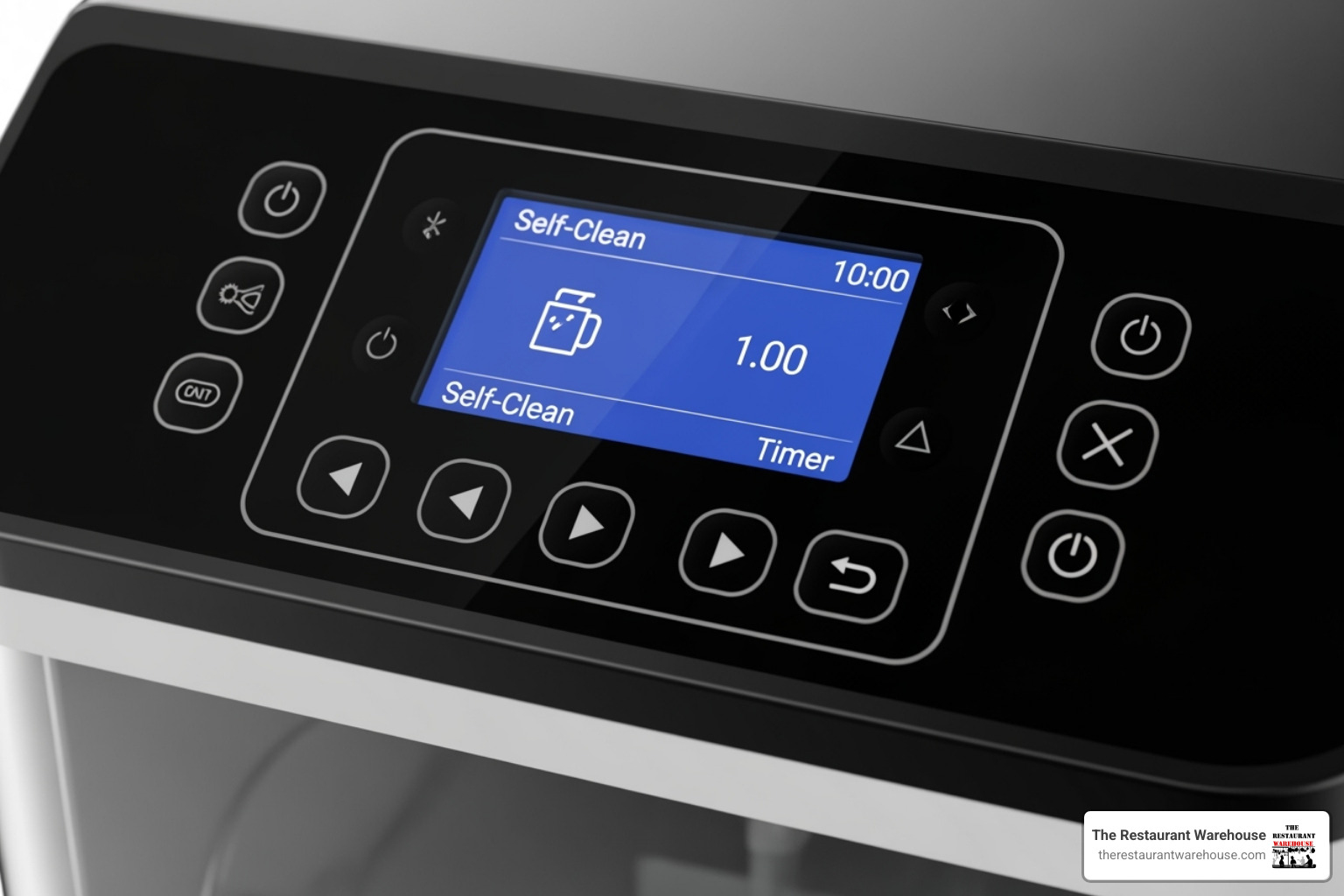
When you're looking at any ice machine for sale, the features can make or break your daily operations. Ice production capacity matters, but the cooling system, filtration, and smart features determine whether your machine becomes a reliable workhorse or a maintenance headache.
Think of it this way: a machine that breaks down during your busiest weekend costs far more than the extra you might spend on quality features upfront. The right features also impact your energy bills, water usage, and how much time your staff spends on maintenance instead of serving customers.
For detailed guidance on making the right choice, check out our Buy Commercial Ice Machine resource.
Cooling System: Air-Cooled vs. Water-Cooled
The cooling system choice affects everything from your utility bills to where you can install the machine. Air-cooled systems dominate the market because they're straightforward and cost-effective. These machines pull in ambient air to cool the condenser, which works beautifully in well-ventilated spaces with moderate temperatures.
But here's the catch: air-cooled units struggle in hot kitchens or cramped spaces. If your machine is tucked into a corner without proper airflow, it'll work overtime and potentially fail prematurely. They're also noisier than their water-cooled counterparts.
Water-cooled systems shine in challenging environments. Got a hot kitchen or limited ventilation? Water-cooled machines maintain consistent performance regardless of room temperature. They run quieter too, which matters in customer-facing areas.
The trade-off is water consumption. Water-cooled units typically use around 109 gallons per 100 pounds of ice produced, while air-cooled units use zero. Factor in your local water costs and environmental considerations when making this choice.
Water Filtration and Drainage
Water quality isn't just about taste - it's about protecting your investment. Built-in filtration systems remove chlorine, sediments, and minerals that create off-flavors and scale buildup. Without proper filtration, you'll taste the difference, and more importantly, so will your customers.
Scale buildup from hard water is particularly nasty. It reduces ice production, increases energy consumption, and can damage expensive components. A quality filtration system prevents these issues while helping you meet health department standards.
Drainage requirements vary significantly between machine types. Commercial units need proper drain connections for continuous operation, while portable units use internal reservoirs that require manual emptying. Consider your installation location and available utilities before committing to a specific type.
Smart Features and Maintenance
Modern ice machines have gotten remarkably intelligent. Self-cleaning cycles automatically sanitize the machine, reducing the manual cleaning burden on your staff. This isn't just convenient - it's essential for maintaining the hygiene standards required when ice is treated as a food product.
Automatic shut-off prevents overflow situations and reduces energy waste when the storage bin is full. Indicator lights alert you to maintenance needs, water issues, or operational problems before they become expensive repairs.
NSF certification ensures your machine meets the sanitation standards required for commercial food service. This certification is often mandatory for restaurants and healthcare facilities, so don't overlook it.
When problems do arise, our troubleshooting common ice machine issues guide helps you resolve them quickly and get back to serving customers.
Smart Savings: Why a Refurbished Ice Machine for Sale is a Great Deal
When you're shopping for an ice machine for sale, don't overlook the refurbished market - it's where smart business owners find exceptional value. A quality refurbished ice machine can save you thousands while delivering the same reliable performance you'd expect from a new unit.
The secret lies in understanding what you're buying. Not all used equipment is created equal, and the difference between certified refurbished and "as-is" used machines can make or break your investment. For comprehensive guidance on budget-friendly options, check out our guide on Ice Machines on a Budget: Finding Quality Used Ice Makers.
Beyond the obvious cost savings, refurbished ice machines offer surprising reliability advantages and environmental benefits that make them an increasingly popular choice for savvy restaurant owners.
Benefits of Certified Refurbished
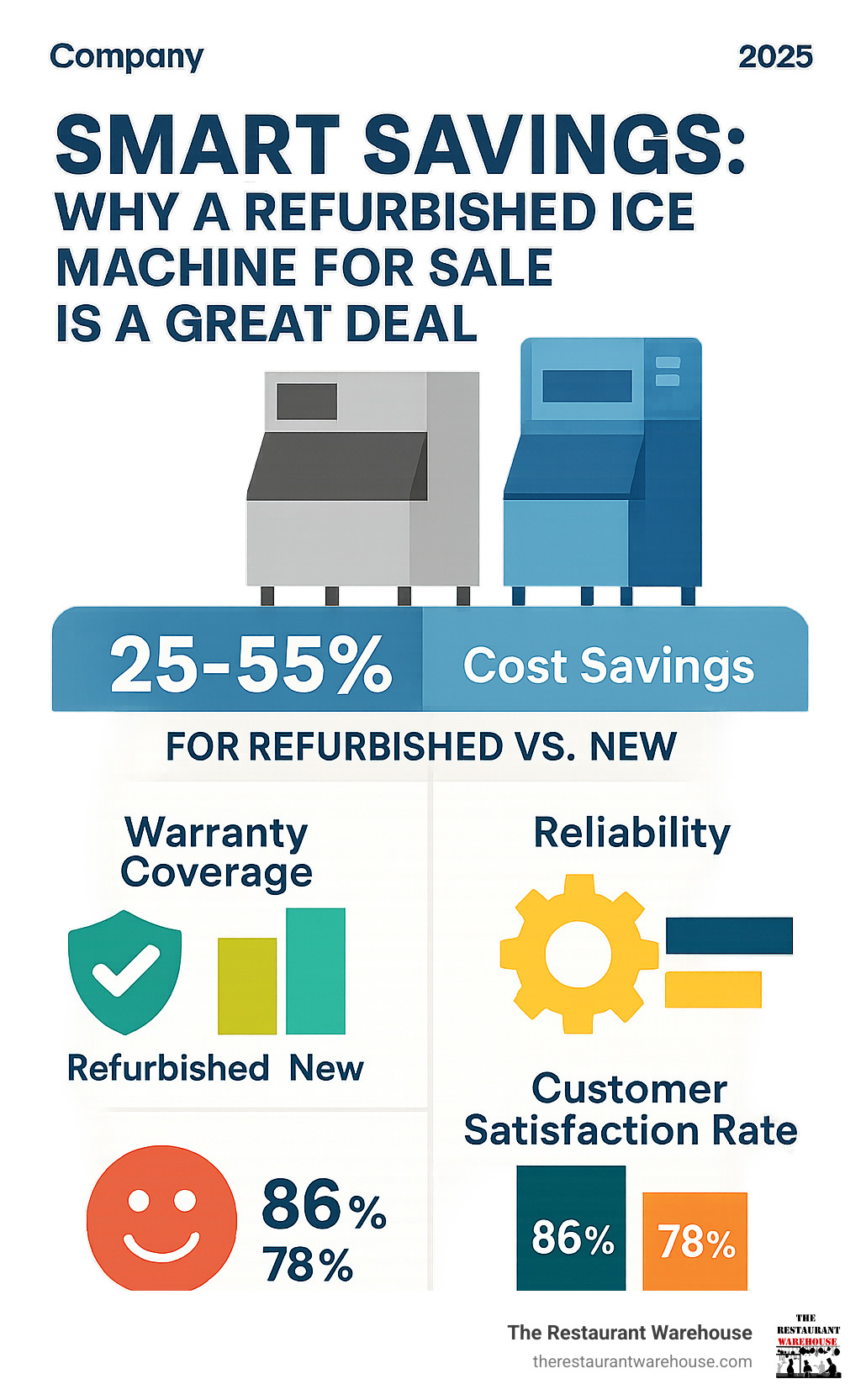
Here's what makes certified refurbished ice machines such a smart choice: they're thoroughly tested and inspected by qualified technicians who know exactly what to look for. These professionals replace worn components, sanitize every surface, and test the unit against factory specifications before it ever reaches your business.
The significant cost reduction - typically 25-55% off new machine prices - puts professional-grade equipment within reach of smaller operations. But the savings don't stop there. Many refurbished units come with warranties, giving you the same peace of mind you'd get with a new purchase.
What really surprises people is how these machines often perform better than poorly maintained new equipment. A refurbished unit that's been properly serviced and tested can actually be more reliable than a brand-new machine that sits in a warehouse for months without proper care.
The environmental benefits matter too. By extending equipment life, you're reducing waste and supporting sustainable business practices - something more customers notice and appreciate these days.
Risks of Buying "As-Is" Used
The "as-is" used market is where good deals can quickly turn into expensive nightmares. When you buy a used ice machine for sale without refurbishment, you're essentially buying a mystery. You don't know the maintenance history, how hard the previous owner worked the machine, or what problems might be lurking beneath the surface.
Ice machines are complex pieces of equipment with multiple systems that must work together perfectly. Unknown history means unknown risks, and those risks often show up as costly repairs just weeks after purchase. Without warranty coverage, every repair bill comes straight out of your pocket.
The hygiene concerns are particularly serious since the FDA treats ice as a food product. A machine with questionable maintenance history could create health department issues that cost far more than any initial savings.
Here's the reality: the money you save upfront on "as-is" equipment often disappears quickly when repair bills start arriving. "Buyer beware" isn't just a saying - it's a warning that can save you thousands if you heed it.
Frequently Asked Questions about Ice Machines
When you're shopping for an ice machine for sale, certain questions come up again and again. Let's tackle the most common concerns to help you make an informed decision.
How much does an ice machine cost?
The price of an ice machine depends heavily on what you need it to do. Portable units designed for home use or small offices typically cost $100-$300. These compact machines work perfectly for making ice at home, in RVs, or small cafes where you don't need massive quantities.
Undercounter commercial units jump to the $1,500-$4,000 range, but they're built for serious business use. These machines fit neatly under your counter while producing significantly more ice than portable units. They're popular in bars, restaurants, and office breakrooms where space matters but volume requirements are higher.
Large commercial modular units represent the biggest investment at $2,000-$10,000 or more. These workhorses can produce over 1,000 pounds of ice daily, making them essential for busy restaurants, hotels, and large-scale operations. Yes, they're expensive, but try running a 200-seat restaurant without adequate ice production!
The final price depends on production capacity, brand reputation, cooling method, and special features. Energy-efficient models might cost more upfront, but they'll save you money every month through lower utility bills. Think of it as paying a bit more now to pay less forever.
How often should I clean my ice machine?
Here's something many people don't realize: the FDA treats ice as a food product, which means keeping your ice machine clean isn't just good practice - it's legally required in commercial settings. Commercial units need cleaning every 3-6 months minimum, with high-usage environments requiring monthly cleaning during busy seasons.
You'll know it's time to clean when you notice smaller ice cubes, cloudy ice, poor ice formation, or any unusual smell or taste. These symptoms indicate bacteria buildup, mineral deposits, or other contamination that affects both ice quality and machine performance.
The cleaning process involves turning off the machine, disabling the water supply, emptying all ice, using a 3-part water to 1-part cleaner solution, thorough rinsing, wiping down, air drying, and discarding the first batch of ice after cleaning. It's not complicated, but it's crucial for maintaining food safety standards.
For detailed cleaning guidance and product recommendations, check out our Best Ice Machine Cleaning Solutions Reviewed guide. Your customers (and the health department) will thank you.
Why is my ice machine not making ice?
Nothing's more frustrating than an ice machine that's given up on making ice. The good news? Most problems have straightforward solutions once you know what to look for.
Clogged water lines are the most common culprit. When water can't reach the evaporator, ice production stops completely. High ambient temperatures can overwhelm air-cooled units, especially in hot kitchens or poorly ventilated spaces. Your machine might be working harder than a short-order cook during lunch rush.
Dirty condenser coils reduce cooling efficiency dramatically. Think of them as the lungs of your ice machine - when they're clogged with dust and grease, everything suffers. Faulty thermostats can also prevent the machine from recognizing when to start or stop ice production cycles.
Other potential causes include low water pressure, electrical issues, refrigerant leaks, or worn components. Many of these problems are preventable through regular maintenance and proper installation. A little attention goes a long way toward keeping your ice machine happy.
For step-by-step troubleshooting guidance, our detailed Troubleshooting Tips for a Commercial Ice Machine Not Making Ice guide walks you through common problems and solutions. Most issues are easier to fix than you might think.
Conclusion: Find Your Perfect Ice Machine Today
Choosing the right ice machine for sale doesn't have to feel overwhelming when you break it down into manageable decisions. You've learned about the different ice types - from classic cubes that melt slowly in cocktails to chewable nugget ice that customers love. You understand that cube ice works best for beverages, flake ice excels for food displays, and bullet ice gets the job done quickly in portable units.
Your machine type decision flows naturally from your space and volume needs. Portable units producing 26-34 pounds daily handle homes and small offices beautifully, while undercounter machines fit seamlessly into bars and cafes. For high-volume operations, commercial modular systems can crank out 2,000+ pounds daily - perfect for busy restaurants and hotels.
Capacity calculations keep you from making expensive mistakes. Those industry standards we covered - 1.5 pounds per restaurant customer, 3 pounds per bar patron, 5 pounds per hotel room - give you a solid starting point. Just remember to factor in your peak demand periods and local temperature conditions.
The essential features we discussed really matter for long-term satisfaction. Air-cooled systems work great in most environments, while water-cooled units shine in hot kitchens. Water filtration protects your investment and ensures great-tasting ice. Smart features like self-cleaning cycles and automatic shut-off make your life easier.
Don't overlook certified refurbished units - they can save you thousands while delivering reliable performance. The key is buying from reputable dealers who stand behind their work, not taking chances on mystery "as-is" machines.
At The Restaurant Warehouse, we've built our reputation on providing wholesale pricing that cuts out retail markup and high commissions. This means you get professional-grade equipment at prices that make sense for your business. Whether you're outfitting a new restaurant or replacing an aging machine, our approach saves you money without sacrificing quality.
The right ice machine becomes an invisible part of your operation - quietly producing perfect ice while you focus on serving customers. When you choose wisely, the ice flows consistently, customers stay happy, and your investment pays dividends through improved efficiency and reliability.
Explore our complete collection of ice makers to find your perfect match today.
About The Author

Sean Kearney
Sean Kearney is the Founder of The Restaurant Warehouse, with 15 years of experience in the restaurant equipment industry and more than 30 years in ecommerce, beginning with Amazon.com. As an equipment distributor and supplier, Sean helps restaurant owners make confident purchasing decisions through clear pricing, practical guidance, and a more transparent online buying experience.
Connect with Sean on LinkedIn, Instagram, YouTube, or Facebook.