

9 Fresh Concession Stand Ideas to Boost Profits in 2025
The roar of the crowd and the excitement of an event are often amplified by one thing: exceptional food. While traditional snacks have their place, today's attendees seek memorable, high-quality, and often unique culinary experiences. Sticking to the same old menu means leaving significant profit and customer engagement on the table. This guide is built for operators ready to innovate, offering a detailed blueprint for nine creative concession stand ideas designed to captivate customers and elevate your brand.
We move beyond basic suggestions to provide a practical roadmap for implementation. For each concept, you'll find actionable insights on everything from essential equipment and efficient operational workflows to smart menu pricing and marketing strategies. Whether you're managing stadium kiosks, a fleet of food trucks, or a booth at a local fair, these concepts provide fresh, profitable alternatives to the standard fare. To truly reinvent your menu, it's also wise to stay updated on what customers are drinking, as many of these food concepts pair perfectly with current trends in craft beverages for a complete and premium offering. Get ready to transform your service from a simple snack stop into a must-visit culinary destination.
1. Gourmet Grilled Cheese Bar
A Gourmet Grilled Cheese Bar elevates a universally loved comfort food into a customizable, high-margin menu item. This concept moves beyond basic white bread and American cheese, offering patrons artisan breads, premium cheeses, and a variety of creative add-ins. It's a fantastic concession stand idea because it combines familiarity with an element of sophistication, appealing to a broad demographic, from families to foodies. The operational simplicity and relatively low ingredient costs make it a profitable venture for high-traffic environments.
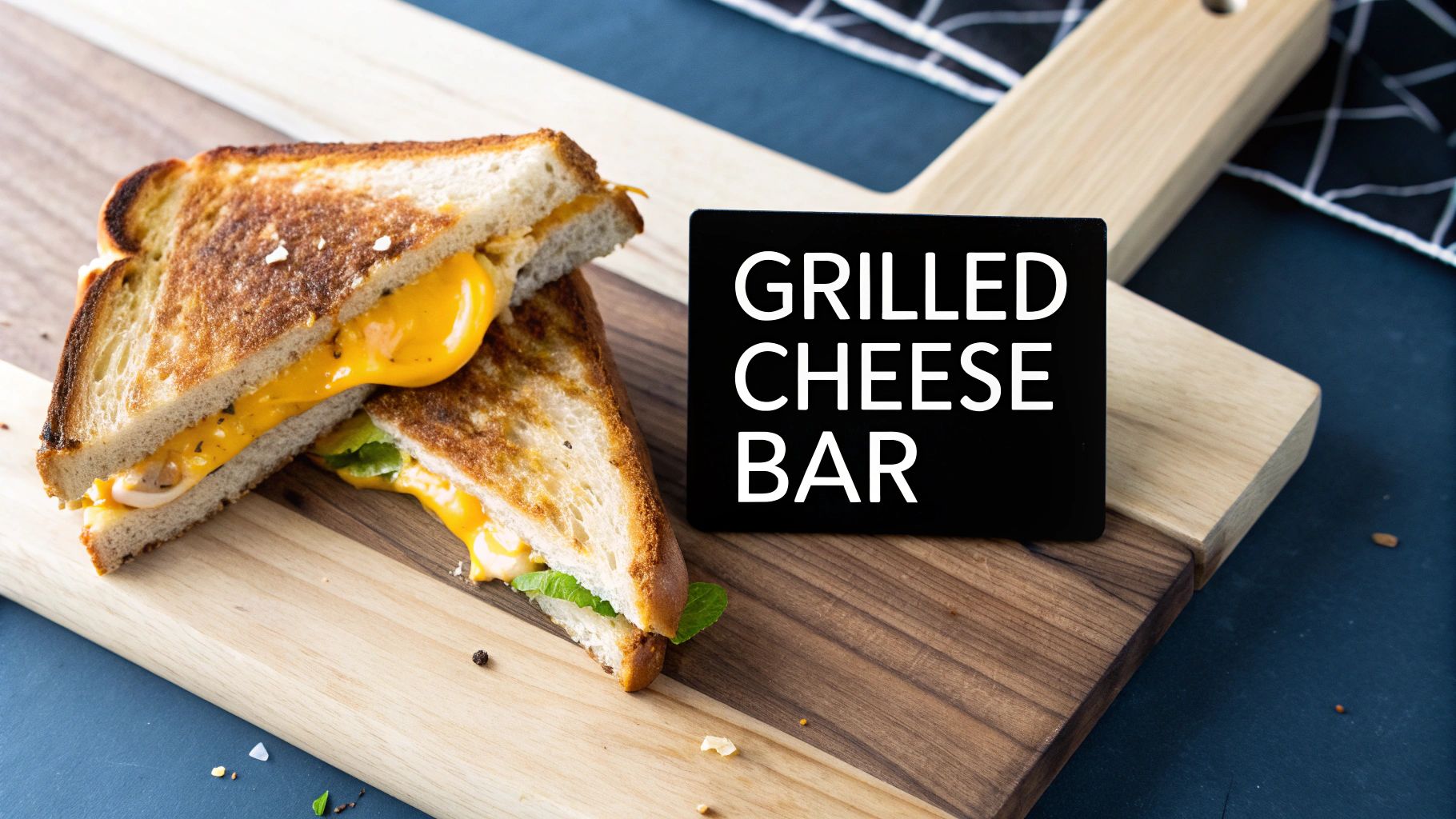
This concept thrives at farmers' markets, food truck festivals, and sporting events where customers seek satisfying, handheld meals. Success stories like The Grilled Cheese Truck in Los Angeles demonstrate the model's potential, turning a simple sandwich into a celebrated culinary brand.
How to Implement This Idea
To launch a successful grilled cheese bar, focus on quality ingredients and efficient workflow.
- Curate a Diverse Menu: Offer a mix of classic and adventurous options. Include various breads like sourdough, brioche, and multigrain. Your cheese selection could range from sharp cheddar and provolone to gourmet choices like Gruyère, Gouda, and Brie.
- Creative Add-Ins: Provide a "build-your-own" option or create signature melts. Popular additions include caramelized onions, applewood-smoked bacon, avocado, roasted red peppers, and specialty spreads like fig jam or pesto aioli.
- Optimize Your Setup: Use multiple panini presses or a large flat-top griddle to handle rushes. Pre-slicing cheeses and prepping add-ins during slower periods is crucial for maintaining fast service times.
Key Insight: The "gourmet" aspect allows for premium pricing. While the core ingredients are inexpensive, adding high-quality cheeses or unique ingredients justifies a higher price point, significantly boosting your profit margins.
By creating signature combinations and offering combo deals with tomato soup or chips, you can streamline the ordering process and increase the average transaction value, making this one of the most profitable and popular concession stand ideas available.
2. Build-Your-Own Nacho Station
A Build-Your-Own Nacho Station transforms a classic snack into an interactive and profitable attraction. This concept allows customers to customize their nachos from a wide array of toppings, moving beyond the standard chips-and-cheese-sauce offering. It's an excellent concession stand idea because it taps into the consumer demand for personalization and creates a fun, engaging experience. The model is highly scalable, working equally well in a self-serve format or an assembly-line style, and offers strong profit margins due to the low cost of the base ingredients.
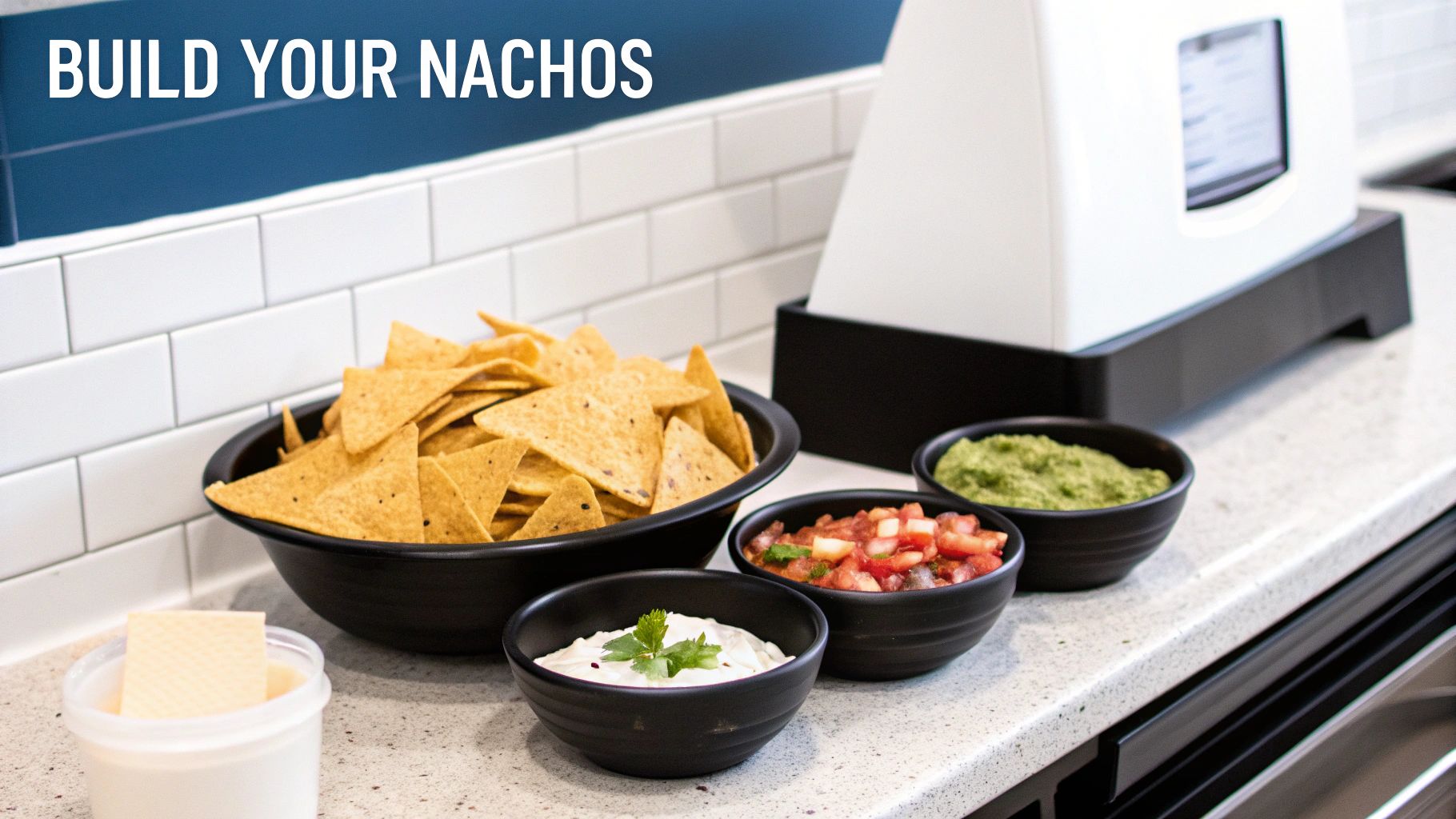
This idea thrives in high-volume venues like movie theaters, stadiums, and amusement parks where shared, customizable food is a major draw. The assembly-line approach, popularized by chains like Chipotle and Qdoba, shows how an efficient, customizable system can serve large crowds quickly while maintaining high quality and customer satisfaction. Offering both individual and shareable "helmet" portions makes it a versatile choice for any event.
How to Implement This Idea
Success with a nacho bar hinges on an efficient setup and a tempting selection of fresh ingredients.
- Offer Diverse Topping Choices: Start with a base of tortilla chips and warm nacho cheese sauce. Then, provide proteins like seasoned ground beef, grilled chicken, and black beans. Add fresh toppings such as jalapeños, pico de gallo, guacamole, sour cream, and shredded lettuce.
- Streamline the Assembly Process: For a staff-served line, organize ingredients logically from base to finish. For self-serve stations, use warming trays for hot items and chilled containers for cold ones to maintain food safety and quality.
- Implement Portion Control: Use standardized scoops and ladles to manage costs and ensure consistency. This is especially crucial for high-cost items like proteins and guacamole, helping you protect your margins.
Key Insight: The "build-your-own" model not only enhances the customer experience but also allows for tiered pricing. You can charge a base price for chips and cheese, then upsell premium toppings like guacamole or extra protein, significantly increasing the average order value.
By organizing your station for speed and visual appeal, you can create one of the most popular and lucrative concession stand ideas. Clearly labeling all options and offering pre-designed "signature" nacho combinations can also help speed up service during peak hours.
3. Local Craft Beer and Wine Garden
A Local Craft Beer and Wine Garden transforms a standard beverage stand into a premium, community-focused experience. This concept centers on offering a curated selection of beers and wines from regional breweries and vineyards, creating a unique destination for attendees. It's an excellent concession stand idea because it taps into the "buy local" movement and attracts an adult demographic willing to pay higher prices for quality, craft beverages. The elevated atmosphere and exclusive offerings can significantly boost revenue and enhance the overall event experience.
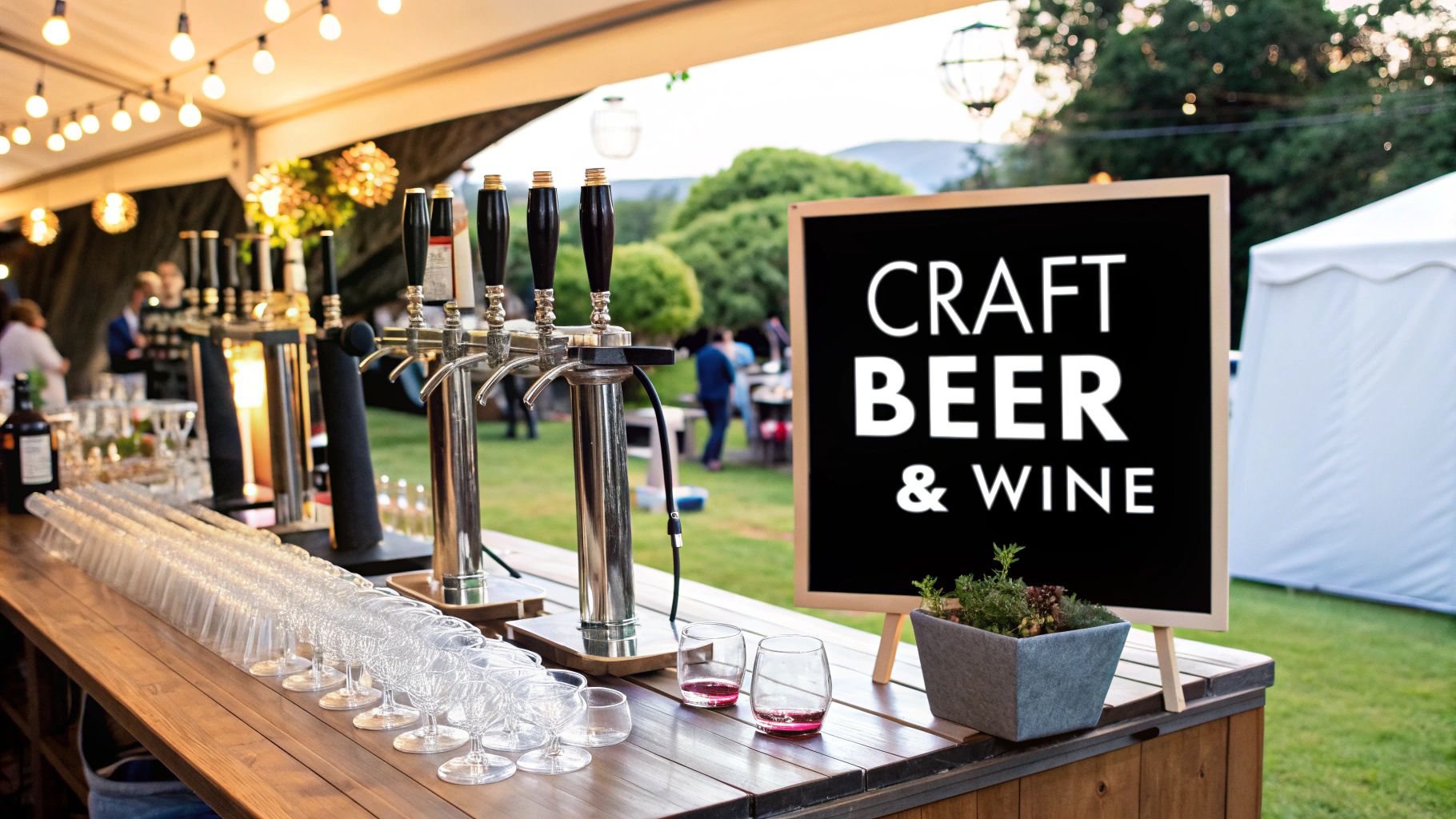
This idea excels at music festivals, minor league baseball games, and outdoor markets where adults gather and seek a more sophisticated concession option. Many modern sports venues and festival organizers have embraced this model, partnering with local producers to provide a unique sense of place and taste. It's a proven way to differentiate your event and support other local businesses.
How to Implement This Idea
Success with a craft beverage garden hinges on strong local partnerships and a well-trained team.
- Forge Local Partnerships: Collaborate directly with area breweries and wineries. They can often provide branded equipment, promotional materials, and even staff for tastings, creating a mutually beneficial relationship.
- Curate a Balanced Menu: Offer a variety of styles to appeal to different palates, such as a popular IPA, a lighter pilsner, a local cider, and both a red and a white wine. Include high-quality, non-alcoholic options like artisanal sodas or mocktails.
- Focus on Staff Training: Your team should be knowledgeable about the offerings. Train them to describe the flavor profiles, suggest pairings, and efficiently manage a draft beer system to pour the perfect glass. Ensure strict and consistent ID-checking procedures are in place.
Key Insight: Offering tasting flights is a powerful upselling tool. A flight allows customers to sample multiple offerings for a higher price than a single glass, increasing the average transaction value while providing a memorable and interactive experience.
4. Healthy Bowl Station
A Healthy Bowl Station taps into the growing consumer demand for nutritious, fast-casual meal options. This concept centers on customizable bowls, allowing customers to choose a base like quinoa, brown rice, or mixed greens, and then layer on lean proteins, fresh vegetables, and flavorful, healthy sauces. It’s an excellent concession stand idea because it appeals directly to health-conscious attendees at events, a demographic often underserved by traditional greasy fare. The model's flexibility and perceived value make it a standout choice for modern venues.
This concept is particularly successful at corporate events, fitness expos, college campuses, and music festivals where attendees are looking for energizing, guilt-free food. The fast-casual format, popularized by brands like Sweetgreen, has proven its profitability and appeal, demonstrating that fresh, healthy food can be both convenient and highly desirable.
How to Implement This Idea
Success with a healthy bowl station relies on fresh ingredients, streamlined assembly, and clear communication with customers.
- Offer Diverse and Fresh Ingredients: Provide a variety of bases, at least three to four protein options (e.g., grilled chicken, chickpeas, tofu), and a wide array of colorful vegetable toppings. Prep ingredients in small batches throughout the day to maintain maximum freshness.
- Develop Signature Bowls: While a "build-your-own" option is key, offering a few curated signature bowls can speed up ordering during peak times and introduce customers to popular flavor combinations.
- Clearly Label for Dietary Needs: Use clear signage to indicate which options are vegan, gluten-free, or dairy-free. This builds trust with customers who have specific dietary restrictions and makes their ordering experience seamless and safe.
Key Insight: Partnering with local farms for produce can be a powerful marketing tool. Highlighting the freshness and local sourcing of your ingredients justifies a premium price point and appeals to consumers who value sustainability and supporting local businesses.
By offering protein add-ons and premium toppings for an extra charge, you can easily increase the average ticket size. This makes the healthy bowl one of the most adaptable and profitable concession stand ideas for catering to today’s health-focused market.
5. Artisan Pizza Counter
An Artisan Pizza Counter transforms a crowd-pleasing favorite into a premium, made-to-order experience. This concept moves beyond generic, pre-made slices by offering personal-sized pizzas with high-quality dough, gourmet sauces, and fresh, inventive toppings. It’s a powerful concession stand idea because it taps into the demand for higher-quality, customizable food in high-traffic venues. The quick-cooking times achievable with modern ovens make it a highly profitable and operationally efficient model.
This idea excels at sports stadiums, concert venues, and large-scale festivals where attendees crave a substantial, restaurant-quality meal. The fast-casual model popularized by chains like Blaze Pizza and MOD Pizza proves that customers are willing to pay more for personalized, quickly prepared pizzas, a concept easily adapted to a mobile or fixed concession setting.
How to Implement This Idea
Success with an artisan pizza counter hinges on ingredient quality and rapid production.
- Streamline Your Menu: Develop a menu with a few signature combinations alongside a "build-your-own" option. Pre-portioning toppings and pre-making dough rounds are essential for maintaining speed during peak hours.
- Invest in the Right Oven: A high-temperature conveyor oven ensures consistent, fast cooking, while a portable wood-fired oven can be a major marketing draw for food trucks and outdoor events. The oven is the heart of this operation.
- Offer Diverse Options: Cater to a wider audience by including options like gluten-free crusts, vegan cheese, and premium toppings like prosciutto, goat cheese, and truffle oil to elevate the experience.
Key Insight: The perceived value of "artisan" and "made-to-order" allows for significantly higher price points than standard concession fare. By focusing on fresh ingredients and rapid service, you can justify premium pricing and generate impressive revenue per customer.
Creating combo deals, such as a pizza and a craft beer, can further boost sales and enhance the customer experience. This pairing is a classic that appeals to a broad demographic at events. You can learn more about pairing pizza and beer to create compelling offers.
6. Gourmet Hot Dog Cart
A Gourmet Hot Dog Cart elevates a classic American concession food by offering premium sausages, artisan buns, and a wide array of creative toppings. This concept takes the simple, beloved hot dog and transforms it into a culinary experience, appealing to customers willing to pay more for higher quality. It maintains the speed and convenience of a traditional hot dog stand while introducing a level of quality and customization that sets it apart. The familiarity of the product, combined with upscale ingredients, makes it a profitable and popular choice.
This idea thrives in high-traffic areas like sports stadiums, breweries, and urban food courts where patrons appreciate a quick, yet satisfying, meal. Iconic spots like Gray's Papaya in NYC have shown how even simple, quality offerings can create a legendary brand. Similarly, the food truck movement has popularized gourmet sausages with inventive toppings, proving the concept's broad appeal.
How to Implement This Idea
To launch a successful gourmet hot dog cart, focus on product quality, variety, and operational speed. For entrepreneurs starting out, it's wise to review some foundational food truck tips to ensure a smooth operation.
- Offer Premium Products: Source high-quality sausages, such as all-beef franks, bratwurst, or Italian sausage. Pair them with superior buns like brioche or pretzel rolls that won't fall apart under the weight of toppings.
- Develop Signature Toppings: Go beyond ketchup and mustard. Offer creative options like caramelized onions, jalapeño relish, truffle aioli, kimchi, or chili-cheese. Create "city-style" dogs like a Chicago Dog or a Sonoran Dog to attract adventurous eaters.
- Streamline Your Setup: Use a multi-section steam table to keep different sausages and hot toppings at safe temperatures. Organize a cold topping bar for easy access and quick assembly, allowing you to serve customers efficiently during peak hours.
Key Insight: The "gourmet" label justifies premium pricing. While a standard hot dog has a low price ceiling, a specialty sausage on an artisan bun with unique toppings can command a price two or three times higher, dramatically increasing your revenue and profit margins.
By offering combo deals with specialty sodas and gourmet chips, you can increase the average order value. Balancing classic options with creative specials ensures you cater to all tastes, making this one of the most versatile and profitable concession stand ideas.
7. Sweet Treats Dessert Bar
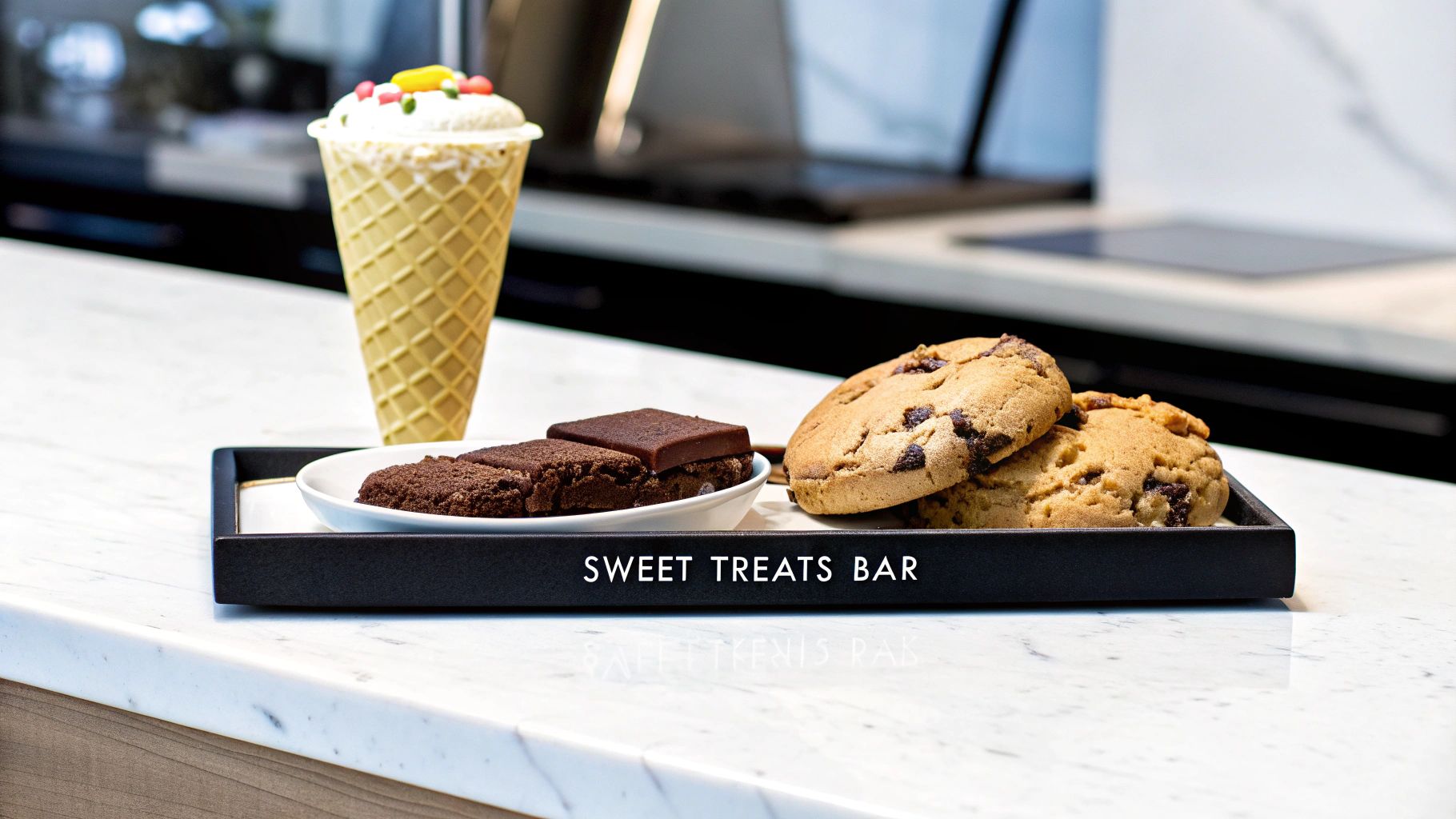
A Sweet Treats Dessert Bar capitalizes on the universal appeal of indulgence, offering a curated selection of high-margin items like gourmet cookies, decadent brownies, and artisan ice cream. This concept is highly effective because desserts are often impulse purchases, providing a significant revenue stream that complements savory food offerings. It transforms a simple concession stand into a destination for satisfying a sweet tooth, appealing to all ages and demographics at any event.
This idea is perfectly suited for movie theaters, amusement parks, food festivals, and school events where attendees are looking for a special treat. The rise of visually driven social media platforms has fueled the "Instagrammable" dessert trend, making unique and beautiful sweets a powerful marketing tool. Vendors who master presentation can turn a simple dessert bar into a viral sensation.
How to Implement This Idea
Success with a dessert bar hinges on variety, quality, and presentation. The goal is to create an irresistible display that tempts customers.
- Offer a Diverse Menu: Combine classic favorites with unique, trendy items. Offer warm, freshly baked cookies, rich fudge brownies, and perhaps a rotating specialty item like cheesecake cups or mini donuts. Including artisan ice cream with unique flavors can also be a major draw.
- Focus on Presentation: Create an eye-catching display. Use glass domes, tiered platters, and attractive signage. Garnish your treats to make them "Instagram-worthy," encouraging customers to share photos online. Offering mini-sized portions allows for tasting multiple items and can increase overall sales.
- Strategic Sourcing and Timing: Partner with a local bakery to ensure a consistent supply of high-quality, fresh products if you don't bake on-site. Time your baking schedule so the smell of fresh cookies or brownies wafts through the air during peak foot traffic, creating an irresistible draw.
Key Insight: Desserts carry some of the highest profit margins in the food industry. Ingredients are relatively low-cost, and the perceived value of a beautifully presented, decadent treat allows for premium pricing. This makes it one of the most profitable concession stand ideas.
By offering combo deals, such as a cookie and a scoop of ice cream, you can easily increase the average transaction value. This simple yet effective concept is a proven way to boost profitability and customer satisfaction at any venue.
8. International Street Food Station
An International Street Food Station brings global flavors to a local setting, offering a rotating menu of authentic, easy-to-eat dishes from around the world. This concept transforms a typical concession stand into a culinary destination, capitalizing on the growing consumer demand for diverse and exciting food experiences. It's an excellent concession stand idea because it adds a sense of adventure and cultural discovery, attracting curious foodies and diverse crowds looking for something beyond standard fare.
This idea thrives in environments that celebrate diversity, such as cultural festivals, urban food halls, and large-scale public events. The success of food markets like Smorgasburg in New York City highlights how vendors specializing in specific international street foods, from Japanese takoyaki to Colombian arepas, can draw massive crowds and build a loyal following.
How to Implement This Idea
Success with this concept depends on authenticity, accessibility, and a smart menu strategy.
- Focus Your Menu: Instead of trying to represent every country, start by focusing on the street food of one or two regions known for their vibrant flavors, such as Southeast Asia (think Vietnamese banh mi or Thai skewers) or Latin America (think Mexican elote or Brazilian pão de queijo).
- Educate and Entice: Many customers may be unfamiliar with your offerings. Use clear, descriptive signage explaining each dish, its main ingredients, and its cultural origin. Offering small, affordable sample portions or a "tasting platter" can encourage customers to try new things.
- Prioritize Speed and Portability: Authentic street food is designed to be prepared quickly and eaten on the go. Adapt recipes for a fast-paced concession environment, ensuring every item can be served efficiently and is easy for customers to carry and eat while walking.
Key Insight: Partnering with local cultural organizations or community members can lend authenticity to your menu and help with marketing. This collaboration builds trust and creates a genuine connection with customers who value authentic cultural experiences.
By rotating your menu to feature different countries or regions periodically, you create a sense of novelty and give customers a reason to return, making this one of the most dynamic and engaging concession stand ideas.
9. Fresh Juice and Smoothie Bar
A Fresh Juice and Smoothie Bar offers a healthy, refreshing alternative to traditional concession stand fare. This concept caters to the growing demand for wellness-focused options by providing made-to-order pressed juices, custom smoothies, and nutrient-packed drinks. It's an excellent concession stand idea for venues like gyms, farmers' markets, festivals, and community events, attracting health-conscious consumers willing to pay a premium for fresh, high-quality ingredients. The vibrant colors and fresh appeal make it visually enticing and highly profitable.
This concept is popular in settings where customers seek energizing and hydrating choices. Success stories from major chains like Jamba Juice and Smoothie King demonstrate the widespread appeal of convenient, healthy beverages, proving the model's viability in high-traffic locations. Local juice stands at community markets also showcase how this idea can thrive on a smaller scale.
How to Implement This Idea
Success hinges on fresh ingredients, powerful equipment, and a streamlined workflow to manage orders efficiently.
- Develop a Signature Menu: Create a menu with appealing signature blends and a "build-your-own" option. Offer a mix of fruit, vegetable, and superfood add-ins like kale, spinach, ginger, chia seeds, and protein powder. To perfect your offerings, explore a variety of delicious and healthy smoothie recipes that are easy to prepare.
- Invest in Quality Equipment: High-performance commercial blenders and a cold-press juicer are essential for consistency and speed. Reliable equipment prevents delays during peak hours and ensures a smooth, quality product every time.
- Optimize Your Prep Process: Pre-portioning and pre-cutting fruits and vegetables before your event is crucial for fast service. Organize ingredients in labeled containers for quick access, allowing staff to assemble drinks in seconds.
Key Insight: Highlight the health benefits and freshness of your ingredients. Use clear signage to list the benefits of specific blends (e.g., "Immunity Booster," "Energy Blast") to guide customer choices and justify premium pricing.
By offering loyalty programs for repeat customers and promoting seasonal specials on social media, you can build a dedicated customer base. This approach transforms a simple beverage station into one of the most vibrant and profitable concession stand ideas.
Top 9 Concession Stand Ideas Comparison
| Concession Type | Implementation Complexity 🔄 | Resource Requirements ⚡ | Expected Outcomes 📊 | Ideal Use Cases 💡 | Key Advantages ⭐ |
|---|---|---|---|---|---|
| Gourmet Grilled Cheese Bar | Medium - skilled staff needed, ventilation | Moderate - quality ingredients, low equipment | High profit margins, quick prep, crowd appeal | Food trucks, stadiums, festivals | High margins, mass appeal, fast prep |
| Build-Your-Own Nacho Station | Medium-High - frequent restocking, cleaning | Moderate-High - warming equipment, multiple ingredients | Interactive experience, reduced labor costs | Movie theaters, sporting events, casual dining | High margins, labor savings, customization |
| Local Craft Beer & Wine Garden | High - licensing, trained staff required | High - liquor permits, insurance, quality stock | Premium sales, strong community ties | Music festivals, parks, adult events | Premium pricing, unique identity |
| Healthy Bowl Station | Medium-High - fresh prep, inventory complexity | Moderate - fresh produce, lean proteins | Premium pricing, health-focused customer base | Campus dining, corporate events, food trucks | Appeals to health trends, dietary options |
| Artisan Pizza Counter | High - skilled makers, ovens, ventilation | High - pizza ovens and premium ingredients | High margins, quick service, broad appeal | Food trucks, stadiums, fast casual chains | Premium positioning, universal appeal |
| Gourmet Hot Dog Cart | Medium - easy operation, refrigeration needed | Moderate - premium meats, buns | High profit margins, quick throughput | Stadiums, food trucks, casual venues | Familiar format, quick service |
| Sweet Treats Dessert Bar | Medium - refrigeration, possible baking skills | Moderate - refrigeration, baking equipment | Extremely high margins, impulse purchases | Amusement parks, theaters, festivals | High margins, social media friendly |
| International Street Food Station | High - complex sourcing, skilled staff | Moderate-High - varied authentic ingredients | Unique positioning, educational & cultural value | Food halls, festivals, airports | Differentiation, cultural appeal |
| Fresh Juice & Smoothie Bar | Medium-High - equipment and cleanup frequent | High - juicers, fresh produce | High margins, health segment appeal | Health clubs, markets, wellness venues | Health-focused, refreshing options |
Equipping Your Vision for Success
Throughout this guide, we've explored a diverse landscape of innovative and profitable concession stand ideas. From the comforting appeal of a Gourmet Grilled Cheese Bar to the vibrant energy of an International Street Food Station, the potential to create a memorable and successful venture is immense. Each concept, whether it's a healthy Build-Your-Own Bowl station or an indulgent Sweet Treats Dessert Bar, offers a unique pathway to captivate customers and build a loyal following.
The journey from a creative idea to a bustling, profitable operation, however, hinges on more than just a great menu. The true differentiator lies in the execution. As we've seen, success requires a strategic approach that considers your target audience, venue, and operational capacity. The key takeaway is that the most brilliant concepts are built on a foundation of efficiency, quality, and consistency.
From Concept to Reality: Your Actionable Next Steps
To transform your chosen idea into a thriving business, it’s time to move from planning to action. The right equipment is not merely a purchase; it's a strategic investment in your brand's future. It’s the engine that drives speed of service, ensures food safety, and delivers the high-quality product your customers expect.
Consider these critical next steps to bring your vision to life:
- Finalize Your Menu and Workflow: Refine your menu based on one of the concepts above. Map out every step of the preparation and service process to identify potential bottlenecks and required equipment. For a gourmet hot dog cart, this means planning your topping station layout for maximum speed. For a smoothie bar, it means positioning your blenders, refrigeration, and POS system for a seamless customer flow.
- Create a Detailed Equipment Checklist: List every single piece of equipment you will need. A build-your-own nacho station requires reliable cheese warmers and multiple hot and cold holding wells. An artisan pizza counter is entirely dependent on a high-temperature oven capable of producing a perfect crust in minutes. Be specific and think through every component, from major appliances to small-wares.
- Develop a Solid Financial Plan: Outline your startup costs, with a significant portion allocated to equipment. Explore financing options that allow you to acquire professional-grade tools without depleting your initial capital. Investing in durable, commercial equipment from the start prevents costly repairs and replacements down the line, ultimately protecting your profitability.
Mastering these operational details is what separates a fleeting novelty from a sustainable business. By pairing a compelling menu with the right operational backbone, you are not just selling food; you are building an efficient, scalable, and memorable concession experience that encourages repeat business and positive word-of-mouth. This deliberate focus on execution is the ultimate key to unlocking long-term success in the competitive food service industry.
Ready to equip your winning concession stand idea for success? At The Restaurant Warehouse, we provide the high-quality, commercial-grade equipment you need to operate efficiently and serve with confidence. Explore our extensive inventory and flexible financing options to get your venture started on the right foot. Visit us online at The Restaurant Warehouse to find the perfect tools for your business.
About The Author

Sean Kearney
Sean Kearney is the Founder of The Restaurant Warehouse, with 15 years of experience in the restaurant equipment industry and more than 30 years in ecommerce, beginning with Amazon.com. As an equipment distributor and supplier, Sean helps restaurant owners make confident purchasing decisions through clear pricing, practical guidance, and a more transparent online buying experience.
Connect with Sean on LinkedIn, Instagram, YouTube, or Facebook.