

How to Choose the Best Commercial Kitchen Appliances
When you're launching or upgrading a foodservice business, the temptation to cut corners on equipment is real. However, the difference between a residential stove and a commercial range isn't just the price tag; it's the difference between keeping up with a dinner rush and a complete system failure. Professional-grade tools are engineered for relentless demand and strict safety standards. Investing in the right commercial kitchen appliances from the start prevents costly downtime, service disruptions, and potential safety violations. This article is your guide to making smart, informed choices that balance upfront cost with long-term value, ensuring your kitchen is built for durability and success.
How Commercial Kitchen Appliances Define Your Success
Commercial kitchen appliances are the backbone of any successful restaurant, cafe, catering business, or institutional dining operation. They are the powerful, reliable workhorses that transform raw ingredients into memorable meals, day in and day out. Whether you are planning a new foodservice venture or upgrading an existing operation, choosing the right professional-grade appliances is a strategic business decision. The tools you select will influence your menu's potential, your staff's productivity, and your long-term profitability.
Unlike residential models, professional-grade appliances are engineered for a very different reality: relentless demand, strict safety protocols, and the constant pursuit of consistency. The difference is not just about size or price; it is a fundamental shift in design, materials, and performance. These appliances are typically constructed from heavy-duty stainless steel, designed to operate for 12 to 16 hours a day, and are tested and certified by organizations such as NSF International to meet public health and safety standards. A standard home appliance, when subjected to the intense environment of a professional kitchen—with its high heat, constant moisture, and heavy usage—will fail prematurely, causing costly downtime, service disruptions, and potential safety violations. Starting with the right tools is not a luxury; it is a basic operational requirement.
For budget-conscious operators, navigating commercial kitchen appliances requires a clear strategy that balances upfront cost with long-term value. This means looking past the initial price tag to consider energy use, maintenance, and life expectancy. For example, appliances recognized for efficiency can significantly reduce your utility bills over time and help lower your environmental footprint. The best investment is one that pays you back through reliability, efficiency, and durability, allowing your kitchen to perform at a high level for years.
I am Sean Kearney TRW, and I have dedicated my career to helping restaurant owners and foodservice operators make smarter decisions about professional appliances. The key to a successful kitchen build-out is understanding your unique needs, menu, and workflow. It is not about selling the most expensive model; it is about identifying the specific appliances that will deliver the highest return on investment and empower your culinary team to execute your vision. At The Restaurant Warehouse, we focus on durable, high-performance solutions that fit your budget without traditional retail markups, so you can stretch your startup dollars further and build a stronger foundation for your business.
Book a Strategy Call with The Restaurant Warehouse today at https://therestaurantwarehouse.com/ to discuss your specific needs and discover how we can help you select the perfect appliance mix for your operation.
Must-Have Appliances for Your Foodservice Business
The success of any foodservice operation—from a neighborhood cafe to a high-volume catering company—is closely tied to the efficiency and reliability of its kitchen. The selection of appropriate commercial kitchen appliances is a core strategic choice, because these tools form the backbone of your production line. What you can serve, how fast you can serve it, and how consistent your quality is will all depend on the appliances you choose.

A thoughtful appliance strategy starts with your menu. A pizzeria may prioritize powerful mixers, refrigerated prep tables, and ample cold storage. A bakery may need heavy-duty mixers, precise refrigeration, and reliable warewashing. A cafe or coffee shop might focus on blenders, prep appliances, and compact refrigeration, while a catering business often prioritizes transportable hot holding, prep, and warewashing solutions. Whatever your concept, you will be working with three core categories: refrigeration and cold storage, cooking and heating appliances, and food preparation and warewashing.
Keeping It Cool: Refrigeration and Storage
In professional foodservice, precise and consistent cold temperatures are non-negotiable. They are essential for food safety, regulatory compliance, and product quality. The Restaurant Warehouse offers a wide range of refrigeration solutions to match different concepts and footprints.
- Reach-in Refrigerators & Freezers: These are the everyday workhorses of most kitchens, providing quick access to frequently used ingredients. Available in one-, two-, and three-door models, they can be matched to your space and volume needs. When selecting a reach-in, look for durable stainless steel construction inside and out, quality insulation, and efficient compressors that recover temperature quickly after door openings.
- Walk-in Coolers and Freezers: Operations that handle significant volume or bulk purchasing rely on walk-in units. They offer large, consolidated storage for produce, meats, dairy, prepared foods, and frozen items. Size, insulation quality, refrigeration type, and options like reinforced floors or windows all affect cost and performance.
- Undercounter & Worktop Refrigeration: These compact units are ideal for smaller spaces or for building efficient prep stations. By placing cold storage directly under prep surfaces, they reduce steps and streamline workflow. Worktop models provide a rugged stainless steel top that can double as a prep surface.
- Refrigerated Prep Tables: Essential for sandwich shops, salad programs, and pizza operations, these units combine a refrigerated base with a cutting surface and pan rail. Ingredients are kept chilled and organized at arm's reach, supporting both speed and safety. Look for models with consistent airflow to maintain even temperatures across all pans.
Food safety is your first responsibility, and safe temperature control is central to that mission. All commercial kitchen appliances used for cold storage should meet recognized public health standards. To better understand these requirements, you can review guidelines from the U.S. Food and Drug Administration.
Chest vs. Upright Freezers: Making the Right Choice
Choosing between a chest and an upright freezer comes down to a simple trade-off: maximizing storage space versus optimizing organization. Chest freezers are ideal for bulk storage because they offer more usable space and are incredibly efficient at retaining cold air, which can be a lifesaver during a power outage. The downside is that items can get buried, making it a challenge to rotate stock effectively. Upright freezers, with their vertical shelving, make it much easier to organize ingredients and access them quickly—a huge advantage for a busy kitchen following a First-In, First-Out (FIFO) system. While they take up less floor space, they can lose cold air more quickly when the door is opened. Your choice should depend on your kitchen layout and what you’re storing. For long-term bulk items, go with a chest, but for frequently used ingredients, an upright model will support a smoother workflow. We offer a range of commercial freezers to fit any operational need.
Turning Up the Heat: Cooking Equipment
The personality of your menu is shaped on the hot line. These appliances let your team transform ingredients into finished dishes quickly and consistently, even during a rush.
- Cooktops and Rangetops: As the platform for sauteing, simmering, boiling, and pan-frying, these units sit at the heart of many cooking lines. From compact 2-burner models to large 10- or 12-burner setups, you can scale to your concept and volume. Options include open burners for intense, direct heat and flat-top styles for more even, diffused heat.
-
Countertop Cooking Units: For tight spaces or specialized tasks, countertop appliances provide flexibility and power.
- Griddles: Ideal for diners, cafes, and menus with breakfast items, burgers, and sandwiches. Griddles offer a broad, evenly heated surface for high-volume cooking.
- Charbroilers: These units create sought-after grill marks and smoky flavors on steaks, burgers, chicken, and vegetables. Choose radiant or lava rock styles depending on your flavor and heat preferences.
- Fryers: From fries and wings to tempura and appetizers, fryers are a staple in many kitchens. Look for features such as rapid recovery, cool zones that extend oil life, and filtration options to simplify maintenance.
- Holding Cabinets and Rethermalizers: After cooking, you must keep food hot and safe without sacrificing quality. Hot holding cabinets manage temperature and humidity so food stays appetizing. Rethermalizers quickly and safely bring pre-cooked, chilled foods up to serving temperature—vital for catering, banquets, and high-volume operations.
Specialty Cooking Equipment
Beyond the essential cooktops and griddles, specialty cooking equipment is what allows your menu to truly stand out. This is where you can add unique capabilities that define your culinary identity. Think about convection ovens for perfectly even baking, steamers for delicate fish and vegetables, or high-capacity deep fryers for creating those crave-worthy appetizers. Whether it’s a commercial toaster for a breakfast-focused cafe or a powerful broiler for a steakhouse, these pieces are designed to execute specific tasks with precision and consistency. Investing in the right specialty items can expand your offerings, improve ticket times, and give your chefs the tools they need to be creative and efficient.
Understanding Equipment Duty Classifications
Not all commercial equipment is created equal, and understanding the difference between light-, medium-, and heavy-duty models is crucial for making a smart investment. Light-duty appliances are designed for operations that use them for just a few hours per day, like a small coffee shop or concession stand. Medium-duty is the standard for most full-service restaurants, built to handle consistent use during a typical business day. Heavy-duty equipment is engineered for the most demanding environments—think 24/7 diners, hospitals, and high-volume institutional kitchens—where it will be running almost constantly. Choosing the right classification ensures your equipment can handle your kitchen's workflow without premature failure, saving you from costly repairs and downtime. It’s about matching the machine’s stamina to your operational pace to get the best long-term value.
From Prep to Clean-Up: Support Appliances
Efficiency depends on more than just your hot line. Prep and sanitation are just as critical for consistency and profitability.
- Planetary and Spiral Mixers: Planetary mixers are versatile, handling batters, sauces, and doughs with multiple attachments. Spiral mixers excel at heavy, artisan-style doughs and high-volume bread production, gently developing gluten for ideal texture.
- Meat Slicers: For delis, sandwich shops, and catering operations, a commercial slicer provides fast, uniform slices of meats and cheeses, supporting portion control and presentation.
- Food Processors and Blenders: These appliances drastically reduce prep time and labor. Continuous-feed processors can slice or shred large quantities of vegetables quickly, while high-performance blenders are essential for smoothies, sauces, and pureed soups.
- High-Temperature Dishwashers and Glasswashers: Clean, sanitized wares are both a health-code requirement and a core part of guest perception. High-temperature dishwashers use lifted rinse temperatures to sanitize without chemical sanitizers. Bars and upscale concepts often add a dedicated glasswasher to protect delicate stemware and maintain a spotless finish.
To explore how these categories fit together in a real-world build-out, you can visit our comprehensive selection at The Restaurant Warehouse and see practical examples of layouts and appliance bundles custom to different concepts.
If you are mapping out your first location or planning a remodel, this is an ideal moment to talk through options with a specialist. Contact The Restaurant Warehouse today via https://therestaurantwarehouse.com/ for guidance on selecting the appliance mix that best supports your menu and budget.
Choosing the Right Prep Table Surface
The surface of your prep table is where the action happens, so choosing the right material is key for both workflow and food safety. Stainless steel is the industry standard for general-purpose stations because it’s non-porous, durable, and easy to sanitize. It's perfect for mixing, plating, and most tasks that don't involve direct cutting. However, for concepts built on speed and freshness—think sandwich shops, salad bars, or pizzerias—a refrigerated prep table is a game-changer. These units combine a tough polyethylene cutting board top with a refrigerated base, keeping ingredients safely chilled and organized right where you need them. This integration of prep surface and cold storage is essential for efficiency. When you shop for restaurant equipment, think about how your menu dictates your prep style to find the surface that makes your team faster and safer.
How to Choose the Right Commercial Kitchen Appliances
Choosing commercial kitchen appliances is a high-impact decision that shapes your day-to-day operations and long-term profitability. It touches everything from ticket times and food quality to staff morale and utility bills. Rather than starting with brands or aesthetics, begin with your concept, space, and budget.
What to Consider Before You Buy
Before you start requesting quotes, clarify the following:
- Business Needs and Menu Complexity: Your menu determines your appliances. A high-volume pizzeria will prioritize dough production and refrigerated prep, while a coffee-focused cafe might invest heavily in blenders and compact refrigeration. Consider how many dishes you will serve, which cooking methods you rely on most, and which appliances directly support your signature items.
- Peak Volume and Throughput: Plan for your busiest hour, not your average day. Estimate how many guests you will serve during peak periods and ensure your appliances can handle that load. Undersized appliances slow service and reduce revenue potential.
- Available Space and Kitchen Workflow: Measure your kitchen carefully and think through the path ingredients take—from receiving to storage, prep, cooking, and plating. Your layout should minimize unnecessary steps, avoid cross-traffic, and create safe, ergonomic workstations. Durable commercial work tables help you define these zones and integrate appliances efficiently.
- Ventilation Requirements: Many powerful cooking appliances require appropriate commercial ventilation. Hoods, ductwork, and makeup air systems affect both layout and budget, so account for them early in your planning.
- Ease of Cleaning and Maintenance: Appliances that are easier to clean will save labor and help you pass health inspections. Features such as removable parts, coved corners, and stainless steel construction are well worth prioritizing.
- Durability and Longevity: Commercial kitchen appliances are capital investments that should withstand years of heavy use. Well-built units handle frequent cycles, aggressive cleaning, and minor bumps without constant service calls.
Involving Your Team in Purchasing Decisions
The people who use your appliances every day are your most valuable consultants. Your chefs, line cooks, and dishwashers have firsthand knowledge of the kitchen’s real-world workflow. They know which freezer door gets opened a hundred times during a rush, which prep surface is always crowded, and which fryer struggles to keep up. Involving them in the purchasing process is one of the smartest moves you can make. Their insights go beyond spec sheets and can help you identify equipment that solves real operational bottlenecks, improving everything from ticket times to staff morale.
Before you finalize an order, gather your key kitchen staff. Ask them about their biggest pain points with the current setup. What features would make their jobs faster, safer, or easier? This collaborative approach ensures the restaurant equipment you invest in is a practical fit for your team and your menu. Choosing appliances that support your staff’s workflow is a direct investment in consistency and efficiency, empowering them to execute your culinary vision flawlessly, night after night.
Top Commercial Appliance Brands to Trust
When you invest in a piece of equipment, you're not just buying a machine; you're buying reliability for your busiest shifts. While many brands compete for your attention, a few have earned a reputation for performance and durability. Names like True Manufacturing are industry standards in refrigeration because their units are built to hold consistent temperatures under pressure. Similarly, brands like Hobart are leaders in food preparation and warewashing, known for equipment that saves labor and stands up to constant use. Choosing a trusted brand means fewer service calls and more predictable performance, which is exactly what you need when you're focused on running your business.
At The Restaurant Warehouse, we focus on brands that deliver exceptional value by balancing quality construction with an accessible price point. This allows you to shop restaurant equipment that provides a strong return on investment without straining your budget. It's also smart to look for appliances that are ENERGY STAR certified, as they can significantly lower your utility costs over the life of the unit. The right brand for your kitchen is one that meets your performance needs, fits your budget, and supports your long-term operational goals.
Gas vs. Electric: Understanding Energy Efficiency
The power source you choose—gas, electric, or a mix—affects both performance and operating costs.
- Gas Appliances: Natural gas and propane are popular in many kitchens for responsive heat and strong cooking power. In some regions, gas can also be cost-effective over the long term.
- Electric Appliances: Electric models are known for even heat and precise temperature control. Certain electric technologies can also contribute to a cooler, more comfortable kitchen environment.
- Utility Costs and Performance Differences: Utility rates vary widely by city and state. Review local gas and electric pricing and consider total cost of ownership, including installation, service, and energy use.
- ENERGY STAR Program: Many categories of commercial kitchen appliances are available in high-efficiency models that reduce energy or water use. Outfitting a kitchen with these units can save thousands of dollars over their lifetime while reducing environmental impact. You can also check for any local rebates or incentives that may further improve your ROI.
Calculating Savings with ENERGY STAR
Choosing ENERGY STAR certified equipment is one of the smartest financial moves you can make for your kitchen. It’s not just about environmental responsibility; it’s about directly cutting your utility bills and maintenance costs. According to ENERGY STAR, a commercial kitchen that fully commits to certified appliances could save around $4,000 annually. That’s significant cash you can reinvest into your menu, marketing, or staff. This long-term value is especially important for high-use items that run around the clock, like commercial refrigerators and freezers. The initial investment in an efficient model pays you back month after month, lowering your total cost of ownership and strengthening your bottom line.
Helpful Tools for Finding Efficient Appliances
Finding these high-efficiency appliances is simpler than you might think. The first step is to look for the blue ENERGY STAR label when you shop. To make your research even easier, the program offers a few powerful online resources. You can use the website’s “Product Finder” tool to explore and compare different certified models, ensuring the appliance you’re considering meets performance standards. Before you buy, it’s also a great idea to check the “Rebate Finder” to see if any local utility companies or organizations offer discounts for purchasing certified products. These rebates can further reduce your upfront costs, making an efficient appliance an even more attractive investment.
Buying vs. Leasing: Which Is Right for You?
When acquiring appliances, you can either purchase them outright or enter into a lease. The best choice depends on your cash flow, growth plans, and tax strategy.
-
Pros of Buying:
- Total Ownership: The appliances become business assets and can add to your equity.
- Tax Advantages: Depending on current tax rules, you may be able to deduct a large portion of the purchase price in the first year or depreciate it over time.
- Long-Term Savings: Once paid off, you have no recurring payments, lowering monthly overhead.
- Resale Potential: Well-maintained appliances can be sold later if you upgrade or close.
-
Cons of Buying:
- Higher Upfront Cost: Large initial payments can strain startup capital.
- Maintenance Responsibility: Repairs and upkeep fall entirely on you.
- Risk of Obsolescence: Newer, more efficient models may appear while you still own older units.
-
Pros of Leasing:
- Preserves Capital: Smaller upfront costs help you reserve cash for inventory, marketing, and payroll.
- Predictable Payments: Fixed monthly payments simplify budgeting.
- Tax Treatment: Lease payments are often treated as operating expenses.
- Easier Upgrades: At the end of the term, you may be able to move into newer models.
- Potential Service Coverage: Some leases include maintenance, reducing surprise repair bills.
-
Cons of Leasing:
- Higher Lifetime Cost: Total payments over the full term may exceed a purchase price.
- No Equity: You do not build ownership in the appliances.
- Contract Limits: Ending a lease early can trigger penalties.
If you are unsure which route fits your situation, Book a Strategy Call with The Restaurant Warehouse at https://therestaurantwarehouse.com/ to review scenarios based on your budget, concept, and growth plans. Our team can help you compare lifetime costs and choose a path that supports both your launch and long-term stability.
Exploring Financing and Supplier Incentives
The initial investment for commercial kitchen appliances can feel like a huge hurdle, especially when you're working with a startup budget. But smart financing and supplier incentives can make high-quality equipment much more accessible. This allows you to choose appliances based on long-term value—like energy efficiency and durability—instead of just the upfront price. Thinking beyond the initial sticker price helps you select equipment that saves money on utilities and repairs down the road, building a stronger financial base for your business.
Financing is a great tool for getting the equipment you need now while spreading the cost over time with predictable monthly payments. This keeps your working capital free for other essentials like inventory, payroll, and marketing. Many suppliers offer programs to help, and you can explore options like restaurant equipment financing designed specifically for foodservice businesses. These plans can also offer tax advantages, since payments are often treated as operating expenses. Don't forget to ask about local energy rebates or special promotions that can further reduce your total cost.
Planning for Installation and Inspection
Once you've selected your appliances, the next critical phase is getting them into your space and operating correctly. Proper installation is not just about making sure things fit; it’s about ensuring your kitchen is safe, efficient, and compliant with local codes. A well-thought-out plan for installation and the subsequent inspections will save you from expensive delays and headaches. This process involves coordinating deliveries with your construction schedule, ensuring utility hookups are correct, and preparing for the officials who will give you the green light to open. Think of it as the final checkpoint before your kitchen comes to life, and getting it right is essential for a smooth launch.
Creating an Installation Timeline
Timing is everything when it comes to installing your commercial kitchen. Your appliances should arrive in a specific order that aligns with your construction or renovation progress. For example, your large walk-in cooler and ventilation hood should be installed before the walls are closed up and other equipment is in place. Work with your general contractor to create a detailed timeline that maps out when each piece of equipment should be delivered and installed. Your layout should be finalized to minimize unnecessary steps and create safe workstations. If you are mapping out your first location or planning a remodel, this is an ideal moment to talk through options with an equipment specialist to ensure your timeline is realistic and your workflow is sound.
Passing Health, Safety, and Fire Inspections
Before you can serve a single customer, your kitchen must pass several inspections. Food safety is your first responsibility, and that starts with equipment that meets public health standards. Health inspectors will check that your refrigerators and freezers hold precise temperatures, that you have adequate hand-washing and dishwashing stations, and that all surfaces are smooth and easy to clean. Fire marshals will inspect your cooking equipment, particularly deep fryers and charbroilers, ensuring they are installed correctly under a certified ventilation hood with a fire-suppression system. Choosing NSF-certified equipment from the start makes this process much smoother, as it signals to inspectors that your appliances are designed for commercial safety and sanitation.
Getting the Most From Your Kitchen Appliances
Making a smart initial investment in commercial kitchen appliances is only the first step. To truly maximize your return, you must protect that investment with smart maintenance, stay aware of emerging technology, and continually refine your workflow.
Tech Trends Shaping Modern Kitchens
Innovation in commercial kitchen appliances can help you operate more efficiently and consistently, especially as labor costs and customer expectations rise.
- Smart Appliances and IoT Connectivity: Network-connected refrigeration and other appliances can send alerts if temperatures drift outside safe ranges, track performance, and log data for food safety records. Remote monitoring reduces the risk of product loss and helps operators act quickly when something is off.
- Programmable Cooking and Prep Cycles: Many modern appliances allow you to store recipes and multi-step sequences. Programmable blending, heating, and retherming can improve consistency across shifts and reduce training time.
- Multi-function Units: Appliances that handle multiple tasks—such as units that can saute, braise, or perform other key functions—help you do more with limited space and budget.
- Ventless Technology: Some high-efficiency units incorporate built-in filtration systems that manage grease and odors. In the right applications and jurisdictions, this can reduce or eliminate the need for traditional ventilation over specific appliances, open uping new layout possibilities.
- Automation and Labor Savings: Automated features like built-in filtration on fryers, programmable prep cycles, and continuous-feed processors can offload repetitive tasks from your staff. This reduces labor pressure and lets your team focus on higher-value work such as plating and customer service.
To stay ahead, many operators periodically review their appliance lineup and identify where incremental upgrades could yield energy savings or labor reductions. You can browse current options and pricing across categories by visiting The Restaurant Warehouse and exploring the latest models we carry.
How to Keep Your Appliances Running Smoothly
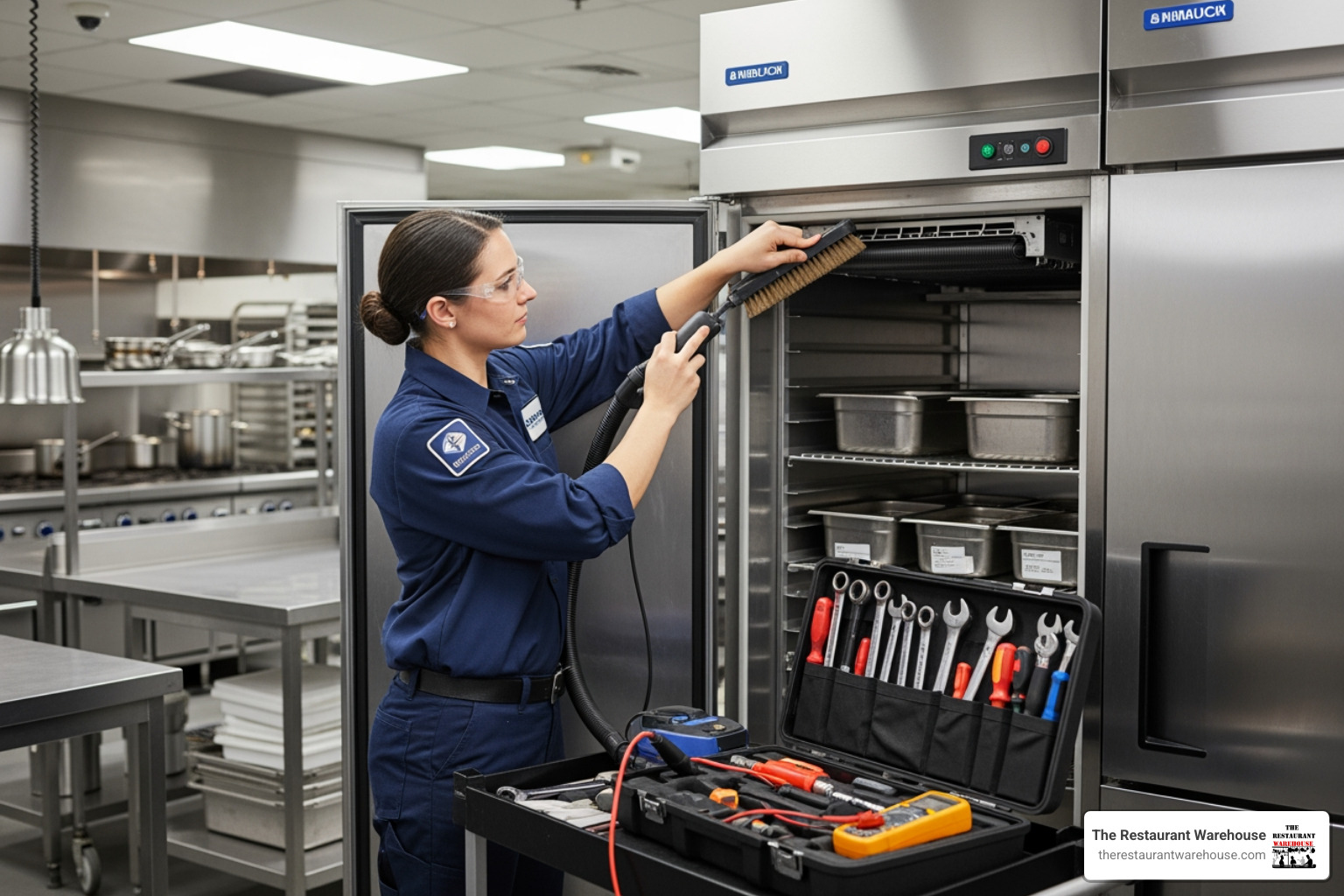
Your commercial kitchen appliances will perform better and last longer if you build maintenance into your daily and weekly routines.
- Daily Cleaning and Inspection Checklists: At the end of each shift, wipe down all surfaces, clean fryer wells and filter oil when applicable, empty grease drawers, and clean door gaskets on refrigeration. A quick daily walk-through to listen for unusual noises or spot loose parts helps you catch issues early.
- Weekly Maintenance Tasks: Schedule time for deeper cleaning—such as degreasing cooking surfaces—and pull refrigeration units out enough to clean condenser coils. Proper airflow is essential for efficient cooling and long compressor life.
- Monthly and Quarterly Inspections: Inspect gaskets for cracks or gaps, tighten loose hardware, check thermostats and controls for accuracy, and descale any water-using appliances as needed based on your local water hardness.
- Professional Servicing Schedules: Even with strong in-house routines, partnering with a certified technician for preventive maintenance is wise. Regular professional service can include checking refrigeration systems, electrical components, gas connections where applicable, and internal wear that is not obvious from the outside.
- The Power of the User Manual: Keep user manuals organized and accessible. They contain recommended cleaning procedures, troubleshooting tips, and part diagrams specific to each model. New team members should review the relevant manuals as part of their training.
- Comprehensive Staff Training: Train every operator on correct usage, daily care, and basic problem signs. Clear SOPs reduce accidental damage and improve safety.
If you are ready to upgrade or standardize your appliances with longevity and serviceability in mind, Shop our full selection of professional appliances today at https://therestaurantwarehouse.com/ and let our team help you compare options that fit your concept and budget.
Essential Safety Gear for a Secure Kitchen
Beyond the performance of your appliances, a safe kitchen environment depends on having the right personal protective equipment (PPE) and safety systems in place. This starts with your team. Mandating non-slip footwear, providing cut-resistant gloves for prep work, and having heat-resistant gloves and aprons available for the hot line are fundamental. Just as important are the systems that protect your entire space. This includes having the correct class of fire extinguisher (Class K for grease fires) readily accessible and ensuring your hood's fire suppression system is regularly inspected. Food safety is also a critical component of a secure kitchen. Reliable temperature control in your freezers and refrigerators is your first line of defense against foodborne illness, making these appliances a core part of your overall safety plan.
Key Maintenance Parts and Monitoring Tools
A proactive maintenance plan is only as good as the tools and parts you have on hand to execute it. Keeping a small inventory of essential items can turn a potential crisis into a minor inconvenience. Stock common replacement parts like gaskets for refrigeration doors, spare belts for mixers, and extra baskets for your deep fryers. Your toolkit should also include calibrated food and appliance thermometers for daily checks, along with the specific brushes, scrapers, and food-safe chemicals recommended in your user manuals. Speaking of manuals, your most valuable tool is often an organized binder or digital folder containing the documentation for all your restaurant equipment. This gives your team immediate access to cleaning instructions, part numbers, and troubleshooting guides, empowering them to handle minor issues correctly and quickly.
Optimizing Kitchen Workflow and Storage
Even the best appliances can’t overcome a disorganized kitchen. A smart layout and disciplined storage practices are what turn a collection of equipment into a high-functioning production line. By thinking strategically about how ingredients and staff move through your space, you can reduce waste, speed up service, and create a safer, less stressful work environment. It’s about making every square foot and every piece of equipment work harder for you.
Implementing the FIFO Method for Inventory
Food safety is your top priority, and the First In, First Out (FIFO) method is a cornerstone of that commitment. This simple principle—using older stock before newer stock—is critical for minimizing waste and ensuring every dish is made with fresh, safe ingredients. To make FIFO work, you need organized and reliable cold storage. Clearly label all incoming products with the delivery date and arrange them so that older items are at the front. This system depends on high-quality refrigerators and freezers that maintain consistent, safe temperatures, protecting your inventory and your reputation. Proper temperature control is not just good practice; it is a fundamental requirement for meeting public health standards.
Maximizing Vertical and Dry Storage Space
An efficient kitchen uses every inch of available space, and that often means looking up. Maximize your storage capacity by installing adjustable shelving and making full use of vertical space for dry goods and supplies. Keep your dry storage areas organized, temperature-controlled, and free of humidity to protect the quality of your ingredients. Label everything clearly—from bulk bins to individual containers—so your team can find what they need quickly without disrupting workflow. A well-organized storage system reduces clutter, improves inventory tracking, and supports the efficient use of all your restaurant equipment by keeping necessary supplies within easy reach.
Frequently Asked Questions About Restaurant Appliances
Navigating professional foodservice appliances can raise many questions, especially for new operators. Here are answers to some of the most common ones.
What are the three most essential appliances for a new small restaurant?
While every operation is different, a foundational trio of commercial kitchen appliances is almost always required:
- A reliable reach-in refrigerator for safe storage of perishable ingredients and compliance with health regulations.
- A versatile 6-burner gas or electric cooktop or rangetop that can handle sauteing, boiling, simmering, and pan-frying.
- A high-temperature dishwasher, supported by an appropriate sink setup, to achieve consistent sanitation and keep up with service volume.
These three pillars—cold storage, cooking capacity, and sanitation—create a strong base to build your menu around.
How much can I really save with ENERGY STAR certified appliances?
High-efficiency appliances can provide meaningful energy savings over their lifetime. For example, certain certified units in categories like hot holding or frying can be significantly more efficient than standard models. When you outfit an entire kitchen with a suite of efficient appliances, it is realistic to save thousands of dollars per year on utilities while reducing greenhouse gas emissions. In addition, many utilities and local programs offer rebates that lower upfront costs. You can explore categories and potential savings at the official ENERGY STAR commercial foodservice page.
What is the biggest difference between commercial and residential appliances?
The main differences are durability, performance, and certification. Commercial kitchen appliances are built with heavy-duty materials and components to withstand continuous use in demanding environments. They are designed for rapid temperature recovery, consistent performance, and frequent cleaning. Commercial models are also tested and certified by organizations such as NSF International for sanitation, which is critical for code compliance in public foodservice operations. Residential units are not built or certified for this kind of workload and may fail quickly under commercial conditions.
What certifications should I look for besides NSF?
NSF or equivalent sanitation certifications are key, but you should also look for safety certifications from recognized testing laboratories. UL and ETL listings indicate electrical safety testing, while CSA marks are common on gas-fired appliances in North America. These marks show that the appliance meets established safety and performance standards.
How do I plan my kitchen's electrical and plumbing for new appliances?
Start by collecting the specification sheets for every appliance you plan to purchase. These documents list exact requirements for electrical service (voltage, phase, and amperage), gas connections where relevant (BTU ratings and connection sizes), and plumbing (water inlet size, pressure, and drain requirements). Share these specs with your licensed electrician and plumber so they can verify that your infrastructure can support the load and install the correct connections in the right places before delivery.
If you want help matching appliance choices with your existing utilities, Contact Us at The Restaurant Warehouse via https://therestaurantwarehouse.com/ and our team can walk through spec sheets with you and help you avoid costly surprises during install.
Ready to Build Your Dream Kitchen?
Selecting the right commercial kitchen appliances is one of the most important investments you will make in your foodservice business. When you align your choices with your menu, space, and budget—and prioritize durability, efficiency, and easy maintenance—you set the stage for smoother operations, better food quality, and stronger profitability.
A well-planned mix of refrigeration, cooking, prep, and warewashing appliances supports consistent production and keeps your team focused on hospitality instead of fighting avoidable equipment issues. Pair those appliances with smart layout decisions and a proactive maintenance plan, and you will extend their lifespan and maximize your return on every dollar invested.
The Restaurant Warehouse is committed to helping operators access quality professional appliances without excessive markups, so more of your budget can go toward growth. Contact Us today for expert advice on building your ideal kitchen at https://therestaurantwarehouse.com/, and let our team help you turn your culinary concept into a profitable, efficient reality.
Key Takeaways
- Match your equipment to your menu and workflow: Select appliances that can handle your busiest hours and support your signature dishes, focusing on long-term reliability instead of just the initial price.
- Prioritize the three kitchen pillars: Build your operation on a foundation of reliable refrigeration for food safety, versatile cooking equipment for menu execution, and efficient warewashing for smooth service.
- Protect your investment with smart habits: Extend the life of your appliances and prevent costly downtime by implementing daily cleaning routines, proactive maintenance schedules, and comprehensive staff training.
Related Articles
About The Author

Sean Kearney
Sean Kearney is the Founder of The Restaurant Warehouse, with 15 years of experience in the restaurant equipment industry and more than 30 years in ecommerce, beginning with Amazon.com. As an equipment distributor and supplier, Sean helps restaurant owners make confident purchasing decisions through clear pricing, practical guidance, and a more transparent online buying experience.
Connect with Sean on LinkedIn, Instagram, YouTube, or Facebook.