


11 Ideas for a Profitable Coffee Shop Menu
Your coffee is amazing, but is your menu doing any heavy lifting? A great cup of coffee gets people in the door, but a truly fantastic coffee shop menu is what makes them stay—and come back again and again. The difference between a quiet café and a bustling community hub often comes down to the strategic curation of its offerings. Moving beyond the standard latte and croissant is key to standing out. This guide gives you 10 actionable and innovative coffee shop menu ideas designed to increase your average ticket, generate social media buzz, and turn visitors into regulars.
We will explore specific, implementable concepts that cater to today's diverse consumer preferences. From high-margin specialty espresso drinks and crave-worthy artisanal pastries to the growing demand for plant-based options and wellness-focused beverages, these ideas offer a clear blueprint for success. You will find practical examples for seasonal LTOs, grab-and-go solutions for busy patrons, and strategies for offering customization that builds brand loyalty. Each item is structured to provide clear, actionable insights, helping you engineer a resilient and profitable menu that drives growth. Let's dive into the concepts that will set your coffee shop apart and turn first-time visitors into regulars.
Before You Choose: Let's Talk Menu Strategy
Before you start dreaming up signature lattes and artisanal toast, it’s crucial to lay a strategic foundation for your menu. The items you choose to sell will dictate everything from your kitchen workflow and equipment needs to your brand identity and profit margins. A well-planned menu is more than a list of products; it’s a business plan that guides your daily operations and defines your customer experience. Taking the time to think through your concept, menu size, and target audience will save you countless headaches and set you on a clear path to profitability. Let's break down the key strategic elements to consider before you finalize your offerings.
Coffee Shop vs. Café: Defining Your Concept
First things first: are you opening a coffee shop or a café? While the terms are often used interchangeably, they represent different service models. A coffee shop primarily focuses on beverages, with a small selection of pastries or snacks. A café, on the other hand, offers a more extensive food menu, which could include sandwiches, salads, soups, or even full breakfast plates. This decision directly impacts your operational complexity and startup costs. A broader food menu requires more kitchen equipment, like prep tables, commercial refrigerators, and potentially even deep fryers, which means you'll need more space and a larger initial investment.
The Power of a Simple, Focused Menu
There's a certain beauty in simplicity, especially in the fast-paced world of food service. A focused menu with fewer, well-executed items is often more effective than a sprawling one. Why? It makes your kitchen run more efficiently, ensures product consistency, and simplifies staff training. When your team only has to master a handful of recipes, quality control becomes much easier. A simple menu also reduces food waste and streamlines inventory management, as you're ordering fewer unique ingredients. This approach allows you to perfect your core offerings and build a reputation for being the best at what you do, rather than being average at many things.
Finding the Sweet Spot: How Many Items to Offer
Once you've committed to a focused menu, the next question is how many items is just right. A good rule of thumb is to offer three to five options within each category. For example, you might feature five specialty espresso drinks, four types of pastries, and three signature sandwiches. This provides enough variety to appeal to different tastes without overwhelming your customers with too many choices—a phenomenon known as "analysis paralysis." This curated approach also helps you manage your back-of-house operations. You can better plan your cold storage, ensuring you have enough room in your freezers and refrigerators for every ingredient without creating chaos.
Designing a Menu That Reflects Your Brand
Your menu is one of the most powerful marketing tools you have, so its design should be intentional. The look and feel of your menu—from the font and color scheme to the item descriptions—should align with your coffee shop's overall brand identity. Are you a sleek, modern spot with a minimalist vibe? Your menu should be clean and simple. Are you a cozy, rustic hideaway? A menu with a more handcrafted feel might be appropriate. Use the layout to guide customers toward your most profitable items, and write descriptions that are enticing and easy to understand. A well-designed menu enhances the customer experience and reinforces what your brand is all about.
Researching Your Local Customers and Competitors
Your coffee shop doesn't exist in a vacuum. To succeed, you need to understand the local market and your potential customers. Take time to visit other coffee shops in your area. What are they doing well? What are their prices? Most importantly, what are they missing? Identifying a gap in the market can be your key to success. At the same time, get to know your target demographic. Are they students looking for a place to study, or professionals needing a quick morning coffee? Offering consistently great products while introducing occasional seasonal specials will keep your menu fresh and give regulars a reason to keep coming back.
1. Wow Your Customers with Specialty Espresso Drinks
Signature espresso drinks are the cornerstone of many successful coffee shop menu ideas, transforming standard lattes and cappuccinos into unique, memorable experiences. These are not your average flavored syrups; instead, they involve house-made infusions, artisanal ingredients, and creative flavor pairings that define your brand’s identity. By developing a small, curated selection of these beverages, you create exclusive offerings that customers can't find anywhere else, driving loyalty and word-of-mouth marketing.
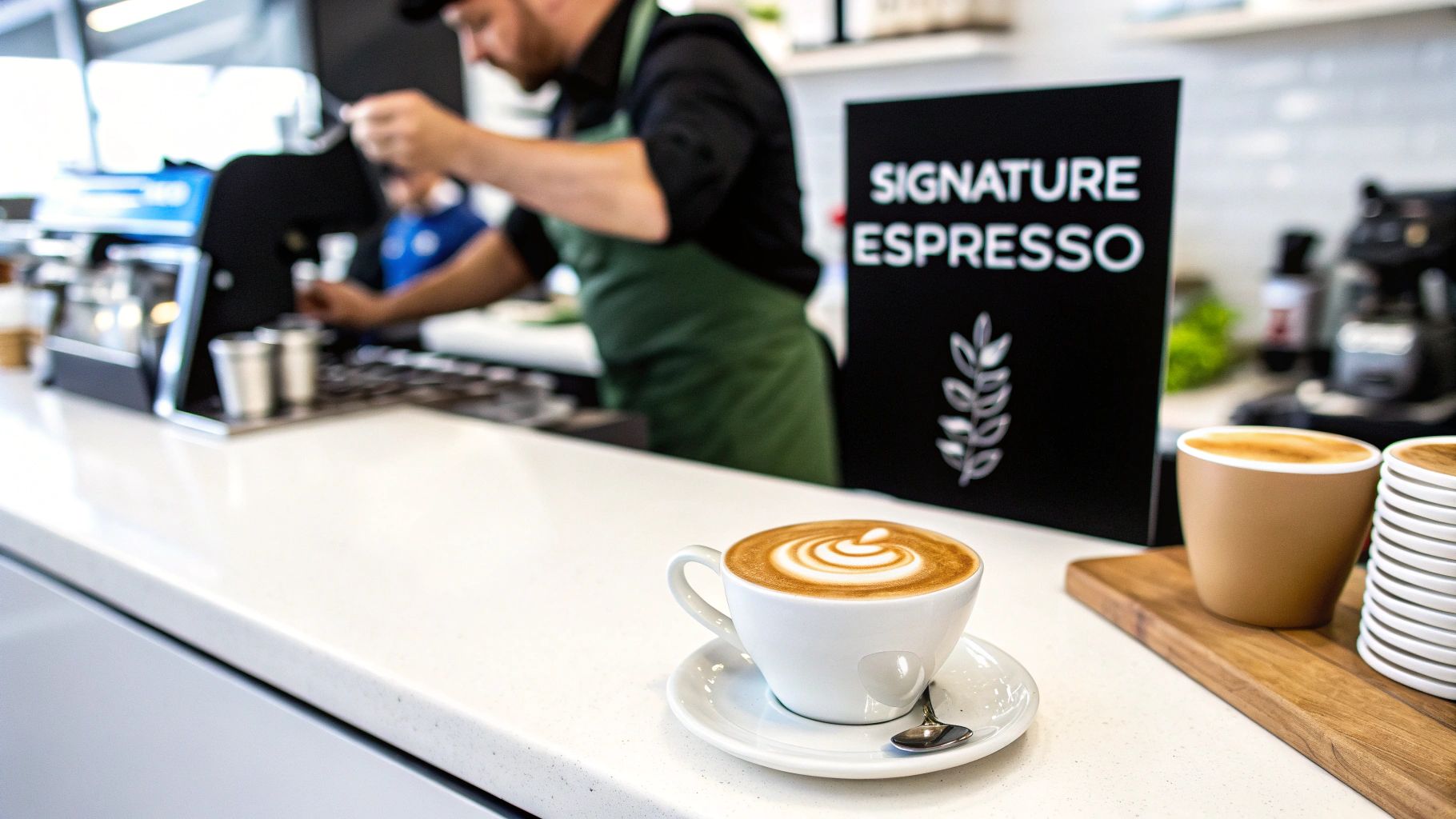
These drinks serve as a powerful tool for differentiation in a crowded market. Think beyond a simple vanilla latte and consider a Cardamom Rose Latte, a Smoked Maple & Rosemary Cortado, or a Lavender Honey Breve. The goal is to craft a flavor profile that is both intriguing and delicious, encouraging repeat visits.
How to Bring Specialty Espresso to Your Shop
To successfully introduce specialty drinks, focus on quality and consistency. The right tools are essential for executing complex recipes perfectly every time. For a comprehensive overview of what you'll need, check out this coffee shop equipment checklist.
- Anchor Your Menu: Start with 2-3 permanent signature drinks that become your staples.
- Rotate Seasonally: Introduce one or two new specialty drinks each month or season to maintain excitement and leverage seasonal ingredients.
- Train Your Team: Ensure every barista can execute the recipes consistently. Hold regular tastings and training sessions.
- Price Strategically: These premium drinks justify a higher price point, typically 15-30% above standard offerings, boosting your profit margins.
- Market Visually: Use creative names and ensure the drinks are visually appealing for social media sharing. An "instagrammable" drink is a powerful, free marketing tool.
2. Perfect the Pairing with Artisanal Pastries
High-quality pastries and baked goods are essential coffee shop menu ideas that transform a simple coffee run into a complete culinary experience. Rather than offering mass-produced, frozen items, sourcing fresh, artisanal products like flaky croissants, delicate danishes, and rich muffins adds a layer of premium quality to your brand. These offerings act as powerful impulse buys, complementing your coffee and significantly increasing the average transaction value.
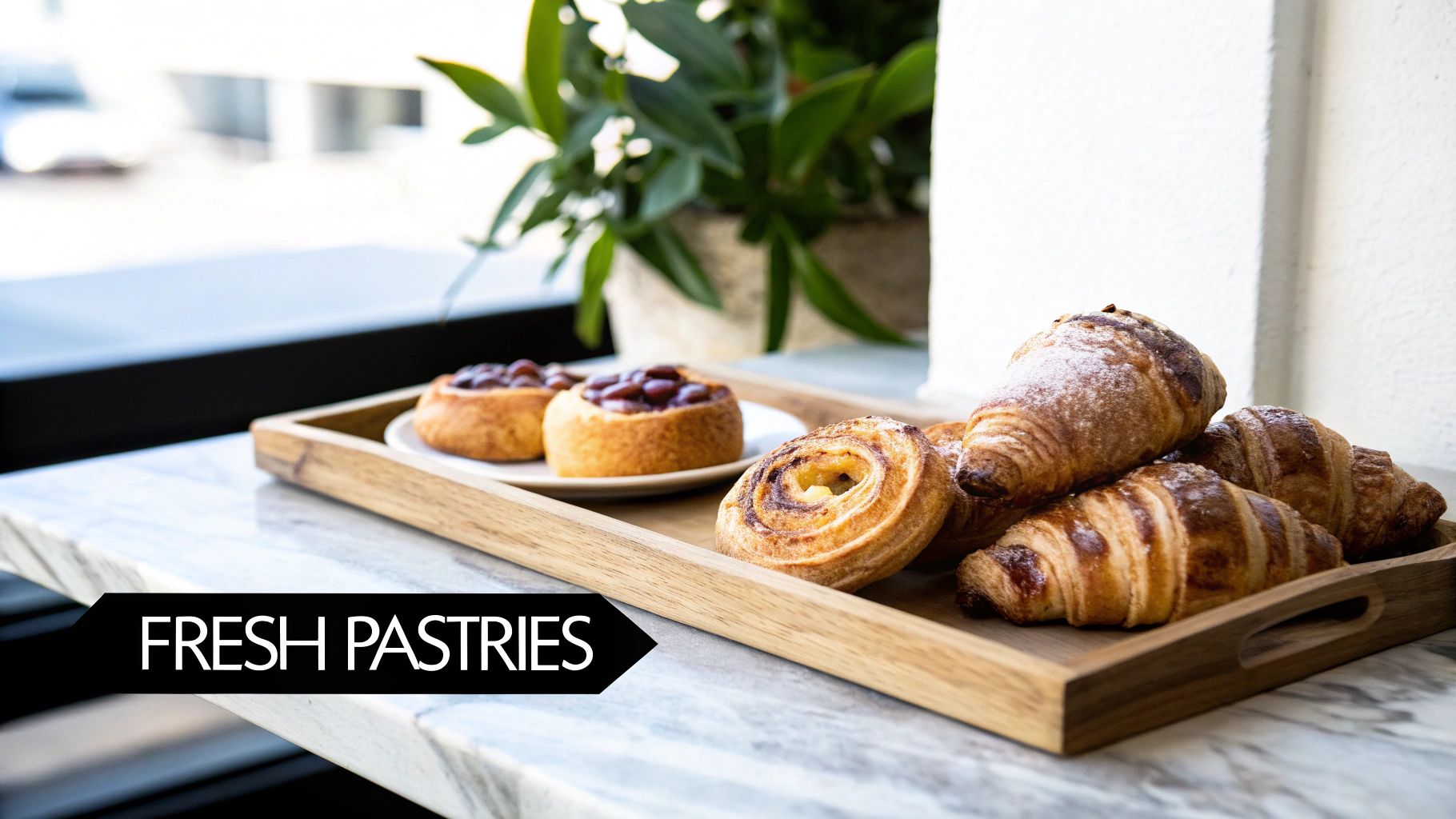
The right pastry selection elevates your coffee program and creates an irresistible draw for customers seeking a treat. Think of a buttery almond croissant alongside a latte or a spiced morning glory muffin with a black coffee. These pairings are not just add-ons; they are a core part of the coffee shop experience that encourages customers to linger and return.
How to Source and Serve Amazing Baked Goods
Successfully integrating pastries requires a focus on quality, freshness, and presentation. Whether you bake in-house or partner with a local supplier, the key is to offer items that match the quality of your coffee. For those considering an on-site bakery, understanding the necessary equipment is the first step; this commercial bakery equipment guide provides a detailed overview.
- Partner Locally: Collaborate with a respected local bakery to offer unique, high-quality products without the overhead of an in-house kitchen.
- Strategic Display: Position pastries in a well-lit display case near the point of sale to maximize visibility and encourage impulse purchases.
- Offer Curated Variety: Provide a focused selection of 4-6 different items, including both sweet and savory options, to avoid overwhelming customers.
- Price for Profit: Price pastries at a 40-60% margin above cost to ensure they are a profitable revenue stream.
- Suggest Pairings: Train your staff to recommend specific pastry and coffee pairings to enhance the customer experience and drive upsells.
Don't Forget Donuts and Bagels
While unique artisanal pastries create a premium feel, don't overlook the classics. Donuts and bagels are reliable, high-demand items that appeal to nearly everyone. Their popularity makes them a smart addition to any coffee shop menu, providing a familiar comfort that keeps customers coming back. These items are incredibly convenient for grab-and-go orders and serve as the perfect, simple pairing for a hot cup of coffee. Offering these staples ensures you cater to a broader audience, from the customer seeking a quick breakfast to the one looking for a simple, satisfying treat.
Bagels, in particular, offer incredible versatility. They can be served toasted with cream cheese for a quick morning bite or transformed into hearty breakfast and lunch sandwiches. This flexibility allows you to expand your menu beyond pastries and capture sales throughout the day. Setting up a small sandwich station with a dedicated prep table and quality refrigerators for storing fresh ingredients can turn a simple bagel offering into a significant revenue stream. Meanwhile, donuts are the ultimate impulse buy. Whether you source them from a great local baker or decide to make them a signature in-house item with commercial deep fryers, their visual appeal is undeniable and can easily persuade customers to add one to their order.
3. Capitalize on the Cold Brew Craze
A dedicated cold coffee program is one of the most profitable coffee shop menu ideas, capturing demand from customers seeking smooth, low-acid alternatives to traditional hot coffee. This category extends beyond simple iced coffee to include cold brew concentrate, nitrogen-infused (nitro) cold brew, and creative cold foam variations. Offering a strong selection of these beverages meets year-round demand and appeals to a broad customer base that often prefers colder, less acidic drinks.
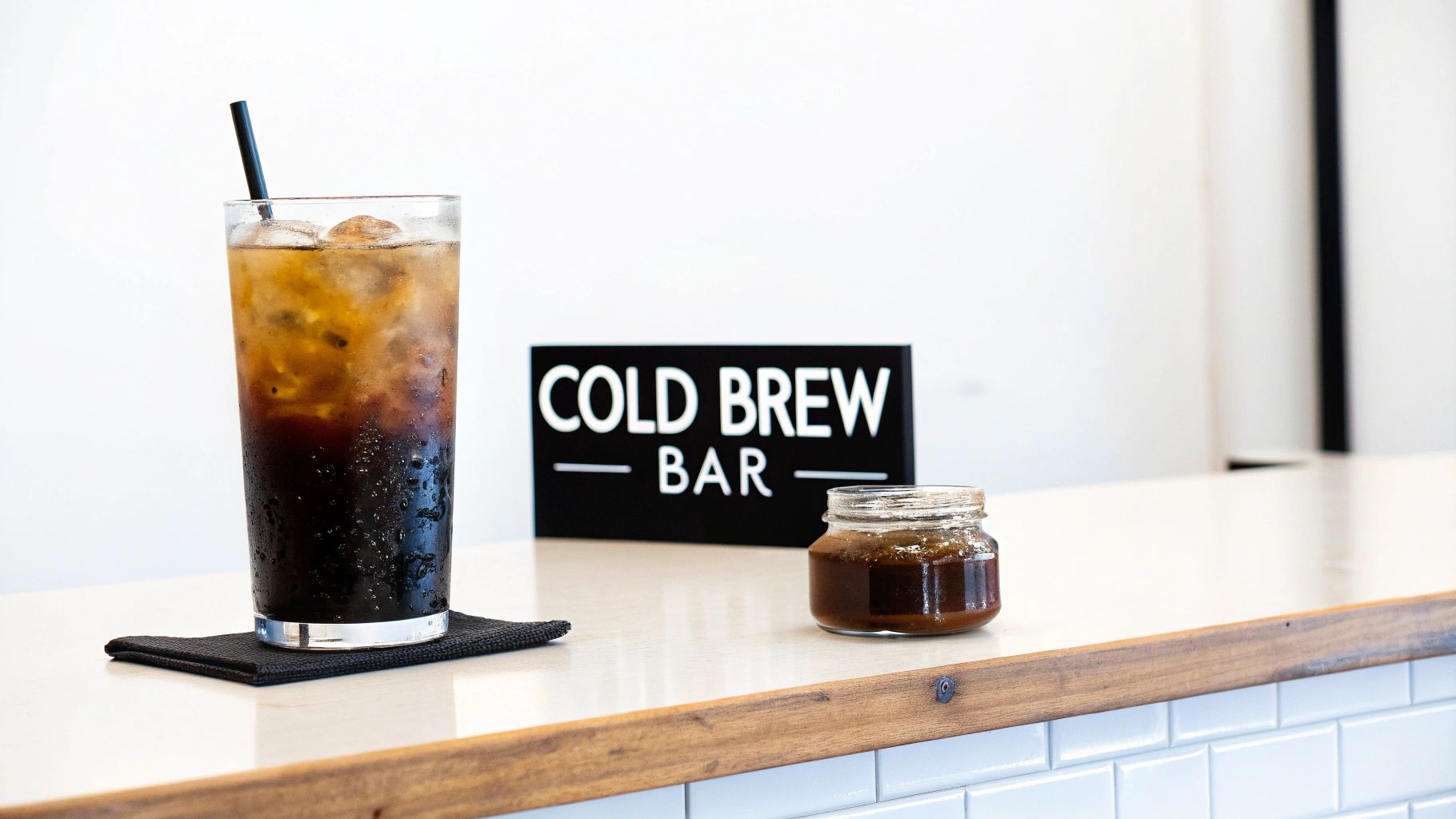
These drinks provide a significant point of differentiation and can become a signature offering. The natural sweetness and lower acidity of cold brew make it an excellent base for unique flavor combinations, from a simple Vanilla Sweet Cream Cold Brew to more adventurous seasonal infusions like a Pumpkin Spice Cold Foam Cold Brew. Nitro cold brew, with its creamy, stout-like texture, offers a premium experience that commands a higher price.
Making and Marketing Your Iced Coffee Selection
Successfully launching a cold coffee menu hinges on consistency and efficient batch production. The process for making cold brew is simple but requires advance planning to ensure a steady supply. For a deeper dive into the technical aspects and equipment needed, the Specialty Coffee Association offers extensive resources and brewing standards.
- Batch Production: Brew cold brew concentrate in large batches 2-3 times per week to ensure you never run out during peak times.
- Premium Pricing for Nitro: The equipment and process for nitro cold brew justify a price point 20-30% higher than standard cold brew, boosting revenue.
- Promote Seasonally: Feature cold drinks prominently on menu boards and social media during warmer months to maximize seasonal sales.
- Offer Customization: Provide a range of house-made syrups and cold foams to allow customers to personalize their drinks, enhancing their experience.
- Elevate Presentation: Serve cold brew and nitro in branded glassware to create a premium feel that reinforces the quality of the beverage.
4. Welcome Everyone with Plant-Based Options
Catering to diverse dietary needs is no longer a niche market; it's a fundamental component of modern coffee shop menu ideas. Offering a comprehensive selection of plant-based milks, alternative proteins, and vegan-friendly food items meets the growing demand from customers who are vegan, lactose-intolerant, or simply health-conscious. This strategy broadens your customer base and positions your brand as inclusive and aware of current consumer trends.
This move goes beyond just adding soy milk. A well-curated menu includes a variety of milk alternatives like oat, almond, and coconut milk, alongside plant-based protein smoothies and vegan pastries. By thoughtfully integrating these options, you cater directly to ethical and wellness-focused consumers, creating a welcoming environment that encourages loyalty and positive reviews from a vocal and influential demographic.
How to Introduce Plant-Based Items Successfully
Successfully launching plant-based options requires thoughtful sourcing and clear communication with customers. The goal is to make these choices feel like a core part of your menu, not an afterthought.
- Start with Popular Choices: Begin with 3-4 of the most requested non-dairy milks, such as oat, almond, and soy, to cover the basics.
- Implement a Premium Charge: It's standard practice to charge a premium of $0.50 to $1.00 for alternative milks to cover their higher cost.
- Train Staff on Preparation: Each type of non-dairy milk steams and foams differently. Proper barista training is crucial for maintaining drink quality and consistency.
- Promote Visibly: Clearly mark plant-based and vegan items on your menu boards and digital displays. Use icons to make them easy for customers to identify at a glance.
- Expand Beyond Drinks: Introduce vegan-friendly food items like protein bites, overnight oats, or pastries from a local plant-based bakery to create a complete offering.
5. Offer More Than Coffee with Savory Breakfast Bites
Adding savory breakfast items is a strategic way to transform your coffee shop from a quick caffeine stop into a complete morning destination. These portable, satisfying options like egg sandwiches, breakfast burritos, and quiches capture the busy commuter crowd, significantly increasing the average ticket value. Instead of just selling a latte, you're now providing a full meal, creating a substantial new revenue stream.
This approach capitalizes on convenience, offering customers a one-stop solution for their morning needs. By providing high-quality, quick-service food, you tap into a massive market of professionals and students looking for a better alternative to fast food. This addition to your coffee shop menu ideas enhances customer loyalty by making your business an indispensable part of their daily routine.
How to Create a Simple, Profitable Savory Menu
To launch a successful savory food program, prioritize efficiency and quality. Your goal is to offer delicious, consistent items that can be served quickly without disrupting the beverage workflow. Partnering with a local baker or food supplier can be an excellent starting point if you have limited kitchen space.
- Start Small and Focused: Begin with 3-5 core items, such as a classic bacon, egg, and cheese sandwich, a vegetarian breakfast burrito, and a quiche of the day.
- Prep for Speed: Prepare components or entire items during off-peak hours to ensure fast service during the morning rush.
- Partner Locally: If in-house production isn't feasible, partner with a local bakery or food purveyor to supply fresh, high-quality items daily.
- Price for Profit: Set prices at least 30-40% above your cost to maintain healthy profit margins and account for any potential waste.
- Invest in Packaging: Use branded, eco-friendly to-go packaging to enhance the customer experience and promote your brand as they take their breakfast on the go.
Expand Your Morning Menu
Adding savory breakfast items is a strategic way to transform your coffee shop from a quick caffeine stop into a complete morning destination. Portable, satisfying options like egg sandwiches, breakfast burritos, and quiches are perfect for capturing the busy commuter crowd, which significantly increases your average ticket value. This approach capitalizes on convenience, offering customers a one-stop solution for their morning needs. To launch a successful savory food program, prioritize efficiency and quality to avoid disrupting your beverage workflow. Start with 3-5 core items, like a classic bacon, egg, and cheese sandwich and a vegetarian burrito. A smooth morning rush depends on the right setup, including efficient refrigerators to keep ingredients fresh and organized.
Add Soups and Salads for the Lunch Crowd
Once you've mastered the morning rush, capturing the lunch crowd is the next logical step for growth. Soups and salads are fantastic menu additions because they are relatively simple to prepare, store, and serve, all while offering excellent profit margins. A rotating daily soup, especially in cooler months, pairs perfectly with existing savory items. Salads appeal directly to health-conscious customers seeking a light yet satisfying meal. You can start with a few timeless options like a Caesar, Greek, or Caprese salad. Offering a reliable lunch positions your shop as the go-to neighborhood spot, drawing customers away from generic fast-food chains. Ensuring your team can handle the new service efficiently starts with equipping a small prep area with the right restaurant equipment.
6. Become a Coffee Destination with Single-Origin Beans
Positioning your café as an authority on coffee is one of the most powerful coffee shop menu ideas for building a dedicated customer base. This involves moving beyond standard blends and offering a curated selection of high-quality, single-origin beans. By featuring beans with distinct flavor profiles, detailed origin stories, and specific brewing recommendations, you transform a simple transaction into an educational experience that engages and captivates discerning customers.
This approach elevates your brand from a simple coffee provider to a trusted curator, similar to how brands like Blue Bottle Coffee and Intelligentsia built their reputations. It attracts coffee connoisseurs and educates newcomers, creating a community around the appreciation of high-quality coffee. This strategy justifies premium pricing and fosters deep customer loyalty.
How to Educate Customers and Sell Retail Beans
Successfully launching a specialty bean program requires a commitment to sourcing, training, and customer engagement. The focus is on showcasing the unique journey of each coffee from farm to cup.
- Source High-Quality Beans: Partner with reputable specialty roasters or distributors known for their ethical sourcing and quality control. Start with 3-4 rotating single-origin options.
- Train Your Baristas: Your staff must become coffee experts. Train them on the specific tasting notes, origin details, and ideal brewing methods (like pour-over or AeroPress) for each bean.
- Create Tasting Flights: Offer customers a coffee tasting flight with small samples of different single-origin brews. This is a great way to introduce them to new flavors without commitment.
- Display Information Clearly: Use menu boards, retail bags, and table cards to share the story behind each bean: its origin, farm, processing method, and flavor profile.
- Host Educational Events: Engage your community by hosting monthly coffee cupping sessions or brewing workshops. This reinforces your brand's authority and builds a loyal following.
7. Create Buzz with Seasonal Limited-Time Offers
Seasonal limited-time offerings are a powerful strategy among coffee shop menu ideas, leveraging urgency and novelty to drive sales and excitement. These time-sensitive items, which rotate quarterly or seasonally, tap into customer desires for new experiences and align with cultural moments and holidays. By introducing a menu that reflects the current season, you create a sense of immediacy that encourages customers to visit before the special items disappear.
This approach, famously exemplified by the Starbucks Pumpkin Spice Latte phenomenon, generates significant social media buzz and gives regulars a compelling reason to return. A well-executed LTO program keeps your menu dynamic and prevents customer fatigue. Think of a summery Raspberry Rose Cold Brew, a cozy autumn Spiced Apple Chai, or a festive Peppermint Mocha White Hot Chocolate for the winter holidays.
How to Plan a Winning Seasonal Menu
Successfully launching LTOs requires careful planning and strategic marketing to maximize their impact. The goal is to build anticipation and ensure the offerings feel like a special event.
- Plan in Advance: Develop your seasonal menu and source ingredients at least 2-3 months ahead of launch.
- Create Buzz: Use social media platforms like Instagram and TikTok to announce launch dates and showcase the visually appealing drinks.
- Price as Premium: LTOs justify a higher price, typically 10-20% above standard menu items, reflecting their special status and ingredients.
- Emphasize Scarcity: Frame the offerings as exclusive and available for a "limited time only" to create a sense of urgency.
- Analyze Performance: Track sales data for each LTO to understand what resonates with your customers. This information is invaluable for planning future seasonal hits.
8. Add Wellness Lattes and Functional Drinks
Wellness and functional beverages are a powerful addition to modern coffee shop menu ideas, catering to the growing demographic of health-conscious consumers. This category moves beyond traditional coffee to offer drinks infused with adaptogens, superfoods, vitamins, and other functional ingredients designed to provide specific health benefits. By incorporating options like golden turmeric lattes, mushroom-boosted coffee, and CBD-infused cold brew, you can attract customers seeking more than just a caffeine fix.
These drinks position your coffee shop as a forward-thinking, health-oriented destination. Offering a vibrant blue spirulina latte or a calming ashwagandha mocha can transform your menu, creating a new revenue stream and appealing to a niche market willing to pay a premium for perceived health value. To broaden your beverage offerings beyond coffee, consider introducing culturally rich options like authentic chai tea from India, which also has a history rooted in wellness.
How to Craft a Health-Conscious Drink Menu
Successfully launching a functional beverage line requires a focus on ingredient quality and customer education. Since many of these ingredients may be new to your customers, transparency and clear communication about their benefits are key to building trust and encouraging trial.
- Source High-Quality Ingredients: Partner with reputable suppliers for certified organic, non-GMO superfoods, adaptogens, and proteins.
- Educate Your Customers: Use small signs, menu descriptions, or pamphlets to briefly explain the benefits of ingredients like maca (energy), reishi (stress relief), or turmeric (anti-inflammatory).
- Offer Tasting Samples: Introduce new functional drinks with small, free samples to lower the barrier to entry for curious but hesitant customers.
- Price for Premium Value: These beverages command a higher price point, often 50-100% above standard drinks, reflecting the cost of specialized ingredients and their added value.
- Partner with Local Wellness Experts: Collaborate with nearby yoga studios, gyms, or wellness practitioners for cross-promotional events to reach a targeted audience.
9. Serve Busy Customers with Grab-and-Go Options
Grab-and-go convenience items are a critical component of modern coffee shop menu ideas, designed to increase average transaction value through strategic impulse purchases. This curated selection of pre-packaged goods, from energy bars and gourmet nuts to retail coffee beans and artisanal chocolates, caters to time-crunched customers. By offering these items, you provide added convenience while simultaneously generating a high-margin revenue stream that requires minimal labor.
These products transform your counter area into a retail opportunity, encouraging customers to add a little something extra to their order. Think beyond standard snacks and consider offering unique, locally-sourced products or premium brands that align with your shop's identity. This strategy not only boosts sales but also reinforces your brand as a destination for quality and discovery, much like the successful retail models of Starbucks or Pret A Manger.
How to Set Up a Profitable Grab-and-Go Section
Effectively merchandising these items is key to maximizing their sales potential. Strategic placement and the right equipment, such as dedicated displays, are essential for catching the customer's eye. For more insights on the best display options, explore this guide to grab-and-go refrigerators.
- Curate a Balanced Mix: Aim for a product ratio of approximately 60% indulgent items (like craft chocolate bars) and 40% health-conscious options (like protein bars or dried fruit) to appeal to a wider audience.
- Prioritize Placement: Position your best-selling and highest-margin items at eye-level near the point of sale to maximize visibility and encourage last-minute additions.
- Refresh Your Display: Rotate your grab-and-go offerings and change the display layout monthly. This creates a perception of freshness and encourages regulars to see what's new.
- Train for the Upsell: Coach your baristas to suggest a grab-and-go item with relevant orders, such as asking, "Would you like a protein bar to go with your morning cold brew?"
- Price for Profit: These items should carry a healthy profit margin, typically between 50-60%, making them a significant contributor to your bottom line.
10. Let Customers Personalize Their Order
Allowing customers to personalize their orders is a powerful strategy among modern coffee shop menu ideas. A build-your-own framework gives patrons control over their drink by letting them choose milks, syrups, toppings, and even espresso intensity. This high degree of personalization caters directly to individual tastes and dietary needs, such as dairy-free or low-sugar preferences, significantly boosting customer satisfaction and loyalty.
This approach transforms a standard transaction into an interactive experience. By offering a modular menu, like Starbucks’ extensive customization system, you empower customers to create their perfect beverage. This not only increases their engagement but also drives up the average order value, as each modification often comes with a small upcharge. It’s a proven method for making every customer feel like their order is uniquely crafted for them.
How to Offer Customization Without Slowing Service
Successfully launching a build-your-own menu requires a balance between choice and efficiency. The goal is to offer meaningful options without overwhelming the customer or slowing down your workflow.
- Structure the Choices: Organize options clearly. Limit choices to 3-5 per category (e.g., milk, syrup, topping) to prevent decision fatigue.
- Price Add-Ons Strategically: Charge a premium for modifications, typically $0.50 to $1.00 for each add-on like alternative milks or extra espresso shots.
- Leverage Digital Menus: Use digital displays or tablet ordering systems to make navigating complex choices simple and intuitive for the customer.
- Guide and Recommend: Train staff to suggest popular or complementary combinations. Offer a few "staff pick" pre-built combinations as starting points.
- Track Popular Customizations: Analyze sales data to identify the most popular add-ons. Use this information to optimize your inventory and potentially create new signature drinks.
11. Create an Afternoon and Evening Draw
Your coffee shop's rent is paid for 24 hours a day, so why only focus on the morning rush? Expanding your menu to attract an afternoon and evening crowd is a smart way to maximize your space and revenue. By introducing offerings that appeal to customers later in the day, you can transform your café from a morning pit stop into a versatile community hub. This shift involves thinking beyond coffee and pastries to create an inviting atmosphere for study sessions, casual meetings, or a relaxing end to the day.
Introduce a Dedicated Dessert Menu
While morning pastries are perfect for a coffee run, a dedicated dessert menu can turn your shop into an evening destination. High-quality baked goods can transform a simple coffee into a complete culinary experience. Think beyond muffins and croissants and consider offering decadent items like slices of chocolate cake, fruit tarts, rich cheesecakes, or warm bread pudding. These premium desserts create an ideal pairing for decaf lattes or a pot of tea, encouraging customers to settle in for a treat after dinner or as a sweet afternoon break.
Consider Adding Alcoholic Beverages
Transitioning your coffee shop into a café-bar in the evening can open up a significant new revenue stream. A thoughtfully curated menu of alcoholic beverages, including coffee-based cocktails like espresso martinis, local craft beers, and a small selection of wines, can attract a completely different clientele. This positions your café as a sophisticated yet relaxed spot for a date or a quiet drink with friends. While this requires navigating liquor licensing and additional staff training, the potential return on investment from higher-priced evening drinks is substantial.
Bringing Your Menu to Life: Operations and Optimization
Having great menu ideas is the first step, but successful execution is what truly sets a coffee shop apart. Bringing your vision to life requires careful planning around operations, staffing, and workflow. Optimizing these behind-the-scenes processes ensures that you can deliver high-quality, consistent products efficiently, even during your busiest hours. This section covers the practical strategies you need to implement your menu effectively and profitably.
Develop a Signature Item to Stand Out
In a competitive market, a memorable signature item can become your most powerful marketing tool. This is the one thing on your menu that customers can't get anywhere else, driving loyalty and generating organic word-of-mouth buzz. By developing a small, curated selection of exclusive offerings, you create a unique identity for your brand. This could be a specialty latte with a house-made syrup, a uniquely decorated pastry, or a savory sandwich with a secret sauce. The goal is to create an item that is so good, people will go out of their way to get it.
Use Smart Pairings to Increase Sales
One of the easiest ways to increase your average ticket size is through suggestive selling, but it has to feel natural and helpful. Train your staff to recommend specific pastry and coffee pairings to enhance the customer experience and drive upsells. Instead of a generic "anything else?", a barista might suggest, "The citrus notes in our lemon poppyseed scone pair beautifully with the brightness of our single-origin Ethiopian pour-over." This approach not only increases sales but also positions your staff as knowledgeable experts, building trust and making the customer feel valued.
Plan Your Operational Needs
Expanding your menu isn't just about adding new recipes; it's about re-evaluating your entire kitchen workflow. Each new item, whether it's a hot sandwich or a fresh soup, introduces new operational requirements for storage, prep space, and service speed. Before you commit to a new menu, map out every step of the process, from ingredient delivery to the final hand-off to the customer. Planning your operational needs ensures you have the right systems and restaurant equipment in place to execute flawlessly without slowing down your service.
Getting the Right Kitchen Equipment
Expanding your menu means you'll need the right tools. For hot sandwiches, a panini grill is a must. To serve fresh soups all day, a soup kettle is essential. If you're adding a full breakfast, a countertop griddle can handle pancakes and eggs. At The Restaurant Warehouse, we supply high-quality, affordable equipment to get your kitchen ready. This includes everything from commercial refrigerators and freezers for storage to the specific cooking appliances you need to execute your menu perfectly.
Keep Your Menu Fresh and Relevant
A great menu is a living document, not something you set in stone. Seasonal limited-time offerings are a powerful strategy that leverages urgency and novelty to drive sales and excitement. Beyond LTOs, it's crucial to regularly analyze your sales data to see what's performing well and what isn't. Don't be afraid to remove unpopular items. A smaller, more focused menu is often more profitable and easier for your team to execute than a large, bloated one. Keeping your menu fresh shows customers that you're innovative and gives them a reason to keep coming back to see what's new.
Stay Ahead with Upcoming Menu Trends
While you should always stay true to your brand, keeping an eye on industry trends is essential for long-term relevance. Catering to diverse dietary needs, for example, is no longer a niche market; it's a fundamental component of modern coffee shop menu ideas. Pay attention to emerging flavor profiles, sustainability practices, and new beverage formats. Following food blogs, reading industry publications, and visiting other successful coffee shops are great ways to stay inspired. The key is to thoughtfully adapt trends in a way that feels authentic to your coffee shop's unique identity.
Which Menu Idea Is Right for Your Coffee Shop?
| Item | Implementation complexity 🔄 | Resource requirements ⚡ | Expected outcomes 📊 | Ideal use cases ⭐ | Key advantages 💡 |
|---|---|---|---|---|---|
| Specialty Espresso Drinks | High — needs skilled baristas and recipe consistency | High — advanced espresso gear, syrups, alternative milks, training | High — premium pricing, repeat customers, strong social media appeal | Urban specialty cafés; premium-brand positioning | Differentiates brand; higher margins; Instagrammable |
| Artisanal Pastries and Baked Goods | Medium — in-house baking or supplier coordination; food-safety needs | Medium–High — ovens/display cases or reliable suppliers; early prep | High — strong breakfast sales; high-margin impulse purchases | Morning-focused shops; cafés wanting food revenue | Adds high-margin items; complements beverages; encourages longer visits |
| Cold Brew and Iced Coffee Options | Medium — long brew times; nitro adds operational steps | Medium — cold-brew tanks, refrigeration, optional nitro system | Medium–High — premium sales, efficient batch prep, appeals to younger demos | Warm climates, summer menus, grab-and-go environments | Advance prep improves speed; premium perception for nitro |
| Plant-Based & Alternative Protein Options | Medium — menu labeling and barista technique training | Medium — multiple alternative milks, protein powders, storage | Medium — expands customer base; supports premium add-on pricing | Health-conscious markets; inclusive menus for dietary needs | Attracts vegans/flexitarians; aligns with sustainability trends |
| Breakfast Sandwiches & Savory Items | High — kitchen facilities, licensing, peak-hour labor | High — cooking equipment, staff, packaging, inventory systems | High — higher transaction values; captures commuter breakfast market | Commuter hubs; stores aiming to be morning destinations | Competes with food-focused venues; enables catering/meal sales |
| Specialty Coffee Education & Single‑Origin Beans | High — staff expertise and educational programming | Medium — specialty beans, multiple brew methods, marketing for subscriptions | Medium — premium pricing, loyal niche community, lower volume | Specialty/third‑wave shops; subscription and tasting-driven businesses | Builds authority; justifies premium pricing; supports ethical sourcing |
| Seasonal Limited‑Time Offerings (LTOs) | Medium — quarterly planning and staff retraining | Medium — seasonal ingredients, marketing campaigns | Medium–High — drives repeat visits and social buzz; test new items | Brands wanting novelty and social engagement | Creates FOMO; tests products with limited risk |
| Wellness & Functional Beverages | Medium–High — ingredient knowledge and claim compliance | Medium–High — adaptogens, superfoods, perishable ingredients, training | Medium — attracts wellness segment; supports premium margins if credible | Health-focused neighborhoods; partnerships with fitness/wellness | Differentiates menu; positions brand as health-forward |
| Grab‑and‑Go Convenience Items | Low–Medium — merchandising and inventory controls | Low — shelf/display space, minimal labor | Medium — uplifts AOV; steady retail revenue with low labor | High foot-traffic locations; limited‑time customers | Low effort, high margin retail stream; fills checkout space |
| Customization & Build‑Your‑Own Options | High — complex ordering flows and consistency controls | Medium–High — many ingredients, POS/digital integration, staff training | High — increases AOV and satisfaction; enables preference data collection | Brands prioritizing personalization and loyalty programs | Boosts AOV; supports upselling and customer retention |
Ready to Design Your Perfect Coffee Shop Menu?
The journey from a standard list of offerings to a dynamic, profitable menu is a strategic one. We've explored a wide spectrum of coffee shop menu ideas, from the foundational excellence of specialty espresso and artisanal pastries to the forward-thinking inclusion of wellness beverages and extensive plant-based options. Each concept serves as a potential pillar for growth, a way to capture new customers, and a method for building deeper loyalty with your existing regulars. The key is not to implement every idea at once, but to thoughtfully select the ones that align with your brand's unique story and your community's specific tastes.
A truly successful menu is a living document. It reflects a deep understanding of your customers, a commitment to quality, and an awareness of evolving industry trends. The most impactful takeaway is that your menu is your single most powerful marketing tool; it should be crafted with as much care as your signature latte.
Your Step-by-Step Menu Action Plan
To transform these ideas into tangible results, a structured approach is essential. Avoid overwhelming your team and your budget by focusing on strategic, incremental changes.
Here is a practical, step-by-step plan to get started:
Analyze Your Current Performance: Before adding anything new, audit your existing menu. Identify your bestsellers (your stars) and your worst performers (your dogs). Use your POS data to understand what sells, when it sells, and what the profit margins are. This analysis provides the crucial baseline for making informed decisions.
Survey Your Audience: Don't guess what your customers want-ask them directly. Use simple in-store comment cards, social media polls, or email surveys. You might discover a high demand for grab-and-go convenience items or a strong interest in a curated single-origin coffee program.
Select a Pilot Initiative: Choose one or two coffee shop menu ideas from this list that best fit your brand identity and operational capacity. If you have a strong morning rush, perhaps expanding your breakfast sandwiches is the logical first step. If you have a skilled barista team, introducing a seasonal LTO flight could be a quick win.
Test, Measure, and Refine: Launch your new item or category on a small scale. Market it as a limited-time special to create buzz and gauge interest. Track its sales data, gather customer feedback, and talk to your staff about the workflow. Use this information to decide whether to add it to the permanent menu, refine the recipe, or try a different idea. By methodically integrating new offerings, you can build a menu that is not only creative and appealing but also highly profitable and operationally sound.
Ready to bring your innovative coffee shop menu ideas to life? Having the right equipment is the critical link between a great concept and a perfectly executed product. For everything from high-capacity espresso machines and cold brew dispensers to efficient commercial ovens and refrigeration, The Restaurant Warehouse provides the reliable, affordable tools you need to succeed. Explore our extensive selection and equip your kitchen for growth at The Restaurant Warehouse.
Frequently Asked Questions
I have a really small kitchen. How can I add food to my menu without a huge investment? Starting with food doesn't require a full kitchen renovation. The key is to begin with items that need minimal prep and simple countertop equipment. Think about adding a commercial panini press for hot sandwiches or a soup kettle for a daily special. You can also partner with a local food purveyor to supply ready-made items like quiches, breakfast burritos, or salads. This allows you to test what your customers want without the upfront cost and operational complexity of building out a large food program.
Should I bake my own pastries or partner with a local bakery? This really comes down to your brand, budget, and operational capacity. Baking in-house gives you complete creative control and that irresistible fresh-baked aroma, but it requires a significant investment in equipment, space, and skilled labor. Partnering with a great local bakery, on the other hand, allows you to offer high-quality, unique products with much lower risk and operational headache. It also lets you focus on what you do best—making amazing coffee—while supporting another local business.
How do I price my new specialty drinks without scaring away customers? When pricing premium items, remember that customers are paying for a unique experience, not just the ingredients. Your house-made syrups, unique flavor combinations, and skilled preparation justify a higher price. A good starting point is to price these drinks about 15-30% higher than your standard lattes. As long as the quality and taste deliver on the promise, your customers will see the value in paying a little extra for something special they can't get anywhere else.
How often should I change my menu? I'm worried about overwhelming my regulars. The best approach is to maintain a core menu of your proven bestsellers that customers can always count on. This builds trust and consistency. Then, introduce novelty and excitement through seasonal Limited-Time Offers (LTOs). Bringing in one or two new drinks and a food item each season is a great rhythm. This strategy keeps your menu feeling fresh and gives people a reason to visit, but it doesn't take away the comfort of their go-to order.
My menu is getting too big. What's the best way to simplify it without losing sales? A large menu can actually hurt sales by overwhelming customers and slowing down your kitchen. The first step to simplifying is to look at your sales data. Identify the items that make up the bottom 10-20% of your sales and aren't contributing much to your profit. Don't be afraid to cut them. A focused menu with fewer, well-executed items almost always leads to better quality, faster service, and happier customers. It's better to be known for doing a few things perfectly than many things just okay.
Key Takeaways
- Start with a Focused Menu Strategy: Before you add a single item, decide if you're a coffee-focused shop or a full café. A smaller, well-planned menu is easier to execute consistently, reduces waste, and is ultimately more profitable than trying to do everything at once.
- Pair Coffee with Profitable Food Items: The easiest way to increase your average sale is by adding high-margin food. Complement your drinks with artisanal pastries, savory breakfast sandwiches, or convenient grab-and-go snacks to turn a simple coffee run into a complete meal.
- Keep Your Menu Dynamic and Inclusive: Use seasonal limited-time offers (LTOs) to create excitement and give regulars a reason to come back. At the same time, offering options like plant-based milks and build-your-own customizations ensures every customer feels seen and catered to.
Related Articles
About The Author

Sean Kearney
Sean Kearney is the Founder of The Restaurant Warehouse, with 15 years of experience in the restaurant equipment industry and more than 30 years in ecommerce, beginning with Amazon.com. As an equipment distributor and supplier, Sean helps restaurant owners make confident purchasing decisions through clear pricing, practical guidance, and a more transparent online buying experience.
Connect with Sean on LinkedIn, Instagram, YouTube, or Facebook.