

How to Start a Cafe Business in 100 Days
So you want to open a cafe. Before you get swept up in dreams of latte art and the perfect playlist, we need to talk about the less glamorous, but absolutely essential, groundwork.
Every great cafe starts with a rock-solid plan, not just a perfect espresso shot. This is where your daydream starts to look like a real business. It's the foundation that will guide every single decision you make, from the beans you buy to the way you market your shop.
The good news? The global cafe market is absolutely booming. In 2023, it was valued at a massive $298.72 billion and is expected to climb to $430.02 billion by 2030. That kind of growth shows a clear, lasting demand for great coffee shops, creating a huge opportunity for entrepreneurs who get the planning phase right.
This chart breaks down the foundational workflow—it all starts with a clear concept, gets documented in a business plan, and then you're ready to start thinking about funding.
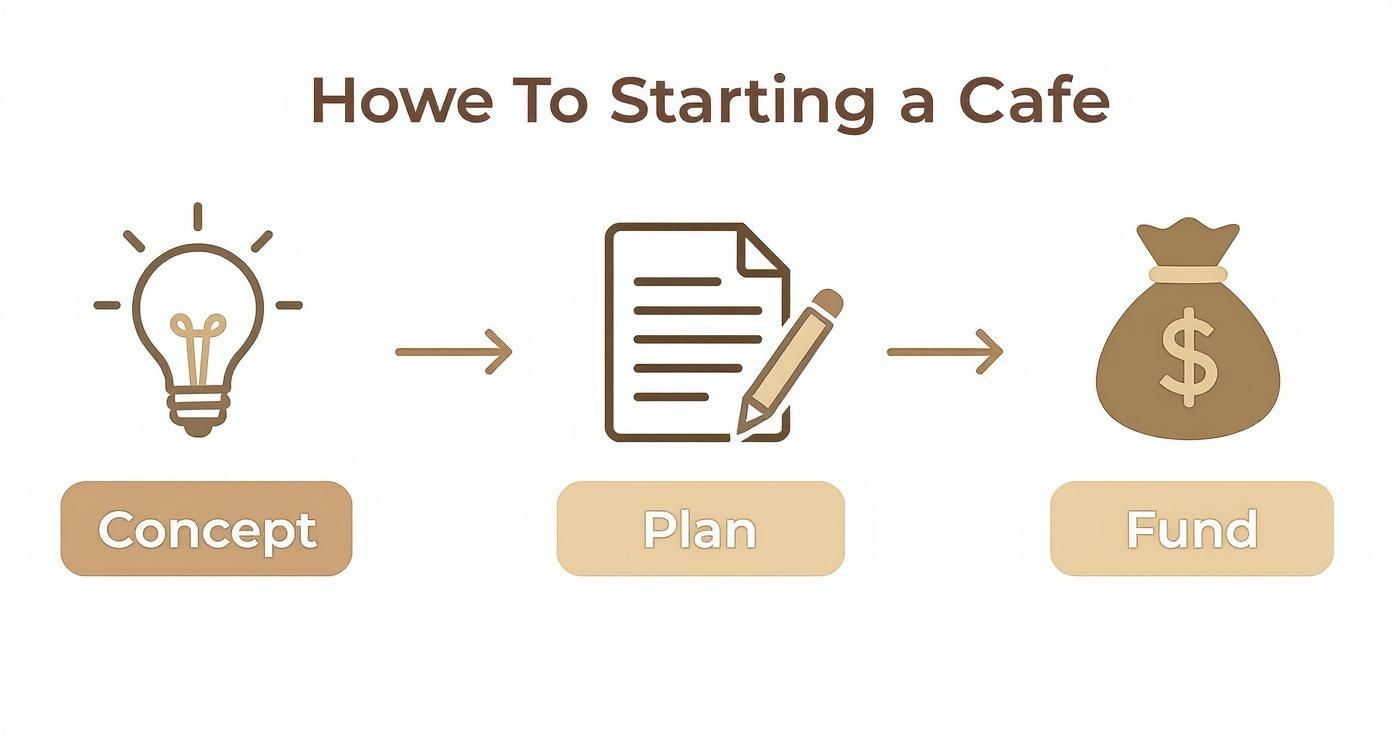
This flow really drives home the point: a powerful idea and a detailed plan are what you need before you can attract investment and launch a successful cafe.
Defining Your Cafe Concept
Forget about espresso machines for a minute. The first real question you need to answer is: What kind of cafe will this be? Your concept is the soul of your business. It sets your brand's identity, defines your target audience, and gives you a fighting chance against the competition.
Are you picturing a cozy neighborhood spot with mismatched armchairs, a haven for freelancers and students? Or is it a sleek, modern espresso bar focused on speed and high-quality, single-origin brews for busy professionals on the go? Your concept needs to be specific and compelling. Think beyond just "a place that sells coffee."
To build a unique identity, you’ll want to nail down these elements:
- Target Audience: Get specific about who you want to serve. Is it college students, young families, remote workers, or tourists? Knowing your ideal customer shapes everything—your location, menu, prices, and atmosphere.
- Brand Vibe: What feeling do you want people to have when they walk in? Your brand could be rustic and warm, minimalist and clean, or quirky and artistic. This will influence your logo, your decor, and even your music.
- Unique Selling Proposition (USP): What makes you different? Maybe you’ll focus on locally sourced pastries, offer unique brewing methods like siphon or pour-over, or become a community hub by hosting events and workshops.
Crafting a Winning Business Plan
Your business plan is your roadmap. It’s not just some stuffy document you create for lenders; it’s a strategic guide that forces you to think through every single part of your business. A strong plan shows you've done your homework and you know how to handle the challenges ahead.
A critical part of this is figuring out your company’s legal and financial setup. Taking the time for exploring various business structures is essential. It helps you understand the benefits, costs, and risks of each option so you can make the right choice from day one.
Your plan needs several key parts. Start with an executive summary—a quick, punchy overview of your vision. Then, dive into a detailed company description that covers your mission and legal structure.
A common mistake I see is people treating the business plan as a one-time task just to get a loan. The most successful owners use it as an operational blueprint, constantly checking their progress against the goals and financial projections they set at the beginning.
Next, you'll need a thorough market analysis. This is where you identify your target customers, size up your competition, and explain how you'll carve out your own niche. From there, describe your day-to-day operations, including your staffing plan, supplier relationships, and workflow.
Finally, and this is the part investors care about most, create a detailed financial projection. Be realistic and base your numbers on solid research, not just wishful thinking.
Key Startup Cost Projections for a Cafe
To help with your financial projections, here’s a table breaking down the typical startup costs. Keep in mind, these are just estimates—your actual expenses will vary based on your location, concept, and the scale of your operation.
| Expense Category | Estimated Cost Range (USD) |
|---|---|
| Rent Security Deposit & First Month's Rent | $4,000 - $12,000 |
| Business Licenses and Permits | $500 - $2,000 |
| Professional Fees (Legal, Accounting) | $1,500 - $5,000 |
| Initial Inventory (Coffee, Milk, Food) | $3,000 - $6,000 |
| Point of Sale (POS) System | $1,200 - $3,500 |
| Espresso Machine & Grinders | $10,000 - $30,000 |
| Brewing & Kitchen Equipment | $5,000 - $15,000 |
| Refrigeration Units | $3,000 - $8,000 |
| Furniture, Fixtures, and Decor | $8,000 - $25,000 |
| Marketing and Grand Opening | $2,000 - $6,000 |
| Initial Working Capital (Contingency) | $10,000 - $20,000 |
This breakdown should give you a solid starting point for building out the financial section of your business plan and understanding the capital you'll need to secure.
Getting Your Funding and Managing Your Finances
You’ve got a fantastic concept and a business plan you’re proud of. Now comes the part that makes or breaks most cafe dreams: getting the cash together. Turning your vision into a funded reality isn't about crossing your fingers; it's about being strategic and really understanding your financial options. Your passion is what got you here, but a smart funding strategy is the engine that will actually get your doors open.
For many new entrepreneurs, the first thought is a traditional lender like a bank or credit union. These institutions are all about stability and minimizing risk. They will comb through your business plan, paying laser-sharp attention to your financial projections, market analysis, and, of course, your personal credit score. Be ready for them to grill you on your industry experience and what kind of collateral you can bring to the table.
Another fantastic option is an SBA (Small Business Administration) loan. These aren't handed out directly by the government. Instead, the SBA guarantees a portion of the loan, which makes banks see you as a much safer bet. This guarantee often translates into better terms and a lower down payment—a huge advantage when every dollar counts.
Exploring Alternative Funding Paths
If the traditional loan route doesn't feel right, don't sweat it. There are plenty of other creative ways to fund a compelling business like a cafe.
- Crowdfunding: Platforms like Kickstarter or Indiegogo can be incredibly effective. Instead of making your case to a single loan officer, you're pitching to your future customers and community. You can offer rewards like a year's worth of free coffee, exclusive merch, or the chance to name a signature drink to build early buzz and secure that initial capital.
- Angel Investors: These are high-net-worth individuals who invest their own money into startups in exchange for an equity stake. An angel investor often brings a lot more than just money; they can provide priceless mentorship and open doors with their industry connections.
- Friends and Family: This can be a wonderful source of support, but you absolutely have to handle it with care. Treat it like a formal business deal. Draft a legal loan agreement that clearly spells out the loan amount, interest rate, and repayment terms. This protects both your business and your personal relationships.
No matter which path you take, a killer pitch is non-negotiable. Your business plan is the script, but you need to be able to tell your cafe's story with genuine passion and clarity. Lenders and investors are funding the person just as much as they're funding the idea. A rock-solid business plan shows you’ve done your homework, and you can learn more about how to write a restaurant business plan to make sure yours is ready to impress.
Establishing Strong Financial Hygiene from Day One
Getting the funds is just the starting line. Your cafe's long-term health depends on sharp financial management from the moment that first check clears. Good financial habits are what separate the cafes that thrive from those that are always scrambling to make ends meet.
The absolute first thing to do is open a dedicated business bank account. Never, ever mix your personal and business finances. This one simple step will make bookkeeping, tax prep, and tracking your cafe’s financial health infinitely easier. It gives you a clean, clear record that’s essential for making smart decisions.
Next, get the right accounting software. Tools like QuickBooks, Xero, or Wave are built for small businesses and will help you track every dollar coming in and going out, manage payroll, and generate financial reports. Don't even think about trying to manage this with a spreadsheet—purpose-built software will save you a world of headaches and prevent costly errors.
A common trap for new owners is underestimating all the small, ongoing costs. Your budget needs to cover everything—not just the obvious big-ticket items like rent and payroll, but also the little things like credit card processing fees, software subscriptions, and even potential inventory spoilage.
Finally, create a detailed budget and stick to it. The financial projections in your business plan are your starting point, but your real-world operating budget needs to be a living, breathing document. Regularly compare your actual spending against your projections, hunt for areas where you can trim costs, and adjust as your business finds its rhythm. This discipline is the absolute bedrock of a financially healthy cafe.
Sorting Out Licenses, Permits, and Legal Stuff
Let's be honest—tackling the legal paperwork to open a cafe can feel like you're navigating a maze. But getting this part right, methodically, is completely non-negotiable if you want a smooth, legal opening. Trust me, overlooking a single permit can lead to crippling fines or, even worse, getting shut down before you’ve even pulled your first shot of espresso.
Think of this phase as building the legal scaffolding for your cafe. It’s definitely not the most glamorous part of the job, but without it, everything else you’ve worked so hard to build could come crashing down.
Getting Your Business on the Books
First things first, you need to make your business official. This all starts with registering your business name and choosing a legal structure.
Many new cafe owners go with a Limited Liability Company (LLC). It’s a popular choice because it provides personal liability protection, which creates a legal wall between your personal assets (like your house or car) and the business's debts. Once you’ve picked a structure, you'll need an Employer Identification Number (EIN) from the IRS. It’s basically a Social Security number for your business.
Essential Permits and Health Rules
With your business entity set up, the next layer is getting the specific permits you need to actually operate. This is where things can get tricky because requirements vary a lot from one city and state to the next. You’ll have to do your homework on local regulations.
Generally, you'll need a standard business license to operate in your town. Beyond that, the food service world has its own set of critical approvals.
- Food Handler's Permit: Anyone on your team who touches food or drinks will almost certainly need to pass a food safety course to get this certification.
- Health Department Permit: Your local health department will conduct a thorough inspection of your space. They'll scrutinize your layout, equipment, and food storage plans to make sure everything meets strict public safety standards. This is often the toughest inspection you'll face.
- Certificate of Occupancy: This document is proof that your building is safe for the public and meets all zoning laws and building codes for a place that serves food.
Here’s a piece of advice from experience: start the health department application process as early as you possibly can. Their review and inspection schedules can be long, and you don’t want that to be the one thing holding up your grand opening.
Why Business Insurance Is Non-Negotiable
While permits give you permission to open your doors, insurance is what protects you when things go wrong. A single accident—a customer slipping on a mopped floor or an employee getting a burn from the espresso machine—could spiral into a financial disaster without the right coverage.
To properly shield your cafe from these kinds of risks and legal headaches, getting comprehensive business insurance is a must-do. For a cafe, this typically means a few key policies:
- General Liability Insurance: This is your foundational policy. It covers claims if someone gets hurt or their property is damaged at your cafe.
- Commercial Property Insurance: This protects your physical stuff—the building (if you own it), your expensive espresso machine, inventory, and furniture—from things like fire, theft, or vandalism.
- Workers’ Compensation Insurance: If you have employees, this is required by law in most states. It covers medical bills and lost wages for any employee who gets injured on the job.
Getting all this legal and insurance paperwork sorted out early is one of the smartest things you can do. It gives you peace of mind and makes sure your dream cafe is built on a secure, compliant foundation.
Choosing a Location and Designing Your Space
Your cafe's location is easily one of the biggest decisions you'll make. It can single-handedly make or break your business, and it’s about so much more than just picking a spot in a “good neighborhood.” The right space becomes a magnet for your ideal customers, while the wrong one can cripple even the most brilliant cafe concept.
Think of your location as the physical stage for the entire experience you’ve mapped out in your business plan. It has to be easy for your target audience to get to, visible enough to catch the eye of passersby, and convenient enough to become part of their daily routine. I've seen charming spots tucked away on quiet side streets that looked perfect but ultimately failed because they lacked consistent foot traffic. You can't afford that struggle.
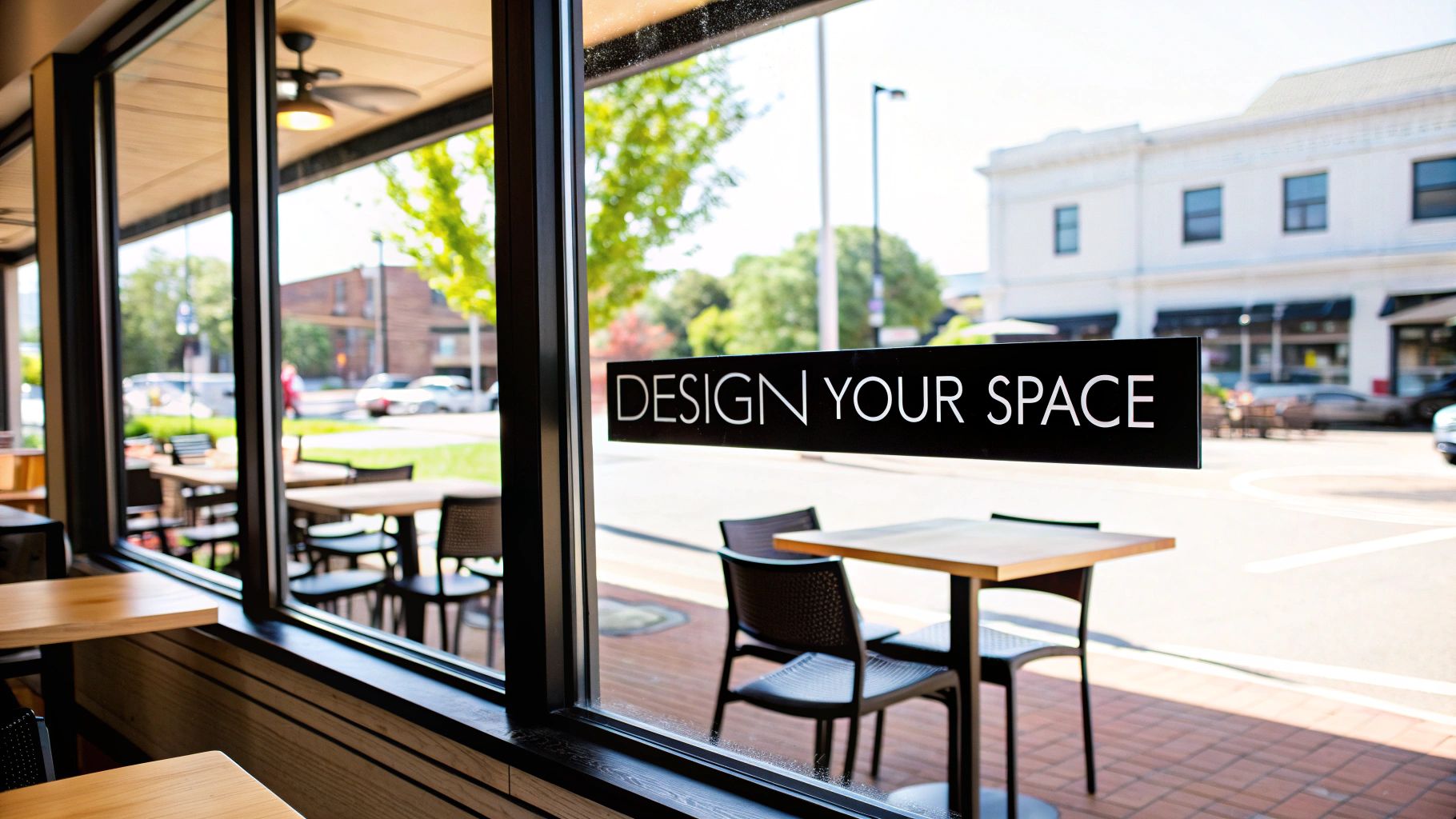
Scouting the Perfect Cafe Location
When you start scouting, you need to look at potential locations with a strategic eye. Don't just pop in for a visit on a quiet Tuesday afternoon. You have to spend real time there—during the morning rush, over the lunch hour, and on weekends. This is the only way to get a true feel for the area’s rhythm and the actual flow of potential customers.
Here's what you should be laser-focused on:
- Foot Traffic Analysis: Who is actually walking by? Are they office workers grabbing a quick coffee, students looking for a study spot, or families out for a stroll? Your observations here absolutely must align with the target customer you defined earlier.
- Visibility and Accessibility: Can people see your storefront from the main road? Is it simple for someone with a stroller or wheelchair to get inside? Good visibility is free marketing. Don't underestimate it.
- Parking and Transportation: In a suburban area, convenient parking is non-negotiable. If you're in a city, being close to public transit stops or bike lanes is a massive advantage.
- Local Competition: Don't just count the other coffee shops. Go sit in them. Analyze what they're doing well and, more importantly, where the gaps are that you can fill. A nearby competitor isn't always a deal-breaker; sometimes a cluster of cafes can create a "coffee district" that draws everyone in.
Navigating Commercial Lease Agreements
Once you find a spot that feels right, the next hurdle is the commercial lease. These documents are usually long, complex, and written to protect the landlord, not you. Rushing this part of the process is a rookie mistake that can cost you dearly down the road. I can't stress this enough: have a lawyer who specializes in commercial real estate review any lease before you even think about signing.
Pay extremely close attention to clauses covering rent increases, who is responsible for maintenance (HVAC repairs can be a killer), and any restrictions on your operating hours or signage. Negotiating a few months of free rent to cover your build-out period can be a lifesaver for your initial cash flow. A well-negotiated lease sets you up for long-term stability.
One of the most critical but often overlooked lease clauses is the "exclusive use" provision. This prevents the landlord from renting another space in the same building to a direct competitor, protecting your business from having another cafe open up right next door.
Designing a Space That Sells
With the keys finally in hand, your focus shifts from securing the space to shaping it. The design of your cafe is the physical manifestation of your brand. It’s where your vibe and personality come to life.
Your first priority has to be a functional layout. I've been in beautifully designed cafes where the workflow was so bad that service was painfully slow. An inefficient layout will frustrate your staff and create a poor customer experience, plain and simple. Map out the path from the counter to the espresso machine to the pickup area. Make sure your baristas have everything they need within arm's reach to work quickly without bumping into each other.
Beyond pure function, your design choices create the atmosphere. The right coffee shop interior design elements all work together to make your space memorable. Think about how lighting, furniture, music, and decor can reinforce your brand identity. Warm, ambient lighting and comfy chairs might encourage customers to linger and buy that second pastry. A minimalist setup with high-top tables, on the other hand, might cater to a quick grab-and-go crowd. Every single detail contributes to the story you’re telling.
6. Building Your Menu and Getting the Right Gear
Alright, let's get to the fun part—the stuff your customers will actually taste and see. Your menu and equipment are the heart and soul of your cafe. A killer menu brings people in the door and keeps them coming back, while the right equipment makes sure you can deliver on your promises, day in and day out. These two things are completely tied together: your menu tells you what gear you need, and your equipment can inspire new, creative additions to your menu.
This is where your cafe's personality really starts to take shape. Your menu is your story. Is it about rare, single-origin espressos? Or is it about creating a cozy vibe with classic lattes and fresh-baked pastries? This is the first and most direct way your customers will experience what you're all about.
Designing a Menu That’s Both Delicious and Profitable
First things first, you need to nail down your core offerings. What’s the star of the show? For most cafes, it’s coffee. You'll need to lock in a house espresso blend, figure out your drip coffee options, and maybe even offer a rotating single-origin bean for the real coffee aficionados who love a good pour-over.
Finding a quality coffee roaster you can build a real relationship with is non-negotiable. Look for a local or regional partner whose vibe and values match yours. A great roaster is more than just a supplier; they can provide training for your team, offer support when you need it, and deliver consistently amazing beans that will become the cornerstone of your brand. Don't get fixated on the lowest price—consistency and quality are what build a loyal following.
Once your coffee program is solid, it's time to think about smart additions. Consider adding:
- Teas and Alternative Lattes: High-quality loose-leaf teas, matcha lattes, and golden milk are huge draws for customers who aren't in the mood for coffee.
- Specialty and Seasonal Drinks: A rotating menu with specials like a pumpkin spice latte in the fall or a lavender honey latte in the spring creates buzz and gives regulars a reason to visit more often.
- Simple Food Offerings: You don't need a full kitchen to boost your sales. Partnering with a great local bakery for pastries, muffins, and croissants is a no-brainer. Simple items like pre-made sandwiches or avocado toast can also seriously increase your average ticket size.
The demand for coffee is massive—globally, people drink around 2.6 billion cups every single day. For anyone opening a cafe, it’s crucial to know that the out-of-home coffee market is projected to hit a staggering $376.70 billion, completely dwarfing what people spend on coffee to make at home. This just proves how vital cafes are as "third places" for people to meet, work, and socialize. Plus, younger crowds like Gen Z are getting into coffee earlier and are always on the lookout for cafes with unique specialty brews and plant-based milk options. Keeping your menu fresh is a must. You can find more expert insights on these coffee market trends on gourmetpro.co.
Costing Every Single Item for Maximum Profit
A delicious menu is great, but a profitable one is what keeps the lights on. You have to calculate the cost of goods sold (COGS) for every single thing you sell. I mean everything—from the espresso shot and the milk down to the sugar packet and the cup itself.
A good rule of thumb in the industry is to aim for a food cost percentage between 20-30%. So, if that signature latte costs you $1.15 in total ingredients to make, you should be pricing it somewhere between $3.85 and $5.75 to make a healthy profit.
Getting this detailed with your costing helps you instantly see which items are your profit powerhouses (your "stars") and which ones aren't pulling their weight. You can then use simple menu design tricks, like placing your highest-margin items in the most visible spots, to gently nudge customers toward your most profitable offerings.
Sourcing the Right Equipment for Your Cafe
Once your menu is locked in, you can finally build your equipment list. This is one of your biggest investments, so you need to choose wisely. The gear you pick has to be reliable, efficient, and ready to handle the volume you’re planning for.
The Essentials Checklist Here are the absolute non-negotiables you're going to need:
- Commercial Espresso Machine: This is the centerpiece of your whole operation. Look for a two- or three-group machine from a trusted brand like La Marzocco or Slayer.
- Espresso and Drip Grinders: You absolutely need separate, high-quality burr grinders for your espresso and drip coffee to keep the quality high.
- Drip Coffee Brewer: A good batch brewer is a lifesaver for handling those hectic morning rushes.
- Refrigeration: This includes an under-counter fridge for milk, a reach-in for food and other ingredients, and maybe a nice glass display case for your pastries.
- Ice Machine: Don't sleep on this one. You’ll go through a ton of ice for cold drinks, and you need a reliable source.
- Point of Sale (POS) System: A modern POS like Square or Toast is essential for taking payments, tracking sales, and managing inventory.
- Dishwasher and Sinks: Health codes will require a commercial-grade dishwasher and a three-compartment sink, so make sure you have them.
To make sure you don't forget anything, we've put together a more detailed list. Check out our complete coffee shop equipment checklist.
Buying New, Used, or Leasing Your Gear
How you get your equipment will come down to your startup budget. Each path has its own clear pros and cons.
| Acquisition Method | Pros | Cons |
|---|---|---|
| Buying New | Full warranty, latest tech, super reliable, often more energy-efficient. | Highest upfront cost, eats up a lot of capital. |
| Buying Used | Lower initial cost, can be a great deal if you buy from a reputable source. | No warranty, higher risk of breaking down, might be less efficient. |
| Leasing | Low upfront cost, predictable monthly payments, maintenance is often included. | Costs more in the long run, and you don't own it at the end. |
A lot of new owners go with a hybrid strategy that works really well: they'll splurge on a brand-new, top-of-the-line espresso machine (since it's the most critical piece of equipment) but save money by buying used refrigeration and worktables. Leasing can be a fantastic move if your startup cash is tight, as it lets you hold onto more of your money for those crucial first few months of operating expenses.
Hiring a Team and Marketing Your Grand Opening
Your cafe's success won’t just come from the quality of its coffee or the comfort of its chairs; it'll be built by the people who bring the space to life every single day. Your baristas are so much more than employees—they are the face, soul, and personality of your brand.
Once you’ve got that amazing team in place, it’s time for your next mission: creating some serious buzz for your launch to guarantee a line out the door from day one. This is where your vision finally becomes a vibrant, living space filled with energy and happy customers.
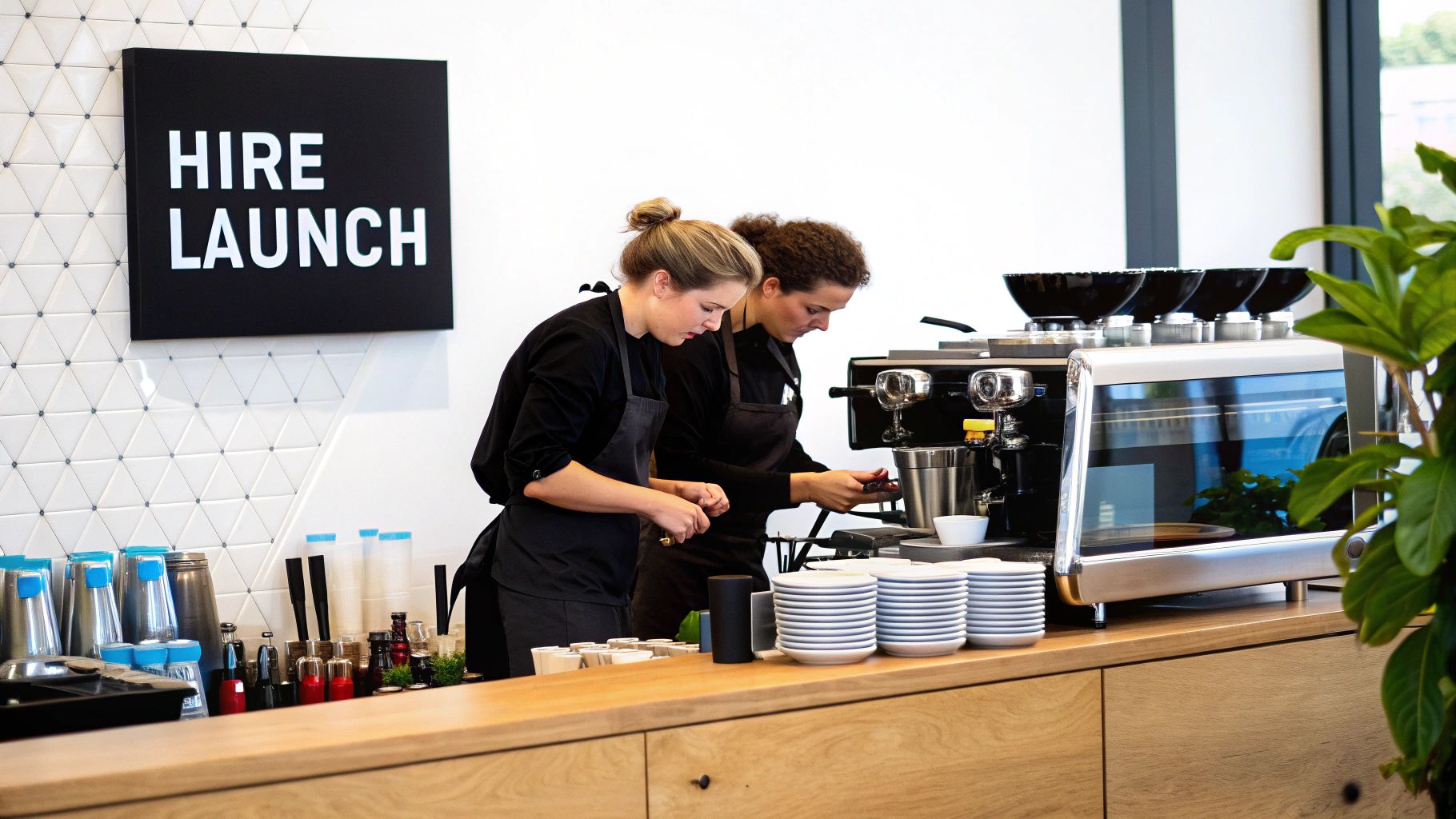
Assembling Your Passionate Cafe Crew
Hiring the right people is about so much more than finding someone who knows their way around an espresso machine. You're searching for individuals who radiate warmth, connect with people effortlessly, and genuinely believe in the experience you’re trying to create.
Honestly, a technically skilled barista with a bad attitude can do more damage than an enthusiastic newcomer who just needs a little training.
When you sit down to write your job descriptions, go beyond a simple laundry list of duties. Use language that captures your cafe's brand and culture. Instead of a sterile phrase like "makes coffee," try something with more personality, like "crafts exceptional coffee experiences and builds relationships with our guests." This small shift attracts candidates looking for more than just a paycheck.
During interviews, ask questions that get to the heart of their personality and problem-solving skills:
- "Tell me about a time you turned a customer's bad day around."
- "What does great hospitality mean to you, personally?"
- "If a customer orders something we don't have, how would you handle it?"
These kinds of questions tell you far more about a candidate's potential than just asking them to list their previous jobs. You're looking for passion, a positive attitude, and a genuine desire to serve others—you can teach the rest.
Crafting a Winning Training Program
Once your team is hired, a solid training program is what will mold them into a cohesive unit that delivers excellence, every single time. Don't just show them how to make drinks; immerse them in your brand's story and your standards for customer service.
A great training plan should cover three key areas:
- Technical Skills: This is everything from dialing in the espresso grinder and proper milk steaming techniques to mastering your POS system and daily cleaning routines. Consistency here is non-negotiable.
- Product Knowledge: Your team should be able to confidently explain the flavor notes of your single-origin coffee, describe the ingredients in your pastries, and make informed recommendations.
- Customer Service Philosophy: This is the most important part. Role-play different scenarios, empower your staff to solve problems on their own, and instill the idea that their job is to make every person feel welcomed and valued.
Building Buzz Before You Even Open
Your grand opening marketing shouldn't start on opening day—it needs to begin weeks, or even months, in advance. The goal is to build a community of eager fans who are literally counting down the days until they can visit.
A modern, multi-channel marketing plan is the way to go for a successful launch. Start by creating social media profiles on platforms like Instagram and Facebook. Post behind-the-scenes photos of the renovation, introduce your new team members, and share sneak peeks of your menu. This builds anticipation and makes people feel like they're part of the journey from the very beginning.
The cafe business is a complex world where success depends on more than just good coffee; it's shaped by how efficiently you run things and your ability to connect with the community. While independent coffee shops currently hold a majority market share at 53.2%, chain franchises are expanding fast. This makes a strong, community-focused launch even more critical for standing out. You can dive deeper into expert insights on the state of the coffee industry on FreshCup.com.
A powerful pre-launch tactic is running a simple giveaway. Offer a prize like "free coffee for a month" to people who follow your page and sign up for your email list. This helps you build a direct line of communication with your most excited future customers.
Executing a Memorable Grand Opening
Your grand opening event really sets the tone for your business. You want to make it an experience people will be talking about for weeks.
Consider these strategies for a blockbuster opening day:
- Collaborate with Local Influencers: Invite local food bloggers or community influencers for a private preview event the day before you open to the public. Their posts will generate immediate, authentic buzz.
- Offer an Irresistible Promotion: A simple "first 50 customers get a free coffee" or a "buy one, get one free" deal can create that coveted line out the door, which is powerful social proof.
- Create a Festive Atmosphere: Have live music, offer samples of your best pastries, and make sure your team is energized and ready to welcome everyone with a smile. The goal is to create a memorable, positive first impression that turns one-time visitors into lifelong regulars.
At The Restaurant Warehouse, we understand that equipping your dream cafe is a major step. From top-tier espresso machines and refrigeration to the worktables where your team will create magic, we provide durable, affordable equipment to bring your vision to life. Explore our extensive catalog and flexible financing options to get your cafe started on the right foot at https://therestaurantwarehouse.com.
About The Author

Sean Kearney
Sean Kearney is the Founder of The Restaurant Warehouse, with 15 years of experience in the restaurant equipment industry and more than 30 years in ecommerce, beginning with Amazon.com. As an equipment distributor and supplier, Sean helps restaurant owners make confident purchasing decisions through clear pricing, practical guidance, and a more transparent online buying experience.
Connect with Sean on LinkedIn, Instagram, YouTube, or Facebook.