

Coffee Shop Interior Design: A Practical Guide
Before you even glance at a paint swatch, let's talk about the real foundation of your café. A great interior isn't just about looking good—it's about creating an atmosphere that is your brand. Truly effective coffee shop interior design translates your vision into a physical experience. Every single choice, from the layout of the tables to the color of the mugs, should work together to tell your story and make customers feel instantly welcome.
Start with Your Coffee Shop's Brand Identity
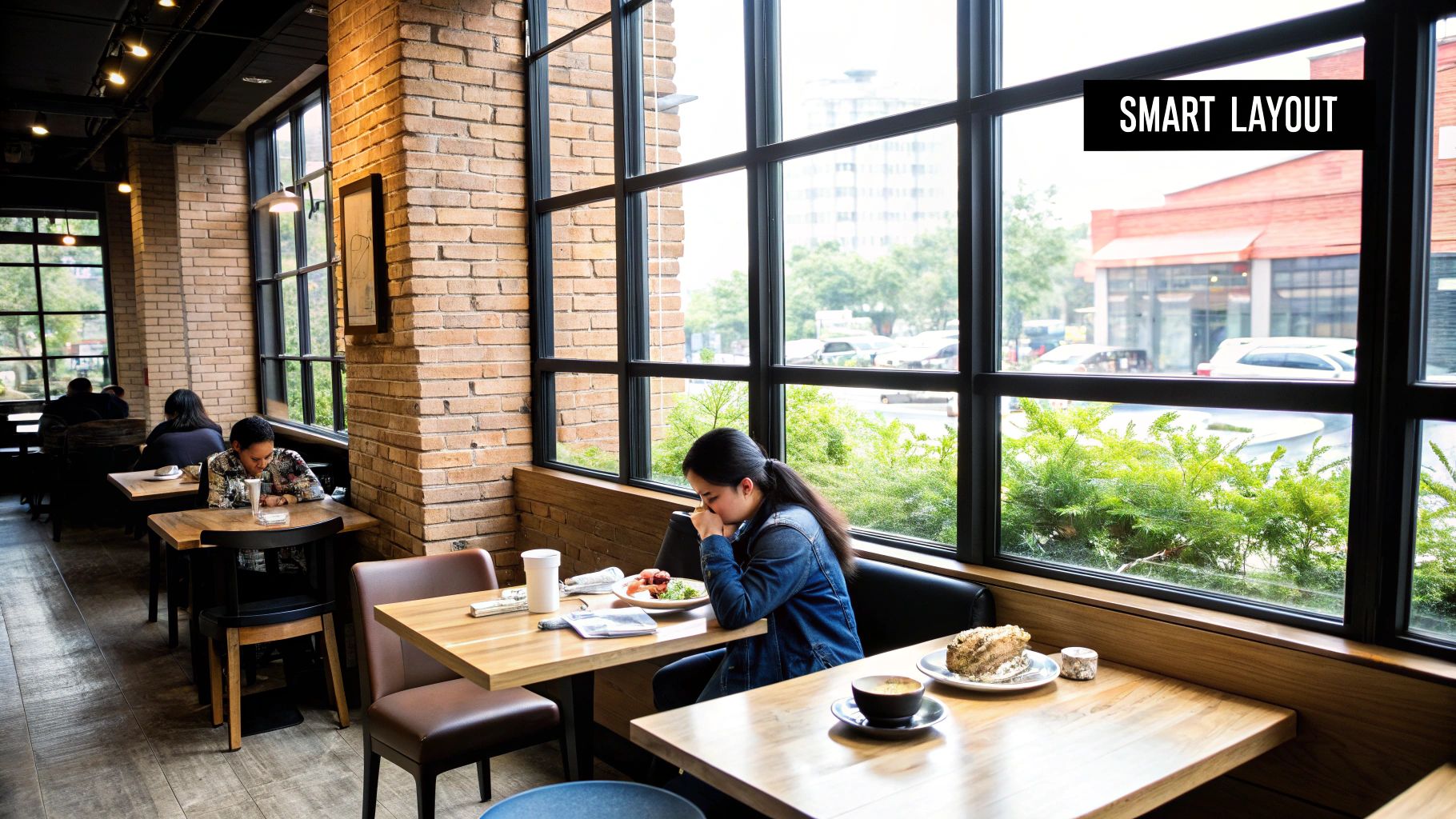
Before a single chair is chosen, your shop's design must become an authentic extension of its brand. Think of it as the shop's personality. Is it buzzy and modern, or quiet and rustic? This core identity will be your north star, guiding every decision you make down the line.
The first step is to get crystal clear on who you're serving. A design that works for university students cramming for exams will look completely different from a space meant for families on a weekend outing.
- For Students: You'll need ample power outlets, rock-solid Wi-Fi, and a good mix of seating for solo studiers and small groups.
- For Professionals: A sleek, efficient layout is key for quick grab-and-go service, paired with a sophisticated and clean aesthetic.
- For Community Gatherings: Think big. Large communal tables and comfy lounge areas create a welcoming vibe that encourages people to stick around.
Tell a Story That Connects
Your brand story is the narrative that helps customers connect with your space on an emotional level. It’s the "why" behind what you do. Are you a third-generation coffee roaster carrying on a family tradition? That story could come to life with vintage photos, heirloom equipment on display, and warm, traditional materials.
Or maybe your story is about showcasing sustainable, single-origin beans. In that case, your design should reflect it with elements like reclaimed wood, tons of greenery, and an earthy color palette. Building a business from the ground up is a massive undertaking, and this checklist for opening a restaurant offers a solid framework that covers all the essential steps.
Build a Mood Board That Works
A mood board is your visual blueprint. This isn't just about pinning pretty pictures; it’s a strategic tool to lock in your aesthetic. Gather images that capture the feeling you want to create. Zero in on textures, colors, lighting, and furniture that tell your brand story.
A well-curated mood board ensures everyone is on the same page. It becomes the go-to reference for you, your designer, and your contractor, making sure the vision stays consistent and preventing expensive design mistakes.
As you start shaping your vision, exploring various creative coffee shop design ideas can spark some fantastic inspiration. Nailing down your identity is the foundational step that transforms a simple cafe into a destination people remember and return to.
Plan Your Coffee Shop Layout for Better Flow
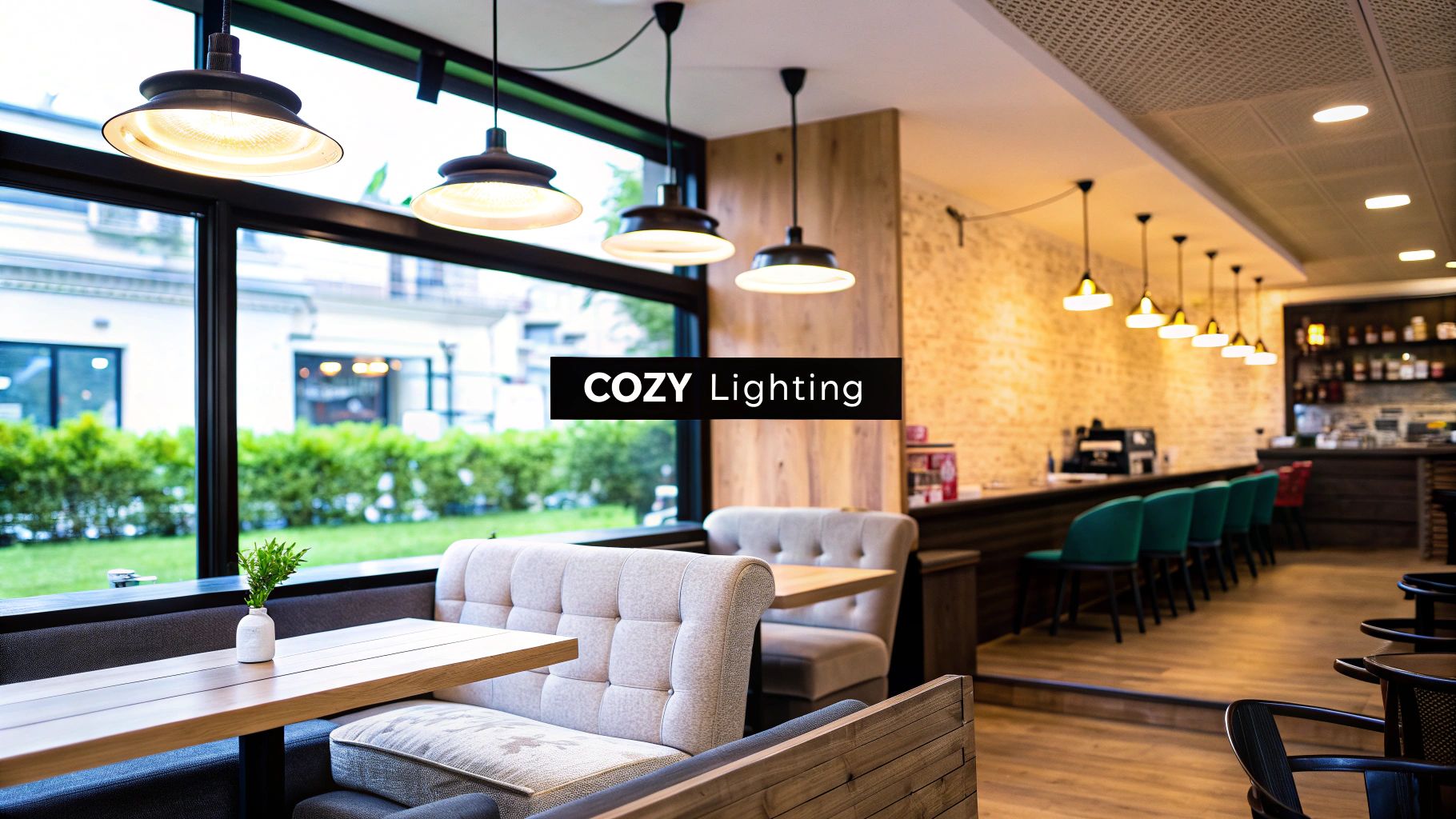
A great layout is the invisible engine that makes a coffee shop feel right. It’s the difference between a frustrating, cramped experience and one that feels completely effortless for both your customers and your staff. This isn't just about fitting in furniture; it’s about choreographing movement and creating a seamless journey from the moment someone walks in.
Your floor plan should be a strategic guide, leading customers from the door to the counter, over to the pickup area, and finally to a seating spot without creating awkward logjams. Think about the natural path people will instinctively take. A clear, intuitive flow cuts down on confusion and keeps the line moving—something that’s absolutely critical during that morning rush.
Map Out Your Cafe's Essential Zones
Every successful coffee shop design is built around distinct, functional zones. Each area has a specific job to do, and getting them to work together in harmony is the secret to operational success. You have to consider how these different spaces will interact.
- Ordering Counter: This is your main point of sale and the first big interaction. It needs to be visible, welcoming, and have enough space for your menu and payment terminals without feeling cluttered.
- Barista Workspace: Efficiency is everything here. Baristas need an ergonomic setup where coffee machines, grinders, milk steamers, and sinks are all logically placed to cut down on unnecessary steps.
- Customer Seating: This is where your brand's atmosphere truly comes alive. Make sure to offer a variety of seating arrangements—small tables for two, communal tables for groups, and comfy soft seating for those looking to relax.
- Back-of-House: This area includes your storage, dishwashing, and any office space. While it's hidden from customers, its layout has a direct impact on your team's ability to keep the front-of-house running smoothly.
An efficient barista station really is the heart of your operation. For a deeper dive into optimizing this critical area, check out these essential restaurant kitchen design tips that apply perfectly to a cafe environment.
Create Spaces for Every Customer
Modern coffee shops have become multi-purpose venues, and your layout needs to reflect that. You've got to accommodate everyone, from the solo remote worker hunting for an outlet to a group of friends catching up. One of the biggest shifts we're seeing is the move toward flexible layouts that are tailored to this diverse customer base.
By creating distinct zones for quiet work, relaxed socializing, and quick take-away service, you can cater to everyone’s needs. In fact, research shows that well-defined zones with plenty of power outlets can increase how long customers stay by up to 30%, which in turn boosts the average spend per visit.
Finally, never, ever overlook accessibility. Your design must be compliant with the Americans with Disabilities Act (ADA), which means ensuring there are clear pathways, accessible restrooms, and appropriate counter heights. A welcoming space is an inclusive one, and thoughtful design ensures every single customer feels comfortable and valued from the moment they arrive.
Adapting Your Design for Different Formats
A coffee shop isn't always a sprawling space with couches and bookshelves. Your business model might call for a compact kiosk, a nimble coffee cart, or a breezy outdoor patio. While the core principles of branding and flow remain the same, the execution has to be tailored to the specific format. Each setup comes with its own set of constraints and opportunities, challenging you to get creative with how you bring your brand to life. The key is to make smart, strategic choices that maximize your specific space, whether it's a few square feet in a busy hallway or a sun-drenched corner of a courtyard.
Small Kiosks
Small kiosks are all about making a big impression in a tiny footprint. Since you're often competing for attention in a busy mall or office lobby, your design needs to be a showstopper. Think bold materials like solid wood, sleek stone, or powder-coated metals to create a look that’s both eye-catching and professional. Functionality is just as critical. Every inch of your kiosk must be meticulously planned for an efficient workflow, from where you store your cups to how the barista moves. This means selecting compact, high-performance equipment, like under-counter refrigerators, that can handle the rush without hogging precious space. Your kiosk is a self-contained world, and its design must be a masterclass in efficiency and style.
Mobile Coffee Carts
When your coffee shop is on wheels, your design has to be incredibly intuitive and efficient. A mobile cart has no room for confusion; the customer journey from ordering to pickup needs to be seamless and fast. Your layout must cleverly integrate the menu, payment system, and service area into a compact, logical flow. Think of the cart itself as a three-dimensional business card. Its design is your primary marketing tool, so it needs to be memorable and clearly communicate your brand's personality at a glance. Everything must be built for the road, with durable materials and equipment that can withstand constant movement while still delivering a top-notch product.
Outdoor Cafes
An outdoor cafe's success hinges on creating a comfortable oasis that invites people to sit and stay. Your main challenge is to define the space and make it feel cozy, even without walls. Smart seating arrangements are your best friend here; use smaller tables or line benches along walls to make the most of every square foot. A practical layout will guide customers through the space naturally, preventing awkward crowding. You also have to plan for the elements with weather-resistant furniture, ample shade from umbrellas or awnings, and good lighting for evening service. The right equipment, like durable stainless steel prep tables for an outdoor service station, ensures your operations run smoothly, rain or shine.
Find a Coffee Shop Interior Design Style That Tells Your Story
Your coffee shop’s design style is its personality made visible. It's the silent storyteller in the room. Long before a customer takes their first sip, the interior is already telling them what to expect. This is where you move past the technical floor plan and start injecting real character and soul into your space.
A well-chosen aesthetic doesn't just look good; it acts as a magnet for your ideal crowd. It’s the critical difference between being just another cafe and becoming a go-to destination.
How to Pinpoint Your Signature Style
Picking a style isn't about scrolling through Pinterest and grabbing whatever is trendy this week. It’s about understanding the real psychological impact your design choices will have on people. Different aesthetics stir up different feelings and, frankly, attract completely different types of customers.
Let's break down a few popular styles and the vibe they create:
- Industrial: Think exposed brick, raw ductwork, and polished concrete floors paired with metal fixtures. It has an energetic, urban, and slightly unfinished feel. This is a perfect fit for a shop in a bustling downtown area, catering to a fast-paced professional crowd that’s grabbing coffee on the go.
- Scandinavian: This style is all about clean minimalism, function, and bathing the space in natural light. You’ll see lots of light-toned woods, simple lines, neutral colors, and zero clutter. A Scandinavian design fosters a calm, focused atmosphere that’s practically tailor-made for remote workers and students.
- Biophilic: This approach is all about blurring the lines between indoors and outdoors. It’s heavy on plants, natural materials like wood and stone, and massive windows. The goal is to create a restorative, peaceful vibe that makes people want to unplug, relax, and linger for a while.
The key is to land on a style that feels like a natural extension of your brand’s story. When it all clicks, you create a cohesive and unforgettable experience.
Choosing the right design style is crucial for creating a space that resonates with your target audience. This table breaks down four popular styles to help you see which one best aligns with your coffee shop's brand and vision.
Popular Coffee Shop Styles to Inspire You
| Style | Key Characteristics | Common Materials | Atmosphere Created |
|---|---|---|---|
| Industrial | Exposed structural elements, raw textures, open layouts, neutral color palette with bold accents. | Brick, concrete, steel, reclaimed wood, leather. | Urban, edgy, energetic, and creative. Great for high-traffic areas. |
| Scandinavian | Minimalism, clean lines, functionality, abundant natural light, focus on "hygge" (coziness). | Light woods (birch, pine), white walls, wool, felt, simple ceramics. | Calm, bright, focused, and uncluttered. Ideal for work and study. |
| Biophilic | Integration of nature, extensive use of plants, natural light, organic shapes, earthy tones. | Wood, stone, bamboo, living walls, water features. | Restorative, tranquil, and grounding. Encourages relaxation and lingering. |
| Mid-Century Modern | Organic curves, simple forms, functionality over ornamentation, connection to nature. | Teak, walnut, plastic, vinyl, bold geometric patterns. | Nostalgic, sophisticated, and artistic. Appeals to design-savvy customers. |
Each style offers a unique way to tell your brand's story through your physical space. The right choice will not only attract your ideal customer but also make them feel right at home.
Minimalist
Minimalist design is built on the principle of "less is more." It uses simple, clean lines and a neutral color palette to create a space that feels open, calm, and completely uncluttered. This style is a magnet for students and remote workers who are looking for a peaceful spot to concentrate without distractions. Think functional furniture, smooth surfaces, and an absence of fussy decorations. The beauty of minimalism is in its intentionality—every single item has a purpose. This approach not only creates a serene atmosphere but also makes cleaning and maintenance a breeze, which is a huge operational win for any busy shop.
Rustic
A rustic design instantly makes people feel at home. It leans heavily on natural materials like reclaimed wood, exposed stone, and warm, soft lighting to build a cozy and inviting atmosphere. This is the perfect style for a neighborhood spot where customers come to unwind, catch up with friends, and stay for a second cup. The goal is to create a space that feels authentic and lived-in, with comfortable seating and handcrafted details. A rustic interior encourages people to slow down and relax, turning a quick coffee run into a longer, more memorable visit.
Vintage Industrial
Vintage industrial design pulls inspiration from old factories and warehouses, creating a look that’s both edgy and full of character. It’s defined by raw, unfinished textures like exposed brick walls, visible ductwork, and polished concrete floors. This style is incredibly durable and practical for high-traffic areas, making it a smart choice for a busy urban cafe. The aesthetic is perfectly complemented by sturdy, functional pieces, and the clean lines of stainless steel refrigerators and prep tables fit right in. It appeals to a creative, city-dwelling crowd that appreciates a space with a bit of history and a lot of personality.
Elegant and Luxurious
An elegant and luxurious design is about creating a premium, memorable experience from the moment a customer walks in. This style focuses on high-end aesthetics, using rich materials like marble countertops, velvet seating, and polished brass or gold fixtures. The lighting is often soft and ambient, and the decor is sophisticated and carefully curated. This approach isn't just about looking expensive; it's about making customers feel pampered and special. It’s a perfect match for a shop offering specialty brews and artisanal pastries, attracting a clientele that values a refined atmosphere and is willing to pay for a top-tier coffee experience.
Create a Cohesive Look
Once you’ve picked a direction, consistency is everything. Every single choice—from the biggest piece of furniture down to the texture of your menus—needs to echo that core aesthetic. A mismatched design just feels chaotic and confusing, and customers can sense it immediately.
A consistent style builds brand recognition and trust. When every detail reflects your core identity, customers feel a stronger connection to your space, making them more likely to return and recommend your shop to others.
The global coffee shop market is on track to hit nearly $290 billion by 2032, which means competition is only getting tougher. A unique and memorable customer experience is no longer optional. In fact, shops that lean into distinct design trends, like biophilic and sustainable elements, have seen up to a 20% bump in repeat customer visits. This data proves that your coffee shop's interior design is a powerful driver of business growth. You can dive deeper into the coffee shop market on stellarmr.com.
Take a look at how different seating can shape the feel of a minimalist space.
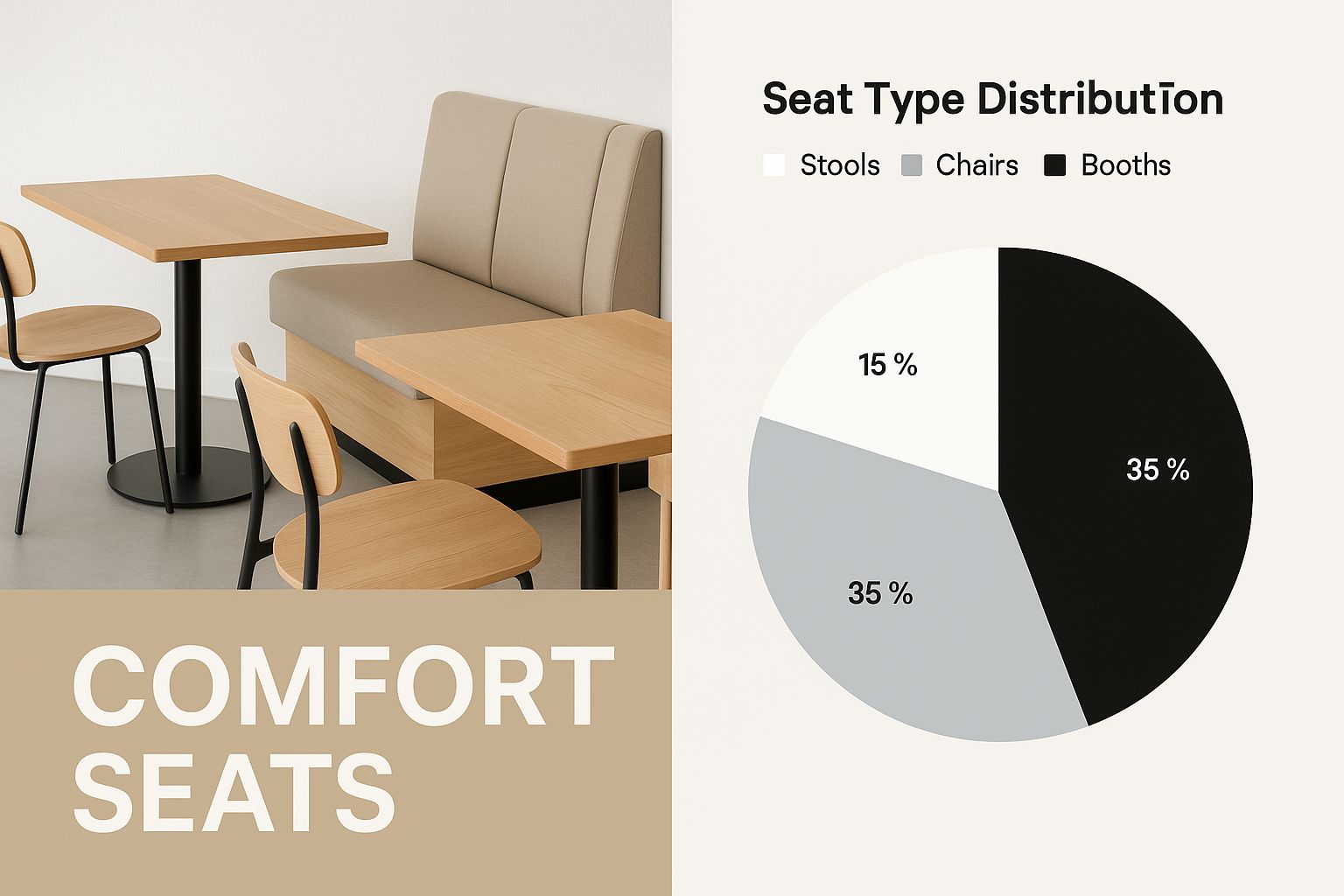
The image shows a smart mix of seating—stools for quick visits, chairs for pairs, and comfy booths for groups. This kind of strategic variety makes your design not just stylish but also incredibly functional for all sorts of customers. By choosing an interior style that tells your story and weaving it through every detail, you can transform your café from just a place that sells coffee into a beloved community hub.
Creative Concepts to Make Your Shop Unique
With a solid style in mind, you can start layering in creative concepts that will make your coffee shop truly one-of-a-kind. This is where you can really have fun and build a space that people talk about long after they’ve finished their latte. A unique concept is more than just a gimmick; it’s a memorable hook that sets you apart from the competition and gives customers a reason to choose you. It’s about creating an experience, not just a transaction. These ideas can be woven into any design style to add depth, character, and a compelling story that sticks with your guests.
Adaptive Reuse
One of the most powerful ways to create a space with instant character is through adaptive reuse. This approach involves transforming an old, unconventional building—like a historic bank, a retired fire station, or an industrial warehouse—into a modern coffee shop. Instead of building from scratch, you’re breathing new life into a structure with a past. This method not only preserves a piece of local history but also gives your shop a built-in narrative. Imagine keeping the original vault door in an old bank or using the fire pole as a design feature. These unique elements become natural conversation starters and make your space unforgettable, as seen in many stunning architectural projects.
Location-Based Themes
Your coffee shop doesn't exist in a vacuum, so why not let its surroundings inspire the design? A location-based theme creates a powerful connection to your neighborhood and makes your shop feel like an authentic part of the community. If you’re setting up near the coast, you could incorporate subtle nautical elements like shiplap walls, rope details, and a color palette of blues and whites. For a shop in a historic downtown district, you might reflect the area's architectural style with vintage-inspired lighting and classic molding. This approach makes your business feel rooted and intentional, showing customers that you care about the community you're serving.
Sustainable and Eco-Friendly Design
More than ever, customers are drawn to businesses that share their values. An eco-friendly design shows a commitment to sustainability that can resonate deeply with your target audience. This concept goes beyond just adding a few plants. Think about using reclaimed wood for your countertops, sourcing furniture from local artisans, or installing a living wall to purify the air. You can also make a significant impact by choosing energy-efficient equipment. Selecting the right commercial refrigerators and freezers can lower your carbon footprint and your utility bills. A sustainable design creates a warm, inviting atmosphere that feels good in every sense of the word.
Coffee-Inspired Elements
What better source of inspiration than the product you’re so passionate about? Designing your space around coffee itself creates a cohesive and immersive experience for your customers. You can pull from a rich, earthy color palette with shades of espresso brown, creamy latte, and deep cherry red. Textures can also play a huge role—think about using burlap accents reminiscent of coffee sacks or dark, polished wood that looks like a perfectly roasted bean. You could even commission a mural that tells the story of coffee, from bean to cup. This approach constantly reminds customers of the craft and care that goes into every drink you serve.
Choose the Right Furniture, Fixtures, and Lighting
This is where your vision starts to feel real. The furniture, fixtures, and lighting you choose are the tangible pieces your customers will see, touch, and interact with every single day. These elements are what truly bring your carefully crafted design concept to life.
But here’s the thing: they need to be more than just stylish. They absolutely must be durable, functional, and built for the grind of a busy commercial space. A beautiful chair that starts to wobble after a month is a waste of money, and a stunning countertop that stains easily will quickly become a constant headache. Making smart investments here is all about balancing the look you want with the practicality you need.
Pick Furniture for Comfort and Function
The furniture you pick directly tells customers how to use your space. A well-designed coffee shop offers a variety of seating to welcome everyone, from the solo remote worker needing an outlet to the group of friends catching up. This strategy doesn't just make your shop more inviting; it maximizes your capacity and broadens your appeal.
Think about creating different zones with a mix of seating:
- Soft Seating: Comfortable armchairs and plush sofas are perfect for creating cozy nooks where people can settle in with a book or have a long chat.
- Two-Tops: Small tables for two are essential. They give couples or solo guests their own little bubble of space.
- Communal Tables: Large, shared tables are fantastic. They foster a sense of community and are incredibly efficient for seating larger groups or multiple individuals during a rush.
- Bar Seating: Stools along a window bar or your main counter offer a great spot for people-watching or for customers just making a quick stop.
Choosing commercial-grade pieces is completely non-negotiable. I know residential furniture can look tempting and might even be cheaper, but it’s simply not designed to handle the high traffic of a coffee shop. For a deep dive into what to look for, this detailed guide to restaurant furniture is a great resource, covering the essentials of durability and material selection.
How Lighting Can Make or Break Your Vibe
Lighting is one of the most powerful tools in your design arsenal. Get it right, and your space feels warm and inviting. Get it wrong, and it can feel cold and sterile. A successful lighting plan uses layers to create depth, guide attention, and ensure every corner is functional. Think of it as painting with light, where each layer has a specific job to do.
Effective lighting isn't just about brightness; it's an art form. Understanding the deeper principles of architectural lighting design can help you sculpt the perfect ambiance for your coffee shop.
Start with your ambient lighting. This is the overall illumination for the space, often coming from recessed lights or large ceiling fixtures. It sets the base level of light.
Next, add task lighting. This is focused light for specific activities, like pendant lights hanging over the counter where baristas are working or reading lamps in a cozy lounge area.
Finally, bring in accent lighting. This is the fun part. Use spotlights to highlight artwork, your menu board, or cool architectural features. It creates visual interest and draws the eye where you want it to go.
Select Fixtures That Blend Style and Durability
Fixtures like your service counter, shelving, and cabinetry are the true workhorses of your coffee shop. The materials you select for these elements have a massive impact on both the look and the longevity of your space.
Quartz, for example, is an incredibly popular choice for countertops, and for good reason. It's non-porous, highly stain-resistant, and unbelievably durable. It can take a beating and still look great.
On the other hand, a solid wood countertop can offer a warm, rustic vibe, but it comes with a trade-off. It requires more maintenance to prevent scratches and water damage over time.
When it comes to shelving, consider a mix of open and closed options. Open shelving can make a small space feel larger and gives you a chance to display beautiful ceramics or retail bags of coffee. Closed cabinets, however, are perfect for keeping clutter neatly tucked away. Every choice should reinforce your design concept while serving a very real, practical function.
Design a Menu That Sells
Your menu is so much more than a simple list of what you sell; it’s one of your most powerful marketing tools. It’s a direct conversation with your customer, guiding their choices and shaping their entire experience. A well-designed menu doesn't just inform—it persuades. It should be a seamless extension of your coffee shop's brand, reflecting the same style and story you’ve built into your physical space. By thinking strategically about layout, descriptions, and what you choose to feature, you can create a menu that not only looks great but also drives sales and increases your profitability from day one.
Keep Your Core Menu Simple and Profitable
It can be tempting to offer a little bit of everything, but a sprawling menu often leads to decision fatigue for customers and operational headaches for your team. A focused, curated menu is easier to navigate, which means customers can order quickly and confidently. This simplicity also translates to better quality control and faster service behind the bar, as your baristas can master a smaller set of recipes. The key is to build your core menu around items that are both popular and profitable, creating a solid foundation that you can then build upon with seasonal specials and unique offerings.
Focus on High-Margin Drinks
The foundation of a profitable menu lies in drinks with high margins. Espresso-based classics like lattes, cappuccinos, and Americanos are perennial top-sellers that have a relatively low cost to produce. These should be the stars of your menu. At the same time, the demand for cold beverages is no longer just a summer trend. Offering cold brew and other iced options year-round is essential for capturing a significant and growing part of the market. These drinks are also incredibly profitable and easy to prepare in batches, making them a smart addition that supports a healthy bottom line.
Use Menu Psychology to Your Advantage
The way you design your menu can subtly influence what your customers order. This practice, often called menu psychology, uses an understanding of how people read and process information to highlight specific items. Simple tweaks to the layout, descriptions, and visual cues can draw attention to your most profitable offerings. It’s not about being deceptive; it’s about making it easier for customers to spot the high-value items you want to sell most. By being intentional with your design, you can guide choices and make your menu work harder for your business.
Place Key Items in Menu Hot Spots
When people look at a menu, their eyes tend to follow a predictable pattern, often starting at the top of a section. These "hot spots" are prime real estate for your most profitable drinks. You can make these items stand out even more by placing them at the top of a list or enclosing them in a simple box. This visual emphasis draws immediate attention, making it more likely that a customer will choose that item. By strategically placing your signature latte or high-margin cold brew in these key locations, you can significantly influence your sales mix without saying a word.
Use High-Quality Photos Strategically
A picture really is worth a thousand words, especially on a menu. Research shows that using a few beautiful, high-quality photos of your drinks can increase their sales by as much as 30%. The key word here is "strategic." Don't clutter your menu with a photo for every single item, as this can make it look cheap and overwhelming. Instead, reserve professional photos for your signature specials or high-margin drinks. A vibrant, appealing image of your seasonal specialty can make it practically irresistible and is one of the most effective ways to encourage customers to try something new.
Create Excitement with Specials
While your core menu provides consistency, your specials are what create buzz and keep your regulars coming back for more. Offering a rotating selection of unique drinks gives customers a reason to visit often, as there’s always something new to discover. Specials are also a fantastic way to test out new recipe ideas without committing them to the permanent menu. They allow you to be creative, respond to seasonal trends, and showcase the skill of your baristas, turning a routine coffee run into a more exciting and memorable experience for your customers.
Leverage Limited-Time Offers (LTOs)
Limited-Time Offers are a brilliant way to create a sense of urgency. When customers know a special drink is only available for a short period, it encourages them to visit sooner rather than later. Seasonal specials are the perfect example of LTOs in action—think pumpkin spice in the fall or a peppermint mocha during the holidays. These offerings tap into seasonal excitement and create a powerful fear of missing out. Announcing LTOs on social media can also generate significant buzz, drawing in both new and returning customers who are eager to try your latest creation before it’s gone.
Tools and Tips for Menu Creation
You don't need to be a professional graphic designer to create a beautiful and effective menu. Thanks to a variety of user-friendly online tools, designing a menu that reflects your brand's aesthetic is more accessible than ever. These platforms offer templates, graphics, and font pairings that take the guesswork out of the design process. The goal is to create a menu that is clean, easy to read, and visually aligned with your coffee shop's interior and overall vibe. A well-designed menu feels professional and reinforces the quality of the products you're serving.
Helpful Menu Design Tools
Several fantastic tools can help you bring your menu vision to life. Platforms like Canva, PosterMyWall, and Adobe Express are specifically designed for people without a deep background in graphic design. They offer a wide range of professional-looking templates that you can easily customize with your own logo, color scheme, and item list. You can experiment with different layouts and styles until you find one that perfectly captures your brand's personality. These tools make it simple to create a polished menu that you can be proud to display in your shop.
Add Finishing Touches That People Remember
The big-ticket items like your furniture and lighting definitely set the stage, but it’s the final details that truly give a coffee shop its soul. These are the finishing touches where your brand's personality really gets to shine, transforming your space from just a place that sells coffee into a destination people remember and talk about.
These elements aren't just decorative afterthoughts; they're incredibly powerful tools for building an immersive experience. When done right, they engage all the senses and forge an emotional connection that turns first-time visitors into regulars who feel like part of the family.
Design a Space People Want to Share
In a world driven by visuals, creating photogenic spaces is just a smart business move. A unique mural, a witty neon sign, or an eye-catching accent wall can become a powerful, free marketing asset by encouraging customers to snap and share photos online.
But don’t just think about a single feature. Step back and consider how your entire coffee shop interior design looks through a camera lens. Take a place like Blooming Floral Cafe in Tampa, for example. With its vibrant, flower-filled decor, the whole cafe naturally becomes a backdrop for countless social media posts, drawing in new customers who want to experience that beauty firsthand.
These 'Instagrammable' spots do more than just look good; they provide free, organic marketing. When customers share their experience, they're not just posting a picture—they're giving a personal recommendation to their entire network.
Go Beyond Visuals to Engage All Senses
A truly memorable experience goes way beyond what your customers just see. It’s about curating a sensory environment that reinforces your brand identity from the moment someone walks through the door.
- Sound: The music you play is literally the soundtrack to your shop. A playlist of upbeat indie pop creates a completely different energy than one filled with mellow lo-fi beats. Choose music that genuinely matches the mood you want to cultivate.
- Smell: The aroma of freshly ground coffee beans is a given, but you can build on that. The subtle scent of baked goods fresh from the oven or a signature seasonal spice blend can make your space feel even more warm and inviting.
- Touch: Pay attention to the tactile details, because people notice. Think about the comforting weight of your ceramic mugs, the texture of your printed menus, and the smooth finish on your tabletops. It all contributes to the customer's perception of quality and care.
By thoughtfully layering these sensory details, you craft an environment that feels complete and intentional. It shows customers you’ve considered every single aspect of their visit, making them feel valued and eager to come back for the full experience. These are the final touches that make your brand unforgettable.
The Psychology of Color and Scent
Color and scent are your secret weapons for crafting an atmosphere that sticks with people. The colors you choose do more than just decorate; they directly influence how your customers feel. Think about Starbucks—they are masters at this. They use warm, earthy colors like chocolate brown and terracotta to create a welcoming, natural vibe, while their signature green adds a touch of freshness. This combination is intentionally designed to feel both calming and inspiring, because as design experts note, different aesthetics stir up different feelings and attract different customers. That same principle applies to scent. The rich aroma of coffee works in harmony with the visual design. An analysis of Starbucks' interior design notes how this powerful scent can make customers feel calm, awake, and even a bit nostalgic. When your color palette and the ambient aroma tell the same story, you create a deeply cohesive experience that people don't just see, but truly feel.
Incorporate Local Touches
Your coffee shop shouldn't feel like it could be dropped into any city in the world. The most beloved cafes are the ones that feel deeply connected to their own neighborhood. Weaving in local touches is how you build that authentic sense of place and community. This can be as simple as dedicating a wall to art from local painters or having a chalkboard that highlights upcoming town events. Think about what makes your location unique. If you're near the coast, maybe you incorporate subtle nautical themes or use materials like driftwood. These details help you create a unique and inviting atmosphere that resonates with your community. It shows your customers that you're not just a business in their town—you're a part of it.
Common Coffee Shop Design Questions
When you're diving into designing a coffee shop, a few key questions always seem to pop up. From crunching the numbers on costs to figuring out how to make a tiny spot feel inviting, getting solid answers can be the difference between a project that flows and one that feels like a constant struggle. Let's tackle some of the most common hurdles I see owners face.
The big one is always about budget. How much do you really need to set aside for the tables, chairs, and counter? A solid starting point is to earmark 15-20% of your total startup budget for all your furniture, fixtures, and equipment (often called FF&E). For a smaller cafe, you might be looking at anywhere from $20,000 to $40,000, but this number can swing wildly depending on your vision and your city.
Trust me on this one: this isn't where you want to cut corners. Investing in durable, commercial-grade furniture right out of the gate will save you from the headache and cost of replacing wobbly tables and ripped chairs a year or two down the road.
How Can I Make a Small Space Feel Bigger?
Limited square footage is a classic challenge, but smart design can work wonders to create a sense of openness. It’s all about thinking vertically and keeping the floor as clear as possible.
- Go with Light Colors: Soft whites, cool grays, and other light paint colors on the walls and ceiling are your best friends. They naturally reflect light, making any room feel more expansive.
- Bring in Mirrors: A large, strategically placed mirror can visually double your space. Try positioning it to reflect a window or another cool design element you’re proud of.
- Choose Smart Furniture: Look for pieces with a smaller physical footprint, like backless stools or tables with slender legs. My favorite space-saving trick is built-in banquette seating along a wall—it saves a ton of floor space compared to a bunch of individual chairs.
Never underestimate the power of good lighting, especially in a small shop. A well-lit space always feels bigger and more welcoming. Layering your lighting—using a mix of ambient, task, and accent lights—gets rid of those dark corners that can make a room feel cramped.
Do I Really Need to Hire a Professional Designer?
It can be tempting to go it alone to save some cash, but DIY-ing the design can lead to some seriously expensive mistakes in layout, materials, and even code compliance. An experienced interior designer, especially one who specializes in hospitality or restaurant spaces, just gets the unique demands of a coffee shop.
They know the ins and outs of optimizing customer flow, choosing materials that can take a beating, and navigating the maze of building permits and health codes. A good designer makes sure your vision is executed correctly, saving you from the kinds of headaches and surprise expenses that can completely derail a project.
Think of it less as a cost and more as an investment in getting your coffee shop interior design right the first time.
At The Restaurant Warehouse, we provide the durable, commercial-grade furniture and equipment you need to bring your vision to life. Explore our extensive selection and find the perfect pieces for your new coffee shop at The Restaurant Warehouse.
Key Takeaways
- Define Your Brand Before Your Blueprint: Your coffee shop's interior should be a direct reflection of your brand's story and target audience. Nailing this down first ensures every subsequent design choice, from the floor plan to the furniture, feels cohesive and authentic.
- Prioritize Flow and Durability in Your Layout: A successful coffee shop feels effortless for both customers and staff. Design a clear path through distinct zones for ordering, seating, and pickup, and invest in commercial-grade furniture that can withstand heavy daily use.
- Create a Memorable Vibe with Sensory Details: The small things make the biggest impact. Go beyond visuals by carefully selecting your lighting, music, and textures to create a complete sensory experience that makes people feel welcome and encourages them to stay longer.
Related Articles
About The Author

Sean Kearney
Sean Kearney is the Founder of The Restaurant Warehouse, with 15 years of experience in the restaurant equipment industry and more than 30 years in ecommerce, beginning with Amazon.com. As an equipment distributor and supplier, Sean helps restaurant owners make confident purchasing decisions through clear pricing, practical guidance, and a more transparent online buying experience.
Connect with Sean on LinkedIn, Instagram, YouTube, or Facebook.