

How to Start a Cloud Kitchen Business: A Guide
A restaurant that serves hundreds of people daily without a single table, chair, or walk-in customer—that’s the core idea behind the cloud kitchen business. Instead of focusing on a physical dining experience, these facilities are streamlined hubs built exclusively for delivery. The entire operation is geared toward one thing: making great food efficiently and getting it out the door. This model allows you to focus purely on your digital storefront, where the menu and food photography do all the talking. This guide breaks down exactly how this model works, from the different operational structures to the real costs involved.
Instead of focusing on a physical dining experience, these kitchens are streamlined hubs designed to pump out orders for apps like Uber Eats and DoorDash.
What Is a Cloud Kitchen, Anyway?
A cloud kitchen, sometimes called a ghost kitchen or virtual kitchen, operates a lot like an e-commerce warehouse, but for food. The entire operation is geared toward one thing: making great food efficiently and getting it out the door. It completely strips away the front-of-house operations—and all the costs and complexities that come with it.
This model allows entrepreneurs to focus purely on their digital storefront, where the menu and food photography do all the talking.
The rapid growth of cloud kitchens is tied directly to bigger trends, especially the surge in digitization and automation across industries that got a massive push during the COVID-19 pandemic. As people’s habits shifted toward eating at home, the demand for delivery went through the roof, creating the perfect environment for this business model to take off.
In fact, a 2023 report valued the global cloud kitchen market at a staggering $64.47 billion, which shows just how explosive this growth has been.
To give you a clearer picture of how this model stacks up against a traditional setup, here's a quick comparison.
Cloud Kitchen vs. Traditional Restaurant: What's the Difference?
| Aspect | Cloud Kitchen Model | Traditional Restaurant Model |
|---|---|---|
| Primary Focus | Delivery & takeout only | Dine-in experience, plus takeout/delivery |
| Customer Interface | Online apps & websites | Physical storefront, servers, online ordering |
| Location Needs | Low-cost industrial or commercial space | High-visibility retail location with foot traffic |
| Upfront Costs | Low (kitchen equipment, tech) | High (rent, renovations, furniture, staff) |
| Staffing | Lean (chefs, kitchen staff) | Large (chefs, servers, hosts, bartenders) |
| Marketing | Digital (social media, app promotions) | Digital, local ads, physical signage |
As you can see, the cloud kitchen model dramatically lowers the barrier to entry by cutting out the most expensive parts of running a traditional restaurant.
Time to Open
One of the most significant advantages of a cloud kitchen is the speed at which you can get up and running. While a traditional restaurant can take a year or more to launch—thanks to lengthy lease negotiations, construction, and inspections—a ghost kitchen can be operational in as little as eight weeks. This accelerated timeline is possible because you’re skipping the entire front-of-house build-out. There’s no dining room to design, no furniture to order, and no front-of-house staff to hire and train. You can pour all your energy into what matters most: perfecting your menu and setting up an efficient kitchen workflow.
Startup Costs
The financial barrier to entry for a cloud kitchen is dramatically lower than for a traditional restaurant. Total startup costs typically range from $40,000 to $200,000, a fraction of the price of a brick-and-mortar establishment. The bulk of this investment, around $20,000 to $50,000, goes directly into outfitting your kitchen. Since you don't need a prime retail location, you save a fortune on rent and renovations. Instead, you can focus on securing high-quality, affordable restaurant equipment like commercial refrigerators and deep fryers that will form the backbone of your operation. Many entrepreneurs even explore restaurant equipment financing to manage these initial costs without a massive upfront cash outlay.
Time to Profitability
With lower startup costs and reduced monthly overhead, cloud kitchens can reach profitability much faster. It’s not uncommon for a ghost kitchen to start turning a profit in just six months. Compare that to a traditional restaurant, which can take up to five years to become profitable. Because your operating expenses are lean—no front-of-house staff, lower rent, and fewer utility costs—your break-even point is much more attainable. This model allows you to focus on generating revenue through delivery apps from day one, creating a quicker and more direct path to a positive cash flow.
The Building Blocks of a Cloud Kitchen Business
The whole operation really stands on a few key pillars that make it so different from a traditional restaurant:
- Digital-First Approach: Every single customer interaction happens online. From browsing the menu to paying for the order, it's all done through third-party apps or the brand's own website.
- Optimized for Delivery: The kitchen layout, the menu items, and even the packaging are all designed with one goal in mind: to make sure the food can be prepared quickly and travels well.
- Lower Overhead Costs: This is the big one. By getting rid of expensive retail rent, front-of-house staff, and fancy decor, cloud kitchens slash their operating expenses in a huge way.
This infographic breaks down the typical workflow, showing how an order moves from the customer's phone to their front door.
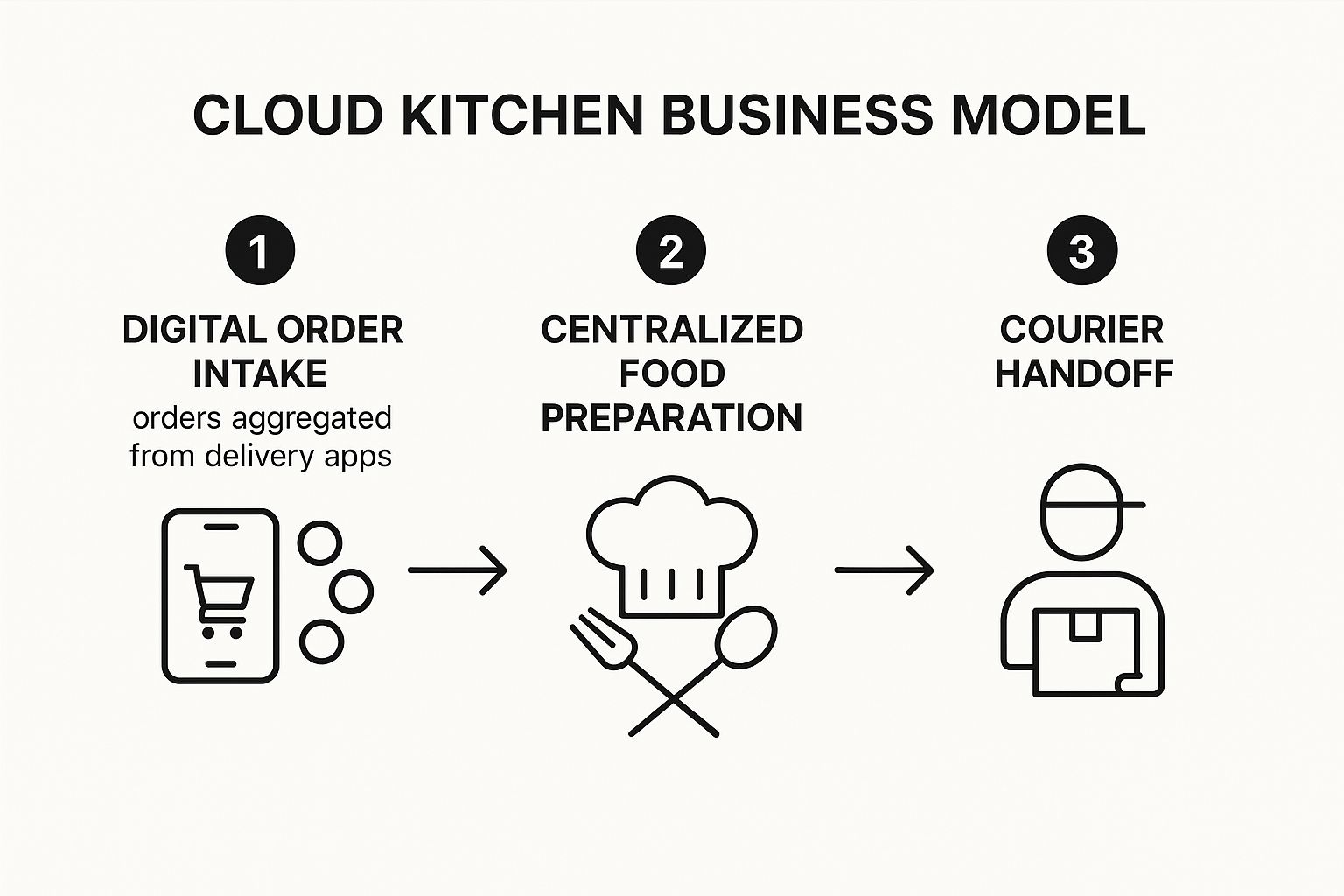
The process is a straight line, driven by technology and built for speed. It’s a lean, efficient machine.
The key takeaway is that the cloud kitchen business model uncouples food production from the traditional dining experience. It allows culinary brands to launch and scale with far less capital and risk compared to opening a conventional restaurant.
This isn't just a passing trend; it’s a fundamental shift in how the foodservice industry works. This leaner, more agile approach allows for incredible flexibility. An operator can test out new food concepts, run multiple "virtual" brands from a single kitchen, and use data to make real-time changes to menus and marketing.
By leaning into technology and minimizing the physical footprint, this model offers a powerful new path for anyone with a great food idea.
Key Legal Requirements
Jumping into the cloud kitchen world might seem like a shortcut, but it doesn't mean you can sidestep the legal stuff. Just like a traditional restaurant, you'll need to get all your ducks in a row with licenses and permits. This typically includes registering your business, securing a food service license, and making sure your staff has the proper food handler certifications. These aren't just boxes to check once; you have to stay on top of local health and safety regulations to keep your operation running smoothly and legally. Think of it as the non-negotiable foundation of your business—getting it right from the start saves you massive headaches down the road.
The Cloud Kitchen Market by the Numbers
Market Growth and Projections
As we touched on earlier, the global cloud kitchen market is already massive. But the real story is in its momentum. The market is expanding at an annual rate of 13.78%, which shows this isn't just a fleeting trend—it's a fundamental shift in the foodservice industry. For entrepreneurs, this steady, powerful growth signals a healthy market with strong consumer demand and plenty of room for new concepts to succeed. It confirms that the move toward delivery-centric dining is here to stay, creating a stable environment for businesses that can adapt and meet customers where they are: online.
The Size of the Food Delivery Customer Base
The engine behind this incredible growth is, of course, the customer. The demand for convenient, at-home dining has created a colossal food delivery market, which was projected to be a $350 billion industry in 2023. The audience is only getting bigger, too. By 2025, it's expected that more than 185 million people will be using online food delivery services. This huge, tech-savvy customer base is actively scrolling through their favorite apps, looking for new and exciting food options. For a cloud kitchen, this means your target audience is already gathered in one place, waiting for you to open your virtual doors.
How Your Cloud Kitchen Business Will Work
To really get what makes a cloud kitchen business model tick, you have to look under the hood. It’s less like a traditional restaurant and more like a high-tech logistics hub where food is the product. Every single piece of the operation is fine-tuned for speed, consistency, and digital integration—turning the sometimes chaotic art of cooking into a streamlined science.
At the very heart of this operation is the Order Management System (OMS), which pretty much acts as the kitchen's brain. It’s a single piece of software that pulls in every order from all the delivery platforms—Uber Eats, DoorDash, Grubhub, you name it—and lines them up in one unified queue.
Instead of chefs juggling a bunch of tablets and printers, the OMS creates a single, organized workflow. This system is the command center, making sure no order gets missed and every meal is fired in the correct sequence. For cloud kitchens, these online ordering platforms are the only way they interact with customers. To dig deeper, check out this comprehensive guide to online ordering.
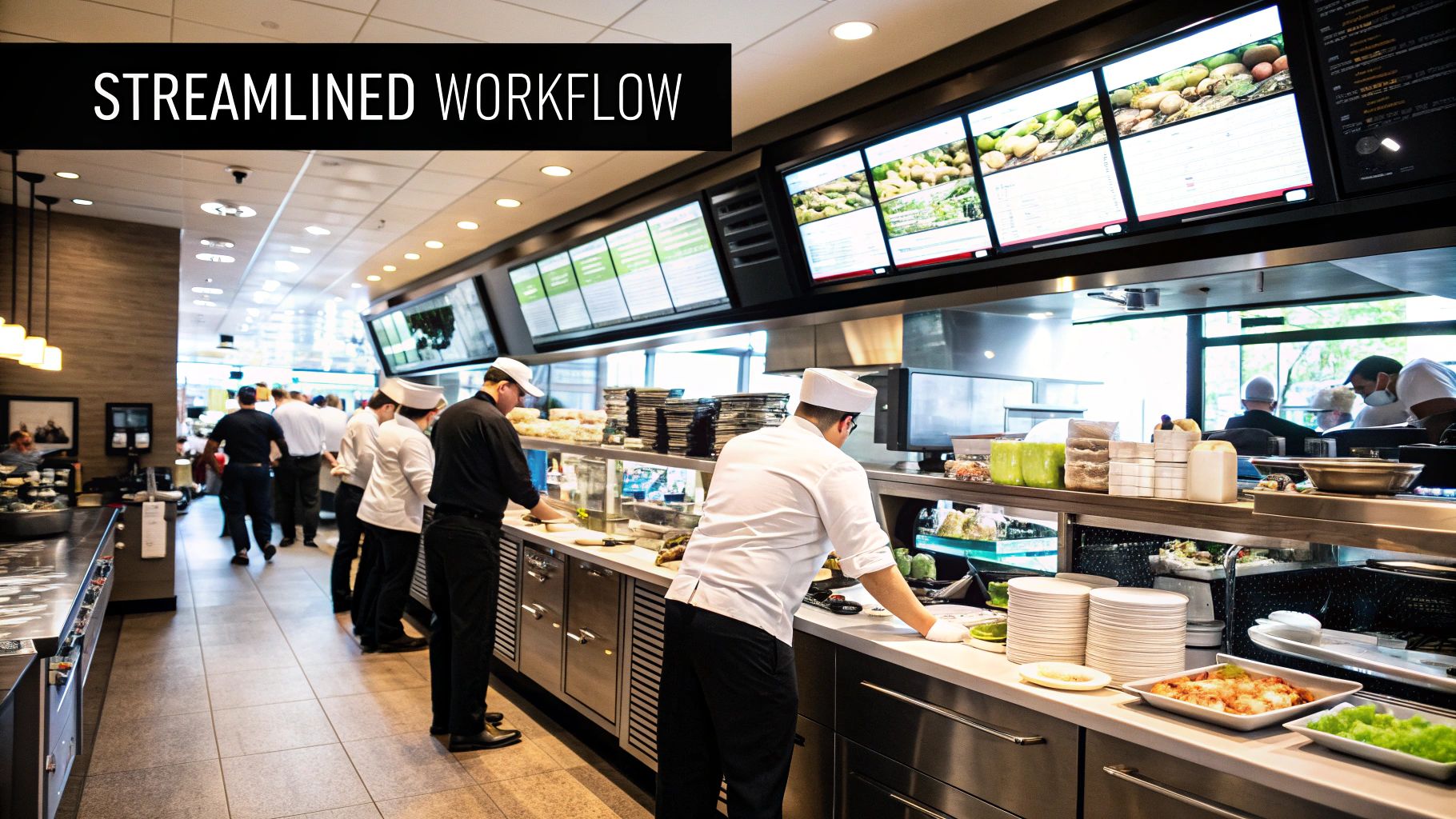
Mapping Out Your Kitchen's Workflow
The moment an order hits the OMS, it kicks off a production process that's been optimized down to the second. Unlike a traditional restaurant kitchen trying to balance dine-in tickets with takeout orders, a cloud kitchen is built for just one thing: delivery. This sharp focus allows for a fundamentally different layout and workflow.
Kitchens are often set up like an assembly line, with specific stations for each step of the process. This kind of specialization minimizes movement and maximizes output, allowing a small, nimble team to pump out a high volume of orders. For instance, one station might just handle the fryers, another the grill, and a third station is all about assembly and packaging.
Even the menu itself is engineered for this fast-paced environment. Every dish is designed to:
- Travel Well: Items have to hold their quality, temperature, and texture during a 20-30 minute delivery journey. Nobody wants soggy fries.
- Be Prepared Quickly: Recipes are simplified with pre-prepped ingredients to keep ticket times short, often under 10 minutes.
- Share Ingredients: Multiple "virtual brands" operating from the same kitchen will often use the same core ingredients. This cuts down on waste and makes inventory a whole lot simpler.
Think of it this way: a cloud kitchen is essentially a factory for food. The goal is to standardize production, control quality, and achieve maximum throughput with minimal friction, just like any modern manufacturing facility.
Essential Kitchen Technology
If the OMS is the brain of your operation, then your kitchen equipment is the muscle doing all the heavy lifting. To keep up with the relentless pace of digital orders, you need hardware that’s built for speed and reliability. This starts with robust cold storage; commercial refrigerators and freezers are essential for holding the pre-prepped ingredients that make quick assembly possible. Next up is your cooking line, which needs to be packed with high-performance gear. Think commercial deep fryers with fast recovery times and powerful griddles that can handle a constant flow of tickets without a drop in quality. It's this seamless connection between your software and hardware that really makes the cloud kitchen model fire on all cylinders. Equipping your space doesn't have to break the bank, either, as options like restaurant equipment financing can help you get the right tools from day one.
Mastering Delivery and Logistics
Getting the food to the customer is the final, make-or-break step. A cloud kitchen operator basically has two ways to handle this last-mile delivery, and each comes with its own trade-offs.
1. Third-Party Aggregators (3P) This is the route most kitchens take, especially at first. Platforms like Uber Eats and DoorDash give you access to a ready-made fleet of drivers, so you don't have to worry about hiring, training, and managing your own delivery staff. It's convenient, but it comes at a price—commissions often range from 20% to 35% of the order value.
2. Self-Delivery or First-Party (1P) Some high-volume cloud kitchens decide to build their own delivery fleet. This gives them way more control over the customer experience and, of course, they get to skip the commission fees. But it's a huge operational lift, bringing on complexities like driver management, insurance, and vehicle maintenance.
Most new cloud kitchens start with third-party delivery. The lower upfront investment and instant access to a massive customer base are just too good to pass up.
Maintaining Food Quality and Safety
Once the food leaves your kitchen, you lose control, which makes quality and safety paramount from the very start. The biggest challenge is ensuring your dishes can withstand a 20- to 30-minute delivery journey without losing their texture or temperature. This is where smart menu design and specialized packaging become your best friends, protecting against the dreaded soggy fry syndrome. But the real foundation of quality is built on unwavering food safety standards. This means keeping your kitchen and equipment impeccably clean and adhering to every health code. Your entire operation depends on the reliability of your core equipment; having commercial refrigerators and freezers that hold consistent temperatures isn't just a good idea—it's a fundamental requirement for keeping ingredients fresh and preventing foodborne illness.
Smart Ways to Handle Inventory and Equipment
The lean nature of the cloud kitchen model means there's very little room for error, especially when it comes to costs. Smart inventory management isn't just a "best practice"; it's a matter of survival.
Sophisticated software tracks ingredient usage in real-time, helping chefs order exactly what they need and keep food waste—a major profit killer—to a minimum. This data-driven approach allows kitchens to forecast demand based on past sales, upcoming holidays, or even the weather.
Having the right gear is just as critical. The kitchen needs to be kitted out with reliable, high-capacity commercial appliances built for constant use. A detailed commercial kitchen equipment checklist is a must-have tool for making sure you have everything from high-performance ovens and fryers to the right refrigeration and prep stations. Without the proper tools, the whole assembly line grinds to a halt, and both speed and quality suffer.
Inventory Management Techniques
To keep your operation lean, you need to master a few key inventory techniques. The most fundamental is the First-In, First-Out (FIFO) method. It’s a simple but powerful rule: use the oldest stock first. This requires diligent labeling and organization, but it’s your best defense against spoilage and waste. Another essential practice is setting par levels—the minimum amount of an ingredient you need on hand at all times. When your stock hits that level, it’s the trigger to reorder. This prevents both running out of a key item mid-rush and tying up cash in excess inventory that could go bad.
Beyond these basics, leveraging your sales data is crucial. Real-time tracking helps you see exactly what’s selling and what’s not, allowing you to adjust your purchasing and menu on the fly. This data-driven forecasting helps you anticipate demand for holidays or local events. Of course, a perfectly managed inventory is only as good as the equipment preserving it. Investing in reliable commercial refrigerators and freezers is non-negotiable. These units are the backbone of your inventory system, protecting your ingredients and ensuring the quality and safety of every dish that leaves your kitchen.
Which Cloud Kitchen Model Is Right for You?
The term "cloud kitchen" gets thrown around a lot, but it's not a one-size-fits-all label. Think of it less as a specific type of business and more as a flexible framework with a few different flavors, each offering its own strategic perks. Nailing down which approach works for you is the first real step to building a cloud kitchen business model that lines up with your brand, budget, and what you’re trying to achieve.
It’s a bit like choosing a vehicle. A solo entrepreneur just getting started might only need a nimble motorcycle to get around. A larger, established company, on the other hand, might need a whole fleet of trucks. The logic is the same here—the right model depends entirely on your game plan.
And the appetite for this model is absolutely exploding. The market was valued at a massive USD 64.47 billion in 2023 and is on track to hit a staggering USD 144.71 billion by 2032. This growth is all about consumer demand for convenience, especially from Millennials and Gen Z. You can discover more insights about the cloud kitchen market's future on fortunebusinessinsights.com.
Let's break down the most common structures you'll run into.
The Independent Model: Building from Scratch
The Independent Model is the cloud kitchen concept in its purest form. It’s all about a single brand operating out of its own kitchen space, with a laser focus on delivery. This is the classic "ghost kitchen" setup you've probably heard about, where one restaurant concept exists only in the digital world.
This approach gives you the ultimate say over every single part of your operation.
- Total Brand Control: You’re in charge of the menu, the recipes, the quality, and the packaging. No compromises.
- Operational Autonomy: The kitchen layout, the workflow, how you staff—it’s all designed to serve your specific brand’s needs.
- Direct Data Insights: You own all the customer and sales data. This lets you analyze what's working and tweak your menu on the fly.
This model is a perfect fit for an established restaurant looking to expand its delivery game without the cost of a new brick-and-mortar spot. It's also great for a new, well-defined concept with a crystal-clear target audience.
The Multi-Brand Model: One Kitchen, Many Menus
Now, picture that same single kitchen. But instead of cooking for just one brand, it's a launchpad for several different "virtual restaurants." That’s the Multi-Brand Model in a nutshell—a seriously efficient approach where one company creates and runs multiple brands from a shared facility.
For instance, a single kitchen could be home to a burger joint, a taco stand, and a salad bar. On the delivery apps, they look like completely distinct brands, but they're all run by the same team, sharing ingredients and equipment behind the scenes.
This model is the ultimate exercise in efficiency. By sharing resources across multiple brands, operators can dramatically reduce food waste, optimize labor, and capture a wider slice of the market by catering to diverse customer tastes.
The main advantage here is economic. If chicken is a core ingredient, it can be used for the chicken sandwich brand, the chicken taco brand, and the grilled chicken salad brand. This maximizes your purchasing power and keeps spoilage to a minimum.
Testing Multiple Food Concepts
This is where the multi-brand model really shines, especially for creative chefs. It turns your kitchen into a low-risk laboratory for new ideas. Instead of spending a fortune on a new physical location to test a concept, you can launch a "virtual" brand over a weekend. You can use data from delivery apps to see what resonates with customers and what doesn't, allowing you to make quick, informed decisions without a huge financial gamble. This agile approach means you can respond to market trends in real-time. Because you're sharing a kitchen, versatile equipment is key. A reliable deep fryer or a set of stainless steel prep tables can support a burger concept one day and a wing joint the next, giving you the flexibility to experiment freely.
The Operator-Managed Model: A Hands-Off Approach
The Operator-Managed Model flips the script entirely. Instead of creating their own food brands, the company acts more like a landlord. They build out a big, commissary-style kitchen and then rent individual kitchen pods or stations to other food entrepreneurs.
Think of it as a coworking space, but for chefs. The operator takes care of the essential infrastructure and sometimes throws in extra services:
- Physical Kitchen Space: Fully equipped and licensed kitchen stations, ready to go.
- Shared Facilities: Access to walk-in coolers, freezers, and dishwashing areas.
- Operational Support: Some operators will also handle facility management, pest control, and even the order processing tech.
This model is a fantastic way for new food entrepreneurs to get in the game. It dramatically lowers the barrier to entry, letting them launch a delivery-only business with way less capital than it would take to build their own kitchen from the ground up. It’s a symbiotic relationship: the operator provides the space, and the food brands bring the culinary vision.
The Hybrid Model: Adding a Virtual Brand to Your Restaurant
The Hybrid Model is a clever strategy for existing restaurant owners who want to get more out of their current setup. Instead of starting from scratch, you use your established kitchen, staff, and equipment to launch a completely separate, delivery-only brand. Imagine your Italian restaurant, which already has a great kitchen, launching a virtual brand that only sells gourmet grilled cheese sandwiches through delivery apps. You’re leveraging the resources you already pay for to create a brand new stream of revenue, making your operation much more efficient.
This approach is a low-risk way to experiment with new food concepts and capture a different customer base without the massive expense of opening another physical location. It allows you to maximize your kitchen's output, especially during slower periods. As you explore the possibilities of ghost kitchens, you'll see this model is one of the most accessible entry points for established players. If the virtual brand takes off, you can then invest in dedicated equipment, like additional deep fryers or prep tables, to handle the extra volume without disrupting your primary restaurant's flow.
The Home-Based Model: Starting from Your Own Kitchen
For aspiring food entrepreneurs, the Home-Based Model offers the lowest possible barrier to entry. This approach involves running a cloud kitchen right out of your own home, which completely eliminates the cost of commercial rent—one of the biggest hurdles for any new food business. It’s the ultimate lean startup, allowing you to test your concept and build a customer base with minimal financial risk. This model provides incredible flexibility and is perfect for solo operators who want to turn a culinary passion into a business without going all-in on a commercial lease.
However, this path requires careful attention to legal details. You must thoroughly research and comply with your local cottage food laws and health department regulations, as they vary significantly from place to place. While you can start your cloud kitchen from home with residential appliances, success will likely require an upgrade. Once your business grows, you'll need to move into a commercial space and invest in professional-grade equipment to meet health codes and customer demand, ensuring your operation is both safe and scalable.
How Much Does a Cloud Kitchen Cost (and Make)?
The financial engine of a cloud kitchen business model runs on a delicate balance: high volume and lean margins. Unlike a traditional restaurant pulling cash from dine-in service, bar sales, and events, a cloud kitchen’s revenue is almost entirely digital. Getting a firm grip on how money flows in—and more importantly, where it flows out—is the key to survival.
A cloud kitchen's lifeblood is its revenue, which typically flows through a few key channels. Each one offers a different level of control and, of course, profitability.
- Third-Party Delivery Apps: Platforms like Uber Eats, DoorDash, and Grubhub are the usual starting point. They give you instant access to a massive customer base, but it comes at a steep price—commission fees often eat up a hefty 20% to 35% of every single order.
- Direct-to-Consumer (D2C) Channels: This is where you set up your own website or mobile app for online ordering. It definitely takes more marketing muscle to build your own audience, but the payoff is huge: you keep 100% of the revenue and get to sidestep those brutal commission fees.
- Catering and Bulk Orders: Some savvy cloud kitchens tap into the B2B market by offering catering for local offices or events. This can create a stable, high-volume revenue stream that operates outside the typical consumer delivery rush hour.
While sales are great, managing your cost structure is where a cloud kitchen truly sinks or swims. These expenses break down into two main buckets.
What Are Your Upfront Startup Costs?
These are the one-time costs you’ll need to cover to get your kitchen up and running. They're significantly lower than what you'd spend on a traditional restaurant, but it's still a major investment. A huge advantage of the cloud kitchen business model is minimizing these upfront costs by ditching expensive retail locations and front-of-house construction.
Your key setup costs will generally include:
- Kitchen Equipment: This is your biggest initial expense, covering the essentials like ovens, fryers, refrigeration units, and prep stations.
- Licensing and Permits: Health department permits, business licenses, and food handler certifications are non-negotiable legal hurdles you have to clear.
- Technology Stack: This includes your order management system (OMS), point-of-sale (POS) software, and maybe even the development of a D2C ordering website.
To get a clearer picture of what these expenses might look like, our restaurant startup costs calculator can help you map out a detailed financial breakdown.
Kitchen Equipment
This is almost always the biggest line item on your startup budget. Your kitchen is your entire operation, so outfitting it with the right gear is critical. The biggest initial expense for a cloud kitchen covers the essentials like ovens, deep fryers, refrigeration units, and prep stations. Since your business model relies on speed and consistency, you can't afford downtime from faulty equipment. While this is a major investment, you don't have to drain your bank account. Exploring options like restaurant equipment financing can help you get the high-quality tools you need while keeping more cash on hand for other startup expenses.
Initial Inventory
Before you can cook your first order, you need to stock your shelves. This means purchasing all the raw ingredients for your menu, plus the packaging supplies needed to get your food to customers safely. This cost can vary widely depending on the complexity of your menu and your initial sales projections. It’s a smart move to start lean. Over-ordering can lead to food waste, which is a major profit killer in the restaurant business. Focus on buying just what you need to get through the first week or two, and remember to factor in the cost of quality, delivery-friendly containers that will keep your food looking and tasting great on its journey.
Licensing and Permits
Getting all your legal paperwork in order is a non-negotiable step that comes with its own set of fees. Health department permits, business licenses, and food handler certifications are non-negotiable legal hurdles you have to clear before you can legally operate. The exact requirements and costs can differ quite a bit depending on your city and state, so it's important to do your local research early. A good first step is to contact your local health department to get a clear checklist of what you'll need. You can also find general guidance on how to apply for licenses and permits on the SBA website.
Marketing and Branding
Without a physical storefront, your digital presence is everything. Your initial marketing budget will cover the essentials for building your brand online. This includes costs for professional logo design and, most importantly, high-quality food photography—blurry phone pictures won't cut it. You'll also want to set aside funds for building a direct-to-consumer (D2C) ordering website. While it takes more marketing muscle to build your own audience, the payoff is huge since you get to keep 100% of the revenue. Don't forget to budget for a small launch campaign, like running targeted social media ads or offering promotions on delivery apps to attract your first wave of customers.
Working Capital
Think of working capital as your business's financial safety net. It's the cash you need on hand to cover all your operating expenses for the first few months before you start generating a steady profit. This fund will cover things like your first few payrolls, rent on your kitchen space, utility bills, and restocking your inventory. Having enough working capital is absolutely crucial, as it gives you the breathing room to handle unexpected costs and manage the unpredictable revenue of a new business. Managing your cost structure is where a cloud kitchen truly sinks or swims, and having a healthy cash reserve is your best defense against early challenges.
What Are the Ongoing Operating Costs?
These are the recurring costs you'll face every month just to keep the lights on and the fryers hot. Managing these expenses with an eagle eye is the secret to actually making a profit.
The real challenge isn't just making food; it's making food profitably at scale. Every percentage point saved on operational costs goes directly to your bottom line, making cost control a daily priority.
Your main operational costs are:
- Rent and Utilities: Cloud kitchens can operate from lower-cost industrial or commercial spaces, but rent and utilities are still a fixed monthly expense.
- Cost of Goods Sold (COGS): This is all your raw ingredients and packaging materials. Keeping COGS between 25-35% of revenue is a common industry benchmark to shoot for.
- Labor Costs: This covers your kitchen staff, from chefs to prep cooks. Without any front-of-house staff, labor costs are much lower than in a traditional restaurant.
- Delivery App Commissions: As we mentioned, this is a major variable cost that can seriously squeeze your margins if you're not careful.
- Marketing and Promotions: Since you don't have a physical storefront, you have to invest in digital marketing to get seen on delivery apps and drive customers to your own website.
The market's explosive growth really speaks to the model's efficiency. From a market value of roughly USD 78.1 billion in 2024, the global cloud kitchen industry is projected to hit about USD 176.4 billion by 2033. This surge is fueled by our growing appetite for convenient, ready-to-eat meals, especially in cities. You can read the full research about these market projections on imarcgroup.com. This data highlights the massive opportunity out there—if you can get the financial model right.
The Full Cost of Delivery Apps
While third-party delivery apps give you instant visibility, that access comes with a hefty price tag. Platforms like DoorDash and Uber Eats typically charge commission fees that can range from 20% to 35% on every single order. This isn't just a small service fee; it's a huge slice of your revenue that disappears before it even hits your bank account, making it one of the toughest variable costs to manage. For many new kitchens, this is a necessary cost of customer acquisition—you're essentially paying for marketing and logistics in one package. But relying only on these platforms can make profitability a serious challenge. The smartest operators treat these apps as a launchpad, not a permanent home, and work toward building their own direct ordering channels to reclaim those margins and create a more sustainable business.
Understanding Realistic Profit Margins
Let's be real: the cloud kitchen game isn't about massive profits on every single order. It's a business of volume and razor-thin margins. A well-run operation can achieve a net profit margin of around 10-15%, but getting there requires a serious focus on cost control. The two biggest drains on your revenue are third-party delivery app commissions, which can snatch 20-35% right off the top, and your Cost of Goods Sold (COGS), which should ideally stay between 25-35%. This is where operational efficiency is critical. Every dollar saved on ingredients or utilities goes straight to your bottom line, which is why investing in reliable equipment is so important. Since the upfront cost for quality gear can be steep, exploring options like restaurant equipment financing can help you get the tools you need without draining your initial capital, making a high-volume, low-margin operation truly profitable.
What It Really Takes to Succeed with a Ghost Kitchen
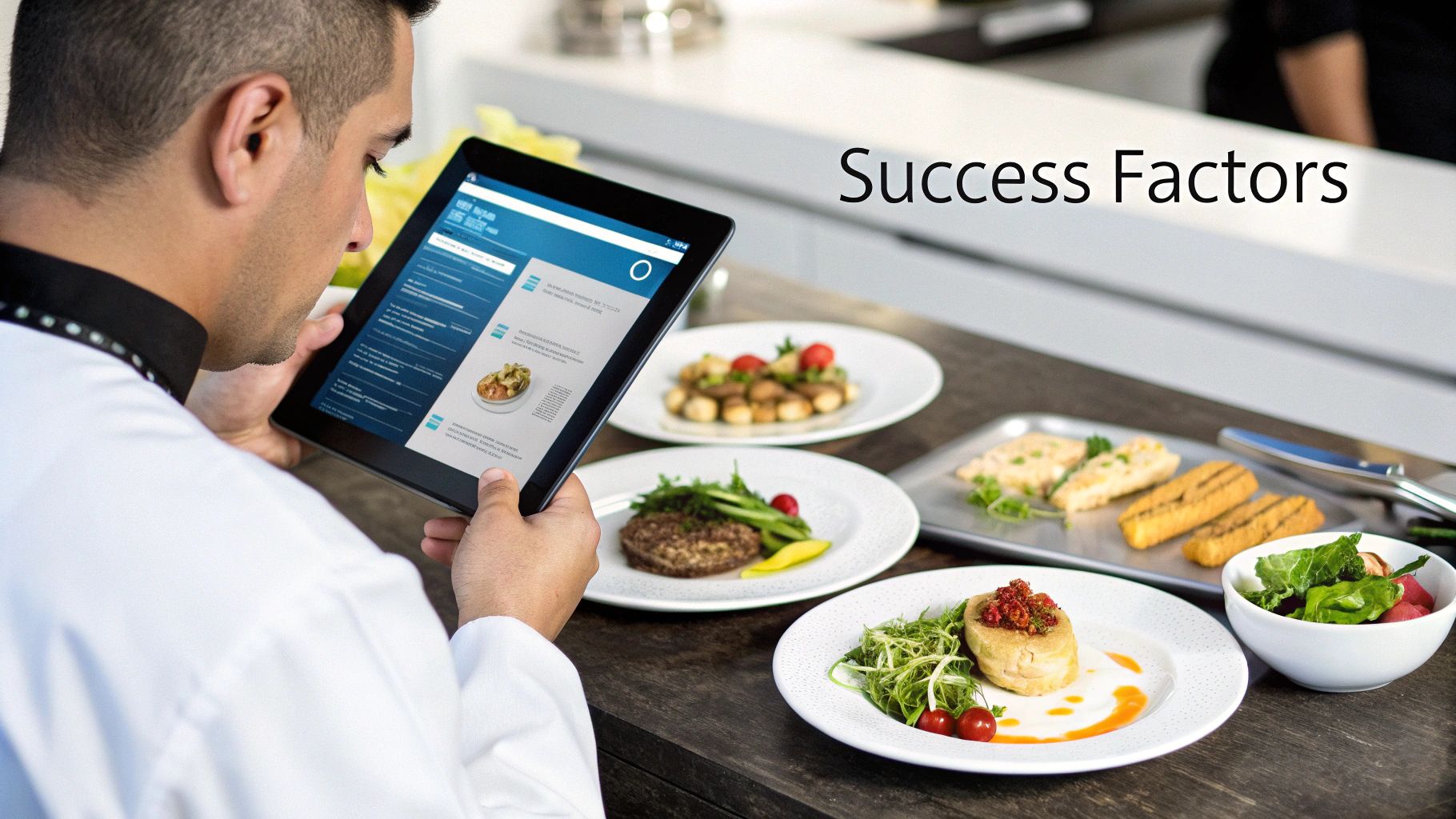
Running a successful cloud kitchen is a whole different ballgame compared to a traditional restaurant. You don't have a charming storefront or foot traffic to rely on. Instead, your entire business is built on a foundation of operational excellence, savvy digital marketing, and the strength of your partnerships.
Mastering these areas is what separates the virtual brands that take off from the ones that fizzle out. Without a physical space to welcome guests, your digital presence isn’t just a part of your business—it is your business. Your online menu, your food photos, and your customer reviews are the only things a potential customer has to go on.
This means that high-quality, absolutely mouth-watering photos aren't just a nice-to-have; they're non-negotiable. They are the first—and often only—visual impression you’ll ever make.
At the same time, you have to actively manage your online reputation. That means responding to all reviews, good and bad. It shows you care about feedback and are committed to quality, which builds the trust needed to convince someone to order from a restaurant they can’t even see.
Designing a Menu That Travels Well
A dish that’s a crowd-pleaser in a dining room can be a complete disaster after a 25-minute journey in a delivery bag. Smart menu engineering is all about creating food that's not just delicious but also resilient.
This means building your menu around dishes that hold their temperature and texture. Think hearty grain bowls, saucy pastas, and braised meats instead of delicate salads or crispy fried foods that are guaranteed to get soggy. A well-designed menu also shares core ingredients across multiple items, which is a fantastic strategy for cutting down on food waste and making inventory a breeze. For a deeper dive into getting your kitchen set up, check out our guide on how to start a ghost kitchen.
The most successful ghost kitchen menus are a perfect marriage of culinary creativity and logistical practicality. Every item must be designed from the ground up to survive the delivery gauntlet and delight the customer at home.
This strategic thinking even extends to prep. Your dishes should be designed for a quick, assembly-line style of production. This allows your team to pump out a high volume of orders without ever sacrificing consistency.
Using Data to Make Smarter Decisions
In the digital-first world of cloud kitchens, data is your most valuable asset. The delivery platforms you use are sitting on a goldmine of information about what your customers order, when they order, and which promotions actually work.
Digging into this data lets you make informed decisions instead of just guessing. You can:
- Refine Your Menu: Pinpoint your most popular and profitable dishes and ditch the ones that are just taking up space.
- Optimize Pricing: Experiment with different price points to find that sweet spot that maximizes both your order volume and your profit margins.
- Target Promotions: Run promotions based on what the data tells you, like offering a discount on specific items during your slower hours to drive sales.
This data-driven feedback loop is what allows you to adapt quickly to what your customers want. It’s what gives you an edge.
Capitalizing on Peak Ordering Times
That data becomes your playbook for the lunch and dinner rushes—the moments that define your profitability. By analyzing ordering patterns, you can pinpoint exactly when those peaks will hit and staff your kitchen to match the demand. This is where an assembly-line workflow becomes non-negotiable. With ingredients prepped, stations clearly defined, and every team member focused on their specific task, you can manage the flood of orders without sacrificing quality. Your equipment is just as critical; high-capacity deep fryers and reliable refrigeration prevent bottlenecks that can grind your operation to a halt. The goal is to turn that predictable chaos into a smooth, efficient, and highly profitable process.
Building the Right Partnerships
Finally, no cloud kitchen is an island. Your success hangs heavily on the quality of your partnerships with food suppliers and delivery aggregators.
Building a solid, reliable relationship with your suppliers means you get consistent, high-quality ingredients at a fair price. In the same way, getting to know your delivery platform representatives can open doors to better support, marketing opportunities, and valuable insights into how their algorithms work.
These strong partnerships create a stable operational backbone for your business. They free you up to focus on what truly matters: making amazing food.
Creating a Strong Digital Presence
Since your kitchen has no physical front door, your online presence serves as your entire storefront. This is where customers will discover you, browse your menu, and decide whether to place an order. Your food photography is the single most important element here; it has to be professional, vibrant, and absolutely irresistible. These images are your only chance to make a customer’s mouth water, so investing in high-quality photos is non-negotiable. They need to convey the quality and flavor of your food through the screen, convincing someone to try a restaurant they’ve never seen in person.
Beyond stunning visuals, your online reputation is what builds long-term trust. You need to actively manage your digital reputation by monitoring and responding to every review, both positive and negative. A thoughtful response to a complaint shows you value customer feedback and are committed to getting it right. This engagement is critical for building the credibility needed to attract new customers and encourage repeat business. In the virtual world, your star rating and reviews are your word-of-mouth.
Specific Marketing Tactics
Your marketing efforts should be as lean and efficient as your kitchen operations. Forget broad, expensive campaigns; focus on precision. The delivery apps you partner with provide a wealth of data on customer behavior. Use this information to identify your peak hours, most popular dishes, and customer demographics. Armed with these insights, you can run highly targeted promotions, like offering a discount on a specific menu item during historically slow periods or creating a combo deal around your best-selling dish to increase the average order value. This data-driven approach ensures your marketing dollars are spent effectively.
Your menu itself is a powerful marketing tool. A streamlined, well-organized menu is less overwhelming for customers and can guide them toward your most profitable items. This practice, known as menu engineering, is crucial for maximizing revenue. You should also use social media platforms like Instagram to showcase your incredible food photos, run exclusive promotions for your followers, and build a community around your brand. This helps create a direct connection with your audience, encouraging them to order from you directly rather than just browsing on a third-party app.
Understanding the Risks and Realities
While the cloud kitchen model looks like a streamlined path to success, it’s important to go in with your eyes wide open. The low barrier to entry and high potential for scalability are definitely appealing, but this business is far from a guaranteed win. Like any venture, it comes with a unique set of challenges and risks. Understanding these realities from the start is the best way to build a strategy that can actually withstand the pressures of this competitive digital marketplace.
The High Failure Rate
The same low startup costs that make cloud kitchens so attractive also flood the market with competition. It’s a crowded space, and standing out is tough. Success often hinges on operating in a densely populated urban area where delivery demand is high. Even then, you should be prepared to lose money for the first few months, or even longer, while you figure out what works. Many successful operators test multiple food brands at once from a single kitchen, knowing that some will inevitably fail. This experimental mindset is crucial, but it requires a solid financial cushion to survive the initial trial-and-error phase.
Overcoming the Lack of Customer Interaction
Without a dining room, a friendly host, or even a physical sign, your digital presence has to do all the work. It isn’t just a part of your business—it is your business. Your menu, food photography, and customer reviews are the only tools you have to build trust and attract orders. This means investing in professional, mouth-watering photos is non-negotiable. Your menu descriptions need to be compelling, and you must actively manage your online reputation by responding to reviews. You’re not just selling food; you’re selling a concept through a screen, and every digital detail shapes your brand.
Managing Staffing Challenges
A lean staffing model is a core benefit of a cloud kitchen, but it also presents its own hurdles. The temptation to use temporary staff to keep labor costs down is strong, but this approach can create inconsistency. High turnover makes it difficult to build a cohesive team culture and, more importantly, can threaten the consistency of your food quality and safety standards. As one industry analysis points out, this can be a significant drawback. Investing in a small, dedicated, and well-trained team is often a better long-term play. When your staff is consistent, they become experts with your equipment, from the deep fryers to the prep stations, ensuring every order meets your standards.
Planning Your Exit Strategy
It might seem strange to think about selling your business before you’ve even started, but it’s a critical consideration. It can be notoriously difficult to sell a cloud kitchen business down the line. Because you typically don’t own the physical space and are operating on a short-term lease, you have very few tangible assets to sell. A buyer isn’t purchasing property; they’re purchasing a brand and an operational model. This makes building a strong, recognizable brand with a loyal customer base your most important task. Your brand equity, customer data, and proven profitability are the real assets you’re creating, so focus on them from day one.
Considering the Broader Industry Impact
As cloud kitchens become more common, it’s worth thinking about their larger role in the foodservice landscape. This model doesn’t operate in a vacuum, and it has raised some valid concerns within the industry. Critics worry that the proliferation of ghost kitchens could take business away from traditional neighborhood restaurants, potentially drive up commercial real estate prices, and create an environment with less transparency for consumers. As The Food Corridor notes, questions around food quality and labor practices are also part of the conversation. Being a responsible operator means being aware of these issues and striving to build a business that contributes positively to the food ecosystem.
Common Questions About Cloud Kitchens
As the cloud kitchen business model picks up steam, it's natural for entrepreneurs to have questions about what it’s really like to run a delivery-only business. Without a dining room or even a front counter, the game is completely different. Let's tackle some of the most common questions people have.
What Is the Biggest Challenge of a Cloud Kitchen?
Hands down, the biggest hurdle is getting noticed. In a sea of digital options, brand visibility is everything. You don't have a physical storefront with a sign to catch the eye of people walking by, so your success lives or dies by your online presence and marketing game.
This means you have to become an expert at playing the delivery app game, figuring out their algorithms to make sure your brand shows up before your competitors. It also means investing in mouth-watering food photography, obsessively managing customer reviews, and running smart digital ad campaigns. Making your mark requires a focused, ongoing effort to build a brand that people on their phones will trust and choose.
How Much Capital Do You Need to Start?
Here’s the good news: the startup cost for a small cloud kitchen is way lower than a traditional restaurant. You’re typically looking at an initial investment somewhere between $20,000 to $100,000.
The main expenses are leasing a commercial kitchen space, buying professional-grade equipment, and getting all your licenses and permits in order. You'll also need to budget for your first round of inventory and the technology that powers it all, like an order management system. The final number really depends on your city, the size of your operation, and how complex your menu is.
Are Cloud Kitchens Actually Profitable?
Yes, they absolutely can be. The model is designed for profitability, thanks to dramatically lower overhead—you’re not paying for prime retail rent or a full front-of-house team. But that profit isn't a given; it all comes down to maintaining a high, steady volume of orders while keeping a tight grip on your costs.
The two biggest profit killers are fluctuating food costs and those hefty commission fees from third-party delivery apps, which can eat up 20-35% of your revenue. To win, you have to use your sales data to constantly fine-tune your menu, slash food waste, and make every sale as efficient as possible.
Ready to build your own cloud kitchen? The Restaurant Warehouse provides all the commercial-grade equipment and flexible financing options you need to launch your delivery-only business. Explore our full catalog and get started today at https://therestaurantwarehouse.com.
Key Takeaways
- Launch Your Restaurant for a Fraction of the Cost: The cloud kitchen model's main appeal is financial. By eliminating the need for a dining room and front-of-house staff, you can get your business running faster and with significantly less capital than a traditional restaurant.
- Your Brand Lives Entirely Online: Without a physical storefront, your digital presence is your business. Success depends on irresistible food photography, actively managing your online reputation, and using customer data to refine your menu and marketing.
- Master the Art of Efficient Production: Profitability in a cloud kitchen comes from volume and consistency. This means designing a menu that travels well, creating an assembly-line workflow, and ruthlessly controlling costs like food waste and delivery app commissions.
Related Articles
About The Author

Sean Kearney
Sean Kearney is the Founder of The Restaurant Warehouse, with 15 years of experience in the restaurant equipment industry and more than 30 years in ecommerce, beginning with Amazon.com. As an equipment distributor and supplier, Sean helps restaurant owners make confident purchasing decisions through clear pricing, practical guidance, and a more transparent online buying experience.
Connect with Sean on LinkedIn, Instagram, YouTube, or Facebook.