


Commercial Cleaning Chemicals: A Complete Guide
Your cleaning supply closet is just as important as your walk-in freezer. The products you choose directly impact your staff’s safety, your customers’ health, and your bottom line. With so many commercial cleaning chemicals on the market, it’s easy to feel overwhelmed or simply stick with what you’ve always used. But making strategic choices—like using cost-effective concentrates or certified eco-friendly options—can save you money and strengthen your brand. This guide provides clear, actionable advice to help you evaluate your needs, understand product labels, and implement a cleaning program that is safe, efficient, and perfectly suited for your business.
How the Right Cleaning Chemicals Impact Your Business
Commercial cleaning chemicals are specialized solutions designed for the intense hygiene demands of restaurants, hotels, and other high-traffic businesses. Unlike household products, these chemicals are formulated for heavy-duty use, offering stronger concentrations and faster action while ensuring compliance with health and safety regulations. They are essential for maintaining a safe, clean, and professional environment.
The main categories include:
- Cleaners and Degreasers: For removing dirt, grime, and oil.
- Disinfectants and Sanitizers: To kill pathogens and prevent disease.
- Specialty Chemicals: For targeted tasks like floor care or glass cleaning.
- Concentrated vs. Ready-to-Use: Formulations that balance cost and convenience.
The global market for these products is projected to reach $17.8 billion by 2032, highlighting a growing emphasis on hygiene. For any business owner, choosing the right cleaning chemicals is a critical decision that impacts customer safety, brand reputation, and operational efficiency. A clean establishment prevents illness, protects your reputation, and creates an environment where staff and guests feel secure.
This guide will walk you through the essential types of commercial cleaning chemicals, explain how to read labels, and help you select the right products for your needs. You'll learn the difference between sanitizers and disinfectants, when to use concentrated formulas, and what safety protocols your staff must follow to build a cleaning program that protects your business without breaking the bank.
What Are the Main Types of Commercial Cleaning Chemicals?
Understanding the main categories of commercial cleaning chemicals transforms confusion into confidence. Let's break down the essential types to keep your facility spotless and safe.
The Essentials: All-Purpose Cleaners and Degreasers
Every commercial facility needs a workhorse cleaner for daily maintenance. All-purpose cleaners are versatile solutions that handle everyday dirt, dust, and light grime on countertops, walls, and other common surfaces. They are formulated to work on multiple surface types without causing damage, simplifying training and routine tasks for your staff.
However, some messes require more power. That's where degreasers earn their keep. Degreasers are heavy-duty commercial cleaning chemicals engineered to break down and emulsify grease, oil, and stubborn soils. These are the jobs that require a degreaser's cutting power. Many degreasers are accepted for use in foodservice environments, making them safe for floors and most hard surfaces where food is prepared. The key is matching the strength to the job. Mild degreasers work well for daily maintenance, while heavy-duty formulas tackle baked-on grease and deep cleaning projects.
For a Healthy Space: Disinfectants and Sanitizers
In foodservice and hospitality, you're not just cleaning for appearance—you're protecting people from illness. Disinfectants and sanitizers are your frontline defense against bacteria, viruses, and other pathogens.
While often used interchangeably, they are quite different. Sanitizers reduce bacteria on a surface to safe levels, typically eliminating 99.9% of specified microorganisms. They are essential for food-contact surfaces like prep tables and countertops. Most sanitizers contain quaternary ammonium compounds (commonly called Quats) and are formulated to be no-rinse, which is practical for busy environments.
Disinfectants go a step further, killing a broader spectrum of microorganisms, including bacteria, viruses, and fungi. They are critical for high-touch surfaces that don't contact food directly, such as doorknobs, light switches, restroom fixtures, and dining tables. Bleach (sodium hypochlorite) is a powerful and cost-effective disinfectant, but it requires careful handling and proper dilution.
A crucial concept is dwell time—the amount of time a disinfectant must remain wet on a surface to kill the pathogens it claims to eliminate. A quick spray and wipe won't provide the necessary protection. Always check the product label for the required dwell time and train your staff accordingly.
Tackling Tough Jobs: Specialized Cleaning Chemicals
Some challenges require specialized commercial cleaning chemicals that deliver results general cleaners can't match.
Floor care chemicals are a prime example. Your floors endure constant foot traffic and spills, so they need dedicated attention. Floor strippers remove old layers of wax and finish, while floor waxes and polishes create a protective barrier that extends the life of your flooring and delivers a professional shine.
Glass cleaners are formulated for a streak-free finish on windows and mirrors. Some contain ammonia for extra cutting power, while ammonia-free options are available for sensitive surfaces.
Bathroom cleaners tackle the toughest jobs. Descalers remove hard water stains and mineral deposits, while mold and mildew removers target growths in damp environments. Many also function as disinfectants, providing cleaning and germ-killing power in one step. Having the right specialized chemicals is only part of the equation; you also need a properly equipped janitorial area. Our Restaurant Mop Sink Guide can help you set up an effective cleaning station.
Ready to upgrade your cleaning program? Contact us today to discuss your janitorial supply needs.
Cleaners for Ovens, Grills, and Deep Fryers
Your cooking equipment is the heart of your kitchen, but it also faces the toughest messes. The intense heat bakes on grease, carbon, and food residue, creating a stubborn layer that all-purpose cleaners can't handle. You need chemicals designed for these specific tasks. Oven and grill cleaners are formulated with powerful agents that dissolve carbonized grime, restoring surfaces without endless scrubbing. Similarly, deep fryers require specialized "boil-out" cleaners that break down polymerized oils and caked-on residue from the inside. Using the right product not only makes cleaning easier but also helps your equipment run efficiently and last longer, protecting your investment.
Dishwashing Chemicals and Sanitizers
Clean dishes are non-negotiable for health and customer satisfaction. Your chemical selection depends on your setup. For a three-compartment sink, you'll need a manual dish detergent, a rinse agent, and a final-step sanitizer. For commercial dishwashers, you need specific machine detergents formulated for high or low temperatures, along with a rinse aid to ensure spot-free results. The final and most critical step is sanitizing. Whether you use a chemical sanitizer in a low-temp machine or the final rinse of a three-compartment sink, it's essential for killing bacteria and meeting health code requirements. Never skip this step—it’s your primary defense against foodborne illness.
Beverage and Food Equipment Cleaners
Don't overlook the machines that dispense drinks and prepare food. Ice machines, coffee brewers, and soda fountains can develop scale, slime, and other buildups that affect taste and pose a health risk. Specialized cleaners are available for each. Ice machine cleaners remove mineral deposits, while coffee pot cleaners dissolve oily residues that can make coffee taste bitter. You'll also need drain cleaners to prevent clogs in sinks and floor drains, which can cause backups and foul odors. Regular cleaning of all your restaurant equipment with the appropriate chemicals ensures you serve a high-quality, safe product every time.
Specialty Surface and Laundry Chemicals
A truly clean facility shines from the front door to the back-of-house. This requires a few extra specialty chemicals. Stainless steel polish is a must-have for keeping your refrigerators, prep tables, and equipment exteriors looking pristine and professional. For front-of-house, furniture polish and upholstery cleaners maintain your dining area's appearance. And don't forget about laundry. Commercial-grade laundry detergents are needed to effectively clean aprons, uniforms, and table linens, removing tough food stains and odors. A clean uniform on your staff sends a powerful message about your commitment to quality and hygiene.
How to Read a Chemical Label (And What to Look For)
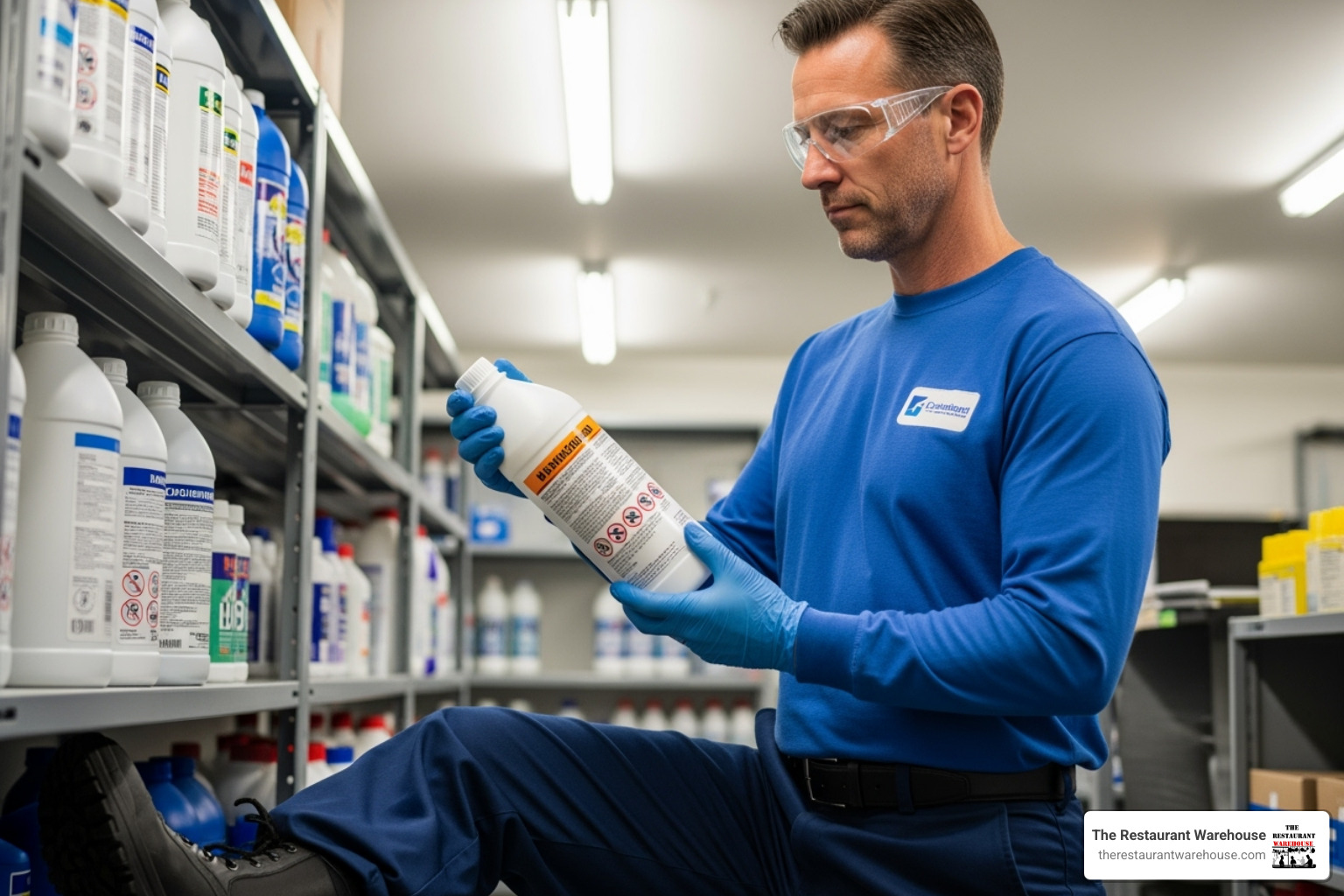
Understanding the science behind your commercial cleaning chemicals allows you to choose products that deliver real results safely and effectively. The ingredient list on the back of the bottle tells you exactly what you're working with and how to get the most value from every product you buy.
What Do Surfactants and Solvents Do?
Every effective cleaning solution relies on two key components: surfactants and solvents.
Surfactants, or "surface active agents," are molecules that help water clean more effectively. They reduce water's surface tension, allowing it to spread out and penetrate grime. One end of a surfactant molecule is attracted to water, while the other is attracted to oil and grease. This allows surfactants to surround dirt particles, lift them from surfaces, and suspend them in the cleaning solution to be rinsed away.
Solvents work by dissolving soils that water cannot. Water-based solvents like alcohols handle water-soluble grime, while solvent-based options are powerhouses for grease and oil. Natural citrus extracts and petroleum distillates are examples of solvents that excel at breaking down sticky, oily residues, making cleaning tasks faster and easier.
Why pH Levels Matter for Effective Cleaning
The pH scale, which runs from 0 (acidic) to 14 (alkaline), is a critical concept in cleaning. Matching the chemical's pH to the job prevents damage to your surfaces.
Acidic cleaners (pH 0-6) are ideal for dissolving mineral deposits, rust, and soap scum. They are excellent for removing hard water stains from fixtures and tile. However, strong acids can damage sensitive surfaces like natural stone, so always check for compatibility.
Neutral cleaners (pH 7) are the safest choice for daily maintenance on most surfaces, including finished floors, painted walls, and plastics. They clean effectively without causing damage or leaving residue.
Alkaline cleaners (pH 8-14) are the heavy hitters for organic soils like grease, oils, and baked-on food. They are essential in foodservice environments for cleaning greasy floors and other heavily soiled areas. Strong alkaline solutions can be harsh on some materials, so proper handling is crucial. Our Restaurant Cleaning Checklist can help you determine the right cleaner for each area.
| Cleaner Type | pH Range | Common Uses | Examples of Surfaces |
|---|---|---|---|
| Acidic | 0-6 | Mineral deposits, rust, soap scum, hard water stains, descaling | Stainless steel (mild acids), porcelain, ceramic tile (avoid on natural stone) |
| Neutral | 7 | General cleaning, light dirt, maintenance | Most surfaces, including painted walls, finished floors, wood, plastics (safe for daily use) |
| Alkaline | 8-14 | Grease, oils, protein soils, heavy dirt, baked-on food | Concrete, quarry tile, some metals (check compatibility), heavily soiled floors |
Other Key Ingredients: Disinfecting Agents & Builders
Beyond the main ingredients, additives boost performance.
Disinfecting agents are non-negotiable for preventing pathogen spread. Quaternary ammonium compounds (Quats) are widely used, effective against a broad spectrum of bacteria and viruses. Hydrogen peroxide is another powerful agent that breaks down into water and oxygen, making it an environmentally friendly choice.
Builders are additives that make cleaners work better in hard water. They act as water softeners by binding to minerals like calcium and magnesium, which would otherwise interfere with the cleaning agents. This allows surfactants to focus on removing dirt, improving overall effectiveness.
How to Choose the Right Commercial Cleaning Chemicals
Selecting the right commercial cleaning chemicals is a strategic process. By focusing on your specific needs, you can choose products that deliver results efficiently and cost-effectively.
Start by Evaluating Your Surfaces and Needs
The foundation of any effective cleaning program is identifying what you are cleaning. First, determine the soil type: is it grease, mineral deposits, food residue, or everyday grime? Each soil responds differently to various chemical formulations.
Next, consider surface material compatibility. What works on stainless steel could ruin natural stone. An overly harsh alkaline solution can dull a polished floor, while a strong acid can etch marble. Always distinguish between porous surfaces (like unsealed concrete), which can absorb liquids, and non-porous surfaces (like sealed tile), which are easier to clean. High-traffic areas also require special attention, needing solutions that work quickly without causing significant downtime. Always consult manufacturer recommendations for both the chemical and the surface you are treating.
Concentrate vs. Ready-to-Use: Which Should You Choose?
A key decision is choosing between concentrated and ready-to-use (RTU) formulations, which impacts your budget, storage, and operations.
Concentrated chemicals are highly cost-effective. You purchase the active ingredients and dilute them with water on-site, dramatically lowering the per-use cost and reducing storage space requirements. However, they require precise dilution. An incorrect ratio can lead to ineffective cleaning, wasted product, or even surface damage. Dilution control systems and proper staff training are essential to use concentrates safely and effectively.
Ready-to-use (RTU) chemicals offer convenience and consistency. They arrive pre-diluted and ready for immediate application, eliminating the risk of mixing errors. RTU products are ideal for businesses with high staff turnover or for specialized tasks where simplicity is paramount. The trade-off is a higher per-use cost and the need for more storage space. Many businesses use a hybrid approach, using concentrates for high-volume tasks and RTU products for specific needs.
Simplifying Dilution with Portion Packs and Tabs
If you love the cost savings of concentrates but worry about your staff getting the dilution ratios right, portion packs and tabs offer a perfect solution. These products provide pre-measured doses of concentrated chemicals in convenient, single-use packets or dissolvable tabs. This approach gives you the best of both worlds: you get the lower per-use cost of a concentrate without the risk of mixing errors. Your team simply adds one pack or tab to a specific amount of water, ensuring a perfectly mixed solution every time. This not only guarantees cleaning effectiveness for everything from prep tables to deep fryers, but also simplifies training and improves safety by minimizing direct contact with potent chemicals.
Look for Key Safety and Eco-Certifications
Third-party certifications help you cut through marketing claims and choose products that meet high standards for safety and performance.
NSF certification is the gold standard in foodservice environments. An NSF mark ensures a product is safe for use in areas where food is handled, preventing contamination. For more details on these standards, our NSF ANSI Standard 2 Guide offers deeper insight.
The EPA's Safer Choice Program identifies products made with safer chemical ingredients that still maintain high performance. Choosing these products reduces staff exposure to potentially hazardous substances.
Green Seal certification evaluates a product's entire lifecycle, from raw materials to disposal. It demonstrates a tangible commitment to environmental stewardship. These certifications reduce risk, simplify purchasing, and align your operations with industry best practices.
Considering Product Variety and Trusted Brands
A single all-purpose cleaner won't cut it in a commercial kitchen. You need a diverse toolkit of chemicals designed for specific tasks, from sanitizing food-prep surfaces to degreasing deep fryers. As suppliers like Staples Business note, businesses need a large variety of chemicals to keep all surfaces clean and germ-free, especially in demanding environments. Having access to a wide selection allows you to build a comprehensive cleaning program that addresses every challenge your restaurant faces. Sticking with trusted, well-known brands also provides consistency and reliability, ensuring that the products you depend on perform the same way every time you use them. This predictability is crucial for maintaining health standards and operational efficiency.
The Advantages of Buying Wholesale
Managing operational costs is a constant balancing act for any restaurant owner, and cleaning supplies are a recurring expense. Buying your commercial cleaning chemicals in bulk is one of the smartest ways to control your budget. As major suppliers like WebstaurantStore emphasize, you can find all the cleaning supplies you need in bulk at wholesale prices. This approach significantly lowers the per-unit cost, freeing up capital that can be invested elsewhere in your business. Beyond the savings, buying wholesale simplifies inventory management. You'll place orders less frequently and reduce the risk of running out of a critical product mid-shift, ensuring your team always has the tools they need to maintain a clean and safe environment.
Let Customer Reviews Guide Your Decision
When you're choosing between two seemingly identical products, customer reviews can be the tiebreaker. They offer honest, real-world feedback from other business owners who have faced the same cleaning challenges you do. Look for products with consistently high ratings. For example, some suppliers feature products with ratings between 4.8 and 5.0 stars, backed by over 100 customer reviews. Don't just look at the star rating; read the comments to see how the product performs in specific applications. A review that says, "This degreaser cut through the grease on our quarry tile floor like nothing else," is far more valuable than generic marketing copy. These insights help you choose products with confidence, knowing they've already been proven effective in a professional setting.
How to Safely Handle and Store Cleaning Chemicals
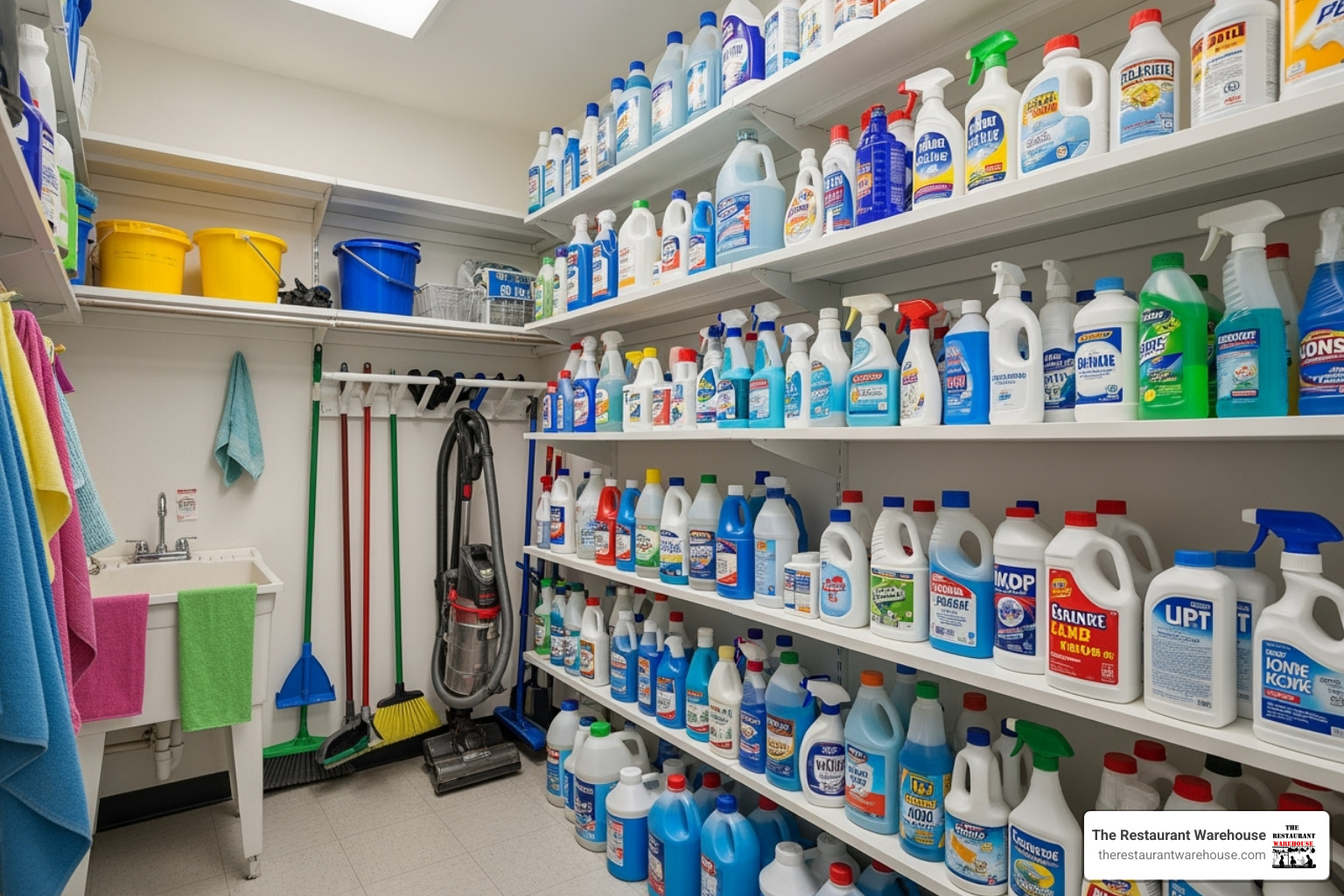
The power of commercial cleaning chemicals comes with a serious responsibility to protect your staff and customers. Proper safety protocols are not optional; they are foundational to running a responsible business. A well-organized janitorial area with clearly labeled chemicals, proper ventilation, and accessible safety equipment is a sign of a well-run, safe facility.
How to Use Safety Data Sheets (SDS) and PPE
Every chemical product comes with a Safety Data Sheet (SDS), a vital resource that details its hazards, safe handling procedures, and first-aid measures. Training your team to read and understand these documents is a critical first step in preventing accidents. OSHA provides excellent resources for Understanding Safety Data Sheets from OSHA.
Knowledge must be paired with physical protection. Personal Protective Equipment (PPE) is the barrier between your staff and chemical hazards. This includes:
- Chemical-resistant gloves when handling concentrates.
- Safety goggles or face shields to protect eyes from splashes.
- Respirators when using products that release strong fumes.
PPE only works if it's used consistently. Keep supplies well-stocked and build a culture where safety is a priority.
Best Practices for Dilution, Storage, and Spill Response
Getting dilution right is a matter of both effectiveness and safety. An overly strong solution can create fumes, damage surfaces, and pose a risk to staff. Use automated dispensing systems or chemical pumps to ensure accurate ratios every time.
A cardinal rule is to never mix different chemicals together. Combining products like bleach and ammonia creates toxic gas. Use each chemical independently as directed by the manufacturer.
Store chemicals in a designated, well-ventilated area away from food preparation and storage zones. Keep them in their original, labeled containers and secure the area so only trained staff have access.
Even with perfect protocols, spills can happen. Be prepared with a spill containment kit that includes absorbent materials and neutralizing agents. Train your team on how to respond to minor spills and when to evacuate and call for professional help for major incidents.
If you need guidance on setting up a safe and efficient janitorial supply system, contact us today.
Using Chemical Pumps for Safe and Accurate Dispensing
Manually measuring and mixing concentrated chemicals can be a recipe for waste and safety risks. This is where chemical pumps and automated dispensing systems come in. These tools are designed to pull the precise amount of concentrate and mix it with water, delivering a perfectly diluted solution every time. This not only guarantees your cleaners work as intended but also protects your staff by minimizing direct contact with potent chemicals and preventing messy spills. By eliminating guesswork, you can confidently store and use chemicals safely, ensuring you get the most out of your cost-effective concentrates without damaging surfaces or compromising on hygiene.
What's Next? Green Trends in Commercial Cleaning
The commercial cleaning industry is rapidly evolving, driven by sustainability, technology, and a deeper understanding of hygiene. These innovations offer solutions that are more effective, safer for people, and kinder to the planet.
The Growing Demand for Eco-Friendly Solutions
A green revolution is underway in commercial cleaning chemicals. Businesses are shifting toward products that maintain high hygiene standards without compromising environmental responsibility. This movement focuses on biodegradable ingredients that break down naturally, sustainable sourcing of raw materials, and a reduction in volatile organic compounds (VOCs) that contribute to air pollution. Plant-based solvents are replacing harsh petroleum derivatives, offering comparable power with less environmental impact.
The EPA's Safer Choice Program helps identify products that meet strict safety and environmental standards without sacrificing performance. Choosing these certified chemicals is a statement of your business's values and a commitment to the well-being of your staff, customers, and community. This shift also includes innovative packaging, such as concentrated pods and refillable containers that reduce plastic waste and lower costs.
How New Formulations Are Changing the Game
The science of cleaning is also getting smarter. Probiotic and enzymatic cleaners use beneficial microorganisms or specialized enzymes to break down organic soils like grease and proteins. These bio-based chemicals continue working long after application, offering ongoing cleaning action without harsh impacts.
Delivery systems are also improving. Concentrated pods and tablets simplify dilution, ensuring consistency and reducing waste. Smart dispensing systems automate the mixing process, precisely diluting concentrates to the optimal ratio every time. These advancements improve safety, reduce chemical waste, and ensure consistent performance, making your operation more efficient and sustainable.
Contact us today to learn how these cutting-edge solutions can transform your cleaning program.
Frequently Asked Questions about Commercial Cleaning Chemicals
We hear the same critical questions about commercial cleaning chemicals from business owners and managers. Here are straightforward answers to the most common concerns.
What is the difference between a sanitizer and a disinfectant?
This is the most common question, and the distinction is vital for health and safety compliance.
A sanitizer is formulated to reduce the number of bacteria on a surface to a safe level, typically by 99.9% as defined by public health standards. Sanitizers are used on food-contact surfaces like prep tables and cutting boards. Many are no-rinse, making them convenient for use during business hours.
A disinfectant is formulated to kill a much broader spectrum of microorganisms, including bacteria, viruses, and fungi, as listed on the product's label. Disinfectants are intended for high-touch, non-food-contact surfaces like doorknobs, restroom fixtures, and light switches to prevent the spread of illness. The key is using the right product for the right surface to ensure safety without wasting product.
Can I mix different cleaning chemicals to make them stronger?
The answer is an emphatic no. You should never mix different cleaning chemicals. Doing so can create dangerous, uncontrolled chemical reactions.
The most well-known hazardous combination is bleach and ammonia, which produces toxic chloramine gas that can cause severe respiratory damage. Mixing bleach with an acid also creates toxic chlorine gas. Cleaning chemicals are formulated to work optimally on their own. If a product isn't working, the solution is to find a different, more appropriate chemical for the task, not to create a dangerous cocktail.
How do I properly dispose of unused commercial cleaning chemicals?
Proper disposal is an environmental and regulatory responsibility. The correct method depends on the chemical and your local rules.
Always consult the product's Safety Data Sheet (SDS) first; it contains specific disposal instructions. Many diluted, non-hazardous, neutral-pH cleaners can be poured down the drain with running water. However, concentrated, highly acidic or alkaline, or otherwise hazardous chemicals must be disposed of as hazardous waste. This usually requires collection by a licensed disposal service. Never pour concentrates or hazardous chemicals down the drain. Check with your local waste management authority for specific guidelines in your area.
Making the Right Choice for Your Business
We've covered the essential categories of commercial cleaning chemicals, how to interpret labels, and the critical importance of safety protocols. With this knowledge, you can confidently select the right solutions to maintain a spotless and safe environment for your guests and staff.
Choosing the right commercial cleaning chemicals is a strategic decision that impacts your hygiene standards, budget, and brand reputation. A pristine establishment tells customers you are committed to excellence and care about their well-being. It's the foundation upon which a successful business is built.
The cleaning industry continues to evolve with green chemistry and smart technologies, making it easier than ever to clean effectively and responsibly. By staying informed, you are investing in the future of your facility.
An effective cleaning program starts with the right knowledge and the right tools. For all your janitorial and sanitation fixture needs, The Restaurant Warehouse provides the foundation for a spotless operation at prices that respect your bottom line. Explore our comprehensive guides on janitorial sink buying to equip your facility properly.
Contact us today to discuss how we can help you build the perfect janitorial setup for your facility.
Don't Forget the Tools: Related Janitorial Supplies
Commercial cleaning chemicals are powerful, but they're only one part of the equation. Without the right application tools, you're not getting the full value from your investment and might even be creating safety risks. Equipping your staff with the proper janitorial supplies ensures that every chemical is used effectively, efficiently, and safely. High-quality tools help your team work faster, reduce product waste, and achieve a higher standard of clean that customers will notice. Think of it as the difference between painting with a high-end brush versus a cheap one—the right equipment delivers a professional finish. A well-stocked janitorial closet is a clear sign of a business that takes cleanliness seriously.
Equipping Your Team with Spray Bottles, Squeegees, and More
The basics are often the most important. Start with durable, chemical-resistant spray bottles that are clearly labeled to prevent dangerous mix-ups. This is critical when working with concentrates, as proper labeling ensures your staff knows what they're using and at what dilution. Pair these with high-quality microfiber cloths, which trap dust, dirt, and bacteria rather than just pushing them around. For windows, mirrors, and even floors, a good squeegee is essential for a streak-free finish and for efficiently moving large amounts of water into a floor drain. These simple tools are the workhorses of any effective cleaning program.
Specialized tasks require specialized gear. A proper floor care program needs the right mops and a two-bucket system to separate clean and dirty water, preventing cross-contamination. Heavy-duty scrub brushes are essential for tackling stubborn grime in grout lines or on non-slip flooring. Organizing these supplies on a janitorial cart keeps everything within reach, saving valuable time. Investing in these tools is a direct investment in your team's efficiency and safety. A comprehensive restaurant cleaning checklist will help you identify exactly which tools are needed for every area of your facility.
Key Takeaways
- Select the Right Chemical for the Job: Use alkaline cleaners to cut through grease, acidic solutions for mineral buildup, and neutral cleaners for daily maintenance. Remember to use sanitizers specifically for food-contact surfaces and disinfectants for high-touch areas to meet health codes.
- Make Smart Choices to Control Costs: Lower your expenses by using cost-effective concentrates paired with a simple dilution system. When buying, look for certifications like NSF for food safety and EPA Safer Choice to select products that are both effective and environmentally responsible.
- Prioritize Safety with Clear Protocols: Your team's well-being is paramount. Train every staff member to read Safety Data Sheets (SDS), use the correct Personal Protective Equipment (PPE), and understand the most important rule: never mix different cleaning chemicals together.
Related Articles
About The Author

Sean Kearney
Sean Kearney is the Founder of The Restaurant Warehouse, with 15 years of experience in the restaurant equipment industry and more than 30 years in ecommerce, beginning with Amazon.com. As an equipment distributor and supplier, Sean helps restaurant owners make confident purchasing decisions through clear pricing, practical guidance, and a more transparent online buying experience.
Connect with Sean on LinkedIn, Instagram, YouTube, or Facebook.