

Beyond the Fridge: Mastering Commercial Refrigeration Supply
Why Reliable Commercial Refrigeration is Crucial for Your Business
Your commercial refrigeration supply is the undisputed backbone of any foodservice operation. It is the silent partner working 24/7 to protect your inventory, ensure public health, and preserve your profits. Without dependable cooling, you risk not only food safety violations and significant financial loss but also irreparable damage to your brand's reputation. Choosing the right equipment is a critical investment in your business's long-term stability and success. Key factors to consider include the unit's specific type, its physical size and storage capacity, its energy efficiency rating, and your overall budget, carefully balancing the upfront cost with the long-term value and total cost of ownership (TCO).
The true cost of refrigeration is measured not just in the initial purchase price but in uptime, regulatory compliance, and product integrity. A single day of refrigeration failure can jeopardize thousands of dollars in perishable inventory, force a complete service disruption, and erode the customer trust you've worked so hard to build. Reliable units are the foundation of your Hazard Analysis and Critical Control Points (HACCP) plans, helping you uphold stringent health codes and drastically reducing the risk of costly emergency service calls that derail your operational schedule and shatter your budget. The financial fallout from a single failure—including lost product, lost sales, and emergency repair fees—can often exceed the cost of a new, more reliable unit.
Reliability also manifests in consistent, everyday performance. The best systems maintain their set temperature with minimal fluctuation, even during the busiest service hours with constant door openings. They recover temperature quickly after being accessed and maintain the proper humidity levels essential for delicate produce, valuable proteins, and prepared foods. For operators with diverse menus, having the right temperature zones—refrigerated, frozen, and display—is non-negotiable. It ensures each product is stored in its ideal environment, maximizing shelf life and preserving quality from delivery to the customer's plate.
From a financial perspective, energy efficiency and ease of maintenance directly impact your total cost of ownership (TCO). Modern, efficient compressors, tight-sealing gaskets, and high-quality, dense insulation work together to lower your utility bills month after month. Thoughtful design features like top- or bottom-mount compressors, robust casters for mobility, and intuitive smart controllers simplify cleaning, servicing, and daily use. These features save valuable labor hours and are instrumental in preventing the kind of minor issues that can escalate into major downtime.
Operationally, the correct mix of equipment—reach-ins, prep tables, undercounters, walk-ins, and display merchandisers—will streamline your kitchen's workflow. When ingredients are stored at arm’s length and are properly chilled, prep stations run faster, more efficiently, and with greater safety. Strategic placement of these units is also key; it prevents excess heat load from cooking lines and enables good airflow around the condenser, which keeps compressors from overworking and failing prematurely.
This guide will walk you through everything you need to know about selecting, operating, and maintaining your commercial refrigeration supply. We’ll cover the different equipment types in detail, outline essential selection criteria, explore important industry innovations, and provide a playbook of maintenance tips. Our goal is to empower you to make an informed decision that keeps your business running smoothly and profitably for years to come.
I’m Sean Kearney from The Restaurant Warehouse. My passion for restaurant equipment—especially commercial refrigeration supply—comes from a deep understanding of its vital role in the success of any foodservice business. I use my experience to help customers navigate the options and find the perfect solutions for their unique refrigeration needs.
What you can expect from this guide:
- A clear breakdown of equipment types and where each shines in daily operations
- Practical sizing, layout, and budgeting strategies that protect your cash flow
- A plain-English overview of current refrigerants and regulatory shifts
- A maintenance playbook to extend lifespan and prevent costly breakdowns
If you’re ready to get specific about your operation’s needs, contact our team for a tailored recommendation and quote. Book a strategy call: https://therestaurantwarehouse.com/pages/contact-us
Decoding the Types of Commercial Refrigeration Equipment
Choosing the right commercial refrigeration supply means meticulously matching the equipment to your specific business needs, kitchen workflow, and available physical space. Each type of unit is engineered for a particular function, so a thorough understanding of the available options is the first step toward designing an efficient, safe, and productive kitchen environment.
Reach-In Refrigerators and Freezers
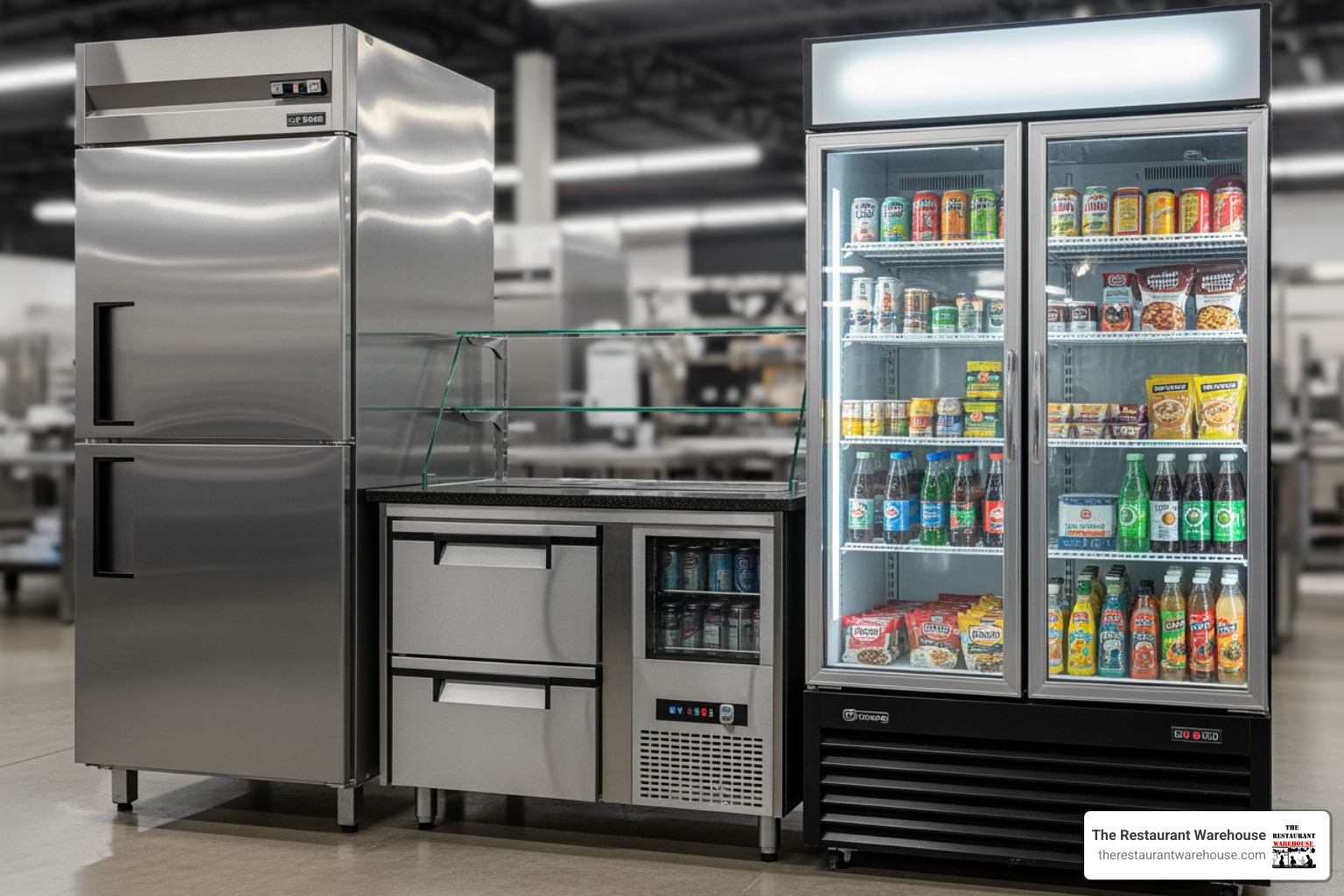
These are the versatile workhorses of most commercial operations. Upright reach-in units provide easily accessible bulk cold storage, typically positioned near prep and cook lines for maximum efficiency. Solid door units are the standard for back-of-house storage, offering superior insulation and energy efficiency by minimizing heat transfer. Glass door units are perfect for front-of-house or customer-facing areas, as they display products to drive impulse sales while keeping them perfectly chilled. For high-traffic kitchens, consider pass-through models, which have doors on both sides to allow staff to load inventory from the back and access it from the front, streamlining workflow between prep and service areas.
Compressor placement is a critical decision. Top-mount compressors are ideal for hot kitchen environments because they pull in cooler, cleaner air from above, away from the grease-laden air and floor debris common near cook lines. Bottom-mount compressors are generally easier to access for cleaning and maintenance, offer more convenient, ergonomic storage at eye level, and perform well in cooler ambient zones like storage rooms. When evaluating reach-ins for tight spaces, carefully consider the door swing direction and the benefits of half doors, which reduce cold air loss during frequent access.
Use reach-ins when you need:
- Fast, convenient access to frequently used ingredients
- Reliable temperature recovery after constant door openings
- Flexible, adjustable shelving to accommodate changing menu items and container sizes
Walk-In Coolers and Freezers
For businesses with high-volume storage requirements, walk-in units are an indispensable asset. These large, insulated rooms offer the best cost-per-cubic-foot for storage and can be highly configured with multi-level shelving, strip curtains to reduce air loss, and dedicated zones for different products. You can choose from custom-built units designed to fit unique or irregular spaces, or quick-ship models for faster installation. A key decision is whether to use a self-contained refrigeration system (where the compressor is part of the unit) or a remote system (where the compressor is located elsewhere, often on the roof), which removes heat and noise from the kitchen.
High-quality, high-density polyurethane insulation is critical for maintaining consistent temperatures and reducing energy consumption, which directly lowers your total cost of ownership. Walk-in freezers require insulated floors to prevent ground frost from causing structural damage to the building's foundation, while coolers can sometimes be floorless depending on the site and slab conditions. Always specify features like door frame heaters, vapor-proof lighting, and heavy-duty hinges to reduce icing, improve visibility, and prevent door sag over time.
Choose a walk-in when you need:
- Bulk storage for cases of proteins, produce, and prepped items
- Dedicated staging areas for large-scale catering or banquet operations
- Pallet jack or rolling cart access with clear aisle space and proper airflow
Merchandising and Display Refrigeration
These units are specifically designed to both cool and sell products. Glass door merchandisers are the most common type, showcasing beverages, dairy, and packaged goods in retail settings. Open-air coolers, or air curtains, offer ultimate convenience for grab-and-go items, using a continuous curtain of cold air to maintain temperature. Specialized units like deli and bakery cases feature curved glass for optimal viewing and have specific humidity controls to present prepared foods, meats, and cheeses attractively. Bar refrigeration, including direct-draw beer dispensers, bottle coolers, and glass frosters, is purpose-built for speed and quick access in demanding bar environments.
For any display unit, lighting quality and shelf adjustability are crucial for presentation. Bright, energy-efficient LED lighting highlights product without adding heat to the cabinet. Adjustable shelves allow you to fit a wide range of package sizes and maximize product facings. Consider adding night curtains for open-air merchandisers to conserve significant energy when the business is closed.
Prep, Undercounter, and Worktop Units
These compact units are efficiency boosters, bringing refrigerated storage directly to your prep stations. Refrigerated prep tables (often called sandwich/salad units) combine a durable work surface with refrigerated compartments for ingredients, perfect for assembly lines. Undercounter refrigerators and freezers fit neatly under existing counters, adding valuable cold storage without consuming precious floor space. Worktop units are similar but feature a more durable top designed to hold other equipment. Bottle coolers are designed to chill beverages rapidly, making them indispensable for bars, cafes, and catering services.
When selecting a prep table, match the pan rail layout to your menu's needs and verify that the insulated lids seal tightly when not in use to maintain food safety. In high-heat zones near grills or fryers, consider units with forced-air cooling to ensure even temperatures across the entire pan rail.
By selecting the right mix of commercial refrigeration supply, you can optimize workflow, guarantee food safety, and improve your bottom line. According to the U.S. Food and Drug Administration, maintaining proper refrigeration temperatures is a critical factor in preventing the growth of bacteria that cause foodborne illness.
Need help mapping your ideal lineup of reach-ins, prep tables, and display cases? Contact our team for layout guidance and a custom quote: https://therestaurantwarehouse.com/pages/contact-us
Key Factors in Selecting Your Commercial Refrigeration Equipment
Choosing the right commercial refrigeration supply is a major capital investment that directly impacts your daily operations, monthly energy bills, and fundamental food safety protocols. Looking beyond the initial price tag to consider the total cost of ownership (TCO) is crucial for making a sound financial decision. This holistic approach includes the purchase price, installation costs, projected energy use, routine maintenance expenses, and the expected lifespan of the unit. Smart operators meticulously evaluate performance metrics and lifecycle costs to secure the best possible long-term value for their business.
Sizing and Capacity
Getting the size right is the fundamental first step. An undersized unit will struggle to keep up, leading to unsafe temperatures and premature component failure, while an oversized unit wastes energy and capital. Start by estimating your required cubic footage based on peak inventory levels, factoring in your delivery schedule and menu complexity. Then, add a 20-30% buffer for business growth and seasonal demand fluctuations. Carefully measure your physical space—width, depth, and height—and don’t forget to measure doorways, hallways, and any elevator clearances to ensure a smooth delivery and installation process. Plan for door swing paths and adequate aisle width so staff can load and retrieve products safely without blocking kitchen traffic.
Interior layout is just as important as exterior dimensions. Adjustable shelving, specialty drawers, and pan slides allow for customized organization, leading to faster picking times and better inventory management. Half doors on reach-ins are excellent for reducing cold air loss during quick grabs. For display units, measure your primary product's footprint and arrange shelves to maximize facings and visual appeal. For walk-ins, ensure there’s adequate space (at least 3-4 inches) between shelving rows and walls to promote proper airflow and allow for easy cleaning.
Quick checklist:
- Verify the ambient temperature where the unit will be placed (e.g., a hot cook line vs. a cool storage room).
- Confirm dedicated electrical circuits and correct voltage/amperage requirements are available.
- Plan for a minimum of 2–4 inches of clearance around the unit for proper ventilation and service access.
- Map the entire delivery route from the truck to the final placement to avoid costly surprises on installation day.
Energy Efficiency and Long-Term Costs
Energy consumption is a significant and recurring operational expense that directly affects your monthly profits. Prioritize models that are ENERGY STAR certified, as these have been independently verified to use substantially less energy without sacrificing performance. Modern energy-saving technologies include variable-speed compressors and high-efficiency electronically commutated (EC) fan motors, which intelligently adjust their power output based on real-time cooling demand, significantly reducing energy use during off-peak hours. Bright, cool-running LED lighting also contributes to savings by consuming less power and producing minimal heat, reducing the load on the compressor.
Don’t overlook the importance of high-quality insulation and door gaskets—both are essential for preventing cold air loss and heat infiltration. Features like triple-paned glass doors on merchandisers, anti-sweat heaters with demand-based controls, and self-closing hinges are small but impactful features that add up to large savings over the unit's lifespan.
Modeling TCO:
- Initial cost: Unit price + freight/delivery + professional installation.
- Operating cost: Estimated kWh/year × your local utility rate × expected years of use.
- Service cost: Annual cost of a preventive maintenance plan + estimated budget for non-warranty repairs.
- Residual value: Potential trade-in or resale value at the end of its useful life.
A sample calculation illustrates the point: If two competing models have a price difference of $500, but the more expensive model saves $35/month in electricity, that’s $420 per year or $2,100 over a five-year period. The more efficient unit pays for its price premium and delivers significant savings over its lifetime.
Budgeting for Your Commercial Refrigeration Supply
Understanding your budget means mapping the complete financial picture. New equipment offers the latest energy-saving technology, cutting-edge features, and comprehensive manufacturer warranties, providing peace of mind and predictable performance. Refurbished units, on the other hand, can provide substantial cost savings, making them a smart choice for startups, businesses on a tight budget, or for less critical applications. When considering refurbished, always buy from a reputable dealer and understand the warranty differences—new units have comprehensive parts and labor coverage, while refurbished warranties typically focus on core functional components for a shorter duration.
Financing and leasing options can be powerful tools to spread costs over time, preserve working capital for other needs, and align expenses with revenue. When budgeting, remember to factor in associated costs like freight, professional installation, and any necessary electrical or flooring modifications. For multi-unit projects, bundling purchases can often reduce per-unit shipping and installation costs.
To explore cost-conscious options or financing, contact us: https://therestaurantwarehouse.com/pages/contact-us
Durability and Construction
Commercial foodservice environments are demanding, so your equipment must be built to withstand constant use and abuse. Look for units constructed from high-grade 304 stainless steel, especially for exterior surfaces, as it offers superior corrosion resistance and durability. For less critical, back-of-house areas, a 430-series stainless steel may be a cost-effective alternative. If the unit needs to be mobile for cleaning, ensure it has heavy-duty casters with robust locking mechanisms. Features like self-closing doors with a stay-open feature (at 90 degrees) prevent energy waste and improve operational safety. Always insist on NSF certification to ensure the equipment meets public health standards for material safety, design, and cleanability. High-quality, easily replaceable door gaskets and field-replaceable components will significantly reduce long-term service costs.
Controls, Monitoring, and Food Safety
Precision controls and easy-to-read digital displays are essential for ensuring safe food temperatures and enabling faster troubleshooting. Modern smart controllers with programmable alarms for high temperature, door ajar events, and power loss can prevent catastrophic inventory losses by alerting staff to problems before they escalate. For operations spanning multiple sites, remote monitoring capabilities via IoT connectivity can streamline oversight, standardize compliance checks, and provide invaluable data for HACCP documentation. This data logging is becoming increasingly important for demonstrating due diligence to health inspectors.
Backstop best practices:
- Regularly calibrate temperature probes against a known, accurate reference thermometer.
- Manually log temperatures at the beginning of the day, mid-shift, and at closing.
- Use product simulators (glycol-filled bottles) to get a more accurate reading of product temperature rather than just air temperature.
When all these factors are aligned—capacity, efficiency, durability, and controls—you achieve the ultimate goal: stable temperatures, lower energy bills, and fewer operational surprises.
Navigating the Modern Commercial Refrigeration Supply Landscape
The commercial refrigeration supply industry is in a period of rapid evolution, driven by new technologies and significant regulatory changes. Staying current on these developments helps your business remain competitive, efficient, and, most importantly, compliant. These changes are not just about meeting new rules; they are fundamentally about making your operation more profitable, sustainable, and future-proof.
The Latest Trends and Innovations
Modern refrigeration is smarter, more connected, and more efficient than ever before. The integration of smart controllers and Internet of Things (IoT) connectivity is a game-changer, allowing for precise temperature management, automated data logging for HACCP compliance, and real-time alerts sent directly to your phone or email to prevent product loss. Environmentally, the industry has made a significant shift toward natural refrigerants like R290 (propane). R290 has a very low Global Warming Potential (GWP) and is a highly efficient refrigerant, which translates directly to lower utility bills for the operator. This makes it a win for both the environment and your bottom line.
Other key innovations focus on performance and user experience. Quieter compressors are becoming standard, a crucial feature for open kitchens or service areas where noise levels impact the customer experience. Advanced adaptive defrost systems monitor coil conditions and initiate defrost cycles only when necessary, minimizing temperature swings and reducing energy consumption compared to older timer-based systems. Demand-controlled anti-sweat heaters use sensors to activate door frame heaters only when ambient humidity is high enough to cause condensation, further cutting down on unnecessary energy use. Door design continues to improve as well, with features like field-reversible swings for layout flexibility, stronger hinges to prevent sagging, and more effective thermal breaks.
Operational impact of these innovations:
- Fewer nuisance alarms and faster temperature recovery after door openings, ensuring food safety.
- Lower kilowatt-hour (kWh) consumption without sacrificing cooling performance, boosting profitability.
- Better product presentation and quality preservation in display cases due to stable temperatures and humidity.
Understanding Key Regulatory Updates
Staying compliant with federal and state regulations is essential for avoiding fines and ensuring operational continuity. The U.S. Environmental Protection Agency (EPA), under the American Innovation and Manufacturing (AIM) Act, is actively phasing down the production and consumption of high-GWP hydrofluorocarbons (HFCs) like R404A, which were once common in commercial refrigeration. While these regulations can seem complex, the practical takeaway for business owners is simple: newer, compliant models that use low-GWP refrigerants generally use less energy and will cost less to operate and service over their lifespan.
Refrigerants are the biggest driver of change. R-22 has been completely phased out, and legacy systems using it are increasingly expensive and difficult to service. Many new self-contained units now use R290 (propane), which offers excellent thermodynamic efficiency and strong environmental performance. However, because it is a flammable hydrocarbon, it must be used in small charge sizes (typically under 150 grams per circuit) and serviced by technicians specifically trained in its handling. The industry is also preparing for the broader adoption of A2L-class refrigerants, which are mildly flammable and will require specific safety features, building code updates, and technician training.
Best practices for compliance:
- Verify the unit's nameplate ratings, including energy certification and refrigerant type, before you purchase.
- Ensure that your installation and service technicians are certified and properly trained on the specific refrigerants you use, especially R290 and upcoming A2Ls.
- Keep meticulous service logs, temperature records, and maintenance documentation organized and accessible for health inspections and internal audits.
Ready to explore refrigeration options that meet today’s stringent standards and your budget? Contact us for a tailored equipment roadmap: https://therestaurantwarehouse.com/pages/contact-us
Maximizing Performance and Longevity
Investing in a quality commercial refrigeration supply is the first step, but proper care and proactive maintenance are what truly ensure a long, efficient, and trouble-free lifespan for your equipment. A consistent maintenance strategy protects your valuable inventory, prevents catastrophic breakdowns during peak service hours, and maximizes the return on your significant investment.
Proper Installation and Placement
Correct setup from day one is crucial for optimal performance and energy efficiency. Ensure adequate ventilation and airflow by leaving several inches of clearance around the unit—top, back, and sides—especially near the compressor and condenser coil. This space allows heat to dissipate properly and prevents the refrigeration system from overworking, which leads to higher energy bills and premature component failure. It is also vital to level the unit perfectly so that doors hang correctly and seal tightly, preventing cold air leaks that waste energy and compromise food safety.
Always use a dedicated electrical circuit for each major refrigeration unit to avoid power fluctuations and tripped breakers that could shut down your entire operation. Confirm that the voltage and phase requirements of the unit match your building's electrical supply before delivery. Critically consider the ambient temperature of the location—avoid placing refrigeration units next to heat sources like ovens, fryers, or dishwashers, or in direct sunlight. For open-air display merchandisers, avoid placing them directly in the path of HVAC vents, as this can disrupt the air curtain and compromise temperature stability.
Routine Maintenance Checklist
A simple, consistent maintenance routine is the best defense against major problems. These core tasks can be performed by in-house staff:
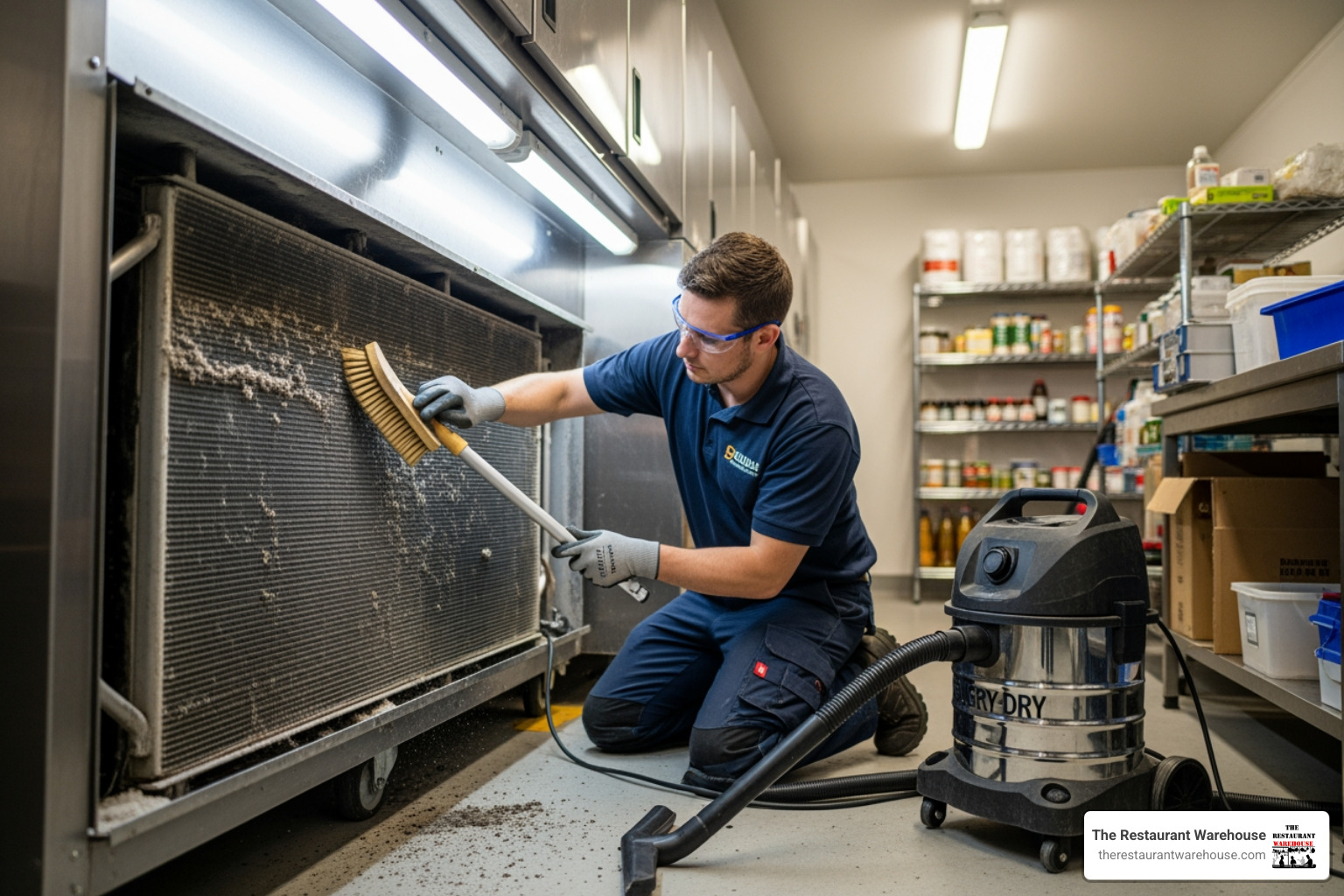
- Clean condenser coils: This is the single most important maintenance task. Clean coils monthly in greasy or dusty environments (like near a cook line) and quarterly in cleaner spaces. A dirty coil cannot efficiently release heat, causing the compressor to run longer and hotter. Use a stiff-bristle coil brush and a vacuum to remove debris, then wipe with a mild degreaser if needed.
- Check and clean gaskets: Wipe down door seals weekly with a damp cloth to remove food debris. Inspect them for cracks, tears, or brittleness. A faulty gasket is a major source of energy loss. Perform the "paper test": close the door on a sheet of paper. If it pulls out with no resistance, the gasket is not sealing and needs to be replaced.
- Calibrate thermostats: At least quarterly, verify the unit's digital display against a reliable, calibrated reference thermometer placed inside the unit. Typical setpoints are 33°F–41°F for refrigerators and −10°F to 0°F for freezers.
- Clear drain lines: Ensure condensation drain lines are free of slime and blockages to prevent water from pooling inside the unit, which can lead to icing issues and unsanitary conditions.
- Inspect fans and evaporators: Visually check for excessive ice buildup on the evaporator coil and ensure that all interior fan blades are clean and turn freely without obstruction.
- Schedule professional service: At least once a year, have a qualified technician perform a professional inspection. They can check refrigerant charge levels, test defrost cycle components, verify electrical connections, and catch small issues before they become major failures.
Energy-Saving Best Practices
Daily habits and operational procedures can significantly impact your refrigeration energy bills.
- Organize inventory: Place high-velocity items near the front to reduce the time doors are held open during retrieval.
- Train for batch retrieval: Encourage staff to minimize door openings by thinking ahead and grabbing multiple items in a single trip.
- Use night covers/curtains: On open-air display units, using night covers can reduce energy consumption by over 50% during closed hours.
- Maintain proper loading: Don’t block air intakes or evaporator fans inside the cabinet. Avoid overpacking shelves, as this restricts airflow and creates warm spots. Allow products to cool before loading.
- Set temperatures correctly: Running a unit colder than necessary wastes a significant amount of energy without providing any additional food safety benefit.
Troubleshooting at a Glance
- Temperature too high: Check for a dirty condenser coil, a faulty door seal, blocked internal airflow from improper product loading, or an unusually high ambient room temperature. Verify defrost cycle settings aren't stuck.
- Excessive icing: Inspect door heaters (if equipped), check for a damaged gasket allowing moist air in, verify defrost frequency and duration, and check for a clogged drain line.
- Compressor short cycling (turning on/off rapidly): This often points to dirty coils, blocked airflow around the unit, or a potential control fault that requires a technician.
For specific maintenance needs or to source OEM-style replacement parts and gaskets, find the right parts for maintenance and repairs: https://therestaurantwarehouse.com/blogs/restaurant-equipment/atosa-parts-department-everything-you-need-to-know
Want a preventive maintenance plan tailored to your specific equipment lineup? Contact us to set up a schedule: https://therestaurantwarehouse.com/pages/contact-us
Frequently Asked Questions about Commercial Refrigeration
We often hear the same important questions from business owners who are navigating the complexities of commercial refrigeration supply. Here are concise, practical answers to help you make decisions with confidence and clarity.
What’s the main difference between commercial and residential refrigerators?
Commercial units are purpose-built for the intense demands and safety requirements of a foodservice environment. They feature more powerful compressors and larger evaporators and condensers to recover temperature quickly after frequent door openings. They are constructed from durable, easy-to-clean materials like stainless steel and must meet NSF certification standards for sanitation and public health. A residential fridge, designed for infrequent use by a family, would quickly fail under the strain of a commercial kitchen, unable to maintain safe temperatures and leading to premature mechanical failure.
Are refurbished refrigeration units a safe investment?
Yes, they can be an excellent and safe investment, as long as you purchase from a reputable supplier. Quality refurbished units offer significant cost savings, making them a fantastic option for new businesses, those on a tight budget, or for expanding capacity affordably. A trustworthy seller will have thoroughly inspected, serviced, tested, and cleaned the unit, replacing any worn components. While there may be minor cosmetic blemishes, the core functional components should be sound and backed by a clear, functional warranty. Always clarify the specific terms and duration of the warranty before purchasing.
How can I reduce my refrigeration energy bills?
Reducing energy costs is a multi-faceted approach. Start by choosing ENERGY STAR certified models, which are proven to be more efficient. Look for modern features like variable-speed compressors and EC fan motors. The most critical action is performing regular maintenance, especially cleaning condenser coils monthly and ensuring door gaskets are tight and free of damage. Strategically place units in well-ventilated areas away from heat sources like cooklines. Finally, implement good operational habits: organize inventory for quick access, minimize door opening times, use night covers on display cases, and set temperatures to the correct, safe level without overcooling.
What temperatures should I target for safe storage?
For refrigerators, the FDA Food Code recommends a temperature at or below 41°F (5°C). Most operators target a range of 33°F–41°F to keep most perishable foods safe and fresh. For freezers, a temperature of 0°F (–18°C) is the standard for preserving food quality, texture, and nutritional value. Many operators set freezers between −10°F and 0°F to provide a buffer. Always monitor these temperatures with a calibrated, independent thermometer and log them regularly as part of your food safety plan.
Can I load hot product directly into a cooler?
It is strongly advised to avoid placing hot food directly into a cooler or walk-in. Doing so introduces a massive amount of heat, forcing the refrigeration system to run continuously for an extended period. This strains the compressor and can raise the overall cabinet temperature, potentially putting other stored foods into the temperature danger zone. The best practice is to use proper cooling procedures: divide large batches into smaller portions in shallow pans, use an ice bath or an ice paddle, or use a dedicated blast chiller if available. Allow foods to cool to safe thresholds (ideally below 70°F) before loading them into your primary storage refrigerator.
Top-mount vs. bottom-mount compressors—which should I choose?
This choice depends heavily on your kitchen's environment. Top-mount models excel in hot environments, like near cooking lines, because they pull in cooler, cleaner air from higher up, avoiding the grease and dust that settles on the floor. This can lead to cleaner coils and better efficiency in such settings. Bottom-mount units are often preferred for their ergonomics, as they raise the bottom shelf to a more accessible height, reducing bending and straining. The compressor is also easier to access for cleaning and service. They can be more energy-efficient in cooler ambient rooms since the compressor is in the coolest part of the room.
What is the difference between static and forced-air cooling?
Static cooling relies on natural convection, where cold air falls from a cooling plate or coils, typically located at the top of the unit. This method is gentle and ideal for delicate items like fresh fish or certain pastries that can dry out under a fan. Forced-air (or fan-assisted) cooling uses a fan to actively circulate cold air throughout the cabinet. This provides more even temperature distribution and faster temperature recovery after door openings, making it the standard for most general-purpose reach-ins, prep tables, and walk-ins.
How do I plan for power outages?
First and foremost, keep all refrigerator and freezer doors closed to retain as much cold air as possible. A fully loaded, well-maintained freezer can hold its temperature for 24-48 hours if left unopened. Add thermometers with min/max memory functions to your units so you can verify the highest temperature reached when power returns. For critical, high-value products, have a backup plan, such as moving them to a large walk-in freezer that has better thermal mass and stability. After any extended outage, follow food safety guidelines diligently for discarding any items that have been exposed to unsafe temperatures.
Are gaskets and parts easy to replace?
For most major brands, common wear parts like door gaskets, light bulbs, and shelving clips are designed to be field-replaceable with basic tools. The most important step is to correctly identify your unit's model and serial number to order the exact replacement part. For help identifying and purchasing parts, use our parts department guide: https://therestaurantwarehouse.com/blogs/restaurant-equipment/atosa-parts-department-everything-you-need-to-know
How often should I service my units professionally?
We recommend professional service at least annually for all commercial refrigeration. In heavy-use environments (busy kitchens, bakeries with flour dust) or high-heat locations, semi-annual service is a wise investment that pays for itself through lower energy use, improved performance, and the prevention of costly emergency breakdowns. A professional service should include a deep coil cleaning, a check of refrigerant levels, testing of all electrical components, and calibration of controls.
Have a question not covered here? Contact us for personalized guidance: https://therestaurantwarehouse.com/pages/contact-us
Conclusion
We’ve covered the essential aspects of the commercial refrigeration supply, from decoding the various equipment types and their specific applications to understanding the key factors that drive a smart, long-term purchase. Matching the right unit mix to your unique workflow, prioritizing energy efficiency to manage total cost of ownership, and adhering to a proactive maintenance schedule are the cornerstones of a successful, low-stress, and profitable foodservice operation.
Today’s technological innovations—including smart controls, high-efficiency compressors, and environmentally friendly refrigerants—provide powerful tools to help you run a leaner, more sustainable business while maintaining the highest standards of product quality. By selecting durable, compliant equipment and diligently documenting your maintenance and temperature checks, you actively reduce business risk, improve uptime, and protect your hard-earned profit margins.
At The Restaurant Warehouse, we believe every business, from a small startup to an established chain, deserves access to high-performing refrigeration without the inflated prices of a traditional retail model. Our wholesale approach eliminates unnecessary overhead and passes those savings directly to you. Whether you need a single reach-in freezer to expand your menu or a complete lineup with a walk-in cooler and multiple prep tables, our team is here to help you compare total cost of ownership, map out a smooth installation, and plan for long-term maintenance.
If you’re ready to solidify your cold chain, lower your operating costs, and future-proof your operation, we encourage you to talk to our experts. Book a strategy call or request a detailed quote today: https://therestaurantwarehouse.com/pages/contact-us
Prefer to start with upgrading or repairing your existing units? Explore our parts guidance and get quick help identifying the right components to keep your equipment running like new: https://therestaurantwarehouse.com/blogs/restaurant-equipment/atosa-parts-department-everything-you-need-to-know
About The Author

Sean Kearney
Sean Kearney used to work at Amazon.com and started The Restaurant Warehouse. He has more than 10 years of experience in restaurant equipment and supplies. He graduated from the University of Washington in 1993. He earned a BA in business and marketing. He also played linebacker for the Huskies football team. He helps restaurants find equipment at a fair price and offers financing options. You can connect with Sean on LinkedIn or Facebook.
Leave a comment