


What Is a Blast Chiller and How Does It Work?
So, what exactly is a blast chiller?
Think of it as a specialized, high-powered refrigerator built for one critical job: to cool down hot, cooked food incredibly fast. Its main mission is to hustle food through the "temperature danger zone" as quickly as possible, locking in both safety and quality. It’s not about long-term storage; it’s all about speed.
Understanding the Essential Role of a Blast Chiller
Let’s say you’ve just made a huge pot of chili. If you leave it on the counter or even stick it in a standard walk-in, it could take hours to cool down. All that time, it's lingering in the temperature danger zone—that sweet spot between 40°F and 140°F where harmful bacteria love to multiply.
A blast chiller completely eliminates that risk.
Its purpose is crystal clear: take food from a hot cooking temperature (like 165°F) down to a safe, refrigerated temperature (below 40°F) in 90 minutes or less. That incredible speed is what sets it apart and makes it such a vital piece of kitchen equipment.
Preserving Quality Beyond Safety
While keeping food safe is the top priority, a blast chiller also does wonders for preserving the quality of the food you worked so hard to create. When food cools slowly in a regular fridge, large, jagged ice crystals form inside. These crystals act like tiny knives, tearing up the food's cellular structure.
The result? Mushy vegetables, grainy sauces, and proteins that turn out dry and mealy when you reheat them.
Because a blast chiller works so quickly, it forms tiny microcrystals that leave the food’s structure intact. This means you get:
- Better Texture: Veggies stay crisp, sauces keep their smooth consistency, and meats don't lose their moisture.
- Vibrant Flavor and Color: The food's original taste, aroma, and appearance are perfectly preserved.
- Higher Nutritional Value: More of the key vitamins and nutrients are retained compared to slow-cooling methods.
Blast Chiller vs. Standard Refrigerator At a Glance
To really get a feel for what a blast chiller brings to the table, it helps to put it head-to-head with the standard refrigerators found in every commercial kitchen. They might look similar, but their jobs are worlds apart.
Here's a quick breakdown of the key differences:
| Feature | Blast Chiller | Standard Refrigerator |
|---|---|---|
| Primary Function | Rapidly cool hot food | Maintain cold temperatures |
| Cooling Speed | ~90 minutes to chill | Hours to chill hot food |
| Food Safety | Minimizes time in danger zone | Can allow extended time in danger zone |
| Quality Impact | Preserves texture and nutrients | Degrades texture and nutrients |
As you can see, a standard refrigerator is designed to keep cold food cold, not to cool hot food down. Trying to use it for rapid cooling can actually strain its compressor and raise the temperature of other food stored inside, putting everything at risk.
Though blast chilling technology first started making waves in commercial kitchens around 1975, its importance has only skyrocketed with today's strict food safety standards. These machines are engineered to bring hot food down to around 3°C (37°F) within that crucial 90-minute window, effectively slamming the brakes on bacterial growth. You can discover more insights about the blast chiller market and its evolution. This capability makes it a non-negotiable tool for any operation serious about food quality and HACCP compliance.
The Science Behind Rapid Cooling Technology
To really get what a blast chiller does, you have to look past the stainless steel door and dive into the powerful science that makes it work. At its heart, a blast chiller runs on a principle called high-velocity convection. This isn't like your standard fridge, which just lets cold air sit around. Instead, a blast chiller uses powerful fans to whip frigid air at high speeds all around the food.
Think about a hot summer day. A light breeze is nice, but a strong, gusty wind cools you off much, much faster. A blast chiller is like a relentless arctic gale inside a box, aggressively pulling heat away from the surface of your food. This intense process ensures the temperature drops evenly and incredibly fast. It’s the key to preventing the outside of the food from freezing solid before the inside even has a chance to cool down.
This kind of technology has roots going all the way back to the 19th century. In 1834, an inventor named Jacob Perkins created the first practical vapor-compression refrigeration machine, which really set the stage for all modern cooling systems. You can explore more of these fascinating refrigeration innovations throughout history.
Why Rapid Cooling Protects Food Texture
The real magic of a blast chiller is what it does to the water inside the food as it cools. When food chills slowly—say, in a regular walk-in—the water molecules have plenty of time to get together and form large, spiky ice crystals. These crystals act like tiny razor blades, shredding the delicate cell structure of the food. It’s the reason why vegetables get mushy and meats lose their juiciness after being slowly frozen and thawed.
A blast chiller avoids all that damage by creating what are called microcrystals.
Because the temperature plummets so quickly, the water molecules are frozen right where they are. This creates tiny, fine ice crystals that don't damage the food's cellular walls. The result? You preserve the original texture, flavor, and nutritional value, ensuring the food is just as good when reheated as it was the moment it came out of the oven.
This chart really drives home just how massive the speed difference is between a blast chiller and a standard refrigerator.
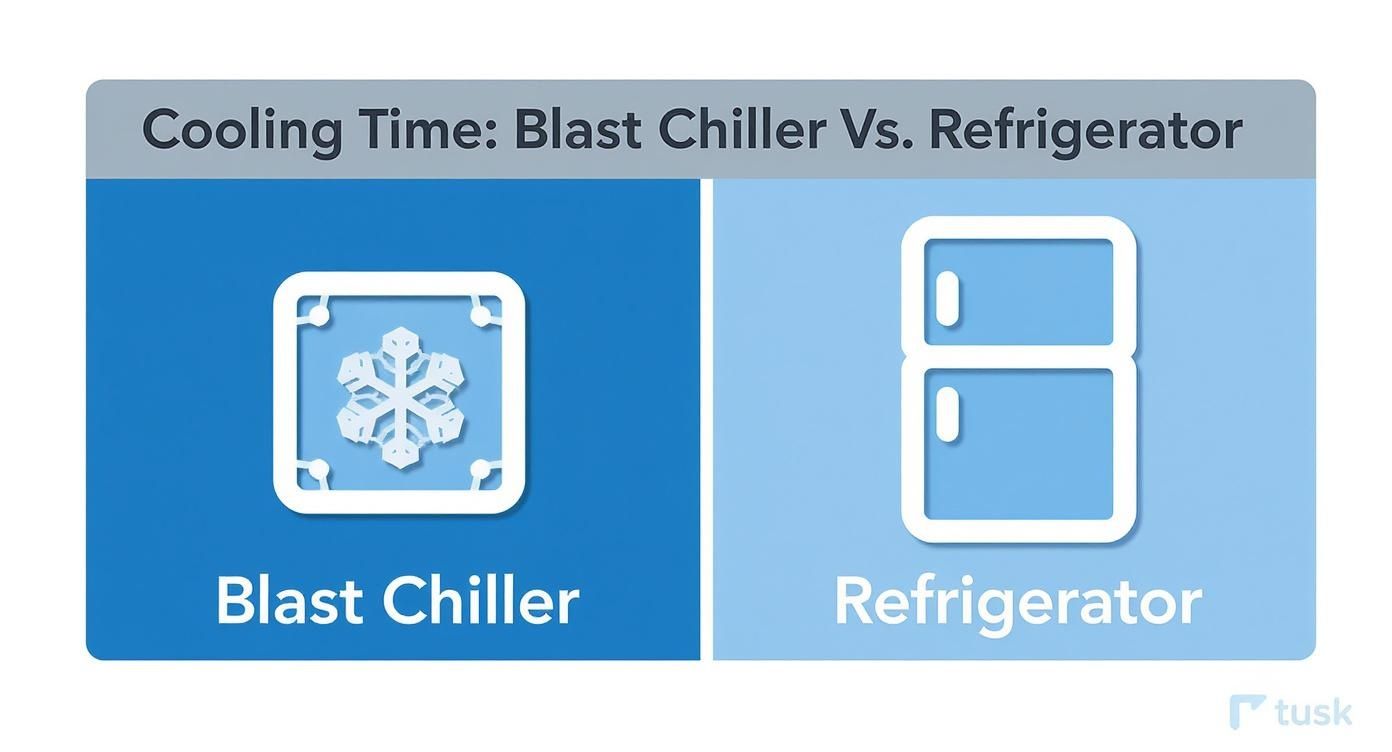
As you can see, the blast chiller slashes the cooling time, rocketing food through the temperature danger zone in minutes, not hours.
Adapting to Different Food Types
Of course, not all foods are the same, and a good blast chiller knows this. They are designed with the flexibility to handle pretty much anything on your menu with precision, typically by offering two main cycles:
- Soft Chilling: This cycle is for your delicate items. Think fish, custards, or leafy greens. It uses slightly warmer air (around 32°F) to gently cool them down without causing any surface freezing that could ruin their fragile textures.
- Hard Chilling: For dense, thick foods like a big pot of stew, a deep pan of lasagna, or a large roast, this cycle brings the power. It uses much colder, faster-moving air to penetrate these items quickly and get them to a safe temperature right to the core.
By choosing the right cycle, chefs can make sure every single item, from a delicate fillet of sole to a hearty beef chili, is cooled perfectly every time.
The Payoff: Better Food Safety, Smarter Operations
Thinking of a blast chiller as just a super-powered freezer is missing the bigger picture. It's a strategic move that pays dividends in food safety, kitchen efficiency, and the quality of the food on your plates. Its most important job, hands down, is acting as the muscle for your food safety program. By rocketing food through the temperature danger zone, it shuts down microbial growth before it can even get started, drastically cutting the risk of foodborne illness.
This rapid cooling isn't just a good idea; it's a core principle of Hazard Analysis and Critical Control Point (HACCP) plans, which are non-negotiable in today's foodservice world. Improperly cooling food is a massive violation that can put your customers at risk and land you in hot water. A blast chiller gives you a consistent, measurable way to nail this critical step every single time. To get a better handle on this system, check out our in-depth guide on what HACCP is and its importance in food safety.
A Smarter Workflow and Less Waste
Beyond the critical safety aspect, a blast chiller unlocks some serious wins for your daily operations and your bottom line. It’s the key to the "cook-chill" method. This lets your team cook up huge batches of things like sauces, soups, and proteins when things are slow. These items are then safely chilled and stored for days, ready to be reheated in minutes when the dinner rush hits.
This simple shift in workflow leads to some pretty great improvements:
- Slash Your Food Waste: You can safely extend the shelf life of prepped foods and even leftovers from just two days to five or more. That means less product in the trash can, which is money straight back into your pocket.
- Boost Labor Efficiency: Your crew can spend peak hours focused on finishing dishes and plating beautifully instead of cooking every single component from scratch. It’s a smarter way to use your labor budget.
- Make Consistency Your Signature: Batch cooking means that every customer gets the same high-quality dish, with the same flavor and texture, every single time. That’s how you build a rock-solid reputation.
Food Quality You Can Actually Taste
Finally, the difference in food quality is something you have to taste to believe. Slow cooling ruins food on a microscopic level; blast chilling preserves it perfectly. By creating tiny microcrystals instead of the large, jagged ice crystals that form in a regular freezer, a blast chiller locks in the food's original moisture, texture, and vibrant color.
When food is blast-chilled, its cellular structure remains intact. This means vegetables stay crisp, sauces remain smooth, and proteins retain their moisture and tenderness upon reheating.
This isn't just kitchen science—it's something your customers will notice. Serving a consistently superior product doesn't just make for a better meal; it builds loyalty and inspires those glowing online reviews. A blast chiller isn't just another piece of equipment; it's a tool for protecting your customers, streamlining your kitchen, and serving the best possible food, day in and day out.
How To Choose The Right Blast Chiller
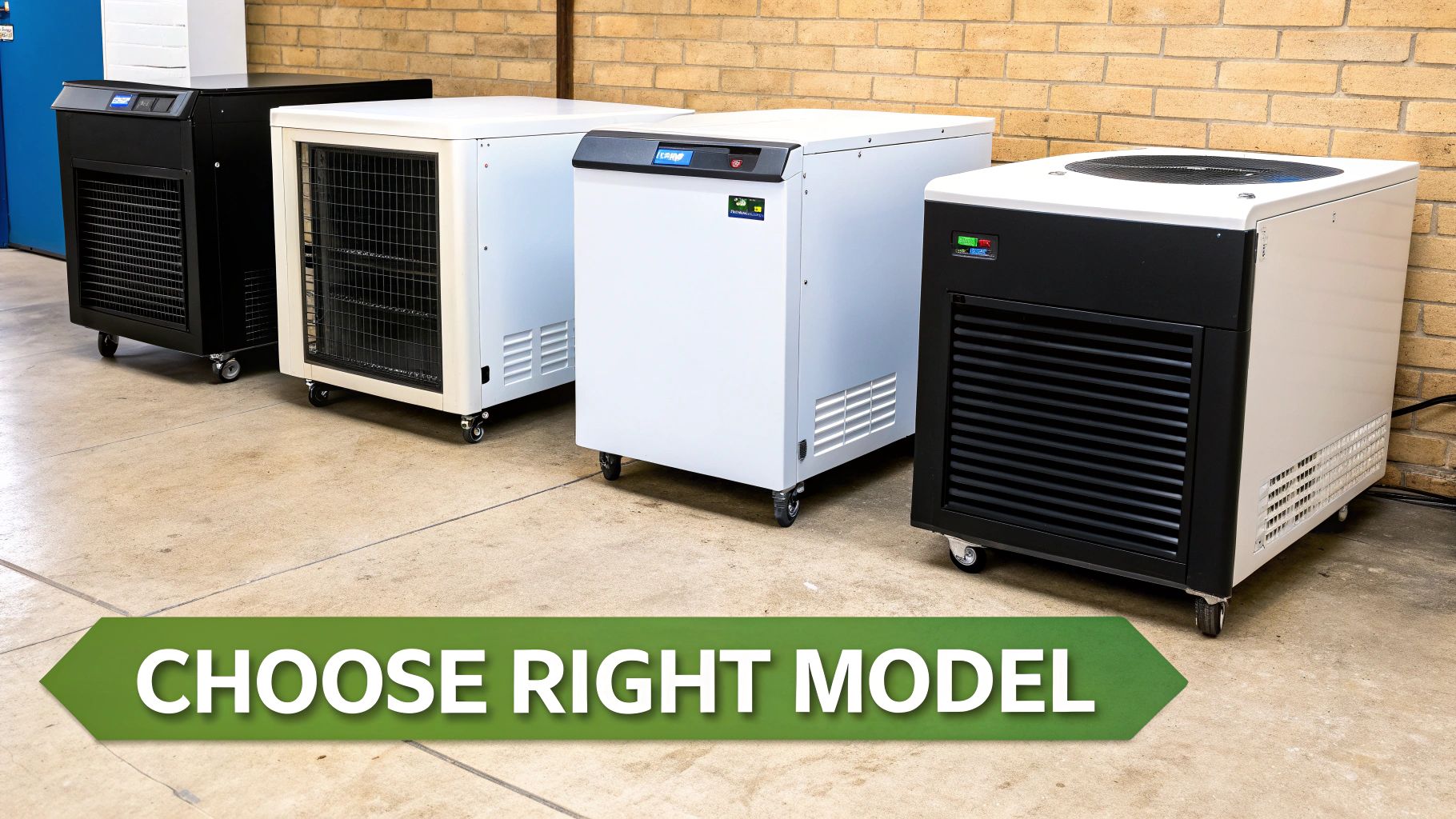
Ready to make a smart investment in a blast chiller? This guide is designed to help you navigate the options and pick the perfect unit for your kitchen. Choosing the right model isn't just about finding the best price; it’s about matching the machine’s capabilities to your menu, your production volume, and your kitchen’s unique layout.
A well-chosen blast chiller slides seamlessly into your daily workflow, becoming a true asset. But the wrong one? It can quickly turn into a frustrating bottleneck. Think of it like buying any other critical piece of kitchen gear—you need to understand the different types and what they’re built for. By sizing up your specific needs against the available models, you can make sure your investment pays off in safety, efficiency, and quality.
Assess Your Kitchen’s Needs
Before you even start looking at specific models, the first step is to take a hard look at your own operation. Getting a clear picture of your requirements will narrow down the field in a big way. Kick things off by asking a few key questions about your daily workflow and menu.
- Menu Complexity: Are you primarily prepping dense items like hearty stews and large roasts, or do you work with more delicate foods like fish fillets and custards? This will tell you if you need advanced features like separate "soft" and "hard" chilling cycles.
- Daily Production Volume: How much food, in pounds or pans, do you need to chill during your busiest prep times? Get a real number here—it’s the single most important factor for choosing the right capacity.
- Kitchen Layout: How much physical space can you actually dedicate to the unit? Pull out the tape measure and map out the footprint, making sure to leave enough room for proper ventilation all around the machine.
A common mistake is buying a unit that’s too small, forcing your team to run multiple cycles and creating a bottleneck. It’s often wiser to invest in a slightly larger capacity than you think you need to accommodate growth.
Common Blast Chiller Types
Blast chillers aren’t a one-size-fits-all solution. They come in several common configurations, each designed for a different kitchen environment and scale of production. Understanding these differences is the key to making an informed choice that works with, not against, the rest of your operation. To get the bigger picture, it helps to see how these specialized units fit into your overall cooling strategy, which you can explore in our guide on choosing the right commercial refrigeration system for your restaurant.
To help you get started, we've put together a quick comparison of the most common models and where they shine. This should give you a good idea of which type might be the best fit for your kitchen.
Blast Chiller Types and Best-Fit Applications
| Chiller Type | Typical Capacity | Ideal For | Key Consideration |
|---|---|---|---|
| Undercounter | 20-50 lbs | Small cafes, bakeries, or specific kitchen stations. | Fits conveniently under existing counters, saving floor space. |
| Reach-In | 50-200 lbs | Mid to high-volume restaurants and catering businesses. | A freestanding unit that offers significant capacity. |
| Roll-In | 200+ lbs | Large-scale operations like hotels, hospitals, and central commissaries. | Accommodates entire speed racks for maximum efficiency. |
Ultimately, the goal is to find a unit that feels like it was made for your kitchen—one that handles your volume, fits your space, and makes your entire operation safer and more efficient.
Integrating a Blast Chiller into Your Kitchen Workflow
Bringing a blast chiller into your kitchen is about more than just adding another piece of equipment; it's about fundamentally changing your kitchen’s rhythm for the better. To really get the most out of it, you have to weave it into your daily operations, treating it less like a final step and more like a central hub for your entire food prep process.
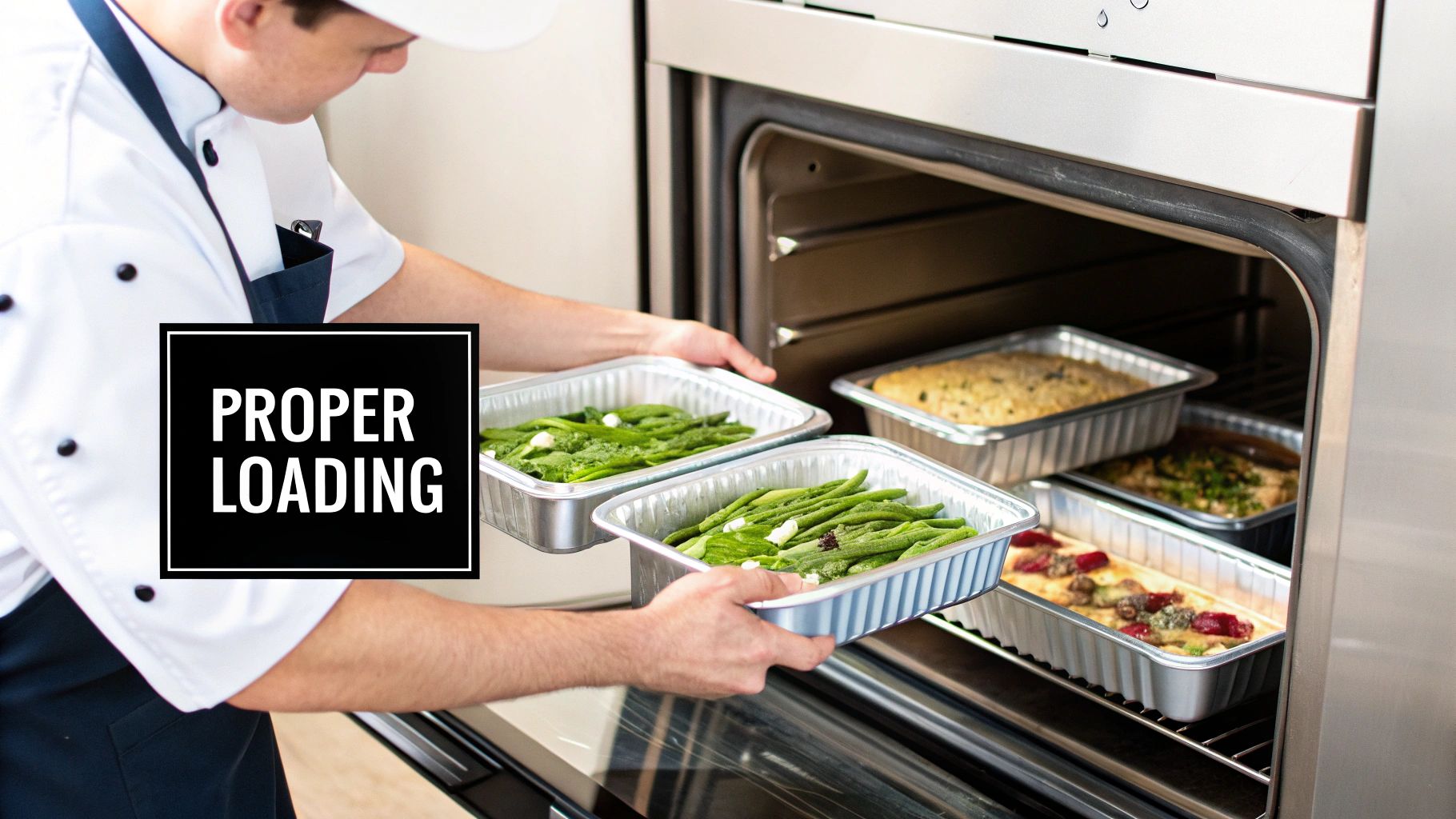
The journey to blast chilling success starts the moment you load the machine. Overcrowding is the absolute enemy of efficiency here, as it blocks the powerful, high-velocity air needed to cool food down fast.
Always use shallow pans to give the food as much surface area as possible, and spread everything out in thin, even layers. Make sure you leave at least an inch of space between each pan so that frigid air can circulate freely. This is the secret to a fast, even chill every single time.
This one simple habit makes a massive difference. It prevents those dreaded hot spots and guarantees every single item hits a safe temperature within that critical 90-minute window.
Establishing Best Practices for Daily Use
Once you’ve mastered proper loading, the next step is building a clear, repeatable workflow for your team. This is what turns a great piece of equipment into an indispensable part of your kitchen's DNA.
A solid, well-structured workflow should cover these bases:
- Programming Cycles: Train your staff on the difference between a "soft chill" for delicate items like fish, sauces, and custards, and a "hard chill" for dense foods like stews or thick cuts of meat. Knowing when to use each is key.
- Clear Labeling: The moment a cycle finishes, every pan needs to be labeled with the item name and the date it was chilled. This simple step is huge for preventing waste and maintaining a strict first-in, first-out (FIFO) inventory system.
- Strategic Placement: Where you physically put the unit really matters. For the smoothest workflow, its location should be a key consideration when you're planning your commercial kitchen layout and design.
Keeping Your Unit in Prime Condition
Finally, consistent maintenance is completely non-negotiable. It’s how you protect your investment and ensure your blast chiller is always performing at its absolute best. A simple weekly checklist is all it takes to keep it running smoothly for years.
Key maintenance tasks are pretty straightforward: wipe down the interior surfaces and door gaskets, clear any debris from the air vents, and check the condenser coils for dust buildup. Committing just a few minutes a week to these tasks will prevent costly repairs and keep your machine operating at peak efficiency.
Common Questions About Blast Chillers
Even after getting the basics down, you probably still have a few practical questions. That's completely normal. Let's tackle some of the most common ones that come up when chefs and owners are thinking about adding a blast chiller to their kitchen.
What’s the Difference Between a Blast Chiller and a Blast Freezer?
While they look similar and use the same powerful airflow technology, their jobs are totally different. Think short-term prep vs. long-term storage.
A blast chiller is designed to take hot food—say, a big pot of soup right off the stove at 165°F—and crash its temperature down to a safe, refrigerated 38°F in about 90 minutes. Its whole purpose is to get food through the temperature danger zone fast so you can safely store it for use in the next few days.
A blast freezer, on the other hand, is built for the long haul. It takes food all the way down to deep-freeze temperatures, usually -0°F or even colder. This process locks in texture and flavor for months, making it perfect for preserving seasonal produce or batch-prepping items far in advance.
Can I Use a Blast Chiller for Any Type of Food?
You bet. Just about any cooked food you can think of benefits from rapid chilling. It’s a total game-changer for dense foods like chili, bolognese, or thick sauces, which are notoriously tricky to cool down safely in a regular walk-in.
It's not just for heavy-duty items, either. Most modern blast chillers have specialized cycles. A 'soft chill' setting, for example, uses slightly warmer air to gently cool delicate things like fish filets, custards, or roasted vegetables. This prevents any ice crystals from forming on the surface, perfectly preserving their fragile texture.
Is a Blast Chiller a Smart Investment for a Small Restaurant?
For most smaller spots, the answer is a definite yes. It might feel like a big upfront cost, but that initial investment is often balanced out surprisingly quickly by savings in other parts of your operation.
The biggest and most immediate payback comes from slashing food waste. When you cool food properly in a blast chiller, its safe shelf life jumps to five days or more, compared to just a couple of days for items cooled conventionally. You also gain a huge labor advantage by being able to safely batch-cook signature sauces, soups, and prepped items during quiet periods.
But the most important return? Guaranteed HACCP compliance and rock-solid food safety. Protecting your customers and your reputation is priceless, making a blast chiller one of the smartest investments you can make in your kitchen's future.
Ready to bring this level of safety and efficiency to your kitchen? At The Restaurant Warehouse, we offer a wide selection of commercial blast chillers and flexible financing to help you get the equipment you need. Check out our inventory and find the perfect unit for your restaurant today at https://therestaurantwarehouse.com.
About The Author

Sean Kearney
Sean Kearney is the Founder of The Restaurant Warehouse, with 15 years of experience in the restaurant equipment industry and more than 30 years in ecommerce, beginning with Amazon.com. As an equipment distributor and supplier, Sean helps restaurant owners make confident purchasing decisions through clear pricing, practical guidance, and a more transparent online buying experience.
Connect with Sean on LinkedIn, Instagram, YouTube, or Facebook.