
Commercial Food Warmers

Atosa CSTEA-2C Electric 2 Well Steam Table
Atosa
Original price
$1,276.00
-
Original price
$1,276.00
Original price
$1,276.00
$1,276.00
-
$1,276.00
Current price
$1,276.00
Atosa CSTEA-2C Electric 2 Well Steam Table The Atosa CSTEA-2C electric steam table provides dependable hot food holding for restaurants, cafeteria...
View full details
Original price
$1,276.00
-
Original price
$1,276.00
Original price
$1,276.00
$1,276.00
-
$1,276.00
Current price
$1,276.00

Atosa CSTEA-3C Electric 3 Well Steam Table
Atosa
Original price
$1,617.00
-
Original price
$1,617.00
Original price
$1,617.00
$1,617.00
-
$1,617.00
Current price
$1,617.00
Atosa CSTEA-3C Electric 3 Well Steam Table The Atosa CSTEA-3C electric steam table provides reliable hot food holding for restaurants, cafeterias,...
View full details
Original price
$1,617.00
-
Original price
$1,617.00
Original price
$1,617.00
$1,617.00
-
$1,617.00
Current price
$1,617.00
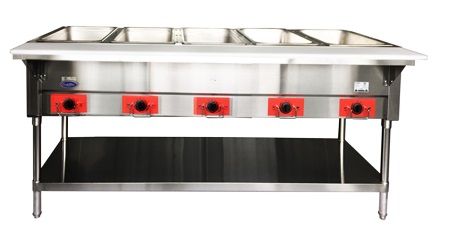
Atosa USA CSTEA-4C 4 Well Electric Steam Table
Atosa
Original price
$1,985.00
-
Original price
$1,985.00
Original price
$1,985.00
$1,985.00
-
$1,985.00
Current price
$1,985.00
Atosa USA CSTEA-4C 4 Well Electric Steam Table The Atosa CSTEA-4C electric steam table is designed for restaurants, cafeterias, catering operation...
View full details
Original price
$1,985.00
-
Original price
$1,985.00
Original price
$1,985.00
$1,985.00
-
$1,985.00
Current price
$1,985.00

Atosa CSTEB-5C 5 Well Hot Food Table, Electric Steam Table
Atosa
Original price
$2,408.00
-
Original price
$2,408.00
Original price
$2,408.00
$2,408.00
-
$2,408.00
Current price
$2,408.00
Atosa CSTEB-5C 5 Well Hot Food Table, Electric Steam Table The Atosa CSTEB-5C electric steam table provides reliable hot food holding for restaura...
View full details
Original price
$2,408.00
-
Original price
$2,408.00
Original price
$2,408.00
$2,408.00
-
$2,408.00
Current price
$2,408.00

Atosa MROS-2ST Steam Table Sneeze Guard - 2 Wells
Atosa
Original price
$350.00
-
Original price
$350.00
Original price
$350.00
$350.00
-
$350.00
Current price
$350.00
Atosa MROS-2ST Steam Table Sneeze Guard - 2 Wells The Atosa MROS-2ST steam table sneeze guard is designed for two-well steam tables, providing ess...
View full details
Original price
$350.00
-
Original price
$350.00
Original price
$350.00
$350.00
-
$350.00
Current price
$350.00

Atosa MROS-3ST Steam Table Sneeze Guard - 3 Wells
Atosa
Original price
$424.00
-
Original price
$424.00
Original price
$424.00
$424.00
-
$424.00
Current price
$424.00
Atosa MROS-3ST Steam Table Sneeze Guard - 3 Wells The Atosa MROS-3ST steam table sneeze guard is designed for use with three-well steam tables, pr...
View full details
Original price
$424.00
-
Original price
$424.00
Original price
$424.00
$424.00
-
$424.00
Current price
$424.00

Atosa MROS-4ST Steam Table Sneeze Guard - 4 Wells
Atosa
Original price
$500.00
-
Original price
$500.00
Original price
$500.00
$500.00
-
$500.00
Current price
$500.00
Atosa MROS-4ST Steam Table Sneeze Guard - 4 Wells The Atosa MROS-4ST steam table sneeze guard is designed for use with four-well steam tables, pro...
View full details
Original price
$500.00
-
Original price
$500.00
Original price
$500.00
$500.00
-
$500.00
Current price
$500.00

Atosa MROS-5ST Steam Table Sneeze Guard - 5 Wells
Atosa
Original price
$574.00
-
Original price
$574.00
Original price
$574.00
$574.00
-
$574.00
Current price
$574.00
Atosa MROS-5ST Steam Table Sneeze Guard - 5 Wells The Atosa MROS-5ST steam table sneeze guard is designed to mount above a five-well steam table t...
View full details
Original price
$574.00
-
Original price
$574.00
Original price
$574.00
$574.00
-
$574.00
Current price
$574.00


Atosa USA ATHC-9ES Heated Insulated Cabinet - Energy Star Rated 9 warming pans
Atosa
Original price
$2,756.00
Original price
$2,756.00
-
Original price
$2,756.00
Original price
$2,756.00
Current price
$1,880.00
$1,880.00
-
$1,880.00
Current price
$1,880.00
Atosa USA ATHC-9ES Heated Insulated Cabinet - 9 pans Once the foods are ready in the kitchens, they must be kept at the right temperatures before a...
View full details
Original price
$2,756.00
Original price
$2,756.00
-
Original price
$2,756.00
Original price
$2,756.00
Current price
$1,880.00
$1,880.00
-
$1,880.00
Current price
$1,880.00
Save 32%


Atosa USA ATHC-18ES Heated Insulated Cabinet - Energy Star Rated 18 warming pans
Atosa
Original price
$3,286.00
Original price
$3,286.00
-
Original price
$3,286.00
Original price
$3,286.00
Current price
$2,242.00
$2,242.00
-
$2,242.00
Current price
$2,242.00
Atosa USA ATHC-18ES Heated Insulated Cabinet - 18 pans Holding cabinets keep hot food at a safe temperature. They do this from the end of cooking u...
View full details
Original price
$3,286.00
Original price
$3,286.00
-
Original price
$3,286.00
Original price
$3,286.00
Current price
$2,242.00
$2,242.00
-
$2,242.00
Current price
$2,242.00
Save 32%

Atosa USA ATWC-12 Economy Heated Insulated Cabinet - 12 pan
Atosa
Original price
$2,200.00
Original price
$2,200.00
-
Original price
$2,200.00
Original price
$2,200.00
Current price
$1,392.00
$1,392.00
-
$1,392.00
Current price
$1,392.00
Atosa USA ATWC-12 Economy Heated Insulated Cabinet – 12 Pan Capacity Updated Model: ATWC-12 The Atosa ATWC-12 Heated Insulated Cabinet provides d...
View full details
Original price
$2,200.00
Original price
$2,200.00
-
Original price
$2,200.00
Original price
$2,200.00
Current price
$1,392.00
$1,392.00
-
$1,392.00
Current price
$1,392.00
Save 37%

Atosa USA ATWC-24 Economy Heated Insulated Cabinet - 24 pan
Atosa
Original price
$2,500.00
Original price
$2,500.00
-
Original price
$2,500.00
Original price
$2,500.00
Current price
$1,582.00
$1,582.00
-
$1,582.00
Current price
$1,582.00
Atosa USA ATWC-24 Economy Heated Insulated Cabinet – 24 Pan Capacity Updated Model: ATWC-24 The Atosa ATWC-24 Heated Insulated Cabinet is designe...
View full details
Original price
$2,500.00
Original price
$2,500.00
-
Original price
$2,500.00
Original price
$2,500.00
Current price
$1,582.00
$1,582.00
-
$1,582.00
Current price
$1,582.00
Save 37%

Atosa 7700 Full Size Electronic Food Warmer (1200W)
Atosa
Original price
$190.00
-
Original price
$190.00
Original price
$190.00
$190.00
-
$190.00
Current price
$190.00
Atosa 7700 Full Size Electronic Food Warmer (1200W) The Atosa 7700 full size electronic food warmer is designed to maintain safe holding temperatu...
View full details
Original price
$190.00
-
Original price
$190.00
Original price
$190.00
$190.00
-
$190.00
Current price
$190.00

Atosa 7800 Full Size Electronic Cooker and Food Warmer (1500W)
Atosa
Original price
$210.00
-
Original price
$210.00
Original price
$210.00
$210.00
-
$210.00
Current price
$210.00
Atosa 7800 Full Size Electronic Cooker and Food Warmer (1500W) The Atosa 7800 full size electronic cooker and food warmer is designed for commerci...
View full details
Original price
$210.00
-
Original price
$210.00
Original price
$210.00
$210.00
-
$210.00
Current price
$210.00

BK Resources STE-NG-4 Natural Gas Hot Steam/Food Table w/ (4) Wells & Cutting Board
BK Resources
Original price
$3,430.00
-
Original price
$3,430.00
Original price
$3,430.00
$3,430.00
-
$3,430.00
Current price
$3,430.00
Natural Gas Steam Table 4 Pan Open Well Design Infinite Temperate Control Cutting Board Shelf Stainless Steel Construction Adjustable Undershelf 35...
View full details
Original price
$3,430.00
-
Original price
$3,430.00
Original price
$3,430.00
$3,430.00
-
$3,430.00
Current price
$3,430.00

BK Resources STE-NG-3 Natural Gas Hot Steam/Food Table w/ (3) Wells & Cutting Board
BK Resources
Original price
$2,820.00
-
Original price
$2,820.00
Original price
$2,820.00
$2,820.00
-
$2,820.00
Current price
$2,820.00
Natural Gas Steam Table 3 Pan Open Well Design Infinite Temperate Control Cutting Board Shelf Stainless Steel Construction Adjustable Undershelf 35...
View full details
Original price
$2,820.00
-
Original price
$2,820.00
Original price
$2,820.00
$2,820.00
-
$2,820.00
Current price
$2,820.00

BK Resources STE-NG-5 Natural Gas Hot Steam/Food Table w/ (5) Wells & Cutting Board
BK Resources
Original price
$4,430.00
-
Original price
$4,430.00
Original price
$4,430.00
$4,430.00
-
$4,430.00
Current price
$4,430.00
Natural Gas Steam Table 5 Pan Open Well Design Infinite Temperate Control Cutting Board Shelf Stainless Steel Construction Adjustable Undershelf 35...
View full details
Original price
$4,430.00
-
Original price
$4,430.00
Original price
$4,430.00
$4,430.00
-
$4,430.00
Current price
$4,430.00

BK Resources STE-NG-2 Natural Gas Hot Steam/Food Table w/ (2) Wells & Cutting Board
BK Resources
Original price
$2,537.00
-
Original price
$2,537.00
Original price
$2,537.00
$2,537.00
-
$2,537.00
Current price
$2,537.00
Natural Gas Steam Table 2 Pan Open Well Design Infinite Temperate Control Cutting Board Shelf Stainless Steel Construction Adjustable Undershelf 35...
View full details
Original price
$2,537.00
-
Original price
$2,537.00
Original price
$2,537.00
$2,537.00
-
$2,537.00
Current price
$2,537.00

BK Resources STE-LP-2 (LP) Propane Hot Steam/Food Table w/ (2) Wells & Cutting Board
BK Resources
Original price
$2,537.00
-
Original price
$2,537.00
Original price
$2,537.00
$2,537.00
-
$2,537.00
Current price
$2,537.00
LP Gas Steam Table 2 Pan Open Well Design Infinite Temperate Control Cutting Board Shelf Stainless Steel Construction Adjustable Undershelf 3500 BT...
View full details
Original price
$2,537.00
-
Original price
$2,537.00
Original price
$2,537.00
$2,537.00
-
$2,537.00
Current price
$2,537.00

BK Resources STE-LP-5 (LP) Propane Hot Steam/Food Table w/ (5) Wells & Cutting Board
BK Resources
Original price
$4,430.00
-
Original price
$4,430.00
Original price
$4,430.00
$4,430.00
-
$4,430.00
Current price
$4,430.00
LP Gas Steam Table 5 Pan Open Well Design Infinite Temperate Control Cutting Board Shelf Stainless Steel Construction Adjustable Undershelf 3500 BT...
View full details
Original price
$4,430.00
-
Original price
$4,430.00
Original price
$4,430.00
$4,430.00
-
$4,430.00
Current price
$4,430.00

BK Resources STE-LP-4 (LP) Propane Hot Steam/Food Table w/ (4) Wells & Cutting Board
BK Resources
Original price
$3,430.00
-
Original price
$3,430.00
Original price
$3,430.00
$3,430.00
-
$3,430.00
Current price
$3,430.00
LP Gas Steam Table 4 Pan Open Well Design Infinite Temperate Control Cutting Board Shelf Stainless Steel Construction Adjustable Undershelf 3500 BT...
View full details
Original price
$3,430.00
-
Original price
$3,430.00
Original price
$3,430.00
$3,430.00
-
$3,430.00
Current price
$3,430.00

BK Resources STE-LP-3 (LP) Propane Hot Steam/Food Table w/ (3) Wells & Cutting Board
BK Resources
Original price
$2,820.00
-
Original price
$2,820.00
Original price
$2,820.00
$2,820.00
-
$2,820.00
Current price
$2,820.00
LP Gas Steam Table 3 Pan Open Well Design Infinite Temperate Control Cutting Board Shelf Stainless Steel Construction Adjustable Undershelf 3500 BT...
View full details
Original price
$2,820.00
-
Original price
$2,820.00
Original price
$2,820.00
$2,820.00
-
$2,820.00
Current price
$2,820.00

Thunder Group SEJ35000C 10.5 Quart Stainless Steel Soup Warmer, Black Color
Thunder Group
Original price
$256.00
Original price
$256.00
-
Original price
$256.00
Original price
$256.00
Current price
$150.00
$150.00
-
$150.00
Current price
$150.00
10-1/2 qt, 13-1/5" Diameter x 13-7/9" Height, Electric Soup Warmer, Black Color, Iron Casing with Stainless Steel Insert, Aluminum Water Pan, Volta...
View full details
Original price
$256.00
Original price
$256.00
-
Original price
$256.00
Original price
$256.00
Current price
$150.00
$150.00
-
$150.00
Current price
$150.00
Save 41%

Thunder Group SEJ38000C 10.5 Quart Stainless Steel Soup/Food Warmer
Thunder Group
Original price
$429.00
Original price
$429.00
-
Original price
$429.00
Original price
$429.00
Current price
$300.00
$300.00
-
$300.00
Current price
$300.00
10-1/2 qt, 12-3/5" Diameter x 13" Height, Electric Soup and Food Warmer, Stainless Steel Casing & Interior Liner, Voltage: 120V/60Hz, Dishwash...
View full details
Original price
$429.00
Original price
$429.00
-
Original price
$429.00
Original price
$429.00
Current price
$300.00
$300.00
-
$300.00
Current price
$300.00
Save 30%

Comstack Castle CC-WD-1 Countertop Food Warmer - 1 Drawer
Comstock-Castle
Original price
$2,480.00
-
Original price
$2,480.00
Original price
$2,480.00
$2,480.00
-
$2,480.00
Current price
$2,480.00
This free-standing food warming drawer measures 23-3/4" wide, 21" deep, and 15" high, featuring an insulated stainless steel frame for efficient he...
View full details
Original price
$2,480.00
-
Original price
$2,480.00
Original price
$2,480.00
$2,480.00
-
$2,480.00
Current price
$2,480.00

Comstack Castle CC-WD-2 Countertop Food Warmer - 2 Drawer
Comstock-Castle
Original price
$3,780.00
Original price
$3,780.00
-
Original price
$3,780.00
Original price
$3,780.00
Current price
$2,700.00
$2,700.00
-
$2,700.00
Current price
$2,700.00
The Comstack Castle CC-WD-2 Countertop Food Warmer features two insulated drawers, each equipped with two 12" x 20" x 6" pans, providing ample spac...
View full details
Original price
$3,780.00
Original price
$3,780.00
-
Original price
$3,780.00
Original price
$3,780.00
Current price
$2,700.00
$2,700.00
-
$2,700.00
Current price
$2,700.00
Save 29%

Comstack Castle CC-WD-3 Countertop Food Warmer - 3 Drawer
Comstock-Castle
Original price
$5,100.00
Original price
$5,100.00
-
Original price
$5,100.00
Original price
$5,100.00
Current price
$3,800.00
$3,800.00
-
$3,800.00
Current price
$3,800.00
The Comstack Castle CC-WD-3 Countertop Food Warmer is a free-standing unit featuring three insulated drawers, each equipped with a 12" x 20" x 6" p...
View full details
Original price
$5,100.00
Original price
$5,100.00
-
Original price
$5,100.00
Original price
$5,100.00
Current price
$3,800.00
$3,800.00
-
$3,800.00
Current price
$3,800.00
Save 25%


Atosa CHDC-44 Heated Display Case 4.4 cu. ft.
Atosa
Original price
$1,200.00
Original price
$1,200.00
-
Original price
$1,200.00
Original price
$1,200.00
Current price
$759.00
$759.00
-
$759.00
Current price
$759.00
Atosa CHDC-44 Heated Display Case 4.4 cu. ft. The Atosa CHDC-44 heated display case is designed for countertop food merchandising in bakeries, caf...
View full details
Original price
$1,200.00
Original price
$1,200.00
-
Original price
$1,200.00
Original price
$1,200.00
Current price
$759.00
$759.00
-
$759.00
Current price
$759.00
Save 37%


Atosa CHDC-56 Heated Display Case 5.6 cu. ft.
Atosa
Original price
$1,350.00
Original price
$1,350.00
-
Original price
$1,350.00
Original price
$1,350.00
Current price
$854.00
$854.00
-
$854.00
Current price
$854.00
Atosa CHDC-56 Heated Display Case 5.6 cu. ft. The Atosa CHDC-56 heated display case provides reliable hot food holding and attractive countertop m...
View full details
Original price
$1,350.00
Original price
$1,350.00
-
Original price
$1,350.00
Original price
$1,350.00
Current price
$854.00
$854.00
-
$854.00
Current price
$854.00
Save 37%


Atosa CHDS-53 Heated Display Case 5.3 cu. ft.
Atosa
Original price
$1,300.00
Original price
$1,300.00
-
Original price
$1,300.00
Original price
$1,300.00
Current price
$823.00
$823.00
-
$823.00
Current price
$823.00
Atosa CHDS-53 Heated Display Case 5.3 cu. ft. The Atosa CHDS-53 heated display case is designed for countertop food merchandising in bakeries, caf...
View full details
Original price
$1,300.00
Original price
$1,300.00
-
Original price
$1,300.00
Original price
$1,300.00
Current price
$823.00
$823.00
-
$823.00
Current price
$823.00
Save 37%


Atosa CHDS-71 Heated Display Case 7.1 cu. ft.
Atosa
Original price
$1,500.00
Original price
$1,500.00
-
Original price
$1,500.00
Original price
$1,500.00
Current price
$949.00
$949.00
-
$949.00
Current price
$949.00
Atosa CHDS-71 Heated Display Case 7.1 cu. ft. The Atosa CHDS-71 heated display case is designed for countertop merchandising in bakeries, cafés, c...
View full details
Original price
$1,500.00
Original price
$1,500.00
-
Original price
$1,500.00
Original price
$1,500.00
Current price
$949.00
$949.00
-
$949.00
Current price
$949.00
Save 37%
Commercial Food Holding and Warming Equipment
Choose food holding and warming equipment around the food you serve, how customers receive it and the time between cooking and service. A buffet steam table, countertop food warmer, heated cabinet and heated display case all support hot service, but they solve different problems. Proofers support dough production, while sneeze guards protect exposed food at the serving line rather than supplying heat.
The Restaurant Warehouse brings these choices together so you can compare the complete holding setup rather than shop each component in isolation. Start with the equipment comparison below, then match pan capacity, moisture control, utilities and access to your menu. Keep cooking, reheating, proofing and hot holding as separate jobs when checking a model's capabilities.
Which Food Holding Equipment Fits Your Service?
| Equipment | Main job | What to compare |
|---|---|---|
| Steam table | Hold several pans of cooked food along a staffed or self-service line. | Number of wells, approved wet or dry operation, controls, serving access and utilities. |
| Steam well or drop-in warmer | Provide pan holding within a counter or serving station. | Counter cutout, pan supports, water arrangement, drainage and service access. |
| Countertop food warmer | Keep a smaller selection of prepared items close to service. | Usable pan capacity, footprint, controls and the intended food's holding needs. |
| Warming drawer | Provide enclosed holding at a pickup or preparation station. | Drawer count, pan fit, moisture features and access with drawers fully open. |
| Heated display case | Combine hot holding with customer-facing merchandising. | Shelf space, visibility, access, airflow and any specified humidity features. |
| Heated cabinet | Hold batches of prepared food behind the line or for banquet service. | Pan and tray compatibility, usable spacing, insulation and loading direction. |
| Proofing cabinet | Control the environment for dough rising before baking. | Recipe requirements, humidity provision, temperature control and batch capacity. |
| Sneeze guard | Provide a protective barrier over exposed food. | Approved coverage, mounting, heat compatibility, cleaning and serving access. |
A mixed menu may need more than one holding method. Sauces and moist side dishes have different quality requirements from fried foods, and a cabinet holding reserve pans does not replace the steam table where guests are served. Plan the transfer from cooking to holding to service, including the space and staff needed for replenishment.
Commercial Steam Tables for Buffets, Cafeterias and Catering
A steam table is a pan-based hot-holding station for food that has already been cooked or reheated appropriately. The wells support compatible food pans above the equipment's heat source. Wet-operation models use the manufacturer's specified water-pan or well arrangement; dry-operation models hold without that water bath. The operating manual, not the category name, determines how a particular table must be used.
Buffet lines, school cafeterias, hotels and catered events use steam tables to present entrees, sides and sauces together. Separate pans make replenishment easier and let you organize the menu by demand. A table's number of wells describes its layout, not a guaranteed number of meals per hour or an unlimited safe holding time.
Steam Table Buying Guide
If you need to keep food warm and ready to serve throughout the day, a commercial steam table is an essential piece of equipment. These units are designed to hold food at safe temperatures while maintaining quality and presentation during busy service periods.
How Steam Tables Work
Steam tables use heated water wells or electric elements to maintain consistent temperatures. This allows operators to hold a variety of dishes, including entrees, sides, and sauces, without overcooking or drying out the food.
Flexible Food Holding Options
Most steam tables are designed with two or more compartments, allowing you to use full-size pans or mix and match smaller pans depending on your menu. This flexibility makes them perfect for buffets, cafeterias, and self-service stations.
Complete Your Serving Line
Steam tables are often used alongside other serving and holding equipment. Consider adding sneeze guards for sanitation, heated display cases for merchandising, and food warmers for additional holding capacity.
For full-service setups, explore our catering equipment collection to build out your entire serving line.
Additional Hot Holding Equipment
Depending on your menu, you may also benefit from specialized equipment like soup warmers, rice cookers, and proofers for dough preparation and holding.
Steam Table vs Other Heating Equipment
While steam tables are ideal for bulk food holding, other equipment such as induction ranges can be used for live cooking or finishing dishes. Combining these tools allows for a more dynamic and efficient service line.
Why Choose a Commercial Steam Table?
A commercial steam table helps improve efficiency, maintain food quality, and streamline service. Whether you're operating a buffet, cafeteria, or catering business, steam tables ensure your food stays hot, safe, and ready to serve.
Choosing a Four-Pan Steam Table
A four-pan steam table is useful when you need several hot dishes available simultaneously without building a larger serving line. Start by drawing the exact pan arrangement: which foods need a full-size position, which can share a well using compatible fractional pans, and which dishes sell quickly enough to need frequent replacement. Confirm the supports and adapter bars required for the configuration.
Capacity depends on pan depth, portion size and the interval between replenishment, not just the number four. A deeper pan may hold more food but can be heavier to lift and may not suit the equipment's clearances or your product-quality goals. A shallow pan replenished regularly may fit a lower-volume item better than holding a large batch through an entire service.
For a four-well comparison, review the Atosa CSTEA-4C, BK Resources STE-NG-4 natural-gas table and BK Resources STE-LP-4 propane table. Match the complete model specification to your utilities and pan plan before ordering. The two-, three- and five-well alternatives in this collection let you size around a smaller menu or additional service positions.
Electric, Natural Gas or Propane?
Choose the power source from the actual installation. Electric equipment requires the correct voltage, amperage, phase, plug and circuit capacity; do not assume every warmer uses an ordinary outlet. Natural-gas and propane models must match the available fuel and the manufacturer's connection requirements. Have qualified installers confirm connections, shutoffs, required ventilation and applicable local requirements.
For mobile catering, check the venue's available circuits and any restrictions on fuel-powered equipment before buying. A propane model is not automatically approved for indoor use, and casters do not make a connected gas table safe to move while operating. Compare installed cost, local energy rates, operating hours, controls and maintenance rather than assuming one fuel is always cheaper or faster.
Steam Table Models and Serving-Line Accessories
- Atosa electric-table comparison: CSTEA-2C, CSTEA-3C, CSTEA-4C and CSTEB-5C.
- BK Resources natural-gas tables: STE-NG-2, STE-NG-3, STE-NG-4 and STE-NG-5.
- BK Resources propane tables: STE-LP-2, STE-LP-3, STE-LP-4 and STE-LP-5.
- Steam-table sneeze-guard accessories: Compare MROS-2ST, MROS-3ST, MROS-4ST and MROS-5ST with the matching table. Confirm mounting compatibility and the proposed protective arrangement before ordering.
Check what comes with each table, including its cutting board, pans, lids, undershelf, legs or casters. Keep utensils and serving supplies accessible without blocking the pan openings or forcing staff to reach across hot food. Plan the replenishment route behind the line as carefully as the guest-facing arrangement.
Steam Tables Are Not Food Steamers
A commercial food steamer cooks food; a conventional steam table holds prepared food for service. If the task is cooking vegetables, seafood or other menu components with steam, choose equipment designed and rated for that cooking process. A kitchen may need a steamer on the cooking line and a steam table at service, but one should not be purchased as a substitute for the other.
Commercial Food Steamers for Restaurant Kitchens
Choose a commercial food steamer around the food you need to cook, the batch size and the pace of service. Vegetables, seafood, rice and other menu items can require different pan arrangements and cooking programs. Start with the manufacturer's approved applications and your recipes rather than assuming every steamer suits every food or production volume.
A cooking steamer and a steam table do different jobs. Use equipment designed for cooking to prepare the food, then transfer it to suitable holding equipment when service requires a separate holding stage. Do not assume a conventional steam table, proofer or heated cabinet can perform the steamer's cooking process.
Compare Steamer Format, Capacity and Controls
Countertop versus floor-standing describes the equipment's physical format. Pressure operation, compartment arrangement and water-supply design are separate selection questions, not interchangeable categories. Compare the complete specification rather than choosing from one label such as “compact” or “connectionless.” Confirm the exact model and available configuration before ordering.
| Selection point | What to confirm |
|---|---|
| Peak batch demand | Record portions needed during the busiest service interval and the time available for cooking, loading and unloading. Compare demonstrated output with your actual menu. |
| Pan capacity | Check usable pan dimensions, depth, shelf spacing and loaded weight. A compartment's advertised pan count does not establish the capacity for every pan depth or food. |
| Countertop or floor layout | Measure the footprint, support requirements, door swing, service clearances and safe access for removing hot pans. |
| Water arrangement | Confirm whether the unit requires a plumbed supply or manual filling, how water levels are monitored, and how draining and cleaning are performed. |
| Controls and compartments | Ask which timers, cooking programs and compartment controls the model actually includes. Demonstrate the sequence for the foods your staff will prepare. |
| Utilities and installation | Have qualified installers review the electrical or gas specification, water supply, drainage and any ventilation requirements for the exact unit. |
Water Quality, Cleaning and Service Planning
Ask the supplier for the steamer's water-quality limits and have the proposed supply assessed before selecting treatment. Do not assume a built-in filter is included, that a generic filter addresses every water issue, or that reverse osmosis is appropriate for every machine. Specify any treatment and its maintenance requirements against the equipment documentation.
Include access to the reservoir, drain, removable pan supports and door seals in the installation plan. Follow the model's shutdown, cooling and cleaning procedure, including its approved descaling products and schedule. Leave pressure-system servicing, electrical testing and internal repairs to qualified personnel.
Connect Steam Cooking with Your Holding Line
Plan where a cooked batch goes next: directly to plating, into a heated cabinet, or into compatible pans at the serving line. Check that pans and lids suit both stages, and provide a safe landing area for hot loads. Coordinate cooking batches with replenishment so staff are not producing more food than the holding setup can accommodate.
Include required pans, water treatment, installation, staff instruction and service support in the complete purchase comparison. Evaluate the equipment using your workflow and written specifications rather than relying on a universal cooking-time, nutrition-retention or energy-savings claim.
Steam Wells, Drop-In Warmers and Pan Fit
A steam well is the heated pan-holding component within a serving station. It may be part of a freestanding table or integrated into a counter. A drop-in well needs the correct cutout and support as well as room below for utilities, controls and maintenance. Check those requirements before a counter is fabricated; matching the visible opening alone is not enough.
Open-well and sealed-well designs differ in how the heating area and water arrangement are constructed. Some equipment requires a separate spillage pan; other equipment has an integral well and may include a drain. Do not pour water into an exposed-element cavity unless the manual specifically instructs it, and do not operate a wet-only unit dry. Sealed construction alone does not establish permission for both operating modes.
Full-Size, Fractional and Gastronorm Pans
Compare the well opening, pan rim, usable depth and required supports against the exact pans you plan to use. Full-size and fractional hotel pans help divide a serving station among different dishes, but similar labels do not guarantee that every pan, lid or adapter will fit. If you use Gastronorm equipment, compare dimensions and manufacturer compatibility rather than assuming interchangeability.
Stainless pans, lids and approved adapter bars are practical items to include in the equipment budget. Plastic pans must be explicitly rated for the temperature and application; cold-storage containers are not automatically safe for a hot well. Avoid improvised supports and uncovered gaps that interfere with the intended arrangement or expose staff to hot surfaces and steam.
Controls, Drainage and Access
Individual well controls can help manage a varied menu, but they do not remove the need to measure food temperature. Consider whether staff can easily reach the controls without reaching over guests or hot pans. For drain-equipped units, confirm the drain routing and required installation provisions with your installer before ordering.
Allow access to heating components, shutoffs and connections for service. Permanent counters should not trap the unit where repairs require dismantling the entire line. For portable equipment, confirm a stable supporting surface and safe routing of cords or connections away from traffic.
Hotel Pans, Gastronorm Containers and Steam Table Pans
The standalone food pans, Gastronorm containers and bain-marie pots discussed in this guide are selection references, not current product offerings from The Restaurant Warehouse. Use this guidance to plan compatible accessories for your warming equipment or a future serving-line upgrade. Check the individual equipment listing for anything supplied with the unit.
Hotel pan, steam table pan and Gastronorm container are useful search terms, but they are not a complete fit specification. Begin with the equipment manufacturer's supported pan system, then compare the actual rim dimensions, depth, corner shape, supports and lid. A fractional size describes a footprint relationship, not the number of portions or the volume the pan will hold.
Common Gastronorm Footprints
Gastronorm, often shortened to GN, organizes containers around a standard footprint. These common nominal dimensions are listed in the Gastronorm size reference; use the selected pan and warmer drawings for the final compatibility check.
| GN size | Nominal footprint | Planning question |
|---|---|---|
| GN 1/1 | 530 × 325 mm | Does one high-volume dish need the whole supported opening? |
| GN 1/2 | 325 × 265 mm | Would dividing the station between two menu items improve turnover? |
| GN 1/3 | 325 × 176 mm | Do smaller batches suit several sauces or side dishes? |
| GN 1/6 | 176 × 162 mm | Can the approved support arrangement accommodate smaller portions or toppings? |
Do not infer that every combination fits simply by adding the fractions together. Confirm the approved adapter bars, support positions and covered openings with the warmer manufacturer. Also verify compatibility with the lids, storage racks and transport equipment you expect to use.
Choose Pan Depth Around Service, Not Just Maximum Volume
Compare how much food you expect to serve between replenishment rounds with the pan's usable capacity. A deeper pan can hold more within the same footprint, but loaded weight, serving reach and the well's permitted depth still matter. A smaller working batch with a planned replacement pan may be more practical than keeping the largest possible quantity on the line.
Include pans in preparation, reserve holding, service and washing when calculating how many you need. Label contents and dates according to your food-safety procedures, and plan a clean swap rather than repeatedly adding new food to an older batch. Pan capacity does not establish a safe cooling method; use your approved cooling process when food must be chilled after preparation or service.
Solid, Perforated and Material Choices
| Pan feature | What to evaluate |
|---|---|
| Solid pan | Use an approved solid vessel where the food and its liquid must remain contained. Check capacity, rim condition and compatibility with the holding equipment. |
| Perforated pan | Consider an approved steaming or draining arrangement, including where liquid will collect. A perforated insert is not a liquid-tight food container. |
| Stainless steel | Compare construction, reinforced edges, cleanability and the manufacturer's approved cooking and holding applications. Do not assume every stainless pan is suitable for direct flame or induction. |
| Plastic or presentation materials | Verify the specific temperature range and application. A cold-storage pan, decorative dish or compatible-looking lid may not be approved for the hot well. |
Perforation and stacking design are separate features. For example, Vollrath's perforated Super Pan V documentation describes draining or steaming uses and antijam stacking lugs that help pans separate. Check the exact product rather than assuming a brand name, steel gauge or coating guarantees every feature.
Lids, Handling and Storage
Order lids by the pan manufacturer's compatibility information, including handle clearance and any serving-utensil notch. A cover that rests on the rim is not automatically leakproof for transport. Check any required carrier, seal or locking arrangement before moving filled pans.
Inspect rims and corners for damage that prevents safe handling or proper seating. Clean and dry pans using their approved methods before storage, and avoid forcing nested pans apart with tools that damage the edges. Where practical, test one pan, lid and support combination before purchasing a large matching set.
Food Warmers, Warming Drawers and Heat Lamps
A commercial food warmer holds prepared food near the point of service. Countertop units suit focused stations for sauces, sides or a small hot menu, while enclosed drawers keep selected items accessible at the pass. A steam table is a larger pan-based approach to the same broader holding task; choose by serving format and usable capacity rather than the label alone.
Compare the Atosa electronic food warmer with the pan-based and cabinet options shown above. Use the exact product listing and manual to establish its approved application, included components and controls. A holding appliance should not be treated as a rapid reheater unless it is specifically designed and rated for that function.
One, Two or Three Warming Drawers
The Comstock-Castle CC-WD-1, CC-WD-2 and CC-WD-3 provide one-, two- and three-drawer options for comparison. Choose drawer count from the foods that need separate access and the replenishment pattern at the station. Confirm pan dimensions, temperature controls and any moisture-management features for the exact model.
Measure the space with drawers fully extended and the operator standing in front. An enclosed drawer can organize a pickup station, but it must not block a walkway or neighboring equipment. Do not assume drawers have independent temperature zones unless the model specification confirms them.
Wet Heat, Dry Heat and Food Texture
Moist foods such as sauces and cooked side dishes often benefit from an appropriate covered-pan or moist-holding setup. Crisp foods require attention to ventilation, humidity and short quality-holding windows. Dry heat is not a guarantee that fried food will remain crisp indefinitely, and a wet well does not prevent every food from drying or overcooking.
Test the actual menu in the intended equipment, including the busiest service conditions. Use only the manufacturer's approved humidity provision; do not add a water pan to a dry cabinet or modify a warmer to create moisture without approval. When foods need different environments, separate holding zones may work better than a compromise setting.
Heat Lamps, Strip Warmers and Related Options
Heat lamps and strip warmers serve short pickup periods at an attended pass or serving station. Position and clearance affect performance, so follow the specified installation height and mounting instructions. These are not replacements for a controlled cabinet or pan warmer when reserve food needs a different holding environment.
For liquid foods, compare the dedicated soup warmer collection. Chafers and compatible induction warming systems can also suit some service formats, but check cookware compatibility, power or fuel requirements and venue rules. A cooking hot plate or induction range is not automatically interchangeable with a dedicated holding appliance.
Commercial Soup Kettle Warmers for Counters and Buffets
A countertop soup warmer can provide a dedicated serving point for soups, stews, chili or compatible sauces without occupying a full steam-table pan position. Choose the kettle around the amount served between replacement batches, counter space and access for ladling and refilling. A larger capacity is not automatically better when it increases leftovers or makes the station difficult to handle.
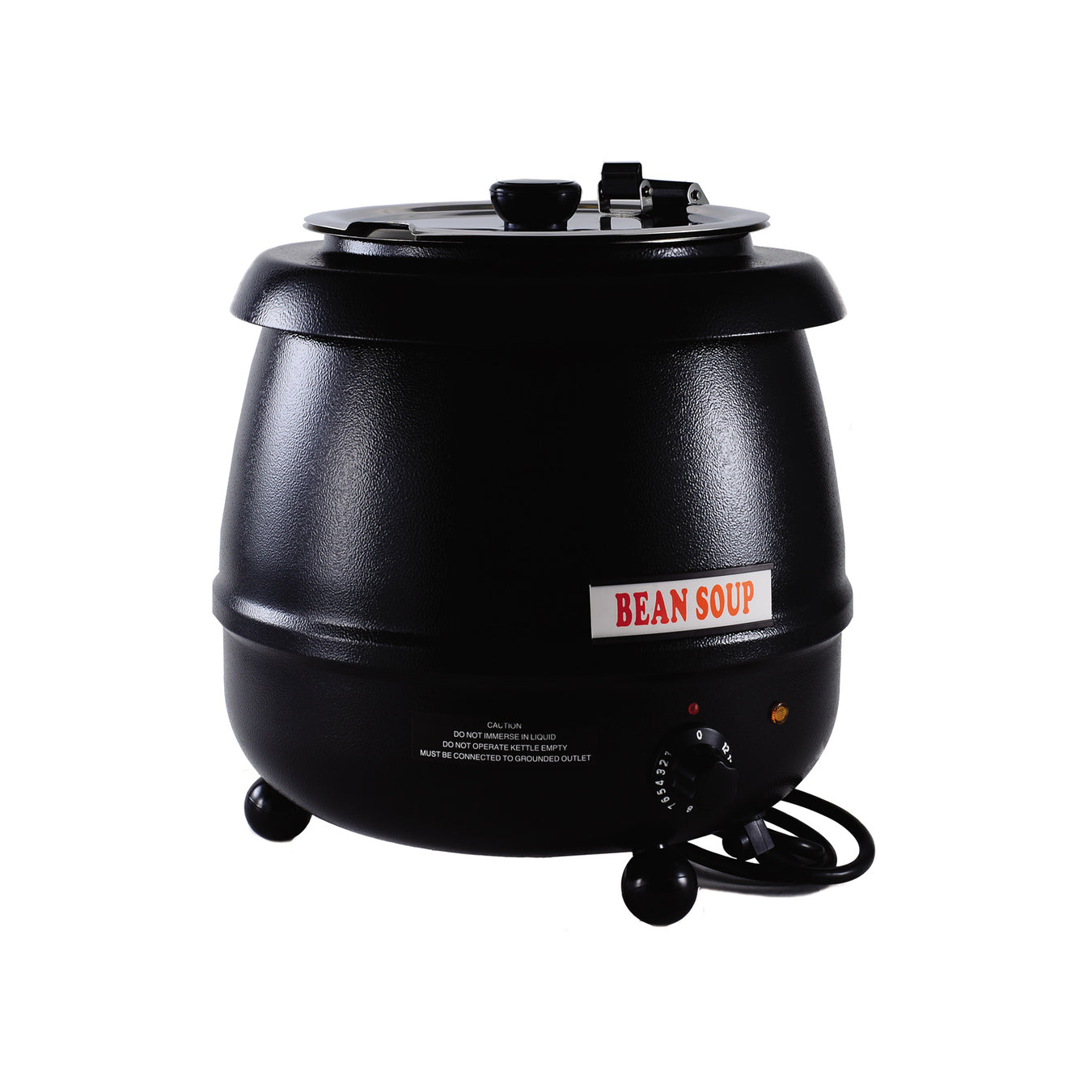
Compare the Thunder Group SEJ35000C 10.5-quart soup warmer in black and the Thunder Group SEJ38000C 10.5-quart stainless steel soup/food warmer. Check each model's dimensions, electrical requirements, included insert and lid arrangement before ordering. Leave room to serve safely and remove components for cleaning, rather than measuring only the kettle's footprint.
Confirm whether the selected warmer is approved only for holding prepared food or also for reheating, and follow its specific wet- or dry-operation instructions. Do not assume every kettle has automatic shutoff or that a control setting proves the food has reached the required temperature. Use the hot-holding guidance below and the manufacturer's operating and cleaning instructions.
Bain-Marie Pots, Food Pots and Powered Warmers
When shopping for a bain-marie pot or food pot, separate the vessel from the appliance that supplies heat. A removable inset or pot may be only one component of a complete warming setup. Confirm whether you are comparing an empty container, an insulated serving vessel or a powered warmer with an included insert.
A wet bain-marie uses a water-bath arrangement for indirect heating, but the name alone is not an operating instruction. The outer well, water level, supported inserts and intended food process must match the manufacturer's design. For example, Vollrath's modular bain-marie specifications describe wet operation, supported pan depth and adapter-bar considerations.
- Soup, sauces and other moist foods: Compare insert capacity, lid access, serving utensils and the time between replacement batches. Verify whether the appliance is intended only for holding or also for an approved cooking or reheating process.
- Insulated food pots: Treat passive insulation as a transport or serving aid, not a heater. Plan starting food temperature, opening frequency, transport time and temperature checks; do not rely on a generic “keeps hot for hours” claim.
- Electric food pots and insets: Check the exact power requirements, controls, approved vessel and intended use. An adjustable dial does not prove that a unit can safely cook raw food or reheat a chilled batch.
Some powered inset warmers operate without a water bath and require a specific vessel. The Vollrath Mirage induction warmer manual, for example, prohibits water in its outer well and requires compatible induction-ready insets. Follow the actual model's instructions rather than applying bain-marie water-bath procedures to every food warmer.
Keep the equipment's water or air reading separate from the food temperature. Follow the hot-holding and food-safety guidance below, and use the approved procedure for loading, monitoring and cleaning the selected equipment. Gentle heat alone does not establish a safe holding process for every sauce or other delicate food.
Countertop Heated Display Cases and Merchandisers
A heated display case combines hot holding with visibility at the point of sale. It is worth considering for cafés, convenience stores, concessions and service windows offering hot snacks or baked goods. Unlike a back-of-house cabinet, its customer-facing presentation is part of the buying decision, but safe holding and the food's texture still come first.
Compare the Atosa CHDS-71, CHDS-53, CHDC-56 and CHDC-44 using their actual dimensions and shelf layouts. These display models are included in this collection alongside the other warming equipment. Check the listing for current configuration and availability rather than assuming every display case has the same access or humidity features.
Display Capacity Is More Than Cabinet Size
Measure the trays, packaged portions or serving pieces you intend to display, leaving the airflow space required by the manual. Check shelf spacing, lighting, visibility and which side staff use for loading and cleaning. A case that fits on the counter may still make service awkward if doors cannot open fully or replenishment crosses the customer queue.
Decide whether the menu needs dry heat or a model with an approved humidity feature. A pastry, filled sandwich and hot snack may respond differently to the same environment. Start with manageable batches and record quality through service rather than filling every shelf simply because space is available.
Heated Display Case vs. Food Warmer
Choose a display case when seeing the food helps customers choose and the equipment suits the menu's holding needs. Choose a warmer, drawer or cabinet when staff access and reserve capacity matter more than merchandising. Neither category should be assumed suitable for every food or for reheating refrigerated items.
Heated Holding Cabinets for Prepared Food
A heated cabinet creates an enclosed holding space for prepared food before it reaches the service line. It can help a kitchen organize batches, keep backup pans near service and coordinate banquet production. Choose from the amount of food that must be held at one time rather than total daily meal count.
Begin with pan dimensions, tray depth and the space needed above each load. A listed number of slides or shelves does not guarantee the same capacity for every pan height. Leave the airflow paths specified by the manufacturer clear, and test the loading pattern before committing to the maximum advertised capacity.
Compare the Atosa ATHC-9ES, ATHC-18ES, ATWC-12 and ATWC-24 heated-cabinet listings. Check the exact pan capacity, controls and operating modes; a heated cabinet should not be assumed to provide proofing or humidity control merely because it appears alongside proofing equipment.
Insulation, Door Style and Loading Direction
Compare insulation, door seals and recovery under your expected door-opening pattern. Clear doors can let staff inspect contents without opening the cabinet; solid doors may suit a different service environment. Compare the exact construction rather than assuming one door type always provides better insulation or lower operating cost.
A reach-in cabinet is accessed from one side. A pass-through design provides access from both sides and can separate loading from pickup, but needs room for both door swings. Confirm the actual cabinet layout before planning it into a wall or service line, and retain manufacturer-required clearance around the equipment.
Moist Holding, Dry Holding and Cook-and-Hold
Match moisture control to the food. Some cabinets provide humidity control or an approved water-pan arrangement; others are intended for dry holding. Do not assume that all heated cabinets include a fan, a humidifier or separate shelf-by-shelf controls.
A cook-and-hold appliance is designed for a cooking process followed by holding. A conventional heated holding cabinet is not. If cooking is part of the intended task, choose and operate equipment rated for it rather than attempting to turn a holding cabinet into an oven.
Proofing Cabinets and Combination Holding/Proofing Units
A proofer controls the environment in which dough rises before baking. Temperature, humidity, loading and time affect the result, so use the recipe and equipment instructions rather than one universal setting for all doughs. Bread, enriched dough and laminated pastries may need different processes.
Combination holding/proofing models can serve two jobs at different times when the manufacturer provides both operating modes. Proofing mode is not a hot-holding setting for cooked food. Before switching tasks, follow the specified changeover, cleaning, preheating and food-handling procedures; one cabinet cannot necessarily meet simultaneous proofing and holding needs.
Full-Size, Half-Size and Mobile Configurations
Choose usable batch capacity from the pans and dough pieces that must proof together. Allow for expansion and the airflow pattern required by the cabinet. A half-size cabinet can suit a smaller batch or a restricted space, but confirm its actual height and ventilation before assuming it fits beneath a counter.
Casters can help with cleaning and planned repositioning, but a mobile cabinet is not automatically a transport container for use without power. Check doorway clearance, thresholds, caster locks and utility connections. For off-site service, use equipment approved for the journey and verify food temperatures rather than relying on insulation alone.
What to Check Before Buying a Proofer
- Environmental control: Confirm the temperature range, humidity provision and how each control is adjusted and checked.
- Pan compatibility: Match tray dimensions and rail spacing to the bakery's existing pans.
- Visibility and access: Decide whether seeing the dough through the door would reduce interruptions to the process.
- Water and cleaning: Check reservoir or water-supply requirements, approved cleaning methods and access to removable parts.
- Power and schedule: Confirm electrical requirements and whether proofing overlaps with the time the same unit would be needed for hot holding.
Ask us to confirm a model's proofing capability before ordering it for dough production. Inclusion in a cabinet collection is not a substitute for the manufacturer's technical specification or a stated proofing mode.
Sneeze Guards for Steam Tables, Buffets and Serving Counters
A sneeze guard is a transparent food shield, not a warming appliance. It belongs in the serving-line plan because exposed food needs protection while guests and staff can still see and reach the service area appropriately. Countertop, freestanding and equipment-mounted designs must be matched to the layout and the requirements of the local regulatory authority.
The FDA Food Code, section 3-306.11, addresses protecting food on display through packaging, food guards, display cases or other effective means, subject to its exceptions. Have your local authority review the proposed service arrangement; a generic transparent panel is not proof of compliance.
Glass, Acrylic and Mounting Compatibility
Compare the proposed material's temperature rating, impact considerations, cleaning instructions and visibility in the actual installation. Follow the manufacturer's approved cleaners rather than using abrasive pads or chemicals that may damage a clear surface. Material choice alone does not establish whether a shield is suitable above a heated well.
Check width, height, side coverage, mounting points and the reach needed for serving utensils. Keep pan removal, lid opening and refilling practical without compromising the approved protective arrangement. If using an overshelf or accessory on a steam table, confirm separately whether it includes a food shield and whether that configuration meets the installation's needs.
Ask us about compatible food shields when specifying your serving line. Accessory availability and fit should be confirmed with the table model rather than assumed from a category name.
Catering, Banquet and Food-Truck Holding Setups
Plan transport and service as separate stages. An insulated carrier, an actively heated cabinet and a buffet warmer do not necessarily have the same power needs or operating limits. Establish where food is cooked, how it travels, which equipment is preheated at the destination and who checks temperatures during handoff and service.
For banquets, size reserve holding around the plated meals or replacement pans needed between service rounds. Keep replenishment routes away from guest queues, with serving utensils and replacement pans ready. For food trucks, include counter space, secure placement, available circuits or fuel, ventilation and service-window access in the plan rather than choosing solely by appliance width.
Our catering equipment and food truck equipment collections cover the surrounding operation. Use this collection for the holding-equipment comparison and the exact model specifications for installation and use.
Hot-Holding Temperatures and Safe Operation
Under the FDA Food Code, section 3-501.16, the general hot-holding minimum for time/temperature control for safety food is 135°F (57°C), with specified exceptions. Follow the code adopted in your jurisdiction and your approved food-safety procedures. The required food temperature is not the same thing as a cabinet dial, well-water temperature or air-temperature display.
Cooking and reheating requirements depend on the food and process. For food cooked, cooled and reheated for hot holding, the general rule is 165°F for 15 seconds, reached rapidly within the applicable two-hour limit; commercially processed ready-to-eat food and other specified situations have different provisions. Consult FDA Food Code section 3-403.11 and local requirements rather than applying one reheating temperature to every item.
- Prepare the equipment: Inspect the setup, use the approved pans and water arrangement, and preheat according to the manual.
- Load properly prepared food: Complete the required cooking or reheating step using suitable equipment before transferring food to conventional holding equipment.
- Measure the food: Use a suitable calibrated food thermometer and check representative locations, not just the displayed equipment temperature.
- Monitor service: Follow your food-safety plan's check frequency, record results and take its prescribed corrective actions when a limit is missed.
- Manage quality and turnover: Replenish with fresh batches and follow approved handling procedures rather than continuously topping up old food.
Safe temperature does not guarantee good texture after an unlimited hold. Set quality limits for each menu item as well as safety controls. Do not assume a universal four-hour allowance authorizes holding food at an unsafe temperature; time instead of temperature control requires the applicable procedures and regulatory conditions.
Cleaning, Water Quality and Troubleshooting
After service, shut down, isolate utilities as instructed and let hot surfaces and water cool sufficiently for safe handling. Drain wet equipment through its approved method, remove food residue and clean removable pans, racks and lids using the recommended products. Avoid immersing controls, spraying electrical parts or using abrasive tools that damage surfaces.
Mineral buildup can interfere with equipment operation, so inspect wet wells and reservoirs regularly. Descale using the manufacturer's approved procedure and products at a frequency appropriate to local water quality and use. Do not assume a universal vinegar mixture or schedule is suitable for every unit.
Routine Checks Worth Scheduling
- Before service: Check clean surfaces, pan supports, water requirements, controls and the condition of cords or visible connections.
- During use: Watch required water levels, food temperatures and loading patterns; keep cabinet airflow paths clear.
- At closing: Clean and dry accessible surfaces as directed, remove spills and note any leaks or damaged parts.
- Periodically: Inspect gaskets, door operation, caster locks and temperature accuracy, and arrange qualified service as required by the manual.
If food is not holding correctly, protect the food first under your safety procedures. Then check the approved operating mode, preheating, loading, water level where applicable and the actual food temperature. Persistent uneven heating, leaks, damaged wiring, repeated breaker trips or gas concerns call for qualified service, not improvised repairs or repeated resets.
Buying and Installation Checklist
Compare total installed cost, not just the equipment price. Include compatible pans and lids, adapters, shields, shelves, any required utility work and delivery access. For a used unit, assess controls, door seals, heating performance, electrical or gas condition and the availability of parts and documentation before relying on a low purchase price.
- Menu and service: Identify what is held, how much is needed at peak and who serves it.
- Fit: Measure operating dimensions, open doors or drawers, required clearance and the full delivery route.
- Utilities: Match electrical ratings or fuel, and confirm drainage, ventilation and installation requirements.
- Capacity: Confirm actual pan dimensions and usable spacing, not only exterior size or nominal shelf count.
- Support: Review current written warranty terms, service access, replacement-part availability and included accessories.
- Operating cost: Compare insulation, controls, expected operating hours and local utility rates without assuming a universal savings percentage.
Review restaurant equipment financing if spreading the purchase cost would suit your business. For a coordinated serving line, compare the broader catering equipment collection alongside the hot-holding products here. Confirm current specifications and availability before ordering.
Food Holding and Warming Equipment FAQ
What is the difference between a food warmer and a steam table?
Food warmer is a broad category of holding equipment. A steam table is a pan-based serving station, usually with multiple wells. Choose from the menu, pan layout, service format and installation requirements rather than the category name alone.
Can a steam table cook food or reheat food from the refrigerator?
A conventional steam table is designed to hold food that has already been properly cooked or reheated. Use suitable cooking or reheating equipment first, then transfer the food into the preheated holding station.
Do all steam tables need water?
No. The approved operating mode depends on the exact model. Wet-only units require the specified water arrangement, while dry-operation or combination models must be used as instructed. Never infer the operating mode from the term steam table or sealed well.
How do I choose a four-pan steam table?
Plan the dishes and compatible pans you need simultaneously, then check well dimensions, pan depth, adapter supports, utilities and replenishment access. Four wells do not establish a fixed number of meals per hour.
What temperature should hot food be held at?
The FDA Food Code generally specifies 135°F or above for hot holding of time/temperature control for safety food, with stated exceptions. Follow local requirements and the approved food-safety plan, and measure the food itself rather than relying only on the equipment display. See FDA Food Code section 3-501.16.
Is a proofing cabinet the same as a heated holding cabinet?
No. Proofing controls the environment for dough rising, while hot holding maintains prepared food for service. A combination model can provide both functions when specified by its manufacturer, but proofing mode is not a safe hot-holding setting for cooked food.
Should I choose a heated display case or a holding cabinet?
Choose a display case when customer visibility and merchandising are important and the model suits the food. Choose a holding cabinet when batch capacity and staff access matter more. Compare pan or tray fit, airflow, controls and any humidity provision.
Does an overshelf count as a sneeze guard?
Not automatically. Confirm whether the accessory includes an appropriate food shield and whether its coverage, mounting and installation meet local requirements. An ordinary storage shelf should not be assumed to provide approved food protection.
Can I use any plastic food pan in a warmer?
No. Confirm that the pan is rated for the intended temperature and use and is compatible with the equipment's opening, supports and depth. A cold-storage container is not automatically suitable for hot holding.