

Scrub-a-Dub-Dub – Top Commercial Pot Wash Sinks Reviewed
The Unsung Hero of the Commercial Kitchen
A commercial pot wash sink is a heavy-duty, multi-compartment stainless steel sink designed specifically for washing large pots, pans, and cookware in foodservice operations. These sinks feature deeper bowls (12-14 inches), thicker gauge steel (14-16 gauge), and larger dimensions than residential sinks to handle the demands of commercial kitchens.
Key Features of Commercial Pot Wash Sinks:
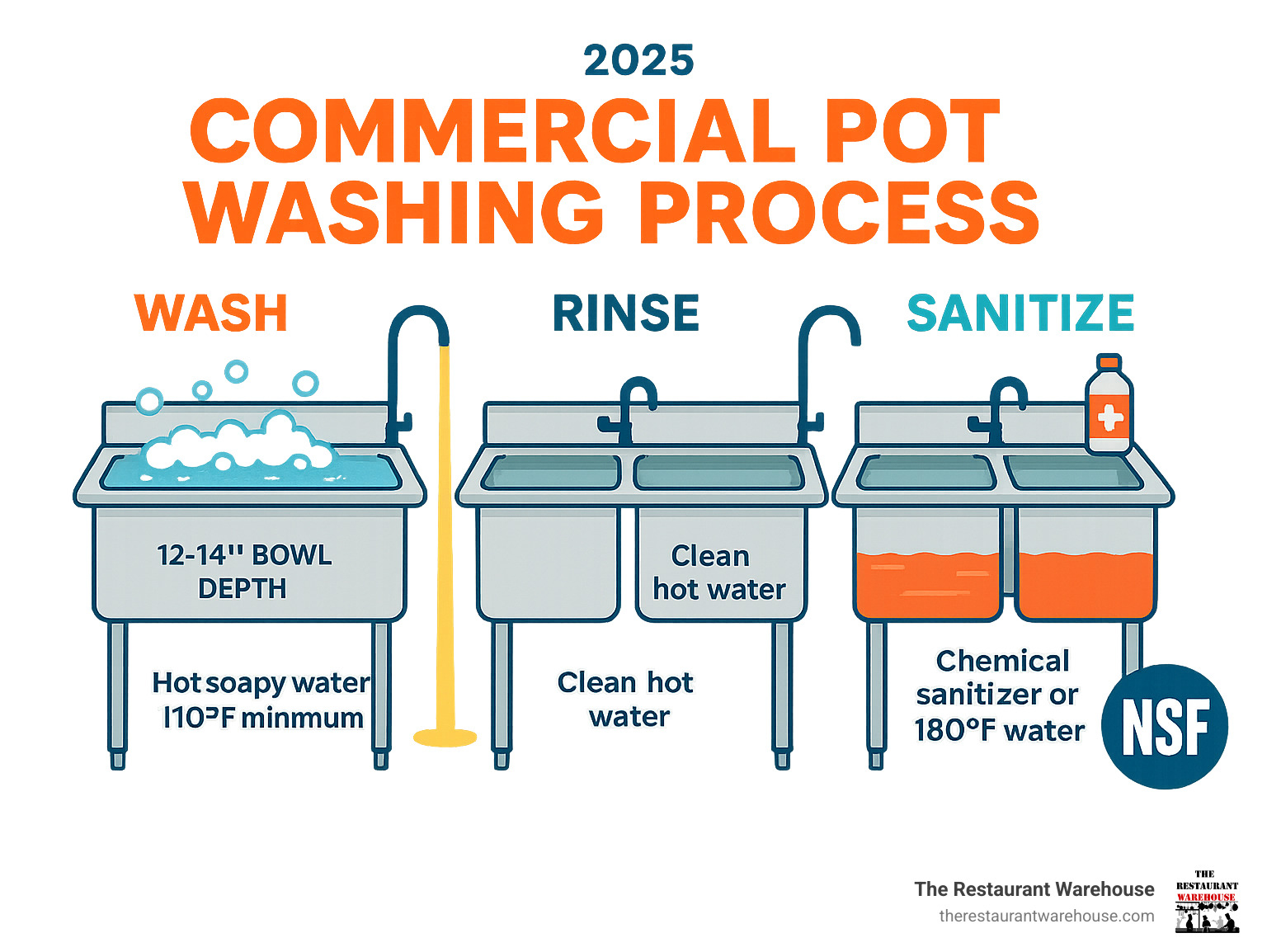
- Three-compartment design for wash, rinse, and sanitize process
- Deep bowls (12-14 inches) to accommodate large cookware
- Heavy-duty construction with 14-16 gauge stainless steel
- Drainboards for air drying and workspace
- NSF certification for food safety compliance
- Mounting options including freestanding, wall-mount, and drop-in styles
Every commercial kitchen needs a dedicated pot washing station - it's not just about cleanliness, it's about survival. Health inspectors require the three-step wash-rinse-sanitize process, and without proper equipment, your kitchen grinds to a halt faster than you can say "failed inspection."
The reality is simple: residential sinks can't handle commercial demands. When you're washing 50-quart stockpots and sheet pans all day, you need equipment built for the job. That flimsy home sink will dent, scratch, and eventually fail under the pressure.
But here's the thing - not all commercial pot wash sinks are created equal. The difference between a 14-gauge and 18-gauge sink isn't just numbers on paper. It's the difference between equipment that lasts decades and equipment that needs replacing in a few years.
Quick commercial pot wash sink definitions:
- commercial sinks for restaurants
- heavy duty kitchen equipment
- commercial kitchen stainless steel tables
Why Your Foodservice Business Needs a Dedicated Pot Wash Sink
Imagine a busy kitchen full of happy customers. When the cooking stops and cleaning begins, a dedicated commercial pot wash sink prevents that scene from turning into a messy headache. It's not just about tidiness; it's about ensuring your kitchen runs smoothly, safely, and by the rules.
A proper pot wash station is essential. It's where your cookware's journey ends and begins again, ensuring every item is clean and ready for its next job. If you're using large pots, as highlighted in our Best Stockpots Guide, you need equipment that can handle them. Residential sinks simply can't meet the demands of a commercial kitchen.
The High Cost of Inefficiency
If your team struggles to wash large pots in a small sink, you're losing time and money. These workflow bottlenecks hurt staff productivity. Instead of cooking or serving, your team is stuck wrestling with oversized pots in a setup that doesn't work, leading to higher labor costs and frustration.
Inefficient setups also lead to more broken dishware, as staff move heavy pots in cramped areas. You'll also waste time scrubbing baked-on food by hand. Modern sinks with features like pre-rinse sprayers make washing much faster. Inefficient washing also uses more water, increasing utility bills. The right equipment pays for itself through smoother operations, happier staff, and a healthier bottom line.
Meeting Health and Safety Standards
Following health and safety rules is the law. The most important rule for manual dishwashing is having a three-compartment sink, as required by most health departments. This setup enables the crucial wash, rinse, and sanitize steps that prevent germ growth and keep food safe. Failing to comply can lead to a forced shutdown.
A key sign of a compliant sink is NSF certification, which means it meets strict public safety and health standards. An NSF-certified sink is designed for easy cleaning and prevents bacteria buildup, which is vital for avoiding cross-contamination.
Beyond sanitizing, a well-designed commercial pot wash sink also keeps employees safe. Proper height, deep bowls, and sturdy construction prevent strain, accidents, and collapses under the weight of large pots. This protects both your staff and your investment. For more advice on keeping your kitchen spotless, check out our Restaurant Kitchen Cleaning Tips.
Anatomy of a Pot Wash Sink: Configurations and Mounting Styles
Understanding the different types of commercial pot wash sinks is crucial for maximizing efficiency and compliance. From the number of bowls to how they're mounted, each decision impacts your kitchen's workflow and hygiene.
Decoding Materials: The Ultimate Guide to Stainless Steel
When you choose a commercial pot wash sink, the metal it’s made from matters just as much as its size or bowl count. In a busy food-service setting, stainless steel is the clear winner because it’s strong, hygienic, and easy to sanitize—but not every stainless sink is created equal.
Stainless Steel Gauges Explained
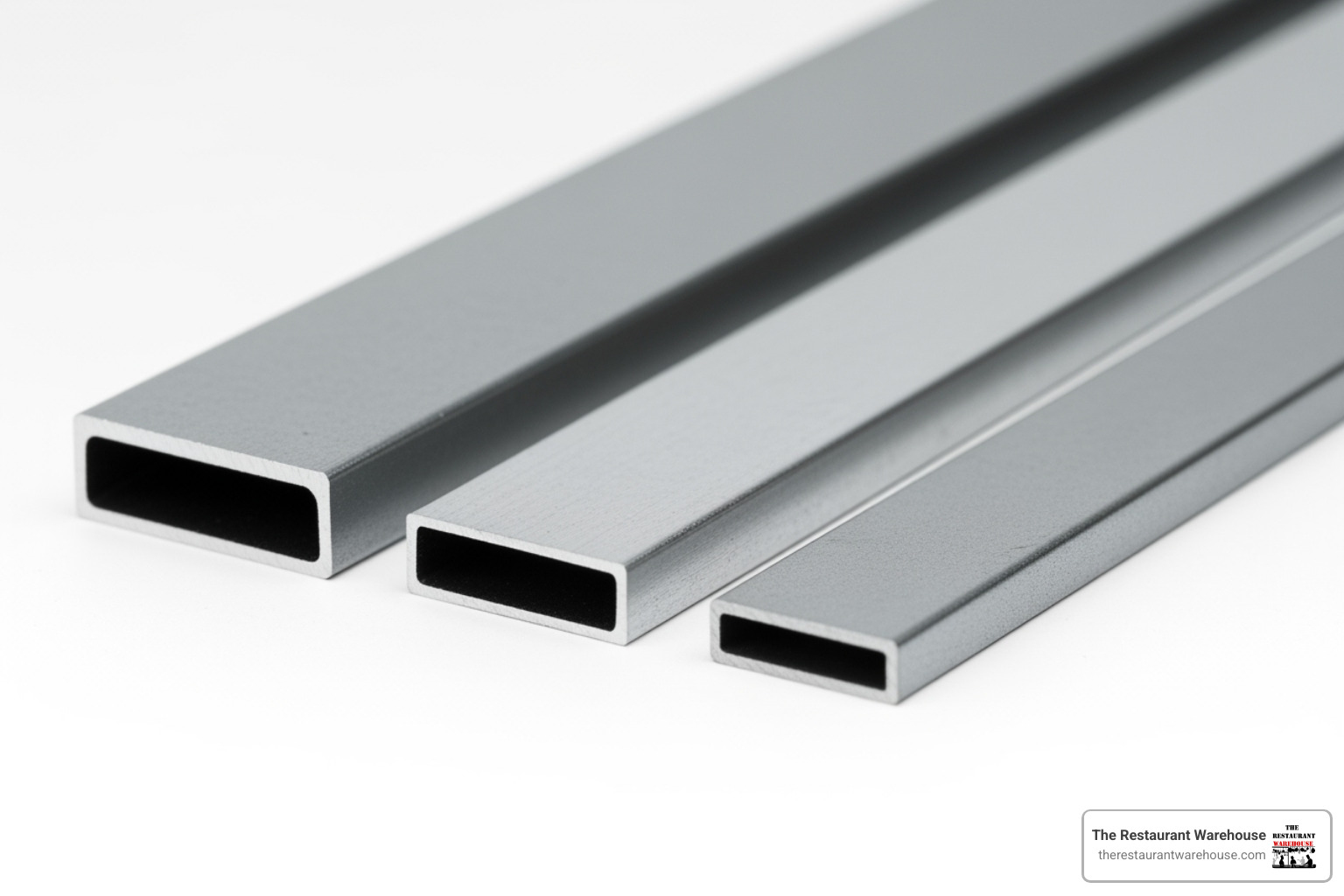
A sheet’s gauge tells you its thickness—the lower the number, the thicker (and tougher) the steel:
- 14-gauge: The heavyweight option. Nearly immune to denting and warping, it’s ideal for kitchens that constantly tackle oversized, heavy cookware. Up-front cost is higher, but lifespan is measured in decades.
- 16-gauge: The popular middle ground. It balances durability and price, standing up to everyday commercial use without the premium price tag of 14-gauge.
- 18-gauge (or thinner): Budget-friendly but more prone to dents and scratches. Acceptable for light duty, yet most full-scale restaurants find thicker gauges pay off quickly.
Thicker steel also dampens noise and keeps the sink rigid under heavy loads—crucial when you’re slamming down 50-quart stockpots all day.
Stainless Steel Types: 304 vs. 430
Beyond thickness, the alloy formula drives corrosion resistance:
- Type 304 (18/8) contains 18 % chromium and 8 % nickel, giving it excellent resistance to rust and harsh cleaning chemicals. Non-magnetic and food-safe, it’s the gold standard for long-term performance.
- Type 430 has a similar chromium level but little or no nickel. It’s more economical and still resists rust, though it won’t last as long in humid or chemical-heavy environments. It’s also magnetic, which some users prefer for utensil holders.
For the best mix of durability, hygiene, and lifetime value, look for a sink built from 304 stainless steel in 14- or 16-gauge thickness. It’s a one-time investment that protects your operation for years. Need more details on metals? Our full Commercial Kitchen Stainless Steel Guide breaks down every option in plain English.
Choosing the Right Commercial Pot Wash Sink for Your Kitchen
Picking the perfect commercial pot wash sink is a big decision for your kitchen. Think of it like choosing the right partner for your business – it needs to be reliable, efficient, and capable of handling whatever you throw at it (literally!). Beyond just how many compartments it has or how thick the steel is, there are key features and accessories that can really make your pot washing operations shine.
Essential Features of a High-Quality Commercial Pot Wash Sink
When our team looks at sinks, we focus on design elements that bring real benefits to your kitchen every single day.
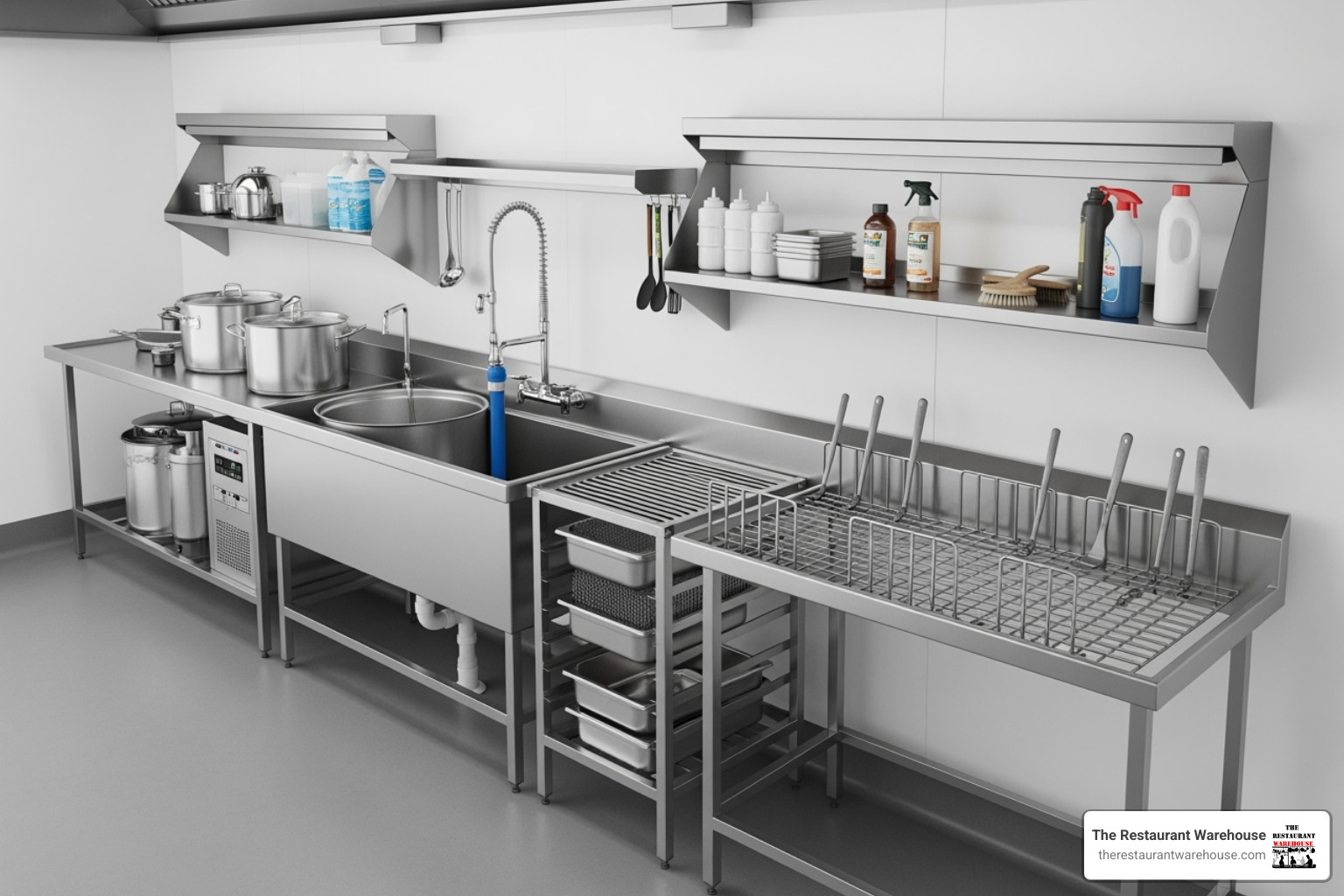
First up are deep bowls. This is a must-have for any commercial pot wash sink. Standard depths are usually around 12 to 14 inches. This depth is super important because it lets you fully dunk those big stockpots, sheet pans, and bulky utensils. That way, everything gets properly washed and sanitized. Trying to use shallower sinks (like those found in bars or for hand washing) just won't cut it for serious pot washing.
Next, consider drainboards. These are incredibly valuable! Drainboards give you much-needed workspace to scrape off food, let clean pots air-dry, or hold dirty dishes before they go into the wash. You can find sinks with a single drainboard (either on the left or right) or even dual drainboards, giving you maximum flexibility. The size of the drainboard matters too; an 18-inch drainboard, for instance, offers plenty of space.
A high backsplash is another essential feature. Typically 8-10 inches tall, it acts like a shield, protecting the wall behind your sink from splashes and food mess. This prevents mold and mildew from growing and makes cleaning up a breeze. Look for sinks with seamless edges and integrated backsplashes. This design prevents water from spilling and keeps bacteria from building up, which is key for staying hygienic.
Finally, pay attention to rolled edges and coved corners. These might seem like tiny details, but they're huge for hygiene and safety. Rolled edges around the sink's top prevent water from dripping down the front onto your floor, which can cause dangerous slips. Coved (or rounded) corners inside the sink bowls get rid of sharp angles where dirt and germs can hide. This makes the sink much, much easier to clean thoroughly.
By focusing on these essential features, you'll pick a commercial pot wash sink that not only boosts your kitchen's efficiency but also keeps it sparkling clean. It'll truly be a workhorse for your business.
Must-Have Accessories for Peak Performance
A great sink is only half the battle; the right accessories turn it into a high-performance pot washing station. These are the tools that complete your setup and make life in the kitchen much easier.
Pre-rinse sprayers are absolute game-changers. A high-pressure sprayer lets you quickly blast away stubborn food bits before you even start washing. This saves you so much time, water, and elbow grease! They often come with different spray patterns to tackle any mess.
Lever drains are fantastic for hygiene and convenience. They let you open and close the sink drain without having to put your hands into dirty water. No more reaching into a murky mess!
Overflow pipes are a simple but crucial safety feature. They prevent accidental flooding by directing extra water down the drain if the sink gets too full. No unexpected kitchen puddles!
Leg bracing and bullet feet keep your sink solid and steady. Cross-bracing gives the unit strength, while adjustable bullet feet let you make sure the sink is perfectly level, even on uneven floors. This stops wobbling and prevents spills.
For faucet types, while some sinks include a basic one, you'll often need to buy a specific commercial kitchen faucet separately. You have options like wall-mount or deck-mount, and "gooseneck" spouts offer extra clearance for big pots. You can even find pot filler faucets that install right over the sink, making it super easy to fill large containers. Many commercial faucets are also designed to be low-lead compliant and NSF certified for safety.
Lastly, don't forget sink strainers. Heavy-duty strainers are your plumbing's best friend. They catch large food particles and prevent them from clogging your pipes, saving you from costly repairs down the line.
When you think about all these features and accessories, a high-quality commercial pot wash sink might seem like a bigger investment upfront. But its ability to improve your workflow, boost hygiene, and withstand constant, heavy use means it's a valuable, long-term investment that pays for itself. The Restaurant Warehouse is proud to offer a wide selection of durable and affordable options to fit any budget, giving you top-quality equipment without the high markup.
Installation and Maintenance: Ensuring Longevity and Hygiene
A brand-new commercial pot wash sink is only as good as its setup and care routine. Proper installation prevents leaks and wobble, while smart cleaning keeps surfaces sanitary and looking new.
Installation & Space Planning
- Measure twice, deliver once. Account for the sink’s footprint and the clearance staff need to load and unload pots.
- Confirm plumbing access. Hot- and cold-water lines plus an adequate drain should already be in place; correcting them later can be costly.
- Level the unit. Adjustable bullet feet make quick work of uneven floors and stop the sink from rocking.
- Use a licensed plumber. Professional installation guarantees local code compliance and protects your warranty.
Daily Care & Long-Term Maintenance
- Clean at shift-end. A mild detergent and soft cloth remove grease without scratching. Rinse thoroughly.
- Sanitize. Submerge each bowl in either 180 °F water or an approved chemical solution to destroy lingering bacteria.
- Dry the surface. Wiping prevents hard-water spots and mineral deposits.
- Skip harsh tools. Steel wool or abrasive pads can embed iron particles that later rust; opt for nylon brushes instead.
- Descale as needed. In hard-water areas, a food-safe descaler keeps limescale at bay.
Following these simple habits keeps your sink sparkling, compliant, and ready for the next dinner rush. For step-by-step instructions, see our guide on how to Clean Stainless Steel Equipment.
Frequently Asked Questions about Commercial Pot Wash Sinks
We get it – setting up a busy kitchen means you have a lot on your mind! And when it comes to sinks, there are often more questions than answers. Here at The Restaurant Warehouse, we hear a lot of common questions about these essential kitchen workhorses. So, let's clear up any confusion and get you ready to choose the perfect sink for your needs!
What is the difference between a pot wash sink and a regular commercial sink?
That's an excellent question, and it gets right to the heart of what makes a commercial pot wash sink so special! While all sinks in a commercial kitchen serve a purpose, a pot wash sink is specifically designed and built for the toughest jobs.
Think about what you're washing: huge stockpots, heavy sheet pans, bulky trays. A standard "commercial sink" – which could be a small hand wash sink for hygiene, a utility sink for general cleaning, or a prep sink for washing veggies – just isn't built for that kind of heavy lifting. These other sinks are often much shallower and made from lighter materials.
A true commercial pot wash sink, on the other hand, boasts deep bowls, usually around 12 to 14 inches deep, so you can fully submerge those big items. They're also constructed from much heavier gauge stainless steel, typically 14 or 16-gauge, making them incredibly durable and resistant to dents and dings from heavy cookware. It's all about accommodating that large, bulky cookware and standing up to constant, demanding use day in and day out. It’s the difference between a workhorse and a pony!
How many compartments do I legally need for my restaurant sink?
This is perhaps the most important question for health and safety compliance, and it has a pretty clear answer for most U.S. restaurants: you'll need a three-compartment sink.
Why three? Because health codes across the country mandate a specific wash, rinse, and sanitize procedure for manual dishwashing. This three-step process is crucial for preventing nasty bacteria growth and ensuring food safety. Each compartment has its vital role:
First, the wash compartment is where you tackle the grime with hot, soapy water, usually at a minimum of 110°F. Next, items move to the rinse compartment for a thorough rinse with clean, hot water, washing away all the soap and loosened food. Finally, the sanitize compartment is where items become truly safe. Here, they're submerged in an approved chemical sanitizer at the correct concentration and temperature, or in extremely hot water – 180°F or higher – to kill any remaining germs.
While you might see one- or two-compartment sinks in some commercial settings, they usually aren't enough for the full manual warewashing process required for pots and pans. For instance, a one-compartment sink might be a dedicated pre-rinse station, or a two-compartment sink might be used in a bar where a dishwasher handles the sanitizing. But for manually washing your main cookware, that three-compartment commercial pot wash sink is almost always the legal requirement. Our best advice? Always, always check with your local health department for their exact regulations, as they can sometimes vary!
How do I prevent my stainless steel sink from rusting?
It’s a common misconception that stainless steel can't rust. While it's incredibly resistant, especially the high-quality 304 type we recommend for a commercial pot wash sink, it's not entirely rust-proof, especially in the demanding environment of a commercial kitchen. But don't worry, a little proactive care goes a long long way!
Here are our top tips for keeping your sink gleaming and rust-free:
First, clean it daily and thoroughly. Use gentle, non-abrasive cleaners designed for stainless steel. The key here is to rinse immediately and completely with clean water. Any leftover cleaning chemicals, especially those with chlorides (like bleach), can eventually cause pitting and rust if left to sit.
Second, wipe it dry after each cleaning or heavy use. Standing water, particularly hard water, can leave mineral deposits that might lead to discoloration or minor corrosion over time. A quick wipe with a clean, dry cloth is a simple step that makes a huge difference.
Next, be super careful about what you use to scrub it. Never, ever use steel wool or abrasive scouring pads. These can scratch the sink's protective chromium oxide layer and, even worse, leave tiny iron particles behind. Those particles will rust, making it look like your sink is rusting when it's really just the embedded bits! Stick to soft cloths, sponges, or nylon brushes.
Also, try to avoid prolonged contact with harsh substances. Highly acidic foods like tomato sauce or citrus juices, or strong chemical degreasers, should be cleaned off immediately. If anything splashes onto your sink, just wipe it down right away.
If you do spot any tiny rust spots, which sometimes happen from external sources like a rusting can left on the drainboard, tackle them quickly. Use a specialized stainless steel cleaner or even a simple paste of baking soda and water to gently remove them. For the ultimate protection, some businesses even opt for periodic passivation, which is a chemical treatment that strengthens the sink's natural rust-fighting layer.
By following these simple practices, your durable commercial pot wash sink will continue to look its best and provide reliable, hygienic service for many years to come.
Conclusion: Invest in the Heart of Your Kitchen's Cleanliness
So, there you have it! The humble commercial pot wash sink might not be the flashy centerpiece of your kitchen, but it's absolutely the unsung hero that keeps everything humming along. We've explored why this essential piece of equipment is so much more than just a place to wash dishes. It's truly about boosting your kitchen's efficiency, ensuring impeccable hygiene, and keeping you in full compliance with health codes.
Choosing the right sink means making a smart investment in your operations. Think about the strength of the material – that super-tough 14-gauge stainless steel can make all the difference for long-term durability. Consider the perfect configuration, whether it's a three-compartment workhorse for seamless wash-rinse-sanitize, or a specialized setup. Don't forget those crucial features like deep bowls and ample drainboard space, designed to make your team's lives easier.
Making these thoughtful choices ensures your back-of-house operations run like a dream. It means less time scrubbing, happier staff, and the invaluable peace of mind that comes from knowing your kitchen is spotless and compliant.
Ready to make that crucial investment? At The Restaurant Warehouse, we believe that top-quality equipment shouldn't come with a sky-high price tag. We've curated a fantastic selection of durable, affordable commercial pot wash sinks designed to fit every kitchen's unique needs and every budget.
Don't let your kitchen's heart skip a beat. Explore our complete collection today and find the perfect pot wash solution that will serve your business faithfully for years to come. Your kitchen (and your team!) will certainly thank you. Commercial Kitchen Equipment Guide.
About The Author

Sean Kearney
Sean Kearney used to work at Amazon.com and started The Restaurant Warehouse. He has more than 10 years of experience in restaurant equipment and supplies. He graduated from the University of Washington in 1993. He earned a BA in business and marketing. He also played linebacker for the Huskies football team. He helps restaurants find equipment at a fair price and offers financing options. You can connect with Sean on LinkedIn or Facebook.
Leave a comment