

Rent restaurant equipment: smart guide to leasing
Opting to rent restaurant equipment is a serious financial strategy, not just some temporary fix for a broken machine. For new and established restaurants alike, it’s a savvy way to hold onto precious capital, stay nimble, and even try out new concepts without the massive weight of ownership. It effectively turns a huge upfront check into a predictable, manageable operating cost.
Why Smart Restaurants Rent Equipment
Let’s be honest, launching a restaurant is incredibly capital-intensive. The cost of outfitting a commercial kitchen can be absolutely staggering. When you rent your equipment, you completely sidestep that huge initial investment, freeing up cash for things that directly bring in customers, like marketing, staffing, and inventory. That kind of financial flexibility is a massive competitive advantage, especially in the early days.
Think about a pop-up concept that’s testing a new menu. Instead of dropping tens of thousands on a specialized combi oven or a high-capacity fryer they might not need six months from now, they can just rent it. This lets them prove their business model works with very little financial exposure. If the concept is a hit, great—they can go ahead and invest in buying the gear. If it doesn't pan out, they just return the equipment. No massive loss, no giant paperweight sitting in storage.
Preserving Capital and Reducing Risk
The real beauty of renting is the financial agility it gives you. It takes a huge capital expenditure (CapEx) and transforms it into a predictable monthly operating expense (OpEx). This single move has a few really positive ripple effects on your business’s financial health:
- Improved Cash Flow: You keep more money in the bank for day-to-day operations, payroll, and those inevitable surprise expenses.
- Easier Budgeting: Fixed monthly payments make financial planning a whole lot simpler. No guesswork.
- Lowered Risk: You avoid getting saddled with expensive, depreciating assets if your menu changes or you decide to pivot your business model.
Renting provides a crucial financial buffer. It allows you to put your resources where they matter most in the early stages: creating an unforgettable experience for your customers. It’s all about working smarter.
There's a reason the global equipment rental market is booming—it was valued at approximately $145 billion in 2023 and is projected to keep growing. This isn't just a blip; it signals a major shift in the foodservice industry toward more flexible and cost-effective ways of operating.
To help you weigh your options, we've put together a quick comparison table that breaks down the key differences between renting and buying your kitchen equipment.
Rent vs Buy: A Quick Comparison for Restaurant Owners
| Consideration | Renting Equipment | Buying Equipment |
|---|---|---|
| Upfront Cost | Low initial outlay; usually just a deposit and the first month's payment. | High initial investment; requires significant capital or financing. |
| Cash Flow | Predictable monthly payments improve cash flow for other business needs. | Large one-time expense can strain cash reserves. |
| Flexibility | Easy to upgrade, downgrade, or swap out equipment as your menu evolves. | You own the asset, which can be difficult and costly to replace. |
| Maintenance | Maintenance and repairs are often included in the rental agreement. | You are fully responsible for all maintenance and repair costs. |
| Depreciation | Not your problem. The rental company owns the depreciating asset. | The equipment loses value over time, becoming a depreciating asset on your books. |
| Long-Term Cost | Can be more expensive over the long term compared to a one-time purchase. | Lower total cost of ownership over the equipment's entire lifespan. |
This table should give you a clearer picture of how each choice impacts your finances and operations. The best path really depends on your specific business model, your access to capital, and how much flexibility you need.
Gaining Operational Flexibility
Beyond the purely financial perks, renting gives you an incredible amount of operational freedom. Need a bigger ice machine to handle the summer patio rush? You can upgrade your rental for a few months. Thinking about adding fresh pizza to the menu? Rent a proper pizza oven and see how it sells before committing.
This kind of adaptability is just impossible when you own every single piece of equipment. For those who are weighing their options and thinking about the long term, it's also worth exploring other flexible financing avenues. To learn more, check out our in-depth guide on restaurant equipment leasing, which offers another great way to equip your kitchen without draining your capital.
Figuring Out What Your Kitchen Really Needs
Before you even glance at a rental agreement, you need a crystal-clear picture of what your kitchen truly requires. I've seen it happen too many times: someone jumps into a contract without a solid plan, and they end up overspending on gear they barely use or, even worse, find themselves painfully under-equipped during a critical dinner rush.
Your menu is the ultimate blueprint for your equipment list. Every single dish dictates a specific tool, a certain workflow, and a required capacity.
From Menu to Machine
Start by breaking down each item on your menu. A cozy café serving paninis, soups, and coffee will have a completely different shopping list than a high-volume Italian spot firing pizzas and sautéing pasta dishes.
The café? They'll probably be prioritizing a good panini press, a reliable soup warmer, and a high-quality espresso machine. That Italian restaurant, on the other hand, is going to need a powerful convection oven, a multi-burner range, and plenty of refrigerated prep tables to keep things moving.
Once you've got that core list, it's time to think about volume. How many paninis do you realistically expect to sell during the lunch rush? That number directly determines the size and capacity of the press you should rent. A single press might be fine for a slow morning, but a double-platen model could be absolutely essential to prevent a bottleneck between 12 and 2 p.m.
This infographic really breaks down why renting can be such a smart financial move, especially when it comes to capital, flexibility, and managing risk.
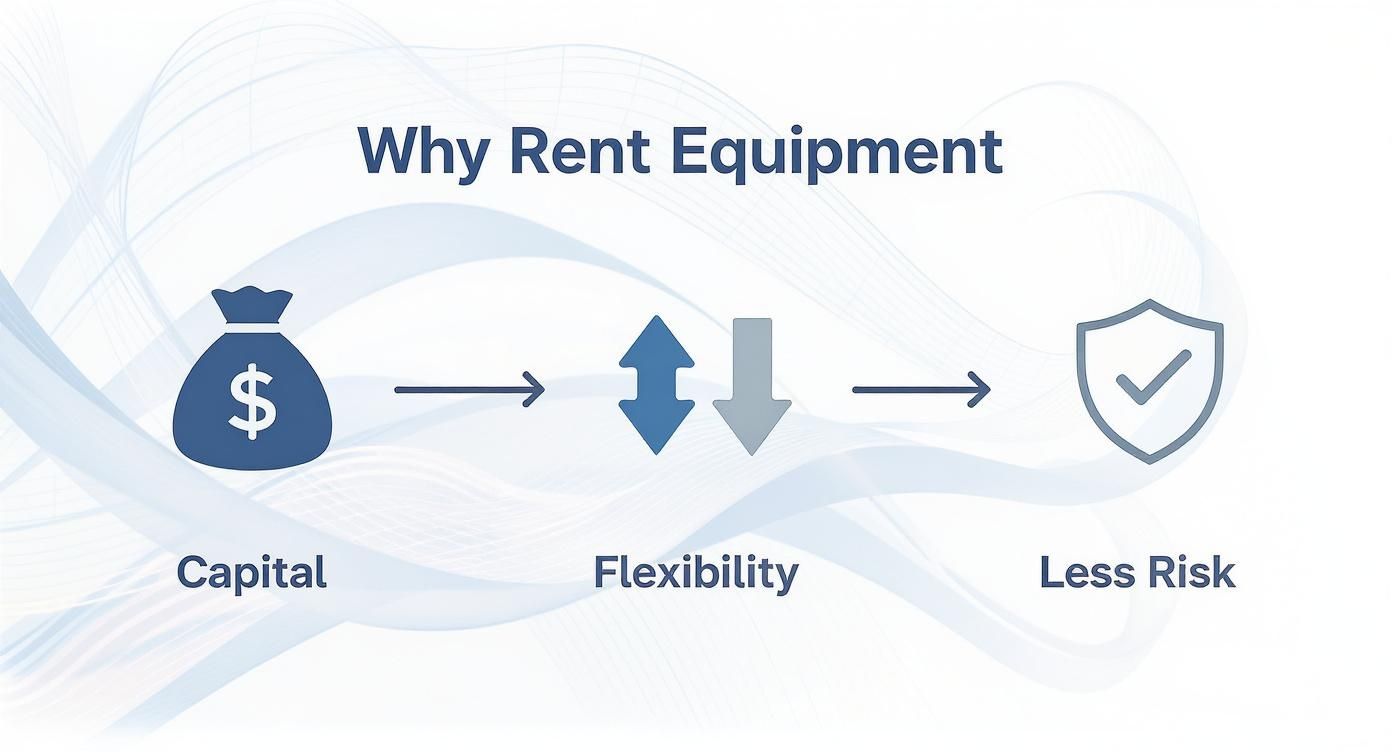
As you can see, renting equipment has a direct impact on your financial health. It protects that precious startup capital and cuts down the long-term risk that comes with owning assets that lose value over time.
Analyzing Space and Utilities
Your physical space is the next make-or-break factor. A top-of-the-line convection oven is completely useless if you can't get it through the back door or if it leaves no room for your chefs to actually work.
Get in there with a tape measure and map out your kitchen layout carefully. You need to account for workflow, ventilation hoods, and clear exit paths. It's all about creating a functional, efficient environment.
And don't forget about the infrastructure you can't see. A huge part of defining your kitchen's needs is considering the power requirements of commercial appliances. Many of those heavy-duty machines have very specific electrical or gas needs. It’s a good idea to get a handle on understanding your electrical infrastructure, such as three-phase power installation, to make sure your building can actually support the gear you want to bring in.
Think of it like this: your menu is the 'what,' your volume is the 'how much,' and your kitchen space is the 'where.' All three must align perfectly for an efficient operation. Neglecting any one of these elements will create problems down the line.
To get started, a detailed list is your best friend. For a thorough overview of all the things you might need, our commercial kitchen equipment checklist can be an invaluable resource to ensure you don't miss a single essential item. This methodical approach ensures you rent restaurant equipment that truly serves your business, preventing costly mistakes and setting your kitchen up for success from day one.
How to Find and Vet the Right Rental Partner
Choosing who you rent restaurant equipment from is about so much more than just finding the lowest price—it's about finding a genuine partner. A great rental company becomes an extension of your team, providing reliable equipment and being there for you when things go wrong. A bad one? They can leave you stranded with a broken freezer during a Saturday night rush.
Your search should really start local. While national chains are out there, I’ve found that local and regional suppliers often provide more personal service and much faster response times for those dreaded emergency calls. A quick search for "commercial kitchen rentals near me" is a good place to start. From there, it’s time to do some digging. Check out online reviews on Google, industry forums, and even Yelp, but read them with a critical eye. You're looking for patterns—consistent praise for emergency service or repeated complaints about equipment quality tells a story.
Questions to Ask Potential Rental Partners
Once you have a shortlist, it's time to interview them. Don't be shy about this part. You're the customer, and their answers will tell you everything you need to know about their business standards.
Here are a few essential questions I always recommend asking:
- Emergency Service: "What’s your process for an after-hours emergency? What is your guaranteed response time if my walk-in cooler dies on a Friday night?"
- Maintenance Protocol: "Is routine maintenance included in the rental fee? How often do you service equipment like ice machines and refrigeration units?"
- Equipment Age and Condition: "What is the average age of the equipment in your rental fleet? Can I come by and inspect the specific piece of equipment before I sign anything?"
- Delivery and Installation: "What does your delivery and installation process look like? Do your technicians handle the complete setup and make sure everything is running correctly before they leave?"
The answers you get are far more important than a slightly lower monthly fee.
Think about this real-world scenario: a new café rents a refrigerator from Company A for $100/month. Company B quoted $125/month but included 24/7 service. When the fridge from Company A fails, the café loses $800 in spoiled product and a full day of sales waiting for a third-party technician to show up. That extra $25/month for Company B suddenly looks like a bargain.
This just goes to show that the real value lies in the support, not just the upfront cost. The global catering equipment rental market is growing, projected to hit $384.8 million by 2025. This competition is pushing companies to step up their service game, so you shouldn't settle for a provider who doesn’t put your operational needs first.
Verifying a Company's Reputation
Beyond their direct answers, do your own homework. Ask for professional references from other local restaurants they work with. A confident, reputable company will be happy to provide them.
It's also helpful to understand the broader factors involved in any rental agreement, even if the specifics are different. Taking a moment to review general rental considerations can offer some valuable perspective. This extra step helps you build a complete picture of their reliability and customer service, ensuring you find a partner you can truly count on when you need them most.
Navigating Rental Agreements and Contract Terms
This is it—the rental agreement. It's the moment where all the friendly conversations and verbal promises get locked into a legally binding document. It might look like a wall of dense legal text, but trust me, this piece of paper is your single best line of defense. Taking the time to really understand every clause before you sign is one of the most critical steps when you decide to rent restaurant equipment.
It’s tempting to just scan for the monthly payment and grab a pen, but that’s a rookie mistake. The fine print is where you'll find the nitty-gritty details about your responsibilities—and the rental company's obligations. You want to see clear, unambiguous language on the lease duration, payment schedules, and any penalties for late fees.
Key Clauses You Cannot Ignore
When that contract lands in your hands, some sections need your full attention. These are the clauses that truly shape your rental experience and can have some serious financial consequences if you just skim over them. Zero in on these areas to avoid major headaches later.
Your agreement must spell out, in no uncertain terms, who is responsible for maintenance and repairs. Ideally, routine upkeep should be part of the deal. If your rented convection oven suddenly dies mid-service, does the contract guarantee a specific response time for a technician? Getting clarity on this stuff upfront prevents arguments and keeps your kitchen running.
Here are a few things I always tell people to look for:
- Maintenance and Repairs: Who’s on the hook for routine upkeep versus an emergency fix? Is there a 24/7 service line you can call?
- Insurance Liability: What exactly are your insurance obligations? You'll almost certainly need to carry a policy that covers damage or total loss of the equipment.
- Delivery and Installation Fees: Are these costs rolled into your monthly rate, or will they be a separate, surprise bill? Get a firm, all-in total before you commit.
- Wear and Tear: What’s the company's definition of "normal" wear and tear? You need to know what they consider acceptable versus what they'd classify as damage you have to pay for.
Getting these points straight is non-negotiable. For a really great breakdown of the financial side of these agreements, check out this piece on how to lease restaurant equipment without losing your lunch money.
The best time to ask questions about a contract is before you sign it. Once your signature is on that page, you’ve agreed to every single term, whether you fully understood it or not. Never, ever be afraid to ask for clarification or even request that a clause be rewritten in simpler language.
Negotiating for a Better Deal
Here’s something a lot of people don't realize: many terms in a standard rental agreement are negotiable. Don't just accept the first offer as the final word. Rental companies want your business, especially if you’re a dependable client looking at a long-term arrangement. That gives you leverage.
For instance, if you plan to rent a piece of equipment for a year or longer, it's perfectly reasonable to ask for a better monthly rate. A 10-15% discount for a longer commitment is a fair place to start the conversation. You can also push to have routine maintenance included at no extra cost, which could easily save you hundreds of dollars over the life of the lease.
Another savvy move is to negotiate the terms for early termination. What if your menu concept pivots and you no longer need that specialty pasta maker? A steep penalty can be a huge financial hit, so try to work out a more flexible exit clause from the very beginning. Your power to negotiate all comes down to being a prepared, informed, and confident customer.
Getting Your Rented Equipment Up and Running
Signing the rental agreement is a big milestone, but let's be honest—the real work starts the moment that truck pulls up to your kitchen. How you handle the delivery, installation, and day-to-day management will make the difference between a smart business move and a source of constant headaches.
Getting this part right from the beginning sets the stage for a smooth rental experience.
Once you have a delivery date, it’s time to prep your kitchen. This is about more than just clearing a path. You need to confirm that every utility hookup—power, gas, and water—is exactly what the new unit requires. Trust me, there’s nothing worse than having a shiny new combi oven delivered, only to realize you don’t have the right electrical outlet or gas fitting. That kind of mistake leads to costly delays and can throw your entire service into chaos.
The Arrival: Your Inspection Checklist
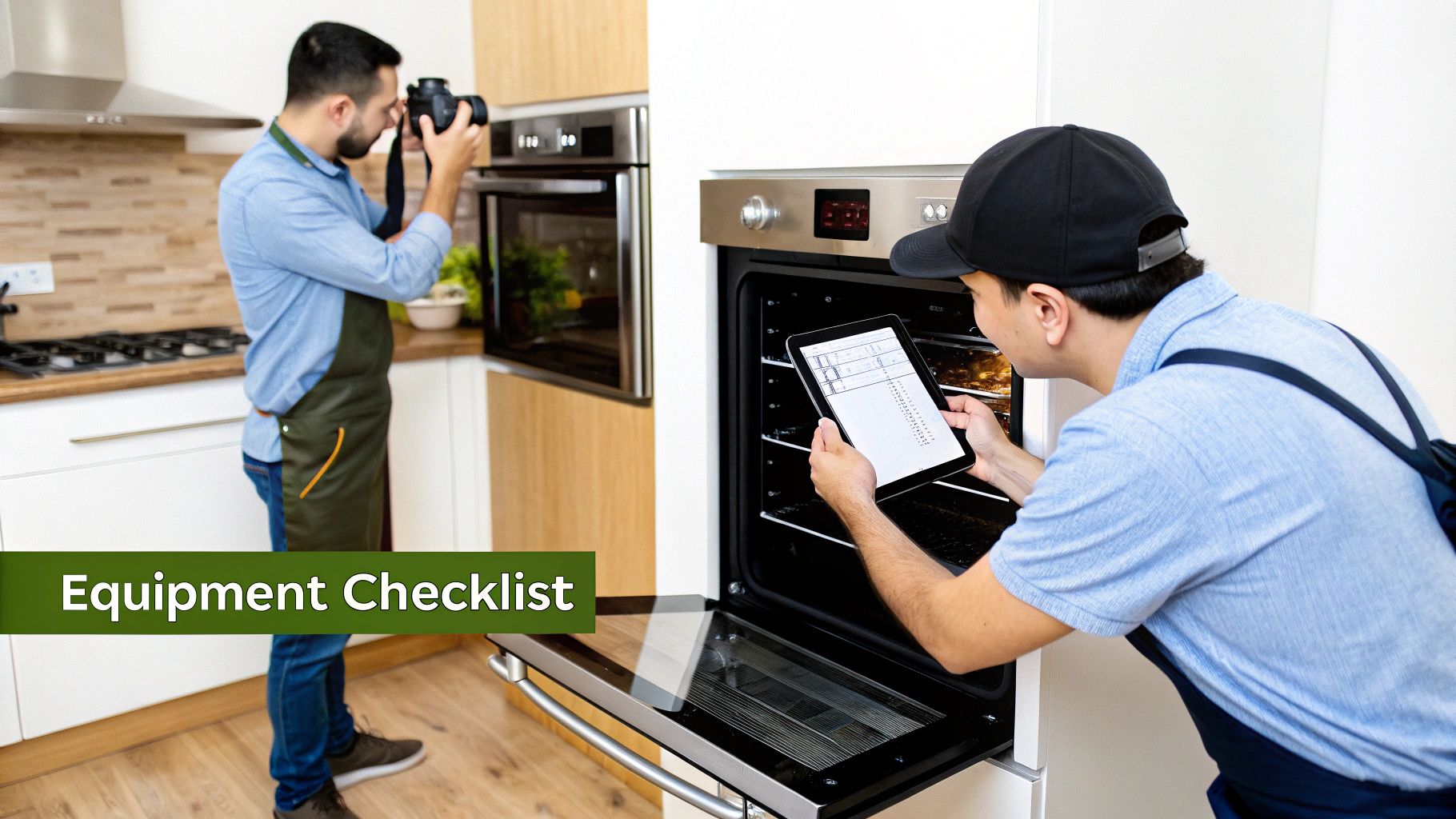
The moment your rented equipment arrives is your most critical checkpoint. Before you let the delivery team leave, you or a trusted manager needs to give that unit a thorough once-over. This isn't the time to be rushed. What you document right here, right now, can save you from a world of unfair damage charges down the road.
Here’s a practical, no-nonsense checklist to follow:
- Become a Photographer: Pull out your phone and take detailed, time-stamped pictures of the equipment from every single angle. Get close-ups of any existing scratches, dents, or signs of wear, no matter how small they seem.
- Run a Test Drive: Plug it in and test its main functions. If it’s a refrigerator, is it actually getting cold? For a fryer, does the ignition fire up and does the thermostat work?
- Do a Parts Inventory: Make sure all the extras listed in your agreement are there. This means counting the fryer baskets, oven racks, or any other accessories that are supposed to be included.
Think of this initial inspection as your insurance policy. Having clear photographic proof of the equipment's condition on arrival is your best defense against any future disputes over pre-existing damage. It's undeniable evidence.
Keeping Things Running: Maintenance and Staff Training
Great management doesn't stop after the installation is done. Your rental contract should spell out who handles routine maintenance. If that responsibility falls on you, create a solid schedule for daily cleaning and weekly checks. This proactive approach is the best way to keep the equipment in peak condition and prevent surprise breakdowns.
Just as important is getting your team on board with proper training. Your staff is your first line of defense against damage. Show them exactly how to operate and clean each piece of rented equipment correctly. Simple things—like teaching them not to slam a refrigerator door or how to clean a griddle without using harsh, abrasive tools—can prevent a ton of expensive repairs.
This focus on proactive management is becoming more important across the industry. With the rise of virtual kitchens and outsourced operations, the demand for commercial kitchen equipment rentals is growing. More businesses are looking for energy-efficient and smart technologies to control costs, making diligent equipment care a top priority. A recent commercial kitchen equipment report dives deeper into these market trends.
At the end of the day, a well-managed piece of equipment means a smoother, more profitable kitchen for you.
Still Have Questions About Renting? Let’s Clear Things Up.
Even after doing your homework, it’s completely normal to have a few lingering questions. Deciding to rent restaurant equipment is a big move that involves weighing costs, understanding responsibilities, and figuring out your long-term kitchen strategy. Let's get straight to the point and tackle some of the most common questions we hear from restaurant owners just like you.
Who Handles the Insurance?
This one is simple: in almost every rental situation, you are responsible for insuring the equipment. Think of it this way—the rental company still owns the machine, but it’s sitting in your kitchen, under your roof. Your rental agreement will definitely have a clause requiring you to carry commercial property insurance that covers the full replacement value if the item is damaged, stolen, or completely lost.
Here’s a pro tip: before you sign anything, forward the insurance section of the contract straight to your insurance agent. They can tell you in a heartbeat if your current policy is sufficient or if you need to add a rider. Skipping this step is a huge gamble that could leave you on the hook for tens of thousands of dollars if something goes wrong.
Is Rent-to-Own an Option?
Absolutely. Many rental companies offer a rent-to-own or lease-to-own program. This is a great hybrid approach where a slice of your monthly payment goes toward buying the equipment outright. It's an excellent path if you know you'll need the gear for the long haul but want to hang onto your cash in the short term.
Just be aware that the total cost will almost always be higher than if you had bought it from day one. Always ask for a clear amortization schedule so you can see exactly how much you'll pay over the entire term.
What Happens If the Equipment Breaks Down?
This is probably one of the most critical questions you can ask. The responsibility for repairs comes down entirely to what’s in your rental agreement.
- Included Maintenance: The best rental partners bundle routine maintenance and emergency repairs right into your monthly fee. This is the ideal setup, as they have a vested interest in keeping their own equipment in top shape.
- Tenant Responsibility: Some budget-friendly agreements might put the burden of repairs on you. This can be a risky way to save a few bucks a month, as a single major repair bill could easily wipe out any savings you thought you were getting.
Always get crystal clear on the emergency service protocol. A great rental partner will offer 24/7 support with a guaranteed response time. A vague promise like "we'll get to it" is a massive red flag.
So, When Is It Just Better to Buy?
Renting is a fantastic tool, but it isn’t always the right move. The choice usually boils down to how often you'll use something and for how long.
It generally makes more sense to buy equipment when:
- It’s a Core Kitchen Item: You should always own the mission-critical pieces you’ll use daily for years, like your main cooking range or walk-in cooler.
- You Have the Capital: If you have the cash on hand without putting your day-to-day operations at risk, buying is often cheaper in the long run.
- The Item Is Small and Inexpensive: For smaller gear like blenders or microwaves, the hassle of renting usually isn't worth it.
Renting shines when you need specialized equipment for a new menu item, for a temporary spike in business, or when protecting your startup capital is your number one priority.
At The Restaurant Warehouse, we know that outfitting your kitchen is one of the biggest decisions you'll make. We offer flexible financing and lease-to-own programs designed to help you get the top-quality equipment you need while protecting your cash flow. Take a look at our huge catalog of commercial equipment at https://therestaurantwarehouse.com.
About The Author

Sean Kearney
Sean Kearney used to work at Amazon.com and started The Restaurant Warehouse. He has more than 10 years of experience in restaurant equipment and supplies. He graduated from the University of Washington in 1993. He earned a BA in business and marketing. He also played linebacker for the Huskies football team. He helps restaurants find equipment at a fair price and offers financing options. You can connect with Sean on LinkedIn or Facebook.
Leave a comment