

Commercial Dough Mixers From Home Pizza to Bakery Production
Why Pizza Dough Machines Are Essential for Consistent Quality
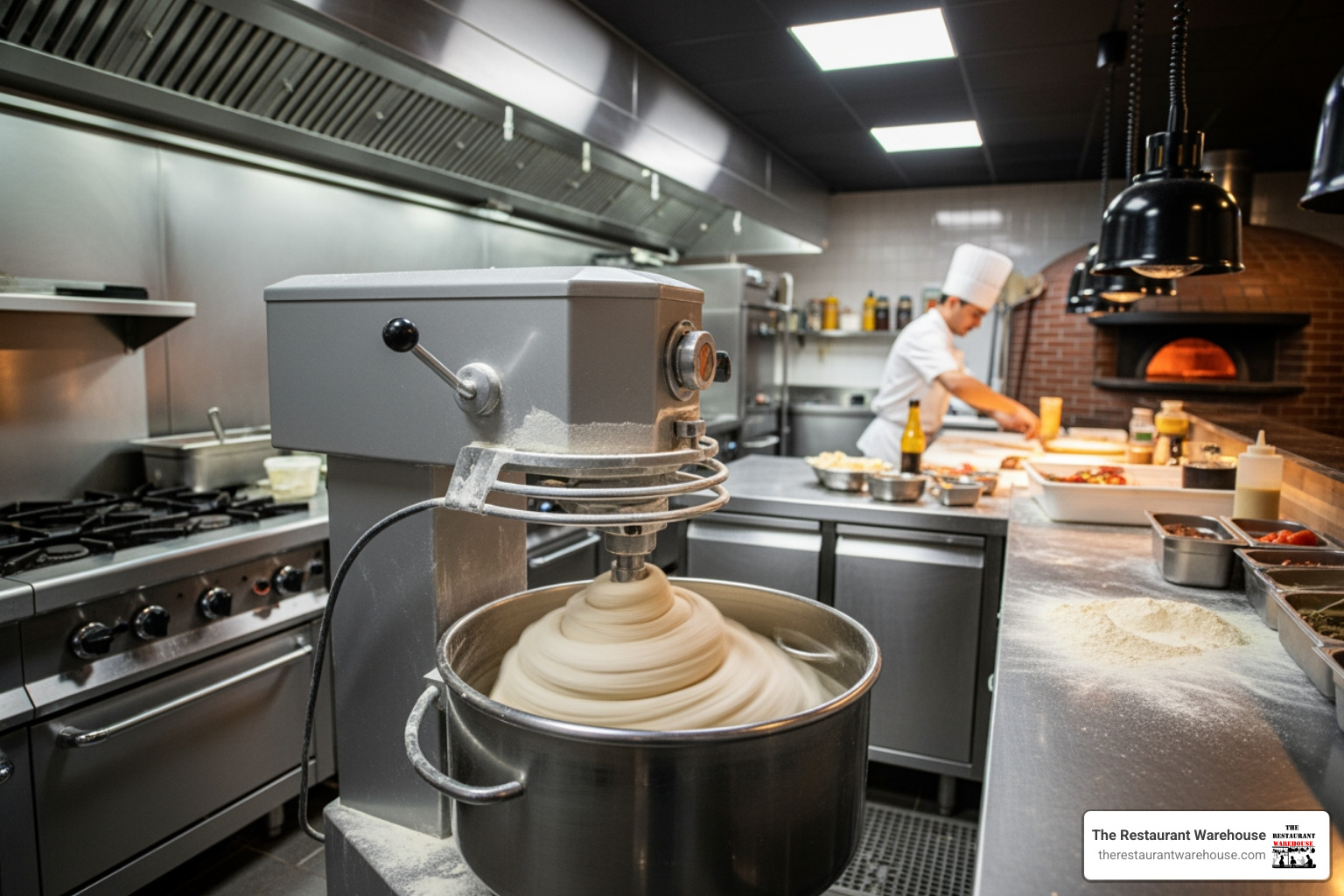
A pizza dough machine is an appliance designed for both home and business use to mix, knead, and develop pizza dough with minimal manual effort. These machines range from versatile stand mixers with dough hooks to specialized spiral mixers and automated dough sheeters, each offering different benefits for consistency, efficiency, and production volume. Understanding the science behind dough development is the first step toward appreciating what these machines can do. The goal of kneading is to hydrate the flour and develop gluten, which is a network of proteins that gives dough its structure, elasticity, and chew. Hand-kneading is a time-honored but physically demanding process that introduces many variables, from the heat of your hands to the inconsistency of your technique. A machine standardizes this process, leading to a superior and more predictable final product every single time.
Types of Pizza Dough Machines:
- Spiral Mixers - The top choice for high-volume dough production, gentle on dough, ideal for high-hydration recipes
- Planetary Mixers - All-purpose stand mixers with interchangeable attachments for a wide range of kitchen tasks
- Dough Sheeters/Rollers - High-speed machines that flatten dough to uniform thickness for rapid production
Key Benefits:
- Superior gluten development and texture consistency
- Significant time and labor savings (an 8-minute machine cycle can replace 15+ minutes of strenuous hand-kneading)
- Scalable production from 4 pizzas to hundreds per hour
- Reduced physical strain and improved food safety protocols
If you've ever tried making pizza dough by hand, you know the struggle. Your arms ache after ten minutes of kneading. The texture never quite matches what you get at your favorite pizza spot. And if you're running a food business? It's nearly impossible to hand-knead enough dough to keep up with peak hours. The demand for high-quality pizza is undeniable. The global pizza dough market reached $11.5 billion in 2022 and is projected to grow to $17.8 billion by 2030. This growth reflects an increasing demand for consistent, quality pizza across food businesses and home kitchens alike. Pizza dough machines are at the forefront of this consistency revolution, enabling anyone to produce top-tier dough.
The difference between hand-kneading and machine mixing is dramatic. A quality dough mixer develops stronger, more organized gluten networks, which translates to a crust with better structure, a more satisfying chew, and a lighter, airier crumb. Furthermore, these machines maintain an ideal dough temperature by minimizing friction, preventing the yeast from activating prematurely and ensuring a controlled, even fermentation. This level of control allows for identical results batch after batch. Whether you're starting a new food venture or scaling up an existing one, the right dough machine can transform your entire operation. From small shops making fresh dough daily to large-scale facilities producing hundreds of pizzas per hour, the right mixer makes all the difference in both product quality and profitability. You can explore a wide range of dough preparation solutions to find the perfect fit for your needs.
Understanding the Different Types of Dough Machines
When we talk about a pizza dough machine, we're often referring to a category of equipment designed to handle dough. This isn't a one-size-fits-all situation; different machines excel at different stages of dough preparation and are built for varying production scales. Understanding these distinctions is crucial for making an informed choice that aligns with your specific goals, whether you're making a few pizzas for family dinner or supplying a busy lunch rush.
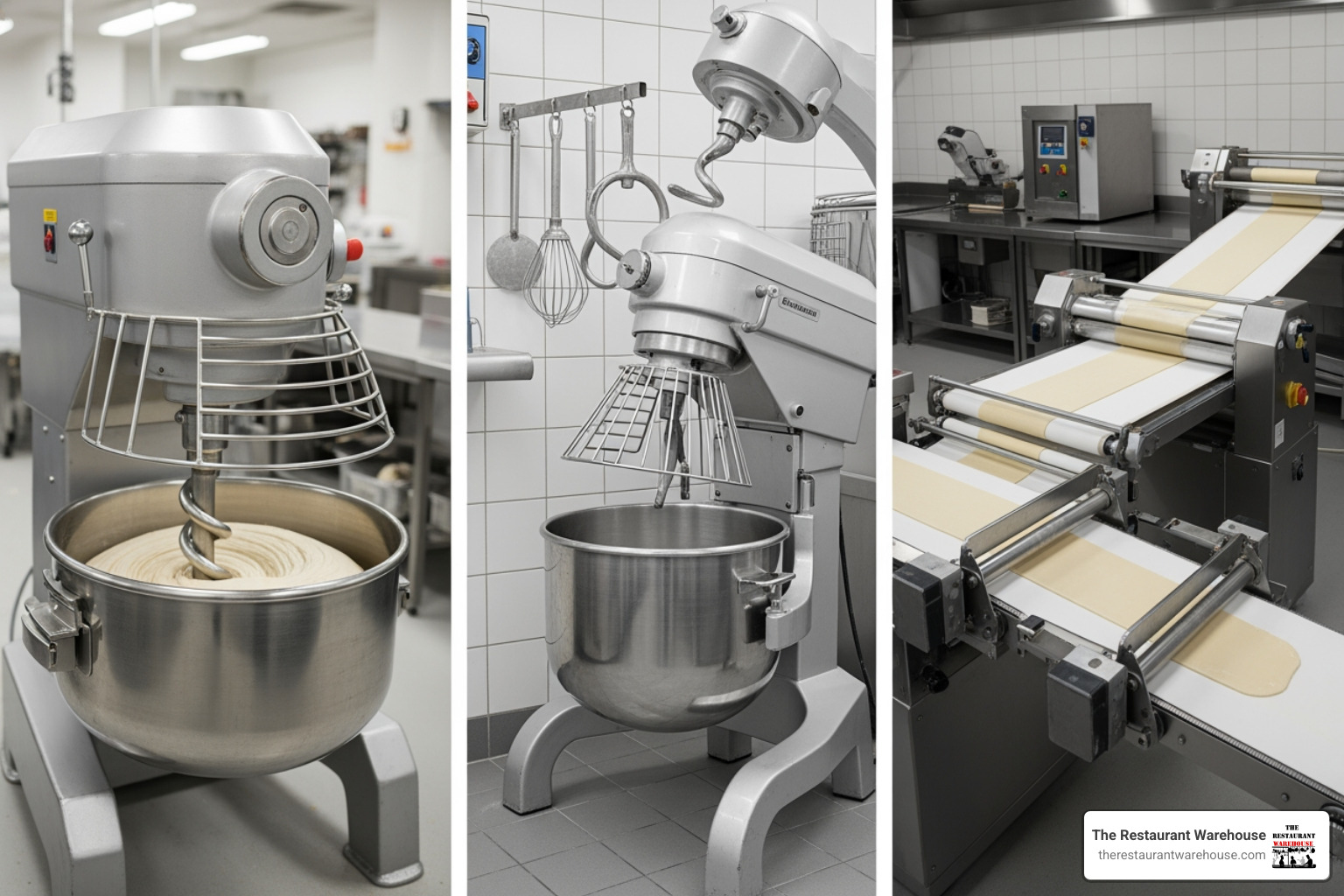
Spiral Mixers: The Artisan's Choice
For many pizza makers, from high-output food businesses to dedicated home bakers, the spiral mixer is the undisputed champion. These machines are specifically engineered for one primary purpose: mixing dough to perfection. Their defining characteristic is a stationary bowl combined with a rotating, corkscrew-shaped hook. In a crucial design element, the bowl itself also rotates, either in the same or opposite direction as the hook. This dual-action movement ensures that the entire mass of dough is gently and thoroughly mixed and kneaded without excessive friction or heat buildup. This gentle kneading action is paramount for developing a strong, supple gluten network, which is essential for that perfect chewy yet airy pizza crust. Because the dough isn't subjected to harsh shearing forces, its temperature remains stable, preventing premature yeast activation or degradation of the dough's delicate structure. This makes spiral mixers particularly adept at handling high-hydration doughs—those with a higher water-to-flour ratio. These wetter doughs are often used for artisan breads and Neapolitan-style pizzas, where a delicate, open crumb structure is highly desired. While once found only in high-end settings, some modern designs now bring this high-performance spiral mixing technology into the home kitchen, offering superior dough quality compared to conventional domestic stand mixers. They can handle significant capacities, with some home models managing up to 5kg of dough, while large-capacity units can process much more.
Planetary Mixers: The Versatile Workhorse
If the spiral mixer is a specialist, the planetary mixer is the versatile generalist of the dough world. These are the classic stand mixers we often see, both in home kitchens and business environments. The "planetary" action refers to how the mixing attachment (be it a dough hook, whisk, or paddle beater) rotates on its own axis while also revolving around the inside of the stationary bowl, much like planets orbiting the sun. This motion ensures that the attachment reaches every part of the bowl, providing comprehensive mixing for a wide variety of ingredients. While not as specialized for dough as a spiral mixer, planetary mixers are incredibly adaptable. With the right dough hook attachment, they can effectively mix and knead pizza dough, bread dough, and a multitude of other batters and mixtures. This versatility makes them an excellent choice for businesses that need one machine for many tasks, such as a kitchen that produces cakes and cookies alongside pizza and bread. They come in various capacities, from smaller 7-quart models suitable for home use or small batches to large-capacity units exceeding 100 quarts. For home users looking to step up their pizza game without investing in a dedicated spiral mixer, a robust planetary mixer with a strong motor is a very capable option.
Dough Sheeters & Rollers: Built for Speed and Volume
Once your dough is perfectly mixed and proofed, the next step is often shaping it. This is where dough sheeters and rollers come into play. Unlike mixers, these machines don't develop gluten; their function is to flatten the dough into a uniform thickness with speed and precision. This is crucial for high-speed production where consistency in size, shape, and cooking time is paramount. Countertop dough sheeters feature adjustable rollers that compress a dough ball, allowing you to achieve the exact thickness required for your pizza bases, calzones, naan bread, or tortillas in a matter of seconds. Some models are designed specifically to form round pizza doughs with precision. These machines significantly increase efficiency, transforming dough balls into ready-to-top bases far faster than any manual method. They are invaluable in high-volume settings where manual rolling would be too slow and labor-intensive. However, it's worth noting that while they offer incredible consistency and speed, the compression process can sometimes affect the dough's airy structure, making them less ideal for certain artisan pizza styles that rely on a very open, hand-stretched crust. Nevertheless, for many popular pizza styles, the time savings and consistency are unparalleled. Some automated dough rolling machines can even produce up to 250 pieces per hour, streamlining the entire production line.
How to Choose the Right Pizza Dough Machine for Your Needs
Selecting the ideal pizza dough machine is a decision that impacts efficiency, product quality, and, for a business, the bottom line. Whether you're outfitting a home kitchen or a business, several factors should guide your choice to ensure you get a machine that meets your demands today and can grow with you tomorrow.
Capacity and Batch Size
This is often the first and most critical consideration. How much dough do you need to make at one time? The answer dictates the size and type of machine you should consider.
- Home Use: For home cooks making 1-4 pizzas at a time, a smaller planetary mixer (typically with a 7-quart capacity) or even a compact spiral mixer (designed for 1-5kg of dough) is usually more than sufficient. These machines fit comfortably on a countertop and provide excellent results for small-scale baking.
- Business and High-Volume Output: For businesses, this calculation becomes more complex. A small food business might need a mixer capable of handling 20-30 lbs of dough per batch to meet daily needs. A large-scale operation supplying multiple locations could require a heavy-duty spiral mixer that can process 100 lbs of dough or more in a single cycle. These mixers come in vast capacities, from 7 qt. to over 100 qt., and can manage dough loads of up to 132 lbs. We recommend calculating your peak daily or hourly dough requirements to ensure the machine you choose can comfortably meet demand without being overworked or underutilized.
Power, Speed, and Motor Type
The motor is the heart of any dough machine. Dough, especially low-hydration pizza dough, is dense and requires significant power to mix and knead effectively without straining the motor.
- Motor Horsepower (HP): Look for robust motors, especially for business use. High-capacity planetary mixers can range from 0.5 HP to over 2 HP. Spiral mixers are typically designed with powerful motors specifically engineered for the constant, heavy load of dough.
- Variable Speed Controls: While some mixers offer a few fixed speeds, variable speed controls provide greater precision. This allows you to start on a low speed to gently incorporate ingredients without splashing flour, then increase the speed for optimal kneading. Some high-end models boast dozens of precision control levels, enabling fine-tuning for different dough types and hydrations.
- Transmission Type: Many high-capacity mixers feature gear-driven transmissions. These are known for their durability and ability to deliver consistent, unwavering torque, even when dealing with the densest doughs. Belt-driven models can be quieter and may offer some protection to the motor if the machine jams, but the belts can stretch or break over time and may require more frequent maintenance. The right combination of motor and transmission ensures your pizza dough machine can handle the toughest doughs day in and day out.
Construction, Safety, and Maintenance
Durability, hygiene, and user safety are non-negotiable, especially in a business environment where machines run for hours on end.
- Stainless Steel Construction: Most high-quality dough machines feature sanitary 304 stainless steel frames and bowls. This material is the standard for food-related applications because it is easy to clean, corrosion-resistant, and does not react with acidic ingredients like tomatoes or lemon. Parts that contact the dough, like rollers or mixer attachments, should be made of food-grade materials such as UHMW (ultra-high molecular weight polyethylene) or Teflon-coated aluminum.
- Safety Features: Look for essential safety elements like bowl guards, which prevent hands or utensils from entering the bowl during operation. Interlock switches are also critical; they prevent the machine from operating if the guard is open or the bowl is lowered. Emergency stop buttons are a must-have feature on larger units.
- Ease of Cleaning: Removable and washable components, such as dough scrapers and outfeed trays on sheeters, greatly simplify cleaning and sanitation, ensuring compliance with health regulations. Regular, thorough cleaning is key to minimizing maintenance needs and extending the lifespan of your machine.
It's also important to be aware of regulatory information. For businesses operating in California, for example, Proposition 65 requires warnings about significant exposures to chemicals that cause cancer, birth defects, or other reproductive harm. While many manufacturers provide these warnings out of an abundance of caution, even when exposure levels are minimal, it's good practice to understand the regulation. For more information, you can visit www.p65warnings.ca.gov or https://oehha.ca.gov/proposition-65.
Price and Business Return on Investment (ROI)
The price of a pizza dough machine can vary widely, from a few hundred dollars for a basic home stand mixer to tens of thousands for industrial-grade automated systems.
- Price Ranges: Home-use spiral mixers might cost under $1,000, while high-capacity planetary mixers can range from $1,500 to $10,000+, and heavy-duty spiral mixers or automated sheeters can exceed $20,000.
- Business ROI: For business operations, the investment in a high-quality dough machine offers a significant return. It drastically reduces labor costs associated with manual kneading and rolling, which can take hours out of a workday. The increased production output means you can serve more customers faster. Crucially, the consistency provided by a machine reduces waste from poorly mixed or shaped dough, leading to a better, more predictable product that builds customer loyalty. This makes a strong case for including a reliable dough machine in your business plan. The pizza dough machine market is expected to grow at a CAGR of 6.2% from 2023-2028, reflecting this clear value proposition.
Before making a purchase, consider your budget, projected volume, and the specific needs of your operation. Our experts are here to help you steer these choices. Contact our team today to find the perfect pizza dough machine to lift your production.
Mastering Your Dough: A How-To Guide
Once you've chosen your ideal pizza dough machine, it's time to put it to work! Using these machines effectively can transform your dough preparation, making it more consistent, efficient, and enjoyable. While recipes vary, the fundamental process is universal.
The Basic Dough-Making Process
Following a structured process will yield the best results, regardless of your specific recipe:
- Gather and Prepare Ingredients: Start with high-quality ingredients. For classic pizza, this typically includes strong flour (like '00' flour), warm water (around 95-105°F to activate yeast), fresh yeast (active dry or instant), salt, and olive oil. Ensure your yeast is fresh; stale yeast will result in a flat, dense dough.
- Combine in Mixer: Add the liquids first (water, olive oil) to the mixer bowl. This prevents dry pockets of flour from getting stuck at the bottom. Then, add the dry ingredients (flour, yeast, salt). For a planetary mixer, use the dough hook attachment.
-
Mix and Knead:
- Begin on the lowest speed to gently combine the ingredients until a shaggy, rough dough forms. This initial step should take about 1-2 minutes.
- Increase to a low or designated "knead" setting. For many mixers, 8-10 minutes of kneading is sufficient to develop the gluten. The dough should become smooth, elastic, and pull away cleanly from the sides of the bowl. Avoid over-kneading, which can over-oxidize the dough and make it tough.
- A good mixer will develop strong, extensible gluten networks, which are crucial for the structure, chew, and texture of your final pizza crust.
- Proving (First Rise): Remove the dough from the mixer bowl, form it into a tight ball by tucking the edges underneath, and place it in a lightly oiled bowl. Cover tightly with plastic wrap or a damp cloth to prevent a dry skin from forming. Let it rest in a warm, draft-free spot for 60-90 minutes, or until it has at least doubled in size. Proving time can vary based on room temperature and yeast quality.
- Punch Down and Portion: Gently press down on the center of the risen dough to release the built-up gas. Transfer it to a lightly floured surface. For pizza, you can then shape it into a log and use a bench scraper or knife to cut it into individual portions. Roll each portion into a smooth, tight ball.
- Second Rise/Shaping: Allow the dough balls to rest again for about 15-20 minutes. This relaxes the gluten, making the dough easier to shape. You can then stretch or roll them into discs for your pizza bases.
- Storage: If you're not using the dough immediately, it can be stored for several days in the fridge in an airtight container or bag. This cold fermentation process can actually develop more complex flavors. Remember to take it out about 60-90 minutes before you plan to use it to allow it to come to room temperature.
Troubleshooting Common Dough Issues with Your Machine
- Dough is Too Sticky: This usually means the hydration is too high for the flour you're using. While the machine is running on low, try adding flour one tablespoon at a time until the dough starts to pull away from the bowl. Be patient, as it can take a minute for the flour to be fully incorporated.
- Dough is Too Stiff: The hydration is too low. With the machine on low, add water one teaspoon at a time. Allow the machine to knead for at least a minute between additions to see the full effect before adding more.
- Dough Isn't Rising: This is rarely the machine's fault. The most common culprits are old/dead yeast, water that was too hot (which kills the yeast), or a proving environment that is too cold. Always check the expiration date on your yeast.
- Dough is Tough After Baking: This is often a sign of over-kneading. A properly kneaded dough will be smooth and elastic. If you continue to knead it past this point, the gluten network can become too tight, resulting in a tough crust. Pay attention to the visual and textural cues of your dough.
What Types of Dough Can You Make?
The versatility of a pizza dough machine extends far beyond just pizza.
- Pizza Dough: This is its primary function. From thin-crust to thick-crust, Neapolitan to New York style, these machines handle it all with ease.
- Bread Dough: Most dough mixers are equally adept at making various bread doughs, including artisanal loaves, sandwich bread, focaccia, and enriched doughs like brioche or challah.
- Gluten-Free Dough: While gluten-free doughs don't develop gluten networks, mixers are excellent for thoroughly combining the various flours, starches, and gums to achieve a consistent, homogenous texture.
- High-Hydration Doughs: Spiral mixers, in particular, excel at these wetter doughs (like ciabatta), which can be notoriously difficult and messy to knead by hand.
- Limitations: While versatile, machines do have limitations. Dough hydration levels are a key factor; some specialized machines may specify a maximum hydration level (e.g., 60%). Extremely sticky or very low-hydration doughs might require adjustments or specific machine types. Always check your machine's specifications and user manual for guidance.
Cleaning and Maintaining Your Pizza Dough Machine
Proper cleaning and maintenance are crucial for the longevity and hygienic operation of your pizza dough machine.
- Daily Cleaning: After each use, immediately clean all parts that came into contact with dough. This typically involves removing the bowl, hook, and any other attachments. Wash them with warm, soapy water, rinse thoroughly, and dry completely to prevent corrosion. Wipe down the exterior of the machine with a damp cloth.
- Weekly Maintenance: Perform a more thorough cleaning, ensuring no dough residue is accumulating in crevices or under guards. Check for any loose parts or unusual wear and tear.
- Sanitizing: Regularly sanitize food-contact surfaces, especially in a business environment, using appropriate food-safe sanitizers according to the manufacturer's instructions.
- Manufacturer Guidelines: Always refer to your specific machine's user manual for detailed cleaning instructions, lubrication points, and recommended maintenance schedules. Following these guidelines will extend your machine's lifespan and ensure it continues to perform optimally and safely.
Frequently Asked Questions about Pizza Dough Machines
We often get asked similar questions from both aspiring home pizza makers and seasoned food business owners. Let's tackle some of the most common ones to help clarify your decision-making process.
Can I use a regular stand mixer for pizza dough?
Yes, you absolutely can use a regular stand mixer for pizza dough, and many home cooks do so with great success! However, there are some important caveats to understand, especially when comparing them to dedicated pizza dough machine models or high-capacity units.
- Motor Power Limitations: Most home stand mixers are designed as all-purpose tools. While they come with a dough hook, their motors might not have the power or torque required for very stiff, low-hydration pizza dough. This can put a significant strain on the motor and gears.
- Overheating Risk: Kneading is hard work for a motor. Prolonged kneading, especially for larger batches or very stiff dough, can cause a home stand mixer's motor to overheat. Many have thermal overload protection that will shut the machine off to prevent damage, but frequent overheating can shorten the motor's lifespan.
- Dough Climbing the Hook: A common frustration with many home mixers is the dough climbing up the hook and into the mixer head. This requires you to frequently stop the machine to push the dough back down, interrupting the kneading process. This is less common with high-performance planetary mixers or spiral mixers, which are designed to keep the dough in the bowl.
- Small Batch Sizes: Home stand mixers are best suited for smaller batches, typically enough for 1-4 pizzas. If you're making larger quantities, you'll need to work in multiple batches, which can be time-consuming and defeats some of the purpose of using a machine.
While a strong home stand mixer can certainly get the job done for occasional pizza making, if you're serious about consistent, high-quality dough or need to produce larger volumes for a small business or large family gatherings, a more robust planetary mixer or a dedicated spiral mixer will offer superior performance, durability, and better results.
What's the difference between a planetary and a spiral mixer for pizza?
This is a key question for anyone investing in a pizza dough machine. The main differences lie in their mixing action, how they handle the dough, and their ideal use cases. Understanding this is crucial to matching the machine to your needs.
-
Mixing Action:
- Planetary Mixer: The mixing attachment (dough hook) rotates on its own axis while also revolving around the stationary bowl. This creates a versatile, all-purpose mixing action that is effective for a wide range of tasks.
- Spiral Mixer: The spiral-shaped hook rotates in place while the bowl also rotates around it. This means the hook is always working a different part of the dough mass. This is a more focused, gentle, and efficient kneading action specifically for dough.
-
Dough Quality & Gluten Development:
- Planetary Mixer: Can develop good gluten, but the more aggressive mixing action can generate more friction and heat. This can negatively impact the dough's final temperature and yeast activity if not monitored carefully, especially during long kneading times.
- Spiral Mixer: Specifically designed to develop strong gluten networks with minimal friction and heat. This gentle action is superior for achieving airy, chewy, and extensible doughs. It excels with high-hydration varieties, creating a beautiful open crumb structure that is difficult to achieve otherwise.
-
Versatility:
- Planetary Mixer: Highly versatile. With interchangeable attachments (whisk, paddle, dough hook), it can handle everything from whipping cream and mixing batters to kneading dough. It is the multi-tool of the kitchen.
- Spiral Mixer: A specialist tool. It is primarily designed for making dough. While some newer models are incorporating multi-functional attachments, their core strength and primary purpose remains dough production.
-
Ideal Use Cases:
- Planetary Mixer: Excellent for kitchens needing one machine for a wide array of tasks. Good for moderate pizza dough production where versatility is a key requirement.
- Spiral Mixer: The preferred choice for businesses where consistent, high-quality dough is the primary focus. It's built for continuous, heavy-duty dough production and is the secret weapon for many top-tier pizza makers.
In short, a spiral mixer is a specialist that offers superior dough quality, while a planetary mixer is a generalist that offers greater versatility for various kitchen tasks.
How much does a high-capacity dough mixer cost?
The cost of a pizza dough machine for business use varies widely based on its type, capacity, features, and brand. It's a significant investment, but one that typically yields a strong return through efficiency, consistency, and labor savings.
- Entry-Level Countertop Models (Planetary): For smaller businesses or those with limited space, a 10-20 quart countertop planetary mixer might range from $1,500 to $4,000. These are suitable for smaller batches of pizza dough, batters, and other mixes.
- Mid-Range Floor Models (Planetary & Smaller Spiral): As you scale up, 30-60 quart planetary mixers or smaller spiral mixers (with a 20-40 kg dough capacity) can cost anywhere from $4,000 to $10,000. These are the workhorses for many busy food establishments.
- Heavy-Duty Systems (Large Spiral & Automated): For large-scale production, large spiral mixers (60 kg+ dough capacity) or automated dough dividing and shaping systems can range from $10,000 to over $30,000, or even more for highly specialized, integrated lines. These machines are designed for continuous, high-output production.
The initial purchase price is just one part of the equation. It's essential to consider the long-term ROI. Factor in the labor savings from reduced manual work, the increased production capacity allowing you to serve more customers, the reduction in food waste from inconsistent batches, and the consistent quality that keeps your customers coming back. Investing in the right machine is an investment in the success and growth of your business.
Conclusion: Lift Your Pizza from Good to Great
The journey to perfect pizza invariably starts with perfect dough, and a dedicated pizza dough machine is the ultimate tool to achieve that goal with consistency and efficiency. Throughout this guide, we've explored the diverse world of dough machines, from the specialist spiral mixers that create ethereal textures, to the versatile planetary workhorses that can power an entire kitchen, and the high-speed dough sheeters and rollers that enable rapid production. Each type of machine plays a crucial role in transforming simple ingredients—flour, water, yeast, and salt—into the foundation of a truly memorable pizza.
The benefits are clear and compelling. By using the right machine, you gain access to superior gluten development, which leads to better texture and flavor. You achieve unparalleled consistency from batch to batch, eliminating one of the biggest variables in baking. You unlock significant time and labor savings, freeing up valuable human resources for other tasks. Finally, you gain the ability to scale your production, whether you're a passionate home cook looking to host larger pizza nights or a busy kitchen aiming to increase output without sacrificing quality. With the right machine, you eliminate the guesswork and physical strain of manual dough preparation, ensuring that every single pizza base is as good as the last.
Choosing the right pizza dough machine is a strategic decision. It involves carefully considering your capacity needs, the power and features required for your specific type of dough, and the long-term return on your investment. It's about finding the perfect balance between efficiency, quality, and your budget to empower your creative vision.
At The Restaurant Warehouse, we pride ourselves on helping businesses like yours thrive by providing reliable equipment at wholesale pricing. We understand the demands and challenges of running a food business in the United States, and we’re committed to offering solutions that genuinely make a difference. For a deeper dive into specific models, explore our complete collection of dough mixers and sheeters.
Ready to elevate your pizza game and streamline your dough production? Our experts are here to guide you through our selection of high-quality pizza dough machine options. Contact us today to find the perfect dough mixer for your needs and start making better pizza, more efficiently.
About The Author

Sean Kearney
Sean Kearney is the Founder of The Restaurant Warehouse, with 15 years of experience in the restaurant equipment industry and more than 30 years in ecommerce, beginning with Amazon.com. As an equipment distributor and supplier, Sean helps restaurant owners make confident purchasing decisions through clear pricing, practical guidance, and a more transparent online buying experience.
Connect with Sean on LinkedIn, Instagram, YouTube, or Facebook.