

Your Ultimate Opening Checklist Restaurant: 8 Steps for 2025
The first hour before you unlock the doors is the most critical part of your day. It’s a race against the clock where overlooked details can spiral into service-disrupting catastrophes. A forgotten freezer temperature check, a missed low-stock item, or a malfunctioning POS terminal can compromise food safety, disappoint customers, and tank your profits before the first order is even placed. This isn't just about turning on the lights; it's about executing a precise, strategic sequence of tasks that sets the stage for a seamless and profitable day.
A meticulously followed opening checklist for a restaurant is not just a to-do list; it is your operational shield. It protects your business from costly errors, ensures compliance with health codes, and empowers your team to perform at their best. By standardizing your morning routine, you eliminate guesswork and create a culture of accountability and precision. This process transforms what can be a chaotic morning scramble into a well-oiled operational launchpad, guaranteeing that every service starts from a position of strength and control.
We’ve compiled the definitive guide, breaking down the eight non-negotiable checks every manager and staff member must complete before service. This comprehensive listicle provides actionable steps for each critical area, from verifying kitchen systems and food safety protocols to confirming inventory and prepping your POS system. Forget generic advice; we are diving deep into practical implementation. Let's explore the essential tasks that separate the consistently successful restaurants from the ones that leave service to chance.
1. Equipment and Kitchen Systems Check
The first, non-negotiable step in any restaurant opening checklist is a meticulous inspection of all kitchen equipment and systems. This process goes far beyond a simple "on/off" test. It involves a comprehensive audit of every appliance, from the walk-in freezer to the smallest food processor, ensuring they are not only functional but also clean, calibrated, and compliant with safety standards. This foundational check prevents costly breakdowns, ensures food safety, and sets the stage for a smooth, efficient service from day one.
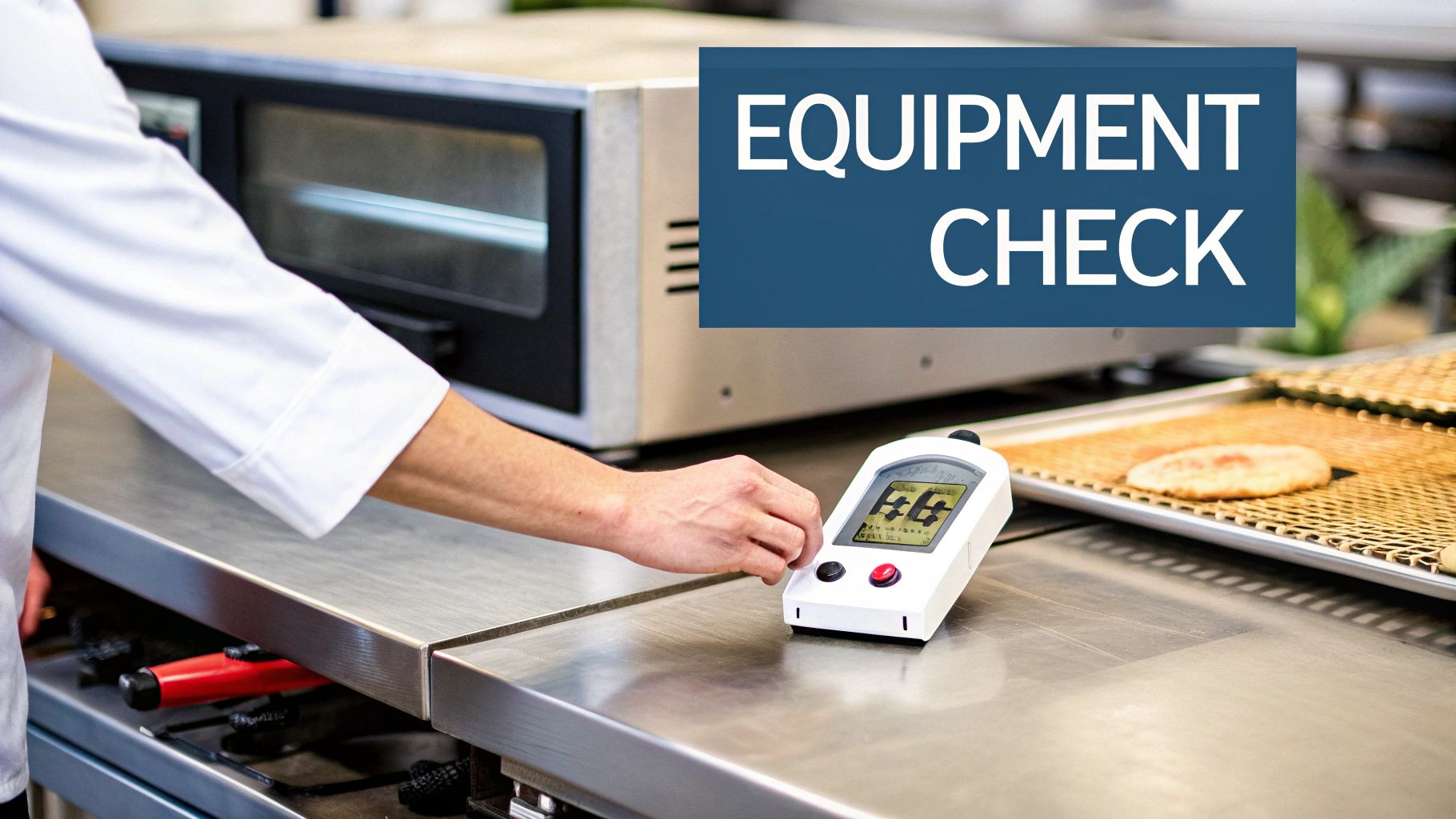
This proactive inspection confirms that gas lines are secure, electrical connections are safe, and all safety features, like fire-suppression systems, are operational. It is the critical first line of defense against operational chaos and potential health code violations before your doors ever open to the public.
How to Implement a Thorough Systems Check
A successful equipment audit is systematic and well-documented. Start by creating a detailed inventory of every piece of equipment in both the front and back of the house. For each item, develop a specific checklist of inspection points.
- Refrigeration: Verify that all refrigerators, freezers, and walk-in units are holding at their required temperatures. Use a calibrated digital thermometer for accuracy.
- Cooking Line: Test all ovens, grills, fryers, and ranges. Ensure they heat to the correct temperatures consistently. For example, Ruth's Chris Steak House mandates precise grill temperature checks to guarantee their signature steak quality.
- Warewashing: Run the dishwasher through a full cycle, checking for proper water temperature, pressure, and detergent dispensing.
- Bar Equipment: Your bar is a profit center, so its equipment needs the same attention. This includes checking ice machines, beverage dispensers, and blenders. Furthermore, ensuring your bar is properly outfitted requires a review of all essential bar accessories, not just the main equipment.
Document every check with the date, time, equipment reading, and the initials of the staff member who performed the inspection. This log becomes crucial evidence of due diligence for health inspectors. Should you encounter any issues during this phase, a solid understanding of professional restaurant equipment repair options is essential to get them resolved quickly.
2. Food Safety and Temperature Monitoring
Following a thorough equipment check, the next critical task in your restaurant opening checklist is a rigorous focus on food safety and temperature monitoring. This involves the systematic verification of all food storage temperatures, a detailed inspection of food quality and expiration dates, and the reinforcement of proper food handling protocols. Adherence to these standards is not just about passing health inspections; it is the core of your commitment to customer safety and your restaurant's reputation.
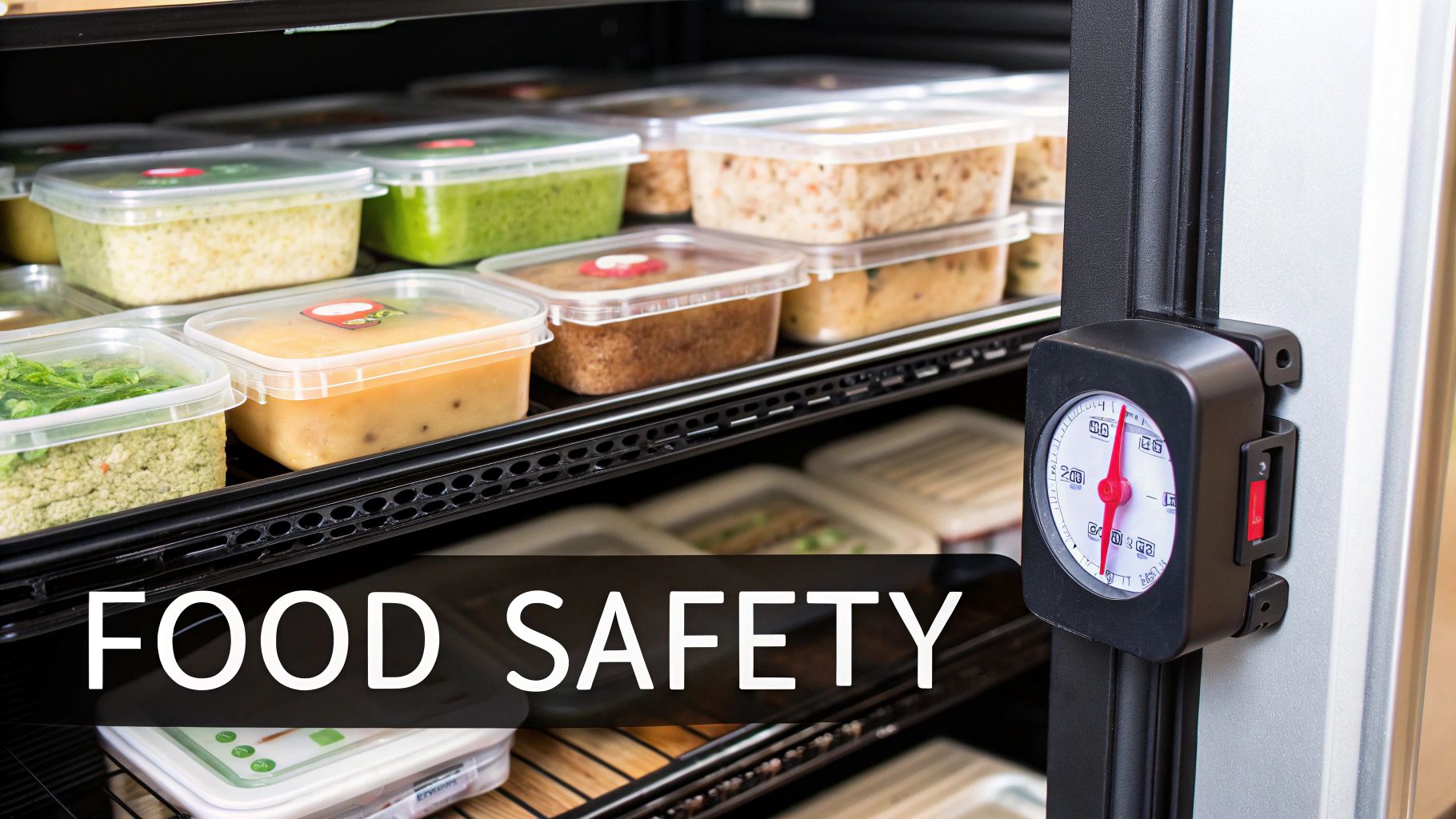
This process ensures every ingredient, from raw proteins to prepared sauces, is stored within the safe temperature "danger zone" (41°F to 135°F or 5°C to 57°C) to prevent bacterial growth. Diligent monitoring of both cold storage and hot-holding equipment is a non-negotiable daily practice that protects your inventory, prevents foodborne illness, and builds lasting trust with your patrons.
How to Implement a Robust Food Safety Program
A successful food safety program is built on precision, consistency, and clear documentation. It begins with establishing and enforcing strict procedures based on established guidelines like the FDA Food Code and HACCP (Hazard Analysis Critical Control Points) principles.
- Temperature Logging: Maintain meticulous temperature logs for every refrigerator, freezer, and hot-holding unit. These should be checked at least twice daily. For example, Denny's employs digital monitoring systems that send automatic alerts if temperatures fall out of range, ensuring immediate action.
- Receiving Protocols: Inspect every delivery for quality, signs of spoilage, and correct temperatures before it is accepted. Reject any items that do not meet your standards.
- Labeling and Rotation: Implement a strict "First-In, First-Out" (FIFO) system for all inventory. Every item must be clearly labeled with the delivery date and a use-by date to ensure freshness and reduce waste.
- Staff Training: Your team is your first line of defense. Regular training based on programs like ServSafe is essential to ensure every employee understands cross-contamination prevention, proper handwashing, and safe food handling techniques.
Create visual aids, such as charts showing ideal temperatures and signs of food spoilage, and place them in key areas. Using color-coded thermometers for different food categories (e.g., red for raw meat, green for produce) can also significantly reduce the risk of cross-contamination. These documented procedures are vital components of any comprehensive opening checklist for a restaurant.
3. Staff Scheduling and Attendance Verification
With your equipment ready, the focus shifts to the human element that brings your restaurant to life. Verifying staff scheduling and attendance is a critical checkpoint in your daily opening checklist. This step is about more than just a headcount; it’s about confirming that your team is present, prepared, and positioned for success. It involves ensuring all scheduled employees have arrived on time, are in proper uniform, and understand their assigned stations for the shift, setting the standard for professionalism and readiness from the moment the doors open.

This process is your first opportunity to manage last-minute call-outs, confirm adequate staffing levels for projected business volume, and ensure every team member has completed the necessary training. A smooth verification process prevents service gaps, reduces stress during peak hours, and reinforces a culture of accountability and punctuality.
How to Implement an Effective Attendance Check
A streamlined attendance system relies on clear processes and modern tools. The goal is to make the check-in process efficient, allowing you to quickly identify and solve any staffing issues before they impact service. Beyond just scheduling, effective daily operations require robust HR support for small businesses to manage payroll, compliance, and employee relations.
- Utilize Scheduling Software: Implement scheduling software with mobile check-in and automatic notifications. For instance, many systems, similar to what Chick-fil-A employs, can alert a manager immediately if an employee is late, allowing for swift action.
- Cross-Train Your Team: A well-cross-trained team is your best defense against unexpected absences. Olive Garden is known for its cross-training programs, which ensure that multiple employees can competently cover critical roles like expo or a busy sauté station.
- Maintain Optimal Staffing Ratios: Don't schedule down to the bare minimum. In-N-Out Burger famously maintains higher staffing levels than many competitors, which allows them to absorb sudden rushes and maintain exceptional service quality without over-stressing the team.
- Implement an On-Call System: Create a list of reliable, flexible staff members who are willing to be on-call for a small stipend or priority on future shifts. This provides a ready pool of trained employees to cover no-shows or last-minute emergencies.
4. Inventory and Stock Level Assessment
An accurate assessment of inventory and stock levels is a cornerstone of your daily opening checklist for a restaurant. This is more than just a quick glance into the walk-in; it's a systematic review of every food ingredient, beverage, and supply item required for the day's service. The process involves checking on-hand quantities against projected needs, confirming proper storage conditions to maintain quality, and flagging items for reorder before they run out. This diligent practice prevents service disruptions, controls food costs, and minimizes waste from spoilage or over-ordering.
This daily audit ensures you never have to tell a customer their favorite dish is unavailable, a situation that directly impacts guest satisfaction and your bottom line. It’s the critical link between procurement and production, guaranteeing your kitchen team has everything they need to execute the menu flawlessly from the first order to the last.
How to Implement a Thorough Inventory Assessment
A successful inventory check is built on precision and consistency. The goal is to move beyond manual counts and reactive ordering toward a more strategic, data-driven approach. Begin by using a digital system to track every item, from bulk produce to paper napkins.
- Establish Par Levels: Define the minimum and maximum quantity for every inventory item. These "par levels" should be based on historical sales data, supplier lead times, and storage capacity, acting as automatic triggers for reordering.
- Utilize Technology: Modern POS systems, like the one used by over 48,000 Toast locations, offer real-time inventory tracking that depletes stock with every sale. Similarly, Taco Bell's system automatically adjusts orders based on local demand patterns, ensuring efficiency.
- Implement "First-In, First-Out" (FIFO): Train all staff to organize storage areas meticulously. New stock should always be placed behind older stock to ensure ingredients are used before they expire, which is a key principle in reducing food waste.
- Conduct Regular Audits: While daily checks are essential for key items, schedule weekly or monthly full-physical inventory counts. This helps identify discrepancies caused by waste, theft, or portioning errors, allowing you to correct issues promptly.
Documenting these checks creates a valuable data set for forecasting and budget planning. A robust approach to stock management is vital, and a deeper dive into the specifics of a restaurant inventory management system can provide the framework needed for long-term success.
5. Cleanliness and Sanitation Protocols
An impeccable state of cleanliness is a non-negotiable cornerstone of any successful restaurant launch. This step on the opening checklist restaurant goes far beyond a quick wipe-down; it involves a comprehensive, top-to-bottom sanitation process that covers every inch of the establishment. From the kitchen floors to the dining room light fixtures, this deep clean ensures you not only meet or exceed health department standards but also create an immediately positive and welcoming impression on your first guests.
This foundational cleaning sets the standard for daily operations and demonstrates a commitment to food safety and customer well-being. A visibly clean and hygienic environment builds trust and is often a deciding factor for returning customers. Failing to establish rigorous protocols from day one can lead to health code violations, negative reviews, and a damaged reputation before you even get started.
How to Implement a Thorough Systems Check
A successful sanitation protocol is documented, delegated, and double-checked. Begin by dividing the restaurant into zones (e.g., dining area, kitchen line, restrooms, storage) and create specific, detailed cleaning tasks for each. This ensures no area is overlooked and accountability is clear.
- Systemize with Checklists: Develop detailed checklists for opening, closing, and deep cleaning duties. For example, Panera Bread implemented enhanced protocols post-COVID that included scheduled electrostatic disinfection of high-touch surfaces. Your checklists should require staff initials and timestamps for verification.
- Prevent Cross-Contamination: Implement a color-coded system for cleaning tools. Using different colored cloths and buckets for restrooms versus kitchen prep areas is a simple yet highly effective method to prevent the spread of bacteria.
- Train for Safety and Effectiveness: Ensure all staff are thoroughly trained on the proper dilution ratios for commercial-grade sanitizers and cleaning chemicals. White Castle, for instance, has protocols that include sanitizing key surfaces every 30 minutes during peak hours, a standard that requires precise staff training.
- Verify and Document: A manager should conduct a final 'white glove' inspection before opening, referencing the completed checklists. This level of detail, common in Disney restaurant properties, ensures the highest standards are consistently met. Documenting these processes is crucial for staff accountability and for health inspections.
A well-organized approach to sanitation is critical. To build your own system, you can find a comprehensive restaurant kitchen cleaning checklist to use as a starting point.
6. Point of Sale (POS) System and Technology Setup
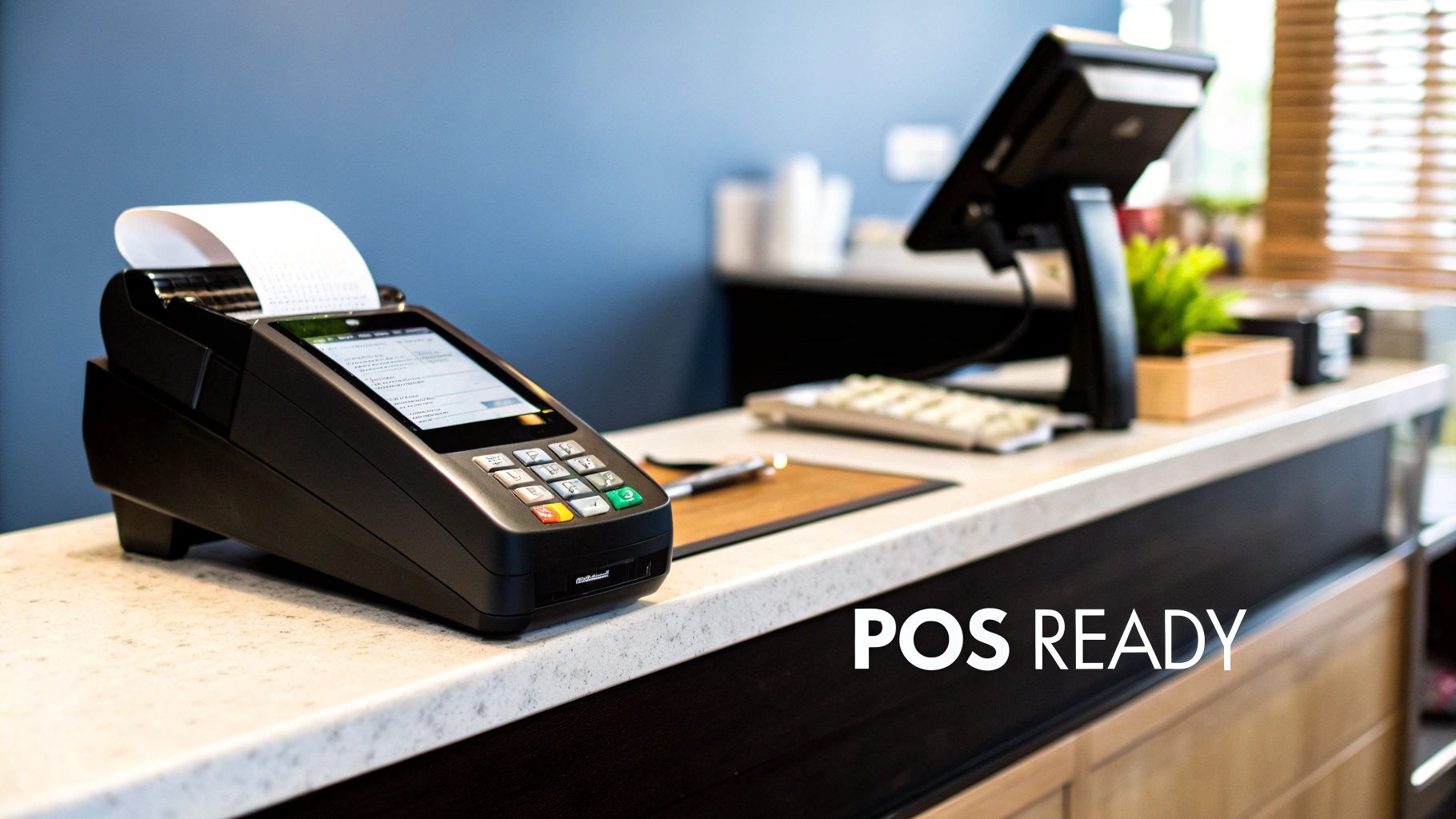
In today's digitally driven dining landscape, a restaurant's technology stack is as crucial as its kitchen equipment. A comprehensive check of your Point of Sale (POS) system and all associated technology is a vital part of any opening checklist for a restaurant. This step ensures that from the moment your first customer arrives, every order, payment, and interaction is seamless, secure, and efficient. It involves verifying that all hardware and software components, from POS terminals to guest Wi-Fi, are fully operational and integrated.
This pre-opening verification prevents disastrous transaction failures, long customer wait times, and staff frustration. A functional tech setup is the central nervous system of your restaurant, facilitating communication between the front and back of the house, managing inventory, and processing revenue. Getting this right is non-negotiable for a smooth opening day.
How to Implement a Thorough Technology Setup
A successful technology check requires a systematic approach that tests every digital touchpoint in the customer and staff experience. Begin by creating a full inventory of your tech hardware, software, and network components. Test each system individually and then as an integrated whole to identify any communication issues.
- POS Terminals & Payment Processors: Run test transactions for every conceivable payment method, including credit cards (chip, swipe, and tap-to-pay), debit, mobile wallets like Apple Pay and Google Pay, and gift cards. Void transactions to ensure the process works correctly.
- Connectivity: Confirm robust Wi-Fi connectivity for both your private operational network and public guest access. Have a backup internet solution, like a mobile hotspot, ready in case of an outage. When configuring your technology, special attention should be paid to choosing the best POS system for your small business, as it forms the heart of your sales operations.
- Integrated Systems: Test all other connected technology. This includes digital menu boards, self-service kiosks like those used by McDonald's, kitchen display systems (KDS), and online ordering platforms. Domino's, for example, performs daily calibrations on its pizza tracker system to ensure accuracy.
- Printers and Peripherals: Ensure all receipt printers, kitchen printers, and credit card readers are connected and functioning properly. A failed kitchen printer can bring service to a halt.
Finally, create and distribute simple troubleshooting guides for common issues to empower staff to solve minor problems without manager intervention. This proactive preparation ensures your technology empowers your service rather than hinders it.
7. Menu Availability and Daily Specials Setup
A restaurant’s menu is its primary promise to the customer. Therefore, a critical step in any opening checklist for a restaurant is to ensure that this promise can be delivered flawlessly. This involves a daily, meticulous review of the menu to confirm ingredient availability for every single dish. This verification process prevents the dreaded "86'ing" of items mid-service, which can lead to customer disappointment and disrupt kitchen workflow. It’s a foundational daily ritual that bridges the gap between your culinary vision and operational reality.
This proactive check ensures that any supply chain issues are identified early, allowing for timely menu adjustments or specials. It also involves briefing the entire front-of-house (FOH) team on the day's offerings, specials, and any potential ingredient substitutions, empowering them to provide knowledgeable and confident service from the moment the doors open.
How to Implement a Thorough Menu Review
A successful menu review is a daily, collaborative effort between the kitchen and service staff. It begins with the chef or kitchen manager physically verifying inventory against the prep lists for all menu items. This daily check ensures every ingredient is in-house and meets quality standards before service begins.
- Inventory Verification: Cross-reference the day's expected orders with the actual inventory on hand. For example, a farm-to-table restaurant like Blue Hill adjusts its menu daily based on what fresh ingredients are delivered that morning, a practice that ensures peak quality.
- Specials Preparation: Finalize the daily specials, including pricing, portioning, and a detailed description. Ensure the kitchen team has prepped all necessary components and the FOH team can accurately describe the dish, its ingredients, and its flavor profile.
- Staff Briefing: Conduct a pre-shift meeting to communicate all menu information. The Cheesecake Factory, with its extensive menu of over 250 items, holds daily staff training to cover rotational specials, ensuring consistency and knowledge across its team.
- System Updates: Immediately update all menu systems. This includes point-of-sale (POS) terminals, digital menu boards, online ordering platforms, and printed menus. A swift update prevents confusion and ordering errors.
Document any items that are low in stock and create a communication plan in case an item needs to be removed from the menu during service. This step is a cornerstone of an effective opening checklist for a restaurant, turning potential service disruptions into opportunities for showcasing dynamic, well-managed specials.
8. Safety and Security Verification
Beyond food quality and service, a restaurant's primary responsibility is to ensure the safety and security of its patrons and staff. A comprehensive verification of all safety systems is a non-negotiable part of any opening checklist restaurant. This involves a meticulous review of fire suppression, emergency exits, alarm systems, and security protocols. This proactive audit protects your assets, ensures legal compliance, and builds trust with your community, laying a foundation of safety from your very first day of operation.
This process confirms that your establishment is prepared for any emergency, from a kitchen fire to a security threat. Verifying these systems mitigates risk, prevents potential liabilities, and ensures a secure environment where both employees and customers feel protected, which is crucial for long-term success.
How to Implement a Thorough Systems Check
A robust safety and security plan is systematic, documented, and regularly rehearsed. Begin by creating a master log for all safety equipment and security procedures, assigning responsibility for regular checks and maintenance.
- Fire Safety: Test all fire alarms, smoke detectors, and kitchen fire suppression systems (like the Ansul system). Check the charge on all fire extinguishers and ensure their inspection tags are current. For example, Waffle House, known for its 24/7 operations, has specific fire safety protocols built into its unique restaurant design to handle emergencies at any hour.
- Emergency Preparedness: Ensure all emergency exits are clearly marked, illuminated, and completely unobstructed. Post clear evacuation maps and emergency action plans in visible staff areas, such as the kitchen and break room.
- Security Systems: Verify that all security cameras are operational, positioned for maximum coverage, and recording properly. Test alarm systems, including panic buttons, and ensure the monitoring service has the correct contact information. Dave & Buster's famously uses comprehensive, real-time monitored camera systems for effective crowd control and incident prevention.
- Operational Security: Establish and train staff on secure cash handling procedures, including protocols for opening, closing, and making bank deposits. Ensure parking lots, walkways, and entryways are well-lit to deter criminal activity and prevent accidents.
Document all tests, training sessions, and equipment inspections with dates and initials. This log serves as proof of due diligence for both insurance purposes and regulatory inspections, solidifying your commitment to a safe operation.
Opening Checklist Comparison of 8 Key Areas
| Item | Implementation Complexity 🔄 | Resource Requirements ⚡ | Expected Outcomes 📊 | Ideal Use Cases 💡 | Key Advantages ⭐ |
|---|---|---|---|---|---|
| Equipment and Kitchen Systems Check | High - requires technical knowledge and time | Moderate - tools like thermometers, checklists | Ensures food safety, prevents breakdowns, consistent quality | Restaurants prioritizing safety & operational reliability | Prevents violations, reduces downtime |
| Food Safety and Temperature Monitoring | Medium - requires thorough training and documentation | Moderate - thermometers, monitoring systems | Prevents foodborne illness, compliance, reduces waste | All foodservice operations focused on hygiene compliance | Protects reputation, reduces waste |
| Staff Scheduling and Attendance Verification | Medium - managing last-minute changes can be complex | Moderate - scheduling software, backup staff | Ensures coverage, compliance, quick staffing responses | High-volume or multi-shift restaurants | Maintains coverage, regulatory compliance |
| Inventory and Stock Level Assessment | Medium-High - detailed counting and analysis needed | Moderate-High - inventory systems and supplier contacts | Prevents stockouts, reduces waste, improves cost control | Restaurants managing large menus or fluctuating demand | Cost saving, waste reduction |
| Cleanliness and Sanitation Protocols | Medium - labor-intensive and repetitive | Moderate - cleaning supplies, staff time | Prevents health violations, improves environment | All restaurant areas requiring hygiene & presentation | Reduces illness risk, boosts morale |
| POS System and Technology Setup | Medium - technical troubleshooting required | Moderate - technology systems, backup internet | Smooth transactions, accurate orders, real-time sales data | Tech-driven or high-volume quick-service restaurants | Minimizes delays, real-time tracking |
| Menu Availability and Daily Specials Setup | Medium - frequent updates and communication | Low-Moderate - menu updates, staff briefings | Maximizes revenue, prevents customer disappointment | Restaurants with dynamic menus, daily specials | Increases sales, improves communication |
| Safety and Security Verification | Medium - ongoing equipment testing and procedure training | Moderate - safety equipment, monitoring systems | Protects people, reduces liability, ensures compliance | All establishments focused on safety & theft prevention | Enhances safety, reduces insurance risk |
Turn Your Checklist into a Competitive Advantage
Navigating the pre-opening hours of a restaurant can feel like conducting an orchestra in the middle of a storm. Each section, from the kitchen line to the front-of-house, must be perfectly in sync. The comprehensive opening checklist we've detailed is your conductor's baton, transforming potential chaos into a symphony of operational precision. It’s far more than a simple to-do list; it’s a strategic blueprint for consistency, safety, and profitability.
By diligently working through each of the eight core areas, from Equipment and Kitchen Systems to Safety and Security Verification, you are not just preparing for the day ahead. You are actively embedding a culture of excellence and accountability into the very fabric of your establishment. This systematic approach eliminates guesswork and empowers your team, ensuring that every shift starts from a position of strength and control.
From Daily Routine to Long-Term Success
The true power of a meticulous opening checklist for a restaurant is not just in what it accomplishes each morning, but in the long-term competitive edge it builds. Consistency is the bedrock of customer loyalty. When a guest knows they will receive the same high-quality meal, served in a clean and safe environment every time they visit, they are no longer just a customer; they become an advocate for your brand.
Think of each checklist item as a promise you make to your patrons and your staff:
- Promise of Quality: Verifying inventory and menu availability ensures you never disappoint a customer with an out-of-stock favorite.
- Promise of Safety: Rigorous food safety checks and sanitation protocols protect everyone who walks through your doors, building unshakable trust.
- Promise of Efficiency: A well-prepared POS system and a fully briefed staff create a seamless and enjoyable dining experience, free from frustrating delays or errors.
Key Insight: Your daily opening checklist is the most powerful, low-cost tool you have for risk management and quality control. It is the proactive foundation that prevents costly errors, food waste, and negative reviews before they ever happen.
Actionable Next Steps: Implementing Your Master Checklist
Reading about a great system is one thing; implementing it is what drives results. Don't let this guide become just another bookmarked article. Take immediate, concrete steps to integrate this process into your operations.
- Customize and Digitize: Adapt the checklist templates provided to fit your specific concept, layout, and menu. Transfer them into a digital format using a simple app or shared document that your team can access and update in real-time.
- Train and Empower: Hold a dedicated training session with your opening managers and key staff. Explain the "why" behind each checkpoint, not just the "what." Empower them to take ownership of their designated areas.
- Audit and Refine: Schedule a weekly review for the first month. What’s working? Where are the bottlenecks? An effective checklist is a living document, constantly refined to improve efficiency and address new challenges.
Ultimately, mastering your opening routine is about transforming a series of mundane tasks into a powerful strategic advantage. It ensures that every single day, your restaurant opens its doors not just ready for business, but primed for excellence. This discipline frees you and your team to focus on what truly matters: creating unforgettable culinary experiences and building a thriving, resilient business. Make every opening a grand opening.
Is your equipment holding back your operational excellence? An efficient opening checklist for a restaurant is only as effective as the tools your team uses. Upgrade your kitchen with reliable, high-performance equipment without the upfront capital expense by exploring the flexible financing and leasing options at The Restaurant Warehouse. Equip your team for success and start every day with confidence by visiting The Restaurant Warehouse to find the perfect solutions for your culinary vision.
About The Author

Sean Kearney
Sean Kearney used to work at Amazon.com and started The Restaurant Warehouse. He has more than 10 years of experience in restaurant equipment and supplies. He graduated from the University of Washington in 1993. He earned a BA in business and marketing. He also played linebacker for the Huskies football team. He helps restaurants find equipment at a fair price and offers financing options. You can connect with Sean on LinkedIn or Facebook.
Leave a comment