

How to Increase Restaurant Sales Proven Strategies
Boosting your restaurant's sales isn't about finding some magic bullet—it's about getting smart and executing a solid strategy across a few key areas of your business. The real secret is focusing on the things that actually move the needle: engineering a menu that sells, building a killer online presence, creating guest experiences that people talk about, and making sure your daily operations are tight.
Forget the quick fixes. This is about building sustainable growth that lasts.
A Realistic Blueprint for Restaurant Sales Growth
This guide isn't about generic advice. We’re digging into a real-world blueprint for how to actually increase your restaurant sales. Successful operators know there's no single trick; they master several core pillars of the business that all work together. When you get these pieces humming in sync, you create a powerful engine for revenue growth and the kind of customer loyalty that keeps you busy on a Tuesday night.
Think of this as your roadmap. We’ll unpack the essential strategies that have the biggest impact on your bottom line and turn everyday challenges into real opportunities to make more money.
Core Pillars of Restaurant Growth
To really move the needle on sales, you have to think about the entire customer journey. It starts the moment a potential diner finds you online and continues right through to the final bite they take in your dining room. The most effective strategies are built on a foundation of four key areas:
- Menu Engineering: This is about turning your menu from a simple list of dishes into your single most powerful and profitable sales tool.
- Digital Marketing: It’s how you capture new customers by showing up in local search, engaging on social media, and taking control of your online ordering.
- Guest Experience: This is where you build a loyal following by creating memorable moments that drive repeat business and priceless word-of-mouth.
- Operational Efficiency: This means streamlining everything you do—front and back of house—to serve more guests effectively and protect your profit margins.
The key isn't just to implement these ideas, but to integrate them. A brilliantly engineered menu is most powerful when it’s promoted through smart digital marketing to customers who already love the experience you provide.
When you focus on these interconnected areas, you create a cycle of sustainable growth. By mastering each one, you build a resilient business that doesn't just survive but actually thrives, consistently driving sales and cementing its place in the market.
Turn Your Menu into a Powerful Sales Engine
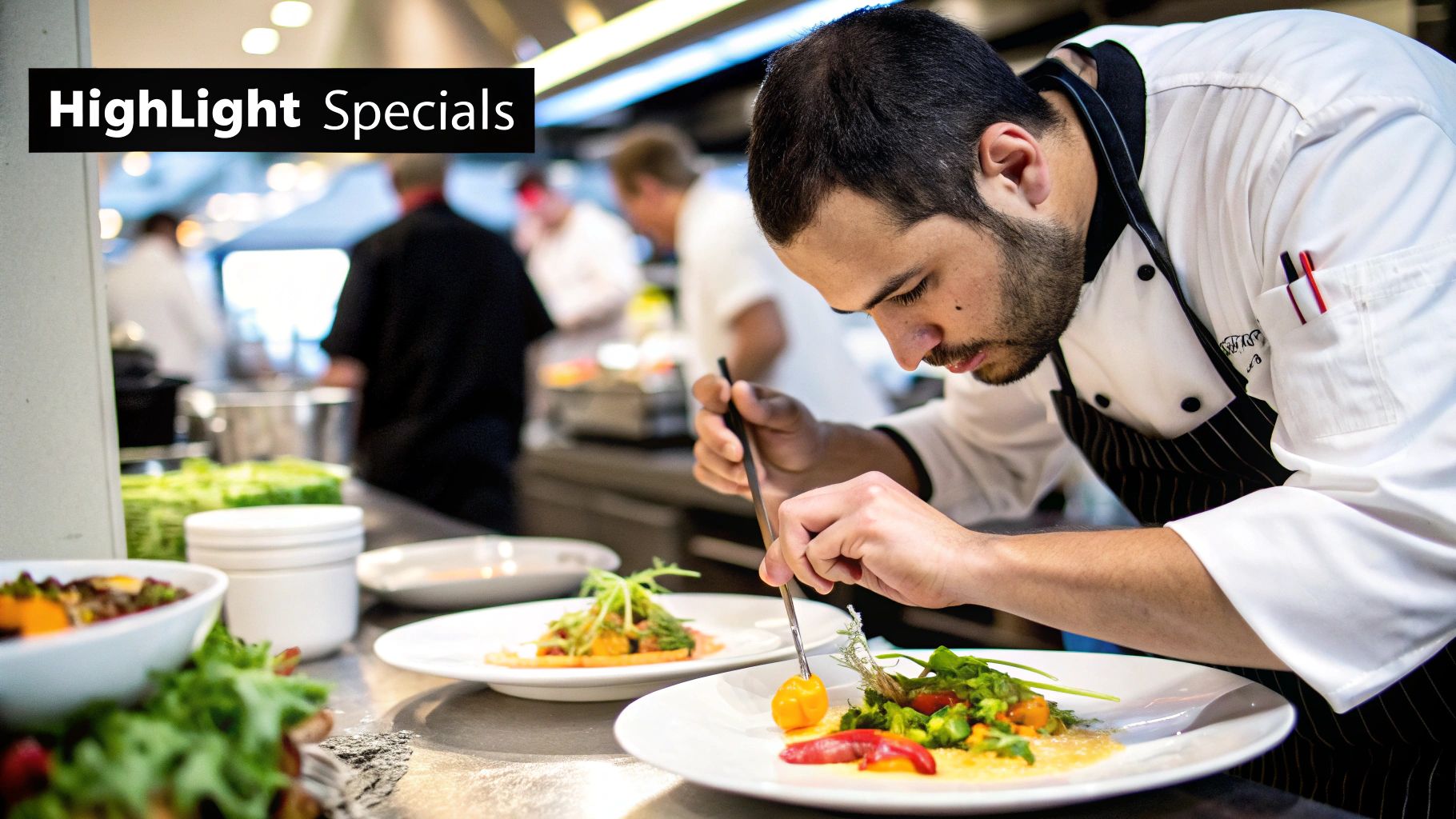
Think of your menu as your most valuable employee. It’s working silently at every table, guiding customers toward your most profitable items, bumping up the average check, and defining the entire dining experience. When designed with purpose, it’s not just a list of what you serve—it's a powerful sales engine. This is the art of menu engineering.
It all kicks off with a hard look at your numbers. By analyzing both the popularity (how often an item is ordered) and profitability (its actual contribution margin) of every single dish, you can stop guessing and start making strategic moves.
Identify Your Menu All-Stars and Puzzles
The easiest way to start is by sorting your menu items into four simple categories. This matrix is the bedrock of smarter decisions on everything from pricing and placement to promotions.
- Stars: These are your champions—high popularity and high profitability. Customers love them, and they make you great money. Your job here is simple: protect and promote these dishes at all costs.
- Plow Horses: These are the crowd-pleasers. They sell like crazy but have lower profitability. They keep people coming in the door but don’t do as much for your bottom line as they could.
- Puzzles: These are high-profit items that just aren’t selling. They represent a huge opportunity if you can crack the code on why they aren’t moving.
- Dogs: These are the items with both low popularity and low profitability. They’re taking up valuable real estate on your menu and in your walk-in.
By classifying each dish, you move from guesswork to strategy. Instead of wondering what to do, you have a clear action plan for every single item you sell.
Once you’ve sorted your dishes, the real work begins. For those popular but low-margin Plow Horses, could a small price bump or bundling it with a high-margin drink boost its profitability? For the Puzzles, it's time to play detective. Is the description flat? Is the price point scaring people away? Would a better photo or a staff recommendation make all the difference?
Use Descriptive Language to Entice and Sell
The words you choose can make or break a dish. A generic description like "Chicken Sandwich" or "House Salad" does absolutely nothing to build desire. You need to use evocative language that paints a picture and gets the senses firing.
Suddenly, a "Chicken Sandwich" becomes a "Tuscan-Grilled Chicken Panini with Sun-Dried Tomato Aioli and Fresh Arugula." A simple "House Salad" is transformed into "Our Signature Field Greens Salad with Candied Pecans, Goat Cheese Crumbles, and a Balsamic Vinaigrette." These descriptions don’t just sound better; they justify a higher price tag.
Master Strategic Menu Design and Placement
The layout of your menu is a roadmap for your customers' eyes. People instinctively look at the top right corner first, making it prime territory for your high-profit Stars.
Here are a few design tricks that drive sales:
- Use visual cues: Placing a box around an item or using a small icon can draw the eye right where you want it.
- Limit the choices: An overwhelming menu leads to decision fatigue. When that happens, customers often default to something familiar and cheap. A curated selection feels more intentional and is easier to navigate.
- Ditch the dollar signs: Studies have shown that removing currency signs ($) can subtly encourage customers to spend more because it de-emphasizes the cost.
Craft Compelling Offers and Combos
Bundles, combos, and limited-time offers (LTOs) are proven tactics for increasing the average check size while creating a sense of urgency. A well-designed combo can nudge a customer to spend more than they planned by presenting an undeniable value. Pairing a popular entree with a high-margin side and a drink is a classic for a reason.
Thinking about irresistible pairings? If you have a popular pizza on your menu, you can learn more about how to create the perfect pairing of pizza and beer to build an offer they can’t refuse.
LTOs, whether they're seasonal or based on a special ingredient you got in, generate excitement and give regulars a reason to come back soon. They create that "fear of missing out" that drives traffic. This is especially true in the current economic climate, where value is a major driver for diners.
Use Digital Marketing to Attract New Diners
Your restaurant's digital presence is just as important as its physical storefront—sometimes, even more so. For a huge number of potential customers, their first taste of your brand happens online, long before they ever walk through your door. Mastering digital marketing isn't just about posting pretty food photos; it's about building a reliable system that consistently brings in new diners and actually grows your sales.
It really all starts with owning your online real estate. If a potential guest can't find you with a quick search, you might as well be invisible. This is where you kick off your push to bring in more business.
Build Your Digital Foundation
Before you even think about flashy campaigns or running ads, you have to get the basics right. A huge part of drawing new customers online is through effective Search Engine Optimization (SEO), which is just a fancy way of saying you need to show up when people search for food like yours. Think of it as your digital curb appeal.
Your first two priorities are non-negotiable:
- A Mobile-First Website: Let's be honest, almost everyone searching for restaurants is doing it on their phone, probably while they're already out and about. Your website must be fast, easy to use on a small screen, and have your menu, hours, and location front and center.
- A Perfected Google Business Profile: Your GBP is often the very first thing people see when they search your name or "restaurants near me." Keep it updated with great photos, accurate hours, your current menu, and direct links for online ordering or reservations. To really dig in, check out our complete SEO guide for restaurants.
An optimized Google Business Profile isn't just a nice-to-have; it's a powerhouse tool for local marketing. It’s free, and it’s the fastest way to answer a potential diner's most pressing questions and get them headed your way before they even look at a competitor.
With these two elements locked in, you create a smooth path from discovery to dining. A strong foundation ensures that when you do start driving traffic from social media or ads, those visitors land on a digital storefront that looks professional and convinces them to give you a try.
The Online Ordering Dilemma: In-House vs. Third-Party
The explosion in online food delivery has completely changed the game, with projections showing it will be a nearly $430 billion industry worldwide by 2025. While third-party apps like DoorDash and Uber Eats offer incredible visibility, their commission fees—which can be as high as 30%—can absolutely crush your profit margins.
This leaves you with a critical choice: pay a hefty price for their audience, or build your own system and keep your profits?
Comparing Online Ordering Systems
Taking a moment to compare these two paths makes the financial and operational impact crystal clear.
| Feature | Third-Party Apps (e.g., Uber Eats, DoorDash) | In-House System |
|---|---|---|
| Commission Fees | High (15-30% per order) | Low to none (just a monthly software fee) |
| Customer Data | The app owns the data, not you | You own all customer data and relationships |
| Menu Control | Limited control over presentation and pricing | Full control to update your menu and specials |
| Marketing Reach | Large, built-in user base | Requires your own marketing efforts to drive traffic |
| Profit Margin | Significantly reduced on every single order | Maximized on every order you fulfill |
While third-party platforms can be a great way to get in front of new customers, the smartest long-term strategy is to convert those users into your own direct customers. Use the initial exposure they provide, but always slip some marketing materials into your delivery bags—maybe a flyer with a QR code for a discount on their next direct order. The ultimate goal is to own that customer relationship.
Use Social Media as a Community Builder
Social media is so much more than just a digital photo album for your best-selling dishes. It’s a direct line to your community. It’s where you show off your restaurant's personality, chat with your regulars, and attract new followers who are likely to become paying customers.
Don't just post endless pictures of food. Share stories about your team, take your followers behind the scenes in the kitchen, or run a fun poll asking what special they'd love to see next week. This transforms your feed from a static menu into a living, breathing brand experience people want to be a part of.
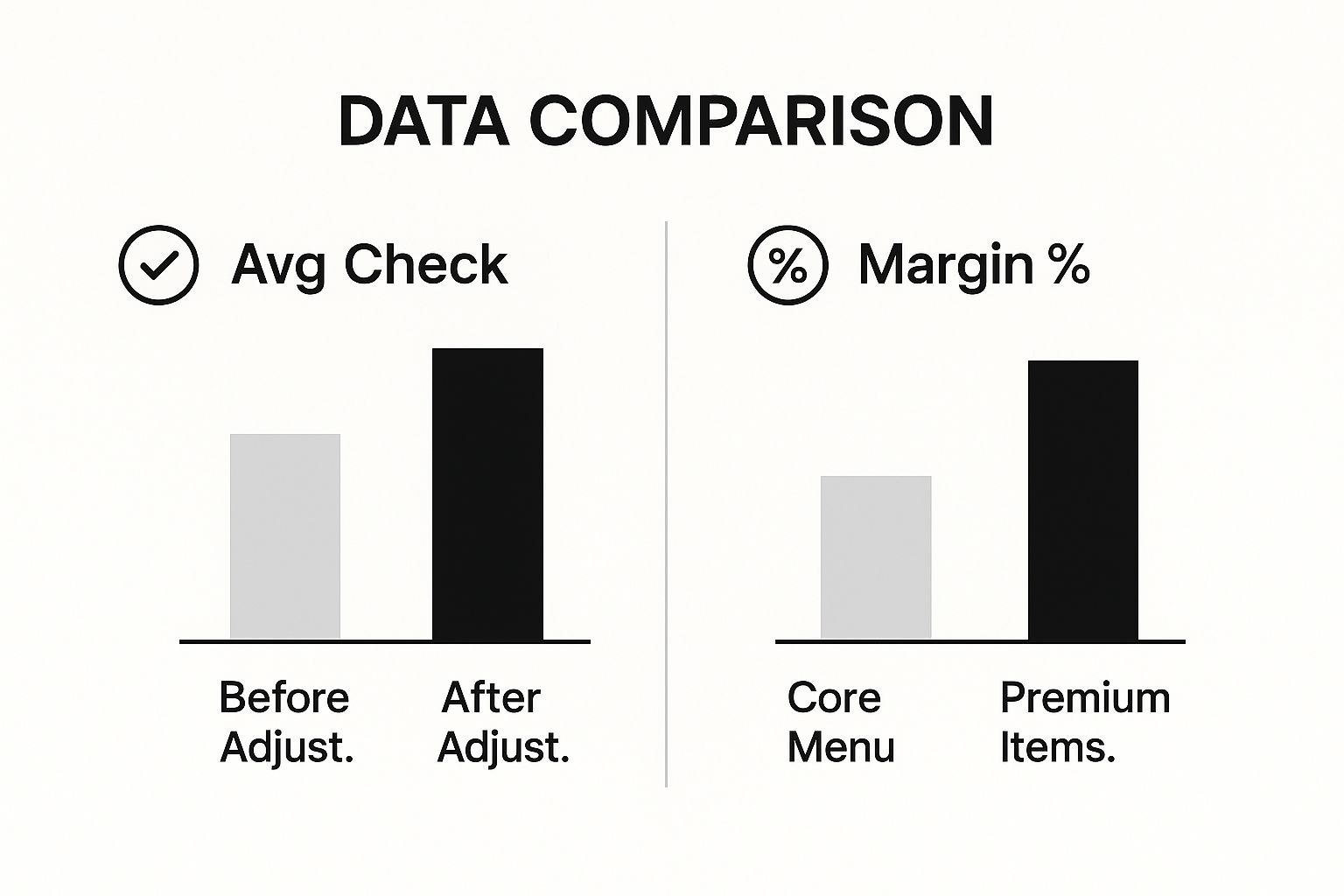
The image above really drives this home. It shows how strategic moves, like highlighting a premium margarita or a high-margin appetizer, can directly lift both the average guest check and your overall profitability. Social media is where you can test and showcase these offerings.
Run Targeted Ads That Actually Convert
Organic reach is fantastic, but paid advertising lets you get incredibly specific with who you're talking to. Social media platforms like Facebook and Instagram have powerful geotargeting tools. Imagine running an ad for a lunch special that is only shown to people working within a one-mile radius of your restaurant, specifically between 11 AM and 1 PM. That’s precision.
Similarly, paid search ads on Google let you capture high-intent diners at the exact moment they’re typing in "best tacos near me." This isn't about throwing money at a billboard and hoping for the best. It’s about making a calculated, data-driven investment to reach the people who are most likely to become your next loyal customers.
Craft an Experience That Creates Loyal Customers
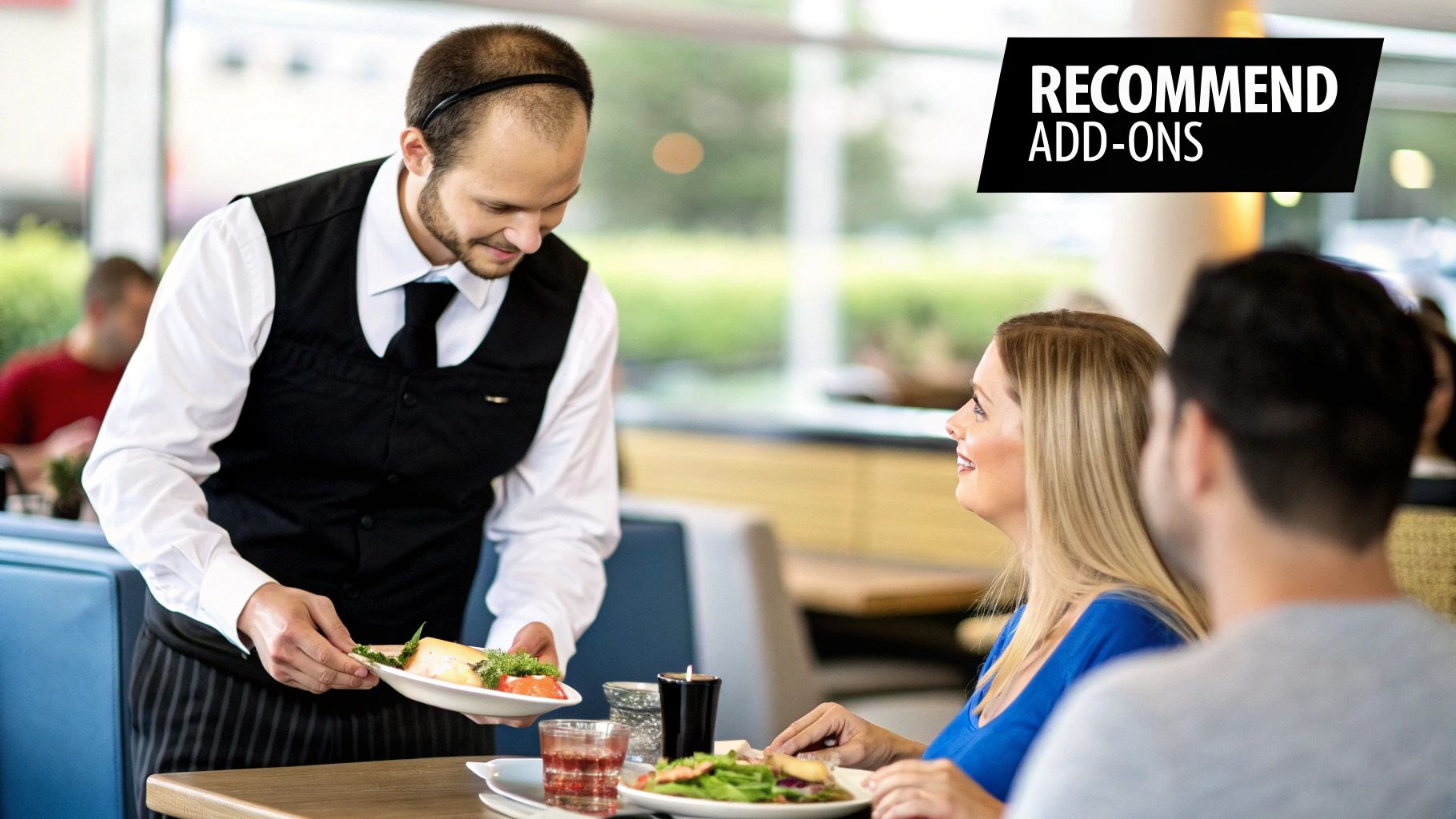
Getting a new diner through the door is a win, sure. But turning them into a loyal regular? That’s how you build a profitable, sustainable business. Your repeat customers are the absolute bedrock of consistent sales, and they don't just come back for the food—they return for the whole experience.
To really move the needle, you have to go beyond the basics. It’s all about creating memorable moments that build a genuine connection with your brand. This isn't just about friendly service, either. It’s about being intentional with every single touchpoint, from the moment a guest walks in to how you follow up long after they've left. Get this right, and you'll build a community of advocates who not only keep coming back but also drag their friends along with them.
Train Staff to Upsell with Finesse
Upselling shouldn't feel like a hard sell; it should feel like a genuinely helpful recommendation from a trusted friend. When it's done right, it makes the guest’s meal even better and naturally bumps up your average check size. The secret is shifting the team's mindset from "selling more" to "improving their experience."
Instead of a robotic, "Do you want fries with that?" train your staff to be more like guides. Picture this: a customer orders the seared scallops. A well-trained server might say, "Excellent choice. Our sommelier loves pairing that with the Sauvignon Blanc—it really brings out the citrus notes in the dish. Would you like to try a glass?" This approach is consultative, not pushy, and it adds real value.
Of course, to make this work, your team needs to know the menu inside and out. Hold regular tastings so they can speak authentically about flavor profiles and perfect pairings.
Design a Loyalty Program People Actually Use
A loyalty program can be a powerhouse for driving repeat business, but only if it's simple, rewarding, and dead easy to use. A complicated points system or lackluster rewards will just get ignored. The goal is to make your regulars feel seen and truly appreciated for choosing you.
Modern loyalty programs should be seamless. A lot of POS systems can now track visits and purchases automatically with a customer's phone number or credit card, which completely removes the friction of old-school punch cards or clunky apps. And the rewards? They need to be compelling enough to actually change behavior.
- Tiered Rewards: Offer better perks as customers spend more. A guest might get a free dessert after five visits and a free entrée after ten. It gives them something to work towards.
- Surprise and Delight: Every once in a while, send a surprise offer, like a free appetizer on their next visit, just because. This kind of unexpected gesture builds a ton of goodwill.
- Exclusive Access: Treat your best customers like VIPs. Give them early access to new menu items or send them personal invitations to special tasting events.
A well-designed loyalty program does more than just offer discounts. It builds a direct relationship with your best customers, giving you a channel to communicate with them and valuable data about their dining habits.
This transforms your program from a simple discount tool into a real community-builder, giving you a direct line to the people who matter most to your success.
Turn All Feedback into a Growth Opportunity
In this business, feedback is going to happen—good and bad. The way you handle it is what separates the thriving restaurants from the struggling ones. Every single review, comment, or complaint is a chance to either fix a broken relationship or amplify a positive one.
When a negative review pops up online, jump on it fast and professionally. Acknowledge what happened, apologize sincerely, and offer to make it right by inviting them to connect with you offline. This public response shows other potential customers that you take service seriously. Then, behind the scenes, use that feedback as a free consultation to find and fix whatever went wrong.
Positive reviews are pure gold—your most powerful form of social proof. Don't just let them sit there! Share glowing testimonials on your social media channels (with permission, of course) and highlight them on your website. Encouraging your happy diners to leave reviews can seriously boost your online reputation and help you increase restaurant sales by bringing in new folks who trust what their peers are saying. Master the art of feedback, and you’ll build a resilient brand that never stops improving.
Optimize Operations to Boost Efficiency and Profit
Smart operations are the unsung heroes of restaurant profitability. While a fantastic menu and clever marketing get customers in the door, it’s the smooth-running machine behind the scenes that lets you serve more people, protect your margins, and grow your sales. By tightening up your daily processes, you build a much stronger foundation for sustainable growth.
It all starts with having the right tools for the job. A modern Point of Sale (POS) system is so much more than a digital cash register these days; it's the central nervous system of your entire operation. It provides a goldmine of data that can completely change how you do business, from tracking sales trends in real-time to managing your inventory with pinpoint accuracy.
Use Technology to Accelerate Service
In a busy restaurant, speed and accuracy are everything. The right technology gives your team the power to work faster and smarter, which directly impacts how many guests you can serve during a peak rush.
- Modern POS Systems: These systems do way more than just take payments. They integrate with kitchen display systems (KDS) to fire orders instantly, which slashes errors and ticket times. They also give you priceless data on your busiest hours and most popular items, helping you make smarter staffing decisions.
- Table Management Software: This software gives your hosts a bird's-eye view of the dining room. It helps them seat guests faster, manage waitlists without chaos, and turn tables more efficiently—all without ever making a party feel rushed.
- Mobile Ordering and Payment: Letting guests order or pay from their table with a QR code can dramatically speed up service. This is a game-changer for quick-service spots or during a hectic lunch hour. It frees up your staff to focus on delivering amazing hospitality instead of just running credit cards.
Embracing these tools isn't about replacing the human touch; it's about enhancing it. You’re removing operational friction so your team can focus on what they do best: creating an incredible guest experience.
This kind of operational efficiency is non-negotiable in today's market. With the industry projected to hit $1.5 trillion in global sales by 2025, every small improvement you make adds up to a major competitive advantage. For more details on these industry trends, you can read the full report from the National Restaurant Association.
Master Your Inventory to Control Costs
Wasted food is wasted profit. It’s that simple. Poor inventory management eats directly into your bottom line every single day. Precise tracking is the key to minimizing waste, preventing over-ordering, and making sure you never run out of a crucial ingredient on a packed Saturday night.
A solid inventory management system, often built right into your POS, tracks ingredient usage with every single order. This allows you to set automatic reorder points and get a crystal-clear picture of your food costs. Understanding your numbers is always the first step to improving them. To really dig into this critical metric, you can find a ton of helpful information in our guide to calculating restaurant food cost percentage.
Optimize Staff Scheduling for Peak Performance
Labor is easily one of your biggest expenses, but just slashing hours is a recipe for disaster. The real goal is to schedule smarter, not leaner. Modern scheduling software taps into your historical sales data to predict future demand, helping you build schedules that ensure you're perfectly staffed for every single shift.
This means you’ll have enough hands on deck to crush the weekend rush, preventing service bottlenecks and burnt-out employees. It also means you won't be overstaffed and bleeding cash during a slow Tuesday lunch. This data-driven approach cuts down on unnecessary labor costs while protecting the quality of your service.
Streamlining operations touches every corner of your restaurant, including maintaining cleanliness and presentation without tying up your staff. Outsourcing certain tasks can be a smart move. For example, using specialized commercial laundry services designed for restaurants for your linens can free up your team's time and ensure a consistently professional look—another small but vital part of the overall guest experience. By tightening up every aspect of your operations, you build a more resilient and profitable business.
Your Top Questions About Boosting Restaurant Sales, Answered
When you're trying to figure out how to drive more sales, it's easy to get overwhelmed. I've found that most restaurant owners tend to run into the same handful of questions. Getting straight, practical answers can help you cut through the noise and put your energy where it’ll actually make a difference.
Let's tackle some of the most common questions I hear from operators just like you.
"What’s the Absolute Fastest Way to Increase My Sales?"
While we all wish there was a magic button, the quickest win is almost always with the people who already love your food: your existing customers. It's so much easier (and cheaper) to get a regular to add an appetizer or come back sooner than it is to convince a total stranger to walk through your doors.
If you need a sales bump now, focus on these two things:
- Master suggestive selling. Train your team to move beyond, "Anything else for you?" and make specific, tempting recommendations. A simple switch to, "Our new house-made tiramisu pairs perfectly with an espresso after your meal," can make a huge difference.
- Launch a killer limited-time offer (LTO). Create a special with a great profit margin and build some hype around it. The built-in urgency of an LTO gives your regulars a powerful reason to visit right away because they don't want to miss out.
"Is an In-House Online Ordering System Really Better?"
For your long-term health and profitability? Absolutely, yes. Third-party apps like DoorDash and Uber Eats are fantastic for getting your name out there, but their commission fees are brutal. We're talking 15% to 30% of every single order, which can completely wipe out your profit.
Here’s the game plan I recommend:
- Start on the third-party apps to tap into their massive user base and get discovered.
- In every single delivery bag that goes out, stick a small flyer or postcard with a QR code. Offer a 10% discount on their next order if they place it directly through your own website.
- Slowly but surely, you'll convert those customers over to your commission-free platform. Now you own the customer relationship, you have their data, and you keep every penny of the profit.
"How Often Should I Really Be Analyzing My Menu?"
Think of your menu as your single most important sales tool—it's not something you can just "set and forget." You should be doing a full-blown menu engineering analysis at least twice a year. If you can swing it, a quarterly review is even better, especially if your food costs are fluctuating.
This isn't just about crunching numbers. Regular analysis helps you:
- Find your high-profit, high-popularity "Stars" and make sure you're promoting them.
- Identify your popular but low-profit "Plow Horses" and figure out how to re-price or re-plate them to be more profitable.
- Make smart, data-backed decisions about ditching loser items before they drag you down.
A menu analysis is a health check for the very core of your business. Consistent reviews make sure your most valuable piece of marketing real estate is working as hard for you as you do.
"What Are the Most Effective Marketing Tactics for a Local Restaurant?"
For a brick-and-mortar restaurant, all marketing is local. Forget the fancy national campaigns; your best bet is to connect directly with the community right outside your door.
If you're wondering where to start, focus on these high-impact strategies:
- Treat Your Google Business Profile Like Gold: This is non-negotiable. Your hours, menu, and photos must be up-to-date. Actively ask for reviews and respond to every single one—90% of diners check reviews before deciding where to eat.
- Get Active in Local Social Media Circles: Join neighborhood Facebook groups and share your daily specials. Run geo-targeted ads on Instagram that only show up for people within a 5-mile radius of your restaurant. It's targeted, cheap, and effective.
- Partner Up with Other Local Businesses: Team up with a nearby business for a cross-promotion. For example, offer a discount to anyone who shows a ticket stub from the local movie theater, or offer to cater lunch for the staff at the insurance office down the street. It builds goodwill and gets new people in the door.
At The Restaurant Warehouse, we provide the high-quality commercial kitchen equipment you need to optimize your operations and support your growth. From efficient cooking equipment to reliable refrigeration, find everything you need to serve more customers and boost your sales at https://therestaurantwarehouse.com.
About The Author

Sean Kearney
Sean Kearney is the Founder of The Restaurant Warehouse, with 15 years of experience in the restaurant equipment industry and more than 30 years in ecommerce, beginning with Amazon.com. As an equipment distributor and supplier, Sean helps restaurant owners make confident purchasing decisions through clear pricing, practical guidance, and a more transparent online buying experience.
Connect with Sean on LinkedIn, Instagram, YouTube, or Facebook.