

From Glass to Stainless: Our Top Picks for Kitchen Prep Bowls
Introduction to the World of Mise en Place
Food prep bowls are essential kitchen tools that transform chaotic cooking into organized efficiency. The concept of mise en place—having everything in its place—is the backbone of professional kitchens and a game-changer for home cooks. When you portion, label, and stage your ingredients before heat even hits a pan, you remove bottlenecks and guesswork. As one home cook noted, "it's time to get some prep bowls to help me organize chopped ingredients." This simple practice reduces stress, improves accuracy, and speeds up cooking from breakfast through dinner.
What makes mise en place so effective? It forces you to think through a recipe, gather exactly what you need, and arrange it in the order of use. With prep bowls, you can line up aromatics (onions, garlic, ginger), then spices, then liquids, then garnishes—each in its own bowl—so you can focus your full attention on heat and technique. This approach prevents cross-contamination, supports precise timing, and keeps your workspace clean. It also accelerates cleanup because excess ingredients and trimmings are contained, not scattered.
Food prep bowls also bridge the gap between cooking and storage. Glass and lidded bowls double as short-term storage for chopped produce, grains, sauces, and proteins, reducing the number of containers you need to keep on hand. In a busy restaurant, stainless steel mixing bowls are stacked within reach at every station; at home, a compact nesting set provides the same readiness without consuming cabinet space. Whether the goal is a week of power bowls, a smooth holiday service, or a quick Tuesday stir-fry, the right bowls keep you on track.
Not all bowls are the same. Material matters (glass, stainless steel, melamine, silicone, plastic), as do details like lids, non-slip bases, measurement markings, and pour spouts. Good prep bowls help you portion ingredients correctly, protect delicate items, and let you see at a glance what’s next. The modern meal prep trend—saving money and eating healthier—relies heavily on the right container for each job: tiny pinch bowls for spices, medium bowls for chopped veg and sauces, and large bowls for mixing doughs or tossing salads.
Quick Comparison of Food Prep Bowl Materials:
- Glass: Best for microwaving, storing acidic foods, and seeing contents clearly
- Stainless Steel: Ideal for professional kitchens, mixing, and high-volume prep work
- Melamine: Perfect for lightweight serving, break-resistance, and outdoor use
- Silicone: Great for flexible pouring, collapsible storage, and temperature extremes
- Plastic: Budget-friendly option for cold foods and casual dining environments
I’m Sean Kearney TRW, and my experience in the foodservice industry has shown me how quality food prep bowls can make or break a kitchen’s workflow and organization. When every second counts, having a complete lineup of bowls at the ready is the difference between scrambling and executing. The right tools truly transform food preparation efficiency.
CTA: Ready to streamline your mise en place? Explore durable, nesting prep bowl sets at https://therestaurantwarehouse.com/collections/smallwares.
Why Every Cook Needs a Quality Set of Prep Bowls
Imagine a cooking process that is smooth, organized, and enjoyable instead of a frantic juggling act. This is the change that a quality set of food prep bowls brings to any kitchen. They are not just containers; they are fundamental tools for efficiency and consistency that help you prep once and cook many times.
Time-saving is the most immediate benefit. Dedicating a short period to prepping ingredients in advance sets you up for success. For example, roasting vegetables, simmering a pot of grains, portioning proteins, and whisking a couple of base sauces can be done in under an hour, providing the foundation for several days of ready-to-assemble meals like power bowls, salads, tacos, or stir-fries. This single prep session saves you valuable time during busy weekdays and reduces the temptation to order takeout.
Beyond speed, food prep bowls significantly reduce stress. Having every ingredient measured, chopped, and waiting in its own bowl creates a calm, controlled environment. There is no more frantic searching for an item while another ingredient is at a critical stage on the stove. This organized approach also improves recipe accuracy, as pre-measured ingredients lead to more consistent and reliable results, a secret professional chefs have used for decades. Consistency is especially important for sauces, baked goods, and dishes that rely on precise ratios.
Portion control becomes effortless. For those managing dietary needs or aiming for healthier eating habits, having ingredients pre-portioned prevents accidental overconsumption. A typical power bowl with prepped ingredients can be easily assembled to meet specific caloric and nutritional targets, such as a 450-calorie meal with 15g of protein and 9g of fiber. Prepping proteins into 3–4 oz portions, packing vegetables in 1-cup containers, and keeping grains measured in 1/2-cup bowls lets you build balanced plates without thinking.
These bowls also help reduce food waste. Vegetables that are starting to wilt can be quickly chopped and stored, ready for use in a stir-fry, soup, or grain bowl. Leftover herbs go into tiny pinch bowls with a paper towel to stay dry and usable. This proactive approach ensures you use what you buy, saving money and minimizing waste. With airtight lids, prepped items and finished dishes typically stay fresh for up to four days in the refrigerator, in line with guidance from the USDA on leftovers and food safety.
Finally, the versatility of prep bowls is a major advantage. They are invaluable for holding ingredients, whisking dressings, tossing salads, serving sauces and condiments, or storing leftovers. With a range of sizes on hand—small pinch bowls, medium mixing bowls, and large workhorse bowls—you can stage an entire meal logically. For family dinners, try a build-your-own-bowl bar: proteins in a medium bowl, grains in a large bowl, vegetables in a few medium bowls, and sauces in small ramekins. Everyone customizes their plate, and ingredient bowls snap back into the fridge afterward.
If you’re outfitting a kitchen for the first time or upgrading your setup, a curated selection goes a long way. A starter mix might include six pinch bowls (2–6 oz), two medium bowls (1–2 quarts), and two large bowls (4–8 quarts), plus lids for the mediums. Add a non-slip base and measurement markings where possible. For a deeper overview of complementary tools that support prep efficiency, see our complete guide to restaurant smallwares.
Pro tip: Label your bowls with painter’s tape and a marker as you prep—write the ingredient and the recipe step it belongs to. When the heat is on, you’ll be grateful for the clarity.
CTA: Want a prebuilt set that covers pinch-to-mix? Shop our nesting prep bowl bundles at https://therestaurantwarehouse.com/collections/smallwares.
A Deep Dive into Prep Bowl Materials
When choosing food prep bowls, the material is a critical decision that impacts durability, versatility, and safety. There is no single best material; the right choice depends on your cooking style, kitchen environment, and budget. Below, we break down the most popular options so you can match features to your needs and create a well-rounded kit.
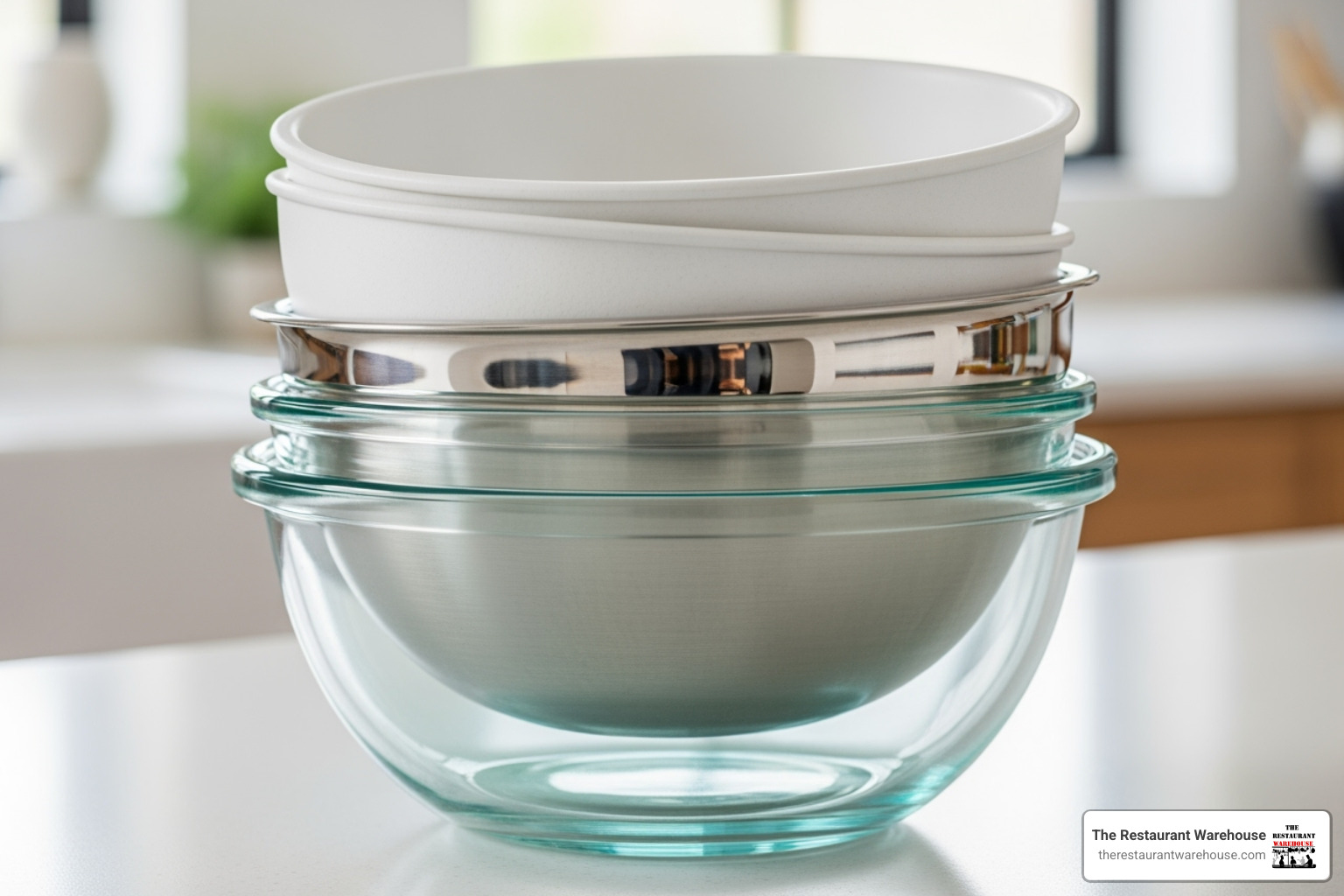
Glass Bowls: The Clear Choice for Versatility
Glass bowls are a favorite among home cooks for their practicality and aesthetic appeal. Their transparency lets you see ingredients at a glance, which helps when recipes have multiple components.
- Pros: The non-reactive surface of glass won’t absorb flavors or odors and is ideal for storing acidic foods like tomato sauce or citrus marinades. Tempered glass is typically microwave-safe, letting you prep, store, and reheat in the same container. Many glass sets include tight-fitting lids, making them excellent for short-term refrigeration.
- Cons: Glass is heavier and more fragile than other materials. A drop can lead to breakage and a safety hazard. It can be susceptible to thermal shock if exposed to extreme temperature changes too quickly. While many glass bowls handle oven temperatures, always verify manufacturer guidance before baking or broiling.
- Best For: Microwaving ingredients, storing acidic foods, meal prepping, whisking dressings, and serving—clear walls make presentation clean and professional.
Selection notes: If you work with large batches of saucy or strongly colored foods, choose tempered glass with roomy lids and a slight flare at the rim for easier gripping. For fridge stacking, flat-lid designs maximize space. Avoid sudden temperature changes: let cold glass rest on the counter a few minutes before heating.
Stainless Steel Bowls: The Professional's Pick for Durability
Walk into any professional kitchen, and you’ll find stacks of stainless steel bowls. They are the workhorses of high-volume prep for good reason.
- Pros: Stainless steel is lightweight yet extremely durable, able to withstand drops and heavy use without chipping. The smooth, non-porous surface is hygienic and ideal for mixing, whisking, and tossing. Bowls nest perfectly to save storage space, and rolled rims improve grip and pouring. For the cost, they offer exceptional longevity.
- Cons: Stainless steel is not microwave-safe. While quality food-grade stainless is generally non-reactive, very long holds with highly acidic foods can sometimes cause slight metallic notes. Opaque walls hide the contents from the side, which can be a minor inconvenience during mise en place.
- Best For: Heavy-duty mixing, whisking batters, marinating, tossing salads, and high-volume prep where durability and speed are key.
Selection notes: Look for food-grade alloys like 18/8 or 304 stainless. A flat, wide base resists tipping during vigorous whisking. If you’ll use an immersion blender, pick deeper bowls to minimize splatter. Some sets add silicone rings on the base for extra grip—handy on slick countertops.
Melamine & Plastic Bowls: The Lightweight Contenders
When weight and break-resistance matter, melamine and plastic bowls are practical, affordable solutions.
- Pros: These bowls are ultra-lightweight and highly break-resistant, ideal for outdoor dining, catering, or households with kids. Color coding (e.g., green for veggies, blue for proteins) supports fast visual organization. Their low cost makes it easy to stock up on multiple sizes.
- Cons: Most melamine and many plastics are not microwave-safe and can warp or degrade with high heat. They are more prone to staining (turmeric, tomato) and scratching from utensils, and scratches can harbor odors over time. Long-term hot holding isn’t recommended.
- Best For: Serving cold dishes, organizing prepped ingredients, kid-friendly meals, outdoor events, and casual prep work that doesn’t involve heat.
Selection notes: Choose BPA-free plastics and reputable melamine designed for food contact. Reserve these bowls for cool tasks—salads, chopped garnishes, dry ingredients—and avoid using them for hot oil, broths, or microwaving unless specifically rated for that use.
Silicone Bowls: The Flexible Innovator
Silicone brings a unique, space-savvy twist to food prep bowls.
- Pros: Flexibility lets you squeeze the rim into a pour spout for controlled transfers of batters and liquids. Many are collapsible to save cabinet space. Silicone is typically freezer- and microwave-safe, making it useful for melting butter or chocolate and for small-batch freezing. It’s naturally nonstick, which aids cleanup.
- Cons: Flexibility can feel unstable when the bowl is full; support on a stable surface may be needed. Silicone can be damaged by sharp utensils, and some formulations retain odors. Not all silicone lids are leakproof for long-term storage.
- Best For: Precise pouring, melting tasks, compact storage in small kitchens, and freezer use for portioned stocks or sauces.
Selection notes: Seek thicker-walled, food-grade silicone that feels sturdy in the hand. If you plan to pour hot liquids, a reinforced rim helps control flex. Pair with a rigid trivet or tray for moving full bowls to and from the microwave or freezer.
Putting it together: Most kitchens benefit from a mixed-material kit. Stainless steel covers heavy mixing and daily prep; glass handles microwave tasks and storage; melamine or plastic manages casual service and color-coding; silicone handles precise pours and space-constrained storage. The right blend ensures you always have the optimal bowl for the job at hand.
The Ultimate Guide to Choosing Food Prep Bowls
Choosing the perfect food prep bowls requires matching the tool to the task. Start by assessing your cooking habits, storage constraints, and budget, then build a set that lifts your workflow.
Your cooking style is the most important factor. A baker needs sturdy mixing bowls with non-slip bases, straight sides for efficient whisking, and clear measurement markings. A meal prepper prioritizes containers with airtight lids that are microwave-safe for reheat-and-serve convenience. If you host often, consider bowls that look great on the table, with serving-friendly shapes and sizes. Limited cabinet space makes nesting sets a necessity, providing multiple capacities without consuming excess real estate.
Budget matters, but the highest price tag doesn’t guarantee the best fit. A durable set of stainless steel bowls from a restaurant supply source can be more affordable and practical for heavy mixing than a delicate glass set. For food safety, always choose materials designed for food contact. The FDA provides comprehensive information on food-safe materials that can help guide your purchasing decisions.
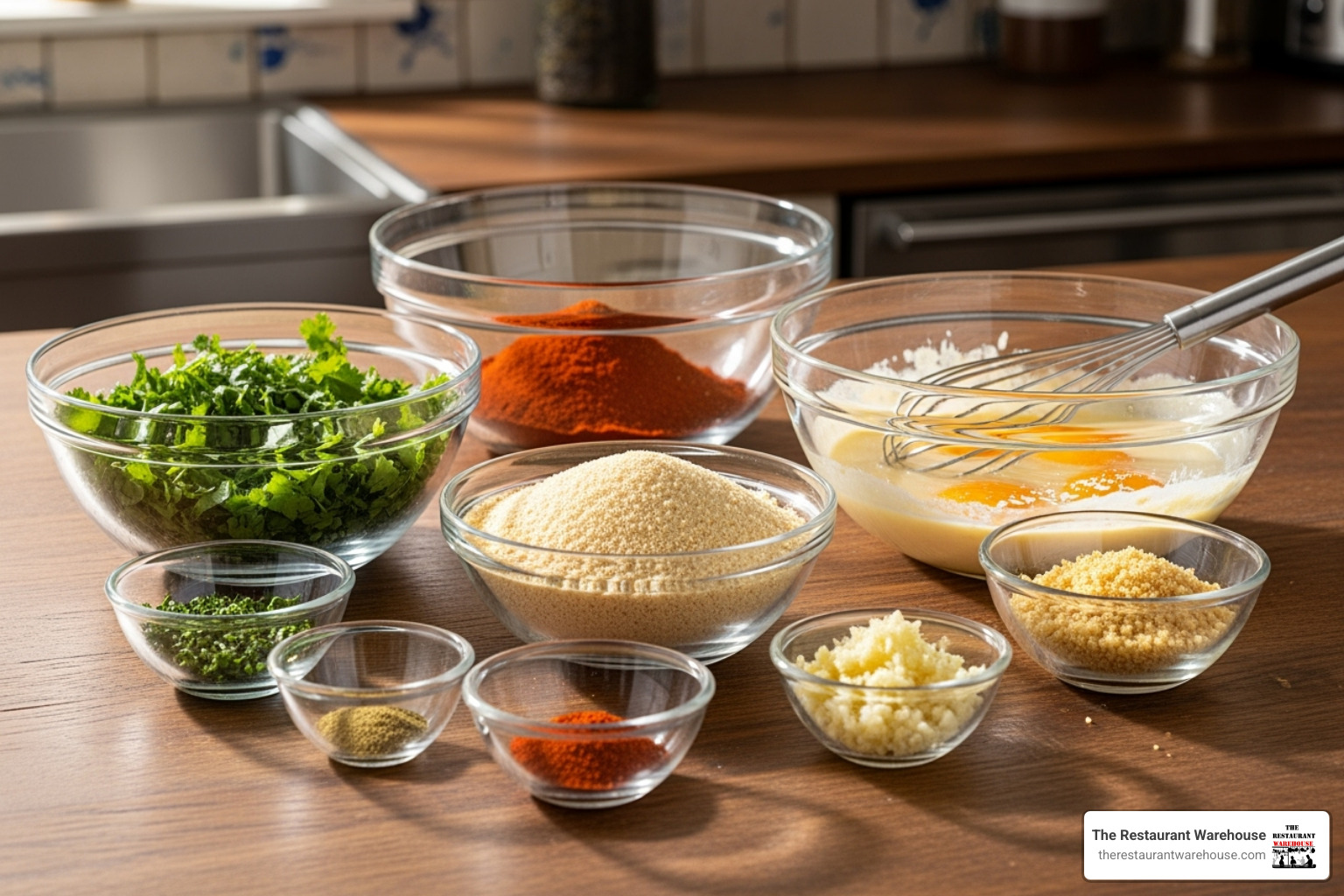
Size and Capacity: Matching the Bowl to the Task
Using the wrong size bowl is a common source of kitchen frustration. A well-equipped kitchen includes a spectrum of sizes and shapes to handle everything from a pinch of spice to a full salad.
- Small Bowls (2–6 oz): Often called pinch bowls or ramekins, these keep minced garlic, chopped herbs, spices, and garnishes organized. They’re perfect for mise en place and for serving individual portions of sauces or dips.
- Medium Bowls (1–3 quarts): The workhorses for whisking eggs, mixing dressings, holding chopped vegetables for a single meal, tossing side salads, or preparing small batches of batter. A 2-quart bowl is particularly versatile.
- Large Mixing Bowls (4–8+ quarts): For family-sized salads, marinating larger cuts, kneading doughs, and mixing cookie or meatball batches. A wide base helps with stability; higher sides reduce splatter.
Nesting sets are the most efficient way to acquire range. Look for sets where each size is meaningfully different—roughly 1-quart increments help avoid redundancy. If you use an immersion blender, consider deeper bowls that keep blades submerged.
Key Features to Look for in Food Prep Bowls
Beyond material and size, certain features lift a bowl from good to great.
- Airtight Lids: Essential for meal prep and leftovers. A secure seal keeps food fresh and prevents spills. Flat lids stack neatly in the fridge.
- Non-Slip Bases: Silicone or rubber rings prevent sliding during vigorous mixing. If you prefer all-metal bowls, place a damp towel under the bowl for grip.
- Pour Spouts: Allow clean, drip-free pouring of batters and sauces. Silicone bowls can create a spout by pinching; glass and steel bowls may have molded spouts.
- Measurement Markings: Etched or printed markings save a step when building dressings, brines, or batters directly in the bowl.
- Stackability: Bowls that nest compactly save cabinet space. Some designs also stack securely when full, maximizing fridge real estate.
- Dishwasher Safety: Verify both bowls and lids are dishwasher-safe. Place plastic lids on the top rack to avoid warping.
- Handles and Rims: Rolled or flared rims improve grip; some bowls add side handles for carrying full loads.
Storing and Caring for Your Food Prep Bowls
Proper care ensures your bowls will last for years.
- First Use: Wash new bowls to remove manufacturing residues.
- Daily Cleaning: Warm, soapy water handles most jobs. For dishwashers, top-rack plastic lids; bowls can go on either rack per manufacturer guidance.
- Stain Control: For plastic or silicone, a paste of baking soda and water left overnight helps lift stains. For odors, a vinegar-water soak works well. Glass and stainless resist stains and smells naturally.
- Gentle Tools: Avoid sharp utensils in plastic, melamine, or silicone to prevent grooves that harbor bacteria. Use flexible spatulas and soft brushes.
- Storage: Nest bowls and store lids vertically in a bin or file-style rack. Label lids by size to match quickly.
CTA: Need help choosing materials or sizes? Our team can recommend a right-sized set for your menu and space—contact us at https://therestaurantwarehouse.com/pages/contact-us.
Pro tip for prep days: Stage bowls in the order you’ll use them—aromatics, spices, sauces, proteins, finishing herbs—left to right. Tape quick notes on each bowl so you can cook by feel without losing track of sequence.
Frequently Asked Questions about Prep Bowls
When selecting food prep bowls, many cooks—both professional and home-based—have similar questions about safety, use, and maintenance. Here are answers to common concerns, plus practical tips to get the most from your set.
Are stainless steel bowls really safe for food?
Yes, absolutely. Food-grade stainless steel is one of the safest materials for food contact. Look for designations like 18/8 or 304 stainless steel, industry standards used in professional kitchens worldwide. These alloys are durable and corrosion-resistant. The non-porous surface is hygienic and easy to sanitize, and high-quality stainless is generally non-reactive for typical prep durations—even with acidic ingredients like lemon juice or tomato.
Care tip: Avoid prolonged storage of highly acidic foods in stainless bowls. For overnight or longer storage, switch to glass with a tight lid.
Can glass prep bowls go from the refrigerator to the microwave?
This is a primary advantage of tempered glass bowls and a major reason for their popularity in meal prepping. Tempered glass is engineered to handle typical shifts from cold storage to microwave heating. To prevent thermal shock, let a very cold bowl rest at room temperature for a few minutes before heating, and avoid placing hot glass on a cold, wet surface.
Care tip: Inspect rims periodically—tiny chips can propagate. Recycle any bowl that’s chipped, especially if you plan to heat it.
How do I get rid of stains or smells from my plastic or silicone bowls?
Plastic and silicone can hold onto stains and odors from vibrant or aromatic foods like turmeric, tomato sauce, garlic, and onions. Fortunately, there are effective methods to restore them.
For stubborn stains:
- Baking Soda Paste: Mix baking soda with water to form a thick paste. Apply, let sit overnight, then scrub and rinse.
- Sunlight: For silicone, a few hours in direct sunlight can naturally fade stains.
- Diluted Bleach Solution: As a last resort on bleach-safe items, soak in 1 part bleach to 10 parts water. Rinse thoroughly afterward.
For lingering odors:
- Vinegar Soak: Soak overnight in a 1:1 white vinegar and water solution, then wash as usual.
- Lemon Rub: For garlic or onion aromas, rub the interior with a cut lemon before washing.
Are melamine bowls microwave-safe?
Most melamine bowls are not microwave-safe. Heat can cause warping or degradation. Reserve melamine for cool or room-temperature tasks (salads, chopped ingredients, dry goods) and use glass or microwave-rated containers for heating.
Can I use prep bowls in the oven?
Check manufacturer guidance. Many tempered glass bowls are oven-safe up to a specified temperature, while stainless bowls may be used for gentle warming but can discolor at high heat. Bowls with silicone bases or plastic components should not go in the oven. When in doubt, stick to oven-safe glass or metal vessels explicitly rated for that purpose.
What size set should I buy if I’m just getting started?
A practical starter kit includes: 6 pinch bowls (2–6 oz), 2 medium bowls (1–2 quarts), and 1–2 large bowls (4–8 quarts). Add lids for at least the medium sizes. This mix handles mise en place, mixing, and serving without taking up too much space.
How do I keep bowls from sliding while I whisk?
Choose bowls with non-slip bases or place a damp towel underneath. A wide, flat base also helps. For vigorous whisking, a deeper bowl reduces splatter and keeps ingredients contained.
Do measurement markings wear off?
Printed markings on plastic may fade over time, especially with abrasive scrubbing. Etched markings on glass and stainless last much longer. If you rely on in-bowl measurements, look for etched or embossed indicators.
How should I sanitize bowls after handling raw proteins?
Wash with hot, soapy water and rinse well. For an extra step, run dishwasher-safe bowls through the dishwasher on a hot cycle. Avoid abrasive pads that can create scratches on plastic or melamine; those micro-grooves can harbor residues.
If you have additional questions about materials, sizes, or care, our team is happy to help you tailor a set to your workflow.
CTA: Have questions about safety or sizing? Reach out at https://therestaurantwarehouse.com/pages/contact-us and our specialists will recommend the right mix.
Find the Perfect Bowls for Your Kitchen Today
After exploring food prep bowls, it’s clear that the right choices lift your entire cooking process. Whether you need the transparent versatility of glass for reheating meal preps, the unbeatable durability of stainless steel for heavy mixing, the lightweight resilience of melamine for serving, or the flexible innovation of silicone for precise pouring, there is a material designed for your specific culinary needs.
A well-stocked kitchen often uses a combination of these materials, creating a seamless workflow where every bowl has a purpose. Small glass bowls for spices and aromatics, a medium stainless steel bowl for whisking and tossing salads, and a large mixing bowl for combining ingredients all work together to make cooking a joy rather than a chore. Layer in airtight lids, non-slip bases, and measurement markings to dial in precision and efficiency.
Investing in the right tools is about setting yourself up for success. An organized workspace with reliable equipment makes cooking more efficient and enjoyable, whether you’re serving guests in a busy dining room or making weeknight meals for your household. At The Restaurant Warehouse, we believe that quality shouldn’t come with a high price tag. Our business model is built on providing professional-grade smallwares at wholesale prices by cutting out retail markups. Our curated selection of food prep bowls reflects this commitment, offering options chosen for durability, functionality, and outstanding value.
Ready to upgrade your kitchen’s efficiency? Our collection includes everything from stainless steel mixing bowl sets for high-volume operations to glass storage bowls with airtight lids for meal prep enthusiasts. We stock the sizes you need, from tiny pinch bowls to large-capacity mixing bowls. Explore our collection of kitchen smallwares today!
Don’t let subpar equipment limit your culinary potential. Whether you’re outfitting a new restaurant or upgrading your home kitchen, our team has the real-world experience to guide you toward a set that fits your menu, space, and budget.
CTA: Explore bowl sets and accessories now: https://therestaurantwarehouse.com/collections/smallwares
CTA: Prefer custom recommendations or a quote? Contact our team for assistance: https://therestaurantwarehouse.com/pages/contact-us
The perfect set of food prep bowls is waiting. With our combination of quality products, wholesale pricing, and expert guidance, you can create the organized, efficient kitchen you’ve always wanted.
About The Author

Sean Kearney
Sean Kearney is the Founder of The Restaurant Warehouse, with 15 years of experience in the restaurant equipment industry and more than 30 years in ecommerce, beginning with Amazon.com. As an equipment distributor and supplier, Sean helps restaurant owners make confident purchasing decisions through clear pricing, practical guidance, and a more transparent online buying experience.
Connect with Sean on LinkedIn, Instagram, YouTube, or Facebook.