

Equip Your Establishment with the Best Commercial Bar Stools
Why the Right Bar Stools Matter for Your Restaurant
Restaurant bar stools are more than just extra seating—they're a strategic investment that shapes your venue's atmosphere, maximizes floor space, and impacts your bottom line. Choosing the right commercial bar stools can mean the difference between a cramped bar area and a welcoming space that keeps guests coming back.
Quick Guide to Sourcing Commercial Restaurant Bar Stools:
- Height: Bar stools (28-32" seat height) for 40-42" tables; counter stools (24-27" seat height) for 36" tables.
- Material: Metal (durable, easy to clean), wood (classic look), upholstered (maximum comfort).
- Style: Backless (space-saving), with backrest (encourages longer stays), swivel (easier entry/exit).
- Commercial-Grade Features: Fully welded joints, reinforced frames, high weight capacity (300+ lbs), scratch-resistant finishes.
- Spacing: Allow 26-30 inches per stool, measured center-to-center.
The right bar stools don't just provide a place to sit; they lift your entire space, create visual appeal, and welcome customers who might prefer a quick drink at the bar over a full meal. This guide will walk you through selecting commercial-grade bar stools that balance durability, comfort, style, and budget. We'll cover everything from height and materials to design features and why commercial-grade construction is essential for high-traffic venues.
I'm Sean Kearney from The Restaurant Warehouse, and I've spent years helping restaurant owners source durable, affordable restaurant bar stools. My experience has shown that the right seating makes all the difference in efficiency and customer satisfaction. As a company, we pass on savings by avoiding high commissions and retail overhead, so you can invest more in the details that matter most—like seating that guests love.
What you choose also affects speed of service and sales. The right seat height and spacing improves traffic flow and reduces wait times. The right materials lower maintenance and replacement costs. The right style aligns with your brand so the entire customer journey—from first glance to last sip—feels intentional and memorable.
If you want help translating your concept into a cohesive seating plan, our team is here to assist with layout and selection. Prefer to move fast? Get a personalized quote in minutes. Contact our team: https://therestaurantwarehouse.com/pages/contact-us
Ready to source bar stools that stretch your budget, not your timeline? Learn more about us and our approach here: https://therestaurantwarehouse.com/
Decoding Bar Stool Heights and Spacing
Getting the height right for your restaurant bar stools is the foundation of comfortable seating. An uncomfortable guest is an unhappy one. The secret is the "10-inch rule": ensure there are roughly 10 inches of space between the top of the stool seat and the underside of your bar or counter. This provides adequate knee and thigh clearance, allowing guests to sit naturally.
Height is only half the story. Proper spacing is crucial for comfort. The standard guideline is 26 to 30 inches per stool, measured from center to center. This gives each guest enough elbow room to eat and drink without bumping into neighbors. At the ends of the bar, add an extra 14 to 15 inches from the center of the last stool to the edge of the counter. For example, a 12-foot (144-inch) bar can comfortably fit about 5 stools. Squeezing in a sixth will feel cramped. For more detailed guidance, our bar table dimensions guide breaks down all the measurements you need.
In practice, use these quick calculations:
- 8-foot bar (96 inches): Plan for 3 to 4 stools depending on seat width and armrests.
- 10-foot bar (120 inches): Plan for 4 to 5 stools.
- 12-foot bar (144 inches): Plan for 5 stools for comfort; 6 will feel tight.
- U-shaped or wrap-around bars: Treat each straight run separately, then subtract one stool at each inside corner to avoid elbow conflicts.
A clear aisle behind seated guests improves service speed and safety. Aim for 36 inches of clear aisle space behind stools; add more in high-traffic lanes to service stations or other busy areas.
The "10-inch rule" aligns with widely accepted ergonomic guidance on knee/thigh clearance and neutral seating posture. According to Cornell University Ergonomics, proper seating ergonomics requires adequate clearance between the seat and table surface to maintain healthy posture and prevent discomfort during extended sitting periods.
Bar Height Stools
Bar height stools, with seat heights from 28 to 32 inches, are the classic choice for traditional bars and pubs. They pair with bar tops or tables that stand 40 to 42 inches tall. This lifted seating places guests at eye level with bartenders and standing patrons, encouraging conversation and a social, energetic vibe. This height is perfect for venues where you want people mingling, like sports bars or cocktail lounges. Bar height seating often encourages shorter visits, which can be a strategic advantage for turnover during busy hours. Check out our tall bar table guide to find complementary tables.
Extra tips for bar height layouts:
- Choose backless stools to maximize capacity and simplify slide-in access.
- Opt for swivel in tight runs to minimize scraping and speed seating.
- Consider footrest placement: a sturdy footrail at 12-18 inches above the floor increases comfort for tall seating.
Counter Height Stools
Counter height stools create a more relaxed, intimate dining experience. These restaurant bar stools have seat heights of 24 to 27 inches and are designed for counters or high-top tables around 36 inches tall. You'll find this seating in casual restaurants, cafes, and family-friendly eateries where the focus is on leisurely meals. The lower height feels more grounded and less formal, striking a balance between standard dining chairs and tall bar stools. This height is excellent for creating cozy dining zones and encourages guests to linger, potentially increasing per-table spending. For more insights, explore our guide on what is a high top table.
Counter height practicality:
- Great for mixed-use areas (bar service by day, dining by night).
- Pairs well with upholstered seats to promote longer stays.
- Easier wayfinding and accessibility for a broader range of guests.
If you want sizing help for your exact bar run, our team can review your dimensions and recommend the right mix of heights and quantities. Start a quick consultation here: https://therestaurantwarehouse.com/pages/contact-us
A Guide to Materials for Commercial Restaurant bar stools
The material of your restaurant bar stools impacts durability, maintenance, style, and long-term value. In a busy commercial setting, the right material choice is critical. Metal offers industrial reliability, wood provides timeless warmth, and upholstery prioritizes comfort. Consider both the initial price and the total cost of ownership, including cleaning and repairs. For a broader look at outfitting your space, our restaurant furniture supplies guide offers comprehensive insights.
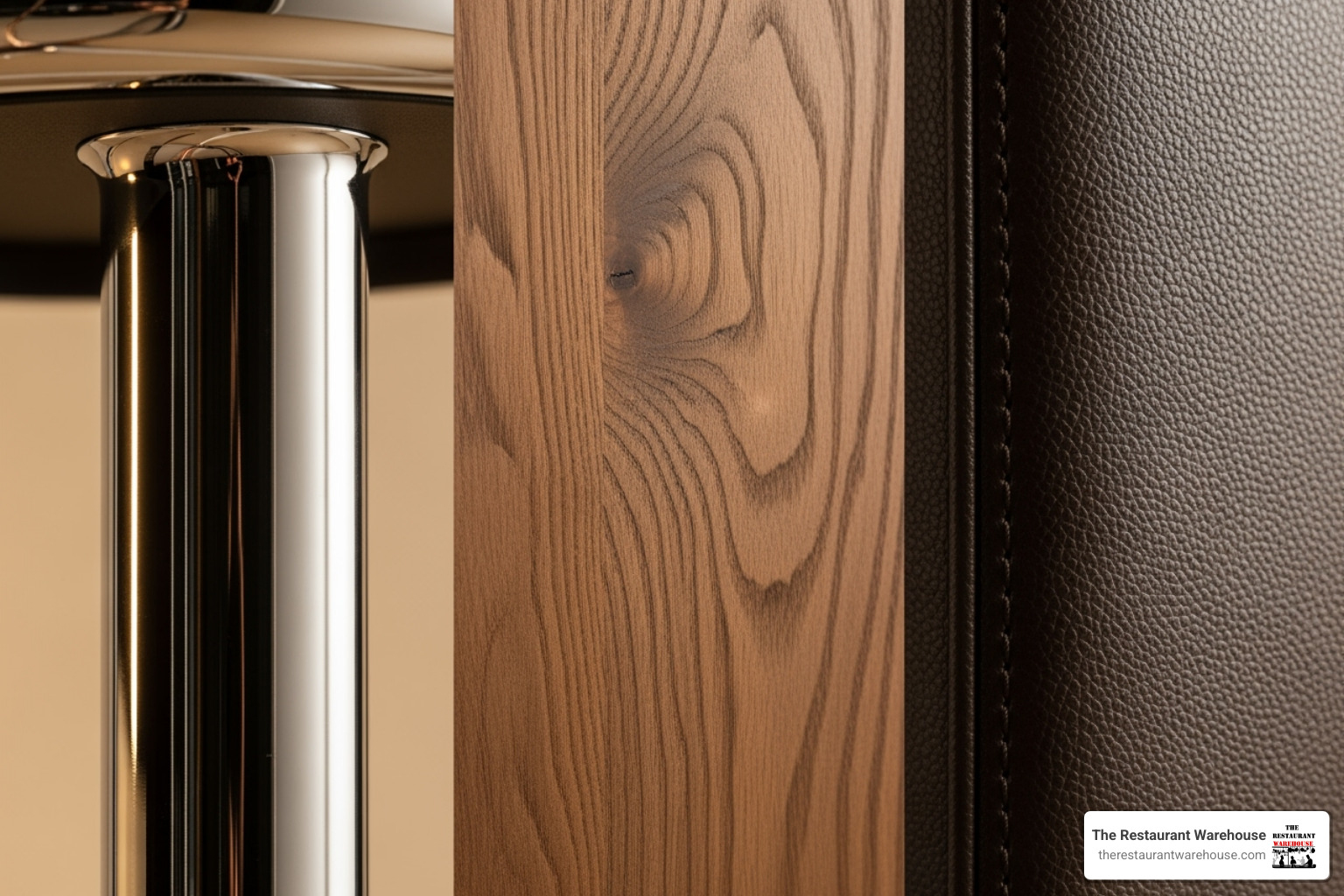
Metal Bar Stools: The Durable Workhorse
Metal restaurant bar stools are the champions of high-traffic environments like busy bars and fast-casual spots. They are engineered for longevity and heavy use.
- Pros: Extremely durable (often 16-gauge steel with welded joints), easy to clean with soap and water, and cost-effective over the long term.
- Cons: Can feel cold to the touch; damaged finishes can lead to rust.
- Styles: Versatile for industrial (powder-coated black), modern (polished chrome), or vintage (galvanized steel) aesthetics. For more ideas, see our black metal chairs guide.
Operational insights:
- Prefer powder-coated frames for scratch resistance; matte textures hide scuffs better than gloss.
- Specify nylon or metal-threaded glides to reduce noise and protect floors; keep spares in-house.
- For outdoor use, look for e-coating beneath the powder coat and sealed fasteners.
Wood Bar Stools: Classic and Inviting
Wood restaurant bar stools create a warm, welcoming atmosphere perfect for upscale restaurants, hotel bars, and steakhouses.
- Pros: Beautiful, timeless aesthetic with a high-end feel. Sturdy construction using hardwoods like beechwood and oak with strong mortise-and-tenon joints.
- Cons: Higher initial cost, requires more maintenance (dusting, polishing), and is more susceptible to scratches and water damage.
- Customization: Available in various wood finishes (walnut, cherry, black) and seat options (wood, upholstered). Our wood chairs for restaurant guide provides more details.
Operational insights:
- Use felt-bottomed glides on hardwood floors to reduce scratches and noise.
- Choose darker finishes or wire-brushed textures to disguise wear in high-traffic zones.
- Maintain with gentle, non-abrasive cleaners, and promptly address water rings and spills.
Upholstered Stools: Prioritizing Guest Comfort
For maximum comfort that encourages guests to linger, choose upholstered restaurant bar stools.
- Pros: Superior comfort and endless design possibilities with various fabrics, vinyls, and colors.
- Cons: More difficult to clean and can show wear or absorb stains if not properly maintained.
- Key Feature: Look for commercial-grade upholstery with a high "Double Rub Count" (40,000+ is recommended) to ensure durability. Vinyl and PU leather are excellent choices as they balance comfort with easy cleaning. For more on comfortable seating, explore our chair for restaurant guide.
Operational insights:
- In spill-prone bars, select contract-grade vinyls with antimicrobial and stain-resistant finishes.
- Choose tight seams and minimal tufting to speed cleaning and avoid debris traps.
- Combine upholstered seats with metal frames for a durable, guest-friendly hybrid solution.
Material selection checklist:
- Traffic level and turnover goals (high volume favors metal; slow dining favors upholstered wood).
- Cleaning protocols and staff capacity.
- Ambient conditions (sunlight, humidity, outdoor use).
- Brand cues (industrial, rustic, modern, traditional) and color palette coordination.
Need help balancing upfront cost and long-term savings? Our team can recommend SKUs that minimize maintenance without sacrificing aesthetics: https://therestaurantwarehouse.com/pages/contact-us
Style and Functionality: Finding the Perfect Design
The design of your restaurant bar stools is a statement about your establishment's identity. It's where aesthetics meet the practical realities of a busy restaurant. While durability is non-negotiable, it doesn't mean sacrificing style. The best stools marry form and function seamlessly, creating a cohesive look that makes your restaurant memorable. When every element tells the same story, guests feel it, turning first-time visitors into regulars. For an in-depth look at creating this environment, explore our guide on furniture that serves up style restaurant bar furniture essentials.
Backrest vs. Backless: Balancing Comfort and Space
This is a fundamental choice that reflects your business model.
- Stools with Backrests: These offer superior comfort and lumbar support, encouraging guests to settle in for longer stays. They are ideal for fine dining establishments or lounges where a leisurely experience is key. A backrest also adds a more substantial, luxurious visual presence.
- Backless Stools: These are the pragmatic choice when space is at a premium. They maximize seating capacity and create an open, airy aesthetic. Psychologically, they encourage quicker turnover, making them perfect for fast-casual spots or high-volume bars. They are also often stackable, simplifying cleaning and storage.
Pro tip: For mixed-use concepts, deploy backless along busy bar runs and use backrests at cocktail tables and quieter corners. This blends turnover efficiency with dwell-time comfort.
The Importance of Swivel Functionality in Restaurant bar stools
A swivel mechanism is a small feature that greatly improves the guest experience.
- Benefits for Guests: Swivel stools allow patrons to get on and off easily without dragging the stool, which is especially useful in tight spaces. It also fosters social interaction, as guests can pivot to chat with companions.
- Operational Benefits: By reducing the need to pull stools across the floor, you protect your flooring from scratches and scuffs, lowering maintenance costs. Swivel stools are ideal for long bars or any area where guests might want to turn and engage with their surroundings. When choosing, look for high-quality, durable mechanisms that will operate smoothly for years.
Maintenance note: Swivel mechanisms last longer when staff wipe down bases and avoid chemical overspray on bearings. Establish a monthly check for fasteners and glides.
Matching Stools to Your Restaurant's Aesthetic
Your restaurant bar stools are visual storytellers. Aligning them with your theme creates an immersive experience.
- Industrial: Look for exposed metal frames (black or gunmetal) and distressed wood seats. This style celebrates raw, unfinished elements for a warehouse-chic vibe.
- Modern: This style is about clean lines and minimalist forms. Think sleek chrome bases with black or white leather/PU leather upholstery.
- Rustic/Farmhouse: Create a cozy feel with natural wood, visible grain, and wrought iron accents. Muted, earthy tones work well for upholstery.
- Traditional: This aesthetic leans on classic elegance. Choose dark wood frames, ornate details, and plush upholstery in rich fabrics or leathers.
- Retro: Channel a bygone era with chrome bases and bright vinyl upholstery, reminiscent of a classic diner.
Beyond looks, prioritize functional comfort details:
- Seat depth and width: Target 15–17 inches deep for bar height; wider seats improve comfort for longer stays.
- Footrests: Built-in or bar-mounted footrails reduce leg fatigue and improve posture.
- Edge comfort: Waterfall front edges prevent pressure under thighs, particularly on wood or metal seats.
- Arms vs. armless: Arms add comfort but require more spacing per seat; go armless in high-density runs.
Need help curating a style package that fits your concept and budget? Our specialists can propose a matched set of stools and tables. Start here: https://therestaurantwarehouse.com/pages/contact-us
Commercial-Grade 101: Durability, Safety, and Smart Investment
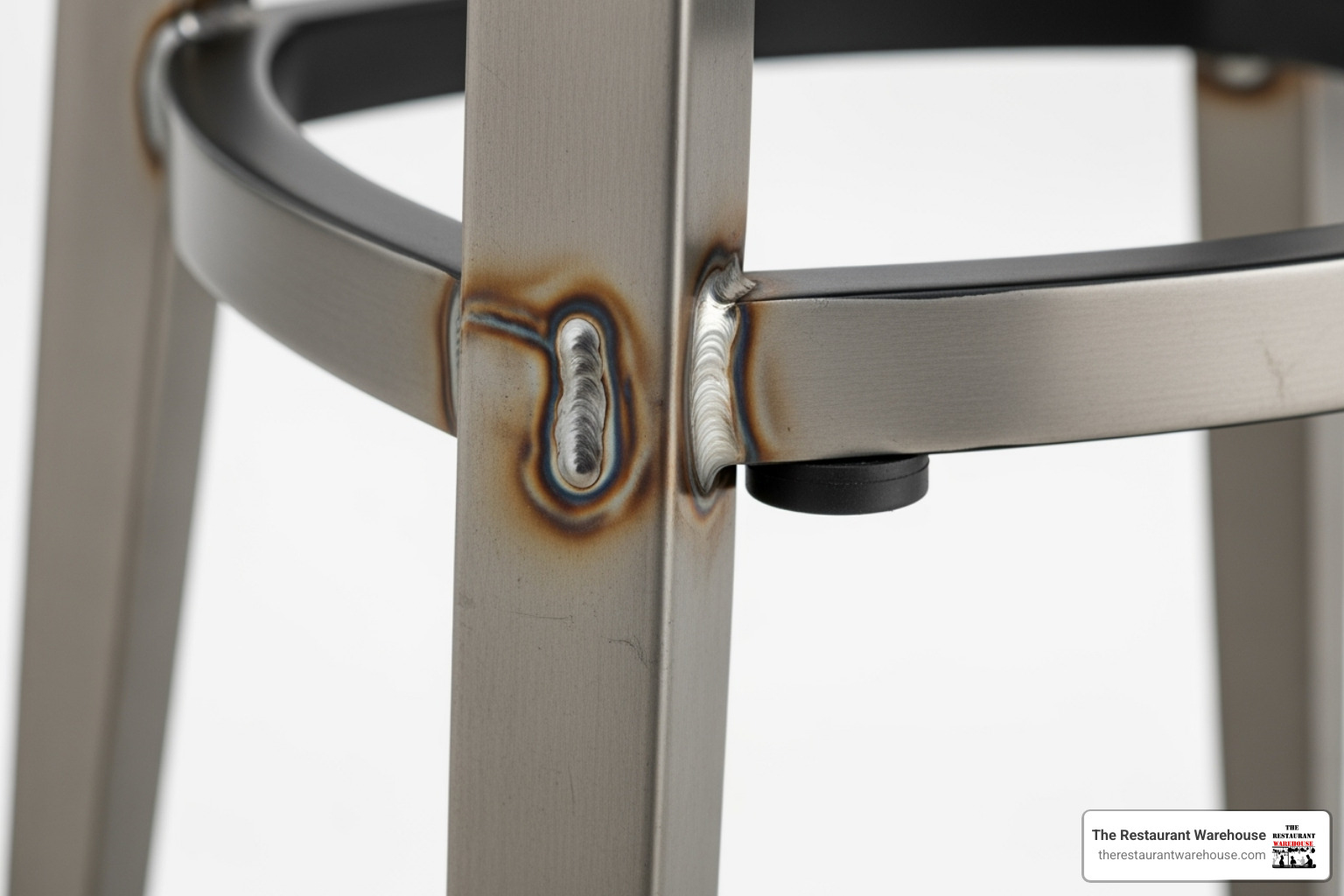
When shopping for restaurant bar stools, the term "commercial-grade" is a crucial distinction. It signifies furniture engineered to withstand the relentless demands of a high-traffic restaurant, unlike residential furniture designed for occasional use. Investing in commercial-grade quality impacts your daily operations, guest safety, and long-term budget.
Commercial-grade restaurant bar stools are built differently from the ground up. Here are the key features to look for:
- Strong Frames: Look for heavy-duty materials like 16-gauge steel or solid hardwood. Metal stools should have fully welded joints, which create a permanent, seamless bond far stronger than screws or bolts. Wood stools should use robust construction like mortise-and-tenon joints.
- High Weight Capacity: Many commercial stools are rated to safely support 500 pounds or more. This ensures every patron feels secure and indicates overall stability and durability.
- Durable Finishes: Metal frames often feature commercial-grade powder coat finishes that resist chips and scratches. Wood stools undergo a multi-step finishing process to create a protective barrier against moisture and wear.
- Quality Upholstery: If choosing upholstered stools, look for a high "Double Rub Count" (40,000+) and high-density foam that won't sag over time.
- Floor Protector Glides: These small caps on the bottom of each leg protect your flooring from scratches and reduce noise.
- Safety Standards: Reputable manufacturers design products to meet or exceed guidelines from organizations like BIFMA (Business and Institutional Furniture Manufacturers Association). Following BIFMA furniture standards ensures furniture has been rigorously tested for safety and durability: https://www.bifma.org/page/bifmastandards
While the upfront cost is higher, the long-term value of commercial-grade stools is undeniable. They last for years, reducing replacement costs and potential liability from furniture failure. Sturdy, well-maintained stools also project an image of professionalism and care, enhancing the guest experience.
Smart budgeting example:
- If a residential-style stool costs $80 and lasts 12–18 months, you might replace it twice in 3 years ($160) plus downtime and disposal.
- A commercial-grade stool at $140 that lasts 5+ years yields a lower annualized cost and fewer disruptions.
Ownership tips to stretch ROI:
- Standardize model types to simplify maintenance and parts.
- Keep an on-hand kit of glides, foot caps, and hardware.
- Schedule quarterly inspections for loose fasteners, glide wear, and upholstery seams.
Ready to upgrade your seating? Contact Us today for a personalized quote on durable commercial furniture that meets your exact needs and budget: https://therestaurantwarehouse.com/pages/contact-us
Want to discuss layout, finishes, and lead times? Book a quick consultation and we’ll tailor recommendations to your concept and traffic patterns: https://therestaurantwarehouse.com/pages/contact-us
Frequently Asked Questions about Restaurant Bar Stools
Here are answers to some of the most common questions we receive about choosing restaurant bar stools.
How many bar stools do I need for my bar?
Finding the right number of stools is a balance between maximizing seating and ensuring guest comfort.
- Spacing: As a rule of thumb, allow 26 to 30 inches of space per stool, measured from the center of one stool to the center of the next. This gives guests adequate elbow room.
- End Clearance: Leave about 14 to 15 inches from the center of the end stool to the edge of the bar to prevent guests from feeling perched on the corner.
- Aisle Space: Ensure at least 36 inches of clear aisle space behind seated guests for smooth traffic flow for staff and other patrons.
- Example: A 12-foot (144-inch) bar can comfortably accommodate 5 stools. Squeezing in a sixth will likely feel cramped and unwelcoming.
What is the best material for high-traffic restaurant bar stools?
For busy, high-traffic environments, durability and ease of cleaning are paramount. The winning combination is typically a metal frame with commercial-grade vinyl upholstery.
- Metal Frames: 16-gauge steel with fully welded joints offers best strength and longevity. Powder-coated finishes resist chipping and corrosion, and the surface is easy to wipe clean.
- Commercial-Grade Vinyl: This material provides a comfortable seating surface that is highly stain-resistant and simple to clean with mild soap and water. Look for vinyl with a high durability rating (at least 40,000+ Double Rubs) to ensure it withstands constant use.
How do I clean and maintain my bar stools?
Proper maintenance extends the life of your restaurant bar stools and keeps your establishment looking its best.
- Metal Stools: These are the easiest to maintain. Wipe daily with a damp cloth and mild soap. Dry thoroughly to prevent water spots. Avoid harsh or abrasive cleaners that could damage the finish.
- Wood Stools: Dust regularly with a soft cloth. Wipe up spills immediately. Clean as needed with a mild wood cleaner, following the grain. Apply a quality wood polish periodically to nourish the wood and protect the finish.
- Upholstered Stools (Vinyl/PU Leather): Wipe down with a damp cloth and mild soap solution. For tougher spots, use a commercial-grade vinyl cleaner. Always test new cleaners on an inconspicuous area first.
- Upholstered Stools (Fabric): Vacuum regularly to remove dust and crumbs. Blot spills immediately with a dry cloth (do not rub). Use a fabric-specific spot cleaner for stains, following the product instructions.
Should my stools have footrests?
Yes—footrests significantly improve comfort, especially at bar height. Guests with a place to rest their feet maintain better posture, reducing pressure on the lower back and encouraging a longer, more enjoyable stay. If the stool lacks a built-in footrest, ensure your bar has a sturdy footrail 12–18 inches above the floor.
Swivel vs. fixed: which is better?
- Swivel: Best for tight aisles and high-turnover bars. Easier entry/exit reduces floor scraping and speeds seating.
- Fixed: Best for stability in compact dining zones or where floor space is limited and consistent alignment matters.
Many operators mix both: swivels along the main bar, fixed stools at high-top tables.
What weight capacity should I look for?
Choose stools rated for at least 300 pounds; many commercial models offer 500 pounds or more. Higher weight ratings generally indicate stronger frames, better welding or joinery, and longer service life.
How can I reduce floor noise and damage from stools?
Use high-quality glides matched to your flooring type (nylon or felt for hard floors). Replace worn glides promptly, and train staff to lift rather than drag stools when possible. Swivel models also reduce lateral drag.
How often should I inspect and tighten hardware?
Perform a quick monthly check on bolts, swivels, and footrests. In very high-volume bars, make it part of weekly open or close duties. Keeping a small parts kit on hand prevents out-of-service seating during rush periods.
Are upholstered stools worth it in busy bars?
They can be if you select contract-grade vinyl with high double rub counts and stain-resistant finishes. Upholstered seats increase comfort and dwell time—ideal for cocktail programs or tasting menus. For spill-heavy environments, use darker colors and tight seams for faster, more forgiving cleanup.
Do I need different stools for outdoor areas?
Yes. For outdoor use, choose frames with corrosion-resistant coatings (e.g., e-coat plus powder coat), UV-stable finishes, and water-resistant seat materials. Store or cover during severe weather to extend lifespan.
Still have questions or need help selecting the ideal mix for your layout and concept? Reach out for custom recommendations: https://therestaurantwarehouse.com/pages/contact-us
Conclusion
You are now equipped with the knowledge to select the perfect restaurant bar stools for your establishment. The key is to balance the three foundational pillars: height, material, and style. Getting the height right ensures guest comfort, the material choice dictates durability and maintenance, and the style brings your restaurant's personality to life.
Above all, commercial-grade quality is non-negotiable. Features like welded frames, high weight capacities, and durable finishes are what make a stool a smart, long-term investment. They ensure guest safety, reduce replacement costs, and improve the overall customer experience. Comfortable, stylish, and sturdy stools encourage guests to stay longer and return, directly improving your ROI.
At The Restaurant Warehouse, we specialize in providing high-quality commercial restaurant furniture and supplies at prices that fit your budget. By avoiding high retail overhead, we pass the savings directly to you. Our wide selection of affordable, durable restaurant bar stools means you'll find the perfect fit for any aesthetic. For a complete look at all your seating and furniture options, explore our ultimate restaurant furniture guide.
Ready to transform your bar area with seating that combines durability, style, and value? Contact us today for a personalized consultation and quote on the perfect restaurant bar stools for your business: https://therestaurantwarehouse.com/pages/contact-us
Want hands-on help finalizing a layout, selecting finishes, and planning lead times? Book a quick strategy call and we’ll tailor a stool package to your brand and budget: https://therestaurantwarehouse.com/pages/contact-us
Learn more about our mission to deliver value to the foodservice industry here: https://therestaurantwarehouse.com/
About The Author

Sean Kearney
Sean Kearney is the Founder of The Restaurant Warehouse, with 15 years of experience in the restaurant equipment industry and more than 30 years in ecommerce, beginning with Amazon.com. As an equipment distributor and supplier, Sean helps restaurant owners make confident purchasing decisions through clear pricing, practical guidance, and a more transparent online buying experience.
Connect with Sean on LinkedIn, Instagram, YouTube, or Facebook.