


Don't Get Cooked: Essential Tips for Restaurant Equipment Upkeep
Why Restaurant Equipment Maintenance is the Backbone of Your Business
Restaurant equipment maintenance is the regular, scheduled care of your kitchen appliances and systems to prevent breakdowns, extend their lifespan, and keep your operation running smoothly. In a business where margins are tight and service is , the reliability of your equipment is not a luxury—it's a core component of your profitability.
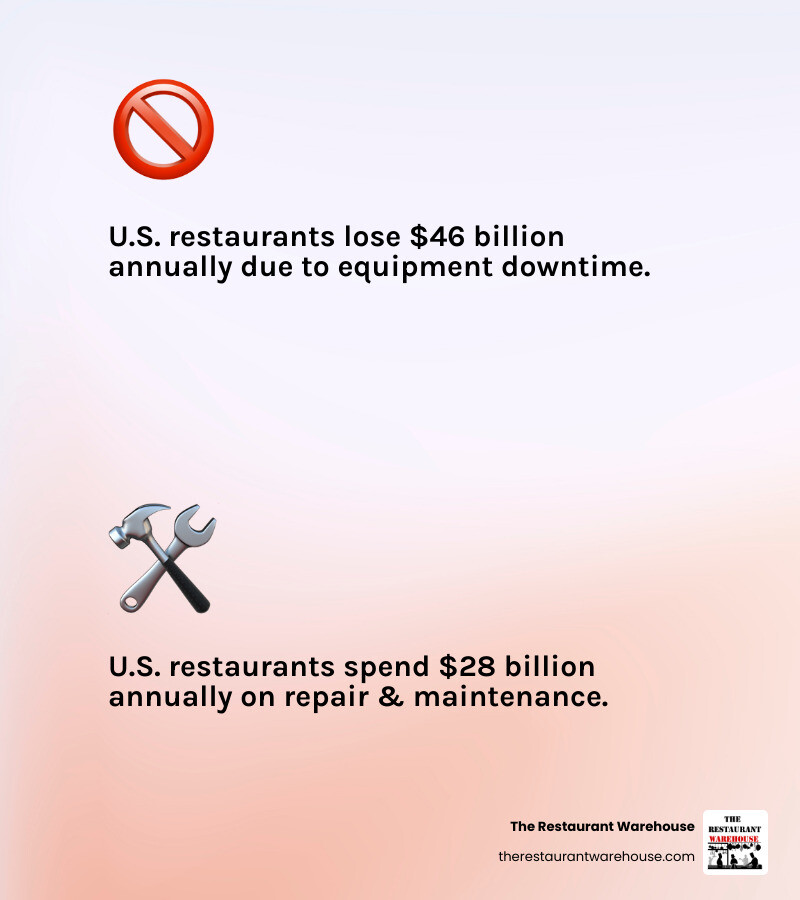
When a critical appliance fails, the entire operation can descend into chaos. The financial stakes are staggering. U.S. restaurants spend a combined $28 billion on repair and maintenance annually, yet they lose a shocking $46 billion due to equipment downtime. The cost of neglect is nearly double the cost of care.
There is good news: a proactive approach can make a significant difference. Regular and efficient preventive maintenance can reduce your overall spending by approximately 50% compared to the industry average. It's not just about avoiding breakdowns; it's about protecting your investment, maintaining food safety standards, and ultimately, safeguarding your profits.
As a team that has spent years helping restaurant owners steer the challenges of equipping and maintaining their kitchens, we've seen how proper restaurant equipment maintenance separates thriving operations from those constantly fighting fires. This guide shares the essential strategies to keep your kitchen running like a well-oiled machine.
The 'Why' and 'What' of Preventative Maintenance
Before diving into the practical steps, understand what restaurant equipment maintenance truly means and why it's one of the smartest investments you can make. Seeing maintenance as a strategic advantage, rather than a burden, is the first step toward a more stable and profitable business.
What is Preventative Maintenance?
Think of it like caring for a car: you don't wait for the engine to seize before changing the oil. You perform regular tune-ups to keep it running reliably. Preventative maintenance applies the same logic to your restaurant.
It is the scheduled care of your appliances and systems, designed to catch small issues before they become expensive disasters. It’s about being proactive—fixing a loose belt before it snaps or cleaning condenser coils before your walk-in cooler fails on a Saturday night. For restaurants, this approach is crucial. Your equipment directly impacts food safety and operational consistency. A refrigerator running a few degrees too warm can lead to hundreds of dollars in spoiled inventory, while a cooking appliance that doesn't hold temperature can result in health code violations.
Preventative maintenance is predictable. Instead of reacting to emergencies, you schedule care during off-hours, reducing stress and ensuring that when you open your doors, everything works as it should.
The Critical Difference: Proactive vs. Reactive Maintenance
Imagine it's Friday night and your main refrigeration unit stops working. You scramble to find a technician at emergency rates, pay a premium for parts, and lose thousands in spoiled food and lost sales. That's reactive maintenance—the costly "fix-it-when-it-breaks" approach.
Now, imagine a technician spots an issue with that same unit during a scheduled Tuesday morning check. They replace a worn component, and the unit runs smoothly all summer. That's proactive maintenance, and it's a game-changer.
| Feature | Reactive Maintenance | Proactive Maintenance |
|---|---|---|
| Timing | Run-to-failure; repairs after equipment breaks | Scheduled tasks; performed before problems occur |
| Downtime | Unplanned, often lengthy, highly disruptive | Planned, minimal, often scheduled outside operating hours |
| Costs | Higher due to emergency repairs, expedited parts, lost revenue | Lower due to early problem detection, fewer emergencies |
| Equipment Life | Shortened due to stress from breakdowns | Extended due to consistent care and optimal performance |
| Stress Level | High for staff and management | Significantly lower, more predictable operations |
With reactive maintenance, you're constantly putting out fires. Routine maintenance—daily tasks like wiping down equipment and checking temperatures—is essential, but it's only one piece of the puzzle. True preventative maintenance combines these tasks with more technical, scheduled inspections by trained professionals.
Major Benefits of a Maintenance Schedule
Implementing a proper restaurant equipment maintenance program requires an upfront investment, but the return is substantial and measurable.
First, cost savings. As noted, U.S. restaurants lose $46 billion annually to downtime, while spending $28 billion on repairs. The cost of neglect is nearly double the cost of care. According to the U.S. Department of Energy, a preventative plan can save 12-18% on expenses compared to a reactive approach.
Well-maintained equipment also runs more efficiently, leading to reduced operating costs. Clean coils, calibrated thermostats, and lubricated parts mean your appliances use less energy, lowering your monthly utility bills.
Regular maintenance extends the lifespan of your equipment, maximizing your return on investment. Instead of replacing an appliance after five years, proper care might extend its life to eight or ten, delaying significant capital expenses.
Operational efficiency improves dramatically when equipment is reliable. Your staff can focus on serving customers instead of working around broken appliances. This consistency is priceless.
Finally, a comprehensive program reduces safety risks from issues like gas leaks or electrical shorts and is essential for maintaining food quality and safety. A solid maintenance program isn't an expense—it's an investment that pays for itself many times over. And if you do need to replace equipment, contact us at The Restaurant Warehouse for affordable, high-quality options.
How to Build an Effective Maintenance Program
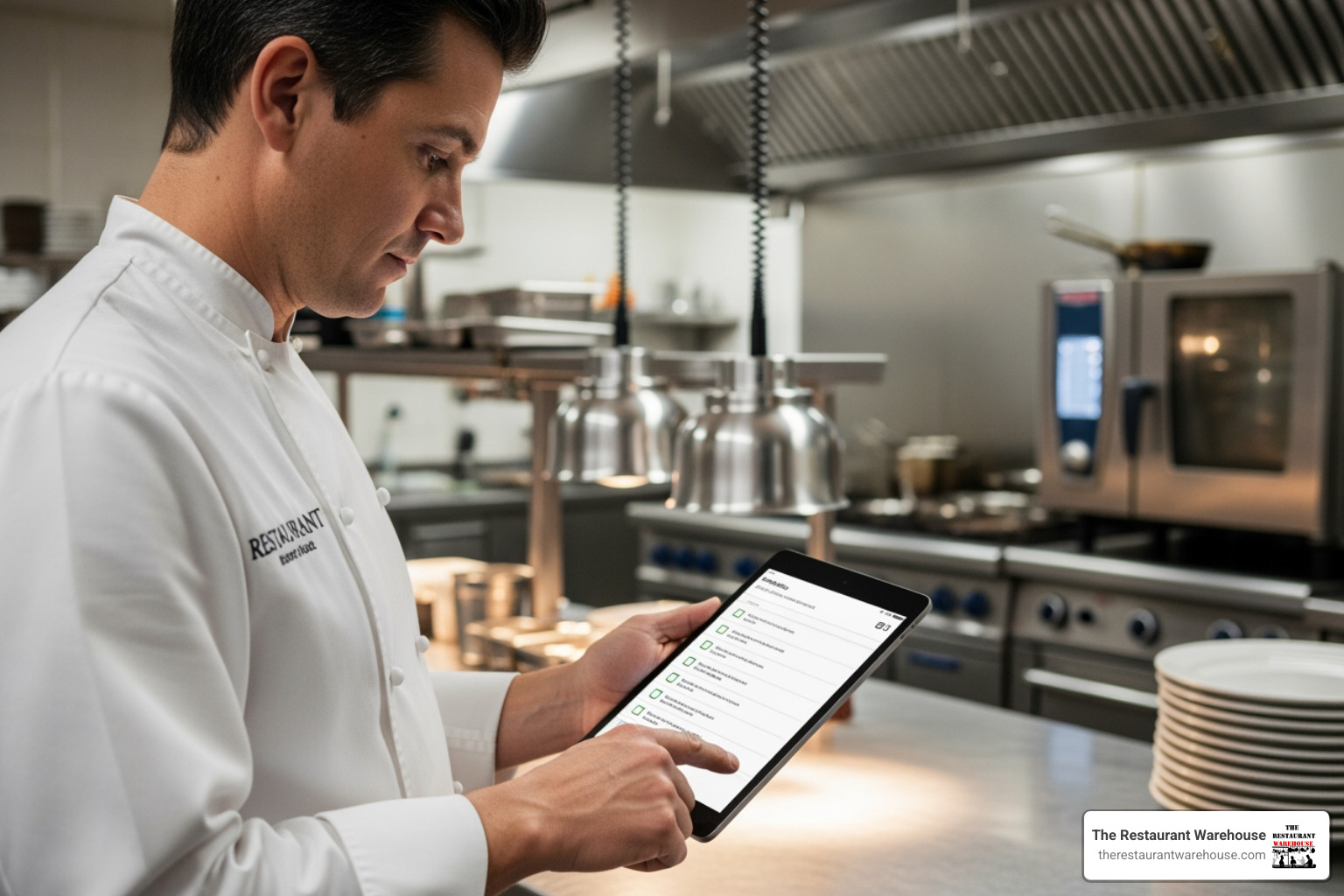
Creating a structured restaurant equipment maintenance program may feel daunting, but once a system is in place, it brings invaluable peace of mind. This section walks you through building a schedule custom-fit to your restaurant's needs.
Step 1: Create a Comprehensive Equipment Inventory
Before you can maintain anything, you need to know what you have. Many operators lack a complete picture of their assets. Start by documenting every piece of equipment, from the walk-in cooler to the smallest prep appliance.
For each item, record the following:
- Asset Name: What your team calls it.
- Make and Model: Essential for ordering parts and service.
- Serial Number: Critical for warranty claims.
- Purchase Date & Warranty Info: To track age and coverage.
- Usage Frequency: High-use items need more frequent attention.
Building this inventory takes time, but it's a one-time investment that pays dividends. Use a digital system like a spreadsheet or a Computerized Maintenance Management System (CMMS) to keep this information organized and accessible.
Step 2: Set Your Maintenance Cadence and Checklists
With your inventory complete, it's time to create an active schedule. Start by prioritizing your critical assets. Your refrigeration units and dishwashers are lifelines; a failure in either can shut down your operation. These deserve top priority.
Next, consult your manufacturer manuals. They contain specific cleaning instructions, safety warnings, and recommended maintenance schedules. Following their guidance is smart and often required to maintain warranty coverage.
Now, create checklists organized by frequency:
- Daily Tasks: Quick checks that any team member can handle. This includes checking temperatures, wiping surfaces, and visual inspections for leaks or odd noises.
- Weekly Tasks: Deeper cleaning, such as cleaning filters, inspecting door gaskets, and checking for clogs in spray arms or drains.
- Monthly Tasks: More involved jobs like cleaning condenser coils, checking for loose connections, and inspecting hoses.
- Quarterly & Annual Checks: These often require a professional. This includes deep cleaning ice machines, calibrating thermostats, inspecting gas connections, and comprehensive system evaluations by a certified technician.
Make these checklists simple and clear. Assign specific tasks to team members and build them into opening and closing procedures to ensure accountability and make maintenance a routine habit.
Step 3: Define Roles: In-House Staff vs. External Vendors
Knowing what your team can handle versus when to call a professional is key to a cost-effective and safe program.
Your in-house team is your first line of defense. They are perfect for:
- Daily cleaning and sanitation.
- Simple inspections: Listening for noises, checking for leaks, and noticing performance changes.
- Basic DIY tasks: With proper training, staff can clean condenser coils, change water filters, and replace worn door gaskets.
- Monitoring and reporting: Encourage staff to report any potential issues immediately.
External vendors and certified technicians are necessary for certain jobs to ensure safety, compliance, and warranty protection. Always call a professional for:
- Electrical components: Any work involving wiring or electrical panels.
- Gas lines: Any inspection or repair of gas systems must be done by a certified technician.
- Refrigerant work: Handling refrigerant requires special certification and tools.
- Complex diagnostics and repairs: If the problem isn't obvious, a technician can diagnose it quickly and accurately.
- Warranty-sensitive work: Attempting complex repairs yourself can void your equipment's warranty.
Building relationships with reliable service providers is invaluable. If you need help building a strategy or finding support, contact us for a consultation on your equipment needs. Balancing in-house tasks with professional service creates a maintenance program that is both effective and affordable.
Your Ultimate Restaurant Equipment Maintenance Checklist
This section offers actionable checklists for common categories of foodservice appliances, empowering your team to perform essential upkeep and identify potential issues early.
Refrigeration and Ice Machine Upkeep
Refrigeration units and ice machines run 24/7 and are critical for food safety. Ice is legally considered food, so any surface it touches must be sanitary. Proper maintenance here is about preventing breakdowns and protecting customer health.
-
Daily:
- Check and record temperatures on all refrigerators, freezers, and ice machines.
- Clean up spills immediately inside and outside units.
- Inspect door gaskets for a tight seal and wipe them clean.
- Sanitize ice bins and scoops.
-
Weekly:
- Clear any blockages in drainage systems.
- Wipe down or vacuum condenser coils on ice machines (check manufacturer guidance).
- Inspect water lines and fittings for leaks.
-
Quarterly/Annually:
- Deep clean condenser and evaporator coils on all refrigeration units.
- Flush and clean condensate drain lines to prevent clogs.
- Replace water filters in ice machines and water-cooled units.
- Verify temperature calibration on thermostats.
- Schedule a professional technician to check refrigerant levels and overall system health.
Essential Cooking Appliance Care
Your cooking appliances are where the magic happens. Keeping them in top shape directly impacts the quality of every dish that leaves your kitchen. A well-maintained appliance cooks more evenly and performs more reliably.
-
Daily:
- Clean all cooking surfaces after service to prevent grease buildup and flavor transfer.
- Empty grease traps before they overflow.
- For appliances using cooking oil, filter the oil to extend its life and maintain food quality.
- Wipe down exterior and interior surfaces, removing food particles and grease.
- Check that pilot lights are lit and burners ignite properly.
-
Weekly:
- Perform a deep clean or "boil-out" of appliances as recommended by the manufacturer.
- Visually inspect gas lines and connections for wear (if you suspect a leak, call a professional immediately).
- Check and calibrate thermostats to ensure accurate cooking temperatures.
- Remove and clean or replace ventilation hood filters to maintain airflow and prevent fire hazards.
-
Quarterly/Annually:
- Replace all cooking oil to ensure optimal food quality.
- Schedule a professional inspection of gas lines, heating elements, and overall system performance.
Warewashing and Small Appliance Best Practices
Your dishwasher is an unsung hero; when it goes down, service grinds to a halt. Small appliances like mixers and slicers are just as vital for efficient prep work.
-
Daily:
- Remove and clean dishwasher filter screens.
- Clean any clogged nozzles on spray arms.
- Check detergent and rinse aid levels.
- Thoroughly clean and sanitize small appliances and their attachments after each use.
- Visually inspect power cords for frays or damage.
-
Weekly:
- Run a cleaning or descaling cycle on your dishwasher per manufacturer guidelines.
- Inspect dishwasher door gaskets for wear or mold.
- Apply food-grade lubricant to specified moving parts on mixers or other appliances as needed.
-
Quarterly/Annually:
- Perform a comprehensive deep clean of the dishwasher interior.
- Descale dishwashers and other water-heavy appliances if you have hard water.
- Schedule a professional technician to inspect hoses, connections, and electrical components.
The Financial Reality of Restaurant Equipment Maintenance
We've covered the "what" and "how" of restaurant equipment maintenance, but let's talk dollars and cents. The real question isn't whether you can afford to maintain your equipment—it's whether you can afford not to. This section explores the financial consequences of neglect and how technology can protect your bottom line.
The High Cost of Neglect
When we ignore maintenance, we aren't saving money; we're just postponing and multiplying expenses. The consequences are severe:
- Emergency Repair Costs: Technicians charge premium rates for after-hours service and expedited parts. A preventative fix that might have cost $200 can easily become a $1,500 emergency.
- Premature Equipment Replacement: Neglected equipment has a shorter lifespan. Replacing major appliances years earlier than necessary drains capital that could be used to grow your business.
- Lost Revenue from Downtime: Every hour a critical piece of equipment is idle is an hour of lost sales. A broken freezer or dishwasher can lead to thousands of dollars in lost revenue in a single day.
- Food Spoilage: A malfunctioning refrigeration unit can destroy thousands of dollars worth of inventory.
- Damaged Reputation: Telling customers their favorite dish is unavailable or, worse, a food safety incident, can cause lasting harm.
That $46 billion figure lost annually to downtime is nearly double what the industry spends on maintenance. The financial reality is clear: neglect doesn't save money. It costs a fortune.
Leveraging Technology for Smarter Maintenance
Managing maintenance with clipboards and sticky notes is a recipe for failure. Technology can transform this process from reactive chaos into proactive control.
Computerized Maintenance Management Systems (CMMS) are game-changers for busy restaurants. Think of a CMMS as a digital assistant that organizes every detail of your equipment's health.
Key benefits include:
- Digital Checklists: Staff can access tasks on tablets or phones and mark them as complete in real-time. No more lost paperwork.
- Automated Scheduling: The software automatically generates work orders for daily, weekly, and quarterly tasks, sending reminders to the right people.
- Comprehensive Maintenance Records: Every task, part, and technician note is logged. This history speeds up diagnostics and validates warranty claims.
- Work Order Tracking: Create, assign, and monitor tasks to see what's completed, in progress, or overdue, improving accountability.
- Data Analysis: Over time, the system reveals patterns, helping you identify unreliable equipment before it fails and optimize your maintenance strategy.
By embracing technology, you move from firefighting to strategic planning. You're not just maintaining equipment; you're protecting your investment. When an appliance does reach the end of its service life, explore our selection of reliable new kitchen equipment to get back up and running without breaking the bank.
Frequently Asked Questions about Restaurant Equipment Maintenance
What's the difference between routine and preventive maintenance?
Understanding this distinction is key to an effective upkeep strategy. Think of it as two layers of care.
Routine maintenance consists of the daily and weekly housekeeping tasks your staff performs. This includes wiping down surfaces, emptying grease traps, checking temperatures, and cleaning filters. These tasks are crucial for cleanliness and immediate functionality and are typically handled in-house.
Preventive maintenance, on the other hand, is the deeper, scheduled care designed to prevent future failures. It's proactive and often requires more technical skill. This includes tasks like quarterly cleaning of condenser coils, calibrating thermostats, inspecting gas lines, or replacing worn parts before they break. While some tasks can be done by trained staff, many require a certified technician.
In short, routine maintenance keeps things clean day-to-day, while preventive maintenance ensures long-term reliability and efficiency.
How do I know when to call a professional technician?
Knowing when to call an expert versus handling a task yourself is critical for safety and protecting your investment. While your team can handle many tasks, you should always call a professional for the following:
- Electrical Work: Any task involving wiring, electrical panels, or internal electrical components requires a certified technician. The risk of injury or further damage is too high.
- Gas Lines: If you suspect a gas leak or need any work on gas connections, call a certified gas technician immediately. Never attempt to fix these issues yourself.
- Refrigerant Work: Handling refrigerant requires specialized tools, training, and certifications. This is strictly a job for an HVAC/R technician.
- Complex Diagnostics: If an appliance is making unusual noises or showing persistent performance issues that basic troubleshooting can't solve, a professional can diagnose the root cause quickly.
- Warranty Concerns: Attempting a technical repair yourself can void your equipment's warranty. For any issue covered under warranty, always use a certified service provider.
If you ever feel a task is unsafe or beyond your team's skill set, err on the side of caution and call a professional. For guidance on your specific equipment needs, you can always contact us for a consultation.
Can a good maintenance plan really save my restaurant money?
Absolutely. A comprehensive restaurant equipment maintenance plan is not an expense; it's a strategic investment that delivers significant financial returns. The numbers tell a clear story.
A good plan saves money in several key ways:
- Prevents Expensive Emergency Repairs: Proactive service catches minor issues before they become major breakdowns, helping you avoid the premium costs of emergency calls.
- Extends Equipment Lifespan: Regular care helps your valuable appliances last longer, delaying tens of thousands of dollars in premature replacement costs.
- Lowers Utility Bills: Well-maintained equipment runs more efficiently. Clean coils, calibrated thermostats, and properly functioning systems consume less energy, reducing your monthly bills.
- Reduces Downtime and Food Waste: Reliable equipment means fewer service interruptions, consistent revenue, and less spoilage from malfunctioning refrigeration.
While a plan requires an upfront investment of time and resources, the return is substantial. It's about protecting your assets and ensuring the long-term profitability of your restaurant.
Conclusion: Protect Your Investment and Your Profits
In the world of foodservice, every minute and every dollar matters. Restaurant equipment maintenance is not just another task—it's a fundamental business strategy that protects your investment and safeguards your profits.
By embracing preventative maintenance over reactive firefighting, you choose to be in control. The benefits are clear and measurable:
- Significant Cost Savings: A proactive plan can reduce overall spending by preventing costly emergency repairs and lowering utility bills.
- Extended Equipment Lifespan: You get more years out of every appliance, delaying major capital expenses.
- Improved Operational Efficiency: Your staff can focus on preparing great food and serving customers instead of struggling with unreliable equipment.
- Improved Food Safety: Consistent performance ensures you meet health standards and protect your reputation.
As we've seen, U.S. restaurants lose a staggering $46 billion annually to equipment downtime, nearly double the amount spent on maintenance. This powerful statistic shows that neglect costs far more than care ever will. A well-maintained kitchen is the heart of a successful restaurant, reflecting a commitment to excellence and smart business practices.
Of course, even the best-maintained equipment eventually reaches the end of its life. When that time comes, The Restaurant Warehouse is here to support you. We offer a wide selection of affordable, high-quality foodservice equipment to get you back up and running without breaking the bank.
If you're ready to build a better maintenance program or need guidance on equipment selection, reach out to our team for a consultation. We're here to help ensure your restaurant continues to thrive.
About The Author

Sean Kearney
Sean Kearney is the Founder of The Restaurant Warehouse, with 15 years of experience in the restaurant equipment industry and more than 30 years in ecommerce, beginning with Amazon.com. As an equipment distributor and supplier, Sean helps restaurant owners make confident purchasing decisions through clear pricing, practical guidance, and a more transparent online buying experience.
Connect with Sean on LinkedIn, Instagram, YouTube, or Facebook.