

Detailed Guide to Comparing Commercial Sinks
Why Commercial Sinks Are the Foundation of Every Successful Foodservice Operation
Commercial sinks are essential workhorses in any food service establishment, designed for the demanding tasks of washing, rinsing, sanitizing, and food preparation. Understanding their role is key to running an efficient and compliant kitchen.
Types of Commercial Sinks:
- Compartment Sinks (1, 2, or 3 compartments) - For manual dishwashing and food prep.
- Hand Washing Sinks - Required by health codes for staff hygiene.
- Bar Sinks - Compact units for beverage service areas.
- Utility/Mop Sinks - Deep basins for janitorial tasks.
Key Features to Consider:
- Material: Stainless steel (304-series) is the industry standard for durability.
- Gauge: 16-gauge (thicker, more durable) vs. 18-gauge (lighter duty).
- Compartments: Based on health code requirements and workflow needs.
- Certifications: Look for NSF certification and ADA compliance.
The global commercial sinks market was valued at $1.5 billion in 2022 and is projected to reach $2.3 billion by 2030, reflecting the expanding foodservice industry. However, many operators face the challenge of choosing the right sink configuration without overpaying due to traditional supplier markups.
Selecting the wrong sink can lead to workflow bottlenecks, health code violations, and costly replacements. The right commercial sink creates an efficient workflow that meets strict sanitation standards while standing up to years of heavy use. Every specification, from the number of compartments to the gauge of the steel, impacts your kitchen's functionality and bottom line.
I'm Sean Kearney from The Restaurant Warehouse, and I've spent years helping restaurant owners find the perfect commercial sinks that balance quality with budget-conscious pricing. My background has taught me that understanding your specific needs is the key to making smart investments in your kitchen's foundation.
In this guide, we'll break down everything you need to know about commercial sinks—from understanding different types to evaluating materials, features, and compliance requirements. You'll learn how to make an informed decision that serves your operation for years to come.
Understanding the Types of Commercial Sinks and Their Uses
In any professional kitchen, different commercial sinks serve specific purposes to maintain workflow and hygiene. From high-volume restaurants to food trucks, choosing the right configuration is crucial for efficiency. The diversity of modern sinks means there is a solution for every need. For a comprehensive overview of heavy-duty options, check out our guide on Industrial Sink Types.
One, Two, and Three-Compartment Sinks
The three-compartment sink is often a legal requirement for manual warewashing. Health departments mandate this setup for the wash-rinse-sanitize process to ensure customer safety. The first compartment uses hot, soapy water (at least 110°F) to break down grease. The second rinses away soap and debris, and the third sanitizes items with a chemical solution. Our 3-Tier Sink Guide details this process. A critical and often overlooked specification is that the sink must be large enough to fully submerge your biggest pot or pan.
Two-compartment sinks are flexible for food prep, such as washing and rinsing vegetables. While they can support some cleaning tasks, they generally don't meet full manual warewashing requirements alone.
One-compartment sinks are versatile utility players, ideal for soaking large pots, filling containers, or disposing of liquids. They serve as excellent supplementary fixtures to primary washing stations.
Dedicated Hand, Bar, and Mop Sinks
Beyond the main washing stations, specialized commercial sinks are vital for hygiene and efficiency.
Hand washing sinks are non-negotiable and a primary focus for health inspectors. They are your first line of defense against cross-contamination and must be used exclusively for handwashing. Our Commercial Hand Sinks Guide helps you meet health code requirements.
Bar sinks are compact units designed for beverage service areas. They fit into bar layouts to provide space for rinsing glassware and cleaning tools, keeping bartenders efficient during busy periods.
Mop sinks are essential for maintaining a clean facility. These deep, durable basins accommodate mop buckets and keep janitorial tasks separate from food prep areas. For selection guidance, explore our Restaurant Mop Sink Guide.
Specialized and Integrated Solutions
Modern kitchens demand smart, space-saving solutions. Work tables with sinks are a prime example, combining a prep surface with a sink to create an efficient workstation and reduce movement. This is especially valuable in smaller kitchens.
Drop-in sinks offer design flexibility by integrating seamlessly into existing countertops for a polished look. They are ideal for custom layouts or retrofitting a space.
Portable sinks are a game-changer for mobile foodservice. These self-contained units provide hot and cold running water without permanent plumbing, making them invaluable for catering events, food trucks, and farmers markets. Our Food Truck Sinks Guide covers the specific regulations for mobile operations.
Integrating functions saves space and improves efficiency. Ready to find the perfect sink configuration for your operation? Contact our team for personalized recommendations based on your specific needs.
Key Features and Specifications to Consider When Buying
Choosing the right commercial sink is a critical investment. Selecting based on price alone can lead to future problems like dents, leaks, or workflow issues. There are several key features to consider before you buy.

When guiding clients at The Restaurant Warehouse, we start with the basics: the number of compartments, the best mounting type for the space, and the material specifications that will withstand your kitchen's demands. Let's break down these considerations.
Choosing the Right Number of Compartments and Drainboards
The number of compartments is often dictated by health codes. For manual dishwashing, a three-compartment sink is typically required for the wash-rinse-sanitize process. Each compartment must be large enough to fit your largest item, like a full-size sheet pan.
Workflow is also key. A busy restaurant needs a three-compartment sink plus ample drainboard space for air-drying. Drainboards are invaluable for drying, preventing water from pooling on floors, and reducing cross-contamination. They can be placed on the left, right, or both sides, depending on your kitchen's layout and flow. A smaller café might find a two-compartment sink more practical for food prep. For more on the three-compartment setup, see our 3-Tier Sink Guide.
Mounting Types: Freestanding, Wall-Mount, and Drop-In
How your commercial sink is mounted affects floor space, cleaning, and installation.
Freestanding sinks are the standard for multi-compartment units. They offer excellent stability with adjustable feet for leveling on uneven floors and cross-bracing to prevent wobbling. They provide the most robust support for heavy-duty use.
Wall-mount sinks are space-savers, ideal for handwashing stations or in tight quarters. They attach to the wall, leaving the floor clear for easy cleaning. Ensure your wall is properly reinforced to support the weight.
Drop-in sinks integrate directly into countertops for a seamless, professional look. They are perfect for custom layouts where aesthetics are important. Installation is more involved, but the result is a smooth, easy-to-clean workspace.
Contact us for a consultation if you're unsure which mounting type fits your space and plumbing needs best.
Critical Details for Your Commercial Sinks: Gauge, Shape, and Drain Location
Small details can have a big impact on a sink's daily performance and longevity.
Gauge refers to the thickness of the stainless steel—a lower number means thicker, more durable steel. 16-gauge stainless steel is recommended for high-volume commercial kitchens. It resists dents and lasts longer under constant, heavy use. 18-gauge steel is a more budget-friendly option suitable for lighter-duty applications like prep sinks or handwashing stations.
The sink shape is typically rectangular to maximize volume for washing large items. Bowl depth is also important; a 12- or 14-inch deep bowl reduces splashing and allows you to submerge large pots.
Drain location affects usability and storage. Rear drains are often preferred as they free up cabinet space underneath for storage or easier garbage disposal installation, compared to more common center drains.
ADA Compliance and Accessibility
Accessibility is a legal requirement under the Americans with Disabilities Act (ADA), especially for sinks in public or employee areas.
ADA-compliant sinks must have adequate knee and toe clearance for wheelchair users, meaning open space under the basin free of obstructions. Faucets and soap dispensers must be within accessible reach ranges and operable with one hand without tight grasping. Lever handles or sensor-activated faucets are compliant choices.
When selecting commercial sinks for restrooms or other accessible areas, always verify ADA compliance. For more on this topic, read our guide: Sink Smart: Choosing the Perfect Commercial Kitchen Hand Wash Sink. Meeting these standards creates an inclusive environment for all staff and customers.
The Ultimate Guide to Commercial Sink Materials
The material of your commercial sink determines its durability, ease of cleaning, and overall lifespan. In a demanding kitchen environment, this choice is critical for long-term performance.
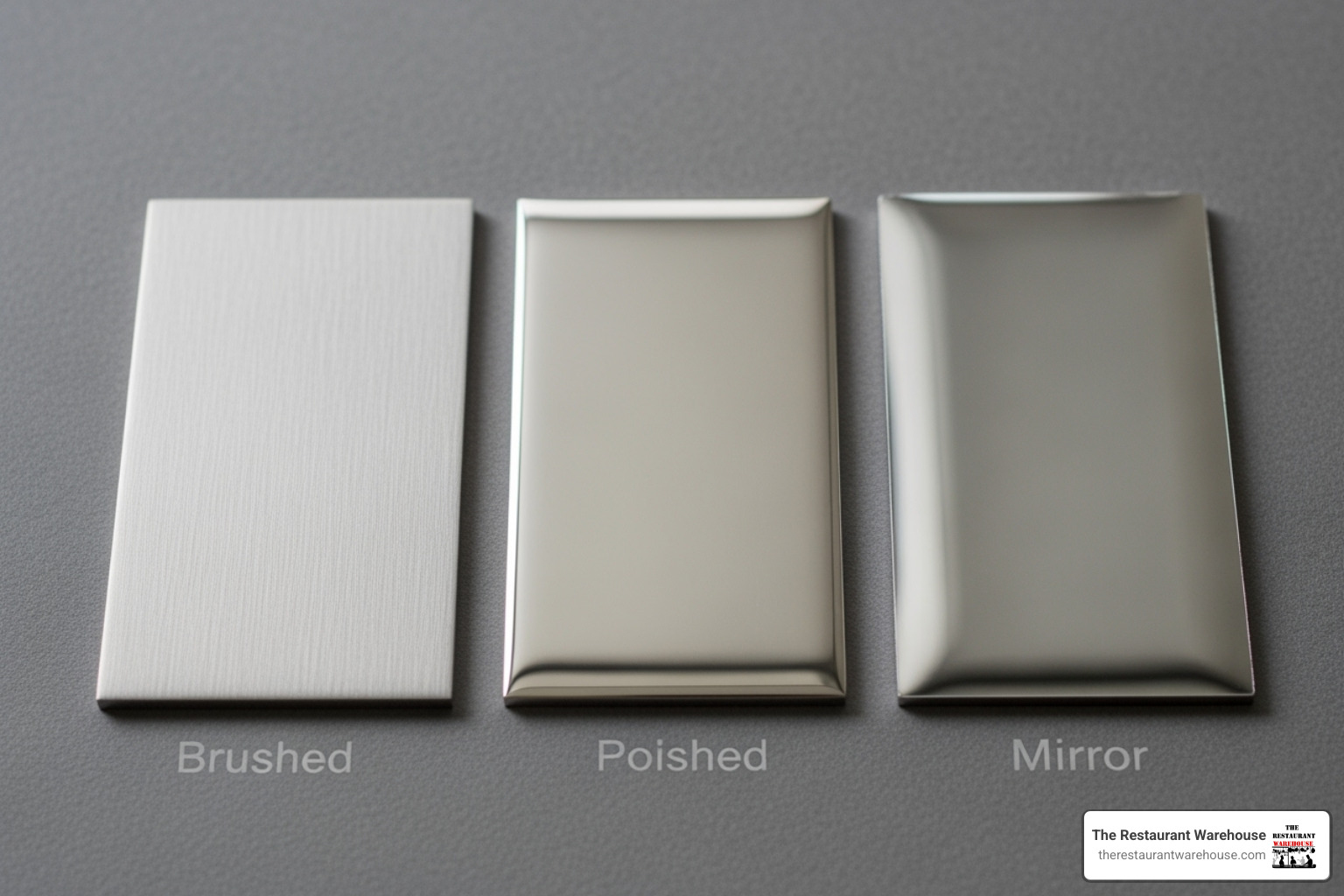
Stainless steel is the undisputed material of choice for commercial sinks worldwide. Understanding why will help you make a smart investment for your operation.
Why Stainless Steel is the Industry Standard
Stainless steel dominates the commercial kitchen market because it excels in every area that matters. Quality commercial sinks use 304-series stainless steel, which contains 18% chromium and 8% nickel (18/8). The chromium provides a protective layer against rust and corrosion, while the nickel adds strength and resilience against acidic foods and harsh cleaning chemicals.
In practical terms, stainless steel is incredibly resilient. It withstands the daily abuse of dropped pots, constant hot water, and industrial-strength cleaners. It doesn't warp, crack, or lose its structural integrity over years of heavy use.
Its key advantage is its non-porous surface. This impenetrable barrier prevents bacteria from hiding in microscopic crevices and stops odors or liquids from being absorbed. This hygienic quality is exactly what health inspectors look for. Cleaning is straightforward; a simple wipe-down with standard cleaners is all that's needed to maintain a sanitary surface.
Stainless steel's heat resistance is another major benefit. It can handle boiling water or a hot pan without damage. This durability contributes to its longevity, making it a wise long-term investment. Our Industrial Sink Guide further explores why stainless steel is the industry standard.
At The Restaurant Warehouse, we know that choosing quality 304-series stainless steel for your commercial sinks provides durability, hygiene, and peace of mind. Ready to explore our range of premium stainless steel commercial sinks? Contact us today to discuss the best options for your needs.
Exploring Other Materials for commercial sinks
While stainless steel is the standard, a few alternatives exist for specialized applications, though they often come with trade-offs.
Composite sinks, made from acrylic resins and ground minerals, come in various colors and are quieter than steel. However, they are less resistant to extreme heat and can scratch or wear under heavy commercial use.
Fireclay sinks, made from ceramic clay fired at high temperatures, have a very hard, durable surface. They are heavy, which can complicate installation, and while tough, they can crack under the extreme impacts common in a busy kitchen.
Polymer sinks, made from plastics like HDPE, are lightweight and inexpensive. They are suitable for portable or temporary setups, like food trucks or outdoor events, but lack the robustness and heat resistance needed for permanent, heavy-duty installations.
For the core workhorses of your kitchen, stainless steel's combination of hygiene, durability, and corrosion resistance makes it the clear and superior choice for long-term value.
Ensuring Hygiene and Meeting Sanitation Standards
In any foodservice operation, hygiene is paramount. Your reputation, customer safety, and legal compliance depend on it. Commercial sinks are your first line of defense against contamination and foodborne illness.
A well-designed commercial sink makes critical tasks like handwashing and warewashing easier and more effective. It's not just about convenience—it's about preventing the spread of pathogens and meeting health department requirements. For a closer look at handwashing stations, see our guide: Clean Hands, Happy Guests: Catering Hand Wash Sink Buying Guide.
Let's review the features that make a commercial sink truly hygienic and compliant.
The Importance of NSF Certification
When you see "NSF certified" on commercial sinks, it means the product has been tested by an independent organization to meet strict public health and safety standards.
NSF certification guarantees several key things:
- Materials are non-toxic and food-safe, so no harmful chemicals will leach into your water or onto food surfaces.
- The design promotes cleanliness, engineered to be easily sanitized and prevent bacterial buildup.
- The sink has proven corrosion resistance against harsh cleaning chemicals and acidic foods.
- The construction meets specific design requirements that ensure proper drainage and eliminate hard-to-clean areas.
For manual dishwashing, an NSF-approved three-compartment sink is often required by health codes. To learn more, see our breakdown: NSF Approved 3 Compartment Sink. Choosing NSF-certified sinks demonstrates a commitment to public health and simplifies compliance.
Design Features That Promote Cleanliness
The physical design of your commercial sink is crucial for maintaining a sanitary environment. These features are engineered for better hygiene.
- Coved corners: Smoothly rounded corners inside the basin eliminate tight angles where food and bacteria can get trapped, making the sink easier to clean thoroughly.
- Rolled edges: These smooth, rounded edges along the top of the sink prevent water from splashing onto the floor, reducing slip hazards and containing messes.
- Integrated backsplash: A raised barrier along the back of the sink protects your wall from water damage, which can lead to mold and mildew. It simplifies cleanup by creating one continuous, easy-to-wipe surface.
- Seamless construction: Sinks formed from a single sheet of steel have no seams or welds inside the basin. This eliminates potential hiding spots for bacteria and weak points for corrosion.
- Proper drainage: A well-sloped bottom ensures that water drains completely, leaving no standing puddles where bacteria can multiply.
These features distinguish a basic sink from one that actively supports your sanitation efforts.
Ready to ensure your operation meets the highest hygiene standards? Our commercial sinks feature NSF certification and hygiene-focused designs at prices that fit your budget. Contact us today to find the right sink for your sanitation and compliance needs!
Frequently Asked Questions about Commercial Sinks
Choosing the right commercial sink can be confusing. As someone who has helped countless foodservice professionals, I've compiled the most common questions to give you clear, straightforward answers.
What is the best gauge for a commercial sink?
When it comes to gauge, a lower number means thicker, more durable steel. 16-gauge stainless steel is the recommended choice for most commercial operations. It's a workhorse material that resists dents and damage in busy dish rooms and prep areas where heavy pots and pans are common. While it costs more upfront, its longevity makes it a smart investment.
18-gauge stainless steel is a more affordable option that works well for lighter-duty applications. It's perfectly suitable for handwashing stations, produce prep sinks, or in establishments with lower volume. It still offers good durability, just not the heavy-duty toughness of 16-gauge.
In short: choose 16-gauge for high-impact environments and 18-gauge for lighter tasks or tighter budgets.
How many compartments do I need for my restaurant sink?
This is largely determined by local health codes. If you are manually washing dishes, pots, and pans, a three-compartment sink is almost always required. This setup is essential for the wash-rinse-sanitize process that prevents foodborne illness. The first compartment is for washing, the second for rinsing, and the third for sanitizing.
One-compartment sinks are great for food prep tasks like washing vegetables or for general utility use, but they cannot be used for manual warewashing.
Crucially, hand sinks must always be separate. Health codes require dedicated handwashing stations to prevent cross-contamination. You cannot use a warewashing or prep sink for handwashing. Always check with your local health department to confirm their specific requirements before purchasing. As noted in the FDA Food Code, proper warewashing is a critical control point for food safety.
What does NSF-certified mean for a sink?
An NSF certification mark on a commercial sink is your assurance that it meets rigorous public health and safety standards set by NSF International, an independent third-party organization. An NSF-certified sink has been tested and verified to be:
- Made from non-toxic, food-safe materials that won't leach chemicals.
- Designed to be easily cleaned and sanitized, with features like coved corners and smooth surfaces that prevent bacterial growth.
- Durable and corrosion-resistant, able to withstand harsh chemicals and constant use without degrading.
Essentially, NSF certification tells you that the sink is built with hygiene, safety, and longevity in mind. It's a key indicator of quality that health inspectors look for.
Ready to find the perfect commercial sink for your operation? Our team understands the regulations and practical demands of busy kitchens. Contact us for a consultation on your kitchen needs, and let's find the right commercial sinks for your business at wholesale prices.
Conclusion
You've now explored the essential world of commercial sinks, from the required three-compartment models to the specifics of stainless steel gauge and NSF certification. You understand that details like coved corners and ADA compliance are not just features, but critical components of an efficient and safe kitchen.
The right commercial sink is not about finding the cheapest option; it's about matching your operational needs with the right combination of materials, size, and features. A well-chosen sink works silently in the background, boosting your team's efficiency while effortlessly meeting health codes.
Investing in a quality 16-gauge, NSF-certified stainless steel sink pays off for years. It withstands daily abuse, maintains its hygienic properties, and saves you money on future replacements and disruptions. It's peace of mind during every health inspection.
At The Restaurant Warehouse, we believe you deserve professional-grade sinks without the inflated retail markups. We offer wholesale pricing so you can invest in quality without breaking your budget. When you choose a commercial sink from us, you're partnering with a team that understands the demands of your business.
Whether you need a robust three-compartment sink, a space-saving hand sink, or an integrated work table, the right solution is here. You now have the knowledge to choose wisely.
Ready to equip your kitchen with commercial sinks that deliver on durability, hygiene, and value? Explore our full range of commercial sinks today and see how affordable quality can be. If you have questions, our team is here to help. Contact Us for a consultation on your kitchen needs and let's find the perfect sink solution together.
About The Author

Sean Kearney
Sean Kearney is the Founder of The Restaurant Warehouse, with 15 years of experience in the restaurant equipment industry and more than 30 years in ecommerce, beginning with Amazon.com. As an equipment distributor and supplier, Sean helps restaurant owners make confident purchasing decisions through clear pricing, practical guidance, and a more transparent online buying experience.
Connect with Sean on LinkedIn, Instagram, YouTube, or Facebook.