

Cool Solutions: Everything You Need to Know About Walk-In Refrigeration
Why Walk In Cooler Refrigeration is Essential for Your Business
Walk in cooler refrigeration is the silent, hardworking backbone of any successful foodservice operation. It is far more than just a large cold box; it is a critical asset that provides the bulk cold storage capacity needed to keep ingredients fresh, guarantee food safety, and maximize operational efficiency. A single refrigeration failure can lead to thousands of dollars in lost inventory, potential health code violations, and irreparable damage to your reputation. For any restaurant, catering business, grocery store, or floral shop, understanding and investing in the right system is fundamental to protecting your inventory, your customers, and your bottom line.
A properly sized and maintained walk-in unit offers significantly more storage than standard reach-in refrigerators, empowering you to purchase ingredients in bulk, take advantage of volume discounts, and reduce food waste. The right system maintains perishable food items at precise, safe temperatures, which maximizes their shelf life and ensures you remain compliant with health department regulations. Critical decisions, such as the type of refrigeration system, the quality of insulation, and the placement of the unit, will have a lasting impact on everything from initial installation costs to long-term energy consumption and daily workflow.
This comprehensive guide will walk you through the essential aspects of these critical systems, helping you make an informed decision that serves your business for years to come. We will cover:
- Core Components and System Types: Learn what makes a walk-in work and the crucial difference between self-contained and remote systems.
- Sizing and Selection: Choose the right cooler or freezer for your specific inventory, workflow, and spatial constraints, whether indoor or outdoor.
- Operations and Maintenance: Discover how to maximize energy efficiency, ensure uncompromising food safety, and extend the life of your valuable equipment.
- Investment Options: Weigh the pros and cons of new, used, custom-built, and leased solutions to find the best financial path for your business.
Understanding the Core Components and Types
This section covers the fundamental building blocks and system configurations of walk-in units, helping you understand what makes them work and what to look for when making a purchase.
Essential Components of a Walk-In System
Every walk in cooler refrigeration system is an ecosystem of carefully engineered parts working in harmony. Understanding these components helps you evaluate quality and make smarter purchasing decisions that impact long-term performance and cost.
Insulated Panels: The foundation of any walk-in, these panels create the thermal envelope that keeps cold air in and warm air out. They consist of a high-density foam core sandwiched between metal skins. The most common and effective insulation is polyurethane foam, known for its high R-value (insulating power) per inch. Coolers typically use 4-inch-thick panels, providing an R-value of around R-25 to R-32. Freezers, which operate at much lower temperatures, require thicker 5- or 6-inch panels to achieve a higher R-value (R-36 or more) to retain the intense cold and prevent the compressor from running constantly. The metal skins are usually made of galvanized steel for durability, but aluminum and stainless steel options are available for enhanced corrosion resistance. Most modern panels use a cam-lock system, with hooks and pins that pull the panels together for a secure, airtight assembly.
Walk-In Door: As the only moving part of the box and the most frequent point of access, the door is often the weakest point for insulation and the most common point of failure. A heavy-duty, well-sealed door is critical. Key features to demand include heavy-duty self-closing hinges to prevent the door from being left ajar and high-quality, multi-point door gaskets to create an airtight seal. Freezer doors require additional features like heated frames and thresholds to prevent moisture from freezing and sealing the door shut, as well as a pressure relief port to equalize air pressure differences caused by the extreme cold, making the door easier to open. Many operators also add vinyl strip curtains as a secondary barrier to reduce cold air loss during frequent loading and unloading.
Interior Shelving and Flooring: Proper shelving is not just for organization; it is essential for food safety and system performance. Shelving, typically made from epoxy-coated wire, stainless steel, or polymer for corrosion resistance, keeps products off the floor and allows for essential air circulation around the inventory. For flooring, some walk-ins are installed on an existing concrete slab, but this is only suitable for coolers in certain conditions. Most units, and virtually all freezers, include an insulated floor to prevent cold from leaching into the ground and to stop condensation from forming under the unit. Always look for NSF-rated materials for any interior surface, ensuring they are durable, non-porous, easy to clean, and slip-resistant.
Lighting: Modern LED lighting is the undisputed standard for walk-in units. Unlike older incandescent or fluorescent bulbs, LEDs generate almost no heat, which reduces the overall cooling load on your refrigeration system. They are also more energy-efficient and have a much longer lifespan, reducing maintenance and electricity costs.
For a deeper dive into how these components work together, check out our guide with more info about walk-in cooler parts.
Types of Walk-In Refrigeration Systems
The refrigeration system itself—the engine that creates the cold—comes in two main configurations, each with distinct advantages for different operational needs.
Self-Contained Systems Also known as packaged systems, these all-in-one units integrate the compressor, condenser, and evaporator into a single housing. This design greatly simplifies installation, often allowing for setup without the need for a specialized refrigeration technician to handle refrigerant lines.
- Top-mount units sit on the roof of the walk-in, with the evaporator coil hanging down into the storage space. This is the most common self-contained design.
- Side-mount units attach to one of the vertical exterior panels, useful for locations with low ceiling clearance.
The primary trade-off is that self-contained systems reject heat and noise directly into the surrounding indoor space. This can add a significant heat load to your work area, potentially straining your HVAC system and creating an uncomfortable environment for staff. They are best suited for smaller operations, businesses with limited budgets, and locations where outdoor equipment placement is impossible.
Remote Systems These systems, also called split systems, separate the components: the evaporator coil (the part that gets cold) is located inside the walk-in, while the condensing unit (containing the compressor and condenser coil) is located elsewhere—typically on the roof of the building, on a concrete pad outside, or in a dedicated mechanical room. This separation offers several powerful benefits:
- Heat and Noise Rejection: All waste heat and operational noise are moved outdoors or away from work areas, creating a cooler, quieter, and more productive kitchen environment and reducing air conditioning costs.
- Higher Capacity and Power: Remote systems are generally more powerful, allowing them to cool larger walk-ins and recover temperature more quickly after doors have been opened or warm product has been loaded.
- Maximized Interior Space: With no part of the condensing unit inside, you can utilize the full interior volume of the walk-in for storage.
The main drawbacks are a higher initial purchase price and a more complex installation that requires a licensed refrigeration technician to run and charge the refrigerant lines connecting the two units. However, for most medium-to-large operations, the long-term benefits of lower energy bills, superior performance, and a better work environment easily justify the initial investment. Remote systems are the standard for larger restaurants, high-volume operations, and any business in a hot climate.
| Feature | Self-Contained Systems | Remote Systems |
|---|---|---|
| Cost | Generally lower upfront | Generally higher upfront |
| Installation | Simpler, faster, often DIY or less specialized labor | More complex, requires licensed refrigeration installer |
| Heat Dissipation | Rejects heat into the indoor space | Rejects heat outside the building |
| Noise Level | Higher inside and near the unit | Lower in work areas, noise is remote |
| Capacity | Better for smaller to medium units, pre-chilled goods | Better for larger units, un-chilled goods, high traffic |
| Space Usage | Evaporator may take up interior headroom/shelf space | Maximizes interior storage space |
| Ideal Use Case | Small restaurants, quick installations, limited budgets, low ceilings | Large kitchens, high-volume operations, noise-sensitive areas |
Ready to find the perfect walk-in solution for your operation? Contact us today and our team will help you select the components and system type that match your needs and budget.
Choosing the Right Walk-In Cooler or Freezer for Your Business
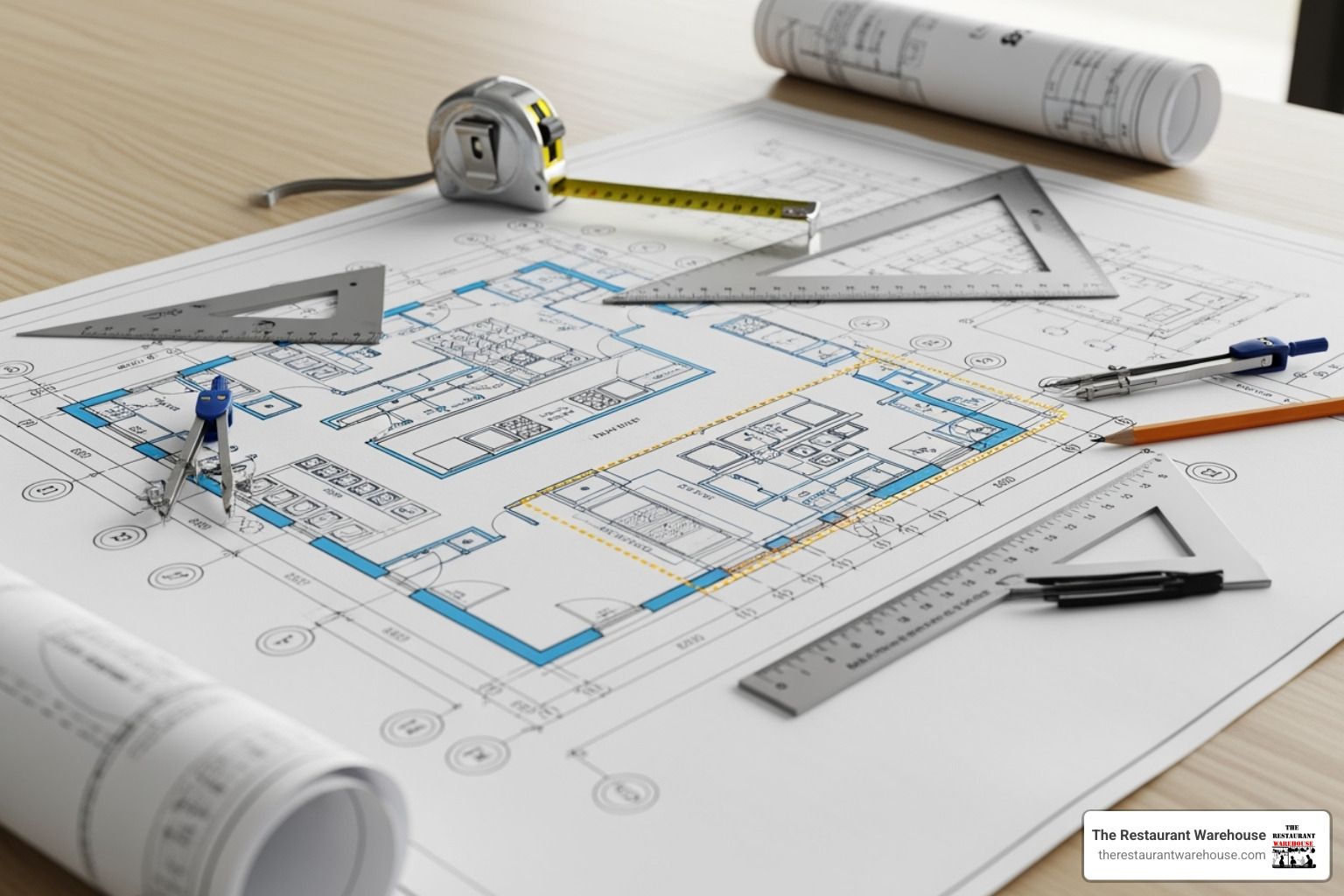
Selecting the correct walk-in unit is one of the most impactful long-term decisions you'll make for your business. It's a careful balance of choosing equipment that supports your daily workflow, protects your valuable inventory, and keeps ongoing utility bills manageable.
Sizing and Capacity: How Much Space Do You Really Need?
Getting the size right for your walk in cooler refrigeration system is more complex than just measuring floor space; it requires a thorough analysis of your entire inventory flow.
First, perform a detailed assessment of your product inventory. How many cases of produce, boxes of meat, kegs of beer, or pans of prepped food do you need to store at your peak inventory level? Remember to account for the physical dimensions of boxes and containers, and the fact that you cannot stack items in a way that blocks airflow. Your delivery frequency is a major factor; a business receiving daily deliveries can operate with a smaller unit than one that gets large shipments only once or twice a week. A good starting point is to calculate your maximum required inventory volume and add a buffer of 20-30%.
Don't forget to factor in aisle space. The total footprint of a walk-in is not all usable storage. You need adequate room for staff to move safely, retrieve items without excessive searching, and for air to circulate properly around all stored products. Proper air circulation is vital for maintaining consistent temperatures and preventing warm spots. If you plan to use rolling carts or pallet jacks inside the unit, you will need even wider aisles and a reinforced floor.
Finally, and most importantly, plan for future growth. A walk-in that is perfectly sized for your opening day might become frustratingly small within a year or two. It is far more cost-effective and less disruptive to invest in a slightly larger unit now than to face the expense and downtime of replacing or adding a second unit later. Standard dimensions range from 5'x5' to 12'x20' and beyond, but if you have an unusual or constrained space, custom-built solutions can be fabricated to your exact specifications to maximize every available inch.
Cooler vs. Freezer: Understanding the Key Differences
While both fall under the walk in cooler refrigeration umbrella, coolers and freezers are distinct pieces of equipment engineered for different purposes and with different construction requirements.
The most obvious distinction is operating temperature. Coolers are designed to maintain temperatures between 35°F and 41°F (2°C to 5°C) for the short-term storage of fresh items like produce, dairy, beverages, and prepared foods. Freezers operate at 0°F (-18°C) and below for the long-term preservation of frozen goods. If you're unsure about the optimal temperature settings for various products, our guide on ideal walk-in cooler temperatures can provide detailed guidance.
Because they must maintain much lower temperatures against the ambient environment, freezers require significantly better insulation. This translates to thicker wall and ceiling panels (5-6 inches) with a higher R-value (typically R-36 or more, compared to R-25 for coolers). Freezer doors also have specialized features not found on coolers, including heated door frames to prevent ice buildup from sealing the door shut and pressure relief ports to equalize the significant air pressure difference between the frigid interior and the warmer exterior, making the door easier to open. These features, combined with the greater temperature differential the system must maintain, mean that freezers consume considerably more energy than coolers of the same size.
Indoor vs. Outdoor Units: Which is Best for You?
Deciding where to place your walk in cooler refrigeration unit is a strategic choice that affects your kitchen layout, workflow, and utility bills.
Outdoor units are an excellent solution for businesses looking to free up valuable interior space. In a cramped kitchen, moving bulk cold storage outside can be transformative, allowing for a more efficient and open floor plan. However, these units must be specifically designed for outdoor use, with robust weatherproofing to withstand sun, rain, humidity, wind, and snow. Look for features like a one-piece membrane roof to prevent leaks, structural reinforcement to handle heavy snow loads in colder climates, and durable exterior finishes. The exterior material also impacts energy efficiency; materials with low thermal conductivity, like fiberglass, absorb less heat from the sun than standard metal exteriors. According to engineering thermal conductivity data, this material difference can significantly impact energy consumption, especially for units exposed to direct sunlight in hot climates.
Indoor units are protected from the elements and are often more convenient for staff to access during service. However, they consume valuable interior floor space that could be used for other functions. If you choose an indoor unit with a self-contained refrigeration system, remember that it will exhaust waste heat and noise into your building, which can increase the load on your HVAC system and create a less comfortable work environment. The best choice depends entirely on your available space, climate, budget, and operational priorities.
The Critical Role of Walk In Cooler Refrigeration in Your Operations
Properly managing your walk in cooler refrigeration system is a daily responsibility that is key to ensuring food safety, maximizing energy efficiency, and protecting your significant financial investment. A walk-in is not a passive storage closet; it is a dynamic and critical piece of infrastructure that directly impacts your profitability and reputation.
Maximizing Energy Efficiency and Reducing Costs
Your walk-in unit is one of the largest and most consistent energy consumers in your facility, but smart choices in selection and operation can dramatically reduce its operating costs.
Insulation is the first line of defense. While high-quality polyurethane foam provides an excellent thermal barrier, the exterior material of the panels also matters. Conventional metal exteriors on outdoor units can absorb a great deal of solar heat, forcing the refrigeration system to work harder and use more energy to maintain its set temperature. Materials like fiberglass have a very low thermal conductivity, making them a more energy-efficient choice, especially for outdoor units in warm, sunny climates. This difference is directly reflected in your monthly utility bills.
Beyond the box itself, always specify energy-efficient components for the refrigeration system:
- EC Motors: Electronically Commutated (EC) motors in the evaporator and condenser fans are a must-have. They are significantly more efficient than older PSC motors, often using up to 70% less electricity because they can adjust their speed based on demand.
- LED Lighting: As mentioned earlier, LEDs use a fraction of the electricity of older bulbs and, more importantly, generate almost no heat, which reduces the cooling load on your system.
- High-Efficiency Compressors: Modern scroll compressors are designed for optimal performance with lower energy draw compared to older reciprocating models.
- DOE Compliance: Always choose units that meet or exceed the current Department of Energy (DOE) regulations for energy performance standards. This certification ensures your equipment is designed and tested for modern efficiency.
Installation and Maintenance for Longevity and Performance
Proper installation and a consistent maintenance routine are absolutely essential for a long, reliable service life and for preventing catastrophic failures.
Getting the Installation Right
- Site Preparation: The unit must be installed on a perfectly level, stable floor that can support its immense weight when fully loaded with inventory. For outdoor units, this almost always means a reinforced concrete slab.
- Electrical Requirements: Ensure a dedicated electrical circuit is provided that exactly matches your unit's voltage and phase specifications. Incorrect power is a leading cause of premature component failure.
- Condensate Drainage: Every system produces condensate (water) from the evaporator coil that must be drained properly. A gravity drain is simplest, but a condensate pump may be needed. Improper drainage can lead to pooling water, slip hazards, and water damage.
- Professional Installation: While some small, self-contained units can be assembled by a general contractor, we always recommend professional installation, especially for remote systems. A licensed refrigeration technician ensures all connections are secure, refrigerant is properly charged, and the system is calibrated for peak performance and efficiency from day one.
The Maintenance Routine That Protects Your Investment Regular, proactive maintenance is your best defense against costly emergency repairs and product loss. Implement a clear schedule for your staff.
-
Daily Tasks:
- Check and Log Temperatures: At the beginning of each shift, check the internal thermometer and log the temperature. Any deviation from the set point is an early warning sign.
- Visually Inspect the Door: Ensure the door closes and seals completely. Do not prop the door open.
-
Weekly Tasks:
- Check for Airflow Obstructions: Make sure inventory is not stacked against the walls or blocking the evaporator fan. Tidy up shelves to ensure good air circulation.
- Listen for Unusual Noises: Pay attention to the sound of the system. New grinding, rattling, or squealing sounds warrant a service call.
-
Monthly Tasks:
- Clean Condenser Coils: These coils, located on the condensing unit, release heat. They attract dust, grease, and debris, which insulates them and restricts airflow. Dirty coils are a primary cause of system failure. Carefully clean them with a stiff brush and coil cleaner.
- Inspect Door Gaskets: Check the rubber or vinyl door seals for cracks, tears, or areas where they have become brittle. A damaged gasket allows cold air to escape 24/7. Replace worn gaskets immediately.
- Check and Clear Drain Lines: Ensure the condensate drain line is clear of slime and debris to prevent backups.
-
Annual Tasks:
- Schedule Professional Service: Have a qualified technician perform a full system check-up. They will check refrigerant levels, test electrical components, lubricate motors, and ensure the entire system is operating correctly.
For more detailed guidance, review our guide on Essential walk-in cooler maintenance tips.
Ensuring Food Safety and Compliance
Your walk in cooler refrigeration system is your primary tool in the fight against food spoilage and foodborne illness.
Temperature monitoring is the cornerstone of food safety. Your cooler must consistently hold product temperatures between 35°F and 41°F, and your freezer at 0°F or below. Use reliable, calibrated thermometers inside the unit and consider investing in digital data loggers that provide a continuous record for health inspections and can send text or email alerts if temperatures go out of the safe range. Maintaining the cold chain is a fundamental principle of food safety, a concept that underpins the massive scale of refrigerated storage in the U.S., as tracked by the USDA.
Implement the First-In, First-Out (FIFO) inventory method without fail. All incoming products should be dated upon arrival and placed behind older stock. This ensures that older products are used first, minimizing spoilage and waste. Use clear date labels and organize shelves to make stock rotation intuitive for your staff.
Finally, enforce proper product organization for safety. Do not overpack your walk-in. Leave at least 3-4 inches of space between items and away from walls to allow for proper air circulation. Blocked airflow creates warm spots where bacteria can thrive. Store all food at least six inches off the floor. Most importantly, organize shelves to prevent cross-contamination: store ready-to-eat foods on top shelves, with raw seafood, whole cuts of meat, and ground meat below them. Raw poultry should always be stored on the lowest shelf.
Making the Investment: New, Used, and Custom Solutions
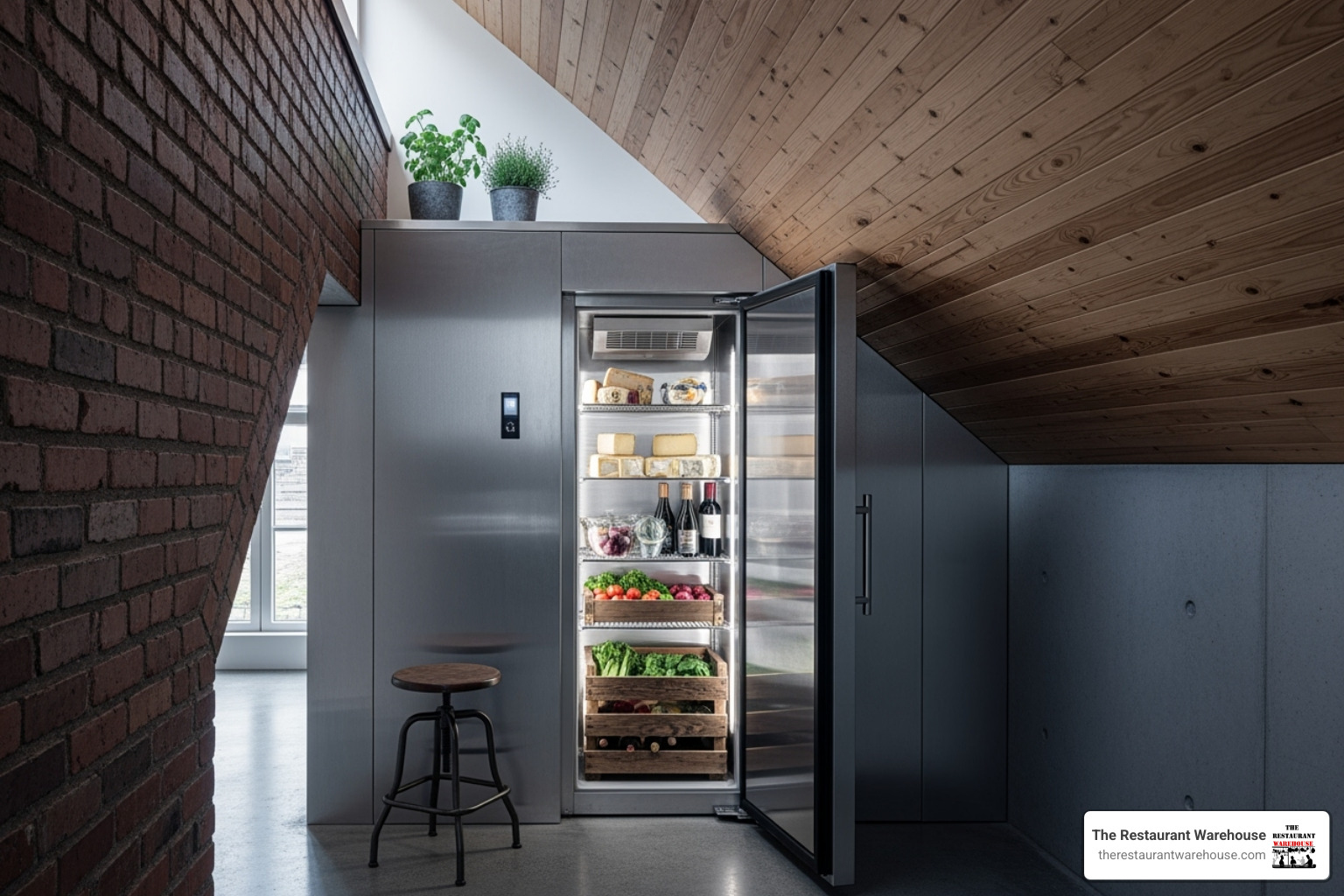
Whether you're launching a new venture on a tight budget or designing a high-volume facility with unique requirements, understanding your purchasing and financing options is the final step in acquiring the right cold storage solution.
New vs. Used: Weighing the Pros and Cons
When investing in walk in cooler refrigeration, one of the first decisions is whether to buy new or used equipment.
New units offer the most significant long-term advantages. They come with a full manufacturer's warranty covering parts and often labor, providing crucial peace of mind and protection against unexpected repair costs. You get the latest, most energy-efficient technology, including DOE-compliant components that translate directly to lower monthly utility bills. A new unit also gives you the freedom to choose the exact dimensions, system type, and features that fit your operation perfectly, ensuring optimal performance from day one.
Used equipment has the primary appeal of a lower initial purchase price, which can be a major benefit for new businesses or those with limited capital. However, this upfront saving comes with significant risks. You often have no knowledge of the unit's history, how it was maintained, or if there are underlying problems. An older unit will almost certainly be less energy-efficient, and any initial savings can be quickly erased by higher electric bills and expensive repair costs. Most used units are sold "as-is" without a warranty, leaving you fully responsible for any failures. If you must consider a used unit, work only with a reputable dealer who inspects and refurbishes their equipment. Be sure to personally inspect the panels for damage, check the age of the condensing unit, and verify the condition of the door and gaskets.
Leasing vs. Buying: A Financial Decision
Beyond the new-versus-used debate is the question of how to finance the acquisition.
Buying a unit outright means it is your asset. This is a capital expenditure that can be depreciated over time for tax benefits. You have full control over the equipment and can modify or sell it as you see fit. The downside is the large upfront cash outlay, which can strain the budget of a new or growing business.
Leasing a walk-in offers an alternative with a much lower barrier to entry. Instead of a large purchase price, you pay a fixed monthly fee over a set term. This preserves your capital for other essential needs like inventory or marketing. Many lease agreements also include maintenance and service, simplifying your operational responsibilities. At the end of the lease term, you may have the option to buy the equipment at a reduced price, renew the lease, or upgrade to a new unit. The primary disadvantage is that the total cost over the lease term is typically higher than the purchase price, and you do not own the asset.
The Advantage of Custom-Designed Walk In Cooler Refrigeration
While standard-sized walk-ins work for many applications, sometimes your space or workflow demands a non-standard approach. This is where custom-designed walk in cooler refrigeration solutions provide immense value.
A custom walk-in can be built to fit perfectly into an awkward, L-shaped, or irregularly shaped space, maximizing your usable square footage and turning a challenging area into a productive asset. This is invaluable when every inch of your facility counts. Customization also allows you to incorporate specialized features tailored to your specific workflow, such as:
- Glass display doors for retail or customer-facing applications.
- Specialized shelving and floor reinforcement for heavy items like kegs.
- Combo cooler/freezer units that share an insulated interior wall for improved energy efficiency.
- Multiple compartments with separate temperature zones, all accessible from a common vestibule.
While custom units typically have a higher upfront cost and longer lead time than standard models, the investment is often justified by superior workflow efficiency, optimized space utilization, and functionality that perfectly matches your business needs.
Find the Best Refrigeration for Your Business
Choosing the right walk in cooler refrigeration system is a major step. To ensure you're making the most informed choice, it's important to understand all your options. Ready to find the perfect solution? Explore our comprehensive buyer's guide to make an informed decision for your business.
Conclusion
Your walk in cooler refrigeration unit is more than a storage box; it is the heart of your foodservice operation. It protects thousands of dollars in inventory, ensures the quality and safety of your food, and supports a smooth workflow. Making a thoughtful investment in the right system pays dividends for years to come.
Throughout this guide, we've covered the critical factors in this decision. We've explored how system type, size, and placement impact your operations and budget. We've detailed the importance of quality construction, energy efficiency, and proper maintenance for extending the life of your equipment. Most importantly, we've highlighted how a reliable walk-in is your first line of defense in food safety. Whether you choose a new, used, or custom solution, making an informed decision is key to your success.
At The Restaurant Warehouse, we are committed to providing high-quality walk in cooler refrigeration solutions at wholesale prices. We understand that every business has unique needs, and our goal is to help you find the perfect fit without the high retail overhead. We're here to provide the guidance and support you need to choose wisely.
Ready to take the next step? Contact us today to get a personalized quote on the walk-in refrigeration system that's right for your business. Our team is ready to help you make a smart investment in your operation's future.
About The Author

Sean Kearney
Sean Kearney used to work at Amazon.com and started The Restaurant Warehouse. He has more than 10 years of experience in restaurant equipment and supplies. He graduated from the University of Washington in 1993. He earned a BA in business and marketing. He also played linebacker for the Huskies football team. He helps restaurants find equipment at a fair price and offers financing options. You can connect with Sean on LinkedIn or Facebook.
Leave a comment