
Commercial Deep Fryers
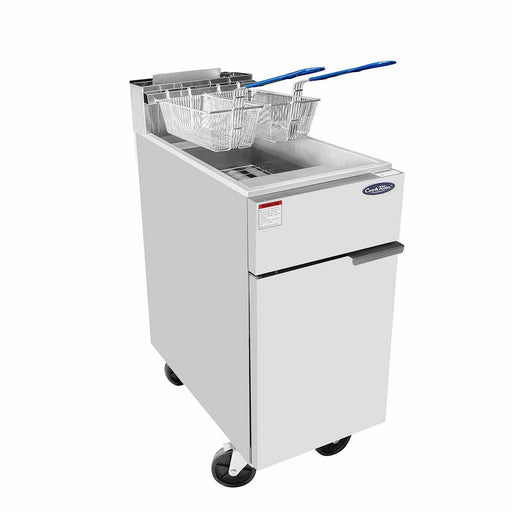
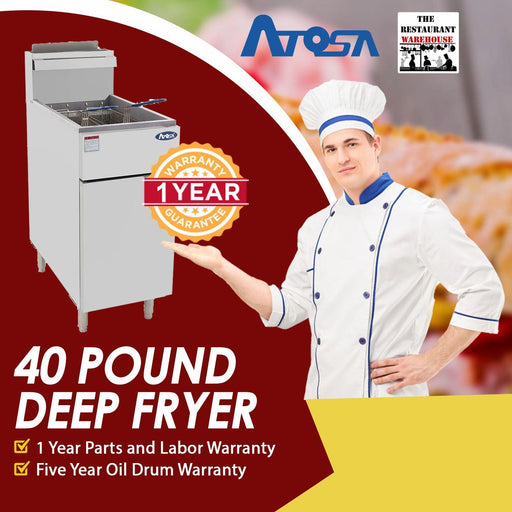
Atosa ATFS-40 40 lb Natural Gas Deep Fryer
Atosa
Original price
$1,481.00
Original price
$1,481.00
-
Original price
$1,481.00
Original price
$1,481.00
Current price
$1,068.00
$1,068.00
-
$1,068.00
Current price
$1,068.00
Atosa ATFS-40 40 lb Commercial Natural Gas Deep Fryer Powerful. Efficient. Built for peak performance. The Atosa ATFS-40 Natural Gas Deep Fryer ...
View full details
Original price
$1,481.00
Original price
$1,481.00
-
Original price
$1,481.00
Original price
$1,481.00
Current price
$1,068.00
$1,068.00
-
$1,068.00
Current price
$1,068.00
Save 28%
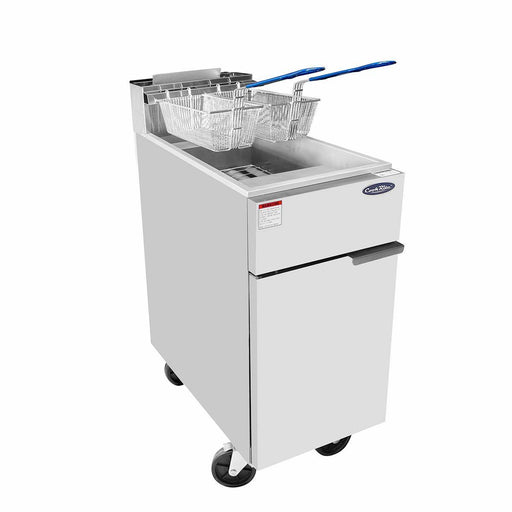
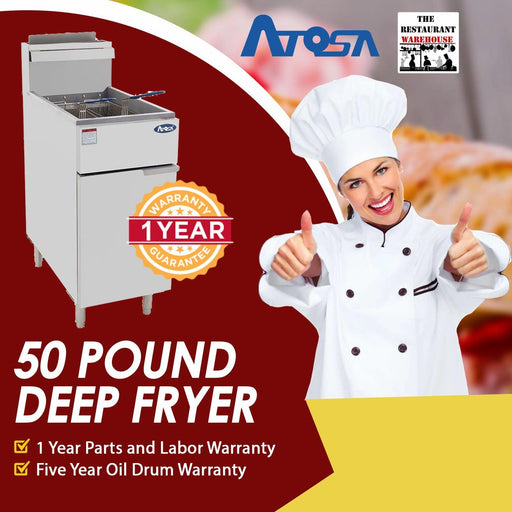
Atosa ATFS-50 Heavy Duty 50 LB Stainless Steel Deep Fryer - Natural Gas
Atosa
Original price
$1,861.00
Original price
$1,861.00
-
Original price
$1,861.00
Original price
$1,861.00
Current price
$1,341.00
$1,341.00
-
$1,341.00
Current price
$1,341.00
Atosa ATFS-50 50 lb Commercial Natural Gas Deep Fryer Serious frying capacity for restaurants, sports bars, and high-demand kitchens. The Atosa ...
View full details
Original price
$1,861.00
Original price
$1,861.00
-
Original price
$1,861.00
Original price
$1,861.00
Current price
$1,341.00
$1,341.00
-
$1,341.00
Current price
$1,341.00
Save 28%
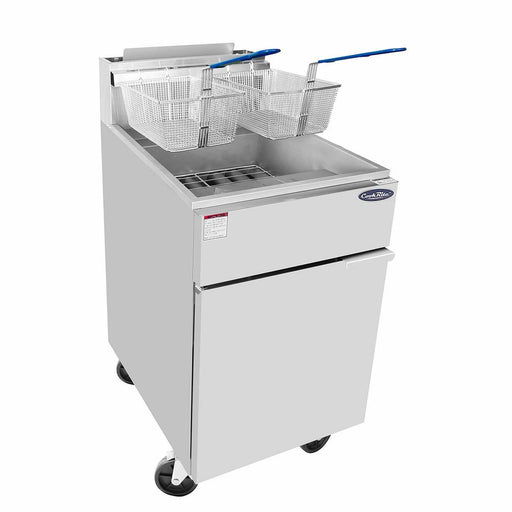
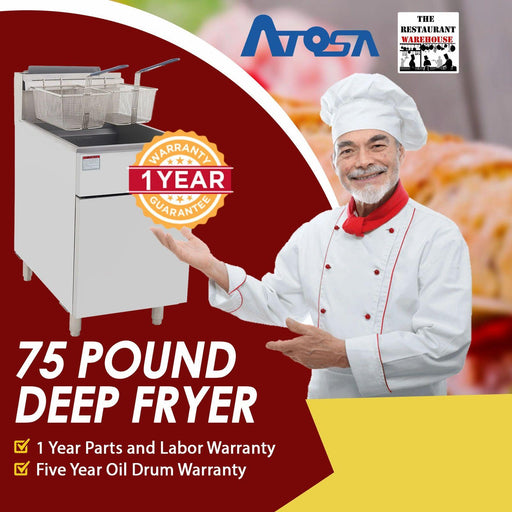
Atosa ATFS-75 Heavy Duty 75 LB Stainless Steel Deep Fryer - Natural Gas
Atosa
Original price
$2,182.00
Original price
$2,182.00
-
Original price
$2,182.00
Original price
$2,182.00
Current price
$1,573.00
$1,573.00
-
$1,573.00
Current price
$1,573.00
Atosa ATFS-75 75 lb Commercial Natural Gas Deep Fryer High-capacity frying power for serious commercial kitchens. The Atosa ATFS-75 Natural Gas ...
View full details
Original price
$2,182.00
Original price
$2,182.00
-
Original price
$2,182.00
Original price
$2,182.00
Current price
$1,573.00
$1,573.00
-
$1,573.00
Current price
$1,573.00
Save 28%
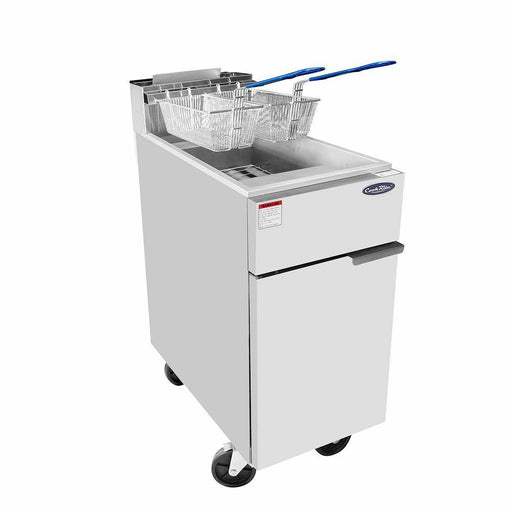
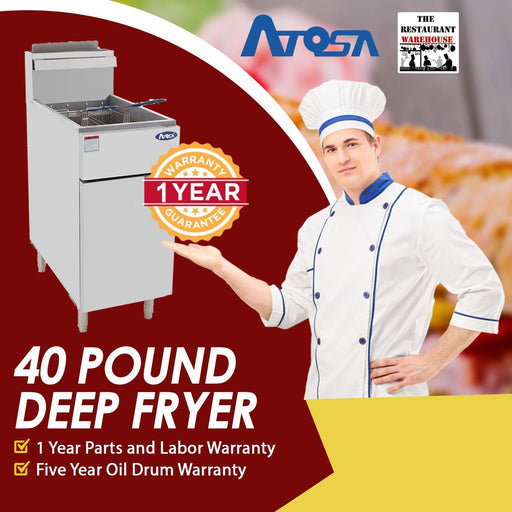
Atosa ATFS-40 Heavy Duty 40 LB Stainless Steel Deep Fryer - Propane
Atosa
Original price
$1,481.00
Original price
$1,481.00
-
Original price
$1,481.00
Original price
$1,481.00
Current price
$1,068.00
$1,068.00
-
$1,068.00
Current price
$1,068.00
Atosa ATFS-40 40 lb Commercial Propane Deep Fryer Reliable frying power for busy kitchens and food trucks. The Atosa ATFS-40 Propane Deep Fryer ...
View full details
Original price
$1,481.00
Original price
$1,481.00
-
Original price
$1,481.00
Original price
$1,481.00
Current price
$1,068.00
$1,068.00
-
$1,068.00
Current price
$1,068.00
Save 28%
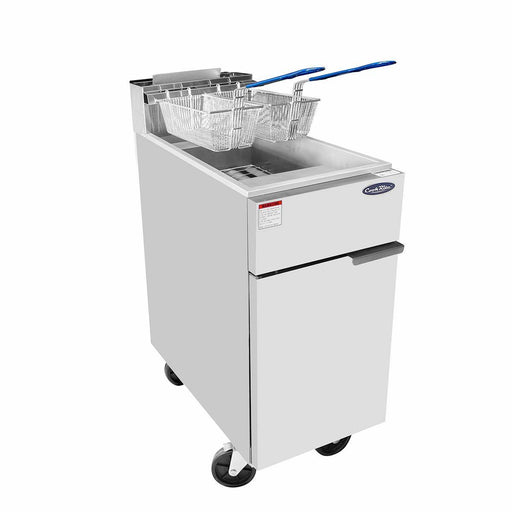
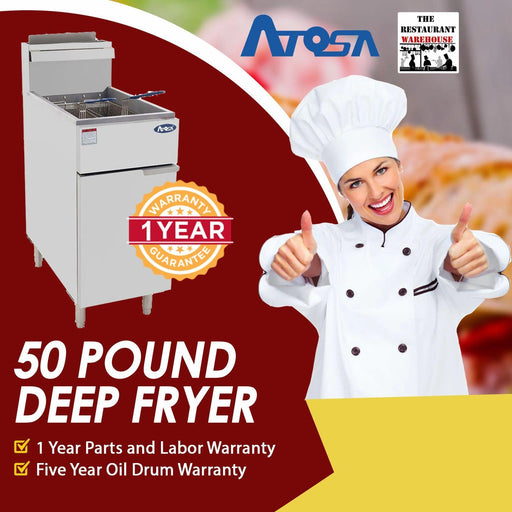
Atosa ATFS-50 Heavy Duty 50 LB Stainless Steel Deep Fryer - Propane
Atosa
Original price
$1,861.00
Original price
$1,861.00
-
Original price
$1,861.00
Original price
$1,861.00
Current price
$1,341.00
$1,341.00
-
$1,341.00
Current price
$1,341.00
Atosa ATFS-50 50 lb Commercial Propane Deep Fryer Built for serious frying power in food trucks and commercial kitchens. The Atosa ATFS-50 Propa...
View full details
Original price
$1,861.00
Original price
$1,861.00
-
Original price
$1,861.00
Original price
$1,861.00
Current price
$1,341.00
$1,341.00
-
$1,341.00
Current price
$1,341.00
Save 28%
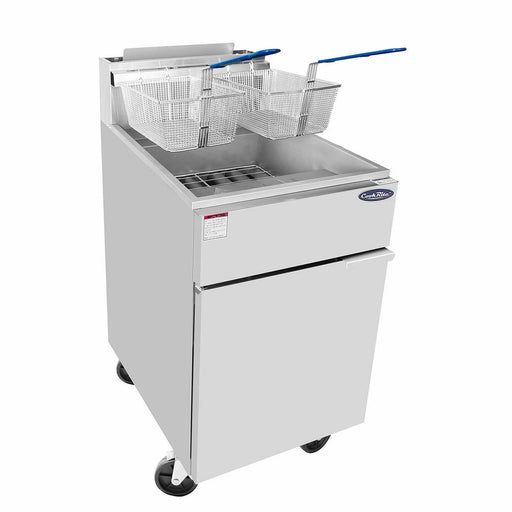
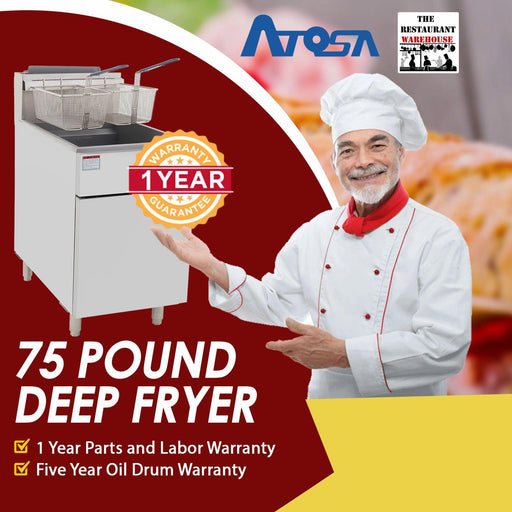
Atosa ATFS-75 Heavy Duty 75 LB Stainless Steel Deep Fryer - Propane
Atosa
Original price
$2,182.00
Original price
$2,182.00
-
Original price
$2,182.00
Original price
$2,182.00
Current price
$1,573.00
$1,573.00
-
$1,573.00
Current price
$1,573.00
Atosa ATFS-75 75 lb Commercial Propane Deep Fryer Maximum output for high-volume kitchens. The Atosa ATFS-75 Propane Gas Deep Fryer is built for...
View full details
Original price
$2,182.00
Original price
$2,182.00
-
Original price
$2,182.00
Original price
$2,182.00
Current price
$1,573.00
$1,573.00
-
$1,573.00
Current price
$1,573.00
Save 28%

Atosa WA300001 Hose Kit for Propane and Natural Gas Units - 48 inch
Atosa
Original price
$415.00
Original price
$415.00
-
Original price
$415.00
Original price
$415.00
Current price
$300.00
$300.00
-
$300.00
Current price
$300.00
Gas hoses are very important. They safely and efficiently deliver propane and natural gas to appliances in restaurants and food trucks. The Atosa ...
View full details
Original price
$415.00
Original price
$415.00
-
Original price
$415.00
Original price
$415.00
Current price
$300.00
$300.00
-
$300.00
Current price
$300.00
Save 28%
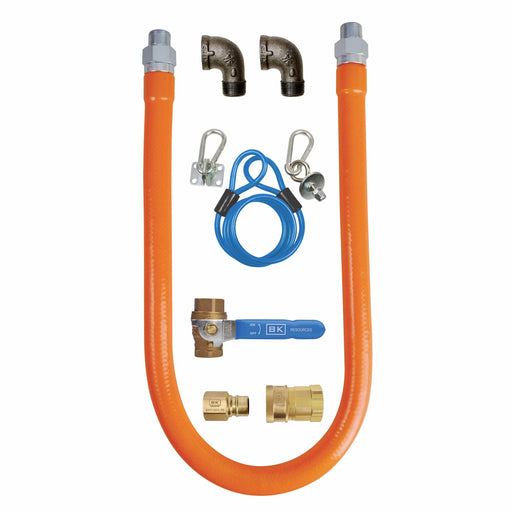
BK Resources Fryer Hose Kit for Natural Gas and Propane Deep Fryers
BK Resources
Original price
$386.00
-
Original price
$386.00
Original price
$386.00
$386.00
-
$386.00
Current price
$386.00
BK Resources Fryer Hose Kit for Natural Gas and Propane Deep Fryers (BKG-GHC-7548-SCK3, 3/4-Inch x 48-Inch, cCSAus Certified) This BK Resources ga...
View full details
Original price
$386.00
-
Original price
$386.00
Original price
$386.00
$386.00
-
$386.00
Current price
$386.00
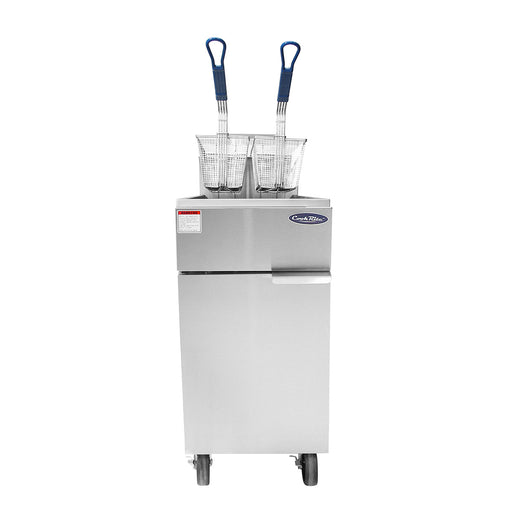
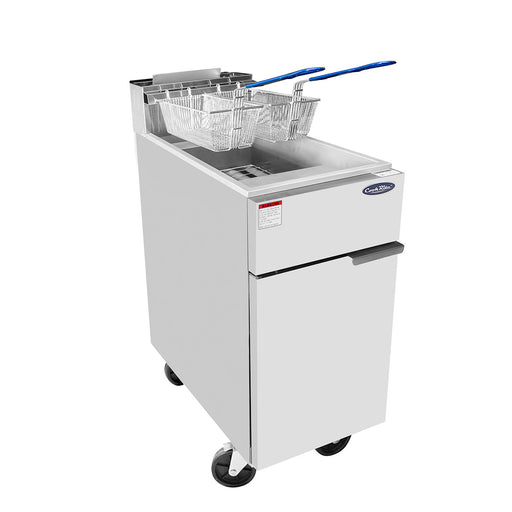
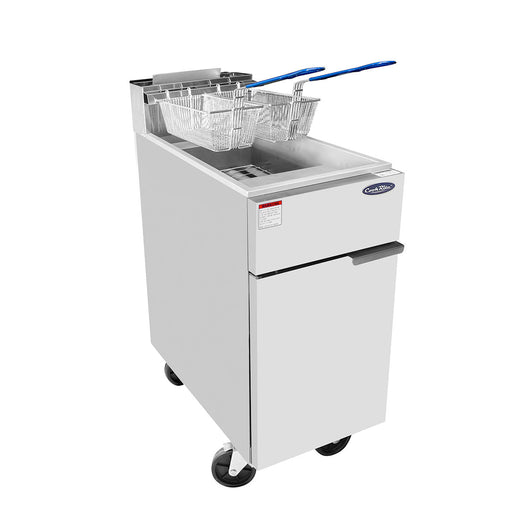
Atosa ATFS-35ES Energy Star Rated Natural Gas Deep Fryer $500 TO $750 Rebate Available
AtosaAtosa ATFS-35E 35 lb ENERGY STAR® Natural Gas Deep Fryer Lower utility bills. Faster recovery. Consistent golden results. The Atosa ATFS-35E Energ...
View full details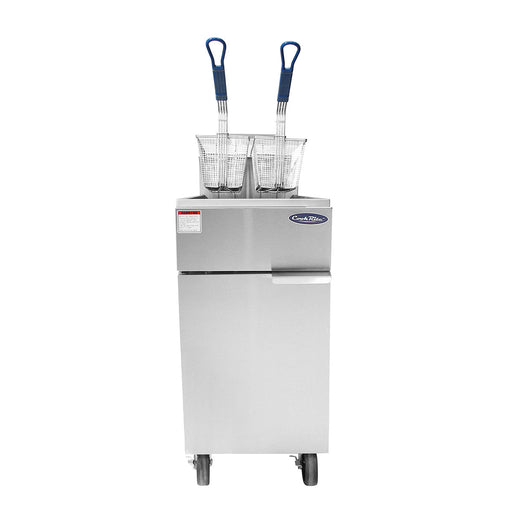
Atosa ATFS-35ES Energy Star Rated Propane Gas Deep Fryer
Atosa
Original price
$1,859.00
Original price
$1,859.00
-
Original price
$1,859.00
Original price
$1,859.00
Current price
$1,068.00
$1,068.00
-
$1,068.00
Current price
$1,068.00
Atosa ATFS-35E 35 lb ENERGY STAR® Propane Gas Deep Fryer Cut energy costs. Maximize output. Deliver consistent crispy results. The Atosa ATFS-35E ...
View full details
Original price
$1,859.00
Original price
$1,859.00
-
Original price
$1,859.00
Original price
$1,859.00
Current price
$1,068.00
$1,068.00
-
$1,068.00
Current price
$1,068.00
Save 43%


Atosa ACEF-10 10lb Electric Countertop Fryer
Atosa
Original price
$800.00
Original price
$800.00
-
Original price
$800.00
Original price
$800.00
Current price
$577.00
$577.00
-
$577.00
Current price
$577.00
Atosa ACEF-10 10 lb Electric Countertop Fryer The Atosa ACEF-10 Electric Countertop Fryer delivers professional frying performance in a compact fo...
View full details
Original price
$800.00
Original price
$800.00
-
Original price
$800.00
Original price
$800.00
Current price
$577.00
$577.00
-
$577.00
Current price
$577.00
Save 28%


Atosa ACEF-16 16lb Electric Countertop Fryer
Atosa
Original price
$1,000.00
Original price
$1,000.00
-
Original price
$1,000.00
Original price
$1,000.00
Current price
$721.00
$721.00
-
$721.00
Current price
$721.00
Atosa ACEF-16 16 lb Electric Countertop Fryer Fast, consistent frying in a compact footprint. The Atosa ACEF-16 is a commercial electric counterto...
View full details
Original price
$1,000.00
Original price
$1,000.00
-
Original price
$1,000.00
Original price
$1,000.00
Current price
$721.00
$721.00
-
$721.00
Current price
$721.00
Save 28%


Atosa ACEF-32 32lb Electric Countertop Fryer Dual Tank
Atosa
Original price
$1,750.00
Original price
$1,750.00
-
Original price
$1,750.00
Original price
$1,750.00
Current price
$1,261.00
$1,261.00
-
$1,261.00
Current price
$1,261.00
Atosa ACEF-32 32 lb Electric Countertop Fryer – Dual Tank Double your output without doubling your footprint. The Atosa ACEF-32 electric counterto...
View full details
Original price
$1,750.00
Original price
$1,750.00
-
Original price
$1,750.00
Original price
$1,750.00
Current price
$1,261.00
$1,261.00
-
$1,261.00
Current price
$1,261.00
Save 28%

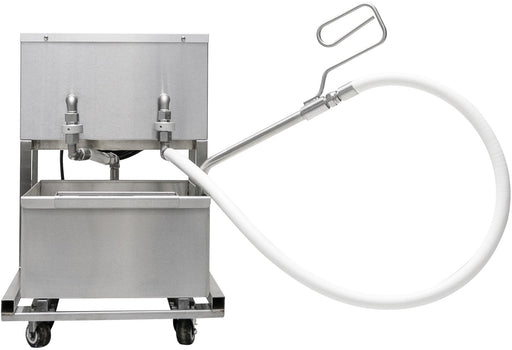
Atosa FPOF-50 50 lb. Fryer Oil Disposal Unit Portable Fryer Filter
Atosa
Original price
$3,000.00
Original price
$3,000.00
-
Original price
$3,000.00
Original price
$3,000.00
Current price
$2,162.00
$2,162.00
-
$2,162.00
Current price
$2,162.00
Atosa FPOF-50 50 lb Portable Fryer Oil Disposal Unit & Fryer Filter End the greasy mess. Improve safety. Extend your oil life. The Atosa FPOF-...
View full details
Original price
$3,000.00
Original price
$3,000.00
-
Original price
$3,000.00
Original price
$3,000.00
Current price
$2,162.00
$2,162.00
-
$2,162.00
Current price
$2,162.00
Save 28%


Atosa FPOF-80 80 lb. Fryer Oil Disposal Unit Portable Fryer Filter
Atosa
Original price
$4,800.00
Original price
$4,800.00
-
Original price
$4,800.00
Original price
$4,800.00
Current price
$3,459.00
$3,459.00
-
$3,459.00
Current price
$3,459.00
Atosa FPOF-80 80 lb Portable Fryer Oil Disposal Unit & Fryer Filter Stop wasting fryer oil. Eliminate messy cleanups. Protect your kitchen sta...
View full details
Original price
$4,800.00
Original price
$4,800.00
-
Original price
$4,800.00
Original price
$4,800.00
Current price
$3,459.00
$3,459.00
-
$3,459.00
Current price
$3,459.00
Save 28%

Atosa 21201001019 Fryer Cover for ATFS-40/50 with Stainless Steel Handle
Atosa Parts
Original price
$93.00
-
Original price
$93.00
Original price
$93.00
$93.00
-
$93.00
Current price
$93.00
Atosa 21201001019 Fryer Cover for ATFS-40 / ATFS-50 The Atosa 21201001019 Fryer Cover is designed to protect the oil in your ATFS-40 and ATFS-50 c...
View full details
Original price
$93.00
-
Original price
$93.00
Original price
$93.00
$93.00
-
$93.00
Current price
$93.00
Atosa 21201003015 Fryer Cover for ATFS-75 with Stainless Steel Handle
Atosa Parts
Original price
$119.00
-
Original price
$119.00
Original price
$119.00
$119.00
-
$119.00
Current price
$119.00
Atosa 21201003015 Fryer Cover for ATFS-75 with Stainless Steel Handle The Atosa 21201003015 Fryer Cover is designed specifically for the ATFS-75 c...
View full details
Original price
$119.00
-
Original price
$119.00
Original price
$119.00
$119.00
-
$119.00
Current price
$119.00

Atosa 21101001047 Fryer Splash Guard for ATFS Series
Atosa Parts
Original price
$88.00
-
Original price
$88.00
Original price
$88.00
$88.00
-
$88.00
Current price
$88.00
Atosa 21101001047 Fryer Splash Guard for ATFS Series The Atosa 21101001047 Fryer Splash Guard is designed to enhance safety and cleanliness in com...
View full details
Original price
$88.00
-
Original price
$88.00
Original price
$88.00
$88.00
-
$88.00
Current price
$88.00

Atosa FP-1324-5 Filter Paper for FPOF-50, 13-1/2"x24" (100 Sheets/Box)
Atosa Parts
Original price
$125.00
-
Original price
$125.00
Original price
$125.00
$125.00
-
$125.00
Current price
$125.00
Atosa FP-1324-5 Fryer Filter Paper for FPOF-50 (13-1/2" x 24") – 100 Sheets per Box The Atosa FP-1324-5 Filter Paper is designed for efficient oil...
View full details
Original price
$125.00
-
Original price
$125.00
Original price
$125.00
$125.00
-
$125.00
Current price
$125.00
Atosa FP-1728-5 Filter Paper for FPOF-50, 17-1/2"x28" (100 Sheets/Box)
Atosa Parts
Original price
$150.00
-
Original price
$150.00
Original price
$150.00
$150.00
-
$150.00
Current price
$150.00
Atosa FP-1728-5 Fryer Filter Paper for FPOF-50 (17-1/2" x 28") – 100 Sheets per Box Keep your fryer oil cleaner, longer with Atosa FP-1728-5 Filte...
View full details
Original price
$150.00
-
Original price
$150.00
Original price
$150.00
$150.00
-
$150.00
Current price
$150.00

Atosa ATTAB1 Fryer Boil Out Tabs (50/Pail)
Atosa Parts
Original price
$350.00
-
Original price
$350.00
Original price
$350.00
$350.00
-
$350.00
Current price
$350.00
Atosa ATTAB1 Fryer Boil Out Tabs (50 Tablets per Pail) Atosa ATTAB1 Fryer Boil Out Tabs are specially formulated cleaning tablets designed to deep...
View full details
Original price
$350.00
-
Original price
$350.00
Original price
$350.00
$350.00
-
$350.00
Current price
$350.00

Atosa 21101001046 Fryer Connector Strip for ATFS Series
Atosa
Original price
$61.00
-
Original price
$61.00
Original price
$61.00
$61.00
-
$61.00
Current price
$61.00
Atosa 21101001046 Fryer Connector Strip for ATFS Series The Atosa 21101001046 Fryer Connector Strip is designed to securely connect two Atosa ATFS...
View full details
Original price
$61.00
-
Original price
$61.00
Original price
$61.00
$61.00
-
$61.00
Current price
$61.00

Omcan CE-CN-0125 Fryer For Funnel Cake and Donut - Natural Gas
OmcanOmcan’s CE-CN-0125 Natural Gas Fryer is engineered for high-volume frying, ideal for commercial kitchens, carnivals, and food festivals. Its powerf...
View full detailsOmcan CE-CN-0170 Fryer For Funnel Cake and Donut - Natural Gas
OmcanOmcan’s CE-CN-0125 Natural Gas Fryer is engineered for high-volume frying, ideal for commercial kitchens, carnivals, and food festivals. Its powerf...
View full details
Omcan CE-CN-0040 40 lb. Fryer Electric Floor Model - 240v/60/3-ph, 34 amps
OmcanThe Omcan CE-CN-0040 is a robust 40 lb. electric floor fryer designed for high-volume commercial kitchens. Operating at 240 volts, 60 Hz, and 3-pha...
View full detailsOmcan CE-CN-0040-208-3 40 lb. Fryer Electric Floor Model - 208v/60/3-ph, 34 amps
OmcanThe Omcan CE-CN-0040-208-3 is a robust 40 lb. electric floor fryer designed for high-volume commercial kitchens. Operating at 208 volts, 60 Hz, and...
View full detailsOmcan CE-CN-0040-240-1 40 lb. Fryer Electric Floor Model - 240v/60/1-ph, 59 amps
OmcanThe Omcan CCE-CN-0040-240-1 is a robust 40 lb. electric floor fryer designed for high-volume commercial kitchens. Operating at 240 volts, 60 Hz, an...
View full detailsOmcan CE-CN-0040-208-1 40 lb. Fryer Electric Floor Model - 208v/60/1-ph, 59 amps
OmcanThe Omcan CCE-CN-0040-240-1 is a robust 40 lb. electric floor fryer designed for high-volume commercial kitchens. Operating at 208 volts, 60 Hz, an...
View full details
Commercial Deep Fryers: The Complete Buyer's Guide
Commercial deep fryers are the engine room of any kitchen pushing fries, wings, chicken, donuts, fish, tempura, onion rings, or funnel cakes. The right deep fryer holds temperature through a 50-order rush, recovers fast after a frozen-product drop, keeps oil clean shift after shift, and never becomes the bottleneck on your line. The wrong fryer drags ticket times, burns through cooking oil, sends utility bills up, and turns into a safety liability.
This page consolidates our complete commercial deep fryer buying guidance: gas vs electric, capacity by oil weight, BTU and wattage sizing, the four fryer types, ventless setups, cost tiers, energy efficiency, oil management, safety, daily and weekly cleaning, common buying mistakes, and the residential-vs-commercial line every operator needs to understand.
Browse the full commercial deep fryer lineup to compare capacities, fuel types, and configurations.
Three Questions That Drive Every Fryer Spec
Every commercial fryer decision starts with three questions:
- How much fried food do you sell during your busiest hour
- What does your menu look like (lightly breaded vs heavily battered vs wet-batter vs pressure-cooked chicken)
- What utility hookups exist in your space (natural gas, propane, dedicated 208V/240V circuits, hood ventilation)
Answer those three and the rest of the spec sheet falls into place. Get any one of them wrong and the fryer either overspends on capacity you never use or chokes during peak service.
Commercial Grade vs Residential: What Actually Separates Them
Commercial deep fryers are built to a different standard than residential countertop units. The vat is heavier-gauge stainless steel. The burners or heating elements are sized for continuous duty across an 8-12 hour service day. The temperature controls hold a tight setpoint under load. The unit is NSF-certified for foodservice use, a requirement most local health departments check during inspection. Commercial fryers are deeper than residential models so hot oil stays contained during a vigorous boil, and they include high-limit safety shut-offs that interrupt heat if oil exceeds rated temperature.
A 1,500-watt residential countertop fryer cannot replace a 90,000 BTU commercial gas unit. The duty cycle, safety architecture, NSF certification, and parts availability are not the same. Insurance carriers routinely deny claims for kitchen fires traced to residential fryers used in commercial service.
Gas vs Electric Commercial Deep Fryers
This is the first hard decision. Gas commercial deep fryers (natural gas or liquid propane) deliver raw heat output measured in BTUs and recover oil temperature faster than equivalent electric units. A 90,000 BTU gas fryer drops a basket of frozen fries and is back at 350°F in under 90 seconds. An electric fryer of the same tank size typically recovers in 2-3 minutes.
Electric fryers win on install simplicity (no gas line, no combustion), on temperature precision, and on ghost-kitchen and low-volume applications. Gas fryers win on high-volume throughput and per-BTU operating cost.
- Gas fryers - natural gas or propane; highest BTU output; fastest recovery; best for volume above 150 orders/day; require gas line and Type I hood
- Electric fryers - precise temperature control; easier install (208V or 240V); no combustion; ideal for lower-volume sites, ghost kitchens, locations without gas
- Countertop electric fryers - 10-32 lb capacity, plug-in convenience, great for concession, food trucks, and low-throughput back-of-house frying
The Four Types of Commercial Deep Fryers
Open-Pot Fryers
Fully open tank with a cold zone at the bottom that traps sediment out of the active heat zone. Easiest to clean, most versatile, best for lightly breaded foods, french fries, and fish. Most Atosa ATFS units are open-pot. Cool zone extends oil life 30-50% versus flat-bottom in a mixed menu.
Tube-Style Fryers
Heat-exchanger tubes run through the oil for higher BTU transfer and faster recovery. Best for heavy chicken and dense breading volume where recovery time makes or breaks throughput. Tubes trap sediment and require more scrupulous filtering than open-pot.
Flat-Bottom Fryers
No cool zone, designed for tempura, wet-batter items, funnel cakes, and delicate battered products where sediment must stay suspended so batter can float freely on the surface. Do not use for breaded items: crumbs burn on the bottom and destroy oil in hours.
Pressure Fryers
Sealed lid raises boiling point, delivers a distinctive bone-in chicken texture, cooks faster than atmospheric fryers. Used almost exclusively for fried chicken concepts. Higher cost, more maintenance, tighter safety envelope.
Fryer Type by Menu
| Menu | Fryer Type | Capacity | Why |
|---|---|---|---|
| French fries, wings, lightly breaded | Open-pot | 35-50 lb | Cool zone catches crumbs, easy to clean |
| Fried chicken high-volume | Tube-style | 50-75 lb | Heavy breading, fast recovery, deep cool zone |
| Donuts, funnel cakes, churros | Flat-bottom | 30-50 lb | Wet batter floats freely, even surface heat |
| QSR chicken concept | Pressure | 30-50 lb | Sealed chamber, faster cook, juicier product |
| Tempura and light Asian batters | Flat-bottom | 30-40 lb | No tubes to snag, no crumb burn |
| Mixed menu (general purpose) | Open-pot, multi-tank | 2 x 40 lb | Separate vats prevent flavor crossover |
Sizing a Commercial Deep Fryer: BTU, Watts, Capacity, Recovery
BTU and Wattage Sizing
- Gas: 25,000 to 35,000 BTU per pound of oil capacity is the industry benchmark. A 40 lb fryer runs 90,000-100,000 BTU. A 75 lb fryer runs 170,000-190,000 BTU.
- Electric: 3,500 to 4,500 watts per gallon of oil (about 8 lb per gallon). A 40 lb electric floor unit needs 18-22 kW on 208V or 240V three-phase.
Capacity by Oil Weight (Deep Fryer Size Chart)
- 40 lb deep fryers - small kitchens, food trucks, brunch spots, under 150 orders/day
- 50 lb deep fryers - standard restaurant workhorse, 150-300 orders/day
- 75 lb deep fryers - high-volume operations, chicken concepts, 300+ orders/day
Match oil capacity to roughly 1.5-2x your peak hourly fried-food weight in pounds. Undersize and you choke through Saturday night. Oversize and you spend on gas or electricity heating oil you never fully use.
Recovery Time and Why It Matters
Recovery time is the seconds it takes the fryer to return to setpoint after a full basket drop. Aim for under 90 seconds. Recovery gates your ticket time more than raw capacity does: a 50 lb fryer that recovers in 60 seconds beats a 75 lb fryer that recovers in 3 minutes on the same order flow, every time.
Compare Fryer Options by Fuel and Configuration
- Atosa Deep Fryers - full ATFS line, 35/40/50/75 lb, natural gas and propane
- Electric Deep Fryers
- Countertop Fryers
- Propane Deep Fryers
- Natural Gas Deep Fryers
- ENERGY STAR Deep Fryers - utility rebates up to $750
- Ventless Air Fryers
- Donut Fryers
- Fryer Oil Filtration Systems
- Fryer Filter Paper
Featured Deep Fryer Models
- Atosa ATFS-40 Natural Gas 40 lb Fryer - everyday restaurant workhorse, 102,000 BTU, single tank
- Atosa ATFS-50 Natural Gas 50 lb Fryer - mid-volume standard, 125,000 BTU
- Atosa ATFS-75 Natural Gas 75 lb Fryer - high-volume chicken and heavy breading, 170,000 BTU
- Atosa ATFS-40 Propane 40 lb Fryer - food trucks and mobile units
- Atosa ATFS-50 Propane 50 lb Fryer
- Atosa ATFS-75 Propane 75 lb Fryer
- Atosa ATFS-35ES ENERGY STAR Natural Gas Fryer - $500-$750 rebate eligible
- Atosa ATFS-35ES ENERGY STAR Propane Fryer
- Atosa ACEF-10 10 lb Electric Countertop Fryer
- Atosa ACEF-16 16 lb Electric Countertop Fryer
- Atosa ACEF-32 32 lb Electric Countertop Dual-Tank Fryer
Oil Management: Filtration, Smoke Points, and TPM
Fryer oil is the single largest ongoing cost after labor. Filter daily and boil out weekly and you double oil life, extend fryer service life, and deliver cleaner-tasting food.
Built-In Oil Filtration: Worth Every Dollar
Built-in filtration adds $500-$1,500 to a fryer purchase and returns $5,000-$10,000 per year in reduced oil consumption. It also cuts labor: dedicated portable filter time drops from 15-20 minutes per fryer to a 2-minute integrated cycle. Portable units like the Atosa FPOF-50 and Atosa FPOF-80 serve multiple fryers on a rolling basis and pay for themselves inside 60-90 days at typical oil prices.
Cooking Oil: Smoke Points, Allergens, Cross-Contamination
- Canola: 400°F smoke point, neutral flavor, low cost, most common
- Peanut: 450°F, longer life, distinctive flavor; allergen risk requires menu disclosure
- High-oleic sunflower or soybean: 440°F, long life, allergen-safe, premium cost
- Beef tallow (regional QSR): 400°F, iconic flavor, higher saturated fat, cross-contamination with dairy allergens
Cleaning Schedule
- Daily - skim crumbs every 15-20 minutes during service; filter oil through a portable filter at end of shift; wipe exterior
- Weekly - boil out the tank with a fryer cleaning solution (Atosa ATTAB1 boil-out tabs, 50/pail) to remove polymerized oil from tank walls and heating tubes
- Monthly - inspect burner assemblies, high-limit switch, thermostat calibration, drain valve seat, gas connections
Track Total Polar Materials (TPM) with an oil quality meter. When TPM crosses 24-27%, oil is degraded past the point where filtering will save it and must be dumped. Filtered daily, most fryers deliver 5-10 days of oil life. Unfiltered, 2-3 days.
Fuel, Ventilation, and the Air Fryer Question
Natural Gas vs Liquid Propane (LP)
Same fryer, different orifice. Natural gas is cheapest per BTU, requires a permanent gas line (typically 6-7" WC line pressure). Propane is portable, ideal for food trucks and outdoor kitchens, uses higher-pressure regulator (typically 11" WC). Manufacturer conversion kits are available in both directions but installation must be done by a qualified gas tech to preserve warranty and code compliance.
Ventless Commercial Deep Fryers
A small subset of electric fryers with integrated filtration and vapor capture qualify as UL 710B ventless and can operate without a Type I hood. Real-world constraints: capacity is limited to 10-20 lb, throughput is low, and the built-in filter system adds ongoing consumable cost. Useful for ghost kitchens, kiosks, hotel amenity spaces, and any application where hood installation is impossible or cost-prohibitive.
Why Residential Air Fryers Don't Belong in Commercial Kitchens
Residential air fryers are not NSF-certified, are not built for continuous duty, do not meet insurance carrier requirements for foodservice equipment, and fail within weeks under real commercial use. Commercial air fryers exist (see the ventless air fryer collection) and are the correct alternative for a hoodless operation.
Cost, ENERGY STAR, and Total Cost of Ownership
Cost Tiers for Commercial Deep Fryers
- Entry: $1,000-$2,000 - 35-40 lb single-tank gas or electric
- Mid: $2,000-$3,500 - 50-75 lb gas with dual baskets
- Premium: $3,500-$8,000 - high-efficiency tube-style or built-in filtration
- Pressure/specialty: $5,000-$15,000 - bone-in chicken concepts, high-throughput QSR
Energy Efficiency and ENERGY STAR
ENERGY STAR rated gas fryers use about 35% less energy than baseline models and can qualify for utility rebates of $500-$750 per unit. Over a 7-year fryer life, a $2,500 ENERGY STAR unit typically beats a $1,500 baseline unit by $3,000-$5,000 in energy savings plus rebate value. Non-certified gas fryers waste 35-50% of input BTU up the flue; ENERGY STAR units use insulated tanks, high-efficiency burners, and heat recovery to keep more of that heat in the oil.
Common Buying Mistakes
- Picking a fryer that doesn't match the menu - open-pot for fried chicken burns sediment fast; flat-bottom for breaded items has no cool zone; pressure for low-volume is over-spec.
- Skipping built-in or portable filtration - saves $500-$1,500 upfront, costs $5,000-$10,000/year in oil over the fryer's life.
- Underspeccing capacity - a 25 lb countertop in a kitchen that needs 40 lb floor capacity will choke on the first weekend rush.
- Ignoring ENERGY STAR - non-certified units waste 35-50% of input BTU. Over 5 years, wasted gas exceeds the price gap.
- Skipping warranty fine print - some fryers carry parts-only; some include one year of labor; some exclude pressure components. Repair calls run $200-$400 minimum.
- Buying residential equipment for commercial use - NSF, insurance, duty cycle, and safety architecture all break.
- Ignoring gas line size - plugging a 90,000 BTU unit into a starved 1/2" line means the fryer never hits setpoint or recovers.
Installation, Ventilation, and Compliance
Commercial deep fryer installation requires a qualified gas technician (gas units) or licensed electrician (electric units), a Type I grease hood with correct CFM rating, an Ansul R-102 or equivalent fire-suppression system tied into the hood, and a shutoff valve within 6 feet of the unit. Every fryer must be NSF-listed for foodservice use. Health department inspections check NSF marks, hood coverage, fire suppression, and grease trap plumbing on any commercial fryer install.
Fryer Accessories and Consumables
- BK Resources Fryer Hose Kit - natural gas and propane
- Atosa WA300001 48 inch Hose Kit
- BK Resources CP-7548-SCK3 Gas Hose Connector Kit
- Atosa Fryer Cover for ATFS-40/50
- Atosa Fryer Cover for ATFS-75
- Atosa Splash Guard for ATFS Series
- Atosa Fryer Connector Strip for ATFS Series
- Atosa Filter Paper 13-1/2 x 24 (100 sheets)
- Atosa Filter Paper 17-1/2 x 28 (100 sheets)
- Atosa ATTAB1 Fryer Boil-Out Tabs (50/pail)
Fryer Buying Resources
- Atosa Fryer Troubleshooting Guide
- How to Boil Out a Fryer
- Food Truck Fryer Guide
- Outdoor Deep Fryer Guide
- Donut Fryer Guide
- 40 lb Gas Fryer Review
- 50 lb Fryer Review
- Commercial Air Fryer Guide
- Food Truck Fryer Setup Guide
Frequently Asked Questions About Commercial Fryers
What size commercial fryer do I need?
Match oil capacity to 1.5-2x your peak hourly fried-food weight in pounds. A 150-orders-per-day restaurant runs on a 50 lb fryer. A 300+ chicken concept needs 75 lb tube-style or dual units.
Gas vs electric fryer: which is better?
Gas fryers deliver higher BTU output and faster recovery for high-volume kitchens. Electric fryers offer precise temperature control and simpler installation for lower-volume sites or locations without a gas line.
How much is a commercial deep fryer?
Entry units run $1,000-$2,000 (35-40 lb single-tank), mid-tier $2,000-$3,500 (50-75 lb gas with dual baskets), premium $3,500-$8,000 (high-efficiency, tube-style, or built-in filtration), and pressure or specialty $5,000-$15,000.
How often should fryer oil be filtered?
Filter fryer oil daily at end of service. Boil out with cleaning solution weekly. This routine doubles oil life and protects flavor. Track TPM with an oil quality meter and dump at 24-27%.
What foods are cooked in a commercial fryer?
French fries, fried chicken, wings, seafood, breaded appetizers, tempura, funnel cakes, donuts, churros. Menu composition drives fryer type: chicken and heavy breading want tube-style, delicate items want flat-bottom, everything else runs on open-pot.
Are commercial fryers energy efficient?
ENERGY STAR-rated commercial fryers use roughly 35% less energy than baseline models and can qualify for utility rebates of $500-$750 per unit. Over a 7-year life, they beat non-certified units by $3,000-$5,000 in energy savings plus rebate.
What is the difference between a countertop fryer and a floor fryer?
Countertop fryers hold 10-32 lb of oil and plug into a standard outlet, ideal for low-volume, concession, or food truck secondary station. Floor fryers hold 35-75 lb and require a dedicated gas line or 208/240V circuit, built for continuous restaurant service.
How long does a commercial deep fryer last?
A properly maintained commercial deep fryer lasts 7-10 years. Daily filtration, weekly boil-out, and annual burner inspection extend service life; skipping any of the three cuts it in half.
Do I need a hood over a commercial deep fryer?
Yes, in almost every case. Any open-oil-tank fryer requires a Type I grease hood with fire suppression. The narrow exception is UL 710B ventless electric air fryers, which are limited to 10-20 lb capacity and lower throughput.
Can I use a residential fryer in my restaurant?
No. Residential fryers are not NSF-certified, are not rated for continuous duty, void insurance coverage on any kitchen fire, and fail within weeks under commercial use.