

Combi Steam Oven 101: The Ultimate Chef's Guide
Every square foot in a commercial kitchen needs to earn its keep. Juggling multiple appliances not only takes up valuable space but also complicates your workflow. A combi steam oven addresses this challenge directly by consolidating the functions of a steamer, a proofer, and a convection oven into one efficient unit. This isn't just about saving space; it's about improving your entire process. With faster cooking times, higher food yields, and the ability to cook different dishes simultaneously without flavor transfer, it’s an investment in productivity. Here, we’ll cover how this single piece of equipment can make your kitchen more efficient and profitable.
Why a Combi Steam Oven is Your Kitchen's Secret Weapon
A combi steam oven is a versatile cooking appliance that combines three distinct cooking methods—steam, convection heat, and a combination of both—to deliver faster cooking times, superior food quality, and remarkable flexibility in a single unit. A staple in high-end kitchens, you'll likely spot one of these multifunctional workhorses reshaping how meals are prepared and served.
What makes a combi steam oven different:
- Three cooking modes in one – It functions as a steamer, a convection-style dry-heat oven, or a combination of both steam and heat.
- Cooks up to 50% faster – It significantly reduces cooking times compared to many traditional ovens while retaining crucial moisture.
- Prevents flavor transfer – You can cook different dishes simultaneously without worrying about flavors mingling.
- Replaces multiple appliances – It consolidates the functions of a steamer, a dry-heat oven, and a proofer into one compact footprint.
- Preserves food quality – Precise temperature and moisture control helps retain nutrients and natural colors.
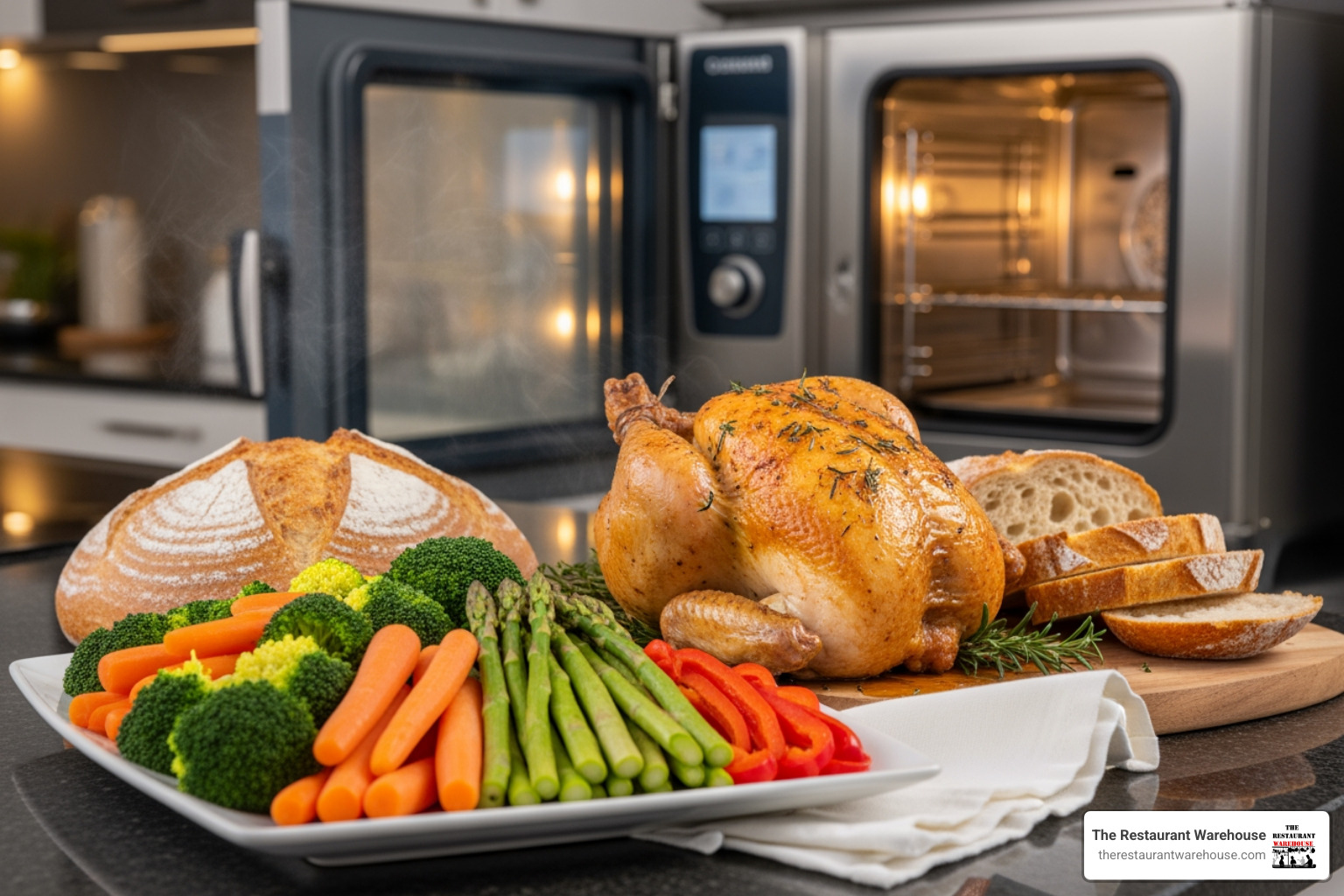
Modern combi steam ovens deliver measurable benefits that directly impact your results in any kitchen. Reduced food shrinkage means more generous portions, faster cooking times increase efficiency, and the ability to cook multiple dishes at once is a lifesaver during busy meal preps. The technology uses steam injection for gentle, moisture-rich cooking and convection-style heat for browning and crisping. When used together, you can achieve results like a perfectly juicy roasted chicken with crispy golden skin, or artisan bread with a crackling crust and tender crumb.
This guide focuses on practical, actionable information on how these ovens work, what they can do for your cooking, and how to choose the right model.
If you’re planning a kitchen upgrade or new build, you can contact us to discuss the right combi steam oven for your needs. Our team can walk you through sizes, power options, and installation details so you can move forward with confidence.
A Brief History of the Combi Oven
The combi steam oven, which feels like such a modern kitchen marvel, actually has its roots in the late 1960s. The first one was invented by a German company called Burger Eisenwerke, which is now part of Electrolux. This wasn't just a minor tweak to existing ovens; it was a revolutionary step forward in cooking technology. For the first time, chefs could use both steam and convection heat in a single unit, giving them unprecedented control over the cooking environment. This innovation laid the groundwork for the versatile appliances we see in professional kitchens today.
Over the following decades, the technology behind combi steamers has come a long way. Early models were groundbreaking, but modern versions are packed with advanced features that seriously improve cooking efficiency and food quality. For example, many contemporary combi ovens can automatically switch between cooking modes, taking the guesswork out of achieving perfect results. This level of automation and precision is why combi steamers have become a non-negotiable piece of equipment in high-end kitchens, where consistency is just as important as creativity.
As the culinary world continues to push boundaries, the combi steam oven stands out as a perfect example of how technology can transform cooking. It offers chefs and even ambitious home cooks the ability to produce exceptional dishes with greater ease and reliability. From its humble beginnings in a German workshop to its current status as a kitchen powerhouse, the combi oven's journey shows how a smart idea can completely reshape an industry. It's a tool that empowers creativity while delivering consistent, high-quality results every time.
How Does a Combi Steam Oven Actually Work?
At its heart, a combi steam oven is a master of controlled environments. Unlike a conventional oven, which primarily relies on dry heat to cook food, a combi oven introduces a crucial element: moisture. This combination of moisture (steam) and heat (convection) allows for an incredible range of cooking techniques and results that are simply not achievable with traditional methods alone.
Think of a conventional oven as a desert – hot and dry. While excellent for browning, this environment can dehydrate foods. A combi steam oven, however, can simulate a tropical rainforest, a breezy autumn day, or that same desert, all within the same cooking cavity.
The core performance advantage is its ability to precisely control both temperature and moisture. These ovens feature a specialized steam generator that injects pure steam directly into the cooking chamber. Simultaneously, a powerful fan circulates hot air evenly around the food. This dual approach ensures that heat is transferred efficiently and consistently, leading to faster cooking times and superior results. In many applications, a combi steam oven can cook up to 50% faster than traditional ovens while maintaining the food's essential moisture. This speed, combined with precise controls, accommodates a broader range of cooking techniques.
From a food safety standpoint, this precise temperature control also helps keep food in recommended safe cooking ranges, aligning with guidelines from organizations like the USDA Food Safety and Inspection Service. This is especially important when you’re cooking proteins for a large gathering or reheating previously prepared foods.
Cooking with Pure Steam
In its purest form, the steam mode in a combi steam oven uses 100% humidity to cook food gently. This method is incredibly kind to delicate ingredients, ensuring they retain their natural flavors, vibrant colors, and essential nutrients. Imagine vegetables that emerge perfectly tender-crisp, bursting with color, rather than dull and waterlogged.
This gentle cooking technique is ideal for:
- Delicate fish and seafood: Ensuring they remain flaky and moist.
- Vibrant vegetables: Preserving their texture, color, and nutritional value.
- Custards and puddings: Achieving a silky-smooth texture without cracking.
- Rice and grains: Producing perfectly fluffy results every time.
- Proofing dough: Providing the ideal warm, humid environment.
Steam cooking aids moisture retention, which eliminates the need for excess cooking fat and helps food retain healthy nutrients.
Getting Crispy Results with Convection
When switched to convection mode, the combi steam oven operates much like a high-performance conventional oven, but with improved airflow. Dry, hot air is circulated rapidly and evenly by a fan, enveloping the food from all sides. This consistent heat distribution is perfect for achieving that coveted golden-brown crust and crispy texture.
Convection mode excels at:
- Roasting meats and poultry: Delivering even cooking and a beautiful, caramelized exterior.
- Baking pastries and cookies: Ensuring uniform doneness and a perfect crisp.
- Browning gratins and casseroles: Creating a delicious, crunchy top layer.
- Crisping up potatoes and vegetables: Turning them into irresistible side dishes.
For dishes where a dry, crisp finish is paramount, convection mode is the workhorse.
The Best of Both Worlds: Combination Mode
Here's where the combi steam oven truly shines: the combination mode. This setting blends the best of both steam and convection, allowing for culinary feats that were once the domain of specialized equipment or multi-step processes.
In combination mode, the oven intelligently manages the injection of steam alongside the circulating dry heat. The steam prevents the food from drying out, keeping it succulent, while the convection heat works on the surface, creating a desirable crust or caramelization.
The benefits are profound:
- Juicy roasts with crispy skin: Imagine a whole chicken or pork loin that is incredibly tender and moist inside, with a beautifully golden, crispy skin outside.
- Artisan bread baking: Steam creates a moist environment for the initial bake, allowing the crust to expand and develop a perfect crackle, while convection finishes it with a rich color.
- Prevents food from drying out: This mode locks in moisture, ensuring superior texture and flavor for any dish that traditionally suffers from moisture loss.
If you’re curious how a combi steam oven might fit into your cooking plan, you can book a quick product consultation with our team to review power requirements, sizes, and sample cooking programs tailored to your needs.
How Steam is Generated: Boiler vs. Direct Injection
Combi ovens create their signature steam in one of two ways: with a boiler or through direct injection. Boiler-based models use an internal tank to heat water, producing a steady supply of pure, saturated steam that's then piped into the cooking chamber. This method is known for its consistency, making it a favorite for bakeries and kitchens that require precise moisture for delicate items like custards or artisan breads. On the other hand, direct injection systems spray water directly onto a hot heating element inside the oven, creating steam almost instantly. This approach is generally faster and can be more energy-efficient, making it ideal for kitchens that need rapid steam generation for a variety of dishes throughout the day.
Understanding Temperature Ranges and Superheated Steam
The true advantage of a combi oven lies in its precise control over both temperature and humidity. This allows you to cook with not just regular steam, but also with superheated steam—which is steam heated to a temperature above its boiling point. This high-temperature moisture transfers heat incredibly efficiently, cooking food faster while still keeping it moist. It’s how you can achieve a perfect roast with a crispy skin and juicy interior in record time. This level of control is what separates a combi oven from any other piece of restaurant equipment, giving you the power to fine-tune the cooking environment for flawless results with every dish.
Why You'll Love Cooking with a Combi Steam Oven
Investing in a combi steam oven is about opening up new levels of culinary potential and kitchen efficiency. From enhancing food quality to streamlining your cooking process, the benefits are far-reaching.
One significant advantage is the promotion of healthier cooking. Steam cooking aids moisture retention, reducing the need for excess fat. A combi steam oven is also a true space-saver, replacing multiple appliances like a steamer, a dry-heat oven, and a proofer. This consolidation optimizes your kitchen layout and simplifies maintenance. The efficiency gained is remarkable; faster cooking and multitasking capabilities make it a dependable workhorse for any home cook. A huge bonus is that combi steam ovens prevent flavor exchange, meaning you can cook a complete meal—like fish, vegetables, and rice—simultaneously without the flavors mingling.
If you’re at the planning stage and want help comparing models, capacities, and features, visit our overview at https://therestaurantwarehouse.com/ and explore the latest combi steam oven options.
Enjoy Juicier, More Flavorful Food
A combi steam oven is a powerful ally in the pursuit of consistent, high-quality food.
- Moisture retention: The controlled steam environment ensures that foods, especially meats and baked goods, retain their natural moisture, resulting in tender and moist products.
- Improved flavor and color: By preserving natural juices and pigments, the oven intensifies flavors and keeps vegetables vibrant.
- Nutrient preservation: Gentle steam cooking helps retain water-soluble vitamins and minerals often lost in other cooking methods. Studies by organizations such as the Harvard T.H. Chan School of Public Health have highlighted that moist-heat cooking methods can help preserve certain nutrients compared with prolonged high-heat dry methods.
- Perfect reheating: Bring leftovers back to "just-cooked" quality, preserving taste and texture. This is invaluable for busy households, meal prepping, or simply reducing food waste.
The precise control offered by these ovens means every dish can meet your highest standards, impressing family and guests alike.
Cook Faster and Save Precious Time
A combi steam oven is a significant time-saver, designed to maximize your kitchen's efficiency.
- Reduced cooking times: Cooking up to 50% faster than many conventional units allows for quicker meal preparation and better time management.
- Multi-dish cooking: Cook different items simultaneously without flavor transfer, optimizing oven space and streamlining your cooking process.
- Reduced food shrinkage: The moist environment minimizes moisture loss in meats and other proteins, leading to juicier results and more generous servings from the same cut of meat.
By increasing your cooking capacity, a combi steam oven empowers you to entertain larger groups and improve your kitchen's flow without needing more space.
Quick Pre-Heating and Energy Savings
A combi steam oven is built for efficiency, which means you spend less time waiting and more time cooking. Because the cooking cavity is often more compact than a traditional convection oven, it heats up much faster—often in just 5 to 10 minutes compared to the 30 minutes or more required for larger units. This rapid pre-heating capability is a huge advantage in a busy kitchen, allowing you to get started on meals almost immediately. This speed doesn't just save you valuable time; it also translates directly into energy savings. By running for shorter periods, the oven consumes less power, which can help reduce utility costs over time—a critical consideration for any restaurant's bottom line.
Hold Food Perfectly Without Losing Quality
One of the most impressive features of a combi steam oven is its ability to hold cooked food at a safe, ready-to-serve temperature without sacrificing quality. The controlled steam environment prevents food from drying out, a common problem with traditional warming methods. This means dishes, especially proteins and baked goods, retain their natural moisture, ensuring they remain tender and flavorful for extended periods. This capability is essential for catering, buffets, or simply keeping meals perfect during a staggered dinner service. The precise temperature and humidity control also makes it ideal for reheating, bringing leftovers back to their "just-cooked" texture and taste without making them rubbery or dry.
One Appliance, Endless Possibilities
The true beauty of a combi steam oven is its versatility. It's a multi-talented culinary tool that lets you explore new techniques and expand your culinary repertoire without buying more equipment.
With a single appliance, you can:
- Bake pastries and artisan breads.
- Roast meats and vegetables.
- Steam delicate fish and rice.
- Grill, air fry, and dehydrate.
- Perform sous-vide style low-temperature cooking.
This wide array of functions opens up a world of possibilities for your home cooking. To see how this could look in your kitchen, you can reach out to our team for a tailored combi steam oven quote that matches your needs, space, and budget.
Beyond Baking: Poaching, Stewing, and Smoking
While a combi steam oven excels at baking and roasting, its capabilities extend far beyond that. Think of it as several appliances in one, ready to handle techniques like poaching, braising, and even smoking. The pure steam mode is perfect for gently poaching delicate foods like fish or eggs, using 100% humidity to cook them evenly while preserving their natural flavor and texture. For heartier dishes like stews and braises, the combination mode is ideal. It uses steam to keep meats tender and juicy during long cooking times, preventing them from drying out. Some advanced models even include smoking functions, allowing you to infuse deep, smoky flavor into everything from ribs to vegetables without needing a separate smoker. This versatility makes it a cornerstone of any efficient kitchen.
Reheating and Defrosting with Precision
Leftovers often get a bad rap, usually because reheating them in a microwave or conventional oven leaves them dry, rubbery, or soggy. A combi steam oven changes the game entirely. Using a combination of steam and gentle heat, it can reheat food without drying it out, effectively rehydrating dishes to restore their original moisture and texture. This means yesterday's roasted chicken tastes just as juicy as when it first came out of the oven. The same precision applies to defrosting. The gentle steam thaws frozen items quickly and evenly, avoiding the dreaded "cooked on the outside, frozen on the inside" problem. This precise control ensures every dish meets your highest standards, whether you're cooking it for the first time or the second. Investing in equipment that delivers this level of consistency is more accessible with flexible financing options that fit your budget.
How to Use Each Cooking Mode
Understanding how to effectively use each cooking mode in your combi steam oven is key to open uping its full potential. While the oven is incredibly versatile, certain dishes truly shine when prepared with the optimal setting. This is about understanding the science of cooking and how your oven can best facilitate it.
Here’s a breakdown of the best applications for each mode:
When to Use Steam, Convection, or Combo
-
Steam Mode: This mode is ideal for foods that require gentle cooking and high moisture retention.
- Delicate fish and seafood: Think perfectly poached salmon or steamed mussels.
- Vibrant vegetables: Broccoli, asparagus, and carrots emerge with brilliant color and a tender-crisp bite.
- Custards and puddings: Achieve a silky-smooth texture without a water bath.
- Rice and grains: Fluffy, perfectly cooked rice every time.
- Proofing dough: The humid environment provides ideal conditions for a consistent rise.
-
Convection Mode: This mode is all about dry heat, browning, and crisping.
- Cookies and pastries: Achieve even baking and a beautiful golden crust.
- Roasted potatoes and root vegetables: Crispy exteriors and tender interiors.
- Pizzas and flatbreads: A perfectly crisp crust.
- Finishing dishes: Adding a final crisp to gratins or casseroles.
-
Combination Mode: This is the ultimate mode for achieving complex textures, blending moisture and dry heat.
- Whole chickens and large roasts: Ensures a juicy interior with a perfectly crispy, golden skin.
- Artisan bread: Steam creates a beautiful crust, while convection provides browning.
- Reheating meals: Bring pre-cooked meals or leftovers back to "just-cooked" quality, ensuring they are hot, moist, and flavorful.
- Braised dishes: Achieve tender, fall-off-the-bone meats with a rich, caramelized exterior.
Exploring Special Features and Pro Functions
Beyond the core three modes, many modern combi steam ovens come equipped with advanced features that further improve their utility:
- Air Frying for crispiness: This function circulates hot air at high speeds, mimicking a deep fryer to create crispy textures with significantly less oil.
- Dehydrating for concentrated flavors: Using low heat and controlled moisture, the oven can slowly remove water from foods, concentrating their flavors for fruit leathers or dried herbs.
- Low-temperature cooking: Precision temperature control allows for slow cooking methods, similar to sous-vide, resulting in incredibly tender meats.
- Automated cooking programs: Many models feature pre-set programs for common dishes. These programs automatically adjust temperature, humidity, and cooking time, simplifying the cooking process and ensuring consistent, delicious results every time.
- Multi-stage cooking: This allows you to program a sequence of cooking steps within a single cycle—like starting with steam to keep a roast juicy and finishing with convection for a crispy skin—all without needing to manually change settings.
Using Food Probes for Perfect Doneness
One of the most valuable features in a modern combi steam oven is the integrated food probe. This simple tool takes the guesswork out of cooking proteins by measuring the internal temperature of the food, rather than relying on time alone. You simply insert the probe into the thickest part of the meat, set your desired final temperature—say, for a perfect medium-rare roast—and the oven handles the rest. It will cook precisely until that internal temperature is reached and then automatically switch to a holding mode. This ensures food safety and delivers incredibly consistent results, preventing the costly waste that comes from overcooked or undercooked dishes. For any kitchen focused on quality, using a food probe means serving perfectly cooked meat, poultry, and fish every single time.
Controlling Fan Speeds and Airflow
The convection fan is the powerhouse behind your combi oven’s ability to roast and bake, but not all foods appreciate a gale-force wind. That’s why the ability to control fan speed is so important. A high fan speed creates intense, circulating hot air that is perfect for achieving a deep, even browning on roasted vegetables or a super-crispy skin on a chicken. For more delicate items, like a cheesecake or a soufflé that could be damaged by aggressive airflow, you can reduce the fan speed for a gentler bake. This level of control over airflow is a hallmark of professional kitchen equipment, ensuring you get the exact texture you’re looking for and preventing hot spots for uniform cooking across every tray.
How to Choose the Perfect Combi Steam Oven
Selecting the right combi steam oven for your kitchen involves careful consideration of several factors, from the physical space available to the specific culinary needs of your household. Proper installation is equally crucial to ensure optimal performance and longevity of the appliance.
Combi Steam vs. Steam-Only Ovens
It’s a common point of confusion, but the difference is simple: a steam-only oven does one thing, while a combi steam oven does three. A steam-only oven is a specialist, using 100% humidity to gently cook food. It’s excellent for steaming vegetables or poaching fish but lacks the ability to brown or crisp. A combi steam oven, on the other hand, is a versatile workhorse. It can function as a steam-only oven, a dry-heat convection oven, or a combination of both. This means you can steam, roast, bake, and brown all in one appliance. Essentially, a combi oven can do everything a steam oven can, but a steam oven can't replicate the crispy, golden-brown results of a combi's convection or combination modes. This versatility is what makes it a cornerstone of modern kitchens that need to cook a wide variety of foods efficiently.
Sizing and Capacity: From Countertop to Full-Size
Combi steam ovens are available in a wide range of sizes to fit any kitchen layout and production demand. Countertop models are compact and perfect for smaller operations, food trucks, or as a supplementary oven in a larger kitchen. For high-volume settings, half-size and full-size floor models offer significant capacity, often measured by the number of hotel pans or sheet pans they can hold. When choosing a size, consider your menu, average customer volume, and available kitchen space. A small café might thrive with a countertop unit, while a busy restaurant will likely need a full-size model to keep up with service. As you shop for restaurant equipment, you’ll see capacity clearly listed, helping you match the oven’s output to your kitchen’s needs.
What Features Actually Matter?
When you're looking to bring a combi steam oven into your kitchen, here are the key features to evaluate:
- Size and capacity: Ovens come in various sizes, from smaller countertop units to large-capacity floor models. Some brands offer wider 30-inch models for greater capacity. Your choice depends on how much you cook and the types of dishes you'll be preparing.
- Pan compatibility: Ensure the oven can accommodate the size of pans you typically use, such as standard half-sheet or full-sheet pans, for a seamless cooking experience. Check the manufacturer's specifications for pan capacity and internal dimensions.
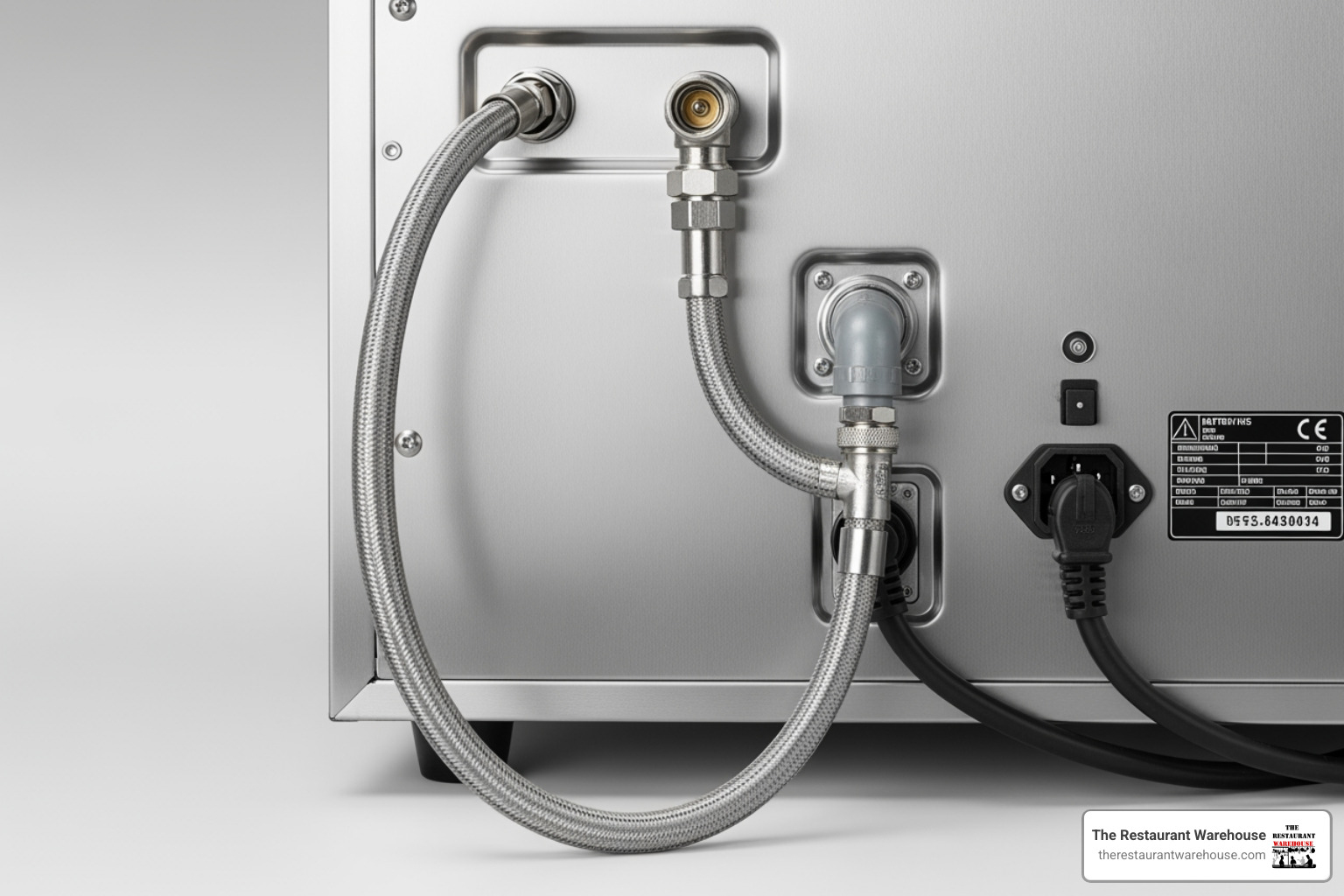
- Water connection type: This is a critical consideration. Plumbed-in units connect directly to your water supply and drainage, offering continuous steam generation without manual refilling, which is ideal for frequent use. Water reservoir models have a removable water tank that needs to be manually filled. While more flexible in terms of installation, they may require more attention during extensive cooking sessions.
- Cleaning systems: Efficient cleaning is paramount in any well-used kitchen. Look for features like automatic cleaning systems or preset cleaning modes. Some ovens also offer pyrolytic or intensive steam cleaning options to simplify maintenance.
- Control interface: Modern combi steam ovens offer intuitive controls. Some feature bright LCD displays with touch navigation, while others integrate with smart apps. Easy-to-use interfaces reduce the learning curve and potential for errors.
- Programmable recipes: The ability to store and recall your own custom recipes or use pre-programmed settings ensures consistent results every time, making advanced cooking techniques accessible to everyone in the household.
If you’d like help comparing models and features, explore our buying resources at https://therestaurantwarehouse.com/ or contact us directly for personalized recommendations.
Looking for ENERGY STAR® Certification
As you weigh the long-term costs of a new oven, look for the ENERGY STAR® label. This certification means the appliance meets strict energy efficiency guidelines from the U.S. Environmental Protection Agency, translating directly into savings for your kitchen. Some ENERGY STAR® certified electric combi ovens can reduce energy consumption by more than 50%, which makes a noticeable difference in your utility bills over the oven's lifespan. This efficiency doesn't sacrifice cooking power; top brands engineer their certified models to deliver high performance while using less energy and water. Opting for an ENERGY STAR® model is a smart financial move that also supports a more sustainable kitchen, aligning with the official program requirements for commercial ovens that balance power with efficiency.
The Practical Side: Installation, Plumbing, and Tech
Proper installation is non-negotiable for the safe and efficient operation of a combi steam oven.
- Water connection requirements: If opting for a plumbed-in unit, you'll need a dedicated fresh water line and a drainage connection. This ensures continuous steam production and efficient wastewater removal. In some locations, water filtration or softening systems are strongly recommended to reduce scale buildup.
- Electrical vs. Gas: Combi steam ovens are available in both electric and gas configurations. Your choice will depend on your home's existing connections and utility costs. Electric models may require specific voltage and phase configurations (e.g., 208–240V, 3 Phase), while gas models will specify BTU requirements. Some smaller units can operate on a standard 120V power outlet, offering more flexibility.
- Ventilation: All ovens generate heat and steam, and proper ventilation is crucial. A combi steam oven produces a significant amount of moisture. Adequate ventilation prevents condensation build-up and helps maintain a comfortable kitchen environment. It's vital to maintain sufficient distance between the appliance and adjacent surfaces for proper airflow, following the manufacturer's guidelines.
- Smart technology: Modern combi steam ovens are increasingly integrating smart features. Wi‑Fi connectivity and app control allow for remote monitoring, preheating, and even sending recipe instructions directly to the oven. This technology can improve convenience, streamline your cooking process, and provide data on usage patterns and maintenance alerts.
Before you finalize a purchase, consider scheduling a quick planning session with our team. We’ll review your space, utilities, and cooking habits and help you choose a combi steam oven that installs smoothly and supports your long-term goals. You can start that process anytime through our contact page.
Frequently Asked Questions about Steam Ovens
We often get asked about the practicalities of integrating a combi steam oven into a busy home kitchen. Here are some of the most common questions and our insights.
Can It Really Replace Your Other Appliances?
Absolutely! This is one of the most compelling reasons for many home cooks to invest in a combi steam oven. It truly is a multi-functional powerhouse. It combines the core functions of a dedicated steamer, a convection oven, and often a proofer, grill, and even an air fryer into a single unit. This consolidation is a game-changer, especially for kitchens where counter or floor space is at a premium. By replacing multiple appliances, you not only save valuable space but also simplify your cooking setup and maintenance. This streamlined appliance significantly increases kitchen efficiency, as you can perform a wide array of cooking tasks without juggling different machines.
How Does It Save Money and Reduce Food Waste?
A combi steam oven can have a surprisingly positive impact on your household budget and sustainability efforts. Firstly, the moist cooking environment, particularly in combination mode, significantly reduces food shrinkage. This means you get juicier, more generous servings from ingredients like roasts or poultry. Secondly, its superior reheating capabilities are a huge factor in reducing waste. Unlike microwaves that can make leftovers rubbery or dry, a combi steam oven gently reheats food, bringing it back to its original 'just-cooked' quality, preserving taste, texture, and nutrients. This is perfect for making leftovers desirable again and minimizing what gets thrown away, which is great for both your wallet and the environment.
Are Combi Steam Ovens Hard to Use?
Not at all! While the technology is advanced, modern combi steam ovens are designed with user-friendliness in mind. Many feature intuitive touchscreen controls and clear visual interfaces that make basic operation straightforward. For example, steaming vegetables or baking cookies is as simple as using a conventional oven. The real advantage comes with the programmable recipe features. Once you perfect a recipe, you can save it, and the oven will replicate it perfectly every time at the touch of a button. While exploring all the advanced functions might take a little practice, the investment in learning pays off with incredible, consistent results. Most home cooks find that after a short time, they can't imagine their kitchen without it.
Budgeting for Your Oven
A combi steam oven is a significant kitchen investment, and it's smart to think about the full financial picture beyond the initial price. The real value comes from its long-term return. Faster cooking times can lead to lower energy bills, while the moist cooking environment reduces food shrinkage, meaning you get a higher yield from expensive ingredients like meat and poultry. This efficiency is a direct saving on your food costs. Furthermore, by combining the functions of a steamer, convection oven, and proofer into one unit, you save on the cost and space of purchasing and maintaining multiple separate appliances. When you add up the savings on energy, food, and equipment, the total cost of ownership often makes a combi steam oven a very sound financial decision for a productive kitchen.
While the upfront cost can be substantial, it's helpful to view it as a long-term asset for your kitchen's productivity. Many businesses and home chefs explore financing to make the purchase more manageable. Options like restaurant equipment financing can help spread the cost over time, allowing you to benefit from the oven's efficiency while managing your cash flow. This approach makes high-performance equipment more accessible, letting you get the tools you need to improve your cooking without a massive initial capital outlay. Thinking about the budget this way—as an investment in efficiency and quality—helps put the initial price tag into a clearer perspective.
Practical Considerations and Downsides
As much as a combi steam oven can transform a kitchen, it's important to go in with a clear picture of its limitations. No single piece of equipment is a magic wand, and being realistic about what a combi oven can and can't do will help you integrate it successfully. The two biggest hurdles for most kitchens are understanding its specific role and managing the practical aspects of cleaning and cost. Thinking through these points beforehand ensures you're making an investment that truly fits your operational needs and budget, preventing any surprises down the line.
What a Combi Oven Can't Do
While a combi oven is incredibly versatile, it isn't designed to replace every appliance in your kitchen. It excels at complex cooking processes but isn't built for the quick, singular tasks that other specialized equipment handles better. For instance, it can't replace the sheer speed of a commercial microwave for instantly reheating a single cup of soup or sauce. It also won't take the place of a high-capacity deep fryer for turning out basket after basket of perfectly crisp French fries during a dinner rush. Think of it as the multi-talented star of your kitchen, not the entire cast. You'll still need your dedicated workhorses for those high-volume, specialized jobs.
Addressing Common Concerns: Cleaning and Cost
Let's talk about two of the most practical concerns: cleaning and cost. Daily cleaning is non-negotiable to maintain performance and hygiene. Limescale from steam generation can build up, and food residue needs to be managed to meet food safety standards. While many modern units have automated cleaning cycles that make this easier, it's still a daily task that requires staff time and specific cleaning agents. On the financial side, the upfront cost of a combi oven can be substantial. This initial investment is often a major hurdle for new or growing businesses. However, viewing it as a long-term asset is key, and flexible financing options can make it much more accessible, allowing you to spread the cost over time while benefiting from the oven's efficiency right away.
Is a Combi Steam Oven Right for Your Kitchen?
The combi steam oven is far more than just another piece of equipment; it's a transformative tool that redefines what's possible in the modern kitchen. We've seen how its unique blend of steam and convection cooking offers unparalleled versatility, allowing you to bake, roast, steam, grill, air fry, and even dehydrate with exceptional results. This translates directly to superior food quality, improved consistency in your cooking, and significant gains in kitchen efficiency.
By reducing cooking times, minimizing food shrinkage, and preventing flavor transfer, a combi steam oven empowers home cooks to innovate, expand their culinary skills, and deliver an elevated dining experience for family and friends. It's an investment that pays dividends in every aspect of your home cooking, from reduced food waste to more time spent enjoying delicious meals.
At The Restaurant Warehouse, we pride ourselves on supplying high-performance oven solutions that bring culinary excellence into the home, all while maintaining affordable, wholesale pricing. We believe that top-tier equipment should be accessible, enabling every home cook to achieve amazing results.
Ready to explore how a combi steam oven can revolutionize your kitchen? Explore our complete oven guide for more information or contact us to find the perfect oven for your kitchen today!.
Key Takeaways
- Master Three Cooking Methods in One Oven: A combi oven combines steam, convection heat, and a mix of both. This allows you to steam, roast, bake, and reheat in a single unit, saving significant counter space by replacing other appliances.
- Cook Faster Without Drying Out Food: By adding steam to the cooking process, a combi oven keeps food moist and flavorful. This leads to juicier roasts, brighter vegetables, and less food shrinkage, all while reducing overall cooking times.
- Match the Oven to Your Kitchen's Needs: When choosing a model, focus on practical details like size, water source (plumbed-in vs. reservoir), and helpful tools like food probes or automated cleaning cycles to ensure the oven fits your space and cooking habits.
Related Articles
About The Author

Sean Kearney
Sean Kearney is the Founder of The Restaurant Warehouse, with 15 years of experience in the restaurant equipment industry and more than 30 years in ecommerce, beginning with Amazon.com. As an equipment distributor and supplier, Sean helps restaurant owners make confident purchasing decisions through clear pricing, practical guidance, and a more transparent online buying experience.
Connect with Sean on LinkedIn, Instagram, YouTube, or Facebook.