

Essential Coffee Shop Equipment Checklist for Success
Opening a coffee shop is a dream for many. But that vision of aromatic coffee and cozy decor is built on a solid foundation of steel, circuits, and refrigeration. The success of your café hinges on the tools you choose. Your coffee shop equipment directly impacts everything from the taste of your espresso to the speed of your service during the morning rush. This isn't just a list; it's your practical roadmap. We'll cover every essential piece of gear you need, helping you make smart investments and avoid costly oversights as you build your dream café from the ground up.
We will break down all the must-haves, covering everything from core brewing machinery and refrigeration to smallwares and point-of-sale systems. This guide moves beyond a simple list, offering practical advice to help you invest wisely and build an operation that is both efficient and inviting. Beyond the essential brewing equipment, don't overlook marketing tools like custom sidewalk signs to capture the attention of passersby and announce your presence.
Our goal is to provide a clear, actionable roadmap, ensuring you can confidently source every piece of equipment needed. Let's start building the operational backbone of your café and equip your vision for long-term success.
Planning Your Coffee Shop: From Dream to Budget
Before you serve your first latte, you need a solid financial plan. This is where your coffee shop dream meets reality. Creating a detailed budget is the most critical first step, as it will guide every decision you make, from securing a location to purchasing your equipment. Understanding the full scope of startup costs helps you set realistic fundraising goals and manage your resources effectively from day one. A well-researched budget not only prevents unexpected financial strain but also serves as the foundation of your business plan, showing potential investors or lenders that you’ve done your homework.
How Much Does It Cost to Open a Coffee Shop?
The initial investment for a coffee shop can vary dramatically. Key factors include your city, the size of your space, and the business model you choose. A small kiosk in a suburban area will have a vastly different price tag than a large café with seating in a bustling downtown district. According to research from coffee industry experts at Crimson Cup, the costs can be broken down based on the type of establishment you plan to open. Below are some typical investment ranges to help you frame your initial budget and decide which model best fits your financial reality and business goals.
- Coffee Shop with Seating: $100,000 to $350,000
- Drive-Thru Only: $100,000 to $250,000
- Seating and Drive-Thru: $120,000 to $400,000
- Coffee Kiosk or Cart: $90,000 to $150,000
- Mobile Coffee Truck: $50,000 to $175,000
Managing Your Finances: Key Benchmarks for Success
Once you're open, smart financial management becomes about tracking key performance indicators and controlling costs. Your prime costs—the total of your cost of goods sold (COGS) and labor—should be your main focus. Successful coffee shops typically keep prime costs between 55% and 65% of total revenue. Another crucial aspect of financial health is investing in reliable equipment from the start. While used gear might seem like a way to save money upfront, it often leads to higher costs down the line due to frequent breakdowns and expensive repairs. Investing in new, high-quality equipment ensures operational consistency and prevents the kind of downtime that can damage your reputation and your bottom line.
Funding Your Coffee Shop Venture
With a clear budget in hand, the next step is securing the capital to bring your vision to life. Most entrepreneurs use a mix of funding sources. Personal savings are often the starting point, but few have enough to cover everything. Many turn to small business loans from banks or credit unions, which require a strong business plan and good personal credit. Another popular route is seeking out investors, whether they are friends and family or angel investors who believe in your concept. For the significant expense of outfitting your kitchen, consider financing options specifically for equipment. Programs like restaurant equipment financing allow you to get high-quality, new machines with manageable monthly payments, preserving your cash for other startup expenses like rent and payroll.
Crafting a Winning Coffee Shop Menu
Your menu is the heart of your coffee shop's identity. It’s more than a list of drinks; it’s a reflection of your brand, your target audience, and your commitment to quality. A well-designed menu balances popular classics with unique signature items that set you apart from the competition. It should be easy to read, visually appealing, and engineered for profitability. Think carefully about your offerings, as they will dictate your ingredient inventory, your equipment needs, and your staff's workflow. A streamlined, intentional menu is often more successful than one that tries to offer everything, as it ensures consistency and quality in every cup.
Building Your Core Beverage Menu
Every coffee shop needs a solid foundation of core beverages that customers know and love. This starts with high-quality espresso, which is the base for popular drinks like lattes, cappuccinos, macchiatos, and americanos. Your choice of espresso machine is therefore one of the most important decisions you'll make. Alongside espresso-based drinks, you'll need a great drip coffee option for customers on the go. Round out your core menu with essentials like hot tea, hot chocolate, and a few iced options like iced coffee and iced tea. These classic offerings will satisfy the majority of your customers and provide a reliable revenue stream for your business.
Identifying Your Most Profitable Items
Not all menu items are created equal when it comes to profit. As noted by Esquires Coffee, many coffee shop staples have excellent profit margins because their ingredients are relatively inexpensive. Brewed coffee, for example, typically has a very low cost per cup, making it highly profitable. To identify your winners, you need to calculate the cost of goods sold (COGS) for each item. Add up the cost of every ingredient in a drink—from the coffee and milk to the syrup and cup—to find your total cost. By subtracting this from your menu price, you can see your profit per item. This data allows you to strategically promote your most profitable drinks and make informed decisions about pricing.
Expanding Your Revenue with Retail
Your menu doesn't have to stop at prepared food and drinks. Retail sales offer a fantastic way to increase your average transaction value and build your brand. Consider selling bags of your house-blend coffee beans so customers can enjoy your coffee at home. Branded merchandise like mugs, t-shirts, and tote bags can also be great sellers, turning loyal customers into walking advertisements for your shop. Partnering with local bakers to sell pre-packaged cookies, pastries, or snacks is another excellent strategy. These retail items not only add a new revenue stream but also enhance the customer experience by offering more ways to connect with your brand.
The Ultimate Coffee Shop Equipment Checklist
Your equipment is the engine of your coffee shop. The quality and efficiency of your tools directly impact your product, your service speed, and your overall success. Assembling the right collection of gear can feel overwhelming, but it’s a foundational investment you can’t afford to get wrong. This checklist breaks down everything you need, from the large, powerhouse machines to the small but essential tools that ensure consistency. Think of this as your roadmap to building a functional and reliable workspace that empowers your team to create amazing products and serve customers efficiently, setting the stage for long-term growth and success.
Essential Beverage Equipment
The core of your operation revolves around the equipment that produces your main product: coffee. These are the machines your baristas will use constantly, so investing in durable, high-performance models is essential for maintaining quality and avoiding service interruptions. This category includes the workhorses of your bar, from the espresso machine that powers your lattes to the grinders that ensure freshness in every cup. Making the right choices here is critical, as this equipment forms the backbone of your entire beverage program and is central to your customers' experience.
Choosing the Right Commercial Espresso Machine
Your espresso machine is the centerpiece of your coffee shop and likely your biggest single equipment investment. As WebstaurantStore highlights, this machine is the workhorse for your most popular drinks, so choosing a reliable, high-capacity model is crucial. Consider the number of group heads you’ll need based on your projected volume—a two-group machine is a common starting point for most cafes. Look for features like programmable dosing for consistency and dual steam wands to keep up with rushes. Durability and local service availability are also key factors, as you can't afford to have your main machine down for long.
Grinders, Brewers, and Blenders
An exceptional espresso machine is only as good as the grinder it’s paired with. A high-quality burr grinder is non-negotiable for achieving the fine, consistent grind necessary for a perfect espresso shot. You'll likely need a dedicated espresso grinder and another for drip and pour-over coffee. For batch brewing, a commercial drip coffee maker will keep fresh coffee available for customers in a hurry. Finally, don't forget a powerful commercial blender. It opens up a whole menu of high-margin blended iced coffees, smoothies, and frappes, which are especially popular in warmer months and can significantly increase your sales.
Barista Tools and Smallwares
While the big machines get all the attention, it's the small tools that allow your baristas to work their magic with precision and consistency. These smallwares are the essential accessories for quality control and workflow efficiency. You'll need a collection of stainless steel milk frothing pitchers in various sizes, accurate digital scales for weighing coffee doses, and tampers for properly compressing espresso grounds. Don't forget shot glasses for calibrating your espresso machine, thermometers for monitoring milk temperature, and knock boxes for easy disposal of used coffee pucks. Stocking up on these items ensures your team has everything they need to craft perfect drinks every time.
Key Support Equipment
Behind every great coffee bar is a set of reliable support equipment that keeps the operation running smoothly. These pieces are essential for storage, sanitation, and food preparation. While they may not be as glamorous as the espresso machine, they are just as critical to your daily workflow and ability to serve customers safely and efficiently. From refrigeration to dishwashing, investing in dependable commercial-grade support equipment will prevent bottlenecks, ensure you meet health code standards, and allow your baristas to focus on what they do best: making great coffee.
Refrigerators and Freezers
Proper cold storage is critical for any foodservice business, and coffee shops are no exception. You will need a commercial-grade under-counter or reach-in refrigerator to store milk, cream, and dairy alternatives at safe temperatures. This is one of the most important pieces of equipment for food safety. If you plan to serve food items like sandwiches, pastries, or breakfast burritos, your refrigeration needs will be even greater. A separate commercial freezer is also essential for storing items like frozen fruit for smoothies, ice cream, or baked goods, helping you reduce waste and manage inventory effectively.
Ice Machines and Dishwashers
Iced drinks are a major revenue source for most coffee shops, making a commercial ice machine an absolute must-have. You need a machine that can keep up with demand, especially during peak hours and warmer seasons, so you never have to tell a customer you're out of their favorite iced latte. Equally important is a high-temperature commercial dishwasher. It ensures all your ceramic mugs, pitchers, and utensils are properly sanitized, meeting health department requirements and protecting your customers. A fast and efficient dishwasher also guarantees you have a constant supply of clean wares during busy rushes, preventing service delays.
Display Cases and Prep Tables
A refrigerated display case is one of your best sales tools. Placing it near the register encourages impulse buys of pastries, sandwiches, and bottled drinks, significantly increasing your average ticket size. For your back-of-house workflow, stainless steel prep tables are essential. They provide a durable, sanitary surface for everything from assembling food items to organizing your syrups and toppings. Having adequate, dedicated prep space is key to maintaining an organized and efficient operation, allowing your team to work without feeling cramped and keeping your customer-facing counters clean and uncluttered.
Ingredients and Disposable Supplies
Your equipment is only part of the equation; you also need a well-stocked inventory of high-quality ingredients and supplies to serve your customers. This starts with your core product: coffee beans. You'll also need a variety of milks, syrups, sauces, and sweeteners. On the disposable side, you'll need a full stock of paper and plastic cups in various sizes, along with lids, sleeves, stirrers, and napkins. If you're serving food, you'll also need containers, bags, and cutlery. Keeping a close eye on your inventory of these consumables is crucial for smooth daily operations and preventing stockouts of essential items.
Cleaning and Maintenance Essentials
A sparkling clean coffee shop is non-negotiable for both customer perception and health code compliance. Your cleaning supply closet should be well-stocked with everything needed to keep your space pristine. This includes food-safe sanitizers for all surfaces, a dedicated espresso machine cleaning powder, and brushes for cleaning the group heads. You'll also need basics like mops, buckets, brooms, dustpans, glass cleaner, and plenty of clean towels. Establishing a rigorous daily and weekly cleaning schedule—and providing your staff with the right tools to execute it—is fundamental to running a professional and successful business.
Key Strategies for a Successful Launch
With your budget set, your menu crafted, and your equipment list finalized, it's time to focus on the key strategies that will turn your well-laid plans into a thriving business. A successful launch isn't just about opening your doors; it's about creating a foundation for long-term success. This means making smart decisions about your investments, prioritizing quality in every aspect of your business, and empowering your team to deliver an exceptional customer experience from day one. These final strategic pillars will help ensure your coffee shop not only survives its crucial opening months but flourishes for years to come.
A Note on Used vs. New Equipment
When you're trying to manage a tight startup budget, buying used equipment can seem like a savvy way to cut costs. However, this is often a shortsighted decision that can cost you more in the long run. As industry experts advise, the quality of your equipment directly impacts your product and your operational uptime. Used machines come with no warranty and an unknown history, making them prone to unexpected and costly breakdowns. The money you save upfront can quickly be eaten up by repair bills and lost revenue during downtime. Investing in new, reliable restaurant equipment ensures you start with dependable tools that are covered by a warranty, giving you peace of mind and operational stability.
The Importance of Quality Ingredients
You can have the best equipment in the world, but if your ingredients are subpar, your coffee will be too. Your commitment to quality must extend to everything you serve. This starts with sourcing exceptional coffee beans from a roaster whose flavor profiles and values align with your brand. Don't stop there—use high-quality milk and dairy alternatives, premium syrups and sauces, and fresh, local baked goods whenever possible. Customers can taste the difference, and a reputation for quality is one of the strongest competitive advantages you can have. It builds customer loyalty and justifies premium pricing.
Why Hands-On Staff Training Matters
Your baristas are the face of your business and the hands that craft your product. Proper training is an investment that pays dividends in customer satisfaction, consistency, and operational efficiency. A thorough training program should cover more than just how to make drinks. Teach your team about your coffee's origin and flavor notes, so they can speak knowledgeably with customers. Ensure they master workflow, speed, and cleanliness standards. Most importantly, empower them to provide warm, genuine customer service. A well-trained, confident, and happy team will create the welcoming atmosphere that turns first-time visitors into loyal regulars.
1. Restaurant Equipment: A Solid Starting Point for Your Cafe
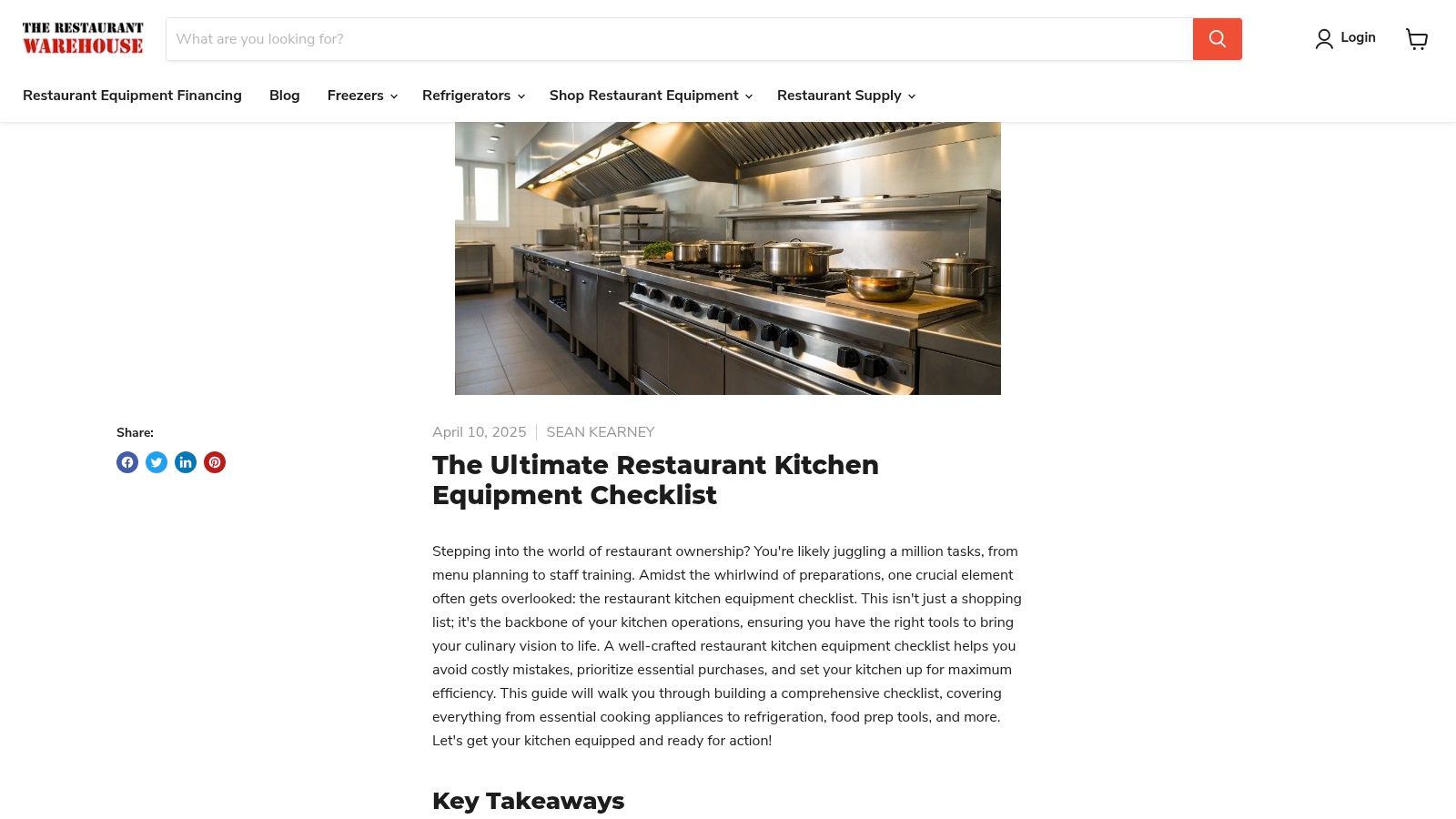
For coffee shop owners who need a robust, commercially-focused framework, The Restaurant Warehouse’s Restaurant Kitchen Equipment Checklist is an indispensable and strategic tool. While its title suggests a broad restaurant focus, its comprehensive nature makes it a powerful resource for building a complete coffee shop equipment checklist. It excels by treating the coffee shop as a serious foodservice operation, ensuring no critical back-of-house or front-of-house component is overlooked.
This checklist moves beyond just brewers and grinders to encompass the entire operational ecosystem. It covers everything from commercial-grade refrigeration and under-counter ice machines to the specific sinks and shelving required for health code compliance. This holistic approach ensures your coffee shop is built on a solid, scalable, and professional foundation from day one.
What Makes Them a Strong Choice?
The Restaurant Warehouse stands out by combining its checklist with direct access to equipment purchasing, financing, and expert support. This integration streamlines the entire procurement process, making it an exceptionally efficient choice for both new and expanding businesses.
- Comprehensive Categories: The checklist is segmented into logical categories like refrigeration, cooking, food prep, and warewashing. This structure helps you systematically plan your purchases without missing essential items like grease traps or three-compartment sinks that are vital for operations but often forgotten in coffee-centric lists.
- Focus on Durability and Efficiency: It guides users toward trusted, workhorse brands like Atosa and True, known for their durability and energy efficiency. This focus helps owners make long-term investments that lower utility costs and minimize downtime.
- Integrated Financial Solutions: A key differentiator is the direct integration of financing and lease-to-own options. This makes acquiring high-quality equipment manageable, even with tight startup capital. The platform simplifies the process of getting the gear you need now and paying for it over time.
- Logistical Excellence: With multiple distribution centers across the country, The Restaurant Warehouse offers fast, 1-3 day delivery. This rapid fulfillment is critical for staying on schedule during a build-out or quickly replacing a failed piece of equipment.
Is It Right for Your Coffee Shop?
To best use this resource, start by downloading the checklist and cross-referencing it with your specific coffee shop concept. While you may not need a six-burner range, the sections on commercial refrigeration, worktables, and shelving are universally applicable. Pay close attention to the smallwares and storage sections to ensure your workflow is optimized. For those in the early planning stages, The Restaurant Warehouse also provides an excellent guide for new ventures. You can learn more about their comprehensive startup advice and see their Restaurant Equipment Startup Checklist.
The Bottom Line
| Feature | Analysis |
|---|---|
| Scope of Checklist | Extremely comprehensive, covering all commercial kitchen needs. Ideal for shops with a food program or those prioritizing a robust setup. |
| Equipment Quality | Focuses on reliable, commercial-grade brands, promoting long-term value over short-term savings. |
| User Experience | The checklist is straightforward, but the real value is in the integrated site experience, combining planning with purchasing. |
| Support & Logistics | Expert consultation and rapid delivery are significant advantages that reduce project friction and delays. |
While the checklist itself does not include pricing, this encourages a consultative approach. It prompts you to engage with their experts to find equipment that precisely fits your space, volume, and budget, preventing costly purchasing errors. For any entrepreneur serious about building a professional and resilient coffee shop, this platform is a top-tier resource that bridges the gap between a simple list and a fully executed kitchen.
2. WebstaurantStore: The Online Megastore for Cafes
WebstaurantStore is a dominant force in the online restaurant supply industry, offering a massive inventory that makes it an essential resource for creating a comprehensive coffee shop equipment checklist. Its primary appeal lies in its one-stop-shop model, allowing new and established cafe owners to source everything from high-end espresso machines to bulk orders of disposable cups from a single vendor.
What Sets Them Apart?
What truly sets WebstaurantStore apart is the sheer scale of its operation combined with a wealth of educational content. The platform doesn't just sell products; it guides you through the purchasing process. Their detailed guides, like the specific Coffee Shop Equipment List, provide foundational knowledge that helps you make informed decisions, preventing costly buying mistakes. This is invaluable for first-time owners who may be unsure where to begin.
The user interface is built for efficiency. You can filter products by brand, price, features, and even specific certifications like NSF. Each product page includes detailed specifications, downloadable spec sheets, and a Q&A section, often with answers directly from the manufacturer.
Features to Look For & Pro Tips
- Extensive Selection: Find everything from commercial grinders and brewers to furniture, smallwares, and cleaning supplies.
- Competitive Pricing: Bulk discounts and a private "Plus" membership for free shipping make it cost-effective for larger orders.
- Fast Shipping: Multiple warehouses across the U.S. enable rapid delivery, which is critical for replacing broken equipment quickly.
- Valuable Resources: Use their detailed buying guides and checklists to ensure you don’t miss any essential items.
Pro Tip: Before placing a large order, use the "Chat with a Specialist" feature. Their experts can confirm if a piece of equipment meets your specific voltage and plumbing requirements, saving you from significant logistical headaches later on.
While shipping can be expensive for small, individual items, consolidating your purchases into a single large order maximizes value. The platform’s robust product review system also offers real-world insights from other business owners. For those considering other major suppliers, this overview comparing online restaurant equipment stores can provide additional context.
Website: WebstaurantStore Coffee Shop Equipment List
3. Seattle Coffee Gear: For the True Coffee Aficionado
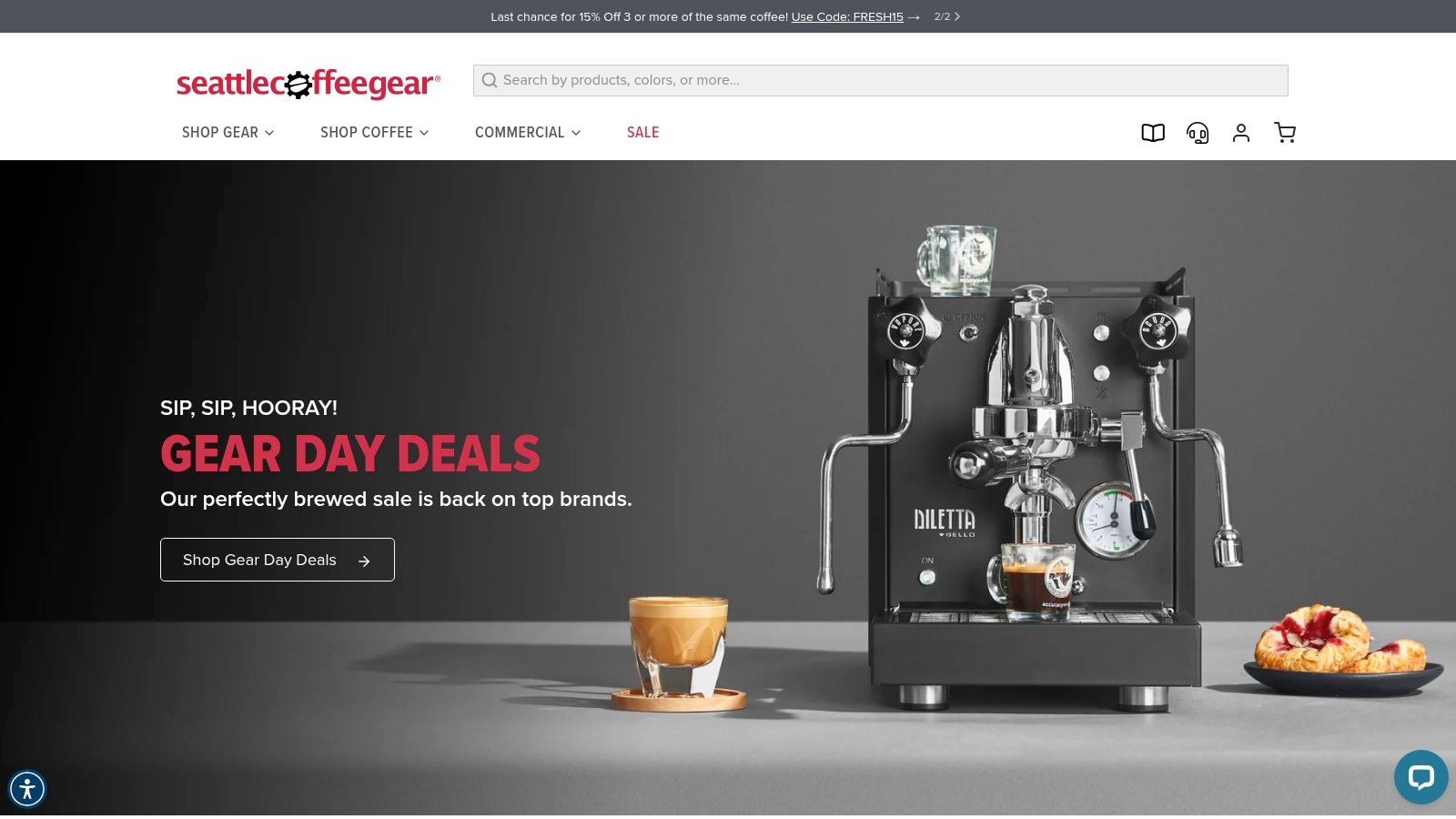
Seattle Coffee Gear stands out as a specialized, expert-driven resource for building a high-quality coffee shop equipment checklist. Unlike massive all-purpose suppliers, its focus is squarely on the heart of any cafe: the coffee-making machinery. This platform is ideal for owners who prioritize brew quality and want to invest in reliable, top-tier equipment backed by deep industry knowledge.
What Sets Them Apart?
What truly distinguishes Seattle Coffee Gear is its commitment to testing and education. The team rigorously tests and reviews nearly every machine they sell, providing detailed video overviews, articles, and real-world performance data. This hands-on approach demystifies the complex world of commercial espresso machines and grinders, empowering you to choose equipment that perfectly matches your shop’s volume, workflow, and quality standards.
The customer service experience is a significant advantage. You can speak with knowledgeable staff who are passionate about coffee and can offer tailored recommendations. This level of expert guidance is rare and invaluable for ensuring your most critical equipment investments are sound. While their prices may be higher, the value comes from quality assurance and post-purchase support.
Features to Look For & Pro Tips
- Curated Commercial Selection: Offers a focused range of high-performance commercial espresso machines and grinders from trusted brands like La Marzocco, Rocket, and Mazzer.
- In-Depth Educational Content: Leverage their extensive library of videos and blog posts to understand the nuances between different machine types, from heat exchangers to dual boilers.
- Expert Support: The customer service team can provide detailed advice on machine capabilities, maintenance, and setup requirements.
- Flexible Financing: Provides financing options, making high-end equipment more accessible for new businesses on a tight budget.
Pro Tip: Before committing to a machine, watch its full video review on their YouTube channel. They often showcase the machine’s workflow, steam power, and internal components, giving you a much clearer picture than a simple spec sheet can provide.
While Seattle Coffee Gear excels in coffee-specific hardware, you will need to source other items like refrigeration, furniture, and smallwares from a different supplier. It is best used as a specialist vendor for the core of your brewing setup, ensuring your coffee shop equipment checklist is built around proven, high-quality machinery.
Website: https://www.seattlecoffeegear.com/
4. Prima Coffee Equipment: Curated Gear for Quality Brews
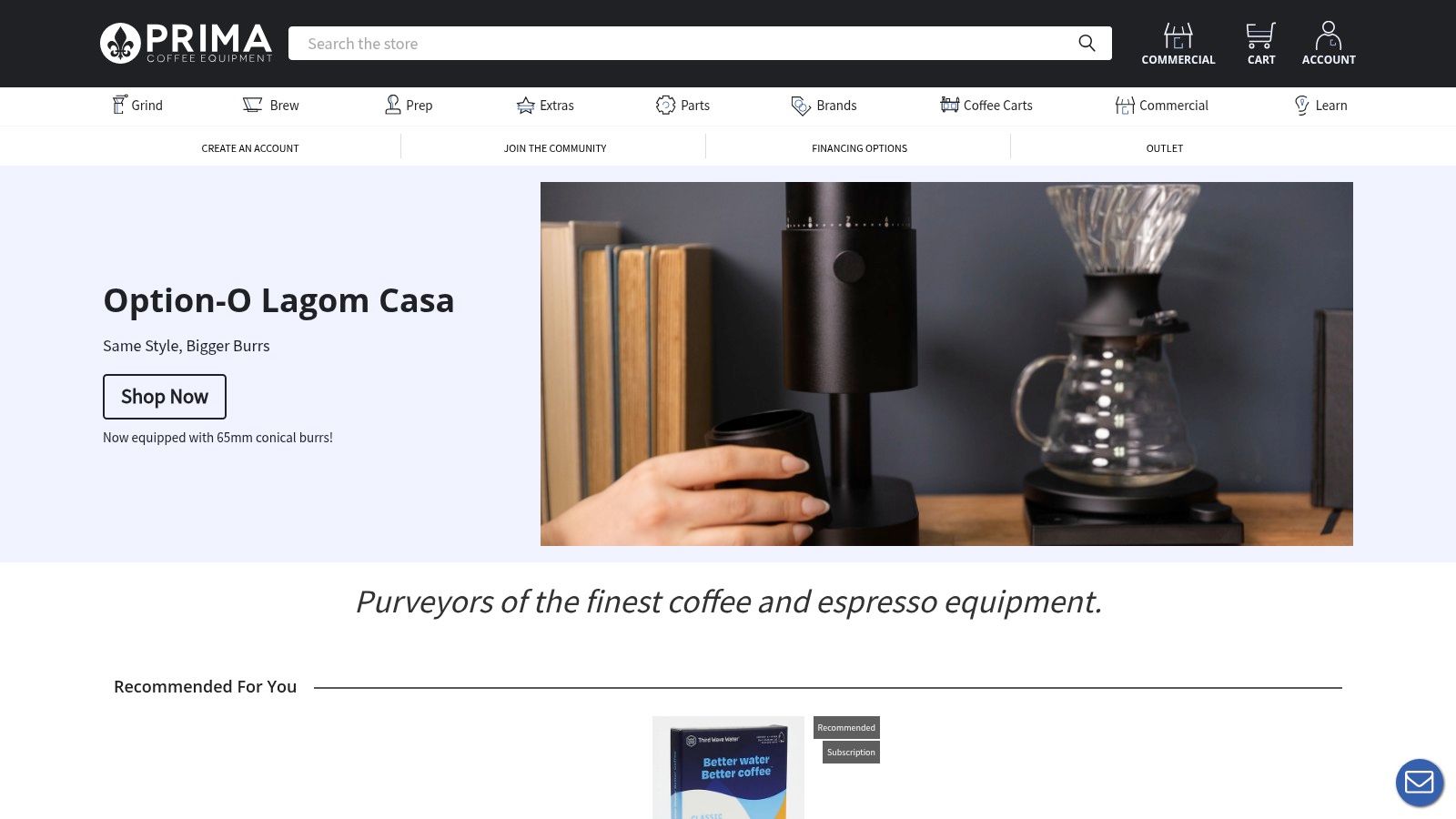
Prima Coffee Equipment is a specialty-focused supplier that prioritizes quality over quantity, making it an excellent resource for building a high-caliber coffee shop equipment checklist. Unlike massive distributors, Prima offers a curated selection of equipment from top-tier brands, appealing to shop owners who want to invest in durability, performance, and the art of craft coffee. Their approach is less about providing everything and more about providing the right things.
What Sets Them Apart?
What makes Prima Coffee Equipment unique is its deep expertise in the specialty coffee niche combined with its consultative approach. Their team is composed of coffee professionals who understand the nuances of brewing and extraction. This knowledge is reflected in their product selection and the extensive educational content they provide, from detailed brewing guides and video tutorials to in-depth product comparisons.
The platform is designed for connoisseurs and serious business owners. Instead of overwhelming users with thousands of options, Prima handpicks equipment known for reliability and precision. This curated experience simplifies the decision-making process, ensuring that every item you consider has already met a high standard of quality.
Features to Look For & Pro Tips
- Curated High-Quality Selection: Features handpicked equipment from respected brands like La Marzocco, Mahlkönig, and Fetco.
- Custom Equipment Packages: Work with their specialists to build a custom package tailored to your shop’s specific needs and budget.
- Educational Resources: Leverage their extensive library of guides, videos, and articles to train your staff and perfect your craft.
- Financing Options: Offers equipment financing to help new businesses manage startup costs effectively.
Pro Tip: Use their "Compare" feature on product pages to see a side-by-side breakdown of technical specifications for grinders or espresso machines. This is incredibly useful for making a final decision between two similar high-end models.
While their product range is smaller than that of a broadline supplier, their focus on quality ensures long-term value. For shop owners prioritizing the perfect cup and building a reputation for excellence, Prima Coffee Equipment is an indispensable partner. Their responsive customer support is also a significant advantage for troubleshooting and maintenance questions.
Website: https://prima-coffee.com/
5. Espresso Parts: Your Go-To for Repairs and Upgrades
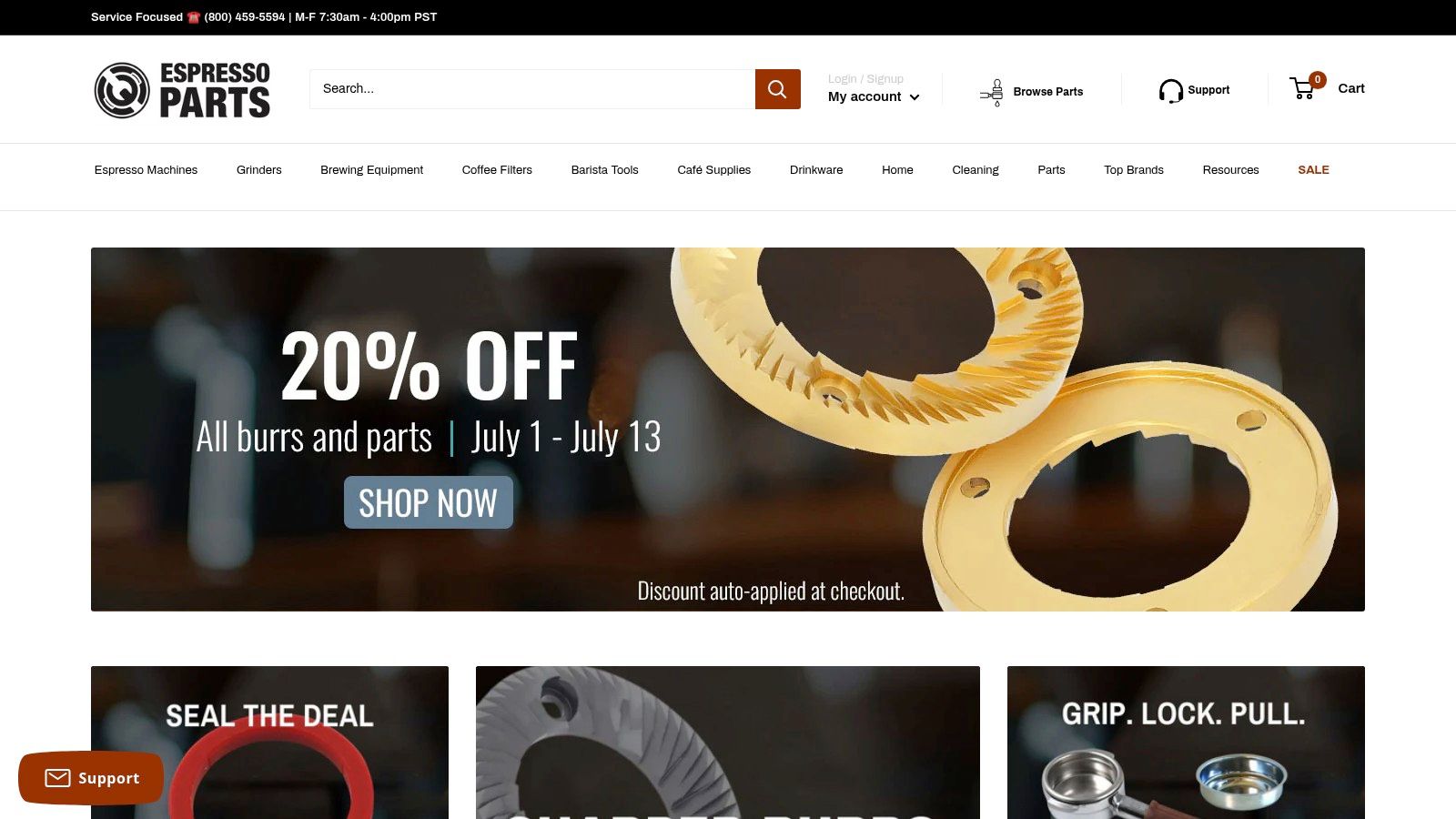
Espresso Parts is a highly specialized resource for cafe owners who view their espresso bar as the heart of their operation. Unlike broad-scope suppliers, this platform focuses intensely on espresso machines, grinders, and the myriad of parts needed to keep them running perfectly. This specialization makes it an indispensable tool when building out the most critical section of your coffee shop equipment checklist.
What Sets Them Apart?
The deep expertise in espresso technology is what truly distinguishes Espresso Parts. The platform is not just a retailer; it's a hub for baristas and technicians, offering an extensive catalog of OEM and aftermarket parts that are often difficult to source elsewhere. This focus provides peace of mind, knowing you can find a specific gasket, burr set, or portafilter for your exact machine model, minimizing downtime.
Beyond parts, they offer a curated selection of new and professionally refurbished equipment. This allows new shop owners to acquire top-tier machinery like a La Marzocco or Synesso at a more accessible price point. Their custom branding services for cups, tampers, and other accessories also offer a unique opportunity to build a cohesive brand identity right from the start.
Features to Look For & Pro Tips
- Espresso Specialization: An unparalleled selection of espresso machines, grinders, water filtration systems, and replacement parts.
- Refurbished Equipment: Access high-end, commercial-grade machines at a reduced cost, each professionally inspected and restored.
- Custom Branding: Add your logo to everything from cups and sleeves to tampers and pitchers, creating a professional and memorable customer experience.
- Technical Resources: The site features a wealth of diagrams, articles, and expert support to help you troubleshoot and maintain your equipment.
Pro Tip: When buying a refurbished machine, always contact their support team to inquire about its history, the specific refurbishment process it underwent, and the details of its warranty. This ensures you understand the value and longevity you're investing in.
While Espresso Parts won't be your source for refrigeration or cooking equipment, it is the definitive destination for the most crucial, customer-facing machinery in your cafe. Their technical support and vast parts inventory are a long-term asset for any serious coffee business.
Website: https://www.espressoparts.com/
6. KaTom Restaurant Supply: A Commercial Kitchen Powerhouse
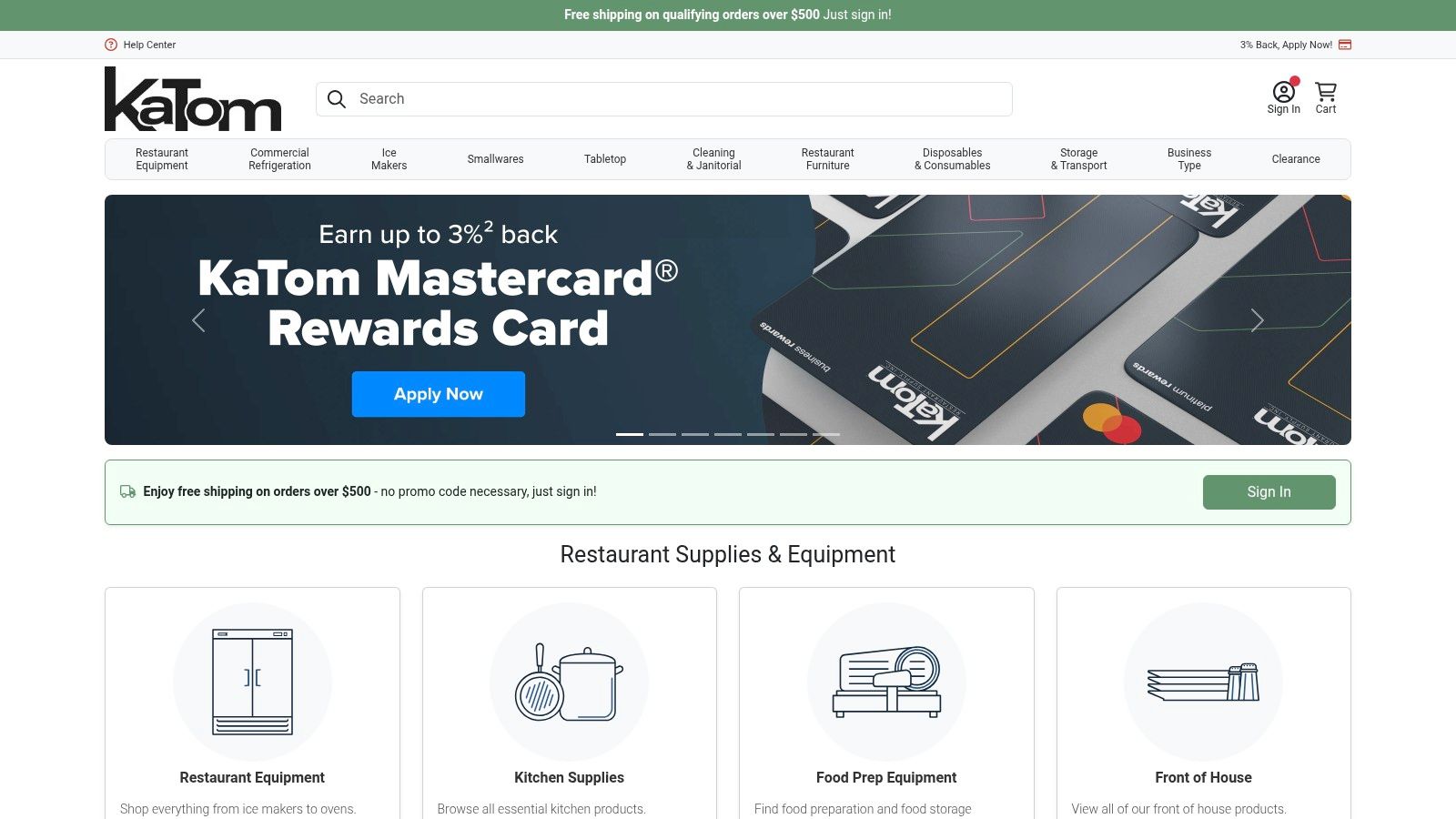
KaTom Restaurant Supply is another major player in the food service industry, offering a comprehensive selection that easily supports the creation of a detailed coffee shop equipment checklist. While it serves all types of restaurants, its extensive inventory makes it an excellent resource for cafe owners looking to source not just specialty coffee gear but also general kitchen appliances, furniture, and supplies from one vendor.
What Sets Them Apart?
KaTom differentiates itself with a strong focus on customer support and flexible financing options, which can be a significant advantage for startups or businesses managing tight cash flow. They provide a more personal touch, often helpful for navigating the complexities of large equipment purchases. Their product pages are robust, featuring detailed specifications, customer reviews, and often a Q&A section that provides practical insights from other business owners.
The platform is also known for its frequent sales and promotions, offering opportunities to acquire high-quality equipment at a reduced cost. This blend of a massive catalog, competitive pricing, and accessible financing makes KaTom a practical choice for owners building a coffee shop from the ground up or undertaking a major renovation.
Features to Look For & Pro Tips
- Broad Inventory: Covers everything from espresso machines and grinders to commercial refrigerators, ovens, and dining room furniture.
- Financing Options: Offers equipment financing, allowing you to spread the cost of large purchases over time, preserving capital for other needs.
- Competitive Pricing: Regular sales, promotions, and bulk purchase discounts provide significant savings opportunities.
- Detailed Product Information: Each listing includes thorough specs and user reviews to help guide your purchasing decisions.
Pro Tip: Keep an eye on KaTom's "Scratch & Dent" or "Closeout" sections on their website. You can often find brand-new or lightly used equipment with minor cosmetic blemishes for a fraction of the original price, perfect for back-of-house items where looks don’t matter.
While some users note that shipping times can occasionally be longer than competitors for certain items, the potential cost savings and financing benefits often outweigh this. The platform is best utilized for planned, large-scale orders where you can take full advantage of their pricing structure and support services.
Website: https://www.katom.com/
7. CoffeeTec: For When You're Ready to Roast
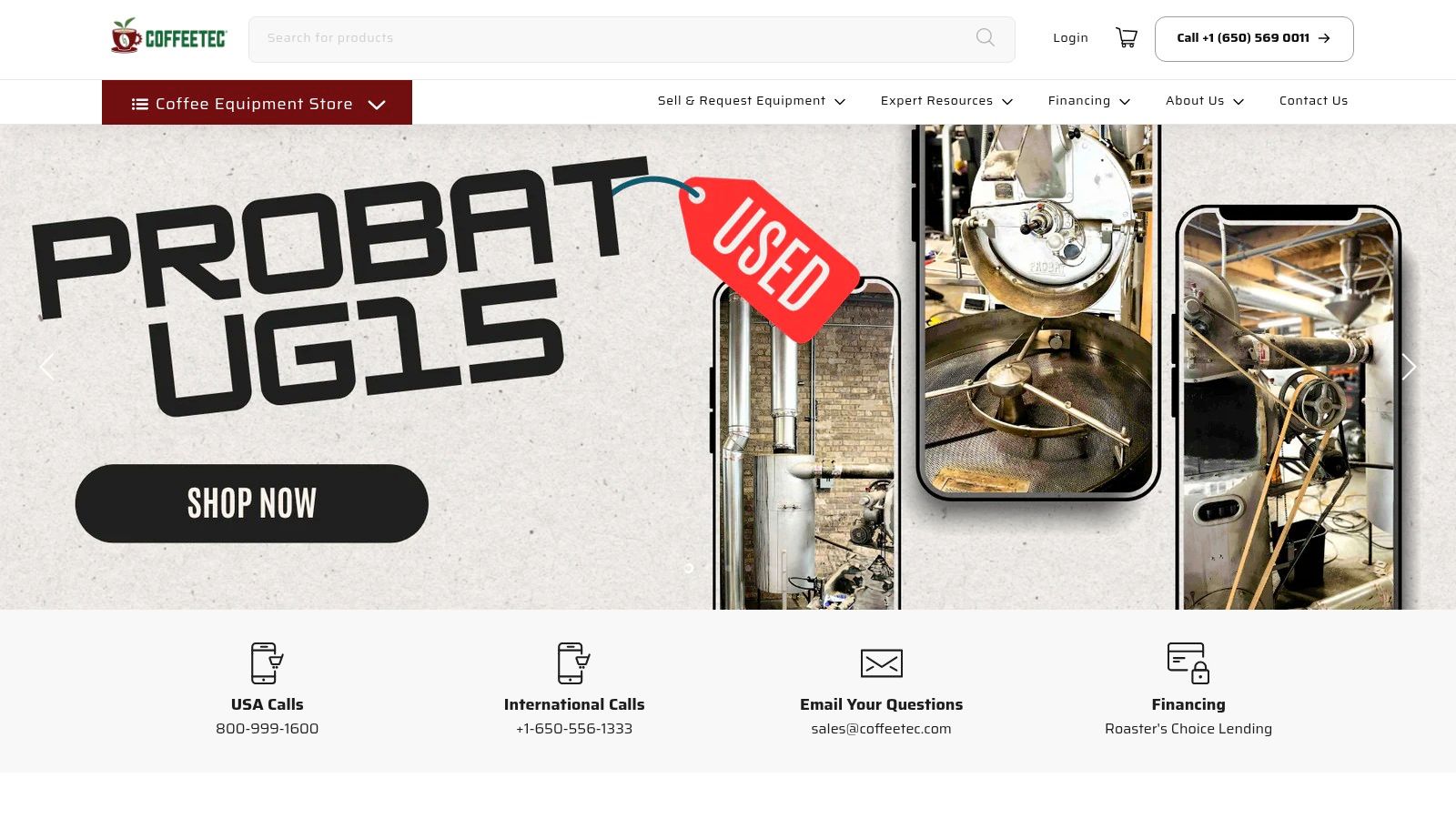
For the aspiring café owner who wants to go beyond brewing and enter the world of in-house roasting, CoffeeTec is an indispensable resource. This platform specializes in the heart of artisanal coffee production: the roaster. It is the go-to destination for sourcing new and used coffee roasting equipment, making it a critical part of a coffee shop equipment checklist for businesses focused on offering a unique, bean-to-cup experience.
What Sets Them Apart?
CoffeeTec’s value lies in its laser-focused specialization. Unlike general suppliers, it provides deep expertise specifically in coffee roasting technology and processes. The platform bridges the gap between simply buying equipment and successfully implementing a roasting program by offering consulting services and comprehensive educational resources. This hands-on support is a game-changer for new roasters who need guidance on everything from equipment selection to profile development.
The inclusion of a marketplace for used equipment offers a significant advantage for startups on a tight budget. This allows access to high-quality, commercial-grade roasters from top brands at a fraction of the cost of buying new. The availability of these machines can make an in-house roasting program financially viable much sooner.
Features to Look For & Pro Tips
- Specialized Roasting Inventory: Find a curated selection of new and pre-owned coffee roasters, grinders, and packaging equipment.
- Expert Consulting: Leverage their consulting services for startup planning, roaster training, and operational efficiency.
- Educational Content: Access articles and guides on the coffee roasting process to build your foundational knowledge.
- Used Equipment Marketplace: A cost-effective entry point for acquiring professional-grade roasting machinery.
Pro Tip: If you're considering a used roaster, contact CoffeeTec directly to inquire about the machine's history, maintenance records, and any available warranties. Their team can provide crucial context that isn't always listed on the product page.
While its inventory outside of roasting is limited, CoffeeTec excels in its niche. The platform provides the tools and knowledge to turn a standard coffee shop into a destination roastery. Proper maintenance is key for this specialized equipment, and a detailed restaurant kitchen cleaning checklist can be adapted to ensure your roaster and surrounding area remain in top condition.
Website: https://coffeetec.com/
Which Supplier is Right for You? A Quick Comparison
| Item | Implementation Complexity 🔄 | Resource Requirements ⚡ | Expected Outcomes 📊 | Ideal Use Cases 💡 | Key Advantages ⭐ |
|---|---|---|---|---|---|
| Restaurant Kitchen Equipment Checklist | Low to moderate – checklist format simplifies planning | Moderate – requires budgeting and sourcing equipment | Streamlined kitchen setup with durable, energy-efficient gear | Restaurants of all sizes seeking comprehensive kitchen setup | Comprehensive coverage, expert support, flexible financing |
| WebstaurantStore | Moderate – online shopping with guidance | Moderate – large inventory, managing orders | Access to wide range of coffee shop equipment, competitive pricing | Coffee shop owners needing diverse equipment and fast shipping | One-stop shop, fast shipping, regular discounts |
| Seattle Coffee Gear | Moderate – includes expert advice and testing | Moderate to high – premium equipment and support | High-quality coffee equipment with expert-backed reliability | Coffee shops wanting high-end espresso machines and education | Expert customer service, product testing, financing options |
| Prima Coffee Equipment | Moderate – curated and custom packages | Moderate – focus on specialty and durability | Quality and durable coffee equipment tailored to business needs | Specialty coffee shops and startups focused on longevity | Quality focus, responsive support, custom packages |
| Espresso Parts | Moderate – specialized espresso gear | Moderate – new and refurbished options | Focused espresso equipment with customization and technical support | Coffee shops prioritizing espresso and brand customization | Specialized focus, refurbished savings, branding options |
| KaTom Restaurant Supply | Moderate to high – broad inventory management | High – large orders and financing available | Complete restaurant and coffee shop equipment procurement | Coffee shops requiring wide equipment plus bulk discounts | Broad range, competitive pricing, financing options |
| CoffeeTec | Moderate – specialized roasting equipment handling | Moderate – new and used roasting gear | Support for coffee roasting operations with consulting and education | Coffee shops roasting their own beans | Roasting specialization, consulting, educational support |
Your Next Steps to a Fully Equipped Cafe
Building a successful coffee shop is a complex recipe, and equipping it correctly is arguably the most critical ingredient. This comprehensive coffee shop equipment checklist has served as your roadmap, navigating you through the essential machinery, smallwares, and front-of-house necessities. From the high-performance espresso machine that acts as the heart of your operation to the humble but vital water filtration system protecting your investment, each item plays a specific, indispensable role.
We’ve explored a variety of specialized suppliers, from giants like WebstaurantStore and KaTom Restaurant Supply to niche experts such as Prima Coffee Equipment and Espresso Parts. Each offers a unique value proposition, whether it’s vast inventory, expert advice, or hard-to-find components. The key takeaway is that your equipment sourcing strategy should be as carefully crafted as your signature latte.
Turning Your Equipment List into an Action Plan
Moving forward, your task is to transform this general checklist into a personalized procurement plan. This involves a strategic and honest evaluation of your specific operational needs.
- Define Your Concept: A high-volume, third-wave shop focusing on single-origin pour-overs has vastly different needs than a cozy neighborhood cafe known for its flavored lattes and baked goods. Your menu dictates your machinery.
- Analyze Your Space: Meticulously measure your bar and back-of-house areas. Create a scaled layout to ensure proper workflow, electrical access, and plumbing connections before a single machine arrives.
- Balance Budget with Long-Term Value: The temptation to opt for the cheapest equipment is strong, but it can lead to costly downtime and repairs. Prioritize reliability, efficiency, and warranty support for core items like your espresso machine, grinders, and refrigeration units.
Key Insight: Your equipment is not just a one-time purchase; it's a long-term operational partner. Consider the total cost of ownership, which includes not only the initial price but also energy consumption, maintenance costs, and potential repair expenses over the machine's lifespan.
Making these informed decisions prevents costly mistakes and sets your business on a foundation of operational excellence. Remember, the right tools don't just make coffee; they enable your staff to work efficiently, deliver a consistent product, and create the seamless customer experience that builds loyalty and drives success. You are not just buying equipment; you are investing in the engine of your dream.
Ready to turn your checklist into reality? For a partner that understands the financial and logistical challenges of outfitting a new café, explore The Restaurant Warehouse. They offer a massive selection of new, commercial-grade equipment and provide flexible financing options to help you acquire essential tools while protecting your cash flow. Visit The Restaurant Warehouse to start building your fully equipped, high-functioning coffee shop today.
Frequently Asked Questions
Is it really a bad idea to buy used equipment if I'm on a tight budget? While the initial savings of used equipment can be tempting, it's often a risky path for a new business. Used machines come with an unknown history and no warranty, meaning you're on the hook for any expensive repairs. More importantly, an unexpected breakdown of your espresso machine or refrigerator can shut down your business for days, costing you far more in lost sales and customer trust than you saved upfront. Investing in new, reliable equipment is an investment in operational stability and peace of mind when you need it most.
If I have a limited budget, what are the three pieces of equipment I absolutely cannot skimp on? If you have to prioritize, focus your investment on the heart of your operation. First is a high-quality commercial espresso machine, as it will produce your main product and handle the highest volume. Second is a powerful and consistent burr grinder; without a great grind, even the best espresso machine can't produce a great shot. Third is a reliable commercial refrigerator. This is non-negotiable for food safety, protecting your most expensive ingredients like milk and ensuring you always meet health code standards.
You mentioned equipment financing. How does that work and is it a good idea for a new shop? Equipment financing allows you to acquire brand-new, high-quality equipment without paying the full cost upfront. Instead, you make predictable monthly payments over a set term. This is a very strategic move for new coffee shops because it preserves your cash, which is critical in the early days. You can use that saved capital for other essential expenses like your first month's rent, payroll, and initial inventory, giving your business a much stronger financial cushion to start with.
Why is support equipment like a commercial dishwasher so important? A commercial dishwasher might not seem as exciting as an espresso machine, but it's a critical part of your workflow and sanitation. During a busy morning rush, you need a constant supply of clean mugs, pitchers, and utensils. A residential dishwasher can't keep up or properly sanitize to health code standards. A high-temperature commercial unit ensures you never create a bottleneck at the bar, keeping service fast and your customers safe.
My menu will be simple at first. Do I still need a refrigerated display case? Absolutely. Think of a display case as your best salesperson. Placing it by the register and filling it with pastries, sandwiches, or bottled drinks is one of the easiest ways to encourage impulse buys. Those small add-on sales dramatically increase your average ticket size over time. It's less about storage and more about actively generating more revenue from every single customer who walks through your door.
Key Takeaways
- Your Menu and Budget Dictate Your Equipment: Before you shop for a single machine, finalize your menu and budget. These foundational documents will tell you exactly what you need to buy—and what you can afford—preventing costly mistakes and ensuring your kitchen is built for your specific concept.
- Prioritize New, Core Equipment: While saving money with used gear is tempting, it's a risky bet for your most critical machines. Invest in a new, warrantied espresso machine, grinder, and refrigerator to ensure reliability, avoid unexpected repair costs, and prevent the downtime that hurts your business most.
- Great Equipment Needs Great Ingredients and People: The best tools are only as good as the hands that use them and the materials they work with. Your investment in equipment is only fully realized when paired with high-quality coffee beans and a well-trained team that can deliver consistent, excellent service.
Related Articles
About The Author

Sean Kearney
Sean Kearney used to work at Amazon.com and started The Restaurant Warehouse. He has more than 10 years of experience in restaurant equipment and supplies. He graduated from the University of Washington in 1993. He earned a BA in business and marketing. He also played linebacker for the Huskies football team. He helps restaurants find equipment at a fair price and offers financing options. You can connect with Sean on LinkedIn or Facebook.
Leave a comment