

Clean Hands, Happy Guests – Catering Hand Wash Sink Buying Guide
Why Proper Hand Washing is the Foundation of Catering Success
A catering hand wash sink is your first line of defense against foodborne illness and the key to maintaining guest confidence at every event. Here's what you need to know:
Essential Catering Hand Wash Sink Features:
- Portable models - Self-contained units with fresh and waste water tanks for outdoor events
- Wall-mounted options - Space-saving designs for permanent kitchens and commissaries
- Hands-free operation - Knee/foot pedals or sensors to minimize contamination
- NSF certification - Meets health department standards for commercial food service
- 304 stainless steel - Durable, easy-to-clean material that resists corrosion
When you're serving hundreds of guests at a wedding or corporate event, one contaminated dish can destroy your reputation overnight. Hand wash sinks aren't just equipment - they're insurance for your business.
The research is clear: proper handwashing prevents the spread of foodborne illnesses that affect millions of Americans each year. As one food safety expert noted, "A street food supplier can even maintain a five star hygiene rating in the middle of a field" with the right portable handwashing equipment.
Your catering operation faces unique challenges compared to traditional restaurants. You're working in temporary spaces, outdoor venues, and locations without standard plumbing. This means your hand wash sink needs to be portable, reliable, and compliant with health codes wherever you set up shop.
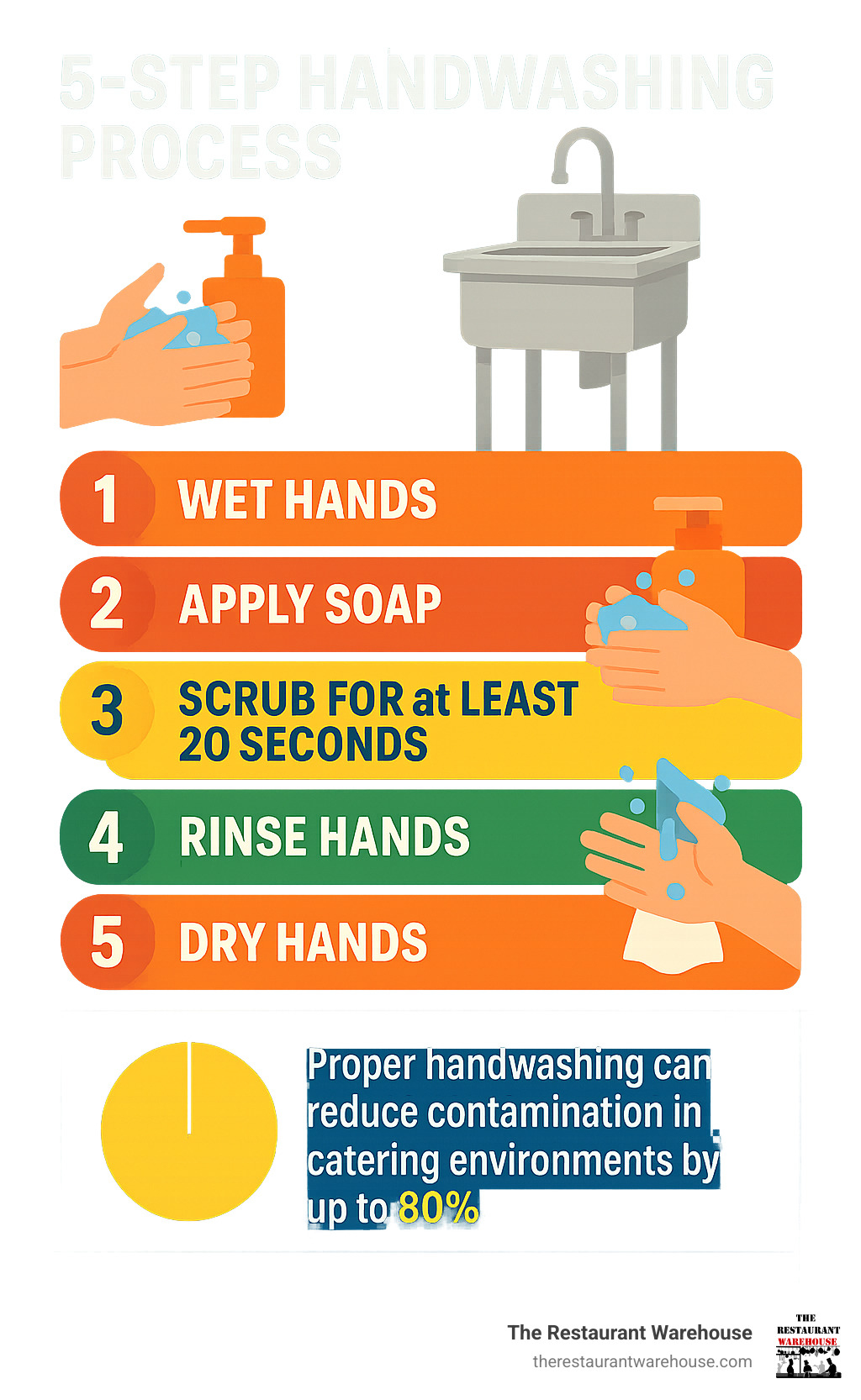
Catering hand wash sink terms you need:
- wholesale catering equipment
- restaurant equipment wholesale
- commercial kitchen stainless steel tables
Why Every Catering Operation Needs a Dedicated Hand Wash Sink
Picture this: you're catering a wedding for 200 guests when a health inspector walks into your setup. They watch your prep cook rinse lettuce in the same sink where another team member just washed their hands. That's an instant violation - and potentially thousands of dollars in fines.
Every successful catering operation needs a dedicated catering hand wash sink that's used exclusively for hand hygiene. This isn't just about following rules; it's about protecting your guests and your business reputation.
The stakes are higher than you might think. Foodborne illnesses affect 48 million Americans every year, and poor hand hygiene is one of the leading causes. When you're serving hundreds of people at a single event, one contaminated dish can create a PR nightmare that destroys years of hard work.
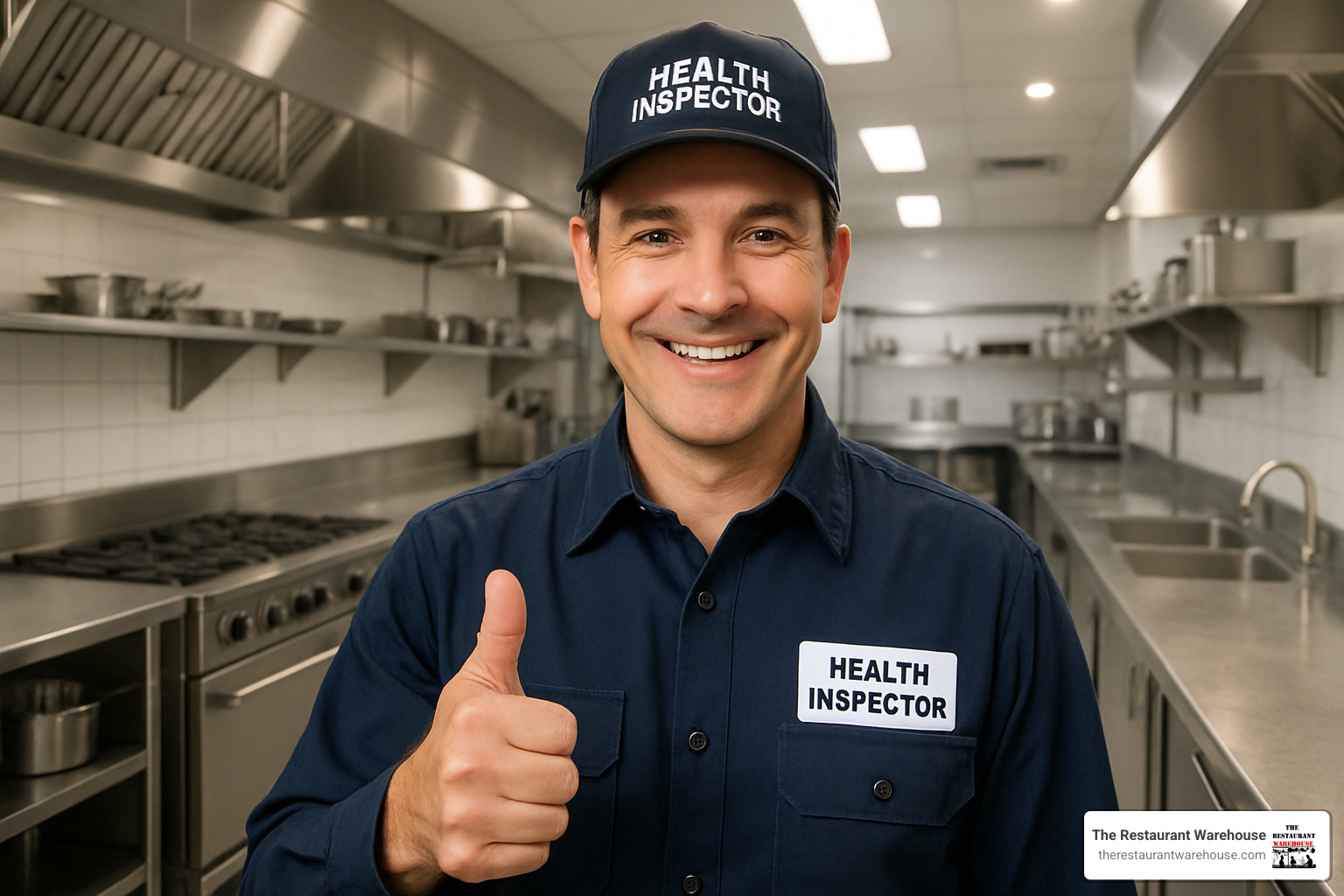
HACCP guidelines make it crystal clear: minimizing the risk of cross-contamination requires dedicated handwashing stations. This means your team needs easy access to sinks that are never used for anything else. No shortcuts, no exceptions.
The good news? When you get this right, health inspectors become your biggest fans. They'll see a professional operation that takes food safety seriously - exactly what you want when building credibility in the catering industry.
Understanding Health Codes and Placement
The FDA Food Code doesn't give you an exact tape measure distance for sink placement, but it does require that handwashing sinks "allow convenient use." For caterers, this creates both challenges and opportunities.
Unlike restaurants with fixed layouts, your catering hand wash sink needs to work in food trucks, outdoor festivals, temporary kitchens, and client venues. The key is making sure your team can wash their hands quickly and easily, no matter where you're set up.
Guidance on sink placement from health authorities emphasizes that "each facility has a unique layout." For catering operations, this means considering factors like accessibility for all staff members, intervening equipment that might block access, and portable equipment that moves around during service.
Most health departments require one hand sink for every 5 employees, one for every 300 square feet of workspace, and one for each prep and cooking area. In catering, this often translates to having multiple portable units or strategically placed permanent fixtures in your commissary kitchen.
Want to dive deeper into commercial sink requirements? Our guide on Commercial Sinks for Restaurants Made Simple breaks down everything you need to know about creating a compliant setup.
Hand Wash Sinks vs. Other Kitchen Sinks
Here's where many caterers trip up - and where health inspectors get really strict. Your catering hand wash sink has one job: handwashing. Period.
You absolutely cannot use it for washing dishes or utensils (that's what 3-compartment sinks handle), rinsing vegetables or food prep (use dedicated food prep sinks), or cleaning equipment (mop sinks are designed for this). Mix these functions and you're asking for trouble.
The science behind this separation is solid. Each sink type follows specific protocols to prevent cross-contamination. Your 3-compartment sink uses the wash-rinse-sanitize sequence for utensils, while food prep sinks handle ingredient preparation safely. When you blur these lines, you defeat the entire purpose of having separate systems.
Think of it like this: you wouldn't brush your teeth in the kitchen sink at home, right? The same logic applies to commercial food service - each sink has its purpose, and mixing them creates health risks.
For more details about how different sink types work together in your operation, check out our Restaurant Mop Sink Guide. Understanding each sink's role will help you create a safer, more efficient catering setup.
Choosing the Right Catering Hand Wash Sink: Types and Options
Alright, let's talk about choosing the perfect catering hand wash sink for your operation! Just like every great chef has their favorite knife, every successful caterer needs the right sink for the job. Your choice really depends on your specific needs. Are you slinging tacos from a food truck? Catering neat outdoor weddings? Or prepping meals in a busy commissary kitchen? Each scenario calls for something a little different.
When you're making your decision, think about things like how portable you need it to be, how much space you have, where your water will come from, the types of events you do, and what the venue requires. For even more guidance on equipping your catering business, be sure to check out our Catering Equip Essentials guide!
To help you get started, here's a quick comparison of the main types of hand wash sinks:
| Feature | Portable | Wall-Mounted | Hands-Free |
|---|---|---|---|
| Installation | No plumbing required | Requires plumbing connection | Varies by model |
| Portability | Excellent - wheels/handles | Fixed location only | Limited to portable models |
| Ideal Use Case | Outdoor events, food trucks | Permanent kitchens, commissaries | High-volume operations |
| Hygiene Level | Good with proper maintenance | Excellent | Superior - no touch points |
| Water Source | Self-contained tanks | Direct plumbing | Depends on installation |
| Cost Range | $160-$930+ | $140-$400+ | $650-$1,300+ |
Portable Hand Wash Sinks
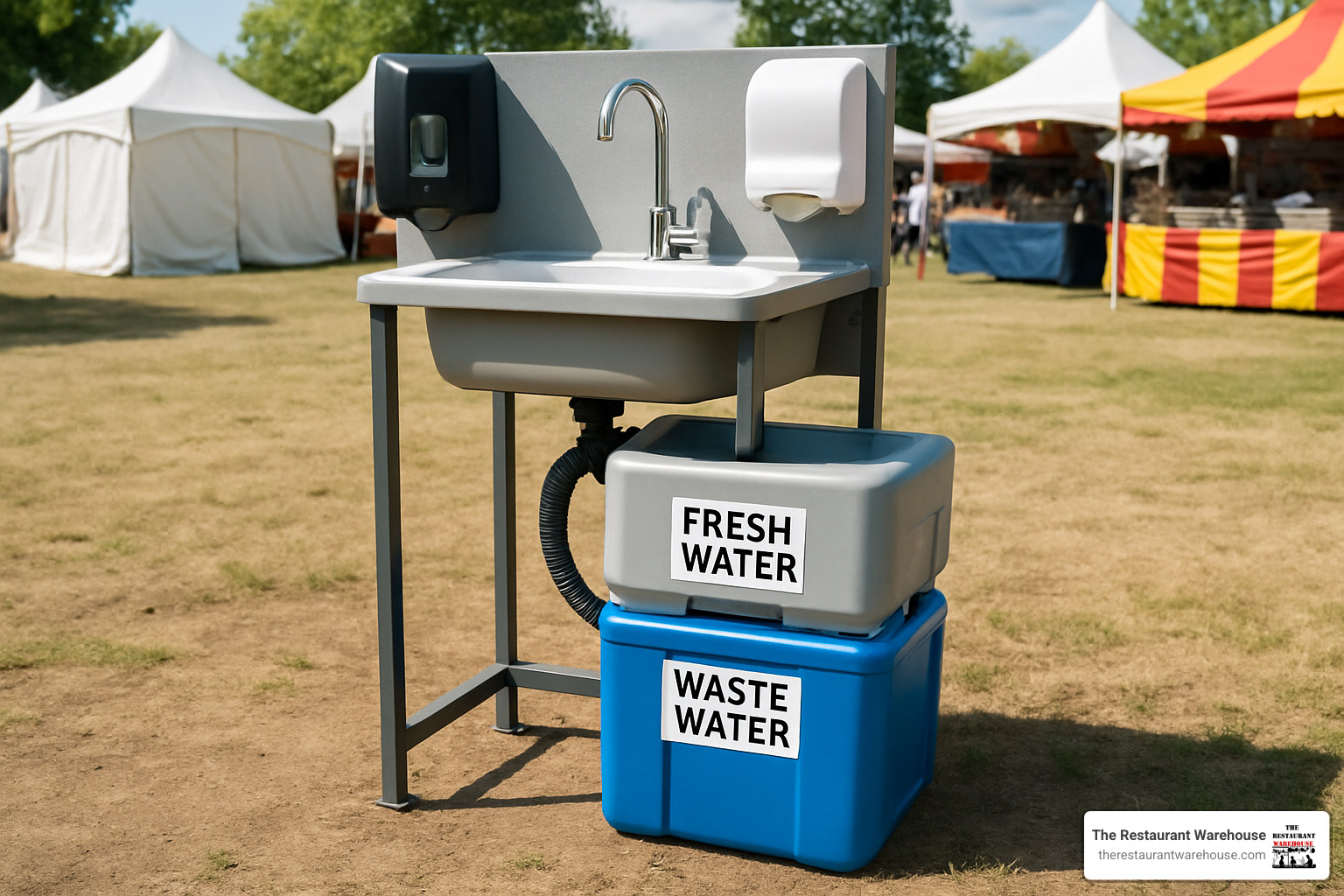
These portable units are the true heroes of the catering world. Think of them as your mobile hygiene stations! They're perfect for outdoor events, lively farmers' markets, busy food trucks, or really, anywhere you need a handwashing station but don't have existing plumbing.
A good quality portable catering hand wash sink is a self-contained unit. It usually features freshwater tanks (often 5-7 gallons for plenty of washes) and a separate wastewater collection tank for the grey water. You'll also love the convenience of integrated soap and paper towel dispensers. Many even come with foot-pump operation, which makes them wonderfully hands-free – a big win for hygiene! Plus, they're designed with mobility features like wheels and handles, so you can easily move them wherever the action is.
The beauty of these sinks is their flexibility. Experts even say that with the right portable handwashing equipment, a street food supplier can maintain a "five-star hygiene rating in the middle of a field"! They're truly ideal for operations with limited space, like food trucks and mobile kiosks, often including their own hot water supply.
The price for these handy units can vary quite a bit. You might find basic models starting around $160, while mid-range options (think $475-$650) offer better materials and larger capacities. And if you're looking for all the bells and whistles, like built-in hot water heaters, premium units can go for $930 and up.
If you're a food truck operator, we've got even more specific recommendations in our Food Truck Sinks Guide.
Wall-Mounted Sinks
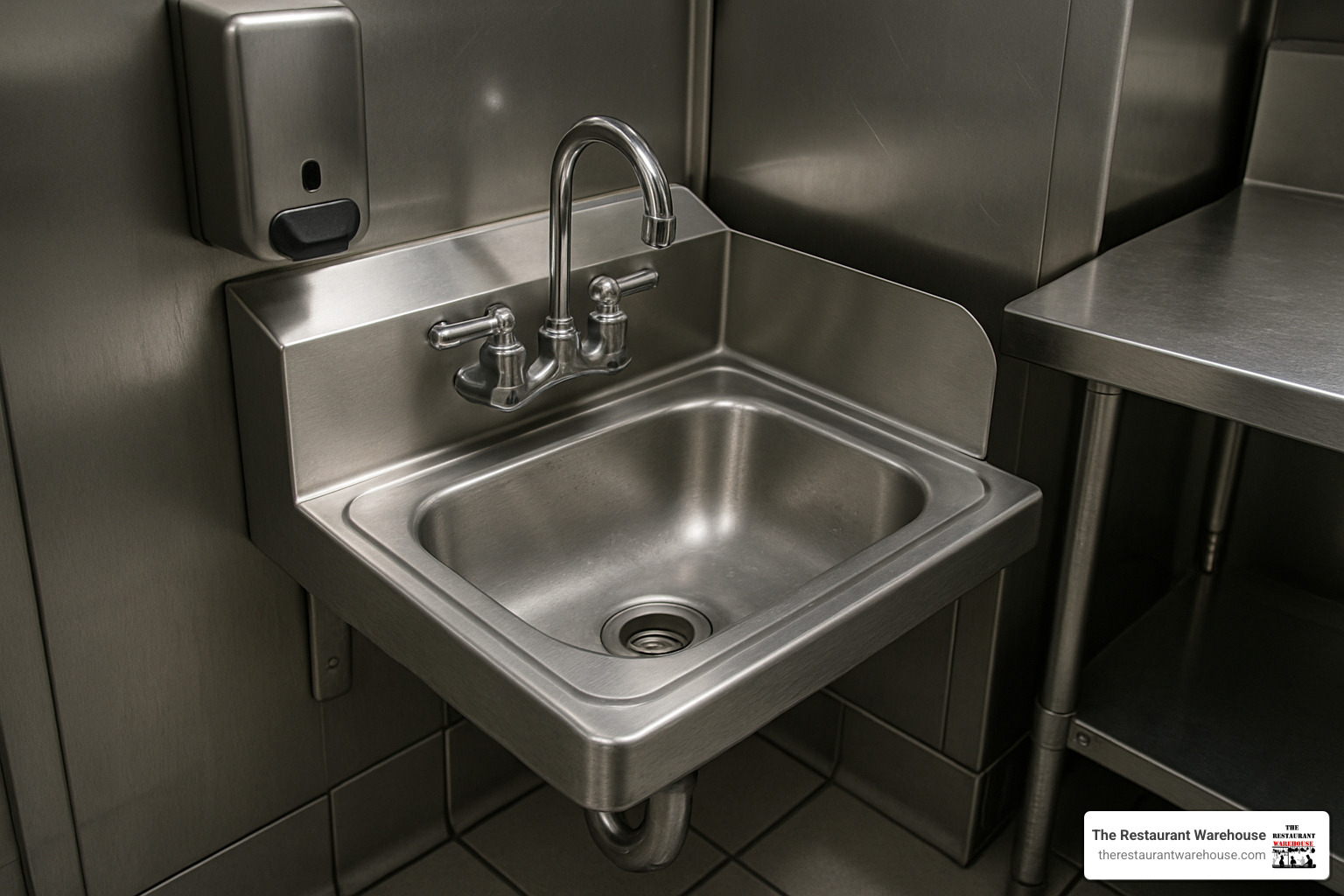
For those permanent spots, like your commissary kitchen, a busy food truck with dedicated plumbing, or a small commercial space where every inch counts, wall-mounted sinks are a fantastic choice. These sinks connect directly to your plumbing, offering a super reliable and long-lasting handwashing solution.
One of the biggest perks of a wall-mounted catering hand wash sink is its incredible space efficiency. Since it's mounted on the wall, it keeps your valuable floor space clear. They're also built for durability with their robust construction, offering consistent performance day in and day out thanks to that direct plumbing connection. And let's be honest, they just give your commercial kitchen a really professional appearance with their clean, integrated look.
When it comes to size, standard wall-mounted hand sinks usually have a bowl that's about 10 inches by 14 inches by 5 inches. But don't worry if space is super tight; you can also find space-saving models as compact as 9 inches by 9 inches by 5 inches. These sinks are almost always made from tough 304 stainless steel, often with an 18 or 20 gauge thickness. This material is not just durable; it's also incredibly easy to clean and resists corrosion, which is a must in any busy kitchen.
Hands-Free Sinks (Knee/Foot Pedal & Sensor)
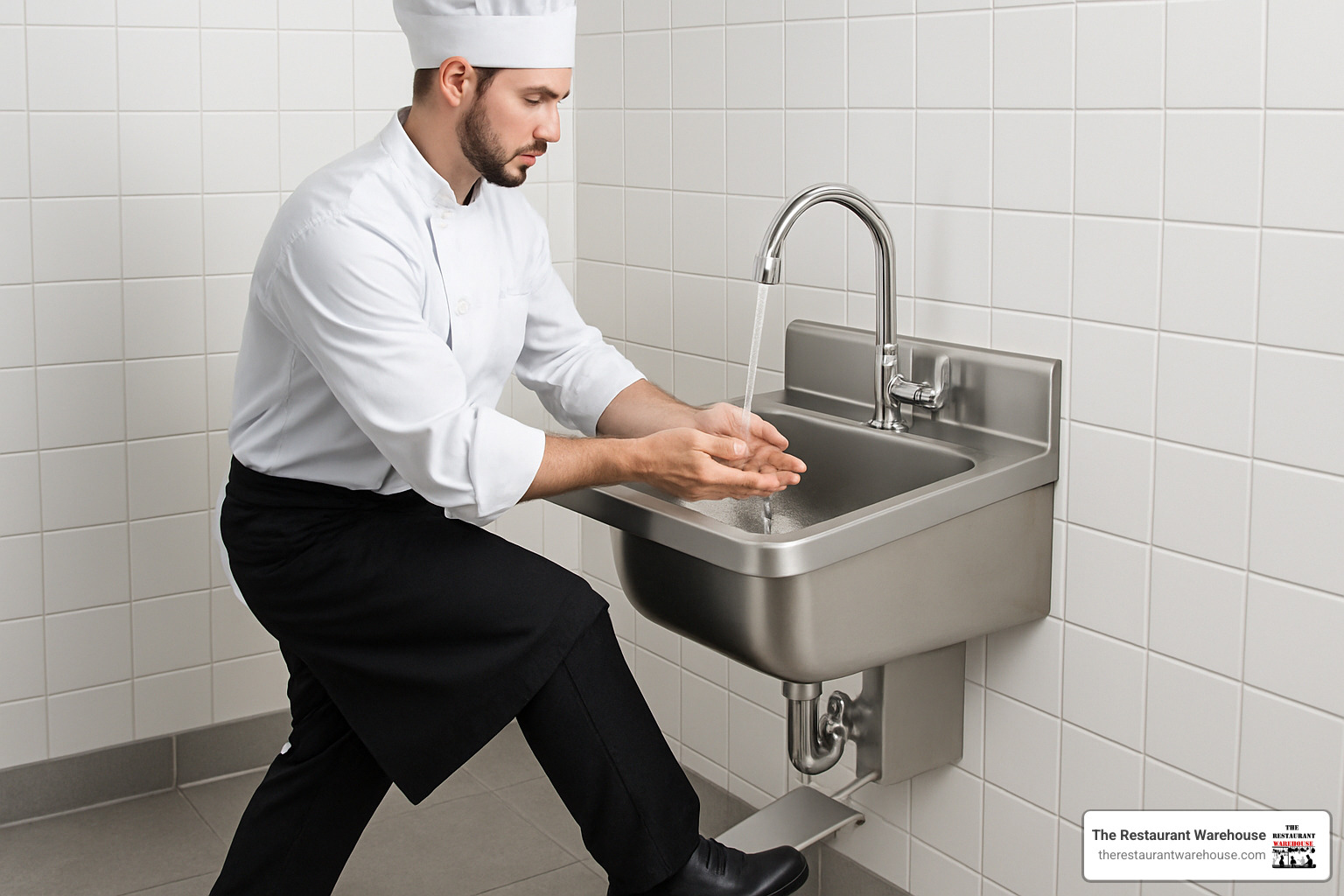
If hygiene is your absolute top priority – and in food service, it always should be! – then hands-free sinks are the gold standard. These systems are designed to eliminate those pesky touchpoints that can harbor bacteria, making handwashing super convenient and safe for your busy kitchen staff.
There are a few clever ways these catering hand wash sink models achieve hands-free operation. You might see knee-pedal valves, where staff simply nudge a pedal with their knee to get the water flowing. Then there are foot-pedal systems, which are activated by stepping on a pedal for maximum hygiene. The most modern versions often use sensor-operated faucets that turn on automatically when hands are detected. And for staff with specific mobility needs, some sinks even offer wrist-operated handles as an alternative.
Research consistently shows that sensor-operated sinks really boost hygiene in commercial settings. And those knee-valve sinks? They're fantastic for a quick, germ-free wash. Even "pedestal type" hand sinks often come with hands-free features to add that extra layer of cross-contamination protection.
For sensor-operated models, expect them to run on a few AA batteries (typically 4) and have a sensor range of about 70-80mm. They can handle a good range of water temperatures, usually from 0-45°C. These are truly ideal for high-volume operations where your team needs super-fast, super-hygienic access to a handwashing station.
Must-Have Features and Materials for Compliance and Durability
When you're choosing a catering hand wash sink, you're doing more than just buying a piece of equipment. You're making a smart investment in your business's reputation, ensuring you meet all the necessary health guidelines, and setting yourself up for long-term success. The right features mean your sink will stand up to tough daily use and sail through health inspections, giving you peace of mind for years to come.
First things first, NSF certification isn't just a nice-to-have; it's absolutely essential for any commercial food service equipment. This certification means your sink meets strict public health standards, which will make your health department very happy. And don't forget ADA compliance! Making sure your handwashing facilities are accessible to everyone on your team is not just good practice, it’s the right thing to do. For a full rundown on what makes a great commercial handwash sink, be sure to check out our Handwash Sink Guide.
Key Features of a Durable Catering Hand Wash Sink
Let's talk about what makes a catering hand wash sink truly great and long-lasting. It all starts with the materials. You'll want 304 stainless steel, which is truly the gold standard for commercial kitchens. It's tough, resists corrosion, and super easy to clean. Look for a good 18-20 gauge thickness – that gives you durability without making the sink too heavy or cumbersome, especially for portable units.
When you're thinking about cleanliness, little details make a big difference. Sinks with coved corners and seamless construction are much better because they eliminate those tricky sharp edges and crevices where bacteria love to hide. Deep-drawn bowls are always easier to clean than ones made from welded pieces.
Then there are those essential components that keep things running smoothly and hygienically. An integrated backsplash is a must-have, typically at least 8 inches high, to prevent water from splashing onto walls and causing damage. Many health codes also require side splashes to keep water contained, especially in busy prep areas. And a gooseneck faucet isn't just for looks – its high arch provides plenty of clearance, making it easier for staff to wash their hands properly without bumping into anything. Finally, a mixing valve is crucial to ensure you always have hot water at the right temperature, typically a minimum of 100°F, as required by health regulations.
Some extra features can really boost your sink's performance. A vacuum breaker is a small but mighty component that prevents dirty water from flowing back into your clean water supply – it's actually required for all service sink faucets! A drain basket helps keep your plumbing clear by catching any debris. Adjustable legs are fantastic for ensuring your sink is at the perfect height for all your staff, and having mounted soap and paper towel dispensers keeps everything tidy and within easy reach.
Best Practices for Your Catering Hand Wash Sink
Having the perfect catering hand wash sink is a fantastic start, but it's only half the battle! To truly protect your operation and impress your guests, proper use and diligent maintenance are key. It ensures your sink continues to be a hygienic superhero for years to come.
Let's talk about daily operation. This might sound obvious, but your hand sink is for handwashing only. Seriously, no exceptions! Don't let it become a dish rinse station or a veggie prep area. Always keep it stocked with the proper supplies – that means plenty of liquid soap and single-use paper towels. Make sure you always have hot water available at that crucial minimum of 100°F. And for a gentle nudge, it’s a great idea to post clear signage with handwashing instructions and friendly reminders for your team.
Maintaining your sink is just as important. Start with a daily cleaning routine, scrubbing the sink, faucet, and drain covers thoroughly. Then, once a week, give it a weekly deep clean by disassembling and cleaning any removable parts. A monthly inspection is a good habit to catch any potential leaks, clogs, or equipment issues before they become big problems. And for long-term care, consider a quarterly professional service to have your plumbing and electrical components checked out.
Finally, supply management is crucial. Keep your soap dispensers filled and consider using antibacterial formulations. Ensure your paper towel dispensers always have an adequate supply and are easy to access. It's smart to keep some backup supplies on hand, especially for those really busy events when you can't run to the store! For even more brilliant tips on keeping your whole kitchen sparkling, check out our Commercial Kitchen Cleaning Tips.
Frequently Asked Questions about Catering Sinks
Let's tackle the most common questions we hear from catering professionals about hand wash sinks. These are the real-world concerns that matter when you're trying to run a successful, compliant operation.
What are the standard dimensions for a catering hand wash sink?
The standard bowl size for a catering hand wash sink is 10 inches by 14 inches by 5 inches deep. This gives your staff enough room to wash their hands and forearms properly without splashing water everywhere.
If you're tight on space (and who isn't in the catering world?), you can find space-saving models at 9 inches by 9 inches by 5 inches. These smaller units work well in food trucks or compact prep areas, but make sure they still meet your local health code requirements.
The overall footprint varies depending on the style you choose. Wall-mounted units typically measure about 15-18 inches wide, 15-21 inches deep, and 32-36 inches high including the backsplash. Portable units are naturally larger because they need space for those integrated water tanks and wheels.
Health departments care about one thing: can your staff wash their hands properly? The bowl needs to be deep enough and wide enough for thorough handwashing technique. That's why these minimum dimensions exist - they're based on actual hand and forearm measurements.
Does my portable sink need to provide hot water?
Yes, absolutely. Health department regulations require hot water reaching at least 100°F for proper handwashing. This isn't a suggestion - it's a legal requirement that health inspectors will check.
The good news is you have several options for getting hot water in a portable setup. On-demand heaters use electricity to heat water as needed, which works great if you have reliable power at your events. Pre-heated thermos systems use insulated tanks that maintain temperature for hours - perfect for shorter events or when electricity isn't available.
Some caterers prefer dual-tank systems with separate hot and cold water supplies, while others use mixing valves that combine the two for optimal temperature. The choice depends on your power situation and how long your events typically run.
Many portable models now include built-in heating elements powered by 12V or 110V electricity. Others rely on pre-heated water stored in insulated tanks. Either way, you need to plan ahead - cold water handwashing won't pass inspection.
How much do catering hand wash sinks typically cost?
The price range is pretty wide, and it all comes down to what features you need. Basic portable foot-pump units start around $160-$330 - these are no-frills models that get the job done for smaller operations.
Mid-range portable models run $475-$650 and typically offer better materials, larger capacity, and more reliable operation. If you're doing regular catering events, this is often the sweet spot for value.
Premium heated portable units can cost $930-$1,300 or more, but they include features like built-in water heating, hands-free operation, and heavy-duty construction that can handle daily use.
Wall-mounted sinks are generally more affordable since they don't need tanks or mobility features. Basic stainless steel models start around $140-$180, while NSF-certified units typically run $200-$400. Add hands-free operation and you're looking at $650-$980 or more.
Several factors affect the final price: material quality (304 stainless steel costs more than 430), size and capacity, special features like heating or sensors, and certifications like NSF and ADA compliance.
At The Restaurant Warehouse, we focus on wholesale pricing that cuts out the retail markup. We avoid high commissions and overhead costs, which means you get professional-grade equipment at prices that actually make sense for your business.
Conclusion: Invest in Hygiene, Impress Your Guests
Alright, so we've talked a lot about the nitty-gritty of catering hand wash sinks, haven't we? But let's zoom out for a second. This isn't just another piece of equipment for your catering business; it's a true investment in your future. Every time your team washes their hands properly at one of these stations, you're doing something huge: you're protecting your guests, building your reputation, and safeguarding your bottom line.
Think about it this way: the catering industry runs on trust. Your guests trust you to serve delicious, safe food at their most important events. Health inspectors trust you to follow every rule in the book. And your amazing staff trusts you to provide them with the right tools to do their jobs safely and effectively. A dedicated catering hand wash sink supports all these vital relationships. It gives your team convenient, easy access to proper hygiene, helps you sail through health inspections with a smile, and clearly shows everyone that you're absolutely committed to food safety.
Choosing the right sink means you're prepared for anything. Whether you're rocking an outdoor festival and need a reliable portable sink, setting up a permanent base in a commissary kitchen where a sturdy wall-mounted unit shines, or aiming for the ultimate in cleanliness with a hands-free option, there's a perfect fit for your operation. Always remember, looking for 304 stainless steel and NSF certification is your shortcut to durability and compliance. And of course, keeping that sink clean and well-maintained is key to its long-term success!
Here at The Restaurant Warehouse, we totally get the unique challenges that come with running a catering business. Every dollar counts, and you need equipment that works as hard as you do without breaking the bank. That's why we've built our business on providing professional-grade gear at wholesale prices, skipping the high commissions and fancy retail overhead. We're not just selling sinks; we're helping you build a safer, more successful catering operation from the ground up.
So, seriously, investing in the right catering hand wash sink isn't just about buying equipment. It's about buying peace of mind. It's about solidifying your brand's reputation for excellence. It's about serving every dish with confidence. If you're looking for more guidance on equipping your entire commercial kitchen, be sure to explore our comprehensive Commercial Kitchen Equipment Guide.
Remember: clean hands don't just lead to happy guests – they lead to a thriving, successful business. Make that smart investment today, and serve your way to success tomorrow!
About The Author

Sean Kearney
Sean Kearney used to work at Amazon.com and started The Restaurant Warehouse. He has more than 10 years of experience in restaurant equipment and supplies. He graduated from the University of Washington in 1993. He earned a BA in business and marketing. He also played linebacker for the Huskies football team. He helps restaurants find equipment at a fair price and offers financing options. You can connect with Sean on LinkedIn or Facebook.
Leave a comment