


How to Choose the Best Shop Refrigeration Units
In a busy kitchen, every step counts. The flow of your workspace can make the difference between a smooth service and a chaotic one. Your refrigeration is a critical part of that workflow. Is your low-boy chef base right next to the grill, or are your cooks constantly walking across the kitchen to a reach-in? The right shop refrigeration units, placed strategically, can streamline your prep process, speed up service, and reduce staff frustration. This guide focuses on the practical side of choosing equipment, helping you select units that not only store your food safely but also enhance your kitchen’s overall efficiency.
Does Your Refrigeration Help or Hurt Your Business?
When setting up or upgrading a foodservice operation, shop refrigeration units are among the most important investments you'll make. With dozens of types, sizes, and features to consider, comparing your options to find the right fit is essential for success.
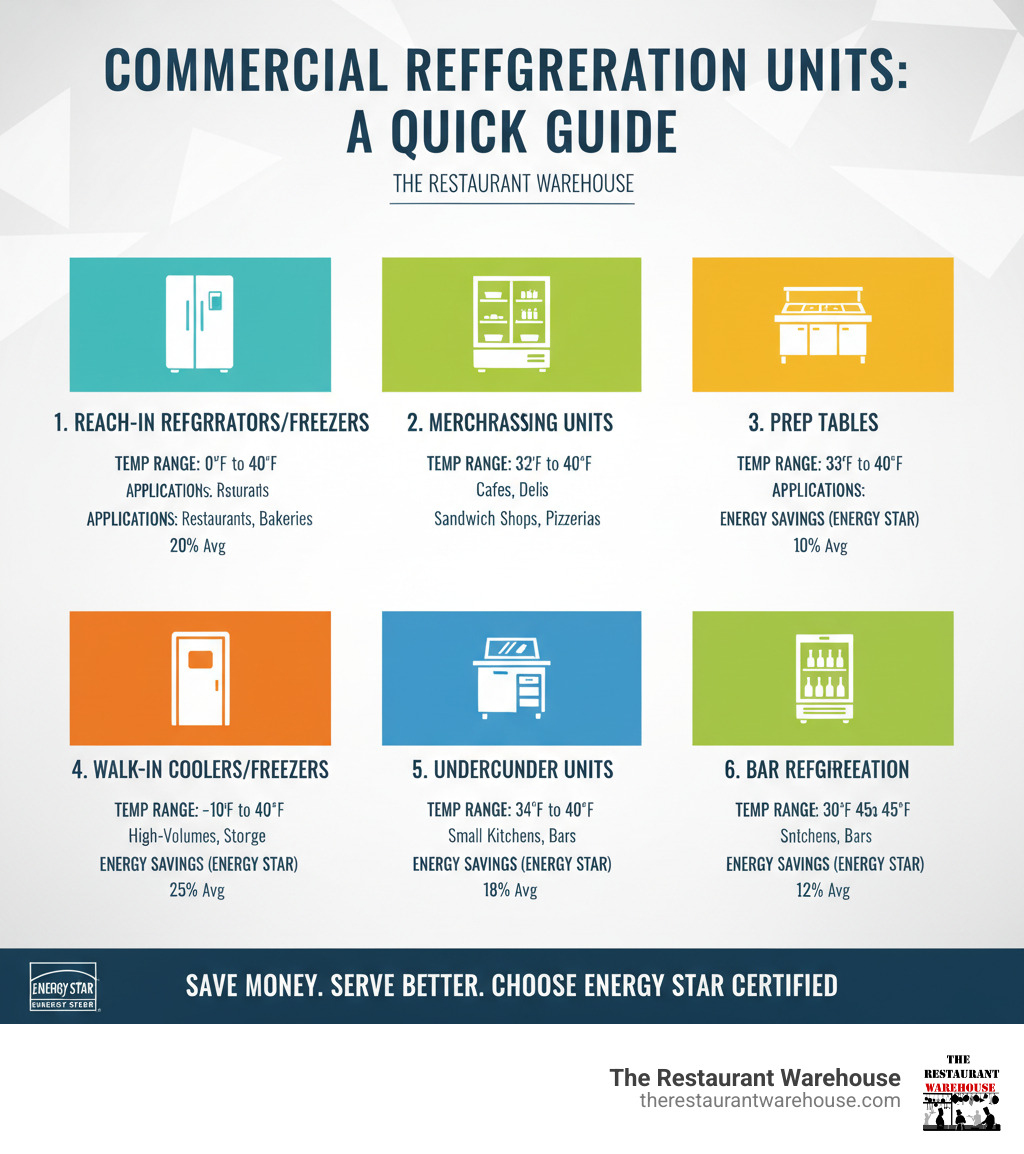
Quick Comparison Guide for Shop Refrigeration Units:
| Unit Type | Best For | Key Benefit |
|---|---|---|
| Reach-In Refrigerators/Freezers | Restaurants, bakeries, catering | Essential storage for prepared food and ingredients |
| Merchandising Units | Cafes, convenience stores, delis | Display products while keeping them cold |
| Prep Tables | Sandwich shops, pizzerias | Cold storage + workspace in one unit |
| Walk-In Coolers | High-volume operations | Maximum storage capacity |
| Undercounter Units | Small kitchens, bars | Space-saving storage and workspace |
| Bar Refrigeration | Bars, pubs | Proper temperature for beverages |
The stakes are high. The right refrigeration keeps your food safe, your customers healthy, and your business compliant with health codes. The wrong unit can lead to spoilage, lost revenue, and failed inspections. Temperature regulation is not optional in foodservice; commercial refrigerators must maintain temperatures at or below 40°F (4°C), while freezers need to stay at 0°F (-18°C). Unlike residential units, commercial refrigeration is designed and tested to handle hot kitchen environments, frequent door openings, and the demands of professional use. According to the FDA Food Code, proper refrigeration is one of the most critical factors in preventing foodborne illness.
Whether you're outfitting a new restaurant or upgrading an aging cafe, understanding the landscape of commercial refrigeration will help you make smarter purchasing decisions. This guide breaks down the types of units available, the factors you should consider, and how to balance quality with your budget.
What Are the Different Types of Commercial Refrigerators?
Not all shop refrigeration units are created equal. A busy restaurant kitchen has different needs than a corner convenience store, and a craft cocktail bar requires something entirely different from a bakery. Understanding these distinctions is key to running an efficient, profitable business.
Think of commercial refrigeration as a family of specialized tools, each designed to solve specific problems. The main categories include reach-in refrigerators and freezers, which serve as the workhorses for storage; merchandising refrigeration, which displays products to customers; and prep refrigeration tables, which combine cold storage with a workspace.
Other types include bar refrigeration for beverages, undercounter units for saving space, walk-in coolers for bulk storage, blast chillers for rapid cooling, and display cases for showcasing items in bakeries or delis. Ready to see what's available? Explore our full range of refrigeration units at https://therestaurantwarehouse.com/collections/commercial-refrigeration to find exactly what your operation needs.
For Bulk Storage: Reach-In and Walk-In Coolers
When you need to keep large quantities of food at precise temperatures, reach-in and walk-in shop refrigeration units are the backbone of your operation. Reach-in refrigerators and freezers are the units you'll interact with most, maintaining temperatures between 33°F and 41°F for refrigerators and 0°F to -8°F for freezers. They come in various sizes, from single-section to three-section units.
Door choice is important: solid doors offer better insulation, while glass doors let you see inventory without opening the unit, saving cold air. The compressor's location also matters. Top-mount compressors are positioned away from floor-level dust, meaning less frequent cleaning. Bottom-mount compressors benefit from cooler air near the floor but require more cleaning. They also offer an ergonomic advantage, as the bottom shelf is higher.
For massive quantities, walk-in coolers and freezers are essential. These large-scale units are more energy-efficient per cubic foot than multiple reach-ins and provide organized storage with customizable shelving. Many heavy-duty models feature reinforced flooring for moving heavy loads. Contact us today at https://therestaurantwarehouse.com/pages/contact-us to discuss the best configuration for your storage needs.
Show Off Your Products: Display and Merchandising Units
In customer-facing areas, your shop refrigeration units act as silent salespeople. Glass door merchandisers turn refrigeration into marketing, showing off beverages, pre-packaged meals, and snacks. Modern units feature brilliant LED lighting that makes products look irresistible while using less energy. The transparent design encourages impulse purchases in a way solid-door units cannot.
Open-air merchandisers take convenience a step further by eliminating doors, allowing customers to grab what they want without a barrier. This speeds up service but consumes more energy. They work best in climate-controlled environments where the energy cost is offset by increased sales.
Specialized display cases serve specific niches. Bakery cases keep pastries and cakes at the perfect temperature while making them look delicious, and deli cases present meats and cheeses with visual appeal. These units are ideal for convenience stores, cafes, bakeries, and grocery stores.
Streamline Your Workflow: Prep and Specialized Units
Specialized and prep shop refrigeration units put cold storage right at your workstation, eliminating wasted steps and streamlining workflow.
Sandwich and salad prep tables feature a refrigerated work surface with cold storage underneath. The top typically includes refrigerated pans for holding frequently used ingredients like lettuce, tomatoes, and meats, keeping them at hand.
Pizza prep tables follow the same concept but are designed for pizza making, with ample space for stretching dough and refrigerated storage below for toppings. A raised rail accommodates pans, keeping everything within arm's reach.
Chef bases are low-profile refrigerated drawers designed to be placed within the cooking line. They allow you to store proteins and other ingredients right where you cook them, which is incredibly convenient during high-volume service.
Bar refrigeration includes a category of units designed for beverage service. Back bar storage keeps bottled and canned drinks organized, while bar coolers chill beer and wine. Glass chillers ensure every drink is served in a perfectly chilled glass, enhancing the customer experience.
Undercounter units and worktop refrigerators maximize space by providing cold storage with an additional prep surface on top. They are available as refrigerators, freezers, or convertible dual-temp models, making them perfect for smaller kitchens.
Rapid Cooling and Freezing Solutions
Food safety is non-negotiable, and cooling hot food quickly is a major part of that. Blast chillers are designed for this exact task. These powerful machines rapidly bring down the temperature of hot foods, moving them through the temperature danger zone (40°F to 140°F) where bacteria multiply fastest. This process not only ensures food safety but also preserves the texture, flavor, and nutritional value of your ingredients, which is crucial for batch cooking and meal prep. By integrating a blast chiller, you can safely prepare food ahead of time, streamlining your kitchen's workflow for peak service hours. Check out our selection of commercial freezers to see how high-performance cooling can fit into your operation.
Beverage and Countertop Display Units
For many businesses, refrigeration is also a key part of the sales strategy. Merchandising refrigeration units use glass doors and bright, efficient lighting to show off chilled food and drinks to customers. These are perfect for bakeries, cafes, and convenience stores where impulse buys make a real difference to the bottom line. Unlike a standard storage cooler, a merchandiser is built to be customer-facing, turning your inventory of bottled drinks, packaged sandwiches, and desserts into an attractive display. By placing these units in high-traffic areas, you can effectively market your grab-and-go items. Explore our range of commercial refrigerators to find a display unit that works for you.
Niche and Industry-Specific Equipment
Beyond standard coolers and prep tables, the world of commercial refrigeration includes a wide array of highly specialized equipment. Many operations have unique needs that require a specific solution. For example, schools and coffee shops often rely on milk coolers to keep milk at the perfect temperature for dispensing. Bars and restaurants need dedicated ice machines to keep up with drink orders. Some suppliers even offer heated cabinets that sit alongside refrigeration units to manage both hot and cold holding. Whatever your menu or service style, there is likely a piece of equipment designed to make your job easier. You can shop restaurant equipment of all types to find the perfect fit for your kitchen's specific demands.
Beyond the Basics: Custom and Specialized Units
Sometimes, a standard, off-the-shelf unit just won’t cut it. Whether you’re working with an unconventional floor plan or building a brand with a very specific aesthetic, custom refrigeration can be the answer. Customization allows you to get a unit that not only performs perfectly but also fits seamlessly into your space and brand identity. This could mean a walk-in cooler built to the exact dimensions of an awkward corner or a front-of-house merchandiser that matches your restaurant’s color scheme. Since custom solutions can be a larger investment, exploring restaurant equipment financing can make these tailored options more accessible for your business.
Custom-Built Coolers for Unique Spaces
Not every kitchen is a perfect rectangle with unlimited space. Historic buildings, food trucks, and small urban cafes often present unique layout challenges that standard equipment can’t solve. This is where custom-built coolers come in. You can work with manufacturers to design walk-in or reach-in units that fit into unusual footprints, under low ceilings, or around structural obstacles like support columns. This functional customization ensures you are making the most of every square inch of your available space, which is critical for an efficient and productive kitchen. Instead of compromising your workflow to fit the equipment, you can get equipment that fits your workflow.
Cosmetic Customization Options
In today’s visually driven world, the look of your equipment matters, especially for units in customer-facing areas. Your refrigeration can be a part of your decor and brand identity. Many manufacturers now offer cosmetic customization options that go far beyond the standard stainless steel finish. You can often choose from a variety of custom colors and hardware to ensure your units complement your interior design. A sleek, black glass-door merchandiser might fit perfectly in a modern bar, while a retro-colored unit could be the centerpiece of a vintage-style diner. This attention to detail helps create a cohesive and memorable experience for your guests.
How to Choose the Right Shop Refrigeration Unit
The right shop refrigeration units for your operation depend on factors unique to your business. It's not about finding the "best" unit—it's about finding your unit. Making a hasty decision based solely on price can lead to expensive and frustrating mistakes, such as a refrigerator that can't keep up with your kitchen's heat or one that runs out of storage space during your busy season.
A smart approach starts with asking key questions: How much space do you have? What are you storing? How hot does your kitchen get? How often will the doors be opened? What is your realistic budget, including purchase price, energy bills, and maintenance costs?
These considerations directly impact your daily operations, food safety compliance, and bottom line. A unit that's too small leads to wasted trips or unsafe food storage, while one that's too large wastes energy. Understanding what to look for makes the decision much clearer.
How Much Space and Capacity Do You Really Need?
Before choosing a model, grab a tape measure. Start by measuring your installation space—width, depth, and height. Also, consider door swings to ensure they don't block traffic paths. You must account for ventilation clearances specified by the manufacturer to ensure proper airflow and prevent the compressor from overworking.
Next, consider the internal volume, measured in cubic feet, which determines how much product you can store. This requires an honest look at your menu, delivery schedule, and peak business hours. The shelving configuration is also important; adjustable shelves offer flexibility as your needs change.
A pro tip: plan for future growth potential. Buying a slightly larger unit today can save you from needing a new one in a couple of years. It's not just smart planning—it's good financial sense.
Standard Commercial Refrigeration Dimensions
When you start shopping for commercial refrigerators, you'll notice that "standard" dimensions can vary quite a bit depending on the type of unit. For example, compact under-counter models are typically 24 to 48 inches wide, making them perfect for tight spaces. The workhorse reach-in refrigerators have a much wider range, spanning from 26 inches for a single-door unit to 78 inches or more for a three-door model. Depths usually fall between 24 and 36 inches, while heights can go from 34 inches for a low-profile unit to 84 inches for a tall reach-in. For high-volume operations, walk-in coolers are the solution, and they generally start at 6 feet square and go up from there. Knowing these general ranges helps you narrow down your options based on the space you have available.
Planning for Installation and Airflow
Once you have a general idea of the size you need, it's time for precision. When you're measuring your space, remember that the listed dimensions for a unit often don't include protruding parts like door handles. Always double-check the spec sheet for the total depth. More importantly, you can't just slide a refrigerator into a space that's an exact fit. Commercial refrigeration units need room to breathe. You must leave extra space around the top, back, and sides for proper airflow. This ventilation prevents the compressor from overheating, helping the unit run efficiently and extending its lifespan. A cramped unit has to work harder, which means higher energy bills and a greater risk of mechanical failure.
Considering Door Types for Your Space
The type of door you choose has a big impact on both energy efficiency and workflow. Solid doors are the champions of insulation. Because they hold in cold air more effectively, they are generally more energy-efficient, making them a great choice for back-of-house storage where you don't need to see the contents at a glance. On the other hand, glass doors are fantastic for merchandising and quick inventory checks. They allow your staff—or your customers—to see what's inside without opening the door, which saves cold air and reduces the time the compressor needs to run. This is why you'll often see them in busy prep lines or customer-facing areas. You can explore a wide variety of both solid and glass door models when you shop restaurant equipment with us.
Mapping Your "Pack-Out" Strategy
Beyond the external dimensions and cubic footage, you need to think about your "pack-out" strategy. This term simply refers to how you plan to arrange and fit products inside the refrigerator. Your pack-out plan directly influences what size and type of unit will work best for you. For instance, will you be storing full-size sheet pans, bulky boxes, or small, individual containers? Answering this question helps you choose a unit with the right shelving configuration and internal layout. A well-organized unit not only maximizes your storage capacity but also ensures proper airflow around your products, which is crucial for maintaining safe temperatures in both refrigerators and freezers. Thinking about your pack-out ahead of time helps you select a unit that truly fits your operational needs.
Find the Right Refrigeration for Your Business Type
Understanding your specific business type helps narrow down which shop refrigeration units will serve you well.
- Restaurants typically need a diverse setup, including reach-ins for easy access, a walk-in cooler for bulk storage, and specialized bar refrigeration.
- Cafes often focus on merchandising display units for grab-and-go items and undercounter units for keeping milk and pastries close at hand.
- Convenience stores rely on glass-door merchandisers to showcase cold beverages and snacks, with the goal of maximizing visibility and easy customer access.
- Butcher shops require robust cold storage with precise temperature control to maintain the quality and safety of expensive proteins.
- Bakeries need a mix of display cases for finished products and cold storage for sensitive ingredients like dough and buttercream.
- Bars focus on keeping drinks at optimal serving temperatures using back bar coolers, glass frosters, and wine refrigeration.
If you're unsure which configuration makes sense for your operation, contact us at https://therestaurantwarehouse.com/pages/contact-us for efficient model recommendations custom to your specific business type.
What's the Real Cost? Budgeting for Your Unit
Focusing only on the upfront cost is one of the most expensive mistakes you can make. The real question isn't "What does this cost today?" but "What will this cost me over its lifetime?"
Energy consumption is a major factor, as commercial refrigeration runs 24/7. ENERGY STAR certified models use about 20% less energy, which can translate to thousands of dollars in savings over the unit's lifespan. Maintenance expenses also add up. Some units are designed for easy repair with accessible components, which can save you money on service calls and downtime.
At The Restaurant Warehouse, we offer wholesale pricing benefits by skipping the high commissions and retail overhead of traditional dealers. This allows you to afford a higher-quality, more efficient unit for less. Your return on investment (ROI) comes from reduced food spoilage, compliance with health codes, and longer equipment life.
We also offer ways to stretch your budget with our scratch and dent sales, which feature fully functional units with minor cosmetic imperfections at significant discounts. Budgeting for shop refrigeration units requires looking beyond today and planning for the true cost of ownership.
Typical Price Ranges for New Equipment
Let's talk numbers. The price for new commercial refrigeration can range from a few hundred dollars to tens of thousands, so it helps to know what to expect. For standard reach-in commercial refrigerators, you might see prices anywhere from about $700 to over $6,500, with a typical unit landing around the $2,500 mark. For larger operations needing a walk-in cooler, the investment is much greater, with prices starting around $6,500 and going up to $79,000 or more depending on size and customization. This wide range reflects differences in capacity, brand reputation, and features like glass doors or energy-efficient components.
What really drives that price tag? Size is the biggest factor—a single-door unit will always be more affordable than a three-door model or a massive walk-in. Features like digital temperature controls, stainless steel construction, and ENERGY STAR certification also influence the final cost. While it's tempting to go for the cheapest option, remember that a slightly higher upfront investment in a reliable, efficient unit can save you money on energy bills and repair costs down the line. We focus on providing quality, affordable shop restaurant equipment to fit any budget, and options like restaurant equipment financing can make it easier to get the right unit for your business without a huge initial cash outlay.
Go Green and Save: Why Efficiency Matters
Investing in energy-efficient shop refrigeration units isn't just good for the environment; it's good for your bottom line. Since your refrigeration runs 24/7, even small efficiency gains can lead to significant savings on your utility bills. With modern refrigeration technology, you don't have to choose between being green and staying in the black.
Energy-efficient units reduce your carbon footprint while delivering real savings. To understand what makes a unit efficient, you can learn more about ENERGY STAR standards at https://www.energystar.gov/products/commercialfoodserviceequipment/commercialrefrigerators_freezers, which set the bar for performance. If you're not sure which models would work best for your operation, we're here to help—just contact us at https://therestaurantwarehouse.com/pages/contact-us for efficient model recommendations.
How ENERGY STAR Certification Lowers Your Bills
ENERGY STAR certified commercial refrigerators and freezers are, on average, 20 percent more energy efficient than standard models. This translates to significant savings over the unit's lifetime—often hundreds or even thousands of dollars.
These savings come from smart engineering. Certified units feature high-efficiency components like ECM (Electronically Commutated Motor) fan motors and advanced compressors that cool more effectively with less energy. Many also use innovative systems to prevent condensation without relying on constant-run electric heaters. Additionally, many states and utility companies offer rebates for purchasing ENERGY STAR certified equipment, which can further offset the upfront cost.
What to Know About Refrigerants and GWP
The refrigerant that cools your shop refrigeration units has a significant environmental impact. Traditional refrigerants, known as hydrofluorocarbons (HFCs), have a high Global Warming Potential (GWP), contributing to climate change if they leak.
The industry is shifting toward lower GWP options. Natural refrigerants like R-290 (Propane) and R-600a (Isobutane) have a very low GWP and are becoming standard in many commercial units. Another option is R-744 (CO2), which has a GWP of 1, making it one of the most environmentally friendly choices. Choosing units with these refrigerants is not only a responsible choice for the planet but also an investment in modern, efficient technology.
Understanding Technical Specs and Performance
Beyond the labels and certifications, the real performance of a refrigeration unit comes down to its technical specifications. Two of the most important factors are its ability to hold a consistent temperature under pressure and its energy use, especially when you're storing large volumes of product. Getting these details right is what separates a smart investment from a constant headache. While it's easy to focus on size or door style, the components that do the heavy lifting—like the compressor, insulation, and temperature recovery system—are what will truly impact your daily operations, food quality, and budget for years to come.
Temperature Capabilities
Temperature regulation is not optional in foodservice; it's the foundation of food safety. Commercial refrigerators must maintain temperatures at or below 40°F (4°C), while freezers need to stay at a steady 0°F (-18°C). Unlike the fridge in your home, commercial units are engineered to perform in demanding environments. They are built to recover their temperature quickly in hot kitchens, even when the doors are opened frequently during a busy service. This robust design is a non-negotiable feature that ensures your inventory stays safe, your business remains compliant with health codes, and you minimize the risk of costly food spoilage.
Energy Efficiency for Bulk Storage
For businesses handling large quantities of ingredients, a single walk-in cooler or freezer is often a more practical and efficient choice than lining up multiple reach-in units. While the initial investment might be higher, large-scale units are typically more energy-efficient per cubic foot, providing organized, accessible storage that lowers your utility bills over time. Pairing this strategy with an ENERGY STAR certified model can compound your savings, as these units are about 20% more efficient than standard ones. Thinking about long-term operational costs makes choosing the right equipment a strategic financial decision, and options like restaurant equipment financing can make it more accessible.
Built to Last: What to Look for in a Quality Unit
When you're investing in shop refrigeration units, you're buying reliability, performance, and peace of mind. The difference between a high-quality unit and a lesser one often comes down to its features and construction, which directly impact its durability, longevity, and performance under stress.
Recognizing Reputable Brands and Quality Signals
When you're looking at a sea of stainless steel, it can be tough to tell which shop refrigeration units are built to last and which will let you down. This is where brand reputation and clear quality signals become your best friends. A well-known brand name often comes with an expectation of performance, reliability, and accessible customer support if something goes wrong. Think of it as a shortcut to quality. It’s not just about paying for a logo; it’s about investing in a piece of equipment that has been tested and proven in busy kitchens just like yours. Looking for these signals helps you move past the price tag and focus on the long-term value a unit will bring to your business.
Well-Known Commercial Refrigeration Brands
In the world of commercial refrigeration, some names just carry more weight. Brands like True Manufacturing have earned a "best-in-class" reputation by consistently producing durable and reliable equipment made right here in the USA. While premium brands are always a solid choice, many other manufacturers offer an excellent balance of quality and affordability, which is perfect for new or budget-conscious businesses. The key is to research the brands within your price range. Look at customer reviews, check warranty information, and see what other professionals in your industry are using. A brand's history of performance in real-world commercial settings is one of the strongest indicators of the quality you can expect.
Indicators of Quality and Reliability
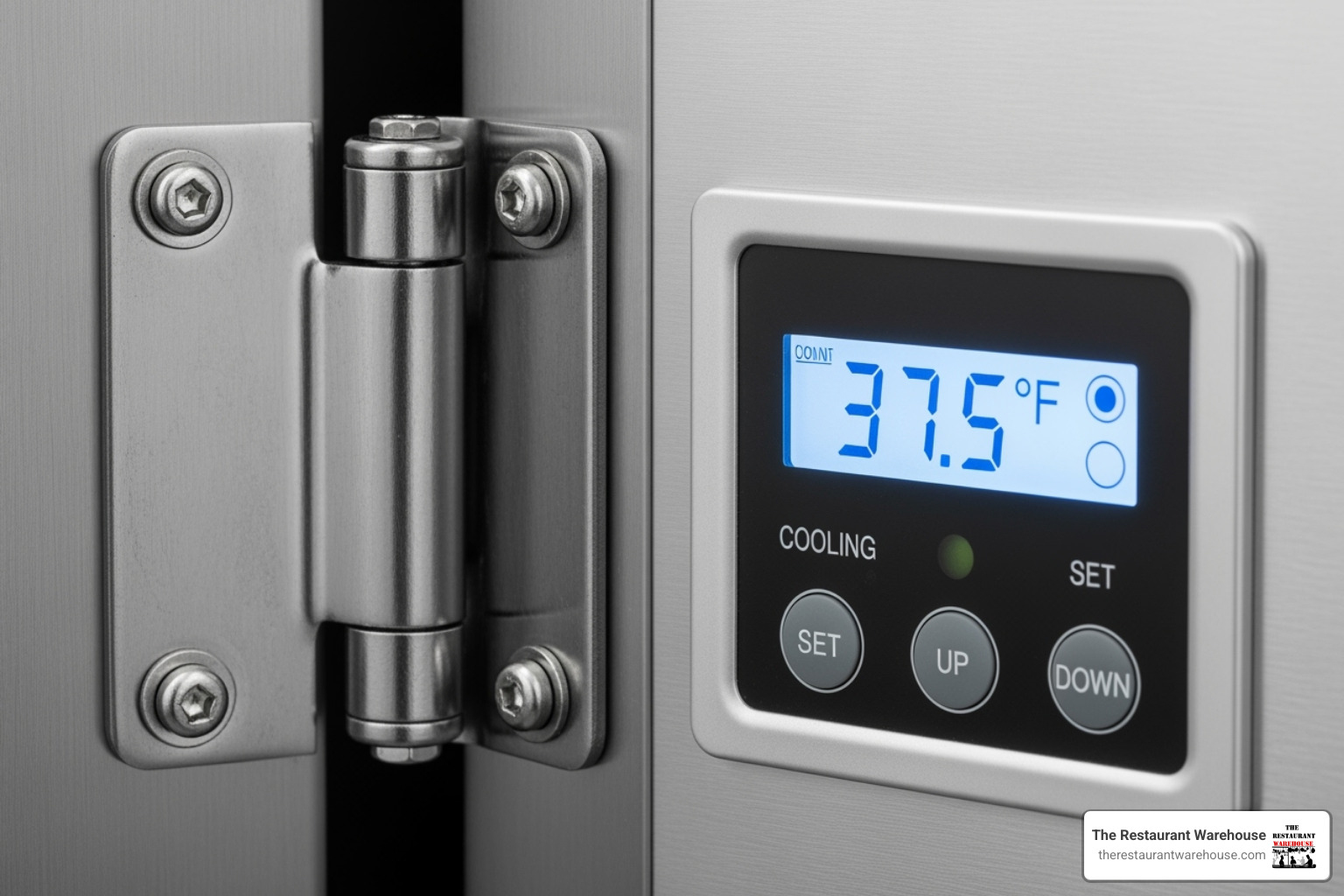
Beyond the brand name, the physical construction of a unit tells you a lot about its durability. Look for high-grade stainless steel exteriors and interiors, which resist corrosion and are easy to clean. Pay attention to the details: are the door hinges heavy-duty? Do the gaskets create a tight seal? These small components make a huge difference in efficiency and longevity. A quality compressor is the heart of any refrigeration unit, so look for brands known for their reliable cooling systems. For businesses like restaurants, hotels, and catering companies, this reliability is non-negotiable for safely storing food and drinks. Investing in a well-built unit means fewer service calls and less downtime for your business.
Checking for Safety Certifications
Certifications are your proof that a unit meets rigorous industry standards for safety, sanitation, and efficiency. The ENERGY STAR logo is one of the most important ones to look for. Certified commercial refrigerators and freezers are about 20% more energy-efficient than standard models, which can save you thousands of dollars on utility bills over the unit's life. You should also look for an NSF mark, which certifies that the unit meets public health standards for sanitation and is safe for food storage. Finally, a UL or ETL certification means the electrical components have been tested for safety. These aren't just suggestions; they are essential for passing health inspections and ensuring your kitchen is a safe place to work.
Non-Negotiable Features for a Quality Refrigerator
The best shop refrigeration units share certain characteristics that make your life easier while protecting your food inventory.
- Digital temperature controls allow you to set and monitor exact temperatures, ensuring food safety and compliance.
- Automatic defrost cycles prevent ice buildup and maintain efficiency without manual effort.
- Self-closing doors ensure the unit maintains temperature and doesn't waste energy, even during busy shifts.
- LED interior lighting lasts longer, runs cooler, and consumes less energy than traditional bulbs.
- Adjustable heavy-duty shelving provides the flexibility to reconfigure storage and support substantial weight.
- Low-emissivity glass on display units improves insulation, making them significantly more energy-efficient.
- Cassette refrigeration systems are an innovative feature that allows key components to be easily removed for service, minimizing downtime.
How Construction and Design Impact Longevity
The materials and craftsmanship of shop refrigeration units determine whether they will last for five years or fifteen. Stainless steel interiors and exteriors are the gold standard, as they resist corrosion and are easy to sanitize. High-quality units also incorporate durable aluminum components.
The best manufacturers use superior-grade components and engage in rigorous component testing to ensure longevity. Features like reinforced door hinges and frames provide the structural integrity needed to withstand the daily punishment of a commercial kitchen. The quality of insulation directly affects temperature consistency and energy costs, while ease of cleaning is crucial for daily operations and HACCP compliance. Choosing units with these quality markers is an investment that pays dividends through reliable performance and lower maintenance costs.
After You Buy: Maintenance, Warranties, and Savings
After investing in quality shop refrigeration units, it's crucial to protect that investment. Proper maintenance, understanding your warranty, and finding legitimate savings can mean the difference between equipment that lasts a decade and one that becomes a costly headache.
Why Regular Maintenance is a Must
Preventative maintenance is always cheaper than emergency repairs. Most essential tasks are straightforward and can save you significant money and downtime.
- Regular coil cleaning is critical. Clogged condenser coils force your unit to work harder, driving up energy bills and wearing out components. A simple monthly cleaning can prevent this.
- Gasket inspection is another quick task. Damaged door seals let warm air seep in, forcing the compressor to run more often. If you feel cold air escaping, it's time for a replacement.
- Daily temperature monitoring with an external thermometer ensures your food stays safe and helps you catch temperature drift early.
For complex issues, use professional service technicians. When repairs are needed, insist on OEM (Original Equipment Manufacturer) parts to ensure proper performance and avoid voiding your warranty.
What Does Your Warranty Actually Cover?
A warranty is only valuable if you understand what it covers. Most shop refrigeration units come with parts and labor coverage for a set period, plus an extended compressor warranty. Before buying, confirm the warranty duration for each component and understand the registration process, as many manufacturers require it to activate full coverage.
Pay attention to what's not covered, such as cosmetic damage or problems from neglect. Failing to maintain your unit according to the manufacturer's guidelines can void the warranty. Always read the fine print.
Example of a Strong Manufacturer Warranty
A strong warranty isn't just a piece of paper; it's your safety net. Look for a warranty that clearly outlines comprehensive coverage. A great example is a multi-year "parts and labor" warranty. This means if a covered component fails, the manufacturer pays for both the new part *and* the certified technician's time to install it. This is a huge benefit, as labor costs can often exceed the price of the part itself. Typically, you'll see one to two years of this full coverage. Beyond that, a quality warranty will often include an extended period—usually five to seven years—specifically for the compressor, which is the heart of the unit. This tiered structure shows a manufacturer's confidence in their product's long-term reliability. Before you buy, always confirm you're getting this level of comprehensive protection to avoid unexpected out-of-pocket repair bills down the road.
Tips for Finding a Great Deal on Commercial Refrigeration
Quality doesn't always have to come with a premium price. There are legitimate ways to save on shop refrigeration units without compromising on performance.
- Scratch and dent sales offer fully functional units with minor cosmetic imperfections at a significant discount.
- Overstock equipment allows you to buy brand-new units at reduced prices when distributors need to move excess inventory.
- Discontinued models can be a great find, offering proven technology at a fraction of the original cost.
- Refurbished units are thoroughly inspected and repaired to full functionality, providing a reliable option for tight budgets.
At The Restaurant Warehouse, our wholesale pricing model helps you get quality equipment at prices that make sense for your bottom line. Contact us at https://therestaurantwarehouse.com/pages/contact-us for efficient model recommendations and let's talk about what works for your operation.
Consider High-Quality Used Equipment
Exploring the used market can be a fantastic way to acquire reliable equipment without the brand-new price tag. Many smart business owners look at used equipment first, as it can be just as good as new but costs significantly less. The key is to be a discerning shopper. When inspecting a pre-owned unit, check the door gaskets for a tight seal, listen for unusual compressor noises, and verify that it holds a consistent temperature. While this route requires a bit more diligence, the savings can free up capital for other areas of your business. If you're weighing your options, exploring restaurant equipment financing for a new unit can also provide a manageable path to getting the exact model you need.
Look for Overstock and Discontinued Models
Another great strategy for saving money is to keep an eye out for overstock and discontinued models. These are brand-new units that are being sold at a discount simply because a manufacturer is clearing out inventory to make room for next year's designs. Discontinued models can be a great find, offering proven technology at a fraction of the original cost. You get the benefits of a new machine—including the warranty and pristine condition—without paying the full retail price. It’s a savvy way to shop restaurant equipment and get maximum value for your investment.
What's Next in Commercial Refrigeration?
The commercial refrigeration industry is constantly evolving, making shop refrigeration units smarter, more efficient, and easier to manage. These innovations are practical tools that can save you money and give you better control over your operations.
Smart technology is changing how we interact with our equipment. Many modern units now feature IoT (Internet of Things) integration, connecting your refrigerators and freezers to the internet for remote monitoring. This allows you to check temperatures, track energy use, and receive alerts on your smartphone, helping you prevent disasters like spoiled inventory before they happen.
Another key development is adaptive cooling technology. Instead of operating at a single fixed temperature, these advanced systems automatically adjust the cooling air based on the specific product being stored. This precise control keeps food fresher for longer and maintains better quality, turning a simple cold box into a sophisticated food preservation system.
The push for improved energy efficiency and sustainable manufacturing also continues. Manufacturers are developing more efficient compressors, better insulation, and smarter control systems while using more recyclable materials and designing units that are easier to repair. These innovations are available today and can provide significant benefits for your business.
Frequently Asked Questions about Shop Refrigeration Units
How long do commercial refrigerators last?
The lifespan of shop refrigeration units typically ranges from 10 to 20 years. This depends heavily on the initial build quality, the intensity of use, and, most importantly, how well you maintain it. Regular maintenance, such as cleaning condenser coils and checking door seals, can add years to a unit's operational life. Investing in a durable unit from the start and following a preventative maintenance plan is the best way to maximize your return on investment.
What is the ideal temperature for a commercial refrigerator and freezer?
For food safety and health code compliance, commercial refrigerators must be kept at or below 40°F (4°C). This temperature slows bacterial growth and keeps perishable foods safe. Commercial freezers must maintain a temperature of 0°F (-18°C) to properly preserve frozen goods. It's a good practice to use an external thermometer to regularly verify these temperatures, as built-in displays can sometimes be inaccurate. Commercial units are specifically engineered to maintain these critical temperatures in demanding kitchen environments.
What's the difference between a top-mount and bottom-mount compressor?
This refers to the location of the compressor, and each has its pros and cons.
- Top-mount compressors are positioned on top of the unit, keeping them away from floor dust and debris. This can mean less frequent coil cleaning. However, in a hot kitchen where heat rises, they may work harder as they draw in warmer air.
- Bottom-mount compressors are located at the base, where the ambient air is cooler. This can improve efficiency. The bottom shelf is also higher and more ergonomic. The downside is that these compressors are more exposed to floor dust and will require more frequent cleaning to maintain performance.
Making the Right Choice for Your Business
We've covered the essentials of choosing the right shop refrigeration units, from understanding the different types to assessing your specific needs for space, capacity, and budget. We've seen how focusing on lifetime value over upfront cost—by choosing energy-efficient models and quality construction—is a smarter investment.
The journey doesn't stop at the purchase. Protecting your investment through regular maintenance and understanding your warranty is key to longevity. We also explored how newer, low-GWP refrigerants and smart technologies are making refrigeration more sustainable and efficient than ever.
At The Restaurant Warehouse, our mission is to provide you with affordable, high-quality shop refrigeration units without the inflated retail markup. We cut out the middleman to offer wholesale pricing, ensuring you get the best value for your investment. Whether you need a compact undercounter unit or a massive walk-in cooler, we're here to help you find the perfect solution.
The fundamentals remain the same: choose the right equipment, maintain it properly, and balance cost with quality. Ready to explore your options?
Browse our collection of shop commercial refrigeration units today at The Restaurant Warehouse! If you have questions or need personalized recommendations, don't hesitate to contact us we're always happy to help fellow business owners make smart equipment decisions.
Key Takeaways
- Select refrigeration based on your kitchen’s workflow, not just its floor plan: The right unit in the right place streamlines service and reduces staff stress, making your entire operation more efficient.
- Look beyond the sticker price to understand the true cost of ownership: An energy-efficient model with quality construction will save you far more on utility and repair bills over its lifetime than a cheaper, less reliable alternative.
- Protect your equipment with simple, consistent maintenance: Regularly cleaning coils and checking door seals is the easiest way to prevent expensive emergency repairs and extend the life of your unit.
Related Articles
About The Author

Sean Kearney
Sean Kearney is the Founder of The Restaurant Warehouse, with 15 years of experience in the restaurant equipment industry and more than 30 years in ecommerce, beginning with Amazon.com. As an equipment distributor and supplier, Sean helps restaurant owners make confident purchasing decisions through clear pricing, practical guidance, and a more transparent online buying experience.
Connect with Sean on LinkedIn, Instagram, YouTube, or Facebook.