

Beyond the Basics: Must-Have Small Commercial Kitchen Gear
What is Small Commercial Kitchen Equipment?
Starting a new restaurant or upgrading your existing one often brings up big questions about equipment. But sometimes, the most impactful choices come in smaller packages. Small commercial kitchen equipment and smallwares are the unsung heroes of many successful foodservice operations, crucial for efficiency, menu flexibility, and maximizing kitchen space.
So, what exactly are these smaller items?
- Small Commercial Kitchen Equipment: These are typically countertop, portable, or compact appliances built for specific tasks in a commercial setting. Think commercial blenders, food processors, or countertop fryers. They are designed for durability and continuous use, unlike residential models.
- Smallwares: These are the essential hand tools and non-mechanical items that support daily kitchen operations, from knives and cutting boards to mixing bowls and pans.
Understanding the difference is key. While large equipment forms the backbone of your kitchen, it's the right mix of smaller, specialized gear that allows for nimble operations and a diverse menu without breaking the bank.
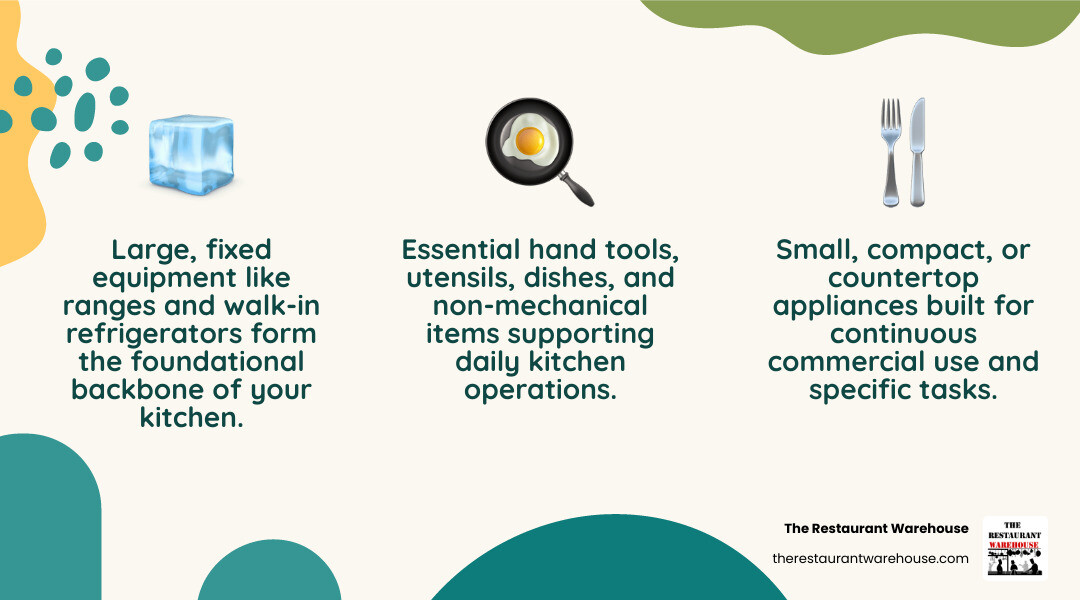
Simple guide to small commercial kitchen equipment terms:
- kitchen equipment suppliers
- commercial kitchen stainless steel tables
- ventless hood systems for restaurants
The Power of Pint-Sized Performers: Why Quality Small Equipment Matters
In foodservice, every inch and second counts. This is where small commercial kitchen equipment shines, changing your entire operation.
- Efficiency: Specialized appliances streamline tasks, reducing manual labor and ensuring consistent results. An induction cooktop, for example, can bring water to a boil significantly faster than traditional methods, increasing throughput for pasta, soups, and blanched vegetables. A commercial food processor chops and slices with incredible speed, freeing up chefs for more creative work.
- Space Optimization: For cozy cafes, food trucks, or concession stands, compact equipment is a lifesaver. Designed to fit on countertops or under benches, these units maximize every available surface, improving workflow and safety.
- Menu Diversification: Want to add fresh juices or signature soups? A commercial juicer or immersion blender lets you expand your menu without the massive investment or footprint of larger units. This flexibility keeps your offerings exciting.
- Food Consistency: Precision is key to customer satisfaction. Digital scales ensure accurate measurements, while a commercial rice cooker delivers perfect results batch after batch, building trust and reducing waste.
- Cost-Effectiveness: With a lower initial price than heavy-duty appliances, small equipment makes it easier for new businesses to start or for established ones to upgrade. The return on investment (ROI) is often quick, thanks to boosted productivity and lower labor costs.
- Portability: For mobile operations like food trucks and catering, portable induction cooktops or countertop fryers are essential. They allow you to bring your kitchen wherever your customers are, opening up new revenue streams.
- Energy Savings: Many smaller units are designed for energy efficiency, especially for targeted tasks, leading to noticeable savings on utility bills over time.
Small commercial kitchen equipment is a strategic investment that pays dividends in efficiency, flexibility, and profitability. For more insights, check out our guide on Must Have Kitchen Tools.
Essential Small Commercial Kitchen Equipment for Every Operation – Updated
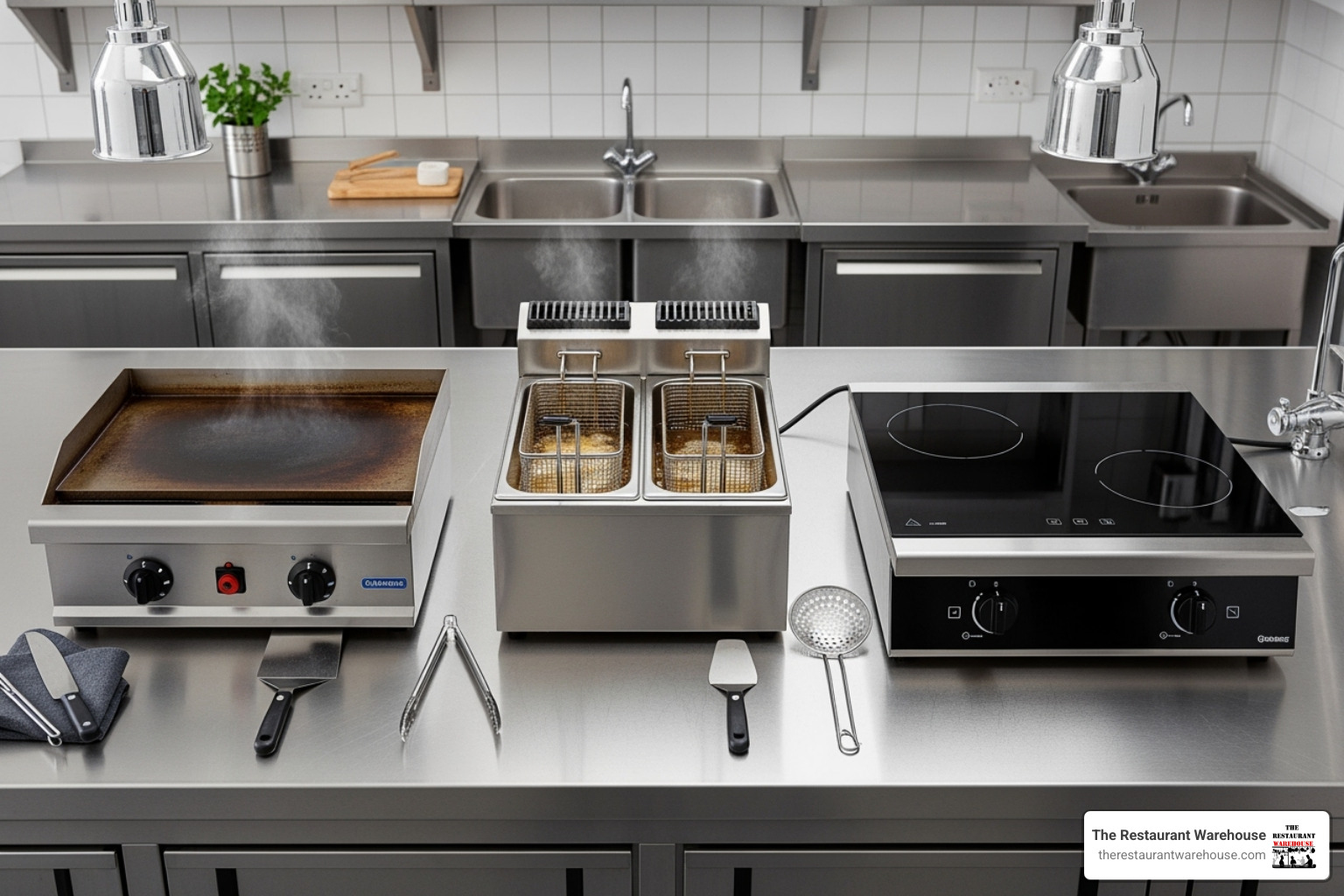
Every successful kitchen relies on the right tools. Small commercial kitchen equipment is categorized by function to help you find exactly what you need to lift your culinary game.
Countertop Cooking: Essential Small Commercial Kitchen Equipment for Heat
These mighty machines bring the heat, fitting perfectly on existing counters and saving space.
- Countertop Griddles: Perfect for breakfast, burgers, and sandwiches. See our Countertop Griddle guide.
- Induction Cooktops: Offer efficient, precise temperature control, ideal for delicate sauces or rapid boiling. Learn more in our Commercial Induction Cooktop Guide.
- Countertop Fryers: A compact solution for deep-frying favorites like fries and chicken tenders. Explore options in our Commercial Countertop Fryers guide.
- Commercial Microwaves: Built for rapid heating and thawing in high-volume environments. Read our Commercial Microwave Guide.
- Hot Plates: Portable burners, available in electric or gas, for supplemental cooking space. Find the best one in our Best Commercial Hot Plate guide.
- Panini Press: A staple for cafes and delis, quickly toasting sandwiches and wraps with signature grill marks.
- Commercial Waffle Maker: Delivers consistent, golden waffles for breakfast or dessert.
- Countertop Steamers: Compact steamers preserve nutrients and flavor while cooking vegetables, seafood, and grains quickly and evenly.
Food Preparation: Must-Have Small Commercial Kitchen Equipment for Efficiency
This equipment makes prep work faster, safer, and more consistent.
- Food Processors: Versatile machines for chopping, pureeing, and mixing, saving hours of manual labor.
- Commercial Blenders: Built for continuous use, perfect for smoothies, sauces, and soups. Check out the powerful Waring CB15 Commercial Blender.
- Immersion Blenders: Portable stick blenders for blending directly in pots, saving time and cleanup.
- Planetary Mixers: Countertop models are essential for bakeries, whipping cream or kneading dough. See our Planetary Mixers.
- Meat Slicer: A must for delis and sandwich shops for consistent slicing of meats and cheeses. See our Meat Slicer 12 Inch options.
- Commercial Rice Cooker: Invaluable for perfectly cooked, fluffy rice every time. Learn more in our Commercial Rice Cooker Guide.
Compact Refrigeration & Cold Holding
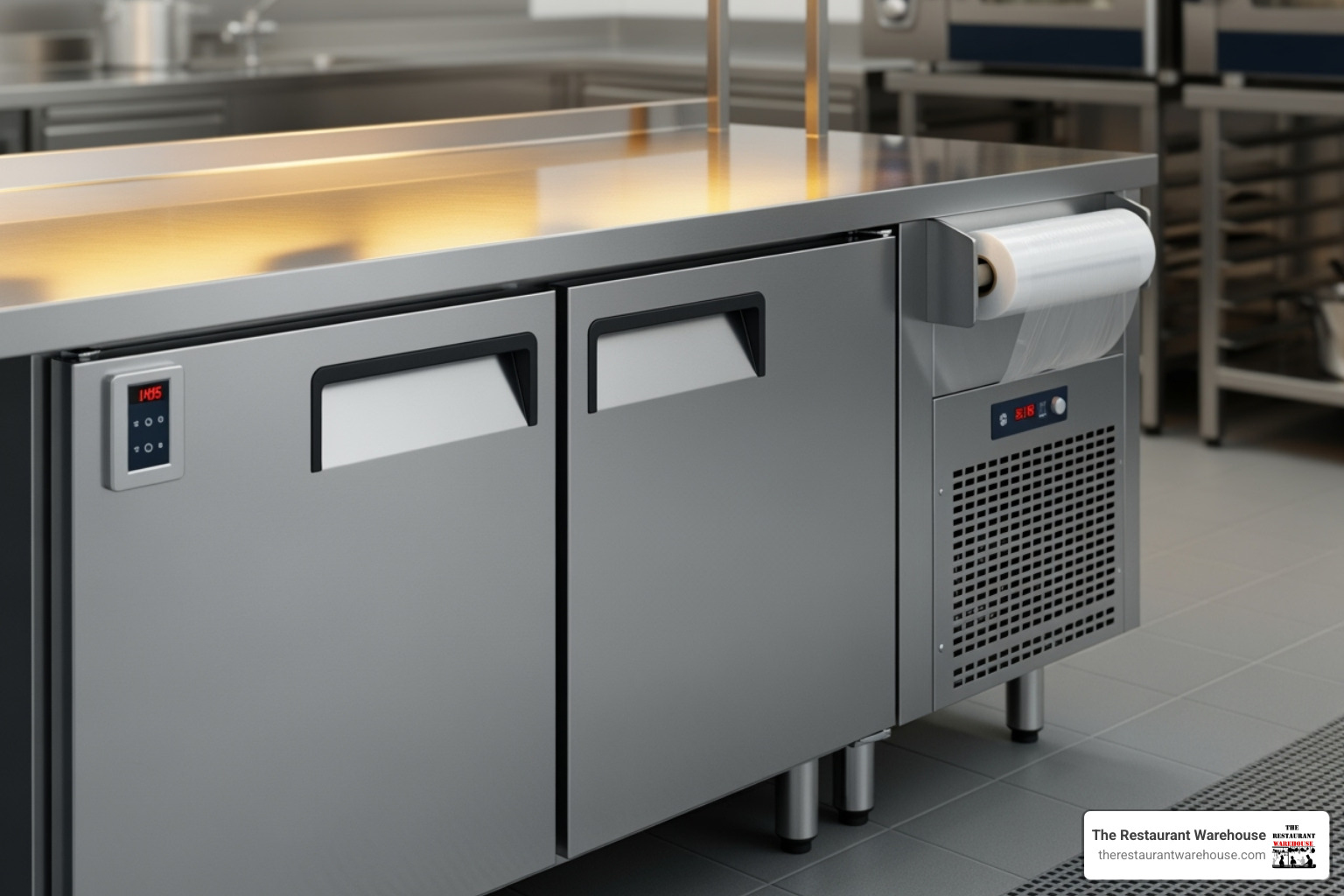
Keep ingredients fresh and accessible in tight spaces.
- Undercounter Refrigerators: Keep frequently used ingredients cool and within reach under your prep area. See our Undercounter Fridges Guide.
- Undercounter Freezers: Offer convenient frozen storage without taking up floor space. Check out the Under Counter Fridge Freezer Guide.
- Sandwich Prep Tables: Combine refrigerated storage with a prep surface and ingredient wells. Explore our 27 Inch Sandwich Prep Table Guide.
- Chef Bases: Refrigerated or frozen drawers that sit under cooking equipment for immediate ingredient access on the hot line. Learn about the versatile Chef Base.
Beverage & Specialty Equipment
Define your niche and improve the customer experience with these additions.
- Commercial Coffee Grinders: Essential for a superior brew, built for continuous use and consistent grinds.
- Slushy Machine: A fun and profitable addition for refreshing frozen beverages. Find one in our Best Slushy Machine 2024 guide.
- Undercounter Ice Makers: Provide a steady supply of ice without a large footprint. See options in our Home Bar Heroes: Best Ice Makers for Your Personal Pub article.
- Hot Dog Grills: Roller grills that cook hot dogs evenly and keep them warm for quick service. Our Hot Dog Grill Guide will help you choose.
Smart Selection: How to Choose the Right Small Commercial Kitchen Equipment
How do you pick the right small commercial kitchen equipment for your kitchen? It’s about finding the perfect fit for your business. Consider these key factors:
- Kitchen Space & Layout: Measure your countertops and consider workflow. Ensure new gear fits seamlessly without causing bottlenecks. Even "small" items impact your layout.
- Menu Requirements: Let your menu be your guide. If you're famous for toasted sandwiches, a panini press is a must. Aligning equipment with your culinary vision ensures every dollar is well spent.
- Power & Utilities: Check your electrical outlets for the correct voltage (120V, 208V, or 240V) and amperage. For gas appliances, ensure you have the necessary hookups and ventilation. Knowing your infrastructure before you buy is critical.
- Budget & ROI: Set a budget, but think beyond the initial price. Consider the return on investment (ROI). A durable, high-performing unit might cost more upfront but can save money on repairs and boost efficiency, paying for itself over time.
- Durability & Materials: Look for sturdy construction, like heavy-duty stainless steel. It withstands the rigors of a commercial kitchen and is easy to clean, which is essential for hygiene.
- Certifications (NSF, ETL): These aren't just letters; they're your guarantee of safety. An NSF certification means the equipment is designed for easy cleaning to prevent food contamination, while ETL ensures it meets electrical safety standards.
- Ease of Cleaning: Time is money, and hygiene is paramount. Equipment with smooth surfaces and removable parts saves your team significant time and effort during cleanup and helps maintain health code compliance.
- Customer Reviews: Real-world feedback from other chefs is invaluable. Reviews can reveal how equipment performs day-to-day, highlighting its strengths and weaknesses under commercial use. Look for consistent patterns in praise or complaints.
When choosing cooking equipment, you'll also face the Gas vs. Electric decision:
| Feature | Gas Countertop Equipment | Electric Countertop Equipment |
|---|---|---|
| Heat Control | Instant on/off, visible flame, traditional chef preference | Precise temperature settings, often digital, more consistent heat |
| Fuel Source | Natural gas or propane | Standard electrical outlets (120V, 208V, 240V) |
| Installation | Requires gas line hookup, proper ventilation is critical | Plug-and-play, simpler installation, but check amperage needs |
| Efficiency | Heat loss around flames, but quick response | More energy-efficient (especially induction), less ambient heat |
| Cost | Often cheaper to operate if gas is inexpensive | Can be more expensive to operate if electricity costs are high |
| Portability | Less portable due to gas line requirement | Highly portable, especially 120V units |
| Maintenance | Burners may need cleaning, gas line checks | Generally lower maintenance, but electrical components can fail |
The best choice depends on your kitchen's infrastructure, energy costs, and cooking style. For mobile kitchens, our Food Truck Equipment List has specialized tips.
Maximizing Your Investment: Maintenance and Operational Tips
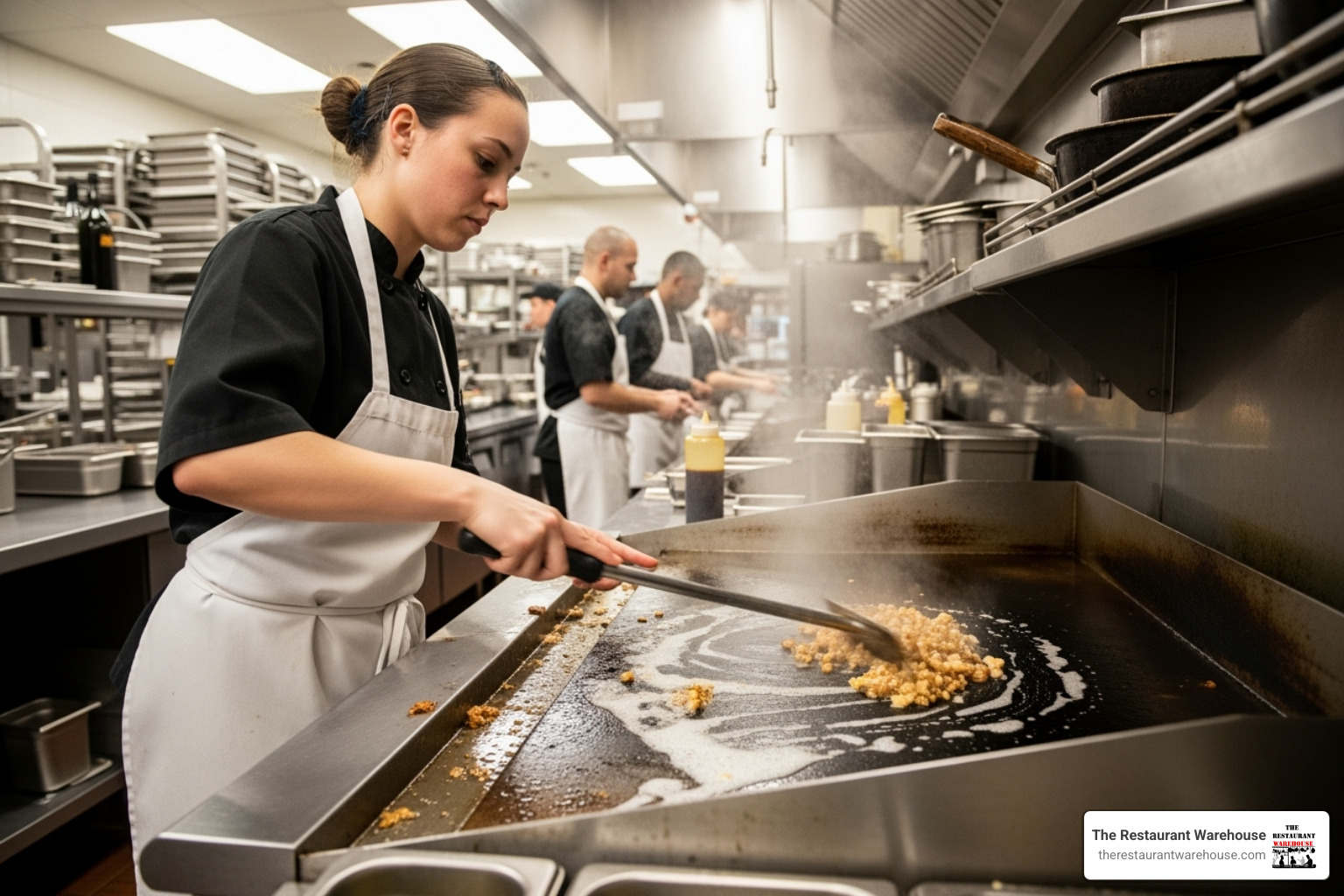
You’ve chosen your small commercial kitchen equipment; now let's make sure it serves you well for years. Proper maintenance is key to longevity, performance, and safety.
A simple daily routine makes a huge difference. After each shift, wipe down all surfaces and wash any components that touch food. A griddle needs a good scrape, and a blender pitcher should be cleaned immediately to prevent buildup. While cleaning, check for signs of wear and tear, like frayed cords or wobbly knobs. Catching small issues early prevents major breakdowns.
In addition to daily cleaning, establish a deep cleaning schedule for each piece of equipment, following the manufacturer's instructions to avoid damage. This might involve weekly degreasing of fryers or monthly descaling of coffee machines.
Proper staff training is essential. Ensure everyone knows how to operate, clean, and troubleshoot each machine safely. This reduces accidents and extends the life of your equipment. Keep the manuals handy; they are packed with valuable information and can be critical for warranty claims.
Safety should always be the top priority. Use equipment according to its safety guidelines, ensure proper ventilation for hot units, and handle sharp blades with care. Finally, consider periodic professional servicing for more complex machines to keep them running at peak performance.
For a practical example, see our guide on How to Operate the Atosa Countertop Electric Fryer: A Step-by-Step Guide. Following these tips protects your investment and keeps your business running smoothly!
The Pre-Owned Path: Is Used Equipment a Viable Option?
While new appliances are appealing, the pre-owned market for small commercial kitchen equipment can be a savvy business move. With a few smart considerations, used equipment is a very viable option.
The most significant benefit is cost savings. You can save thousands on high-quality pieces, freeing up capital for marketing, staffing, or menu development. You also skip the rapid depreciation of new gear. Like a new car, equipment loses value the moment it's put to use. By buying used, you let someone else take that initial financial hit. This often provides access to premium brands that might otherwise be out of your budget.
However, it's important to be aware of the risks to consider. Used equipment usually comes with a limited or no warranty, and its history may be unknown. You might inherit some wear and tear that could lead to future repairs.
To mitigate these risks, here's what to inspect. Check for dents, scratches, and other signs of heavy use. Ensure electrical cords are intact, motors sound healthy, and moving parts work smoothly. If possible, test the equipment under power to check for consistent heating or proper cooling.
Always buy from reputable sellers who specialize in commercial equipment. They often clean, test, and refurbish units, and may even offer a limited warranty. This provides a layer of security you won't get from a private sale. The pre-owned path can significantly reduce your startup costs without compromising on quality. For more guidance, check out our Resources for used equipment.
Frequently Asked Questions about Small Commercial Kitchen Equipment – Updated
We get many questions about small commercial kitchen equipment. Here are answers to some of the most common inquiries.
What's the difference between commercial and residential small appliances?
This is a crucial distinction. While they may look similar, they are built for vastly different purposes.
- Durability: Commercial equipment is made with robust motors and industrial-grade components to withstand continuous, heavy-duty use for hours a day.
- Power: Commercial units have more powerful motors and heating elements for faster, higher-volume performance.
- Certifications: Commercial gear must meet health and safety standards like NSF (for sanitation) and ETL (for electrical safety), which residential appliances do not require.
- Materials: Commercial appliances use high-grade stainless steel for hygiene and durability, unlike the plastics common in home models.
Using residential equipment in a commercial kitchen often leads to frequent breakdowns and can be a health code violation.
How do I know if I need a gas or electric countertop appliance?
The best choice depends on your kitchen's specific needs.
- Kitchen Hookups: Do you have existing gas lines, or is it easier to use electrical outlets? Installing new gas lines can be expensive.
- Ventilation: Gas appliances typically require more robust ventilation, which can be an added cost.
- Cooking Style: Chefs often prefer the instant response of gas, while electric (especially induction) offers more precise, consistent temperature control.
- Utility Costs: Compare the long-term operating costs of gas versus electricity in your area.
- Portability: Electric units are generally more portable, making them ideal for catering or flexible kitchen layouts.
What are the most essential pieces of equipment for a new cafe?
While every cafe is unique, a few core pieces of small commercial kitchen equipment are nearly universal for a successful start.
- Commercial Coffee Grinder & Espresso Machine: The heart and soul of any cafe, providing the foundation for your beverage menu.
- Undercounter Refrigerator: Essential for storing milk, syrups, and food items efficiently in a compact space.
- Panini Press: A versatile tool for offering popular toasted sandwiches and wraps, easily boosting food sales.
- Countertop Steamer: Perfect for reheating pastries, warming croissants, or gently cooking proteins without drying them out.
- Commercial Blender: A must-have if you plan to offer smoothies or other blended drinks.
- Undercounter Ice Maker: Ensures a steady supply of ice for cold beverages without taking up valuable floor space.
Conclusion
We've covered small commercial kitchen equipment, from defining these pint-sized powerhouses to exploring why they are essential for any modern foodservice operation. They are the key to boosting efficiency, maximizing space, and diversifying your menu.
The main takeaway is to make smart, strategic choices custom to your kitchen's unique space, menu, and infrastructure. By considering factors like durability, certifications, and ease of cleaning, you can select the perfect tools to empower your team. Proper maintenance will protect your investment for years, and don't forget that the pre-owned market can be a budget-friendly goldmine.
Here at The Restaurant Warehouse, we believe equipping your kitchen should be affordable and exciting. We supply top-notch commercial restaurant equipment at wholesale prices by cutting out the retail overhead. Our mission is to help you open up your kitchen's full potential, ensuring every piece of gear works hard to make your business a success.
Ready to outfit your kitchen for peak performance? Dive into our full range of options and explore our complete commercial kitchen equipment guide today. Let's build something amazing together!
Looking Forward: Emerging Trends and Innovations in Small Commercial Kitchen Equipment
Innovation in the food-service world doesn’t slow down just because the equipment is “small.” In fact, the compact category is often where manufacturers experiment first, because smaller footprints make it easier to roll out cutting-edge technology and eco-friendly engineering. Below are the biggest trends reshaping how operators plan menus, design workstations, and satisfy an increasingly knowledgeable clientele.
1. Hyper-Efficient Energy Design
Utility bills can eat into razor-thin margins. New countertop fryers, induction units, and refrigerated drawers now sport inverter-driven compressors, variable-speed fans, and advanced insulation foams. Together, these innovations can slash electrical consumption by 15-30 %, and many utilities offer rebates that cut the up-front cost. Keep an eye out for ENERGY STAR® Emerging Tech labels on future roll-outs.
2. Connectivity & IoT Monitoring
Wi-Fi-enabled scales, prep tables, and immersion circulators might sound like overkill, but cloud connectivity solves three persistent pain points: HACCP record-keeping, predictive maintenance, and multi-unit menu consistency. Instead of filling binders with temperature logs, a sensor-filled chef base can upload readings in real time. When a motor starts drawing abnormal current, a service ticket is auto-generated before the unit fails in the middle of a rush.
Even independent operators benefit: firmware updates can squeeze an extra 2–3 % efficiency out of existing hardware without replacing a single component.
3. Sustainable Material Shifts
Sustainability isn’t just a marketing term; it influences purchasing decisions for municipalities, universities, and corporate campuses. Manufacturers are switching from virgin stainless steel to high-recycled-content alloys, reclaiming up to 70 % post-consumer scrap without sacrificing corrosion resistance. For smallwares, composite handles made from coffee-grounds resin or sugar-cane bagasse are beginning to replace petrochemical plastics, lowering the overall carbon footprint of every ticket you ring up.
4. Modular, Tool-Free Maintenance
Nobody enjoys late-night disassembly of a clogged slicer or jammed blender base. Newer designs emphasize slide-out modules, magnetic drive couplings, and finger-release housings that allow tool-free access. A gear housing that once required 20 minutes to reach can now be inspected, cleaned, and re-greased in under five. Faster maintenance equals less downtime, longer motor life, and a happier health inspector.
5. Ergonomic Intelligence
Repetitive-strain injuries are among the leading hidden costs in hospitality. Forward-tilt chutes on food processors, side-mounted drain spigots on steam kettles, and height-adjustable blender stands reduce awkward posture. Expect to see more NSF-listed prep tables with integrated anti-fatigue padding and rounded waterfall edges, all aimed at reducing the literal aches and pains of a 10-hour shift.
6. Precision & Automation for Small Batches
Automation isn’t limited to robotics and conveyor lines. Sophisticated dosing pumps for syrups, AI-assisted portion-scales, and image-recognition slicers are shrinking to countertop size. A tuned-up prep station can crank out consistent portions with gram-level accuracy, cutting food cost variance from 3 % to under 1 %. That variance may sound small, but across 50,000 annual covers, it pays this equipment off twice over.
7. The Rise of Multi-Sensation Dining
Ghost kitchens and micro-concepts live or die by speed to market. Equipment makers now bundle multiple cooking modalities into single footprints—think griddle sections adjacent to char-broilers with drop-in sous-vide wells—all sharing a unified grease trough and splash guard. These hybrid stations exemplify how you can diversify menus without adding multiple, separate pieces of large equipment.
8. Data-Driven Buying Decisions
Historically, chefs relied on vendor reps or tradeshow demos. Today’s operators compare kilowatt usage stats, scroll through crowdsourced review data, and run ROI calculators that incorporate warranty length, expected service intervals, and resale value. We recommend assembling a digital dossier for each candidate purchase, including:
- Real-world energy logs (many brands publish anonymized field data).
- Service bulletin frequency—an indicator of manufacturing refinement.
- After-market parts cost and lead times.
- Second-hand resale pricing, which reveals long-term desirability.
Armed with that data, a seemingly more expensive unit often proves cheaper over a five-year horizon than its bargain-basement counterpart.
9. Micro-Footprint Cold Storage Solutions
We’re seeing a surge in refrigerated drawers that double as scale platforms, telling line cooks exactly how much product remains. Combine that with auto-reorder integrations to your supplier and you’ve created a lean, just-in-time inventory system—no clipboards required. The technology is particularly attractive for food trucks and pop-ups where every cubic inch counts.
10. What It Means for Your Next Equipment Purchase
For operators, these trends translate into tangible competitive advantages: lower utility bills, fewer breakdowns, happier staff, and—most importantly—consistent food that keeps guests coming back. While you don’t need to adopt every innovation on day one, staying informed ensures that each capital expenditure positions your business for the next five years, not the last five.
Before signing the purchase order, ask suppliers how their newest small equipment models address sustainability, connectivity, maintenance, and ergonomic safety. If the answer is "they don’t," keep shopping. The market now offers too many smart, future-proof options to settle for yesterday’s tech.
By aligning your buying strategy with these emerging innovations, you’ll not only meet today’s operational challenges—you’ll set the stage for tomorrow’s growth without relying on oversized, energy-hungry workhorses. Compact, clever, and connected is the new recipe for success.
About The Author

Sean Kearney
Sean Kearney used to work at Amazon.com and started The Restaurant Warehouse. He has more than 10 years of experience in restaurant equipment and supplies. He graduated from the University of Washington in 1993. He earned a BA in business and marketing. He also played linebacker for the Huskies football team. He helps restaurants find equipment at a fair price and offers financing options. You can connect with Sean on LinkedIn or Facebook.
Leave a comment