

Best Commercial Refrigerator Brands for Your Restaurant
Choosing a commercial refrigerator feels like a massive decision, because it is. This single piece of equipment is the workhorse of your kitchen, and the brand name on the door really does matter. You'll constantly hear names like True Manufacturing, Turbo Air, and Avantco and Atosa come up. Each one has carved out its own space in the market by focusing on what matters most to different kitchens. We're talking bulletproof reliability, impressive energy efficiency, or a price tag that respects your budget. Understanding what makes each commercial refrigerator brand unique is the first step to making a smart investment.
They all offer solid solutions, but the best one for you depends entirely on what your kitchen needs.
How to Find the Best Commercial Refrigerator Brand
Making a confident purchase comes down to focusing on the things that will impact your daily operations and your wallet over the long haul. You really want to zero in on a few key criteria:
- Reliability: Can it handle the heat of a busy kitchen and continuous use without quitting on you?
- Energy Efficiency: Is it ENERGY STAR certified? What’s the real-world kWh consumption going to look like on your utility bill?
- Total Cost: What’s the full picture, including the sticker price, maintenance, and potential repair costs down the road?
A busy downtown restaurant, for example, might prioritize a brand with a rock-solid 10-year compressor warranty because downtime is not an option. A small café, on the other hand, could be looking to strike the perfect balance between a lower upfront cost and long-term energy savings.
Quick Look: How the Top Brands Stack Up
| Brand | Reliability | Energy Efficiency | Price Range | Warranty Term |
|---|---|---|---|---|
| True Manufacturing | High | A+ | $$$ | 5 years compressor |
| Turbo Air | Very High | A | $$-$$$ | 4 years compressor |
| Avantco | Medium | B+ | $ | 1 year compressor |
The demand for this kind of equipment is definitely growing. The global commercial refrigeration market is expected to jump from USD 51.66 billion in 2025 to nearly USD 74 billion by 2032. That’s a steady growth rate of 5.3%, with the Asia Pacific region leading the charge, holding 26.14% of the market share in 2024. You can dig into more of these trends on Fortune Business Insights.
And if you want to dive even deeper, check out our detailed guide on commercial refrigerator selection right here at The Restaurant Warehouse.
"True’s American-made compressors often outlast alternatives in heavy-use environments.”
Our Top Picks for Your Business
So, how do you decide? Let’s break it down by situation.
Choose True Manufacturing when durability is your absolute top priority and having quick access to service is critical. You pay a premium, but you’re buying peace of mind.
Opt for Turbo Air if you’re intrigued by features like self-cleaning condensers and need quiet operation for a mid-sized kitchen. They offer a fantastic middle ground.
Select Avantco when the budget is tight or you need a solid unit for a secondary prep station where moderate performance is perfectly fine. It’s all about value.
Here’s another way to think about it:
- True Manufacturing: Ideal for high-volume kitchens that see heavy, relentless daily use.
- Turbo Air: A great fit for busy cafes that would benefit from low-maintenance cleaning cycles.
- Avantco: The go-to for startups, small catering businesses, or anyone on a strict budget.
Don't just look at the spec sheets. Real-world case studies often uncover hidden maintenance costs or reveal major differences in regional support. Always, always verify that there’s reliable local service available before you commit to any brand.
"With over 300+ service centers nationwide, you’re more likely to get faster repairs for True Manufacturing models.”
By weighing these practical comparisons, you’ll be able to pinpoint the commercial refrigerator brand that makes the most sense for your specific operation. Invest with confidence, and get started today.
What Really Matters When Choosing a Refrigerator?
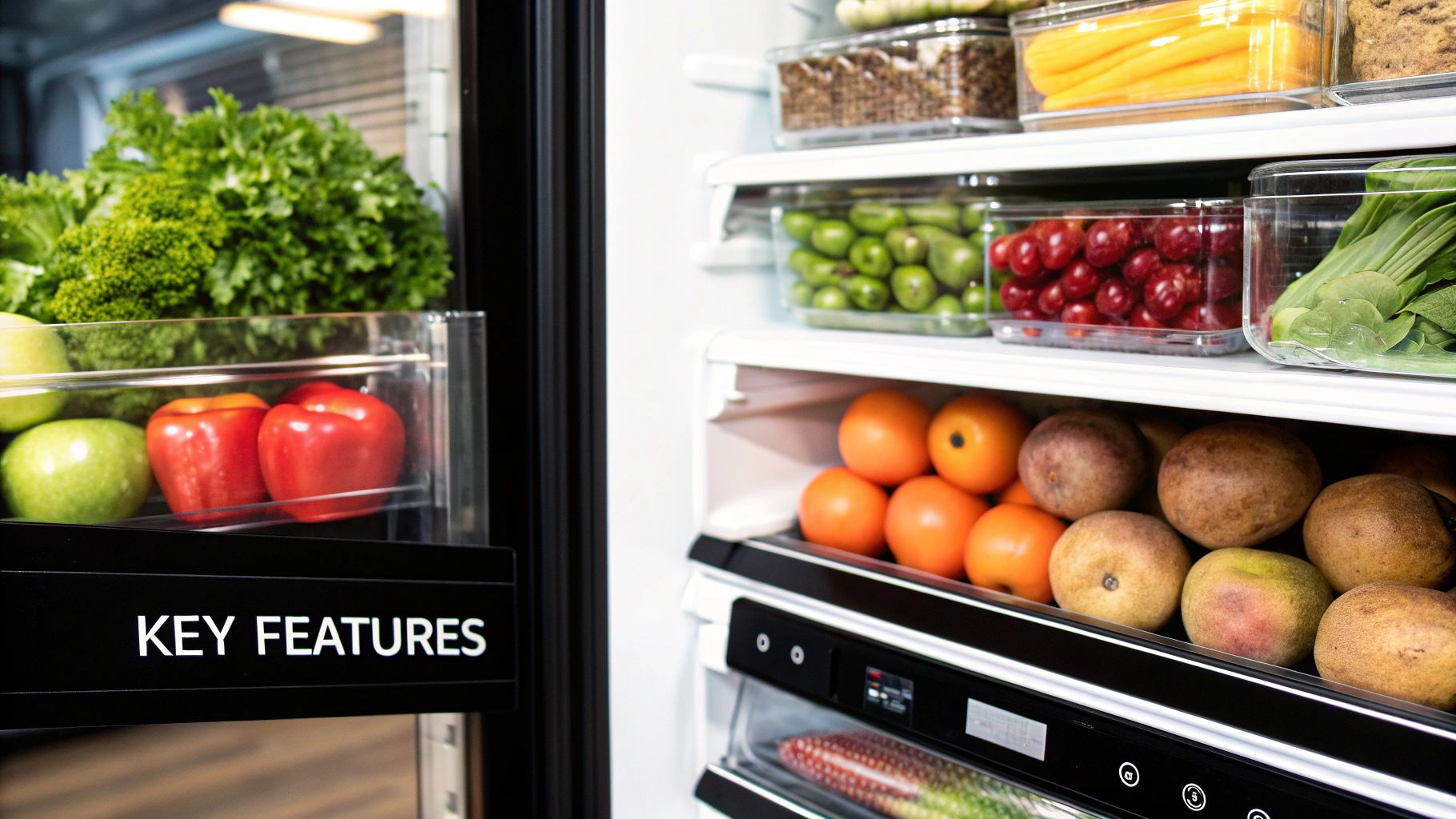
Before you even start looking at brand names, it’s a good idea to get a handle on the core features that really make or break a commercial refrigerator. These are the technical details that directly impact how it runs day-to-day, how long it will last, and ultimately, your bottom line. Making a smart choice starts with knowing what to look for under the hood.
The features you’ll want to prioritize really depend on your kitchen’s unique vibe and workflow. A hot, fast-paced kitchen has completely different needs than a quiet café or a dusty back-of-house storage area.
A Buyer's Checklist: Features to Look For
Beyond the brand, you need to get into the nitty-gritty of the refrigerator itself. These are the practical, hands-on features that will affect your kitchen staff every single day. Think about how you’ll actually use the unit—from loading inventory to grabbing ingredients during a chaotic dinner rush. Getting these details right will make your workflow smoother and your life a whole lot easier. It’s about matching the machine to your specific operational needs, ensuring it works for you, not against you, when the pressure is on.
Capacity and Shelving
First, consider the internal size, measured in cubic feet. This isn’t just about cramming as much as possible inside; it’s about having enough organized space for your inventory. Think about your menu, delivery schedule, and how much fresh product you need to hold. Look for adjustable, heavy-duty shelving that you can customize to fit different-sized containers, from tall stock pots to shallow prep pans. A well-organized refrigerator reduces food waste and saves time during service. Having the right capacity ensures you can keep everything at a safe temperature without overcrowding the unit, which is crucial for both efficiency and food safety.
Temperature Controls and Food Safety
Precise temperature control is non-negotiable for food safety. Look for units with digital thermostats that are easy to read and set, as they offer far more accuracy than older analog dials. The refrigerator's ability to maintain a consistent temperature, even when the doors are frequently opened, depends heavily on the quality of its compressor. As experts often note, "True’s American-made compressors often outlast alternatives in heavy-use environments,” which is a testament to how robust components directly contribute to reliability and keeping your food out of the temperature danger zone. This is a feature where investing in quality pays dividends.
Doors and Seals
The type of door you choose impacts both efficiency and convenience. Solid doors offer better insulation, which can lower your energy bills, while glass doors let you see your inventory at a glance without letting cold air out. Whichever you choose, make sure the doors are self-closing and have tight, magnetic seals. A poor seal can lead to temperature fluctuations and make the compressor work overtime. This is where you should ask, "Is it ENERGY STAR certified? What’s the real-world kWh consumption going to look like on your utility bill?" Good seals and efficient design are key to keeping those operational costs down.
Understanding Key Technical Specs
Now let’s look under the hood. The technical specifications might seem a bit dry, but they are what separate a workhorse from a headache. These details determine how well your refrigerator will perform under the unique pressures of your kitchen environment, from scorching summer heat to rigorous health inspections. Understanding these specs helps you make an investment that pays off in performance and longevity, ensuring your equipment can handle the demands of a commercial setting without faltering when you need it most.
Climate Class: Built for Your Kitchen's Heat
Commercial kitchens are hot, and your refrigerator needs to be able to handle it. That’s where Climate Class comes in. This rating tells you the maximum ambient temperature a unit can operate in while still maintaining its internal cool temperature. A standard refrigerator might fail in a kitchen that regularly hits 90°F or more. As the industry grows, with the commercial refrigeration market expected to reach nearly USD 74 billion by 2032, the demand for equipment that can withstand intense conditions will only increase. Choosing a unit with the appropriate Climate Class for your environment is critical for performance and food safety.
Food Safety and NSF Certification
When you see an NSF (National Sanitation Foundation) certification, it means the refrigerator is designed for commercial use. This certification ensures the materials and construction are easy to clean and won't harbor bacteria, which is essential for passing health inspections. It’s a baseline requirement for any piece of equipment that will touch food in your restaurant. Beyond certification, think about upkeep. You should always "verify that there’s reliable local service available before you commit to any brand." If a certified unit breaks down, you need fast repairs to stay compliant and keep your inventory safe.
Advanced Cooling Technologies
Modern commercial refrigerators often come with features designed to improve efficiency and reduce maintenance. Technologies like self-cleaning condensers, for example, automatically remove dust buildup that can cause a unit to work harder and eventually fail. This is a huge time-saver for busy kitchens. As one recommendation suggests, you might "Opt for Turbo Air if you’re intrigued by features like self-cleaning condensers and need quiet operation for a mid-sized kitchen." These innovations can add to the upfront cost but often save you money and labor in the long run, making them a smart consideration for any restaurant owner.
Why Compressor Placement Is a Big Deal
One of the single biggest design choices you'll make is where the compressor is located. This one factor can determine how well a unit will perform in your specific space, and it's something a lot of people overlook.
-
Top-Mount Compressors: These units are fantastic for environments with a lot of flour, dust, or other debris on the floor. With the compressor up high, it’s less likely to suck in contaminants that can clog the coils and cause it to overheat. The trade-off? They can struggle in kitchens with low ceilings or high ambient heat, since heat naturally rises.
-
Bottom-Mount Compressors: Having the compressor at the bottom makes it much easier to access for service and cleaning. This design also gives you more ergonomic access to the refrigerator's lower shelves, which can reduce strain on your staff. The downside is that they're more vulnerable to dust and debris, meaning you’ll need to be more diligent about cleaning the condenser coils.
A busy pizzeria, for instance, where flour is always in the air, would be a perfect match for a top-mount unit to protect that vital compressor. On the other hand, a café with tight vertical space might find a bottom-mount model to be a more practical fit.
How to Judge Durability and Energy Efficiency
Beyond the compressor, a few other key details can tell you a lot about a refrigerator's quality and its long-term value. Paying attention to these helps you look past the marketing fluff and focus on what will actually benefit your operation.
First off, consider the grade of stainless steel. Higher-quality stainless steel provides much better resistance to corrosion and rust, which is absolutely crucial in a humid kitchen. This isn't just about looks; a durable build is what helps the unit stand up to the heavy, daily abuse common in commercial settings.
An ENERGY STAR certification is pretty much a non-negotiable for any modern kitchen. Certified models are proven to be significantly more energy-efficient than standard units, which translates directly to lower utility bills without sacrificing performance.
Also, the type of refrigerant is becoming more and more important. With regulations constantly evolving, models using eco-friendly refrigerants like R290 (a hydrocarbon) are now the standard. These aren't just better for the environment; they often contribute to better cooling efficiency, too. Understanding these critical factors empowers you to compare the best commercial refrigerator brands based on what truly matters.
More Than Just a Box: Types of Commercial Refrigeration
Once you have a handle on the key features, it’s time to think about the form factor. Commercial refrigeration isn’t a one-size-fits-all category; it’s a diverse lineup of specialized equipment, each designed to solve a specific problem in a professional kitchen. The right choice for a bustling pizzeria will be completely different from what a small coffee shop needs. Understanding the main types of units is the next step in finding the perfect cooling solution for your space, your menu, and your workflow. From massive walk-in units for bulk storage to compact undercounter models that keep ingredients at your fingertips, each style plays a unique role in a well-run kitchen.
Reach-In Refrigerators and Freezers
Think of reach-in units as the workhorses of the commercial kitchen. These are the classic, upright refrigerators and freezers that are essential for nearly every foodservice operation, from bakeries to fine dining restaurants. Available in single, double, or even triple-door configurations, they provide the bulk storage needed to keep ingredients fresh and safely stored. Their vertical design makes them a space-efficient choice for holding everything from produce to prepped sauces. Because they are used constantly throughout the day, features like self-closing doors and durable shelving are incredibly important for maintaining temperature and withstanding the rigors of a busy service.
Undercounter and Worktop Units
When space is tight or you need ingredients within arm's reach, undercounter and worktop refrigerators are the perfect solution. These compact units are designed to fit neatly beneath standard countertops, placing cold storage directly within your prep stations. This setup is a game-changer for efficiency, as it eliminates the need for chefs to walk back and forth to a central refrigerator. Worktop models take this a step further by offering a durable, food-safe surface on top, effectively combining your prep space and cold storage into one streamlined piece of restaurant equipment.
Display and Merchandising Refrigerators
Display refrigerators do more than just keep items cold—they help you sell. These units, often called merchandisers, feature glass doors that showcase products like bottled drinks, pre-made sandwiches, and desserts to entice customers. You’ll find them in cafes, convenience stores, and any business with a grab-and-go component. They come in various styles, from standard glass-door reach-ins to open-air models that provide customers with barrier-free access. By putting your most appealing items on display in an attractive, well-lit unit, you can easily turn cold storage into a powerful marketing tool that drives impulse buys.
Specialty Equipment: Prep Tables and Chef Bases
For maximum efficiency, specialty refrigeration integrates cooling directly into the cooking line. Sandwich and pizza prep tables, for example, combine a refrigerated base with a top section of cold wells for holding ingredients, all topped with a cutting board workspace. This allows staff to assemble orders quickly without ever leaving their station. Chef bases are another brilliant innovation: these are low-profile, refrigerated drawers sturdy enough to hold heavy cooking equipment like griddles or deep fryers. This design keeps raw ingredients like meat and fish chilled and directly below the cooking surface, streamlining the entire process from prep to pan.
Walk-In Coolers and Freezers
When you’re operating at a large scale, walk-in coolers and freezers are an absolute necessity. These are essentially refrigerated rooms that offer maximum capacity for bulk food storage. If your restaurant receives large shipments of produce, meat, or frozen goods, a walk-in provides the space you need to store everything safely and in an organized manner. While they require a significant footprint and more complex installation, their ability to hold pallets of inventory and allow for easy access with rolling carts is unmatched by any other type of refrigeration. They are the backbone of high-volume operations that depend on having a deep inventory on hand.
Meet the Top Commercial Refrigerator Brands
Choosing the right commercial refrigerator isn't just about reading a spec sheet. It’s about matching a brand’s philosophy—whether it's raw power, smart features, or pure value—to the real-world demands of your kitchen. Let's break down the industry leaders to see where they shine and which types of businesses they serve best.
The commercial refrigeration market is a big deal, a key slice of a global industry projected to hit USD 85.6 billion by 2025. North America eats up a huge piece of that pie with a 26.7% share, and the United States alone accounts for almost 80% of that demand. This is why the top brands are so focused on building units for the American foodservice scene.
To give you a quick overview, here’s how the top players stack up against each other.
Who's Who in Commercial Refrigeration
| Brand Name | Typical Price Range | Best For | Key Feature | Standard Warranty (Compressor) |
|---|---|---|---|---|
| True Manufacturing | $$$$ (Premium) | High-volume kitchens where uptime is everything | Uncompromising durability and American-made build quality | 7 Years |
| Turbo Air | $$$ (Mid-High) | Operations focused on efficiency and low maintenance | Patented self-cleaning condenser system | 7 Years |
| Avantco | $$ (Value) | Startups, cafes, or secondary storage needs | Core functionality at a highly competitive price | 5 Years |
| Hoshizaki | $$$$ (Premium) | Specialty kitchens (sushi, pastry) needing precision | Exceptional temperature consistency and build quality | 5 Years |
This table gives you a starting point, but the real decision comes down to how these brands' strengths align with your daily grind.
True Manufacturing: The Undisputed Workhorse
True Manufacturing has built its reputation on one thing: uncompromising durability. Made in the USA for over 75 years, these units are the tanks of the commercial kitchen, engineered to withstand the most brutal environments you can imagine. They are the definition of a long-term investment.
True refrigerators are built with high-grade stainless steel and feature powerful, oversized compressors. This heavy-duty construction means they can hold consistent temperatures even when the doors are swinging open every few seconds during a dinner rush. For a high-volume restaurant where equipment failure costs you money, True is often the default choice.
Key Differentiator: True’s commitment to American manufacturing and heavy-duty components makes their units exceptionally reliable, justifying the higher upfront cost for businesses where uptime is non-negotiable.
Warranty and Customization Options
When you're investing in a commercial refrigerator, looking past the initial price tag to the warranty can have a huge impact on your long-term costs and peace of mind. A great warranty is your safety net against unexpected repair bills. For instance, both True Manufacturing and Turbo Air offer a robust 7-year warranty on their compressors, which shows how much confidence they have in their equipment's durability. Avantco also provides a solid 5-year warranty. This kind of backing is crucial because in a busy kitchen, you need equipment you can count on. A strong warranty is often a direct reflection of a unit's build quality and reliability.
Customization options are what allow you to tailor a unit to your kitchen's exact needs, improving both workflow and aesthetics. True Manufacturing really shines here, offering specialized setups for all kinds of businesses, from bakeries needing unique shelving to bars that want glass doors for display. This level of detail helps make your operation more efficient. You can even customize colors and hardware to match your restaurant's branding, which is a great feature for open kitchens or customer-facing areas. By considering these options, you can find commercial refrigerators that don't just work well, but work perfectly for your specific space and style.
Turbo Air: The Smart Innovator
Turbo Air carves out its niche by focusing on clever engineering that solves common kitchen headaches. They are best known for their patented self-cleaning condenser technology, a feature that automatically brushes dust and debris off the condenser coils every single day. This one feature dramatically cuts down on maintenance and boosts long-term energy efficiency.
Beyond that clever tech, Turbo Air units are often praised for running quietly, making them a great fit for open kitchens or smaller cafes where excessive noise can ruin the ambiance. While still offering excellent durability, they position themselves as the smarter, more efficient choice, often at a slightly more accessible price point than True.
This chart shows the general relationship between a brand's initial cost and its typical energy usage.
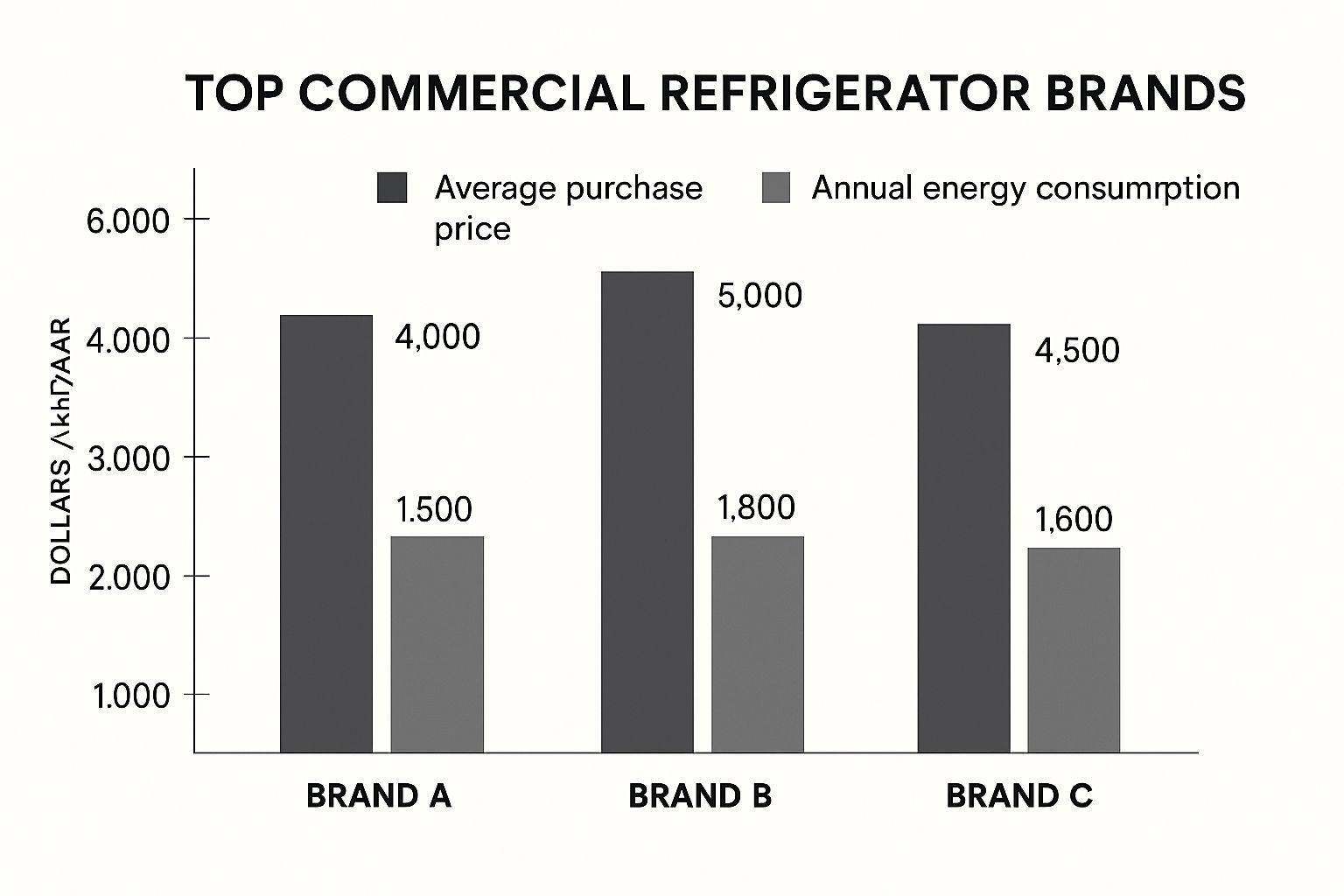
As you can see, premium brands often come with a higher price tag but can deliver lower long-term energy costs, showing the trade-off between the initial investment and your operational savings.
Avantco: The Value Champion
For startups, budget-conscious cafes, or businesses needing a secondary storage unit, Avantco is a major player. Their goal is simple: provide reliable, essential refrigeration at an extremely competitive price. They prove that you don't need to break the bank to get a dependable, NSF-certified refrigerator.
Avantco hits this sweet spot by focusing on the core functions. You won't find a lot of fancy features, but you will get a solid unit with digital temperature controls, sturdy shelves, and an efficient cooling system. They are the practical, no-frills choice for operators who just need a workhorse that gets the job done without the premium price.
Hoshizaki: Precision and Niche Excellence
While famous for its world-class ice machines, Hoshizaki also produces top-tier refrigeration known for precision and consistency. Hoshizaki units are fantastic at maintaining exact temperatures, making them a favorite in kitchens that handle delicate ingredients like sushi, seafood, or high-end pastries.
The build quality is exceptional, often featuring stainless steel on both the exterior and interior for maximum durability and hygiene. Hoshizaki is a premium brand, and its price reflects that. They are best suited for specialized kitchens where precise temperature control is just as critical as overall reliability. For a chef who can’t afford to lose expensive inventory, Hoshizaki provides that peace of mind.
Beyond the Big Four: Other Brands to Consider
While the industry giants cover a lot of ground, the world of commercial refrigeration is full of specialized brands that excel in specific areas. Looking beyond the usual suspects can help you find a unit that feels like it was custom-made for your kitchen's unique challenges. Whether you need a refrigerator that doubles as a design statement, a model built with European precision, or a simple, budget-friendly workhorse, there are fantastic options out there. Exploring these alternatives ensures you’re not just buying a good refrigerator—you’re investing in the perfect one for your business.
High-End and Luxury Models: Sub-Zero and Monogram
For kitchens where performance and presentation are equally important, brands like Sub-Zero and Monogram are in a class of their own. Sub-Zero has a legendary reputation for its advanced cooling systems that keep food fresher for longer, which can make a real difference in reducing waste. They also offer extensive customization options, allowing you to integrate the unit seamlessly into your restaurant's design. These are premium investments, ideal for luxury establishments, open kitchens, or serious chefs who demand the absolute best. If a high-end model feels right but the price is a hurdle, exploring restaurant equipment financing can make that top-tier performance more accessible.
Reliable European Brands: Foster and Liebherr
European brands often bring a legacy of meticulous engineering and robust construction to the table. Foster, a British company with over 50 years of experience, is known for its reliability and excellent post-purchase support for parts and service. Similarly, the Austrian-made Liebherr refrigerators are praised for their incredibly solid feel, often built entirely from stainless steel inside and out. This level of craftsmanship results in units that are not only durable and long-lasting but also exceptionally easy to clean and maintain. For a kitchen that values precision engineering and a sleek, professional aesthetic, these brands are definitely worth a look.
Budget-Friendly Options: Polar
When your budget is the top priority, you still need equipment that you can count on day in and day out. Polar is an excellent brand that delivers reliable performance at a very accessible price point, making it a great alternative for startups or small businesses. Much like Avantco, Polar focuses on providing the essential features you need without the costly extras. Their units are known for being dependable and easy to use, offering a practical solution for kitchens that need to get up and running without a massive upfront investment. Finding affordable and high-quality refrigerators is key to managing costs, and brands like Polar prove you don’t have to sacrifice quality for price.
Leaders in Technology: LG, Samsung, and Bosch
While you might know them for your home appliances, brands like LG, Samsung, and Bosch are bringing exciting technology to the commercial kitchen. LG is known for smart features like its InstaView door panels, and Samsung offers units with internal cameras and Family Hub screens that can streamline inventory management. Bosch brings a sleek European design, quiet operation, and advanced humidity controls to the market. These tech-forward features aren't just gimmicks; they can offer real-world benefits like improved energy efficiency, remote temperature monitoring, and easier kitchen management for the tech-savvy restaurant owner.
What's the True Cost of Ownership?
The sticker price on a new commercial refrigerator is just the first line item on a much longer expense report. To really get a handle on the financial impact of your purchase, you have to look at the total cost of ownership. And trust me, daily energy consumption quickly becomes the biggest number on that sheet. A lower upfront cost can easily get wiped out by sky-high utility bills over the unit's decade-plus lifespan.
This is where an ENERGY STAR certification becomes more than just a sticker; it's a genuine savings plan. Take a certified solid-door reach-in refrigerator, for example. Over its lifetime, it can save a business around $1,100 in energy costs compared to a standard model. That single stat shows why brands that focus on efficiency, like True Manufacturing and Turbo Air, often deliver better long-term value, even if they cost a bit more to start.
A higher upfront cost on an energy-efficient refrigerator isn't an expense—it's a pre-payment on future utility bills. Over ten years, the savings from a top-tier, efficient model can easily surpass the initial price difference compared to a budget alternative.
Smart Features That Save You Money
So, what's driving these savings? It all comes down to modern advancements in refrigeration tech. The best commercial refrigerator brands are in a constant race to integrate features that chip away at daily operating costs. These aren't just minor tweaks; we're talking about significant engineering upgrades.
Here are a few key innovations to look for:
- Electronically Commutated (EC) Motors: These fan motors sip electricity compared to older shaded-pole motors, which means they produce less heat and draw less power overall.
- Adaptive Compressors: Instead of just running at full blast all the time, these smart compressors adjust their speed based on real-time cooling needs. This drastically cuts energy use during off-peak hours.
- Superior Insulation: High-density, foamed-in-place polyurethane insulation is a game-changer. It minimizes thermal bridging, making sure the cold air stays put so the compressor doesn't have to work as hard.
To get a real sense of what a unit will cost you month after month, it helps to know how to calculate electrical energy consumption. This knowledge lets you translate a spec sheet into a real-world budget forecast.
How Energy Standards Help You Save
This industry-wide push for efficiency isn't just happening on its own—it's also being driven by regulatory changes. The U.S. Department of Energy is rolling out tighter efficiency standards between 2025–2029, and that's forcing manufacturers to adopt these advanced technologies even faster. This government mandate is speeding up the adoption of EC motors, better insulation, and adaptive compressors across the board, making energy efficiency a major competitive battleground.
At the end of the day, when you're calculating long-term costs, you're not just buying a piece of equipment; you're investing in an operational partner. Analyzing these ongoing expenses is a crucial part of our recommended restaurant kitchen equipment checklist because it ensures your choice supports your financial health for years to come. By prioritizing brands that lead in sustainable technology, you turn a necessary purchase into a smart financial strategy.
Which Commercial Refrigerator Brand Fits Your Business?
Choosing from the top commercial refrigerator brands gets a lot easier when you picture them in a real kitchen. The best choice always boils down to your specific operation, your kitchen's environment, and of course, your budget. By looking at a few common business scenarios, you can get a much clearer idea of which brand truly fits your priorities.
Let's shift from just looking at spec sheets to thinking about practical, day-to-day use. These profiles are designed to reflect common foodservice setups, helping you see the ideal match for your own business.
For the High-Volume Urban Restaurant
Picture a bustling downtown restaurant where the kitchen is in constant motion. During peak hours, the refrigerator doors are flying open dozens of times an hour, and the kitchen's ambient temperature is climbing. In this kind of high-stress environment, equipment failure simply isn't an option—it means lost revenue and spoiled food.
For this scenario, True Manufacturing is the clear front-runner. Their reputation for rock-solid durability and powerful, oversized compressors means their units can hold consistent, safe temperatures even under the most punishing conditions. Yes, the upfront cost is higher, but it's justified by sheer reliability and the peace of mind you get knowing your workhorse refrigerator won't give up during a dinner rush.
When operational uptime is your absolute top priority, investing in a brand known for its robust, American-made build quality is the most financially sound decision you can make over the long term.
For the Budget-Conscious Startup Cafe
Now, think about a brand-new cafe or a small food truck just getting started. The number one concern is managing those initial startup costs while still getting dependable, NSF-certified equipment. The budget is tight, and every dollar has to deliver maximum value without cutting corners on core functionality.
This is the perfect spot for a brand like Avantco. They excel at providing the essential features—like digital temperature controls, sturdy shelving, and efficient cooling—at a price point that new businesses can actually afford. It might not have all the premium bells and whistles, but Avantco offers a solid, reliable foundation for a growing operation, making it a smart choice for budget-focused entrepreneurs. If you're building out a new kitchen, this kind of practical decision-making is covered in our complete commercial refrigeration guide.
For the Eco-Friendly Grocer
Finally, imagine a boutique grocery store or a health-focused eatery where sustainability is a huge part of the brand's identity. This business needs refrigeration that not only works well but also lines up with its commitment to being environmentally responsible. The main priorities here are keeping energy consumption low and using eco-friendly refrigerants.
This is where a brand focused on efficiency and innovation, like Turbo Air or an ENERGY STAR certified model from Hoshizaki, would be the ideal fit. These brands often lead the way in using natural refrigerants like R290 and incorporate energy-saving tech like self-cleaning condensers or advanced insulation. For an eco-conscious business, the choice is about more than just cooling; it's a reflection of their values.
Your Commercial Refrigerator Questions, Answered
Diving into the world of commercial refrigeration usually brings up a handful of very specific, practical questions. Getting solid answers is a huge part of making a smart investment—one that actually works with your kitchen's daily grind and makes sense financially down the road. Let's tackle some of the most common things business owners ask when they're trying to choose between the best commercial refrigerator brands.
Each one of these questions gets at a real-world challenge, from figuring out your kitchen layout to making sense of maintenance schedules and warranty details. Nailing down these points means you'll know exactly what you're getting into.
What Is the Ideal Service Frequency for My Unit?
To really get the most life and efficiency out of your commercial refrigerator, you should have it professionally serviced at least twice a year. That's the baseline. However, if your kitchen is a more demanding environment—think high heat, airborne grease from a fryer line, or flour dust everywhere—then quarterly servicing is a much smarter move.
This proactive approach gives a technician the chance to clean out the condenser coils, check refrigerant levels, and spot small issues before they snowball into a middle-of-the-dinner-rush emergency. Honestly, regular maintenance is the single best thing you can do to protect your investment and prevent the kind of unexpected downtime that can ruin your inventory.
Think of a semi-annual or quarterly maintenance plan not as an expense, but as insurance against a catastrophic failure. Consistent upkeep can easily add several years to a unit's operational life, giving you a huge return on that small investment.
Top-Mount vs. Bottom-Mount Compressor: Which Is Better?
The "better" choice here really comes down to your specific kitchen. Each design has its own clear advantages that are meant for different working conditions.
-
Top-Mount Compressors: These are perfect for kitchens where there's a lot of debris on the floor, like flour, dust, or dirt. Putting the compressor up high keeps it away from all that gunk that can clog the coils and make it overheat. It's the go-to choice for bakeries and pizzerias for a reason.
-
Bottom-Mount Compressors: This design is way more ergonomic. It raises the bottom shelves, making them easier for your staff to get to without bending down so much. The compressor is also right at a convenient height for cleaning and service. These units work great in standard restaurant kitchens where the floors are kept clean.
Are Extended Warranties a Good Investment?
For most commercial refrigerators, an extended warranty just doesn't offer much value, especially if you’ve picked a top-tier brand like True or Turbo Air that already has a strong standard warranty. These guys typically cover the most important—and most expensive—component, the compressor, for 5 to 7 years right out of the box.
Instead of spending money on an extended warranty, you're almost always better off putting that cash toward a consistent, professional maintenance plan. Proactive servicing will prevent far more problems than a warranty will ever cover, since most warranties won't touch issues caused by normal wear and tear or simple neglect.
At The Restaurant Warehouse, we help you find the perfect refrigeration solution with transparent pricing and expert advice. Explore our extensive selection of top-tier commercial refrigerators today at https://therestaurantwarehouse.com.
Frequently Asked Questions
Is it really worth paying so much more for a premium brand like True Manufacturing? Think of it less as an expense and more as insurance. For a busy restaurant where a failed refrigerator means thousands of dollars in spoiled food and lost sales, that higher price tag buys you incredible peace of mind. You're paying for heavy-duty components and a proven track record of reliability, which means the unit is far less likely to quit on you during a chaotic dinner rush.
My kitchen is tiny. What's the best way to add cold storage without taking up floor space? Undercounter and worktop refrigerators are your best friends in a small space. These units slide right under your existing prep counters, putting cold ingredients exactly where you need them. This saves your staff from walking back and forth to a large reach-in, which makes your whole workflow faster. A worktop model is even better, as it gives you a durable prep surface right on top of the refrigerator.
Why does it matter if the compressor is on the top or the bottom? It all comes down to your kitchen's environment. A top-mount compressor is ideal for bakeries or pizzerias where flour and dust are constantly in the air, as it's less likely to suck in debris that can clog it up. A bottom-mount compressor is more ergonomic, raising the floor of the fridge so your staff doesn't have to bend down as far, and it's also easier for technicians to access for cleaning and service.
Beyond the warranty length, what really matters when it comes to service and repairs? The availability of local service is what truly counts. A seven-year warranty is fantastic, but it won't help you if the closest certified technician is three states away and can't get to you for a week. Brands with extensive, nationwide service networks are more likely to get you back up and running quickly, which is critical when you have a kitchen to run.
How much can an ENERGY STAR certified refrigerator actually save me? The savings are significant and add up quickly. A certified model can easily save you over a thousand dollars in electricity costs during its lifespan compared to a standard, less efficient unit. That monthly reduction on your utility bill often means that a more expensive, energy-efficient refrigerator actually pays for the initial price difference over time, making it a smarter financial choice in the long run.
Key Takeaways
- Choose a brand that fits your kitchen's reality: A high-volume restaurant needs the unmatched durability of a brand like True, while a startup can get exactly what it needs from a value-focused option like Avantco.
- Look beyond the price tag to the total cost of ownership: An ENERGY STAR certified model might cost more upfront, but its long-term energy savings will significantly lower your utility bills over the unit's life.
- Focus on technical specs that solve your daily challenges: Details like compressor placement and self-cleaning condensers directly impact maintenance and performance, making your day-to-day operations smoother.
Related Articles
About The Author

Sean Kearney
Sean Kearney used to work at Amazon.com and started The Restaurant Warehouse. He has more than 10 years of experience in restaurant equipment and supplies. He graduated from the University of Washington in 1993. He earned a BA in business and marketing. He also played linebacker for the Huskies football team. He helps restaurants find equipment at a fair price and offers financing options. You can connect with Sean on LinkedIn or Facebook.
Leave a comment