


Unlocking Efficiency: A Comprehensive Look at Atosa 2-Door Commercial Refrigerators
Why Choosing the Right Commercial Refrigerator Matters for Your Business
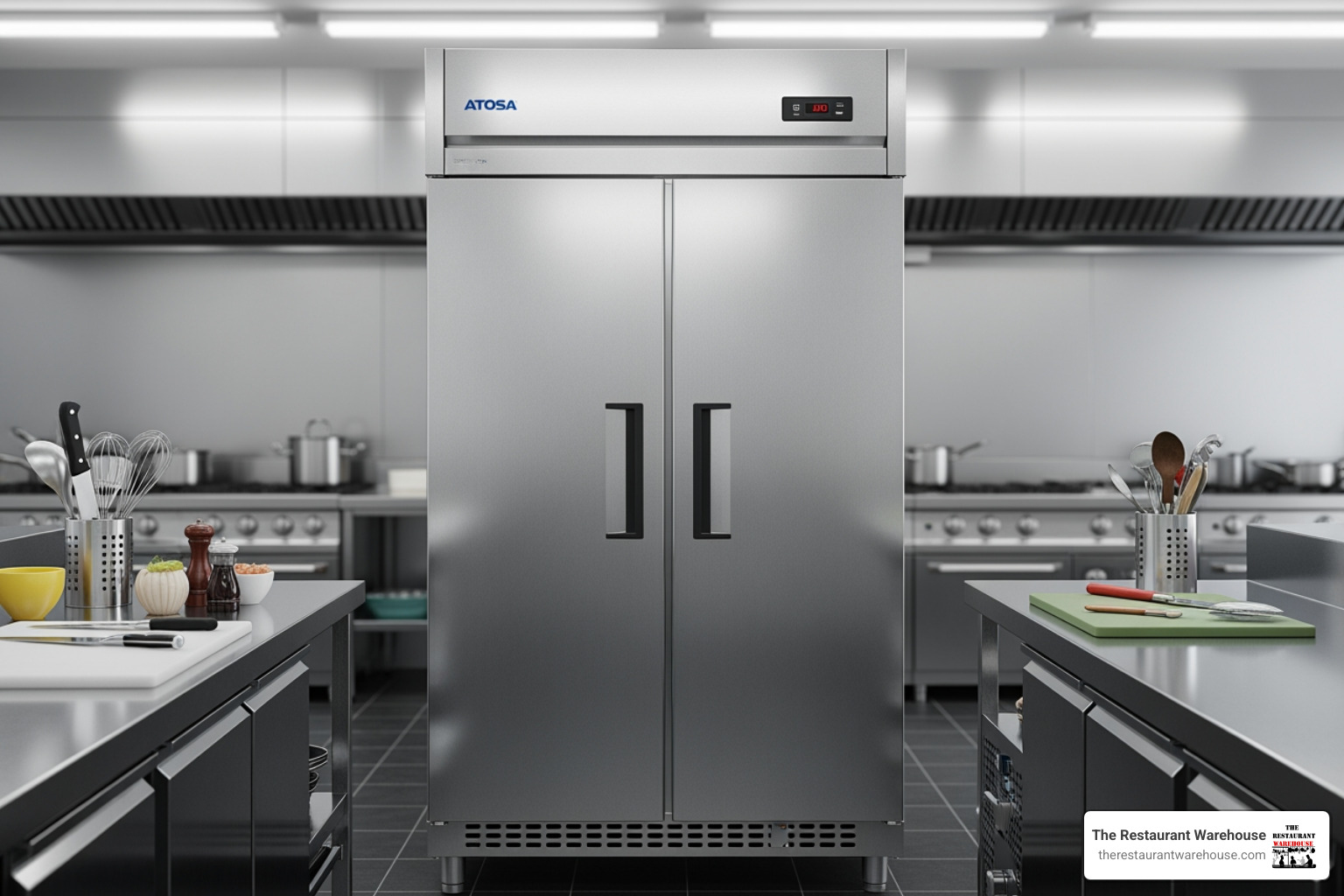
A two-door commercial reach-in refrigerator is a core piece of equipment in most professional kitchens. It affects food safety, prep speed, inventory organization, and operating costs. For many operators, Atosa’s two-door reach-in models are a popular choice because they combine practical capacity, consistent temperature control, and strong warranty coverage at a value-oriented price point.
Quick answer: If you need roughly 43–47 cu. ft. of refrigerated storage, reliable 33°F–40°F holding temperatures, stainless construction, and ENERGY STAR efficiency, an Atosa 2-door reach-in is often a good fit—especially for kitchens that want dependable performance without paying a premium for features they won’t use.
For operators comparing models and sizes, browse the broader lineup here: Atosa refrigeration collection.
Key Specifications at a Glance:
| Feature | Specification |
|---|---|
| Capacity | 43.2 - 46.8 Cu. Ft. |
| Temperature Range | 33°F - 40°F |
| Refrigerant | R290 (Eco-Friendly) |
| Compressor Options | Top-Mount or Bottom-Mount |
| Voltage | 115v/60/1-ph |
| Energy Efficiency | ENERGY STAR Qualified |
| Warranty | 2 Years Parts & Labor, 5 Years Compressor |
| Construction | Stainless Steel Interior & Exterior |
When you’re evaluating commercial refrigeration, the most important question isn’t just “how much does it hold?” It’s whether the unit can maintain food-safe temperatures under real kitchen conditions: frequent door openings, warm ambient air, heavy loading, and the daily pace of service.
Core Features and Design of Atosa 2-Door Reach-In Refrigerators
In commercial kitchens, durability, hygiene, and ease of cleaning are non-negotiable. Atosa 2-door reach-ins are commonly built with stainless steel inside and out, which helps resist corrosion and supports quicker sanitation. Rounded interior corners further reduce areas where debris can collect, making routine wipe-downs easier.
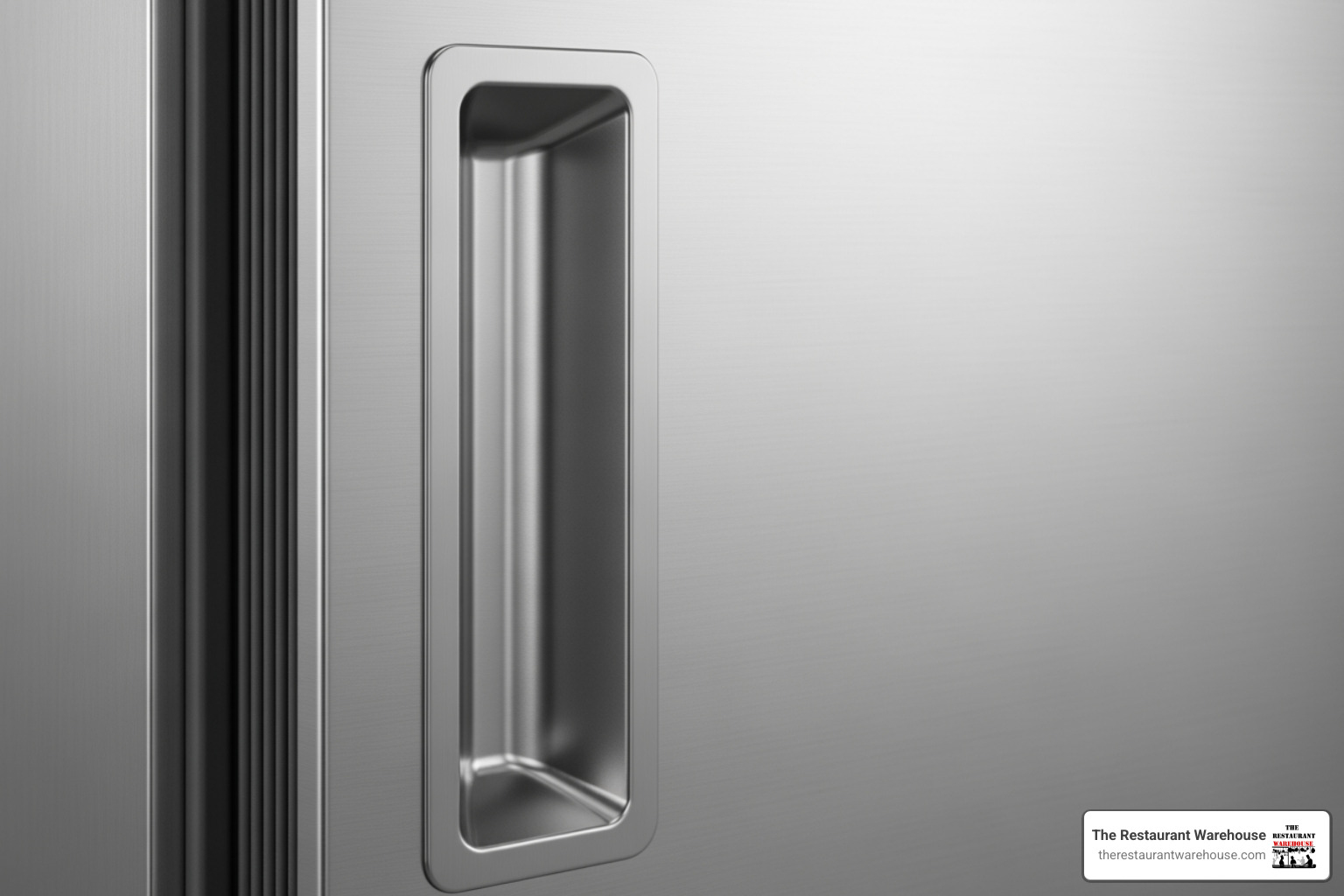
Door and seal details also matter. Recessed handles reduce snag points in tight spaces. Magnetic gaskets support a tight seal to reduce cold-air loss and limit compressor run time, supporting both temperature consistency and energy use.
Many models include self-closing doors when opened to roughly 90 degrees or less, helping prevent accidental temperature swings. When opened past that point, a stay-open feature makes loading and restocking easier.
Built for the Demands of a Professional Kitchen
Consistent holding temperatures are the baseline for food safety. Many Atosa two-door reach-ins use a digital temperature controller to support stable cabinet temperatures across typical operating ranges. LED interior lighting improves visibility, which helps staff work faster and reduces “door-open” time during prep and service.
Enhancing Usability with Smart Door Design
A self-closing mechanism helps protect temperature stability when staff are moving quickly. A stay-open position (past ~90°) is especially useful for loading produce, full cases, or catering pans. Some models also include door locks, which can be helpful for securing higher-value inventory or limiting access after hours.
Performance and Efficiency: A Look Under the Hood
Refrigeration performance depends on compressor reliability, airflow design, and heat management. Many Atosa reach-ins use an air-cooled, self-contained system designed to distribute cold air throughout the cabinet to reduce warm spots and support uniform storage temperatures.
Atosa models commonly use R290 refrigerant, an eco-friendlier option with very low global warming potential compared to older refrigerants. Many models are ENERGY STAR qualified (by model), which can contribute to lower operating costs over time.
Capacity and Temperature Range
Typical capacity ranges from about 43.2 to 46.8 cubic feet depending on the model. That’s a common “sweet spot” for kitchens that need solid storage without the footprint of a larger multi-door unit.
For safety, what matters most is keeping refrigerated storage at safe temperatures. The FDA recommends keeping refrigerators at or below 40°F to help slow bacterial growth. Reference: U.S. FDA safe food handling guidance.
Compressor and Refrigerant Basics
Compressor specs vary by model, but the goal is the same: stable temperature control and reliable recovery after door openings. Combined with modern refrigerants like R290, many units are designed to balance performance with efficient operation.
Top-Mount vs. Bottom-Mount: Which Configuration Fits Your Kitchen?
Compressor placement affects ergonomics, cleaning patterns, and how the unit behaves in certain environments. The best choice depends on your kitchen conditions and workflow.
| Feature | Top-Mount Compressor | Bottom-Mount Compressor |
|---|---|---|
| Ergonomics | Less stooping for upper shelf access | Easier access to lower shelves; less bending for heavy items |
| Maintenance | Often stays cleaner in dusty/flour environments | May collect more dust, but condenser can be easy to access |
| Ideal Environment | Bakeries or prep areas with airborne flour/floor debris | Hot kitchens where cooler intake air is nearer the floor |
| Energy/Heat Behavior | Heat dissipates above the food zone | May draw cooler intake air near the floor |
| Cost | Depends on model/features | Depends on model/features |
When a Top-Mount Compressor Makes Sense
Top-mount units can be a strong option in bakeries or prep spaces where flour or dust is common. With the condenser higher off the floor, the system may ingest less debris, which can help reduce coil buildup and maintain efficiency with less frequent cleaning.
When a Bottom-Mount Compressor Makes Sense
Bottom-mount units can work well in hotter kitchens where intake air near the floor may be cooler. They also raise the bottom shelf height, making it easier to load heavy items without deep bending.
Practical Advantages and Long-Term Value
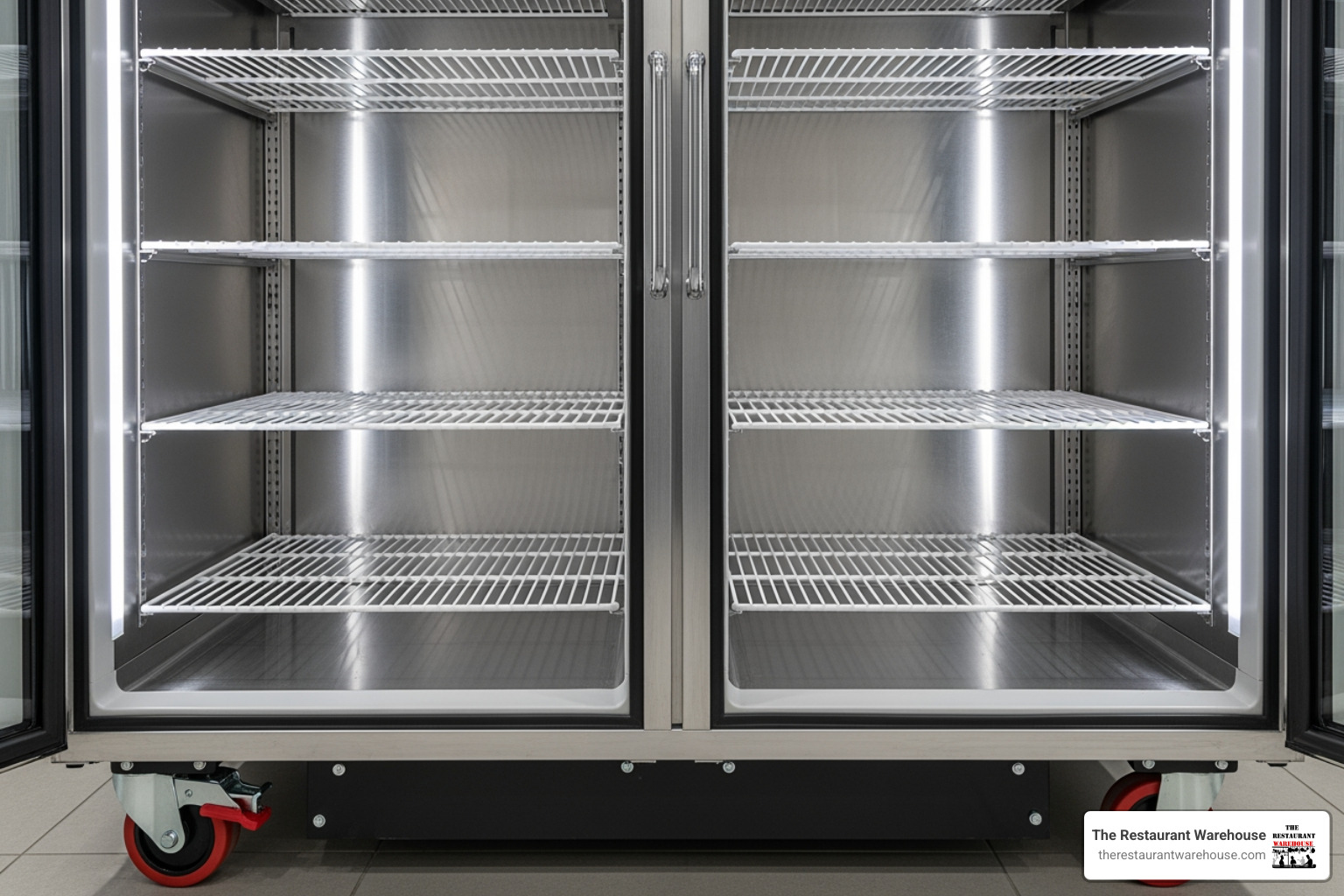
Practical features often matter most over the long run. Many Atosa two-door reach-ins include pre-installed casters to improve mobility for cleaning and service access, plus adjustable epoxy-coated shelves that resist corrosion and support flexible organization.
Common Mistakes When Buying a Commercial Reach-In Refrigerator
- Buying based on capacity alone and ignoring temperature recovery after frequent door openings
- Not planning for clearance, ventilation, or placement near heat-producing equipment
- Skipping condenser coil cleaning until performance drops (higher energy use and warmer temps)
- Choosing the wrong compressor placement for a dusty or very hot kitchen environment
Warranty and Certifications
Warranty coverage is a key part of long-term value. Many Atosa 2-door reach-ins include a 2-year parts and labor warranty and a 5-year compressor warranty (confirm exact terms by model). Listings such as ETL and ETL Sanitation indicate testing against recognized safety and sanitation standards commonly required in commercial settings.
For questions about warranty, service, or model selection: Contact Us.
Conclusion: Choosing the Right Two-Door Reach-In
A two-door commercial reach-in refrigerator is often the best balance of capacity and footprint for professional kitchens. The right unit should hold safe temperatures consistently, support efficient workflow, and be easy to clean and maintain. Atosa’s two-door reach-in models are commonly chosen for their stainless construction, practical door design, efficient refrigeration systems, and warranty support.
To compare sizes and configurations, browse the lineup here: Explore Atosa refrigeration options.
About The Author

Sean Kearney
Sean Kearney is the Founder of The Restaurant Warehouse, with 15 years of experience in the restaurant equipment industry and more than 30 years in ecommerce, beginning with Amazon.com. As an equipment distributor and supplier, Sean helps restaurant owners make confident purchasing decisions through clear pricing, practical guidance, and a more transparent online buying experience.
Connect with Sean on LinkedIn, Instagram, YouTube, or Facebook.
Leave a comment