

Your Guide to the Coolest Refrigerated Prep Stations
Why Your Professional Kitchen Needs a Refrigerated Prep Station
A Refrigerated prep station is a foodservice workhorse, combining a worktable, cold storage, and an accessible ingredient rail into a single footprint. These units are designed to keep prepped foods at safe temperatures (33°F-41°F) while dramatically streamlining the food assembly process. For any restaurant owner frustrated by inefficient workflows and overpriced appliances, understanding the value of a prep station is the first step toward a more productive and profitable operation.
The core benefits are transformative. By centralizing ingredients and prep space, these stations boost workflow efficiency, reducing staff movement and assembly time. This improved organization, with built-in pan rails keeping ingredients visible, is crucial during peak hours. Most importantly, they are pillars of food safety, maintaining ingredients in the safe temperature zone to prevent bacterial growth. From sandwich and salad tables to specialized pizza prep tables, these units are not just about keeping food cold. They are about creating a workstation that helps your staff move faster, reduces food waste, and maintains consistent quality during the busiest rushes. Whether you're launching a new sandwich shop or upgrading an established pizzeria, the right prep station can revolutionize your operations.
Why a Refrigerated Prep Station is a Game-Changer for Your Kitchen
Picture your lunch rush: tickets are printing, and your team is moving at top speed. Now, imagine every ingredient they need is perfectly chilled, organized, and within arm's reach. No more running to the walk-in or digging through crowded shelves. That is the strategic advantage a Refrigerated prep station delivers. It's a tool that transforms how your operation functions, saving time, protecting your customers, and reducing food waste.
These units bring together everything needed for fast, consistent food assembly. The refrigerated base keeps bulk ingredients at safe temperatures, while the top rail provides organized, visible access to toppings, proteins, and garnishes. This setup turns a chaotic prep area into a smooth-running station where staff can work smarter, not harder. Ingredients stay fresh longer, staff movement is minimized, and food quality remains consistent. For fast-casual restaurants, delis, and catering services, this combination of benefits is the key to handling growth.

Boosting Kitchen Efficiency and Workflow
In a busy foodservice operation, wasted motion adds up. A Refrigerated prep station eliminates unnecessary steps by creating a centralized workstation. With an ergonomic design, staff can assemble orders without constant bending, reaching, or walking. The raised rail holds ingredient pans at the perfect height for quick access, allowing your team to see everything at once and move seamlessly from one order to the next. This is especially powerful for fast-casual concepts where speed directly impacts customer satisfaction. The reduced travel time might seem small, but it compounds rapidly, translating directly to increased output. Your operation can serve more customers without adding labor, simply by working more intelligently. This streamlined process also leads to more consistent quality, as a standardized station helps reduce errors and ensure every dish meets your standards.
Upholding Food Safety and Health Standards
Food safety is non-negotiable. A Refrigerated prep station is engineered to keep your ingredients within the safe temperature range of 33°F to 41°F. This narrow window is critical for preventing the growth of harmful bacteria. A quality prep station maintains this balance all day, protecting both your customers and your reputation. For comprehensive guidance on food safety, the FDA Food Code is an essential resource.
Beyond temperature, these stations help prevent cross-contamination. Separate compartments keep raw items away from ready-to-eat foods, hinged lids protect ingredients from airborne contaminants, and smooth stainless steel surfaces are easy to clean. When shopping, look for NSF certification. This mark indicates the unit meets strict public health standards for materials and construction, a requirement for many health departments. Proper temperature control also extends the shelf life of your ingredients, reducing spoilage and saving money. Ready to upgrade your operation's efficiency and food safety? Contact our experts for a consultation to find the perfect prep station.
Decoding the Different Types of Prep Tables
Not all Refrigerated prep stations are the same, and this variety allows you to choose a unit that perfectly matches your menu and workflow. Whether you're building subs, crafting salads, or preparing pizzas, there's a specialized design to make the job easier. Matching the appliance to your actual needs ensures you're not paying for features you won't use and that your staff can work more efficiently. Explore our prep table selection to see how different configurations can benefit your unique operation.
Sandwich and Salad Prep Tables
These are the workhorses of delis, cafes, and quick-service restaurants. They are designed around the natural flow of assembling sandwiches and salads, featuring a cutting board, refrigerated storage below, and an ingredient rail on top. The standard setup includes a raised rail holding multiple food pans (typically 1/6 size), keeping toppings within easy reach. Hinged lids cover the ingredients between rushes to maintain temperature and ensure sanitation.
For operations with more complex menus, Mega Top units are a game-changer. These tables feature an extra row of pans, increasing ingredient capacity by about 50% without taking up more floor space. This is ideal for build-your-own concepts, as it reduces the need for restocking during peak hours and allows for greater menu flexibility.
Pizza Prep Tables
Pizza making has unique demands, and these prep tables are purpose-built to meet them. The most significant difference is the deeper cutting board, which provides ample space to stretch large pizza doughs without them hanging over the edge. The raised rail holds a wide variety of toppings, just like a sandwich table, but the refrigerated base is often designed to hold standard pizza dough boxes. This keeps the dough at the perfect temperature for optimal elasticity. The entire layout is configured for the specific workflow of a pizzeria: pull dough from the base, stretch it on the board, add toppings from the rail, and move it to the next stage of preparation. This specialized design maximizes speed and efficiency during the busiest dinner rushes.
How to Choose the Perfect Refrigerated Prep Station
Selecting the right Refrigerated prep station is about understanding what your operation truly needs, both now and in the future. The perfect unit should feel like it was designed for your workflow, making your team's job easier and more efficient. It needs to have the right capacity, fit into your available space, and run reliably for years. Before you invest, take the time to consider your specific requirements. If you need guidance, our experts are here to help. Contact our experts for a consultation for personalized recommendations.
Sizing Up Your Needs: Finding the Right Fit
Before anything else, measure your space. Prep stations range from compact 27-inch models to massive 93-inch units. Consider not just the floor plan but also doorways and delivery access. Think about how staff will move around the unit during peak service to avoid creating bottlenecks. Your menu complexity is another key factor. A simple menu may only require a standard top, while a build-your-own concept with dozens of toppings will benefit from the larger capacity of a mega top. Also, decide between doors and drawers for the base storage. Drawers offer quick, organized access, while doors provide more bulk storage volume. Finally, think about your future growth. Investing in a slightly larger unit now could save you from a costly upgrade later.
The Anatomy of a Quality Refrigerated Prep Station
Durability is paramount in a demanding foodservice environment. Look for units constructed with high-quality stainless steel on both the exterior and interior, as it resists corrosion and is easy to clean. Some models use ABS interior liners, which also offer good insulation and are simple to sanitize. NSF certification is non-negotiable. This mark confirms the unit meets strict public health and safety standards, a key requirement for health inspections. Also, inspect the cutting board. It should be made of durable polyethylene that resists cuts and doesn't harbor bacteria. Finally, check for heavy-duty casters with locking mechanisms. They provide the flexibility to move the unit for cleaning while ensuring it stays securely in place during service.
Understanding the Refrigeration System
The refrigeration system is the heart of the unit. Most feature self-contained systems, making installation and maintenance straightforward. Compressor placement is a critical detail: front-breathing units can be installed flush against a wall, while rear-mounted compressors require clearance for airflow. Choosing the wrong type for your space can lead to overheating and premature failure. Modern, quality units use eco-friendly R290 Hydrocarbon refrigerants, which have a minimal environmental impact and are highly efficient. For food safety, precise temperature control is essential. Look for digital temperature controls, such as those from Dixell, which maintain the crucial 33°F to 41°F safe zone. A well-designed, energy-efficient system will keep your ingredients perfectly chilled without inflating your utility bills. For more details, Read our comprehensive prep table guide.
Maintenance, Cost, and Long-Term Value
A Refrigerated prep station is a significant investment in your operation's future. Understanding how to care for it and what factors influence its cost is critical to maximizing its long-term value. A well-maintained unit can serve your business faithfully for over a decade, but that longevity depends on simple, consistent upkeep. The price of these units can vary widely, and knowing why will help you make a smarter purchasing decision. We believe in transparency and helping you find the right balance of quality and cost.
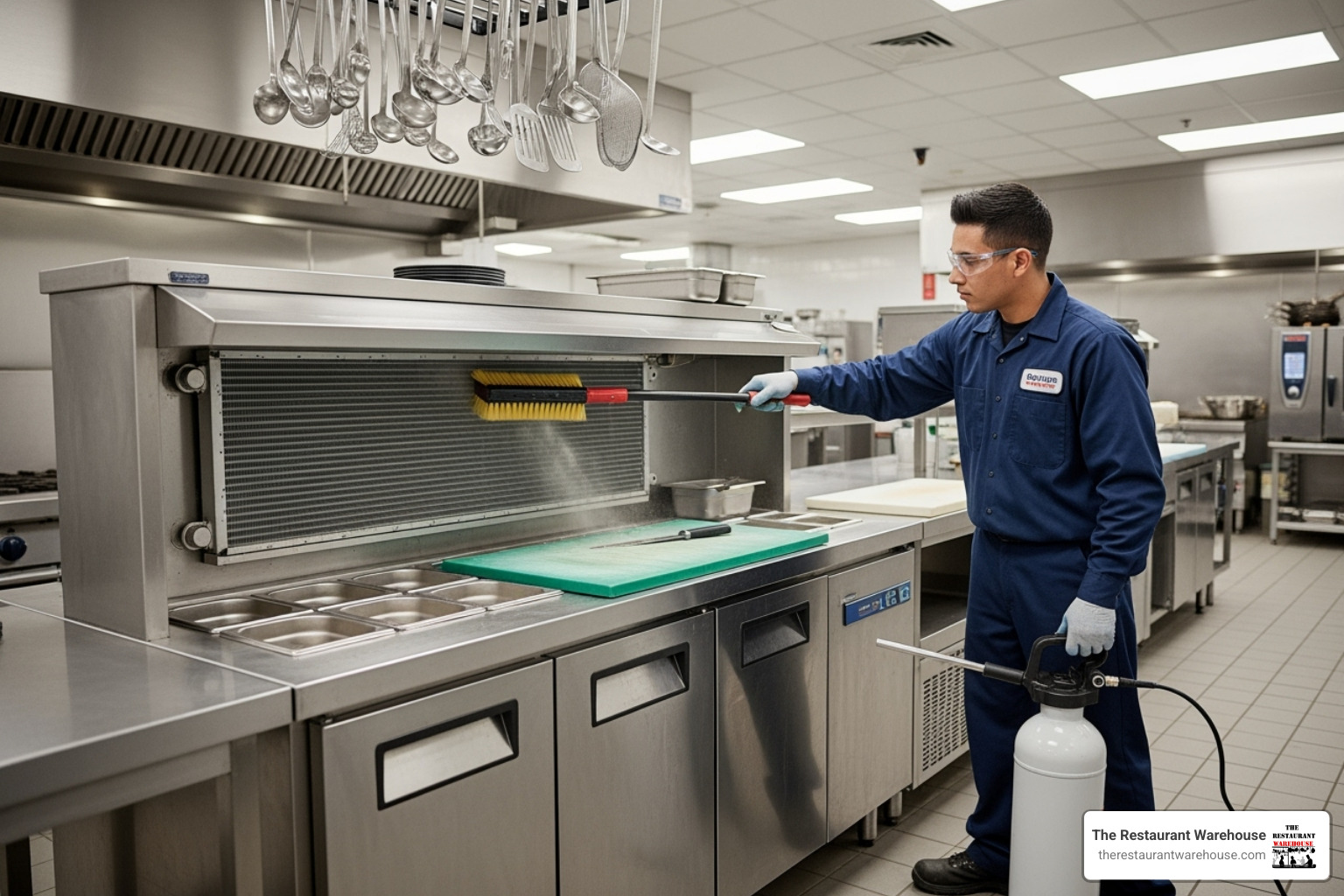
Essential Maintenance for Optimal Performance
Think of your prep station like a car: regular upkeep prevents breakdowns. A few simple habits can add years to your unit's life.
- Daily: Wipe down all surfaces (cutting board, interior, exterior) with a food-safe sanitizer. Remove and wash all food pans.
- Weekly: Inspect and clean the door gaskets with warm, soapy water. A tight seal is crucial for temperature control and energy efficiency. Replace any cracked or damaged gaskets immediately.
- Monthly: Clean the condenser coil. This is the single most important task. Dust and grease buildup forces the compressor to overwork, leading to inefficiency and failure. Use a stiff brush and vacuum to gently remove debris.
- Periodically: Verify the internal temperature with a separate thermometer to ensure accuracy.
- Annually: Schedule professional servicing for a thorough inspection of the refrigeration system and electrical components. For more in-depth guidance, read our comprehensive prep table guide.
What Influences the Cost of a Refrigerated Prep Station?
Prices for a Refrigerated prep station can range from around $1,200 to over $7,500. Several factors drive this difference:
- Size and Capacity: A larger 72-inch unit will naturally cost more than a compact 27-inch model.
- Build Quality: Units with heavy-gauge stainless steel construction are more expensive but offer superior durability compared to those with thinner materials or plastic components.
- Features: A "Mega Top" configuration, drawers instead of doors, and advanced digital controllers all add to the cost. Front-breathing compressors also typically carry a premium.
- Refrigerant Type: Units using modern, eco-friendly R290 Hydrocarbon refrigerants may have a slightly higher upfront cost but offer excellent efficiency.
- Warranty: A comprehensive warranty (e.g., two years parts/labor, five years compressor) is factored into the price and protects your investment from major failures.
At The Restaurant Warehouse, we provide wholesale pricing by operating on a low-overhead model. We focus on helping you find the right balance of quality, capacity, and cost for your specific needs. If you're weighing your options, contact our experts for a consultation to discuss what makes sense for your business.
Frequently Asked Questions about Refrigerated Prep Stations
We get great questions from restaurant owners every day about Refrigerated prep stations. These questions are key to protecting your investment and running a safer, more efficient operation. Here are the answers to the most common ones.
What is the ideal temperature for a refrigerated prep station?
The ideal temperature range is 33°F to 41°F (0.5°C to 5°C). This is the critical "safe zone" required by health codes. Temperatures above 41°F allow harmful bacteria to multiply rapidly, creating what is known as the "danger zone." Keeping your ingredients within this range not only ensures food safety but also preserves the quality and texture of your products, like keeping lettuce crisp and meats fresh. This reduces spoilage and waste. Modern units with digital controls make it easy to monitor and maintain this crucial temperature range.
How do I clean my refrigerated prep station?
A consistent cleaning routine is essential for performance and food safety.
- Daily: Wipe down all surfaces, including the cutting board and interior, with a food-safe sanitizer. Remove and properly wash all food pans.
- Weekly: Clean the rubber door gaskets with warm, soapy water to remove residue and ensure a tight seal. Check for any cracks or tears that could leak cold air.
- Monthly: Clean the condenser coil. This is vital. Use a stiff brush or vacuum to remove the buildup of dust and grease. A clean coil allows the refrigeration system to cool efficiently, preventing overheating and reducing energy consumption. This simple task can significantly extend the life of your unit.
What is the difference between a standard top and a mega top prep table?
The difference lies in ingredient capacity. A standard top prep table has a single row of food pans on its top rail. This is often sufficient for operations with focused menus. A mega top prep table adds a second row of pans, increasing the ingredient capacity by approximately 50% within the same unit footprint. For example, a 48-inch mega top might hold 18 pans instead of the 12 held by a standard top. This extra capacity is invaluable for businesses with extensive customization options, such as build-your-own salad bars or sub shops, as it minimizes restocking during busy periods and allows for greater menu variety.
Conclusion
Investing in the right Refrigerated prep station is a strategic decision that can fundamentally improve your foodservice operation. As we've explored, these units are indispensable for boosting efficiency, upholding food safety, and improving product consistency. By creating a centralized hub for storage and assembly, they eliminate wasted motion, allowing your staff to produce orders faster and reduce customer wait times.
More importantly, they are a cornerstone of food safety. Maintaining the critical 33°F to 41°F temperature range protects your customers, your reputation, and your bottom line by reducing spoilage and waste. Whether you need a standard sandwich table or a specialized pizza prep table, choosing a unit that fits your workflow is key to open uping these benefits. With simple, regular maintenance, this investment will serve your business reliably for years.
At The Restaurant Warehouse, our mission is to make quality, professional-grade appliances accessible and affordable. By eliminating high retail markups and focusing on a wholesale pricing model, we ensure that every restaurant owner can acquire the tools they need to succeed. A well-chosen prep station streamlines your operation, empowers your team, and contributes to a healthier bottom line.
Ready to transform your workflow? Browse our full catalog of foodservice solutions to find the perfect refrigerated prep station for your needs, or contact our experts to discuss which model is right for your space and menu.
About The Author

Sean Kearney
Sean Kearney used to work at Amazon.com and started The Restaurant Warehouse. He has more than 10 years of experience in restaurant equipment and supplies. He graduated from the University of Washington in 1993. He earned a BA in business and marketing. He also played linebacker for the Huskies football team. He helps restaurants find equipment at a fair price and offers financing options. You can connect with Sean on LinkedIn or Facebook.
Leave a comment