


The Ultimate Guide to Restaurant Cleaning Products
Why Professional Restaurant Cleaning Products Are Critical for Your Business
Restaurant cleaning products are the foundation of a safe, compliant, and successful foodservice operation. Whether you're launching a new restaurant or upgrading your existing cleaning program, the right products protect your customers, your staff, and your reputation. Proper cleaning and sanitation practices can reduce foodborne illness outbreaks by up to 50%, according to industry research. Your choice of cleaning products directly impacts food safety, health code compliance, and customer perception.
Here's what you need to know when choosing cleaning products for your restaurant:
- Cleaners remove visible dirt, grease, and food residue from surfaces
- Degreasers tackle heavy grease buildup on kitchen surfaces and floors
- Sanitizers reduce bacteria on food-contact surfaces to safe levels
- Disinfectants kill viruses and pathogens on high-touch areas like restrooms and door handles
- Janitorial tools (mops, brushes, microfiber cloths) ensure products work effectively
- Disposable supplies (gloves, paper towels, trash liners) prevent cross-contamination
The challenge most restaurant owners face is that the market is flooded with options, and not all cleaning products are created equal. Professional-grade chemicals work differently than household cleaners. The average restaurant spends between 1% and 3% of total revenue on cleaning and sanitation supplies, so making smart purchasing decisions matters for your bottom line.
The good news? With the right knowledge, you can build an efficient cleaning program that keeps your restaurant spotless, your customers safe, and your costs under control. This guide will walk you through everything you need to know about restaurant cleaning products.
I'm Sean Kearney from The Restaurant Warehouse, and I've spent years helping restaurant owners find the right supplies to run efficient, profitable operations. Through my work, I've seen how the right restaurant cleaning products can transform a business by improving safety, reducing costs, and building customer trust.
The Core Four: Essential Cleaning Chemical Categories
Walk into any professional restaurant supply closet, and you'll find that restaurant cleaning products fall into four distinct categories. Each is designed for specific tasks that keep your operation safe and compliant. Understanding these categories is your foundation for building a cleaning program that actually works.
Professional-grade products are formulated with higher concentrations and specialized ingredients for the demanding environment of a commercial kitchen. They contribute directly to food safety by removing soil, reducing bacteria, and preventing the cross-contamination that leads to foodborne illness. The four core categories work together: cleaners remove visible dirt, degreasers tackle stubborn grease, sanitizers reduce bacteria on food-contact surfaces, and disinfectants kill viruses and pathogens in high-risk areas.
General-Purpose & All-Purpose Cleaners
Think of general-purpose cleaners as the workhorses of your cleaning program. These versatile products handle everyday dirt, dust, and light soils on nearly every surface in your restaurant—from dining tables and countertops to walls and floors. What really matters is the pH level. Neutral cleaners work safely on most surfaces, while slightly alkaline formulas cut through tougher soils, and acidic options tackle mineral deposits.
Commercial products offer a choice between concentrated and ready-to-use formulas. Concentrated cleaners require dilution, which means one gallon can produce many times that amount of working solution, offering significant cost savings. Ready-to-use products cost more per ounce but save staff time and eliminate the risk of incorrect dilution.
Heavy-Duty Degreasers for Kitchen Grime
Your kitchen produces some of the toughest cleaning challenges. Grease, oil, and baked-on food residues don't just look bad—they create genuine safety hazards. Grease buildup on surfaces can ignite, while grease on floors creates a slip-and-fall risk.
Heavy-duty degreasers are specifically engineered to break down and emulsify fats, oils, and carbonized soils that regular cleaners can't touch. These powerful restaurant cleaning products are essential for maintaining kitchen surfaces, backsplashes, exhaust systems, and floors. The right degreaser doesn't just make surfaces look clean—it removes fire hazards and prevents the buildup that can cause issues during a health inspection.
Food-Safe Sanitizers for Critical Areas
This is where food safety gets serious. Sanitizers don't just clean surfaces—they reduce bacteria to safe levels as defined by public health standards. This step is absolutely critical after cleaning any surface that touches food: cutting boards, prep tables, and utensils.
The two most common types of food-safe sanitizers are quaternary ammonium compounds (called "Quats") and chlorine solutions. Quats are effective against a broad spectrum of bacteria, while chlorine sanitizers work fast and powerfully. Getting the concentration right matters enormously. Too weak, and you're not killing enough bacteria. Too strong, and you risk leaving chemical residues. That's why test strips are essential—they verify your sanitizing solution meets regulatory requirements. The FDA provides comprehensive guidelines on proper sanitization, and we recommend reviewing their official guidance on safe food handling to ensure your practices meet federal standards.
Powerful Disinfectants for High-Touch Zones
While sanitizers reduce bacteria on food-contact surfaces, disinfectants take things further by killing a broader range of microorganisms—including viruses and fungi—on non-food-contact surfaces.
Think about everything your customers and staff touch repeatedly: restroom fixtures, door handles, light switches, POS systems, and dining chairs. These high-touch surfaces can harbor pathogens. Regular disinfection breaks the chain of infection. The key difference is purpose: sanitizing aims to reduce germs to a safe level on food-contact surfaces, while disinfecting aims to kill nearly all germs on non-food-contact surfaces. Many modern products combine cleaning and disinfecting into a single step, saving time and labor.
Ready to upgrade your cleaning program with professional-grade products? Contact us today to learn about our wholesale pricing on restaurant cleaning supplies.
Beyond Chemicals: Essential Janitorial Tools and Disposables
Even the most powerful restaurant cleaning products won't deliver spotless results without the right tools to apply them. A well-stocked janitorial arsenal and strategic use of disposable supplies form the backbone of any successful cleaning program, improving efficiency while preventing cross-contamination.
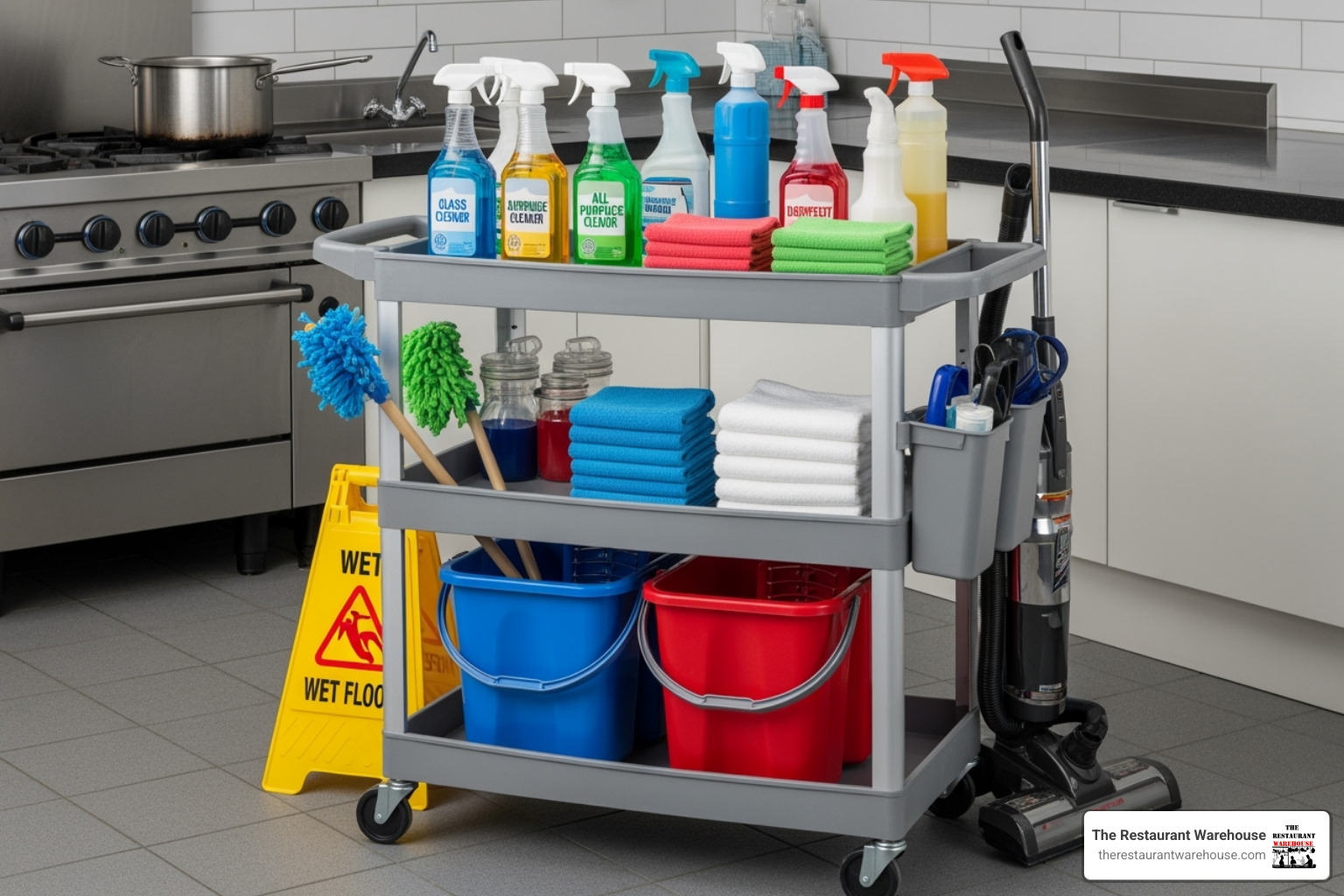
Most foodborne illness outbreaks aren't caused by a lack of cleaning chemicals—they're caused by improper application and cross-contamination. That's where your tools and disposables become your first line of defense.
Must-Have Janitorial Tools for a Spotless Finish
Building a comprehensive janitorial toolkit means having equipment that covers everything from quick spills to deep cleaning.
- Mops and Buckets: Flat mops excel at daily maintenance, while string mops are your heavy-duty warriors for sticky kitchen floors. Buckets with built-in wringers are essential for controlling water use and preventing slip hazards.
- Brooms and Dustpans: These are indispensable for constant sweep-ups of crumbs and debris in both front-of-house and kitchen areas.
- Squeegees: For windows and mirrors, squeegees deliver streak-free results that paper towels can't match. They can also be used to push excess water off kitchen floors, speeding up drying times.
- Scrub Brushes: Stiff-bristled brushes tackle grout lines and textured floors, while softer brushes work on delicate surfaces. Having a variety of sizes is key.
- Microfiber Cloths: These cloths have revolutionized commercial cleaning. Their unique fiber structure traps dirt, grease, and bacteria at a microscopic level rather than just pushing them around. They work effectively with less chemical and are reusable, saving money over time.
- Color-Coding Systems: Assign specific colors to specific areas—red for restrooms, green for food-prep zones. This simple visual system prevents staff from accidentally using a restroom mop on food-prep surfaces. It's one of the easiest ways to prevent cross-contamination.
The Role of Disposable Supplies in Restaurant Hygiene
Disposable supplies are a critical barrier against the spread of pathogens. Their one-and-done nature ensures that bacteria and viruses don't travel from one area to another.
- Paper Towels: The Swiss Army knife of disposables, used for wiping spills, drying hands, and polishing surfaces. They are cost-effective and hygienic.
- Sanitizing Wipes: These offer speed and convenience for quickly sanitizing a table between guests or wiping down a POS terminal. They are pre-measured and ready to go.
- Disposable Gloves: Mandatory for food handling and highly recommended for cleaning tasks. Stock multiple types, like latex-free nitrile gloves, and keep boxes stationed throughout your restaurant for easy access.
- Trash Can Liners: Heavy-duty liners prevent leaks, contain odors, and keep your trash receptacles cleaner, reducing the frequency of deep cleaning.
- Restroom Supplies: Well-stocked toilet paper and hand soap signal that you care about details. Running out of either creates an instantly negative impression.
By investing in quality janitorial tools and disposables, you're investing in food safety, customer satisfaction, and your restaurant's reputation. These items work hand-in-hand with your restaurant cleaning products to create a comprehensive hygiene program.
How to Choose the Right Restaurant Cleaning Products
Choosing the right restaurant cleaning products is a strategic decision that affects food safety, staff efficiency, and your restaurant's reputation. A well-planned cleaning program saves you money and time by matching the right product to each task, which helps your staff work more efficiently and keeps your surfaces in better condition.
Matching the Product to the Task and Surface
Many restaurant owners go wrong by assuming one cleaner can handle everything. Using the wrong chemical for the job is ineffective and can cause damage. The secret starts with reading product labels. Labels tell you what the chemical is designed for, how to dilute it, the required contact time, and what safety gear to wear.
Every chemical product should have an accompanying Safety Data Sheet (SDS). These documents are your playbook for each product, covering hazards, storage, and emergency procedures. Keep them organized where your staff can access them quickly, as required by OSHA. For comprehensive guidance, check the OSHA guidance on Safety Data Sheets.
Surface compatibility is also crucial. Different materials react differently to chemicals. For example, acidic cleaners can etch natural stone or dull the finish on stainless steel surfaces. A good rule of thumb is to test a new product on a small, hidden area first to check for any discoloration or damage.
Why Professional-Grade Restaurant Cleaning Products Matter
Can't you just use household cleaners? You shouldn't, and here's why professional-grade restaurant cleaning products are worth it.
First, professional products are typically sold in concentrated formulas. While a gallon jug might cost more upfront, it makes dozens of gallons of cleaning solution. The cost per use is often lower than consumer-grade products.
But the real value is in efficacy. Professional formulations are engineered for commercial foodservice environments. They cut through industrial-level grease and meet strict health code requirements. They work faster and more thoroughly, which means your staff spends less time scrubbing, translating directly to labor savings. Professional-grade products also deliver the consistent results that are essential for maintaining your restaurant's cleanliness standards.
The Rise of Eco-Friendly and Sustainable Options
Customers increasingly care about sustainability and support businesses that share those values. This shift is changing how we think about cleaning products.
Today's environmentally conscious restaurant cleaning products use biodegradable ingredients and often feature sustainable packaging or concentrated formulas that reduce plastic waste. What makes these products appealing is their non-toxic formulations. Green products typically minimize harsh ingredients and volatile organic compounds (VOCs), creating a safer environment for staff and customers.
Modern eco-friendly products are often just as effective as conventional ones. Advances in green chemistry have produced formulas that tackle grease and kill bacteria without relying on harsh chemicals. Highlighting your use of green cleaning products can differentiate your restaurant and attract this growing customer base. The goal isn't perfection—it's making thoughtful choices where you can. Even switching just your dining room and restroom cleaners to eco-friendly options makes a meaningful difference.
Ready to upgrade your cleaning program with professional-grade supplies? Contact us to discuss your specific needs and find how wholesale pricing can transform your bottom line.
The Business Case for Smart Cleaning Supply Management
How you manage your restaurant cleaning products is a critical decision that affects everything from your budget to your health inspection scores. A strategic approach to cleaning supply management pays dividends throughout the entire business.
The Financial Advantage of Buying Supplies in Bulk
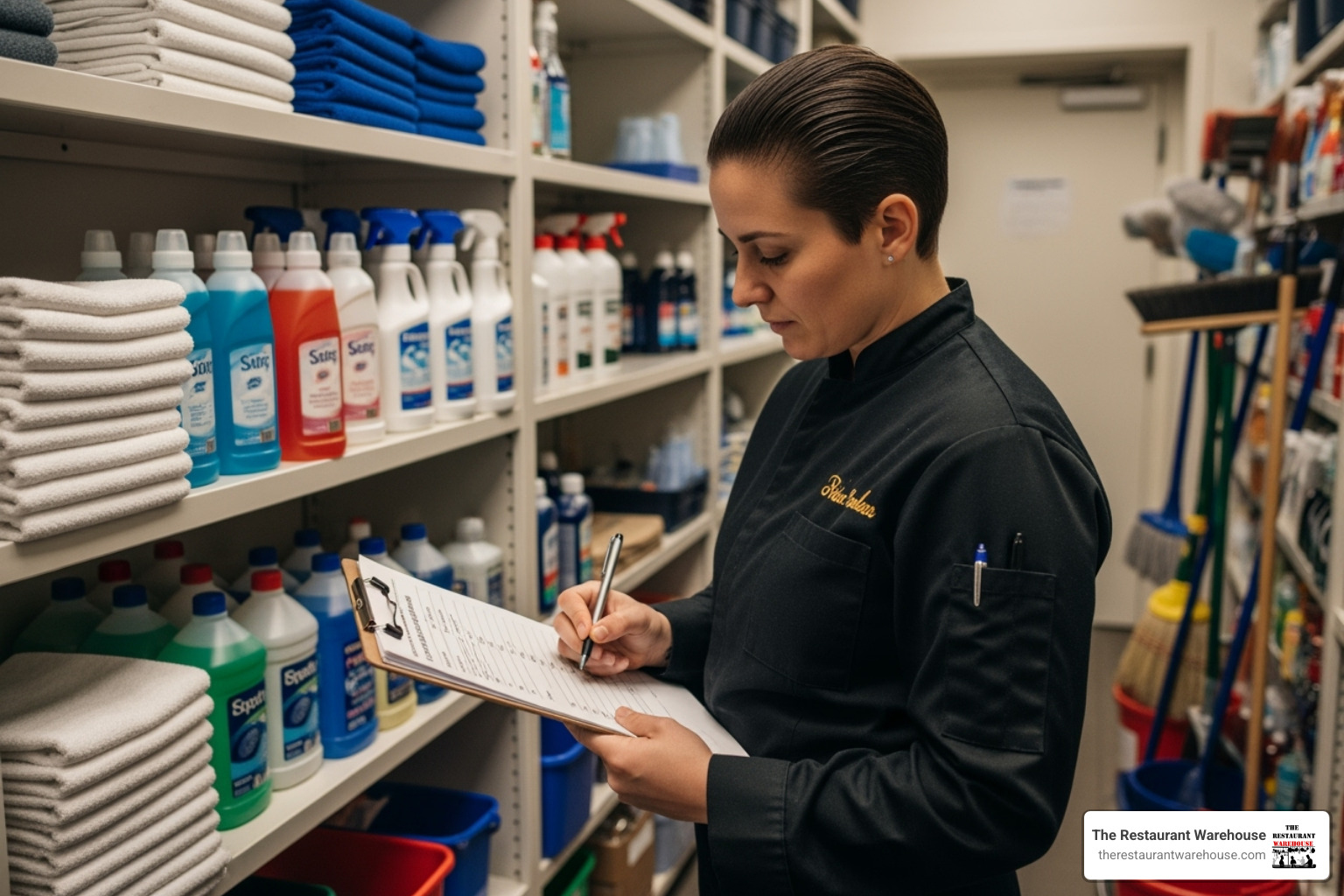
Restaurants use a lot of cleaning products. When you're using that much of something, buying in bulk isn't just smart—it's essential. Wholesale pricing on larger quantities means you're paying less per ounce or per gallon. We've seen restaurants cut their cleaning supply costs significantly simply by switching from retail purchases to bulk ordering.
The savings go beyond the sticker price. Buying in bulk reduces your order frequency, which means less time spent on administrative tasks and lower shipping costs. It also ensures consistent stock. Running out of sanitizer during a dinner rush is a crisis that leads to expensive emergency purchases. Maintaining a healthy inventory through bulk purchasing means you're never caught short.
Concentrated products offer even greater value. A single container of concentrated degreaser, when properly diluted, can replace dozens of ready-to-use bottles, saving money, storage space, and packaging waste.
At The Restaurant Warehouse, we specialize in providing commercial-grade supplies at wholesale prices. We skip the retail markup, passing those savings directly to you. Contact Us to learn about wholesale pricing and find how we can help your restaurant operate more profitably.
Ensuring Health Code Compliance and Food Safety
Your local health inspector is looking for evidence that you take cleaning and sanitation seriously. Your choice and proper use of restaurant cleaning products sits at the heart of that evaluation. Proper sanitation protocols are the difference between a thriving business and one facing closures and reputation damage.
Health inspectors scrutinize everything: how you store chemicals, whether you're using the right sanitizers, if your staff knows proper dilution ratios, and if cleaning schedules are being followed. When selecting products, look for EPA-registered formulas, which have been tested and proven to kill specific pathogens.
Even the best products won't help if your team doesn't know how to use them correctly. Staff training is absolutely critical. Your employees need to understand dilution ratios, contact times, and safety procedures. A clear, comprehensive Restaurant Cleaning Checklist keeps everyone on the same page and ensures nothing gets missed.
How Cleanliness Shapes Customer Perception and Your Brand
Before they've tasted a single bite of food, your customers are evaluating your cleanliness. Polished tables, streak-free windows, and a fresh-smelling dining room tell a story about how much you care.
The first impression starts at the entrance. A sparkling clean entrance makes customers feel welcome and confident in their choice. Many customers judge your kitchen by your restroom cleanliness. A pristine, well-stocked restroom tells customers you maintain high standards everywhere.
The dining area ambiance depends heavily on cleanliness. Clean tables, floors, and windows create an environment where people want to spend time and money. Online reviews often mention cleanliness—or the lack of it. A single comment about sticky tables can influence dozens of potential customers, while positive mentions reinforce your reputation.
All of this builds customer trust and loyalty. When people see that you consistently maintain a clean environment, they understand you're taking their health and safety seriously. They return more often and become advocates for your brand. Your cleaning program isn't just about meeting health codes; it's about creating an experience that keeps customers coming back.
Frequently Asked Questions about Restaurant Cleaning Supplies
After years of helping restaurant owners steer restaurant cleaning products, I've heard just about every question imaginable. Here are straightforward answers to the most common concerns.
What's the difference between a sanitizer and a disinfectant?
This distinction is critical for running a safe restaurant. Sanitizers are for food-contact surfaces like prep tables and cutting boards. Their job is to reduce bacteria to safe levels as defined by public health standards. They don't eliminate every germ, but they reduce them to a level that won't cause illness.
Disinfectants are the heavy hitters for non-food-contact surfaces. You use them in restrooms, on door handles, and on POS terminals. They are formulated to kill a much broader spectrum of microorganisms, including bacteria, viruses, and fungi. Disinfectants typically require a longer contact time (dwell time) to be effective.
The simple way to remember it: sanitizers reduce, disinfectants kill. Using the right product in the right place is essential for protecting your customers.
How can I ensure my staff is using cleaning chemicals safely?
Safety is paramount when handling commercial restaurant cleaning products. A culture of safety starts with you.
- Training: Every staff member needs instruction on proper dilution, application, and contact times. Emphasize reading product labels.
- Safety Data Sheets (SDS): Make SDS documents easily accessible. Your staff should know what to do in an emergency. The OSHA guidance on Safety Data Sheets explains how to use these critical documents.
- Personal Protective Equipment (PPE): Require chemical-resistant gloves for all cleaning tasks and provide safety glasses when working with concentrated chemicals.
- Ventilation: Ensure staff work in well-ventilated areas, especially when using products with strong fumes.
- Storage: Products must stay in their original, labeled containers, stored in a cool, dry location away from food and customer areas. Never mix chemicals unless instructed by the manufacturer.
Are "green" cleaning products as effective as traditional ones?
Many restaurant owners worry they'll sacrifice cleaning power for environmental friendliness. The truth is that modern green restaurant cleaning products have come a long way.
For most general cleaning, degreasing, and sanitizing tasks, high-quality green products deliver excellent results. Look for third-party certifications like EPA Safer Choice or Green Seal, which verify that products meet rigorous performance and environmental standards. The benefits extend beyond environmental impact; green products typically contain fewer harsh chemicals and strong fragrances, making them safer for staff and more comfortable for customers. The FDA's guidance on safe food handling emphasizes using appropriate cleaning methods, and many eco-friendly products meet these standards.
For certain extreme situations, you might still need traditional formulations. But for your daily cleaning routine, green products are absolutely up to the task. Using them is a visible way to demonstrate your commitment to sustainability, which can improve your reputation with environmentally conscious diners.
If you're ready to upgrade your cleaning program with professional-grade products that work, explore our janitorial and cleaning supplies today or contact us to learn about wholesale pricing on the products your restaurant needs.
Conclusion
If there's one thing to take away about restaurant cleaning products, it's this: cleanliness is the foundation of safety, trust, and success in your business.
We've covered the core four chemical categories—cleaners, degreasers, sanitizers, and disinfectants—and the essential role each plays. We also explored the janitorial tools and disposables that prevent cross-contamination and ensure your cleaning program is effective. Choosing the right product for the job, understanding the value of professional-grade formulas, and considering eco-friendly options are all strategic decisions that pay off.
The business case is clear. Smart supply management saves money, ensures health code compliance, and shapes how customers perceive your brand. A consistently clean environment builds trust and loyalty, which are invaluable to your restaurant's long-term success.
At The Restaurant Warehouse, we understand what restaurant owners need. We offer restaurant cleaning products and janitorial supplies at wholesale prices—no high commissions, just straightforward value that helps your bottom line. We're here to support you with quality products and expertise.
Your restaurant's cleanliness tells a story. It speaks louder than any marketing campaign. When customers walk into a sparkling dining room and use an immaculate restroom, they feel your commitment to excellence. That feeling translates into trust and repeat business.
Ready to lift your cleaning program? Explore our janitorial and cleaning supplies today to find the right products at the right prices. If you have questions, don't hesitate to contact us—we're here to help you find solutions that work.
About The Author

Sean Kearney
Sean Kearney used to work at Amazon.com and started The Restaurant Warehouse. He has more than 10 years of experience in restaurant equipment and supplies. He graduated from the University of Washington in 1993. He earned a BA in business and marketing. He also played linebacker for the Huskies football team. He helps restaurants find equipment at a fair price and offers financing options. You can connect with Sean on LinkedIn or Facebook.
Leave a comment