

Maximize Your Space: Top 3-Door Sandwich Prep Tables Reviewed
Why 3-Door Sandwich Prep Tables Transform Commercial Kitchen Efficiency
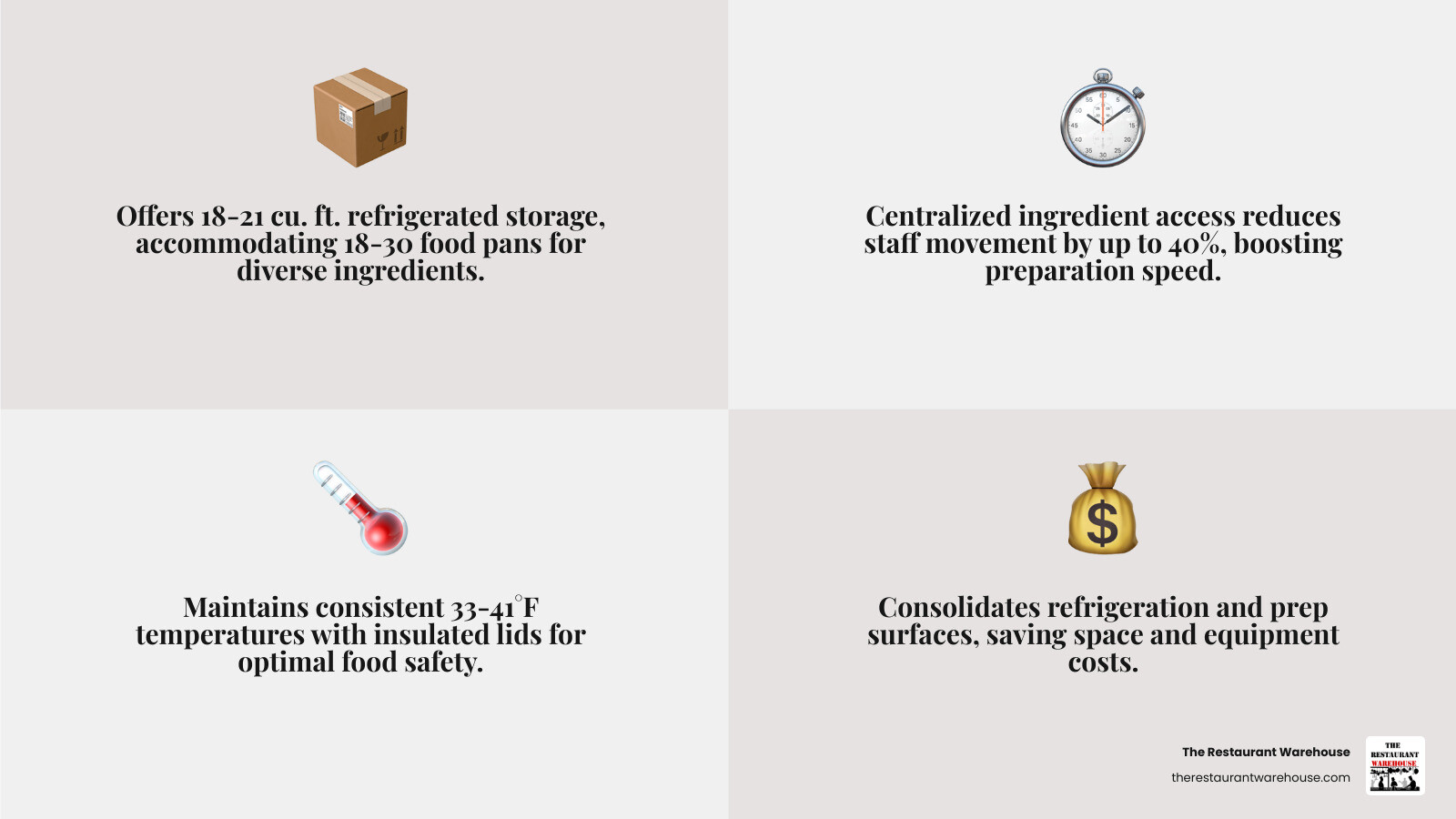
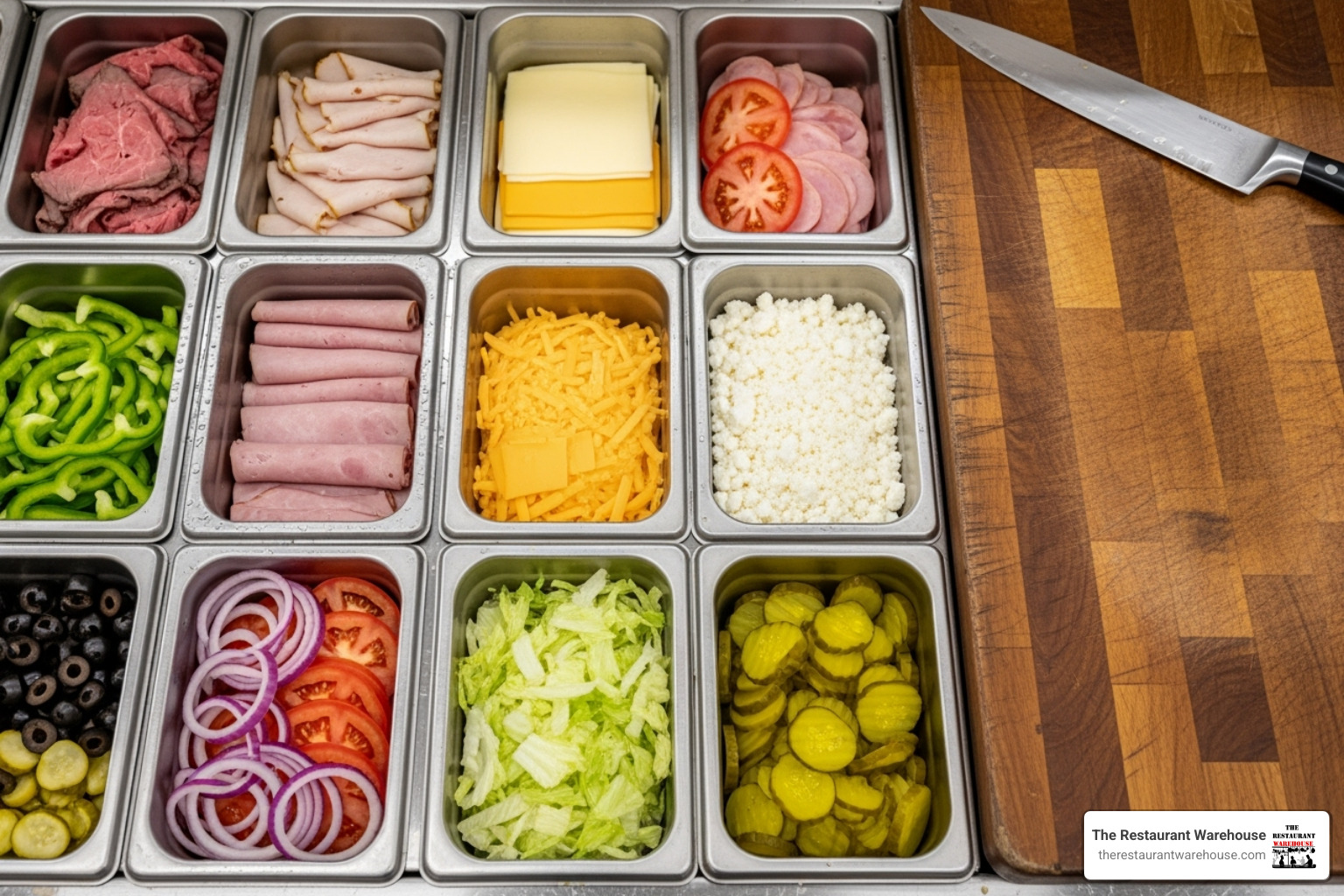
A 3 door sandwich prep table is the backbone of efficient food preparation, combining refrigerated storage with an organized workspace to keep ingredients fresh and accessible. These essential units for high-volume sandwich shops, delis, pizzerias, salad bars, and busy cafes typically offer 18-21 cubic feet of storage and accommodate 18-30 food pans. By creating a centralized station for assembly, these tables drastically reduce staff movement and streamline the entire food production process, leading to faster service and higher customer satisfaction.
Top 3-Door Sandwich Prep Table Benefits:
- Increased Storage Capacity: 18-21 cu. ft. of refrigerated space plus organized pan storage for dozens of ingredients.
- Improved Workflow: Centralized ingredient access reduces staff movement by up to 40%, which translates directly to faster ticket times and higher output during peak hours.
- Superior Food Safety: Maintains a critical 33-41°F temperature range with features like insulated lids and advanced cold wall refrigeration.
Modern 3-door prep tables can hold 18 to 30 individual 1/6 size food pans, depending on the configuration. Storage capacity varies by model, with some offering around 18 cubic feet of storage, while larger units can exceed 21 cubic feet, providing ample space for all necessary ingredients without constant trips to the walk-in cooler.
Budget-conscious restaurant owners benefit from these units by eliminating the need for separate refrigeration and prep surfaces. A single 3-door prep table handles ingredient storage, temperature control, and workspace needs, consolidating equipment costs. This consolidation not only saves initial capital but also optimizes valuable kitchen floor space, a critical consideration in any commercial layout. The return on investment is seen not just in equipment savings, but in ongoing labor efficiency and reduced food waste.
Key specifications to consider include refrigeration capacity, cutting board depth (typically 10-12 inches), and pan configuration. Most units operate on standard 115V electrical connections and use environmentally-friendly R290 refrigerant, making them both powerful and responsible choices for the modern kitchen.
Why a 3-Door Sandwich Prep Table is a Game-Changer for Your Kitchen
For any commercial kitchen specializing in sandwiches, salads, or any dish requiring rapid assembly of fresh ingredients, a 3 door sandwich prep table is a critical investment. The benefits are not just incremental; they fundamentally reshape workflow efficiency, lift food safety standards, and directly impact your bottom line.
These tables offer significantly increased capacity, with many models providing 18 to over 21 cubic feet of refrigerated storage. This generous volume allows you to keep a wide and diverse variety of ingredients perfectly chilled and ready for service, eliminating the constant, time-consuming restocking trips from distant walk-in coolers. High-capacity models can offer over 21 cubic feet of refrigerated storage, while standard units provide a robust 18 cubic feet, exemplifying the high-volume capabilities of this equipment category.
Beyond raw storage, the organization a 3 door sandwich prep table provides is unparalleled. Multiple doors allow for designated sections for different ingredient categories—proteins, vegetables, cheeses, sauces—which is essential for preventing cross-contamination and reducing the time staff spend searching for items. This systematic approach, combined with an ergonomic design that puts every ingredient at arm's length, speeds up the entire preparation process. The result is measurably reduced prep time, consistently higher product quality, and a more productive and less stressful work environment. Furthermore, the design is engineered to support HACCP (Hazard Analysis and Critical Control Points) compliance by maintaining precise temperature control, a non-negotiable cornerstone of modern food safety.
Boosting Workflow and Productivity
The thoughtful design of a 3 door sandwich prep table creates a culinary command center that centralizes all necessary components for rapid food assembly. This setup embodies the professional culinary principle of "mise en place"—everything in its place—to dramatically streamline operations. This isn't just about being tidy; it's a professional philosophy that transforms potentially chaotic kitchens into models of efficiency. By having every ingredient, from proteins to garnishes, chilled and within arm's reach, chefs can assemble complex orders with precision and speed, minimizing errors and ensuring consistency from the first sandwich of the day to the last.
Instead of a fragmented workflow where staff waste precious seconds moving between separate refrigerators, storage racks, and prep counters, a prep table consolidates these steps into a single, fluid assembly line. Ingredients are stored directly below the cutting surface and in chilled pans on top, minimizing staff movement and physical strain. This centralization is a critical advantage during high-volume service periods. During lunch or dinner peaks, the ability to quickly grab, slice, and assemble on one surface means you can handle a higher volume of orders with fewer staff. This boosts overall productivity and ensures that service speed and quality are maintained even when demand is at its highest. By keeping ingredients carefully separated and chilled, the risk of cross-contamination is also minimized, which not only improves kitchen hygiene but also prevents flavor transfer between potent ingredients like onions or pickles and more delicate items like cheeses or avocados, preserving the integrity of your final product.
Enhancing Food Safety and Freshness
Maintaining the highest standards of food safety is a fundamental commitment for any food service establishment, and a 3 door sandwich prep table plays a pivotal and proactive role in upholding this promise.
The core principle is consistent, reliable temperature holding. These units are engineered to maintain temperatures within the critical food-safe range of 33°F to 41°F (1°C to 5°C), which is vital for inhibiting the growth of harmful bacteria. The refrigerated pan rails are continuously chilled by a dedicated airflow system, often aided by insulated lids that cover the pans when not in use. This dual-action cooling ensures that pan temperatures remain stable and safe even with frequent access during a busy service, preventing ingredients from entering the temperature 'danger zone.'
Many 3 door sandwich prep table models feature advanced cooling technologies like cold wall refrigeration or forced-air circulation to distribute cold air evenly throughout the cabinet and pan rail, eliminating hot spots and preventing time-temperature abuse. Reputable tables also carry essential certifications like ETL C & US and ETL SANITATION, which signify that the unit has been rigorously tested and complies with stringent North American safety and sanitation standards, giving you confidence during health inspections.
Finally, the construction material itself is a key feature of food safety. High-quality stainless steel is non-porous, highly resistant to corrosion from food acids and cleaning chemicals, and exceptionally easy to sanitize, preventing the buildup of food particles and bacteria. Thoughtful design features like coved corners, removable door gaskets, and accessible components further simplify the cleaning process, ensuring that every part of the unit can be maintained in an impeccably hygienic state.
The Ultimate Buyer's Guide: Key Features to Scrutinize
Shopping for a 3 door sandwich prep table requires careful consideration of specific features that can make or break your daily operations. A smart purchase goes beyond the price tag to evaluate construction, performance, and ergonomics. This guide will walk you through the essential elements that separate the reliable workhorses from the costly headaches.
Essential Features of a High-Quality 3-Door Sandwich Prep Table
The construction material of your 3 door sandwich prep table is the primary determinant of its longevity and hygiene. Stainless steel is the industry standard, but the grade matters significantly. A 430 stainless steel exterior offers good durability and resistance to dents at a reasonable cost. However, a 304 stainless steel interior is far superior for resisting corrosion from food acids, salts, and harsh cleaning chemicals. The difference lies in the composition: 304 stainless steel contains a higher percentage of nickel, which provides superior resistance to acidic ingredients like tomatoes, vinegar, and citrus juices. Many quality manufacturers use this hybrid approach for a perfect balance of long-term quality and value.
Precise temperature control is everything. Your prep table must consistently maintain a temperature between 33°F and 41°F to ensure food safety and quality. Look for units with digital thermostats that feature clear LED displays for easy, at-a-glance monitoring and precise accuracy. Many high-performance models use reliable digital controllers from specialized electronics manufacturers to keep health inspectors happy and customers safe. A good unit will also have a fast temperature recovery time after doors are opened.
Heavy-duty casters (typically 4" or 5") are non-negotiable for mobility and sanitation. They are a sanitation lifeline, allowing your staff to easily move the heavy unit away from the wall for deep cleaning of the floor and surrounding areas. Ensure at least two of the casters have secure, easy-to-engage locks to prevent the table from shifting or rolling during a busy service.
Door design directly impacts ergonomics and energy efficiency. Self-closing doors are an essential feature to prevent cold air from escaping when staff are busy and may forget to shut them completely. A stay-open feature, which holds the doors open past 90 degrees, is even better, as it makes loading heavy boxes of produce or cleaning the interior much easier. Recessed handles are also a smart feature, as they create a smooth, snag-free profile in tight kitchen walkways and are easier to clean than bulky bar handles.
The internal shelving system defines your bulk storage capacity. Look for adjustable, PVC-coated wire shelves that are durable, corrosion-resistant, and easy to clean. It's also important to check the weight capacity—some heavy-duty units specify up to 90 pounds or more per shelf, indicating they are built to withstand the demands of a real-world commercial kitchen. For complete technical details, always consult the manufacturer's official specification sheet for electrical requirements, precise dimensions, and other critical information before purchasing.
The Cutting Board: More Than Just a Surface
The cutting board on your 3 door sandwich prep table is the command center of your prep line. Its size, material, and design can either improve or hinder your entire workflow.
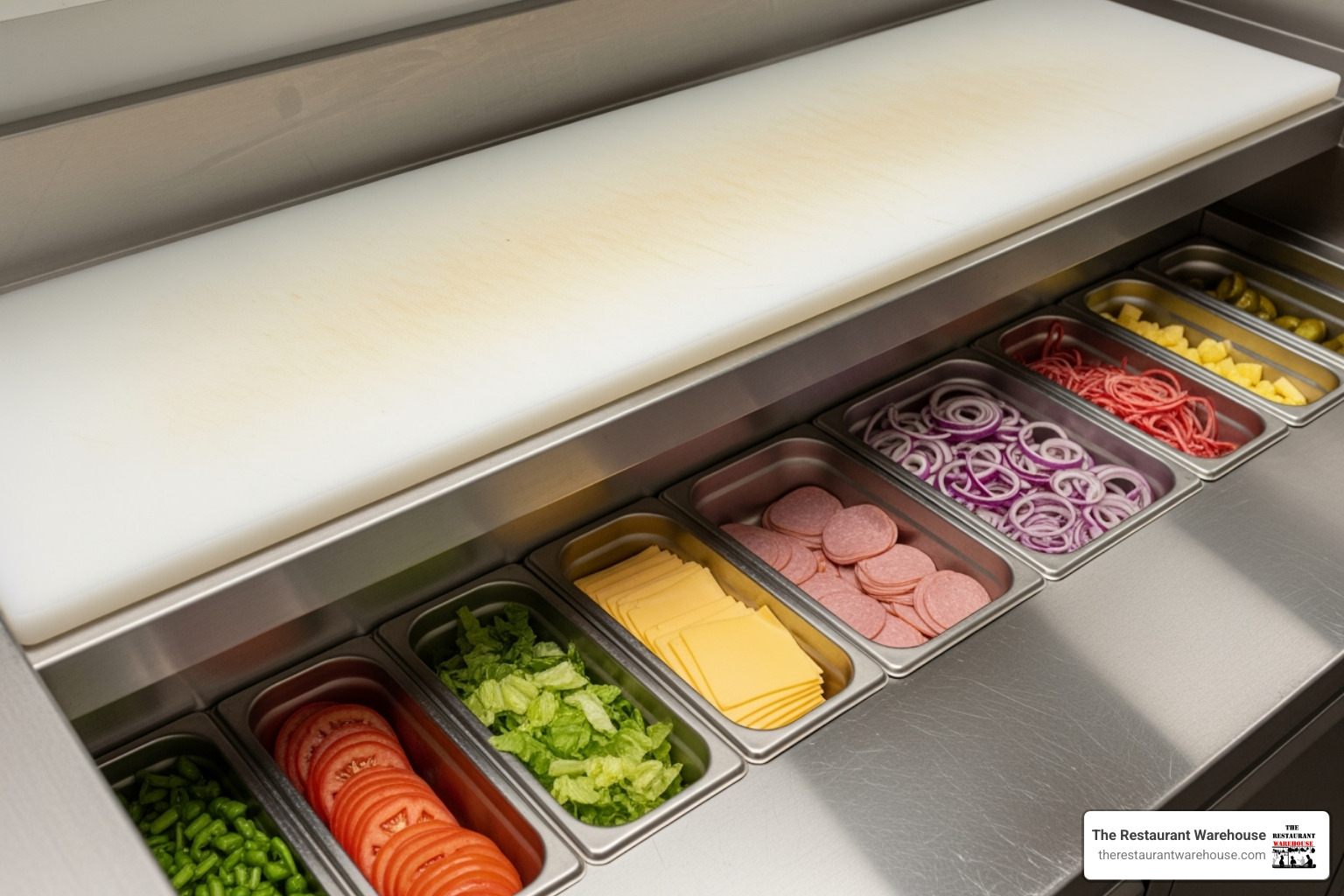
Material is key. Most commercial tables use high-density polyethylene cutting boards, which offer the perfect balance of durability and knife-friendliness. This material is tough enough to resist deep grooves but soft enough that it won't dull your knives as quickly as harder surfaces. Crucially, it is non-porous, which prevents bacteria and food juices from seeping in and hiding in cracks. Beyond the material, consider its certification. An NSF-certified cutting board ensures it meets public health standards for safety and sanitation.
Depth creates a productive workspace. A deeper board provides more room to work, allowing for better organization and less clutter during assembly. Depths typically range from 10 inches to nearly 12 inches. That extra inch or two can make a significant difference during a hectic lunch rush, providing enough space for multiple orders at once. A full-length board that spans the unit's entire width maximizes every available inch of prep space.
Removability is a crucial feature for food safety and convenience. A cutting board that lifts off easily can be taken to a sink for thorough cleaning and sanitizing, preventing the buildup of food debris and bacteria that can lead to cross-contamination. Many modern designs showcase this with their easily removable boards, a thoughtful feature that simplifies cleaning protocols and can even help the unit fit through narrow doorways during installation. For advanced food safety protocols, some kitchens use a system of color-coded cutting boards (available separately) to prevent cross-contamination between raw meats, vegetables, and other food groups, a practice easily implemented with a removable board design.
Decoding Capacity and Configurations
Choosing the right 3 door sandwich prep table requires a detailed understanding of its storage space and ingredient arrangement options. This isn't just about fitting the unit into your kitchen; it's about configuring it to perfectly match your menu and workflow. Every cubic foot of refrigerated space and every pan position matters for serving customers quickly, efficiently, and safely.
Storage capacity in these units can range widely, from more compact units to spacious models that exceed 21 cubic feet. However, it's not just about the raw volume; the organization of that volume is key. Most units come equipped with adjustable, PVC-coated wire shelves designed to handle significant weight. Many commercial-grade units support up to 90 pounds per shelf, allowing you to confidently load them with heavy containers of bulk ingredients, backup supplies, and cases of beverages.
When evaluating the interior layout, be aware that some undercounter units have a "step" at the lower rear of the cabinet. This step is a common and intelligent design feature, not a flaw; it allows the powerful compressor and other refrigeration components to be housed efficiently without increasing the unit's overall footprint. When planning your storage, this lower rear area is ideal for shallower containers, backup supplies, or less frequently accessed items, while the full-depth front section can hold larger, bulkier products.
Understanding Storage and Pan Capacity
Pan capacity is one of the most important specifications, as it dictates how many different ingredients you can have ready at your fingertips. This capacity typically refers to the number of standard 1/6 size food pans that fit in the refrigerated top rail. Most 3 door sandwich prep table units are designed to hold 18 pans, which is an ideal configuration for most sandwich shops, salad bars, and delis.
This is where the crucial distinction between a "standard top" and a "mega top" comes into play. Standard top tables usually feature two rows of pans (for a total of 18 pans), a design that leaves ample room for a deeper cutting board (around 11-12 inches). In contrast, mega top tables are designed for maximum ingredient variety, cramming in up to 30 pans in three rows. This impressive capacity comes at the cost of some cutting board depth. The trade-off makes sense for operations that require an extensive array of toppings—like pizzerias or build-your-own bowl concepts—but may have other dedicated prep areas.
These systems are designed for flexibility. Most units include a set of divider bars that let you mix and match different pan sizes (1/2, 1/3, 1/6, 1/9) to create fully custom configurations based on your specific menu needs. The pans themselves are typically made from either stainless steel or clear polycarbonate. Stainless steel pans are incredibly durable and excellent at conducting cold temperatures. Clear polycarbonate pans offer the advantage of visibility, allowing staff to quickly identify ingredients and assess stock levels without removing the pan, which can speed up service and inventory checks.
Common Pan Setups for a 3-door sandwich prep table
The real efficiency of a prep table is open uped when you customize your pan layout to mirror your menu and workflow, minimizing reach and decision time for your staff.
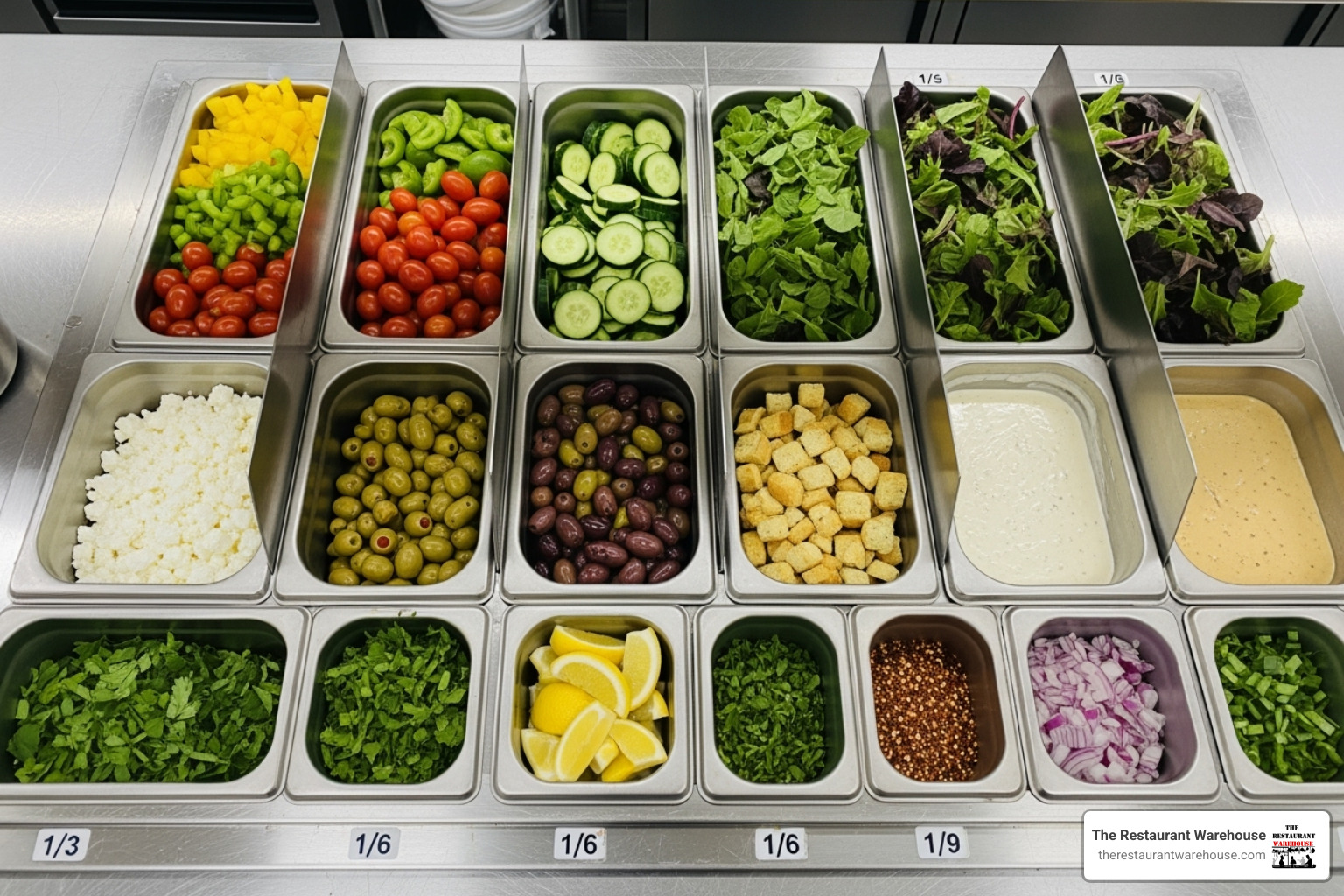
- Large 1/3 size pans are perfect for high-volume, core ingredients like turkey, ham, roast beef, or shredded lettuce.
- Standard 1/6 size pans are the versatile workhorses for everyday toppings like sliced onions, pickles, various cheeses, and bell peppers.
- Smaller 1/9 size pans are ideal for lower-volume, high-potency items like sauces, fresh herbs, capers, jalapeños, and other specialty garnishes.
A typical setup for a deli might use a few 1/3 pans for popular proteins, a majority of 1/6 pans for standard toppings, and a couple of 1/9 pans for condiments. In contrast, a kitchen preparing salads and grain bowls might use more 1/6 and 1/9 pans to offer a wider variety of fresh vegetables, grains, nuts, seeds, and dressings. The key is to map your menu directly to your pan layout to create the most logical and ergonomic workflow for your team. Some manufacturers may have specific recommendations for pan sizes to ensure proper fit and optimal cooling, as incorrect placement can sometimes restrict airflow and affect temperature consistency.
Comparing Standard Top vs. Mega Top 3-Door Prep Tables:
| Feature | Standard Top | Mega Top |
|---|---|---|
| Pan Capacity | Typically 18 x 1/6 size pans (two rows) | Often 30 x 1/6 size pans (three rows) |
| Cutting Board Depth | Generally deeper (e.g., 11" - 12") | Slightly shallower due to extra pan row |
| Ideal Use Case | Moderate volume, varied ingredients, more prep space needed | High volume, extensive ingredient variety, less dedicated prep space needed |
The key is to match your 3 door sandwich prep table configuration to your actual, real-world workflow. If your menu demands a vast number of ingredient slots, a mega top is an excellent choice. If your staff performs more complex prep work directly at the table, the larger cutting board and more ergonomic reach of a standard top may be more valuable in the long run.
Technical Deep Dive: Installation, Energy, and Maintenance
Understanding the technical details of your 3 door sandwich prep table is essential for maximizing your return on investment, ensuring it runs smoothly for years, and avoiding costly operational disruptions. This deep dive covers the critical aspects of installation, energy consumption, and routine maintenance.
Installation and Operational Requirements
For most businesses, the initial setup is straightforward. The majority of units plug into a standard wall outlet with a NEMA 5-15P plug and run on a standard 115V connection, meaning no special electrical work is typically needed. However, it is crucial to check the amperage draw of the specific model you choose (which can range from under 4 amps to nearly 6 amps depending on the model's size and compressor). It is highly recommended to plug the unit into a dedicated circuit to prevent electrical overloads, especially in a kitchen with many other high-draw appliances. Never use an extension cord, as this can be a fire hazard and may void the warranty.
Space and placement are critical for performance. The refrigeration system needs adequate clearance for airflow around the rear and sides to prevent the compressor from overheating and overworking. Always check the manufacturer's specification sheet. Some models are 'front-breathing,' drawing in and exhausting air from the front, which allows them to be installed flush against a back wall. Others require 2-4 inches of clearance. Leveling the unit is also a simple but vital step to ensure the doors seal properly and the condensation drainage system functions correctly. Finally, be aware of ambient temperature limits. Most manufacturers specify that operating the unit in environments consistently above 75°F-90°F can strain the system and may void the warranty, so proper kitchen ventilation is crucial. For model-specific details, always refer to the manufacturer's installation and operation manual for exact specifications and guidance.
Energy Efficiency and Environmental Impact
Modern 3 door sandwich prep table units are increasingly designed to be both energy-efficient and environmentally friendly. The industry-wide switch to R290 hydrocarbon refrigerant has been a major factor in this shift. This natural, non-toxic refrigerant has zero Ozone Depletion Potential (ODP) and a very low Global Warming Potential (GWP) of 3, making it a far more sustainable choice than older refrigerants. Other eco-friendly options like R-600a, R-513a, or R-448A are also used in high-efficiency models.
Efficiency is also built directly into the unit's construction. High-density, foamed-in-place polyurethane insulation is injected into the walls and doors, creating a strong thermal barrier that minimizes heat transfer and reduces the energy needed to maintain cold temperatures. Some premium units feature self-cleaning condensers that use a brush to automatically sweep the coil, preventing the buildup of dust and grease that forces the compressor to work harder. While less common than in residential appliances, looking for an Energy Star certification is a reliable way to identify models with superior energy efficiency.
Warranty and Maintenance Essentials
Understanding your warranty can save you significant headaches and money down the line. A typical commercial warranty includes one to two years of parts and labor coverage for the entire unit and an extended five-year compressor warranty, as the compressor is the most expensive component. Premium brands may offer extended coverage, sometimes up to seven years on the compressor. Always read the fine print, as conditions like high ambient temperatures, improper installation, or use in mobile applications like food trucks can affect or void the coverage.
Routine maintenance is the most critical factor for ensuring the longevity and reliability of your prep table. A simple, consistent schedule can prevent the vast majority of equipment failures.
- Daily: Wipe down all surfaces, including the cutting board and door handles, with a food-safe sanitizer. Check and record temperatures to ensure they are in the safe zone.
- Weekly: Remove and deep-clean the cutting board. Clean the rubber door gaskets with mild soap and water and inspect them for cracks or tears that could cause air leaks. Clean out the interior cabinet, wiping down shelves and walls.
- Monthly: Check and clean the condenser coil. This is the single most important maintenance task. Use a stiff brush or vacuum to remove all dust, flour, and grease buildup. A clean coil allows the unit to run efficiently and prevents compressor failure. Check and clear the condensate drain line to prevent clogs and water backups.
If you notice unusual noises, temperature fluctuations, or excessive frost buildup, call for professional servicing promptly. Addressing small problems before they become large, expensive ones will keep your 3 door sandwich prep table running reliably for years to come.
Frequently Asked Questions about 3-Door Prep Tables
Here are answers to the most common questions we receive from customers about choosing, using, and maintaining the right 3 door sandwich prep table for their business.
What's the difference between a standard top and a mega top prep table?
The main difference is the trade-off between pan capacity and cutting board depth. A standard top typically has two rows of pans (holding about 18 total 1/6 size pans) and a deeper cutting board (11-12 inches). This design balances a good variety of ingredient storage with a more generous prep space. A mega top is built for maximum ingredient variety, featuring three rows of pans (holding up to 30 total 1/6 size pans). This comes at the cost of a slightly narrower cutting board. The choice depends on your menu: if you need more workspace, choose a standard top; if you need more topping options, choose a mega top.
How do I prevent my prep table from freezing ingredients?
Freezing ingredients is a common but usually preventable issue. First, ensure proper airflow inside the cabinet by not over-packing it or blocking the air vents; restricted airflow can cause cold spots. Second, check your temperature calibration with an independent, accurate thermometer to ensure the unit's thermostat is reading correctly and isn't set too cold. Finally, regularly inspect your door gaskets to make sure they are clean and sealing properly. Air leaks can cause the compressor to run constantly, which can overcool the unit and lead to freezing.
Can I use different sizes of food pans in my prep table?
Yes, flexibility is a key design feature. Most quality 3 door sandwich prep tables come with a set of removable divider bars that allow you to mix and match different pan sizes. You can create a custom layout using a combination of 1/3, 1/6, and 1/9 size pans to perfectly suit your menu's specific needs. However, it's always a good practice to check your manufacturer's recommendations first. They can provide guidance on optimal configurations that ensure a proper fit and won't compromise the unit's cooling performance by obstructing airflow.
What is the difference between a sandwich prep table and a pizza prep table?
While they look similar, the key differences are in the cutting board and the refrigerated rail, each custom to a specific task. A sandwich prep table has a shallower cutting board (typically 10-12 inches deep) because sandwiches are smaller and assembled directly on it. A pizza prep table has a much deeper cutting board (often 19 inches or more) to provide enough space to work with large pizza doughs. Additionally, the refrigerated rail on a pizza prep table is often raised higher than the cutting board. This raised rail helps prevent flour, cornmeal, and other debris from falling into the ingredient pans, a design feature that is less critical for a standard sandwich or salad station.
How much clearance does my prep table need for proper ventilation?
This is a critical installation question, and the answer depends entirely on the model's specific design. You must always check the manufacturer's specification sheet for their requirements. Many modern 'front-breathing' units are designed to draw in and exhaust air from the front grille, allowing them to be installed with zero clearance on the sides and back. However, most standard units that breathe from the back or sides require at least 2-4 inches of clearance on those sides to allow the refrigeration system to dissipate heat effectively. Failing to provide adequate clearance will cause the compressor to work harder, consume more energy, and can lead to premature failure, which may not be covered by the warranty.
Conclusion
The journey to a more efficient kitchen often begins with a single, strategic investment. As we've explored, a 3 door sandwich prep table is precisely that—a foundational piece of equipment that delivers compounding returns in productivity, safety, and quality. It's the command center that empowers your staff to work smarter, not harder. By centralizing cold storage and prep space, you eliminate wasted steps and create a seamless flow from ticket to customer. The ability to hold 18 to 30 pans of perfectly chilled ingredients at arm's length is a game-changer during the chaos of a lunch or dinner rush, with some kitchens reporting up to a 40% reduction in staff movement.
The key takeaway is this: when shopping for a 3 door sandwich prep table, focus on the features that directly impact your unique operation. Prioritize durable construction like 304 stainless steel interiors, reliable performance from digital temperature controls, and practical, sanitary design elements like removable cutting boards. Don't overlook the details that improve daily life in the kitchen, such as self-closing doors, heavy-duty locking casters, and adjustable, high-capacity shelving.
The long-term value is found in forward-thinking features like energy-efficient R290 refrigerant, comprehensive warranties that protect your investment, and the reduced labor costs that come from a vastly improved workflow. Your staff will be more productive and less fatigued in an ergonomic workspace, and your bottom line will benefit from the increased efficiency, lower food waste, and improved food safety.
The ultimate decision rests on a clear understanding of your own operational needs. Before you buy, map out your menu. Count the number of unique cold ingredients you need accessible at all times. Measure your available floor space and consider your peak volume. Will the deeper cutting board of a standard top serve you better, or is the sheer ingredient variety of a mega top non-negotiable? Answering these questions will lead you to the perfect unit that feels less like a purchase and more like a custom-built solution for your business's success.
At The Restaurant Warehouse, we understand that every dollar counts. We cut out the middleman and high retail markups to bring you wholesale pricing on commercial kitchen equipment. We've seen how the right 3 door sandwich prep table can transform a kitchen's potential.
For more information on maximizing your prep station's efficiency, check out The ultimate guide to sandwich prep tables. This resource covers everything from sizing to advanced maintenance.
Investing in efficiency is essential for staying competitive. A well-chosen 3 door sandwich prep table pays for itself through reduced prep times, lower food waste, and improved food safety. When you're ready to optimize your kitchen, you'll know exactly what to look for.
About The Author

Sean Kearney
Sean Kearney used to work at Amazon.com and started The Restaurant Warehouse. He has more than 10 years of experience in restaurant equipment and supplies. He graduated from the University of Washington in 1993. He earned a BA in business and marketing. He also played linebacker for the Huskies football team. He helps restaurants find equipment at a fair price and offers financing options. You can connect with Sean on LinkedIn or Facebook.
Leave a comment