
Commercial Ice Makers & Ice Machines


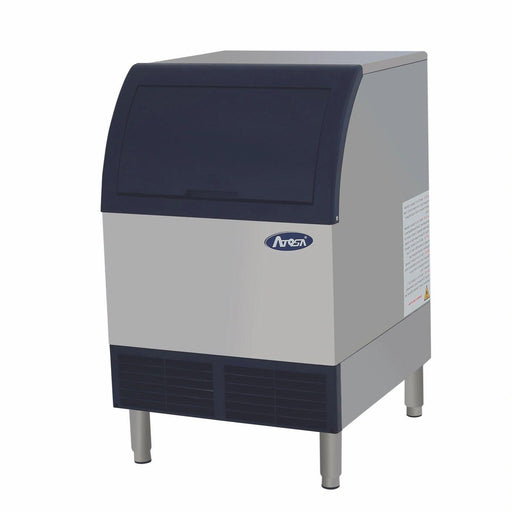
Atosa YRU0140A-161 140 lb Undercounter Commercial Ice Machine
Atosa
Original price
$2,756.00
Original price
$2,756.00
-
Original price
$2,756.00
Original price
$2,756.00
Current price
$1,850.00
$1,850.00
-
$1,850.00
Current price
$1,850.00
Atosa YRU0140A-161 140 lb Undercounter Commercial Ice Machine The Atosa YRU0140A-161 is a 24-inch self-contained undercounter ice machine that pro...
View full details
Original price
$2,756.00
Original price
$2,756.00
-
Original price
$2,756.00
Original price
$2,756.00
Current price
$1,850.00
$1,850.00
-
$1,850.00
Current price
$1,850.00
Save 33%
Atosa USA YR280-AP-161 283 lb Undercounter Commercial Ice Maker
Atosa
Original price
$3,551.00
Original price
$3,551.00
-
Original price
$3,551.00
Original price
$3,551.00
Current price
$2,383.00
$2,383.00
-
$2,383.00
Current price
$2,383.00
Product Update: The Atosa YR280-AP-161 has been replaced by the new YRU0280A-161 — same 280 lb ice production, upgraded electronic controller, and...
View full details
Original price
$3,551.00
Original price
$3,551.00
-
Original price
$3,551.00
Original price
$3,551.00
Current price
$2,383.00
$2,383.00
-
$2,383.00
Current price
$2,383.00
Save 33%
Atosa YR450-AP-161 Commercial Ice Maker
Atosa
Original price
$4,452.00
Original price
$4,452.00
-
Original price
$4,452.00
Original price
$4,452.00
Current price
$2,988.00
$2,988.00
-
$2,988.00
Current price
$2,988.00
Atosa USA YR450-AP-161 460 lb Air-Cooled Ice Maker with 3M™ Water Filtration System Upgrade your ice production with the Atosa YR450-AP-161 Air-Co...
View full details
Original price
$4,452.00
Original price
$4,452.00
-
Original price
$4,452.00
Original price
$4,452.00
Current price
$2,988.00
$2,988.00
-
$2,988.00
Current price
$2,988.00
Save 33%


Atosa YR450S-AP-161 460 lb Beverage Dispensers Ice Machine Head
Atosa
Original price
$4,850.00
Original price
$4,850.00
-
Original price
$4,850.00
Original price
$4,850.00
Current price
$3,255.00
$3,255.00
-
$3,255.00
Current price
$3,255.00
Atosa YR450S-AP-161 460 lb Air-Cooled Ice Machine Head The Atosa YR450S-AP-161 Ice Machine Head delivers high-capacity, professional-grade ice pr...
View full details
Original price
$4,850.00
Original price
$4,850.00
-
Original price
$4,850.00
Original price
$4,850.00
Current price
$3,255.00
$3,255.00
-
$3,255.00
Current price
$3,255.00
Save 33%
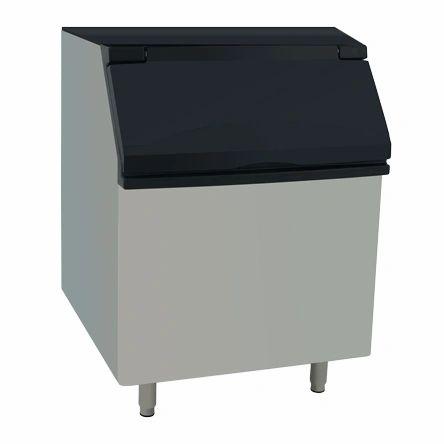
Atosa USA CYR400P 395 lb Storage Ice Bin
Atosa
Original price
$1,378.00
Original price
$1,378.00
-
Original price
$1,378.00
Original price
$1,378.00
Current price
$925.00
$925.00
-
$925.00
Current price
$925.00
Atosa USA CYR400P 395 lb Commercial Ice Storage Bin The Atosa CYR400P Ice Storage Bin is a durable, high-capacity solution designed for commercia...
View full details
Original price
$1,378.00
Original price
$1,378.00
-
Original price
$1,378.00
Original price
$1,378.00
Current price
$925.00
$925.00
-
$925.00
Current price
$925.00
Save 33%
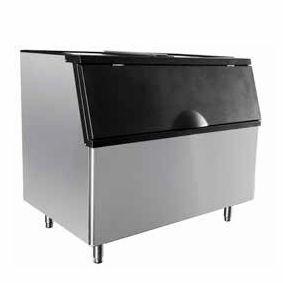
Atosa USA CYR700P 700 lb Storage Ice Bin
Atosa
Original price
$2,052.00
Original price
$2,052.00
-
Original price
$2,052.00
Original price
$2,052.00
Current price
$1,377.00
$1,377.00
-
$1,377.00
Current price
$1,377.00
Atosa USA CYR700P 700 lb Commercial Ice Storage Bin The Atosa CYR700P Ice Storage Bin is built for high-volume restaurants, bars, hotels, caterin...
View full details
Original price
$2,052.00
Original price
$2,052.00
-
Original price
$2,052.00
Original price
$2,052.00
Current price
$1,377.00
$1,377.00
-
$1,377.00
Current price
$1,377.00
Save 33%
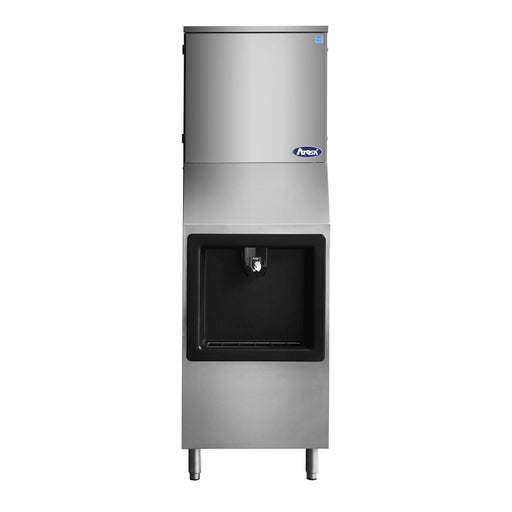
Atosa USA HD350-AP-161 Hotel Ice Machine
Atosa
Original price
$5,830.00
Original price
$5,830.00
-
Original price
$5,830.00
Original price
$5,830.00
Current price
$3,912.00
$3,912.00
-
$3,912.00
Current price
$3,912.00
Product Update: The Atosa HD350-AP-161 has been replaced by the new YDS0350A-161 — same ice production, upgraded electronic controller, and R290 r...
View full details
Original price
$5,830.00
Original price
$5,830.00
-
Original price
$5,830.00
Original price
$5,830.00
Current price
$3,912.00
$3,912.00
-
$3,912.00
Current price
$3,912.00
Save 33%


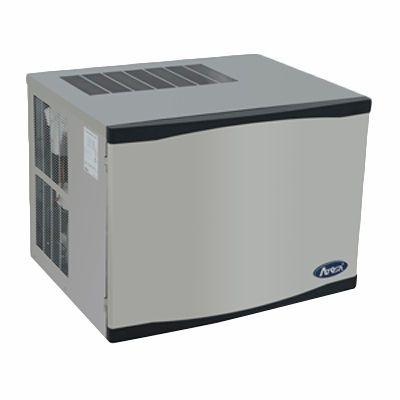
Atosa YRS0350A-161 22-Inch Half-Dice Modular Ice Maker, 350 lb/24 hr
Atosa
Original price
$4,673.00
Original price
$4,673.00
-
Original price
$4,673.00
Original price
$4,673.00
Current price
$3,136.00
$3,136.00
-
$3,136.00
Current price
$3,136.00
Atosa YRS0350A-161 350 lb Modular Ice Machine Head - 22" The Atosa YRS0350A-161 is a 22-inch modular ice machine head that produces up to 350 poun...
View full details
Original price
$4,673.00
Original price
$4,673.00
-
Original price
$4,673.00
Original price
$4,673.00
Current price
$3,136.00
$3,136.00
-
$3,136.00
Current price
$3,136.00
Save 33%


Atosa YRM0600A-261 Modular Ice Maker Head - 600 lb/Day, 30" Half-Dice, 208-230V
Atosa
Original price
$6,228.00
Original price
$6,228.00
-
Original price
$6,228.00
Original price
$6,228.00
Current price
$4,179.00
$4,179.00
-
$4,179.00
Current price
$4,179.00
Atosa YRM0600A-261 600 lb Modular Ice Machine Head - 30" The Atosa YRM0600A-261 is a 30-inch modular ice machine head that produces up to 600 poun...
View full details
Original price
$6,228.00
Original price
$6,228.00
-
Original price
$6,228.00
Original price
$6,228.00
Current price
$4,179.00
$4,179.00
-
$4,179.00
Current price
$4,179.00
Save 33%


Atosa YRM0800A-261 Modular Ice Maker Head - 800 lb/Day, 30" Half-Dice, 208-230V
Atosa
Original price
$6,360.00
Original price
$6,360.00
-
Original price
$6,360.00
Original price
$6,360.00
Current price
$4,268.00
$4,268.00
-
$4,268.00
Current price
$4,268.00
Atosa YRM0800A-261 800 lb Modular Ice Machine Head - 30" The Atosa YRM0800A-261 is a 30-inch modular ice machine head that produces up to 800 poun...
View full details
Original price
$6,360.00
Original price
$6,360.00
-
Original price
$6,360.00
Original price
$6,360.00
Current price
$4,268.00
$4,268.00
-
$4,268.00
Current price
$4,268.00
Save 33%

Atosa YRS0600A-261 Modular Ice Maker Head - 600 lb/Day, 22" Half-Dice, 208-230V
Atosa
Original price
$6,614.00
Original price
$6,614.00
-
Original price
$6,614.00
Original price
$6,614.00
Current price
$4,438.00
$4,438.00
-
$4,438.00
Current price
$4,438.00
Atosa YRS0600A-261 600 lb Modular Ice Machine Head - 22" The Atosa YRS0600A-261 is a 22-inch modular ice machine head that produces up to 600 poun...
View full details
Original price
$6,614.00
Original price
$6,614.00
-
Original price
$6,614.00
Original price
$6,614.00
Current price
$4,438.00
$4,438.00
-
$4,438.00
Current price
$4,438.00
Save 33%

Atosa BYR0300 300 lbs. Ice Bin
Atosa
Original price
$1,373.00
Original price
$1,373.00
-
Original price
$1,373.00
Original price
$1,373.00
Current price
$922.00
$922.00
-
$922.00
Current price
$922.00
Atosa BYR0300 300 lb Ice Storage Bin - 22" Modular Bin The Atosa BYR0300 is a 22-inch modular ice storage bin engineered to pair with Atosa's 22"-...
View full details
Original price
$1,373.00
Original price
$1,373.00
-
Original price
$1,373.00
Original price
$1,373.00
Current price
$922.00
$922.00
-
$922.00
Current price
$922.00
Save 33%


Atosa BYR0400 400 lbs. Ice Bin
Atosa
Original price
$1,373.00
Original price
$1,373.00
-
Original price
$1,373.00
Original price
$1,373.00
Current price
$925.00
$925.00
-
$925.00
Current price
$925.00
Atosa BYR0400 400 lb Ice Storage Bin - 30" Modular Bin The Atosa BYR0400 is a 30-inch modular ice storage bin engineered to pair with Atosa's 30"-...
View full details
Original price
$1,373.00
Original price
$1,373.00
-
Original price
$1,373.00
Original price
$1,373.00
Current price
$925.00
$925.00
-
$925.00
Current price
$925.00
Save 33%

Brema TB1404A-HC Automatic 333 lbs Pebble Nugget Ice Maker with Bin
BremaNugget Ice Maker Brema Automatic Pebble Ice Maker with Bin, production 333 lbs production/24 hours, 88 lbs bin capacity, air-cooled, 4-5/16" to 5-1...
View full details
Brema TB852A-HC Automatic 216 lbs Pebble Nugget Ice Maker with Bin
BremaNugget Ice Maker Brema Automatic Pebble Ice Maker with Bin, production 216 lbs production/24 hours, 44 lbs bin capacity, air-cooled, 4-5/16" to 5-1...
View full details
Brema TM140A-HC Automatic 304 lbs Pebble Nugget Ice Maker
BremaNugget Ice Maker Brema Automatic Pebble Ice Maker, production 304 lbs production/24 hours, air-cooled, 18/10 stainless steel, ANSI-304 interior fin...
View full details
Brema TM250A-HC Automatic 540 lbs Pebble Nugget Ice Maker
BremaNugget Ice Maker Brema Automatic Pebble Ice Maker, production 540 lbs production/24 hours, air-cooled, 18/10 stainless steel, ANSI-304 interior fin...
View full details
Brema BIN110 220 lbs Ice Bin
BremaIce Bin Brema Ice Bin, 220 lbs capacity, modular, compatible with C150, VM500, VM900, G250A, G500A, TM140A, TM250A, stainless steel interior & ...
View full details
Brema BIN200 400 lbs Ice Bin
BremaIce Bin Brema Ice Bin, 220 lbs capacity, modular, compatible with C150, VM500, VM900, G250A, G500A, TM140A, TM250A, stainless steel interior & ...
View full details
Brema GB903A-HC 253 lbs Flake Ice Maker with Bin
BremaFlake Ice Maker Brema Undercounter Ice Maker with Bin, flake-style, air-cooled, self-contained refrigeration, 253 lbs production/24hour, 66 lbs s...
View full details
3M 5615103 HF20-S Water Filter Replacement Filter Cartridge
3M
Original price
$125.00
-
Original price
$125.00
Original price
$125.00
$125.00
-
$125.00
Current price
$125.00
3M ICE120-S Water Filter Replacement Cartridge The 3M ICE120-S Water Filter Replacement Cartridge is designed to deliver consistent, high-quality...
View full details
Original price
$125.00
-
Original price
$125.00
Original price
$125.00
$125.00
-
$125.00
Current price
$125.00

3M 5616015 ICE120-S High Flow Series Carbonless Systems for Ice Makers
3M
Original price
$394.00
-
Original price
$394.00
Original price
$394.00
$394.00
-
$394.00
Current price
$394.00
3M ICE120-S Water Filtration System for Commercial Ice Makers The 3M ICE120-S Water Filtration System is designed to deliver clean, consistent, a...
View full details
Original price
$394.00
-
Original price
$394.00
Original price
$394.00
$394.00
-
$394.00
Current price
$394.00

ITV DELTA NG 120 Ice Maker 120 lbs. Gourmet Ice Cube Ice Machine
ITVThese gourmet ice cubes provide an excellent choice for enjoying your beverages as they have larger, unconventional shapes that take longer to melt...
View full details
ITV DELTA NG 150 Ice Maker 150 lbs. Gourmet Ice Cube Ice Machine
ITVThese gourmet ice cubes provide an excellent choice for enjoying your beverages as they have larger, unconventional shapes that take longer to melt...
View full details
ITV DELTA NG 80 Ice Maker 80 lbs. Ice Machine
ITVThese gourmet ice cubes provide an excellent choice for enjoying your beverages as they have larger, unconventional shapes that take longer to melt...
View full details
ITV DHD 130-22 Hotel Ice Machine
ITVIn order to meet the demands of the ice dispenser market, ITV has developed ice and water dispensers that are capable of dispensing half or full di...
View full details
ITV DHD 200-30 Hotel Ice Machine
ITVIn order to meet the demands of the ice dispenser market, ITV has developed ice and water dispensers that are capable of dispensing half or full di...
View full details
ITV ICE QUEEN 1300 1430 lbs. Flake Style Ice Machine
ITVThe IQ Series of Flakers offers a vertical cylindrical evaporator that produces compact and "dryer" ice flakes. No matter what your needs are, you ...
View full details
ITV ICE QUEEN 200C 220 lbs. Flake Style Ice Machine
ITVThe IQ Series of Flakers offers a vertical cylindrical evaporator that produces compact and "dryer" ice flakes. No matter what your needs are, you ...
View full details
ITV ICE QUEEN 2700 Flake Style Ice Machine
ITVThe IQ Series of Flakers offers a vertical cylindrical evaporator that produces compact and "dryer" ice flakes. No matter what your needs are, you ...
View full details
ITV ICE QUEEN 300 360 lbs. Flake Style Ice Machine
ITVThe IQ Series of Flakers offers a vertical cylindrical evaporator that produces compact and "dryer" ice flakes. No matter what your needs are, you ...
View full details
ITV ICE QUEEN 500 675 lbs. Flake Style Ice Machine
ITVThe IQ Series of Flakers offers a vertical cylindrical evaporator that produces compact and "dryer" ice flakes. No matter what your needs are, you ...
View full details
ITV ICE QUEEN 900 980 lbs. Flake Style Ice Machine
ITVThe IQ Series of Flakers offers a vertical cylindrical evaporator that produces compact and "dryer" ice flakes. No matter what your needs are, you ...
View full details
ITV IQN 700 714 lbs. Nugget Style Ice Machine
ITVIce Queen N machines are designed to produce ice nuggets, which are ideal for blending drinks as they mix the flavors without diluting them. These ...
View full details
ITV S-1050 1048 lbs. Ice Bin for Ice Machines
ITVIce Storage Bin, 52" W, 1048 lbs. capacity, slope front bin, 304 stainless steel construction, 6" adjustable legs (not included on dimensions), NSF...
View full details
ITV S-300 282 lbs. Ice Bin for Ice Machines
ITVIce Storage Bin, 282 lbs. storage capacity, slope front bin, 304 stainless steel construction front & side, galvanized back & bottom, 6" ad...
View full details
ITV S-400-22 399 lbs. Ice Bin for Ice Machines
ITVIce Storage Bin, 52" W, 1048 lbs. capacity, slope front bin, 304 stainless steel construction, 6" adjustable legs (not included on dimensions), NSF...
View full details
ITV S-500 510 lbs. Ice Bin for Ice Machines
ITVIce Storage Bin, 30" W, 510 lbs. storage capacity, slope front bin, 304 stainless steel construction front & side, galvanized back & bottom...
View full details
ITV S-750 742 lbs. Ice Bin for Ice Machines
ITVIce Storage Bin, 42" W, 742 lbs. storage capacity, slope front bin, 304 stainless steel construction front & side, galvanized back & bottom...
View full details
ITV S-900 858 lbs. Ice Bin for Ice Machines
ITVIce Storage Bin, 48" W, 858 lbs. storage capacity, slope front bin, 304 stainless steel construction front & side, galvanized back & bottom...
View full details
ITV SPIKA MS 1000 970 lbs. American Style Ice Machine
ITVThe SPIKA Series is known for its "Classic American" style of ice, which comes in both full and half dice shapes. This ice is highly sought after i...
View full details
ITV SPIKA MS 500 461 lbs. American Style Ice Machine
ITVThe SPIKA Series is known for its "Classic American" style of ice, which comes in both full and half dice shapes. This ice is highly sought after i...
View full details
ITV SPIKA MS 400-22 432 lbs. American Style Ice Machine
ITVThe SPIKA Series is known for its "Classic American" style of ice, which comes in both full and half dice shapes. This ice is highly sought after i...
View full details
ITV SPIKA MS 700 661 lbs. American Style Ice Machine
ITVThe SPIKA Series is known for its "Classic American" style of ice, which comes in both full and half dice shapes. This ice is highly sought after i...
View full details
ITV SPIKA NG 130 130 lbs. American Style Ice Machine
ITVThe SPIKA Series is known for its "Classic American" style of ice, which comes in both full and half dice shapes. This ice is highly sought after i...
View full details
ITV SPIKA NG 160 159 lbs. American Style Ice Machine
ITVThe SPIKA Series is known for its "Classic American" style of ice, which comes in both full and half dice shapes. This ice is highly sought after i...
View full details
ITV SPIKA NG 230 223 lbs. American Style Ice Machine
ITVThe SPIKA Series is known for its "Classic American" style of ice, which comes in both full and half dice shapes. This ice is highly sought after i...
View full details
ITV SPIKA NG 360 353 lbs. American Style Ice Machine
ITVThe SPIKA Series is known for its "Classic American" style of ice, which comes in both full and half dice shapes. This ice is highly sought after i...
View full details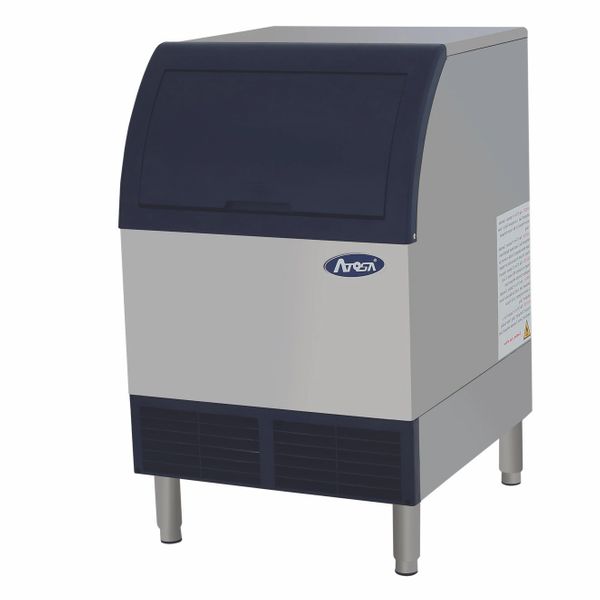
Commercial ice machines keep restaurants, bars, hotels, coffee shops, healthcare kitchens, and grocery operations supplied with clean, food-safe ice for drinks, cold-food display, prep, and service. A commercial ice maker is engineered for continuous production, higher daily output, NSF-certified sanitation, and the harder duty cycle a foodservice kitchen puts on it every hour of every shift.
The right ice machine for your operation depends on four decisions: how many pounds of ice you use per day, the ice type your drinks and food service actually need, the space and utilities you have available, and the storage capacity that keeps you from running out during peak service. This guide walks each decision, matches it to the models we stock, and shows the water, drain, and electrical requirements installers will ask about before they schedule.
Commercial Ice Machine Types We Stock
We carry three commercial ice-machine brands. Each targets a different price point and duty profile. The right pick depends on how many pounds per day you need, the type of ice, and how much you want to spend up front.
- Atosa Ice Machines — undercounter, modular, and hotel dispenser units from 140 lb/day to 800 lb/day. Best price-to-output ratio in the catalog, one-year parts and labor warranty on most models, and free freight to the commercial dock. The Atosa lineup is the default recommendation for independent restaurants and bars where the machine has to earn its keep on day one.
- ITV Ice Makers — Italian-engineered cube, nugget, and flake machines from 80 lb/day to 2,700 lb/day. ITV Delta and Spika lines produce gourmet cube for high-end bars and restaurants; Ice Queen flake machines cover healthcare, seafood display, and produce. The Spika NG plug-in line is popular for cocktail programs that want cube quality above Atosa's price bracket without stepping to a premium American brand.
- Brema Nugget and Flake — automatic pebble nugget and flake ice makers from 216 lb/day to 540 lb/day, sold as bin-included units or head-only for pairing with a larger storage bin. Brema is the value pick when a coffee shop or quick-serve concept wants nugget ice on a budget the Chick-fil-A crowd expects to pay.
Ice Type Decides the Machine
Every commercial ice machine is built to make one shape of ice. Choose the ice type first — the chassis, the price, the storage strategy, and the follow-on maintenance all get decided by that one choice.
Half-Dice Cube (the restaurant default)
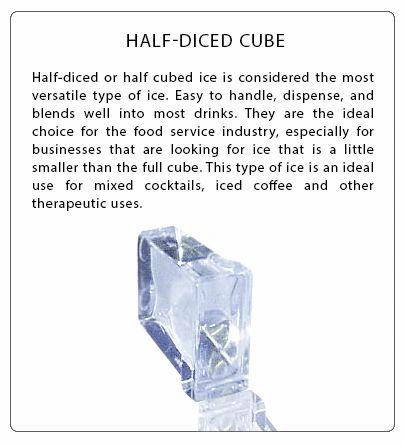
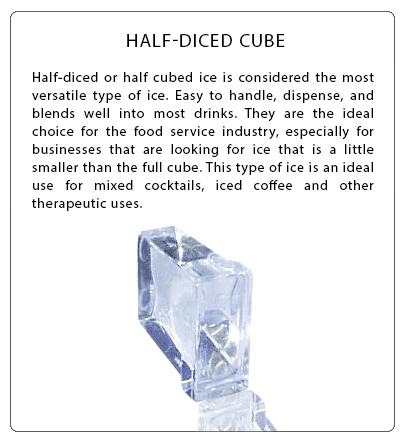
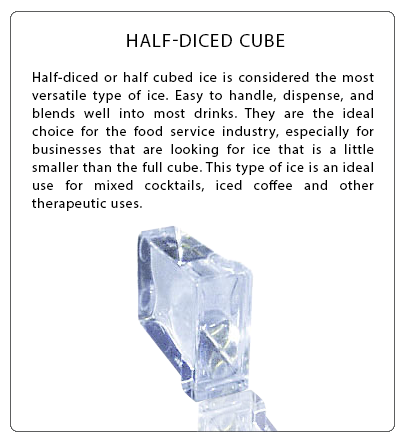
Half-dice is the most versatile cube. It fits soda glasses, iced tea pitchers, and short pours; it melts slowly enough for table service; and it packs tightly in a storage bin. Half-dice is the default in about seven of ten commercial kitchens. Every Atosa modular head we stock (YRM0450A, YRM0600A, YRM0800A, YRS0350A, YRS0450A, YRS0600A) produces half-dice, along with every Atosa undercounter unit (YR140-AP, YR280-AP, YR450-AP, YR800-AP, YRU0140A, YRU0280A). Pick half-dice unless your beverage program specifically requires a different shape.
Full-Cube (cocktail bars, spirits, longer melt)
Full cubes are twice the size of half-dice and melt about 40% slower. They dilute a spirit-forward cocktail less over a fifteen-minute service window, which is why craft cocktail bars almost always request full cube on the ice program. The ITV Delta NG and Spika American-style lines produce clear gourmet cube for cocktail service and high-end restaurants.
Nugget (Chick-fil-A ice, sonic ice, healthcare, coffee)
Nugget ice — sometimes called pebble ice, chewable ice, or Sonic ice — is soft, chewable, and absorbs the flavor of whatever drink it sits in. That's why Chick-fil-A built its beverage program around it, why healthcare facilities use it for patients with chewing or swallowing restrictions, and why third-wave coffee shops choose it for iced lattes and specialty drinks. Nugget is the fastest-growing category in commercial ice. We stock Brema and ITV nugget ice machines including the Brema TB852A-HC (216 lb/day), TB1404A-HC (333 lb/day), TM140A-HC (304 lb/day), TM250A-HC (540 lb/day), and the ITV IQN 700 (714 lb/day).
Flake (food display, seafood, healthcare)
Flake ice is small, soft, and moldable. It packs around whole fish on a display case without bruising them, it chills salads and produce on a bed of ice, and it fills therapeutic and medical bags without hard edges. Every ITV Ice Queen unit we stock (200C, 300, 500, 900, 1300, 2700) makes flake at rates from 220 lb/day to 2,700 lb/day. Brema's GB903A-HC pairs a 253 lb/day flake head with a built-in bin for smaller operations that need flake occasionally.
Gourmet / Top-Hat Cube (high-end bars and hotels)
Gourmet cube — a clear top-hat cube slightly taller than full cube — is used in luxury bar service and hotel banquet programs where cube presentation matters. The ITV Delta NG 80, NG 120, and NG 150 produce gourmet cube in 80–150 lb/day formats for the specific setting where cube shape drives guest perception.
Sizing Your Ice Machine by Business Type
The most common ice-machine mistake is undersizing. Running out of ice at 8 PM on a Friday costs more than the up-front difference between a 400 lb and a 600 lb head. Use the table below as a starting point, then add 20% for summer, patio, or catering days.
| Business Type | Ice Type | Per Customer | Daily Minimum | Common Fit |
|---|---|---|---|---|
| Coffee shop (100–300 covers) | Half-dice or nugget | 0.5 lb | 100–300 lb | Atosa YR140-AP-161 (142 lb), Brema TB852A-HC (216 lb) |
| Small restaurant (75–150 covers) | Half-dice | 1.5 lb | 200–400 lb | Atosa YR280-AP-161 (283 lb), YR450-AP-161 (450 lb) |
| Mid-size restaurant (150–300 covers) | Half-dice | 1.5 lb | 400–600 lb | Atosa YRM0450A-161 (450 lb), YRS0600A-261 (600 lb) |
| Full-service restaurant (300+ covers) | Half-dice | 1.5 lb | 600–1000 lb | Atosa YRM0800A-261 (800 lb) + CYR700P bin |
| Neighborhood bar | Half-dice or full cube | 2.5 lb | 300–500 lb | Atosa YR450-AP-161 or ITV Spika MS 500 |
| Cocktail bar | Full cube or gourmet | 3 lb | 400–700 lb | ITV Delta NG 150 or Spika MS 700 |
| Hotel (100 rooms) | Half-dice dispenser | Guest self-serve | 350–500 lb | Atosa HD350-AP-161, ITV DHD 130-22 |
| Hotel (200+ rooms) | Half-dice dispenser | Guest self-serve | 500–800 lb | ITV DHD 200-30, Atosa YDS0350A-161 |
| Quick-serve nugget program | Pebble nugget | 1 lb | 200–400 lb | Brema TB1404A-HC (333 lb) |
| Seafood or produce display | Flake | Varies | 200–500 lb | ITV Ice Queen 300 (360 lb), 500 (675 lb) |
| Healthcare / clinic | Nugget or flake | 0.5 lb per patient | 200–500 lb | Brema pebble nugget or ITV Ice Queen flake |
Two rules from the field: (1) The rated production number on the spec sheet is for 70°F ambient and 50°F inlet water. In a real kitchen at 90°F ambient the same machine produces 15–25% less. Size up. (2) The storage bin is the second half of the sizing decision. A 600 lb/day head paired with a 300 lb bin runs out at lunch rush. Match the bin to your peak two-hour draw, not your daily average.
Undercounter vs Modular: Which Chassis
Two chassis formats cover almost every commercial ice-machine installation.
Undercounter (self-contained, plug-and-play)
An undercounter ice machine is a single self-contained cabinet that fits under a 34-inch bar or prep counter. The head unit and the storage bin are integrated. Production runs 100 lb/day to 460 lb/day. Undercounter is the right pick when floor space is at a premium, when the ice point is at the bar, or when the machine plugs into a standard 115V outlet without dedicated electrical. Every Atosa YR- and YRU- series unit and the ITV Spika NG line up to 460 lb/day is undercounter.
Modular (head unit sits on a separate bin)
A modular ice machine is a 22-inch or 30-inch head unit that sits on top of a matching storage bin sold separately. Modular gives you two advantages: the head produces more ice per day than any undercounter chassis can fit, and you can pair the same head with a larger bin as your volume grows without buying a new machine. Modular is standard above 500 lb/day. Atosa YRM- and YRS- heads pair with CYR400P (395 lb), CYR700P (700 lb), BYR0300 (300 lb), and BYR0400 (400 lb) bins. ITV heads pair with S-series bins from S-300 (282 lb) to S-1050 (1,048 lb).
Hotel Dispenser (guest self-serve)
A hotel ice machine is a modular unit with a built-in front-load dispenser designed for guest self-service in a hallway or ice room. The dispenser prevents guests from scooping into open ice. The Atosa HD350-AP-161 and YDS0350A-161 and the ITV DHD 130-22 and DHD 200-30 are the four models we stock for that intent.
Air Cooled vs Water Cooled
Every commercial ice head unit condenses on either air or water. The choice affects your electrical, your ambient temperature tolerance, your water bill, and your noise level.
- Air cooled is the standard. A fan pulls kitchen air across the condenser coil and rejects the heat back into the room. Air-cooled units cost less to run, install faster, and don't add to your water bill. They lose 15–25% production above 90°F ambient, and they add heat to the space they sit in. Every unit in our catalog under 800 lb/day is air cooled by default.
- Water cooled uses a dedicated water line to reject heat instead of air. Water cooled runs quieter, holds full production in hot kitchens, and is often required in enclosed rooms without ventilation. The trade is a much higher water bill (many local codes now restrict water-cooled installs because of that) and a plumbing bill up front for the dedicated line and drain. Water cooled is a specialist pick above 800 lb/day or for installations where the machine sits in a mechanical room without adequate airflow.
Rule of thumb: air cooled unless the site inspection forces water cooled. If your local jurisdiction restricts water-cooled ice machines under a plumbing efficiency code, that answer is made for you.
Water, Drain, and Electrical Requirements
Every commercial ice machine has three utility requirements the installer will ask about before quoting a job. Get these answers before you buy so the machine doesn't sit on your dock waiting on plumbing.
- Cold water inlet — a dedicated 1/4-inch cold-water line with a shutoff valve within six feet of the machine. Water pressure between 20 psi and 80 psi. Undercounter units plumb through the back panel; modular heads plumb through the top.
- Floor drain — every commercial ice machine needs a gravity floor drain within six feet, or a pump-fed drain kit for installs without one. The drain carries away melt water from the bin and condensate from the head. Air-cooled units drain about 10–15% of daily production as melt; water-cooled units drain that plus the condenser rejection water.
- Electrical — undercounter units up to 460 lb/day run on 115V/20A plug-in circuits. Modular heads from 600 lb/day up require a dedicated 208-230V/20A circuit. The nameplate on the back of the machine shows exact amperage; the electrician will size the breaker off that.
Water filtration is not optional in commercial service. Hard water builds scale on the evaporator plate inside every ice machine and cuts production by 20% or more within six months. We stock 3M ICE120-S high-flow carbonless filtration systems for higher-volume machines and 3M HF20-S replacement cartridges for the units that already have a head installed. Add a filter to the quote and change the cartridge every six months.
Featured Atosa Undercounter Ice Machines
| Model | Production | Ice Type | Chassis | Voltage |
|---|---|---|---|---|
| Atosa YR140-AP-161 | 142 lb/day | Half-dice | Undercounter | 115V plug-in |
| Atosa YRU0140A-161 | 140 lb/day | Half-dice | Undercounter | 115V plug-in |
| Atosa YR280-AP-161 | 283 lb/day | Half-dice | Undercounter | 115V plug-in |
| Atosa YRU0280A-161 | 280 lb/day | Half-dice | Undercounter | 115V plug-in |
| Atosa YR450-AP-161 | 450 lb/day | Half-dice | Undercounter | 115V plug-in |
| Atosa YR450S-AP-161 | 460 lb/day | Half-dice | Beverage dispenser head | 115V plug-in |
| Atosa YR800-AP-261 | 800 lb/day | Half-dice | Modular head | 208-230V |
Featured Atosa Modular Heads and Bins
| Model | Production | Width | Voltage | Match With |
|---|---|---|---|---|
| Atosa YRS0350A-161 | 350 lb/day | 22" | 115V | CYR400P or BYR0400 |
| Atosa YRM0450A-161 | 450 lb/day | 30" | 115V plug-in | CYR400P or CYR700P |
| Atosa YRS0450A-161 | 450 lb/day | 22" | 115V plug-in | CYR400P or BYR0400 |
| Atosa YRM0600A-261 | 600 lb/day | 30" | 208-230V | CYR700P |
| Atosa YRS0600A-261 | 600 lb/day | 22" | 208-230V | CYR700P |
| Atosa YRM0800A-261 | 800 lb/day | 30" | 208-230V | CYR700P |
| Atosa CYR400P Bin | 395 lb storage | — | — | Fits YRS-350/450, YRM-450 |
| Atosa CYR700P Bin | 700 lb storage | — | — | Fits YRM-600/800, YRS-600 |
| Atosa BYR0300 Bin | 300 lb storage | — | — | Compact modular pairing |
| Atosa BYR0400 Bin | 400 lb storage | — | — | Mid-range modular pairing |
Featured ITV Cube, Nugget, and Flake
| Model | Production | Ice Type | Best For |
|---|---|---|---|
| ITV Delta NG 80 | 80 lb/day | Gourmet cube | Craft cocktail bar, small |
| ITV Delta NG 120 | 120 lb/day | Gourmet cube | Cocktail bar, mid |
| ITV Delta NG 150 | 150 lb/day | Gourmet cube | Cocktail bar, high volume |
| ITV Spika NG 130 | 130 lb/day | American cube | Small restaurant, plug-in |
| ITV Spika NG 160 | 159 lb/day | American cube | Small restaurant, plug-in |
| ITV Spika NG 230 | 223 lb/day | American cube | Restaurant, plug-in |
| ITV Spika NG 360 | 353 lb/day | American cube | Restaurant, plug-in |
| ITV Spika MS 400-22 | 432 lb/day | American cube | Mid restaurant, modular |
| ITV Spika MS 500 | 461 lb/day | American cube | Restaurant, bar |
| ITV Spika MS 700 | 661 lb/day | American cube | Full-service restaurant |
| ITV Spika MS 1000 | 970 lb/day | American cube | High-volume restaurant |
| ITV IQN 700 | 714 lb/day | Nugget | Nugget program, high volume |
| ITV Ice Queen 200C | 220 lb/day | Flake | Small seafood, produce |
| ITV Ice Queen 300 | 360 lb/day | Flake | Seafood display, healthcare |
| ITV Ice Queen 500 | 675 lb/day | Flake | Grocery, seafood, large healthcare |
| ITV Ice Queen 900 | 980 lb/day | Flake | High-volume flake |
| ITV Ice Queen 1300 | 1,430 lb/day | Flake | Wholesale seafood, grocery |
| ITV Ice Queen 2700 | 2,700 lb/day | Flake | Industrial flake |
Featured Brema Nugget and Flake
| Model | Production | Ice Type | Format |
|---|---|---|---|
| Brema TB852A-HC | 216 lb/day | Pebble nugget | With bin |
| Brema TB1404A-HC | 333 lb/day | Pebble nugget | With bin |
| Brema TM140A-HC | 304 lb/day | Pebble nugget | Head only |
| Brema TM250A-HC | 540 lb/day | Pebble nugget | Head only |
| Brema GB903A-HC | 253 lb/day | Flake | With bin |
| Brema BIN110 | 220 lb storage | — | Bin |
| Brema BIN200 | 400 lb storage | — | Bin |
Hotel Ice Machines
Hotel ice machines are a specialty within the category. They sit in a guest corridor or ice room and dispense ice on demand without the guest touching stored ice. That matters for sanitation and for avoiding the corridor-full-of-melt-water problem an open bin creates.
| Model | Production | Best For |
|---|---|---|
| Atosa HD350-AP-161 | 350 lb/day | 100-room hotel |
| Atosa YDS0350A-161 | 350 lb/day | 100-150 room hotel |
| ITV DHD 130-22 | 130 lb/day | Small hotel, boutique |
| ITV DHD 200-30 | 200 lb/day | 150-250 room hotel |
Cleaning and Maintenance Schedule
Every commercial ice machine fails the same way: scale builds on the evaporator plate, the sensors read the plate the wrong way, and the machine either stops cycling or drops production without any obvious warning. A cleaning schedule catches that failure before it costs you a service call.
- Weekly (5 minutes) — wipe the exterior, check for melt water on the floor, listen for compressor short-cycling, and confirm the bin curtain closes fully.
- Monthly (15 minutes) — inspect the water filter, wipe the door gasket, and vacuum the condenser fins on air-cooled units. Condensers clog with kitchen grease and dust and cost you production the moment airflow drops.
- Every 3 to 6 months (2 hours, out of service) — full descale with the manufacturer's cleaner, sanitize the ice contact surfaces, and replace the water filter cartridge. Hard-water sites cycle at 3 months; soft-water sites can stretch to 6.
- Annual (service call) — full technician inspection, refrigerant check, evaporator plate inspection, and gasket replacement as needed.
If a machine stops making ice, the four-step field check almost always tells you the answer before you call for service: (1) confirm power at the outlet and the control-panel display, (2) confirm the water inlet valve is open and flow is present, (3) confirm the bin thermostat curtain is closed and the bin is not full, (4) inspect the water filter for a blocked cartridge. See our commercial ice machine troubleshooting checklist for the full diagnostic tree.
Why Buy Your Commercial Ice Machine From The Restaurant Warehouse
- Free freight to a commercial dock on every ice machine we stock. Shipping a 400-pound modular head is expensive; we build the number into the list price so you don't get surprised on the invoice.
- One-year parts and labor warranty on Atosa units, with the manufacturer's service network handling on-site repairs. ITV and Brema carry their factory warranties direct.
- Rent-Try-Buy on Scotsman and Hoshizaki — if you need premium-brand ice while you evaluate whether the volume justifies the price, we rent Scotsman ice machines and rent Hoshizaki ice machines weekly. Try before you buy, and the rental credits toward purchase if you convert.
- Ice-machine specialists on the phone, not a call center. If you don't know whether you need half-dice or nugget, or whether a 22-inch or 30-inch head fits your line, call and we'll walk it with you.
Frequently Asked Questions About Commercial Ice Machines
How much ice does a restaurant need per day?
Most full-service restaurants need 1 to 1.5 lb of ice per customer per day. Bars and beverage-heavy operations run 2 to 3 lb per customer during peak service. A 200-cover restaurant should size to at least 300 lb/day and add 20% for summer or patio traffic.
What size commercial ice machine do I need?
Coffee shops and small cafes fit 100–300 lb/day undercounter units. Small to mid-size restaurants fit 300–500 lb/day undercounter or modular. Full-service restaurants and busy bars fit 600–1,000 lb/day modular heads. Above 1,000 lb/day you're in high-volume territory that usually pairs a modular head with an oversize storage bin.
What type of ice is best for restaurants?
Half-dice cube is the versatile default and fits about 70% of commercial kitchens. Full cube is better for cocktail bars and spirits. Nugget is preferred for sodas, iced coffee, and healthcare. Flake is the pick for seafood, produce display, and therapeutic use.
What is the difference between air cooled and water cooled ice machines?
Air cooled uses a fan and kitchen air to reject compressor heat. Water cooled uses a dedicated water line. Air cooled is standard, cheaper to run, and loses 15–25% production above 90°F ambient. Water cooled runs quieter and keeps full production in hot rooms but adds a significant water bill and often requires plumbing code approval.
What is the difference between a modular and undercounter ice machine?
A modular ice machine is a head unit that sits on a separate storage bin, designed for high daily production. An undercounter ice machine is a self-contained cabinet with the head and bin integrated, designed to fit under a 34-inch counter. Modular scales higher; undercounter installs faster.
How much does a commercial ice machine cost?
Undercounter units in the 140–450 lb/day range run about $1,850 to $3,300. Modular heads from 350–800 lb/day run $3,000 to $4,500 before the bin. Storage bins add $900 to $2,600 depending on capacity. Premium brands like Hoshizaki and Scotsman price 40–80% above equivalent Atosa units.
What brands of commercial ice machines do you carry?
Atosa, ITV, and Brema. Atosa is the value pick for independent restaurants and bars. ITV covers gourmet cube, nugget, and flake in Italian-engineered chassis for higher-end programs. Brema is the value pick specifically for nugget ice programs.
Do I need an NSF certified ice machine?
Yes. Most local health departments require NSF-certified equipment for commercial foodservice. NSF certification confirms the unit meets sanitation and materials-safety standards inspectors check. Every ice machine in this collection is NSF certified.
What is an ice machine with bin?
An ice machine with bin is a modular head unit paired with a separate storage bin sold as a set or matched individually. The bin sits on the floor and the head sits on top of the bin. Bins are also sold with add-on kits for connecting to different head widths.
How long do commercial ice machines last?
A well-maintained commercial ice machine lasts 7–10 years. Skipping descaling and filter changes cuts that to 4–5 years and cuts production for years before the machine actually dies.
How often should a commercial ice machine be cleaned?
Full descale and sanitize every 3 to 6 months. Hard-water sites cycle at 3 months. Soft-water and filtered sites stretch to 6 months. Wipe and vacuum the condenser fins monthly.
Do commercial ice machines need a water filter?
Yes. A water filter protects the evaporator plate from scale and sediment, keeps ice clear and neutral in taste, and extends machine life. Replace the cartridge every 6 months. We stock 3M ICE120-S high-flow systems and HF20-S replacement cartridges.
What ice machine is best for a coffee shop?
A coffee shop with 100–300 covers per day needs 100–300 lb of ice. An undercounter half-dice unit like the Atosa YR140-AP-161 or a Brema TB852A-HC nugget unit is the common fit. Third-wave coffee programs increasingly choose nugget because it matches the specialty-drink positioning.
What ice machine is best for a bar?
Neighborhood bars fit 300–500 lb/day undercounter half-dice or full cube. Cocktail bars fit 400–700 lb/day modular gourmet cube like the ITV Delta NG line. Match the bin to your peak two-hour draw, not your daily average — an underbuilt bin is the fastest way to run out at 8 PM Friday.
Do commercial ice machines need a drain?
Yes. Every commercial ice machine needs a gravity floor drain within six feet, or a pump-fed drain kit. The drain carries melt water from the bin and condensate from the head. Water-cooled units drain additional condenser rejection water and need higher-capacity drainage.
What ice machine does Chick-fil-A use?
Chick-fil-A serves pebble nugget ice. To replicate that ice type in a commercial setting, our commercial nugget ice machine collection covers 216 lb/day to 714 lb/day nugget from Brema and ITV. Our ice-machine-like-Chick-fil-A guide walks the model choice in detail.
Can I buy a used commercial ice machine?
You can, but used ice machines carry hidden risk — a used evaporator plate covered in scale looks fine on inspection and cuts your production in half within weeks. Our used ice machine buying guide covers what to inspect, and shows where a new Atosa with warranty and free freight often beats used-market economics.
Related Ice Machine Guides
- Commercial Ice Makers Buying Guide — the deep buying-decision walkthrough
- Ice Maker for Restaurant — restaurant-specific sizing and installation
- Bar Ice Machine Tips — cube choice, storage, and bar-service ice programs
- Atosa Ice Machine Review — the Atosa lineup, warranty, and free-freight economics
- Troubleshooting: Commercial Ice Machine Not Making Ice
- Ice Machines on a Budget: Used vs New
- Ice Machine Like Chick-fil-A (Nugget Ice)
- Hoshizaki Ice Machine Review
- Scotsman Ice Machine Guide