

From Your Kitchen to Theirs: How to Sell Used Restaurant Equipment
Why Understanding Your Market is Key to Success
Understanding who buy used restaurant equipment is essential for any operator planning a sale, a remodel, or a full wind-down. When you know your buyer profiles—what they value, how they make decisions, and where they look—you can price accurately, market efficiently, and close deals faster with fewer concessions.
Quick Answer: Who Buys Used Restaurant Equipment
- New Restaurant Startups: Founders minimizing up-front costs and extending their runway.
- Budget-Conscious Restaurateurs: Savvy operators replacing or augmenting gear without paying new-item premiums.
- Food Truck Operators: Space- and weight-conscious buyers who need compact, durable pieces.
- Catering Companies: Seasonal or event-driven demand requires flexible, cost-effective additions.
- Churches & Non-Profits: Community kitchens and shared spaces stretching every dollar.
- Home-Based Food Businesses: Cottage-food and micro-producers seeking durable, safe, NSF-rated items.
- Equipment Dealers & Liquidators: Pros who purchase wholesale for refurbishment and resale.
Why this matters: each buyer type has distinct pain points, timelines, and price sensitivities. Startups and home-based businesses prioritize affordability, reliability, and safety compliance. Caterers and food trucks prize portability, footprint, and consistent performance. Dealers and liquidators focus on bulk purchasing, speed, and margin potential. By mapping your items to the right audiences, you sell smarter and faster.
How these buyers evaluate used items
- Risk tolerance: Startups and non-profits are value-driven but wary of maintenance surprises; they love clean pieces with service records. Dealers accept more risk if pricing reflects refurb costs.
- Compliance: Many buyers prioritize items with clear serial numbers, NSF markings, and intact data plates. This documentation helps with inspections and insurance.
- Form factor: Food trucks and caterers prefer compact or modular items with easy service access and standard electrical requirements.
- Total cost of ownership: Budget-sensitive buyers weigh purchase price, expected service life, energy use, and parts availability.
Positioning your listing for success
- Lead with the essentials: brand, model, serial, dimensions, age, condition, power specs, and known service history.
- Translate features to benefits: "Replaced door gaskets in 2023 for better cold hold," "Includes adjustable shelves," or "Low-profile casters for tight spaces."
- Show buyers you've done the work: deep cleaning, minor repairs, and organized documentation reduce perceived risk and invite stronger offers.
I'm Sean Kearney TRW. My sales background—and years spent working with operators who buy used restaurant equipment—taught me that the best transactions begin with empathy and clarity. Sellers earn better outcomes when they present equipment like a pro and target the right buyer from the start.
Explore our Used Restaurant Equipment hub for strategies, checklists, and buyer insights: https://therestaurantwarehouse.com/blogs/restaurant-equipment/used-restaurant-equipment
CTA: Book a Strategy Call to map your sale to the right buyer segments: https://therestaurantwarehouse.com/blogs/restaurant-equipment/used-restaurant-equipment
Who buy used restaurant equipment vocab explained:
- used food equipment: https://therestaurantwarehouse.com/blogs/restaurant-equipment/kitchen-gear-on-a-budget-finding-quality-used-food-equipment
- used food warmers for sale: https://therestaurantwarehouse.com/blogs/restaurant-equipment/warm-up-your-kitchen-savings-with-used-food-warmers
Why Sell? Common Reasons to Liquidate Your Restaurant Assets
At some point, most operators face the question: should I sell my equipment? The reasons vary, but the decision benefits from a plan. Here are the most common scenarios—and how sellers who understand who buy used restaurant equipment turn those scenarios into strong outcomes.
- Business closure: Retirement, relocation, or unexpected events can force a wind-down. Used equipment holds real value; a structured liquidation recovers cash quickly and clears your space on schedule.
- Upgrades and remodels: As menus evolve or front-of-house concepts shift, some back-of-house items no longer fit. Selling well-maintained pieces helps fund replacements and keeps capital working.
- Menu changes: Moving from all-day diner to a bakery-café? Repurpose space by selling mismatched items and acquiring gear aligned to the new concept.
- Downsizing: Right-sizing a kitchen footprint reduces rent and utility costs. Selling extra items trims maintenance overhead and clutter.
- Cash flow and de-risking: Converting idle assets to cash boosts liquidity and eliminates future repair surprises on unused items.
- End of lease or landlord requirements: Some leases mandate removal of tenant-installed assets. Selling offsets removal costs and avoids abandonment disputes.
- Consolidation and multi-unit realignment: Operators shifting units or closing underperforming stores often sell duplicates to streamline operations.
Smart timing: If your timeline allows, list high-demand items first—refrigeration units, sinks, stainless prep, and dish machines typically move fast. Then bundle slower movers. If speed is critical, sell as a lot to a dealer and prioritize certainty.
Tax and documentation tips
- Keep original invoices to establish ownership and age.
- Document sale proceeds for your records; consult a tax professional on potential implications of asset sales and depreciation recapture.
- Gather manuals and service records—buyers pay a premium for traceable history.
For inspiration on finding quality pre-owned pieces and understanding buyer expectations, see Kitchen Gear on a Budget: Finding Quality Used Food Equipment: https://therestaurantwarehouse.com/blogs/restaurant-equipment/kitchen-gear-on-a-budget-finding-quality-used-food-equipment
CTA: Contact Us to discuss your timeline and best liquidation path: https://therestaurantwarehouse.com/blogs/restaurant-equipment/used-restaurant-equipment
The Buyers' Market: Who Buys Used Restaurant Equipment?
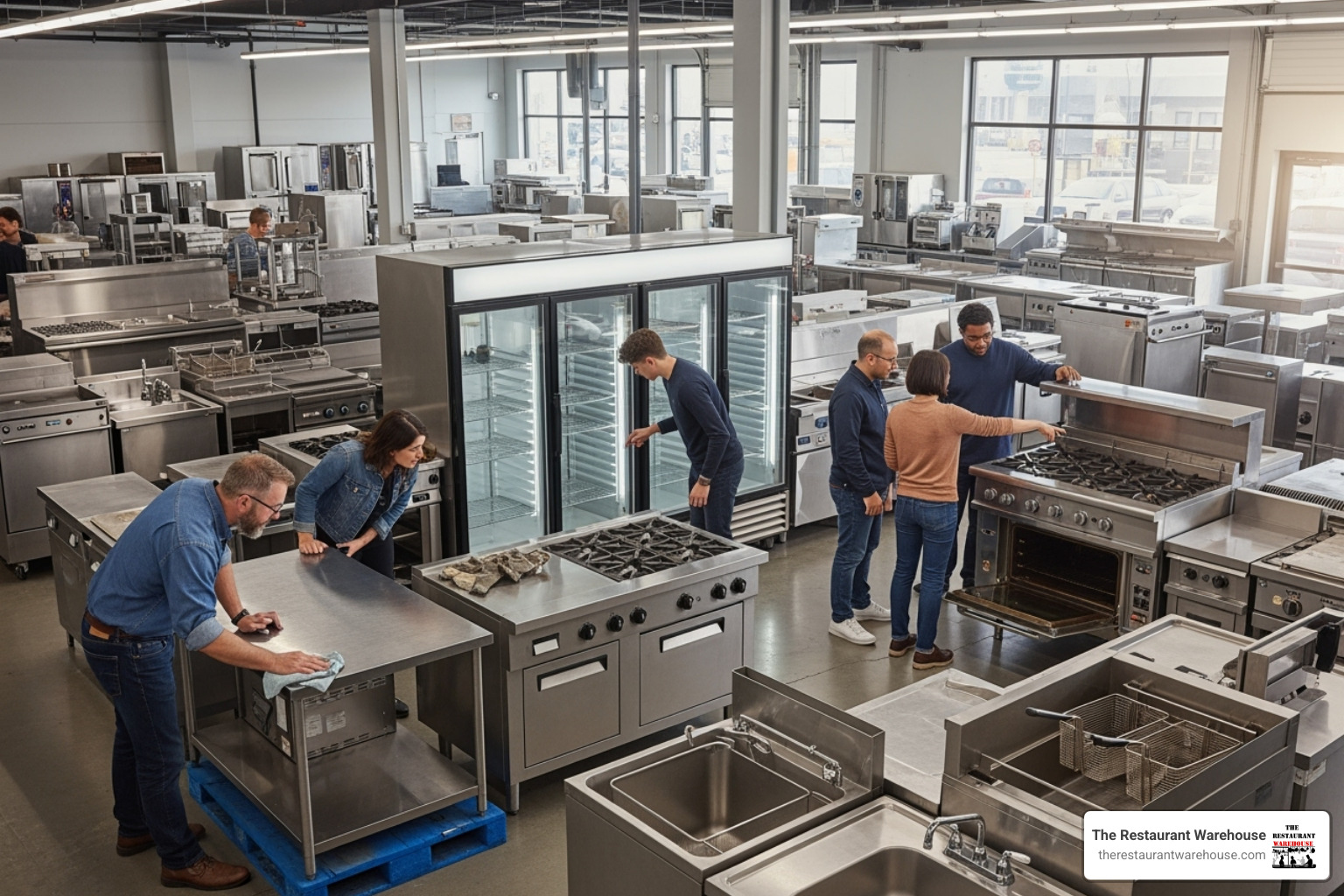
The marketplace of who buy used restaurant equipment is more diverse than most sellers realize. Each segment approaches risk, price, and logistics differently. Align your sale tactics with the buyer’s priorities to boost turnout and offers.
New Restaurant Startups
- Mindset: Stretch every dollar to hit opening day. They need dependable pieces that are “plug-and-play.”
- What they buy: Reach-in refrigeration, prep tables, sinks, basic dish machines, cold holding, smallwares storage, and hot holding like steam tables.
- Decision drivers: Cleanliness, visible condition, service history, and a clear test video for powered items. Delivery or easy pickup is a bonus.
- How to win: Offer a reasonable return window for DOA issues, label electrical specs clearly, and provide dimensions for tight buildouts.
Budget-Conscious Restaurateurs
- Mindset: Experienced operators replacing a single failed unit or expanding seating. They know market prices and move quickly on good value.
- What they buy: Well-maintained refrigeration, sturdy stainless fixtures, hand sinks, dish machines, food warmers, and specialized cold storage when needed.
- Decision drivers: Brand reputation, parts availability, and total cost of ownership. They appreciate recent maintenance and honest cosmetic notes.
- How to win: Share a quick service log—“new compressor in 2022,” “descaled quarterly.” High-quality photos from multiple angles seal the deal.
Food Truck Operators
- Mindset: Lightweight, compact, reliable items to maximize mobile space and power constraints.
- What they buy: Low-profile refrigeration, compact prep tables, drop-in warmers, portable hot holding, and space-efficient sinks.
- Decision drivers: Dimensions, weight, power draw, and secure mounting. Removable parts for cleaning are a plus.
- How to win: Include exact footprint and weight, show interior shelving, and provide a quick run test on a standard circuit if applicable.
Catering Companies
- Mindset: Flex fleets for event peaks. Items must be durable, stackable, and easy to transport.
- What they buy: Roll-in or reach-in cold storage, transport carts, stainless tables, portable warmers, chafers, and high-capacity dish machines.
- Decision drivers: Durability, mobility (casters, handles), and speed of setup/tear-down.
- How to win: Highlight mobile features (locking casters), include photos demonstrating portability, and offer bundle pricing for multiple items.
Churches, Community Centers, and Non-Profits
- Mindset: Community impact with limited budgets. They favor safe, sturdy, and easy-to-clean items.
- What they buy: Three-compartment and hand sinks, prep tables, reach-ins, and hot holding for events.
- Decision drivers: Compliance (NSF labels), ease of cleaning, and longevity. Safety matters: intact cords, guards, and lids.
- How to win: Provide manuals and NSF markings in photos, confirm power requirements, and offer delivery options if feasible.
Home-Based Food Businesses
- Mindset: Step up from home gear to professional-grade performance for small production runs.
- What they buy: Compact cold storage, stainless prep surfaces, small dish machines, and portable warmers.
- Decision drivers: Power compatibility with residential circuits, compact size, and cleanliness.
- How to win: Emphasize dimensions and power draw, include cleaning documentation, and link to manuals if available.
Equipment Dealers & Liquidators
- Mindset: Fast decisions based on wholesale pricing and margin after refurb and freight.
- What they buy: Bulk lots, complete kitchen packages, and high-demand individual items.
- Decision drivers: Speed, volume, and pickup logistics. They discount for unknown service histories and cosmetic wear.
- How to win: Provide a comprehensive list with models and conditions, lots of photos, and a clear pickup window. Bundle slow movers with hot items.
Where these buyers look
- Dealers and liquidators: Direct outreach and private lists; they respond to clear inventories and firm pickup dates.
- Startups and budget buyers: Online marketplaces, local classifieds, industry Facebook groups, and trusted dealer websites.
- Non-profits and community kitchens: Referrals, community boards, and word-of-mouth.
Tip: If you’re unsure who your item best fits, browse comparable listings on our Used Restaurant Equipment pillar page to see how similar items are positioned: https://therestaurantwarehouse.com/blogs/restaurant-equipment/used-restaurant-equipment
CTA: Book a Strategy Call to match your inventory to the most motivated buyers: https://therestaurantwarehouse.com/blogs/restaurant-equipment/used-restaurant-equipment
For food truck savings insights, see Cheap Eats on Wheels: Finding Used Food Trucks Under $5000: https://therestaurantwarehouse.com/blogs/restaurant-equipment/cheap-eats-on-wheels-finding-used-food-trucks-under-5000
Maximizing Your Return: Where and How to Sell Your Equipment
Choosing the right channel matters. When you understand who buy used restaurant equipment and how they shop, you can combine speed, price, and convenience in a way that fits your timeline.
Specialized Dealers: The Professionals Who Buy Used Restaurant Equipment
- Pros: Fast quotes, quick pickup, and minimal hassle. Ideal for complete liquidations or when you must vacate quickly.
- Cons: Lower net proceeds; dealers build in refurb, freight, and warranty costs.
- Best for: Full packages, tight deadlines, and sellers prioritizing certainty over top dollar.
- Process: Inventory list with photos → evaluation/quote → pickup scheduling → payment. Some offer consignment: higher potential return, longer timeline.
Online Marketplaces and Community Forums
- Pros: Direct-to-end-user pricing often yields higher returns. Wide exposure and flexible negotiation.
- Cons: Time-consuming; you’ll handle messaging, showings, and payment. Vet buyers and watch for scams.
- Best for: Clean, in-demand items with good photos and service history.
- Tips:
- Listings: Include brand, model, age, condition, dimensions, power requirements, and what’s included (racks, shelves, trays).
- Visuals: Well-lit photos (front, sides, interior, data plate) and a brief test video for powered items.
- Safety: Meet at your location during business hours, bring a helper for large items, and accept secure forms of payment.
- Logistics: Clarify who handles disconnect, loading, and transport. Specify doorway clearances and loading bay info.
Auctions: A Competitive Bidding Approach
- Pros: Definite sale date and broad buyer reach; bidding can exceed expectations for hot items.
- Cons: Results vary; commissions apply; you may need to deliver items to the auction site.
- Best for: Mixed lots, unusual or specialty items, or when you want a fixed end date.
- Tips:
- Prep: Clean items thoroughly and provide detailed lot descriptions.
- Grouping: Bundle slow movers with popular items to ensure they sell.
- Floor pricing: Discuss reserves judiciously—too high can deter bids; too low may undershoot value.
Shipping and Handling Basics
- Power-down and defrost cold storage 24–48 hours before pickup; keep doors ajar to prevent odor.
- Protect glass and corners with foam and stretch-wrap; use pallet straps for stability.
- Label power specs and weight. Provide a dolly path and ramp details for movers.
Avoiding Scams and Friction
- Payment: Prefer wire, cashier’s check, or verified escrow. Avoid overpayment and third-party shipping “arrangements.”
- Paper trail: Issue invoices with item descriptions, serial numbers, and “as-is” language unless you offer a DOA guarantee.
- Transparency: Photos of wear and honest condition notes reduce disputes and returns.
Hybrid Strategy: Maximize Value, Minimize Time
- Phase 1: List premium, in-demand items direct-to-consumer.
- Phase 2: Sell remaining inventory as a lot to a dealer.
- Phase 3: Auction truly slow movers or specialty pieces.
Your next step: For guidance on picking channels and crafting listings, see Restaurants Used Equipment Tips: https://therestaurantwarehouse.com/blogs/restaurant-equipment/restaurants-used-equipment-tips
CTA: Contact Us for a channel mix tailored to your timeline and goals: https://therestaurantwarehouse.com/blogs/restaurant-equipment/used-restaurant-equipment
The Price is Right: Factors That Determine Equipment Value
Pricing is part science, part art. Buyers who buy used restaurant equipment balance condition, brand, and risk. Sellers who frame value clearly get stronger, faster offers.
Key Factors Influencing Resale Value
- Brand reputation: Well-known, serviceable brands with readily available parts command stronger prices.
- Age and condition: Cleanliness, recent maintenance, and smooth operation often trump age.
- Maintenance records: Logs of gasket replacements, compressor work, descales, or pump service reassure buyers.
- Functionality: Every switch and setting should work. Call out any quirks honestly.
- Cosmetic appearance: Dings and scratches are normal; deep cleaning and buffing improves perceived value.
- Energy use: Efficient units reduce operating costs; highlight any energy-saving features when relevant.
Simple pricing framework
- Step 1: Find comparables—same or similar brand/model, similar age/condition.
- Step 2: Adjust for condition—add for service records, subtract for missing parts or visible wear.
- Step 3: Factor logistics—local pickup often brings better pricing than buyer-arranged freight.
- Step 4: Set a fair asking price with room to negotiate; consider a modest DOA guarantee to inspire confidence.
In-Demand Items: Who Buys Used Restaurant Equipment for Specific Needs
- Refrigeration units: Reach-ins and walk-ins are perennial essentials. Learn more in Secondhand Chill: Finding Value in Used Commercial Freezers: https://therestaurantwarehouse.com/blogs/restaurant-equipment/secondhand-chill-finding-value-in-used-commercial-freezers
- Ice machines: Reliable models with known maintenance histories remain hot commodities.
- Stainless steel prep tables: Durable, easy to sanitize, and versatile across concepts.
- Sinks: Hand sinks and multi-compartment units are regulatory must-haves and cost-saving for buyers.
- Dishwashing machines: High new-item cost makes well-maintained used units attractive; see Used Commercial Dishwashing Machines: https://therestaurantwarehouse.com/blogs/restaurant-equipment/used-commercial-dishwashing-machines
- Food warmers: Steam tables, heat lamps, and portable warming units support catering and buffet operations.
The Seller's Checklist: Preparing Your Equipment for Sale
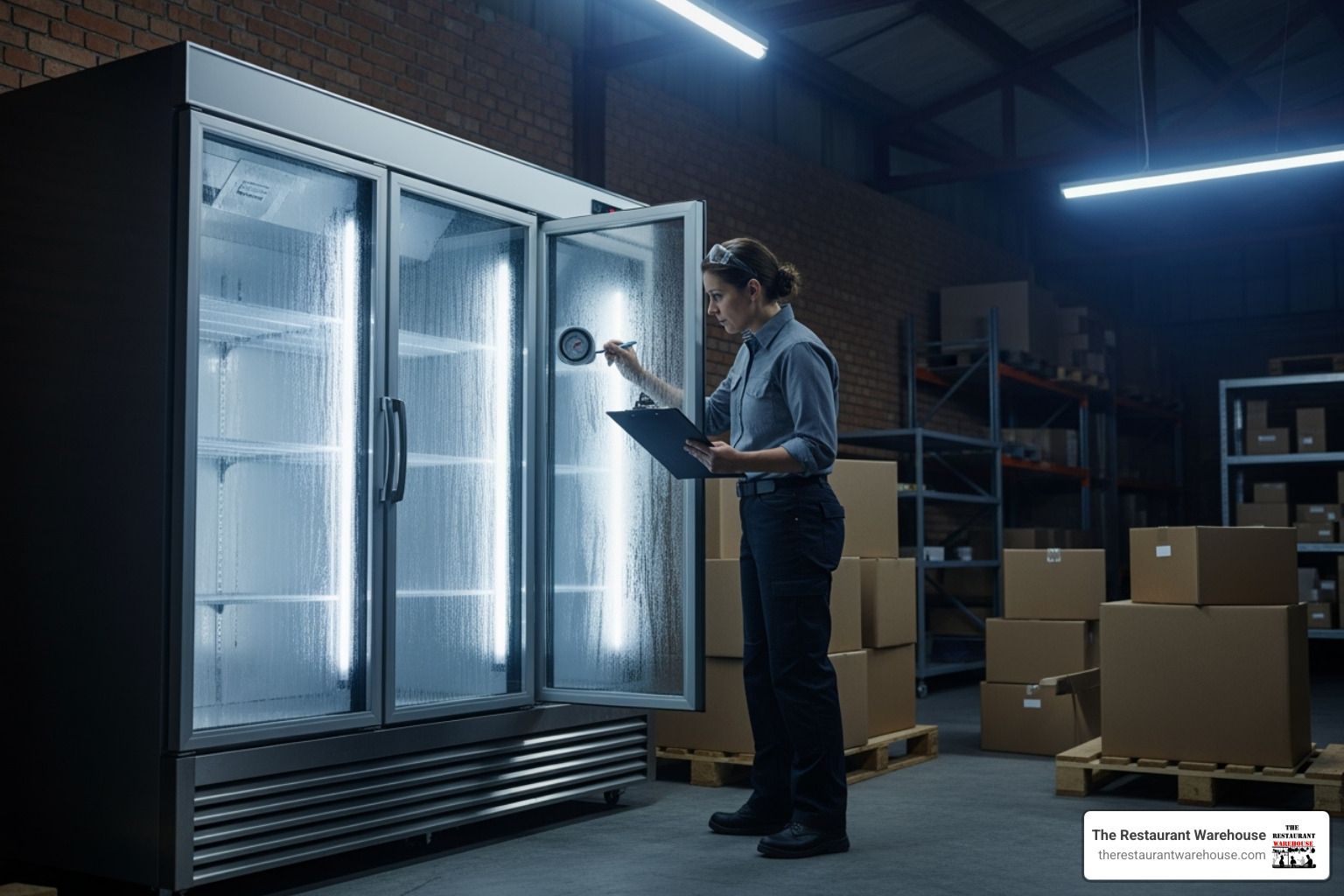
- Clean and sanitize: Deep clean all surfaces and food-contact areas; reference the FDA Food Code for sanitation best practices: https://www.fda.gov/food/fda-food-code/food-code-2017
- Make minor repairs: Replace worn gaskets, tighten handles, and fix easy leaks to eliminate buyer objections.
- Gather documentation: Manuals, service records, and receipts build trust and justify pricing.
- Verify labeling: Photograph the data plate and any NSF markings.
- Capture high-quality photos: Shoot front, sides, interior, data plate, and accessories; include a short test video when possible.
- Write thorough descriptions: Include power requirements, dimensions, clearance needs, and any included accessories.
CTA: Want help pricing your list? Book a Strategy Call: https://therestaurantwarehouse.com/blogs/restaurant-equipment/used-restaurant-equipment
Frequently Asked Questions about Selling Used Restaurant Equipment
Selling used food-service gear raises understandable questions. Here are practical, seller-focused answers rooted in what real buyers who buy used restaurant equipment look for.
How do I determine a fair price for my used items?
- Research comparables: Check dealer sites, marketplace listings, and auction results for similar brand/model and condition.
- Get multiple quotes: Dealer bids establish a realistic floor; direct-to-buyer listings may yield more with patience.
- Price the story: Clean, tested items with service history can command a premium; untested items should be discounted.
Is it better to sell equipment individually or as a complete lot?
- Individual: Maximizes total return for in-demand items; requires time for messaging, showings, and pickup coordination.
- Lot: Fastest and simplest; ideal for closures or tight deadlines; lower per-item proceeds but higher certainty.
What documentation is needed when I sell my equipment?
- Proof of ownership: Invoices or receipts verify age and ownership.
- Manuals and service records: Reinforce value and reduce buyer risk.
- Clear bill of sale: Item description, serial number, price, “as-is” language (unless you provide a DOA window).
How do I handle payment safely?
- Preferred: Wire transfer, cashier’s check verified during banking hours, or trusted escrow.
- Avoid: Overpayments, third-party shipping “agents,” or urgent “must-ship-today” scenarios.
Do I need to offer any guarantees?
- Optional DOA window: A 24–72 hour functionality guarantee on powered items can increase trust and reduce haggling.
- As-is clarity: If selling strictly as-is, state it clearly and provide test videos to set proper expectations.
Who is responsible for removal and transport?
- Define in writing: State whether buyer handles disconnect, lifting, and loading. Provide weight, dimensions, and door widths.
- Safety: Confirm power is off and gas/water are safely disconnected before pickup.
How do inspections and tests usually work?
- Best practice: Plug in and demonstrate cold hold or run cycles in advance; record a brief video.
- For refrigeration: Pre-chill for several hours and show temperature readings.
What about taxes?
- Keep records: Track proceeds and consult your tax advisor on any implications of asset sales or depreciation recapture.
Can non-profits or schools buy from me?
- Absolutely. These buyers frequently seek durable, sanitary items at fair prices. Clear documentation and NSF labels help them pass inspections.
CTA: Contact Us for a pricing review and sales plan tailored to your goals: https://therestaurantwarehouse.com/blogs/restaurant-equipment/used-restaurant-equipment
Conclusion
Asking who buy used restaurant equipment unlocks a broader, more strategic path to selling. From first-time founders and food truck owners to community kitchens, caterers, and seasoned operators, there is consistent demand for well-cared-for items with transparent histories. The more you align what you have with who needs it—and present it clean, tested, and documented—the faster you sell and the more you keep.
Choose the right channel for your timeline, bundle thoughtfully, and price with a clear rationale. A little prep work—cleaning, minor repairs, organized paperwork—translates directly into trust and stronger offers.
For a comprehensive view of the landscape, including pricing tips and buyer profiles, visit our Used Restaurant Equipment pillar page: https://therestaurantwarehouse.com/blogs/restaurant-equipment/used-restaurant-equipment
CTA: Book a Strategy Call or Contact Us today to maximize your return and connect with motivated buyers: https://therestaurantwarehouse.com/blogs/restaurant-equipment/used-restaurant-equipment
About The Author

Sean Kearney
Sean Kearney used to work at Amazon.com and started The Restaurant Warehouse. He has more than 10 years of experience in restaurant equipment and supplies. He graduated from the University of Washington in 1993. He earned a BA in business and marketing. He also played linebacker for the Huskies football team. He helps restaurants find equipment at a fair price and offers financing options. You can connect with Sean on LinkedIn or Facebook.
Leave a comment