

Mastering Food Truck Design for Success
When you start dreaming about your food truck, it’s easy to jump straight to the cool stuff—the flashy vinyl wrap, the perfect logo, the spot for the service window. But hold on. Before you get lost in aesthetics, the most critical decision you'll make is finalizing your menu. That single document is the absolute blueprint for your entire mobile kitchen.
Let Your Menu Drive the Design
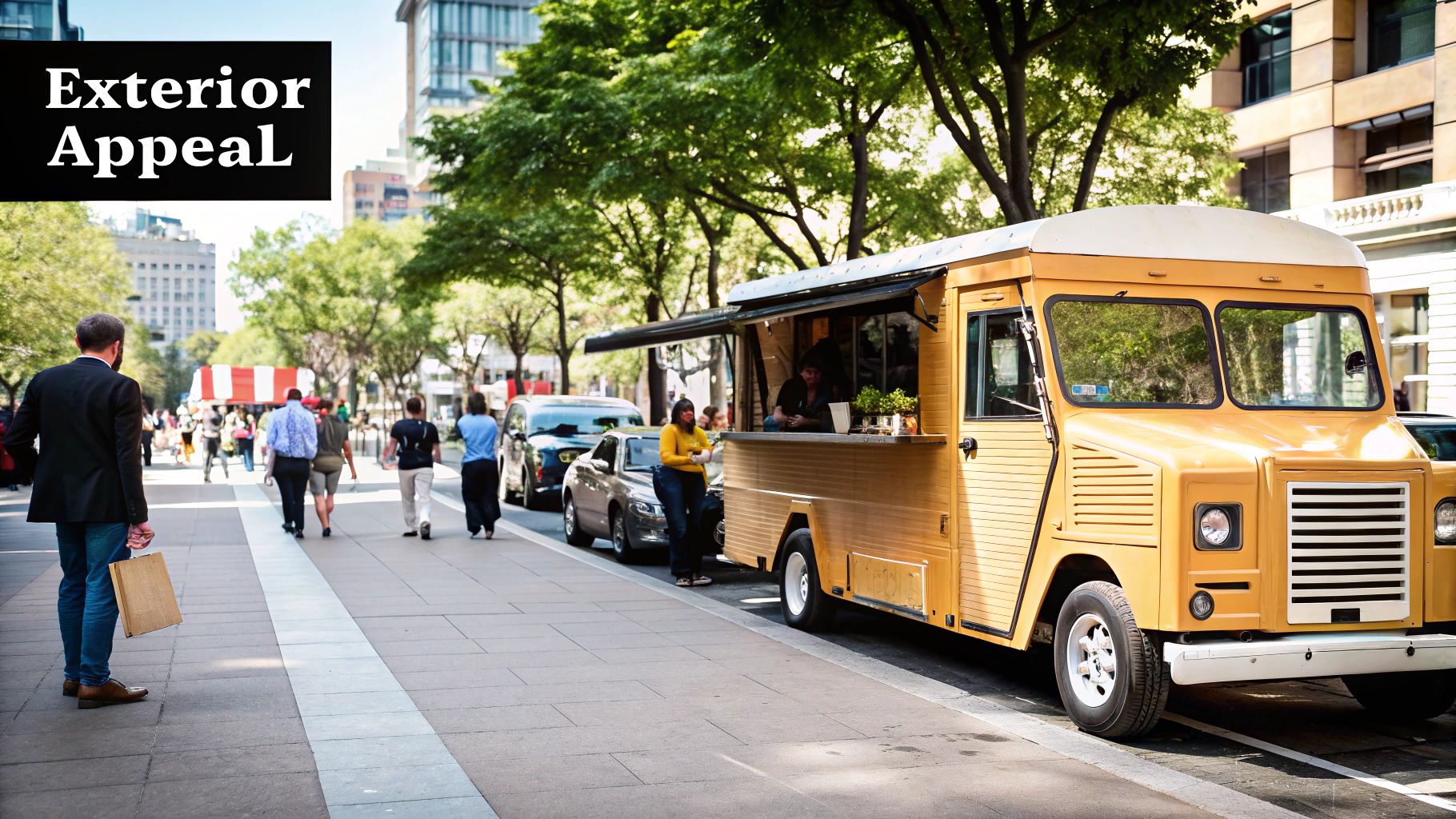
Think of your menu as the strategic plan that dictates every single piece of equipment you buy and where it needs to go. A quick menu analysis will tell you exactly what you need to crank out every dish, every time, without a hitch. It's the difference between a smooth, profitable service and a chaotic, cramped nightmare.
For example, a taco truck is all about the griddle for sizzling meats, a steam table to keep toppings hot and ready, and plenty of cold storage for fresh salsa and guac. A mobile café? Totally different world. Their layout revolves around a high-powered espresso machine, grinders, milk fridges, and counter space for pastries. The workflows are fundamentally different, and your layout has to reflect that reality.
From Menu to Blueprint
Ready to get practical? Start by listing every single item on your menu. Then, for each one, break down the prep steps and the core equipment needed to make it happen.
- Taco Al Pastor: You can't make this without a vertical broiler. You'll also need a griddle and a dedicated prep area for slicing pineapple and onions.
- Gourmet Burger: This requires a solid flat-top grill, a deep fryer for those essential fries, and a cold prep station for assembly.
- Wood-Fired Pizza: The star here is a specialized pizza oven. That means you also need a dough prep area and refrigerated topping rails.
Going through this exercise forces you to identify your non-negotiable appliances. It’s a simple step that helps you avoid the classic, costly mistake of buying equipment that either won’t fit or doesn't actually serve your menu. Mapping the journey of your signature dish from raw ingredient to a happy customer is the first real step toward an intelligent, efficient layout.
Your food truck is a kitchen first and a vehicle second. When you prioritize workflow above all else, your team can fly during the lunch rush without bumping into each other or creating frustrating bottlenecks.
Getting this menu-first approach right is more important than ever. The U.S. food truck sector is booming and expected to hit $2.8 billion in revenue by 2025, fueled by people hunting for unique, high-quality food. A smart, menu-driven design is what allows you to meet that demand head-on. If you want to dive deeper into industry trends, the reports on IBISWorld are a great resource.
Designing a High-Efficiency Kitchen Layout
In the tight quarters of a food truck, your kitchen layout is everything. It’s not just about cramming in equipment; it’s the very heart of your speed, efficiency, and ultimately, your profitability. A smart, menu-driven food truck design is what stops your team from tripping over each other, shaves seconds off every order, and keeps stress levels down during a chaotic lunch rush. Every single inch has to be planned with purpose.
Forget about one-size-fits-all templates. Your layout has to be a custom job, built from the ground up to support your specific menu. An assembly-line style, for instance, is perfect for a burger truck—patties move in a straight line from the griddle to the prep station and out the service window. On the other hand, a pizza truck might thrive with a station-based layout, creating separate zones for dough prep, toppings, the oven, and boxing.
The real goal is to create a seamless path for every single order. Put yourself in your team's shoes during the busiest hour of the day. A great layout prevents that awkward dance of bumping into each other, crossing paths for no reason, or taking five extra steps just to grab a bottle of sauce.
This design isn't just internal. How you organize the inside directly impacts the professional image you project on the outside.
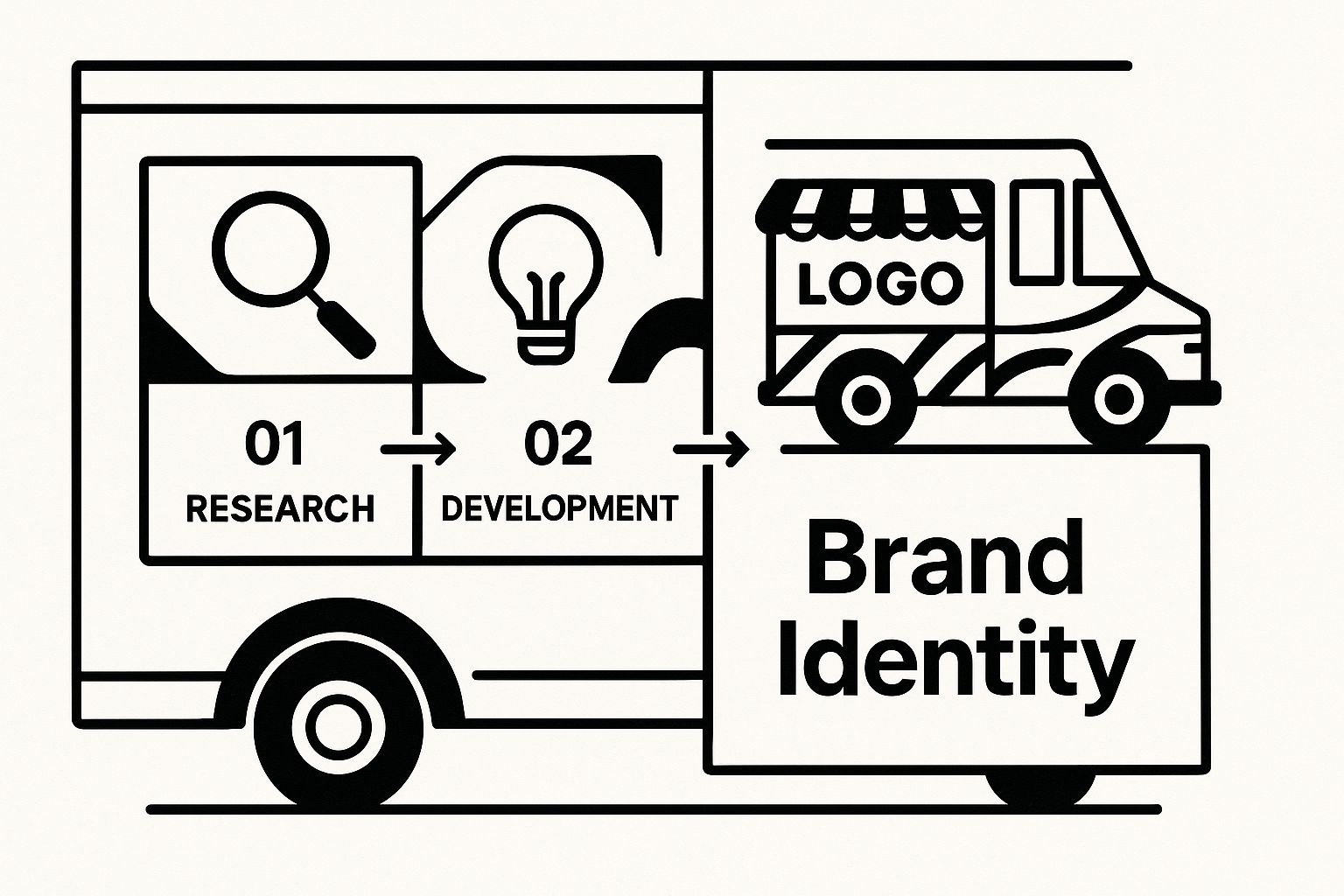
A clean, eye-catching truck wrap suggests that the same level of care and planning went into the kitchen workflow, inspiring confidence before a customer even orders.
Mapping Your Core Work Zones
No matter what you're cooking, every food truck kitchen boils down to four essential zones. Getting them in the right order is the secret to a smooth workflow.
- Prep Zone: This is where the magic starts—washing veggies, chopping ingredients, and portioning everything out. It needs to have plenty of counter space and easy access to your refrigerators and a prep sink.
- Cooking Zone: The hot spot. This is where your heavy hitters like grills, fryers, and ovens live. Non-negotiable here: top-notch ventilation. You have to get that heat and smoke out.
- Service Zone: This is your command center, combining the service window, your POS system, and a counter for plating and handing off orders. It should be just a quick pivot away from the cooking zone.
- Cleaning Zone: Home to your required sinks—a three-compartment sink for washing, rinsing, and sanitizing, plus a separate hand-washing sink. This area is dedicated to keeping everything clean and meeting health codes.
A well-planned layout can boost your order output by over 20% during peak hours. When you minimize steps and create clear, logical paths, your team can assemble and serve orders much faster. That means turning over more customers and making more money.
Integrating Essential Systems
Placing your equipment is just one part of the puzzle. Your layout also has to account for the truck's lifeblood: its internal systems. Plumbing for your sinks and water tanks, the electrical grid for all your appliances, and the gas lines for your cooking equipment all need to be integrated safely and efficiently from the get-go. Trying to shoehorn these in later is a recipe for expensive headaches.
To really nail your workspace, you need to understand the principles of kitchen efficiency layout. These concepts are gospel in home and restaurant kitchens, but they're even more critical when you're working with less than 200 square feet. A thoughtful layout ensures you can meet every health code requirement for things like ventilation and sanitation without hamstringing your workflow.
The relationship between your menu, your layout, and your equipment is the foundation of an efficient food truck. The table below shows how different food concepts demand completely different approaches to kitchen design.
Kitchen Layout Comparison by Food Truck Type
| Food Truck Concept | Key Equipment | Optimal Layout Style | Workflow Priority |
|---|---|---|---|
| Gourmet Tacos | Griddle, Steam Table, Cold Prep Station | Assembly-Line | Speed from grill to window |
| Wood-Fired Pizza | Pizza Oven, Dough Prep Cooler, Topping Rail | Station-Based | Efficient oven cycling |
| Coffee & Pastries | Espresso Machine, Grinders, Convection Oven, Display Case | Service Counter Focus | Fast drink building |
As you can see, what you cook dictates how you build. A taco truck needs a linear flow, while a pizza truck revolves around the oven. Understanding this connection is the first step to designing a space that works for you, not against you.
Finding that perfect balance is crucial for your financial health. The average revenue for a food truck in the U.S. can reach around $346,000, but that's only possible if your kitchen can handle the volume. With startup costs often exceeding $100,000 for a new vehicle, a layout that maximizes your output is essential for making that investment pay off. For a deeper look at specific configurations, check out our guide on creating a functional food truck layout.
Choosing Smart Food Truck Equipment
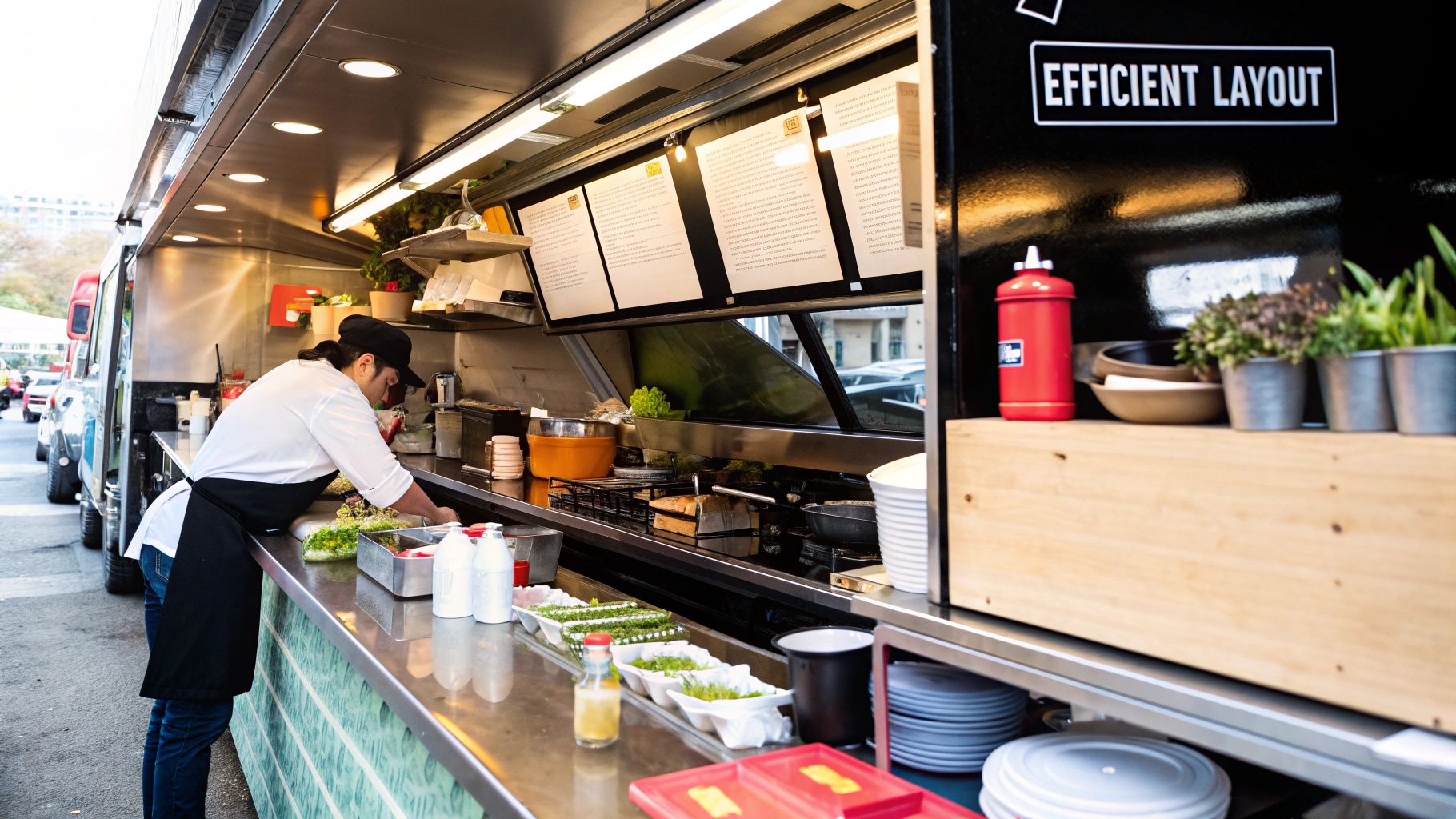
Your equipment is the true engine of your food truck. It’s also probably the biggest single investment you’ll make in your entire food truck design, directly impacting everything from your menu quality and service speed to your daily sanity. This isn't just about picking out a grill; it's about choosing workhorses that can handle the unique abuse of a mobile kitchen.
There’s no negotiating on this: you need commercial-grade equipment. The gear designed for a standard restaurant is built for heavy, constant use, but your food truck appliances also have to endure constant vibration and wild temperature swings. Prioritizing multi-functional equipment is a total game-changer for saving precious space. A good combination oven, for example, can steam, roast, and bake, easily replacing three separate, bulky units.
Maximizing Space and Power
Every single appliance you bring on board has to fight for its spot. Before you even think about buying, map out its exact dimensions and make sure it fits into your layout without creating a frustrating bottleneck. Think beyond just the footprint, too—you need to account for ventilation clearance and how the doors will swing open in a tight space.
Just as critical is your truck’s power capacity. Every piece of equipment is thirsty for power, and your generator or battery bank has its limits. This is where an energy audit becomes absolutely essential.
- List all your gear: Tally up the wattage or BTUs for every appliance you plan on running at the same time.
- Figure out your peak load: Calculate the maximum power you’ll draw during your absolute busiest lunch or dinner rush.
- Add a buffer: Make sure your power source can handle at least 20% more than your peak load. This is your safety net to avoid tripping breakers and shutting down mid-service.
ENERGY STAR-rated models might have a higher price tag upfront, but they can save you a ton on fuel or charging costs down the road. It’s a smart long-term play for any mobile business.
New vs. Used Equipment: A Crucial Decision
The debate between new and used gear is a big one for any new food truck owner. While buying used can seriously slash your initial startup costs, it comes with some very real risks. That used fryer might seem like a bargain until it dies on you mid-service, costing you hundreds in lost sales and an emergency repair bill.
Pro Tip: If you decide to buy used, always test the equipment under a full load before you hand over any cash. Look for trusted restaurant auction houses or resellers who certify their gear. For the most essential, high-use items like your grill or refrigerator, investing in new equipment with a warranty often provides priceless peace of mind.
No matter which route you take, make sure every single piece of food-contact equipment is NSF-certified. This is a standard requirement for most health department inspections and it confirms the appliance is designed for safe commercial use and easy cleaning. For a deeper dive into essential appliances, these food truck tips offer some excellent guidance. Smart equipment choices create a reliable kitchen that’s ready to grow with you.
Building a Brand That Stops Traffic
Let’s be honest: your truck’s exterior is your single most important marketing asset. It’s a rolling billboard that has to do some heavy lifting—grabbing attention, sparking curiosity, and making people hungry from clear across the street. A powerful visual brand does more than just look cool; it tells your story and promises a great experience before a customer even gets a whiff of what's cooking.
This isn’t about just slapping a logo on the side and calling it a day. Your name, logo, color scheme, and even the font you choose all need to work together to tell a cohesive story. This is the heart and soul of your food truck design strategy.
Crafting a Memorable Identity
It all starts with a name and logo that are easy to remember and give a clear hint about what you sell. "The Waffle Wagon" gets straight to the point. But if you go with a more abstract name, your visual identity has to work that much harder to connect the dots for potential customers.
The design should absolutely reflect the personality of your food.
- Rustic & Earthy: Think muted colors, handcrafted fonts, and natural textures. This is a perfect vibe for a farm-to-table sandwich truck.
- Bold & Modern: Bright, high-contrast colors and clean, minimalist graphics scream confidence. This works great for a fusion taco concept or a gourmet burger joint.
- Retro & Nostalgic: Vintage fonts and playful imagery can evoke a sense of comfort and fun, ideal for a classic ice cream or hot dog truck.
Your truck’s wrap is a direct reflection of your business. A professional, well-designed exterior signals that you invest the same care and quality into your food. It builds trust from a distance.
Designing for Function and Appeal
Beyond the main wrap, the functional parts of your exterior are crucial to the customer experience. Your menu board, for instance, has to be large and legible from at least 15 feet away. Nothing frustrates a hungry customer faster than squinting at a confusing menu. Make sure it's easy to update on the fly, too.
Lighting is another powerful tool you can’t overlook. Warm, inviting lights around the service window make your truck feel welcoming, especially for evening events and festivals. A few strategic spotlights can highlight your logo or menu, making you pop in a crowded field of competitors.
This focus on exterior branding is more important than ever. The global food truck market is projected to grow from $19.4 billion in 2022 to a staggering $26.3 billion by 2027, all driven by people wanting unique and convenient food. In such a competitive space, a brand that stops traffic isn't a luxury—it’s essential for survival. You can get more insights on these global food truck industry trends here. A killer design ensures you grab your piece of that growing pie.
Navigating Health Codes and Safety Regulations
Want to know the fastest way to kill your food truck dream before it even hits the road? Ignore the health and safety codes. A killer menu and a slick food truck design are completely worthless if you can’t get that passing grade on your initial inspection. These rules aren't just red tape; they are there to protect your customers, your reputation, and your business itself.
The smartest thing you can do is design for compliance right from the start. Trust me, it saves a world of headaches and costly rebuilds later on. While the specific rulebook can change from one city or county to the next, there are a handful of universal requirements that every single health inspector is trained to look for. Baking these non-negotiables into your layout is your first real step toward a successful launch.
A perfect example is the sink setup. This is a big one. You absolutely, positively must have a dedicated sink just for hand-washing, completely separate from where you clean your gear. On top of that, a three-compartment sink for the classic wash, rinse, and sanitize process is mandatory. Trying to cut corners here is a guaranteed, immediate fail on your inspection.
Core Safety and Sanitation Systems
Beyond the sinks, the inspector is going to get up close and personal with your truck’s internal systems. This is where they really scrutinize your water and waste management—a critical piece of the mobile food safety puzzle.
Your layout has to include clearly separated tanks for fresh water and "grey water," which is all the wastewater from your sinks. Here’s a pro tip: the grey water tank needs to be larger than your freshwater tank, usually by at least 15%. This prevents any nasty overflow situations, and it's a detail inspectors check every single time.
Proper ventilation and fire safety are just as crucial. Your entire cooking line needs to be under a commercial-grade ventilation hood that’s tied into an integrated fire suppression system. These systems are specifically engineered for the tight, unique environment of a mobile kitchen. This is not an area to look for bargains.
Remember, a health inspector's job is to find potential problems. By building your truck to exceed the minimum standards, you demonstrate a commitment to safety and professionalism that inspectors appreciate.
Utility Compliance and Final Checks
The safe installation of your utilities is another major checkpoint. Your propane tanks have to be securely mounted in a spot with plenty of ventilation, far from any ignition sources, and hooked up with approved lines and fittings. Similarly, your electrical system needs to be installed by a licensed pro who can ensure it handles the heavy load of your commercial equipment without becoming a fire hazard.
Keeping your kitchen sanitary goes way beyond just wiping things down at the end of the day. Preventing mold and mildew is a critical aspect of food truck hygiene and health code compliance; implementing effective grout cleaning strategies for mold prevention is essential for maintaining a sanitary environment. To make sure you’re truly ready, take a look at our detailed guide on essential food truck regulations. It’ll help you build a comprehensive checklist so you can walk into your inspection with confidence.
Common Food Truck Design Questions
Getting into the nitty-gritty of food truck design can feel like you're trying to solve a puzzle with a million moving pieces. You're juggling a budget, a dream menu, and a laundry list of local regulations. It's no surprise that most first-timers find themselves asking the same core questions.
Getting straight answers to these common hurdles is the key to planning with confidence. Let's cut through the noise and tackle the questions we hear most often from entrepreneurs in the design phase.
What Is the Most Important Part of a Food Truck Design?
Hands down, it's workflow efficiency. Branding gets customers to your window and quality equipment is non-negotiable, but a smart layout that lets your crew work fast is what actually makes you money.
Think about it. A smooth workflow means shorter wait times for customers, a higher capacity for orders during that chaotic lunch rush, and a much less stressed-out team. Every single choice you make, from where you place the fryer to the location of the low-boy fridge, should serve that one goal. Map out the physical steps it takes to make your top-selling item. If your cooks are constantly bumping into each other or taking extra steps, your layout is fighting you, not helping you.
How Much Does It Really Cost to Outfit a Food Truck?
This is the million-dollar question, and the answer can swing wildly depending on how you approach it. If you're going the DIY route with a used truck and hunting for second-hand gear, you might pull it off for somewhere in the $40,000 to $80,000 range. Just know that this path demands more of your time and a really sharp eye for quality used equipment.
On the other end of the spectrum, for a brand new, professionally fabricated truck decked out with top-of-the-line appliances, you could easily be looking at over $150,000. The biggest drivers of that final number are:
- The base vehicle itself (new vs. used makes a huge difference)
- The entire commercial kitchen appliance package
- A professional, eye-catching vinyl wrap for branding
- Licensed labor for installing the plumbing, electrical, and gas lines correctly
The final price tag is a direct reflection of your choices. Balancing your budget with your operational needs is one of the biggest challenges in the food truck design process.
What Are the Biggest Design Mistakes People Make?
The most common and costly mistakes almost always bubble up from a lack of solid planning in the very beginning. Knowing these pitfalls ahead of time can save you an incredible amount of money, time, and pure frustration.
The absolute biggest error we see is buying equipment before finalizing the menu. This is a classic cart-before-the-horse problem. It leaves you with expensive gear you don’t need while you're still missing the essential tools you do need. Another major blunder is failing to map out the workflow, which just creates chaos during service and brings your whole operation to a crawl.
Other frequent mistakes include:
- Underestimating storage needs, which leads to a dangerously cluttered workspace.
- Miscalculating your power requirements, causing the constant headache of tripped breakers.
- Ignoring local health codes until the end, a mistake that often forces expensive redesigns just to pass inspection.
By thinking through these key areas from day one, you're setting yourself up for a much smoother build-out and a more profitable life on the road.
At The Restaurant Warehouse, we get the unique challenges of outfitting a mobile kitchen. From space-saving refrigeration to heavy-duty cooking equipment, we have the durable, commercial-grade gear you need to bring your food truck design to life. Explore our extensive catalog and flexible financing options to build your dream kitchen affordably at The Restaurant Warehouse.
About The Author

Sean Kearney
Sean Kearney used to work at Amazon.com and started The Restaurant Warehouse. He has more than 10 years of experience in restaurant equipment and supplies. He graduated from the University of Washington in 1993. He earned a BA in business and marketing. He also played linebacker for the Huskies football team. He helps restaurants find equipment at a fair price and offers financing options. You can connect with Sean on LinkedIn or Facebook.
Leave a comment