

Find Your Perfect Perch Among Industrial, Modern, and Specialty Bar Stools
Why Industrial Bar Stools Are the Perfect Blend of Style and Strength
Industrial bar stools combine raw, honest materials like steel and wood with rugged finishes to create seating that's both visually compelling and incredibly durable. Their popularity continues to grow in commercial and residential spaces, and for good reason. They deliver an authentic, antiqued aesthetic that brings a story and a sense of history to any space while standing up to the real-world wear and tear of busy restaurants, breweries, hotels, and home kitchens. More than just furniture, these stools are a design statement, celebrating strength, simplicity, and the beauty of function.
These stools thrive where life happens. Around a bustling kitchen island, they transform a simple breakfast bar into a welcoming hub for family and friends. In restaurants, bars, and tasting rooms, they are instrumental in crafting the ambiance—providing the kind of posture support and unwavering stability that patrons can feel the moment they sit down. The industrial style has soared in popularity over the last few years and shows no signs of diminishing because it masterfully pairs timeless materials with a versatile, modern sensibility that feels both nostalgic and forward-thinking.
Key Features:
- Materials: Robust steel frames (often 16- or 18-gauge), solid wood seats (such as ash, oak, or mango wood), galvanized metal components.
- Finishes: Versatile black, contemporary grey, raw clear coat, and character-rich distressed or rustic options.
- Design: Exposed hardware, minimalist forms, clean lines, and a distinct warehouse-inspired look.
- Types: Swivel, backless, adjustable height, and models with or without supportive backs.
- Height Options: Standard counter height (24"-26") and bar height (28"-30").
- Best For: Restaurants, bars, breweries, hotels, cafes, and home kitchens or bars.
Whether you're outfitting a high-volume restaurant or creating an intimate gathering spot around your kitchen island, industrial bar stools offer the perfect synthesis of form and function. Restaurant owners and designers love them because their fully welded steel frames are rigorously tested for performance and longevity, effortlessly handling high-traffic environments without ever sacrificing an ounce of style.
As Sean Kearney from The Restaurant Warehouse, I've helped countless owners and designers find seating that works as hard as they do. Industrial bar stools consistently deliver on both durability and aesthetic appeal for spaces ranging from cozy cafes to high-volume bars, proving to be a reliable and stylish foundation for any concept.
Beyond their striking looks and impressive longevity, these stools provide numerous practical advantages in everyday operations. The box-style or cross-braced stretchers, which double as footrests, add significant rigidity, reduce racking, and help distribute weight evenly for enhanced stability. Modern powder-coated and clear-coat finishes are formulated to resist scuffs, scratches, and spills, making quick wipe-downs a seamless part of the normal turnover routine. For operators focused on maximizing seat count, backless models tuck fully under the counter to save precious floor space, while swivel options improve traffic flow and guest comfort in tighter footprints.
If you're planning a new build-out or refreshing an existing concept, industrial seating is a smart backbone choice—reliable, adaptable, and remarkably cost-effective over the long term. Ready to compare options or spec a full dining room? Contact The Restaurant Warehouse—our team can map stools to your exact counter heights, finishes, and seating targets so you get it right the first time.
The Anatomy of Style: What Defines Industrial Bar Stools?
Industrial design is a celebration of raw materials, exposed construction, and purpose-built durability. It draws its powerful inspiration from the workshops, factories, and warehouses of the early 20th century, a time when form meticulously followed function and everything was built to last for generations. We've taken that utilitarian backbone and thoughtfully refined it into furniture that works beautifully and reliably in modern restaurants, breweries, cafes, and homes. This style isn't about hiding the construction; it's about showcasing it as a mark of quality and authenticity.
What makes this style so enduringly appealing is how it transforms everyday materials into powerful statement pieces. A distressed solid wood seat paired with a hand-welded steel frame isn't trying to look perfect—it's trying to look real. Those textured surfaces, visible welds, and antiqued finishes tell a story, bringing a unique character and warmth to spaces that might otherwise feel too polished or sterile. It's about finding profound beauty in the unrefined, in genuinely built-to-work-hard pieces that also happen to look fantastic. Many contemporary industrial stools trace their DNA to early drafting stools and machinist chairs—pieces designed for long shifts, constant adjustability, and unwavering resilience. Today’s versions honor that lineage with commercial-grade construction, simplified lines, and finishes that highlight the inherent integrity of the materials.
Core Materials: The Foundation of Durability
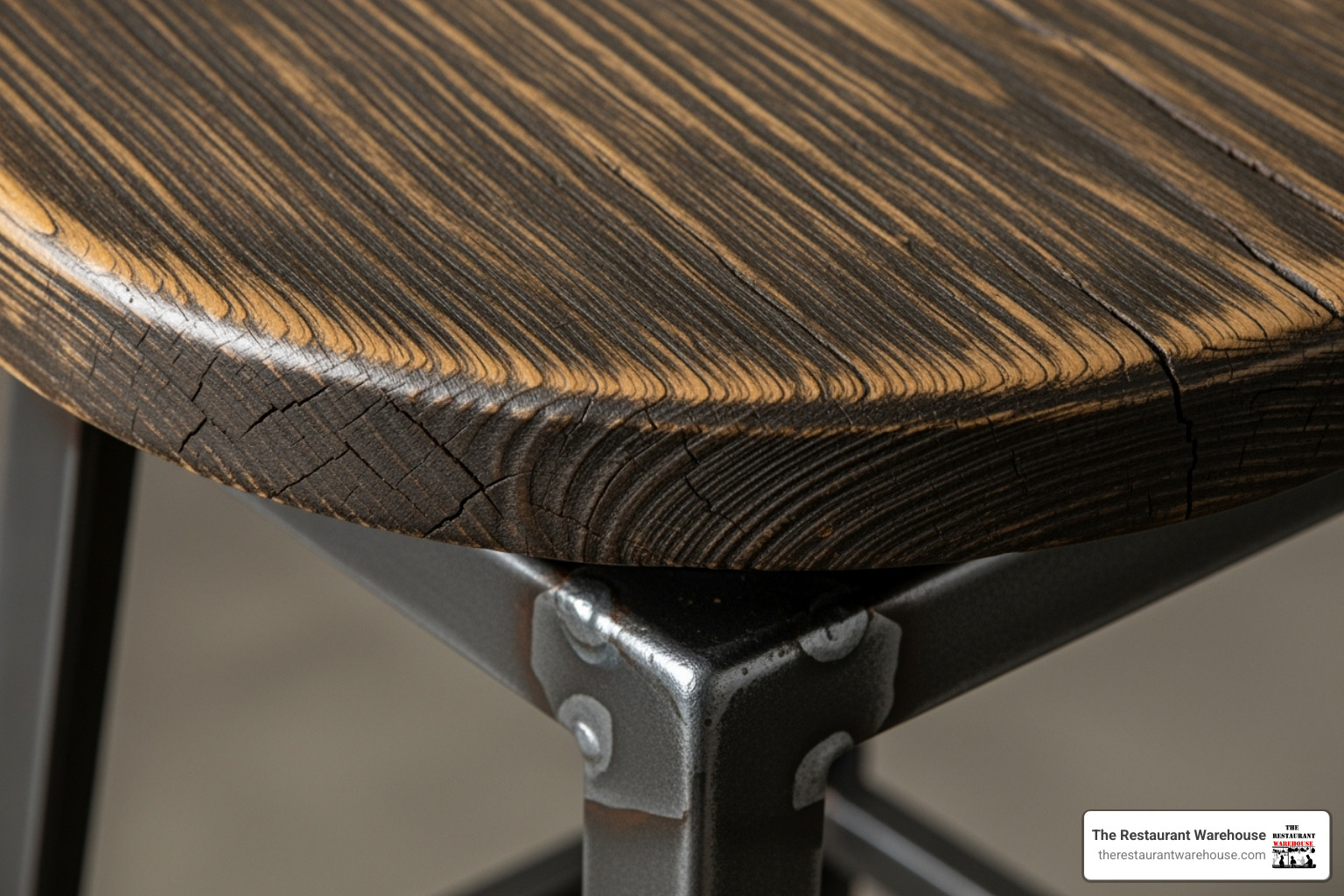
The materials used for industrial bar stools are carefully chosen for both their immense strength and their stylistic impact. At the foundation of every quality stool, you'll find a robust steel frame. This is typically commercial-grade, 16- or 18-gauge steel construction that provides the critical stability needed in demanding commercial settings, minimizing any flex under load and resisting the dings and impacts of day-to-day service. The thicker the gauge, the stronger the frame.
Natural solid wood often makes up the seats, bringing a welcome warmth and organic texture that beautifully balances the coolness of the metal. The combination of hard, unyielding steel supporting the natural grain and warmth of wood is a timeless hallmark of the style. Some designs also incorporate galvanized steel, which is coated in zinc to offer exceptional resistance to rust and corrosion, making these stools versatile enough for use on covered outdoor patios and in humid environments.
A key detail separating high-quality industrial seating from inferior alternatives is the fully welded frame. Our stools feature frames that are welded at every joint, creating a single, solid unit that is tested to handle the intense demands of busy restaurants and bars. There are no wobbly joints that require constant tightening or gradual loosening over time—just solid, dependable construction built for the long haul. You'll also find durable leatherette upholstery on some models, adding a layer of comfort while maintaining a tough, easy-to-clean, industrial character. These materials work in concert to create seating that not only lasts but also ages gracefully, developing a unique patina over time. If you're drawn to the rustic charm of wood, our guide on wood chairs for restaurant settings explores how these natural materials can complement your design.
For operators weighing long-term maintenance and cost of ownership, the finish is a critical factor. Powder coats in classic black or modern grey are electrostatically applied and then cured under heat, creating a hard shell that conceals touch marks and provides a tough barrier against chips and scratches. Clear coats are another popular option, as they showcase the raw welds and the steel’s natural patina, perfect for spaces that want the authentic workshop character to shine through. Sealed or stained wood seats simplify cleaning; denser wood species and quality finishes resist swelling, staining, and wear from cleaning agents.
Signature Design Elements of Industrial Bar Stools
What makes industrial bar stools truly stand out are the very details that other styles try to hide. Exposed hardware like visible bolts, rivets, and undisguised welding marks aren't considered flaws—they're celebrated features that give each piece an authentic, workshop-inspired character and a sense of honest craftsmanship.
Minimalist forms define the silhouette of these stools. There's no unnecessary ornamentation or superfluous decoration; everything has a purpose, from the supportive footrest that enhances comfort to the structural cross-bracing that ensures stability. This stripped-down, function-first approach allows the quality and texture of the materials to take center stage.
The color palette is typically neutral, grounded in blacks, grays, and natural wood tones, offering surprising flexibility in interior design. Black frames are a classic and versatile choice, creating a bold silhouette. Grey finishes provide a softer, more contemporary feel that pairs well with concrete and stainless steel. Clear coat options are increasingly popular because they showcase the raw metal underneath, including all the unique welding details and natural patina. For spaces wanting even more character, rustic and distressed finishes add texture and the well-loved soul of vintage, time-worn pieces. These design elements create seating that makes a statement without shouting, fitting seamlessly into a wide variety of decors. For more insights on how metal elements can transform your space, take a look at our black metal chair guide.
Beyond their distinctive looks, industrial stools are engineered for service. Non-marring glides are fitted to the legs to protect floors from scratches and to lower noise levels in a busy room. Integrated footrests are strategically placed to support proper posture and reduce leg fatigue during longer visits. In busy venues, some swivel models even feature a return-to-center mechanism to improve alignment and speed up table resets. Many models are also designed to stack or nest for efficient storage—a crucial feature for multi-purpose rooms, private events, and end-of-day cleaning routines.
Ready to bring the enduring appeal of industrial style to your space? Contact us today to explore our full selection of industrial bar stools. Our specialists can help you select finishes that harmonize with your lighting temperature, wall textures, and table surfaces so the entire room feels purposeful and cohesive.
A Stool for Every Setting: Exploring Types and Benefits
Industrial bar stools are true workhorses, ready to handle a packed Friday night at a craft brewery or a quiet Sunday morning of pancakes at a family kitchen island. In demanding commercial environments like restaurants, hotels, and cafes, they deliver the perfect balance of uncompromising toughness and sophisticated style. They are specifically built to withstand the constant use and abuse of high-traffic environments, making them a smart, long-term investment for any business owner looking to reduce replacement costs and maintenance headaches.
Beyond their sheer practicality, industrial bar stools are often showstoppers. They have the ability to anchor a room with their robust presence, adding a raw, textural aesthetic that people notice and appreciate. For home use, they bring that same sought-after industrial charm to kitchen islands, basement bars, and breakfast nooks, turning everyday spaces into inviting and stylish gathering spots. The versatility of this style is truly remarkable—from a sprawling warehouse-inspired loft to a cozy farmhouse kitchen, these stools adapt to their surroundings while always maintaining their distinct, strong character. If you're outfitting a commercial space, our commercial bar chairs guide digs deeper into how these stools meet the specific demands of businesses, including durability testing and material selection.
In addition to their powerful visual impact, industrial stools offer significant operational advantages that you can feel in the day-to-day running of a business. Fully welded frames eliminate the need for regular tightening of bolts and prevent the loosening of hardware that plagues lesser-quality furniture. High-quality powder-coat or clear-coat finishes resist stains and can be sanitized easily with a simple wipe-down, helping to keep tables turning and service moving efficiently. Furthermore, integrated footrests distribute a person's weight and pressure for more comfortable seating sessions—a critical detail when your business concept encourages guests to linger over another drink or dessert.
When it comes to layout planning, it's important to consider both workflow and seating density. Backless models are a fantastic choice for maximizing capacity, as they allow more seats along a bar run and can be tucked completely out of the way. Stools with backs, on the other hand, significantly improve comfort for full-service dining. Swivel stools are excellent for facilitating conversation and easing entry and exit in tight spots, making them ideal for placement near corners or structural pillars. If your bar counter or kitchen island has inset supports or cabinetry, consider stools with smaller footprints or round seats that can maneuver around these posts without bumping or causing obstruction.
Functional Variations of Industrial Bar Stools
The rich variety of industrial bar stools means you can find the perfect fit for your space's specific functional and aesthetic needs.
- Swivel Stools: These make conversation effortless, allowing guests to turn and interact freely with those around them without having to shift the entire stool. They are perfect for lively bars, social lounges, and collaborative spaces. Many commercial-grade versions include a return-swivel mechanism that automatically brings the seat back to a forward-facing position.
- Backless Stools: As the ultimate space-saver, backless stools are ideal for areas with limited space or for achieving a minimalist, uncluttered look. They slide neatly under counters, freeing up valuable floor space and maintaining open sightlines across the room. They are best for quick-turnover seating areas.
- Adjustable Height Stools: These are the ultimate problem-solvers, transitioning easily between different counter and bar heights. Many draw their design inspiration from classic drafting stools, featuring a screw-lift mechanism that offers maximum flexibility for dynamic environments or non-standard counter heights.
- Stools with Backs: When comfort for extended sitting is a top priority, stools with backs are non-negotiable. The lumbar support they provide encourages guests to relax and stay awhile, making them the ideal choice for restaurant dining areas, hotel bars, and home kitchens where long conversations happen.
- Footrests: This is another essential feature for ergonomic support and comfort. Nearly all of our industrial stools include integrated footrests, which are welded directly into the frame for maximum strength. They help reduce pressure on the legs and promote better posture for a more comfortable experience.
Pro tip for spacing: Plan for roughly 26–30 inches of space from the center of one stool to the center of the next for typical 16–18 inch-wide seats. This calculation usually leaves about 6-8 inches of open space between the seat edges for elbow room and personal space. For wider seats, or for stools that have arms, you should increase this spacing to 30-34 inches. At a corner, always allow extra clearance so guests' knees don’t collide.
Why Choose Industrial? The Aesthetic and Practical Advantages
Choosing industrial bar stools infuses your space with undeniable character, commercial-grade durability, and a timeless aesthetic that transcends fleeting trends. The edgy, raw look creates immediate focal points, often by juxtaposing rugged steel frames with the natural warmth of wood seats or the sleek finish of a leatherette cushion.
The versatility of these stools is a major advantage for designers and homeowners alike. They can add a touch of farmhouse style to a rustic kitchen, create a striking and sophisticated contrast in an ultra-contemporary bar, or anchor a room with their strong character. They provide ample seating without the visual bulk of other chair types, which is critical for maximizing capacity while maintaining an open, airy feel. They pair wonderfully with country decor, reclaimed wood tables, or polished concrete counters. For a cohesive look, they work well with our extensive range of tables and chairs restaurant options.
Operationally, industrial stools help keep maintenance and replacement costs down over time. Replaceable, non-marring glides protect expensive flooring and extend the life of the stool's finish. Powder-coated frames are excellent at hiding scuffs, and clear coats welcome touch-ups that blend seamlessly with the stool's natural patina. Galvanized components resist corrosion in damp or humid environments, making them suitable for covered patios and seasonal outdoor setups.
| Feature | Swivel vs. Fixed | Backless vs. With Back | Adjustable vs. Fixed Height |
|---|---|---|---|
| Space-Saving | Swivel allows movement in a fixed footprint, great for tight spots. | Backless stools are the best for saving space, tucking fully under counters. | Both have similar footprints; adjustable offers height flexibility for non-standard counters. |
| Comfort | Swivel allows easy repositioning and social interaction. | Backless is for quick, casual seating; backs provide essential lumbar support for longer stays. | Adjustable height can be customized to the user for optimal ergonomic comfort. |
| Flexibility | Swivel encourages a dynamic, social atmosphere. | Backless is versatile for casual spots; backs are better suited for dining. | Adjustable stools are the most flexible, adapting to various surfaces and users. |
If you’re weighing style versus capacity, consider a mixed strategy: place stools with backs at the ends of a bar and in high-visibility areas to elevate the look and comfort, and then use backless models in the middle of the run to increase the seat count and maintain easy traffic flow. Need help mapping your bar's run length to the right seat quantity and spacing? Contact The Restaurant Warehouse for a quick layout consult and quote.
The Buyer's Guide: Selecting and Styling Your Perfect Bar Stool
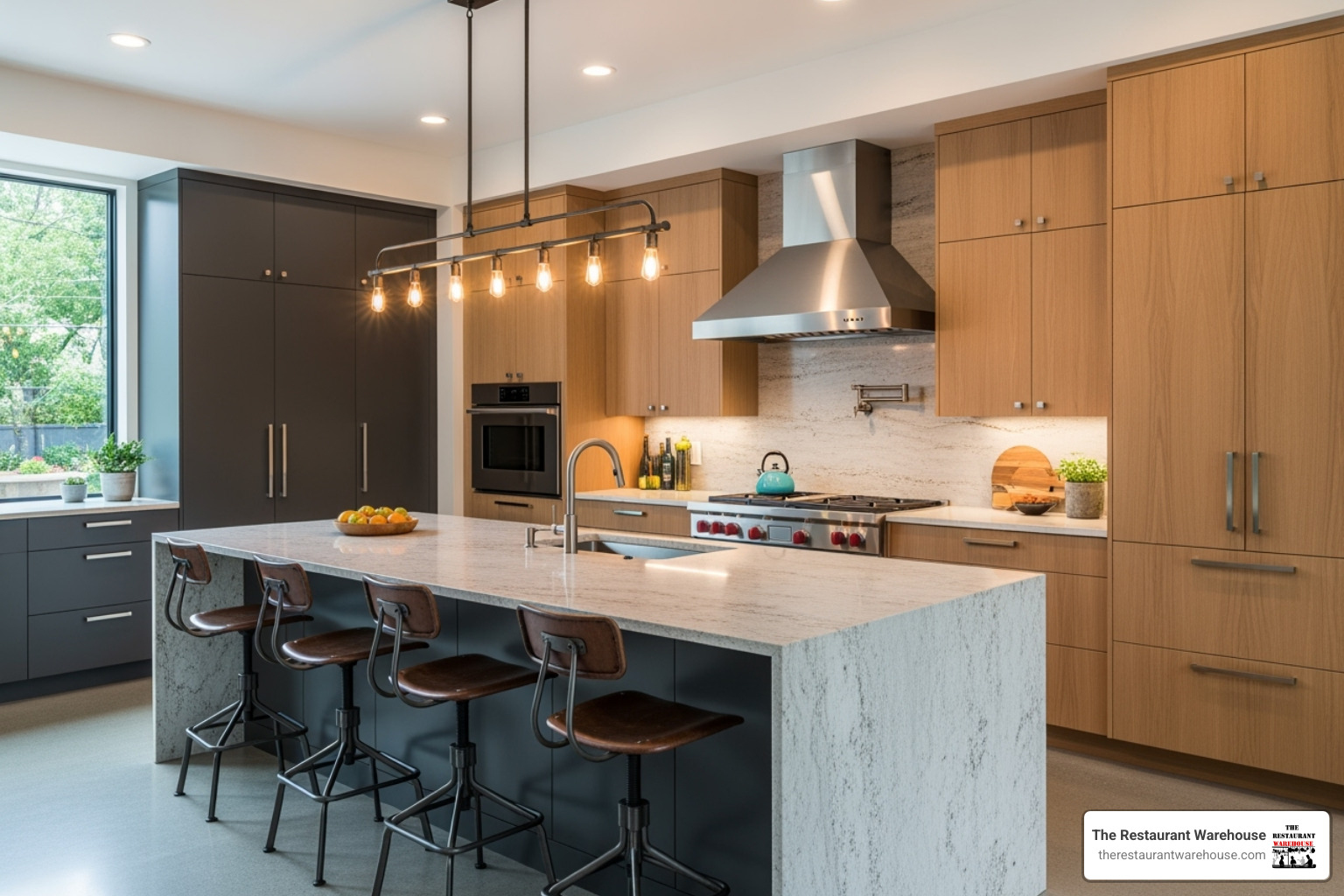
Finding the right industrial bar stools is about more than just picking a style you like; it's about fitting the pieces together to create the perfect picture for your space. Whether you're designing a restaurant, a home bar, or a cozy kitchen nook, the right seating can transform an ordinary area into a memorable and functional gathering spot. The inherent beauty of the industrial style is its remarkable adaptability; it can anchor a rustic brewery with its rugged charm, add a sophisticated edge to a contemporary cafe, or bring a sense of authentic warmth to a modern farmhouse kitchen. Our comprehensive restaurant furniture guide can help you create a cohesive look that serves both your aesthetic vision and your functional needs.
How to Choose the Right Seating
Height is the single most critical measurement to get right when selecting bar stools. The golden rule is to leave a gap of 9-12 inches between the top of the seat and the underside of your counter or bar top. This provides comfortable legroom for most adults and makes it easy to slide in and out of the seat without feeling cramped.
- For a standard counter height surface (around 36 inches tall), you should choose counter stools with a seat height of 24-26 inches.
- For a traditional bar height counter (around 42 inches tall), you will need bar stools with a 28-30 inch seat height.
Always measure your counter height from the floor to the underside of the countertop before you buy. If you have non-standard heights, or if you want maximum flexibility for different users or future changes, adjustable height stools are an excellent and versatile choice. Our bar table dimensions guide breaks down these crucial measurements in greater detail to ensure a perfect fit. For more technical standards on ergonomics, the BIFMA Seating Standards Overview provides excellent benchmarks for commercial-grade furniture. For practical anthropometric ranges that inform comfortable clearances, the Cornell University Ergonomics Web is another helpful resource.
Next, carefully consider comfort and ergonomics, especially for commercial settings. For spaces where people will sit for longer periods, such as a full-service restaurant or a hotel lounge, backrests are essential for providing lumbar support. Footrests are also crucial for promoting good posture and reducing fatigue in the legs and lower back. The seat material itself also significantly affects both comfort and maintenance.
- Solid wood seats are warm to the touch, extremely durable, and easy to clean.
- Metal seats offer the most authentic industrial look and are incredibly simple to maintain, making them ideal for high-turnover areas.
- Upholstered seats in materials like commercial-grade leatherette add a layer of cushioning that enhances comfort for longer visits.
A quick measuring checklist:
- Confirm your finished counter height at several points along its length, as floors and slabs can be uneven.
- Note the depth of your counter's overhang to ensure there is enough room for knees to clear the edges comfortably (aim for at least 10 inches).
- Identify and mark any vertical supports, electrical panels, or outlets under the counter that could interfere with knees or the stool's swivel mechanism.
- Plan your center-to-center spacing based on the total number of seats you want, allowing 26-30 inches for standard stools.
- Verify you have adequate aisle clearance behind the stools—aim for a minimum of 36–44 inches in areas where guests and servers will be passing frequently.
Weight capacity and stability are paramount in commercial settings. Look for stools with fully welded frames and structural cross-bracing to minimize any potential for racking or wobbling over time. If your space frequently hosts larger guests or patrons carrying bags, choose stools with higher static load ratings and generously sized footrests. High-quality, non-marring glides are essential for protecting your floors and also help prevent the shimmy that can develop on uneven surfaces.
Maintenance is refreshingly straightforward. Metal frames can be wiped down with a damp cloth and a mild, non-abrasive soap. Wood components require regular dusting and can be cleaned with a wood-specific cleaner. For upholstered options, look for materials that are rated for commercial use and are easy to spot clean. Create a simple weekly checklist for your staff to inspect glides for wear, check that footrests are secure, and confirm that any swivel mechanisms are returning smoothly.
Styling Your Space with Industrial Seating
Industrial bar stools have an amazing, almost chameleon-like ability to adapt to nearly any design style, either by blending in or providing a compelling contrast.
- In modern interiors, their raw materials and simple forms create a fascinating contrast with sleek, polished surfaces, adding an edge of texture and character that keeps the space from feeling sterile.
- For rustic decor, the natural wood and dark metal blend seamlessly with other elements like exposed beams, brick walls, and earthy palettes, making them feel like they truly belong.
- In farmhouse kitchens, they echo the utilitarian roots of the style, pairing perfectly with butcher block islands, apron-front sinks, and vintage-inspired lighting.
- In eclectic spaces, they can serve as a quirky and powerful focal point, anchoring the room with their strong, confident character.
Finish strategy suggestions:
- Pair clear-coat steel frames with warm walnut or acacia wood seats to emphasize the natural grain of the wood and the artistry of the welds.
- Use classic black frames against light-colored stone or quartz countertops for a dramatic, high-contrast statement.
- Choose contemporary grey frames to harmonize with stainless steel accents, concrete floors, and cooler color palettes.
Pairing your stools with the right tables is key to a cohesive design. A distressed wood table enhances rustic warmth, while a sleek metal-top table emphasizes a modern, urban edge. Our guide to perfect pub tables shows many excellent pairing options. For a complete, unified look, our restaurant furniture supply guide helps you create a cohesive theme across your entire space. Color and finish also play a big role. Black frames are dramatic and grounding, grey feels more contemporary and soft, and clear coats celebrate the raw, authentic nature of the metal. Our black metal chairs guide offers more specific styling ideas.
If you’re planning a full renovation or a new concept, we can help you coordinate stools, chairs, and tables by finish family so that every element aligns perfectly across the room. Want help with samples, finish swatches, or a quick mood board? Contact The Restaurant Warehouse to get a custom shortlist and a fast quote.
Frequently Asked Questions about Bar Stools
Choosing the perfect seating for your business or home involves asking the right questions. Here are detailed answers to the most common concerns about industrial bar stools to help you make a confident and informed decision.
What is the ideal height for a bar stool?
Getting the height right is absolutely crucial for comfort and functionality. The universal rule of thumb is to maintain a 9-12 inch gap between the top of the stool's seat and the underside of your counter or bar. This space, known as the 'comfort zone,' provides ample legroom without forcing the user to sit too low.
- For a standard 36-inch counter (most common for kitchen islands), you should choose a counter stool with a seat height of 24-26 inches.
- For a taller 42-inch bar (typical in commercial restaurants and home bars), you need to select a bar stool with a 28-30 inch seat height. Our guide to finding the right bar stool for restaurant use covers this in depth.
Always measure your counter from the floor to the bottom of the countertop before purchasing to ensure a perfect fit. If you're uncertain or have a custom-built counter, our bar table guide breaks down all the standard dimensions to help you match everything correctly.
How do I maintain and clean industrial bar stools?
One of the biggest advantages of industrial bar stools is their low-maintenance design, which is ideal for busy commercial settings and active homes where durability and ease of cleaning are paramount.
- Metal Frames: A simple wipe-down with a soft, damp cloth and a mild soap solution is usually sufficient to remove dust and spills. Avoid using abrasive chemical cleaners or scouring pads, as they could scratch or damage the powder-coat or clear-coat finish.
- Wood Seats: Use a pH-neutral cleaner designed for wood and dust regularly with a microfiber cloth. A sealed or stained wood seat may benefit from an occasional polish to keep it looking rich and protect it from drying out. For spills like wine or grease, blot immediately and clean with a wood-safe cleaner.
- Upholstered Seats: For leatherette or other synthetic fabrics, always check the manufacturer's cleaning guidelines. Most commercial-grade synthetic leathers clean easily with a damp cloth. Addressing spills promptly is the best way to prevent permanent stains.
A few minutes of regular, mindful care will keep your industrial bar stools looking sharp and performing well for years to come.
Are industrial bar stools comfortable for long periods?
Comfort is highly dependent on the specific design, but certain features make a significant difference for extended seating. For restaurants, bars, and homes where you want guests to linger comfortably, we highly recommend choosing bar chairs for restaurant use that include backrests. A well-designed backrest provides essential lumbar support that reduces fatigue and encourages better posture.
Footrests are also vital for ergonomic comfort. They allow guests to rest their feet and shift their weight, which takes pressure off the lower back and thighs. Most of our industrial stools incorporate them directly into the welded frame for this reason. The seat itself also matters; contoured or 'saddle' seats offer better weight distribution and are generally more comfortable than perfectly flat surfaces for long-term sitting.
Backless stools are excellent for saving space and for quick, casual seating. However, for longer meals or conversations, a stool with a back and a footrest will always provide superior comfort.
How much space should I plan between stools?
Proper spacing is key to guest comfort. For most standard 16–18 inch-wide seats, you should plan for approximately 26–30 inches from the center of one stool to the center of the next. This leaves about 6-8 inches of open space between seats for elbows and personal space. For wider stools or any models that include arms, you should increase this spacing to 30-34 inches. Always allow extra clearance at corners and near posts to give guests room to maneuver their knees and swivel without obstruction.
Can industrial bar stools be used outdoors?
Yes—but only if they are constructed with the right materials. For outdoor use, look for stools with galvanized steel or aluminum frames, which are naturally resistant to rust. A high-quality outdoor-rated powder coat also provides a protective barrier. Seats should be made of sealed wood, metal, or a UV-resistant plastic. Even with these features, it's best to use them on covered patios to extend the life of the finish. Avoid leaving any upholstered seats exposed to rain or direct sun, and bring all stools indoors during severe weather or the off-season.
Do stools arrive assembled?
Many industrial bar stools, especially those with fully welded frames, ship either fully assembled or with minimal assembly required (often just attaching the seat to the base with a few screws). Always check the product details page for assembly information. Fully welded frames are a significant advantage as they reduce assembly time, eliminate wobble, and hold up much better under heavy commercial use.
What about floor protection and noise control?
Choose stools that come with non-marring glides suitable for your specific floor type (e.g., hard plastic for carpet, felt for hardwood, rubber for tile). These glides are essential for preventing scuffs and scratches. You should inspect and replace them as they wear down. Felt or rubberized options also have the added benefit of dampening sound, which can improve the acoustics in a lively room.
How do I choose between swivel and fixed bases?
Swivel stools excel in social, high-traffic areas where guests frequently turn to talk or need to slide in and out of their seats easily. They are great for tight spaces. Fixed-base stools are ideal when you want a clean, uniform look and minimal movement—especially along narrow counters or where stools are placed very close together. If you want the best of both worlds, look for seat designs with a return-to-center swivel mechanism, which maintains a neat alignment after guests leave.
What’s the best way to match finishes across my space?
Start with your dominant surfaces—countertops, floors, and wall textures—and build a simple palette of 2–3 complementary finishes for your furniture frames and seats. Clear-coat frames amplify an authentic industrial vibe; black frames provide classic contrast and polish; grey frames harmonize beautifully with stainless steel and concrete. For whole-room cohesion, coordinate your stools with your tables and dining chairs using our restaurant furniture supply guide.
Still deciding? Contact The Restaurant Warehouse for a custom shortlist of industrial bar stools, finish swatches, and a fast quote to keep your project moving forward.
Conclusion
Throughout this guide, we've explored why industrial bar stools have become a cornerstone of modern design in both commercial and residential settings. From their raw, honest materials and signature utilitarian look to their practical variations and incredible styling flexibility, these stools are far more than just a place to sit—they are a statement of enduring style and a smart, long-lasting investment in quality.
What makes industrial bar stools so special and so sought-after is their unique ability to deliver on all fronts simultaneously. Their timeless style, rooted in a century of functional design, ensures they won't look dated in a few years. Their durable construction—featuring fully welded steel frames, solid wood, and robust materials—guarantees they can handle the daily hustle of a busy restaurant or a lively home kitchen without faltering. Their versatility shines through, allowing them to fit seamlessly into rustic, modern, and farmhouse decors while simplifying maintenance for owners and speeding up table turns for staff.
Here at The Restaurant Warehouse, we are committed to providing furniture that doesn't just look good—it performs. We understand that in a commercial environment, every single piece needs to pull its weight, which is why our curated selection of industrial bar stools and other commercial-grade furniture is designed and tested to meet the rigorous demands of high-traffic environments. We do this while keeping your budget in mind with our wholesale pricing model, cutting out the middlemen to give you access to premium quality furniture at prices that make sense for your bottom line.
Whether you're launching an exciting new concept, renovating an existing space, or simply want to elevate your home's style, our industrial bar stools deliver that perfect blend of rugged charm and practical elegance. For a comprehensive look at all your seating options, from our black metal chairs guide to a full dining room setup, we invite you to browse our collections. Our complete Restaurant Furniture Guide is a great place to start your journey.
Don't settle for furniture that barely gets the job done or that you'll have to replace in a year. Contact us today to find the perfect industrial bar stools and restaurant furniture solutions that will transform your space and stand the test of time. Need help with layouts, finish matching, or lead times? Get a fast quote from The Restaurant Warehouse and move your project forward with confidence.
About The Author

Sean Kearney
Sean Kearney used to work at Amazon.com and started The Restaurant Warehouse. He has more than 10 years of experience in restaurant equipment and supplies. He graduated from the University of Washington in 1993. He earned a BA in business and marketing. He also played linebacker for the Huskies football team. He helps restaurants find equipment at a fair price and offers financing options. You can connect with Sean on LinkedIn or Facebook.
Leave a comment