


Display & Delight: Top Commercial Glass Door Freezers
Why Commercial Glass Door Freezers Are Essential for Your Foodservice Business
Commercial glass door freezers are upright display units with transparent doors, allowing customers to view frozen products without opening the door. They are essential for retail environments like convenience stores, restaurants, and supermarkets where product visibility is key to driving sales.
The primary advantage of a glass door freezer is its ability to boost impulse purchases. When customers can clearly see your frozen desserts, pre-made meals, or specialty ice creams, they are far more likely to make a spontaneous purchase. This transforms the freezer from a simple storage unit into a powerful, revenue-generating merchandising tool.
Modern units are also designed for efficiency. Shoppers can browse without letting cold air escape, reducing energy waste. For staff, inventory checks become a simple glance, streamlining operations. With features like bright LED lighting, self-closing doors, and a professional, modern appearance, these freezers improve both your brand's image and your bottom line. According to ENERGY STAR's commercial refrigeration guidelines, choosing an ENERGY STAR certified model can save businesses over $980 in utility costs over the product's lifetime, making it a smart financial decision for any growing foodservice business.
Beyond the basics, well-designed merchandisers use low-emissivity (low-E) triple-pane glass and heated frames to resist fogging, so the presentation stays clear even in humid, high-traffic stores. Anti-condensate technology means doors don't drip or haze during rushes. Pair that with high Color Rendering Index (CRI) LEDs and your product colors pop—pale gelatos look creamy, fruit bars look vibrant, and premium pints communicate quality before a door is ever opened.
Strategic placement turns visibility into velocity. Position a glass door freezer near high-traffic lanes or adjacent to complementary categories—frozen pizza near craft sodas, novelties near the front counter, or family-sized meals near fresh salads for "tonight's dinner" bundles. Within the cabinet, place bestsellers and high-margin SKUs at eye level, use shelf talkers for new items, and group by flavor profile or brand blocks so shoppers can scan quickly.
- CTA: Shop Glass Door Freezers now: https://therestaurantwarehouse.com/collections/glass-door-freezers
- CTA: Talk with a product specialist about sizing and energy options: https://therestaurantwarehouse.com/pages/contact-us
The Clear Advantage: Why Your Business Needs a Display Freezer
Imagine a customer entering your store for one item but leaving with more because a brightly lit display of premium ice cream bars caught their eye. That is the power of visibility, and it's why businesses selling frozen goods benefit immensely from commercial glass door freezers. Hiding products behind a solid door is like hiding potential revenue.
Improved product visibility is the core benefit. When customers can see your entire frozen inventory, they find items they didn't know you carried. This turns the freezer into a silent, 24/7 salesperson. You can strategically arrange products by color, brand, or place high-margin items at eye level to maximize attention. The bright LED lighting makes everything look fresh and appealing, creating a premium display for your frozen goods.
This visual merchandising directly drives impulse purchases, which can account for a significant portion of frozen product sales. A customer grabbing a drink might also pick up a frozen pizza for dinner, or a parent waiting in line might be tempted by gourmet ice cream pops. These unplanned sales add up quickly, boosting your daily revenue with no extra effort.
Operationally, these freezers streamline inventory management. Staff can spot low stock levels from across the room, saving time and preventing stockouts during busy periods. This efficiency reduces labor costs and improves the customer experience. Shoppers appreciate being able to browse at their own pace without playing "freezer roulette"—opening door after door and letting cold air escape. This convenience creates a more pleasant shopping environment that builds loyalty. Finally, the sleek, professional aesthetic of a well-organized glass door freezer lifts the look of your space, signaling quality and care to your customers.
Practical merchandising tips you can apply today:
- Organize by mission: "Tonight's Dinner," "Sweet Treats," "Better-for-You," or "Family Value."
- Keep premium novelties at adult eye level; place kids' favorites slightly lower to capture family purchases.
- Use price labels that are easy to scan through glass; consider color-coding promos for instant recognition.
- Rotate seasonal items (pumpkin pies, summer pops) into the top third of the display to catch attention.
- CTA: Get a free planogram and sizing recommendation: https://therestaurantwarehouse.com/pages/contact-us
A Buyer's Guide to Commercial Glass Door Freezers
Choosing the right commercial glass door freezer is about matching features to your business needs, space, and budget. Making an informed choice ensures you get a reliable unit that boosts sales and saves on energy costs.
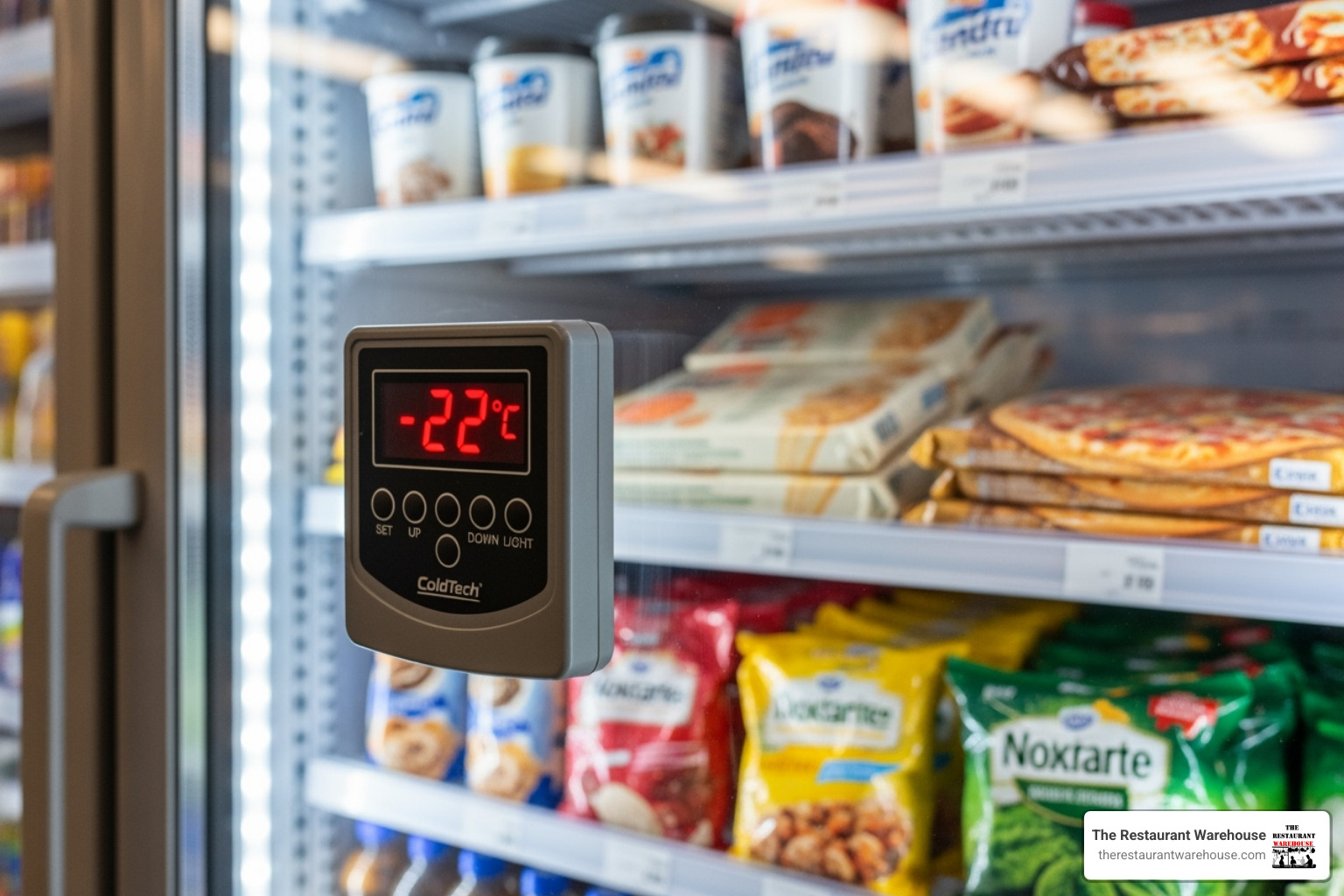 Image metadata: alt="digital temperature controller and bright LED lighting inside a commercial glass door freezer - commercial glass door freezers"; title="Close-up of a digital temperature controller and high-CRI LED lighting inside a commercial glass door merchandiser freezer"; source="Bannerbear CDN"; format="JPEG"
First, measure your space. Consider the freezer's external dimensions (width, depth, height) and ensure at least four inches of clearance for air circulation to prevent the compressor from overheating. Capacity, measured in cubic feet, determines how much product you can store. Match it to your inventory needs to avoid wasting energy on a half-empty unit or losing sales from insufficient space. Also, consider the interior layout; adjustable shelves are invaluable as they allow you to reconfigure the space for different product sizes, from tall beverage bottles to wide pizza boxes. The number of doors—one, two, or three—depends on your product variety and sales volume. Single-door models are great for small cafes, while three-door units offer maximum display real estate for busy convenience stores.
A freezer's primary job is to maintain a safe temperature, typically between -10°F and 0°F. According to the FDA's food safety guidelines, food must be kept at 0°F or below. Look for models with digital thermostats for easy monitoring and excellent temperature recovery time, which is crucial for maintaining quality after frequent door openings.
Effective lighting is non-negotiable for a display freezer. Energy-efficient LED lighting makes products look vibrant and appealing without adding heat to the cabinet. Many units also feature an illuminated lightbox header for branding or promotions. To handle frost, an automatic defrost system is essential for most commercial settings. It melts frost buildup periodically without requiring manual labor or downtime.
Finally, focus on construction quality. Triple-pane glass doors provide excellent insulation and reduce condensation. For humid environments, heated glass doors are a valuable feature. Self-closing doors are a must-have to prevent energy waste, and many include a stay-open feature for easy stocking. Look for durable stainless steel or powder-coated exteriors and certifications like NSF, ETL, and UL, which verify the unit meets rigorous safety and performance standards.
Additional buying considerations to get right the first time:
- Compressor location: Bottom-mount units are easier to service and can draw cooler air at floor level; top-mount can run cleaner in dusty or flour-heavy environments.
- Refrigerant: Natural R290 (propane) is efficient and low-GWP. Confirm your local codes allow it and ensure technicians are R290-trained.
- Door style: Swing doors are most common; check for self-closing hinges and hold-open at 90° for stocking.
- Controls and monitoring: Digital controls with high-temp alarms, door-ajar alarms, and optionally a simple data logger help maintain compliance and quality.
- CTA: Get expert sizing help and a quote: https://therestaurantwarehouse.com/pages/contact-us
Glass Door vs. Solid Door: A Head-to-Head Comparison
When choosing a commercial freezer, the first decision is often between a glass or solid door. The choice impacts your energy bills, sales strategy, and workflow, as each type is designed for a different purpose. Commercial glass door freezers are front-of-house merchandisers, while solid door freezers are back-of-house storage workhorses.
Glass doors offer complete product visibility, making them perfect for customer-facing areas like convenience stores, cafes, and supermarkets. This visibility drives impulse sales and allows customers to browse without opening the door. Solid doors offer zero visibility and are ideal for kitchens and storage areas where products are accessed only by staff.
While a solid, insulated door is inherently more energy-efficient, modern glass door freezers have narrowed the gap with features like triple-pane glass, efficient compressors, and LED lighting. The revenue generated from impulse buys often outweighs the slightly higher energy cost. Solid door units excel at temperature stability due to better insulation, making them ideal for long-term storage of sensitive ingredients.
The decision depends on location and function. For selling directly to customers, a glass door freezer is the clear winner. For bulk storage in non-customer areas, a solid door freezer is the practical, cost-effective choice.
| Feature | Commercial Glass Door Freezer | Commercial Solid Door Freezer |
|---|---|---|
| Primary Function | Product display, merchandising, impulse sales | Bulk storage, back-of-house use |
| Product Visibility | Excellent | None |
| Energy Consumption | Higher (minimized by modern tech) | Lower |
| Temperature Stability | Good | Excellent |
| Ideal Applications | Front-of-house: retail, cafes, grab-and-go | Back-of-house: kitchens, storage |
| Cost | Higher initial purchase price | Lower initial purchase price |
Maximizing Savings and Sustainability
For any foodservice business, managing operating costs is crucial. When selecting a commercial glass door freezer, choosing an energy-efficient model is one of the smartest ways to lower utility bills and support sustainability. Since freezers run 24/7, even small efficiency gains lead to significant long-term savings.
Look for the blue ENERGY STAR label. Certified commercial glass door freezers are about 20% more energy-efficient than standard models. According to ENERGY STAR, this can save your business over $110 annually, adding up to nearly $980 in utility savings over the freezer's lifetime. These savings come from advanced components like high-efficiency compressors and ECM fan motors. Many certified models also use waste heat from the refrigeration cycle to prevent door condensation, a clever feature that reduces the need for constant electric heaters.
What drives energy costs and how to manage them:
- Night practices: Use a consistent close-up routine—verify doors are closed, product isn't blocking airflow, and cabinet lights are off if your model supports it.
- Anti-sweat heater controls: If your model has adaptive heater controls, keep them enabled; they only energize heaters when humidity is high, saving kWh in drier conditions.
- Coil hygiene: Clean condenser coils monthly; dirty coils can add 10-30% to energy use and shorten compressor life.
- Setpoints: Don't overshoot—if your program requires 0°F holding, avoid setting to -15°F "just in case." Lower setpoints burn dollars without improving product quality in most applications.
Refrigerant choice and future readiness: R290 (propane) is a leading natural refrigerant with ultra-low Global Warming Potential and excellent thermodynamic efficiency. Models designed around R290 often deliver faster temperature pull-down and reduced energy consumption compared to legacy HFC systems. Choosing a low-GWP refrigerant solution helps future-proof your fleet against regulatory change.
- CTA: Request an energy and TCO comparison for your shortlist: https://therestaurantwarehouse.com/pages/contact-us
Ideal Applications for commercial glass door freezers
The beauty of commercial glass door freezers lies in their adaptability. These units aren't just one-trick ponies—they excel across a remarkable range of foodservice and retail settings. Anywhere you need to freeze products and show them off simultaneously, these freezers become invaluable assets that pay for themselves through increased sales and improved customer satisfaction.
In convenience stores and supermarkets, they are essential for displaying everything from ice cream and frozen novelties to pizzas and ready-to-eat meals, driving significant impulse buys. Restaurants and cafes use them for grab-and-go items, desserts, or frozen drinks, creating easy upsell opportunities that boost the average ticket size. Even bars can showcase frozen cocktail ingredients or premium treats, adding a professional touch and expanding their menu.
Merchandising tips by venue:
- Convenience and fuel: Place novelties toward the front and family meals in the middle sections.
- Cafes and bakeries: Use the top shelf for premium pints or gelato; add small signage to tie into dessert combos.
- Campus stores: Highlight "late-night" snacks and single-serve options at eye level; keep plant-based or allergen-friendly items grouped and clearly labeled.
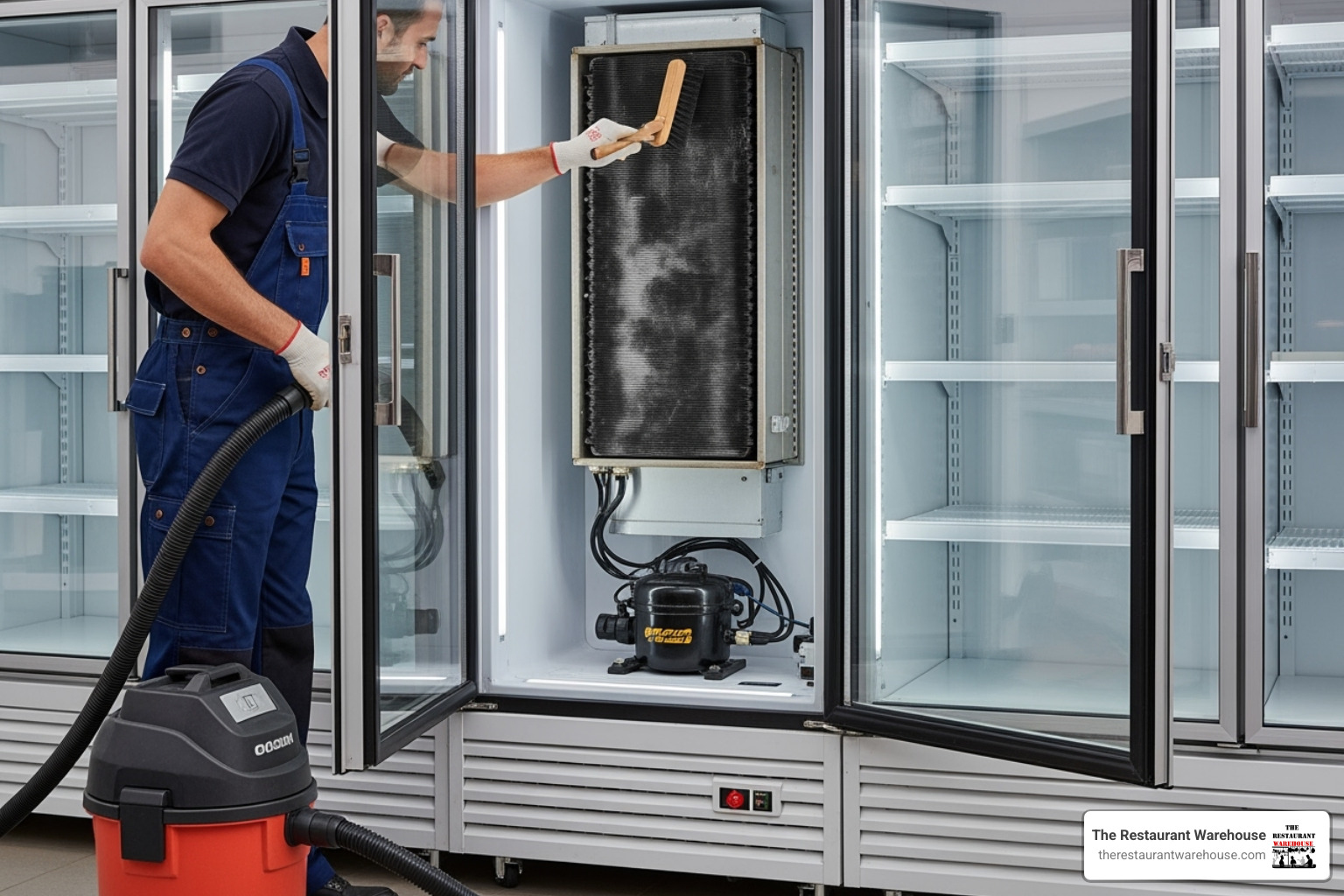 Image metadata: alt="technician cleaning the condenser coils on a bottom-mounted freezer unit - commercial glass door freezers"; title="Technician cleaning condenser coils on a bottom-mounted commercial merchandiser freezer to improve efficiency and reliability"; source="Bannerbear CDN"; format="JPEG"
Maintenance Tips for commercial glass door freezers
Your commercial glass door freezer represents a significant investment, and like any hardworking appliance, it needs regular care to deliver its best performance year after year. The good news? Proper maintenance isn't complicated or time-consuming. A few simple habits can prevent expensive breakdowns, keep energy costs down, and ensure your frozen products stay perfectly preserved.
The single most important maintenance task is cleaning the condenser coils. These coils work tirelessly to dissipate heat from your freezer, and when dust, grease, and debris accumulate on them, your unit struggles. The compressor works overtime trying to maintain temperature, consuming more energy and wearing itself out prematurely. We recommend cleaning these coils monthly—more often if your environment is particularly dusty or greasy.
Your door gaskets deserve weekly attention. These rubber seals create the airtight barrier that keeps cold air inside where it belongs. Inspect them carefully for any cracks, tears, or signs of wear. Clean them regularly with mild detergent and warm water, removing any food particles or ice buildup that might prevent a tight seal.
Since visibility is the whole point of a commercial glass door freezer, keeping those glass doors spotless matters tremendously. Daily cleaning with commercial glass cleaner ensures your products always look their best. Temperature verification should become routine. While your freezer's digital display is helpful, we recommend using an independent thermometer to confirm the internal temperature stays between -10°F and 0°F.
- CTA: Need a maintenance checklist or help scheduling service? Contact us: https://therestaurantwarehouse.com/pages/contact-us
Frequently Asked Questions
Investing in new refrigeration naturally brings questions, and we want to make sure you feel confident in your decision. Here are some of the most common inquiries we receive about commercial glass door freezers, answered with practical insights.
What is the main difference between a commercial freezer and a home freezer?
The key differences are durability, power, and certification. Commercial glass door freezers are built with heavy-duty components to withstand constant use. Their powerful refrigeration systems are designed for rapid temperature recovery after frequent door openings, a feature home freezers lack. Commercial units are also NSF certified, meaning they meet strict public health standards for cleanability and food safety, which is often a requirement for foodservice operations.
How do I stop condensation on my glass door freezer?
Modern commercial freezers have features to prevent condensation. Heated door frames or heated glass keep the outer pane just warm enough to stop fogging. Triple-pane glass acts as a strong thermal barrier, reducing the temperature difference that causes condensation. If you still experience fogging, check the door seals (gaskets). If they are cracked, dirty, or worn, they can allow warm, humid air to leak in. Cleaning or replacing the gaskets is often a simple and effective fix.
Are R290 (propane) systems safe for my store?
Yes—R290 systems use very small refrigerant charges in sealed systems designed for commercial use and tested against safety standards. The efficiency gains and ultra-low GWP make R290 a compelling choice. Always ensure installation and service are performed by technicians trained for R290.
What electrical and ambient conditions should I plan for?
Verify voltage and amperage requirements; many one- and two-door units are plug-and-play on standard 115V circuits, while larger units may need dedicated 15–20A circuits. Review the unit’s maximum rated ambient (often 90–100°F) and humidity tolerance. If your store runs hot or doors open constantly, select a model with strong recovery specs.
How loud are merchandiser freezers?
Most units are designed for customer-facing spaces and operate quietly. If noise is a concern for seating areas, choose models with ECM fan motors and consider placement away from quiet zones.
How long is the warranty, and what does it cover?
Coverage varies by brand, but a common structure is 2–3 years parts and labor on the cabinet and 5 years on the compressor. Keep coils clean and follow maintenance guidelines to preserve coverage.
What about delivery, doorway access, and installation?
Measure all paths—doorways, halls, elevators—and verify that the unit and pallet will clear. If needed, ask for liftgate service and inside delivery options. Many units are roll-in with casters and require only leveling, plugging in, and a 24-hour temperature stabilization period before loading product. For help coordinating delivery, reach out to our team.
Where can I find rebates for a new commercial freezer?
Many regions offer incentives for energy-efficient models. Use the ENERGY STAR Rebate Finder to search by ZIP code and product type: https://www.energystar.gov/rebate-finder Also check with your local utility’s business programs for additional incentives (requirements vary).
How can I choose the right number of doors?
Match door count to product variety and traffic. Single-door units fit smaller menus or tight spaces; two- and three-door units provide broader planograms and shorten customer dwell times.
Do I need frost-free or manual defrost?
For most retail and foodservice applications, automatic defrost is preferred—it reduces maintenance and keeps the display clear. Manual defrost might be specified for certain specialty products but requires more downtime.
Have a question about specs, ambient conditions, or delivery timing? We’re happy to help.
- CTA: Ask a product expert or request a quote: https://therestaurantwarehouse.com/pages/contact-us
- Shipping and lead-time assistance: https://therestaurantwarehouse.com/pages/shipping-information
Conclusion: Find the Perfect Freezer at The Restaurant Warehouse
We've covered a lot of ground together in this guide to commercial glass door freezers. By now, you understand that these units are far more than just cold storage boxes—they're powerful merchandising tools that can genuinely transform how you sell frozen products. The ability to showcase your inventory, drive those valuable impulse purchases, and create a professional, inviting atmosphere for your customers makes these freezers a strategic investment, not just an operational necessity.
We've also talked about the long-term picture. Choosing an ENERGY STAR certified commercial glass door freezer isn't just about feeling good—it's about putting real money back in your pocket, with savings that can reach $980 over the unit's lifetime. Modern features like high-efficiency compressors, ECM fan motors, and eco-friendly refrigerants such as R290 mean you're running a more sustainable operation while cutting your utility bills.
At The Restaurant Warehouse, we get it. We know that when you're building or growing a foodservice business, every dollar matters. That's exactly why we're committed to offering top-quality commercial glass door freezers and other refrigeration at genuine wholesale pricing. We've built our business on cutting out the middleman, avoiding high commissions and retail markup, so you get professional-grade refrigeration without the inflated price tag.
- CTA: Shop glass door freezers: https://therestaurantwarehouse.com/collections/glass-door-freezers
- CTA: Contact us for personalized recommendations and a fast quote: https://therestaurantwarehouse.com/pages/contact-us
Thank you for trusting The Restaurant Warehouse—we're excited to help you choose a freezer that lifts your merchandising, protects product quality, and delivers savings for years to come.
About The Author

Sean Kearney
Sean Kearney used to work at Amazon.com and started The Restaurant Warehouse. He has more than 10 years of experience in restaurant equipment and supplies. He graduated from the University of Washington in 1993. He earned a BA in business and marketing. He also played linebacker for the Huskies football team. He helps restaurants find equipment at a fair price and offers financing options. You can connect with Sean on LinkedIn or Facebook.
Leave a comment