

Crafting Cocktails: Where to Buy Bar Supplies Locally
Why Finding the Right Bar Supply Store Near Me Matters
As the home bartending trend surges, finding the perfect bar supply store near me has become essential. The global barware market is projected to reach USD 16.8 billion by 2030, a clear sign that both home enthusiasts and professional bartenders are investing in quality tools. Whether you are setting up a cocktail nook at home or standardizing tools across multiple locations, the right supplier makes all the difference. Quality bar tools not only improve your drink-making experience, they also ensure durability, consistent results, and safer, more efficient workflows.
When choosing a bar supply store, consider these key factors:
- Selection: Look for a store that offers essential tools plus specialty items.
- Quality: Prioritize professional-grade materials that are built to last.
- Pricing: Seek out wholesale options, especially for bulk purchases.
- Expertise: Value staff who understand the specific needs of bartending.
- Availability and lead times: Confirm what is in stock and how quickly replenishment arrives.
- Policies: Review warranties, returns, and breakage policies before you buy.
The benefit of shopping locally is immediacy—you can feel the weight of a jigger, test the balance of a shaker, and verify glass clarity before you commit. But local does not have to mean limited; many specialized restaurant suppliers serve customers nationwide with warehouse-level inventory and wholesale pricing.
Finding a reliable bar supply store near me is the first step for anyone serious about crafting quality cocktails. This guide will walk you through selecting the best tools, glassware, and specialty items to build your perfect bar, plus how to shop like a pro and level up your drink-making technique.
Pro tip: As you read, make a short checklist of must-haves, nice-to-haves, and future upgrades. That simple prioritization will help you stay on budget while still investing in the pieces that will make the biggest difference.
CTA: Ready to build or refresh your bar? Contact us to request wholesale pricing and personalized recommendations for your toolkit.
The Essential Toolkit: Must-Have Bar Supplies for Every Enthusiast
Building the perfect bar starts with the right tools. Having quality equipment makes the difference between a good drink and an exceptional one. With so many options at your local bar supply store near me, knowing what to prioritize is key. Here are the essential tools for every bartender's arsenal, along with tips on how to choose, care for, and scale them.
Cocktail Shakers Shakers are the heart of any bar, used to mix, chill, and dilute ingredients. The three main types each have their own strengths:
- Boston Shaker: The professional's choice, this two-piece shaker (a large tin and a smaller tin or mixing glass) creates a tight seal for vigorous shaking. It is durable and easy to clean but requires a separate strainer. Look for weighted tins for better balance and faster chilling.
- Cobbler Shaker: A great all-in-one option for beginners, this three-piece design includes a tin, a built-in strainer, and a cap. However, the strainer can clog with muddled ingredients, and the cap can sometimes stick when cold. Choose models with a slightly textured cap for easier removal.
- Parisian Shaker: This stylish two-piece metal shaker combines the elegance of a classic design with the reliable seal of a professional tool, making it a popular choice for its form and function. It offers fewer parts than the cobbler but keeps the sleek silhouette many prefer on the bar.
Strainers Proper straining is crucial for a professional finish.
- Hawthorne Strainer: Designed to fit a Boston shaker, its coil spring holds back ice while allowing the cocktail to flow smoothly. Prefer models with a tight, removable spring for easy cleaning.
- Julep Strainer: This perforated, spoon-shaped strainer is ideal for stirred drinks made in a mixing glass, such as Manhattans or Negronis. A slightly concave shape sits more securely in the glass.
- Fine Mesh Strainer: Used with another strainer (double-straining), it catches tiny ice shards and pulp for an ultra-smooth, crystal-clear cocktail. Choose a sturdy mesh that resists denting over time.
Measuring Tools Precision is the key to balanced cocktails.
- Double-Sided Jiggers: The standard tool for measuring, typically with 1 oz and 2 oz sides and internal markings for smaller amounts. Deep-set markings are easier to read and do not fade with use.
- Japanese-Style Jiggers: These sleek, tall jiggers offer greater precision with more measurement lines (e.g., 0.5 oz, 0.75 oz) and a design that reduces spills. Many pros prefer their narrow profile and accuracy.
- Bar Spoon: Its long, twisted handle is designed for smooth stirring in mixing glasses, properly chilling and diluting drinks without over-aerating them. The weighted end can be used for gentle muddling and building layered shots.
Other Essential Tools
- Muddler: Used to press and release oils and flavors from fresh ingredients like herbs and fruit. Choose a sturdy wood or stainless steel model with a flat end to avoid shredding herbs.
- Citrus Juicer: Fresh juice is non-negotiable. A simple hand reamer or a more efficient Mexican elbow-style press is essential. If you juice often, consider buying multiple sizes for lemons, limes, and oranges.
- Pour Spouts: These fit into bottle necks to provide a smooth, controlled pour for accuracy and speed. Metal spouts last longer and are easier to clean than most plastics.
- Ice Molds: Quality ice is a key ingredient. Specialty molds for large cubes or spheres melt slower, reducing dilution in spirit-forward drinks. Clear ice molds and directional freezing techniques produce crystal-clear presentation.
- Mixing Glass: Heavy-bottom mixing glasses offer stability for stirred drinks. Look for thick-walled, tempered options that resist chipping.
- Cutting Board and Paring Knife: For safe, consistent garnishes. A non-slip board and a sharp, easy-to-hone blade are worth the investment.
Care and Maintenance
- Choose 304 or 18/8 stainless steel for corrosion resistance.
- Rinse tools immediately after use, especially with acidic ingredients like citrus.
- Air-dry to avoid spotting; polish occasionally to maintain a professional finish.
Starter vs. Pro Kits
- Starter: Boston or cobbler shaker, Hawthorne strainer, jigger, bar spoon, citrus press, muddler, and ice molds.
- Pro: Add a Parisian shaker, julep and fine mesh strainer, multiple jigger sizes, mixing glass, atomizers, bitters bottles, and specialty glassware.
Investing in quality tools from the start will make your cocktail crafting more enjoyable and consistent. Cheap tools can break and lead to frustration. Ready to build your dream bar setup? Contact us today to learn more about our wholesale pricing on professional-grade bar tools and equipment. For complementary design ideas, see our guide to bar furniture: https://therestaurantwarehouse.com/blogs/restaurant-equipment/furniture-that-serves-up-style-restaurant-bar-furniture-essentials.
The Glassware Guide: Serving Your Cocktails in Style

The importance of proper glassware goes beyond aesthetics; it is about enhancing aroma, temperature, carbonation, and overall experience. When you visit a bar supply store near me, you will find a wide variety. While delicate crystal is beautiful, high-quality glass offers the durability needed for both busy restaurants and home bars. Your glass choice impacts how a drink smells, where it lands on the palate, and how long it stays at the ideal temperature.
Here are the essential glasses for any collection:
- Coupe Glass: With its shallow, wide bowl, the coupe is perfect for serving up cocktails like Manhattans and Daiquiris. The shape lets aromatics open up while maintaining an neat silhouette.
- Martini Glass: The iconic V-shape is designed to keep drinks cold, while the long stem prevents your hand from warming the contents. It is the classic choice for martinis and cosmopolitans.
- Highball & Collins Glass: These tall, slender glasses are workhorses for mixed drinks like Gin & Tonics or Mojitos. The height helps preserve carbonation and keeps drinks cold with plenty of room for ice.
- Rocks Glass: Also known as an Old Fashioned glass, this short, sturdy tumbler is built for spirits served neat or on the rocks. It is ideal for building cocktails directly in the glass.
- Nick & Nora Glass: A smaller, more delicate glass with a bell-like shape, excellent for spirit-forward cocktails, directing aromas to the nose and reducing spill risk compared to a wide coupe.
Beer and Wine Glassware
- Pilsner Glass: Showcases a beer's color and maintains its foam head.
- Pint Glass: A durable staple for draft service and casual pours.
- Red Wine Glasses: Larger bowls allow the wine to breathe and concentrate aromas.
- White Wine Glasses: Smaller bowls maintain temperature and concentrate delicate aromatics.
Essential wine accessories like a waiter's-style corkscrew and a decanter for aerating wine complete any serious setup. When buying for a bar or restaurant, standardize glass lines where possible—consistent sizing and shapes streamline service and par levels. Consider stackability, rim strength, and whether your glass can withstand high-temperature washing.
Care and Durability Tips
- Choose tempered or toughened glass where possible for improved break resistance.
- Avoid extreme temperature shocks (e.g., from a hot wash cycle to ice-cold service).
- Inspect regularly for microchips—retire damaged pieces immediately for safety.
- Establish par levels and reorder points to avoid last-minute shortages.
When you find the right bar supply store near me, you will see that quality glassware is an affordable and worthwhile investment, especially with access to wholesale pricing. For more on creating the perfect bar environment, check out our Bar Table Guide: https://therestaurantwarehouse.com/blogs/restaurant-equipment/bar-table-guide.
Finding a Bar Supply Store Near Me: Where to Shop Like a Pro
Knowing where to shop for bar supplies can make all the difference. Your search for a bar supply store near me will lead you to several options, each with unique advantages.
Dedicated restaurant supply stores are the gold standard for professionals and serious enthusiasts. They offer professional-grade tools built for high-volume use, and their staff often have industry experience. A key benefit is access to bulk purchasing and wholesale pricing, which provides significant savings and consistent replenishment.
General retailers like department stores offer convenience and accessibility. Their selection is typically limited to basic tools and glassware, making them suitable for casual home use or getting started on a small budget.
Online bar supply stores have revolutionized how we shop. They offer the convenience of browsing vast catalogs from home and often have a wider selection than physical stores, including specialty and hard-to-find items. Look for transparent shipping policies, clear lead times, and responsive customer service.
Here is how these options compare:
| Feature | Dedicated Supply Stores | General Retailers | Online Stores |
|---|---|---|---|
| Selection | Excellent (professional, bulk) | Fair (basic home use) | Excellent (niche, global) |
| Price | Good (wholesale, bulk discounts) | Moderate (retail pricing) | Very Good (competitive) |
| Quality | High (commercial durability) | Variable (consumer grade) | High (specialty brands) |
| Expertise | High (industry knowledge) | Low (general sales staff) | Moderate (product descriptions) |
Why Choose a Dedicated Bar Supply Store?
Shopping at a specialized bar supply store near me offers distinct advantages. You gain access to professional-quality tools engineered for durability, which means your investment will last for years. The staff can provide expert advice on tool selection, par levels, and maintenance. You will often find unique and specialty items not available elsewhere, along with wholesale pricing opportunities and the convenience of one-stop shopping for all your bar needs.
How to Locate a Local Supplier
Finding a local store is easier than ever:
- Online Map Searches: A quick search for "bar supply store near me" on Google Maps will show nearby options, hours, and reviews.
- Specific Keywords: Use terms like "wholesale bar supplies" or "restaurant supply" to find commercially focused retailers.
- Customer Reviews: Check reviews for insights on selection, pricing, and service quality, and pay attention to how stores handle returns and backorders.
- Ask Local Bartenders: Professionals are the best source for recommendations on where to find quality equipment and knowledgeable service.
- Verify Policies: Review return windows, freight damage procedures, and warranty coverage before buying in bulk.
Quick Evaluation Checklist
- Stock depth on core items (shakers, jiggers, strainers, rocks glasses, highballs)
- Clear pricing tiers for bulk purchases
- Ability to special-order items and realistic lead times
- Packaging for glassware (safe, secure, labeled)
- Support for schools, hospitality programs, or multi-location operations
CTA: Need help finding the right mix of tools and glassware for your team? Contact us to request a curated, wholesale-priced checklist custom to your menu and service style.
Beyond the Basics: Specialty and Unique Barware
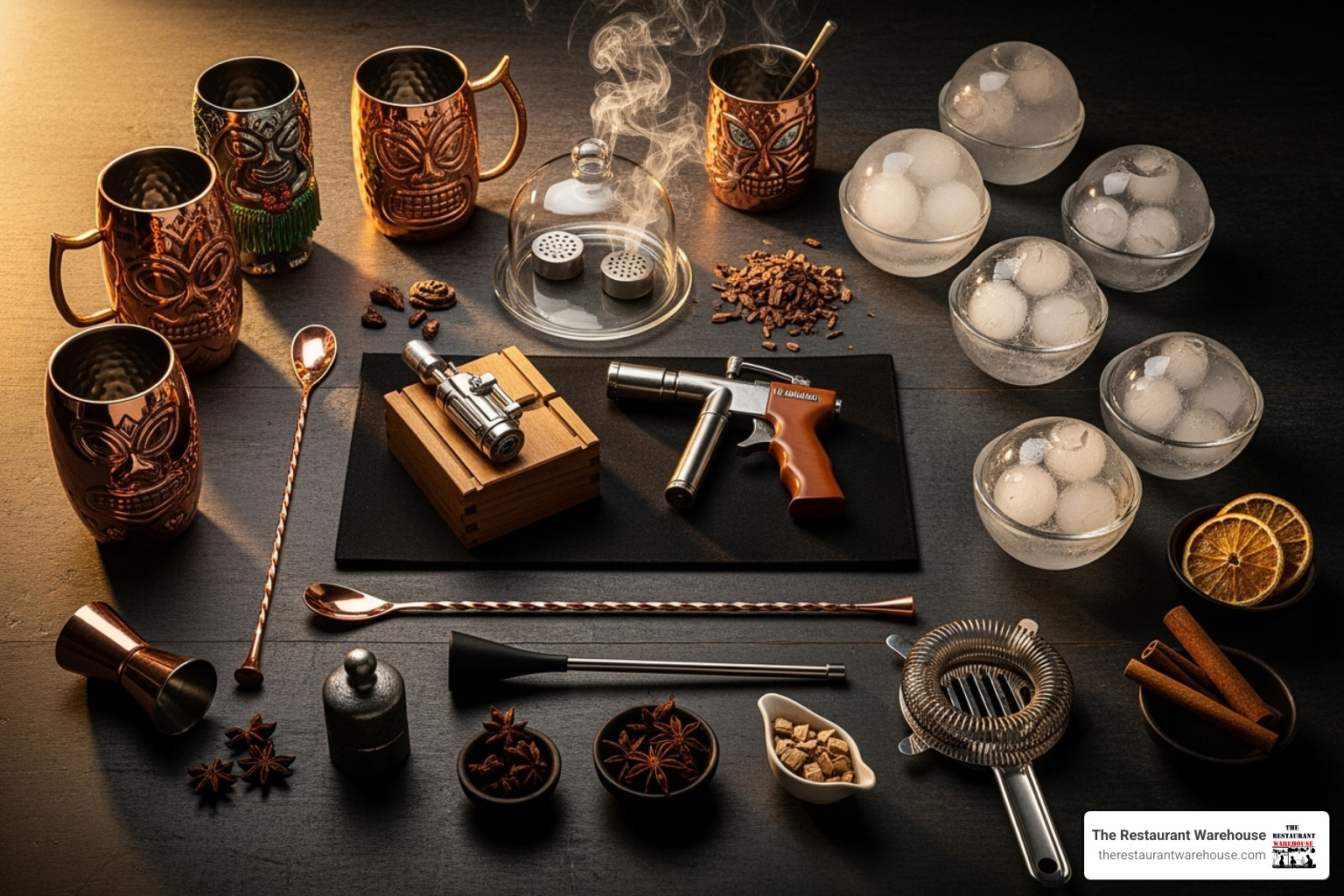
Once you have mastered the essentials, specialty barware is where you can truly lift your cocktail game. These unique items, found at a quality bar supply store near me, can transform a simple drink into an unforgettable experience and help your presentation stand out.
- Tiki Mugs: These ceramic, Polynesian-inspired mugs instantly create a tropical vibe for drinks like Mai Tais and Zombies. They also standardize volume for complex multi-ingredient builds.
- Copper Mugs: Famous for serving Moscow Mules, copper mugs conduct temperature exceptionally well, keeping drinks ice-cold in a way that standard glassware cannot. Choose food-safe, lined copper to avoid reacting with acidic ingredients.
- Unique Ice Molds: Go beyond standard cubes with molds for large spheres or other shapes. This slow-melting ice is perfect for spirit-forward cocktails, as it minimizes dilution while adding visual flair. Clear ice molds take your presentation even further.
- Cocktail Smokers: These devices infuse cocktails with aromatic smoke from wood chips, adding complex flavor and dramatic presentation, especially for whiskey-based drinks. Always follow manufacturer guidance for ventilation and chip type.
- Bitters Bottles and Atomizers: For precision and presentation, bitters bottles allow for controlled dashing, while atomizers can apply a fine mist of vermouth for the perfect dry martini. They also help control waste and improve consistency.
- Rimmers and Dehydrated Garnishes: Salt, sugar, and spice rimmers, along with dehydrated citrus wheels, streamline service and add menu-worthy polish.
Specialty barware also shines in themed service. Tropical service calls for tiki mugs and swizzle sticks; a speakeasy setup benefits from Nick & Nora glasses, atomizers, and cut-glass decanters. Many suppliers offer seasonal items, allowing you to keep your bar setup fresh and exciting for holidays and limited-time menus.
Budget and ROI Tips
- Start with one or two hero pieces that fit your signature cocktails.
- Consider durability—select items that can withstand frequent handling.
- Test guest response on a small scale before rolling out across your menu.
To showcase these unique pieces, consider the right setting. Our guide to Perfect Pub Tables can help you design a space worthy of your creations: https://therestaurantwarehouse.com/blogs/restaurant-equipment/perfect-pub-tables.
Level Up Your Skills: Learning Bartending Techniques
Having the right tools from your local bar supply store near me is only the first step. Mastering proper bartending techniques is what truly lifts your craft. Every movement has a purpose that impacts the final drink, from how long you stir to the way you shake and strain.
Shaking vs. Stirring
- Shake when your recipe includes citrus, dairy, egg white, or ingredients that benefit from aeration. Aim for 8–12 seconds with hard, controlled shakes to chill, dilute, and incorporate properly.
- Stir spirit-forward cocktails like a Manhattan, Martini, or Old Fashioned. Use a gentle, consistent motion for 20–30 seconds to chill and dilute without adding air bubbles, yielding a silky texture and clear appearance.
Measuring and Consistency Accurate measuring is non-negotiable for balance. Use jiggers with clear internal markings to hit specs quickly. Consistency is essential for repeatable quality across multiple rounds and multiple bartenders.
Straining and Texture Double-strain sours and shaken cocktails with fruit or herbs to remove small shards of ice and pulp. For stirred drinks, a julep strainer in a mixing glass gives a pristine pour without over-dilution.
Ice and Dilution Ice is an ingredient. Larger cubes dilute more slowly; cracked ice chills faster but increases dilution. Know your ice, and choose the cube shape and size that support your desired texture and drink strength.
Garnishing and Aromatics Express citrus oils over the glass to add a powerful aromatic layer, then either rest the peel on the rim or drop it into the drink. Fresh herbs should be clapped or gently slapped to awaken aromatics without shredding.
Learning Resources
- Bartending blogs and video tutorials from industry professionals can demonstrate mechanics, timing, and body movement.
- Classic cocktail recipe books provide historical context, substitution ideas, and spec variations.
- Educational resources from accredited institutions offer an evidence-based foundation for technique and flavor pairing. For example, The Culinary Institute of America provides excellent technical insights into the chemistry and craft behind great cocktails, offering professional development for serious bartenders.
Practice Framework
- Start with a core family: sours, spirit-forward stirred, and highballs.
- Practice each family with a stopwatch to understand timing and dilution.
- Keep a log of specs, ice type, dilution, and tasting notes so improvements are trackable.
Developing these skills will give you the confidence to move from following recipes to creating your own signature drinks. To create the perfect environment for practicing your newfound skills, explore our Restaurant Furniture Supply Guide: https://therestaurantwarehouse.com/blogs/restaurant-equipment/restaurant-furniture-supply-guide.
CTA: Building a training set for your team or bar program? Contact us for a bulk toolkit bundle and wholesale pricing custom to your menu.
Frequently Asked Questions about Bar Supplies
When people search for a bar supply store near me, certain questions come up repeatedly. Here are the answers to the most common inquiries about bar tools and supplies, with practical tips to help you buy smart and maintain your gear.
What's the difference between a Boston shaker and a Cobbler shaker?
The main difference lies in design and user experience. The Boston shaker is a two-piece set (tin and glass/tin) favored by professionals. It creates a superior seal, is highly durable, and allows for rapid chilling. However, it requires a separate strainer. The Cobbler shaker is a three-piece, all-in-one unit with a built-in strainer, making it very beginner-friendly. Its downsides are that the built-in strainer can clog with fruit or herbs, and the cap can sometimes become difficult to remove when cold.
Do I really need different glasses for different cocktails?
Yes, proper glassware genuinely improves the drinking experience. The shape of a glass is designed to improve a cocktail's specific characteristics. For example, a coupe's wide bowl releases the aromatics of a drink served up, while a tall highball glass preserves carbonation in mixed drinks. The stem on a martini glass prevents your hand from warming a chilled cocktail. While you do not need every type of glass, starting with the basics—coupe, rocks, and highball glasses—will dramatically lift your home bar.
Can I buy professional-grade bar tools for my home bar?
Absolutely, and it is highly recommended. Professional-grade tools are widely available to the public at any good bar supply store near me or online. The benefits are significant: they offer far greater durability (typically made of high-quality stainless steel), better performance (more accurate measurements, better seals), and superior longevity. Investing in professional tools is often more economical in the long run, as you will not need to replace them every few years.
What materials should I look for in bar tools?
Opt for 304 or 18/8 stainless steel for tools like shakers, jiggers, and strainers. It resists corrosion, holds up to frequent washing, and maintains a polished look. For muddlers, wood and stainless steel both work; choose a flat end to express oils without shredding herbs.
How many glasses should I buy to start?
For home use, a practical starter set is 6 highballs, 6 rocks, and 4–6 coupes or Nick & Noras. For small venues, consider par levels that cover your max service window plus a 20–30% buffer for breakage and dishwashing cycles. Standardizing your glass line simplifies reordering and storage.
Are dishwasher-safe labels reliable for glassware?
Often, yes—but check specifics. Tempered glass fares better in dishwashers. Avoid sudden temperature shocks and allow glasses to cool before service. Inspect regularly for chips and retire damaged pieces immediately.
How do I keep my tools looking new?
Rinse tools after acidic ingredients, hand-dry when possible, and polish stainless steel occasionally to remove water spots. Replace fine mesh strainers if they warp or fray—once the mesh is bent, it will not filter evenly.
Do I need a fine mesh strainer for every cocktail?
Not for every drink, but you will want one for shaken cocktails with citrus, fresh fruit, or muddled herbs. Double-straining creates a refined texture and a clean presentation, especially for sours and daiquiri variations.
What are some smart upgrades after the basics?
Add a mixing glass for stirred drinks, a Japanese-style jigger for precise specs, bitters bottles for controlled dashes, and a directional freezer mold for clear ice spheres and cubes. From there, consider copper mugs, cocktail smokers, or tiki mugs to match your menu.
Can I standardize tools across multiple bartenders?
Yes. Invest in duplicate sets of high-traffic tools (jiggers, spoons, strainers), consistent glassware lines, and labeled storage. Standardization boosts speed, training, and quality control.
Ready to upgrade your bar setup? Contact us today to explore our professional-grade bar supply options and find out how The Restaurant Warehouse can help you create the perfect mixing station at wholesale prices.
Conclusion
We have covered everything from the essential tools every bartender needs to the specialty items that turn a drink into an experience. Building a great bar setup starts with understanding that quality matters. A professional-grade shaker, a precise jigger, and the correct glassware all play a crucial role in crafting consistently delicious cocktails.
Finding the right bar supply store near me is a critical step. A dedicated supplier provides access to durable, high-performance equipment and expert advice that you will not find at a general retailer. Investing in quality tools and unique items like copper mugs or a cocktail smoker allows you to express your creativity and lift every drink you serve.
Of course, tools are only half the equation. Mastering proper techniques—like knowing when to shake versus stir, how long to stir, and when to double-strain—is what brings it all together. This combination of quality supplies and learned skill is the secret to exceptional bartending, whether you are entertaining at home or managing a full bar program.
At The Restaurant Warehouse, we understand the importance of quality equipment at prices that make sense. We supply foodservice supplies at lower prices by cutting out the middleman. Our mission is to provide the industry with affordable, wholesale pricing so you can focus on creating amazing experiences for your guests.
Whether you are stocking a busy bar or building your dream home setup, everyone deserves access to professional-quality tools. Contact us today to see how our wholesale pricing can help you get the supplies you need. For affordable pricing on all your bar and restaurant needs, check out The Restaurant Warehouse's collection of Bar Stools for Restaurants and more: https://therestaurantwarehouse.com/blogs/restaurant-equipment/bar-stool-for-restaurant.
CTA: Have a menu in mind but not sure which tools and glassware to prioritize? Contact us for a custom, wholesale-priced package that fits your style, service volume, and budget.
About The Author

Sean Kearney
Sean Kearney is the Founder of The Restaurant Warehouse, with 15 years of experience in the restaurant equipment industry and more than 30 years in ecommerce, beginning with Amazon.com. As an equipment distributor and supplier, Sean helps restaurant owners make confident purchasing decisions through clear pricing, practical guidance, and a more transparent online buying experience.
Connect with Sean on LinkedIn, Instagram, YouTube, or Facebook.