


Cooking Up Success: Finding the Right Commercial Kitchen Solutions
Why Commercial Kitchen Solutions Drive Restaurant Success
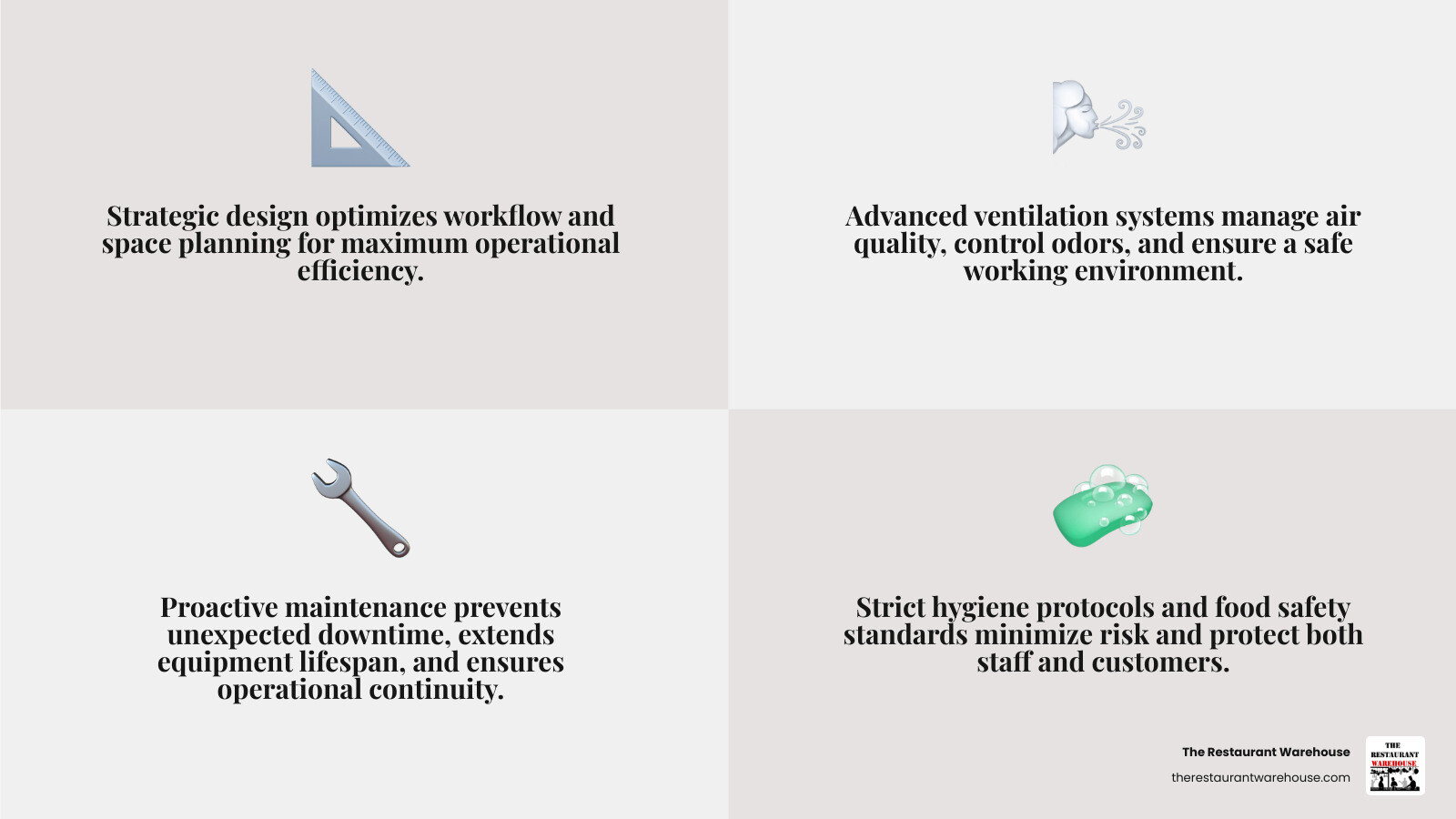
Commercial kitchen solutions represent the complete ecosystem of services that transform a foodservice operation from chaotic to streamlined. These integrated systems go far beyond individual components, creating efficient, safe, and profitable kitchen environments. Core solutions include strategic design and layout for workflow optimization, advanced ventilation for air quality management, custom fabrication of stainless steel surfaces, and proactive maintenance programs with 24/7 emergency support.
When you're in the foodservice business, your kitchen is the backbone of your operation. Routine, efficient kitchen maintenance is critical to prevent system failures, unexpected downtime, and food safety concerns. The right approach to kitchen solutions can mean the difference between struggling to keep up and thriving in a competitive market.
The restaurant industry faces intense competition. Established solution providers have served over 170 clients and completed 302 projects, demonstrating the critical need for comprehensive kitchen systems rather than piecemeal approaches.
Modern foodservice operations require more than just functional spaces—they need optimized environments that maximize efficiency while ensuring safety and compliance. Whether you're launching a new restaurant or upgrading an existing facility, integrated solutions can drive your success.
Ready to transform your kitchen operation? Contact our team to discuss your specific needs.
The Blueprint for Success: Strategic Commercial Kitchen Design
When you step into a well-designed commercial kitchen, you can feel the difference. Everything flows naturally, staff move with purpose, and orders are filled efficiently. That's the power of strategic commercial kitchen solutions that put workflow optimization at the heart of every decision.
The process begins with understanding how your team works. We analyze your operation to identify bottlenecks and eliminate wasted steps, ensuring every square foot works for your business. Smart design can significantly reduce the distance staff travel during a shift, making their jobs easier and more enjoyable. When your team isn't fighting their workspace, they can focus on creating amazing food experiences.
What sets professional commercial kitchen solutions apart is adaptability. Construction can reveal unexpected challenges, or your vision may evolve. The best providers build flexibility into their process from day one. This is especially crucial for custom fabrication. Every kitchen has unique needs, from special shelving for an awkward corner to custom-sized workstations. Instead of forcing your operation to fit standard sizes, smart design makes the space work for you.
Custom Fabrication and Designing for Diverse Industries
Custom stainless steel fabrication is about creating an environment where hygiene and efficiency work hand in hand. The non-porous nature of stainless steel means bacteria can't find places to hide, simplifying cleaning routines and upholding health standards. Custom sizing eliminates the small frustrations that add up over time, such as workstations at the wrong height or poorly positioned sinks. The ergonomic benefits lead to less fatigue, fewer injuries, and higher job satisfaction—all of which impact your bottom line.
Every foodservice operation is different. A high-volume restaurant needs a design that prioritizes speed, while a hospital cafeteria requires a layout that supports strict hygiene standards and specialized dietary needs. Hotels often manage multiple dining concepts from shared kitchen spaces, demanding flexible zones that can adapt throughout the day. The rise of cloud and central kitchens has introduced new challenges, focusing on optimizing for packaging and streamlined pickup processes. Even food trucks present the ultimate space optimization puzzle, where every inch matters.
The key to success across these industries is scalability. Smart design decisions made today will support your growth tomorrow, whether you're adding menu items, increasing volume, or expanding to new locations. The most successful kitchen designs recognize that every operation is unique, and the best solutions accept these differences.
Detailed planning guidance is essential to ensure you don't miss any critical details during the design phase.
The science of flow: zoning, pathways, and contamination control
A high-performing kitchen begins with clear zoning and movement logic. Core zones typically include receiving, dry/cold storage, prep, cook, plating/expediting, service handoff, warewashing, and waste. Effective layouts separate clean and dirty pathways so deliveries, trash runs, and dish returns never cross with ready-to-eat food pathways. Doorways, pass-throughs, and corridor widths should be sized for real traffic, not idealized drawings, so carts and staff can move without bottlenecks during peak service.
Design should also align with food safety best practices by supporting a logical product flow: receive, store, prep, cook (if applicable), hold, serve. Surfaces, handwash access, and clear signage reinforce that flow. Thoughtful placement of handwash stations, prep sinks, and sanitizing areas reduces cross-contamination risk without slowing production.
Data-driven layout decisions
Great layouts are measurable. Time-and-motion studies, station heat maps, and order mix analysis inform where stations belong and how far staff should travel. Many operators track the following to validate a design:
- Average steps per ticket by role (line cook, runner, dishwasher)
- Order cycle time from fire to pass
- Dwell time at chokepoints like expo or warewashing return
- Peak-hour throughput (tickets per 15 minutes) versus staffing levels
With those insights, you can position stations to shave seconds off each ticket, eliminate backtracking, and balance the line. Whether you prefer a galley line, island, or horseshoe layout, the goal is the same: keep the team within ergonomic reach of the items they touch most, reduce handoffs, and ensure clean sightlines for communication.
Ergonomics that prevent fatigue and injury
Ergonomics multiply the value of smart layout. Counter heights should match task type and staff anthropometrics, heavy-lift items belong at waist height, and frequently used tools must land in primary reach zones to eliminate unnecessary bending or twisting. Rounded (radiused) corners, coved upstands, and marine edges on stainless work surfaces reduce injury risk and make cleaning faster. Anti-fatigue mats in the correct durometer can cut end-of-shift strain and improve balance in wet areas.
Training is part of ergonomics, too. Standardized mise en place diagrams and labeled storage reduce mental load and misplacement. When every station is designed and documented as a repeatable system, new hires ramp faster and teams hold consistent standards across shifts and locations.
Custom stainless details that pay dividends
Custom stainless elements—fitted shelving, integrated drainboards, custom dish drop chutes, and undershelf bracing—turn odd corners and tough-to-use gaps into productive space. Welded-in-place components reduce seams where debris can accumulate, while removable panels and thoughtful access points make routine cleaning quicker. The result is a cleaner, safer, more durable environment with less time lost to scrubbing or rework.
Industry snapshots: how design goals differ
- High-volume QSR: Prioritize fast handoffs and redundant lines to absorb spikes; keep packaging and sauces within arm's reach of expo.
- Hospital/healthcare: Separate allergen and therapeutic diet prep, increase handwash access, and design for intensive sanitation turnover.
- Hotels/resorts: Shared production with flexible zones that pivot between breakfast, banquets, and late-night service; efficient banquet plating corridors are critical.
- Cloud/central kitchens: Optimize for order assembly, sealing, labeling, and dispatch; streamline courier pickup lanes to avoid congestion.
- Mobile/compact: Every inch matters; clever vertical storage, fold-away surfaces, and multipurpose stations prevent traffic jams.
Modeling capacity and labor
Before construction, test your concept with simple capacity models. Define target ticket times, peak-hour volume, and station staffing; then simulate a rush using your menu mix. If trays stack at warewashing or tickets pile at expo, adjust the plan on paper first. A few inches of counter, one additional pass shelf, or a shifted handoff window can save minutes during a surge.
Ready to see how strategic design can transform your operation? Contact our team to explore custom solutions that fit your unique needs. If you're mapping a multi-unit rollout, our team can help you standardize station specs and documentation so future locations open faster and ramp more predictably. Book a quick scope call at https://therestaurantwarehouse.com to get started.
Clearing the Air: Advanced Ventilation and Safety Solutions
Imagine a commercial kitchen where the air feels heavy and greasy surfaces gleam under the lights. This scenario is what proper ventilation prevents. As part of commercial kitchen solutions, managing air quality isn't just about comfortit's about creating a safe, efficient workspace that protects your team and your business.
Hot, greasy, and steamy air creates serious problems if not managed correctly. Advanced ventilation systems are a cornerstone of comprehensive kitchen solutions, ensuring clean air circulation while maintaining optimal working conditions. Effective ventilation is your primary defense against fire hazards. By efficiently capturing and removing grease-laden air, a good system reduces accumulation in ductwork, lowering fire risk.
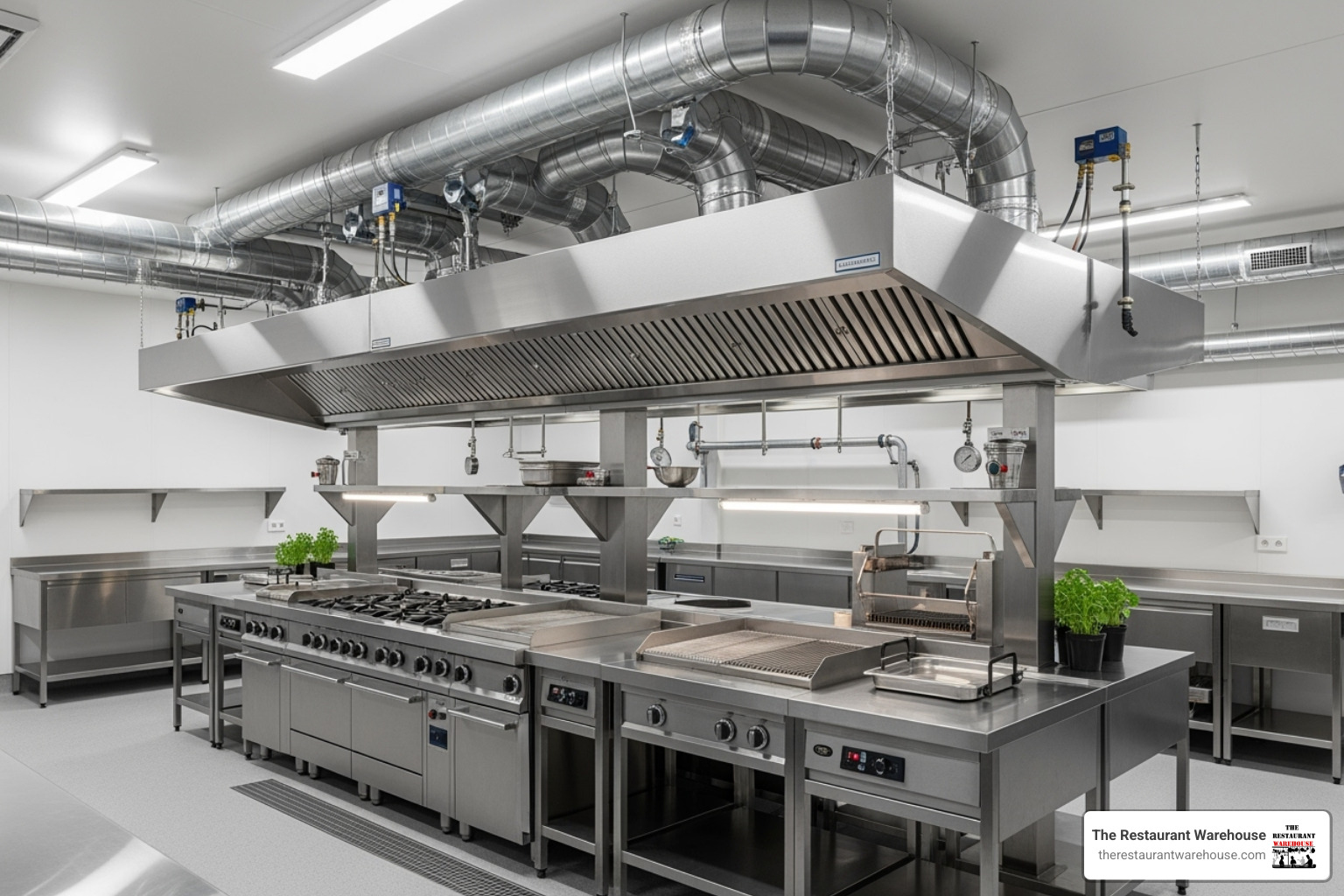
Beyond safety, proper air treatment significantly reduces odors discharged into the environment, preventing neighbor complaints. For comprehensive guidance on facility requirements and safety protocols, the FDA Food Code 2022 provides authoritative standards to ensure your operation meets all regulatory requirements.
Modern Ventilation and Exhaust Treatment
Not all hood systems are the same. Type 1 hoods manage grease and smoke from high-heat cooking, while Type 2 hoods handle steam and heat from non-grease activities. Installing the correct type is crucial for compliance and performance. Modern filtration technology has also revolutionized grease management. Innovative filters can capture up to 98% of airborne grease particles, dramatically reducing ductwork buildup and saving up to 75% in hood cleaning expenses.
Innovations in exhaust air treatment offer even greater benefits. Ozone technology, for example, breaks down grease and odor compounds at a molecular level, neutralizing them before they exit your facility. This process also makes grease particles "quick-dry," preventing them from sticking to ductwork and extending the time between deep cleanings. Automated cleaning systems offer continuous maintenance without harsh chemicals, simplifying operations and creating healthier work environments.
The Rise of Ventless Kitchen Solutions
Ventless technology is one of the most exciting developments in modern kitchen design. These systems eliminate the need for traditional ductwork, offering unprecedented flexibility in layout and location. Businesses can now operate in spaces where conventional ventilation would be impossible or too expensive to install. Installation costs drop significantly without extensive ductwork and roof penetrations.
While not suitable for every application, ventless solutions are ideal for operations with limited grease production, facilities in challenging locations, or businesses seeking maximum layout flexibility. This approach represents a fundamental shift in how we think about kitchen ventilation, making professional-grade solutions more accessible.
Our team can help you explore how these innovations can fit into your budget, ensuring your upgrades are both effective and financially viable.
Ready to breathe easier? Contact our ventilation specialists today to design a system that keeps your kitchen running safely and efficiently.
Maximizing Uptime: Proactive Maintenance and Hygiene Protocols
It's your busiest night, and a critical system fails. The kitchen fills with smoke, and you're forced to turn customers away. This nightmare scenario is why proactive maintenance isn't just smartit's essential for survival. Commercial kitchen solutions that prioritize preventive care transform potential disasters into manageable, scheduled service windows.
System failures don't wait for convenient times. Smart operators partner with maintenance professionals who understand that every moment of downtime means lost revenue. Think of maintenance as insurance for your operation. Just as a car needs regular oil changes, your kitchen systems need consistent attention to perform reliably. When your kitchen systems fail, your entire business stops.
The Value of a Maintenance Program and Hygiene Standards
A structured maintenance program offers predictability. Instead of wondering when something will break, you can service each component before problems arise. Scheduled inspections by qualified technicians identify potential issues long before they become expensive failures. This proactive approach extends the lifespan of your systems, allowing you to get more value from your initial investment and plan for replacements on your own timeline.
Emergency services available 24/7 provide a crucial safety net. When unexpected issues arise, immediate access to technicians means minimal downtime. The ROI of maintenance becomes clear when you consider the true cost of downtimelost revenue, wasted food, and emergency repair premiumswhich far exceeds the predictable cost of a maintenance plan.
Food safety is the foundation of your business. When maintenance programs incorporate hygiene protocols, they create multiple layers of protection. Automated cleaning systems can maintain consistent hygiene without harsh chemicals, reducing reliance on manual cleaning. This focus on non-toxic cleaning aligns with modern workplace safety standards. Well-maintained systems also prevent cross-contamination by ensuring proper airflow and surface integrity. Your brand reputation depends on consistent food safety, and professional maintenance helps protect it.
Building a practical preventive maintenance cadence
The best programs are simple to follow and easy to audit. Start by inventorying all major systems, assigning each a unique ID, and mapping them to a service cadence. A typical framework looks like this:
- Daily: Visual checks for leaks, unusual noise, abnormal heat, and airflow issues; wipe-downs of stainless surfaces; verification of handwash and sanitizing stations.
- Weekly: Clean and sanitize drains and floor sinks; inspect seals, gaskets, and caulking; test emergency lighting and alarms at opening.
- Monthly: Inspect ventilation capture performance, change or clean pre-filters where applicable, verify makeup air balance and kitchen pressure relationships.
- Quarterly: Deep-clean hard-to-reach areas; check fasteners, hinges, and moving parts; review training gaps and retrain on cleaning SOPs.
- Semiannual: Comprehensive inspection of ventilation systems and critical safety controls; recalibrate sensors; validate logs for compliance.
- Annual: Full program review and budget planning for replacements, upgrades, and code-required improvements.
Assign each task to a role and shift, not just a day. Clear ownership prevents gaps, and brief line-ups ensure everyone knows whats due before service. Keep a digital or binder-based log at the managers station for quick verification during inspections.
Hygiene that holds up under peak pressure
Cleanliness must withstand a Friday rush, not just a slow afternoon. Standardize color-coded tools for raw, ready-to-eat, and allergen zones, and store them in labeled, wall-mounted holders so they return to the same location after every shift. Use checklists that focus on food-contact surfaces, high-touch handles, drains, and handwash areas. Include time-stamped signoffs and supervisor verification to keep documentation airtight.
When combined with thoughtful design (integrated backsplash coved to the wall, radiused edges, and welded seams), daily cleaning becomes faster and more effective. Team members can hit all critical points in minutes, and closing managers can spot whats missing at a glance.
Measuring ROI and reducing risk
Maintenance is an investment with a measurable return. Consider a location that averages $1,200 in revenue per peak hour. A single 3-hour outage can cost $3,600 in lost sales, not counting food waste and labor paid during downtime. A well-built preventive program might cost $250$400 per month but can avert multiple outages per year, paying for itself many times over. Add insurance benefits from documented programs and the avoided reputation damage from canceled services, and the financial case becomes clear.
Track a few simple KPIs monthly:
- Unplanned downtime hours
- Average response time for urgent calls
- Corrective work orders per 1,000 operating hours
- Compliance log completion rate
- Cleaning audit scores and re-clean rates
Tie these to bonus structures or team incentives to keep everyone invested in the results.
Emergency playbooks that minimize chaos
Even with great prevention, incidents happen. Define a short, clear protocol for late-night events:
1) Stabilize: Power or gas isolation if required, contain spill, trigger ventilation or air purge if appropriate. 2) Delegate: Assign one lead to manage guests, one to secure the line, and one to contact service. 3) Communicate: Update managers, log the event, and post an ETA on recovery steps. 4) Recover: Stage a limited menu or reroute production to maintain partial service where possible.
When your team knows exactly what to do, you reduce risk and protect revenue.
Ready to protect your investment with a comprehensive maintenance program? Contact our team to discuss how proactive care can keep your operation running smoothly and profitably. If youre building a plan across multiple locations, we can help you standardize tasks, logs, and KPIs so every site performs to the same high standard.
Your Partner in the Kitchen: Support, Financing, and Future-Proofing
Running a successful foodservice operation means having the right partner by your side—one who understands that the relationship doesn't end after installation. We've built our reputation on strong relationships that go far beyond project completion. Our commitment includes comprehensive after-sales support and in-house warranties that protect your investment and provide peace of mind.
We know that budgeting for a commercial kitchen solutions project can feel overwhelming. That's why we work closely with you to find affordable options that fit your financial framework. Our project management expertise means we're there to guide you through every challenge.
Navigating Financials and Embracing the Future
Securing the right financial solutions can make the difference between dreaming about your ideal kitchen and building it. We provide detailed information on affordable options and flexible financing to help you find the approach that works best for you. Our in-house warranties offer crucial coverage, minimizing downtime and the financial impact of unforeseen issues. Our experienced team also works diligently to manage lead times, ensuring timely delivery and installation.
The future of commercial kitchen solutions is being shaped by smart technology. We're moving toward kitchens where remote monitoring and data analytics provide valuable insights into operational efficiency. Smart kitchen management systems can track everything from energy usage to maintenance schedules, helping you make informed decisions that improve your bottom line.
Sustainability has also become essential. Innovations like biodegradable filters and energy recovery systems are becoming standard, reflecting a commitment to environmental responsibility. These advancements promise not only more efficient and safer kitchens but also more sustainable business models. Staying ahead of these changes positions your business for long-term success.
Ready to future-proof your operation? Contact us today to discuss how emerging technologies can transform your kitchen's performance and profitability.
Frequently Asked Questions about Commercial Kitchen Solutions
When you're considering upgrading your kitchen, it's natural to have questions. We're here to help you steer commercial kitchen solutions with confidence.
What are the core services of a commercial kitchen solutions provider?
A comprehensive provider offers a complete package for your kitchen. This includes professional design and layout for workflow optimization, custom fabrication of stainless steel surfaces and workstations, advanced ventilation and exhaust treatment systems, proactive maintenance programs with 24/7 support, and full project management to ensure your project stays on track and on budget.
How do professional kitchen solutions improve food safety?
Food safety is built into the design. Professional solutions use hygienic, non-porous stainless steel surfaces that resist bacterial growth and are easy to sanitize. Advanced ventilation plays a key role by removing airborne contaminants and managing grease buildup, which is a potential fire hazard. A well-designed system, compliant with food safety standards, makes it easier for your team to maintain high standards of cleanliness and safety.
What are the main benefits of a planned kitchen maintenance program?
A planned maintenance program is about prevention. It helps you avoid unexpected downtime and costly emergency repairs by having qualified technicians service your systems proactively. This extends the lifespan of your installations and ensures they operate at peak efficiency. The financial benefits are clear: you save money on reactive fixes and protect your revenue. A well-maintained kitchen is also a safer kitchen, giving you and your staff valuable peace of mind.
Don't wait for a breakdown to think about maintenance. Book a consultation to learn how our proactive maintenance programs can save you money and stress.
Conclusion
Running a successful foodservice business is about creating a kitchen where everything works together seamlessly. Commercial kitchen solutions are the foundation of a thriving operation that balances culinary excellence with efficiency, safety, and profitability.
Think of your kitchen as the heart of your business. Strategic design creates the rhythm for smooth workflow. Custom stainless steel fabrication provides the durability and hygiene your operation demands. Advanced ventilation systems keep the air clean and safe. And proactive maintenance programs act like regular health check-ups, preventing costly breakdowns.
What makes these solutions powerful is their integration. This holistic approach is what transforms a basic kitchen into a competitive advantage. We've seen this change for 170 clients across 302 completed projects. Whether for a busy restaurant, a hospital, or a cloud kitchen, the principles are the same: thoughtful integration leads to exceptional results.
The investment in comprehensive commercial kitchen solutions pays dividends. Beyond preventing costly repairs and downtime, these systems can deliver a significant return on investment through improved efficiency and safety. They create environments where your team can work more effectively, your operations run more smoothly, and your business can focus on what matters most—serving exceptional food to satisfied customers.
At The Restaurant Warehouse, we understand that every kitchen is different, but the goals of efficiency, safety, and profitability are universal. Our comprehensive approach ensures your kitchen becomes a strategic asset.
Ready to transform your kitchen into a competitive advantage? Contact our team today to discuss how our integrated solutions can drive your success.
For more insights on creating your ideal kitchen environment, our team can provide comprehensive guidance and show you how the right approach can lift your entire operation.
About The Author

Sean Kearney
Sean Kearney used to work at Amazon.com and started The Restaurant Warehouse. He has more than 10 years of experience in restaurant equipment and supplies. He graduated from the University of Washington in 1993. He earned a BA in business and marketing. He also played linebacker for the Huskies football team. He helps restaurants find equipment at a fair price and offers financing options. You can connect with Sean on LinkedIn or Facebook.
Leave a comment