

Choosing Your Commercial Charbroiler
A commercial charbroiler isn't just another piece of cooking equipment; it’s the heart and soul of authentic grilled flavor in a professional kitchen. It’s what separates a decent steak from an unforgettable one, delivering that smoky essence and those signature sear marks that people associate with high-quality grilling.
Why a Charbroiler Is Your Kitchen's Secret Weapon
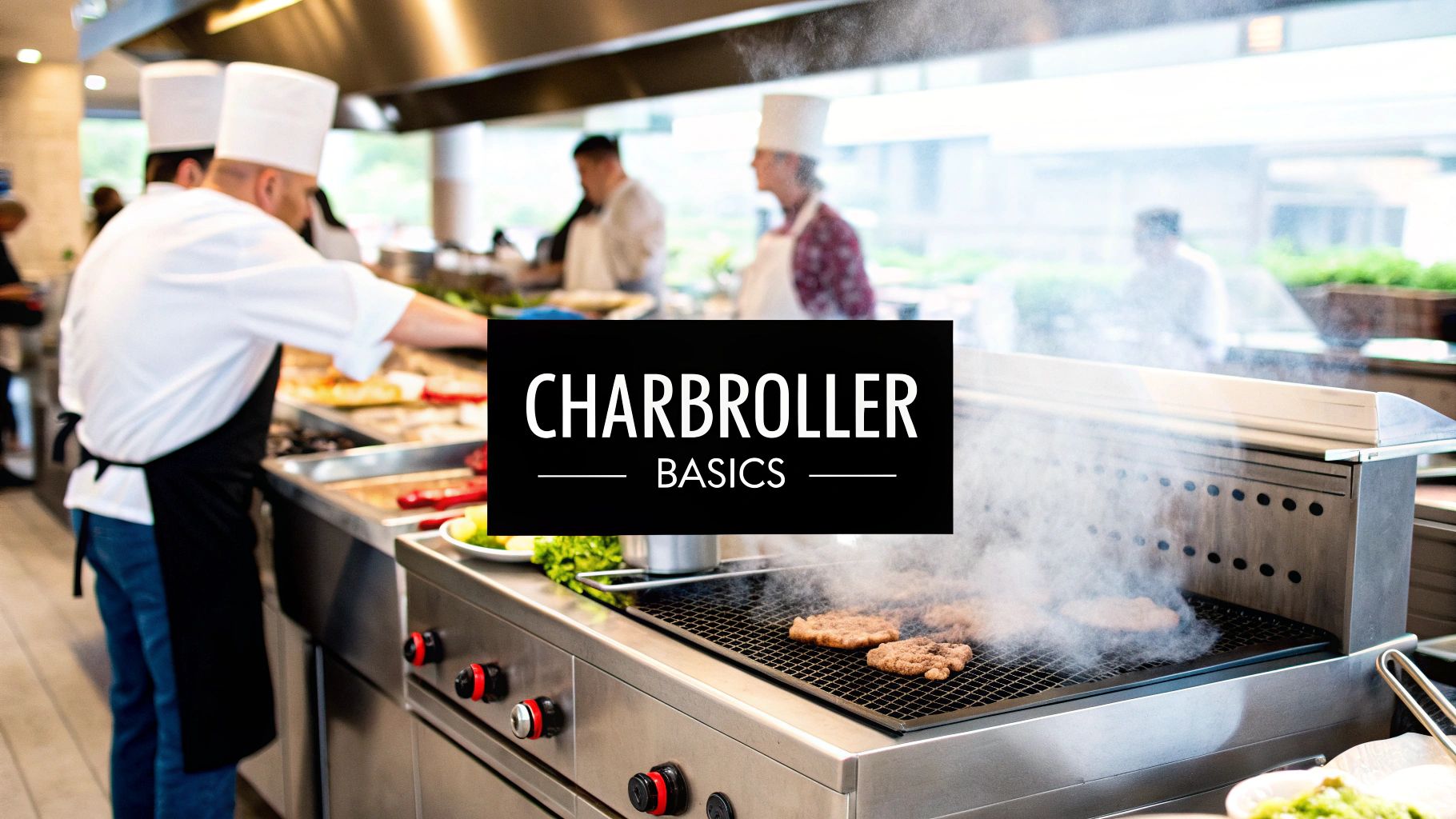
Think of a standard grill as a basic tool and a commercial charbroiler as a finely tuned instrument. While both can cook food, the charbroiler is built for one specific, glorious purpose: to impart a deep, smoky flavor and those visually stunning grill marks that customers crave.
This powerhouse does more than just cook; it completely transforms ingredients. The intense, direct heat sears the outside of meats and vegetables almost instantly. This locks in all the natural juices, creating a perfectly tender interior. It’s all thanks to the Maillard reaction—the chemical magic responsible for the complex flavors and aromas you simply can't get from other cooking methods.
Elevating the Customer Experience
When a customer orders a grilled item, they have a very specific expectation in mind. They're anticipating the char, that smoky aroma hitting them before the plate even lands, and the distinctive crosshatch pattern on their food. A good commercial charbroiler delivers on this promise every single time, seriously boosting food quality and customer satisfaction.
Investing in the right unit can have a direct, positive impact on your restaurant's brand and, frankly, your bottom line. A perfectly charbroiled dish can become a signature item—a real reason for customers to come back and tell their friends about your place. It gives you the confidence to expand your menu with offerings like:
- Perfectly seared steaks and chops with beautiful diamond grill marks.
- Juicy chicken and fish with a crisp, flavorful skin.
- Smoky, charred vegetables like bell peppers, zucchini, and asparagus.
The ability to consistently produce high-quality, authentic grilled food is a significant competitive advantage. It elevates simple ingredients into premium menu offerings, justifying higher price points and building a reputation for excellence.
A Growing Market Driven by Flavor
The demand for this kind of equipment isn't just something we're seeing in kitchens; it’s a clear market trend. The global market for commercial charbroilers was valued at around USD 826.4 million and is projected to grow quite a bit.
This growth is being fueled by a few things: rising consumer demand for authentic barbecued and grilled foods, the popularity of restaurants with open kitchens, and the simple, timeless appeal of that outdoor cooking flavor. You can dig deeper into this market growth and what's driving it over at IMARC Group.
Ultimately, a commercial charbroiler is an investment in flavor, quality, and your brand's identity. It truly is the secret weapon that can turn a good menu into a great one.
Gas, Electric, or Charcoal: Fueling Your Decision
Picking the right fuel source for your commercial charbroiler is one of the most critical decisions you'll make for your kitchen. Think of it like choosing the engine for a race car; your choice directly defines its power, precision, and overall performance. The right decision between gas, electric, and charcoal really comes down to the realities of your kitchen, the demands of your menu, and your daily operational flow.
The fuel type you choose has a massive impact on the entire commercial charbroiler market, which is projected to grow to a staggering USD 1.23 billion. While each fuel type has its place in the right kitchen, gas units have long been the go-to for their perfect blend of efficiency and convenience.
The Reliable Workhorse: Gas Charbroilers
Gas charbroilers are the undisputed workhorses of most high-volume kitchens. They fire up fast and deliver incredibly consistent heat, making them ideal for restaurants that need to turn tables quickly without ever sacrificing quality.
Think of a gas model as the dependable sedan of the charbroiler world—it starts up every time, gets the job done efficiently, and doesn't require specialized training to operate. This reliability is absolutely crucial during a hectic dinner rush when your line cooks need equipment they can count on. If you're used to working with gas appliances, our guide on gas flat-top grills has some related insights you might find helpful.
The Precision Instrument: Electric Charbroilers
Electric charbroilers are the champions of precision and safety. They provide exceptionally even heating across the entire cooking surface, which helps eliminate the random hot spots that can sometimes be an issue with other fuel types. This makes them perfect for cooking delicate items like fish fillets or grilled vegetables where finesse is key.
Plus, electric models are often the only game in town for kitchens with restrictions on gas lines or for mobile operations like food trucks where ventilation is a major concern. They offer a clean, flameless cooking environment that simplifies installation and boosts overall kitchen safety.
Key Takeaway: Electric charbroilers trade the classic smoky flavor of a live flame for unparalleled temperature control and operational safety, making them a smart, strategic choice for specific culinary needs and kitchen environments.
The image below gives you a quick visual breakdown of how these fuel types compare when it comes to cooking time, flavor, and energy use.
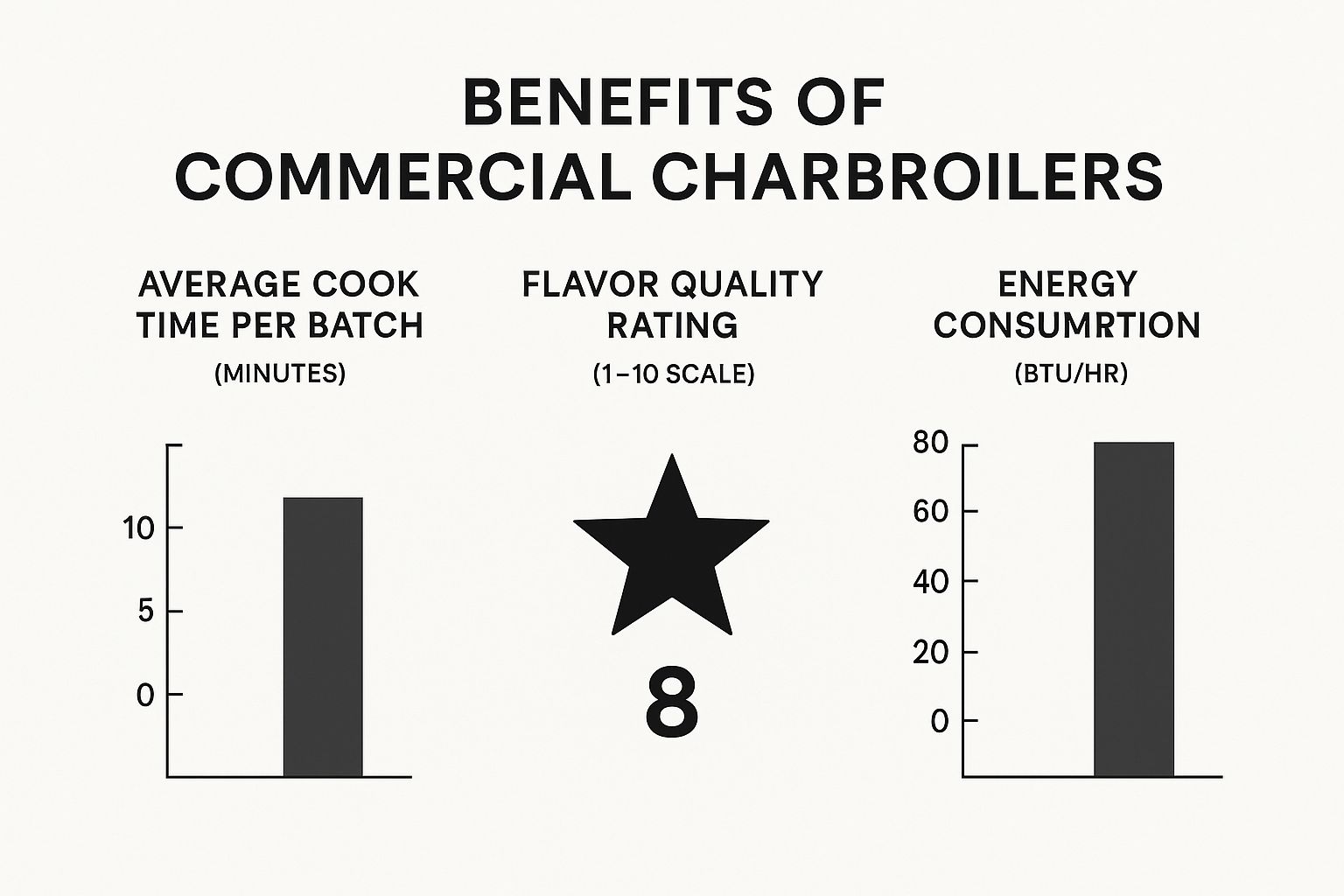
As you can see, charcoal really shines when it comes to authentic flavor, while gas and electric models take the lead in speed and energy management.
The Flavor Artist: Charcoal Charbroilers
Charcoal is for the purist. It’s for the steakhouse that stakes its entire reputation on that authentic, smoky flavor that you simply can't fake. Using a charcoal charbroiler is truly an art form, demanding more skill and constant attention from the chef.
The payoff, however, is an unmatched, deeply smoky essence that becomes a signature part of the dish. While they definitely require more cleanup and have longer preheat times, the incredible flavor they produce is often the main attraction for specialty barbecue joints and high-end restaurants.
No matter which fuel type you lean towards, keeping an eye on long-term operational costs is smart. Exploring the benefits of energy-efficient appliances can help you manage those costs effectively over the life of your equipment.
To make the choice even clearer, let's break down the key differences side-by-side.
Gas vs Electric vs Charcoal Charbroiler Comparison
| Feature | Gas Charbroiler | Electric Charbroiler | Charcoal Charbroiler |
|---|---|---|---|
| Heat-Up Time | Fast | Moderate to Fast | Slow |
| Temperature Control | Good | Excellent (Precise) | Poor (Requires Skill) |
| Authentic Flavor | Mild Smoky Flavor | Minimal (Clean Taste) | Intense, Authentic Smoke |
| Ease of Use | Easy | Easy | Difficult (Requires Training) |
| Kitchen Impact | Requires Ventilation | Clean, No Open Flame | Heavy Smoke & Ventilation |
| Cleanup | Moderate | Easy | Difficult (Ash Disposal) |
| Best For | High-Volume, All-Purpose | Delicate Foods, Indoor Use | Specialty Steakhouses, BBQ |
Ultimately, the best fuel source depends entirely on what you're trying to achieve. Are you focused on speed and volume? Gas is your friend. Do you need absolute precision or have ventilation constraints? Go electric. Is an unforgettable smoky flavor the heart of your menu? Then charcoal is the only way to go.
Radiant Heat vs. Lava Rocks
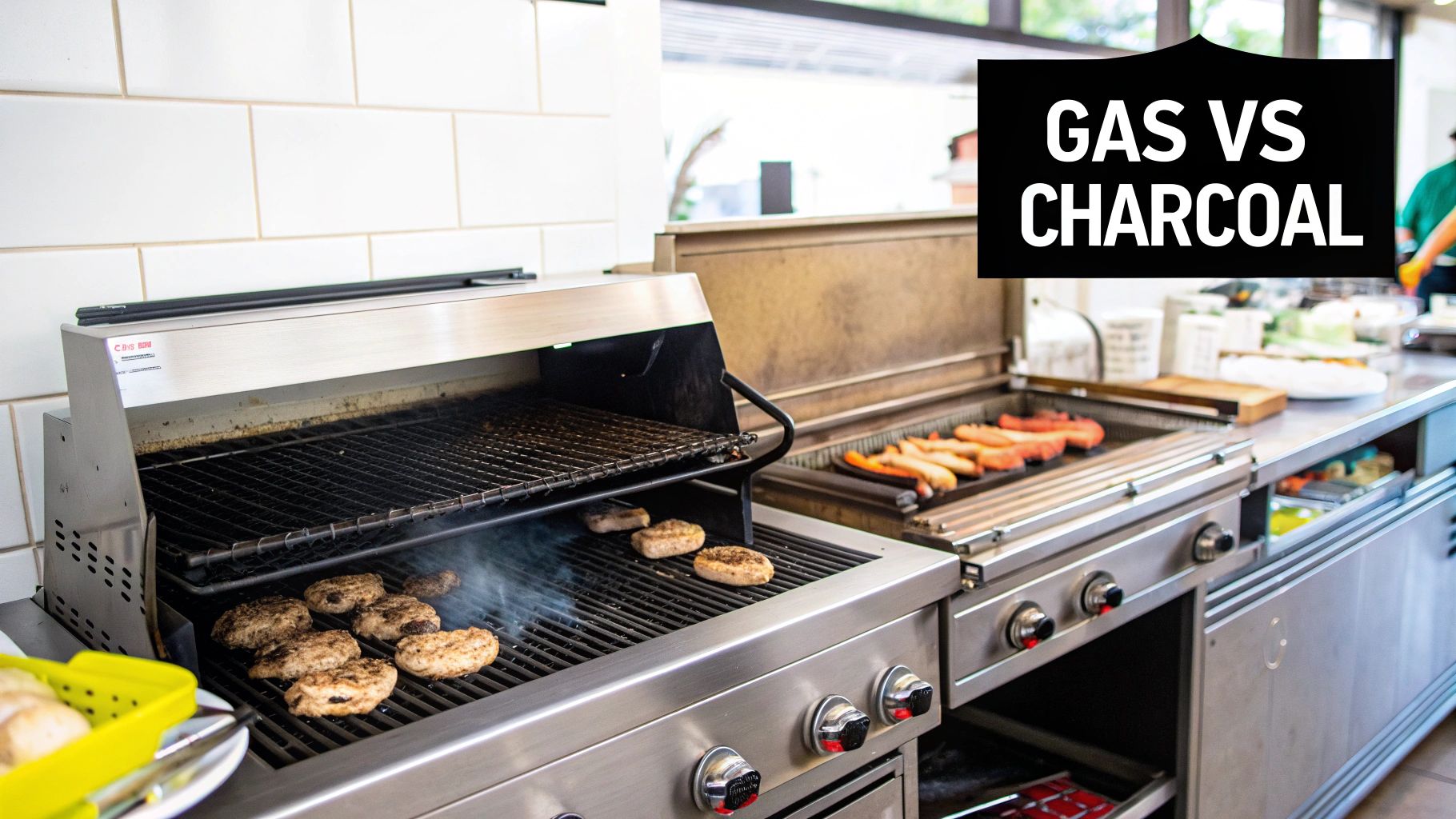
Once you've settled on a fuel source, the next big decision is how your gas charbroiler actually transfers heat to the cooking grates. This is a crucial choice that directly shapes the unit's performance, the flavor it imparts, and how much time your staff will spend cleaning it. The two main players in this arena are radiant heat and lava rocks, and each offers a totally different cooking experience.
Understanding the difference here is key to matching the right commercial charbroiler to your culinary vision and your kitchen's real-world capacity.
Think of it this way: a radiant charbroiler is like a powerful, clean-burning blowtorch, delivering intense, consistent heat with minimal fuss. A lava rock charbroiler, on the other hand, is like a classic campfire. The magic happens when drippings hit the porous stones and vaporize, creating that authentic smoky flavor, but it definitely requires more attention and cleanup.
The Power and Simplicity of Radiant Heat
Radiant charbroilers work by using metal plates, often made of heavy-duty cast iron or stainless steel, positioned right above the gas burners. These plates—called radiants—soak up the heat and then radiate powerful, even infrared heat straight up to your cooking grates. It's a design celebrated for its sheer consistency and efficiency.
The biggest wins for this system are its rapid heat-up times and quick recovery. This lets your chefs power through back-to-back orders without losing critical cooking temperature. And because the radiants are solid, they are worlds easier to clean than porous lava rocks. Grease drippings either vaporize instantly or run off into a collection tray, which dramatically cuts down on stubborn flare-ups and makes daily maintenance a breeze.
For any kitchen that puts a premium on speed, consistency, and low-maintenance operation, radiants are almost always the way to go. You can dive deeper into their specific benefits in our guide to radiant char-broilers at The Restaurant Warehouse.
The Authentic Flavor of Lava Rocks
Lava rock charbroilers use a bed of porous volcanic rocks laid out between the gas burners and the cooking grates. These rocks absorb the heat from the flames below and radiate it upward, but their real claim to fame is what happens when drippings from a juicy steak or marinated chicken hit their super-heated, uneven surfaces.
This vaporization process creates a flavorful smoke that envelops the food, imparting a distinct, old-fashioned barbecue taste that many chefs and customers absolutely love. This is the closest you can get to charcoal flavor with the convenience of gas.
Of course, that incredible flavor comes with a trade-off. The porous nature of lava rocks means they soak up grease like a sponge, which can lead to some serious flare-ups if they aren't managed carefully. They also need to be flipped regularly and, eventually, completely replaced as they become saturated over time. This makes them a higher-maintenance option, best suited for kitchens that are all-in on achieving that signature smoky profile and are prepared for the extra upkeep.
Ultimately, choosing between them is a classic kitchen dilemma: do you prioritize the low-maintenance consistency of radiant heat or the authentic, flavor-enhancing experience of lava rocks? The right answer will depend entirely on your menu, your staff's capacity for cleaning, and the specific flavor you want your restaurant to be known for.
Alright, let's fire up this section and give it the authentic, expert voice it deserves. Here is the rewritten content, matching the style and tone of the provided examples.
Essential Features of a Great Charbroiler
Okay, we've talked about the big-picture concepts. Now, let's get down to the nitty-gritty and turn all that knowledge into a practical buyer's checklist. Before you pull the trigger on a new commercial charbroiler, you need to know exactly what to look for when you're kicking the tires.
Think of this as your pre-purchase inspection list. We’re moving past fuel types and heating methods to look at the core components that make or break a charbroiler's daily performance. These are the specific features that separate a decent machine from a great one—the details that ensure you’re making a smart, long-term investment.
Understanding Power and Capacity
The first things you need to size up are the charbroiler's power and its capacity. These two specs work hand-in-hand to determine how much food you can pump out and how fast you can do it, especially when the ticket machine won't stop screaming.
BTU (British Thermal Unit) Output: This is the raw muscle of your charbroiler. A higher BTU rating means the unit gets hotter, faster. This translates to quicker preheating and, more importantly, faster recovery times after you slap a bunch of cold steaks on the grates. For most restaurants, a solid benchmark to aim for is 30,000 to 40,000 BTUs per 12 inches of cooking width.
Cooking Surface Area: This is all about volume. You’ll need to measure your available kitchen space, of course, but what’s more important is thinking about your menu and your absolute busiest hour. A wider charbroiler lets you cook more items at once, which is absolutely essential for keeping tickets moving. Always buy for your peak demand, not your slow Tuesday lunch.
The Critical Role of Cooking Grates
The grates are where the real magic happens. They're the direct point of contact with your food, and their material, design, and even spacing will have a massive impact on both your final product and your end-of-night cleanup.
-
Cast Iron Grates: These are the undisputed champions of heat retention. They soak up heat and distribute it beautifully, creating those deep, dramatic sear marks that customers go crazy for. The trade-off? They require religious seasoning to prevent rust and keep them from sticking.
-
Stainless Steel Grates: If you prioritize durability and low-maintenance cleaning, stainless steel is your friend. These grates are incredibly resistant to rust and corrosion and are way easier to scrub down than cast iron. The catch is that they don't hold heat quite as well, which can mean less intense sear marks.
-
Grate Design: Look for clever designs. Some grates are reversible, with a thin side for delicate fish and a thick, beefy side for steaks. Others are designed to be angled, which helps channel grease away from the flames and cut down on those sudden, scary flare-ups.
Choosing the right grate is a constant balancing act between the culinary results you're chasing and the maintenance routine your kitchen staff can realistically handle. For a high-volume spot, the sheer durability of stainless steel might just win out over the picture-perfect searing of cast iron.
Grease Management and Safety
Finally, let’s talk about something that is absolutely non-negotiable: a solid grease management system. A commercial charbroiler generates a ton of grease, and handling it properly is critical for sanitation and, most importantly, fire safety.
You need to look for a unit with a large, easy-to-reach grease tray or drip pan. A well-designed system will efficiently pull grease away from the heat and channel it into a collection trough that’s simple for your crew to remove and clean. Skimping on this feature is a recipe for disaster, creating dangerous flare-ups and a massive cleanup headache nobody wants to deal with at the end of a long shift.
Protecting Your Investment with Proper Maintenance

Your commercial charbroiler is a serious investment—it's the heart of your kitchen's ability to create those incredible, smoky flavors. Protecting that investment isn’t just a good idea; it's absolutely essential for performance, safety, and longevity. Proper maintenance isn't a chore. It's the routine that guarantees your equipment runs like a dream, day in and day out.
Think of it like changing the oil in a high-performance car. Skipping it might not cause an issue today, but you know that neglect will eventually lead to a major breakdown. Regular upkeep prevents hazardous flare-ups, ensures consistent cooking temperatures, and can dramatically extend the life of your charbroiler, saving you from costly repairs and downtime.
Your Daily Maintenance Checklist
Consistency is everything when it comes to effective maintenance. These simple tasks, performed at the end of every single shift, make all the difference in preventing long-term buildup and operational headaches.
- Scrape the Grates: While the unit is still warm (but not scorching hot!), use a heavy-duty wire brush or scraper to get all the food debris off. This is key to preventing carbon buildup that can ruin the flavor of tomorrow's service.
- Empty the Grease Trap: This is a critical safety step. A full grease trap is a massive fire hazard. Empty it daily and give it a quick wipe-down.
- Wipe Down Exterior Surfaces: Clean any spills or splatters on the stainless steel exterior. It helps maintain a professional, sanitary look in your kitchen.
A clean commercial charbroiler is a safe and efficient one. Just a few minutes of care each day prevents the vast majority of common performance issues, ensuring every dish you serve has the pure, clean flavor your customers expect.
Weekly and Monthly Deep Cleaning
While your daily tasks handle the surface-level grime, you need weekly and monthly routines to tackle the more stubborn gunk and to give your machine a proper health check.
Once a week, it’s time for a more thorough cleaning. This involves removing the cooking grates and radiants (or lava rocks) and giving them a good soak and scrub in a degreasing solution. This is also the perfect time to clean out the interior of the charbroiler, clearing away any debris that has fallen past the burners. For a more detailed walkthrough, you can get step-by-step instructions for cleaning a broiler to ensure you cover all your bases.
On a monthly basis, take the time to inspect the burner tubes for any blockages that could cause uneven heating. You should also check all gas connections and hoses for signs of wear or leaks. These proactive checks are your best defense against unexpected equipment failure during a busy dinner rush.
Got Questions About Commercial Charbroilers? We've Got Answers.
Even after you've looked at all the different types and features, a few questions might still be bouncing around in your head. That's completely normal. Choosing a new commercial charbroiler is a pretty big deal, and getting some clear, straight-up answers can give you the confidence to make the final call.
So, let's dive into some of the most common things chefs and restaurant owners ask when they’re ready to bring the fire to their kitchen.
How Many BTUs Do I Really Need?
This is easily one of the most common—and most important—questions we get. The power of your charbroiler, measured in British Thermal Units (BTUs), is all about how fast it heats up and, more importantly, how quickly it bounces back to temperature during a mad rush.
A solid rule of thumb is to look for something that delivers around 30,000 to 40,000 BTUs for every 12 inches of cooking space.
If you're a high-volume steakhouse grilling thick, beautiful cuts of meat all night, you’ll want to aim for the higher end of that range. That kind of power ensures your grates stay searing hot, even when you load them up with cold steaks, giving you that perfect char every single time. For a smaller café or an operation with lighter grilling needs, a model in the lower-to-mid part of that spectrum will work just fine.
Can I Use a Commercial Charbroiler Indoors?
Yes, absolutely—but there's a huge "if" attached. Your charbroiler must be installed under a properly sized and functioning commercial ventilation hood. This isn't just a suggestion; it's a non-negotiable safety requirement.
A commercial charbroiler puts out a serious amount of heat, smoke, and grease-filled vapor. Without a professional-grade hood system to pull all that out of your kitchen, you’re creating a major fire hazard and an unsafe environment for your staff. Always, always check with your local health and fire codes to make sure you're fully compliant before you install anything.
What Is the Difference Between Grates?
The great grate debate! This choice usually comes down to a trade-off between pure cooking performance and how much time you want to spend on maintenance. Each material has its own clear perks.
- Cast Iron Grates: These are the undisputed champions of heat retention. They soak up heat and hold onto it like nothing else, creating those bold, picture-perfect sear marks that scream "expertly grilled." The catch? They need regular seasoning to keep them from rusting and to maintain their non-stick surface.
- Stainless Steel Grates: Known for being incredibly durable and easy to clean, stainless steel grates are tough to beat when it comes to low maintenance. They won't rust or corrode. They don't hold heat quite as fiercely as cast iron, so your grill marks might be a little less dramatic, but for a busy kitchen, their easy upkeep is a massive advantage.
The global demand for high-quality grilling equipment continues to rise, with primary users including steakhouses, hotels, and catering operations across North America, Europe, and Asia-Pacific. This growth reflects evolving dining trends where consumers actively seek out the enhanced taste and visual appeal that a well-chosen commercial charbroiler provides. You can read the full analysis of these market trends on Verified Market Reports.
So, what's the right call? It all depends on your priorities. If flavor and presentation are king and you have a disciplined kitchen crew, cast iron is a fantastic choice. If you value durability and want to make cleanup as simple as possible, stainless steel is a reliable workhorse you can count on.
Ready to find the perfect charbroiler for your kitchen? The experts at The Restaurant Warehouse are here to help you navigate the options and find equipment that fits your menu, budget, and operational needs. Explore our full selection of commercial charbroilers and get started today!
About The Author

Sean Kearney
Sean Kearney used to work at Amazon.com and started The Restaurant Warehouse. He has more than 10 years of experience in restaurant equipment and supplies. He graduated from the University of Washington in 1993. He earned a BA in business and marketing. He also played linebacker for the Huskies football team. He helps restaurants find equipment at a fair price and offers financing options. You can connect with Sean on LinkedIn or Facebook.
Leave a comment