
Commercial Ovens & Restaurant Ranges


Atosa AGR-4B-NG 24-Inch 4 Burner Gas Range with Oven Natural Gas
Atosa
Original price
$2,399.00
Original price
$2,399.00
-
Original price
$2,399.00
Original price
$2,399.00
Current price
$1,729.00
$1,729.00
-
$1,729.00
Current price
$1,729.00
The Atosa AGR-4B Provides Professional-Grade Cooking Power for Your Commercial Kitchen The CookRite AGR-4B is a heavy-duty natural gas range engin...
View full details
Original price
$2,399.00
Original price
$2,399.00
-
Original price
$2,399.00
Original price
$2,399.00
Current price
$1,729.00
$1,729.00
-
$1,729.00
Current price
$1,729.00
Save 28%
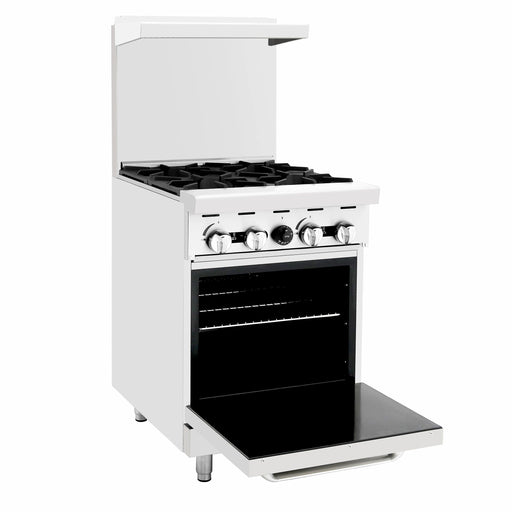
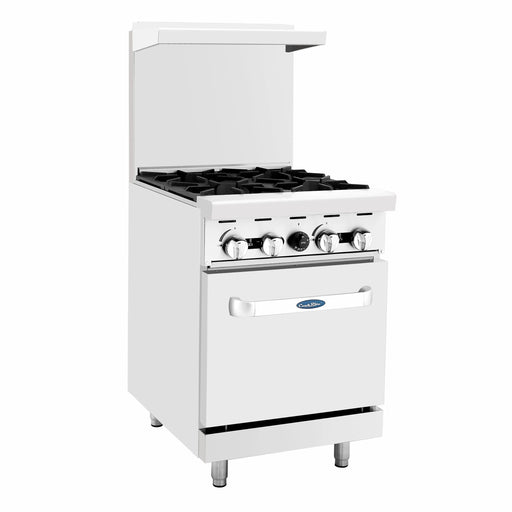
Atosa AGR-4B-LP 24-Inch 4 Burner Gas Range with Oven - Propane
Atosa
Original price
$2,399.00
Original price
$2,399.00
-
Original price
$2,399.00
Original price
$2,399.00
Current price
$1,729.00
$1,729.00
-
$1,729.00
Current price
$1,729.00
Atosa USA AGR-4B 24-Inch Four Burner Propane Gas Range Product Features Heavy-Duty Cast Iron Burners: Four lift-off open burners rated at 32,000 B...
View full details
Original price
$2,399.00
Original price
$2,399.00
-
Original price
$2,399.00
Original price
$2,399.00
Current price
$1,729.00
$1,729.00
-
$1,729.00
Current price
$1,729.00
Save 28%
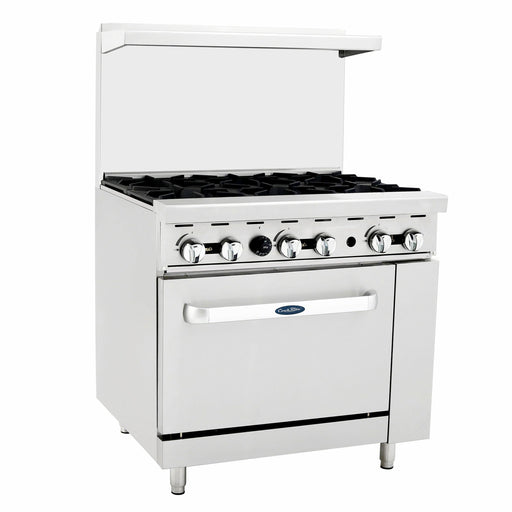
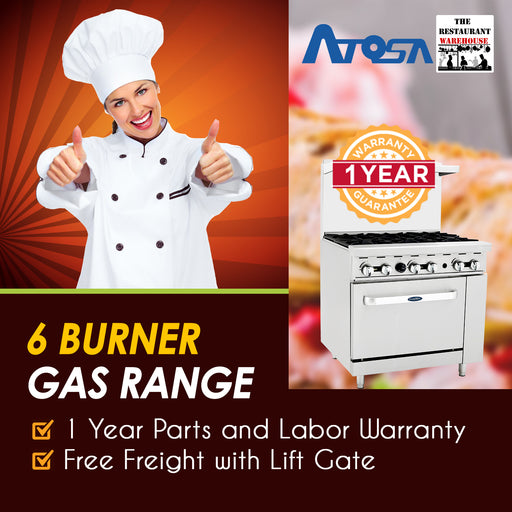
Atosa AGR-6B-NG Six Burner Natural Gas Range
Atosa
Original price
$2,587.00
Original price
$2,587.00
-
Original price
$2,587.00
Original price
$2,587.00
Current price
$1,864.00
$1,864.00
-
$1,864.00
Current price
$1,864.00
Atosa USA AGR-6B 36-Inch Six Burner Natural Gas Range Choosing the right energy source is one of the first decisions when planning a commercial ki...
View full details
Original price
$2,587.00
Original price
$2,587.00
-
Original price
$2,587.00
Original price
$2,587.00
Current price
$1,864.00
$1,864.00
-
$1,864.00
Current price
$1,864.00
Save 28%
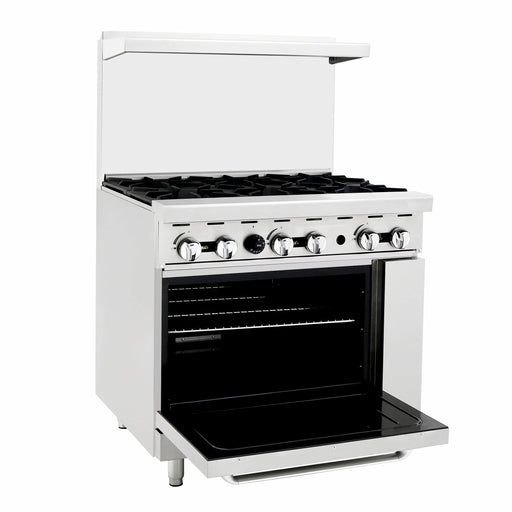
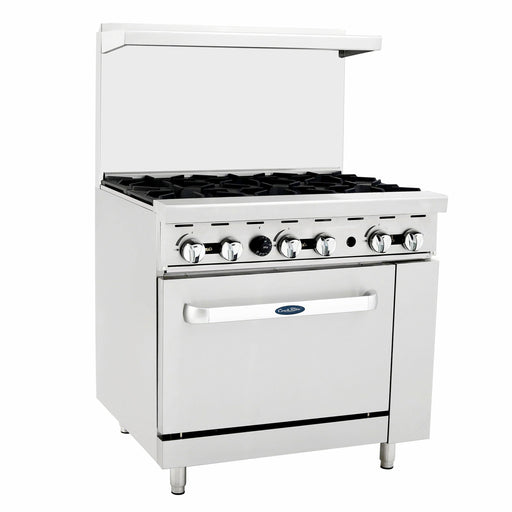
Atosa AGR-6B-LP 6 Burner Gas Range - Propane
Atosa
Original price
$2,587.00
Original price
$2,587.00
-
Original price
$2,587.00
Original price
$2,587.00
Current price
$1,864.00
$1,864.00
-
$1,864.00
Current price
$1,864.00
Atosa USA AGR-6B 36-Inch Six Burner Propane Gas Range The Atosa AGR-6B propane gas range is built for high-volume commercial kitchens that demand ...
View full details
Original price
$2,587.00
Original price
$2,587.00
-
Original price
$2,587.00
Original price
$2,587.00
Current price
$1,864.00
$1,864.00
-
$1,864.00
Current price
$1,864.00
Save 28%
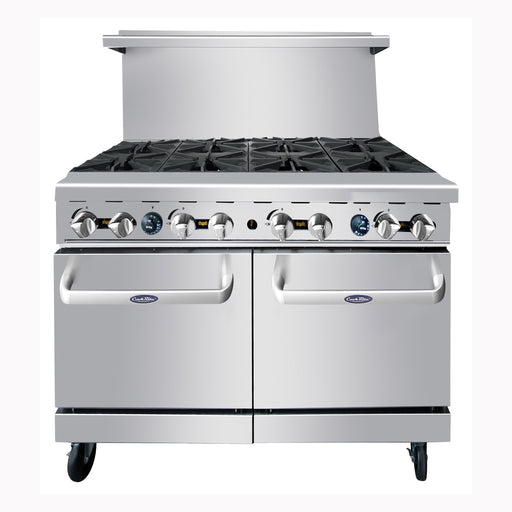
Atosa AGR-8B-NG 48-Inch Eight Burner Natural Gas Range
Atosa
Original price
$4,488.00
Original price
$4,488.00
-
Original price
$4,488.00
Original price
$4,488.00
Current price
$3,234.00
$3,234.00
-
$3,234.00
Current price
$3,234.00
Atosa USA AGR-8B 48-Inch Eight Burner Natural Gas Range and Ovens The Atosa AGR-8B natural gas range is designed for high-volume commercial kitche...
View full details
Original price
$4,488.00
Original price
$4,488.00
-
Original price
$4,488.00
Original price
$4,488.00
Current price
$3,234.00
$3,234.00
-
$3,234.00
Current price
$3,234.00
Save 28%
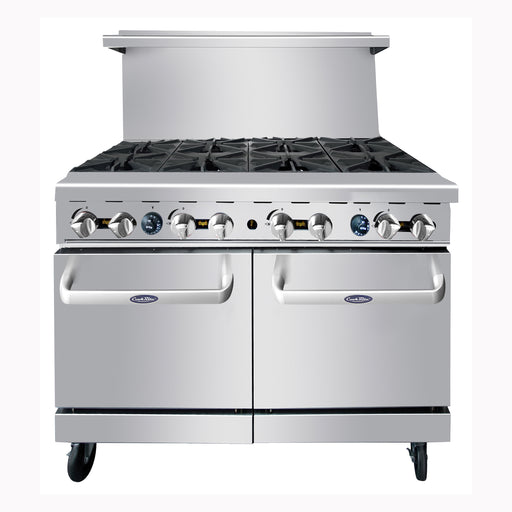
Atosa AGR-8B-LP 48-Inch Eight Burner Propane Gas Range
Atosa
Original price
$4,488.00
Original price
$4,488.00
-
Original price
$4,488.00
Original price
$4,488.00
Current price
$3,234.00
$3,234.00
-
$3,234.00
Current price
$3,234.00
Atosa USA AGR-8B 48-Inch Eight Burner Propane Gas Range and Ovens The Atosa AGR-8B propane gas range is built for high-volume commercial kitchens ...
View full details
Original price
$4,488.00
Original price
$4,488.00
-
Original price
$4,488.00
Original price
$4,488.00
Current price
$3,234.00
$3,234.00
-
$3,234.00
Current price
$3,234.00
Save 28%
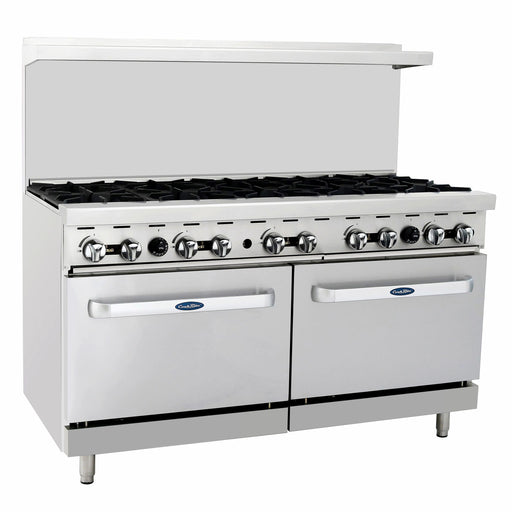
Atosa AGR-10B-NG 60-Inch Ten Burner Natural Gas Range
Atosa
Original price
$4,925.00
Original price
$4,925.00
-
Original price
$4,925.00
Original price
$4,925.00
Current price
$3,549.00
$3,549.00
-
$3,549.00
Current price
$3,549.00
Atosa USA AGR-10B 60-Inch Ten Burner Natural Gas Range and Ovens The Atosa AGR-10B natural gas range is built for high-volume restaurant kitchens ...
View full details
Original price
$4,925.00
Original price
$4,925.00
-
Original price
$4,925.00
Original price
$4,925.00
Current price
$3,549.00
$3,549.00
-
$3,549.00
Current price
$3,549.00
Save 28%
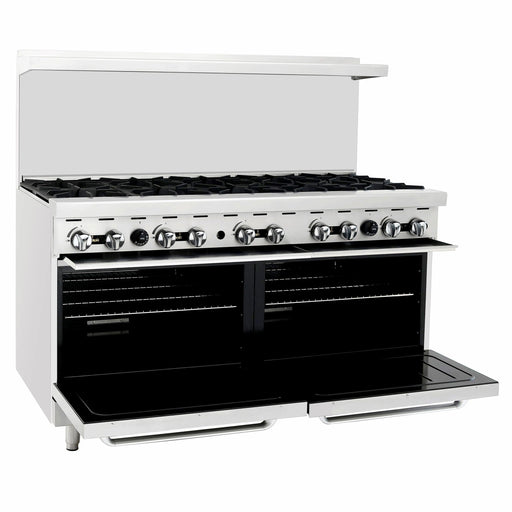
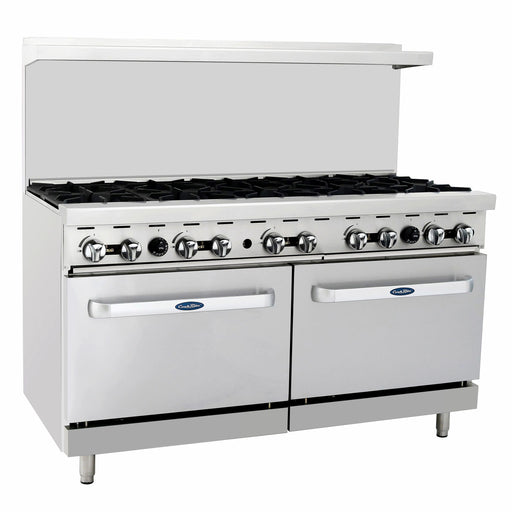
Atosa AGR-10B-LP 60-Inch Ten Burner Propane Gas Range
Atosa
Original price
$4,925.00
Original price
$4,925.00
-
Original price
$4,925.00
Original price
$4,925.00
Current price
$3,549.00
$3,549.00
-
$3,549.00
Current price
$3,549.00
Atosa USA AGR-10B 60-Inch Ten Burner Propane Gas Range The Atosa AGR-10B propane gas range is engineered for large-scale commercial kitchens that ...
View full details
Original price
$4,925.00
Original price
$4,925.00
-
Original price
$4,925.00
Original price
$4,925.00
Current price
$3,549.00
$3,549.00
-
$3,549.00
Current price
$3,549.00
Save 28%

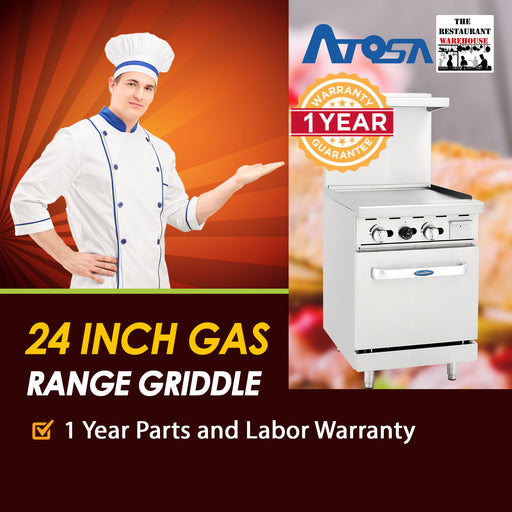
Atosa AGR-24G-NG 24-Inch Griddle Natural Gas Restaurant Range
Atosa
Original price
$2,429.00
Original price
$2,429.00
-
Original price
$2,429.00
Original price
$2,429.00
Current price
$1,751.00
$1,751.00
-
$1,751.00
Current price
$1,751.00
Atosa USA AGR-24G 24-Inch Griddle Natural Gas Range The Atosa AGR-24G natural gas range delivers professional-grade performance in a compact 24-in...
View full details
Original price
$2,429.00
Original price
$2,429.00
-
Original price
$2,429.00
Original price
$2,429.00
Current price
$1,751.00
$1,751.00
-
$1,751.00
Current price
$1,751.00
Save 28%
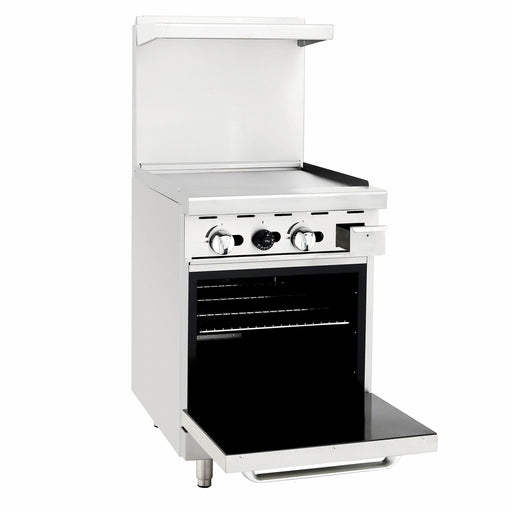
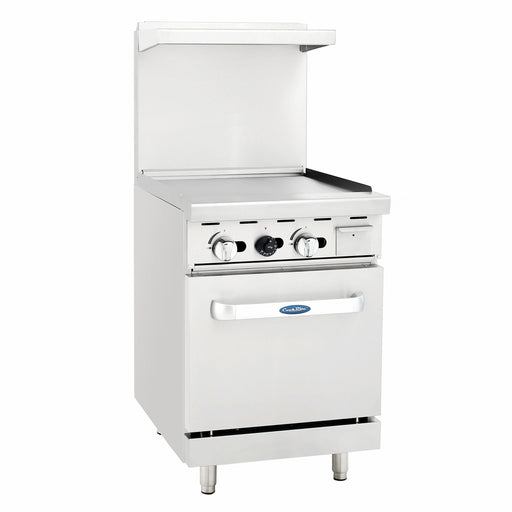
Atosa AGR-24G-LP 24-Inch Griddle Propane Restaurant Range
Atosa
Original price
$2,429.00
Original price
$2,429.00
-
Original price
$2,429.00
Original price
$2,429.00
Current price
$1,751.00
$1,751.00
-
$1,751.00
Current price
$1,751.00
Atosa USA AGR-24G 24-Inch Griddle Propane Gas Range The Atosa USA AGR-24G delivers professional-grade cooking performance for busy restaurant kitc...
View full details
Original price
$2,429.00
Original price
$2,429.00
-
Original price
$2,429.00
Original price
$2,429.00
Current price
$1,751.00
$1,751.00
-
$1,751.00
Current price
$1,751.00
Save 28%
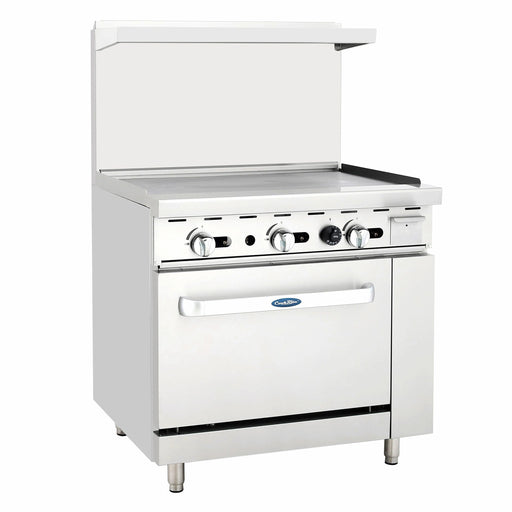
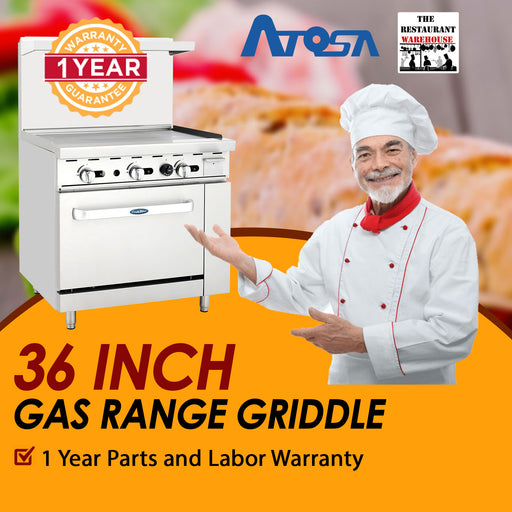
Atosa AGR-36G-NG 36-Inch Griddle Natural Gas Restaurant Range
Atosa
Original price
$3,666.00
Original price
$3,666.00
-
Original price
$3,666.00
Original price
$3,666.00
Current price
$2,642.00
$2,642.00
-
$2,642.00
Current price
$2,642.00
Atosa USA AGR-36G 36-Inch Griddle Natural Gas Range The Atosa AGR-36G natural gas gas range is built for commercial kitchens that require a full-wi...
View full details
Original price
$3,666.00
Original price
$3,666.00
-
Original price
$3,666.00
Original price
$3,666.00
Current price
$2,642.00
$2,642.00
-
$2,642.00
Current price
$2,642.00
Save 28%
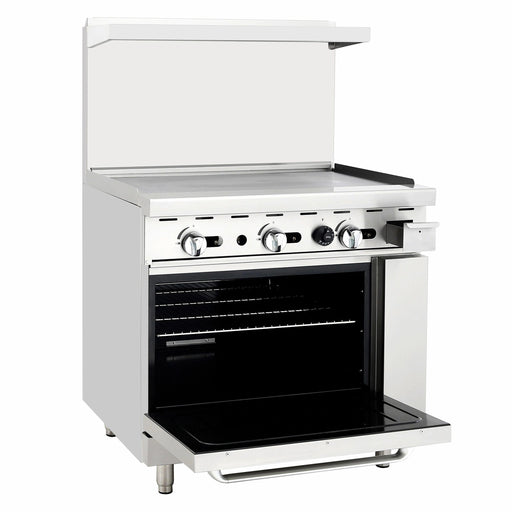
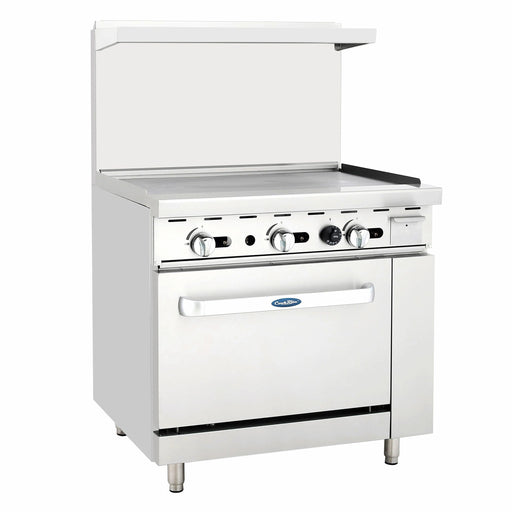
Atosa AGR-36G-LP 36-Inch Griddle Propane Restaurant Range
Atosa
Original price
$3,666.00
Original price
$3,666.00
-
Original price
$3,666.00
Original price
$3,666.00
Current price
$2,642.00
$2,642.00
-
$2,642.00
Current price
$2,642.00
Atosa USA AGR-36G 36-Inch Griddle Propane Gas Range The Atosa AGR-36G propane gas range is built for commercial kitchens that demand durability, v...
View full details
Original price
$3,666.00
Original price
$3,666.00
-
Original price
$3,666.00
Original price
$3,666.00
Current price
$2,642.00
$2,642.00
-
$2,642.00
Current price
$2,642.00
Save 28%
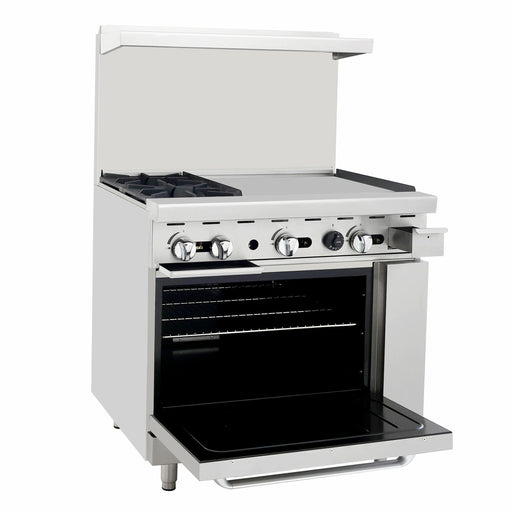
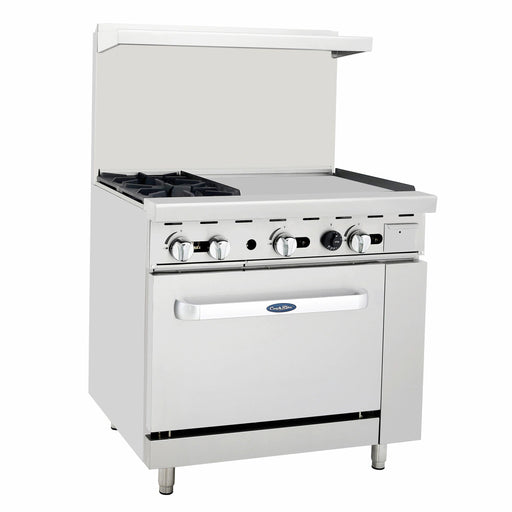
Atosa AGR-2B24GR-NG Two Burner 24-Inch Griddle Natural Gas Range
Atosa
Original price
$3,219.00
Original price
$3,219.00
-
Original price
$3,219.00
Original price
$3,219.00
Current price
$2,320.00
$2,320.00
-
$2,320.00
Current price
$2,320.00
Atosa USA AGR-2B24GR Two Burner 24-Inch Griddle Natural Gas Range The Atosa AGR-2B24GR natural gas range delivers flexible commercial cooking perf...
View full details
Original price
$3,219.00
Original price
$3,219.00
-
Original price
$3,219.00
Original price
$3,219.00
Current price
$2,320.00
$2,320.00
-
$2,320.00
Current price
$2,320.00
Save 28%
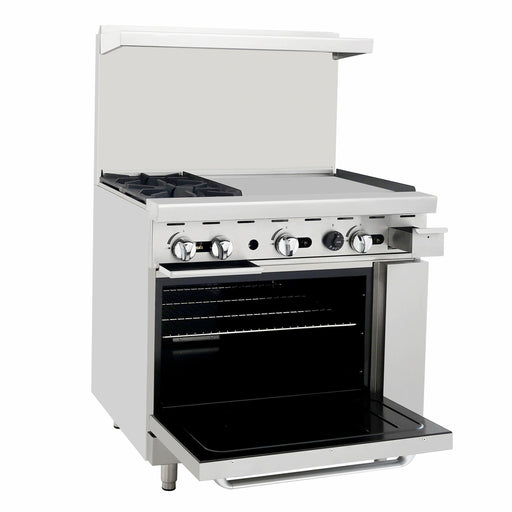
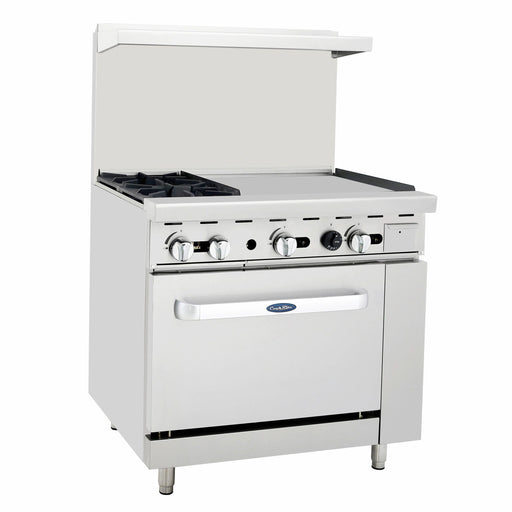
Atosa AGR-2B24GR-LP Two Burner 24-Inch Griddle Propane Gas Range
Atosa
Original price
$3,219.00
Original price
$3,219.00
-
Original price
$3,219.00
Original price
$3,219.00
Current price
$2,320.00
$2,320.00
-
$2,320.00
Current price
$2,320.00
Atosa USA AGR-2B24GR Two Burner 24-Inch Griddle Propane Gas Range The Atosa AGR-2B24GR propane gas range combines open burner flexibility with a f...
View full details
Original price
$3,219.00
Original price
$3,219.00
-
Original price
$3,219.00
Original price
$3,219.00
Current price
$2,320.00
$2,320.00
-
$2,320.00
Current price
$2,320.00
Save 28%
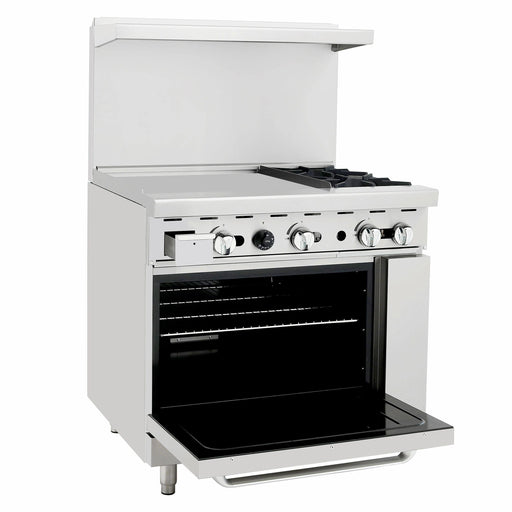
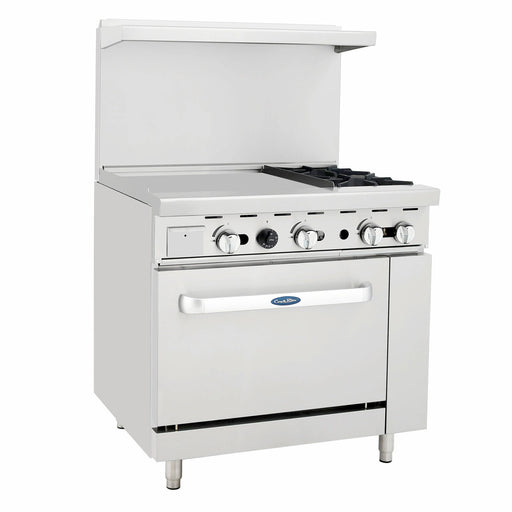
Atosa USA AGR-2B24GL 24-Inch Griddle Two Burner Natural Gas Range
Atosa
Original price
$3,219.00
Original price
$3,219.00
-
Original price
$3,219.00
Original price
$3,219.00
Current price
$2,320.00
$2,320.00
-
$2,320.00
Current price
$2,320.00
Atosa USA AGR-2B24GL 24-Inch Griddle Two Burner Natural Gas Range The Atosa AGR-2B24GL natural gas range delivers versatile commercial cooking per...
View full details
Original price
$3,219.00
Original price
$3,219.00
-
Original price
$3,219.00
Original price
$3,219.00
Current price
$2,320.00
$2,320.00
-
$2,320.00
Current price
$2,320.00
Save 28%
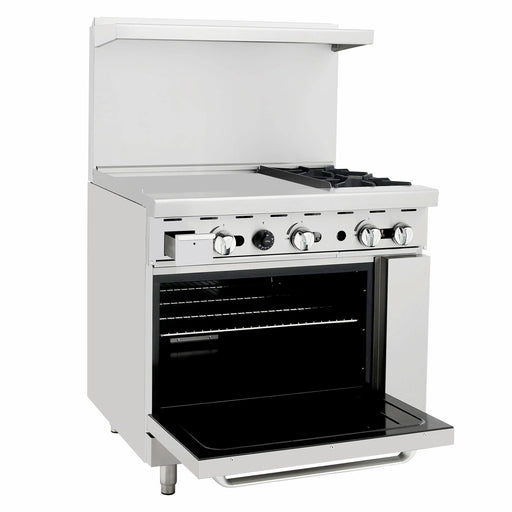
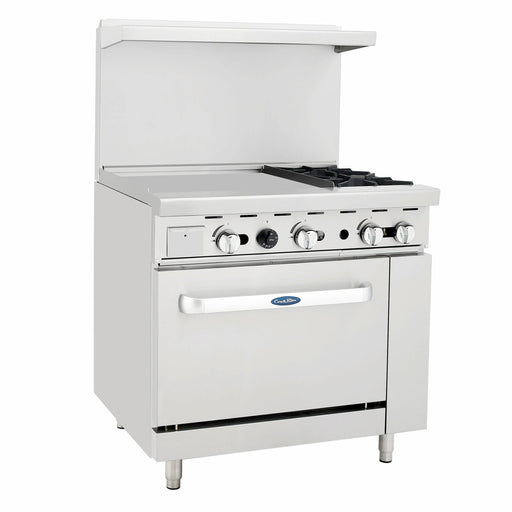
Atosa AGR-2B24GL-LP 24-Inch Griddle Two Burner Propane Gas Range
Atosa
Original price
$3,219.00
Original price
$3,219.00
-
Original price
$3,219.00
Original price
$3,219.00
Current price
$2,320.00
$2,320.00
-
$2,320.00
Current price
$2,320.00
Atosa USA AGR-2B24GL 24-Inch Griddle Two Burner Propane Gas Range The Atosa AGR-2B24GL propane gas range combines open burner versatility with a f...
View full details
Original price
$3,219.00
Original price
$3,219.00
-
Original price
$3,219.00
Original price
$3,219.00
Current price
$2,320.00
$2,320.00
-
$2,320.00
Current price
$2,320.00
Save 28%
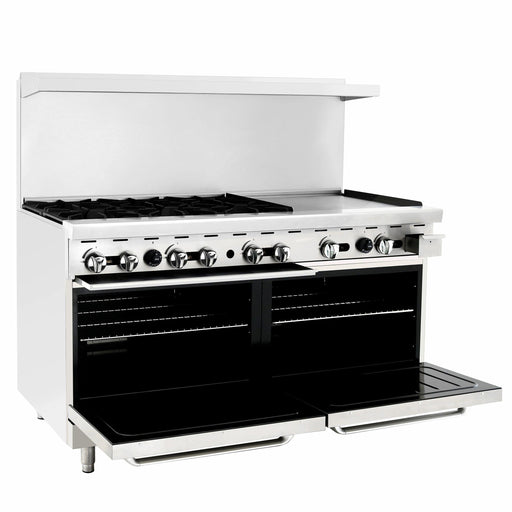
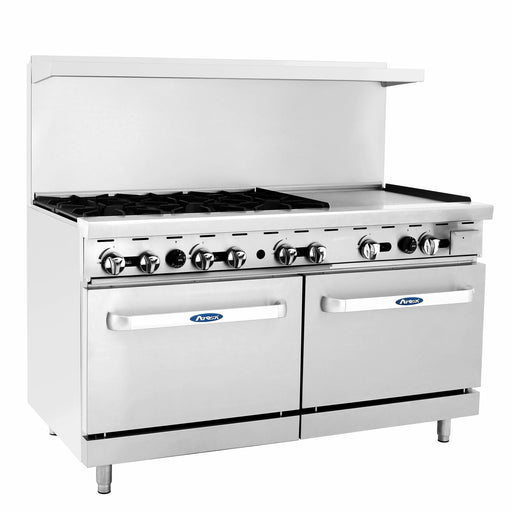
Atosa AGR-6B24GR-NG Six Burner 24-Inch Griddle Natural Gas Range
Atosa
Original price
$5,579.00
Original price
$5,579.00
-
Original price
$5,579.00
Original price
$5,579.00
Current price
$4,020.00
$4,020.00
-
$4,020.00
Current price
$4,020.00
Atosa USA AGR-6B24GR-NG Six Burner 24-Inch Griddle Natural Gas Range The Atosa AGR-6B24GR-NG natural gas range delivers powerful performance and c...
View full details
Original price
$5,579.00
Original price
$5,579.00
-
Original price
$5,579.00
Original price
$5,579.00
Current price
$4,020.00
$4,020.00
-
$4,020.00
Current price
$4,020.00
Save 28%
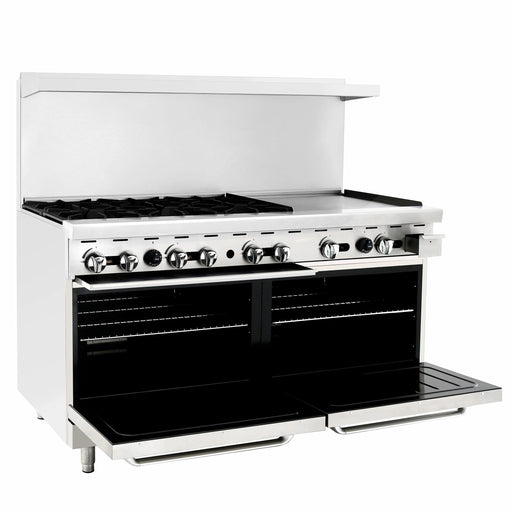
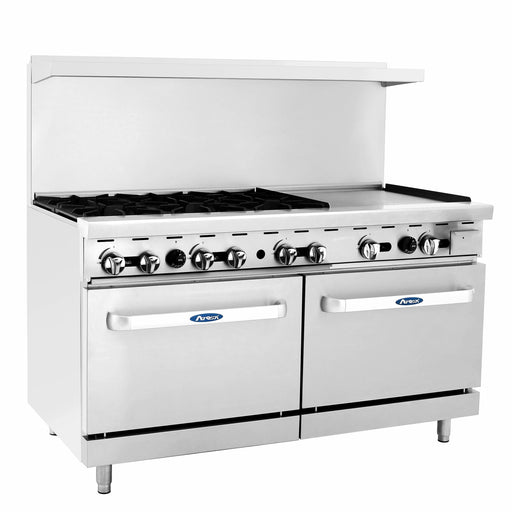
Atosa USA AGR-6B24GR-LP Six Burner 24-Inch Griddle Propane Gas Range
Atosa
Original price
$5,579.00
Original price
$5,579.00
-
Original price
$5,579.00
Original price
$5,579.00
Current price
$4,020.00
$4,020.00
-
$4,020.00
Current price
$4,020.00
Atosa USA AGR-6B24GR-LP Six Burner 24-Inch Griddle Propane Gas Range The Atosa AGR-6B24GR-LP propane gas range combines powerful open burners, a 2...
View full details
Original price
$5,579.00
Original price
$5,579.00
-
Original price
$5,579.00
Original price
$5,579.00
Current price
$4,020.00
$4,020.00
-
$4,020.00
Current price
$4,020.00
Save 28%
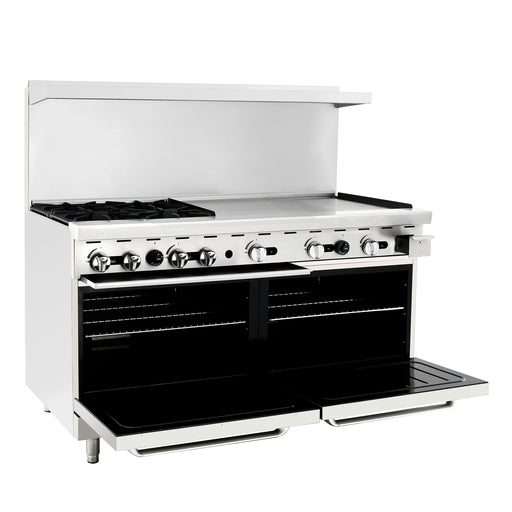
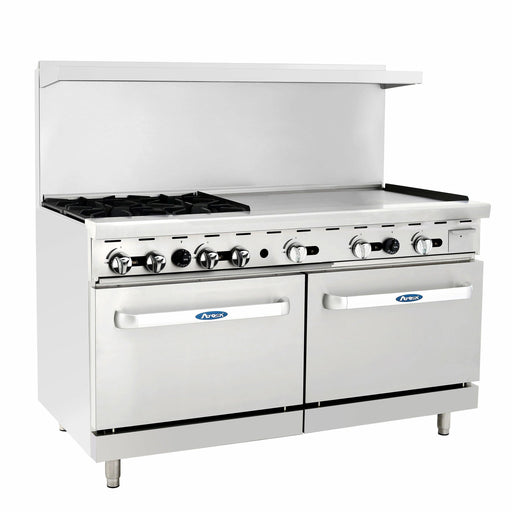
Atosa AGR-4B36GR-NG Four Burner 36-Inch Griddle Natural Gas Range
Atosa
Original price
$5,656.00
Original price
$5,656.00
-
Original price
$5,656.00
Original price
$5,656.00
Current price
$4,076.00
$4,076.00
-
$4,076.00
Current price
$4,076.00
Atosa USA AGR-4B36GR Four Burner 36-Inch Griddle Natural Gas Range The Atosa AGR-4B36GR natural gas range delivers commercial-grade cooking power ...
View full details
Original price
$5,656.00
Original price
$5,656.00
-
Original price
$5,656.00
Original price
$5,656.00
Current price
$4,076.00
$4,076.00
-
$4,076.00
Current price
$4,076.00
Save 28%
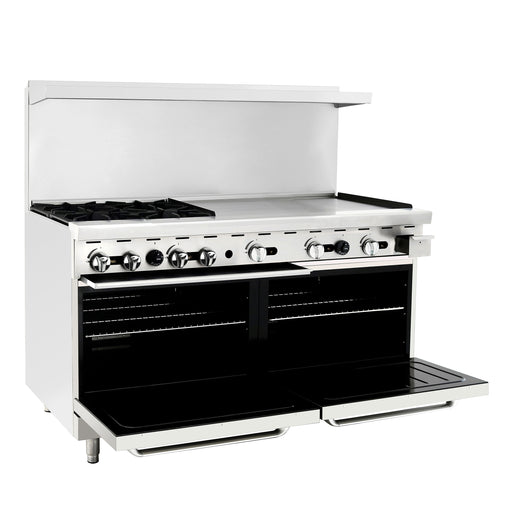
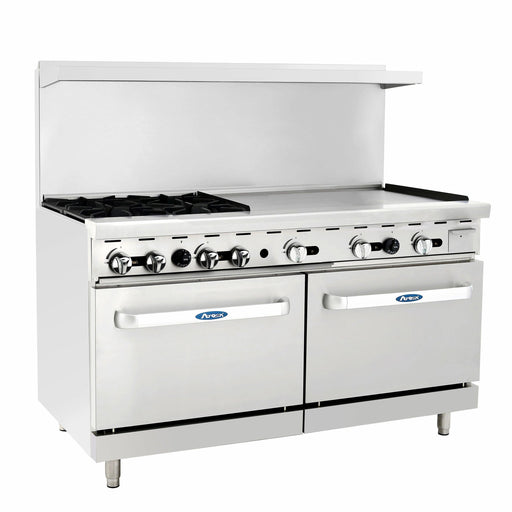
Atosa AGR-4B36GR-LP Four Burner 36-Inch Griddle Propane Gas Range
Atosa
Original price
$5,656.00
Original price
$5,656.00
-
Original price
$5,656.00
Original price
$5,656.00
Current price
$4,076.00
$4,076.00
-
$4,076.00
Current price
$4,076.00
Atosa USA AGR-4B36GR Four Burner 36-Inch Griddle Propane Gas Range The Atosa AGR-4B36GR Propane gas range combines powerful open burners, a full 3...
View full details
Original price
$5,656.00
Original price
$5,656.00
-
Original price
$5,656.00
Original price
$5,656.00
Current price
$4,076.00
$4,076.00
-
$4,076.00
Current price
$4,076.00
Save 28%


Atosa AGR-6B24RGB 60 inch Range With Raised 24 inch Griddle and Broiler Natural Gas
Atosa
Original price
$7,950.00
Original price
$7,950.00
-
Original price
$7,950.00
Original price
$7,950.00
Current price
$5,728.00
$5,728.00
-
$5,728.00
Current price
$5,728.00
Atosa AGR-6B-24RGB 60-Inch Range with Raised Griddle and Broiler The Atosa AGR-6B-24RGB is a high-performance 60-inch commercial natural gas range...
View full details
Original price
$7,950.00
Original price
$7,950.00
-
Original price
$7,950.00
Original price
$7,950.00
Current price
$5,728.00
$5,728.00
-
$5,728.00
Current price
$5,728.00
Save 28%
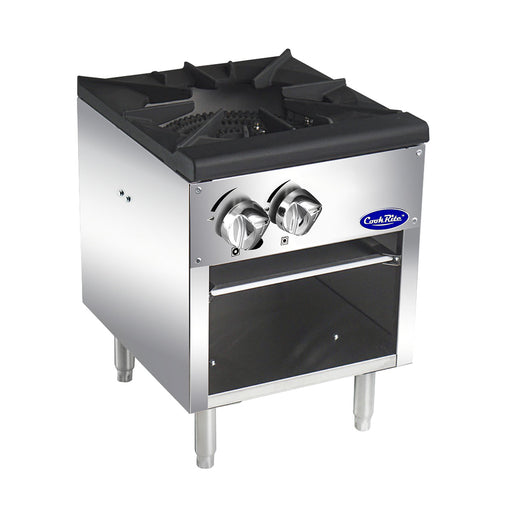
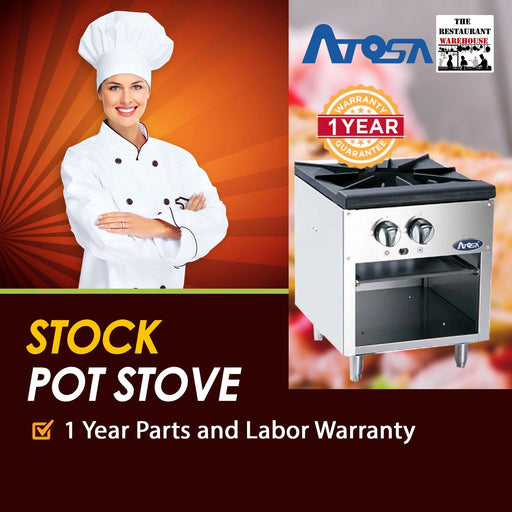
Atosa ATSP-18-1-NG Heavy Duty Stainless Steel 18-Inch Stock Pot Stove - Natural Gas
Atosa
Original price
$699.00
Original price
$699.00
-
Original price
$699.00
Original price
$699.00
Current price
$504.00
$504.00
-
$504.00
Current price
$504.00
Atosa USA ATSP-18-1 Heavy Duty Stainless Steel 18-Inch Stock Pot Stove - Natural Gas A reliable stock pot stove is essential for keeping a busy co...
View full details
Original price
$699.00
Original price
$699.00
-
Original price
$699.00
Original price
$699.00
Current price
$504.00
$504.00
-
$504.00
Current price
$504.00
Save 28%
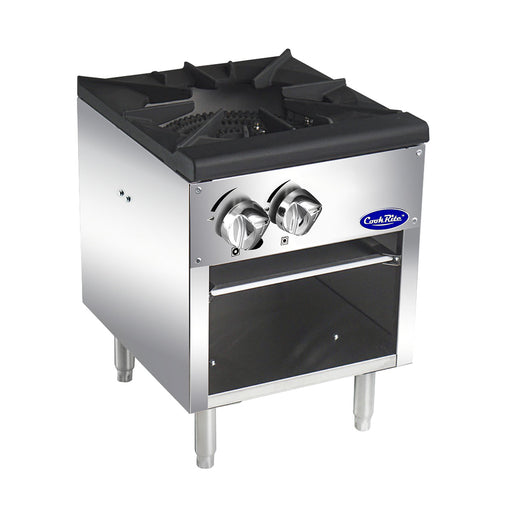
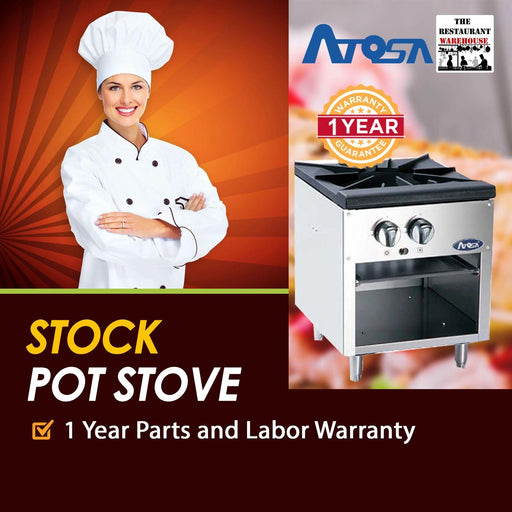
Atosa ATSP-18-1-LP Heavy Duty Stainless Steel 18-Inch Stock Pot Stove - Propane
Atosa
Original price
$699.00
Original price
$699.00
-
Original price
$699.00
Original price
$699.00
Current price
$504.00
$504.00
-
$504.00
Current price
$504.00
Atosa USA ATSP-18-1 Heavy Duty Stainless Steel 18-Inch Stock Pot Stove - Propane A reliable stove is essential for keeping a busy commercial kitch...
View full details
Original price
$699.00
Original price
$699.00
-
Original price
$699.00
Original price
$699.00
Current price
$504.00
$504.00
-
$504.00
Current price
$504.00
Save 28%
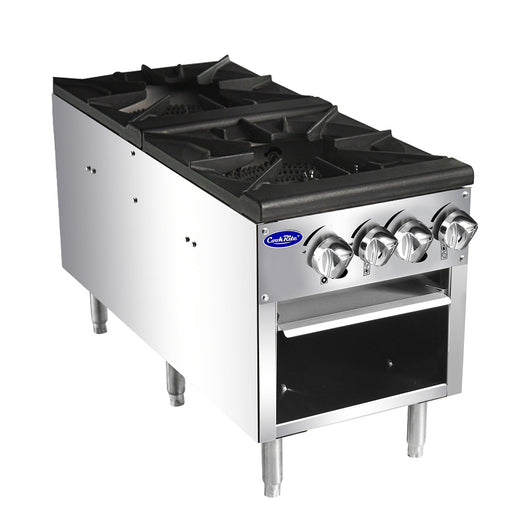
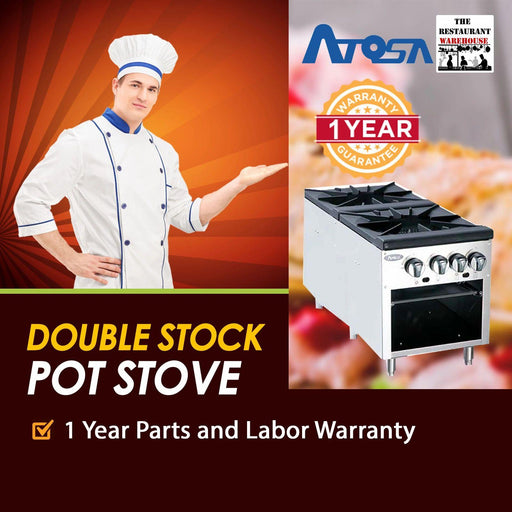
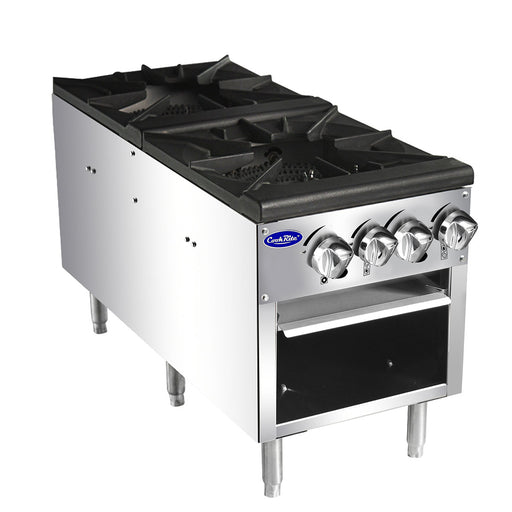
Atosa ATSP-18-2-NG Heavy Duty Stainless Steel 18-Inch Double Burner Stock Pot Stove - Natural Gas
Atosa
Original price
$1,280.00
Original price
$1,280.00
-
Original price
$1,280.00
Original price
$1,280.00
Current price
$923.00
$923.00
-
$923.00
Current price
$923.00
Atosa ATSP-18-2 Double Stock Pot Stove - Natural Gas The Atosa USA ATSP-18-2 is a heavy-duty stainless steel double burner stock pot stove designe...
View full details
Original price
$1,280.00
Original price
$1,280.00
-
Original price
$1,280.00
Original price
$1,280.00
Current price
$923.00
$923.00
-
$923.00
Current price
$923.00
Save 28%
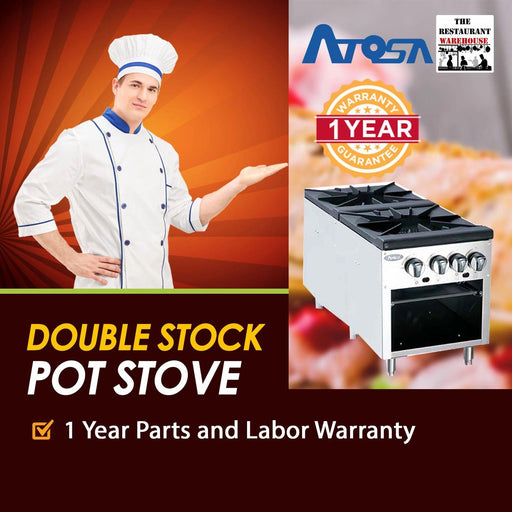
Atosa ATSP-18-2-LP Heavy Duty Stainless Steel 18-Inch Double Burner Stock Pot Stove - Propane
Atosa
Original price
$1,280.00
Original price
$1,280.00
-
Original price
$1,280.00
Original price
$1,280.00
Current price
$923.00
$923.00
-
$923.00
Current price
$923.00
Atosa ATSP-18-2 Double Stock Pot Stove - Propane The Atosa USA ATSP-18-2 is a heavy-duty stainless steel double burner stock pot stove engineered ...
View full details
Original price
$1,280.00
Original price
$1,280.00
-
Original price
$1,280.00
Original price
$1,280.00
Current price
$923.00
$923.00
-
$923.00
Current price
$923.00
Save 28%
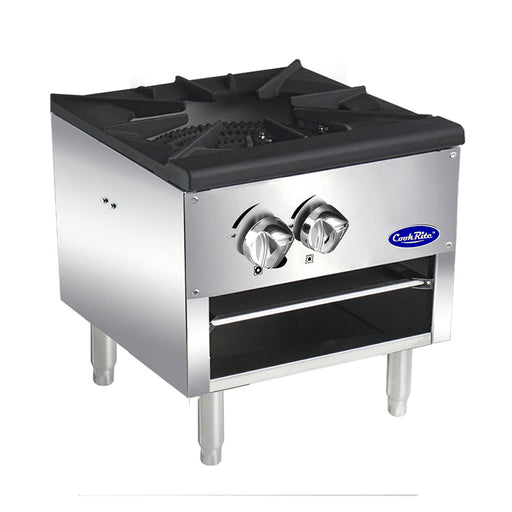
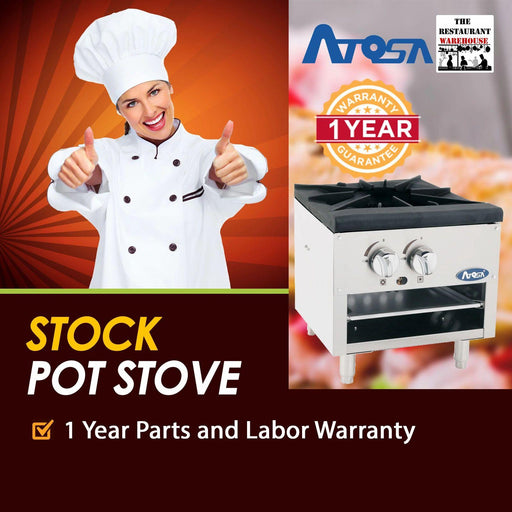
Atosa ATSP-18-1L-NG 18-Inch Low Stock Pot Stove - Natural Gas
Atosa
Original price
$699.00
Original price
$699.00
-
Original price
$699.00
Original price
$699.00
Current price
$504.00
$504.00
-
$504.00
Current price
$504.00
Atosa USA ATSP-18-1 Heavy Duty Stainless Steel 18-Inch Stock Pot Stove - Natural Gas The Atosa USA ATSP-18-1L 18-Inch Low Stock Pot Stove is built...
View full details
Original price
$699.00
Original price
$699.00
-
Original price
$699.00
Original price
$699.00
Current price
$504.00
$504.00
-
$504.00
Current price
$504.00
Save 28%
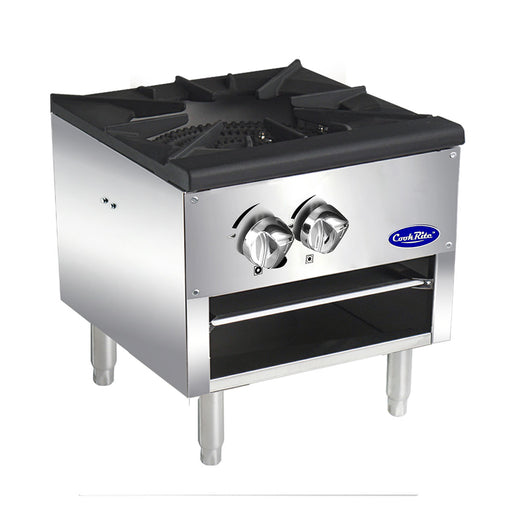
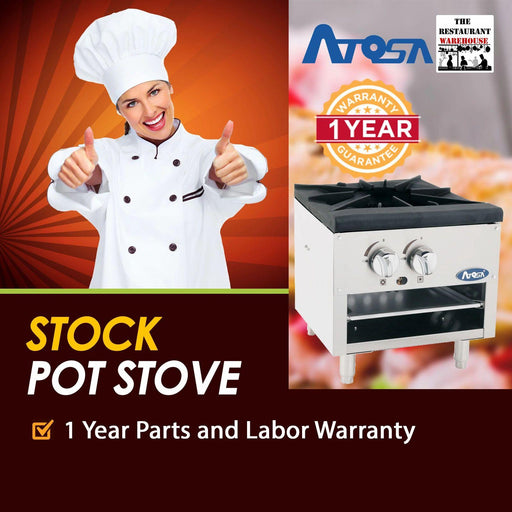
Atosa ATSP-18-1L-LP 18-Inch Low Stock Pot Stove - Propane
Atosa
Original price
$699.00
Original price
$699.00
-
Original price
$699.00
Original price
$699.00
Current price
$504.00
$504.00
-
$504.00
Current price
$504.00
Atosa USA ATSP-18-1 Heavy Duty Stainless Steel 18-Inch Stock Pot Stove - Propane The Atosa USA ATSP-18-1L 18-Inch Low Stock Pot Stove is a powerfu...
View full details
Original price
$699.00
Original price
$699.00
-
Original price
$699.00
Original price
$699.00
Current price
$504.00
$504.00
-
$504.00
Current price
$504.00
Save 28%
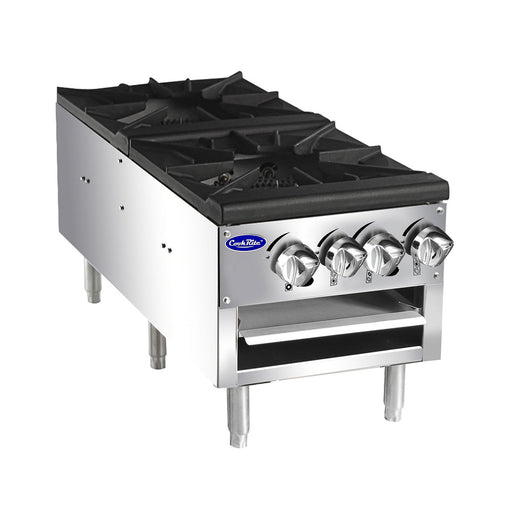
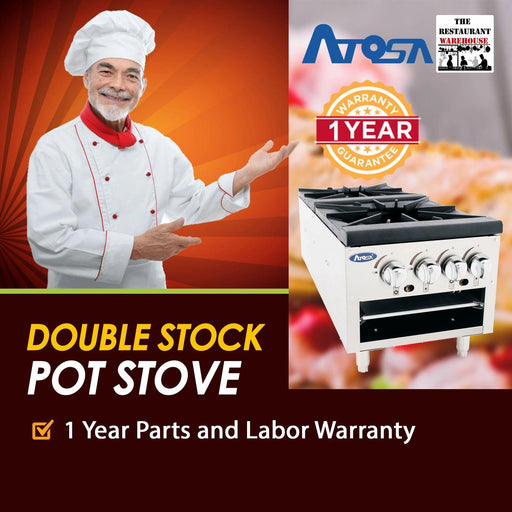
Atosa USA ATSP-18-2L 18-Inch Low Double Burner Stock Pot Stove - Natural Gas
Atosa
Original price
$1,280.00
Original price
$1,280.00
-
Original price
$1,280.00
Original price
$1,280.00
Current price
$923.00
$923.00
-
$923.00
Current price
$923.00
Atosa USA ATSP-18-2L Heavy Duty Stainless Steel 18-Inch Double Burner Stock Pot Stove - Natural Gas The Atosa USA ATSP-18-2L is a robust 18-inch d...
View full details
Original price
$1,280.00
Original price
$1,280.00
-
Original price
$1,280.00
Original price
$1,280.00
Current price
$923.00
$923.00
-
$923.00
Current price
$923.00
Save 28%
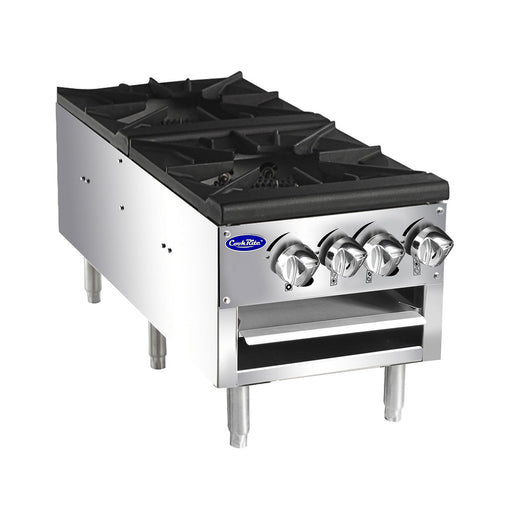
Atosa ATSP-18-2L-LP 18-Inch Low Double Burner Stock Pot Stove - Propane
Atosa
Original price
$1,280.00
Original price
$1,280.00
-
Original price
$1,280.00
Original price
$1,280.00
Current price
$923.00
$923.00
-
$923.00
Current price
$923.00
Atosa USA ATSP-18-2 Heavy Duty Stainless Steel 18-Inch Double Burner Stock Pot Stove - Propane Product Features Durable stainless steel structure...
View full details
Original price
$1,280.00
Original price
$1,280.00
-
Original price
$1,280.00
Original price
$1,280.00
Current price
$923.00
$923.00
-
$923.00
Current price
$923.00
Save 28%

Atosa ATW-13-NG Natural Gas 13 inch Wok Range
Atosa
Original price
$1,030.00
Original price
$1,030.00
-
Original price
$1,030.00
Original price
$1,030.00
Current price
$743.00
$743.00
-
$743.00
Current price
$743.00
Atosa ATW-13 13-Inch Wok Range - Propane The Atosa ATW-13 13" liquid propane wok range is a powerful and space-efficient solution for restaurants,...
View full details
Original price
$1,030.00
Original price
$1,030.00
-
Original price
$1,030.00
Original price
$1,030.00
Current price
$743.00
$743.00
-
$743.00
Current price
$743.00
Save 28%
Atosa ATW-13-LP Propane Gas 13 inch Wok Range
Atosa
Original price
$1,030.00
Original price
$1,030.00
-
Original price
$1,030.00
Original price
$1,030.00
Current price
$743.00
$743.00
-
$743.00
Current price
$743.00
Atosa ATW-13 13-Inch Wok Range - Propane The Atosa ATW-13 13" liquid propane wok range is a powerful and space-efficient solution for restaurants,...
View full details
Original price
$1,030.00
Original price
$1,030.00
-
Original price
$1,030.00
Original price
$1,030.00
Current price
$743.00
$743.00
-
$743.00
Current price
$743.00
Save 28%

Atosa ATW-16-NG 16-inch Natural Gas Wok Range
Atosa
Original price
$1,120.00
Original price
$1,120.00
-
Original price
$1,120.00
Original price
$1,120.00
Current price
$807.00
$807.00
-
$807.00
Current price
$807.00
Atosa ATW-16-NG 16-Inch Wok Range - Natural Gas Professional-Grade Wok Range for High-Volume Cooking The Atosa ATW-16-NG Wok Range is engineered f...
View full details
Original price
$1,120.00
Original price
$1,120.00
-
Original price
$1,120.00
Original price
$1,120.00
Current price
$807.00
$807.00
-
$807.00
Current price
$807.00
Save 28%
Atosa ATW-16-LP 16-inch Propane Gas Wok Range
Atosa
Original price
$1,120.00
Original price
$1,120.00
-
Original price
$1,120.00
Original price
$1,120.00
Current price
$807.00
$807.00
-
$807.00
Current price
$807.00
Atosa ATW-16-LP 16-Inch Wok Range - Propane If you need a powerful burner capable of delivering intense heat for your restaurant, banquet hall, or...
View full details
Original price
$1,120.00
Original price
$1,120.00
-
Original price
$1,120.00
Original price
$1,120.00
Current price
$807.00
$807.00
-
$807.00
Current price
$807.00
Save 28%
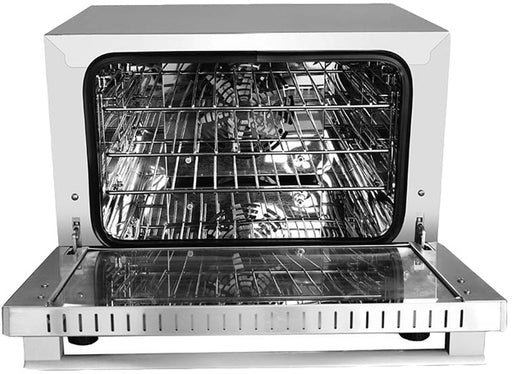
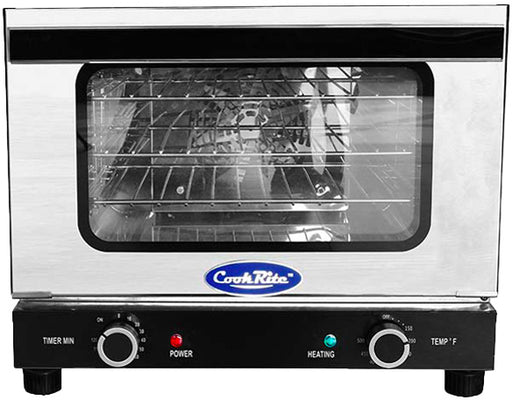
Atosa CTCO-25 Countertop Electric Convection Oven
Atosa
Original price
$723.00
Original price
$723.00
-
Original price
$723.00
Original price
$723.00
Current price
$521.00
$521.00
-
$521.00
Current price
$521.00
Atosa USA CTCO-25 Quarter Size Countertop Convection Oven The Atosa CTCO-25 countertop convection oven is designed for commercial kitchens that re...
View full details
Original price
$723.00
Original price
$723.00
-
Original price
$723.00
Original price
$723.00
Current price
$521.00
$521.00
-
$521.00
Current price
$521.00
Save 28%
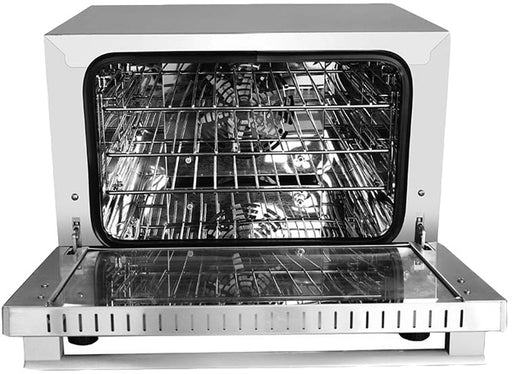
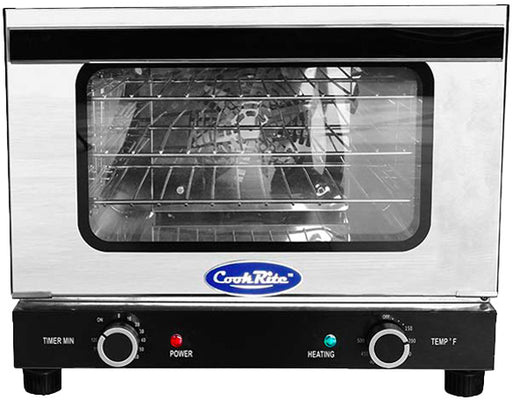
Atosa CTCO-50 Countertop Electric Convection Oven
Atosa
Original price
$1,122.00
Original price
$1,122.00
-
Original price
$1,122.00
Original price
$1,122.00
Current price
$809.00
$809.00
-
$809.00
Current price
$809.00
Atosa USA CTCO-50 Half Size Countertop Convection Oven The Atosa CTCO-50 countertop convection oven provides reliable baking and roasting performa...
View full details
Original price
$1,122.00
Original price
$1,122.00
-
Original price
$1,122.00
Original price
$1,122.00
Current price
$809.00
$809.00
-
$809.00
Current price
$809.00
Save 28%
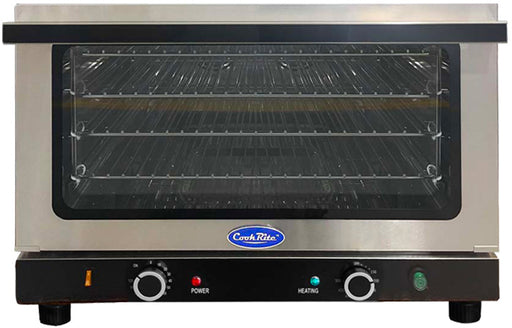
Atosa CTCO-100 Countertop Electric Convection Oven
Atosa
Original price
$2,616.00
Original price
$2,616.00
-
Original price
$2,616.00
Original price
$2,616.00
Current price
$1,885.00
$1,885.00
-
$1,885.00
Current price
$1,885.00
Atosa USA CTCO-100 Full Size Countertop Convection Oven The Atosa CTCO-100 countertop convection oven delivers reliable baking and roasting perfor...
View full details
Original price
$2,616.00
Original price
$2,616.00
-
Original price
$2,616.00
Original price
$2,616.00
Current price
$1,885.00
$1,885.00
-
$1,885.00
Current price
$1,885.00
Save 28%
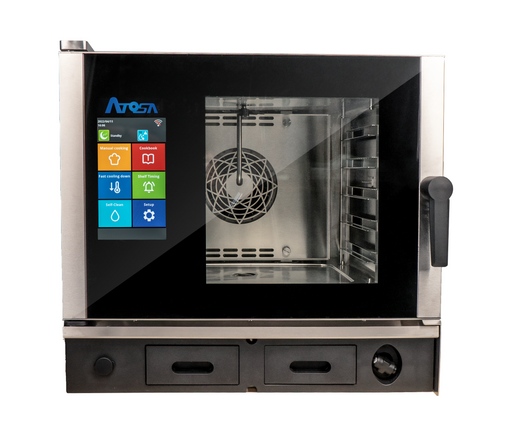
Atosa AEC-0511E Combi Oven Half Sheet Pan
AtosaAtosa AEC-0511E Combi Oven Half Sheet Pan The Atosa AEC-0511E Combi Oven delivers advanced cooking technology designed for professional kitchens t...
View full details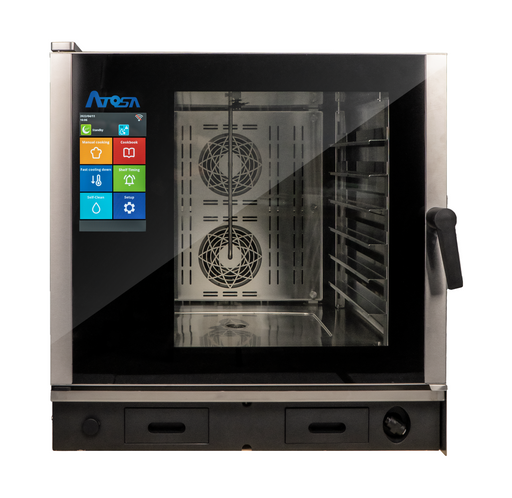
Atosa AEC-0621E Combi Oven Full Sheet Pan
AtosaAtosa AEC-0621E Combi Oven Full Sheet Pan The Atosa AEC-0621E combi oven delivers precise cooking performance for restaurants, banquet kitchens, a...
View full details
Atosa AEC-0711E Combi Oven Half Sheet Pan
AtosaAtosa AEC-0711E Combi Oven Half Sheet Pan The Atosa AEC-0711E combi oven provides advanced cooking performance for commercial kitchens that requir...
View full details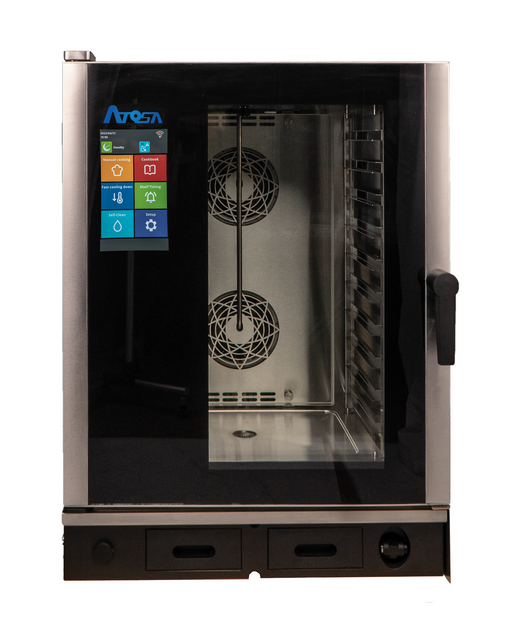
Atosa AEC-1011E Combi Oven Half Sheet Pan
AtosaAtosa AEC-1011E Combi Oven Half Sheet Pan The Atosa AEC-1011E combi oven provides advanced cooking technology for restaurants, banquet kitchens, a...
View full detailsAtosa AEC-1021E Combi Oven Full Sheet Pan
AtosaAtosa AEC-1021E Combi Oven Full Sheet Pan The Atosa AEC-1021E combi oven delivers advanced cooking performance for commercial kitchens that requir...
View full details
Comstock-Castle CCCO-1 Gas Convection Oven, Single Deck, 54,000 BTU
Comstock-CastleThe Comstock-Castle CCCO-1 is a single-deck full-size gas convection oven built for restaurants, bakeries, banquet lines, and ghost kitchens that n...
View full details
Comstock-Castle CCCO-2 Gas Convection Oven, Double Deck, 108,000 BTU
Comstock-CastleThe Comstock-Castle CCCO-2 is a double-deck full-size gas convection oven built for high-volume restaurants, bakeries, banquet lines, and ghost kit...
View full details
Standard Range SR-COE-SGL-208 Electric Convection Oven, Single Deck, 10 kW
USR BrandsThe Standard Range SR-COE-SGL-208 is a single-deck full-size electric convection oven built for restaurants, bakeries, banquet lines, and ghost kit...
View full details
Standard Range SR-COE-DBL-208 Electric Convection Oven, Double Deck, 20 kW
USR BrandsThe Standard Range SR-COE-DBL-208 is a double-deck full-size electric convection oven built for high-volume restaurants, bakeries, banquet lines, a...
View full details
Dukers DCCOG1 Gas Convection Oven, Single Deck, 54,000 BTU
DukersThe Dukers DCCOG1 is a single-deck full-size gas convection oven with a digital controller, 50/50 dependent doors with double-pane thermal tempered...
View full details
Dukers DCCOG2 Gas Convection Oven, Double Deck, 108,000 BTU
DukersThe Dukers DCCOG2 is a double-deck full-size gas convection oven with digital controllers, 50/50 dependent doors with double-pane thermal tempered ...
View full details
IKON IGCO Gas Convection Oven, Single Deck, 54,000 BTU, ENERGY STAR
MVPThe IKON IGCO is a single-deck full-size natural gas convection oven with ENERGY STAR certification, electronic Fenwal ignition, electronic FAST th...
View full details
Commercial Oven and Restaurant Range Buying Guide
Choose commercial ovens and restaurant ranges around your menu, peak production, available space, and utilities. Compare convection, combi, pizza, and microwave ovens with restaurant ranges, stock pot stoves, and wok ranges using the buying guide below. Confirm the exact model’s capacity, installation requirements, and included equipment before ordering.
Compare Commercial Ovens and Restaurant Ranges
Start with the food you need to produce, then compare the equipment that supports it. An oven supplies enclosed heat for baking and roasting; a range adds a cooking surface for pans and pots. A stock pot stove or wok range is a specialized open-flame appliance, not an oven, but it can complete the same restaurant cooking line. This guide keeps those differences clear while helping you compare the options in one place.
Write down your busiest service period, the dishes that must finish together, the pans you already use, and the utilities available at the installation point. A machine that looks large enough from the outside can still be too small inside. Likewise, a high-output burner is not automatically the best choice for a station that spends most of its day simmering delicate sauces.
| Equipment | Typical role | What to compare |
|---|---|---|
| Convection oven | Sheet-pan baking, roasting, and batch production | Pan fit, usable rack spacing, airflow, recovery, and single or double-stack format |
| Combi oven | Dry heat, steam, and combined cooking | Supported pan format, humidity controls, water treatment, drainage, and cleaning |
| Pizza or bakery deck oven | Hearth baking, pizza, bread, and selected pan products | Usable deck dimensions, heat control, recovery, loading access, and steam features where needed |
| Conveyor oven | Repeatable production along a belt | Belt width, heated chamber length, product spacing, bake profile, and loading/unloading space |
| Commercial microwave | Portion reheating, defrosting, and approved cooking programs | Output wattage, duty rating, dish clearance, controls, and electrical connection |
| Rapid-cook or speed oven | Fast heating with browning or crisping | Heat technologies, menu tests, cavity height, approved accessories, and installation listing |
| Restaurant range with oven | Open-burner or griddle cooking above an oven base | Burner layout, griddle position, oven cavity dimensions, fuel, and total connected load |
| Stock pot range | Large-batch soups, stocks, sauces, and boiling | Pot support, working height, single or double burners, simmer control, and ventilation |
| Wok range | Focused high-heat wok cooking | Wok fit, support opening, burner control, station layout, and gas supply |
Convection, deck, and combi describe how an oven cooks. Gas and electric describe its energy supply. Countertop, floor, and stacked describe its format. Keeping these distinctions separate makes it easier to select the right appliance instead of treating every combination as a different cooking category.
Commercial Convection Ovens: Pan Capacity, Airflow, and Production
A commercial convection oven uses a fan to circulate heated air around the food. This supports batch roasting, baking, and consistent browning across a rack load, provided pans are arranged to allow airflow. Restaurants, bakeries, cafés, catering kitchens, and institutional operations use convection ovens for products ranging from sheet-pan vegetables and proteins to cookies, pastries, casseroles, and prepared foods.
Airflow does not remove the need for recipe testing. Loading density, pan depth, fan speed, product moisture, and door openings all affect the result. When moving a recipe from a still-air oven, follow the equipment manufacturer's guidance, run a test batch, and check doneness earlier rather than assuming a fixed time or temperature reduction works for every food.
Full-size, half-size, and countertop models
Choose the cavity around your real pans, not just a marketing size label. A full sheet pan is commonly described as 18 by 26 inches and a half sheet pan as 13 by 18 inches, but pan orientation and usable rack space still need to be confirmed on the exact oven. Countertop is a placement description, not a promise that a machine accepts a particular pan or runs from any nearby outlet.
For a bakery, test the space above your tallest product. For roasting, include handles, lids, and the clearance needed to move a loaded pan safely. A rack-position count is not the same as simultaneous cooking capacity: closely packed deep pans can obstruct airflow even when the oven has enough shelf guides to hold them.
Single versus double-stack convection ovens
A single oven can suit a focused menu or serve as supplementary production alongside a range. A double stack provides two cavities without doubling the floor footprint and can let you run different temperatures at the same time. It also adds utility demand, overall height, weight, and cleaning work, so compare the complete installed stack rather than two loose oven prices.
Only stack units in a manufacturer-approved configuration with the correct hardware and support. Confirm working reach at the upper cavity, access to controls, ceiling and hood clearance, floor capacity, and the routing of every electrical or gas connection. Two separate ovens are sometimes a better workflow choice when different cooks need independent access.
Standard depth versus bakery depth
Bakery-depth designs provide a deeper cavity that may support a different sheet-pan orientation. Compare the specification drawing, rack dimensions, and the way a pan passes through the door. The useful question is whether your existing pans load easily while preserving the airflow the oven needs, not whether one depth label is universally better.
The Atosa selection includes ATCO-513NB-1 single convection ovens and ATCO-513NB-2 double convection ovens, along with ATCO-513B-1 bakery-depth single-stack and ATCO-513B-2 bakery-depth double-stack listings. Compare the current product specifications and fuel configuration before ordering.
Controls, doors, and baking flexibility
Simple dial controls can suit a station with a small number of familiar recipes. Programmable controls can help a team reproduce validated processes across shifts. Compare fan-speed options, timers, visibility through the doors, interior lighting, and whether the doors operate together or independently. Buy features that solve an actual production problem rather than paying for programs the staff will not use.
For bread and pastry, evaluate surface drying and crust development with your own recipes. Delicate batters and enriched doughs may need a gentler airflow setting or a different baking method. Do not assume a convection oven offers proofing, steam injection, or a fan-off mode unless the exact model specifies those functions; never improvise steam by adding water to equipment not designed for it.
Gas and electric models can both support commercial batch cooking. Examples in the selection include Comstock-Castle CCCO-1, Dukers DCCOG1, IKON IECO electric convection, and Standard Range SR-COE-SGL-208. Use the model's pan capacity, utility requirements, controls, and local service support to make the final comparison.
Commercial Combi Ovens: Convection, Steam, and Combination Cooking
A combi, or combination oven, combines convection cooking with steam capability in the same cavity. Depending on the model, you can select dry heat, steam, or a combination of both. This gives a kitchen flexibility across roasting, baking, steaming vegetables, cooking seafood, and reheating suitable prepared dishes.
The advantage is process flexibility rather than a guarantee that one appliance can replace every station. If the menu needs a dry bake and a steam cycle at the same moment, one cavity cannot necessarily do both jobs independently. Map your production schedule before deciding whether a combi replaces equipment, supports it, or becomes an additional bottleneck.
Pan format and usable load
Combi capacity may be described using sheet pans or Gastronorm formats. Confirm which format the supplied racks accept, how many pans fit at your required depth, and whether adapters or different supports are needed. A machine advertised by pan count can provide much less usable capacity when loaded with tall roasts or deep covered pans.
The Atosa selection includes half-sheet models such as the AEC-0711E and full-sheet models such as the AEC-0621E. Compare those formats against your current pan inventory before deciding on capacity. Measure the proposed stand or counter and allow safe access for loading, door opening, and service.
Boiler and boilerless systems
Some combis use a separate steam generator; others generate steam directly in the cooking cavity. Compare steam recovery under the load you actually expect, cleaning requirements, water specifications, and service access. A boilerless design does not mean the appliance is maintenance-free or that untreated water is acceptable.
Continuous steaming, mixed roasting, and occasional bakery work put different demands on a steam system. Ask for a menu demonstration where possible and compare the result with the equipment your kitchen already uses. Avoid choosing a steam-generation design solely because a general buying guide calls it the best option for every restaurant.
Water treatment, drainage, and operator training
Check the manufacturer's water-quality limits before choosing filtration or treatment. The local supply may require a different solution than another restaurant across town. Confirm supply pressure, connection requirements, drain arrangement, service access, cleaning chemicals, and a replacement schedule for treatment consumables with the installer.
Train staff on loading, probe placement if equipped, cleaning cycles, safe door opening, and the approved cooking programs. Stored recipes and cook logs can support a food-safety process, but they do not replace required checks on the food itself. For model-specific operation, keep the Atosa combi setup checklist and the manufacturer's manual available to the team.
Atosa AEC Combi Oven Comparison
Compare the AEC models by the sheet pans your kitchen already uses, then check usable spacing for your actual food. The following capacities and electrical-service format come from Atosa's June 2026 AEC specification sheet; pan counts do not establish output for every recipe or pan depth.
| Model | Listed sheet-pan capacity | Listed electrical service |
|---|---|---|
| AEC-0511E | 5 half-sheet pans, 18 × 13 inches | 208/240V, three-phase |
| AEC-0711E | 7 half-sheet pans, 18 × 13 inches | 208/240V, three-phase |
| AEC-1011E | 10 half-sheet pans, 18 × 13 inches | 208/240V, three-phase |
| AEC-0621E | 6 full-sheet pans, 18 × 26 inches | 208/240V, three-phase |
| AEC-1021E | 10 full-sheet pans, 18 × 26 inches | 208/240V, three-phase |
Have the electrician use the exact unit's current nameplate and installation instructions for circuit design. Do not copy a breaker or amp figure from a different AEC model, an older brochure or an existing oven.
Atosa Combi Setup and Staff Handoff Checklist
Schedule the operator handoff as part of installation, not after the first busy service. Keep the Atosa AEC operations manual available and ask the installer or trainer to cover the following items with the staff who will use and clean the oven.
- Site readiness: Record the approved electrical connection, water-treatment arrangement, drain installation, ventilation, support and service access before commissioning.
- Recipe validation: Test representative menu items at the intended load. Record the selected cooking mode, humidity, fan setting, loading arrangement and food-safety checks before saving a production recipe.
- Rack timing: Demonstrate loading, shelf timers and removal of finished pans. Plan compatible products around the selected cavity conditions rather than treating rack timers as separately heated ovens.
- Cleaning and supplies: Demonstrate the appropriate wash program, approved cleaner and rinse agent, chemical handling, and the manual's response to an interrupted cleaning cycle.
- Service handoff: Record the model and serial number, installer and service contacts, filter information and staff training. Leave technician-only adjustments to authorized service personnel.
Atosa lists Smart Touch programmed cooking, rack timing, USB recipe and data storage, and a six-mode automated wash system in its AEC specification sheet. That document marks Wi-Fi features as not yet available, so verify their release status before making remote monitoring part of your purchase decision.
Commercial Smoker Ovens: Planning a Future Barbecue or Smoked-Food Menu
Commercial smoker ovens are included here for equipment comparison and future menu planning; The Restaurant Warehouse does not currently sell smoker ovens. Do not treat this section as an available-product listing or a promise of a future launch.
Start with the food and production schedule: occasional smoked specials, a daily barbecue program and large catering batches need different capacity. Evaluate the loaded racks, spacing around the food, access for unloading, cleaning time and the period the cabinet remains occupied after cooking. Ask suppliers to demonstrate your proposed products rather than choosing solely by an advertised pounds-per-load rating.
| Decision | What to confirm |
|---|---|
| Electric, gas or solid-fuel design | Identify the heat source and smoke source separately. Request the exact utility, fuel-storage and exhaust requirements for the proposed installation. |
| Smoking versus cooking and holding | Verify which functions the model supports, how each stage is controlled, and whether holding one batch prevents starting the next. |
| Rack and product fit | Compare actual pan dimensions, clearance for large cuts or hanging products, loaded weight limits and safe unloading access. |
| Daily upkeep | Review grease collection, smoke-source servicing, approved cleaning methods, consumables and local parts and service support. |
Some commercial smoker ovens combine smoking, cooking and holding in one cabinet; Alto-Shaam's 750-SK, for example, offers transitions controlled by time or a food probe. That is a category example, not a product offered in this collection, and it does not mean every smoker has the same features.
Have the manufacturer, ventilation designer and local authority review the model and intended menu before committing to the installation. Electric heat does not by itself establish a hood exemption, and cold-smoking capability is not proof that a process safely cooks food. Build the menu around validated food-safety procedures and any approvals required for the proposed process.
Commercial Pizza Ovens: Deck, Conveyor, and Countertop Choices
Choose a pizza oven around the style you serve and the busiest period of production. The desired crust, pizza diameter, pan material, topping load, and staff workflow all affect the right format. A compact oven for finishing slices has a different job from a deck serving an artisan pizzeria or a conveyor handling a repeatable delivery menu.
Compare usable cooking space rather than cabinet width. An oven's exterior dimensions do not tell you the maximum pizza diameter, and a model number is not a reliable substitute for a specification drawing. Account for the door opening or belt extensions, peel movement, staging space, ventilation, and the path for finished pizzas to reach cutting and packing.
Deck ovens and hearth baking
A deck oven uses a stationary heated baking surface, often stone or another refractory material. Heat from the chamber and the deck works together to bake the product, with direct contact helping develop the underside of pizza or bread. Operators manage loading positions, spacing, rotation where needed, and removal.
Compare deck material, temperature capability, usable width and depth, cavity height, and available top/bottom heat controls. A fully preheated air cavity does not necessarily mean the deck has reached a stable baking condition. Follow the manufacturer's preheat procedure and test consecutive loads so you understand recovery during a rush, not only the quality of the first pizza.
For bread, consider steam capability where the recipe benefits from it, product height, and the way loaves are loaded. A pizza deck can support some bread programs, but do not assume it has the controls or steam system of a dedicated bakery deck. For bagels and pan products, evaluate the approved loading method and bake surface with the actual recipe.
Conveyor ovens and impingement
A conveyor moves food through a heated chamber at a controlled belt speed. Impingement models use directed hot-air jets to transfer heat to the food surface. The operator sets and validates the bake profile, then manages preparation, spacing, loading, unloading, and quality checks. Repeatability still depends on consistent dough, portions, starting temperature, and topping distribution.
Belt width determines how products can be arranged across the belt; heated chamber length and belt speed determine exposure time. Loading and unloading extensions also occupy space outside the heated chamber. Compare demonstrated output using your pizza size and recipe rather than assuming an advertised pizzas-per-hour figure applies to every operation.
Stacking can increase capacity where the manufacturer supports it, but it changes the total installed height, utility load, and operator reach. Independent cavities or belts may also help when menu items need different bake profiles. Do not assume every conveyor can be stacked or that changing direction provides independent control of different foods.
Countertop and high-temperature specialty ovens
Countertop pizza ovens can be useful for cafés, concessions, snack menus, secondary stations, and smaller operations. Compare recovery through successive loads and check whether the oven is intended for fresh dough, par-baked products, frozen items, or a combination. Small footprint does not remove the need for a suitable supporting surface, clearances, and the correct electrical or gas service.
Wood-fired, gas-fired hearth, and other high-temperature specialty ovens are useful comparison categories when evaluating a menu. Their presence in this guide is not a claim that every format is currently stocked. Treat solid-fuel storage, ash handling, exhaust, and operator training as separate planning requirements if you choose that type of installation.
Match the oven to your pizza style
| Style | Equipment considerations | Production check |
|---|---|---|
| New York-style | Deck baking is a common fit; conveyor programs should be tested for the desired crust | Pizza diameter, deck recovery, peel access, and slice-service workflow |
| Chicago deep-dish | Choose a cavity and heat profile suited to deeper pans and longer baking | Pan height, spacing, even bottom baking, and scheduling alongside faster items |
| Neapolitan-style | Choose an oven specifically capable of the recipe's high-temperature process | Deck behavior, rapid loading and turning, operator skill, and installation approval |
| California-style | Deck or suitable hearth baking with attention to delicate toppings | Balance crust development with topping moisture and finishing ingredients |
| Detroit-style | Use an oven and approved pan combination that develops the desired base and cheese edges | Pan dimensions, dough thickness, bottom heat, and repeated-load consistency |
| Sicilian-style | Plan around rectangular pans and a thicker dough load | Interior dimensions, pan spacing, loading sequence, and dough-proofing workflow |
Use your tested dough formula, recipe, and the oven manual to establish bake temperatures and times. Style names alone do not determine one mandatory setpoint. Pan color and material, dough thickness, fermentation, topping load, and the way an oven transfers heat can all change the profile needed for your result.
Pizza oven models and supporting equipment
Compare compact choices such as the Winco EPO-1, Benchmark 54012, Benchmark 54016, and Eurodib NUOVO. The Comstock-Castle PO19, PO26, and PO31 provide additional gas pizza-oven choices to compare by usable deck dimensions and site requirements.
The Vortex selection includes the VRX-PO48G, VRX-PO60G, and VRX-PO72G families, with multiple deck configurations listed in the product selection. Check the individual product page for the exact external dimensions, deck dimensions, fuel, and installed configuration rather than inferring them from the model code.
Plan the cold side of production at the same time. Pizza prep tables support ingredient organization and assembly, while reach-in refrigeration can support dough and ingredient storage. Match mixing capacity, dough handling, cold storage, oven throughput, and cutting space so the oven is not waiting on another station.
Commercial Microwaves and Rapid-Cook Speed Ovens
A commercial microwave is a practical tool for portion reheating, defrosting, and validated cooking tasks. A speed oven combines additional heating methods, such as convection, impingement, radiant heat, or a heated base, with microwave energy on many models. The important distinction is the finish: a standard microwave does not provide the same browning and crisping process as a purpose-built rapid-cook oven.
Specify the equipment around the actual menu. A soup reheat station and a toasted-sandwich station need different results even if both are expected to work quickly. Test portion size, starting temperature, food container, heating uniformity, and final texture before selecting a machine or saving a cook program.
Light-, medium-, and heavy-duty selection
Count use during the busiest period as well as the whole day. A café with occasional reheats has a different demand from a kitchen running back-to-back portions throughout service. Manufacturer duty categories are useful comparison points, but their definitions and recommended cycles vary; verify the actual model's commercial-use guidance rather than applying a universal daily-use threshold.
Compare door construction, cavity cleanability, controls, intake access, and cooling requirements. Simple dial controls can be appropriate for familiar tasks, while programmable buttons help standardize repeated menu items. Multi-stage programs and accessible controls matter only if they support how staff use the oven.
| Output class | What to evaluate | Avoid this assumption |
|---|---|---|
| 1000W | Portion size, cycle length, duty rating, and controls | Every 1000W machine has the same construction or daily-use rating |
| 1200W | Menu performance, electrical input, cavity fit, and repeated-cycle demands | A modest output increase gives the same speed improvement for every food |
| 1800W and higher | High-throughput needs, revised cook programs, utilities, and ventilation clearances | The plug, voltage, or circuit matches a lower-power unit |
| Rapid-cook speed oven | Browning, approved trays, preheat, idle energy, program testing, and cleaning | It behaves like a standard microwave with no preheat or standby heat |
Microwave cooking output is not the same as electrical input. Use the data plate and installation instructions to confirm voltage, phase where applicable, circuit requirements, and plug type. Measure the food container and the door opening: advertised cavity volume alone does not establish whether a platter, covered dish, or pan fits.
Model examples and daily care
The selection includes Sharp R-21LCFS, Sharp R-CD1800M TwinTouch, Amana RCS10TS, and Winco EMW-1800AT commercial microwaves. For rapid-cook applications, compare the TurboChef CIBO+ and TurboChef Bullet against your menu and installation requirements.
Keep the cavity, door contact surfaces, removable shields, and accessible filters clean according to the manual. Use only containers and accessories approved for that oven and cooking mode. Remove equipment from service if the door, latch, seal, or interlock appears damaged; do not bypass interlocks or open the cabinet for internal repairs.
Speed ovens may need preheating, specific cleaners, and a defined shutdown or cooldown procedure. Where a unit is marketed as ventless, verify the exact listing, menu limitations, and local approval. Ventless does not mean unrestricted placement, no heat output, or permission to cook every type of food without an exhaust assessment.
Commercial Restaurant Ranges and Cooking Ranges with Ovens
A restaurant range combines a cooking surface with a base that may contain an oven, storage, or another configuration. Commercial stove is a common name for the same general equipment family, while cooktop or rangetop can mean the cooking surface without an oven. Confirm the complete appliance rather than relying on those terms interchangeably.
Start with the pans that must be cooking at the same time. A sauté-heavy menu needs accessible burner positions; a breakfast menu may benefit from a griddle section; a roast-and-bake menu needs the right oven below. Adding burners that are rarely used is not as useful as choosing a layout that prevents cooks from competing for the same station.
24-, 36-, 48-, and 60-inch planning
| Width group | Planning role | Check before ordering |
|---|---|---|
| 24-inch | Compact cooking station or focused menu | Simultaneous pan space, oven opening, and whether a griddle-only or burner layout fits the work |
| 36-inch | General restaurant station with more cooking surface | Burner access, combination options, and usable oven capacity |
| 48-inch | Additional cooking positions and possible multiple-cavity configurations | Actual oven count and dimensions, staff reach, and utility load |
| 60-inch | Broader cooking line or mixed burner/griddle station | Configuration, door swing, hood coverage, delivery access, and total connected load |
Burner count and range width are related but not interchangeable. A two-burner combination range can devote much of its surface to a griddle, while an all-burner model uses that space differently. Four-, six-, eight-, and ten-burner options should be compared against pan diameter, the number of cooks, and where utensils and ingredients will sit during service.
All-burner, combination, and full-griddle layouts
An all-burner range provides flexible pan cooking. A combination range replaces some burner positions with a griddle for eggs, burgers, pancakes, or other flat-top work. A full-griddle range can make sense when the surface cooking is entirely griddle-based and an oven is still useful below.
Pay attention to left/right layout on combination equipment. A griddle next to the plating area may work better than one beside the raw-prep side of the line. Compare the Atosa AGR-6B natural gas range, AGR-10B propane range, and AGR-2B24GR burner-and-griddle configuration to see different approaches; choose the exact fuel version before purchase.
The oven base: one cavity or two
Check internal cavity dimensions separately from the appliance's exterior width. Include pan handles, lids, rack spacing, door opening, and safe removal of a heavy roast. A range can fit the cooking line and still fail to accept the full-size pans used elsewhere in the kitchen.
Two independently controlled oven cavities can support different temperatures or parallel batches. They are valuable when those tasks happen at the same time, not merely because two sounds better than one. Confirm which cavities accept which pans and whether the base is standard radiant or convection; the appearance of the range does not establish its oven technology.
Range versus hot plate or separate oven
A hot plate adds cooking positions without providing an oven base. It may suit a compact station or a kitchen that already has enough separate baking capacity. A full range can conserve floor space when both the cooking surface and oven below are needed, but separate equipment can make access easier when different teams handle sautéing and batch roasting.
For complementary countertop burners and finishing equipment, compare charbroilers, broilers, and hot plates. For a dedicated flat cooking surface, see commercial griddles. Keep each appliance's role clear instead of buying overlapping capacity that does not solve the busiest station's problem.
Construction, controls, and service access
Compare grate stability, lift-off cleaning access, drip collection, door hinges, oven liners, insulation, and the availability of replacement components. Open-burner, sealed-burner, and hot-top arrangements have different cleaning and cooking characteristics. Evaluate them against the menu rather than assuming one burner style is best for every kitchen.
Ignition systems and safety devices also vary by appliance and component. Confirm the exact model's controls, electrical needs, and protective features from its documentation. Burner adjustment, regulator work, or fuel conversion belongs with a qualified technician using manufacturer-approved procedures, not a generic do-it-yourself checklist.
Compare complete range packages: Before comparing prices, confirm the number of oven racks supplied per cavity, whether the range includes legs or casters, and which backguard or overshelf configuration is included. Ask the supplier to separate standard equipment from optional accessories and quote the same configuration for each model. Check parts and labor coverage separately, along with local service availability, rather than comparing warranty length alone.
Four-Burner or Six-Burner Commercial Stove?
Use a pan-by-pan service test to compare a compact four-burner range with a larger six-burner station. Place the actual sauté pans, saucepans and stockpots on a layout drawing, including handles and the cooks' working positions. Count burners occupied by long-running tasks separately from those needed for incoming orders.
- Focused menu or support station: A four-burner layout is worth evaluating when the simultaneous pan work is limited or the range supports another main cooking line.
- Multiple pan-cooking tasks: Compare a six-burner layout when sauces, boiling and sauté work compete for positions. Check whether moving a stockpot to a dedicated station would solve the bottleneck more effectively.
- Breakfast or griddle-heavy menu: Compare a combination top before buying extra open burners. More burners will not solve a shortage of flat-top cooking space.
- Existing separate ovens: Consider whether a countertop hot plate supplies the missing capacity without duplicating an oven base that will rarely be used.
Do not assign a universal number of restaurant covers or cooks to either size. The 36-inch commercial stove that suits one sauté-heavy menu may be unnecessary for another kitchen with the same seating capacity. Test the oven opening with your pans too, and compare low-flame control and cookware stability alongside maximum burner input.
Match Stove Pots to the Range and Oven
Compare a commercial range against the cookware your menu requires, not burner count alone. Check whether your pots fit simultaneously, with stable grate support and room to move handles safely. Include each vessel's filled weight.
| Cooking task | Vessel to consider | Equipment selection check |
|---|---|---|
| Stocks, soups, and batch liquids | A stockpot sized to the batch | Loaded weight, stable support, lifting height, and whether a dedicated stock pot range is more practical |
| Sauces and smaller simmering tasks | A saucepan or saucier | Low-heat control and a burner layout that supports smaller vessels securely |
| Searing followed by oven braising | An oven-rated rondeau or Dutch oven | Oven clearance with handles and lid, rack capacity, and the cookware manufacturer's temperature limits |
Check heat-source compatibility and oven-temperature limits for the pot, handles, coating, and lid. Follow the range manufacturer's cookware restrictions. Cookware is not implied to be included with the appliance.
Commercial Stock Pot Ranges and Stockpot Burners
A stock pot range provides a dedicated station for large, heavy pots used for broth, soups, sauces, seafood boils, pasta water, and other batch cooking. Moving those jobs away from the main range can free accessible burners for service. The right station balances pot support, heating power, simmer control, working height, and a safe path for filling and emptying the pot.
A stockpot is the cookware; a stockpot burner or stock pot stove is the appliance underneath it. Select them together. Check the vessel's base dimensions, loaded weight, handle clearance, and the appliance's approved support and capacity. A pot that is stable while empty may behave very differently when full.
Single versus double stock pot ranges
A single-burner model can support one recurring batch job or a compact prep station. A double-burner configuration may let the kitchen run two stocks or stagger boiling and simmering, but confirm that both intended pots fit at the same time. Overall appliance width alone does not describe the available spacing or whether the burners are arranged front-to-back.
For standard-height options, compare the Atosa ATSP-18-1 natural gas single and ATSP-18-2 natural gas double. Propane versions include the ATSP-18-1 LP and ATSP-18-2 LP. Verify total input separately from the rating of an individual burner.
Standard versus low working height
Lower-profile units can help keep the rim of a tall stockpot at a more accessible working level. Evaluate the height of the loaded pot, not just the height of the appliance. Staff must be able to stir, check the food, and use a safe transfer method without reaching over an unstable vessel or carrying excessive weight.
The Atosa range also includes low configurations such as the ATSP-18-1L natural gas single and ATSP-18-2L propane double. Measure the full station, including floor access and surrounding equipment, before choosing the low or standard form.
Power, simmer control, and cleaning
High input can be useful for bringing a large batch up to temperature, but a stock station also needs controlled low heat. Where a model has separately controlled burner rings, compare how those controls support both heating and simmering. Match the flame to the cookware instead of allowing heat to spill around the sides of a smaller pot.
Look for stable grates, accessible drip pans, cleanable exterior surfaces, and the service access specified in the manual. Follow the approved lighting, shutdown, and cleaning procedure; let the equipment cool before handling removable parts. Do not modify burner openings or gas components to change performance.
Natural gas and propane are fuel choices within the same equipment family. Select the version that matches the site and have a qualified installer verify the available supply under the total kitchen load. An LP connection does not automatically make a commercial stock pot stove approved for outdoor, residential, or mobile use.
Commercial Wok Ranges for Stir-Fry and Focused High-Heat Cooking
A wok range is designed around supporting a wok and concentrating heat for rapid cooking. It can suit stir-fried vegetables, noodles, meats, and other dishes where burner response and wok handling are central to the menu. A conventional range is more general-purpose; a wok station is useful when that specialized cooking method deserves its own position on the line.
The burner alone does not guarantee a particular flavor or result. Wok material, seasoning where appropriate, ingredient moisture, batch size, technique, and the validated recipe all matter. Test the station with the cookware and portions that the staff will use during service.
13-inch versus 16-inch wok-range options
The Atosa selection includes ATW-13-NG and ATW-13-LP models, plus ATW-16-NG and ATW-16-LP options. Compare the model's support opening and approved cookware fit rather than treating the size label as a guaranteed wok diameter.
Bring the wok dimensions into the equipment discussion: bowl shape, base or support contact, handle clearance, and space for lifting and moving the wok are all relevant. A larger opening is not automatically more productive if the menu uses small batches or the operator cannot handle the chosen cookware comfortably.
Wok range versus a standard commercial range
Choose a wok range when concentrated heat, wok support, and repeatable stir-fry movement are essential. Choose a standard range when the station needs to accommodate varied flat-bottomed cookware and different cooking techniques. Do not improvise an unapproved wok ring or support on an appliance that is not designed for it.
Many menus benefit from a wok station and a stock pot burner working together: the stock pot handles broths or bulk sauces while the wok station handles individual orders. Arrange ingredient staging, utensil access, and finished-dish landing space so cooks do not carry hot cookware across each other's work areas.
Gas, ventilation, and daily use
Confirm natural gas or propane before ordering, then have the installer check the appliance's requirements against the whole cooking line. High-heat cooking also requires careful coordination of exhaust, makeup air, clearances, and approved installation conditions. Being supplied in a propane version is not, by itself, approval for a food truck or outdoor setup.
Follow the manufacturer's procedure for ignition, shutdown, cleaning, and inspection of removable components. Keep spill collection and accessible surfaces clean without flooding controls or gas components. Train staff to stop using the equipment and obtain service when operation changes unexpectedly rather than compensating with informal adjustments.
Natural Gas, Propane, and Electric: Choose for the Site
Fuel is a practical selection within each equipment type. Natural gas depends on an appropriate piped supply; propane depends on a suitable LP system; electric equipment depends on the specified voltage, phase, circuit, and connection. Check what is available at the exact installation point, not only what appears on the building's utility bill.
Compare the exact appliance and local utility rates before deciding which energy source will cost less. Recovery and cooking performance depend on the model, controls, cavity design, loading, and menu, not just fuel. Avoid blanket claims that every gas oven is faster or every electric oven is more precise.
Gas supply and approved conversions
Have a qualified installer evaluate total connected demand, pressure under load, supply routing, and the required shutoff and connection arrangement. The appliance inlet size is not a complete gas-line sizing specification. Other equipment operating at the same time can affect the available supply.
Order the correct factory fuel configuration where possible. Natural gas and propane versions use components and settings appropriate to their fuel; a conversion is not simply a change of hose. If a conversion is proposed, confirm manufacturer authorization, kit availability, installation procedure, warranty implications, and required inspection before proceeding.
Electric voltage, phase, and input power
Confirm whether the specific unit needs single- or three-phase power and whether its voltage rating matches the site. Similar-looking plugs and similar model names do not establish compatibility. Have a licensed electrician verify panel capacity, circuit protection, conductors, disconnects, and the manufacturer's connection requirements.
For portable or mobile installations, assess all equipment that can operate simultaneously, including refrigeration and other startup loads. Neither a countertop label nor a compact footprint proves a unit can run from an ordinary outlet or an existing generator. Confirm the appliance's intended use and the site's approvals separately.
Natural Gas to Propane Conversion: What to Ask Before Buying
For a new installation, price the correct factory fuel version first. If you are considering an existing range or a different-fuel unit, obtain written confirmation that the exact model and serial-number configuration can be converted with manufacturer-approved parts. Availability of a generic kit, or a claim that a kit is included, is not enough.
Ask the qualified installer to include the approved parts, labor, commissioning, identification updates and required inspections in the quote. Confirm the scope covers the complete appliance, including the oven and any griddle section, rather than only the open burners. Keep the conversion and commissioning records with the equipment documentation.
The Atosa AGR installation and operating manual requires manufacturer authorization for changes and authorized, licensed technicians for installation and adjustment work. Do not drill orifices, change regulators or attempt a fuel conversion from a general buying guide; the model's approved procedure and qualified installer must control the work.
Propane Range Planning: Fuel Capacity Is Not Delivery Capacity
A propane tank must deliver enough vapor for the operating appliances, not simply contain enough fuel. Outdoor temperature, remaining liquid level, and tank configuration affect delivery capacity.
Give your propane provider the exact models, nameplate inputs, other connected loads, operating pattern, and winter conditions. Have qualified professionals size the tank, regulators, and piping together, including delivery access and refilling arrangements. Do not size a tank from burner count or confuse manifold pressure with supply-system requirements. The Propane Education & Research Council's technical guide explains vaporization and demand.
Size the Cooking Line for Peak Demand
Build a simple production map for the busiest service window. List how many pans, pizzas, reheated portions, stock batches, and wok orders must be completed, then record the time each spends in the appliance. Include loading, unloading, recovery, preparation, and any required holding or finishing step.
Use a real trial batch or manufacturer demonstration where possible. Theoretical pan counts and advertised throughput are starting points, not guarantees for a different recipe. Multiple temperatures, deep pans, ingredient temperature, and staff access can reduce practical capacity even when the food physically fits.
- Bakery or batch-roast station: check the pan format, rack spacing, airflow, recovery, and access to clean landing space.
- Pizza station: balance mixing, dough storage, assembly, baking, cutting, and packing against the same peak order window.
- Restaurant range: count simultaneous pans and oven jobs rather than choosing burner count only by restaurant seating.
- Stock and wok production: separate long-running batch jobs from fast à-la-carte work so one does not occupy the other's station.
- Microwave or speed-oven station: count repeat cycles and include the time staff need to load, remove, check, and plate each portion.
Plan reasonable room for the menu's expected growth without buying capacity the kitchen cannot support. Extra cavities can provide scheduling flexibility, but also add capital cost, utility demand, cleaning, and service exposure. The goal is a balanced cooking line, not the highest equipment count.
Installation, Ventilation, and Delivery Checklist
Before ordering, give the equipment specifications and intended menu to your installer and the local authorities responsible for approval. Ventilation requirements depend on the appliance, its listing, the cooking process, and local code. Electric power alone does not mean a unit is exempt from a hood, and a ventless claim must be checked for the exact model and approved menu.
Coordinate exhaust and makeup air, fire protection where required, utility connections, clearances, and service access as one installation. Do not reuse generic hood airflow, gas-pressure, or breaker-size figures from another appliance. A like-for-like replacement still deserves a check of the new unit's requirements.
- Delivery route: measure doors, corridors, elevators, turning space, and the final opening with packaging and handling needs in mind.
- Floor or support: verify the equipment's installed weight and the approved stand, legs, casters, restraints, or mounting hardware.
- Operating space: allow for open doors, hot-pan removal, conveyor extensions, wok movement, and safe access to large pots.
- Utilities: confirm exact gas configuration, electrical rating, water treatment, drainage, and any auxiliary power requirement.
- Listings and approvals: verify the required sanitation and safety listings and the installation conditions accepted locally.
- Commissioning: arrange qualified installation, checks under operating load, staff instruction, and retention of the manuals and service records.
For food trucks and mobile kitchens, review the whole installation rather than assuming a propane model or countertop oven is automatically suitable. Space, weight, fuel storage, electrical supply, ventilation, and equipment approvals must work together. The food truck equipment collection can help organize the rest of the equipment plan.
Cleaning, Service, and Total Cost of Ownership
The purchase price is only part of an oven or range project. Compare delivery, installation, utility upgrades, ventilation work, approved accessories, water treatment, cleaning supplies, preventive service, and downtime exposure. Use current product pricing and local contractor quotes rather than old market-wide estimates.
For energy comparisons, distinguish nameplate input from actual average consumption. Operating hours, idle periods, heating cycles, and the menu affect the final bill. Rapid-cook ovens with heated cavities can consume energy while preheating or waiting for orders, so do not apply a microwave-only calculation to every speed oven.
Cleaning by equipment type
- Convection and range ovens: follow the manual for cavity surfaces, racks, gaskets, and accessible ventilation areas. Do not spray controls or motors.
- Combi ovens: use approved cleaning chemistry and water treatment, follow the prescribed programs, and record service and consumable changes.
- Deck ovens: use the recommended tools and cleaning temperature for the deck material. Avoid water or chemicals on a baking stone unless specifically permitted.
- Conveyors: follow approved shutdown and cleaning procedures for belts, crumb trays, and removable air-distribution components. Leave internal mechanical service to qualified personnel.
- Microwaves and speed ovens: keep the cavity, door contact areas, shields, and accessible filters clean. Do not operate with missing required components or damaged doors.
- Ranges, stock pot stoves, and wok ranges: clean removable grates and drip collection as directed, keep working surfaces stable, and obtain service for abnormal operation.
Warranty, parts, and repair decisions
Check the warranty for the exact product, including parts, labor, commercial-use limits, installation conditions, and service arrangements. Do not assume one warranty applies to every item from the same brand. Confirm local technician availability and parts support before purchase, especially when the appliance will be the only machine performing a critical job.
When an existing oven needs repair, compare the diagnosis, condition, parts availability, downtime, and whether it still meets the menu's needs. Age alone is not a complete replacement rule, and a low repair price does not help if the same machine remains undersized. Have safety-critical problems assessed before the unit returns to use.
Commercial Gas Stove Top Cleaning Checklist
Follow the exact range manual and adjust cleaning frequency to the workload. Atosa's AGR manual requires controls to be off and equipment to cool before cleaning. Follow its shutdown and isolation instructions; a fixed waiting time does not prove a surface is cool.
- Clear accessible residue. Once the equipment is safely shut down and cool, remove loose food and spills using the approved tools. Do not push debris into burner openings or controls.
- Clean removable components as directed. Follow the model's instructions for grates, catch trays, and oven racks. Empty and clean the catch tray at the specified frequency, then reinstall it correctly.
- Wipe compatible surfaces. Use the mild detergent and soft cleaning materials specified for the surface. Avoid abrasive or corrosive products, and do not hose down, immerse, or pressure-wash the assembled range.
- Inspect before returning to service. Make sure required parts are dry, correctly positioned, and undamaged. Follow the manufacturer's lighting procedure rather than improvising after reassembly.
Do not improvise foil liners, alter burner ports, or season coated grates without manufacturer authorization. Leave pilot, regulator, and air-shutter adjustments to qualified service personnel.
Persistent abnormal flames, soot, or ignition problems call for stopping use and obtaining qualified service, not simply increasing the heat setting. If gas is suspected, leave the area and contact the gas supplier or emergency services from a safe location; do not attempt to diagnose a leak while standing at the range.
Commercial Oven and Range Questions
What is the difference between an oven and a range?
An oven provides an enclosed cooking cavity. A range provides a cooking surface and may also contain an oven below it. Check the complete configuration because an open-base range, a range with oven, and a countertop hot plate do not provide the same functions.
Should propane and natural gas be separate equipment decisions?
They are fuel selections within the equipment family you need. First choose the cooking method, capacity, and layout, then order the version that matches the approved site supply.
Is a combi oven the same as a convection oven?
No. A convection oven circulates heated air; a combi adds steam capability and combination cooking. The combi also brings water, drainage, cleaning, and training requirements that should be included in the purchase decision.
Can a convection oven replace a dedicated pizza oven?
It may suit some pan pizzas or a limited pizza menu, but the required crust, recipe, capacity, and temperature profile determine whether it is the right choice. Test the actual menu before replacing a deck or other dedicated pizza process.
Does a double oven always give twice the practical output?
No. Two cavities can increase available cooking capacity, but preparation, loading, recovery, utilities, staffing, and other stations can still limit output. Compare the entire production cycle, not only the number of cavities.
Is a stock pot stove the same as a wok range?
No. A stock pot stove supports large pots for batch liquid cooking; a wok range is designed around wok support and concentrated heat. Select the appliance and cookware together rather than assuming either machine safely accepts every vessel.
Can electric ovens be installed without a hood?
Not automatically. Check the exact equipment listing, intended food, manufacturer instructions, and local approval before planning a hood-free installation.
What information should I have ready before ordering?
Have your menu, peak demand, pan or cookware dimensions, installation measurements, fuel or electrical service details, and ventilation plan ready. Then compare the current product specifications and confirm the required installation work before delivery.